Every summer, the same debate comes up on beach towels and hiking trails: slather on another layer of SPF 50, or just trust the long-sleeve shirt? It sounds simple — but the answer matters more than you think for your skin's long-term health.
Here’s what many UPF clothing manufacturers for sun protection won’t spell out clearly: UPF clothing and sunscreen don’t compete — they solve different problems.Knowing which one performs better — and in what situation — can change how you approach sun protection for good.
This guide covers the science behind UV-blocking fabrics. It also looks at the real gaps in how sunscreen holds up in everyday conditions. You'll get everything you need to make a clear, informed choice and build a sun protection strategy that works as hard as you do.
How UPF Clothing Blocks UV Radiation (The Science Behind the Fabric)
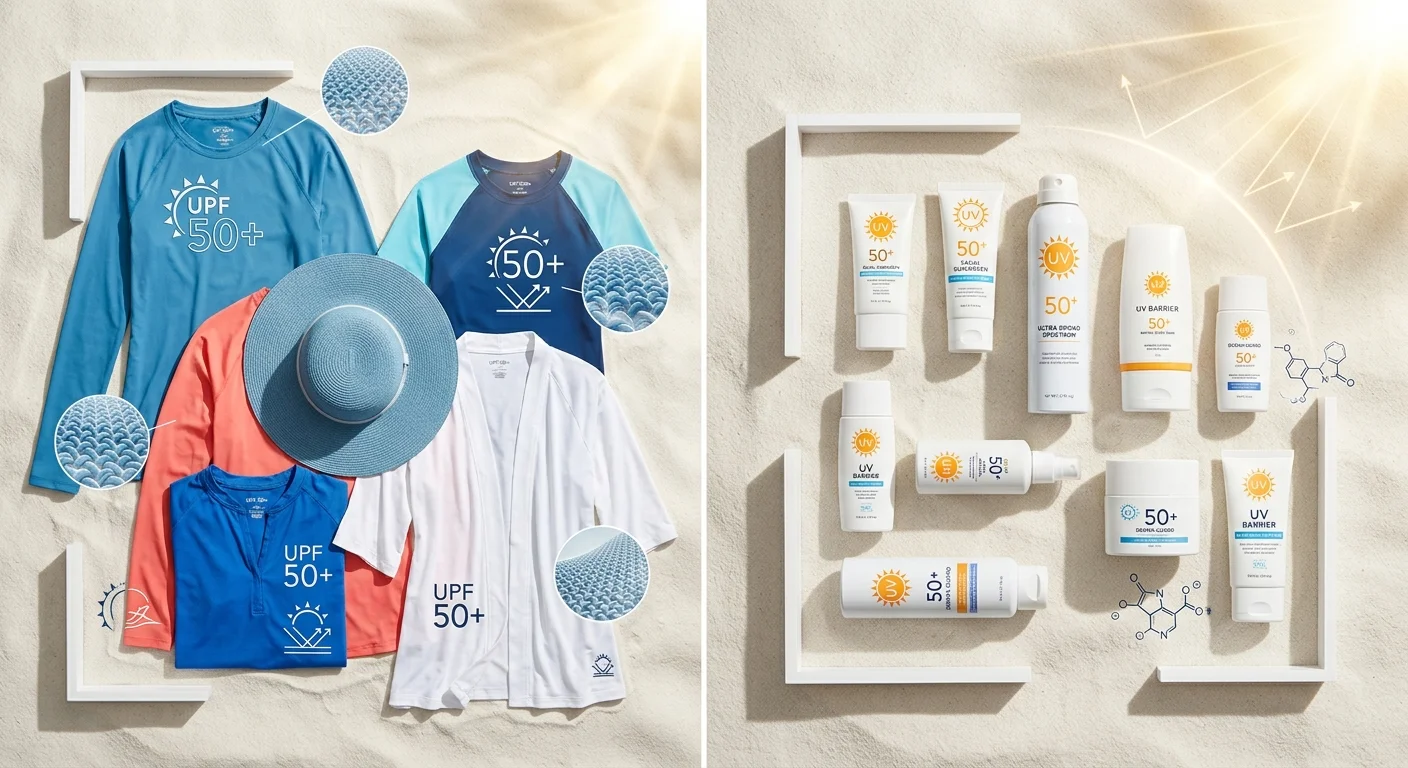
For UV-protective apparel suppliers for outdoor use, UPF protection is built into the fabric — not applied on top.Most people walk right past UPF fabric on a clothing rack. They have no idea what it's doing.
UPF clothing doesn't just shade your skin. It stops UV radiation before it reaches you. Two things make this work: tightly woven construction that closes the gaps between threads, and specialized chemical finishes (like Tinosorb FD) that absorb UV rays inside the fabric itself.
Weave density is the key factor here. That cotton t-shirt you grab on a summer morning? It averages around UPF 5 — about 20% of UV radiation passes straight through. A UPF 50+ garment blocks over 98% of both UVA and UVB rays . Less than 2% gets through. That's not a marginal improvement. That's a completely different level of protection.
UPF Rating | UV Rays Blocked | UV Rays Reaching Skin |
|---|---|---|
UPF 15 | 93.3% | 6.7% |
UPF 30 | 96.7% | 3.33% |
UPF 50+ | 98%+ | <2% |
High-performance polyester and microfiber synthetics reach UPF 50+ with reliable results. Loose-knit fabrics and linen sit at the bottom of the scale. Their open, porous structures let UV radiation pass through at close to full intensity.
The Skin Cancer Foundation requires a minimum UPF 30 for its Seal of Recommendation. That bar is set for a reason.
UPF fabric has one real advantage over sunscreen: it's consistent. Sunscreen sweats off, gets washed away, or gets missed in patches during application. UPF fabric does none of that. You put it on, and it works — the same way, every single time.
How Sunscreen (SPF) Works — And Where Its Real-World Performance Falls Short
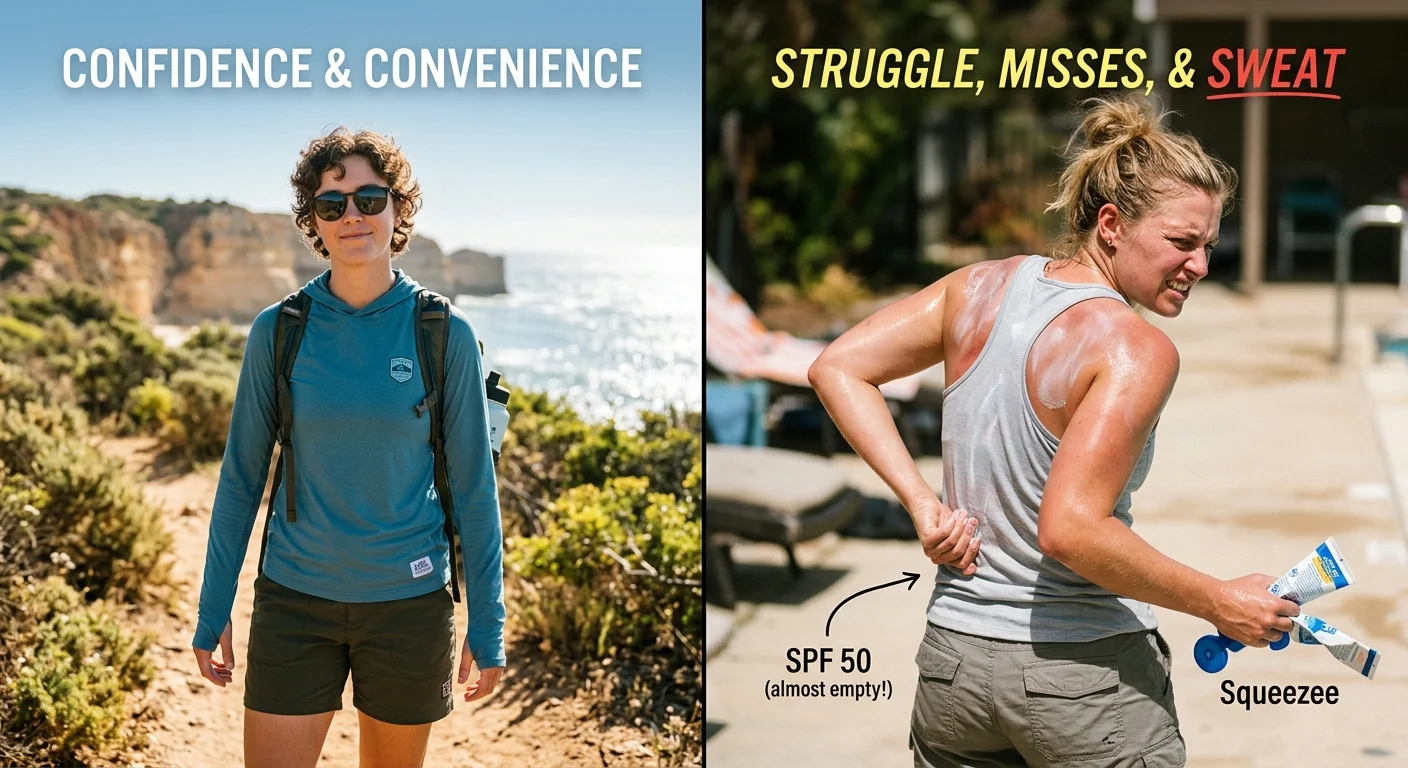
From the perspective of OEM/ODM UV protection sports apparel production services, sunscreen’s weakness isn’t chemistry — it’s real-world usage.Sunscreen is the most trusted tool in skin protection — and also the most misused one.
The science behind it is straightforward. Chemical sunscreens absorb UV rays, converting them into heat before they reach your skin. Physical (mineral) sunscreens — made with zinc oxide or titanium dioxide — work differently. They reflect and scatter UV radiation at the surface. Both methods work. In a lab, they work well.
In real life, the numbers tell a different story.
SPF measures UVB protection almost entirely. That SPF 50 on your shelf? It blocks 98% of UVB rays under controlled testing conditions. But the label leaves out something important: broad-spectrum UVA protection is far weaker. An SPF 50 sunscreen blocks around 82% of UVA in real-world conditions — and SPF 30 drops to just 54%. UVA rays drive long-term skin aging and deeper cellular damage.
Then there's the application gap. Clinical testing uses 2mg per cm² of skin — about one full shot glass for the entire body. Most people apply 25–50% of that amount. Less product means less protection, no matter what the SPF number says.
Sweat, water, and movement break things down fast. An OHSU study found that SPF 30 delivered 76–94% UVB protection in real-world conditions, compared to the lab-claimed 97%. Reapply every two hours. Do it more often if you're swimming or sweating.
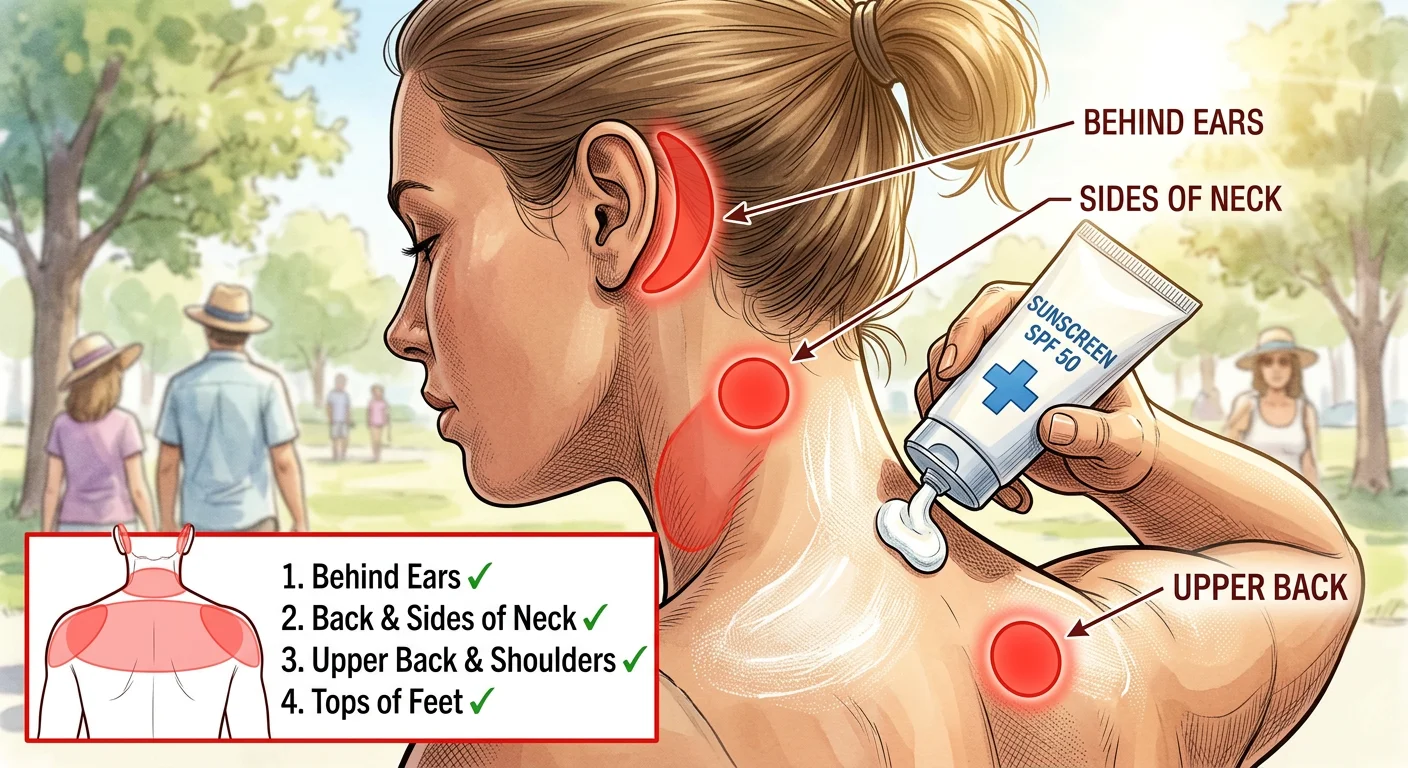
The missed spots matter too. The backs of ears, the sides of the neck, the upper back — these areas get skipped, leaving skin exposed without you realizing it.
Even the most advanced formulas can’t compensate for human behavior — which is why many breathable UPF sports clothing factory for hot weather conditions designs focus on passive, always-on protection instead.
UPF Clothing vs Sunscreen: Direct Comparison Across 6 Key Dimensions
This is where private label sun-protective sports clothing suppliers highlight the real performance gap.Six dimensions. Two very different results.
Put these two sun protection methods side by side — not in theory, but in real conditions where your skin takes the hit. The differences are sharper than most people expect. Here's what the data shows.
1. UV Protection Spectrum: What Each One Blocks
UPF 50+ fabric blocks over 98% of total UV radiation — UVA and UVB, both, at the same time. High-performance fabrics like polyester interlock with titanium dioxide have tested at UPF 73. That means 98.48% UVA blocked and 99.95% UVB blocked in independent trials.
Sunscreen is a more complicated story. SPF 50 broad-spectrum at full clinical application (2 mg/cm²) blocks about 94% of UVB — but only around 82% of UVA . Drop to SPF 30, and those numbers fall to 76–89% UVB and 54–74% UVA. That UVA gap is a real problem. UVA drives deep cellular damage and long-term skin aging.
2. Real-World Effectiveness: Lab vs. Life
Lab testing places high-performance UPF fabrics above UPF 200. Sunscreens can't get close to that. An OHSU study led by Dr. Elizabeth Berry found all four UPF fabrics tested exceeded 99% UVB blockage . Sunscreen, used in real-world amounts, delivered 76–94%.
Sunscreen numbers drop fast with imperfect application. At half the clinical dose (1 mg/cm²), SPF 30 delivers an effective UPF of just 5.3 ± 3.2 . That's the same protection as a standard cotton t-shirt — which rates around UPF 5 on a dry day.
3. Reapplication: Built-In vs. Ongoing
Dimension | UPF Clothing | Sunscreen |
|---|---|---|
Reapplication needed | Never | Every 2 hours minimum |
After swimming | No change | Reapply right away |
After heavy sweating | No change | Reapply right away |
Efficacy drop over time | None | 20–50% after 2–4 hours |
UPF fabric is woven protection. It doesn't wear off, wash away, or break down across a full day outdoors. Sunscreen protection erodes with every swim, every layer of sweat, every hour under the sun.
4. Skin Sensitivity and Irritation Risk
UPF clothing has a clear edge for anyone with reactive skin. No chemical contact. No fragrances. No absorption concerns. The protection sits in the fabric structure itself — nothing goes on your body.
Sunscreen's chemical formulas carry a real irritation risk. This is most common around the eyes and on sensitive skin. Mineral sunscreens with zinc oxide or titanium dioxide are gentler — but they still sit on the skin's surface and make direct contact with it.
5. Coverage: Where Each One Falls Short
UPF garments cover the areas most people forget. Shoulders, upper chest, full back — these spots get the most sun and the most missed sunscreen patches. A long-sleeve UPF shirt wipes out that risk for every area it covers.
Sunscreen needs a level of precision that's hard to pull off. Studies show most people miss the backs of ears, the sides of the neck, and large patches along the upper back. UPF fabric doesn't have that problem. But it also can't protect your face, hands, or any skin left exposed.
6. Long-Term Cost: The Math That Changes the Calculation
A quality UPF 50+ garment is a one-time buy. The protection doesn't fade with washing or wear — it holds across seasons of use. Sunscreen used at the correct clinical dose across a full body burns through product fast. Multiple bottles per season adds up. This hits harder for families or anyone spending serious time outside.
The long-term value case for UPF clothing is simple: buy once, stay protected .
This is why lightweight UV-blocking sports apparel manufacturers focus on long-term value, especially for high-exposure users.
Activity-by-Activity: Which Wins in the Scenarios That Matter
High-intensity outdoor exercise : UPF clothing is sweat-proof by design. Sunscreen breaks down with perspiration — and wet cotton loses protection too. Dry UPF 5 fabric drops to around UPF 3 when soaked.
Water activities : UPF sun protective swimwear blocks UV radiation no matter how much water it sees. "Water-resistant" sunscreen still needs reapplication after every swim.
Full-day outdoor exposure : UPF fabrics hold consistent protection from morning to evening. Sunscreen, without strict reapplication, loses a real chunk of its effectiveness by midday.
Dr. Elizabeth Berry's OHSU research put it plainly: "UPF-protective fabric works significantly better than sunscreen" as the foundation of UV radiation skin protection.
That doesn't mean sunscreen is useless. It means UPF clothing should be your first layer — and sunscreen fills in everything the fabric can't reach.
Is UPF Clothing Better Than Sunscreen? What the Research Says
The research is clear. A peer-reviewed OHSU study (PubMed PMID 35158810) tested four modern UPF textiles against SPF 30 and SPF 50 broad-spectrum sunscreens. The results were not close.
Every fabric blocked more than 99% of UVB rays . The sunscreens? Between 76 and 94% — even at the full clinical dose of 2 mg/cm². UVA protection showed the same gap. Fabrics held at 96–98% blockage . Sunscreens ranged from 54 to 82%. The in-vitro UPF numbers made it even clearer — all four fabrics exceeded UPF 200 . SPF 50 sunscreen at clinical application reached UPF 31. SPF 30 at real-world amounts (1 mg/cm²) dropped to just UPF 5.3 .
The study's conclusion left no room for debate: "Clothing should be considered the cornerstone of UV protection."
The Skin Cancer Foundation backs that same position. UPF measures both UVA and UVB at once. SPF measures UVB only. That gap matters. UVA drives deep cellular damage that builds up over years — and SPF does not account for it.
So yes — over covered skin, UPF clothing performs better. No variables. No inconsistency.
But "better" has a boundary. UPF fabric cannot protect your face, hands, or neck. Those areas still need sunscreen. Apply it at the right amount and reapply on schedule. The strongest sun protection plan uses both tools together — not one against the other. UPF clothing as your base layer, sunscreen covering every area the fabric cannot reach.
That combination is not overcautious. It's just what the data supports.
UPF Clothing, Sunscreen, or Both — Scenario-Based Recommendations
The best sun protection strategy isn't a single product. It's knowing which tool fits each situation.
UPF clothing and sunscreen aren't competitors — they're partners. Each one does something the other can't. UPF clothing protects every inch of skin it covers. Sunscreen covers what the fabric can't reach. Use them together, and research shows sunburn risk drops by up to 90% compared to sunscreen alone . The key is knowing how to use each one based on your activity.
Outdoor Adventures: Hiking, Mountaineering, and High-Elevation Trips
UV radiation gets stronger as you climb higher. Thinner air filters less of it. Snow, water, and rocky terrain reflect radiation back up at you from below. At high elevation, UPF 50+ long sleeves aren't a nice-to-have. They're a must.
Put SPF 30+ broad-spectrum sunscreen on every exposed area — face, neck, hands, and ears. Plan your route with the sun's peak window in mind. Between 10AM and 4PM , about 60% of the day's total UV builds up. Get into shade during that stretch as much as you can.
Water Activities: Swimming, Surfing, and Beach Days
Water is one of sunscreen's biggest weak points. "Water-resistant" formulas break down with each swim. UPF sun protective swimwear avoids that problem. Wet polyester holds its UPF rating in water — sometimes it goes up slightly. Standard cotton, by contrast, drops to UPF 3–4 once soaked .
Start with UPF swimwear as your base layer. Put waterproof SPF 30+ on your face, shoulders, and any skin the swimwear doesn't cover before you head out. Reapply right after each time you get out of the water.
Daily Commuting and City Life
It's easy to overlook sun exposure during a commute. Car windshields block most UVB, but they let significant UVA through. Short daily trips stack up fast over weeks and months.
A lightweight UPF shirt or pants adds no extra effort to your routine. They block UV on every covered area, full stop. Then put a light SPF on your face, neck, and hands — the spots no clothing covers — and you're set for the day.
Who Should Prioritize UPF Clothing First
Some people need UPF fabric as their main line of defense, not just a backup:
Children : Young skin is thinner and more sensitive to UV. UPF clothing cuts chemical exposure and gives steady, reliable protection. Add SPF 30+ on any exposed skin.
Sensitive skin and photosensitive conditions : Anyone managing lupus, PMLE, or porphyria — or those who react to sunscreen — should lean on UPF as their base layer. Pair it with a physical mineral sunscreen (zinc oxide or titanium dioxide) on exposed areas.
Fair skin and high-risk individuals : One bad sunburn in childhood raises long-term skin cancer risk in a real, measurable way. Sunscreen alone often falls short in real-world conditions — missed spots, under-application, and fading coverage are all common. UPF clothing doesn't have those gaps.
Skin cancer history : UPF plus SPF, every single time. No exceptions.
Do You Still Need Sunscreen With UPF Clothing?
On covered skin — no. UPF 50+ fabric blocks 98% of UV radiation . No reapplication needed. No missed patches. On exposed skin — face, neck, hands, ears — yes, you do.
Real-world sunscreen coverage sits at 60–75% once you factor in under-application and the roughly 20% of skin most people skip without realizing it. UPF fabric on covered areas doesn't have that variable. It either covers the skin or it doesn't.
Here's the practical approach: put SPF 30+ broad-spectrum sunscreen on all exposed areas first. Then put on your UPF clothing. That order makes sure nothing gets missed.
Scenario | UPF Clothing | Sunscreen |
|---|---|---|
Hiking / High elevation | UPF 50+ long sleeves, hat | SPF 30+ on face, neck, hands |
Swimming / Water sports | UPF swimwear | Waterproof SPF 30+, reapply after each swim |
Daily commute | UPF shirt or pants | Lightweight SPF on face, neck, hands |
Children outdoors | UPF as primary layer | SPF 30+ on exposed skin only |
Sensitive / Reactive skin | UPF as base | Physical mineral sunscreen on exposed areas |
The formula is simple: UPF clothing for everything it covers, sunscreen for everything it can't. Start there, adjust for your activity, and your skin stays protected — not just this summer, but every one after it.
UPF 50+ vs SPF 50: Long-Term Cost & Convenience Analysis
The numbers make a compelling case that most sunscreen labels never mention.
A quality UPF 50+ shirt runs $40–120 upfront . Spread that across 150–200 days of outdoor use over five to seven years. You're looking at $0.20–0.40 per day of protection. SPF 50 sunscreen, at the correct clinical dose, costs $8–32 per full-body application . That's not a rounding error — that's a gap of 20 to 100 times the per-use cost .
Run the math over a decade of 30 hiking days a year:
Protection Method | 10-Year Total Cost |
|---|---|
UPF 50+ shirt ($60) | $60 |
SPF 50 sunscreen ($18/bottle, 1 bottle per 5 days) | $1,080 |
Beyond the money, sunscreen comes with constant friction. UPF clothing cuts all of that out.
No reapplication every two hours.
No mid-trail panic about a second bottle.
No protection gaps from sweat or a surprise rainstorm.
A well-made UPF 50+ shirt holds its rating through 100+ wash cycles . Budget options start dropping to UPF 30–40 after a single season. So fabric quality is a real factor — not a marketing detail.
UPF shirts cover 60–70% of your body's surface area . That alone cuts how much sunscreen you go through, even if you still apply SPF to exposed skin.
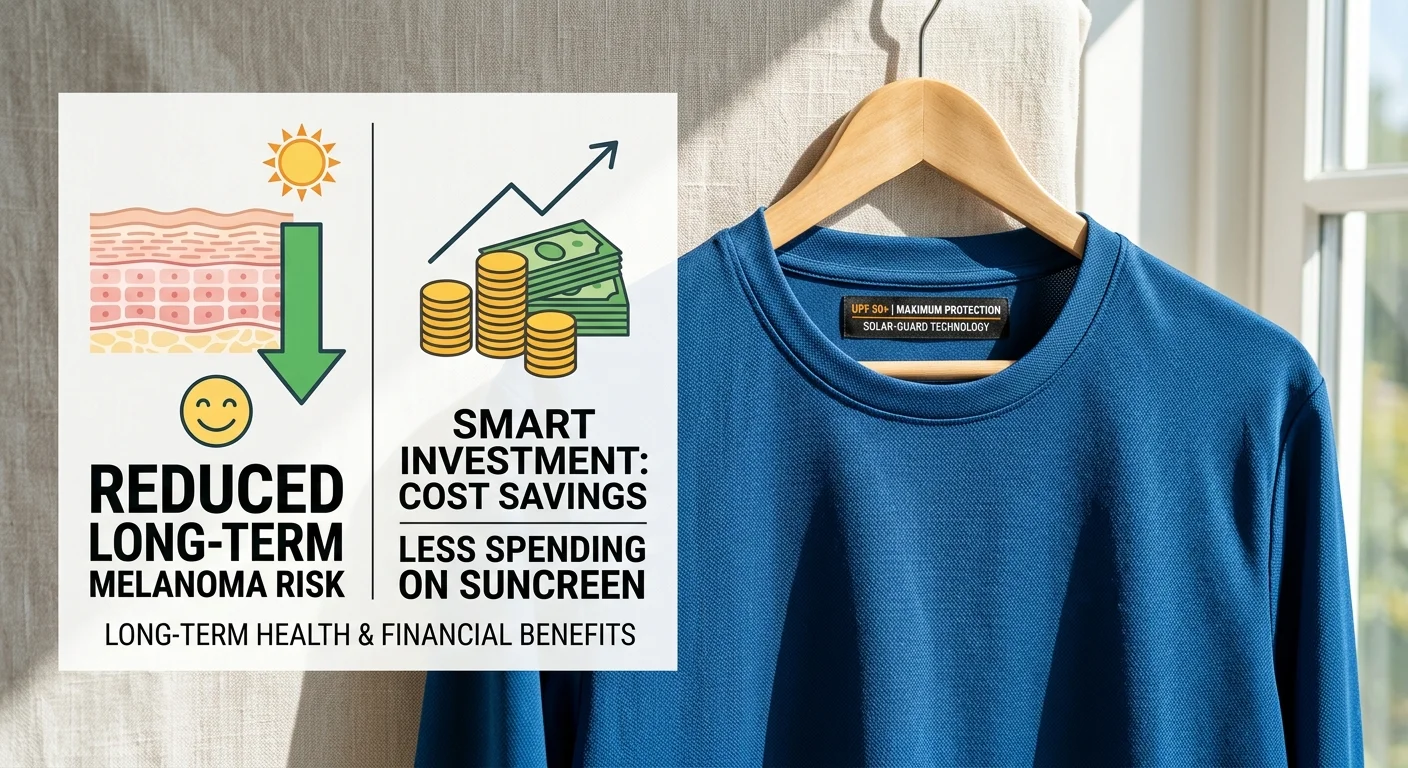
One number worth knowing: consistent UPF 50+ wear cuts melanoma risk by up to 78% compared to unprotected exposure. Treating a single basal cell carcinoma costs $500–2,000 . Seen that way, the upfront cost of a premium UPF shirt isn't an expense — it's a smart investment.
How to Choose the Right UPF Clothing — What to Look for Beyond the Label
Not all sun-protective clothing is equal. A label that says "UV protection" with no UPF number? That tells you nothing useful.
Start with the rating. UPF 40–50+ is the benchmark for serious outdoor use. It blocks 97–98% of UV radiation, with less than 2.5% getting through. UPF 25–39 works fine for lighter exposure. Anything below UPF 15 gives you no real protection — full stop. The Skin Cancer Foundation's Seal of Recommendation requires UPF 50+, and that standard exists for good reason.
The number matters, but fabric construction matters just as much:
Material : Polyester and nylon beat cotton on every measure — denser weave, longer-lasting UPF, better moisture control.
Color : Darker and brighter colors absorb more UV than pale ones. A deep navy shirt blocks more than a white linen one, even at the same UPF rating.
Fit : Stretching fabric lowers UPF. Go with relaxed cuts, not body-hugging styles.
Wet performance : A dry white t-shirt rates UPF 7. Soaked, it drops to UPF 3. Quality synthetic UPF fabric holds its rating in water — that's a big difference.
One quick test: hold the fabric up to light. See through it? UV gets through too.
Match the garment to what you're doing. For hiking, pick a hooded UPF 50+ pullover with a water-resistant finish. For water sports, UPF swimwear in close-woven polyester is a must. For everyday use, a lightweight long-sleeve with moisture-wicking keeps you cool and covered all day.
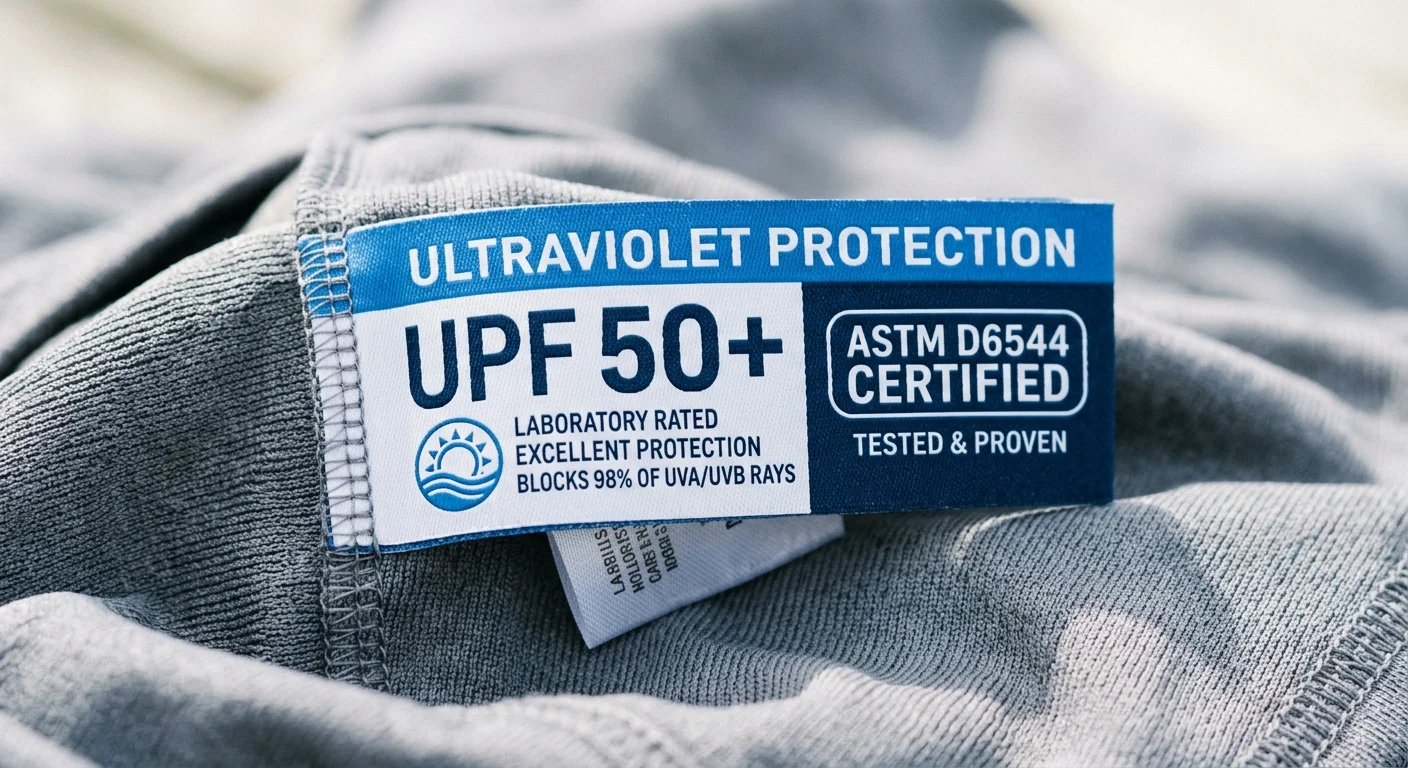
Check the certification standard on the tag — look for ASTM D6544 or an equivalent mark. No certification means no accountability.
Frequently Asked Questions About UPF vs SPF Sun Protection
These questions come up every time sun protection enters the conversation — and they deserve straight answers.
Does wearing UPF clothing mean I can skip sunscreen?
No, not fully. UPF 50+ fabric blocks 98% of UV on covered areas. But your face, hands, and neck stay exposed. Reflected UV from sand and water also hits from angles the fabric can't cover. Apply SPF 30+ to every uncovered area, every two hours.
Is UPF 50 the same as SPF 50?
They sound similar, but they're not the same. UPF 50 blocks 98% of both UVA and UVB through fabric — and it stays effective as long as the garment is intact. SPF 50 targets UVB on skin. It needs reapplication every two hours, after every swim, and after heavy sweating.
Does UPF wash out?
Quality certified garments hold up well. Lab tests show UPF 50+ fabrics keep 95–98% blockage after 50–100 wash cycles, as long as the fabric uses UV stabilizers. Untreated cotton loses up to 50% protection after just 20 washes. Wash inside-out, use cold water, and air dry.
Is UPF clothing worth the investment for kids?
Yes — children's skin burns three times faster than adult skin. UPF 50+ clothing cuts sunscreen needs by 70–90% on covered areas. Still apply mineral SPF 30+ to the face, neck, and hands.
What about long-term value?
A quality UPF garment lasts two to five years through 500+ washes. OHSU research confirmed UPF fabric holds 99%+ UV blockage over time. SPF protection, by contrast, drops 20–30% within two hours of application.
Conclusion
The sun doesn't negotiate — but you get to choose your defense strategy.
The science, the costs, and the real-world performance gaps all point to the same answer: UPF 50+ clothing isn't just a sunscreen alternative — it's a smarter foundation for lasting UV protection . Sunscreen fades. It sweats off. It needs constant reapplication. Sun protective clothing doesn't. It works all day, every wear.
That said, the best approach isn't either/or. Pair your long sleeve sun protection shirts and UPF swimwear with targeted sunscreen on exposed areas. That combination builds a layered shield that holds up through a full beach day, mountain hike, or morning run.
Your skin will carry the story of every sun-soaked moment — make sure it's a good one.
Ready to build your UV defense wardrobe? Explore Berunclothes' UPF 50+ sports wear collection and find pieces that protect as well as they perform.