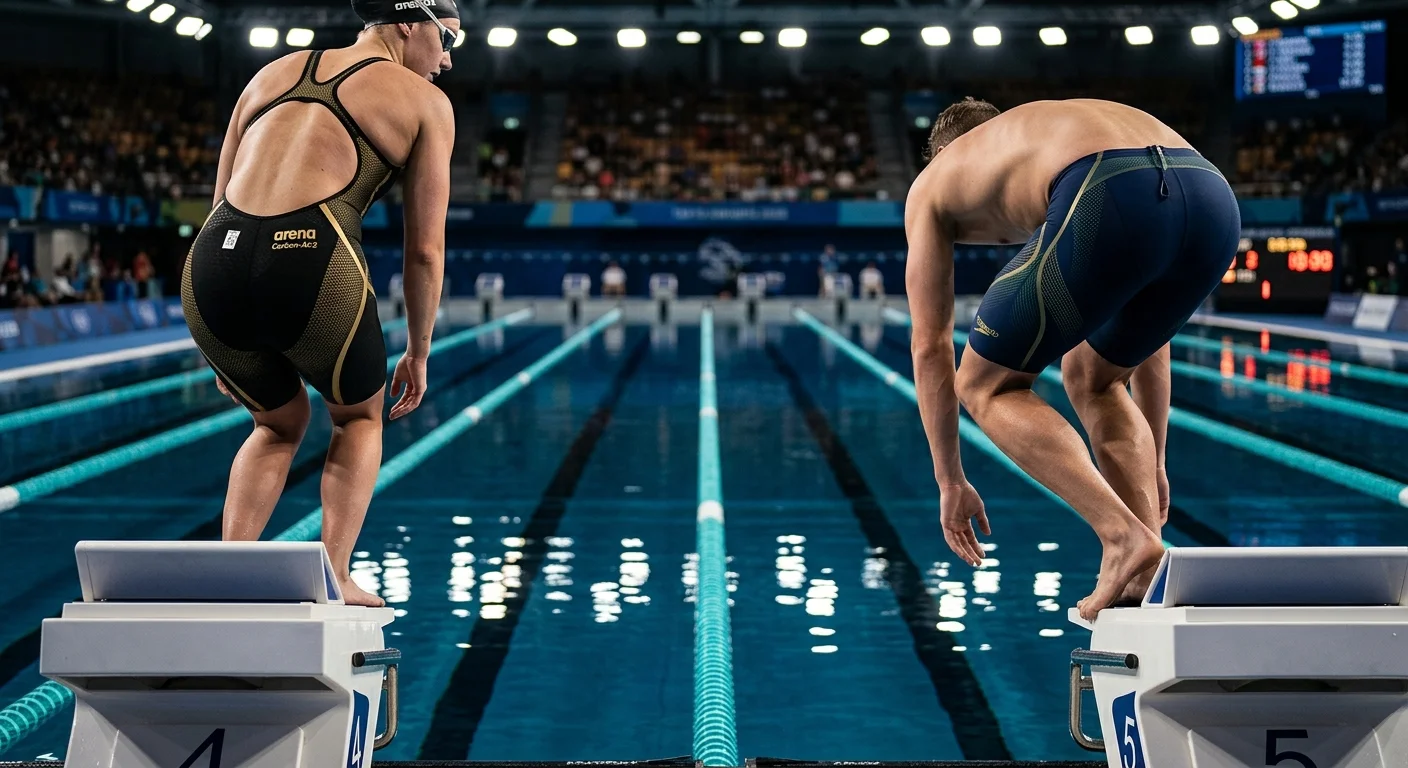
Picking between Arena and Speedo is tough. Both brands have shaped competitive swimming at the top level. Both have Olympic podiums to back that up.
But here's the real question: you're in the pool at 5 a.m., chasing a personal record — which racing swimsuit brand is doing more work for you?Behind the scenes, many swimwear suppliers are also driving innovation through high-performance swimwear factory development and OEM/ODM swimwear services for global brands.
Brand loyalty won't give you a clear answer. So let's look at the facts. This is a straight, honest comparison of both brands across fabric technology, compression performance, fit, and real-world durability. The goal? Help you stop second-guessing and start swimming faster.
Arena Swimwear: Brand Overview & Performance Positioning
Many premium product lines today are influenced by Arena-style swimwear manufacturers focused on elite-level construction and material innovation.Arena didn't stumble into competitive swimming. It was built for it, from the ground up, in 1973. Horst Dassler had one obsession: make swimmers faster.
Today, the Italian brand holds 10% of the global swimwear market , standing side by side with TYR Sports. That's a serious position in an industry worth over $22.9 billion in 2025. But the real story is where Arena has focused its energy.
Women's performance swimwear is its strongest segment, making up 46% of overall category share
Nylon-based fabrics lead its material lineup at a 37% share — picked for their compression and durability in chlorine-heavy training environments
The premium price tier is Arena's fastest-growing segment, with a 6.22% CAGR — a clear sign of where the brand is going
In December 2025, Arena launched a new line built with renewable LYCRA EcoMade fiber . It's plant-based, high-performance, and built to last. That move shows this brand is thinking past the next race.
Arena's positioning is clear: elite-first, then everyone else . That mindset drives every product decision they make.
Speedo Swimwear: Brand Overview & Performance Positioning
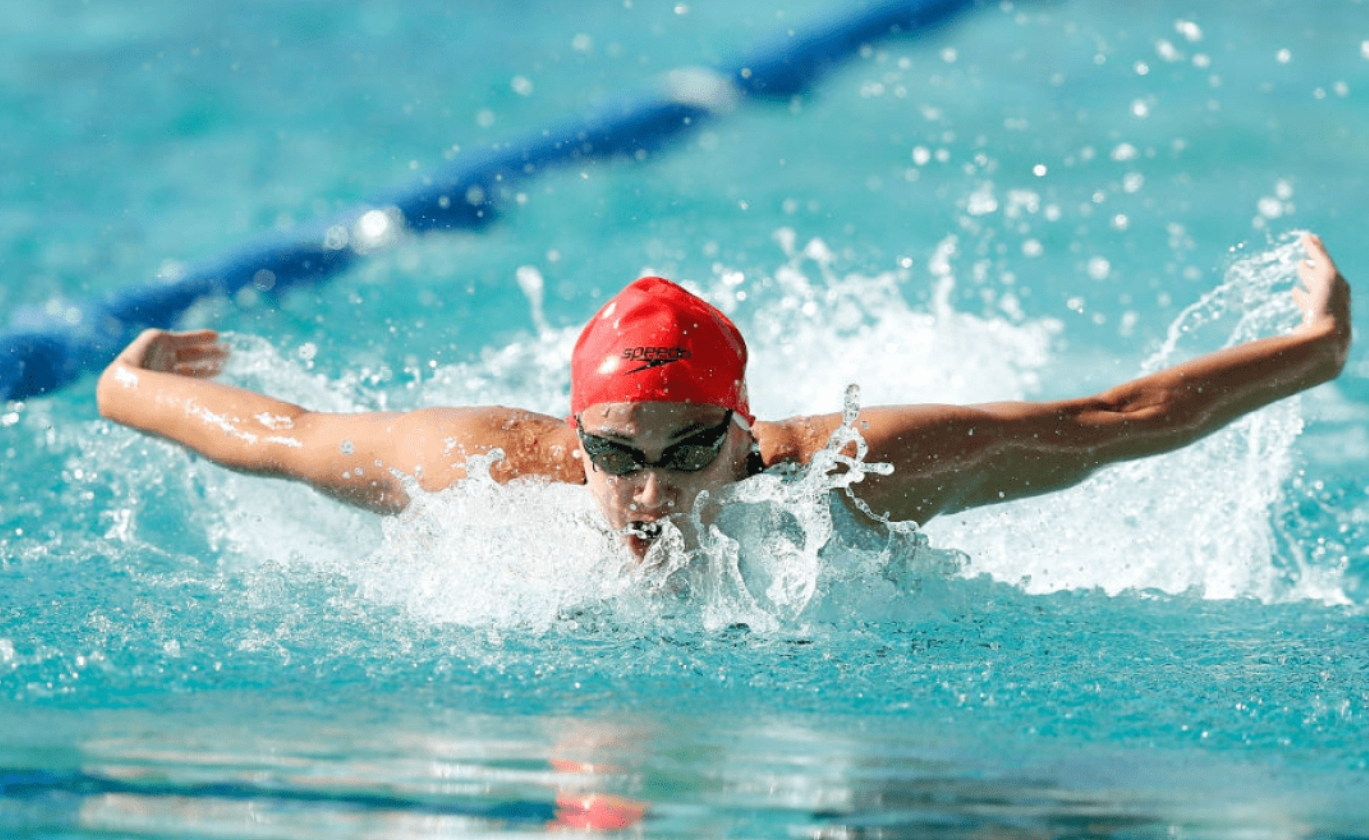
On the supply side, many Speedo-style swimwear suppliers also operate within large-scale high-performance swimwear factory systems to meet global demand.Speedo doesn't need an introduction — but it does deserve a closer look.
The brand's grip on competitive swimming is hard to ignore. Speedo holds 60–70% of the professional competitive swimwear market . That's not just a share. That's a stronghold. Picture an elite swimmer on the blocks at a championship meet. The logo you see in your head is Speedo.
That authority comes from decades of focused positioning. Speedo has never tried to be Nike or Adidas. It doesn't chase athletic lifestyle trends or luxury branding. It stays in its lane — the pool lane — and that focus has paid off in a big way.
Recent product launches show a brand pushing forward with purpose:
March 2025 : Lookout Short featuring Tetra-Flex 4-way stretch and quick-dry recycled nylon
May 2025 : Jetstream Collection — chlorine-resistant fabrics in one-piece and two-piece formats
April 2025 : Eco Fastskin, built from 100% recycled nylon and polyester
Still, Speedo's eCommerce revenue hit $27.2M in 2025 , down 5–10% year-over-year — with steeper declines expected through 2026. The market is shifting. Even the top player feels that pressure.
Fabric Technology Face-Off: ECONYL® vs Fastskin
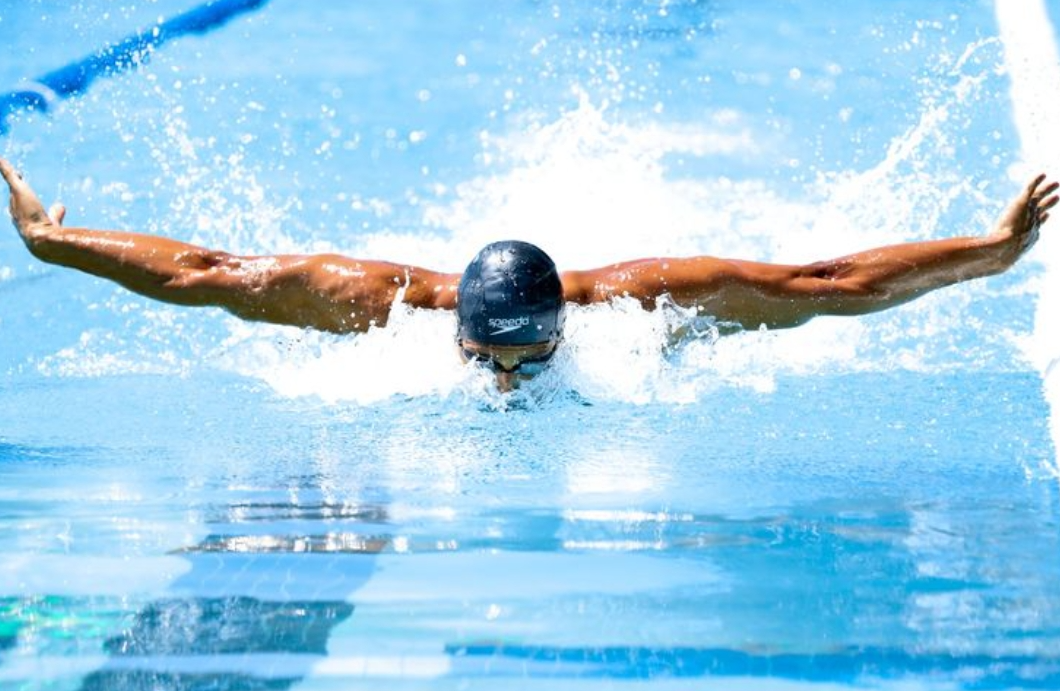
For brands sourcing wholesale performance swimwear, fabric innovation is often supported by OEM/ODM swimwear services and specialized textile engineering partners.The fabric inside your swimsuit is doing more than you think.
Arena and Speedo have each built their performance identity around specific textile technologies. The differences matter — especially before you spend $200+ on a racing suit.
Arena's ECONYL®: Sustainability That Actually Performs
Arena's flagship fabric, ECONYL® , starts life as ghost fishing nets pulled from the ocean floor. Add discarded carpets and industrial waste to the mix. From that raw origin, engineers regenerate a nylon that matches — and in some areas, outperforms — virgin nylon.
The numbers speak for themselves:
>85% shape retention after repeated chlorine exposure — critical for any swimmer logging serious yardage
Four-way stretch with superior recovery — the suit contours your body without deforming over time
Fast drying and compatible with hydrophobic coatings
Good UV resistance , though it shows mild sensitivity at the highest exposure levels
Rated Excellent for both sustainability and overall performance
The environmental profile is just as striking. ECONYL® production generates 90% fewer emissions than virgin nylon. It saves 70,000 barrels of oil per 10,000 tons produced and cuts CO2 output by 50% . You can also recycle it repeatedly without any quality loss — a true closed-loop material.
That performance comes at a price. Expect a 15–30% price premium over comparable virgin nylon swimwear.
Speedo's Fastskin: The Reputation Question
The comparison gets complicated here. Speedo's Fastskin line carries massive brand recognition and a legacy tied to world records. But verified performance data — chlorine resistance metrics, stretch rebound rates, third-party hydrophobic coating tests — is missing from public sources. No published numbers, no third-party benchmarks.
That's not a dealbreaker on its own. Fastskin's hydrodynamic design and compression architecture have real-world validation at the elite level. Athletes do win in it. But compare the two fabrics on paper, and ECONYL® offers measurable, traceable benchmarks that Fastskin hasn't published .
Speedo relies on reputation. Arena shows its work.
So for swimmers who want data behind their decisions, Arena holds the clear edge right now.
CTA Banner 1Compression & Muscle Support: Which Brand Delivers More?
Many private label swimwear suppliers now adopt similar compression mapping techniques when developing high-end competitive suits.Compression in a racing swimsuit isn't a comfort feature — it's a performance mechanism.
A suit that compresses the right muscle groups at the right tension stabilizes your movement. It cuts down vibration-related fatigue. It keeps your body in a more hydrodynamic position through every stroke. That's the theory. What each brand does with it is what counts.
Arena's Compression Approach
Arena builds compression into the fabric itself. The carbon-fiber reinforced panels and multi-directional tension zones target the core, glutes, and thighs — the muscles doing the hardest work in any competitive stroke. The compression isn't spread evenly across the suit. It's mapped to movement patterns . It tightens where stability matters and eases off where you need flexibility.
In training, that means less muscle oscillation during long sessions. Less micro-fatigue building up before race day.
Speedo's Compression Strategy
Speedo relies on its Fastskin compression architecture . The design puts skin-to-suit contact first to cut drag at the surface. The compression effect is real — but Speedo treats it as a bonus to hydrodynamics, not the main goal.
Elite athletes get solid core support. But targeted muscular stabilization? That's where Arena's zoned approach pulls ahead.
The Honest Verdict
Prioritizing muscle endurance across long training blocks ? Arena's structured compression gives your body a more specific, deliberate advantage.
Focused on race-day performance , where reducing drag matters more than managing fatigue? Speedo holds its ground.
Fit, Sizing & Comfort: The Real-World Wearing Experience
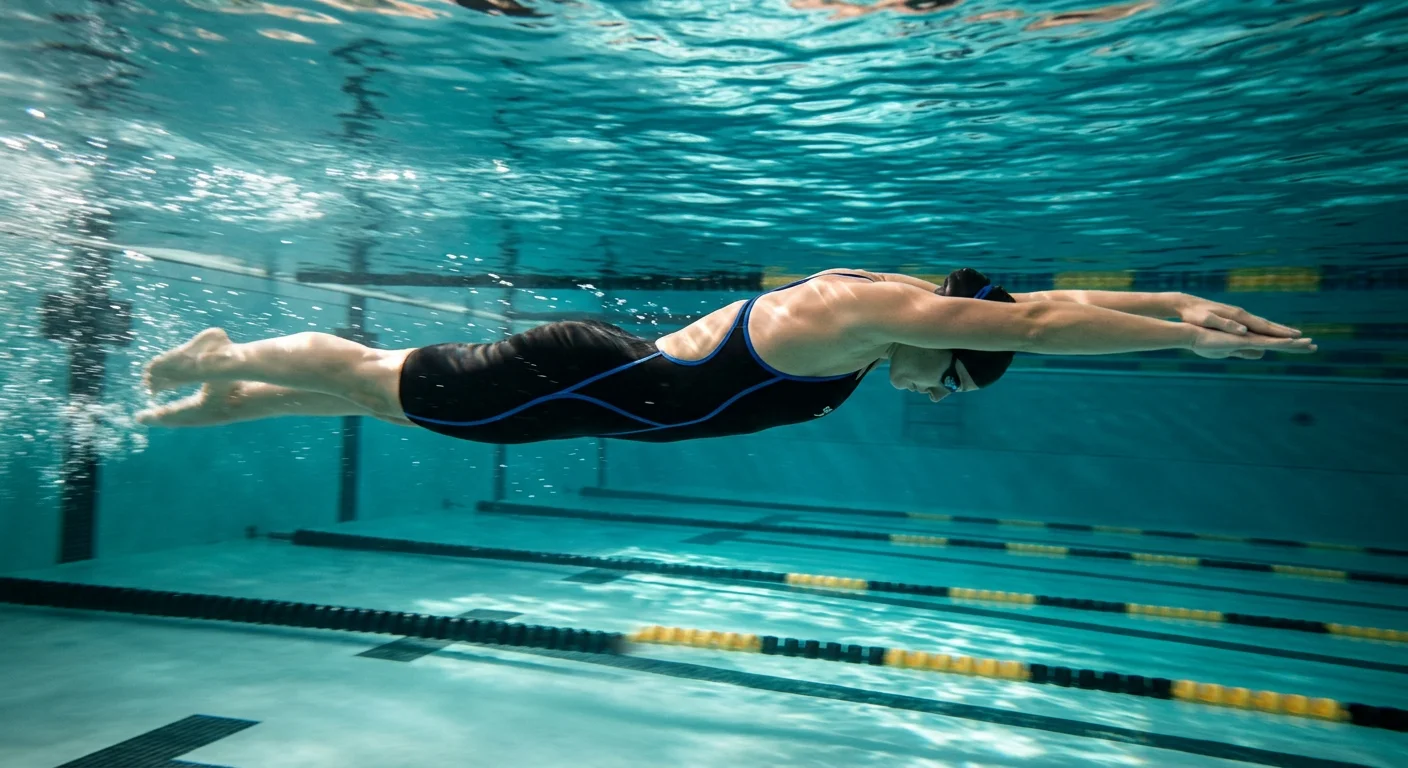
For teams and clubs, working with a custom team swimwear supplier can simplify sizing consistency and ensure performance-level fit across athletes.A swimsuit that fits well doesn't announce itself. You just move — and it moves with you.
That's the standard both Arena and Speedo are held to. Getting there takes a bit of homework, though. These two brands don't size the same way.
The Sizing Gap You Need to Know About
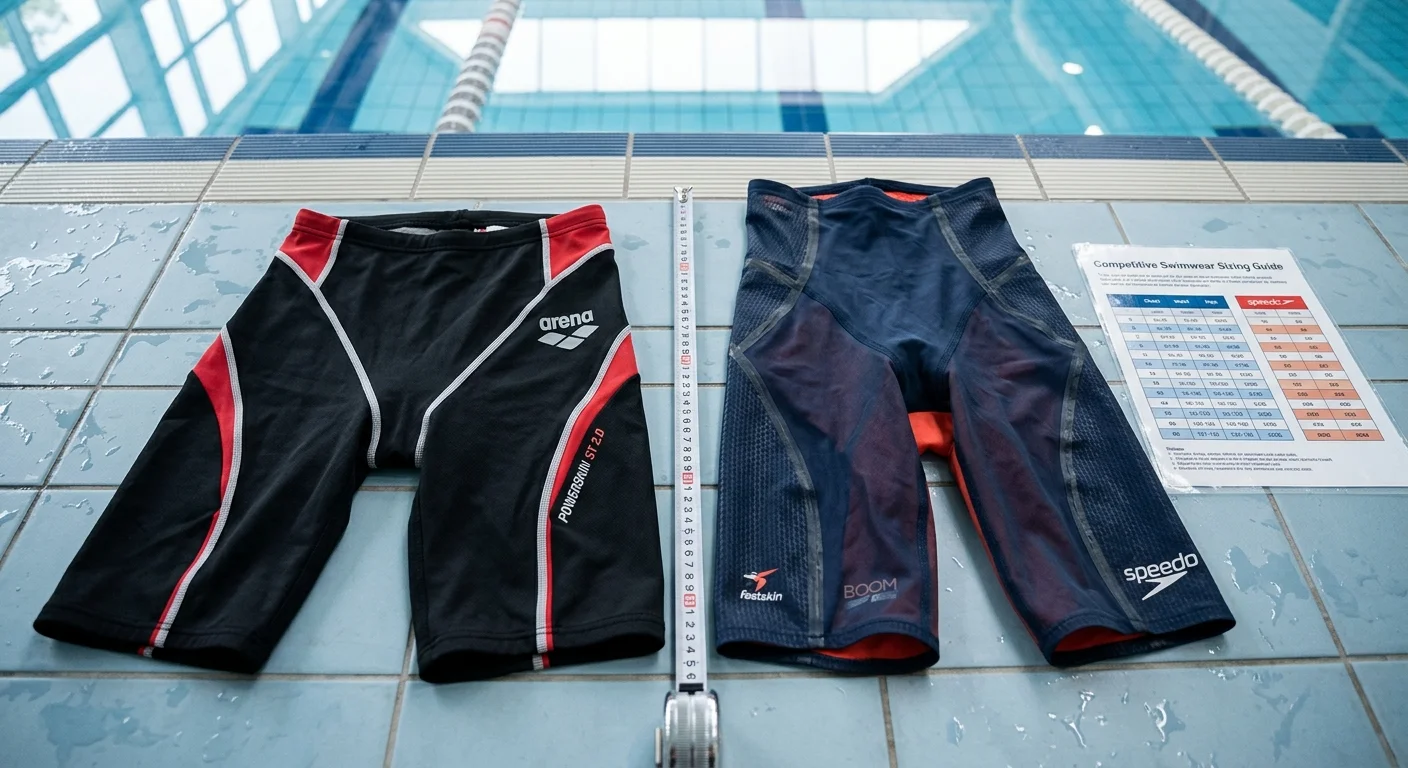
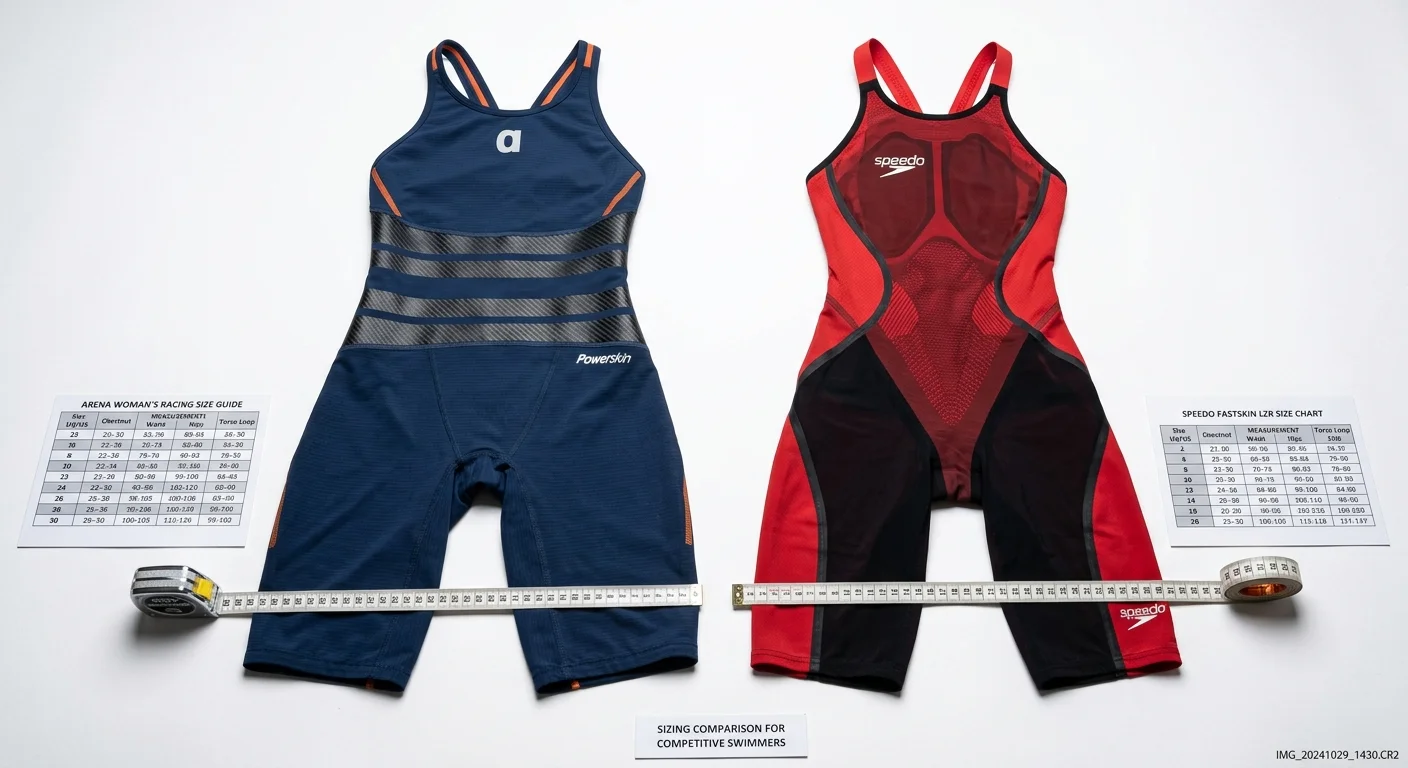
Arena runs 1–2 sizes smaller than a standard training suit. First time shopping Arena? That's not a flaw. It's just how the brand builds its compression structure. The suit is supposed to feel tight before you hit the water.
Speedo tends to run closer to true measurements . That makes sizing more straightforward on your first buy — great news for swimmers moving from recreational to competitive gear.
Neither approach is wrong. But buying the wrong size in either brand — a tech suit above $150, for example — is a costly mistake.
What "Comfortable" Actually Means Here
Comfort in a performance swimsuit isn't softness. It's the absence of friction. No shoulder dig. No waistband roll. No fabric bunching mid-race.
Both brands nail this in their premium lines. The difference is how they get there :
Arena uses zoned tension mapping. Tighter panels sit over target muscle groups — placed with purpose, not spread across the suit at random
Speedo focuses on a seamless skin-to-suit feel. Many swimmers describe it as "second skin" rather than "compression"
A Practical Tip Before You Buy
Ordering online? Take your measurements before looking at the size chart. Don't guess. Sizing inconsistency drives billions in returns across the apparel industry — competitive swimwear sizing included. Both brands publish detailed size guides. Use them as your starting point, not a rough reference.
Still unsure? Go one size up from your Arena instinct , and true-to-size for Speedo .
Head-to-Head Performance Comparison by Swim Event
The race you're swimming determines which brand works harder for you. That's not a marketing angle — the performance data backs it up.
Three factors drive race outcomes across sprint, middle-distance, and endurance events:
- Start performance
- Turn performance
- Swimming velocity
Each one carries different weight depending on your distance. The suit you choose — Arena or Speedo — should match that.
Sprints (50m–100m): Where Starts Win Races
In 50m and 100m events, start performance carries the most weight. The 15m start time is the clearest predictor of where you'll finish.
Elite male swimmers in the 100m freestyle hit 96.83% of the world record at that mark. Elite females reach 96.15% .
Relay swimmers post 6.92% faster 15m start times than solo event swimmers. The reason is reaction time. More runway before the block leads to better entry speed — plain and simple.
Speedo's Fastskin hydrodynamic architecture is built to cut surface drag from the very first stroke. That design fits sprint swimmers well. The race is largely decided by the 50m wall. Every millisecond at the surface counts.
Middle Distance (200m–400m): Turns Become the Race
Something shifts around the 200m mark. Turn performance peaks here. It shows a U-shaped effect — the impact grows from 100m through 400m events.
Elite 200m breaststroke benchmarks sit at 98.31% of world record pace for men and 96.32% for women . Those are some of the tightest margins in competitive swimming.
The key zone is the 5m-in and 15m-out phases around each wall. A suit's compression needs to hold up under repeated flip turn stress. Arena's zoned compression panels stabilize the muscles. They keep stroke mechanics intact through the 6th, 7th, and 8th turn — where most suits start to lose their grip.
Distance Events (800m–1500m): Velocity Is Everything
At 800m and beyond, start advantage fades. Turn performance drops off too. What takes over — and what decides the race — is raw swimming velocity .
The performance gap between elite male and female swimmers narrows at ultra-distance. It sits at roughly 7% , lower than in comparable running events. Female performance density is also higher overall. The speed gap between 1st and 10th place finishers is tighter in women's distance events than in men's. Top female distance swimmers average 1.34 ± 0.09 m/s , with a mean sex difference of 6.8 ± 2.5% .
For these events, sustained compression is what matters. You need a suit that reduces muscle oscillation across 15+ minutes in the water — not just one with a fast surface coating. Arena's fabric endurance profile gives it a clear edge here.
The Number That Ties It Together
A regression model tested start performance, turn performance, and swimming velocity across all distances. It explained 98–99% of the variance in race results . That's a remarkable level of predictive accuracy.
It also means very little room exists for outside factors — including gear — to change outcomes at the elite level.
At the sub-elite and club level, though, marginal gains are still on the table. The right suit for your main race distance still moves the needle.
| Distance | Dominant Factor | Brand Edge |
|---|---|---|
| 50m–100m | Start performance | Speedo |
| 200m–400m | Turn performance | Arena |
| 800m–1500m | Swimming velocity | Arena |
Price, Value & Durability: Are They Worth the Investment?
Spending $200 on a swimsuit is a commitment. Let's make sure it's the right one.
Both Arena and Speedo span a wide price range — that's the first thing to understand. You don't need to buy into the premium tier just because you swim at a competitive level.
What You'll Pay
Arena entry-level training suits start around $30–$60 . Mid-range options sit at $80–$140 . Their elite tech suits — the ones with ECONYL® fabric and carbon-reinforced compression panels — climb to $200–$500+ . That premium reflects real material costs. ECONYL® production alone adds a 15–30% price increase over standard nylon suits. For serious competitors, the performance data backs that cost up.
Speedo follows a similar structure. Recreational suits run $25–$50 . Mid-tier training suits land at $60–$120 . The Fastskin racing suits reach $150–$400+ , depending on the event specification.
Which One Lasts Longer?
This is where Arena earns its price tag back. ECONYL® fabric holds >85% of its shape after repeated chlorine exposure. That number matters a lot for swimmers training five or six days a week. Speedo's Fastskin suits look great on race day, but heavy training wears them down fast. Most competitive swimmers keep Fastskin suits as race-only gear . They save them for meets and use a different suit for yard after yard of training.
The Honest Value Breakdown
| Use Case | Better Value Pick |
|---|---|
| Daily training | Arena |
| Race-day performance | Speedo |
| Budget-conscious beginner | Speedo |
| High-volume competitive swimmer | Arena |
Train hard and often? Arena's durability means a higher upfront cost that pays for itself across a full season. Buying a suit for competition only — something you'll wear ten times a year at most? Speedo's Fastskin gives you race-day performance without needing to hold up through long-term daily use.
Buy for how you swim. Not for the brand name on the tag.
CTA Banner 2Arena vs Speedo: Who Should Choose Which? (Decision Matrix)
Three questions decide this. How do you swim? How often do you swim? What does your body need in the water?
That's it. Everything else is noise.
Match Your Swimmer Type First
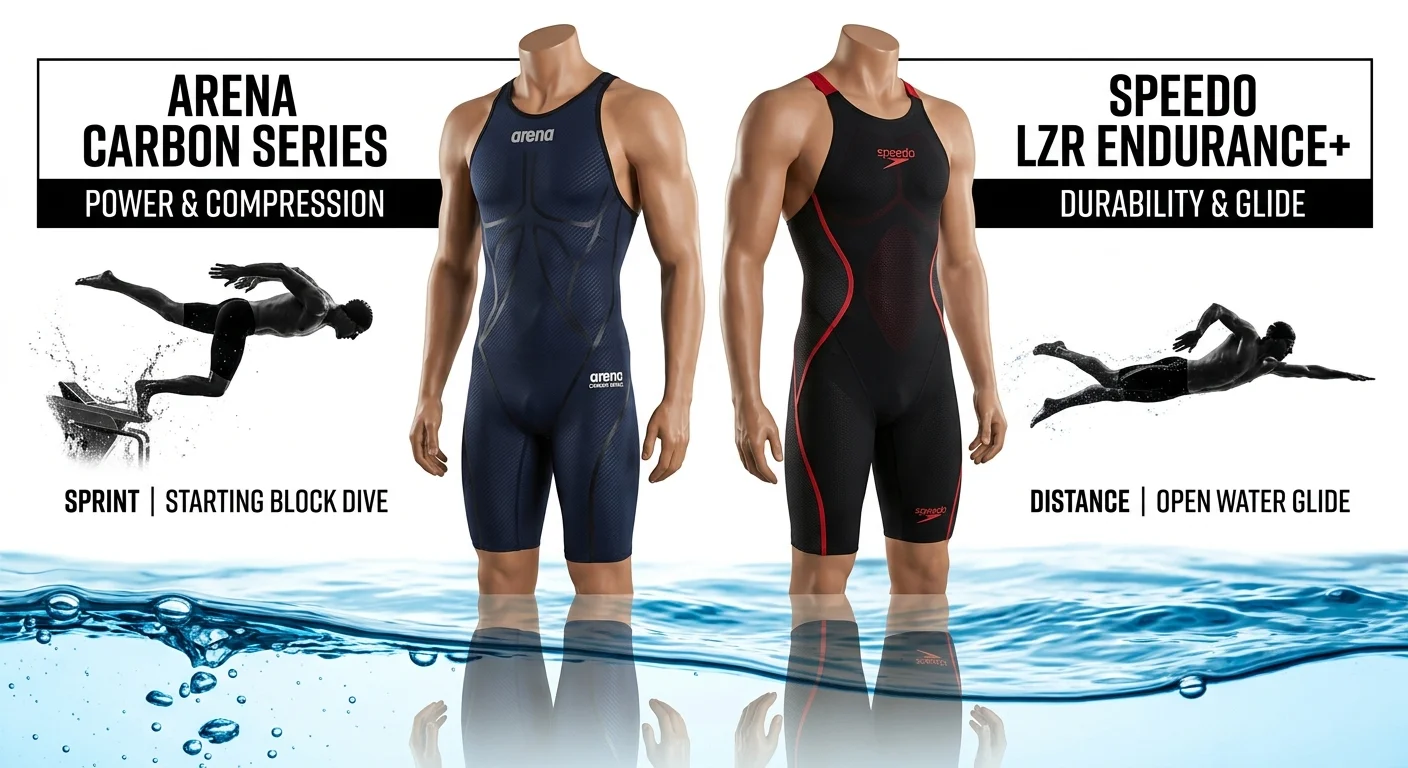
Sprint racers belong in Arena. The Carbon Series uses layered compression zones across the core and legs. Each panel targets a specific muscle group for explosive output over short distances. Arena suits reached 49 World Championship finals across four models. That's not luck.
Endurance swimmers get more from Speedo. The LZR Pure Intent supports the torso rotation that distance events require. Arena's uniform tightness is its signature — but at the 800m mark, that works against you, not for you.
Beginners and youth swimmers should start with Speedo. The fit runs true to size. Compression is forgiving, not punishing. The Endurance+ line lasts 20x longer than conventional training suits. That makes it the clear starting point. Arena's European sizing runs tight — a wrong size guess costs you comfort and performance.
Then Factor In Your Body Type
| Body Type | Best Pick | Why |
|---|---|---|
| Muscular/Developed | Arena | Layered compression panels with specific zones across core and legs |
| Lean/Slim | Speedo | Streamlined fit, less stiffness, balanced feel |
| Broad Shoulders/Narrow Waist | Arena | X-Raptor core stability, wide leg openings for comfort |
Run the Budget Check
Race fewer than 10 times a year ? Speedo's Endurance+ holds 95% elasticity after 240 hours of chlorine exposure. It outlasts almost any training schedule you can put it through.
Competing at high frequency? Arena's Carbon Pro lineup earns its price. You get race-specific compression and hydrophobic low-drag fabric. That level of detail shows up across four distinct models at the world level — and you'll feel it in the water.
The short version:
- Sprint power, muscular build → Arena Carbon Series
- Endurance, lean build, or just starting out → Speedo LZR or Endurance+
- Tight budget, occasional races → Speedo Endurance+ , no hesitation
FAQ: Arena vs Speedo — Answering What Swimmers Ask
Swimmers ask the same questions, over and over — and they deserve straight answers.
Which brand do Olympic swimmers wear?
Both. Arena reached 49 World Championship finals across four suit models. Speedo reached 42 finals with two. Among women's medalists, Speedo led with 33 versus Arena's 11. Neither brand owns the podium outright.
Which suit holds up better against chlorine?
Speedo Endurance+ keeps 95% of its elasticity after 240 hours in chlorine. That's up to 20 times longer than a standard training suit. Arena MaxLife holds 92% of its shape after 200 hours. Both handle saltwater well with little wear past the 50-hour mark. Either suit will outlast most swimmers' patience with early-morning swim training.
Why does my Arena suit feel impossible to pull on?
That's not a defect. Arena builds in strong compression at the core and legs. Try the lotion-and-plastic-bag method. Pull the legs on first, then exhale as you go. The suit is meant to feel like a second skin — emphasis on tight .
Will an expensive suit make me faster?
Not on its own. A $400 Arena Carbon Pro or Speedo LZR Pure Intent adds compression and cuts drag. But your speed comes from your training, your stroke, and how well the suit fits your body. The suit helps. It doesn't do the work.
Should I size down?
One size down from your practice suit is the standard starting point. Arena runs tighter overall — sometimes two full sizes smaller than your everyday clothes. Speedo stays closer to normal sizing. Check each brand's own size chart before you order.
Conclusion
Here's the truth about the Arena vs Speedo debate: there's no single "better" brand. There's only the one that's better for you .
Chasing podium finishes? Arena's precision engineering gives you an edge in competitive racing. Its hydrodynamic design is built for speed. Want a trusted name that works across both training and competition? Speedo delivers. Decades of elite swimmer endorsements back that up.
Both brands share one thing: solid, non-negotiable quality. Either choice puts serious, performance-focused swimwear on your body.
Now comes the fun part — choosing. Start by pinning down your main need. Are you looking for daily swim training gear or race-day performance? From there, let your budget and fit preferences make the final call. Your fastest swim isn't just about talent. It starts with what you wear.
The right suit is out there. Go find it.
CTA Banner 3 Video Section