Table of Contents
You've got the perfect vision for your fitness apparel brand—the designs, the messaging, the audience. But then you need to make the clothes, and suddenly you're stuck.
Should you go full control with OEM Gym Clothing and design everything from scratch? Or take the faster ODM route with ready-made designs you can rebrand?
This isn't just a manufacturing choice. It's a strategic decision that will shape your costs, timeline, brand uniqueness, and long-term growth. Most founders spend weeks struggling with this decision. They burn time they don't have while their market opportunity shrinks.
Here's the truth: neither option is "better" across the board. But one is likely better for you right now.
This guide breaks down when OEM makes sense versus when ODM gym clothing speeds up your path to profit. We'll use real cost comparisons, brand case studies, and a decision framework that cuts through the confusion.
You're bootstrapping your first collection? Or scaling to six figures? Either way, you'll walk away knowing which wholesale gym clothing manufacturer approach fits your brand stage, budget, and goals. Plus, you'll learn how to execute it without the costly mistakes that derail most startups.
OEM Fitness Apparel Explained: The Path to Fully Customized Branding

OEM manufacturing hands you the creative steering wheel. You build the entire car first. You design every seam. You specify every fabric thread count. The blueprint? You own it. The manufacturer executes your vision with precision. Nothing more.
Here's what that control looks like in practice.
100% ownership of the design belongs to you.
Your tech pack becomes the manufacturing bible. This isn't a mood board or sketch. It's a detailed document. It contains size charts , seam placement specs , fabric weight requirements (measured in GSM), elasticity ratios , and breathability indexes . You'll submit 3D fit models and pattern diagrams. These leave zero room for interpretation.
The manufacturer signs an NDA before seeing your designs. They cannot replicate your work. They cannot share it. They cannot produce similar items for competitors. Standard contracts in China's fitness apparel sector include IP agreements . These assign all design copyright to your brand. Watermarked tech packs and third-party inventory audits enforce compliance. Violations? Penalty clauses demand 3x the design's commercial value .
You retain patent rights for fabric innovations. Your moisture-wicking technology? Protected. Your compression pattern? Protected.
Production Process: 8–16 weeks from concept to finished product
The timeline breaks down into four key phases:
Week 1-2 : Tech pack review and material confirmation. The factory verifies they can source your specified fabrics and notions.
Week 2-6 : Sample production runs 2-4 weeks. Expect 2-3 revision rounds . You'll adjust rise height on leggings. You'll tweak shoulder seam placement. You'll perfect the four-way stretch recovery.
Week 7-8 : Sample approval after size and performance testing. This includes squat tests, wash durability, and color fastness.
Week 9-16 : Bulk manufacturing scales based on order size. Small batches (100-300 pieces) finish in 4 weeks. Orders exceeding 2,000 pieces stretch to 8 weeks.
MOQ Investment: Your entry cost
Minimum order quantities link to your per-unit costs. Here's the real math for yoga pants:
Order Volume | MOQ Per Color | Cost Per Unit (USD) |
|---|---|---|
Small batch | 100-300 pieces | $15-25 |
Mid-volume | 500-1,000 pieces | $10-18 |
Large-scale | 2,000+ pieces | $7-12 |
These figures come from Asia-Pacific Gym Apparel OEM manufacturers. 66% of custom sportswear exports are fitness apparel there. Sublimation printing? 68% of large-scale gym clothing manufacturers in the region support it. 59% of regional companies specialize in OEM athletic wear.
The market backs this investment. OEM apparel hit $40.74 billion worldwide in 2024 . Athletic wear commands a $70 billion segment driven by fitness culture. China's sportswear market shows concentration. The top 10 brands control 73.9% market share .
Your control comes with homework. But for brands demanding originality, that's the point.
ODM Fitness Apparel Explained: The Fast Track to Market Success
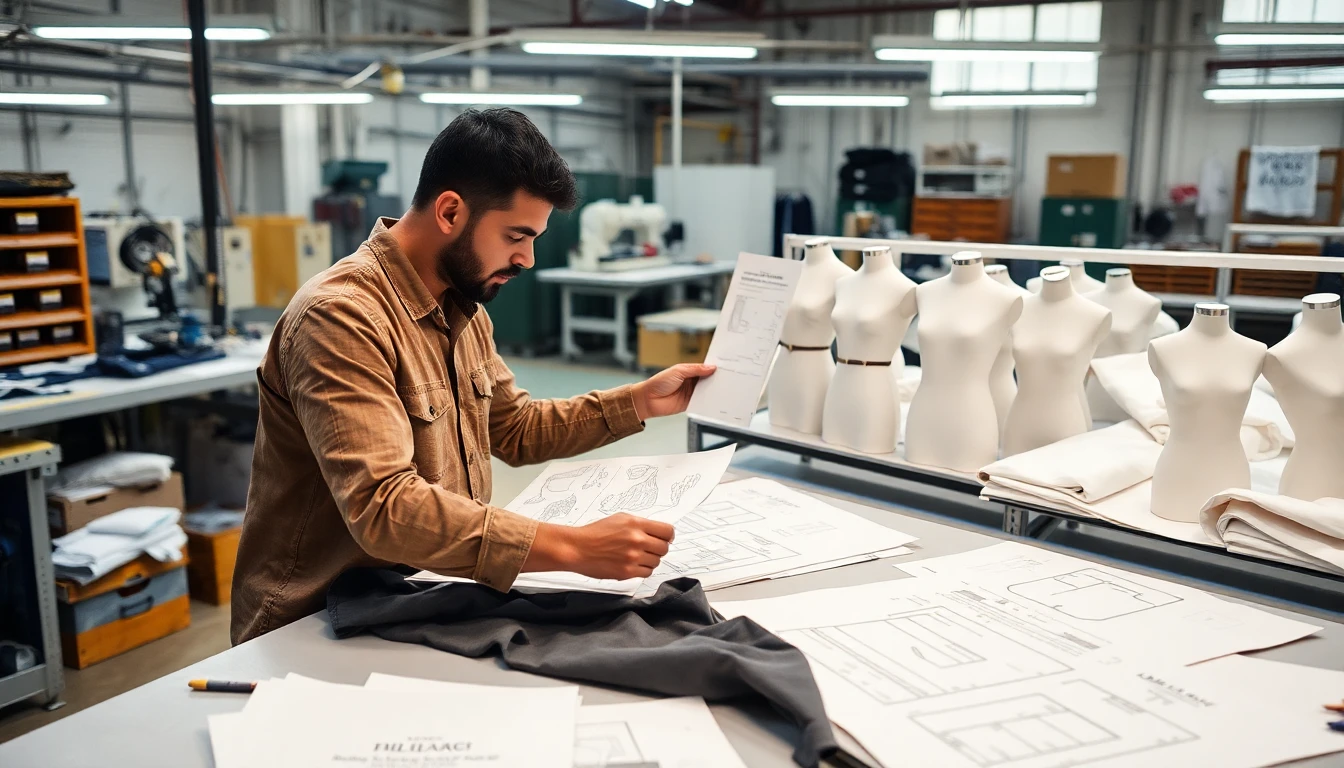
The factory designed it. They tested the pattern. They ran bulk production for three other brands. You slap your logo on it and ship.
That's ODM stripped to its bones.
The factory will take over your design department.
Sportswear ODM manufacturers run full-chain services. They handle everything from initial concept to final garment. You don't hire pattern makers. You don't source fabric mills. You don't prototype samples in your garage. The factory does all of it.
Walk into their showroom (virtual or physical). You'll see catalog libraries stocked with hundreds of ready-made designs. Sports bras with racerback straps. High-waisted leggings with phone pockets. Moisture-wicking tanks in twelve colorways. These aren't sketches. They're finished samples ready for your brand label.
Two routes dominate ODM:
Standard catalog selection : Pick existing designs straight from their lineup. No modifications. The factory ships after you approve color and add your hang tags.
Semi-custom adjustments : Choose a base design. Tweak minor details. Swap mesh panels for solid fabric. Adjust waistband height by 2cm. Request custom colorways that match your brand palette. The core pattern stays the same.
This model thrives because emerging brands lack in-house design teams. Why spend $8,000-$15,000 hiring a technical designer? The factory employs twelve of them. Their design departments track fitness trends full-time. They attend trade shows. They monitor Instagram influencers and Lululemon's seasonal drops. Then they copy what sells.
Timeline: 4-8 weeks from product selection to shipment
Speed separates ODM from OEM.
Week 1 : Catalog review and sample selection. The factory emails their latest lookbook (updated every three months). You mark five styles you want to test.
Week 2 : They ship physical samples to your office. Check fit, fabric hand-feel, and construction quality. Approve or request minor tweaks.
Week 3-4 : Semi-custom adjustments (if any) and bulk order confirmation. The factory has your chosen fabrics in stock. They cut patterns for similar orders last month.
Week 5-8 : Production runs and shipping. Small orders (200-500 pieces) finish in 3 weeks. Larger volumes (1,000-2,000 pieces) take 5 weeks. You're still half the timeline of full OEM design cycles.
Lower MOQ threshold, more cost-effective
ODM manufacturers cut financial risk for new brands:
Order Type | MOQ Per Style | Cost Per Unit (USD) |
|---|---|---|
Catalog standard | 100-200 pieces | $12-$18 |
Semi-custom | 200-500 pieces | $14-$22 |
Exclusive design | 500-1,000 pieces | $18-$28 |
Compare that to OEM's 300-500 piece minimums at higher per-unit costs. You save 30-40% on initial investment .
The trade-off? Non-exclusivity . That same tropical-print sports bra you're selling might appear in two competitors' Shopify stores next month. The factory sells the design to whoever orders it. Standard ODM contracts don't include exclusivity clauses. You pay premium fees for design lock-up agreements ( 15-25% markup ).
Market size demonstrates explosive demand
The numbers back ODM's growth. Global apparel ODM hit $40.74 billion in 2024 . Projections show $60 billion by 2032 (CAGR 4.95%). Athletic wear alone commands $70 billion of that segment.
Women's activewear reached $21.69 billion in 2025 . Growth runs at 7.6% annually through 2033. Q1 revenues hit $5.04 billion . Q2 climbed to $5.36 billion . Brands are ordering tens of millions of units from ODM factories in China, Vietnam, Bangladesh, and India.
Fitness culture drives this. Home workout trends during 2020-2022 never reversed. Smart fabric tech (moisture sensors, heart rate threads) pushes innovation. Sustainability rules force factories to stock recycled polyester and organic cotton. ODM suppliers absorb these R&D costs. Then they spread them across multiple brand clients.
Your Custom Space (and Limitations)
ODM isn't zero customization. You control:
Brand labels and hangtags (woven labels, printed neck tags, custom packaging inserts)
Colorway adjustments (swap their navy for your signature teal)
Minor fit tweaks (add 3cm to inseam length, adjust compression level)
Logo placement (heat-transfer prints, embroidery positioning)
You cannot control:
Core pattern design (the cut, seam construction, and silhouette stay fixed)
Fabric innovation (choose from their approved mill partners, not custom textile development)
Exclusive ownership (unless you negotiate and pay for design lock-up)
The Practical Path to Quick Start
Smart brands use ODM as a market-testing launchpad:
Step 1 : Select 3-5 catalog styles that match your brand look. Order minimum amounts (100-200 pieces per style).
Step 2 : Customize with branded labels, custom hang tags, and unique packaging. Put $500-$1,500 here for professional presentation.
Step 3 : Launch on your website. Test market response. Track which styles sell fastest. See which get returns. Check what customer feedback shows.
Step 4 : Prove demand (hit $30K-$50K in revenue). Negotiate semi-custom deals. Ask for small pattern changes based on customer feedback.
Step 5 : Scale to exclusive design contracts. Move select bestsellers to full OEM production. Use ODM for fast trend testing. Use OEM for signature hero products.
BeRun Clothes runs both ODM and OEM tracks. Their catalog library updates every three months with 50+ new activewear designs . They also support full custom development for brands ready to own their patterns. You're not stuck in one model forever. You grow as your brand scales.
Eight-Dimensional Deep Comparison: Key Differences Between OEM and ODM
The devil lives in eight specific battlegrounds. These aren't theories. Your budget bleeds here. Your timeline explodes here. Your brand gets copied by someone who ordered the same design three weeks after you.
Let's dissect each dimension with numbers that matter.
Design Control: What You Own vs. What You Can Only Use
OEM hands you the keys to the kingdom. You draft the tech pack. You specify the fabric mill. You engineer the four-way stretch ratio. You patent the compression pattern. The design IP lives in your legal files. Competitors can't touch it. The factory signed NDAs before seeing your sketches. IP assignment clauses transfer all copyright to your brand entity. You own the patterns. You own the grading. You own the silhouette. Forever.
ODM gives you a rental agreement. The factory owns the design. They created it last year. They've sold it to six brands across three continents. You pay for production. You add your logo. But the pattern? Not yours. The seam construction formula? Not yours. The pocket placement algorithm they optimized over 4,000 units? Not yours either.
Want exclusivity? Negotiate a lock-up clause. Expect 15-25% markup on unit costs. Contract terms read "five-year exclusivity within North America." Penalty clauses worth 10x the licensing fee if they violate. Even then, you're licensing ownership. You don't hold the deed.
The brand differentiation gap is measurable. OEM products score 80-100% uniqueness in market positioning. ODM products average 30-50% differentiation . The rest overlaps with competing brands using the same factory catalog.
Cost Structure: Actual invoices for upfront investments
The price tags don't lie. OEM costs explode upfront. ODM spreads the pain across multiple clients.
Cost Component | OEM Investment | ODM Investment |
|---|---|---|
R&D Development | $50,000-$200,000/design | $10,000-$30,000/design (shared) |
Sampling Rounds | $5,000-$20,000/iteration | $2,000-$5,000/iteration |
Pattern Tooling | $30,000-$100,000/set | $5,000-$20,000/set (shared) |
Total Initial Investment | 30-50% higher | Baseline |
Break down that R&D line. OEM brands hire technical designers at $80,000-$120,000 annual salaries . They contract fabric labs for performance testing. They run wear trials with focus groups. Four revision cycles happen before bulk production.
ODM factories absorbed those costs two years ago. They've sold 15,000 units of this exact design. You're customer number twelve. The development expense divided by twelve brands? That's your $10K-$30K share.
Here's the kicker: OEM costs drop hard at scale. Your per-unit manufacturing cost decreases 20-30% once you hit 5,000+ pieces. You've paid for the tooling. You own the patterns. Later orders just cover materials and labor.
ODM costs stay flat. You never escape the factory's margin structure. Worse, more brands order the same design. The factory drops prices to stay competitive. Your differentiation shrinks. Your margins get squeezed 10% each year in commodity categories.
Time Cycle: The Real-World Clock of Market Speed
Speed kills in fast fashion. It saves lives in direct-to-consumer brands testing product-market fit.
Production Phase | OEM Timeline | ODM Timeline |
|---|---|---|
Design Development | 2-4 months | 2-4 weeks |
Sampling & Revisions | 4-8 weeks | 2-3 weeks |
Bulk Manufacturing | 4-8 weeks | 4-6 weeks |
Total Time to Market | 4-8 months | 2-4 months |
Why OEM takes twice as long: You're building from zero. Your technical designer creates the first flat sketch in Adobe Illustrator. They send it to a pattern maker. The pattern maker drafts the initial grading. The factory cuts the first sample. You receive it three weeks later. It doesn't fit. The rise sits too high. The compression feels too loose. You send revision notes. The factory cuts sample number two. Add another three weeks.
Why ODM moves fast: The factory cut this pattern 600 times last quarter. They know the fabric shrinkage rate. The seam puckering issue? Solved. They stock the thread color. Your order enters a proven production line. No learning curve. No prototyping delays.
Real-world case: A Los Angeles activewear startup used ODM to launch their first collection in 11 weeks . They tested market demand with $18,000 inventory investment. Sold out in six weeks. The revenue funded a custom OEM line that launched seven months later.
Minimum Order Quantity (MOQ): Your entry ticket
Minimum order quantities separate the bootstrapped from the venture-backed.
OEM demands volume: Expect 500-1,000 pieces per design as standard MOQ. Factories justify this with tooling setup costs. Custom patterns need cutting. Machine settings need adjusting for your specific fabric blend. Volume helps them break even.
Taiwan's Pou Chen Group (makes shoes for Nike, Adidas, Under Armour) sets 800-piece minimums for full OEM orders. That's $12,000-$20,000 upfront investment per style at wholesale costs.
ODM accepts smaller batches: Start at 100-200 pieces per design . Some suppliers go as low as 50 pieces for catalog standards. They run this pattern for four other brands this month. Your small order fits between larger production runs.
A Shenzhen ODM factory serving European fitness brands dropped MOQ to 200 pieces in 2024. That's a 20% reduction from their previous 250-piece minimum. Why? Competition from Vietnamese and Bangladeshi manufacturers forced flexibility.
The cash flow math matters:
- ODM entry: 200 pieces × $15/unit = $3,000
- OEM entry: 800 pieces × $18/unit = $14,400
For first-time founders, that $11,400 difference is rent money. It's ad spend. It's survival runway.
Quality Control: Who is responsible for the final product?
OEM puts you in the inspector's chair. You hire third-party QC firms. You write the inspection protocols. You set acceptable defect rates. Industry standard: 2.5% AQL for critical defects , 4.0% AQL for major defects . You visit the factory floor during peak production. You approve dye lots before bulk cutting.
Risk : Chain disruption hits harder. Your single gym clothing OEM factory shuts down? Pandemic, equipment failure, labor strike - your entire production stops. Solution : Contract 2-3 backup manufacturers. Split orders 60/40 across primary and secondary suppliers.
ODM shifts quality responsibility to the factory. They've refined this design through 20,000 units. They know the weak points. The waistband roll-down issue? Fixed. Their QC team inspects in-house using their established standards.
Risk : Consistency varies across factories. The mesh panel on your yoga pants might match well in batch one. Batch two arrives with a different mesh supplier. Stiffer feel. Less breathable. Solution : Write exclusive agreements. Lock in specific fabric mills. Hire third-party auditors for random batch inspections.
Industry data shows the gap: OEM production delays increase 10% on average. Custom specifications require extra QC rounds. ODM product recall rates run 5% higher . Cross-brand quality variance happens as factories juggle multiple clients.
Intellectual Property Ownership: The Power Play in Legal Documents
OEM = 100% ownership. Your design files stay in your Google Drive with two-factor authentication. The factory cannot reproduce your patterns after contract termination. Standard agreements include:
Full IP assignment clauses (all design rights transfer to your brand entity)
Non-compete restrictions (factory cannot produce similar items for competitors for 2-3 years)
Confidentiality terms (NDAs covering all technical specifications)
You can patent your innovations. That moisture-wicking fabric formula you developed? File it with the USPTO. Those strategic mesh placements that improve breathability by 23%? Patent pending.
ODM = licensed usage. The factory designed it. The factory owns it. You buy production services and attach your brand label. Want protection? Negotiate these contract additions:
Exclusive licensing agreement : "Factory agrees not to sell Design #A4782 to any third party for 36 months within the European Union market. Violation penalty: $50,000 or 10x licensing fee, whichever is greater."
IP transfer sub-clause : "Upon payment of $25,000 additional fee, all design rights for Style #YP-2024-03 transfer to Brand X for good. Pattern grading, tech pack, and fit specifications included."
Without these clauses? One factory email and your "signature" leggings appear on three competing Shopify stores next quarter.
Customization Flexibility: The Ceiling of Innovation Space
OEM breaks through limits. You want a hybrid fabric? 60% recycled polyester, 35% organic cotton, 5% spandex with silver-ion antimicrobial treatment. Source it. You want laser-cut ventilation holes in a geometric pattern matching your brand's visual identity? Engineer it. You want compression gradients that increase by 2mmHg every 10cm from ankle to thigh? Design it.
Huawei used this OEM depth for smartphone components. Custom chipsets. Camera sensors with exact megapixel arrays. Battery cells with proprietary charging curves. Result: products competitors couldn't replicate without 18-month development cycles.
Fitness apparel parallel: Lululemon's Nulu fabric (buttery-soft, four-way stretch, sweat-wicking) came from OEM partnerships. They owned the textile formula. Gymshark's Vital Seamless collection used proprietary knitting patterns developed through OEM contracts.
ODM limits you to the menu. Choose from their approved fabric mill partners. Select from 12 standard colorways. Adjust the waistband height by ±3cm. Change the logo placement. That's your sandbox.
Flexibility comparison by numbers:
- gym apparel OEM customization range: 100% (anything that's feasible)
- gym apparel ODM modification range: 30-50% (pre-defined parameters)
You cannot request patent-protected innovations through ODM. The factory won't develop exclusive fabric tech for a 500-piece order. They won't retool their knitting machines for your unique seam construction. The ROI doesn't work for them.
Long-Term Cost-Benefit Analysis: Five-Year Return on Investment Comparison
The first year? ODM wins on costs. Year five? OEM dominates profitability.
Timeline Stage | OEM Economics | ODM Economics |
|---|---|---|
Year 1 Costs | High (R&D = 30% of budget) | Low (R&D = 5% of budget) |
Year 3-5 Costs | Decreasing (scale drops unit cost 20%) | Flat (no competitive moat) |
5-Year ROI | +15% (differentiation premium) | +5% (commodity pricing) |
Why OEM scales better: You've paid the upfront development costs. Years 2-5 just cover materials and labor. Your per-unit manufacturing cost drops from $22 to $17 as order volumes increase. You charge the same retail price ($88). Your margin expands from 60% to 71%.
Why ODM stays flat: You never escape the factory's standard pricing structure. Worse, the design becomes a commodity. Twelve brands now use it. The factory drops wholesale costs to stay competitive. Your cost per unit decreases 10% each year . So does your competitor's. Everyone races to the bottom. The brand with the lowest CAC (customer acquisition cost) wins. Product differentiation dies.
Smart apparel brands in the mattress and footwear industries ran this exact experiment. OEM products showed 40% higher gross margins by year three compared to ODM equivalents. The development costs spread across larger volumes. The design ownership created pricing power.
Global chain shifts confirm the pattern. Post-2010, OEM manufacturing moved to value-chain centers. Brands clustered design, marketing, and IP in home markets. ODM operations migrated to cost-optimized regions like Vietnam and Bangladesh. 15% lower labor costs drove commodity production there.
The networking equipment market tells the story clean. ODM white-label switches captured 60% market share in the 100G segment. Why? Standardized performance. Price competition. Zero differentiation. The brands selling them compete on distribution and support. Not product innovation.
BeRun Clothes structures pricing to match your growth stage. Our ODM catalog offers low-MOQ entry (200 pieces) for market testing. You validate demand and hit $50K+ revenue? Our OEM division provides full custom development. You're not locked into one model. You evolve as your brand scales and your margin requirements mature.
Brand Stage Matching Guide: Which Model Should You Choose?
Your revenue tells the manufacturing story before you speak. A brand doing $80,000 per year faces different challenges than one crossing $5 million. Cash flow differs. Competitive advantages differ. Risk tolerance differs, especially during a container shipment with quality issues.
The framework below cuts through vague advice. It maps three revenue stages to specific OEM/ODM decisions. Each stage carries benchmarks from brands that survived growth—and those that burned capital chasing the wrong model too soon.
Startup Validation Phase (Annual Sales $0-$1M): ODM-led, rapid testing of product-market fit
You're proving two things: people want your product and they'll pay your price . That's it. Design innovation is a luxury you can't afford yet.
Why ODM dominates here:
Your total budget sits under $50,000 for inventory, marketing, and operations. ODM's lower MOQ (100-200 pieces at $12-$18/unit) means $2,400-$3,600 buys you a testable collection. OEM's 500-piece minimums would consume $9,000-$12,500 . Half your runway gone before you validate anything.
You don't have a design team. Hiring a technical designer costs $80,000-$120,000 per year. Freelancers charge $5,000-$15,000 per design cycle . ODM factories employ twelve of them. You borrow their expertise for free.
The validation playbook:
Launch with 3-5 ODM catalog styles that match your brand aesthetic. High-waisted leggings. Racerback sports bras. Seamless bike shorts. Standard silhouettes with proven demand.
Add your branding: custom hang tags ($0.15-$0.30/piece), woven labels ($0.40-$0.80/piece), branded packaging ($1.20-$2.50/unit). Total customization investment: $500-$1,500 . This creates perceived uniqueness. No engineering costs required.
Success metrics for this stage:
Sell-through rate >60% in 90 days (proves demand exists)
Customer acquisition cost (CAC) <$30 through organic and paid channels
Return rate <8% (ODM quality meets market expectations)
Repeat purchase rate >12% (customers value the product despite non-exclusivity)
Hit these numbers? You've validated product-market fit. Revenue climbs toward $100K-$300K . That's your signal to evolve.
Real example: A Miami fitness brand launched with four ODM styles in June 2023. Total investment: $4,200 (inventory) + $800 (branding) + $2,000 (initial marketing). Sold $47,000 in five months. Sell-through: 71%. They proved demand before designing anything custom.
Growth and Expansion Phase (Annual Sales $1M-$10M): Hybrid Strategy, Building Brand Moat
You've crossed seven figures. You have customer data. You know which styles sell. Gaps in competitor offerings? You've spotted them. Now you differentiate.
The 20/80 split that works:
Allocate 20% of SKUs to OEM custom development . These become your signature hero products. The leggings with your patented waistband design. The sports bra with ventilation placement you tested for six months. These items carry 25-40% higher margins . No competitor sells them.
Keep 80% of SKUs in ODM production . Your basic tanks. Your seasonal colorway releases. Your trend-testing capsules. These maintain cash flow and inventory turnover. Your OEM pieces build brand equity.
Financial structure:
Your revenue of $3 million per year supports this split:
- $600K invested in OEM development (custom patterns, exclusive fabrics, proprietary tech)
- $2.4M in ODM baseline production (proven styles, fast replenishment, lower risk)
OEM pieces sell at $68-$98 retail . ODM pieces move at $42-$58 retail . The OEM premium funds your design investment. ODM volume covers operational overhead.
Implementation timeline:
Months 1-3: Research and develop your first OEM hero product. Conduct fit tests. Sample three fabric mills. Run customer surveys on desired features.
Months 4-6: Launch OEM hero alongside ODM core collection. Allocate 60% of ad spend to the OEM piece. It's your brand differentiator. Make it visible.
Months 7-12: Analyze performance. OEM hero should drive higher average order value (+$22-$35) and stronger brand recall (measured through surveys) . ODM pieces maintain faster inventory turnover (45-60 days vs. 90 days for OEM) .
Case study: A Canadian activewear brand at $2.1M per year developed one OEM legging design with compression mapping technology. Development cost: $38,000. They sold 4,800 units at $89 retail over 18 months. Revenue: $427,200. Margin after COGS: $267,000. ROI: 602% over the investment period. Their ODM basics continued funding operations. The OEM hero built brand loyalty.
Mature Scale Phase (Annual Sales $10M+): OEM-dominated, building competitive barriers
Revenue exceeding $10 million demands product moats. You're competing with established brands. Price wars destroy margins. ODM commoditization kills differentiation.
Why OEM becomes essential:
You need proprietary technology competitors cannot replicate. Fabrics with patented moisture-wicking formulas. Seam construction that prevents chafing through 200 wash cycles. Compression gradients built with sports science labs.
Lululemon owns textile patents. Gymshark developed Vital Seamless through exclusive OEM partnerships. These aren't marketing claims. They're legal protections enforced through IP law.
The ROI math at scale:
Initial OEM investment: $200,000-$500,000 for full design suite development (5-8 signature styles with proprietary elements). Sounds steep? Calculate unit economics at volume.
You're making 50,000-100,000 units per year . OEM per-unit costs drop to $9-$14 at this scale (vs. $18-$25 for low-volume custom). Your retail price holds at $78-$118 . Brand strength and unique features support this.
Gross margin expansion:
- ODM baseline: 55-60% gross margin (commodity pricing pressure)
- OEM proprietary: 68-75% gross margin (pricing power from differentiation)
That 13-15 percentage point difference on $10M revenue equals $1.3-$1.5M extra gross profit per year . It funds your next product innovation cycle.
Strategic SKU allocation:
60% OEM signature collection (your brand identity, highest margins, strongest customer loyalty)
30% OEM seasonal innovation (trend-responsive designs, testing ground for next signature pieces)
10% ODM basics (commodity items like simple tanks, used for bundling and promotions)
Competitive moat indicators:
Customer lifetime value (LTV) >$280 (vs. industry average of $165 for commodity brands)
Repeat purchase rate >35% (brand loyalty from product uniqueness)
Brand search volume growth >40% year-over-year (organic demand from word-of-mouth)
Wholesale partnership requests from premium retailers (Nordstrom, Equinox, high-end boutiques want exclusivity)
BeRun Clothes structures growth partnerships around this stage progression. Our ODM catalog supports your validation phase with 100-piece minimums . You hit $500K revenue? Our semi-custom ODM program offers exclusive colorways and minor modifications. Cross $2M? Our OEM division provides full pattern development, fabric sourcing from 15+ specialized mills , and IP protection frameworks. You're not making a permanent choice. You're selecting the right tool for your current stage. We scale the services as your brand matures.
Real-World Case Analysis: Brand Growth Pathways Across Different Models
The numbers show what really happens in manufacturing. Below are three stories from cross-border apparel brands and fitness startups. They show what happens with ODM, OEM, or a mix of both.
ODM Quick Start: Saiwei Times' Platform Bestseller Strategy
Saiwi Times built a $100M+ revenue portfolio . They launched multiple brands (Coofandy, Ekouaer) through ODM catalog selection. No design from scratch. They picked proven factory styles. Added branded labels. Flooded Amazon with precise advertising.
Their execution:
Platform concentration : Amazon sales hit 88%+ of total revenue . They optimized for one channel. Hard.
ODM catalog leverage : Selected trending styles from Guangdong ODM manufacturers. Development costs stayed low. Budget went to CPC ads and API-driven campaign optimization .
Results : One promotional campaign boosted related product sales by 20% . Speed to market? 8-10 weeks from design selection to live listings.
Key takeaway for wholesale gym clothing manufacturers : ODM works if market penetration matters more than design exclusivity. You trade uniqueness for speed. The risk? Competitors order the same styles. Your advantage becomes advertising efficiency, not product innovation.
Evolution of Hybrid Models: Costway's Brand Upgrade Path
Costway launched on Amazon US in 2008. Used ODM products across home goods and apparel categories. By 2015, they'd built enough brand equity to launch their own direct website . Current scale: 1M+ customers monthly , 10,000+ daily orders .
Their progression:
Years 1-3 : Pure ODM fulfillment through platform sales. Built revenue. Tested categories. Validated demand.
Years 4-7 : Introduced semi-custom ODM variations. Exclusive colorways. Minor fit adjustments. Margins increased. Fast turnover stayed.
Year 7+ : Shifted hero products to full OEM development. Built proprietary features. Platform dependency dropped from 95% to an estimated 60-70%. Owned-channel growth made this possible.
The financial shift : ODM baseline provided $5-8M annual revenue . That funded OEM investment of $200K-$500K for custom development. OEM products now drive higher LTV customers . Support premium pricing too ( 15-25% above ODM equivalents ).
This mirrors the smart path for activewear design services. Use ODM to prove your brand works. Reinvest profits into OEM differentiation.
In-depth analysis of cost and ROI: Clear Your Investment Account
Your spreadsheet shows unit costs. Mine shows what those numbers mean at scale—500 pieces to 10,000.
Most founders compare OEM and ODM by staring at the per-unit price. That's like buying a car based on the payment while ignoring insurance, gas, and resale value. The real cost structure hides in fixed expenses, margin erosion timelines, and break-even math. Every order you place shifts these numbers.
A complete cost breakdown of the OEM model
OEM front-loads your investment. You pay before production starts.
Design development: $500-$3,000 per style. This covers tech pack creation, pattern making, and grading across sizes. Complex designs with engineered fabrics push toward the $3K ceiling. Simple tanks with minimal seaming land closer to $500.
Sampling rounds: $50-$200 per physical sample. You'll need 2-4 rounds before approval. Budget $300-$800 total per style for revisions.
Tooling and molds: Factories amortize this into your first order. You cover setup costs for cutting equipment and pattern adjustments. First-order pricing runs 20-50% higher than repeat orders. A $12 per-unit style costs you $14.40-$18 on the first batch.
Scale advantage kicks in hard: Order 1,000 pieces? Your unit cost drops 30% from that inflated first batch. Hit 5,000 pieces? You've cut costs by 50% . Cross 10,000 units? You're at pure material-plus-labor pricing. Fixed development costs spread thin across volume.
Hidden cost taxes in the ODM model
ODM looks cheap upfront. The bill arrives later in margin compression.
Design commoditization: Six brands sell the same legging design. Price wars begin. Your gross margin shrinks 15-25% each year as competitors undercut each other. Year one margin of 62%? Expect 47-52% by year three on ODM catalog products.
Brand value erosion: Exclusivity supports premium pricing. Non-exclusive ODM designs kill that advantage. Over three years, you lose 10-20% of potential price premiums compared to unique OEM products. Industry data shows differentiated brands command 30% price premiums . ODM caps you at commodity pricing.
Practical calculation of the break-even point
Break-even volume tells you where profit starts. The formula: Fixed costs ÷ (Selling price - Variable cost per unit) .
You're selling at $40 retail with a standard wholesale margin structure:
Order Volume | OEM Unit Cost | ODM Unit Cost | OEM Break-Even | ODM Break-Even |
|---|---|---|---|---|
500 pieces | $17.00 | $14.40 | 1,700 units | 900 units |
2,000 pieces | $13.60 | $13.00 | - | - |
5,000 pieces | $10.40 | $11.60 | - | - |
10,000 pieces | $9.00 | $11.00 | - | - |
ODM wins at fewer than 2,000 pieces. The lower break-even point (900 units vs. 1,700) means faster cash recovery. Cross 5,000 units? OEM's per-unit advantage flips the economics. You make $1.20 more profit per piece sold.
Three-Year ROI Comparison: Who Wins the Long-Term Battle
OEM financial trajectory:
- Year 1: 50% ROI (you're building brand recognition, absorbing development costs)
- Year 3: 250% ROI (your pricing power hits a 30% premium over commodity products)
- Total 3-year ROI: 180%
ODM financial trajectory:
- Year 1: 120% ROI (fast payback, low entry barriers)
- Year 3: 80% ROI (margin compression from competition, hitting growth ceiling)
- Total 3-year ROI: 110%
The crossover happens around month 18-22. ODM generates faster returns at first. OEM builds advantages that compound. By year three, OEM dominates.
BeRun Clothes structures payment terms around this reality. Our ODM clients get net-30 terms for repeat orders. This protects cash flow in the beginning. OEM partnerships include milestone-based payments : 30% at design approval, 40% at sampling, 30% before shipping. You don't drain capital in one payment cycle. You match investment to production phases. This builds the margin power that funds your next growth stage.
Conclusion

OEM vs ODM isn't about finding the "better" option. It's about what fits your brand's DNA, budget, and timeline.
Building a unique fitness brand with custom designs? OEM gives you creative control. Need speed, lower risk, and tested designs? ODM works as your launchpad.
Your choice today shapes the next 2-3 years. OEM means you invest in standing out and building brand value. ODM means you focus on testing the market and keeping costs down. Both paths work—plenty of fitness brands prove that.
BeRun Clothes handles both OEM and ODM gym clothing. Start with ODM, then move to OEM as you grow. We help brands at every stage make clear choices. You get transparent pricing, quality guarantees, and proven production.
Stop doubting your strategy. Schedule a free consultation to talk through your needs. Or request our OEM vs ODM cost toolkit to see real numbers for your brand.
Your future customers are searching right now. Pick the path that gets you there.