Every year, thousands of entrepreneurs enter the hunting apparel market with a strong idea — and no clarity on one critical decision: OEM or private label hunting apparel?
Pick the wrong path, and you're burning cash on custom tooling you didn'T need. Or you're stuck selling generic gear that any competitor can copy tomorrow.
These two hunting apparel brand development paths are not the same. The choice shapes your startup costs, your timeline to first sale, and your control over product quality. It also decides how defensible your brand becomes in a crowded market.
This guide breaks down what separates the two models. You'll see where each one wins — and which one fits where your brand stands right now.
Head-to-Head Comparison: OEM vs Private Label Across 7 Key Dimensions for Hunting Brands
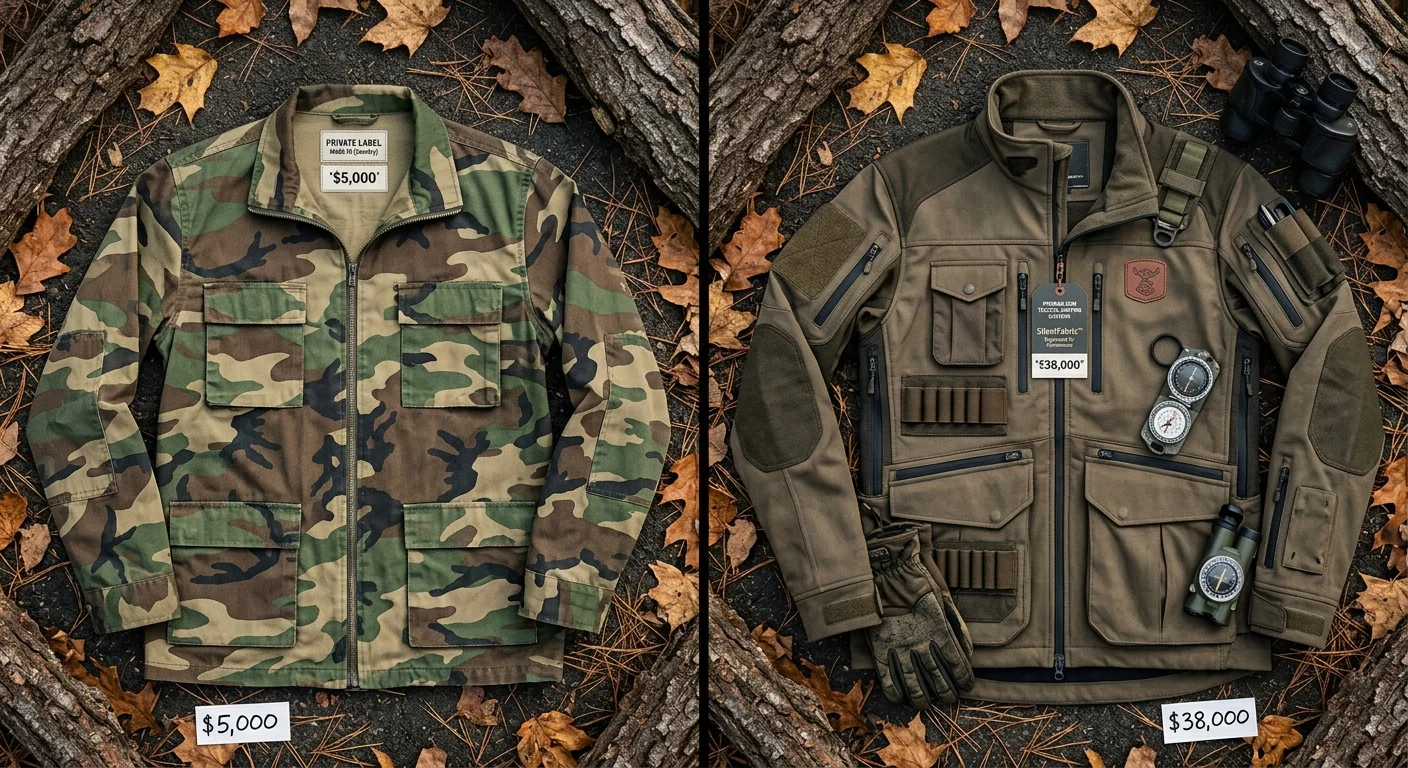
The numbers don' t lie. In the hunting apparel space, the difference between these two models is not a small operational detail. It's the gap between a $5,000 launch and a $38,000 one.
Here's what separates OEM from private label across the seven dimensions that matter most for a new hunting brand.
1. Customization Freedom: Design, Function, and Materials
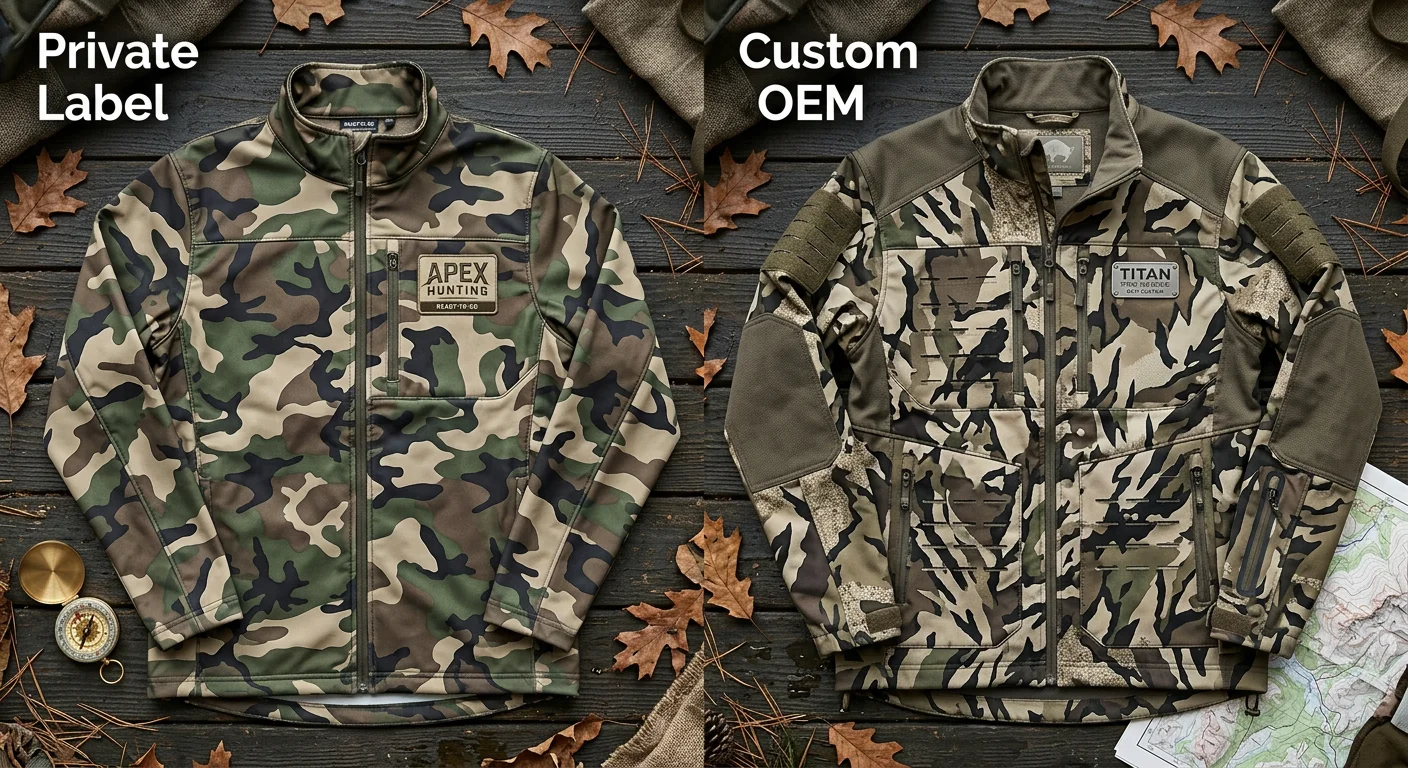
With OEM clothing hunting apparel manufacturing , you bring the tech pack. The factory builds to your spec — full stop. You can engineer NIR-compliant infrared suppression fabrics, silent zippers, specific magazine pocket layouts, or detachable bug-net hoods. That earns a 9–10/10 customization score .
Private label outdoor clothing lands at 4–6/10. You pick from 3–10 existing camo patterns. You choose between 2–4 standard fabric options. Then you swap in your logo. That's it. You don't control the pattern — you inherit it.
2. Time to Market
Speed matters. Hunting season has a hard deadline.
Private label : 45–60 days from style confirmation to warehouse arrival (air freight can cut this to 30–40 days)
OEM / custom camo hunting gear : 90–150 days, covering multiple sample rounds and functional testing — waterproof pressure tests, field noise evaluations, and more
Private label gets you to market 2–3x faster . For a first-season launch with a tight window, that gap is real.
3. Startup Cost Reality
This is where new brands often get caught off guard.
Cost Element | Private Label | OEM |
|---|---|---|
Pattern development fee | $0–$300 | $300–$1,000+ |
Special camo print setup | Not required | $300–$600/pattern |
Sample cost | $50–$150/style | Included in development |
Unit cost (fleece hunting jacket) | $14–$22/pc | $35–$60/pc |
First-order total (300–600 pcs) | ~$4,500–$7,000 | ~$22,000–$38,000 |
For a branded hunting apparel startup , private label runs at 20–40% of OEM's cash requirement. That's not a rounding error — that's the difference between staying in stock and going under.
4. MOQ Pressure
hunting clothing white label suppliers accept 100–300 pieces per color per style. Multi-size mixing is available. Test orders as low as 50–100 pieces are possible when you pull from in-stock fabrics.
Tactical hunting clothing OEM pushes higher. Expect 300–600 pieces minimum per style. Complex technical pieces often require 800+. Add a proprietary camo print, and minimums jump to 500–1,000 pieces just to cover the print setup cost.
The bottom line: a 3–5 SKU private label launch can stay under 1,500 total units. The same SKU count via OEM often demands 3,000+ pieces before the numbers make sense.
5. Brand Differentiation Potential
OEM is the clearest path to a defensible brand position. You can register proprietary camo IP, engineer a unique silent fabric stack, and build a pocket system no competitor can copy. That's what separates premium hunting wear manufacturing brands from commodity sellers. Differentiation score: 9–10/10 .
Private label still offers real differentiation — terrain-specific product naming, curated accessory bundles, niche sizing, and content-driven positioning. But the core pattern and cut? Other brands are wearing the same thing. Differentiation score: 4–6/10 .
6. Manufacturing Partner Complexity
Private label needs 2–4 communication rounds: logo file, size curve, hangtag info, sample sign-off. No tech pack required. It suits brands that move fast and want low friction.
OEM demands 5–10+ rounds . That includes on-body fit reviews, noise testing, and ergonomic evaluation. Finding a hunting wear manufacturing partner with waterproof seam taping, proprietary camo printing, and silent fabric capabilities is hard work. Fewer factories qualify, so your negotiating leverage is lower too.
7. Long-Term Scalability
Private label is built for early-stage validation. You can expand SKUs fast, test price points, and read the market quickly. The risk: you share patterns with competitors. Also, if your supplier drops a style, your product line breaks with it.
OEM builds compounding brand equity. Lock in your camo IP and base patterns, then extend into a full layering system — base, mid, shell — plus tactical accessories, all under one visual identity. That's the foundation for a 5–10 year product ecosystem .
Quick-Reference comparison table
Dimension | Private Label | OEM |
|---|---|---|
Customization | 4–6/10 | 9–10/10 |
Time to market | 45–60 days | 90–150 days |
Startup cost | ~$4.5k–$7k/style | ~$22k–$38k/style |
Minimum order quantity hunting apparel | 100–300 pcs/color | 300–600+ pcs/color |
Differentiation ceiling | Medium | High |
Partner complexity | Low | High |
Long-term scalability | Fast SKU expansion | Deeper brand equity |
The pattern is clear. Private label wins on speed, cost, and simplicity. OEM wins on control, differentiation, and long-term brand defensibility. Neither is the better choice across the board — the right answer depends on where your brand stands right now.
The Decision Framework: Which Model Fits Where Your Brand Stands Today
The data above tells you what each model costs. This section tells you which one to pick — based on where your brand is right now, not where you hope it will be.
Most new brands fall into one of two traps. They jump into OEM hunting gear too soon because it sounds more professional. Then they get stuck in endless sample revisions — no Tech Pack, no defined fit specs, no clear direction. Or they assume full customization is the answer, when the real problem is simpler: demand hasn't been proven yet.
Both mistakes cost real money. Here's how to dodge them.
The 4-Factor Decision Filter
Run your brand through these four variables. Be honest. The answers point you to the right path.
1. Budget
- Under $10,000 to start → private label
- $10,000–$30,000 with a differentiation goal → OEM
- $30,000+ with a long runway → full custom OEM development
2. Technical readiness
- No Tech Pack, unclear fabric requirements, uncertain sizing → private label first, or an OEM partner who guides you through the process
- Partial specs and reference samples → OEM is the right fit
- Complete Tech Pack, BOM, grading rules, and test standards → full OEM development is viable
3. Launch window
- Weeks to a few months → private label, no question
- Standard seasonal window → OEM handles this well
- 12+ months before launch → full custom development becomes an option
4. Differentiation need
- Testing demand, no proprietary specs needed → private label
- Custom materials, fit, or trims required → OEM
- Exclusive silhouettes, NIR compliance, or patented features → custom OEM development is the path
These factors sometimes pull in different directions. Solve the biggest risk first. Budget constraints kill more early-stage brands than weak differentiation ever does.
The Three-Stage Path Most Successful Hunting Brands Follow
The smartest hunting apparel brand development strategy isn't a simple either/or choice. It's a staged progression.
Stage 1: Private label validation.
Launch fast. Track which SKUs sell, which sizes come back, and what customers keep asking for. Don't put money into custom development until the market tells you what it wants.
Stage 2: Convert to OEM once demand is proven.
The switch has a clear trigger. You need consistent sales month over month. Return data should point to one specific, fixable spec issue. Customer reviews should request the same improvement more than once. At that point, write a basic Tech Pack from real sales data. OEM gets far less risky with that foundation in place.
Stage 3: Escalate to full custom development.
Your core product has stable demand. You need defensible features, tighter margin control, or long-term exclusivity. That's the moment deeper custom camo hunting gear development earns its cost — not before.
The One-Line Decision Rule
Validate first. Customize second. Go full custom only after you have proven demand and mature specs.
That sequence isn't a shortcut. It's how brands in the branded hunting apparel startup space stay alive long enough to build something worth protecting.
Hunting Apparel-Specific Factors That Should Influence Your Model Choice
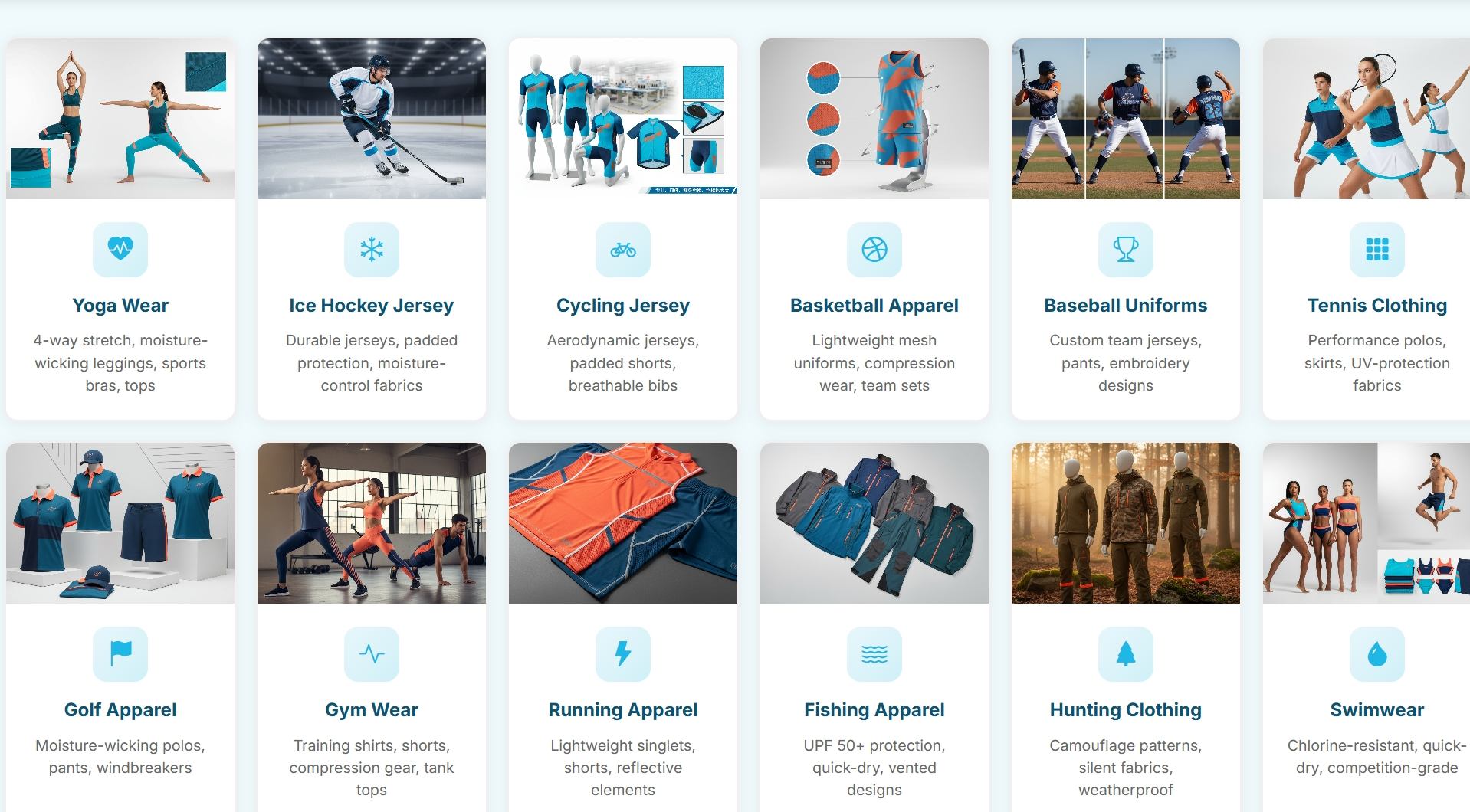
Hunting apparel isn't outerwear. It's functional equipment — and the performance requirements are specific enough to change your entire manufacturing model decision.
Here's what most startup guides won't tell you: the OEM-vs-private-label question for hunting brands isn't a financial decision alone. It's a product engineering decision . Stack more performance variables into your product, and private label gets harder to justify. OEM becomes the rational path faster than you'd expect.
Five core performance factors drive every serious buyer's purchase decision in this category. See how each one maps to your manufacturing model — that's where the real decision gets made.
The 5 Performance Factors That Drive Model Selection
1. Camo Pattern Match
Pattern selection isn't about looks — it's functional concealment. Whitetail hunters need breakup or digital camo tuned to forest density. Waterfowl hunters need patterns that blend into wetland vegetation. Turkey hunters need terrain-matching concealment built for stillness at close range.
Private label covers this at the entry level — you pick from existing pattern libraries. That works fine for general use. But targeting a specific species or terrain niche? Pattern ownership becomes a real competitive edge. That's something only OEM can deliver.
2. Quiet Fabric Construction
This is where private label falls short most often. Low-noise shell construction isn't a finish you add at the end. It's an engineering decision built into fabric selection, seam construction, and panel layout from the start. Your target customer is a whitetail or turkey hunter moving through brush. Fabric noise is a product failure for that buyer. Getting a quiet outer layer right takes OEM-level development and field testing. There's no shortcut here.
3. Waterproof-Breathability Balance
A western elk hunter hiking steep terrain in variable weather needs a shell that blocks wind and rain and moves moisture out. Those two requirements pull against each other. Dialing in that balance for a specific hunt style — a sitting deer hunter vs. a spot-and-stalk elk hunter — is a tuning problem. Private label gives you one fixed spec. OEM lets you engineer to the actual use case.
4. Odor Control
Scent management matters most in deer-focused categories. Basic antimicrobial finishes are available on some private label platforms. That's enough for the entry-level buyer. Advanced odor-control chemistry, fabric lamination, or integrated scent-blocking systems? That's OEM territory. It's also a real differentiator for any performance-focused brand position.
5. Fit and Mobility Architecture
Hunting apparel has to work across very different body positions. Shoulder articulation for a stand hunter sitting six hours straight. Knee and elbow flex for a glassing setup on rocky terrain. Brush-clearing freedom for thick-cover pursuit. Standard size grading from a private label platform handles general fit. Hunt-specific patterning — with mobility zones engineered into the right panels — needs OEM development.
How Hunt Type Should Shift Your Model Choice
Not every hunt demands the same product. Your business model should follow that logic.
Hunt Type | Dominant Performance Need | Model Fit |
|---|---|---|
Whitetail (stand/blind) | Quietness + odor control + insulation | OEM if performance-positioned |
Waterfowl | Wet-weather protection + mimicry camo | Private label viable at entry tier |
Turkey | Concealment + low movement visibility | Private label workable; OEM for proprietary pattern |
Western elk (spot-and-stalk) | Breathability + layering + mobility | OEM preferred |
The Practical Rule for Hunting Brands
Private label works well when your product needs a new camo colorway, standard fabric weight, and general-purpose fit. That covers the entry-level, price-sensitive buyer. It's a legitimate market — and private label is the efficient path to serve it.
The calculation shifts once your product brief starts stacking performance requirements. The garment needs to be quiet and weatherproof and scent-managed and mobility-optimized for a specific hunt style? That's an engineering problem, not a branding problem. That's exactly what tactical hunting clothing OEM development is built to solve.
The rule is simple: match your manufacturing complexity to your buyer's performance expectations. A generalist buyer on a budget doesn't need OEM engineering. A specialist hunter who judges gear in the field does — no question about it.
Common Mistakes New Hunting Apparel Brands Make Choosing Their Manufacturing Model
The manufacturing model decision doesn't kill most new hunting apparel brands. The assumptions built around that decision do.
Brand after brand stumbles through their first season making the same four mistakes. They're predictable. They're avoidable. And spotting them early is worth more than any supplier comparison spreadsheet.
Mistake #1: Locking Into OEM Before You've Proven Anything
Signing a full OEM contract before you've validated fit, sizing, and real buyer demand is one of the most expensive moves in hunting apparel brand development .
Here's what that looks like in practice. A 500-unit OEM run at $35 per unit landed cost ties up $17,500 in cash for 4–6 months — covering sampling, production, ocean freight, and shelf time. Sell 40–60% of that run, and you're sitting on 200–300 units of dead inventory. Clearing it means discounting 30–50% below retail. Your margin doesn't just shrink — it disappears.
The smarter sequence:
- Seasons 1–2: Target 50–100 units per style through low-MOQ cut-and-sew producers, paired with private label outdoor clothing for baseline SKUs
- Season 3+: Use real sell-through data to find which styles justify OEM minimums of 300–500 units
- Extreme seasonal items like insulated waterproof sets: run a presale round first, then produce
One non-negotiable: never skip the fit sample stage to save time. Every apparel consultant who's worked in this space calls it the single most expensive shortcut a new brand takes.
Mistake #2: Expecting Private Label to Do What It Can't
A logo swap and a new camo colorway is not a product strategy.
Most hunting clothing white label factories give you real flexibility on logos, labels, packaging, and base pattern colorways. What they don't give you: three-dimensional patterning built for treestand posture, low-noise brushed shell composites, or mobility-zone engineering built for spot-and-stalk terrain. Those changes need a development budget and OEM-level technical work.
Experienced hunters spot this right away. Forum threads in the whitetail and bowhunting communities keep returning to the same complaint — new brands are launching recolored work pants with a camo print slapped on. That perception caps your price point and kills repeat purchase.
The fix is a two-tier product structure:
- High-volume basics (base layers, logo fleece) → efficient private label, strong margin, fast cash flow
- Signature technical pieces (waterproof treestand systems, silent-shell stalking jackets) → deeper custom camo hunting gear development that puts real distance between you and the generic shelf
Mistake #3: Optimizing Unit Cost While Ignoring Total Cash Exposure
New brands fixate on cost-per-piece. The number that matters more is total capital locked in inventory.
The math on a typical first-season launch makes this clear:
Scenario | Unit Cost | MOQ | Total Outlay |
|---|---|---|---|
OEM large factory | $30/pc | 300 pcs | $9,000/style |
Low-MOQ workshop | $42/pc | 60 pcs | $2,520/style |
Your real sales confidence on a new style is under 200 units? The workshop is the smarter financial choice — even at 40% higher unit cost. Push 8–12 SKUs through OEM minimums and you're staring at $48,000–$96,000 in inventory exposure, all concentrated in styles that may not move.
Practical inventory rule: Set your first production quantity equal to 3–6 months of conservative sales projection — not your annual target. A SKU's inventory cycle stretches past 180 days? The next run needs to shrink, not grow.
Mistake #4: Treating the Manufacturing Decision as the Whole Strategy
This is the quietest mistake on the list. It's also the most damaging.
Plenty of branded hunting apparel startup founders spend weeks locked into the OEM-vs-private-label debate and almost no time on positioning, channel strategy, or buyer psychology. Then they can't figure out why a well-made product with a solid manufacturing setup isn't selling.
The honest sequence that works:
Define the hunter first — treestand whitetail, mountain elk, wetland waterfowl. Each use case weighs silence, waterproofing, insulation, and weight in a completely different way
Set commercial targets — target revenue, acceptable inventory investment, margin floor (aim for 55–65% gross margin), and maximum cash cycle
Build the product brief — nail down functional specs and price architecture before supplier conversations start
Then select the manufacturing model — as the tool that executes your strategy, not the strategy itself
The manufacturing model is not the brand. It's infrastructure. Choose it last, once you know what you're building and who you're building it for.
How to Evaluate and Choose the Right Hunting Apparel Manufacturer for Either Model
The global hunting apparel market is heading toward $5 . 84 billion by 2034. That number tells you one thing: the supplier you pick today needs to scale with you — not just fill your first 200-unit order.
The wrong manufacturing partner wipes out every smart decision you've made so far. Here's how to vet them.
Evaluating a Private Label Supplier: 5 Dimensions That Matter
1. Product library depth. Ask for their current catalog. Not a website gallery — an actual catalog with hunting jackets, pants, bibs, base layers, and insulation levels. Suppliers with production-ready SKUs beat those showing concept sketches every time.
2. Customization range. Confirm they can modify fabric weight, camo print, zipper grade, pocket layout, reinforced panels, seam sealing, woven labels, and packaging. The best suppliers draw a clear line between stock-model customization and full ODM development.
3. MOQ flexibility. Low-MOQ capability is a real filter, not a marketing line. Get actual numbers per style and per color. A vague "we're flexible" means nothing.
4. Quality-control system. Ask for their in-line QC workflow — not just "final inspection." You want documented checkpoints covering stitch density, seam strength, color consistency, waterproof claims, and size tolerance.
5. Sample lead time commitment. A supplier who won't put a sample timeline in writing is a risk. Strong partners handle fit sample → PP sample → pre-production sample stages. They back that up with an in-house sample room.
Evaluating an OEM Manufacturer: Where Most Brands Fail the Audit
Tech Pack interpretation is the first test. Send your complete Tech Pack. See whether they can restate your spec sheet, BOM, construction method, measurement tolerances, and artwork placement without confusion. Strong OEM partners ask precise questions about hunter movement, noise reduction, and layering compatibility — not just basic garment specs.
Fabric sourcing depth separates good from great. Check for direct access to quiet brushed shells, waterproof-breathable laminates, stretch panels, scent-control treatments, and proprietary camo printing. Ask whether fabrics are house-supplied, mill-direct, or customer-nominated. That answer shapes both lead time and consistency.
Sample team structure reveals real capability. Ask whether samples come from dedicated sample makers or off the production floor. A credible team explains — in technical terms — how they handle noise, mobility, weatherproofing, and durability tradeoffs in a hunting garment. Push for specifics. Vague answers are a red flag.
8 Questions to Ask Every Supplier Before Signing Anything
"Show me your last 12 months of hunting-apparel SKUs — which are private label, which are OEM?"
"What is your MOQ by style and by color for jackets, pants, and bibs?"
"What is your sample lead time for first prototypes and revised samples?"
"Which hunting-specific construction details have you produced: seam sealing, waterproof zippers, articulated knees, reinforced seat panels, brush guards?"
"Can you provide a Tech Pack redline showing how you interpret measurements and BOM?"
"What does your QC checklist cover, and at which production stages do you run inspections?"
"What fabrics, trims, and camo printing options are in your approved supplier base right now?"
"Can you share photos or audit records from an actual hunting-apparel production run — not generic outdoorwear?"
The Fast Pass/Fail Test
Pass: Real hunting SKUs on the table. MOQ and sample timing answered in hard numbers. A structured QC process. Can discuss hunting-specific performance requirements without being prompted.
Fail: Generic outdoor clothing only. Avoids naming MOQ or sample timelines. Can't read a Tech Pack. No documented proof of actual hunting-apparel production.
The choice is straightforward. Go private label hunting apparel for speed and lower development cost. Go with a hunting clothing OEM partner when your product needs proprietary engineering, tighter spec control, and performance features that standard outdoor apparel factories aren't built to deliver.
Conclusion
OEM vs. private label hunting apparel — neither model is better by default. The right choice depends on where your brand stands right now .
Tight budget? Need to move fast? Private label gets your branded hunting gear to market quickly. Building something with custom camo patterns and proprietary designs? OEM hunting apparel manufacturing gives you the foundation that serious hunting apparel brand development needs.
Most new brands get this wrong. They chase the wrong model at the wrong stage — burning cash on high MOQs before validating a single SKU.
Don't be that brand.
Take a clear look at your capital, your timeline, and your long-term vision. Then pick the model that fits this chapter of your business — not the one you plan to run someday.
Want to see what a manufacturing partnership could look like for your brand? Talk to a specialist at BerunClothes.com and get clarity before you commit.