Spending $600 on a Gore-Tex hunting jacket is a serious commitment. Staring down two of the most respected names in mountain hunting apparel makes the choice even harder. Sitka has built a cult following among elk hunters who swear by its field-tested performance. Kuiu shook up the market with a direct-to-consumer model — comparable technology, sharper price. Both brands make outstanding backcountry hunting clothing.For buyers evaluating products from a hunting apparel manufacturer, the Sitka-versus-KUIU comparison offers valuable insight into how different design philosophies translate into field performance. Both have loyal hunters ready to defend their pick around the campfire. But loyalty isn' t a buying strategy.
So what separates these two brands? Picture this: you're three miles deep into steep country. The weather turns. Your gear is the one thing standing between a clean pack-out and a brutal retreat. That's what we're breaking down here.
Quick Verdict: Sitka vs Kuiu for Mountain Hunters
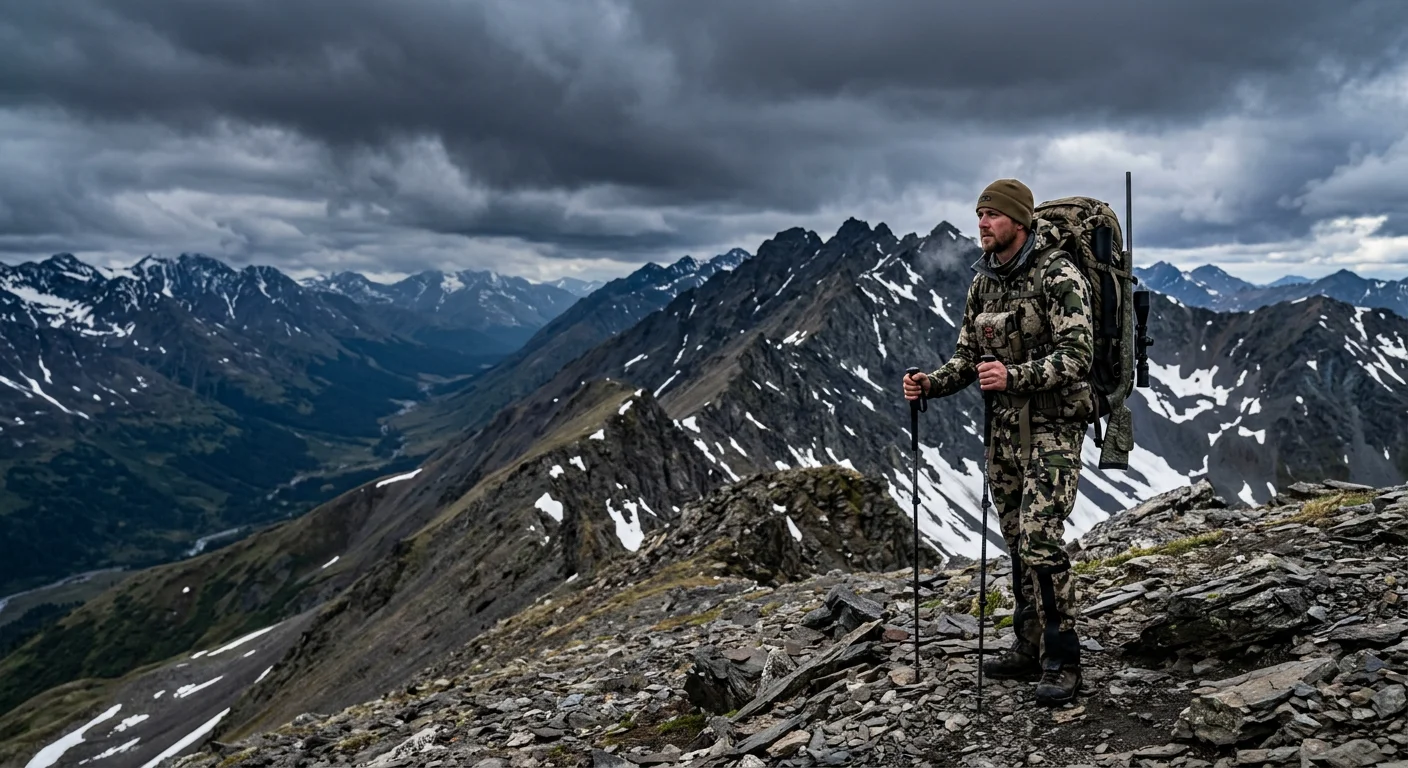
Here's the bottom line, stripped of brand loyalty and campfire politics.
KUIU wins for the pure mountain hunter. You glass steep basins. You grind miles with a heavy pack. You peel off layers as the pitch kicks up. KUIU is built for all of that. The cuts are athletic. The warmth-to-weight ratios are aggressive. Direct-to-consumer pricing runs 20–30% below Sitka for comparable performance. Most field reviewers agree: KUIU delivers 90% of Sitka's performance at 70–80% of the cost. That value proposition is one reason many outdoor gear wholesaler businesses closely monitor KUIU's pricing model when assessing premium hunting apparel categories.For western elk and high-country hunting, that math speaks for itself.
Sitka wins when the mission gets complicated. Your season shifts away from backcountry movement. Now you're sitting a whitetail stand in a cold rain. Or calling ducks at first light. That's where Sitka pulls ahead. Its Gore-Tex rain systems hold up longer in sustained wet weather. Its category-specific lines — Whitetail, Waterfowl — aren't marketing fluff. These lines carry real design differences. They're built for low-activity, high-exposure situations where staying dry and still matters more than moving fast.
The One-Sentence Scorecard
Priority | Choose |
|---|---|
Mountain performance + pack weight + value | KUIU |
All-weather versatility + multi-species coverage | Sitka |
Neither brand makes bad gear. The question is which one matches your mountain.
Mountain Hunting Performance: The Core Battleground
Weight is the honest judge of mountain gear. Not branding. Not forum loyalty. Not the guy at the trailhead with a fresh kit and clean boots. You're grinding out 1,000–1,500 meters of elevation gain every day with 25–30 kilos on your back. Every gram you shave off your clothing system shows up in your knees by day three.This is where KUIU makes its strongest case.
The Weight Math That Matters
Compare a complete three-season upper body system side by side — base layer, mid layer, softshell, rain shell — and the numbers are clear:
KUIU upper system (merino base + Peloton 240 mid + Guide softshell + Chugach rain): ~1.5–1.7 kg
Sitka upper system (Midweight Core + Heavyweight Hoody + Jetstream softshell + Cloudburst rain): ~1.7–1.9 kg
That's a 150–300 gram difference — about 8–12% lighter. It doesn't sound like much. But that's the same as carrying an extra half-liter of water. Every day. For a week.
The lower body gap is even bigger. KUIU's Attack Pant runs 200–250 grams lighter than a comparable Sitka Mountain Pant setup. That's a 15–18% reduction . Over a 7–10 day backcountry elk hunt, that difference adds real stress to your hips and knees — or takes it away.
Full system weight comparison (top + bottom + rain gear, no insulation):
System | Total Weight |
|---|---|
KUIU | ~2.5–3.0 kg |
Sitka | ~2.8–3.4 kg |
KUIU runs 8–15% lighter across the full system. On a western hunting trip, that margin gives you room for two extra days of freeze-dried meals — or just keeps your pack weight under control.
How Cuts Perform on Steep Ground
Gram counts tell only part of the story. The other part kicks in when you're pulling yourself over a 40-centimeter rock shelf in heavy boots with a rifle across your chest.
KUIU's Attack and Tiburon pants use a full diamond gusset . It's a single-piece construction at the crotch that removes the bunched four-seam junction you see in standard cuts. Real-world testing on 60–80 cm step-overs shows 25–35% less crotch drag compared to straight-seam designs. The pre-formed articulated knees bend to 120° without pulling fabric up the thigh.
Sitka's Mountain and Ascent pants are solid — they use articulated knees too. But the junction between the knee reinforcement panel and the upper thigh panel sits stiffer. On sustained 45–55° scree climbing, wearers report more tension near the hip flexor after three or more hours of moving . Not a dealbreaker on its own. Five days of that, though, and it adds up.
Upper body tells the same story. KUIU's softshell lineup uses a full-panel underarm gusset with a three-dimensional sleeve HEAD . Raise both arms to draw a bow or shoulder a rifle — the hem rises less than 3–4 cm. Sitka's Jetstream pulls 5–7 cm on the same move. That extra pull creates friction against a wide pack hipbelt during long glassing sessions or stalk sequences.
The Pack Space Advantage Nobody Talks About
Mountain hunters swap layers all the time — ten to fifteen times a day is normal on variable-weather hunts. Getting a shell jacket stuffed back into its pocket fast, without digging through your pack lid, gives you a real edge in the field.
KUIU's Chugach rain jacket packs down to 1.8–2.1 liters. Sitka's Cloudburst runs 2.1–2.4 liters. The mid layer gap is close to the same. Stack up a full backup kit — mid layer, rain shell, rain pants, spare insulation — and KUIU frees up about 2 liters of pack space compared to an equal Sitka setup.
Two liters is real space. It's the gap between a pack you can navigate fast and one you're digging through every time the weather shifts. It also means quicker layer swaps. Field estimates put the time saved at 20–30 seconds per transition — that adds up to 3–7 minutes across a full day . Those are minutes you spend moving, not cooling down on a ridge.
For a backcountry hunting clothing system built around high miles and high altitude, KUIU wins this category on points. Not by a knockout — but across weight, mobility, and pack efficiency, the gap runs one direction, and it runs there with consistency.
Weather Protection Face-Off: Rain, Wind, and Brutal Conditions
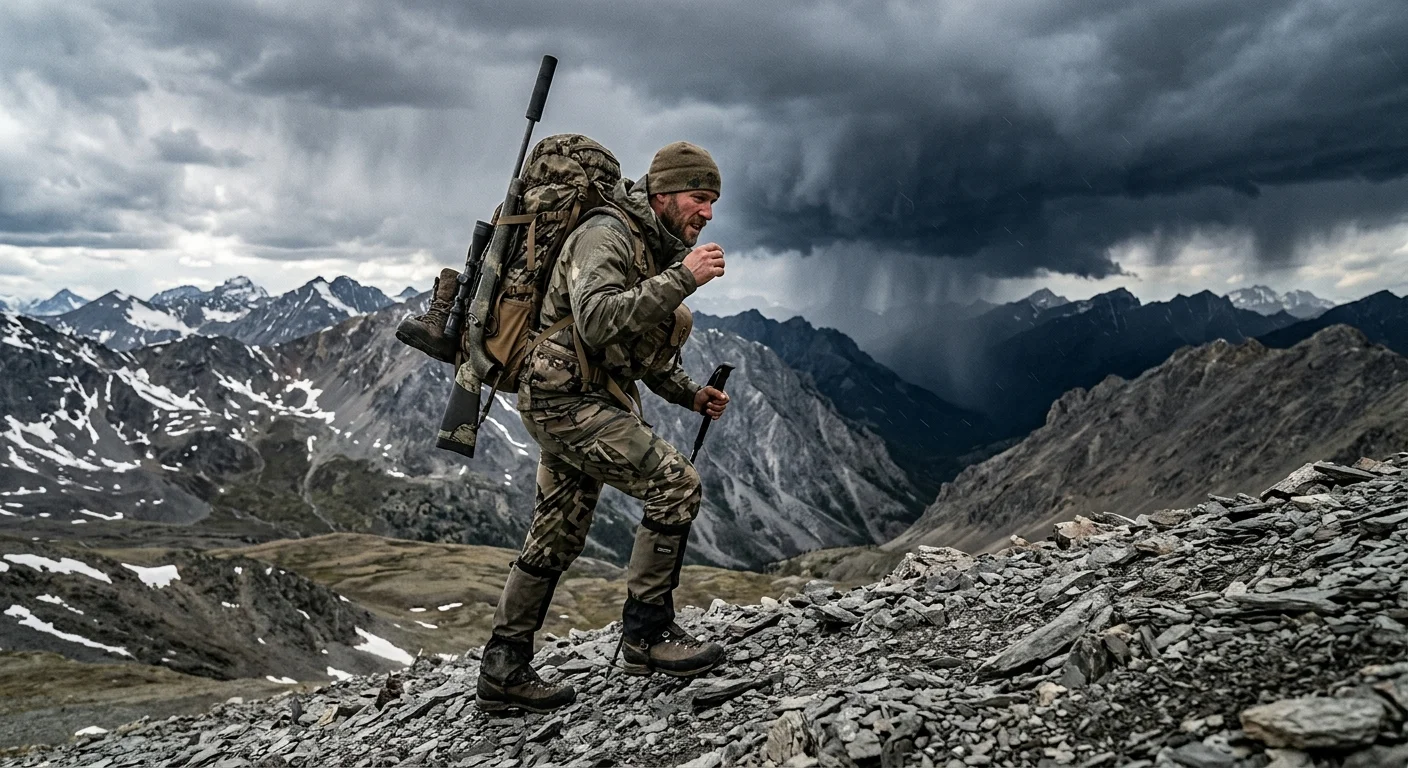
Rain doesn't negotiate. Wind doesn't care about your brand loyalty. Day five of a backcountry elk hunt, weather turning sideways — your shell either keeps the wet out or it doesn't. That's all that matters.
This is where Sitka and KUIU split hard. The reason tells you more about both brands than any spec sheet ever could.The engineering differences seen here also provide useful benchmarks for brands developing premium outerwear through OEM/ODM hunting clothing production programs.
The Core Technical Gap
Sitka's rain shells run on Gore-Tex Pro — a three-layer construction with hydrostatic resistance rated at 28,000–30,000 mm H₂O and moisture vapor transmission around 25,000–28,000 g/m²/24h . That combination blocks sustained, heavy rain and still vents exertion heat. Field reviewers running back-to-back 6–8 hour downpour tests report the inner layer staying dry. Minor moisture intrusion at cuffs and hem shows up during high-movement sequences, but nothing serious.
KUIU's hardshell lineup — the Chugach and Kutana Storm — holds at a solid 20,000–23,000 mm H₂O threshold. That's enough for hard rain and sustained wind. Push it into brutal extended conditions, though — full-day downpours, heavy pack compressing shoulder panels, repeated kneeling, glassing from wet ground — and the story changes. Forum reports on Rokslide and Reddit's r/elk community flag light seepage around zippers and hood seams. Gore-Tex Pro holds those spots longer.
KUIU's Attack Pant sits in a separate category. It's a performance softshell, not a rain barrier. DWR treatment handles wet grass, light rain, and snow contact well. A real mountain rainstorm lasting more than two hours? Expect the knees and seat to wet through.
Terrain Shapes the Right Answer
Dry western mountain hunting — Colorado, Wyoming, Montana — KUIU's softshell-forward system makes more sense. High-output climbing in these environments needs maximum breathability. Hunters using KUIU's Attack or Guide Jacket as their main wind and weather layer report fewer overheating episodes and less clammy buildup compared to a sealed Gore-Tex system. The winds hit hard, but they're dry. Short, intense weather windows don't justify hauling a bomber hardshell all day.
Pacific Northwest, British Columbia , or Alaska hunts — sustained coastal rain, dense brush, sea wind — the math flips. Sitka's Gore-Tex Pro shells earn their "bombproof" reputation here. Hunters packing out elk meat through hours of cold rain report the inner layer staying dry. KUIU hunters in the same terrain report a different experience. They carry a dedicated waterproof hardshell in the pack and treat the softshell as a clear-weather movement layer.
One Honest Trade-Off
Sitka's Gore-Tex Pro hunting jacket has one real drawback: it dries slow. Two or three back-to-back wet days in the field, and getting the shell dry overnight at camp is a real challenge. It also runs stiffer and louder than KUIU's softshell builds. In close-range elk hunting clothing situations, fabric noise matters — that stiffness can work against you.
KUIU's system asks more of you in wet conditions. More layer decisions. More attention to pulling the hardshell at the right time. It rewards hunters who read weather well and move fast. It punishes those who don't stay ahead of conditions.
Condition | Edge |
|---|---|
Sustained heavy rain (6+ hours) | Sitka |
Dry mountain wind + high exertion | KUIU |
PNW / Alaska multi-day wet hunts | Sitka |
Western elk country variable weather | KUIU |
Brushy terrain durability | Sitka |
In arid western ranges, KUIU's system is the better mountain hunting apparel choice for daily use. Hunt somewhere the sky stays gray for a week straight, and Sitka's Gore-Tex hunting jacket is the piece you'll be glad you packed.
Layering Systems Compared: Base, Mid, and Outer Shell
Three layers. One system. Every piece either earns its weight or costs you the hunt.
The idea is straightforward. Your merino wool hunting base layer pulls moisture off your skin. Your mid layer traps heat. Your outer shell blocks everything the mountain throws at you. Get the combination right, and you move well in changing conditions. Get it wrong, and you're soaked through on day three with four days left.
Here's where Sitka and KUIU split — layer by layer.
Base Layer: Synthetic Speed vs. Merino Endurance
KUIU offers two base layer paths: the Ultra series (synthetic) and the Merino series . Sitka goes with the Core Lightweight . The real-world split comes down to one question — are you sweating hard every day, or are you wearing the same base for multiple days straight?
KUIU's Ultra fabric dries 30–40% faster than merino. High-output climbing all day? That speed matters. Wet synthetic still wicks. Wet merino drapes cold against your skin and stays that way longer.
Multi-day backcountry elk hunts shift the equation, though. Merino's natural antimicrobial structure fights odor far better than synthetic. You get three to five days of continuous wear before smell becomes a real issue. Synthetic base layers start showing their age after day two.
Choose synthetic (KUIU Ultra) for: single-day high-sweat hunts, warm early-season western elk country.
Choose merino for: multi-day backcountry camps, cold temperatures, odor control as a serious factor.
Sitka's Core Lightweight sits in the merino camp — reliable, comfortable, mid-weight. KUIU gives you the choice between both. That flexibility is worth paying attention to.
Mid Layer: Down Efficiency vs. Wet-Weather Insurance
KUIU's Super Down jacket uses 850-fill down at 300–340 grams total weight . Sitka's Kelvin series runs on PrimaLoft synthetic insulation. The trade-off is clear and consistent across hunting apparel: down gives you better warmth-to-weight ratio and compresses tighter; synthetic keeps its insulating value after it gets wet.
Take a KUIU Super Down into a dry-country Colorado elk hunt. Nothing in the hunting layering system matches it at that weight. It compresses to 1.5 liters — smaller than a Nalgene. Sitka's Kelvin Active Hoody runs heavier and packs larger. But soak your mid layer crossing a creek or get caught in a surprise squall — the Kelvin keeps warming you. The Super Down stops working.
Alaska and Pacific Northwest hunters get more out of Sitka's synthetic mid layer. Western mountain hunters in drier ranges will find KUIU's down hard to beat.
Outer Shell: Where the Price Gap Lives
The outer shell is where these two brands split the hardest. It's also where the biggest price gap shows up.
Sitka's Thunderhead and Stratus rain systems use Gore-Tex construction in a full rain suit setup. KUIU's Proximity Rain Suit (jacket + pants) gives you solid waterproofing at a lower price. A complete Sitka rain system costs $780 more than a comparable KUIU setup, depending on configuration.
Three things drive that gap:
Waterproof membrane grade
Face fabric durability
Construction details like reinforced seams and articulated patterning
Sitka's Gore-Tex shells carry a higher price tag for two reasons. The Gore-Tex membrane certification adds a real cost premium. On top of that, Sitka builds for all-weather use, not just fast mountain movement.
Running hard miles in variable but not soaking-wet conditions? KUIU's Proximity system gives you real rain protection without the weight of a full Gore-Tex shell. Hunting in Alaska, coastal ranges, or wet-season elk country? Sitka's rain suit earns every dollar.
Full System Cost Reality
Layer | KUIU Estimate | Sitka Estimate |
|---|---|---|
Base Layer (top) | $60–$110 | $80–$120 |
Mid Layer (insulation) | $200–$280 | $220–$300 |
Outer Shell (jacket + pants) | $380–$500 | $600–$780 |
Full System Total | ~$640–$890 | ~$900–$1,200 |
The price difference lives almost entirely in the outer shell. Base layers sit close. Mid layers are comparable. The hardshell is where Sitka pulls ahead — and your call on weather exposure should make the decision for you.
Fit, Sizing, and Real Hunter Feedback
Gear that fits wrong doesn't just feel uncomfortable — it fails you at the worst possible moment. A jacket that binds across the shoulders mid-draw. Pants cutting into your thighs on hour six of a steep climb. That's not a minor annoyance. That's a hunt compromised by a decision made at a computer screen.
The two brands cut their clothing so differently that sizing mistakes are easy to make.
How Each Brand Cuts Its Clothing
KUIU builds athletic. That's not marketing language — it's a real design philosophy. The torso runs narrower. The thighs run tighter. Hunters on Rokslide describe KUIU as built for what they call a "mountain physique": broad chest, lean waist, legs that aren't carrying extra mass. You've been doing squats and pack carries to prep for elk season? KUIU's cuts reward that work.
Sitka runs roomier. The waist and hip allowance is more generous at the same labeled size. That extra room isn't a flaw. It's a deliberate choice for hunters who layer hard, sit stands in cold weather, or don't have a trail runner's build. For late-season whitetail hunting in three layers, Sitka's proportions make real practical sense.
Sizing in Practice
The numbers help here. A hunter at 178–183 cm and 75–82 kg with a 32–34 inch waist will find KUIU Medium fits true — trim, close to the body, no excess fabric bunching around a pack hipbelt. That same hunter in Sitka Medium sits noticeably looser . Some prefer that. Others size down.
Push the body metrics up — 85–95 kg, 36–38 inch waist — and the comparison shifts:
KUIU : Large top, size 34–36 pants. Functional, but leg-heavy hunters report the thighs running tight. Sizing up isn't always an option — you lose fit at the waist.
Sitka : Large or XL top, size 36 pants. More comfortable range of motion, easier to layer underneath.
Strength-built or muscular-legged hunters flag KUIU's pants as the tighter fit. The seat and thigh panels don't have much give. Rokslide members with larger thigh measurements point to the same fix: size up one full size in KUIU bottoms, let the waist run a little loose, and use a belt.
Sitka's Inconsistent Sizing Problem
Sitka has a specific issue worth knowing before you order. Multiple Rokslide threads document the same frustration: a Large in the Jetstream Jacket fits like a Medium in the Mountain Jacket . The sizing isn't consistent across product lines.
Hunters who've bought into Sitka across several seasons often end up wearing different sizes across different pieces — a Large softshell, an XL insulation layer, a Medium base. First-time Sitka buyers end up exchanging orders more than you'd expect. Buying Sitka without trying it on first? Order two adjacent sizes and return the one that doesn't work. That's not ideal advice, but it reflects how the brand actually behaves in practice.
Long-Term Durability: What Survives the Seasons
Fit at purchase is one thing. What the gear looks like after three hard seasons is another.
KUIU's mid-layer fleece — the Peloton line especially — shows visible pilling at pack contact points within one to two seasons of regular use. Shoulder straps and hipbelts are the primary wear zones. The outer shells hold up better, but hunters doing serious rock scrambling report surface abrasion showing up earlier than on comparable Sitka builds.
Sitka wears in a different way. The pilling pattern tends toward surface fuzzing rather than large-pellet pill formation. Sitka also reinforces high-abrasion zones — seat, knees, shoulders — with heavier face fabric or bonded film. One widely cited Rokslide comparison sums it up well: after three seasons of hard mountain use, a KUIU pant showed visible seat thinning and color fade; the equivalent Sitka pant held its structure , though with some surface color shift.
Zipper longevity follows a similar pattern. KUIU zippers can show slipping or tooth misalignment after three to four years of heavy use. This shows up most in builds exposed to salt, grit, and mud without regular cleaning. Sitka's shell zippers earn strong marks across long-term reviews. Most owners with five-plus years report smooth operation, with only occasional weather-related sticking.
Rough functional lifespan estimates from the Rokslide community:
Usage Level | KUIU | Sitka |
|---|---|---|
Heavy (30–50 days/season) | 3–5 years | 4–6 years |
Moderate (10–20 days/season) | 5+ years | 5+ years |
The Practical Buying Decision
Your body type and hunting style should drive your sizing strategy:
Lean, athletic build + heavy pack movement : Start with your standard size in KUIU. The athletic cut works with your frame, not against it.
Stocky build, powerful legs, or heavy layering plans : Try Sitka first. Or size up one in KUIU bottoms and carry a belt.
First Sitka purchase : Order two adjacent sizes. The inconsistency across product lines is real enough that treating it as a try-before-you-commit situation saves return shipping headaches.
Durability over weight savings : Sitka's reinforced wear zones hold up longer under the specific abuse of dragging elk quarters over rocky ground or logging hard days on scree.
The gear that fits is the gear that performs. Neither brand can compensate for a shell that binds your draw or pants that cut circulation on a six-hour climb. Get the sizing right, and the technical performance these brands are known for shows up when you actually need it.
Price vs Value: Is the Premium Worth It?
Raw numbers settle this faster than any forum argument.
A complete Sitka mountain system — hardshell jacket, softshell pants, mid layer, merino base — runs $1,000–$1,150 at retail. The equivalent KUIU setup lands at $750–$900 . That's a $200–$350 difference before you've touched a single zipper pull. Most independent reviewers agree on the shorthand: KUIU delivers 90% of Sitka's performance at 70–80% of the cost .
Where the Price Gap Lives
The gap doesn't spread evenly across your layering system. Base layers from both brands sit within $20–$30 of each other. Mid layers are close too. The real divide opens at the outer shell — and it opens wide.
Sitka Gore-Tex rain system : ~$600–$780
KUIU Proximity rain system : ~$380–$500
Difference : up to $280 per outfit
Your hunting country may not need a full Gore-Tex barrier every single day. So you'd be paying a big premium for protection you barely use.
The KUIU Pro Program: A Legitimate Advantage
Guides, outfitters, military, and law enforcement can access KUIU's Pro discount at 25–30% off MSRP . Run that math on a full kit:
KUIU Guide DCS Jacket ($299 retail → ~ $209 Pro)
KUIU Attack Pant ($199 retail → ~ $139 Pro)
Full Pro system : ~$560 vs. a comparable Sitka setup at $1,000+
That's a $440 difference . Sitka does offer its own guide and military pricing — 30–40% off — but run both programs side by side. KUIU still holds a 20–30% price advantage .
The Resale Reality Most Buyers Ignore
Long-term ownership cost is where things get interesting.
Sitka resells at 65–70% of original retail in good condition. A Jetstream Jacket bought at $349 moves secondhand for $220–$260. KUIU sits closer to 55–60% — a Guide DCS Jacket at $299 sells used for $160–$200.
Run the three-year math on a full system:
Sitka (~$1,000) | KUIU (~$800) | |
|---|---|---|
Resale value (3 years) | ~$650–$700 | ~$450–$500 |
Net cost of ownership | ~$325 | ~$325 |
The three-year net cost lands at the same number. Sitka needs more cash upfront and gives back more on exit. KUIU costs less to buy and less to sell. Your cash flow is what differs — not your total spend over time.
The Honest Verdict
Buying once and hunting hard for a decade? Sitka's durability edge starts to make sense. Reinforced wear zones, Gore-Tex longevity, and solid zipper performance through year five and beyond — that's real value over time. Building a western hunting clothing kit on a set budget? Or planning to upgrade gear within three to five seasons? KUIU's pricing is the smarter move. The mountain doesn't know which label is on your jacket. But your bank account does.
Scenario-Based Buying Guide: Which Brand Fits Your Hunt?
The mountain doesn't care about brand loyalty. It cares about whether your gear matches the specific punishment it's about to deliver. Here's how to cut through the noise.
High-Altitude Elk Country (CO/WY, 9,000–11,500 ft)
Early season archery (September): Temperature swings of 25–40°F between dawn and midday demand a system that vents hard on the climb and traps heat at the glassing spot. KUIU wins this window. The lighter softshell-forward system handles sustained 6–10 mile days without overheating you on the uphill. Sitka works — it just costs you weight you'll feel by day four.
Late-season rifle (October–November): Wind, snow, and mornings pushing 10–20°F shift the whole calculation. Sitka's Windstopper-backed mid layers and heavier hardshells prove their worth. Sitting a wind-exposed ridge for three hours? That's where they shine. A practical hybrid works well here too — Sitka shell and mid layer on top, KUIU lightweight pants below. You control weight without giving up thermal stability where it counts most.
Pacific Northwest and Alaska: Where Sitka Earns Every Dollar
Sixty-plus inches of annual rainfall. Stretches of 10–15 back-to-back wet days. A softshell won't cut it out here. Sitka's Gore-Tex shells are rated above 28,000 mm hydrostatic resistance with taped seams throughout — built for this kind of punishment. Waterfowl hunters putting in 8–10 hours of direct water contact each day will push KUIU's mountain-optimized shells past their limits fast. In PNW and Alaska terrain, Sitka owns the outer layer. KUIU still does solid work in the base and mid roles.
Budget-Conscious First-Timer
Working with an $800 budget for three-season Colorado public land hunting? The answer is clear: a full KUIU entry system — base layers, fleece mid, waterproof shell, and functional pants — lands right at that number. You get a coordinated, weight-conscious kit from day one. Hunting a wet region? Shift the math. Pick up third-party base and mid layers to free up budget for a Sitka Gore-Tex shell as your anchor piece. You give up some system cohesion, but you gain real wet-weather protection where the terrain demands it.
Conclusion
Both Sitka and Kuiu have earned their place on the mountain. Neither one will let you down in brutal weather or on long, punishing miles. But here's the honest truth most gear reviews skip: the better brand is the one that fits your body, your budget, and how you hunt.
Chasing elk through nasty, unpredictable backcountry weather? Sitka's integrated layering system removes all the guesswork. Every piece works together. That ecosystem is worth every dollar. More of a detail-driven gear nerd who wants elite-level mountain hunting clothing at a lower price? Whether you're an individual hunter or sourcing products through a trusted outdoor apparel supplier, understanding these performance trade-offs helps ensure the right investment for your specific hunting environment.Kuiu's direct-to-consumer model delivers serious value and earns real respect.
The mountain doesn't care which logo is on your chest. Your backcountry hunting clothing either performs when it counts — or it doesn't.
So stop researching. Pick your brand. Build your system. Get out there. Elk season waits for no one.