Every year, people drown wearing the wrong flotation device. Not because they lacked one — but because they didn't understand what they had on.In fact, even many marine safety apparel manufacturers for flotation gear still emphasize how often misuse—not absence of equipment—is the real issue behind preventable incidents.
Life jacket and PFD get tossed around as if they mean the same thing at every boat shop and outdoor retailer. They don't. That difference can cost you your life.
Shopping for a coast guard approved life jacket for offshore sailing? Trying to pick the right Type III PFD flotation aid for kayaking? Or just making sure your gear meets legal requirements? You need clear answers, not more confusion.
This guide gives you a full breakdown of every type. You'll get a side-by-side comparison and activity-specific recommendations. So you can make a confident, informed decision before you hit the water.
What Is a PFD and What Is a Life Jacket? (Clearing Up the Confusion)
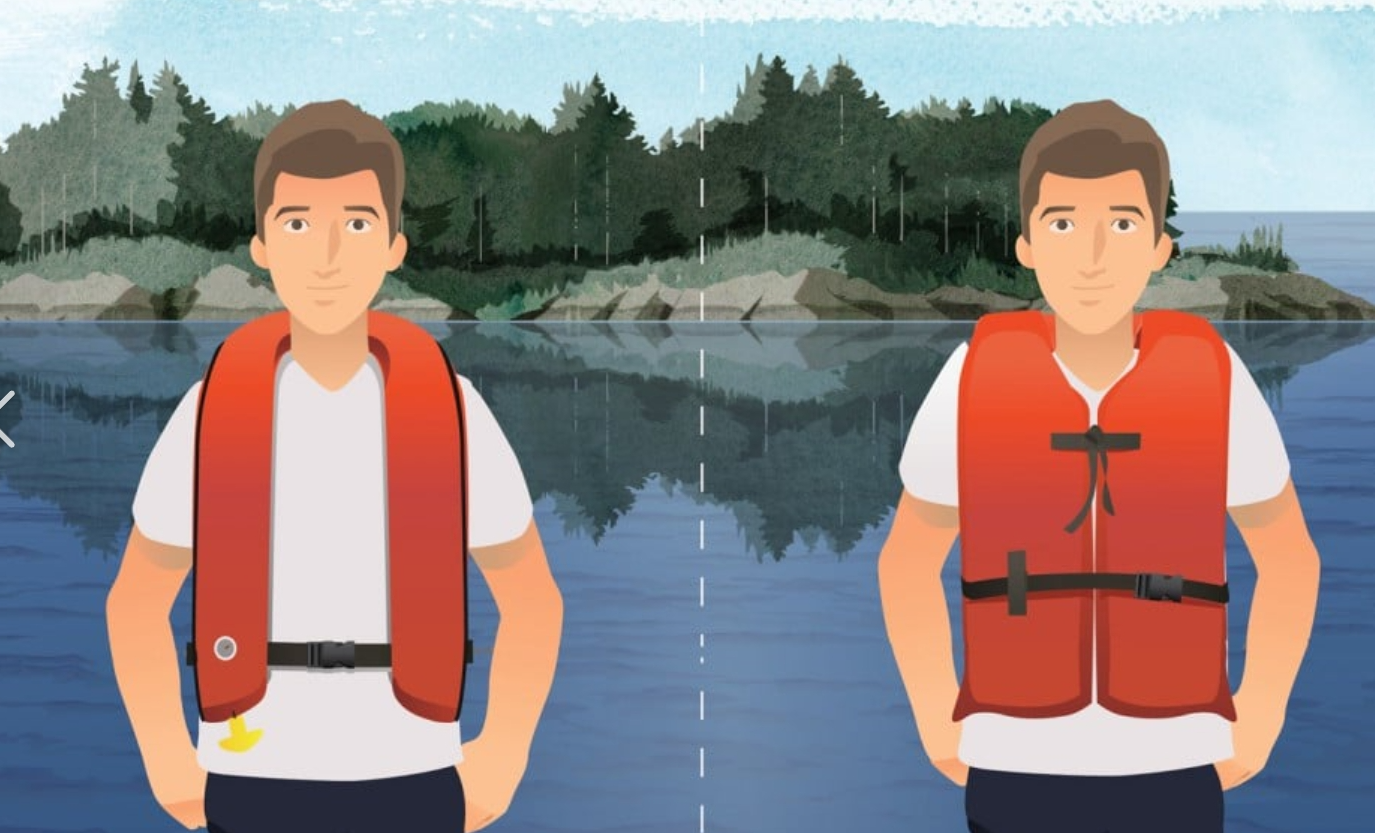
Here's the one sentence that cuts through all the noise: every life jacket is a PFD, but not every PFD is a life jacket.
That's the foundation. Everything else builds from there.
PFD stands for Personal Flotation Device — it's the umbrella term. The U.S. Coast Guard groups life jackets, buoyancy aids, flotation vests, and inflatable devices under this one classification. The difference isn't about what something is called . It's about what it does in the water.
From a procurement and compliance standpoint, many professional water safety equipment suppliers for boating and fishing also design around these same Coast Guard categories to ensure consistent global standards.
Here's what sets them apart:
Life jackets flip an unconscious wearer face-up on their own — no swimming, no effort needed
Standard PFDs keep you afloat, but you may need to work to keep your face above water
That self-righting function is everything. It's what keeps you alive when you're unconscious and alone in the water.
The Coast Guard rates these devices on three things: intended use, buoyancy level, and in-water performance . The label a manufacturer prints on the packaging doesn't factor in at all.
Life Jacket vs PFD: Core Differences at a Glance (Comparison Table)
Want the clearest way to see the gap between these two? A chart does it best.
Six dimensions. Two devices. The differences are bigger than most people think.
In industrial sourcing discussions, especially among custom life-saving vest manufacturers for aquatic activities, these distinctions directly determine product classification and design direction.
Dimension | Life Jacket | Standard PFD |
|---|---|---|
Design | Bulkier front padding, neck support, foam or CO2 inflatable | Lighter, minimal bulk, no neck collar |
Buoyancy | Type I: 22 lbs (adults), 11 lbs (children); Levels 100–275 N | Level 50–70 N; less total buoyancy |
Self-Righting | Turns unconscious wearer face-up on its own | Keeps you afloat — you do the rest |
Best For | Offshore, rough water, solo boating, slow-rescue zones | Near-shore, strong swimmers, paddling, quick-rescue conditions |
Comfort | Restricts movement, retains heat | Lightweight, flexible, easy to wear all day |
Standards | USCG Type I–II; TC-approved jackets include thermal protection | USCG Type II–V; thermal varies by model |
A few things worth knowing:
Self-righting is the real dividing line. A coast guard approved life jacket turns most unconscious wearers face-up. A buoyancy aid does not. It assumes you are conscious and actively swimming.
Inflatable life jackets use CO2 cartridges. These trigger on their own, by hand, or through a hydrostatic sensor. Adults can use them in open water. Kids under 13? Foam-only. No inflatables.
Level 275 N covers extreme commercial settings — oil platforms, not fishing trips.
The bottom line: buoyancy numbers and comfort ratings both matter. But self-righting capability is the one spec that splits a life-saving device from a simple floating aid.
Breaking Down the 5 Types of PFDs (Type I Through Type V Explained)
The U.S. Coast Guard doesn't treat "life jacket" and "PFD" as the same thing. It uses a five-type classification system. Each type tells you what a device can do — and what it can't. Every type has a defined buoyancy level, a specific use case, and a performance standard. Get that wrong, and you're trusting your life to the wrong gear.Behind many of these innovations are OEM/ODM flotation device production services for water sports brands, which develop purpose-built designs for each activity category.
Here's what each type means.
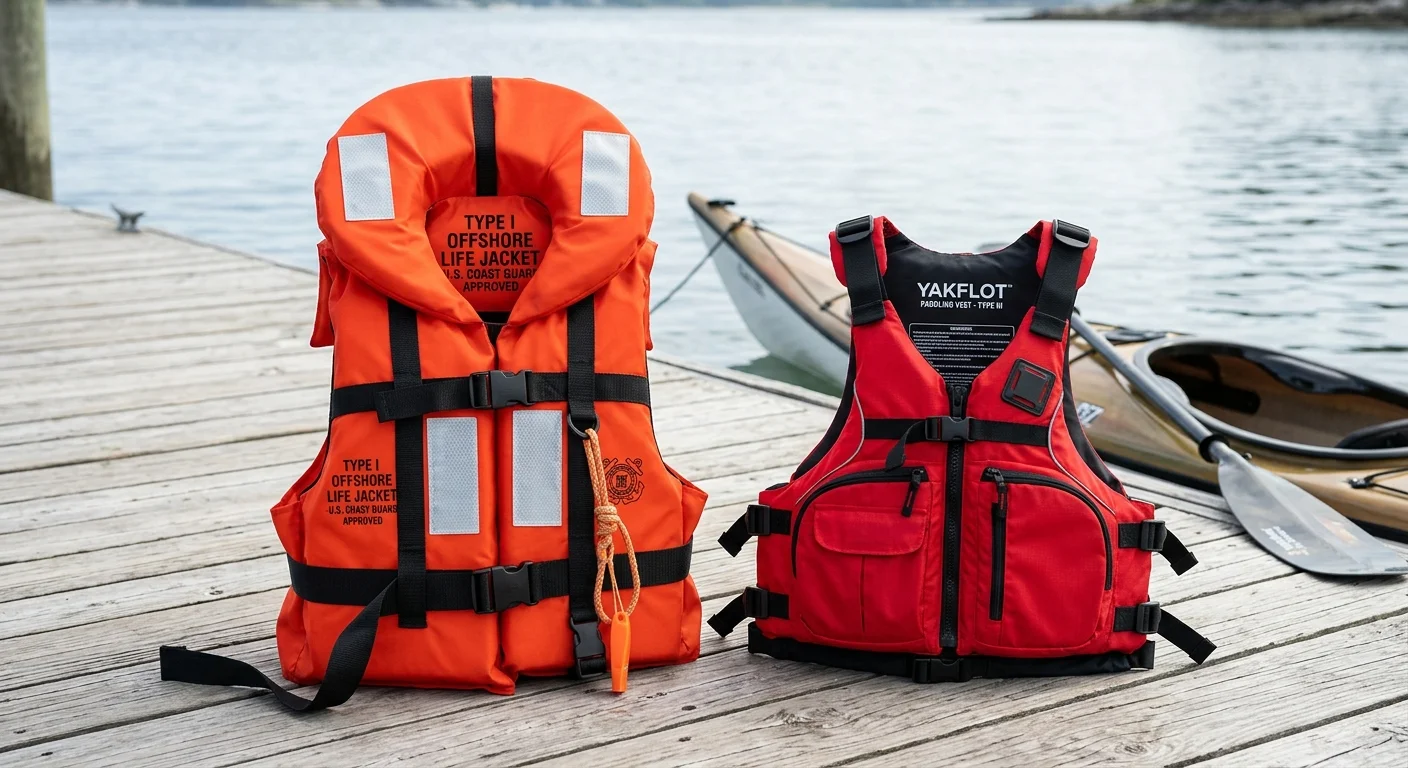
Type I — Offshore Life Jacket
This is the most powerful PFD on the market. Foam versions deliver 22.5 lbs (100N) of buoyancy. Inflatable versions push that to 33.7 lbs (150N) .
Type I is built to turn most unconscious wearers face-up — even in rough, open water. That's its defining feature. Rescue could take hours, not minutes. Offshore fishing, ocean cruising, remote waters with no help nearby — that's where Type I belongs.
The trade-off is bulk. It's not comfortable for all-day wear. Far from shore, though, comfort stops being relevant.
Type II — Near-Shore Buoyant Vest
Drop down from Type I and you get the Type II PFD nearshore buoyant vest — foam at 15.5 lbs (68.9N) , inflatable still at 33.7 lbs (150N) .
It's less bulky and easier to put on. Some models turn an unconscious wearer face-up. Others don't. That gap matters. Type II works best in calm inland waters — lakes, rivers, protected bays — where help arrives fast. Help minutes away? This works. Out alone in open water? It may fall short.
Type III — Flotation Aid
The Type III PFD flotation aid is what most recreational paddlers, kayakers, and SUP riders wear day-to-day. Buoyancy sits at 15.5 lbs (68.9N) for foam, 22.5 lbs (100N) for inflatable.
The design puts freedom of movement first. Arms move without restriction. The fit feels natural. You can wear it for six hours on a kayak tour and barely notice it.
There's a hard limit, though. Type III will not turn an unconscious person face-up. Go under and lose consciousness — you're face-down. This device is built for someone conscious, active, and close to a quick rescue. Stick to calm, supervised water. Remote open water is off the table.
Type IV — Throwable Device
Type IV isn't worn at all. It's thrown.
Ring buoys, horseshoe buoys, and buoyant cushions all fall under Type IV. They deliver 16.5–18 lbs (73.4N) of buoyancy. You throw them to a conscious person already in the water — someone who can grab on and hold.
Motorboats, piers, docks, and busy vessels are the main spots for Type IV. It's a rescue supplement. It doesn't replace a wearable PFD and can't serve as your primary device.
Type V — Special Use Device
Type V covers everything the other four don't. Buoyancy varies across a wide range: foam at 15.5–22 lbs , inflatables at 22–34 lbs , and hybrid designs at 22 lbs inflated / 7.5 lbs deflated .
The key difference is in the label. Each Type V PFD special use device is approved for one specific activity — kayaking, windsurfing, wakeboarding, commercial whitewater, or man-overboard rescue. You must be wearing it for it to count as USCG-compliant. Stowed in a hatch doesn't qualify.
A lot of Type V devices in cold climates also include thermal protection . That adds a layer of defense against hypothermia, on top of the buoyancy.
The Performance Gap That Counts
The real-world difference between Type I and Type III goes far beyond numbers on a spec sheet.
Scenario | Type I | Type III |
|---|---|---|
Buoyancy | 22.5+ lbs | 15.5 lbs |
Unconscious face-up? | Yes — most wearers | No |
Rough water survival | Hours | Minutes |
Hypothermia protection | Yes (many models) | Rarely |
Mobility | Restricted | High |
Type III gives you freedom. Type I gives you a fighting chance if everything goes wrong. Know which one you need before you leave the dock — that's the whole point.
Inherent (Foam) vs Inflatable Life Jacket: Which One Is Right for You?
The material inside your life jacket determines whether it saves you — or fails you at the worst possible moment.
Modern innovation from high-buoyancy water safety wear factory for extreme conditions development lines has significantly improved inflatable response time and durability in cold-water environments.
Two technologies dominate the market: foam (buoyant by nature) and inflatable . Both are USCG-approved. Both have valid use cases. But they are not interchangeable. Picking the wrong one based on price or comfort alone is a serious mistake.
Here's the core breakdown:
Feature | Foam | Inflatable |
|---|---|---|
Buoyancy | ~15.5 lbs — always active | 22–35 lbs — only when inflated |
Activation | Instant, zero effort | Manual pull, auto water-sensing, or hybrid |
Comfort | Bulkier, limits mobility | Slim, lightweight — ideal for 4+ hour wear |
Maintenance | Rinse after saltwater. Done. | Annual CO₂ cartridge checks; replace every 3 years |
Durability | High — foam resists abrasions | Bladder can fail if stored wet or damaged |
Best For | Kids, non-swimmers, rough water | Experienced boaters, calm conditions |
Price | Lower | Higher |
Where Foam Wins Every Time
A foam PFD asks nothing of you. It floats the second it hits water — no cartridge, no trigger, no action needed. That matters a great deal if you're unconscious, panicking, or caught completely off guard.
The USCG bans inflatables for children under 12 . Auto-inflation doesn't work reliably on small bodies. Manual activation needs a calm, deliberate pull — something a panicked child won't do. Rough or turbulent water is another problem. False inflation is a real risk. An uninflated inflatable life jacket gives you zero buoyancy before it goes off.
Where Inflatable Pulls Ahead
Picture a boater out on calm water for six to eight hours straight. Foam's bulk gets uncomfortable fast. So people take it off. That's a direct path to a drowning that didn't have to happen.
A well-maintained automatic inflatable PFD fixes that. It sits flat against your chest. It disappears under a jacket. It deploys in under five seconds on water contact. The trade-off is maintenance. Weigh your CO₂ cartridge each year, check the bladder for tears, and swap the cartridge after any deployment or every three years — whichever comes first.
The Four-Question Selection Framework
Not sure which one fits your situation? Work through these:
Who's wearing it? Child or non-swimmer → foam, no exceptions
What's the water like? Rough or remote → foam; calm and supervised → inflatable works
How long is the trip? Extended wear past four hours → inflatable's comfort edge becomes a real factor
Will you keep up with maintenance? Fine with annual checks → inflatable; want zero upkeep → foam
The right answer isn't the most comfortable one. It's the one that keeps you alive — based on your conditions, your skill level, and how much upkeep you'll put in.
How to Choose the Right Life Jacket or PFD for Your Activity
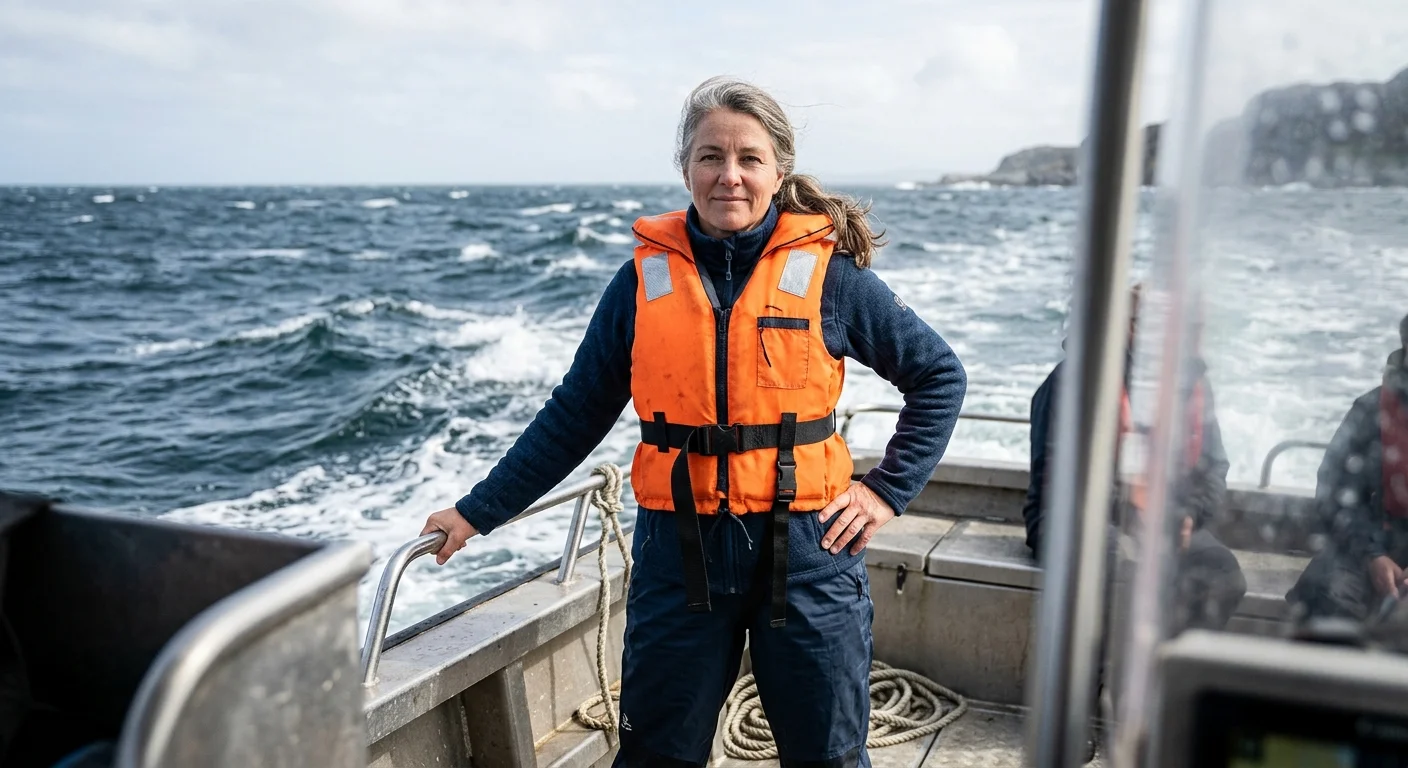
The right PFD isn't the one with the best reviews on Amazon. It's the one that matches your water, your risk, and your body — and that you'll wear without hesitation.
This is also where many brands differentiate themselves, especially private label life jacket suppliers for outdoor and marine brands, who tailor designs for specific sports like kayaking, jet skiing, or offshore sailing.
Two variables drive every smart decision here: how far you are from rescue and how dangerous your water is . Get those two right, and everything else falls into place.
Match Your Activity to the Right Type
Activity | Recommended Type | Why |
|---|---|---|
Offshore / ocean sailing | Type I | Rough water, rescue hours away, unconscious face-up capability essential |
Kayaking / paddleboarding | Type III | High mobility, calm supervised water, quick rescue realistic |
Fishing / near-shore sailing | Type II or III | Moderate risk, help nearby, buoyancy meets standard |
Motorboat / jet ski | Neoprene Type III | Flexible fit, active movement, 15.5+ lbs buoyancy |
Open water swimming | Level 100+ PFD | Minimal profile, high buoyancy, no bulk restriction |
Remote offshore water demands Type I — 22+ lbs of buoyancy, plus the ability to flip an unconscious person face-up. Calm lake kayaking? A Type III flotation aid at 15.5 lbs gives you full mobility. No overkill needed.
Non-Swimmers, Children, and Special Body Types
For anyone who isn't a confident swimmer, the priority order is fixed: buoyancy first, comfort second, appearance last.
Non-swimmers need at least 22+ lbs of buoyancy. The average adult needs 7–12 lbs to stay afloat. That number shifts with body fat, lung size, clothing weight, and water conditions — so more is always safer.
Children must be sized by weight, not chest size . Always go USCG-approved. Never use a swim aid as a substitute. Quick fit check: lift the jacket by the shoulders. The child's chin or ears must not slip through. Too much gap means too big.
All adults should measure chest circumference and plan for extra layers underneath.
The Fit Test You Can't Skip
A PFD that rides up past your nose in the water is useless. Before any trip, run through this:
Loosen all belts, then thread both arms through
Secure the front buckle first
Pull waist belts snug — not tight
Lock down all loose ends
Raise both arms: the device must stay below your chin
Kayakers need a short-cut PFD that clears the seat back. Test it in a pool before heading out. The fit is wrong if it slips up toward your chin while seated.
One rule that doesn't bend : every device must carry a USCG-approval label for the correct weight range and activity. Water wings, swim vests, and inflatable pool toys don't count — not in legal terms, not in real-world safety terms. Type V devices count as your primary PFD only while you're wearing them on the water.
Buy the one that fits your real conditions. Not your ideal ones.
Getting the Right Fit: How a Life Jacket Should Feel
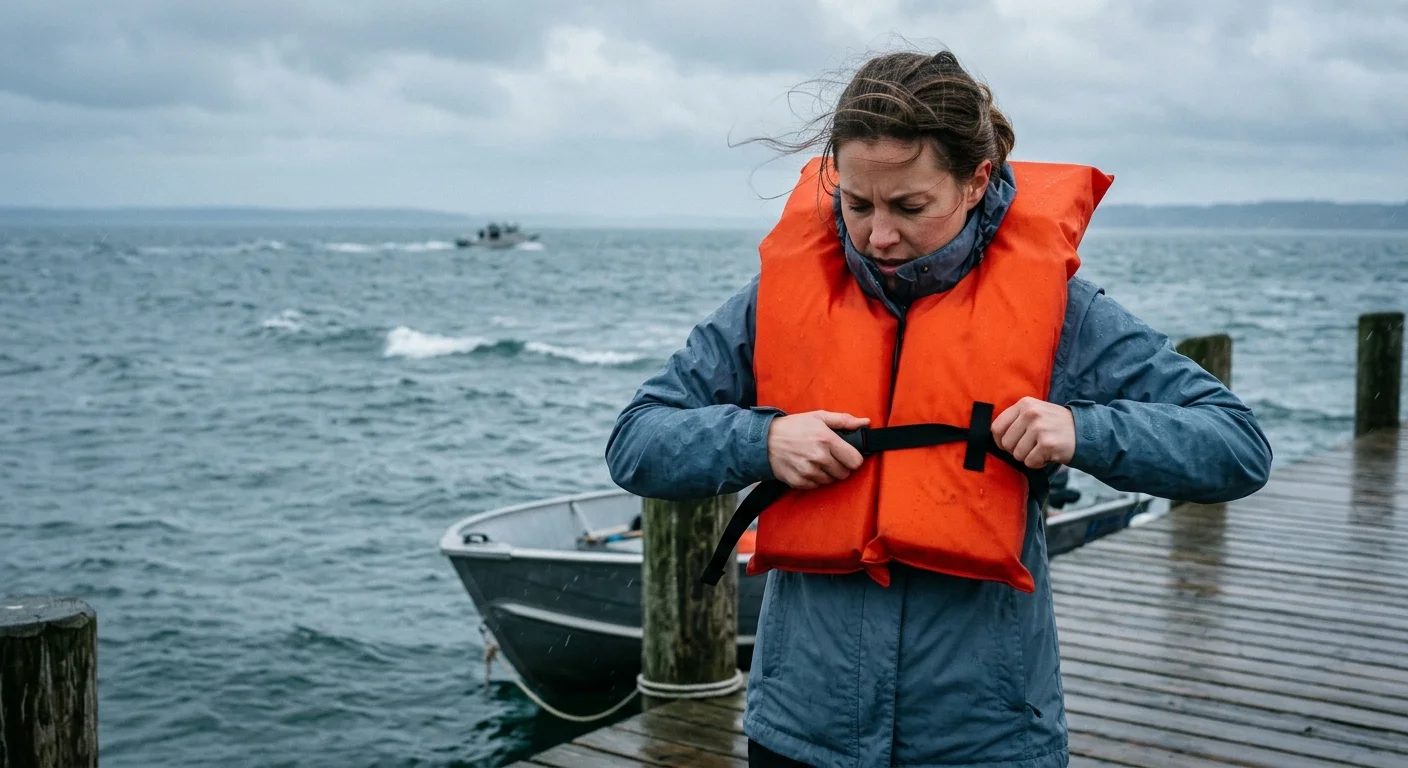
A bad-fitting life jacket is the same as wearing no life jacket at all. It rides up. It slips. It puts your face in the water at the worst moment.
Advanced field-tested designs from technical rescue and survival apparel manufacturers for water environments increasingly focus on ergonomic adjustment systems to prevent ride-up and improve long-duration wear comfort.
Fit starts with sizing — and sizing depends on weight and chest circumference , not clothing sizes. USCG labels define the weight range each device supports. That number is fixed. NRS breaks it down like this:
Child : under 30–50 lbs
Youth : 30–50 lbs, chest 26–29 inches
Adult : chest 30–52 inches and up
One thing worth knowing: neoprene PFDs stretch 5–10% once wet. Buy them snug dry — like a wetsuit. Wet, they settle into the right shape. Buying loose to make up for this is a mistake.
The Arms-Up Test
Run this check before any trip on the water:
Fasten every buckle and zipper all the way
Raise both arms straight overhead
Have someone grip the shoulder openings and pull upward with light pressure
Pass : The jacket stays centered on your torso — chin and ears stay clear
Fail : It slides up toward your face — refit or size down
Getting the Adjustment Sequence Right
Buckling in random order creates pressure points and leaves gaps. Follow this order instead:
Loosen all straps and center the PFD at mid-torso
Fasten the bottom strap first — this anchors the jacket and stops ride-up
Close the zipper or side entry
Tighten straps bottom to top , pulling both sides at the same time
Finish with the shoulder straps — adjust both sides to match
Children Need One Extra Step
Size kids by weight. No exceptions. Once the base fit is snug, add a crotch or leg strap . It acts as a backup against upward slippage. It does not replace correct sizing — it adds to it. The head support collar keeps a child's face above water. Check that it sits flush against the neck, not loose or floating away.
Quick feel check : snug and a little firm when dry, secure and stable when wet. Pinching means too small. Any ride-up on the pull test means too big.
Life Jacket Regulations You Need to Know (USCG & International Standards)
Federal law doesn't care how experienced you are on the water. There's one baseline requirement: one USCG-approved, well-fitting, serviceable wearable PFD per person on board — no exceptions.
A few specifics worth knowing:
Children under 13 must wear a USCG-approved PFD while the vessel is moving. Adult sizes don't qualify. Use child-specific devices sized by weight.
Boats 16 feet or longer must also carry a Type IV throwable device on top of individual wearables.
Inflatables at Level 100 or 150 count toward compliance only while you're wearing them. Foam devices count as inventory if they're accessible.
The New Performance Level System
After 2016, the USCG moved away from Type I–V labels to an ISO-aligned Level system. Here's what each level means in practice:
Level | Buoyancy | Best For |
|---|---|---|
70 | 35–70N | Calm water, kayaking, fishing |
100 | 70–100N | General inshore boating |
150 | 100–175N | Offshore, rough conditions |
275 | 275N+ | Commercial/extreme offshore |
USCG vs. Transport Canada
Both countries share harmonized standards under ANSI/CAN/UL 12402. Two differences matter at the border, though:
1.Thermal protection : Transport Canada certifies cold-water thermal ratings. The USCG doesn't — its focus stays on buoyancy and turn-over performance.
2.Minimum buoyancy : TC allows Level 50 (50N) for calm, protected waters. That's below the USCG's 70N minimum. Buying Canadian gear for US waters? Stick to Level 100 or higher to stay compliant on both sides.
To confirm any device is legitimate, check the label for "USCG Approved" text plus an approval series number — such as 160.055 or 160.155 for SOLAS-rated jackets.
FAQ: Life Jacket vs PFD Common Questions Answered
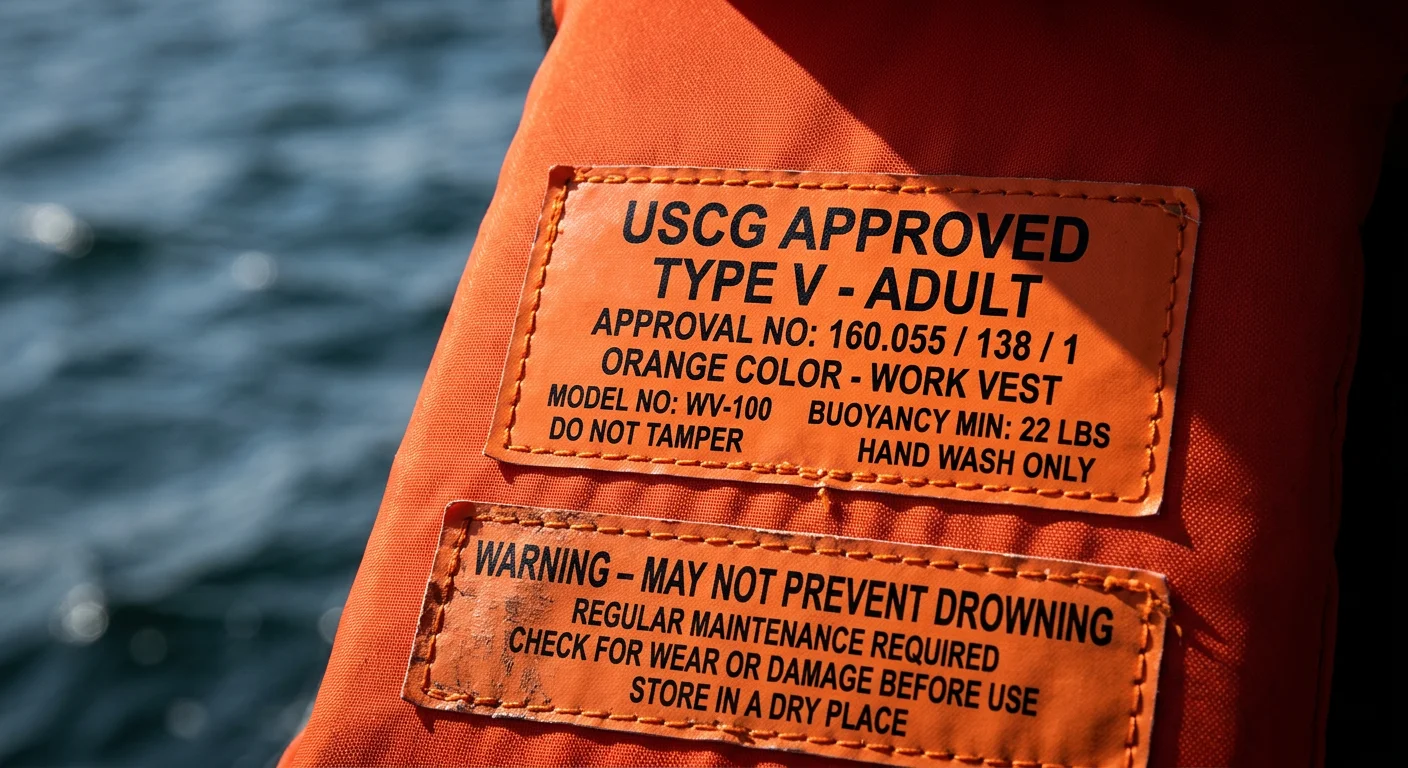
Most drowning deaths involve someone who had flotation gear. The gear just wasn't right for the situation. These questions come up all the time — and the answers are worth knowing before you reach the water's edge.
Are a life vest and a PFD the same thing?
No. A life jacket (Type I or II) delivers at least 22 lbs of buoyancy and flips an unconscious wearer face-up. Most standard PFDs — Type III, Level 50 or 70 — require you to stay conscious and keep yourself oriented. The two serve different purposes entirely.
Can you use a PFD in a swimming pool?
A Level 50 or 70 PFD works fine for conscious swimmers in calm pool water. It won't rescue an unconscious person, though. Drop supervision for even a short moment, and that gap becomes dangerous.
Is an inflatable life jacket safer than foam?
In rough open water, a well-maintained auto-inflatable beats foam on airway protection. It deploys in under five seconds and delivers 22–35 lbs of buoyancy on contact. Foam wins on reliability for children, non-swimmers, and anyone who skips annual maintenance.
Does one size fit everyone?
Not even close. Adults need a minimum 15.5 lbs matched to chest circumference. Size children by weight — no exceptions. There is no universal fit. Assuming otherwise is how gear fails people.
What do you do the moment you hit the water?
Four moves, in order:
1.Surface right away
2.Pull your knees to your chest and arms inward — this is the HELP posture. It can double your cold-water survival time at 50°F
3.Signal with your whistle
4.Conserve energy
Don't thrash. The jacket does the work — as long as you chose the right one.
Conclusion
A life jacket and a PFD are not the same thing. The difference goes beyond labels — it's the gap between surviving an emergency and just staying afloat.
Here's what matters most: match your gear to your reality.
1.A Type I PFD offshore life jacket belongs on open ocean voyages where rescue could be hours away.
2.A Type III flotation aid works for calm-water kayaking where shore is always close.
3.An inflatable? Go with it only if you commit to regular maintenance.
Don't let confusion push you toward a "good enough" choice. Your life — or someone else's — depends on getting this right.
Your next step is straightforward:
Identify your primary water activity.
Check your local USCG requirements.
Choose a coast guard approved life jacket that fits well without riding up.
The water doesn't care whether you knew the difference. Now you do — use that knowledge.