Most gym-goers lace up skates for the first time and hit the same wall: a solid bench press and a decent mile time mean almost nothing on the ice. Hockey doesn' T reward general fitness — it rewards specific fitness. The sport runs on explosive 45-second shifts, rapid lateral cuts, and anaerobic conditioning a treadmill can't replicate. You train hard but not right. That gap between your off-ice effort and on-ice performance keeps growing. Knowing what separates hockey conditioning from regular fitness is more than a theory — it's the difference between a player who fades in the second period and one who's still a threat in overtime.Many teams sourcing gear from ice hockey jersey manufacturers face the same realization: hockey performance depends on sport-specific design and conditioning, not generic training apparel.
The Core Difference: Energy System Demands in Hockey vs Regular Fitness
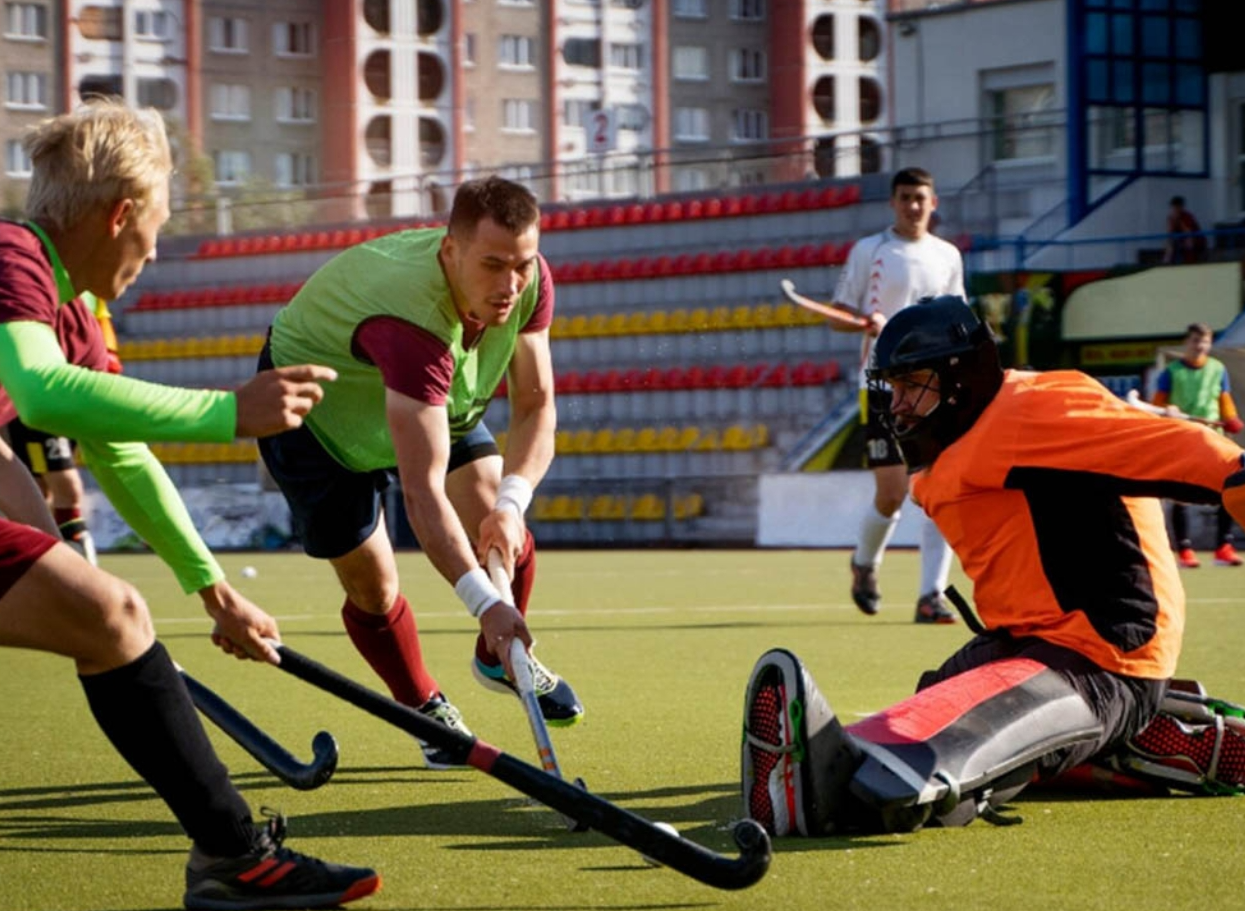
Your body has more than one engine. The mistake most athletes make is training only one of them.
Regular fitness — cycling, jogging, steady-state cardio — runs almost entirely on the aerobic system . You hold a comfortable 75–80% of your max heart rate for 30 to 60 minutes. The engine hums. Oxygen flows. Output stays steady. It's a reliable, efficient machine built for one thing: not stopping .
Hockey runs on a different engine. Two of them, actually.
The first is the ATP -PC system: a near-instant explosive burst lasting 0 to 10 seconds. Think a slap shot. A breakaway sprint. A hard change of direction. The second is the glycolytic system. It carries the load through a full 30-to-80-second shift at over 90% max heart rate. These two systems don't just dominate hockey — they define it.
Here's what that looks like in numbers:
Hockey | Regular Fitness | |
|---|---|---|
Primary Energy System | Anaerobic (ATP-PC + glycolytic) | Aerobic (oxidative) |
Work-to-Rest Ratio | 1:1 to 1:3 (shifts: rest) | Continuous — no structured rest |
Heart Rate Demand | 85–90%+ HRmax peaks | 75–80% HRmax, steady |
Effort Pattern | Intermittent, maximal | Prolonged, submaximal |
Elite hockey players keep a VO₂ max above 60 ml/kg/min. But that aerobic capacity doesn't come from long runs. It exists to support recovery between explosive shifts. Your body uses it to clear lactate and refill ATP-PC reserves before the next line change.
This is the aerobic paradox of hockey conditioning: you need a strong aerobic base, but building it the wrong way hurts your performance. Here's why:
Long steady runs build slow-twitch muscle fibers — the fibers made for endurance, not explosiveness
Hockey shifts need fast-twitch fibers
Too much slow-twitch development eats into fast-twitch capacity
Less fast-twitch means lower peak power output — the thing that defines your game
The smarter path is interval training for hockey players . Push at maximum output for 10 to 30 seconds. Rest at a 1:2 to 1:3 ratio. Repeat. This builds aerobic capacity and anaerobic power at the same time. It matches the real metabolic demands of a shift — not a gym session.Training camps and clubs investing in OEM/ODM ice hockey jersey production often build these same performance principles into fabric selection, ventilation zones, and mobility-focused construction.
Train the right engine. Everything else follows.
Hockey-Specific Training Methods: What Regular Gym-Goers Don't Do
The gym builds a body. Hockey-specific training builds a hockey player . Those are not the same thing.
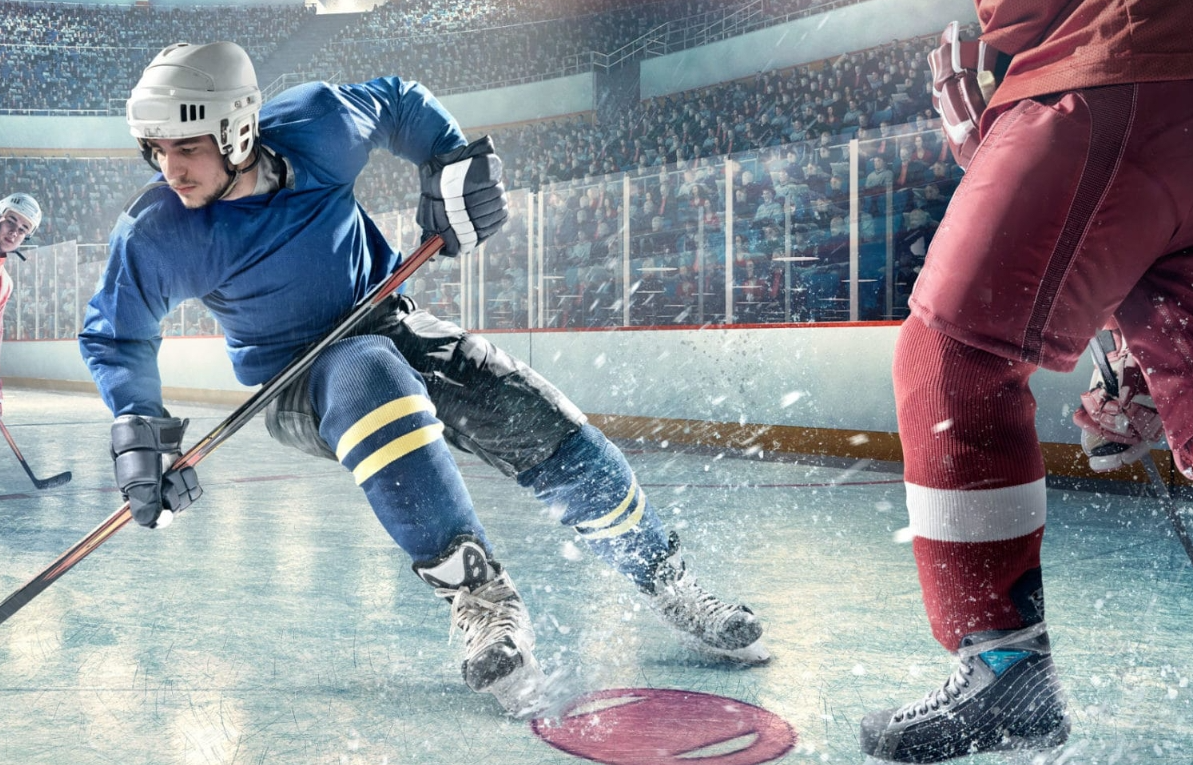
A standard gym program runs in straight lines — squats, bench press, steady cardio. Everything moves forward and backward. It's controlled, predictable, and bilateral. Hockey doesn't care about any of that. The ice demands lateral cuts, rotational power, and explosive direction changes. You need to repeat all of that every 45 seconds for three full periods.
Hockey-specific training exists to close that gap.
Movement Planes Matter More Than You Think
Regular gym training stays in the sagittal plane — forward and back. Hockey uses all three planes at once. Think about a player cutting into a corner, taking a check, and firing a pass in one motion. That move draws on rotational and lateral force. A squat rack doesn't train any of it.
The exercises that transfer to the ice look different:
Lateral hurdle hops and reaching lunges — 4×3 reps per direction, minimal rest. These build the multi-plane edge control behind clean crossovers and sharp cuts. A standard squat never touches this.
Broad jumps and box jumps — triple broad jump 6×1 at 60-second rest. This ties to rotational checking power and shot velocity. Compare that to a bench press, which builds chest strength in one fixed direction.
Resisted sprints — 20 seconds at max output, 30–45 seconds rest, 4–6 sets. This mirrors a puck-chase burst. Most gym-goers skip the stop-start structure and fall back on steady cardio.Many clubs ordering custom ice hockey jersey collections now prioritize stretch panels and lightweight performance fabrics specifically for these hockey-style movement patterns.
The Metabolic Complex: Strength Into Explosiveness
NHL players average 3–4 off-ice sessions per week. Those sessions center on metabolic complexes — supersets that pair strength moves with plyometrics at near-zero rest.
Here's a practical example: Trap bar deadlift (4×5), then vertical jumps (4×5) right after, followed by 2 minutes of full recovery. The logic is clear. You force explosive output from already-tired muscles. That trains the glycolytic recovery that decides whether your legs feel heavy in the third period. Research shows repeat sprint ability improves 5–15% after eight weeks of this structure.
Isolation exercises don't do this. Leg press doesn't do this. Training that mimics shift fatigue is what builds shift resilience.
The Details Regular Training Ignores
Two areas of hockey-specific work are missing from most gym programs:
Unilateral training — Bulgarian split squats and single-leg variations fix the muscle imbalances skating builds over time. Both legs push differently on the ice. Training them the same way off the ice makes that imbalance worse, not better.
Reactive and partner drills — A 10/10/10 partner reaction drill (4 rounds, 60-second rest) sharpens mental agility and decision speed. No amount of barbell work replicates that. Hockey is a reactive sport. Your training should match it.
The right gear supports the work. High-intensity complexes — split squat jumps, lateral shuffles, reactive sprints — need apparel built for that output: 4-way stretch fabric, fast moisture transfer, and panels that move with edge lunges instead of fighting them. berunclothes.com hockey training apparel is built for that range of motion. The clothing stops being a limitation and starts working for you.
Train the movements the game demands. Everything else is just maintenance.
Off-Season vs In-Season Hockey Conditioning: The Periodization Advantage
Most athletes train. Periodized athletes progress . The difference isn't effort — it's structure.
Hockey conditioning isn't a single program you run year-round. It's a sequenced system of phases, each with a specific job. Treat every month the same, and your body adapts to the routine — not to the game. That's how players plateau. Overtraining builds up in the background and eats into performance before anyone catches it.
The framework has three phases:
Phase | Duration | Primary Goal | Training Load |
|---|---|---|---|
Off-Season | 12–26 weeks | Build strength, power, hypertrophy | High volume: 60–90 min sessions, caloric adjustment |
In-Season | 14+ weeks | Maintain and express speed, prevent injury | Low-moderate: 1–2 sessions/week, 45–60 min max |
Post-Season | 4–6 weeks | Recover and assess | Minimal load, mobility focus, deload priority |
Off-season is where you build. Squats, deadlifts, power cleans — pushed hard enough to hit 20–30% strength gains over the block. In-season is where you protect what you built. Heavy eccentrics come out. Soreness becomes the enemy. A fatigued athlete doesn't skate fast. In-season soreness alone cuts on-ice speed by 10–15% .
Within each phase, mesocycles handle the precision work. These are 4–6 week blocks that move in a specific order: Hypertrophy → Strength → Power Endurance → Peak. Each block feeds the next. Break the sequence, and you lose the compounding effect entirely.
The cost of skipping this is real and measurable. Year-round high-volume training carries a 30–50% higher overtraining risk . Non-periodized athletes score 15–25% worse in power and speed benchmarks. That gap shows up on the ice — you see it in every shift.
Here's the core idea: the same training load that builds you in July will break you in January. Adjust the load. Protect the output. That's the periodization advantage.Teams working with regular fitness suppliers often apply the same seasonal thinking to apparel planning — lighter training kits for summer conditioning and heavier technical layers during in-season recovery cycles.
Recovery sessions — yoga flows, mobility work, HRV monitoring — need apparel that moves with your body, not against it. Berunclothes .com hockey training collections are built for both the high-output sessions and the recovery days in between.
Hockey Agility & Explosive Power: What Makes On-Ice Performance Different
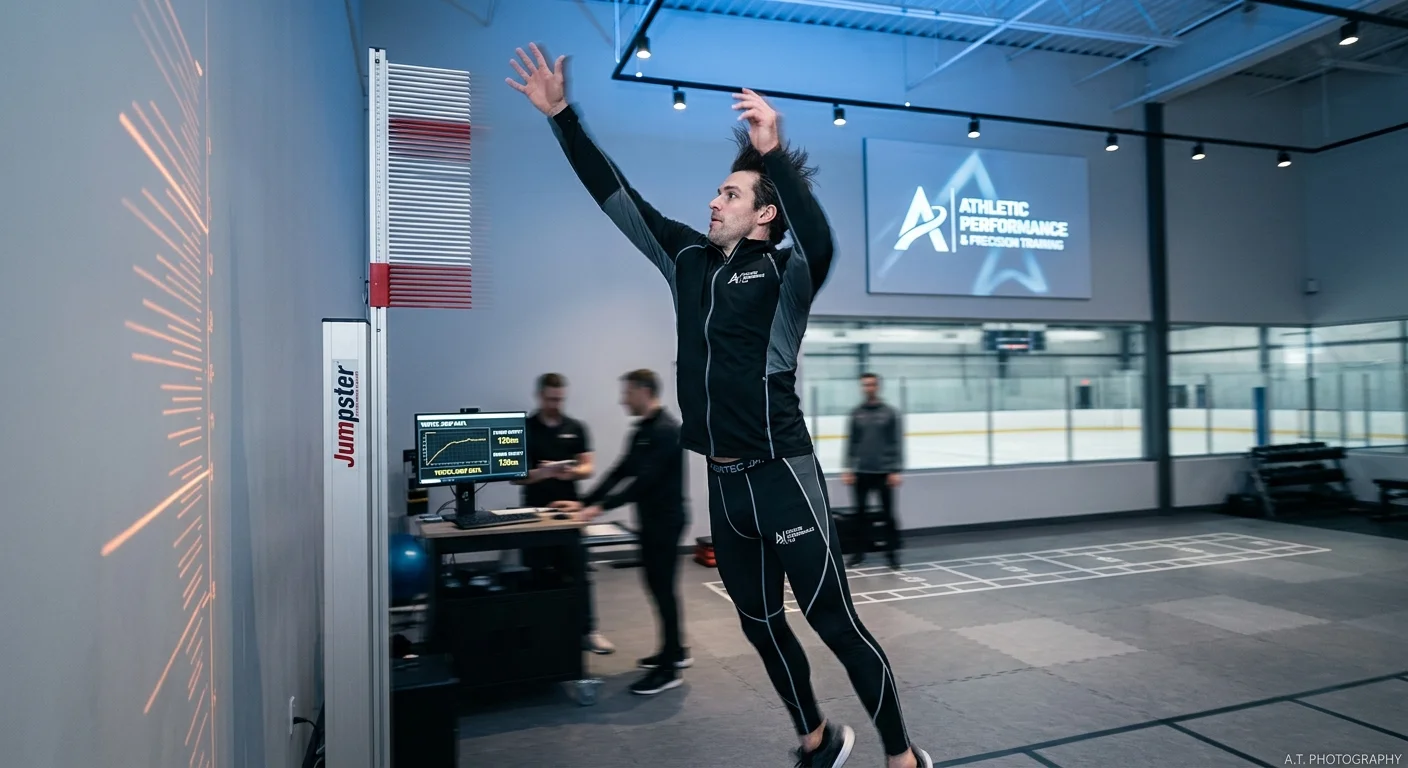
Vertical jump predicts on-ice sprint speed. That one data point — pulled from a study of 91 elite hockey players, U16 through professional — tells you nearly everything about what separates hockey agility from general athletic training.
The research is clear: higher countermovement jump (CMJ) scores link to faster 15m and 30m on-ice sprint times. Stronger athletes — measured by isometric trap bar pull — accelerate harder and hit top speed faster. This isn't gym theory. It's the measurable gap between Division I and Division III players. Division I athletes outperform on vertical jump, Wingate peak power, grip strength, and top skating speed — all at statistical significance.
The mechanism behind this gap is rate of force development (RFD) . Not just how much force you produce, but how fast you produce it. A first stride off the faceoff dot, a post-to-post goalie push, a stick check in tight space — these are won or lost in milliseconds. Olympic lifts, med ball throws, and loaded jump variations train this quality. A standard leg press doesn't come close.
Why On-Ice Agility Demands a Different Training Map
Hockey agility isn't linear. The game demands lateral starts, backward acceleration, and explosive direction changes. These movements live outside the sagittal plane. Most gym programs never leave that plane.
Elite players show something sub-elite players don't. They use less raw off-ice power to reach max on-ice speed. Their skating skill absorbs and expresses force with less waste. Sub-elite players lean harder on brute power output. That burns them out faster in repeated sprint sequences.
The practical training response is straightforward:
Off-Ice Drill | On-Ice Transfer |
|---|---|
Lateral single-leg hops | Sharp edge cuts, quick direction changes |
T-drill (forward/lateral/back) | Explosive turns, stopping mechanics |
Depth jumps → plyometric progressions | 15m/30m sprint acceleration |
Olympic lifts, med ball throws | Stride power, body check force |
One principle governs all of it: train near 90% velocity with full recovery — three to five minutes between sets. Drop below that velocity, and you shift from power adaptation to strength adaptation. The explosive quality you're trying to build fades out before you even notice it's gone.
Build the force. Express it fast. That's what on-ice performance measures.At the competitive level, many organizations developing private label ice hockey jersey programs also focus heavily on lightweight construction and unrestricted mobility to support these explosive skating demands.
Injury Prevention in Hockey: Why Sport-Specific Conditioning Matters
Injuries don't happen by chance. They follow a pattern — striking players whose bodies aren't ready for what the game demands.
Groin strains are the most common example. Every skating stride pulls the hip into abduction and external rotation. Add acceleration, deceleration, and lateral cuts across 45-second shifts over three periods — without targeted hip stabilization work — and the adductor muscles absorb stress they were never trained to handle. The injury isn't bad luck. It's a training gap made visible.
The same logic applies across the body:
Hip flexors — Every stride fires explosive hip flexion. That wears down the iliopsoas fast. Skip hip-specific preseason drills, and you arrive at October already at risk.
Core — Weak core stabilization and cold muscles rank among the top injury predictors in sports research. Fatigue makes both worse. Train hard without solid recovery, and you don't just perform worse — you get hurt more.
Shoulders — Checking and contact require real shoulder stability. A standard pressing program doesn't build that.
Generic fitness misses all of this. A regular gym program doesn't train the frontal plane. It doesn't replicate skating mechanics. It doesn't build the deep core muscles — transversus abdominus, hip abductors, external rotators — that spread load across your body during dynamic ice movement.
Sport-specific conditioning closes that gap. Here's how it works across four key areas:
Interval protocols matching shift reality — 30–60 second high-intensity bursts with structured rest periods, not steady-state cardio
Unilateral and slideboard work — builds single-leg stability and mirrors on-ice movement patterns
Triplanar core training — trains the frontal, sagittal, and transverse planes, not just sagittal
Periodized programming — off-season to build strength, preseason to fix movement patterns, in-season to stay sharp without piling up fatigue
Warm-up discipline matters more than most players give it credit for. Cold muscles tear far more easily — the research is clear on this. Three to five minutes of dynamic work before every session — leg swings, arm circles, torso rotations — isn't just prep. It's basic protection.
Recovery follows the same rule. Thirty-second static stretching holds after each session, regular hip and ankle mobility work, and active recovery between games all add up across a season. Catch minor aches early, and they stay minor. Ignore them, and they grow into something worse.
The bottom line : strength and stability won't stop every contact injury — a hard check or puck impact can't always be trained away. But they cut injury severity and speed up recovery time. Players who train for hockey's specific demands don't just play better. They stay on the ice longer. That's the real conditioning advantage.
Practical Hockey Workout Program: How to Train Like a Hockey Player
Four workout sessions per week. That's the structure elite hockey players build around. Not random sessions — sequenced ones, each with a specific job.
Here's how those sessions break down in practice.
Session 1: Strength + Power Complex
This session pairs a heavy lift with an explosive movement, zero rest between them.
Trap bar deadlift → Vertical jump (4×5, 2-min rest after pair)
Lateral step-ups → Lateral hurdle hops (4×5 per leg, 2-min rest after pair)
Romanian deadlift → Hanging leg raise → Plank (2×8 / 2×12 / 2×60s, 90s rest)
The logic is simple: force your muscles to express power while they're already loaded. That's the same demand a third-period shift puts on your body.
Session 2: Explosive Output + Agility
No barbells. Pure speed and reaction.
Reverse scoop toss → 3-way push-up (6×1 / 6×2, 45s rest)
Double broad jump + 20yd sprint + 20yd backpedal (6×1, 45s rest)
10/10/10 Partner Agility Reaction Drill (4 rounds, 60s rest)
This session trains reactive speed. It's what separates players who react on instinct from those who think through every move.
Session 3: Conditioning + Interval Work
Match the energy system to the shift.
1.HIIT sprints or rowing intervals: 20–60 seconds at full output, structured rest at 1:2 ratio, 3–4 sessions per week
2.Backpedal sprints: 10×15yd (5yd backpedal + 10yd forward sprint), 25s rest between reps
Steady-state cardio is off-season work. Use it to build an aerobic base that helps you recover between bursts. It won't build the bursts themselves.
For Athletes Transitioning from Regular Gym Training
You already squat and bench — don't scrap everything. Keep 40% of your current volume. Replace the other 60% with hockey-specific work, in this order:
Keep squats, deadlifts, pull-ups, and planks — these carry over well
Replace leg press and bench press with vertical jumps, broad jumps, and split squat jumps
Replace isolation work with med ball throws and lateral hops
Replace steady cardio with HIIT sprint intervals
Add one full hockey-specific session per week
Track one simple benchmark: jump height. A 10–20% improvement over four weeks tells you you're building the right kind of power.
Each session runs 40–70 minutes, every time. You start with 10 minutes of dynamic warm-up. Then 30–40 minutes of resistance work or plyometrics. Then 10 minutes of mobility cool-down. That structure is deliberate. Small habits stack up across a full training block. The results you see on the ice will catch people off guard.
The gear you train in matters at this output level. Split squat jumps, lateral hops, and backpedal sprints will expose every weak point in low-quality training apparel. BeRunClothes .com hockey training apparel uses 4-way stretch fabric and targeted mobility panels — so your clothing moves with the drill, not against it.
When Regular Fitness Methods Work for Hockey Players
Not everything about conventional fitness is wrong for hockey. Steady-state cardio and traditional strength work aren't the problem. Using them at the wrong time is.
Timing is what most players miss. The same method that hurts your performance during peak off-season training is the one your body needs four weeks after the final buzzer. Regular fitness methods aren't outdated. They're phase-specific tools. Use them in the right window, and they work. Use them in the wrong one, and they slow you down.
Here's where they fit:
Post-season recovery (Weeks 1–4). Your nervous system is worn down after a full competitive season. High-intensity intervals would make things worse, not better. Steady-state cycling, rowing, or light jogging at moderate intensity — two to three sessions per week, 30 to 45 minutes each — keeps your cardiovascular system active while your CNS rebuilds. This is the foundation phase. It comes before everything else.
Injury rehabilitation. Acute or chronic injury stops high-intensity work. Pool cardio, controlled cycling, and steady-state rowing keep your fitness from dropping without stressing damaged tissue. Run regular fitness tests — acceleration, speed, intermittent capacity — to track progress. Those numbers tell you when your body is ready to return to hockey-specific conditioning.
Pre-season deload (Final 1–2 weeks). After 10 to 14 weeks of hard off-season training, you don't want to arrive at camp already tired. Light cardio plus mobility work, once or twice a week at 20 to 30 minutes, holds your fitness without adding more fatigue.
Year-round fundamentals. Some methods stay useful in every phase. Static stretching, foam rolling, and yoga belong in every training block. Core basics — planks, dead bugs, Russian twists — stay effective across the full calendar. Bodybuilding-style work targeting glutes, hamstrings, upper back, and adductors fills the structural gaps that skating creates over time.
The pattern is clear:
Phase | Regular Methods That Fit |
|---|---|
Post-season (Weeks 1–4) | Steady-state cardio, static stretching, core work |
Injury/Rehab | Pool cardio, controlled cycling, aerobic walking |
Pre-season deload | Light cardio, mobility work |
All phases | Foam rolling, yoga, core maintenance |
One principle runs through all of it: the goal is never to drop regular fitness — it's to use it with purpose. In peak off-season training, HIIT and shuttle sprints beat slow cardio. In-season, two to three focused strength sessions replace traditional four-day splits. During competition, short explosive intervals replace long steady runs. Between those phases, conventional methods earn their place.
The best hockey conditioning programs don't cut out regular fitness. They place it in the right phase at the right time.
Conclusion
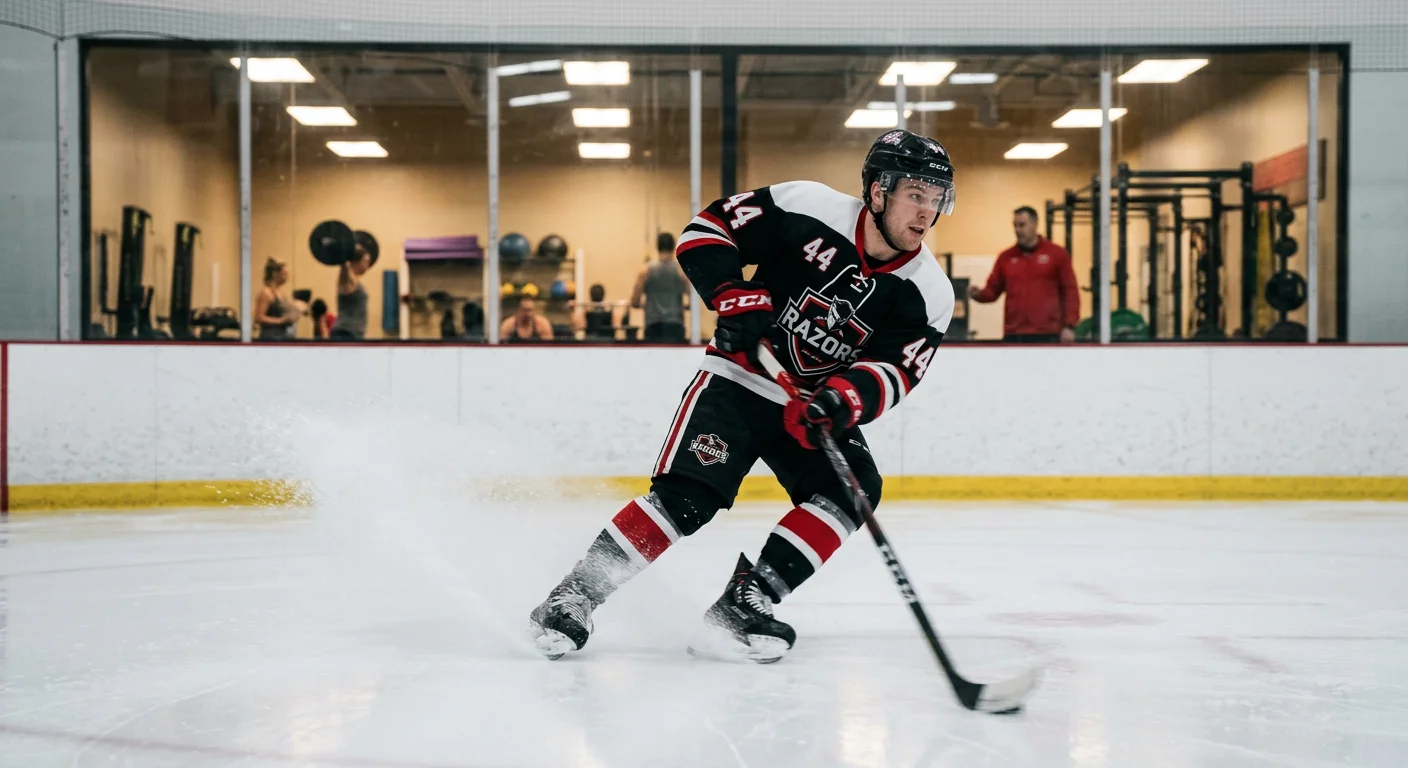
Hockey doesn't reward general fitness. It rewards specific fitness — built around explosive shifts, lateral edges, and the brutal anaerobic demands that no treadmill or bench press can match.
The gap between a conditioned hockey player and a "fit" person isn't about who works harder. It's about who trains smarter . That means prioritizing interval training for hockey players, sport-specific movement patterns, and periodization cycles that peak at the right point in the season.
Here's what to do next: audit your current training against what you've learned. Are you building skating endurance — or just cardio? Explosive power — or just strength? Most players miss this distinction. It matters more than they think.
Ready to train off the ice with the same focus you bring on it? Gear that moves with your body — not against it — makes every rep count.Finding the right ice hockey jersey wholesale price balance between durability, stretch performance, and team budget can also make a major difference for clubs training year-round.
Your edge isn't found in the gym. It's built there — rep by rep, shift by shift, with purpose behind every session.