Two grown men drop their gloves mid-game. They grab each other's jerseys and start throwing punches — while the referee watches . No whistle. No immediate ejection. Just 18,000 fans on their feet screaming.
New to hockey? Your first thought is likely wait, is that legal? The answer is not simple. That complexity is what makes it so fascinating.
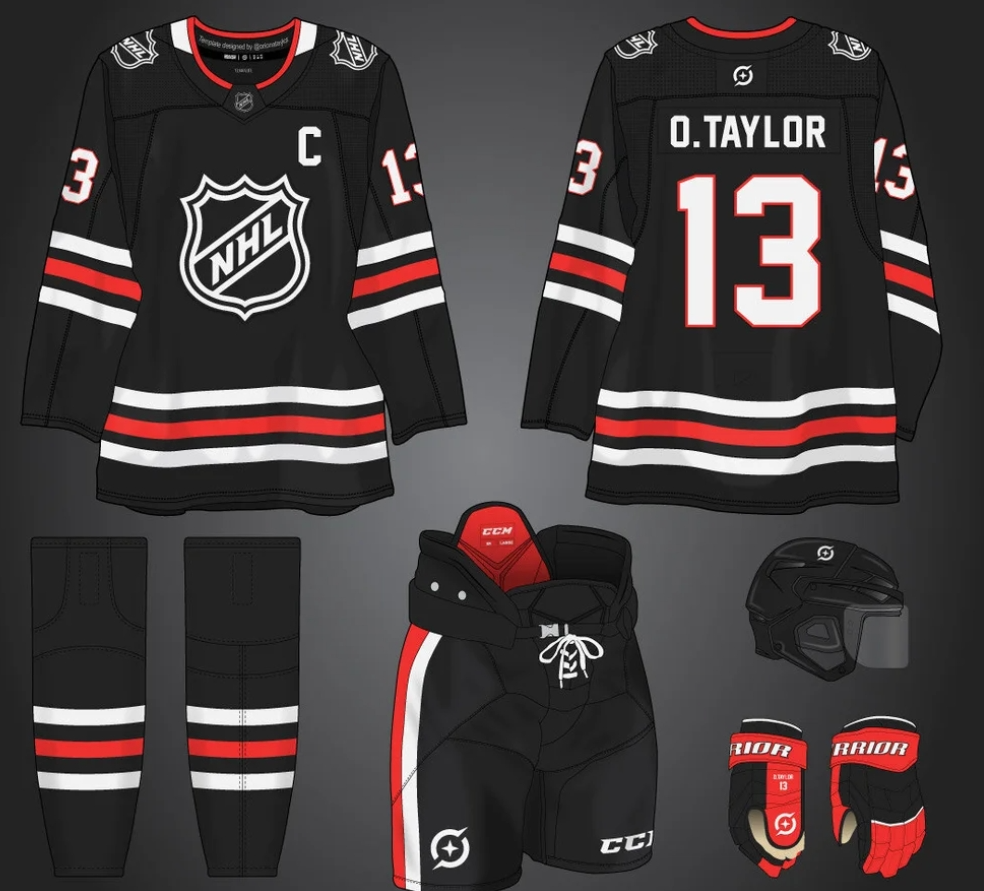
Even the way teams coordinate their hockey dress manufacturers reflects how structured and system-driven the sport really is behind the chaos.
Hockey fighting runs on a structured set of rules most people never see written down. There's an unwritten code of conduct that predates most NHL franchises. And there's a cultural debate around it that has lasted for decades.
Want to understand the NHL's official fighting rules ? Curious why enforcers exist? Or just trying to figure out why hockey handles conflict so differently from every other major league? You're in the right place.
NHL Fighting Rules Explained: Penalties, Majors & Misconduct Breakdown
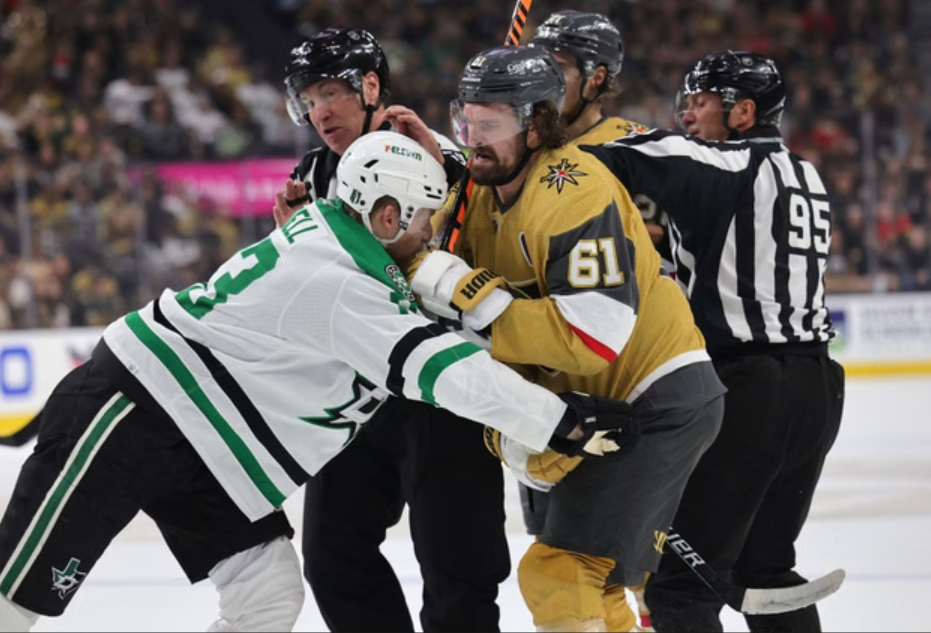
Here's what most people miss: hockey fighting isn'T a loophole. It's a regulated act. There are specific penalties, escalating consequences, and a rulebook structure detailed enough to fill a law school exam.
The foundation is NHL Rule 46 — Fighting . Two players drop the gloves and exchange punches. Both get a 5-minute major penalty for fighting . That's it. No immediate ejection. No power play for either team. Both sides serve equal time at the same time, so the penalties cancel each other out. The game resumes 5-on-5 as if nothing happened. The rulebook calls this coincidental majors . That's why referees step back and let it play out instead of blowing the whistle the moment fists fly.
The Instigator Rule: When Fighting Gets Expensive
Not every fight gets the same treatment. A referee may decide one player started the confrontation — chased the opponent from a distance, threw the first glove, or forced an unwilling player into a fight. That player gets tagged as the instigator under Rule 46.2.
The penalty stack hits hard:
2 minutes — Instigating minor
5 minutes — Fighting major
10 minutes — Misconduct
That 10-minute misconduct pulls the player off the ice, but it doesn't put the team short-handed. The team can substitute. The 2+5 combination, though, does create a real power play for the other team. Start a fight at the wrong moment and you've just handed the other team a 7-minute advantage window.
The rule gets stricter as the clock runs down. Any instigator penalty called in the final 5 minutes of regulation or overtime triggers a Game Misconduct — the player is done for the night, no exceptions. The goal is clear: stop teams from using late-game fights as intimidation tactics or settling scores after the outcome is decided.
Repeat offenders face stiffer consequences. A second instigator in the same game draws a Game Misconduct instead of the standard 10-minute misconduct. A third instigator across the season triggers an automatic one-game suspension.
Aggressor, Third Man In & Game Misconduct Triggers
The aggressor label is a separate — and more serious — designation. A player earns it by continuing to attack after the opponent goes down, stops fighting, or can no longer defend themselves. The standard punishment: 5-minute major plus a Game Misconduct . The player leaves the ice. The team replaces them at the next stoppage.
Stack aggressor on top of instigator? Now you're looking at a 2-minute minor, a 5-minute major, a 10-minute misconduct, and a Game Misconduct — all on the same shift. That's not just a bad night. That's a potential suspension review from the league office.
Repeat aggressor incidents carry season-long automatic suspensions :
4th aggressor designation → 4-game suspension
5th aggressor designation → 6-game suspension
Playoffs are even less forgiving — a second aggressor in the postseason triggers an automatic one-game ban
One more rule worth knowing: Third Man In (Rule 46.16) . A third player jumps into an existing fight. That player gets an automatic Game Misconduct. The rule exists to stop line brawls from snowballing — and it works.
Misconduct vs. Game Misconduct: The Practical Difference
The distinction matters more than most fans realize.
A 10-minute misconduct pulls the player off the ice, but the team can put a replacement in right away. No power play. The player sits alone and cools down while the game runs at full strength.
A Game Misconduct ends the player's night for good. They leave the bench. The team can put someone else on the ice after the next whistle. But here's the catch — if that player was also serving a minor or major, someone else has to sit in the penalty box and finish that time.
This strict separation of roles and discipline is part of why professional teams work closely with specialized hockey dress suppliers who understand the performance and durability demands of high-contact environments.
The rulebook is specific, layered, and at times counterintuitive. Still, it all follows the same core logic: fighting is permitted , not encouraged . The moment it crosses from a controlled confrontation into something dangerous or predatory, the consequences go up fast.
What's Allowed vs. Prohibited During an NHL Fight
The rulebook draws a sharper line than most fans realize. Cross it, and the consequences go well beyond a trip to the penalty box.
What the Referees Will Let Go
Rule 46 gives a fight official status once at least one player throws multiple punches. It also applies when two players are so tangled that linesmen can't pull them apart. At that point, officials step back on purpose and let it play out.
Here's what that controlled window looks like:
The gloves come off. This isn't forbidden on its own. It signals mutual consent — both players know what's happening.
The linesman waits. Both players are upright, gripping jerseys, trading punches with some awareness of defense. The fight has a rhythm. Officials read that rhythm.
Natural endpoints trigger intervention — one player hits the ice, stops defending, signals they're done, or the scrum drifts toward a goal post or the bench door.
One thing worth noting: helmets. A player who removes his own helmet before or during a fight picks up an extra minor penalty for unsportsmanlike conduct. The helmet falls off during the scramble? No call. The difference is intent .
What Gets You Thrown Out — or Suspended
This is where the tolerance ends, fast.
Using equipment as a weapon sits in a different offense category:
Slashing, spearing, or a high-stick aimed at the head → potential Match Penalty, automatic league review, suspensions ranging from 1 to 5+ games
Kicking with a skate blade → almost always a Match Penalty, multiple games, no exceptions in recent precedent
Swinging a helmet or pad at an opponent → Match Penalty plus a Department of Player Safety hearing
Sucker punches fall into a separate category. This includes blindsiding someone who hasn't agreed to fight, hitting from behind, or throwing punches at a player whose back is turned. The charge is Roughing or Attempt to Injure. DoPS suspension reviews follow as standard procedure. Based on injury and intent, you're looking at 1 to 10+ games off the ice.
Leaving the bench to join a fight sets off an automatic chain reaction. Everyone who steps onto the ice gets a Game Misconduct. The first player through the gate gets instigator status. The HEAD coach earns a Game Misconduct plus a fine in the $10,000–$25,000 range. The league has shown zero flexibility here.
Continuing after separation — brawling in the tunnel, near the locker room entrance, or after linesmen have stepped in — near guarantees a post-game DoPS review and extra suspensions. This applies regardless of what happened on the ice.
How the League Escalates from There
The NHL's Department of Player Safety reviews incidents on video. Their checklist is specific:
Was the head the primary target ?
Did the player have a history of supplemental discipline in the past 18 months?
Did the opposing player sustain a concussion, fracture, or documented injury?
Did the incident involve a weapon, a sucker punch, or continued aggression after intervention?
Repeat offenders face much longer suspensions — not just slightly longer. The CBA structure caps fines at around 50% of a player's daily salary. For a league-minimum player, that number looks very different than it does for a star on a $10 million contract.
The core logic holds across all of it: controlled confrontation is tolerated; predatory or escalated violence is not. The rules don't claim the line is always clean. But a player who crosses it faces a response that is direct, documented, and public.
The Unwritten Code: Hockey's Self-Policing Culture and Fighting Etiquette
Every hockey fight starts the same way — with a question.
Two players skate toward each other. Eyes lock. One leans in and says, "You wanna go?" The other nods, or doesn't. That moment — that small, almost civilized exchange — is the foundation of everything. The rulebook governs what happens after fists fly. But this question, and everything it carries, belongs to a code that no commissioner ever wrote down.Even in modern locker rooms, teams coordinating custom hockey dress for travel and game-day appearances understand how much this discipline and identity still matter off the ice.
It's older than most NHL franchises. And it works.
Consent, Respect, and the Rules Nobody Printed
The first principle is mutual willingness. You don't jump someone from behind. You don't blindside a player whose eyes are somewhere else. Both violations aren't just penalized under Rule 46 — they're despised inside locker rooms. No official suspension comes close to that kind of peer judgment.
Once the fight begins, the code controls its shape:
Stop when the other man goes down. A player loses his footing, hits the ice, or can't defend himself — the fight is over. Keep throwing punches on a defenseless opponent and you've crossed a line. The league punishes it. The locker room never forgets it.
Don't target players who aren't in the fight. Star forwards, injured veterans, goaltenders — none of them are fair game for an enforcer making a point. One rule stands above the rest: don't touch the goalie. Run your opponent's goaltender and you'll have an answer inside five seconds, from whoever gets there first.
Finish it, and mean it. After the linesmen step in, something shifts. A head nod. A tap on the shoulder pads. Sometimes a grin. These aren't sportsmanship theater — they're signals. This was business. Nothing personal. Account settled.
Skate to the penalty box still jawing, challenge someone in the tunnel, or land punches after separation? That earns a different kind of reputation — the kind that follows a player from city to city.
The Enforcer and the Logic of Deterrence
For decades, every NHL roster carried at least one enforcer. Not a scorer. Not a playmaker. A player whose job was presence — the steady, real threat that cheap shots against your team's best players would be answered fast and in person.
The logic was almost economic. Target Wayne Gretzky's wrist and you're standing across from Bob Probert at the next faceoff. Most opponents decided it wasn't worth it.
Coaches and veterans called this self-policing — players holding each other accountable through real consequences. The sequence ran like clockwork:
A dirty play occurs — a high elbow, a hit from behind, a slash to a star's knee.
The next whistle brings a warning, spoken or implied: "Next shift."
The enforcer finds the offender at the faceoff dot: "You wanna settle that?"
Both agree. Gloves drop. The exchange happens.
The debt is cleared — unless the other side keeps dealing dirty, and the whole sequence starts again.
Fighting didn't replace the referee. It filled the gaps — delivering fast accountability for actions a two-minute minor penalty couldn't touch.
How the Code and Rule 46 Work Together
These two systems — the written and the unwritten — back each other up. The connection isn't always visible, but it's real.
Rule 46 punishes the third man in . That rule locks in the code's core demand: one-on-one resolution . No pile-ons. No ganging up. The 5-minute major raises the stakes — a team playing short for five minutes has real tactical reasons to pick its spots. The instigator rule adds a financial cost to starting fights without cause.
The code covers what the rulebook can't: timing, proportion, and legitimacy . A team losing by four goals that launches a brawl isn't enforcing anything. Veterans in that locker room know it. They'll pull younger players back before it happens. Fighting in garbage time reads as undisciplined. It earns suspensions. It tells the other bench you've lost the room.
Today's NHL sees far fewer fights — about one per five or six games, compared to one every two games a decade ago. Dedicated enforcers have stepped back. Fourth-line forwards have taken their place — players who can drop the gloves if needed, but also skate, kill penalties, and contribute. The thinking shifted from one designated answerer to policing by committee .
The code adapted. It always does. What hasn't changed is the core idea: in hockey, the fastest way to stop someone from playing dirty is to make the personal cost immediate, mutual, and impossible to avoid.
Why Is Fighting Still Allowed in the NHL? The Real Reasons Behind the Tolerance
The NHL is the only major professional sports league in North America where two players can throw punches at each other — and neither one gets ejected. In the NFL, NBA , and MLB, fighting means an automatic ejection and a near-certain suspension. In Olympic hockey, the NCAA, and nearly every European league, the same rule applies. In the NHL, both players sit in the penalty box for five minutes. The penalties cancel out. The game resumes at full strength.
That single fact raises an obvious question: why?
The honest answer isn't one thing. It's four things working together — and they don't all point in the same direction.
Momentum and Emotion: The "Shift" That Coaches Believe In
Ask a veteran coach or a fourth-line forward what a fight does to a game. The answer comes fast: it changes the room.
A team gets outplayed. The bench goes quiet. The momentum sits on the wrong side of the ice for two periods. A fight can crack something open. Coaches don't always call for it outright. They don't have to. A nod, a quiet word during a line change — someone knows what the next shift is for.
The WBS Penguins, the AHL affiliate of Pittsburgh, stated it plainly in an official blog post. The two main functions of fighting in hockey are "changing the momentum of a game" and "protecting teammates." That framing — momentum first — shows how deep the belief runs inside the sport.
The 2024 4 Nations Face-Off match between the United States and Canada produced three fights in nine seconds. The clip got over two million views on Sportsnet alone. Academic arguments about causality aside, the perceived value is enormous — to coaches, to players, and to audiences.
Researchers have not confirmed a clean statistical link between fighting and scoreboard outcomes. But the consensus among players and coaches is near-unanimous. In hockey culture, belief carries weight.
The Deterrence Argument: Does the Enforcer Actually Work?
The case for fighting as a protective mechanism goes like this: your cheap shot on a star forward will be answered fast and face-to-face. So you might not throw it. The enforcer isn't just a fighter. He's a standing threat — a cost attached to every dirty hit your team might take.
NHL Commissioner Gary Bettman made this argument in public. His position: permitting fighting may prevent other kinds of harm. It keeps emotional escalation visible and contained. The alternative — letting it spill into dangerous stickwork or boarding hits — is harder to see coming and harder to police.
Former NHL forward Brandon Prust put it more bluntly: "If they take fighting out… I guarantee more people will get hurt from an increase in open-ice body checks."
The deterrence theory is intuitive. It maps onto the unwritten Code. It matches how veterans inside locker rooms describe the role of enforcers.
The research tells a different story. Fighting in the NHL has dropped by more than 50% over the past two decades — from about one fight per two games to one per five or six. Concussion rates and serious head injuries have not dropped at the same rate. Studies comparing NHL injury data to European leagues, where fighting is banned, show dirty hits happen in both settings. Removing enforcers does not produce a straight-line drop in dangerous play.
The honest summary: deterrence works sometimes , in specific situations , for specific players . As a league-wide safety tool, the evidence is thin. The league runs on belief more than data — and it knows it.
Tradition, Identity, and the Commercial Calculation
Rule 56 — the predecessor to today's Rule 46 — entered the NHL rulebook in 1922. That was a deliberate choice: treat fighting as a penalized act, not an expulsion-worthy one. The league has had more than a century to change that framework. It hasn't.
Part of the reason is cultural. Cutting out fighting overnight would be, in the words of multiple longtime observers, a fundamental break with the sport's identity. North American hockey and fighting have been tied together since before most current franchises existed. For a generation of fans, the enforcer isn't a flaw in the game — he's a feature of it.
Part of the reason is commercial. HockeyMonkey noted that many fans attend games "solely just for the fights and big hits." ESPN and NHL Network have long run dedicated fight-and-hit highlight segments. YouTube compilations of "NHL Fights" and "Best Hockey Fights" pull hundreds of thousands to millions of views on a regular basis — organic global reach the league doesn't have to pay for.
The commercial math is cold: ban fighting, and you risk losing a core segment of the traditional fanbase. You also erase a differentiator that separates NHL content from every other major league product.
The Case Against — And Why the League Hasn't Fully Answered It
None of this makes the arguments against fighting weak. They aren't.
The medical case has grown stronger over the past decade. Repeated head trauma — including sub-concussive hits — now links to chronic traumatic encephalopathy (CTE) with enough consistency that leagues across all contact sports are paying attention. Several former NHL enforcers, including Derek Boogaard, died young under circumstances tied to long-term neurological damage. Autopsies confirmed CTE in multiple cases. The enforcer role, by definition, involves more intentional head-level contact than almost any other position in professional sport.
There's also a global perception problem. European leagues, the Olympics, and the NCAA all ban fighting outright. The NHL's tolerance-of-fighting policy tends to register as a liability in markets outside North America — a signal that the sport is behind the times, or out of step with international standards.
At the youth level, the contradiction is hard to ignore. North American youth hockey associations hold near-zero-tolerance policies on fighting. The professional league normalizes it on broadcast television. The message sent to young players — and to parents deciding whether to sign their kids up — is, at best, confusing.
The NHL's position on fighting is not a legal principle or a safety policy. It's a negotiated compromise — between tradition and modernity, between entertainment and medical responsibility, between a belief system built inside locker rooms and a body of research that has never confirmed what players already "know." Rule 46 stays on the books because four things keep it there: the emotional value coaches believe in, the deterrence logic players believe in, the commercial value the league depends on, and a century of cultural identity that nobody has found a clean way to take apart.
Fighting Rules Across Different Hockey Leagues: NHL vs. NCAA vs. Olympics vs. Europe
Two players drop their gloves and throw punches. Same act. But the consequences change based on which rink you're in. Cross a border or step onto a college ice sheet, and the whole rulebook shifts.
NHL and AHL: Penalized, Not Prohibited
You already know how the NHL handles it. Five minutes, coincidental majors, back on the ice. The AHL follows the same structure — but adds one rule the NHL doesn't have: a fight limit per season. Rack up ten fighting majors in one AHL season and you sit out. First offense, one game. Next infraction, another game. Then another. The league's position is clear: enforcers are tolerated, not supported.
NCAA: The Ejection Model
College hockey has no middle ground. Drop the gloves and you're done for the night — full game disqualification, at least a one-game suspension, and no path back to the ice that same evening. A second fighting disqualification in one season? That usually means two or more extra games out. There's no "five minutes and come back" option here.
The reason is structural. Universities hold insurance liability. Concussion research lands in every athletic department's inbox. No school president wants a brawl on the highlight reel. So the enforcer role simply has no place in a 34-game college season.
IIHF and Olympics: Zero Tolerance, No Exceptions
International hockey runs on a different set of rules. A fight under IIHF rules brings an automatic game ejection — match penalty or game misconduct — and the federation can add more suspension time at its own discretion. Linesmen jump in fast. They don't step back the way NHL referees do, so long toe-to-toe exchanges rarely happen.
The Olympics positions itself as a global showcase. Fighting reads as a liability there, not a tradition.
European Pro Leagues: Skill First, Suspensions Ready
The Swedish Hockey League, Finnish Liiga, German DEL, and Swiss NLA all run close to IIHF standards. A clear fight ends in a match penalty and a disciplinary committee review. Two to four extra games off the ice is the standard outcome in the SHL and DEL.
The financial side backs this up too. European rosters run smaller. Import roster spots cost serious money. Clubs fill those spots with playmakers. A "pure enforcer" contract makes no financial sense in a league where every fight costs you multiple games.
The Cultural Split Starts Early
This gap doesn't start at the pro level. It runs through development systems too.
Canadian major junior (CHL) allows fighting but tightens suspension thresholds as a player builds up majors through the season. USA Hockey and Hockey Canada both require game misconducts and suspensions at youth levels — at least on paper.
European junior programs take a harder line. Fighting is disqualifying behavior from day one. No exceptions. They mirror IIHF standards straight through.
That gap shows up later in roster construction. North American prospects entering the NHL often bring real fighting experience from junior hockey. European and NCAA prospects arrive without it — and with little interest in building it.
League | Fight Result | Ejection? | Additional Suspension? |
|---|---|---|---|
NHL / AHL | 5-min major | No | For instigators / repeat offenders |
NCAA | Game disqualification | Yes | Minimum 1 game |
IIHF / Olympics | Match penalty | Yes | Possible |
European pro | Match penalty | Yes | Standard 2–4 games |
One sport. Four different answers to the same question. That gap isn't confusion. It's a clean line between leagues that treat fighting as a managed cultural tradition and leagues that treat it as a problem to price out of the game.
Is NHL Fighting Declining? Trends, Data & the Modern Game's Direction
The numbers tell a clear story. They just need honesty to read them.
In 2001–02, NHL players fought 803 times in a single regular season. By 2018–19, that number dropped to 224 . That's a 72% fall in less than two decades. Not a dip. Not a correction. A steady, unbroken collapse in fighting that showed up across every measurable category.
In 2008–09, 41.4% of games had at least one fight. Ten years later, that figure fell to 15.3% . In 2018–19, the NHL hit its lowest fights-per-game ratio in the modern tracking era: 0.18 . Just 24 games all season had more than one fight. Only 245 players dropped the gloves even once.
Why the Decline Happened — and Why It's Structural
The easy explanation points to rule changes — the instigator penalty, the second referee, tighter Department of Player Safety oversight. But the data doesn't fully support that story. Fighting rates were already falling four to five years before those rule changes took effect. Something deeper shifted first.
That something is roster construction.
Front offices stopped treating the enforcer as a useful tactical asset. ESPN put it plainly: "fourth-liners are now cost-efficient skill players instead of goons." CBSSports called enforcers an endangered species — not banned, just priced out of a roster spot. A player who can fight and nothing else costs a team real ice time, real salary cap space, and real strategic flexibility. Against a speed-focused, puck-possession opponent, that trade-off stopped making sense.
The academic research backs this up:
Studies covering two decades of NHL data found that as fights per game declined, attendance increased — a clear negative correlation that challenges the idea that fans leave if fighting disappears.
There was also a strong inverse relationship between goals per game and fighting frequency . As the game grew more offensive and skill-driven, fighting became less central to what fans came to see.
The Safety Conversation That Won't Quiet Down
The drop in fighting also lines up with growing awareness of concussions, CTE, and long-term neurological damage . Chris Nowinski of the Concussion Legacy Foundation said it plainly: as hockey gets a clearer picture of the long-term effects of head impacts, fights should continue to decline .
The league's official position, laid out by Commissioner Gary Bettman in a 2016 letter to Congress, is that fighting causes only 2% of video-analyzed concussions in a given season. That framing keeps fighting's medical footprint small on paper. But it leaves out a bigger question — what happens to players who spend entire careers absorbing head-level contact as a core part of the job? That enforcer-specific risk sits outside most concussion tracking frameworks entirely.
Player attitudes have shifted too. Former NHLer Daniel Carcillo was direct: "the game is better off without fighting, no doubt." John Scott Oleksy went further. He predicted that on-ice violence has already changed so much that fighting could be "virtually extinct a decade from now."
Where the NHL Actually Stands
No official ban is on the table. Rule 46 stays in the rulebook. But the NHL is already pulling back from fighting in practice — through roster incentives, discipline patterns, and a game that rewards speed over intimidation.
The clearest read of where things are headed: fighting won't get legislated out of hockey. It's getting outcompeted — by faster players, smarter front offices, and a sport that has already decided its future looks different from its past.
FAQ: Quick Answers to the Most Common Hockey Fighting Questions
These questions come up all the time. Here are straight answers.
Is fighting legal in the NHL?
Illegal on paper. Tolerated in practice. NHL Rule 46 covers it — both players get a 5-minute major penalty. The penalties cancel each other out, so the game goes back to 5-on-5. Nobody gets ejected for a standard fight.
What penalty do you get for fighting?
A 5-minute major for each player involved. Rack up three majors in one game and you're out — ejected. Your team also plays shorthanded for the last five minutes.
Can players get suspended for fighting?
Mutual fights between two willing players almost never bring extra discipline. Suspensions come from specific situations — being tagged as the aggressor, starting a fight late in a blowout game, or using a weapon like a stick, skate blade, or taped fist.
Why don't referees stop it right away?
Rule 46 tells linesmen to hold back. They wait until one player falls, stops defending, or things turn dangerous. In most NHL fights, that's 5 to 15 seconds of active punching before officials move in.
Can goalies fight?
Yes. A goalie can skate to center ice, drop the gloves, and take the same 5-minute major as any other player. Goalie fights are rare, though. Bench-clearing brawls with goalies involved tend to end with multiple game misconducts, suspensions, and fines for the coaching staff.
Is fighting allowed in the Olympics?
No. IIHF rules call any fight a match penalty — you get ejected on the spot, and a multi-game suspension is possible. One punch, and your game is over.
How common is fighting today?
About one fight every four to five games. Dedicated enforcer spots on rosters have mostly disappeared. Plenty of NHL players go through full seasons without throwing a single punch.
Conclusion
Hockey fights aren't random acts of violence. They're a window into one of North America's most distinct sporting cultures — built on specific rules and shaped by decades of unwritten code.
You might have come here curious about why refs let players throw punches. Or maybe the major penalty fighting NHL system had you scratching your head. Either way, the answer isn't simple. Hockey fights sit at the crossroads of tradition, strategy, player safety debates, and a league still figuring out its place in the modern game.
The gloves are dropping less often these days.That trend isn't reversing — and it's also influencing how teams and private label hockey dress programs design modern pre-game and training apparel to match a faster, more regulated era.
So start watching with fresh eyes. Notice the physicality. Watch the gear absorb every hit. See the culture hiding underneath the chaos. Ready to gear up yourself — for the ice or the stands? Make sure what you're wearing can keep up.