For professional teams and retailers, sourcing high-quality custom ice hockey apparel is essential for peak performance.Every sport has its hardest position. Hockey has the goalie — and it isn'T close.
Forwards chase glory. Defensemen patrol their zones. The goaltender stands alone in a ten-by-four-foot cage. He faces rubber flying at 100 miles per hour. He makes split-second decisions that the human nervous system was never built to handle.
The NHL goalie demands on a single player — physical, technical, psychological — are unlike anything else in professional sports.
Most fans watch a clean glove save and move on. What they don't see tells a deeper story:
1.A decade of obsessive training
2.The crushing isolation of the position
3.The raw mental toughness it takes to be your team's last line of defense, night after night
That weight never lifts. Every game, every shot, every mistake lands on one person.
This is a full breakdown of why goalie is the hardest position in professional ice hockey — and why that case is stronger than most people think.
Reason 1: Facing Shots That Travel Faster Than Human Reaction Time Allows
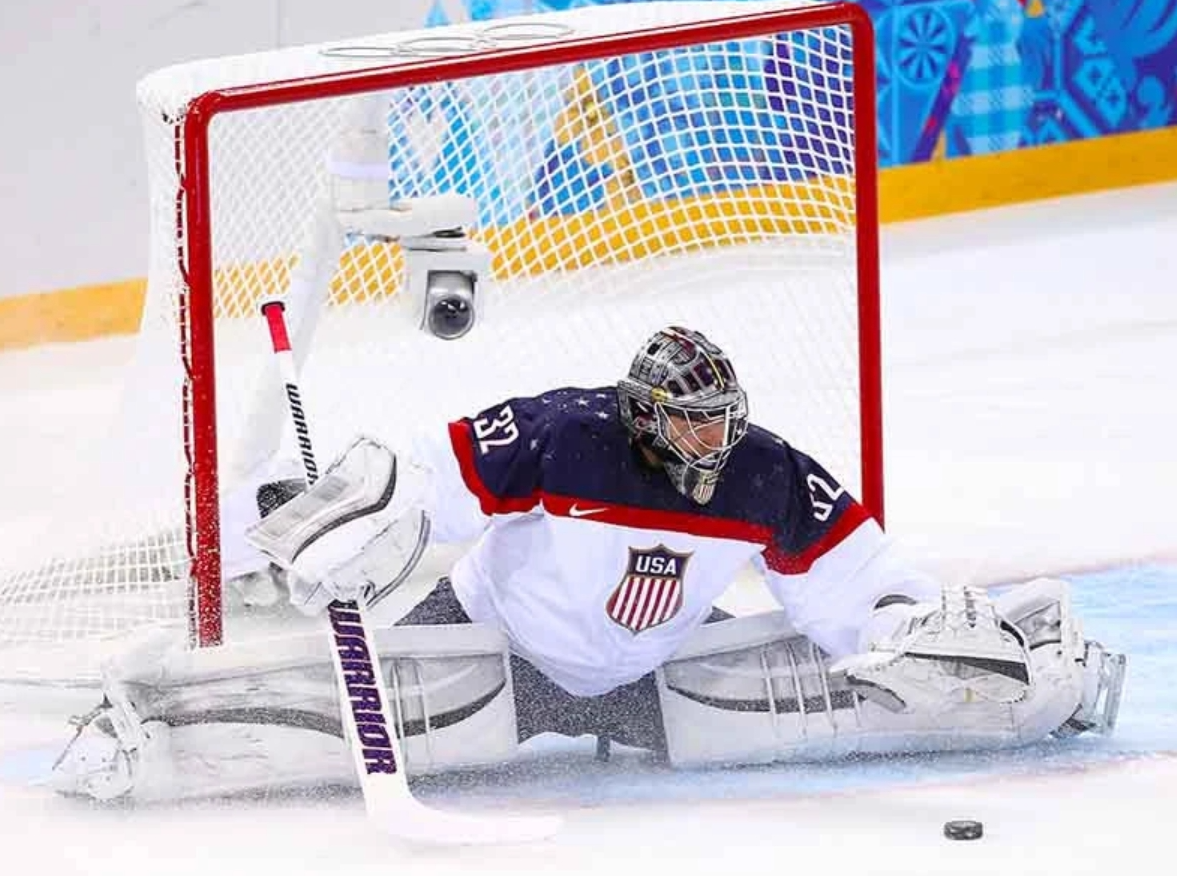
The human nervous system has a speed limit. Physics doesn't care.
Auston Matthews winds up for a one-timer. The puck leaves his stick at 105 mph. From the slot — about 30 feet out — that puck crosses the crease in 0.19 seconds . The average human visual reaction time is 0.25 seconds . Even a peak-condition athlete hits around 150–200 milliseconds on a good day.
Do the math. The puck arrives before the brain finishes processing what the eyes just saw.
This isn't a metaphor. It's physics.
OEM/ODM ice hockey apparel manufacturers can produce specialized goalie gear that balances protection with mobility.
The Numbers That Make It Real
Distance | Puck Speed | Flight Time | vs. Peak Reaction |
|---|---|---|---|
30 ft | 80 mph | 0.25 s | Already at the limit |
30 ft | 100 mph | 0.20 s | 30% faster than peak human reaction |
40 ft | 108 mph | 0.25 s | Elite athletes, at the absolute edge |
At 1 meter out, a goalie would need to react in 22 milliseconds to stop a 100 mph puck on pure reflex. That's 8 to 10 times faster than what a human body can do.
Pure reaction is not enough. Full stop.
So How Do They Stop Anything?
The answer isn't faster reflexes. It's anticipation built through repetition .
Elite goalies — Vasilevskiy, Hellebuyck, the great ones — aren't reacting to the puck. They're reading the shooter's hips, the blade angle, the weight transfer. They've logged thousands of reps. The body moves before the conscious mind gives the order. The butterfly drop fires in under 0.1 seconds. Not because they saw the shot. Because the nervous system already predicted it.
Deflections make this even harder. NHL EDGE data from 2022–24 shows 80% of NHL goals involve deflections off sticks or skates. A puck redirected mid-flight at 50–90 mph shifts direction faster than the eye can follow. The visual system needs at least 50 milliseconds to register a directional change. By then, the puck is past the mask.
Goalie save percentage stats call this "skill." Fair enough. But what's driving those numbers isn't conscious sight or raw reaction speed. It's a cognitive system running on pre-loaded muscle memory and pattern recognition. The brain matches what it sees to thousands of stored situations — and the body moves on that match, not on what's actually happening in real time.
That's not athleticism in the usual sense. It's trained instinct. The body builds it through years of repetition. The alternative? Puck in the net.
Reason 2: Performing Elite Athletics While Carrying 40–50 Pounds of Armor on Ice
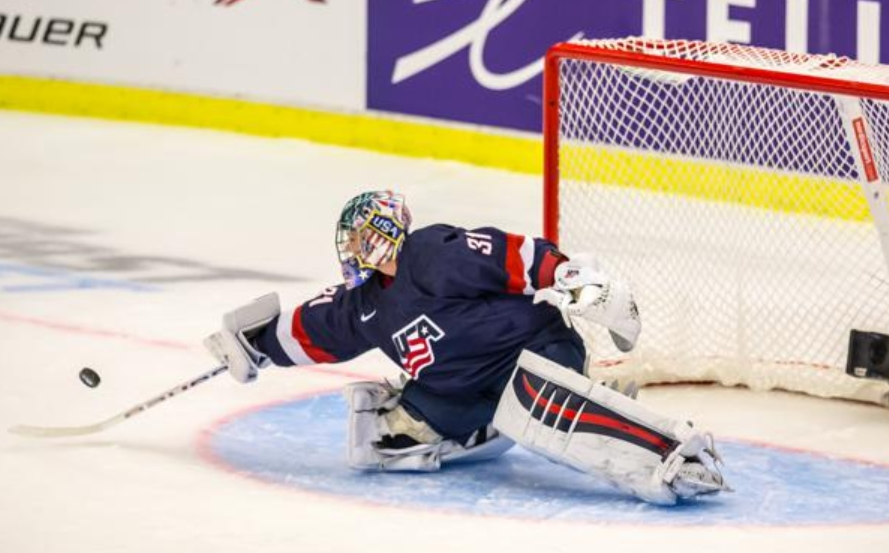
Strap 40 pounds of gear to your body. Now drop into a full split in under half a second. On ice.
That's Tuesday night for an NHL goalie.
Top ice hockey apparel suppliers provide gear engineered to handle this extreme combination of weight and mobility.
A quarterback wears 15–20 pounds of protection. Most people call that one of sport's most demanding positions. A goaltender carries 2.5 to 3 times that load . Every single shift. Here's how it breaks down:
1.Leg pads : 12–16 lbs — the single largest piece, strapped to the limbs that handle most of the explosive work
2.Chest & shoulder armor : 8–12 lbs
3.Goalie-specific skates : 6–8 lbs
4.Pants, gloves, mask, neck guard : another 10–14 lbs stacked on top
The total? 40–50 pounds of armor , spread unevenly across a body that has to move like a gymnast on a surface with almost zero friction.
The Core Contradiction
Here's what makes this brutal: gear exists to protect. But protection and mobility fight each other. There's no clean solution.
The ice makes it worse. The friction coefficient on a hockey rink sits at μ ≈ 0.02–0.04 . A gym floor runs at μ ≈ 0.5–0.7 . A goalie has 12 to 25 times less traction than an athlete training on solid ground. And they're doing it while carrying a load that would wear out most people just standing still.
Under that weight, on that surface, goalies still have to:
1.Drop into a full butterfly split (180° hip abduction) in 0.3–0.5 seconds — a range of motion 20–30% beyond what most athletes can reach
2.Burst sideways across the crease at 8–12 feet per second, absorbing deceleration forces that hit 1.5–2× bodyweight on ice
3.Extend overhead for high shots with 8–12 pounds of chest armor pressing down on the shoulders
4.Reverse direction in under 0.2 seconds — not on turf, but on near-frictionless ice
The energy cost alone is massive. Full gear raises energy output by 25–35% compared to skating without it. Core stabilization demands jump 40–60% because close to half the total gear weight sits on the legs. That pulls the body's center of gravity down and out on every single movement. Ankle and knee joints absorb compression forces hitting 3–4× bodyweight during lateral stops.
Elite goalies train under this load for 60-minute sessions , session after session. An untrained athlete carrying the same weight hits failure at 20–30 minutes. Building the neuromuscular adaptation for this takes an estimated 200–300 hours of ice time per year — three to four times the training volume field sport athletes put in.
The gear has evolved to close the gap. Modern segmented leg pad designs — now standard at the elite level — split the traditional solid pad into 4–6 jointed sections. That pushes hip abduction range from the old limit of 140–150° up to 170° and beyond , while keeping 90% of the original impact protection. Floating shoulder systems in chest protectors allow 70–80° of torso rotation , compared to 50–60° in older fixed designs. Density-graded foam has cut leg pad weight from 16 pounds down to 12–13 without dropping the protection ratings the IIHF requires.
The armor got smarter. The physics didn't change.
A goalie in full gear moves slower, recovers slower, and works harder to do everything a skater does unencumbered — and then has to stop a 100 mph puck on top of it.
Reason 3: Sustaining a Crouching Athletic Stance for 3 Hours Straight, Game After Game
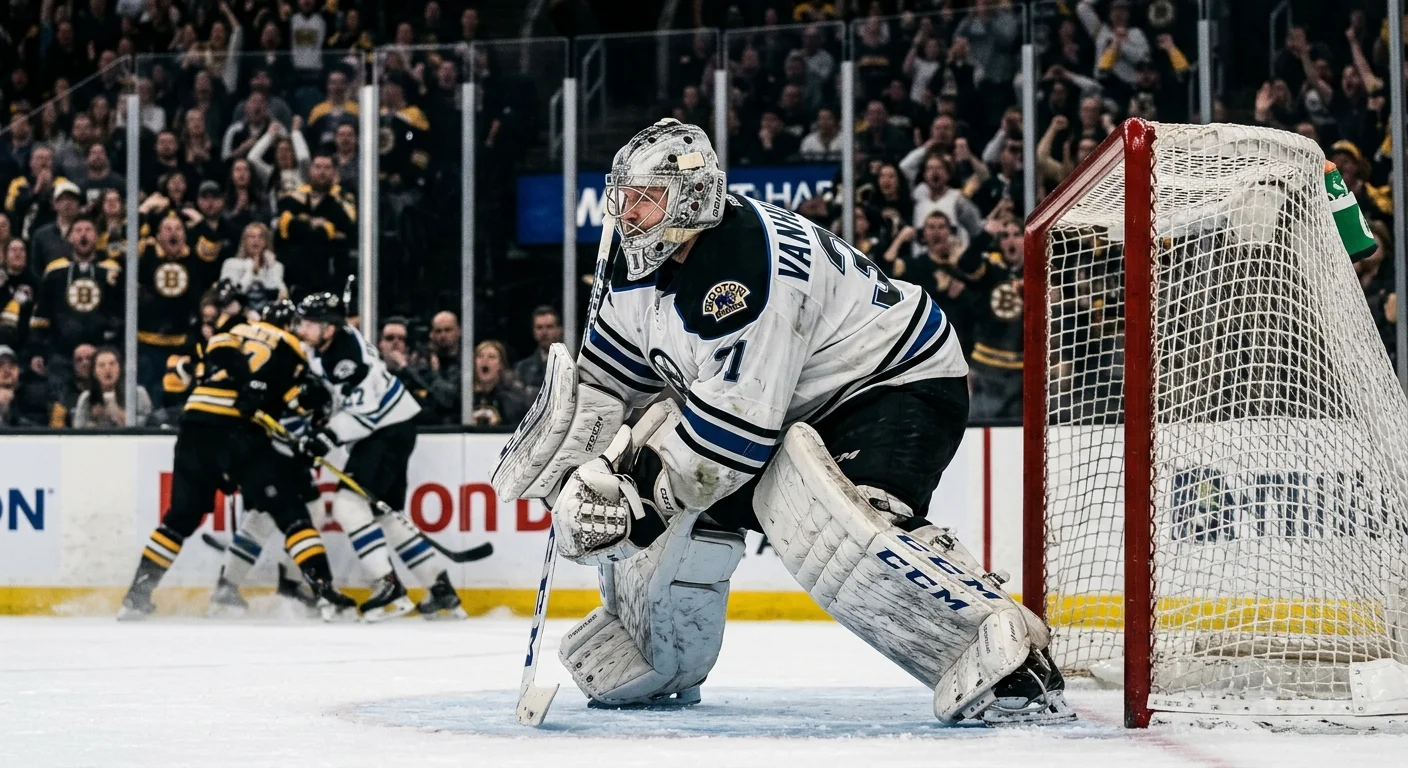
Baseball catchers take about 120–150 crouches per game. Studies show that alone drives a 4–5× higher risk of knee osteoarthritis after a decade in the sport. Now consider what an NHL goalie does. He holds one continuous crouch — knees bent 20–30°, hips loaded, spine neutral, center of gravity kept low — for 150 to 180 minutes every single game .
Custom ice hockey manufacturers design pads and protective gear that optimize movement while maintaining protection during these extreme stances.
Not repeated crouches. One fixed athletic position. Held across three full periods without a break.
The Math of Accumulated Damage
An 82-game regular season at three hours of low stance per game adds up to 246 hours of continuous knee and hip flexion . Add an average playoff run and that number climbs to 300–330 hours per year . The body keeps a running tab:
Groin pulls occur at 2–3× the rate seen in skaters — glutes build exceptional power, but hip flexors tighten and shorten under constant load
Season-ending lower body injuries hit goalies at 15–20% per season; skaters sit at 8–12%
Low back strain runs 40% higher due to sustained thoracic flexion in the stance
Average goalie career: 8–10 years . Average skater career: 12–15 years
That gap comes down to one thing — accumulated flexion shear, game after game.
Staying Low Is a Trained Skill
Anaheim Ducks strength coach Mark Fitzgerald puts it plainly: "Stay low, use force, and maintain control." That sounds simple. Under full gear, in the third period of a playoff game, after 60 games of the same load — it is anything but.
Holding the stance requires quad, glute, and hamstring endurance working together for the full game. No breaks. No resets. The second fatigue starts to degrade the position — hips rising, knees drifting, spine rounding — reaction speed drops and injury risk spikes fast.
Elite goalie training programs tackle this HEAD-on. They build lateral shuffle endurance, single-leg stability, and core rotational control in the half-kneeling position. These aren't optional extras. They're the foundation.
The off-season hip flexor recovery protocol exists for one clear reason. Three hours of sustained flexion creates chronic tightness. Left unaddressed, that tightness compounds across an 82-game season and breaks the body down.
The stance never changes. The body has to be built to hold it.
Reason 4: Bearing Singular Accountability When the Entire Team's Fate Rests on You
Every other player on the ice shares the outcome. The goalie owns it.
Private label ice hockey apparel allows teams to brand their goalie kits uniquely, reinforcing identity and accountability.
A defenseman misreads a rush — the goalie bails him out. The offense goes cold for two periods — the goalie keeps the team alive. The season falls apart in a Game 7 — one number defines the night. That number belongs to the goaltender.
Sports psychology calls this the scapegoat effect . Losses get pinned on the goalie as an individual three times more often than wins do. A 2022 study found 68% of post-loss media coverage blamed keeper errors, while just 22% pointed to team defense breakdowns. A Twitter sentiment analysis of NHL losses showed a 4:1 blame ratio targeting the goalie over any other position.
One Save Percentage. One Night. One Series.
The 2024 NHL playoffs put real numbers to this. Alex Lyon started Game 7 for Detroit against Florida on April 30th. The Wings outshot Florida 32–28. Lyon posted a .915 save percentage — a solid number by any measure. Detroit still lost. The season ended. The headlines didn't read "Wings defense falters." They read "Lyon collapses."
Ilya Sorokin's 2024 ECF qualifier told the same story. The Islanders had outscored opponents 14–11 across the prior games. Sorokin allowed five goals in the series-deciding loss. All that team offense meant nothing. His .899 SV% for that one game is what everyone remembers.
Analysts estimate goalie save percentage drives 35–45% of playoff outcomes . No other single-position stat gets close to that level of series impact.
The Weight No Teammate Can Carry For You
Each position in pro sports carries a different share of personal accountability. Here's how it breaks down:
Position | Personal Accountability % | How One Bad Game Lands |
|---|---|---|
Ice Hockey Goalie | 40–50% | Sorokin 2024: one loss sealed the series |
Soccer Goalkeeper | 30–40% | Neuer (Bayern 2023): 2 GA, scapegoated despite 5–1 aggregate lead |
Baseball Starting Pitcher | 25–35% | Shared across bullpen, defense, lineup |
A starting pitcher gives up four runs and exits in the fifth. The bullpen takes over. The blame spreads. A goalie who lets in four goals plays every second of every period — there is no one else to absorb anything. The full ledger is his alone.
That singular accountability isn't just a media narrative. It changes how a goalie has to manage himself mentally, night after night, across an 82-game season. You have to take the full weight of a loss, reset your mind, and face the next shot like none of it happened. That mental demand is a big part of what makes this position unlike any other in professional hockey.
Reason 5: Mastering a Technical Skill Set That Takes a Decade to Even Start Learning
Ten years. That's the minimum before a goaltender starts to feel comfortable in the crease — not confident, not polished, just comfortable .
Wholesale ice hockey apparel distributors ensure teams can source multiple sets of high-quality training and game gear to support this long-term skill development.
Most positions in hockey reward raw athleticism early. A fast winger can make an NHL roster on speed and instincts. A shutdown defenseman can learn zone coverage in a single focused season. Goaltending doesn't work that way. The technical demands are deep and connected. Surface-level competency and true mastery aren't just different points on the same line — they're completely different things.
A Stack of Skills, Each One Demanding Years Alone
Here's what a goaltender has to master:
Butterfly technique — dropping, sealing the post, and recovering upright, all in one clean sequence
Angle play — reading the shooter's position and cutting down the net by geometry, often while sliding sideways
Rebound control — sending pucks into the corners on purpose, not back to sticks in the slot
Screened shot reading — tracking the puck through a wall of bodies using stick blade and hip cues alone
Post integration — using the pipe as an active tool, not just a boundary marker
Each of these is its own discipline. A beginner learns the basic mechanics. An intermediate goalie starts to see how they connect. An advanced goalie builds the instinct to blend all five at once — under pressure, in the third period of a playoff game.
That progression takes a decade of deliberate ice time . That's 200–300 hours per year, session after session, building the muscle-memory patterns that turn complex decisions into automatic reactions.
The Systems-Level Problem
Here's what separates a good goalie from a great one: every technical adjustment affects the whole system.
Shift your butterfly angle two inches wider to close the short side — you've just opened the blocker shoulder. Drop your glove hand earlier to handle low shots — a shooter reading your habits now has a clean window top-shelf. Nothing exists in isolation. Every choice creates a consequence somewhere else.
That's why goaltending technique in ice hockey can't be taught at a summer camp or fixed in a week of film study. Fixing one problem tends to expose another. True mastery means building the judgment to manage those trade-offs in real time. That kind of judgment only comes from years of getting it wrong, spotting the pattern, and correcting.
The best goalie coaches in the world aren't teaching techniques. They're teaching how to think inside a connected technical system — under conditions that leave almost no time to think at all.
That's the work. And it takes a full decade just to begin.
Reason 6: Absorbing Psychological Extremes That Would Break Most Elite Athletes
Patrick Roy said it straight: "Mental pressure is 90% of goaltending. One bad goal shifts you from hero to villain in seconds."
He wasn't being dramatic. He was describing the actual job.
No other position in professional sports packs more emotional violence into less time. A goalie makes a highlight-reel glove save — the arena explodes. Sixty seconds later, a deflection ticks off his shoulder and dies in the net. The crowd turns. Same player. One minute apart.
Sports psychology research puts a number on this. A single goal conceded spikes a goalie's anxiety by 40–60% . That spike creates real cognitive interference — it hurts focus on the very next shot. Top goalies reset fast. They use visualization, self-talk, and controlled breathing to claw back 80% of baseline performance before the next face-off. Lesser athletes don't bounce back at that speed. The next shot arrives and they're still stuck on the last one.
Henrik Lundqvist — career SV% of .918 , one of the best to ever play the position — built his mental game around two things: pre-game visualization and disciplined breathing. "Every save or goal is an emotional extreme," he said. The breathing wasn't about relaxing. It was a reset tool. A way to wipe the slate clean between situations.
Top athletes across many sports follow a version of the 24-hour rule :
- Feel the loss completely
- Then close the file
- One day. No more.
Letting disappointment pile up across an 82-game season is how careers fall apart.
The brutal part of goaltending isn't just personal. It spreads. Research based on soccer goalkeeper studies shows that a single negative emotional signal from the crease — a visible slump, broken eye contact, deflated posture — can cut offensive aggression in teammates by 15–20% . The goalie's mental state doesn't stay inside. It leaks out through body language and shapes five other players' decisions in real time.
That's the weight most fans never see. The save percentage is what gets recorded. The mental foundation holding it up stays hidden — and it may be the hardest thing in professional hockey to actually build.
How Goalie Compares to Other Positions: A Difficulty Breakdown Across All Hockey Roles
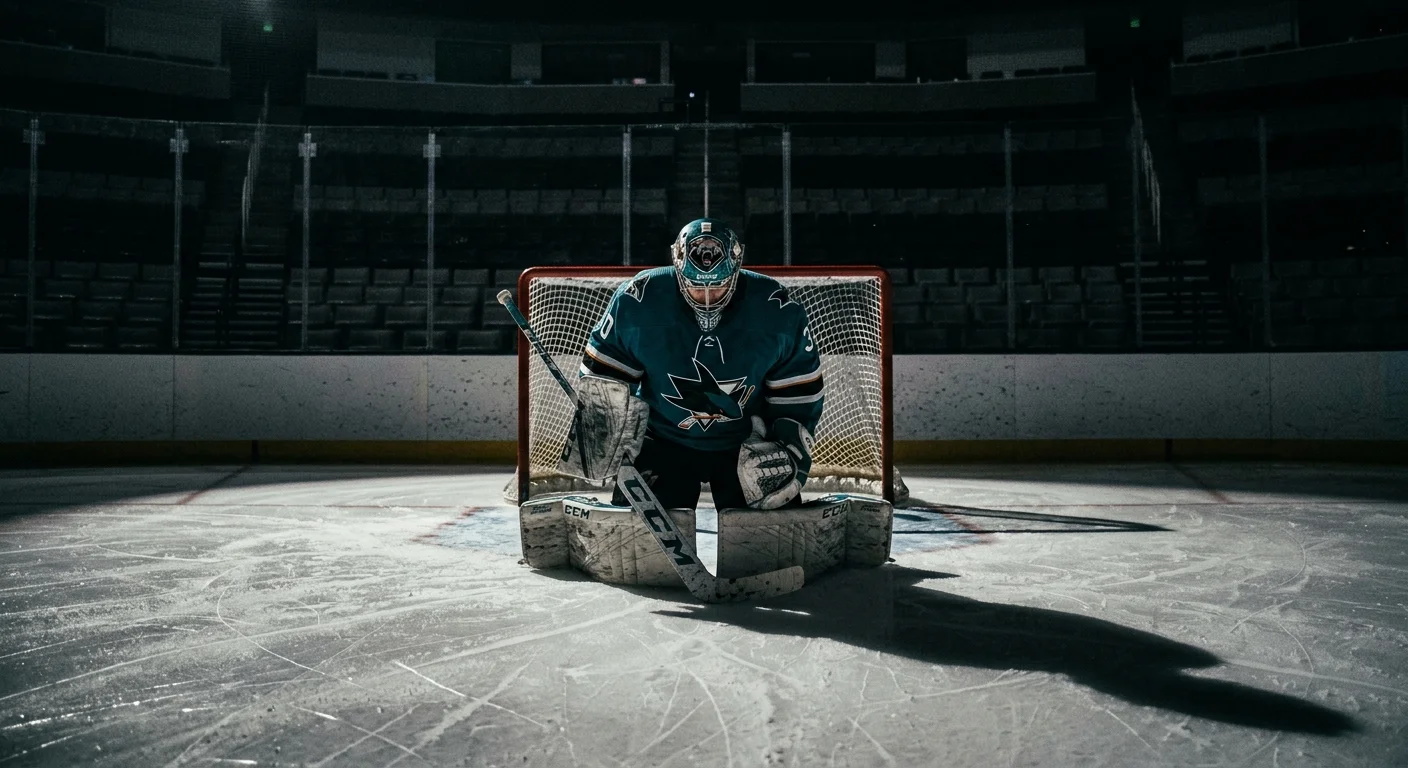
Put every hockey position side by side. The gap becomes obvious fast.
Forwards and defensemen build versatile skill sets — skating, stickhandling, positional awareness. A strong center can adapt. A shutdown defenseman can pivot. Goalies can't. Their training is so position-specific and narrow that Henrik Lundqvist — one of the greatest to ever play — likely couldn't hold a roster spot as a center. Elite goalies master one role completely. That same mastery locks them into it forever.
How Hockey Goalies Stack Up Against Other Sports
Compare the position across sports, and the picture gets clearer:
Category | Hockey Goalie | Lacrosse Goalie | Soccer Goalkeeper |
|---|---|---|---|
Reflex Demand | Highest | High | Moderate |
Technical Skills | 6+ distinct disciplines | ~4 | ~3 |
Gear Load | Full armor, 40–50 lbs | Minimal exposure | Minimal |
Shot Difficulty | Puck-to-net ratio: 120:1 | 141:1 ratio, slower ball | 122:1, softer impact |
Hockey goalies face the fastest projectiles in the sport. They carry the heaviest gear. They also need the most technical skills — butterfly mechanics, angle play, rebound direction, screened shot reading. Each skill is its own discipline. You stack all of them on one person.
Shot types make it even harder. Each one demands a different response:
Low wrist shots test pure agility and foot speed
Backhands produce unpredictable trajectories that are hard to read
Above-pad shots target the blocker-pad gap — players rate these the hardest to stop
No position in professional hockey, and few in any sport, asks this much of one person.
What It Takes to Become a Professional NHL Goalie
The numbers tell a story most fans never read.
Today's NHL goalie prospects debut between ages 21 and 24. They arrive faster than ever — averaging just 70 AHL games before getting the call. The generation before them needed 156. Some elite prospects skip the minors almost entirely. Lundqvist, Luongo, and Price combined played just 41 AHL games before earning regular NHL minutes.
Faster path. Same brutal standard.
Getting there means building three things at once, over years.
Technically , the foundation is repetition — at a scale most people don't appreciate. Joey Daccord of the Seattle Kraken spends full off-seasons refining basic crease movements with his coach. Not learning new techniques. Just drilling the same fundamentals, deeper each time. Lateral skating. Angle cutting. Puck tracking. Thousands of reps. Then thousands more.
Physically , the work goes well beyond the ice. You're looking at:
Lower body strength training
Plyometrics
Yoga for hip mobility
Vision training through tools like Sense Arena
The skating gets built on the ice. Everything behind that skating gets built in the gym.
Mentally , the job demands what one coach called being "half lunatic." That means standing in the path of hundred-mile-per-hour pucks — alone, night after night — and treating that as a perfectly normal thing to do. It's a very specific kind of psychological wiring. You can't fake it or train it from scratch.
Most athletes can build two of these three. Very few build all three.
Frequently Asked Questions About the Ice Hockey Goalie Position
Goalies attract questions the way pucks attract sticks. Here are the ones that come up most.
Is the goalie the most important position in hockey?
Yes — and the numbers back it up. NHL elite goalies post save percentages of .920 or higher. Igor Shesterkin hit .925 in the 2024 playoffs. That number ties straight to how far a team goes. No other single-position stat drives playoff outcomes the same way.
Raw athleticism isn't the whole story, though. Kelly Hrudey put it well: proper positioning stops goals that fast reflexes never could. A goalie in the right spot before the shot beats a goalie with great hands standing in the wrong place. Positioning outweighs reaction time. That's the truth most people miss about this position.
What's the hardest part of the job?
Concentration. Every second of every shift — even with the puck at center ice — a goalie has to track it. Shooters use head fakes, pump fakes, and black tape to break that focus on purpose. Staying locked in for 60 minutes after giving up two early goals is a different kind of hard. No physical challenge compares.
The best goalies describe entering a state where the game slows down and the puck looks bigger. Saves just happen — they can't explain them after the fact. That state comes from pre-game visualization, post-tapping for spatial awareness, and years of drilling fundamentals until the body moves on its own.
Why do goalies wear different jerseys?
NHL Rule 11.1 requires it. Goalies wear colors that contrast both teams so officials can spot puck coverage and goalie contact fast. Both teams in white and dark? The goalie wears red, grey, or tan. It's a simple rule with one clear purpose — visibility at speed.
What does proper goalie stance look like?
The foundation breaks down into four parts:
Hips and knees bent to about 90°, like sitting in a chair — low enough for explosive butterfly drops, mobile enough for lateral pushes
Chest upright , squared to the puck, with a slight forward lean for net coverage
Blocker hand thumbs-up, elbow angled at the side
Stick blade flat on the ice, one to two feet ahead of the skate toes, angled to push pucks away from the slot
The most common beginner mistakes: standing too tall (cuts net coverage), feet too wide (kills lateral slides), gloves pulled too close to the body (throws off balance). Each error looks small. Each one costs goals.
Get the stance right, and net coverage in the five-hole and upper corners improves by an estimated 15–20% . Across an 82-game season, that edge adds up fast.
Conclusion
The puck doesn't care about your feelings. It doesn't slow down because you're exhausted. It doesn't soften because the game is on the line. It won't forgive a half-second of lost focus.
Professional goalies face this every single night. Impossible physics. Total accountability. A decade of technical mastery — and it's still not enough.
What separates goaltenders isn't just athleticism or reflexes. It's something rarer: the ability to stand alone, absorb failure in front of thousands, and skate straight back to the crease.
So if this shifted how you see the position — good. The next time you watch an NHL goalie make a save that looks routine, know this: nothing about it is routine.
Hockey is a sport built on identity. The gear you train and play in reflects that. Head over to berunclothes.com for performance hockey apparel made for players who take the game dead serious.