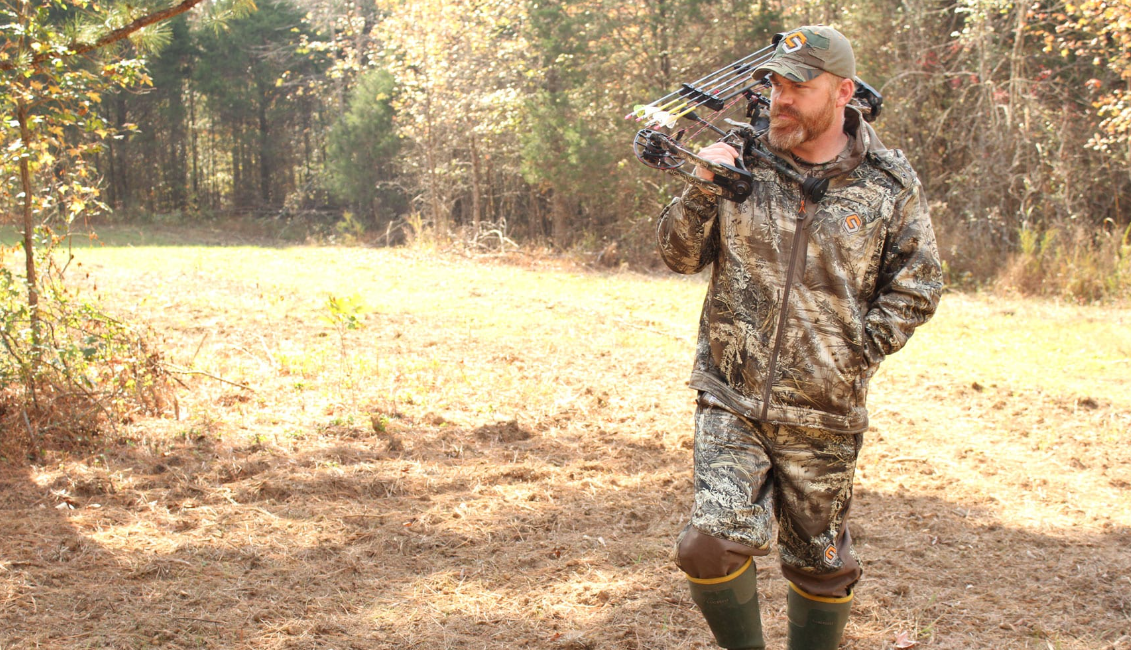
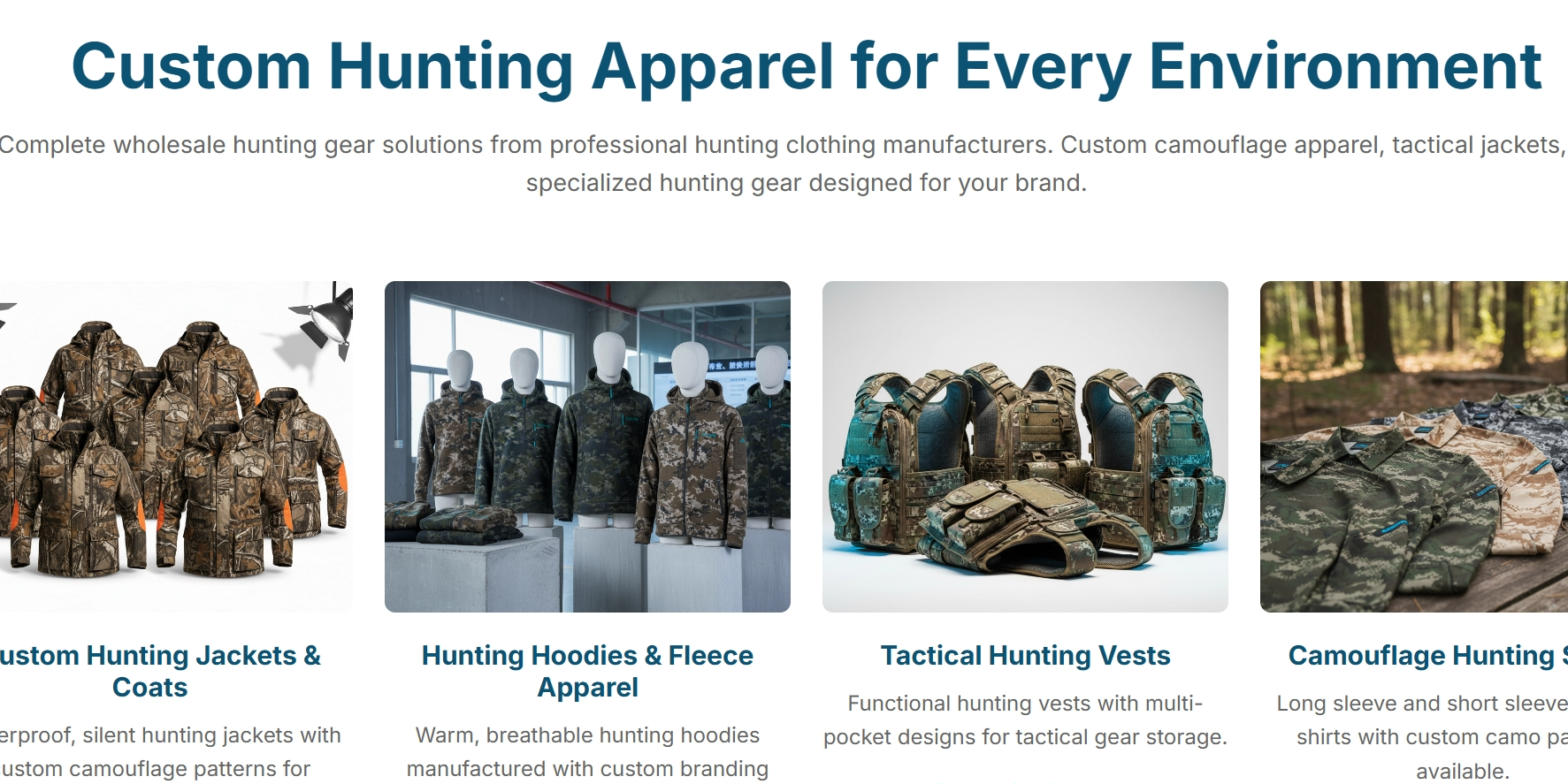
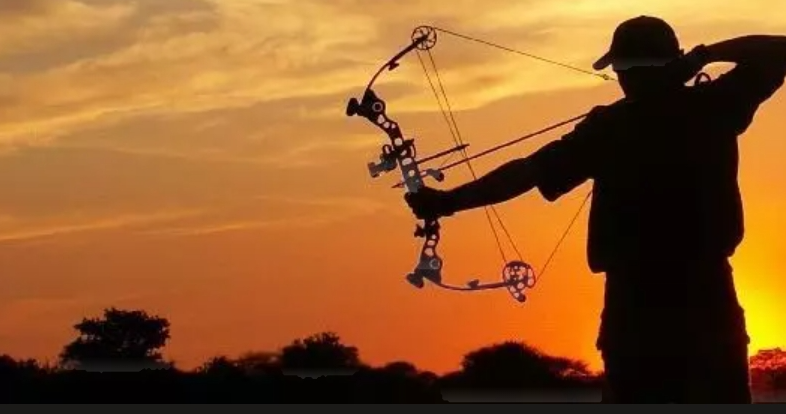
Texas hunting doesn' T care about your gear list from up north. Bow season opens in early October, and the thermometer still reads 95°F before noon. That heavyweight fleece camo hanging in your closet? Dead weight. Texas demands a different playbook. Stay cool enough to stay focused. Manage your scent while the heat fights you at every turn. Move through cedar breaks and prickly pear without shredding your kit. Settling into a blind for whitetail, pushing thick brush for hogs after dark, or swinging on doves under a brutal September sky — what you wear determines how long you last. It decides whether you come home with meat. Here's what works in Texas, broken down by season, terrain, and the specific demands of each hunt.For buyers evaluating products from a hunting apparel manufacturer, Texas provides one of the toughest real-world testing environments for warm-weather hunting gear.
Fabric First: What Works in Texas Heat (And What Doesn't)
Fabric choice isn't a minor detail in Texas — it's the whole game.
Get this wrong and you're soaked by 8 a.m. You'll smell like a walking salt lick. You'll spend the rest of the morning counting minutes until you're back in the truck. Get it right and you stay sharp, dry-ish, and in the field long enough to kill something.That's why many experienced hunting gear supplier teams prioritize moisture management and breathability ahead of camouflage patterns when developing products for Southern markets.
Here's the honest breakdown.
Synthetic (Polyester/Nylon Ripstop) — The Workhorse
Lightweight nylon and polyester ripstop are the default choice for Texas hunting. The data backs it up. In field conditions — 35°C+, humidity hovering around 50–70% — synthetic fabrics go from soaked to surface-dry in 10–20 minutes . Cotton takes 30–40 minutes to reach that same point. Even then, the back panel stays clammy.
The tradeoff is odor. Polyester's hydrophobic surface is a five-star hotel for odor-causing bacteria. After 4–8 hours of hard sweating, polyester scores 1.5–2x worse on odor intensity than cotton in controlled evaluations. For deer hunting, that matters. For hog hunting at 11 p.m. with the wind in your face anyway, less so.
The fix: look for synthetics with legitimate silver-ion antimicrobial treatment. Not the cheap wash-out-after-five-cycles kind. You want treatments rated to hold >90% antibacterial efficacy through 20–30 washes .
Target fabrics in the 90–140 g/m² range with open weave construction, mechanical stretch, or laser-perforated venting. That's the sweet spot for Texas heat.
Cotton — Not Dead, Just Misunderstood
Cotton has one real advantage: it doesn't hold smell the way synthetics do. It scores 3–5 out of 10 on odor intensity versus polyester's 6–8 . That's a meaningful gap when you're hunting whitetail at close range.
The problem is everything else. Cotton's moisture regain rate sits around 7–8% . It holds water, stays heavy, and plasters itself to your skin. In testing at 30–40°C with 70% humidity, subjects reported cotton shirts sticking hard to their backs within 5–10 minutes of sweating . Over a long morning in a ground blind, that constant skin friction gets miserable fast.
So if you insist on cotton — and some hunters do — go thin (120–140 g/m²), go loose, go light colors. No hunting denim. No thick flannel camo shirts built for Wisconsin November.
Merino Wool — The Specialist Tool
Merino earns its reputation on one specific metric: you can wear it for days without it turning foul . In 72-hour continuous wear tests under hard hiking conditions, merino scores 1–2 out of 10 on odor compared to polyester's 6–8. That's not marketing copy. It's a structural property of the fiber.
But merino has a ceiling in Texas. Lightweight 150–170 g/m² merino stays comfortable up to about 32°C . Push past that into a brutal September dove field, and even the lightest merino feels like wearing a warm hug you never asked for.
The merino wool's hunting clothing price stings too. Quality merino tees run $60–90 versus $15–40 for a solid synthetic option — 2–4x the cost . For most Texas hunters burning through gear in cedar breaks and creek bottoms, the math doesn't favor a full merino kit.
Best use case for Texas: merino base layer for early-morning deer sits. Pre-dawn temperatures drop into the low 60s — merino handles that well. Peel it off once the sun climbs.
The Bottom Line
Fabric | Dries Fast | Odor Control | Texas Verdict |
|---|---|---|---|
Nylon/Polyester Ripstop | ✅ | ⚠️ (treat it) | Primary choice |
Cotton | ❌ | ✅ | Backup only |
Merino Wool | ⚠️ | ✅✅ | Specialist use |
The winning formula for lightweight hunting apparel in hot weather is straightforward. Start with a nylon ripstop shirt and pants as your primary layer. Make sure antimicrobial treatment is built in. Keep fabric weight under 140 g/m². Pick construction that moves air. Everything else is a tradeoff — just make it on purpose, not by default.
Texas Deer Hunting Clothes: Early Bow Season vs Rifle Season Gear
Deer season in Texas runs close to five months. That single fact tells you everything about why one clothing system will never cut it.
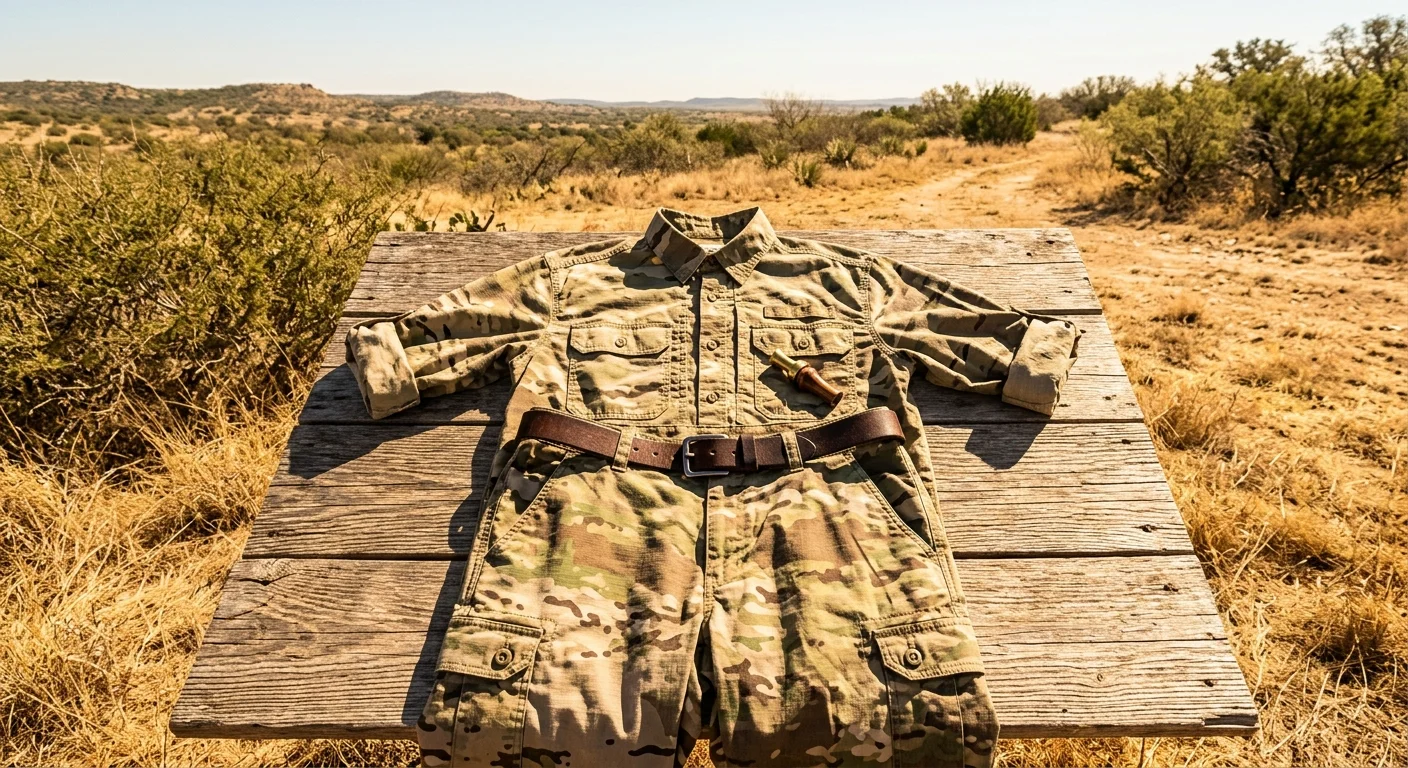
Bow season opens September 27, 2025 . It's still summer. Temperatures in the Hill Country and mesquite flats push past 90°F well into October. Then rifle season runs from November through late January . By December, a cold front can drop temps into the 30s before sunrise. Same state. Same deer. Two completely different gear problems.
The fix is a clean split.Hunters investing in a custom hunting clothing system often build separate early-season and late-season kits rather than relying on a single setup year-round. Treat early bow season and rifle season as two separate wardrobes with two separate logics.
Early Bow Season: Hunt Light, Hunt Quiet
Bow season opens in summer heat. Your worst enemy isn't deer — it's your own body heat. The mission is simple: stay cool enough to stay still. Stay quiet enough to draw at close range.
The bow-season stack:
- Top: Lightweight, breathable camo shirt or hoodie in moisture-wicking fabric. Weight matters more than insulation here.
- Bottom: Quiet, lightweight pants with minimal stiffness. Stiff shell fabric sounds like a candy wrapper every time you shift in a tree stand.
- Feet: Thin-to-midweight merino wool socks. They handle heat better than straight cotton and won't turn swampy by 9 a.m.
- Accessories: Light gloves, a neck gaiter or facemask, and a soft outer layer to cut movement noise in a blind.
Camo pattern matters more in bow season than anywhere else in a Texas deer hunt. You're working at close range, often on foot. Match your cover:
Hill Country (cedar, oak, limestone, mesquite): brushy brown-green patterns with broken shapes
South Texas brush country : tan, olive, and pale brown — the terrain is sparse and pale-toned. A dark woodland camo can make you stand out instead of blend in
East Texas pine forests : deeper greens and shadowed woodland patterns suit the heavier canopy
Skip bright colors, reflective fabric, and high-contrast prints built for northern hardwood forests. That pattern was made for October in Michigan, not October in Uvalde.
Rifle Season: Layer With a Purpose
Rifle season's first weeks in early November can still run warm. By December and into the January 18 South Zone close and January 4 North Zone close , morning temperatures will bite. Your layering system has to handle both — warm afternoons and cold predawn sits.
The rifle-season layering logic:
Base layer: Moisture-wicking synthetic or merino wool. Its job is pulling sweat off your skin before it chills you on a cold morning or soaks you on a midday walk.
Mid layer: Fleece, heavier wool, or an insulated quarter-zip. Warmth without bulk.
Outer shell: Wind-blocking, soft-faced fabric. Quiet matters in a blind. A crinkly hard shell broadcasts every small movement.
The midday adjustment is where most hunters get lazy. Temps climb by 10 a.m. — strip down to your base layer and a light mid layer. Stuff the outer shell into your pack. You'll want it back on for the evening sit. Temperature drops fast.
Cold-morning add-ons worth having: insulated bibs, merino socks, neck gaiter, and gloves . Don't wait until your hands go numb to wish you'd packed them.
Public Land: The Blaze Orange Rule
Hunting Texas public land during deer season? Texas law requires at least 400 square inches of daylight fluorescent orange on your chest and back combined, plus an orange cap or hat . The straightforward fix is a blaze orange vest over your regular hunting layers, paired with an orange hat. Simple, legal, done.
On private land, blaze orange isn't a legal requirement for deer. But during rifle season, plenty of experienced hunters pull the vest on anyway. Not for the deer. For the other hunters.
Quick Reference: Texas Deer Season Gear Split
Season | Core Priority | Key Pieces |
|---|---|---|
Early Bow (Sept–Oct) | Stay cool, stay quiet | Lightweight camo, breathable fabric, merino socks, neck gaiter |
Rifle (Nov–Jan) | Layer for temperature swings | Base layer + fleece mid + wind shell, orange vest/hat on public land |
One state. Two very different hunts. Pack for both.
Texas Hog Hunting Gear: Built Tough for Brush and Night Hunts
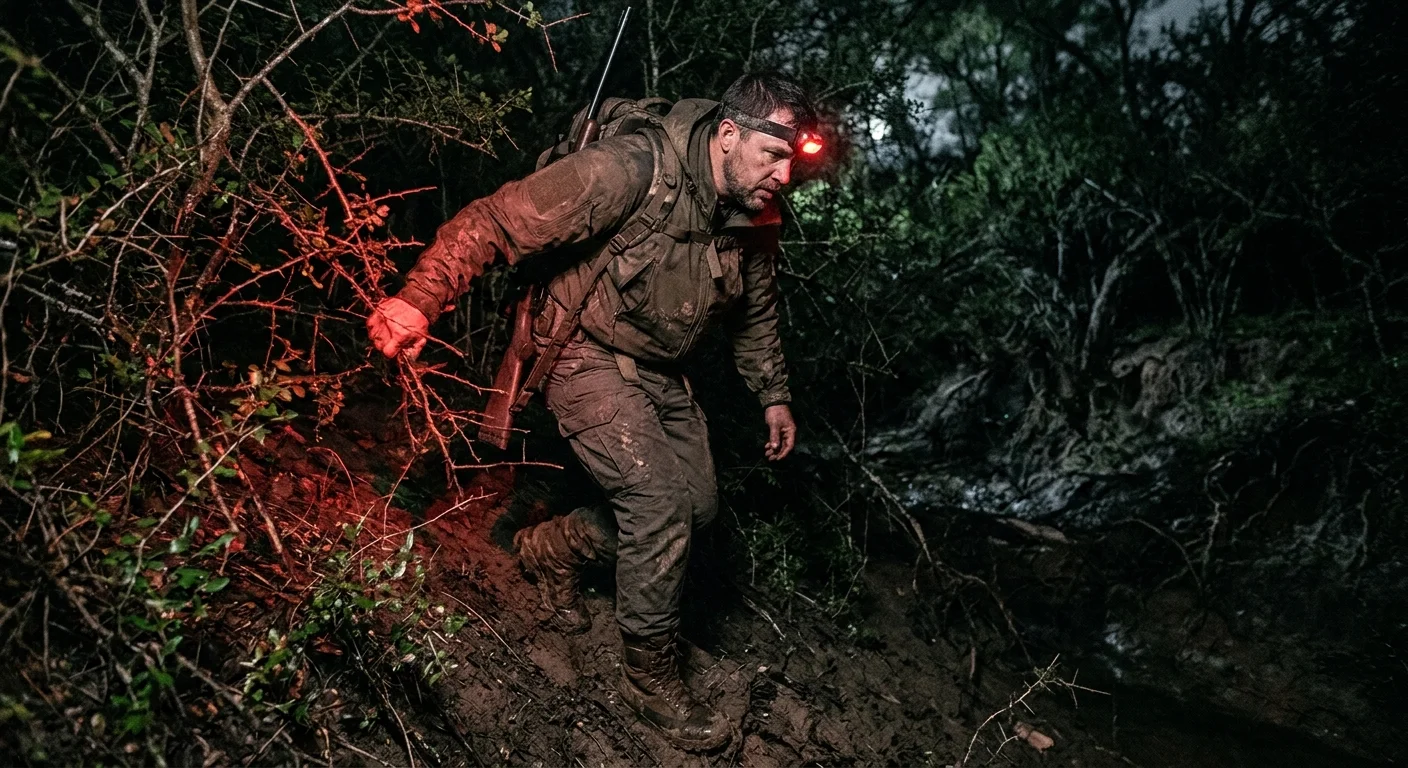
Hog hunting in Texas is a different animal — in every sense. You're not sitting in a comfortable blind watching a sendero at dawn. You're pushing through yaupon thickets at midnight. You're sliding down creek banks and tracking a wounded sow into brush so thick you can't see your boots. Your gear has to survive all of it.
Durability Over Everything
The abrasion-resistance standards required for Texas hog hunting are also influencing many OEM/ODM hunting apparel development projects aimed at rugged terrain applications.
Drop the lightweight-first logic that drives your deer kit. Hog country wants toughness first, breathability second.
Pants are where most hunters get it wrong. Standard camo pants shred on mesquite and cactus in a single night. You need one of two setups based on how you hunt:
Rifle or thermal stand hunts (fields, senderos, truck-based): Double-front brush pants in snag-resistant synthetic. No full chaps needed, but the fabric has to be quiet. Stiff material brushing against yaupon at 11 p.m. sounds like a paper bag in a library.
Dog-and-knife or dense-brush work: Briar chaps or briar pants over a lightweight synthetic base. Look for 500D–1000D nylon outer construction with double-layer protection from boot-top to mid-thigh. Moving fast behind dogs into a hog's bedding cover means zero path selection — you go where the dogs go.
Boots face two threats at once: mud and snakes. For most Hill Country thermal hunts, an 8–10 inch waterproof leather/nylon boot with aggressive lug sole handles muddy creek bottoms and plowed fields just fine. In South and East Texas brush country — rattlesnake territory — step up to 17-inch snake boots . They're heavy. Worth every ounce, at night especially, when you can't see where your foot lands.
Day vs. Night — Two Different Clothing Logics
Daytime hogs still call for camo matched to your local vegetation. Hogs have weak eyes, but they're pressure-sensitive. A bright foreign color in South Texas brush catches the attention of every other animal in the area.
Night hunts flip the logic. Ditch the camo entirely. Go with dark earth tones — OD green, brown, or black — plus non-reflective hardware and no shiny logos. Under a red headlamp or thermal scope, a reflective buckle reads like a signal flare. On headlamps: red filter or RGB is non-negotiable . Red light holds your night vision. It also spooks game far less than white light. Pack backup batteries. Thermal optics drain power fast enough to leave you dark at the worst possible moment.
For serious night work, thermal is the standard. 640×480 resolution at 60 Hz refresh rate gives you smooth scanning across fields and creek bottoms. Cheaper units blur on moving targets — that's a problem you don't want mid-hunt.
Night Hog Gear Checklist
Category | What You Need |
|---|---|
Boots | 8–10 in waterproof (moderate terrain); 17 in snake boots (dense brush) |
Leg protection | Brush pants (rifle/thermal); briar chaps (dog-and-knife) |
Upper body | Lightweight synthetic or merino base + durable quiet overshirt + wind shell for cold nights |
Color | Day: local camo; Night: dark earth tones, zero reflective hardware |
Headlamp | RGB or red-filter with extra batteries |
Optics | 640×480, 60 Hz thermal |
Pockets | Cargo pockets or chest rig for batteries, radios, first-aid |
Hearing | Low-profile electronic ear pro — won't interfere with rifle stock or helmet |
One last item most hunters skip until it's too late: a compact first-aid kit built for punctures and cuts , not blisters. Thorns, cactus spines, and a snakebite first-response kit all belong in a chest pocket. Texas brush draws blood long before the hogs get a chance.
Texas Dove Hunting Clothing: Stay Cool and Blend In Under September Sun
September 1st. That's when Texas dove season opens — and there's nothing gentle about it. You're not easing into hunting season with cool mornings and colored leaves. You're walking into a sunflower field at 7 a.m. with 90°F already on the board and climbing. By noon, the thermometer pushes past 100°F. Legal shooting hours run from half an hour before sunrise straight through to sunset. That's up to ten hours of full solar load, no shade, no relief.
Your clothing has one job: keep you functional long enough to fill a limit.
Shirt: Think Fishing, Not Hunting
Forget what the hunting catalogs show. The best dove shirt isn't military-spec camo with reinforced elbows. It's built more like a serious fishing shirt — and there's a solid reason for that.
Look for 100% polyester or nylon/poly blend in the 90–120 g/m² range . That's true ultralight fabric — thin enough that air moves through it. Construction details matter as much as fabric weight. You want a mesh back panel for airflow, roll-tab sleeves for ventilation options, and a UPF 50 rating . You'll be standing in an open field for hours. Sun bounces off dry wheat stubble and sandy soil. UPF 30 won't cut it for that kind of all-day exposure.
The layering setup is simple: UPF 50 long-sleeve fishing-style shirt over an ultralight moisture-wicking undershirt . Long sleeves aren't punishment. They block sun better than reapplying sunscreen every two hours with sweaty hands.
Don't wear cotton. Full stop. Cotton traps sweat, holds heat, and sticks to your skin within five minutes of real exertion. By the time the first dove flight hits at 8 a.m., you'll feel like you're wearing a wet towel.
Pants: Ripstop With Airflow Built In
Lightweight ripstop nylon or polyester pants are the right call. Look for designs with thigh zip vents or convertible roll-up legs . Those are the features dove hunters in early-season heat come back for. You're not crawling through brush out there. You're standing at a field edge or sitting on a bucket at a stock tank. Airflow matters more than durability here.
Color: Blend In Without Going Full Camo
Doves have sharp eyes. They're daylight birds with real color vision and a strong reaction to movement. They don't key on fine camo patterns — they spot high-contrast blocks and bright or reflective surfaces . Some hunters have filled limits in blue jeans and a brown T-shirt. Others have watched birds flare off because a white shirt caught the light.
The bottom line: skip white, skip blaze orange, skip anything that throws a bright flash in an open field . Blaze orange has no place in Texas dove hunting. No regulation requires it, and it works against you.
What works:
Olive green, dark tan, khaki, faded brown, drab earth tones in solid or subdued patterns
Colors matched to dry grass, sunflower fields, or sandy soil — the actual backgrounds you're hunting against
Got camo? Use it. No camo? A full earth-tone kit gets you the same result
Camo is a bonus for dove. Cutting contrast is what counts.
Carrying Shells Without Cooking Yourself
A traditional upland shooting vest handles the ammo problem but creates a heat problem. Even a well-ventilated vest covers 40–70% of your torso surface area . That's real insulation you don't want at 38°C. Two full shell pouches add 1.5–3 kg of loaded shells pressing against your chest. That blocks a big chunk of evaporative cooling right where your body runs hottest.
The smarter setup for Texas dove:
Hip-mounted double shell pouch holding 50–100 rounds for fast access
Lightweight daypack carrying backup shells, water, and a cooling towel in the main compartment
Front chest stays open to the shirt fabric and moving air
Hunting from shade or near a vehicle? A mesh-panel hunting vest works fine. Just check that the back and sides are mostly mesh — not solid canvas with a few token vents tacked on.
Eyes, Ears, and the One Cooling Trick Worth Knowing
Full-day dove shoots are loud. One 12-gauge shell hits 140–155 dB peak pressure . Do that 60 or 80 times over a morning, and the hearing damage adds up fast. Bring protection — low-profile foam plugs or electronic ear pro that lets you hear birds coming in while cutting the shot blast.
For eyes: go with polycarbonate or Trivex shooting glasses with bronze or brown tinted lenses (15–22% VLT) . They cut glare and sharpen contrast on birds against a bright Texas sky. Polarized lenses also cut the eye fatigue that builds after hours of scanning moving targets in direct sun.
The cooling trick most hunters skip: a small towel soaked in cold water, draped around the neck . Sounds too simple. It's not. Cooling the neck hits blood flow to the brain. Per ounce, that beats any high-tech moisture-wicking fabric on the market. Pack one in a zip-lock bag with ice. Use it.
Dove Season Quick Kit
Category | What to Wear |
|---|---|
Shirt | UPF 50 polyester/nylon long-sleeve, mesh back, 90–120 g/m² |
Under layer | Ultralight moisture-wicking tee or tank |
Pants | Lightweight ripstop with zip vents or roll-up legs |
Color | Earth tones — olive, tan, khaki, drab brown. No white. No blaze orange. |
Ammo carry | Hip shell pouch (50–100 rounds) + light daypack |
Head | Mesh-back cap or wide-brim with sweat-wicking band |
Neck | Wet cooling towel or soaked neck gaiter |
Eyes | Polycarbonate shooting glasses, bronze/brown tint, polarized |
Ears | Foam plugs or electronic ear pro |
The dove field in September doesn't cut you any slack. But it's manageable — dress for the actual conditions, not the hunting photos on the box.
Texas Hunting Layering System: Month-by-Month Gear Timeline
Four months. That's the window Texas hunters work through — and those four months demand four distinct clothing strategies.
Most hunters make one system and try to force it across the whole season. It doesn't stretch. It fails. The better move is to treat each month as its own problem, then solve each one with purpose.
September: Strip Down to What You Need
One or two breathable pieces. That's it. A moisture-wicking base layer, lightweight pants, and a packable shell stuffed in your bag — not on your back. The shell handles the pre-dawn walk-in. Pull it off once the sun clears the horizon and the temperature climbs. No insulation. No fleece. You're not cold. You're managing heat.
October: Add One Layer, Keep It Removable
A synthetic or merino base layer plus a lightweight fleece midlayer is your default setup. Add a soft shell or wind-resistant jacket for cold dawn sits. Moving hard — covering ground to a new stand, tracking a deer — start in the base layer alone. Keep the midlayer packed until you stop. The moment you sit still, you'll want it on.
November–December: Build the Real Stack
Base layer, insulation layer, outer shell. Temperatures drop into the 40s °F — add a final outer jacket on top. For long static sits in a blind, switch to heavier bibs and a stronger midlayer over the base. Accessories are no longer optional here: balaclava, thick merino socks, face cover. All three earn their place in the pack.
January: Lean Warm, Build in an Exit
Full cold-weather system. Heavy fleece or expedition-grade insulation, windproof shell, heavy merino socks, insulated gloves. Here's the key distinction: static sits run warmer than active hunts. You're walking to the stand — keep one insulation layer removable. Overheat early and you soak your base layer before you even arrive.
The Mid-Day De-Layer Sequence
Texas afternoons warm fast. Strip layers in this order: open vents first, then pull the shell, then remove the insulation layer. Keep the base layer and pants on. Reverse the sequence before the evening sit. Pack a 20–30L daypack that holds one shell, one insulation layer, and your accessories — no trade-offs, no leaving gear behind.
Month | Layer Count | Core Pieces |
|---|---|---|
September | 1–2 | Base layer + packable shell in bag |
October | 2–3 | Base + fleece midlayer + wind jacket |
November–December | 3–4 | Base + insulation + shell + warm accessories |
January | 4–5 | Full cold system + heavy bibs + face/neck cover |
One system built right covers deer season, hog season, and cool dove mornings — no rebuilding from scratch each time. The foundation pieces — merino or synthetic base layer, packable wind shell, midweight hoody — carry the load across all three. Everything else just stacks on top.
Boots and Footwear for Texas Terrain: What to Wear from River Bottoms to Dry Brush
Texas ground has a talent for destroying footwear — and feet. One morning you're crossing a limestone creek bottom slick with algae. By afternoon, you're pushing through prickly pear and mesquite thorns sharp enough to punch through cheap leather. The state doesn't offer a single terrain. It offers five, sometimes inside the same hunt.
Most hunters shop for "waterproof" and stop there. That's the mistake. Waterproofing is one variable. Texas terrain asks you to think in three: traction and lockdown, protective height, and breathability . Which one matters most depends on where your boots are going.
River Bottoms and Wet Crossings: Grip Before Everything
Slick creek crossings punish loose-fitting boots fast. A boot that shifts inside lets sand and grit grind against the lining like paste. Focus on three things: a tight-lacing system, strong rubber lug sole, and a removable insole you can pull out and dry after a crossing.
Post-water care matters as much as the boot itself. Pull the insole out right away. Stuff the boot with newspaper or a towel. Set it in front of a fan. Skip the dryers and heat guns — direct heat breaks down the waterproof membrane and stiffens leather fast.
Dry Brush and Cactus Country: Go Taller, Go Tougher
In South Texas brush country, boot height saves ankles. A mid-to-high-cut boot with a scuff-resistant leather or textured upper handles mesquite and limestone scramble better than any trail runner. Tall grass, downed timber, or ground you can't see ahead of you — that's where 17-inch snake boots earn their weight . They're not ultralight. That's the trade you make for peace of mind at midnight.
Pine Forest and Long Hauls: Breathe Over Bulk
For East Texas pine terrain and any hunt with serious mileage, flip the priority. A lightweight hiking boot paired with merino or synthetic socks outperforms a heavy waterproof boot over long distances in Texas heat. Full waterproof construction traps sweat once temperatures push past 80°F. Unless you're walking through standing water, full waterproofing works against you more than for you.
The Sock Question
Cotton socks lose in every scenario. Wet cotton stays wet, softens the skin, and speeds up blisters. Thin merino or synthetic socks dry faster after water crossings and hold their shape across long stands. For static morning sits in a blind, a midweight seamless merino sock handles pre-dawn cold without turning swampy once the sun climbs.
Quick Selection Rule:
- Ground is wet, slick, or crossed by water → prioritize grip and a locked fit
- Ground is thorny, brushy, or snake country → prioritize protective height
- Ground is dry, long, and hot → prioritize breathability and fast-drying
Texas Hunting Clothing FAQs: Quick Answers to Common Gear Questions
Six questions keep coming up as Texas hunters put together their kit. Here are straight answers.
Is blaze orange required in Texas?
On public land during deer season, yes — 400 square inches on chest and back, plus an orange cap. On private land, it's not a legal requirement. That said, plenty of experienced hunters wear it during rifle season anyway. Not for the deer. For the other hunters sharing the property.
Do you need camo for dove hunting?
No regulation demands it. Cut your contrast — skip white shirts, bright colors, and anything that flashes in open sunlight. Earth tones work just as well as printed camo in a dove field.
Are snake boots necessary?
In South Texas brush country and dense East Texas cover, treat them as mandatory. Most ranch operators list them as required or preferred. At night, you can't see where your foot lands. That 17-inch shaft earns its weight every single time.
Is merino wool worth it in Texas heat?
In lightweight form, yes. A 150–170 g/m² merino base layer handles cool predawn sits well. As a primary hot-weather fabric, it loses to synthetic. Use it where it shines — socks and early-morning layers — and let ripstop nylon carry the rest.
What's the single most practical gear checklist?
- Hot weather: lightweight camo shirt, ripstop pants, moisture-wicking socks
- Cool weather: synthetic or merino base + fleece mid + wind shell
- Wet weather: dedicated rain gear, packed not worn
- Brush country: snake boots, briar pants or chaps
- Blind hunts: quiet fabric, gloves, neck gaiter or facemask
Do you need hunter education in Texas?
Born after September 2, 1971 — yes, you do. Carry proof of completion with your license. Texas residents hunt on license type 101. Non-residents use type 157 or 105. Sort that paperwork before you start shopping for gear.
Conclusion
Texas hunting doesn't reward guesswork. Wrong gear at 95°F, pushing through South Texas brush at noon — that's a problem you don't want.
The core rules stay the same across every season and every species: lightweight, moisture-wicking fabrics beat cotton every time . Scent control starts with what's touching your skin. The right boots make or break a full day on mixed terrain. Dress for the Texas you're hunting — not some catalog version designed for Minnesota winters.
Box blind on opening day of deer season. Dove field in September heat. Either way, the right hunting clothes for warm climate conditions aren't a luxury. They're part of your strategy.
Ready to build your kit?Whether you're purchasing individually or sourcing gear through a hunting apparel wholesaler, selecting clothing designed specifically for Texas conditions can dramatically improve comfort and field performance. Browse Berun 's full line of lightweight hunting apparel — built for heat, humidity, and hard country. Out here, comfort and performance aren't opposites. They're the same thing.