Picking the wrong hunting clothing manufacturer doesn't just cost you money. It costs you your launch window, your brand reputation, and sometimes the entire season.
You might be building a deer hunting clothing brand from scratch. Or scaling an existing line. Or replacing a supplier who keeps missing deadlines. Either way, this decision is the foundation everything else rests on.
The U.S. hunting apparel market is more competitive in 2026 than it's ever been. Top hunting apparel manufacturers are getting more selective about who they partner with.
This guide cuts through the noise. It covers how to evaluate a camo clothing manufacturer on the criteria that matter most — what realistic MOQs and lead times look like right now, and how to run a vetting process that protects your investment before you commit a single dollar.
Core Evaluation Criteria: The Hunting-Specific Manufacturer Checklist
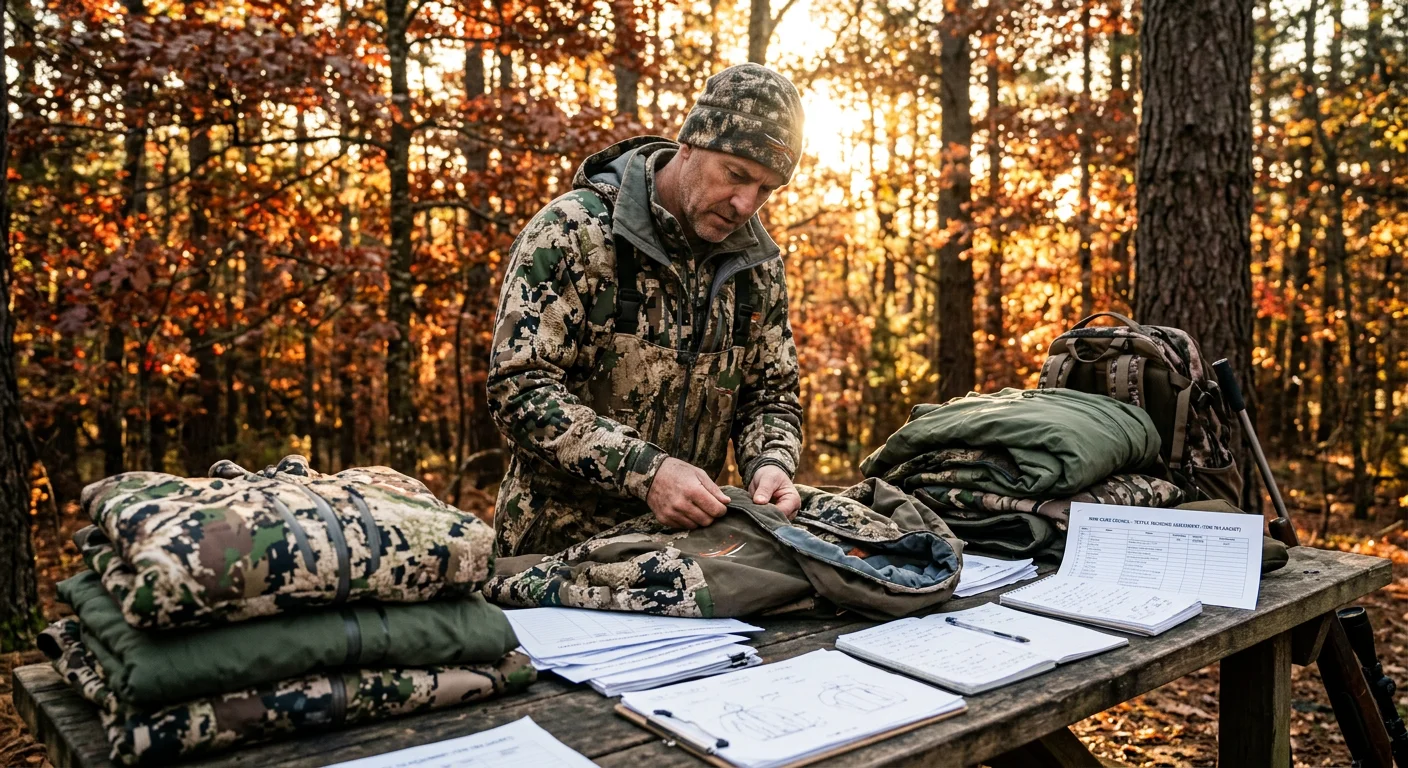
Most buyers make the same mistake. They treat hunting apparel manufacturing like commodity sourcing. They compare price sheets, pick the lowest number, and ask six months later why their blaze orange hunting apparel fades after two washes — and why the first production run missed the fall season.
The fix is a scoring framework. Apply it before you sign anything.
Use it to evaluate any hunting camo clothing manufacturer , OEM hunting clothing producer , or private label hunting gear supplier . These are the criteria that matter in 2026.
The 5 Dimensions That Separate Good Manufacturers From Great Ones
1. Product Fit and Hunting-Specific Capability
This is non-negotiable. A workwear manufacturer is not a hunting clothing manufacturer — no matter what they claim.
Check that they produce:
- Camo patterns suited to your target terrain (woodland, open country, waterfowl marsh)
- Fabric weights by use case : base layers at 150–300 g/m², outer shells above 350 g/m²
- Technical performance specs : waterproof rating ≥ 10,000 mm for shell layers; breathability ≥ 10,000 g/m²/24h; DWR spray rating ≥ 80 (AATCC 22)
- Scent control hunting clothing construction methods, if that's your category
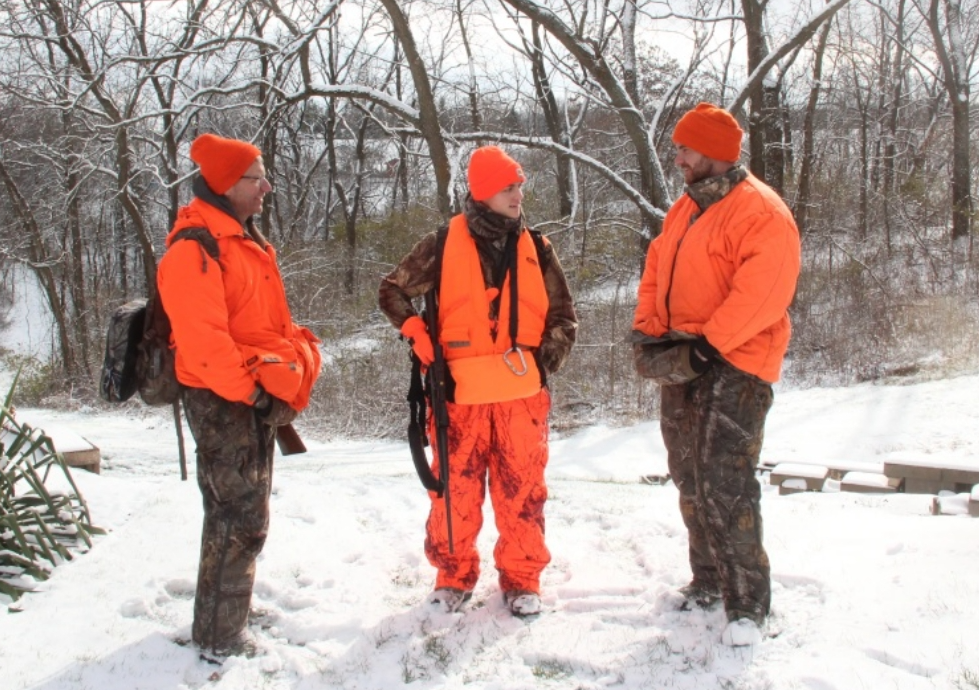
- Blaze orange hunting apparel that meets state-specific visibility regulations
Weight this category at 25% of your total score. No other block matters more for a hunting-specific product line.
2. Manufacturing Capacity and Delivery Reliability
Seasonal hunting brands live and die by the calendar. Ask them straight: what is their max garment output per SKU family each month? Check if current production runs below 80–85% utilization. That buffer is what protects your order at peak season.
Standard lead time benchmarks to hold them to:
- Standard orders: 4–8 weeks
- Peak season surge: confirmed +20–30% capacity availability
- On-time delivery rate over the last 12 months: ≥ 95%
Weight this block at 20% .
3. Quality System and Measurable QA Data
Ask for numbers, not promises. A solid hunting pants manufacturer or hunting jacket manufacturer can hand you 12-month performance data on the spot:
Defect PPM rate : critical safety defects below 50 PPM; packaging/label defects below 5,000 PPM
Customer complaint rate : under 0.5% of order lines
ISO 9001 certification : documented with a current expiry date
Seam strength results, tear strength data, and cold-weather performance testing down to -20°C
Weight quality and test data at 25% .
4. Regulatory Compliance and Worker Safety
Selling hunting apparel in the U.S. market means you need clear proof of compliance. That includes textile safety standards, correct labeling of material content, and — a growing issue in 2026 — documentation on restricted substances. PFAS rules are tightening on DWR treatments. Get that paperwork before problems arise.
Ask for their formal worker safety policy. Recordable incident rates should stay below 3 per 200,000 work hours . This protects your brand from liability, not just your conscience.
Weight at 10% .
5. Financial Stability and Reference Accounts
A supplier with fewer than five years in the hunting and outdoor space carries real risk. Look for:
- 3+ major hunting or outdoor brand references with relationships lasting 5+ years
- An owned facility (not leased only) — this signals long-term stability
- A willingness to share bank references on request
The Scoring Rule That Prevents Bad Decisions
Use a simple 0–3 scale per criterion across all five blocks. Convert to a weighted percentage.
Score Band | Decision |
|---|---|
≥ 80% | Approve — proceed to sampling |
65–79% | Conditional — enhanced monitoring, limit to non-critical SKUs |
< 65% | Reject — do not source |
Any hunting clothing manufacturer that averages below 1.0 per criterion across the quality and capacity blocks gets cut — price does not matter.
This framework won't guarantee a perfect partnership. But it will stop you from handing your deer hunting clothing brand or waterfowl hunting apparel line to a manufacturer who was never built to handle it.
MOQ, Pricing & Lead Times: What to Expect in 2026
Here's the practical reality: MOQ, price, and lead time don't move on their own. Pull one lever and the other two shift. These three variables are connected. Miss that, and you'll sign a deal that looks fine on paper but breaks down in production.
The MOQ Reality
Most OEM hunting clothing suppliers set their minimum order quantity to cover fixed setup costs. MOQs come in two forms — a unit count, or a minimum opening order value (around $1,000+ ). The tradeoff is simple: lower MOQ means higher per-unit cost. The supplier can't spread setup costs across a bigger run, so you pay more per piece.
A supplier's MOQ is too high for your launch? Don't walk away. Try negotiating installments , split shipments , or order staging . Forcing a smaller first batch rarely works. Changing how you take delivery often does.
Lead Time: Start the Clock at the Right Moment
Standard production for hunting apparel — hunting jackets, hunting pants, camo base layers — runs 30–60 days . First-time orders need an extra 2–3 weeks for sampling and approvals. Skip that buffer and you're setting yourself up for a missed launch window. Most delays trace back to this exact gap.
A few other benchmarks to build into your planning:
Bulk orders (1,000+ units): 40–60 days, versus an industry average of 60–90 days
Custom/specialty items (yarn-dyed fabrics, custom-woven camo): longer than standard — loom scheduling and dyeing steps take fixed time and don't compress
Rush production: 7–14 days is possible, but the supplier needs materials pre-positioned and open capacity to make it happen
One rule to lock in now: start your lead-time clock from final pre-production sample approval , not from contract signing. Counting from the wrong date is how brands end up scrambling two weeks before the season opens.
What Drives Your Quote
A private label hunting gear supplier sends you a price sheet. Five variables do most of the work behind those numbers:
Order quantity
Fabric type and GSM
Printing or processing method
Finishing details — labels, trims, packaging
The lowest unit price isn't always the best deal. Look at unit price + MOQ + lead time + contract terms as one package. A slightly higher per-unit cost paired with a faster turnaround and a fair MOQ can deliver better overall business value than chasing the cheapest number on the sheet.
2026 Planning Baseline: MOQ often unit-based (sometimes $1,000+ opening order) · Standard lead time 30–60 days · Add 2–3 weeks for approvals · Rush orders 7–14 days only with pre-confirmed capacity
Step-by-Step Process to Find and Vet a Hunting Apparel Manufacturer
Most sourcing disasters follow the same pattern. A buyer skips the groundwork, contacts a handful of factories, picks the one with the fastest reply and the lowest price — then spends the next six months dealing with chaos. Late samples. Wrong camo prints. Jackets that leak at the seams.
The nine steps below are built to stop that from happening. Each step builds on the one before it.
Step 1: Build Your Tech Pack Before You Contact Anyone
Don't reach out to a single factory without a per-style tech pack ready. That means flat sketches, seam placements, a measurement chart with tolerances (±0.5–1.0 cm), fabric composition, GSM, trim list, and packaging specs.
For hunting apparel, lock in these details:
- Fabric specs : brushed polyester fleece at 250–320 GSM for mid-layers; waterproof shells with ≥10,000 mm water column and ≥10,000 g/m²/24h breathability
- Camo requirements : licensed patterns (Mossy Oak, Realtree) carry royalties — 3–8% of wholesale is the standard range — versus custom hunting clothing designs you own outright
- Noise fabric requirements : brushed or peached face fabrics only; skip the crinkly PU films
- Insulation weight : state it in g/m² (60/100/160 g), not vague terms like "medium" or "heavy"
Also set your target FOB cost before anything else. A standard keystone model runs 2.0–2.4× FOB to wholesale, and 4–5× to retail. Know your number before negotiation starts.
Step 2: Build a Shortlist of 10–20 Candidates
Pull candidates from multiple channels. Don't lean on just one source.
On Alibaba , filter for: Trade Assurance, Verified Supplier, factory type (not trading company), OEM/ODM hunting apparel production, and North America as a primary export market. Search terms like "hunting jacket manufacturer" , "camo hunting clothing factory" , and "softshell hunting apparel OEM" pull more relevant results than broad apparel searches.
Go beyond online platforms. Check trade shows — MAGIC Las Vegas, ISPO, and Canton Fair all draw manufacturers with outdoor and tactical product experience. Focus on booths showing real camo, softshell, and waterproof outerwear, not just lifestyle apparel.
Your shortlist criteria: 5+ years in business, verifiable product photos of hunting or camo garments, and solid export volume to your target market.
Step 3: First-Pass Desk Vetting
Before sending a single email, log these data points for every candidate in a spreadsheet:
Year founded, employee count, annual export value
MOQ per style — hunting-focused factories work at 200–300 pcs/style for jackets as a standard range
Certifications: ISO 9001 , OEKO-TEX Standard 100 , BSCI or Sedex for retailer compliance
DWR chemistry documentation (C0/PFC-free vs. C6 — PFAS regulations are tightening in 2026)
Drop any factory that can't show outdoor, hunting, or tactical garments — or won't share basic certification scans.
Step 4: Send a Standardized RFQ to Your Top 5–10
Pick one key style. Include your tech pack, fabric spec, and a target scenario — for example, 300 pcs/style across 4 sizes in 1–2 colorways.
Ask every factory the exact same questions:
- MOQ per color per style
- FOB unit price at 200 / 500 / 1,000 pcs
- Sample cost and whether it's creditable against bulk
- Sample lead time and bulk lead time after approval
- Payment terms (benchmark: 30% deposit, 70% before shipment)
- Whether they can source licensed camo fabric or need you to supply it
Target response benchmarks : sample lead time of 7–21 days for standard jackets (up to 30 days for seam-taped shells); bulk lead time of 45–90 days.
Step 5: Score and Rank with a Weighted Matrix
Score each factory 1–5 on five dimensions:
Dimension | Weight |
|---|---|
Technical capability (camo, waterproof, quiet fabrics) | 30% |
Communication quality (response speed, clarity, organization) | 20% |
Cost and MOQ flexibility | 20% |
Lead time realism | 15% |
Certifications and audit readiness | 15% |
Keep your top 3–5. Move the rest to a reserve list.
Step 6: Deep Vetting — Documents, Video Calls, and Audits
Request business license copies, ISO certificates, OEKO-TEX labels, and waterproof/seam tape test reports. Then schedule a video call with a live factory walkthrough.
Check that the factory has the equipment your product needs: heat-seam taping machines, bonding equipment, and a visible inline QC area. AQL 2.5–4.0 is the industry benchmark for major defect inspection.
Your volume may justify hiring a third-party auditor. A one-day factory audit in Asia costs around $250–350 — cheap protection against a six-figure mistake.
Step 7: Run a Structured Sample Process
Order in three stages: proto sample → fit sample → pre-production (PP) sample. The approved PP sample becomes your golden sample . Every bulk unit gets measured against it.
Test hunting-specific performance on the PP sample:
- Waterproof field test : 2–3 hours in light rain; check shoulders, hood, and elbows
- Noise test : compare against a reference jacket at 2–5 meters in still conditions
- Camo print check : inspect for hue shift under low light and fading after wash cycles
- Usability test : pockets with gloves on, harness compatibility, ammo pocket access
Hold off on approval until measurements across at least 2–3 sizes fall within tolerance and all performance specs are met.
Steps 8–9: Lock Terms, Then Run a Controlled Pilot
Before issuing a purchase order, confirm these four things: final FOB prices at your volume tiers, the golden sample and approved fabric swatches attached to the contract, your AQL inspection plan, and an IP clause that stops the factory from selling your design to competitors.
Treat the first production run as a pilot , not a full launch. Start with 1–2 core styles at 200–300 pcs each. Schedule a mid-production inspection at 20–30% completion. At final inspection, open at least 10% of cartons and measure key points against the golden sample.
Track three numbers from that first order: on-time delivery rate, warehouse defect rate (target below 2–3% major defects), and consumer performance feedback over the first season. Those three data points tell you whether this factory can grow with your hunting apparel line — or whether they stay on simpler products while you find a more technical partner for high-end shells.
Sampling & Product Development: The Make-or-Break Phase
Every experienced hunting apparel buyer has a version of the same story. The price was right. The factory seemed capable. They skipped a sample round to save three weeks. Six months later, a pallet of hunting jackets arrived. Seams leaked at the shoulders. Camo prints came out two shades too dark. Chest measurements ran half a size off across the entire run.
That's not bad luck. That's what happens when you treat sampling as overhead instead of insurance.
Your tech pack becomes a real garment during the sampling phase. Every assumption you made on paper either holds up or falls apart here. Hunting-specific products carry higher stakes than standard apparel. A scent control jacket that doesn't seal — or blaze orange that fades after two wash cycles — doesn't just generate returns. It ends careers.
The Three Gates You Cannot Skip
Think of sampling as three hard checkpoints. Each one must clear before the next opens.
Gate 1 — Proto Sample (Concept + Structure)
This is your first physical test of the design. Plan for 1–3 proto rounds before moving forward. At each round, measure every key point against your spec sheet. Record variances as numbers. "Make the chest bigger" is not a factory instruction. "Increase chest circumference +1.5 cm at underarm" is.
For hunting outerwear, run these checks on every proto:
- Basic waterproof exposure test on seams and shoulders
- Noise assessment on any brushed or peached shell fabric
- Functional movement: draw position, kneeling, harness layering
Gate 2 — Pre-Production (PP) Sample (Quality + Manufacturability)
The PP sample is your last real chance to catch problems before mass production starts. Most factories hold bulk cutting until PP approval is signed off in writing — do not waive this step. Use final fabric lot, final trims, final labels, and final print files. No placeholders.
Check these against spec at PP review:
- All key garment points within ±0.5–1.0 cm on tops, ±0.75–1.5 cm on bottoms
- SPI (stitches per inch) confirmed against spec — 8–10 SPI for mid-weight constructions is the standard target
- DWR performance on shell layers — pay close attention if your supplier has moved to C0/PFC-free chemistry ahead of 2026 PFAS restrictions
Gate 3 — TOP (Top of Production) Sample (Production Reality)
TOP samples are the first units off the actual production line. Your vendor holds shipment until you approve them. Set the approved PP sample and your sew-by (gold seal) reference side by side and compare. Pull an AQL Level II, 2.5 inspection sample as a minimum check. Labeling, fiber content declarations, and country-of-origin marking all need to match retailer and regulatory requirements. One mismatch puts the entire shipment at risk of refusal — not just rejection.
The Cost of Skipping a Round
One extra sample round adds around 2–5% of per-style development expense . Skip it, absorb a rejected bulk PO, and you're looking at 10–30% of a season's margin gone. That's before you factor in the missed sell-through window.
The math is not complicated. The discipline is.
Proto to approved PP sample takes 4–6 weeks with fast feedback and no major structural changes needed. Add 3–7 days per courier shipment per round. Need a size run validated — one sample per size from XS to XL to catch grading errors before full cutting? Add another review cycle on top of that.
Start your clock the moment your factory receives a complete, finalized tech pack. Not from your first contact. Not from the day you agreed on terms verbally. From the moment specs are locked and sent in full.
The brands that hit their fall hunting season launch window year after year don't have the most connections or the biggest budgets. They finished PP approvals in July.
US vs Overseas Hunting Clothing Manufacturer: Which Is Right for Your Brand?
Three numbers decide this: your unit volume per style, your target MSRP, and how many weeks you have before the season opens.
Factory quality, technical capability, sustainability certifications — all of that matters. But those three numbers cut your options in half before anything else comes up.
The Cost Reality
Labor in a US cut-and-sew shop runs $12–25 per hour . In China, Vietnam, or Bangladesh, that same hour costs $1–5 . On a mid-complexity technical hunting jacket, overseas FOB unit cost runs 30–60% lower than domestic production at volumes above 1,000 units per style.
That math shifts fast on small runs. Ocean freight adds $0.30–$1.50 per unit at typical SME scale. Import duties on synthetic hunting outerwear run 16–28% of declared value — this varies by HS code and fabric blend. Stack on brokerage fees, port charges, and a 3–8% defect rework rate , and the overseas savings disappear on orders under 500 units per style.
Here's a real benchmark. A technical softshell hunting jacket at 300 pcs domestic lands at $58–75 per unit . The same jacket at 2,000 pcs overseas lands at $35–48 . That's a $20–30 saving per unit. But it requires seven times the order commitment and a six-month forward buy.
The Calendar Problem
US production runs 4–8 weeks after approvals. Overseas runs 11–22 weeks door-to-door once you add ocean transit. For fall big-game delivery in July or August, your overseas production window closes in March at the latest . Miss that deadline, and air freight eats most of what you saved on unit cost.
Sample cycles make the gap worse. US pattern iterations turn in 1–3 weeks . Overseas iterations run 3–6 weeks each . You may get one or two full rounds before committing to bulk. For scent control hunting clothing or taped-seam waterproof shells — where fit and construction precision are critical — that's a real technical risk.
Which Type of Brand Fits Which Model
Choose US manufacturing if:
- Your initial runs stay below 500 units per style
- You're building a premium or niche hunting brand — archery-specific, women's fit, backcountry minimalist — where "Made in USA" supports a 20–40% higher MSRP
- You need fast field-test rounds with pro-staff or guides before scaling up
Choose overseas manufacturing if:
- You can commit to 1,000+ units per style with a 6–12 month buy window
- Your target retail sits at $129–$249 , where every $5–10 in margin counts
- You need large-scale camo printing, 3-layer laminates, or specialty trim packages that US shops can't provide at volume
The Hybrid Approach Most Smart Brands Use
Prove the design in the US. Scale it overseas.
Start with a US cut-and-sew partner for initial patterns, prototypes, and small drops of 20–100 units . Once fit, construction, and camo registration are locked in, move core SKUs to an overseas OEM hunting clothing partner for volume production. Keep limited runs, specialty products, and seasonal tests in the US.
This approach protects you from the most expensive mistake in hunting apparel. That's finding out a laminate leaks or a fabric reads too loud — after a full container has already shipped.
2026 Trends Every Hunting Brand Must Factor Into Manufacturer Selection
The hunting apparel market is worth $3.57 billion in 2026 . It's projected to hit $5.84 billion by 2034 . That's 6.3% growth per year — solid numbers. But your manufacturer has to scale with you. Most don't plan for it. That gap becomes your problem.
Before signing anything, pressure-test these four shifts happening right now.
Fabric Technology Is Raising the Bar on Factory Capability
Silent design used to be a premium feature. Now it's a baseline expectation. The market has moved away from zippers toward magnetic closures and brushed snaps. Fewer seams. Quieter hardware. Factories with no experience in brushed face fabrics or low-seam construction are a full generation behind.
On the technical side, smart adaptive fabrics are gaining ground. These are textiles with phase-change materials that adjust insulation based on body heat. They're moving out of R&D and into production. You may not need this in 2026. But your manufacturer needs a mill connection that can deliver it when you do.
Minimum specs to demand from any serious hunting apparel supplier right now: - Backcountry shells: ≥20,000 mm hydrostatic HEAD, ≥15,000 g/m²/24h breathability - Outerwear abrasion resistance: Martindale ≥ 20,000–30,000 cycles - Scent control treatments with wash-durability data across 20+ wash cycles
Sustainability Certifications Are No Longer Optional
Sitka , KUIU, First Lite — every premium brand in your space faces audit pressure. A factory that fails a brand-level sustainability review blocks you from placing product with serious retailers. Full stop.
The Certifications That Matter in 2026: Bluesign, OEKO-TEX Standard 100, ISO 14001. For U.S. and EU distribution, add REACH and Prop 65 chemical compliance.
Ask for certificate numbers with expiry dates. Require that 60–70% of fabric volume comes from certified mills. They laminate or dye in-house? Get their wastewater treatment data. No documentation means no partnership.
MOQs Are Shrinking — and That Changes Your Leverage
The hunting market keeps splitting into smaller segments. More subspecialties, more terrain-specific camo, more niche categories. That split is pushing manufacturers toward smaller run flexibility . MOQs of 100–300 pcs per color per style are now available for niche camo patterns across more factories.
Use that to your advantage. A manufacturer who runs lower MOQs with fast turnarounds lets you test designs before committing to volume. Ask them straight: how many styles under 500 pieces did they run in the last 12 months? That answer tells you whether they're built for a brand at your stage — or whether they'll push your order to the back the moment a bigger client shows up.
Women's Fit and Extended Sizing Are Real Business Opportunities
DSG Outerwear and brands like it have proven real demand exists here. Most factories still build women's patterns by shrinking men's blocks. That approach produces garments that don't fit, don't sell, and pile up as returns.
Any manufacturer you're considering for women's hunting lines needs to show 2–3 actual women's hunting projects in their portfolio. Not lifestyle sportswear. Not resized unisex product. Look for separate grading files and extended sizing through at least 3XL. No proof of that work? They can't build your line.
Conclusion
Picking the right hunting clothing manufacturer isn't just a vendor decision. It's a move that defines your brand.
Get it right, and your product line earns real loyalty in the field — season after season. Get it wrong, and you're stuck chasing late shipments, dealing with quality complaints, and losing capital you won't get back.
This guide gives you a clear framework to work with:
A verified checklist for evaluating camo clothing manufacturers
Realistic MOQ and lead time benchmarks for 2026
A step-by-step vetting process
Key trends shaping what serious hunters will want next season
Now act on it.
Start with a sample order. Ask the hard questions. Before signing any contract, get full transparency on materials, certifications, and timelines.
Ready to work with a manufacturer who knows hunting apparel inside and out? Reach out to BerunClothes — let's build something worth wearing into the field.