You did everything right last season — scouted hard, hung your stand in a proven funnel, showed up before first light. Then a mature buck ghosted you at 60 yards, nose in the air, and was gone before you could draw. No snort, no stomp — just a white flag disappearing into the timber.
That's not bad luck. A whitetail's nose has 297 million scent receptors. You have 5 million. The margin for error is zero.
These 10 scent control techniques cover it all — wind strategy, activated carbon hunting clothes, ozone generators, and even the foods you ate three days before the hunt. Whether you're building a custom hunting apparel system or upgrading your existing gear, this is the system serious hunters are running in 2026 to close that gap and keep mature bucks in shooting lanes where they belong.
#1 Wind Direction Is Your First Line of Defense
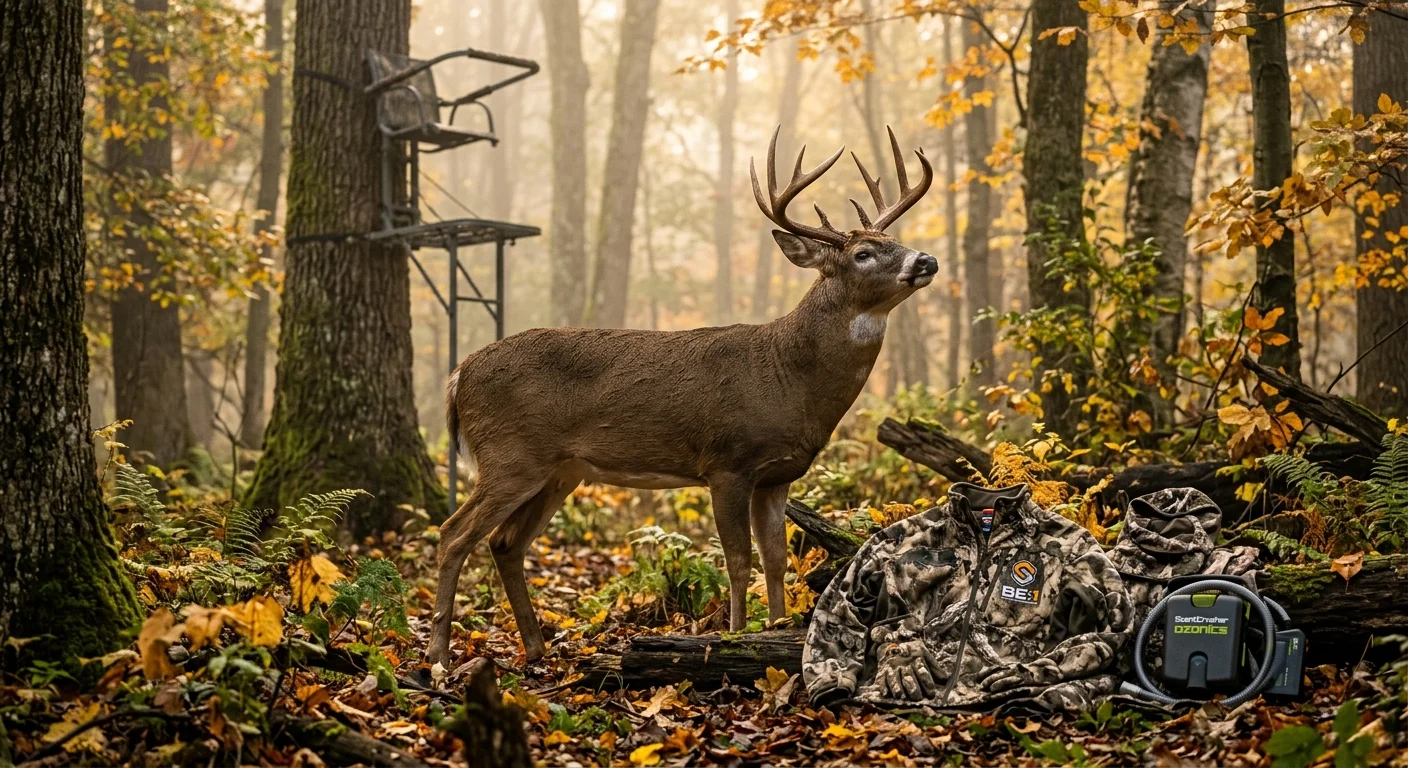
Wind direction isn't a technique — it's the foundation everything else is built on. Get it wrong, and no spray, no carbon suit, no ozone generator can save your hunt.
Here's the hard truth: in stable conditions, your scent cone stretches 300–400 meters downwind. A whitetail can pick up human odor at 400–600 yards in mild air. A deer you haven't even spotted yet may already be slipping away.Many experienced hunters work closely with a trusted hunting gear supplier to build complete scent-management systems rather than relying on a single product.
Know your scent cone:
Tailwind (wind at your back): Your scent blows straight toward the deer. Don't hang a stand within 200 meters downwind of any primary travel corridor.
Crosswind: The most controllable setup. Place your stand 20–40 meters upwind of the main trail. Angle your scent cone away from where deer will walk.
Headwind: The safest setup. Your scent drifts behind you. The area in front stays close to odor-free within 50–100 meters .
Entry routes matter just as much as stand placement. Approach from the downwind edge of a deer's travel corridor. Keep at least 50–80 meters of lateral distance from the primary trail. Cutting that distance short can blow the whole hunt.
Tools to check wind in the field:
Powder bottle (talc or cornstarch, under $1/season) — release a small puff and watch it drift at hunting height
Cotton thread tied to your bow or pack — a 10–45° deflection means the wind is manageable
Hunting weather apps — check for wind forecasts that stay within a ±45° window across your key morning or evening hours
The cost of this approach? Close to zero. You arrive 30 minutes earlier . You walk an extra 300–500 yards around the downwind edge. That's the full price. No gear needed — just discipline and a clear picture of where your scent travels before you climb into that stand.
#2 Build a Scent-Free Clothing System That Works
Wind strategy keeps your scent from reaching a deer. Your clothing system stops it from leaving your body in the first place. Both matter. Neither works without the other.
The framework is simple: three layers, each doing a specific job.
Base layer — merino wool. Not synthetic, not cotton. Merino wool fights odor-causing bacteria right at the fiber level. That means less smell buildup during a four-hour sit. Go thin-to-midweight for active hunting. Focus on moisture transport first, warmth second.
Mid layer — insulation that breathes. Overheat and you sweat. Sweat and your base layer stops working. Vent it or strip it before any hard hiking.
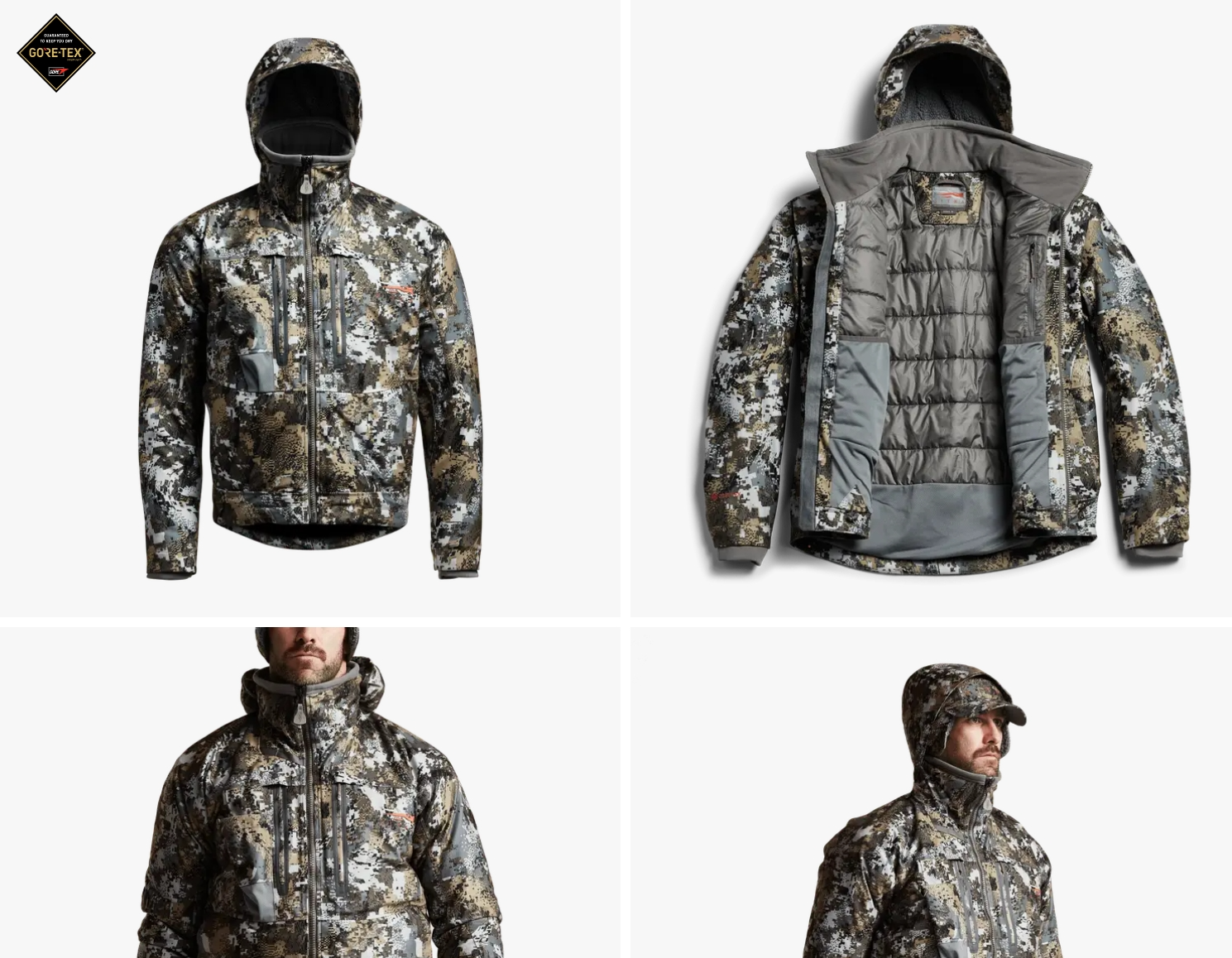
Outer layer — activated carbon or additive-treated fabric. Carbon has a porous structure that traps odor molecules before they escape into the air. Many modern hunting brands now develop advanced scent-control garments through OEM/ODM hunting apparel production partnerships that specialize in technical outdoor apparel.ScentLok's Carbon Alloy™ targets underarms and torso — the two highest-output zones on your body.
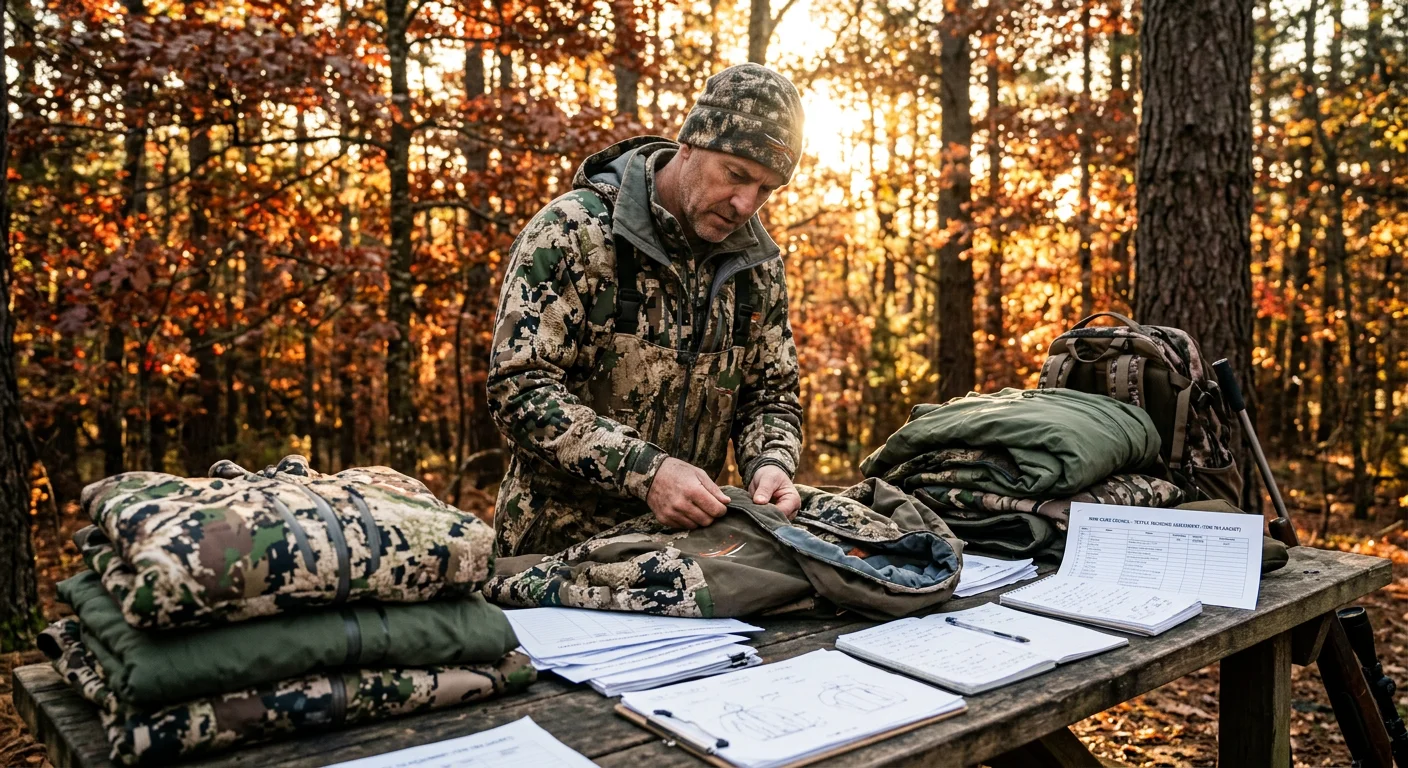
The system fails in storage, not in the field. Wash everything in scent-free detergent. Seal it in airtight bags or hard-sided totes right after. Dress at the trailhead, not at home. One ride in a gas-station-stop truck undoes a perfect wash.
Drop the fabric softener. It leaves a synthetic coating on the fibers. That coating shuts down your scent-blocking clothing before you ever climb a tree.
For 2026, the highest-value upgrade is outerwear built with silver-ion antibacterial tech (like Polygiene StayFresh™) or silica-based odor capture . These are treatments built in at the manufacturing stage. They outlast any spray-on solution you'll find on the shelf.
#3 Wash, Store, and Transport Hunting Clothes the Right Way
Most hunters blow their scent control in the laundry room, not the woods.
Your activated carbon outer layer and merino base do nothing if they spent the night soaking up dryer sheet fragrance and fabric softener residue. Those chemicals stick to the fibers and undo everything. Here's what to do instead.
Before you wash anything, clean the machine. Run a dummy cycle with scent-free detergent. Then run the dryer with a clean towel and unscented dryer sheets. Skip this step and your "clean" hunting clothes pick up whatever the last load left behind.
The wash itself is straightforward:
- Cold water, gentle cycle, scent-free sport wash — nothing else
- No bleach. No softeners. Both coat the fibers and kill your odor-blocking system dead
- Air dry in full — line dry first, dryer second if needed
Many premium scent-control garments receive their odor-management treatments directly at the hunting gear factory, making proper maintenance critical for long-term effectiveness.
Most gear needs 2–3 wash cycles per season. Spot-clean minor dirt with a damp cloth. Save the full wash for when it counts.
Storage is where most hunters lose ground. Keep everything sealed and away from contamination:
Storage Option | Best For |
|---|---|
Carbon-lined bag | Maximum odor control |
Airtight plastic bin | Dry and protected, low cost |
Vacuum/compression bag | Space-saving, easy to transport |
Drop in desiccant packets and an open box of baking soda inside whichever container you choose. Keep everything in a basement, garage corner, or shed. Stay far from the kitchen, fuel cans, and anything that carries a scent.
At the truck, stay sealed until the last possible moment. Don't dress at home. Don't ride to the stand in your hunting clothes. Keep the gear bagged during transport, change at the tailgate, and walk straight into the field.
#4 Scent-Free Shower Routine on Hunt Morning
The sequence matters more than the products.
Most hunters grab whatever soap is in the shower, figure it's good enough, and HEAD out. It isn't. Your skin releases oils and sweat all the time. Any fragrance residue from regular body wash, shampoo, or deodorant sits on top of that. It broadcasts your presence before you've climbed ten feet off the ground.
Run this order every hunt morning, without exception:
Eat first. Shower after. Food odors on clean skin transfer straight into your base layers.
Shower with scent-free body wash and shampoo. Hunting-specific formulas like Scent Killer Body Wash & Shampoo handle both in one step.
Dry off with a clean towel washed without fabric softener. Fragrance transfers from terry cloth just as fast as from clothing.
Apply unscented deodorant after the shower — not before, not the night prior.
Brush teeth after eating , not before. Minty toothpaste is a trade-off worth making — it beats raw human breath at close range.
Cut these out: cologne, scented lotion, aftershave, and any grooming product with a fragrance list on the label.
Even large hunting gear wholesalers consistently recommend personal scent-control routines as an essential complement to technical clothing systems.
The shower itself costs you nothing extra. What it gives you is a clean baseline. Your activated carbon outerwear and wind strategy won't have to fight your own body chemistry before the hunt even starts.
#5 Control Sweat on the Walk-In (The Most Overlooked Source)
Every scent control system you've built — the carbon suit, the scent-free shower, the sealed storage bag — falls apart the moment you start sweating on the walk-in.
A moderate pack-out hike (500–800 meters, 10–15 kg load, 20–25°C) puts 100–250 ml of sweat on your body. It concentrates on your back, chest, and armpits. Each step drops skin cells, trace oils, and sweat residue onto the ground. In a 1–3 mph breeze, that scent trail spreads 10–30 meters off your path. Mature bucks hold up 30–80 yards out. They read the wind and reroute without a sound. Walk in hard and sweaty three days straight, and by day four your camera shows them moving at 2 a . m.
Four adjustments that cut sweat output:
Reduce your load. Pre-stage 60–80% of your gear the day before, as long as wind conditions allow. Keep your walk-in pack under 10 kg. Less weight means less body heat, less sweat — simple math.
Slow down. Target 2–3 km/h on the trail. Keep your heart rate below 60% of max. Stop every 5–10 minutes, drop one shoulder strap, and let your core breathe.
Layer smart. Walk in thin — a lightweight 120–170 g/m² merino or synthetic base, nothing else. Pack your insulation and outer layers sealed in a dry bag. At 80–100 meters from the stand, stop, wipe down, and change into your stand layers before the final approach.
Use overnight antiperspirant. Put aluminum-salt antiperspirant on your armpits and feet the night before. Clinical research confirms nighttime application cuts sweating the next day by a clear margin.
The walk-in builds the scent trail. Get it under control before you reach the stand.
#6 Rubber Boots and Ground Scent Elimination
Your boot soles touch every inch of ground between the truck and your stand. That scent trail doesn't disappear. It sits there for 30 minutes or more. Any deer that crosses it knows what walked through.
Full rubber boots change that equation. Unlike leather or Gore-Tex, rubber is non-porous. Your sweat stays inside the boot instead of soaking through the material and onto the ground. Deer cross fresh rubber-boot tracks without reacting. Those same deer spook hard from leather-boot tracks laid under identical conditions.
Material comparison at a glance:
Boot Type | Odor Transfer | Deep Cleanable? |
|---|---|---|
Full rubber | Low | Yes |
Leather | High (absorbs + re-emits for weeks) | No |
Gore-Tex/fabric | Moderate (vapor escapes membrane) | No |
New boots need de-scenting first. That hunting apparel factory rubber smell works against you. Soak them in cold water with a half-capful of scent-free detergent for 2–4 hours. Then rinse and air dry. Or pack them in whole corn for 3–5 days. A 50-lb bag runs about $10 and kills the rubber odor well.
Between hunts , pull the insoles out. Wash them on their own, then shake scent-killer solution inside each boot. Let it sit overnight. Finish with a cup of baking soda per boot before putting the insoles back in.
At the trailhead , change out of your everyday shoes on a clean surface. Spray the outsides and soles with scent-elimination spray. Give them a few minutes to dry before your first step into the woods.
One key warning: keep ozone generators away from rubber boots during storage. Long ozone exposure breaks down rubber and creates micro-cracks. Those are the exact spots where odor hides.
#7 Apply Scent-Elimination Sprays as Your Final Layer
Scent-elimination spray is the last line of defense — not the whole defense. Treat it as your only tool and you've lost the hunt before you hit the timber.
Here's what the science says: a study across 65 human body odor samples found that leading hunter sprays cut 29 key volatile organic compounds (VOCs) through antimicrobial action, chemical binding, and conversion to lower-volatility compounds. Scent Killer Gold, applied and air-dried the right way, holds meaningful odor reduction on fabric for up to 20 days . Under normal field conditions, most sprays stay effective for 4–6 hours — less in heat, humidity, or heavy exertion. Time your re-spray around that window.
Spray these zones, in this order — most hunters miss at least three:
Boots first. Soles and uppers, tongue, lace eyelets. Let them dry before your first step. Some hunters add a drop of vanilla extract to the soles to mask foot-scent trail even more.
Pants from ankle to mid-thigh. Brush contact puts your scent right onto cover. Hit the knees — front and back — if you're kneeling.
Gloves on your hands. Put them on, then spray. That pushes coverage into the knuckle folds and finger seams. Those are the spots where bare skin touches every piece of gear you handle.
Hat and facemask — inside and out. Your forehead and scalp produce a lot of sweat. Exhaled breath builds up around your mouth and brim. Most hunters go too light on these zones — don't.
Outer layers and safety harness. Armpits, lower back, and any spot where your pack presses against your body.
The backpack itself. Shoulder straps, hip belt, zipper pulls — every surface your bare hands or sweaty clothing touched on the walk in.
Two spray types worth knowing:
Enzyme-based formulas break down organic odor molecules at a biological level. They work better against sweat and skin bacteria. Give them contact time — saturate the surface, don't just mist it.
Chemical-neutralizing formulas (hydrogen peroxide + baking soda + unscented soap) cover a wider range of VOCs fast. The DIY version costs about $0.50 per 16 oz bottle . Mix a fresh batch each time. Hydrogen peroxide breaks down fast and loses its punch once pre-mixed.
Saturate, don't spritz. Hang your outer layers outside, spray both sides until damp, and let them air-dry before you put them on. That's the difference between a spray that does the job and one that just makes you feel like you did something.
#8 Use Cover Scents Smart, Not as a Crutch
Cover scents don't erase human odor. A whitetail's nose picks up scents in layers — earth, pine, and human sweat all hit at once. Code Blue says it straight: "cover scent isn't meant to mask every trace of human odor. That's impossible."
Think of it as a two-stage system:
Scent elimination first — cut your human VOC output by 60–90% through scent-free washing, sealed storage, unscented soap, and elimination spray
Cover scent second — hide whatever remains inside familiar environmental noise
Skip stage one and spray on a full bottle of pine. A mature buck smells just that: heavy pine plus strong human. Both signals hit. Neither cancels the other.
Match the cover scent to your terrain:
Environment | Use This |
|---|---|
Hardwood / timber | Earth, fresh dirt |
Conifer / cedar stand | Pine, cedar |
Field edge / ag ground | Earth + corn or soybean blend |
Apply light and spread it out. Spray your boot soles, then add another spray every 10–15 meters along your approach. Place one scent point 10–15 yards downwind of your stand to pull a deer's attention away from you.
Cover scent handles the last 10–20% of your system. Build the foundation first.
#9 Ozone Technology: What It Can (and Can't) Do in 2026
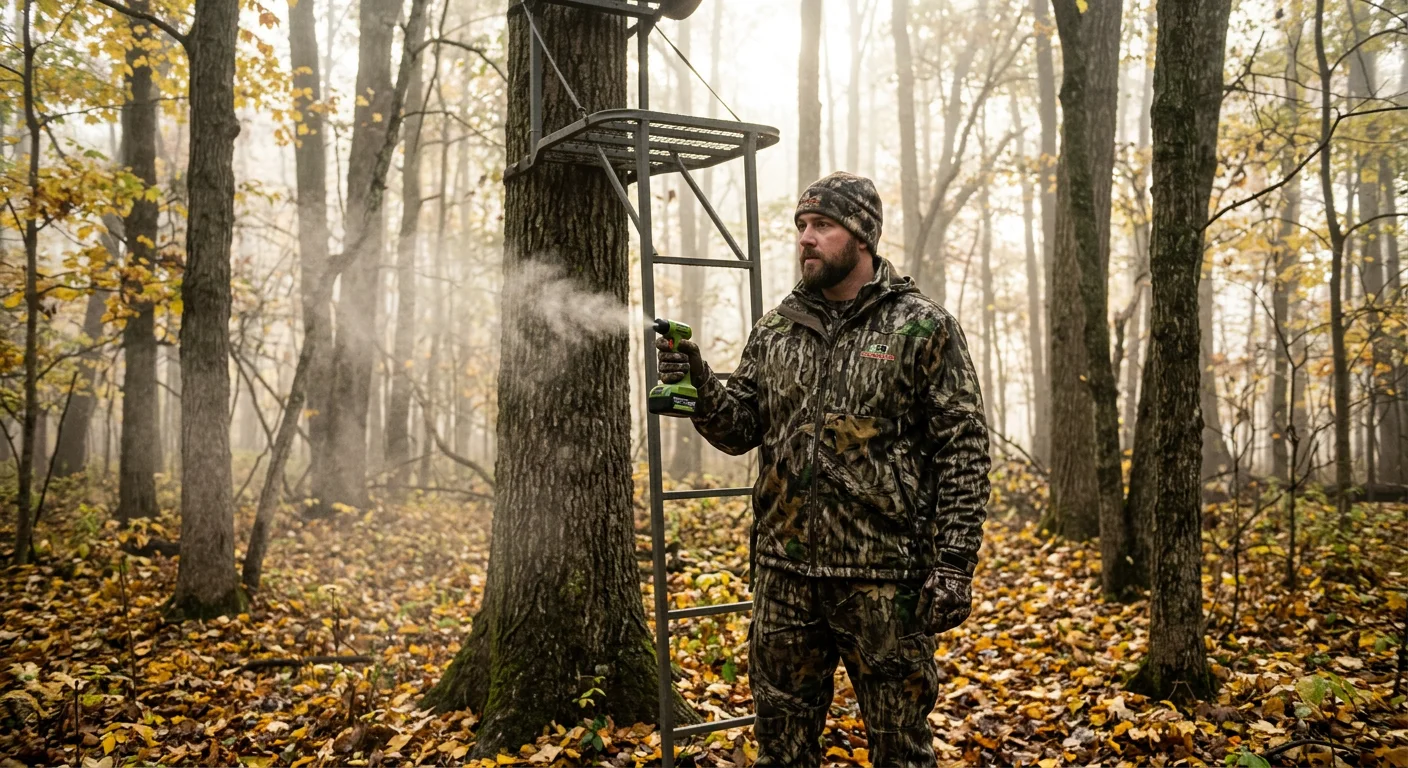
Ozone generators are among the most debated tools in any hunter's kit. Most of that debate comes from one problem — hunters use them in the wrong situation.
Here's the chemistry in plain terms: ozone carries an oxidation potential of 2.07 V . That makes it a stronger oxidizer than hydrogen peroxide, chlorine, or plain oxygen. It attacks the exact molecular structures — short-chain fatty acids, amines, sulfur compounds — that make up human body odor. The chemistry works. The limitation is physics.
What ozone does well:
Kills and suppresses odor-causing bacteria on gear surfaces — lab data shows 2–5 log reductions under proper conditions
Breaks down sweat compounds, skin oils, and biological residue on clothing and boot liners
Leaves zero chemical residue — it converts back to O₂ on its own
Where it falls short in the field:
Portable units clipped to your belt or hung from your treestand output 20–500 mg O₃/h . Moving air dilutes that output within 1–2 meters . At the same time, your sweating body keeps releasing new odor molecules faster than any battery-powered unit can neutralize them.
The 2026 recommendation is simple: run ozone in a sealed container or room at home — 30 to 60 minutes at medium-high output before each trip. Think of it as deep sanitation, not field magic. Out in the woods, wind direction still runs the show.
Safety note: Keep prolonged exposure below 0.1 ppm . Never run a portable unit in an enclosed blind with poor ventilation. Keep dogs away from any sealed ozone treatment space.
#10 Eliminate Odor at the Source: Diet, Habits, and Human Behavior
Nine techniques down. Here's the truth most hunters never face: the smell problem starts in your kitchen, not your closet.
What you eat in the 48 hours before a hunt changes your body chemistry. Garlic and onions produce allyl methyl sulfide — a sulfur compound your lungs and skin keep releasing for up to 48 hours after a single meal. Alcohol shows up in your sweat for 12–24 hours. Strong fish, curry, and cruciferous vegetables all push your VOC output in the wrong direction.
Avoid these for 48 hours before the hunt: garlic, onions, alcohol, fermented fish, heavy red meat, and curry-spiced dishes.
Eat these instead: plain grains, eggs, white poultry, tofu, cucumber, carrots.
Stay hydrated too. Dark urine means your body is dumping concentrated odor compounds through your sweat.
Smoking makes it worse. Tobacco VOCs bind to fabric and stay detectable for over 24 hours. Set a hard cutoff: stop smoking 12 hours before you head out. Shower with unscented soap. Never smoke in your hunting clothes — not once.
Your hands matter too. Skin oils and food residue transfer onto ladders, calls, and tree bark. On porous wood, those scents stick around for hours. Keep unscented hand sanitizer on you. Use it, let it dry for 30–60 seconds, then touch local soil. That swap replaces "clean human" scent with something the woods already recognizes.
FAQ: Scent Control for Whitetail Deer Hunting
Hunters ask a lot of questions about scent control. Most answers are simpler than the gear industry wants you to believe.
How far away can a whitetail smell a hunter?
At least a quarter to a half mile in light wind. Add humidity and a steady breeze, and that range grows. Thick cover and swirling wind bring it down — scent pools and spreads in ways you can't predict. The takeaway: no spray closes that gap. Wind position does.
Do scent elimination sprays work?
Lab data says yes. Enzyme and oxidizer formulas cut odor-causing bacteria by 90–99% on treated surfaces. Field results are more honest, though. Sprays give you a small edge — not a miracle. Put them on after you dress. Hit the high-sweat zones hard. Spray again every two to four hours. They help. They don't make you invisible.
What's the priority order — spray, clothing, or wind?
Wind and access routes come first. Full stop. Clean clothing and proper storage come second. Body hygiene and keeping your effort low come third. Sprays, ozone, and cover scents are finishing work — the last ten percent on top of a solid base.
When do I start scent control before a hunt?
Start forty-eight hours out. Drop garlic, onions, alcohol, and heavy spices from your diet. On the morning of the hunt, shower with unscented soap and use scent-free deodorant. Brush your teeth after breakfast, not before. Your clothes should already be washed, line-dried, and sealed in airtight storage — one to seven days before the hunt.
Is expensive scent control gear worth it?
Build the baseline first: merino base layers, carbon outerwear, scent-free detergent, and airtight storage. Past that point, the gains shrink fast. Better stand placement and smarter access routes will fill more tags than any premium gear upgrade. Get the system right first. Then fine-tune your setups.
Conclusion
Whitetail deer didn't survive this long by being careless — and neither should you.
Every technique in this guide points to one truth: scent control isn't a single product or a single step. It's a system . Wind direction sets the foundation. Scent-free clothing and a solid wash routine build the walls. Your shower, your boots, your walk-in route, your diet — they're all bricks in the same structure. Leave one out, and the whole thing leaks.
The hunters who tag mature bucks aren't luckier than you. They're more careful and more deliberate about every step.
Start with what you can control today — your clothing system. Hunting in 2026 without scent blocking clothing built for whitetail hunting means you're already a step behind. Check out berunclothes.com 's scent control hunting apparel and build your system before the season starts. Don't wait until opening day to find the gaps.
The buck of a lifetime won't give you a second chance.