You've spent good money on camo before. Maybe a jacket that soaked through by 8 a.m. Or a base layer that rustled every time you drew your bow. You're locked into a treestand at 28°F, waiting on a mature buck to step into range. That kind of gear failure doesn't just cost you comfort. It costs you the hunt.
Badlands and First Lite have both built serious reputations in hunting apparel. But the real question isn't which brand looks better on paper. It's which one is built for the specific demands of whitetail stand hunting. We tested both systems across layering, scent control hunting clothing performance, warmth, and silence. The goal: give you an honest, scenario-specific breakdown that helps you spend smarter before deer season opens.For any hunting apparel manufacturer, balancing warmth, scent control, and silence remains one of the biggest challenges in whitetail gear development.
Layering System Breakdown: Badlands vs First Lite Base Layers
The base layer is where most whitetail hunts are won or lost — long before the buck ever steps out.
Both Badlands and First Lite build their systems around merino wool, and for good reason. Merino controls odor on its own, regulates temperature across a wide range, and stays quiet against skin. That matters whether you're drawing a bow or shifting position on a cold stand. The two brands take different paths with merino, though. Those differences are real, and they affect which one fits how you hunt.
First Lite: A Graduated Ladder Built for Precision
First Lite gives you three distinct merino weights. Each one handles a specific thermal job:
Fuse (200 g/m²) — the lightest option in the lineup. Built for early season or hard walk-ins where sweat is a given. It dries fast, feels soft against skin, and handles moisture better than heavier options during aggressive approaches.
Kiln (250 g/m²) — the workhorse. Hunters call it the "do-everything" whitetail base. It's warm enough for multi-hour static sits and light enough to handle a 1–2 km walk-in without soaking through.
Furnace (350 g/m²) — the late-season pick. Temperatures below -10°C with a short walk to the stand? The Furnace delivers far more static warmth than anything in the 200–250 g/m² range.
That graduated system is First Lite's real edge. You're not guessing — you're picking the exact tool for today's temperature and effort level.
Odor control is strong across all three weights. The Kiln has gone 3–5 days on backpack hunts without washing and stayed manageable. For whitetail hunters running back-to-back sits, that's solid insurance.
Badlands: Fewer Pieces, More Durability-Focused
Badlands keeps it simple. Their Pecora merino base sits in the mid-weight range (~200–250 g/m²) and runs as a blend — merino mixed with synthetic fibers for extra toughness and faster dry time. The tradeoff is a coarser feel compared to First Lite's softest pieces. You also get slightly less odor resistance than 100% fine-micron merino.
In practice, the Pecora holds up well. Hunters describe it as "quality merino" that stays solid across 1–3 days of consecutive sits. It beats pure synthetic. It falls a step behind the top 100% merino options on smell control alone.
Where Badlands gives up layering precision, it makes up ground with durability and value . The Pecora midweight runs $90–120 MSRP and often drops to $70–100 off-season. That's 10–20% cheaper than the First Lite Kiln at $105–125 MSRP. Plus, Badlands backs every piece with their lifetime "red skull" warranty — something hunters point to as a real differentiator.
Which Base Layer Wins for Whitetail Stand Hunting?
Picture the classic whitetail setup — a sweaty pre-dawn walk-in, then 3–5 hours of motionless sitting in 20–35°F temps. First Lite's layering ladder gives you more precision here. The Kiln covers most early-to-mid season situations. The Furnace steps up as a serious tool for late-season cold stands.
Badlands' Pecora is a capable, honest performer. You run a simpler system and want a base that holds up season after season without extra care? It earns its place. But you're building a hunting apparel layering system built around the demands of whitetail treestand hunting? First Lite's three-tier merino lineup gives you sharper, more targeted answers.This level of specialization is why some hunters increasingly look for custom hunting clothing layering systems tailored to specific stand-hunting conditions.
Outer Shell Showdown: Waterproofing, Noise, and Wind Protection
Here's the uncomfortable truth about outer shells: the driest jacket is rarely the quietest. That tension — waterproofing versus silence — sits at the center of the Badlands vs First Lite debate. For whitetail treestand hunters, picking the wrong one costs you in ways money can't fix.
What Whitetail Hunters Need From an Outer Shell
Treestand hunters don't move like mountain hunters. You're mostly static, waiting at 20 to 40 yards, where a mature buck's ears catch everything. Ask hunters to rank outer shell priorities, and the answer comes back the same every time:
Silence (~40–50% of the decision)
Waterproofing (~25–35%)
Abrasion resistance (~20–25%)
Use that ranking to judge both brands.
First Lite: Built Quiet First, Waterproof Second
First Lite's whitetail outer shells — the Sanctuary, Solitude, and Catalyst lines — use a brushed face fabric as their core design choice. The goal is straightforward: stay below the noise threshold when a buck stands 15 yards away.
It works. Brushed face fabric runs 5–10 dB(A) quieter than smooth nylon hard shells during the same movements — bow draw, shifting weight, knee bend. Hard shells in the 30–40D range peak at 45–55 dB(A) under those same movements. First Lite brushed soft shells? Most testers measure 35–45 dB(A) . The character of the noise matters too — it's low-frequency and soft, not the sharp plastic rustle that freezes deer cold.
At 15 yards, light body movement in a First Lite brushed outer layer is near-silent by most hunter standards. That earns a 9/10 for silence. Nothing in the Badlands hard shell lineup comes close at the same hunting clothing price tier — more like a 6/10 against alert whitetails in dead-quiet dawn conditions.
The tradeoff is real, though. Brushed face fabrics run 200–300 g/m² — heavier than hard shells at 120–180 g/m². In sustained rain, they absorb water. Light-to-moderate rain for 1–2 hours stays manageable. Push past 2–3 hours of steady rain and the outer fabric saturates. You get added weight and a creeping cold-wet feeling — even with the inner membrane still blocking water. All-day downpours call for a dedicated hard shell over the top. That brings noise back into the picture.
Badlands: Hard Shell Durability, Honest Noise Compromise
Badlands builds outer shells around hard shell construction — 20,000–30,000mm hydrostatic HEAD , C6 or fluorine-free DWR, and face fabrics in the 40D–70D range. In a real rainstorm, this system holds up. You can drag a deer through wet leaves and snow for 50 meters, push through soaked undergrowth, and the waterproofing doesn't quit. The Martindale abrasion ratings on comparable Badlands face fabrics hit 20,000–30,000 cycles — about double the wear resistance of standard lightweight mountain rain shells.
For durability and weather protection: 8–9/10 across the board. Seams are taped. High-contact zones — knees, shins, seat — get reinforced fabric or higher-denier panels. This is a shell built for rough country.
The silence score is harder to defend. That hard construction creates friction noise against tree bark, safety harness straps, and bow limbs. At 20–30 yards in the predawn quiet of a whitetail hunt , that plastic-rustle travels. Step into Badlands' softer "quiet shell" options and the noise score climbs to 7–8/10 — but waterproofing drops off at the same rate.
The Practical Call for Treestand Hunters
For most whitetail hunters' priority order, a split setup makes the most sense:
Primary outer shell for treestand sits: First Lite's brushed silent layer. It covers the silence requirement that dominates whitetail hunting and handles light-to-moderate weather without issue.
Heavy rain days: Add a lightweight Badlands hard shell over the top. You give up some silence, but you stay dry and hold warmth through a long sit.
No single jacket from either brand scores 9/10 on both silence and waterproofing at once. No hunting jacket waterproof breathable system does that at this price point — that's just the reality. What matters is knowing which brand built their outer shell around your main need. For silent hunting clothing fabric in a whitetail treestand setup, First Lite's design philosophy matches how the hunt plays out on the ground.
Scent Control Performance: The Make-or-Break Factor for Whitetail Stand Hunting
Whitetails can detect human odor at over 400 yards in open conditions. They'll abandon a trail crossing for hours after you've walked it. That's not folklore — that's the hard reality every treestand hunter fights from the moment they leave the truck.
No camo pattern fixes a scent problem. No waterproof membrane helps if a mature buck winds you at 30 yards. Scent management is where hunts end before they begin — and it's where Badlands and First Lite take very different approaches.
How Merino Controls Odor (And Where It Stops)
Both brands build their scent strategy around merino wool's natural biology. Merino fibers absorb about 30% of their weight in moisture before feeling wet. That starves odor-causing bacteria of the surface sweat they need. Put merino next to polyester under the same sweat load, and merino slows bacterial growth 2–3×. In real-world terms: hunters report wearing merino base layers through 2–4 consecutive all-day sits — 16 to 40 hours total wear — with far less odor than a single day in synthetic.
That's a real, measurable edge. But it's not a scent suit. Merino slows how fast you become a scent source. It doesn't eliminate you as one.
Badlands Merino: Reliable to Day 2, Honest Past Day 3
Badlands runs a merino-synthetic blend built for durability and moisture management. Many private label hunting apparel programs use similar merino-blend constructions because they balance performance, durability, and cost efficiency.The merino handles odor at skin contact. The synthetic component pushes moisture outward faster.
Field feedback is consistent. After 2 low-exertion stand-hunting days — short walks, cool temps, garments air-dried overnight — most hunters report no detectable odor at arm's length . That's a solid window for back-to-back sits.
Push to day 3 or 4 — or add public-land walk-ins over a mile with elevation gain — and the story changes. Sweat builds up in seams. A "sour" smell develops in high-odor zones: armpits, collar, groin. Most hunters running Badlands merino on longer sits recommend a scent spray on problem areas before day 3 and a wash after day 4 at the latest.
Practical benchmark: 2 reliable odor-critical days, 3–4 days with active maintenance.
First Lite Merino: The System Mindset
First Lite leans hard into discipline as a force multiplier. The merino quality is high. Many users report 3 consecutive Midwest treestand mornings and evenings on the Kiln base layer — hung to dry each night — before noticeable odor develops. That's about one extra day of margin over the Badlands blend.
But the bigger difference isn't the fabric. It's the two-phase protocol that serious First Lite users follow:
Walk-in set — thin merino top or lightweight synthetic for the approach. Accepts some sweat.
Sit set — dry, scent-controlled merino base plus insulated layers, sealed in a bag and put on at the base of the tree.
Stop 100–150 yards out. Cool down 5–10 minutes. Do a full clothing change. Re-spray outer layers and boots. Then climb.
It takes more effort. But you arrive at your stand with zero sweat on your sit layers . That's a completely different scent profile than hunting in whatever you walked in wearing.
The Hard Truth About Scent Control Gear
Neither brand's merino — nor any carbon suit, silver-treated synthetic, or enzyme spray — makes you scent-invisible downwind. Hunters who strictly hunt downwind and crosswind with merino-only systems report few direct downwind busts at 25–35 yards in stable conditions. Wind swirls? Deer catch you fast, regardless of brand or spray routine.
Scent control is a buffer, not a shield. The best field results combine merino with:
- Enzymatic spray on boots and lower legs every single hunt
- Sealed storage — hard plastic totes or vacuum bags in the truck bed, never the cab
- Dressing outside at the access point, every time
- Ozone treatment between sits (20–30 minutes per load), which hunters report adds about one extra day of "fresh" merino life
Run that full system, and both Badlands and First Lite merino perform well inside 20–35 yards for most bow-range encounters.
Which Brand Wins on Scent Control for Treestand Hunting?
For hunters running 2-day back-to-back sits in typical early-to-mid season temps: Badlands holds its own. The blend delivers solid odor resistance through the window that covers most weekend whitetail setups.
For hunters out 3–5 consecutive days , running the two-phase walk-in/sit protocol, or chasing every marginal edge on mature bucks: First Lite's 100% fine-micron merino and system-focused approach gives you a real advantage. More days before washing. A cleaner scent profile at stand time. Plus a design philosophy built on the idea that scent discipline is a process, not a product.
Neither brand replaces wind management. But First Lite is built for hunters who treat scent control as a full system — and that matches how serious whitetail treestand hunters already think and operate.
Warmth Ratings for Cold-Weather Whitetail Sits: Which System Keeps You in the Stand Longer
Most whitetail hunters underestimate cold. You're already in the stand at 6 a.m. The thermometer drops faster than expected. Your gear is one layer short.
Static cold — the kind that settles into your joints after three motionless hours at 15°F — hits nothing like hiking cold. Your body stops generating heat. Your insulation system carries all the weight. That's where Badlands and First Lite split apart. Pick the wrong one and your sit ends two hours too soon.
Badlands Pyre System: What the Numbers Look Like in the Field
The Badlands Pyre Jacket and Bib run heavy synthetic insulation with a windproof membrane. Midwest and Northeast hunters on the forums paint a clear, consistent picture:
20°F (-6°C), no wind: Full-day 8-hour sits are "doable" — but you must arrive dry. Double merino base, mid-layer fleece, and the Pyre shell on top.
0–10°F (-18 to -12°C), moderate wind: 4–6 hours before your core holds but feet and hands start losing ground. Chemical warmers go from helpful to required.
Below -5°F (-21°C) with 15+ mph wind: Most users hit their limit near the 3-hour mark. Toes go first. That's the real ceiling for passive sitting without supplemental heat.
One pattern shows up in almost every Pyre review: the jacket is too warm to walk in . Most hunters sweat through it within 0.5–1 km. The protocol becomes non-negotiable — pack the Pyre out, stop 100 yards short of your stand, cool down for 5–10 minutes, then layer up before climbing. Arrive wet inside that shell and your warmth window collapses by midday.
For pure insulation output, hunters put the Pyre in the same tier as the Sitka Fanatic:
Temperature | Badlands Pyre (Full System) | Comfortable Sit Duration |
|---|---|---|
20°F (-6°C), no wind | Double merino + fleece + Pyre | 8 hours (feet need warmers) |
10°F (-12°C), moderate wind | Same stack | 4–6 hours |
0°F (-18°C), wind | Same stack | 2–4 hours + hand/foot warmers |
The warmth output is real. How long it lasts depends on one thing: how dry you stay getting to the stand.
First Lite Winter System: Precision Across a Wider Temperature Band
First Lite's cold-weather whitetail setup works a different way — not because the insulation is far superior, but because the system gives you more variables to adjust.
The Furnace 350 g/m² merino base is the foundation. Add the Klamath or Uncompahgre fleece mid-layer, then top it with the Sanctuary 2.0 shell — which runs a stronger wind membrane than earlier versions. Hunter-reported sit times break down like this:
15–25°F (-9 to -4°C), moderate wind: 6–8 hours. Core stays warm. Hands and feet need warmer support past hour 5.
0–10°F (-18 to -12°C), wind: 3–5 hours before serious cold discomfort hits, especially at the seat contact point and feet.
The Sanctuary version matters most for wind. Hunters report the updated wind membrane adds 1–2 hours of useful warmth over older Solitude configurations in gusty conditions. Older shells let wind drop body-feel temps by 10–15°F — that's a cited problem across multiple forums. The Sanctuary 2.0 closes that gap by a noticeable margin.
One honest limitation: Even First Lite's loyal user base admits there's a ceiling. Across Rokslide and similar forums, a clear pattern shows up: about 25% of hardcore whitetail hunters switch to the Sitka Fanatic for the coldest sits of the season — below 0°F, all-day rut sits with no sun. First Lite handles most of the season without trouble. At the extreme end, some hunters want more than it offers.
The Walk-In Problem Both Systems Share
Both the Pyre and Sanctuary run too warm for any real approach walk. This isn't a flaw in either brand — it's physics. Heavy insulated outer shells are not built for elevated heart rates.
The field-proven protocol for either system:
Walk in wearing your base layer and a light mid-layer only
Stop 100–150 yards from your stand
Cool down 5–10 minutes — let body temperature settle
Pull on dry socks, put on your outer shell, then climb
Some First Lite hunters using the Sanctuary take a split approach: walk in with the Sanctuary Bib on (lower body stays warm), outer jacket packed until the stand . Upper body vents. Lower body stays ready. It's a solid compromise on cold mornings with a long walk in.
Forecasts showing a hard temperature drop through the day — say, 20°F at dawn and 5°F by 2 p.m. — push experienced hunters in both systems to run a touch cold in the morning on purpose . Arriving dry and slightly chilled beats arriving sweaty at noon. You need every bit of insulation for the coldest hours of the sit, not just the first ones.
Which System Keeps You in the Stand Longer?
At hunting insulation rating benchmarks covering 80% of whitetail season conditions — 15°F to 30°F with variable wind — both systems perform at a comparable level with a full layering stack. The Pyre and Sanctuary 2.0 sit in the same competitive tier.
The real difference is flexibility. First Lite's Furnace base + graduated mid-layer + Sanctuary shell gives you more modular control over that stack. Pull a mid-layer for a 35°F October morning. Add it back for a 5°F December all-dayer. The hunting clothing insulation rating of each layer adjusts to what the day actually demands.
Badlands gives you a stronger single-system ceiling for deep cold — the Pyre is a capable piece without question — but fewer precise adjustments between mild and extreme conditions.
Bottom line: For whitetail stand hunting gear across a full season's temperature range, First Lite's modular system earns a clear edge in versatility. Hunters who sit mostly in extreme cold and want one heavy outer layer built for the worst days — Badlands Pyre holds its ground without apology.
Camo Patterns Compared: Which Works Better in Whitetail Timber and Hardwoods
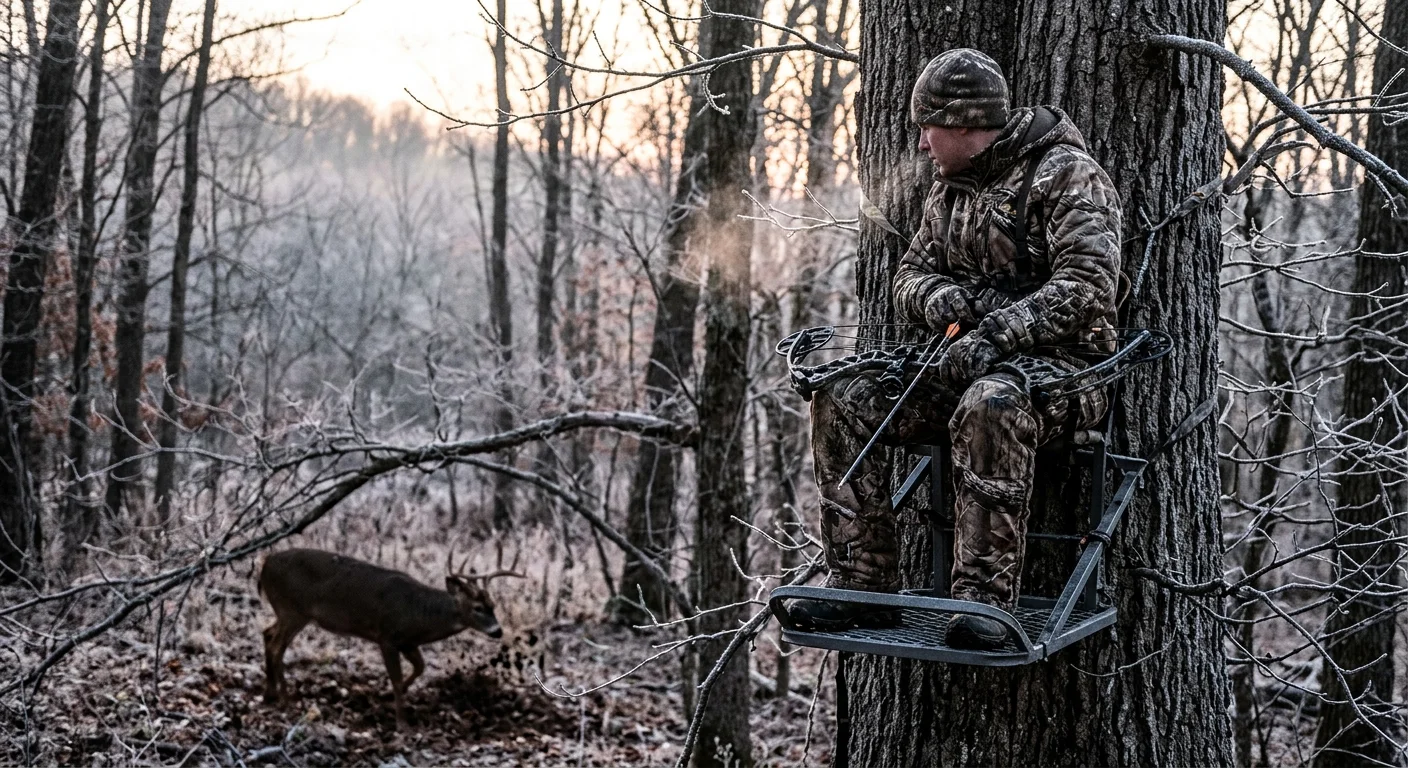
Deer don't see camo. They see contrast — and that gap matters most when you're 20 feet up a white oak with a mature buck working a scrape line at 18 yards.
In hardwoods and timber, the visual challenge is clear: dark trunks, broken bark texture, and heavy shadow gaps. Your camo needs to read like a tree, not a field edge. Patterns built on lighter tones and tall vertical grass shapes are made for open meadows and farm edges. They work against you the moment you hang a stand in leafy canopy or shaded creek bottoms.
The selection rule is simple: darker base tone + bark-like irregular breakup + strong shadow contrast. That mix hides your outline against the trunks and understory surrounding every whitetail treestand setup.
Both Badlands and First Lite get this right. Their timber-focused patterns share the same core logic — mimic leaves, bark, and shadow rather than grass and sky. Neither brand holds a clear edge over the other on pure pattern science in eastern hardwoods.
Where the decision splits is by hunting style:
Bowhunting in tight timber — pattern detail and silhouette breakup matter a great deal at 15–25 yards. Go with the darkest, most bark-heavy option either brand offers.
Rifle or shotgun hunting — at longer distances, exact pattern detail becomes secondary. Muted color matching and weather protection carry more weight than precise leaf structure.
For late-season leaf-off stands or flooded timber, a solid dark outer layer often beats busy camo outright. Against gray bark and shadow gaps, low visual contrast wins over pattern complexity every time.
Head-to-Head Performance Scorecard for Whitetail Stand Hunters
Seven performance categories. Two brands. One clear framework for your decision before you spend a dollar.
Performance Category | Badlands | First Lite | Edge |
|---|---|---|---|
Scent Control | 7/10 | 9/10 | First Lite |
Warmth (Static Cold) | 8/10 | 8/10 | Tie |
Waterproofing | 9/10 | 6/10 | Badlands |
Silence | 6/10 | 9/10 | First Lite |
Durability | 9/10 | 7/10 | Badlands |
Layering Versatility | 6/10 | 9/10 | First Lite |
Price-to-Performance | 8/10 | 7/10 | Badlands |
Overall Whitetail Treestand Score: First Lite 55/70 — Badlands 53/70
The scores are close. Still, three categories stand out for fixed stand hunters — silence, scent control, and layering flexibility. First Lite wins all three. Badlands scores high in durability and rain protection. Those strengths matter more on mobile hunts or mixed terrain than on a treestand.
Choose Badlands — budget control and strong waterproofing are your top needs. Choose First Lite — you hunt mature whitetails from a fixed stand and every small sensory advantage matters.
Real Hunter Reviews: What Badlands and First Lite Users Say in the Field
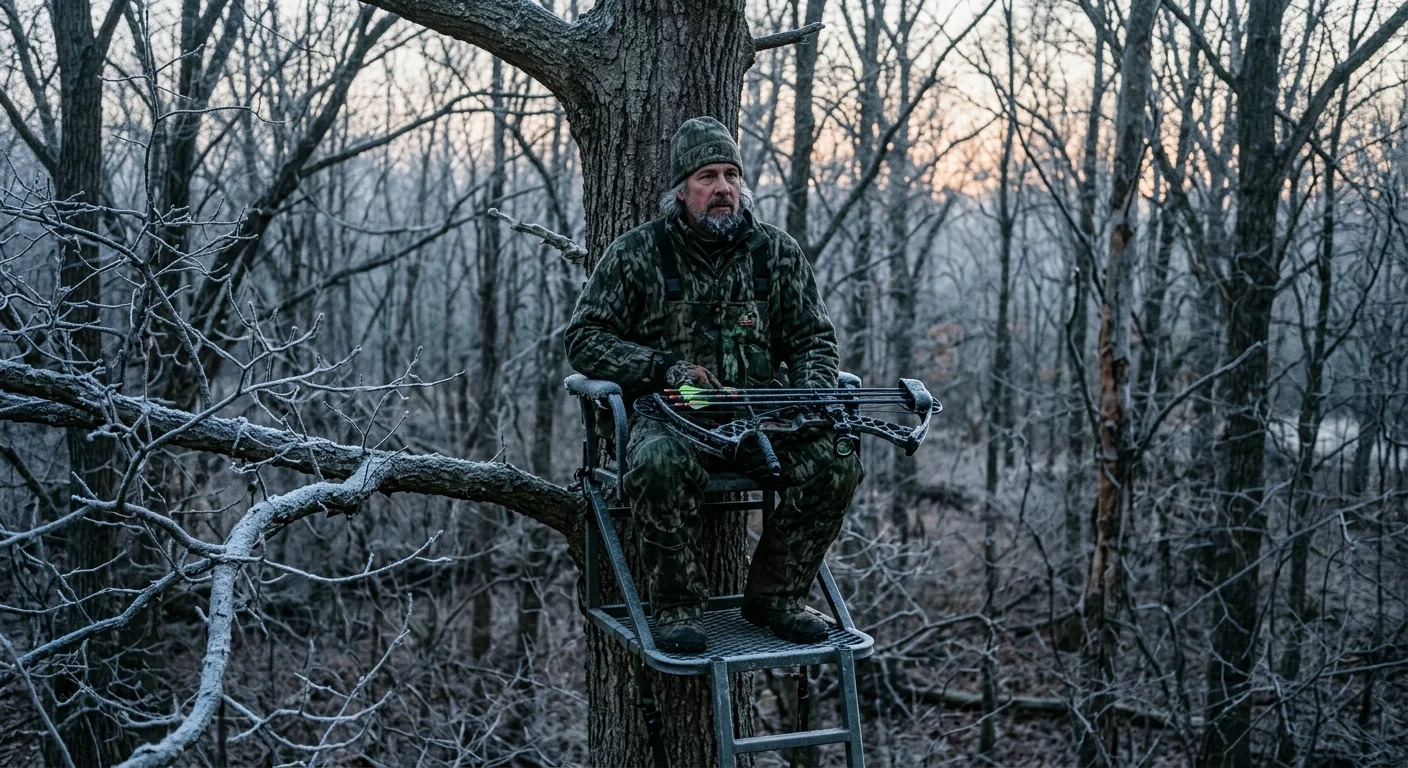
Specs on paper don't sit in a treestand at 28°F for six hours. Hunters do — and their field reports tell a different story than any product description.
What Badlands Users Report After Seasons of Real Use
The word that shows up most in long-term Badlands reviews isn't "warm" or "quiet." It's durable . One hunter has run Badlands gear since 2009 — over a decade of climbing sticks, briars, and saddle platforms — and still calls it gear that "takes a beating." That kind of track record changes how Badlands users think about value. The lifetime warranty isn't marketing copy to them. It's the reason they accepted a coarser feel in the base layers.
On the Pecora merino: hunters describe it as warm and functional, but not fine-feeling . Many users have moved it to a mid-layer role rather than next-to-skin. They prefer a softer liner underneath. The Rise Pro outerwear earns steady praise for being "very quiet brushing against bark and harness straps" — good enough for bow draws at 20–30 yards on pressured deer. That said, hunters note it falls short in a prolonged downpour.
One honest critique comes up again and again: Badlands runs warm on the walk-in. Above 40°F with more than a mile of ground to cover, mid and outer layers become a problem before you even reach your stand.
What First Lite Users Report After Seasons of Real Use
First Lite hunters lead with softness and scent life before anything else. Multiple reviewers report 3–4 days of back-to-back treestand use on the Kiln or Furnace base with "almost no smell." That's a sharp contrast to synthetic layers that get noticeable after a single all-day sit. In 30–60°F active whitetail conditions, that difference is real and repeatable.
The Core Whitetail Kit earns specific praise for stand-hunting details that Badlands doesn't match:
Magnetic bib access ports — warm your hands at sub-30°F sits without fumbling with zippers
Bow-string-safe collar cut — hunters report zero string slap with the collar zipped all the way up
Full-length side bib zippers — dump heat on the walk-in, then seal back up at the base of the tree
The criticism is just as consistent: durability at the price point . Hunters who run First Lite through saddles and rough bark report face fabric pilling and seam wear after 2–3 hard seasons. Forum threads keep asking the same question — "Is First Lite still worth the money?" — and the answer almost always points to merino base layers as a clear yes. Certain outerwear pieces draw more skepticism.
Sizing is worth noting too. First Lite's slimmer cut leads saddle hunters to size up one when layering over a full harness and mid-layer. Badlands' roomier torso cut runs true to size under the same setup.
The Honest Bottom Line From Real Users
Both brands have built loyal, long-term followings — just for different reasons. Badlands users stay for durability and value. First Lite users stay for scent performance and treestand-specific design. Neither group is wrong. They're chasing different priorities in the field.
Price and Value Analysis: Getting the Most from Your Whitetail Hunting Clothing Budget
Sticker price is the wrong number to focus on. The number that matters is cost per season. That one shift changes how Badlands and First Lite compare.
What a Complete Whitetail System Costs
A full layering system — base, mid, and outer — costs more than most hunters expect before they start shopping:
Budget system (mix-and-match brands, off-season sales): $300–$500
Mid-range system (one or two premium pieces, rest value-tier): $500–$700
Flagship system (First Lite or Sitka top-to-bottom): $1,100–$1,600+
First Lite sits in that flagship band. A merino base set runs $180–$240 . A technical mid-layer adds $120–$200 . Premium pants hit $200–$300 . A flagship insulated jacket lands around $350–$450 . Add a shell and you're at $1,200–$1,500 before accessories.
Badlands comes in 10–20% lower across most categories. That gap grows even wider once you factor in the warranty.
The Warranty Math Nobody Runs
Badlands backs their apparel with an unconditional lifetime warranty. Defects and damage get repaired or replaced at no cost beyond shipping. That flips the cost-per-season math completely:
Scenario | Initial Cost | Seasons | Total Spend | Cost/Season |
|---|---|---|---|---|
First Lite jacket (no lifetime warranty) | $400 | 5 | $400 | $80/season |
Badlands jacket (lifetime warranty, 1 repair) | $320 | 10 | $340 | $34/season |
That's 57% lower cost per season — even if Badlands trails First Lite on scent performance and layering precision. Price them the same at $400? Badlands still lands at $42/season versus $80. The warranty-driven lifespan cuts the number in half.
Longtime Badlands users don't treat the lifetime warranty as a marketing footnote. It's the reason they accepted a coarser base layer feel and a less refined layering system without much complaint.
Which Budget Tier Should You Be Building For?
Under $300 — Build around function, not brand names. A non-cotton base set ($70), a fleece mid-layer ($50), budget camo pants ($40), and a solid insulated jacket ($90) builds a complete, functional system for around $275 . Sites like Camofire move prior-season gear at 30–60% off MSRP on a regular basis. Pattern-matching camo is not worth a premium at this budget.
$300–$600 — Put your best dollars at skin contact. Invest in one premium merino base set ($120–$180) and let the outer layers be the compromise. Pick up a Badlands insulated jacket at 25–40% off during off-season sales. That single move gives you far better lifetime value than a full First Lite system spread too thin.
$600+ — Think in seasons, not purchases. At this tier, pair Badlands outer shells with lifetime warranty coverage with a premium base from First Lite or Sitka. You get First Lite's merino scent performance where it counts most — next to skin. You also get Badlands' warranty protection on the pieces that take the hardest beating from climbing sticks, saddles, and rough bark.
The Practical Verdict on Price
First Lite is worth the money on base layers. The merino quality, scent life, and treestand-specific design details justify the price for most multi-season hunters.
Badlands wins on lifetime system value — at the outer shell and insulation layer. Fewer replacements. Simpler warranty claims. Lower cost per season by a wide margin.
The smartest whitetail hunting clothing budget isn't built around one brand. It's built around knowing which layers earn premium dollars — and which ones earn a warranty.
Best Scenarios for Each Brand: A Whitetail Hunter's Decision Guide
Every hunter's season looks different. The guy running 30+ days a year across whitetail timber, elk country, and public-land mule deer draws a different map than the guy who hangs three stands in October and hunts them hard until gun season closes. Neither approach is wrong. But the gear that wins in one situation can work against you in the other.
Here's how to match the brand to the hunt you're running.
Choose Badlands If You Hunt Like This
Your whitetail sits are part of a bigger picture. Maybe 40–60% of your season is treestand time. The rest is elk, turkey, or chasing mule deer through rough country that destroys lesser gear.
You push through briars and rock faces more than ten times a season. Your pack miles hit triple digits every year. You don't want to rebuild your kit every few years. You want one system that takes a serious beating and stays functional — backed by a lifetime warranty, not a replacement cycle.
Your single-sit treestand sessions run under three to four hours . You're not running the full scent-discipline protocol every time out. No sealed storage, no scent-free wash, no clothing change at the tree. You need gear that performs without demanding that kind of routine.
Budget benchmark: A complete Badlands three-layer system — jacket, pants, supporting layers — lands in the $500–$800 range . That's a real number for hunters who aren't ready to cross $1,000 before accessories.
Your decision priority stack looks like this:
- Durability: 40%
- Lifetime warranty coverage: 25%
- Versatility across species and terrain: 20%
- Silence and scent control: 15%
Badlands is built for that hunter. Not the one chasing every marginal edge on a mature whitetail — the one who needs gear that still works a decade from now after everything he's put it through.
Choose First Lite If You Hunt Like This
Whitetails are the obsession, not just part of the rotation. Seventy-five percent or more of your season is treestand or ground blind work in Midwestern hardwoods, Northeastern creek bottoms, or Southern agricultural edges. You're sitting four to eight hours at a stretch during the rut and late season. You're in before first light and you stay until the woods go dark.
Scent management isn't an afterthought — it's a pre-hunt system. You wash your kit in unscented detergent, store it sealed in the truck bed, and change clothes at the base of the tree. You've decided that merino base layers going two to four days between washes without building detectable odor is worth the premium price.
You hunt at bow range. Twenty to forty yards. At that distance, a fabric rustle or a string-slap collar can end everything. Silence sits at 25% of your purchase decision , right alongside thermal management. You're building a system — base, mid, outer — around long static sits in cold that drops into single digits by December.
Budget benchmark: A complete First Lite system runs $900–$1,500 depending on the tier you build. That's a five-to-seven-year investment, not a single-season expense. Some hunters build it over two seasons. Start with merino base layers — that's where First Lite earns its money most.
Your decision priority stack:
- Scent control: 30%
- Silence: 25%
- Layering system and thermal management: 25%
- Durability: 20%
The Hybrid Strategy: When Neither Brand Alone Makes Sense
There's a third path. For hunters in the $700–$1,100 range who want treestand scent performance without buying a full First Lite system, this is the sharpest move on the table.
Layer 1 — First Lite merino base (top + bottom): $150–$250
This is where First Lite earns every dollar. You get two to three consecutive treestand days with manageable odor. Fine-micron wool sits against your skin — and that's where scent control gets decided first.
Layer 2 — First Lite lightweight mid-layer (optional): $120–$200
Pull it on after the walk-in. Silent, warm, easy to vent during approach. Add this layer if your sits push past four hours in temperatures below 20°F.
Layer 3 — Badlands outer shell (jacket + pants): $350–$550
Let Badlands do what it does best — take the abuse, handle the rain, survive the drag, the briars, and the saddle platform friction. The warranty covers whatever the season throws at it.
Total system cost: $620–$1,000 . You get treestand scent performance close to an all-First Lite setup. Plus, the outer durability a pure First Lite system can't match at the same price point.
This isn't a compromise. It's a deliberate build — each brand doing the specific job it was designed to do.
Final Recommendation: Our Pick for Serious Whitetail Hunters
After all of it — the scorecard, the scent tests, the warmth limits, the warranty math — here's the straight answer serious whitetail hunters need.
70%+ of your season is treestand time at 15–35 yards: First Lite is your system. The merino base layers earn every dollar. The brushed outer shells keep you quiet at the moments that count. Start with the Kiln or Furnace base. That's where First Lite pulls ahead of everything else at this price point.
You're covering ground — public land, hang-and-hunt, 1–3 km walk-ins: The hybrid setup wins. First Lite merino at skin contact. Badlands outer shell takes the abuse. You keep treestand-level scent control. Plus, you get the durability a mobile season demands.
Your budget tops out at $300–$450: Keep it simple. A silent brushed outer layer plus a quality merino base covers most of your season. Add one layer at a time as the budget allows.
The brands are close. The hunt decides the winner.
Conclusion
Spend dozens of hours in the stand, and one truth stands out: there's no single "better" brand — just the brand that's better for you .
First Lite is the stronger pick for scent control and merino comfort. Your whitetail hunting clothing system runs best when odor management is the top priority. This brand is built for hunters who stay in the stand from first light to last. Staying odor-neutral isn't a bonus — it's the whole game.
Badlands earns its spot on raw durability and waterproofing. Budget headroom matters more to some hunters than premium fabric labels. This gear is honest and hardworking. It holds up when the weather gets rough and doesn't ask much in return.
The best hunting apparel layering system is the one you wear. Not the one collecting dust in your closet because you talked yourself out of the purchase. Gear that fits your budget and your style gets used. Gear that doesn't, doesn't.
Pick your scenario. Match your budget. Then go fill your tag.
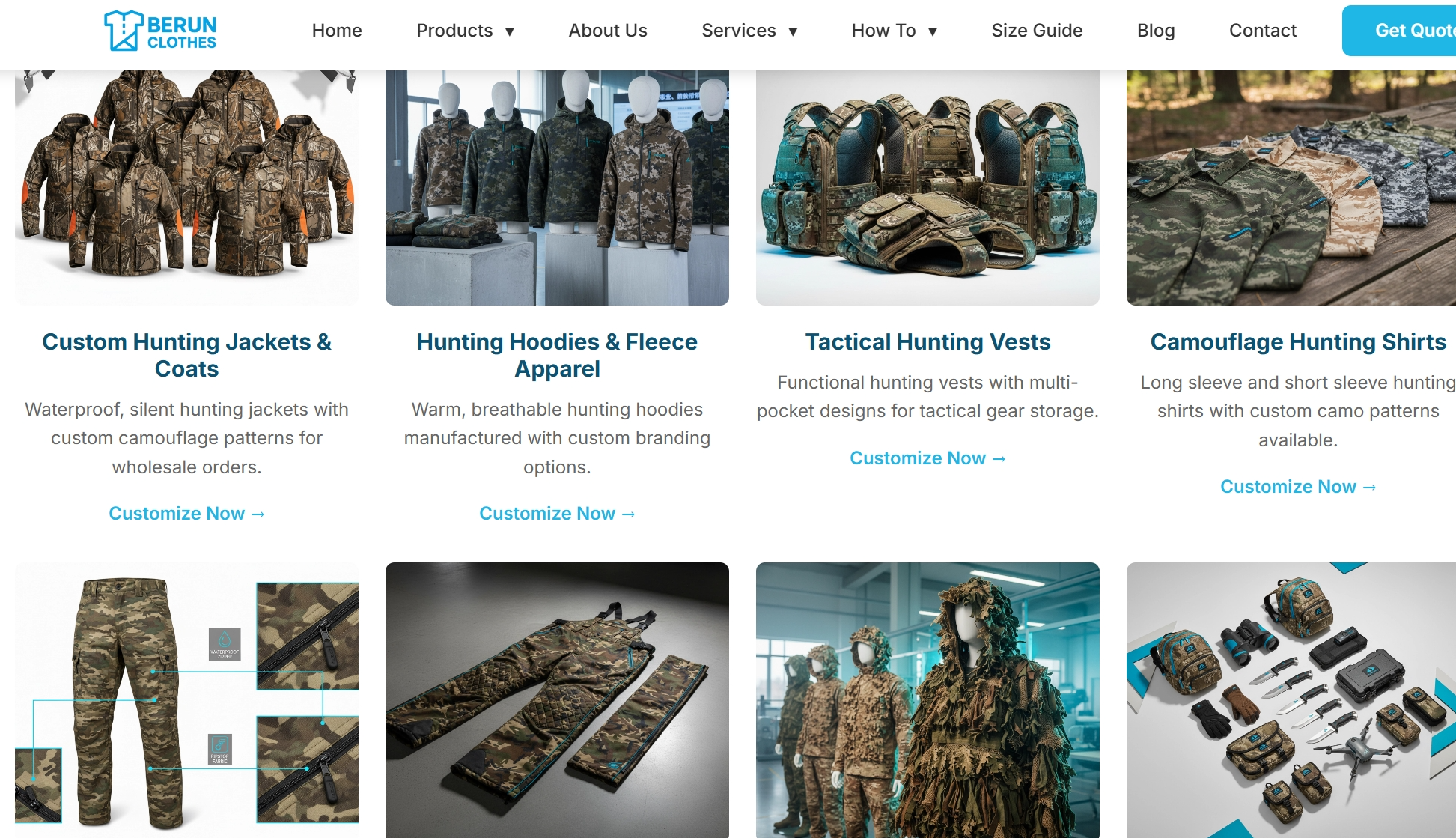
Browse the full whitetail gear guides at BerunClothes.com and stop guessing before the season opens.