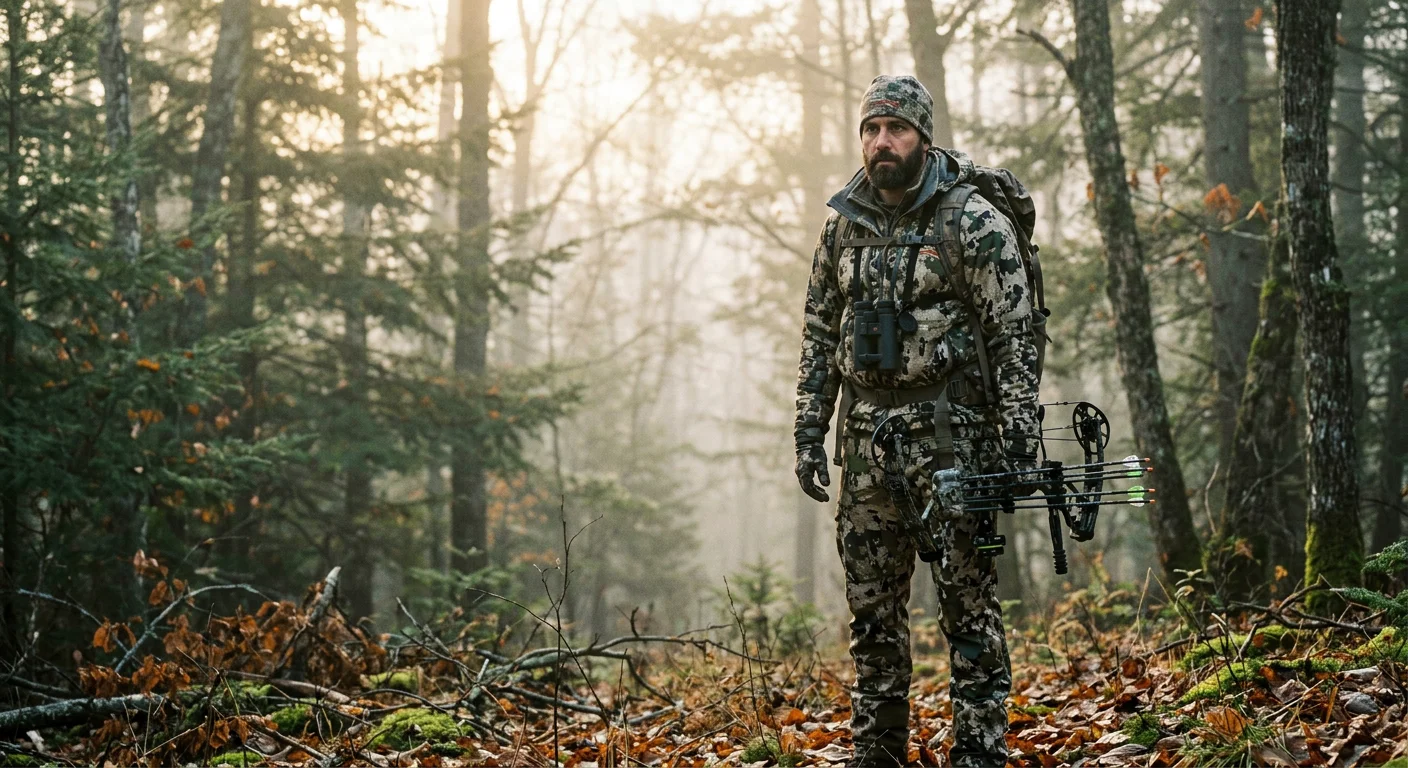
Most hunters have stood in the gear aisle — or scrolled through page after page online — frozen by the same question: does it matter whether I wear camo or solid color into the field? Leading custom camouflage hunting apparel manufacturers often promote pattern-based solutions, but the honest answer is more layered than the hunting industry wants you to believe.The honest answer is more layered than the hunting industry wants you to believe.
Yes, camo patterns have their place. But solid color hunting clothing has been the go-to choice of experienced hunters for generations. The science of how deer, turkey, and waterfowl perceive color may change how you think about your next hunting outfit.
Gearing up for deer season on a tight budget? Need to stay legal with blaze orange requirements? Or just tired of paying a premium for camo you may not need? What follows cuts through the noise and gives you a clear, practical answer.
Camo Hunting Clothing: Where It Excels (And Where It Doesn't)
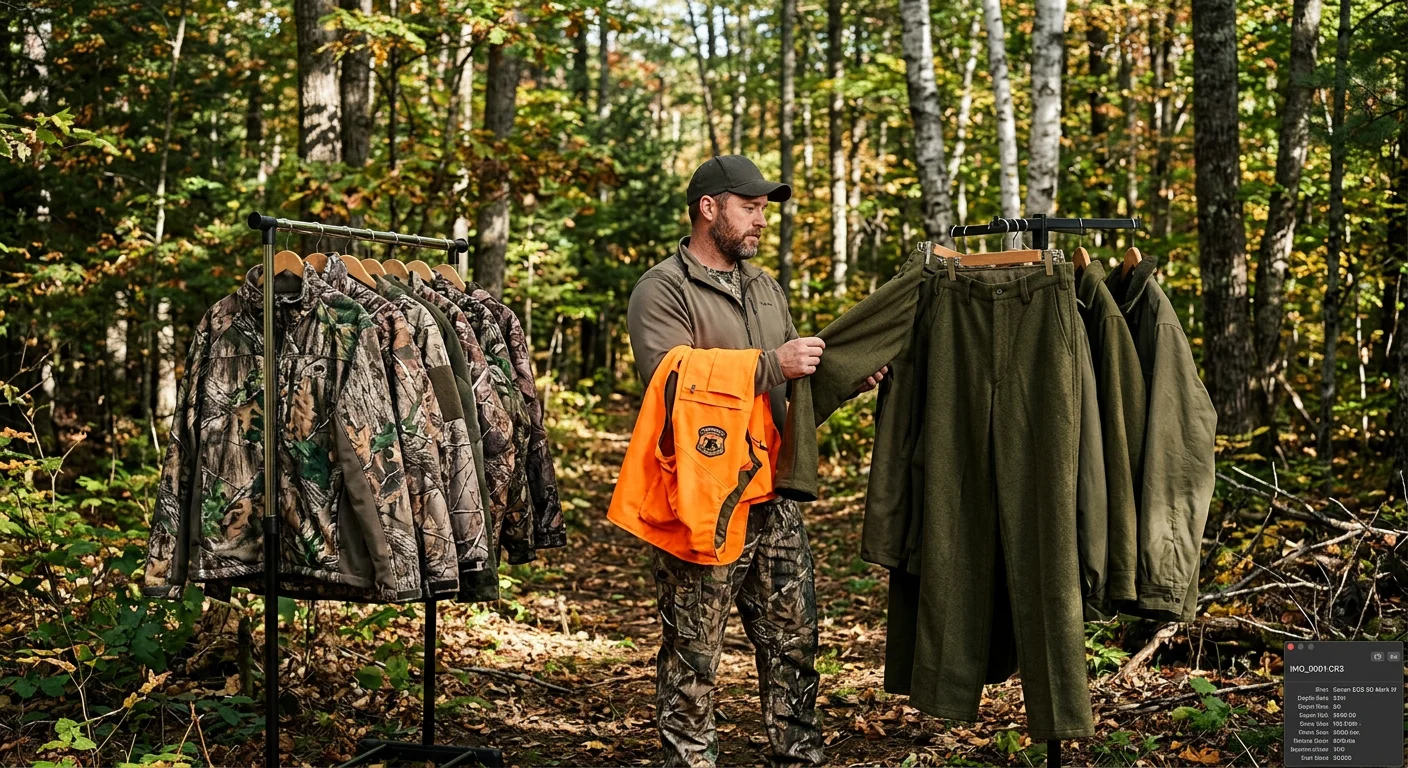
Camo works — but only when matched to the right terrain, the right season, and the right distance.That’s why many brands and OEM/ODM hunting wear solutions for different terrains focus on environment-specific pattern development rather than one-size-fits-all designs.
That caveat matters more than most hunters realize. The hunting industry sells camo as a universal solution. It isn't. Camo is a specialized tool. Like any specialized tool, it delivers in the right conditions and falls flat in the wrong ones.
Where Camo Earns Its Keep
Close-range hunting is where camo patterns justify every penny. Tree stands, bowhunting setups, dense woodland approaches — these are the situations where it shines. You're within 100 yards of your quarry, and every visual edge counts. In tight timber, a good forest pattern breaks your silhouette against layered foliage. Solid color can't do that. Greens, browns, and blacks blend into early-to-mid season whitetail and elk habitat with no effort.
Pattern-to-terrain matching is the real skill:
Pattern Type | Best Use | Key Tones |
|---|---|---|
Forest/Timber | Dense woods, tree stands, early whitetail | Greens, browns, blacks |
Open-country | High desert, arid plains, alpine | Tans, grays, muted brush |
Transitional/Universal | Mixed terrain, variable light | Neutral, multi-directional break-up |
Snow | Winter and high-elevation hunts | White base, gray/brown overlays |
Where Camo Lets You Down
Put dark forest camo on in open sandy scrubland and you've done the opposite of hiding. Mismatched patterns can push your visibility up by 50–100% compared to wearing a solid neutral tone that fits the landscape.
Season mismatch hits just as hard. That dark brown pattern built for late November Illinois whitetail? It becomes a liability on a spring turkey hunt surrounded by fresh green growth. You stand out instead of blending in.
The lesson isn't that camo is bad. It's that the wrong camo is worse than no camo at all.
Solid Color Hunting Clothes: The Underrated Option Serious Hunters Use
Here's something the camo industry doesn't want you to think about: SITKA Gear, Huntworth, Skre Gear, and TUO Gear all offer dedicated solid color lines. These are brands serious hunters trust. That's not a coincidence.
These aren't budget fillers. Each solid color line is a deliberate product decision. Many experienced hunters and retailers turn to solid color hunting clothing suppliers for versatile environments, recognizing the flexibility these neutral tones provide across seasons and terrains.These companies know their buyers well.
That should tell you something.
The Colors That Work
Experienced hunters have settled on a short list of proven tones:
Browns — tan and warm brown shades that disappear into late-season timber and dried grass
Greens — olive and forest tones built for spring turkey and early-season whitetail
Greys — versatile across open terrain and overcast mountain conditions
White — purpose-built for snow hunting, where pattern adds nothing
The core principle is simple: softer, neutral earth tones outperform bright shades in most field situations. You're not trying to match a specific pattern of bark or leaf. You're trying to avoid looking like a human silhouette. Browns, greens, and greys handle that job. They work across mountains, forests, and open ground. You won't need to swap kits every season.
One Kit, Multiple Missions
Camo gear rarely gives you real versatility. Solid color does. Skre Gear's Hardscrabble jacket in Ash Brown doesn't scream "hunting gear" walking through a trailhead parking lot. Huntworth's earth-tone pieces work as everyday layering. They also pull full duty as field-ready concealment.
That low-profile quality matters. The less your gear stands out, the more options you have — in the field and out of it.
Just because it isn't camo doesn't mean it doesn't belong there.
Head-to-Head Comparison: Camo vs Solid Color Across Key Hunting Factors
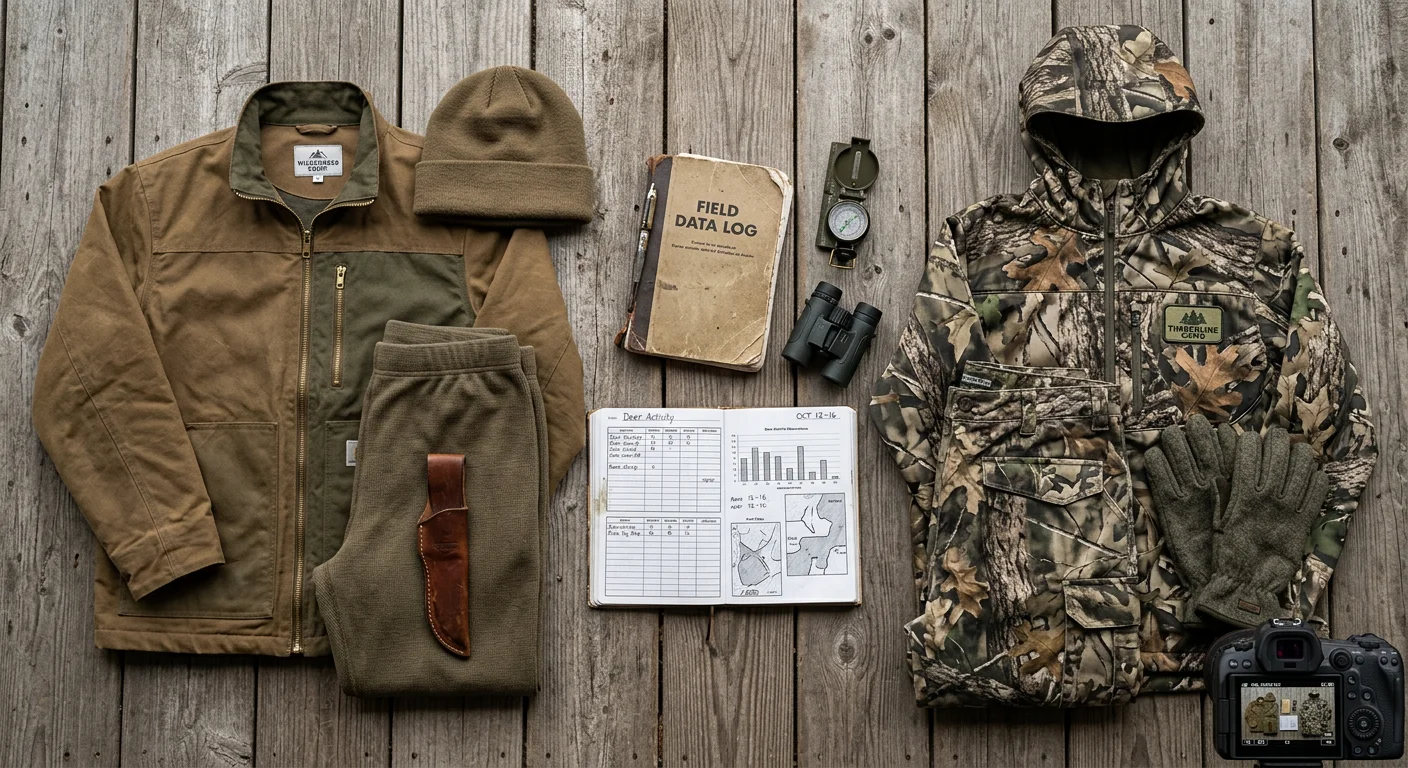
Cut through the brand marketing and campfire opinions. What's left is data. For retailers and outfitters, wholesale performance hunting clothing for professional hunters makes it easier to stock both camo and solid options that meet different field requirements.Here are the factors that decide whether you fill a tag or drive home empty.
Factor | Camo | Solid Color | Verdict |
|---|---|---|---|
Concealment | Breaks outline, disrupts shape recognition | Creates contrast blocks, amplifies movement | Camo wins |
Game Suitability | Matches deer's blue/yellow vision spectrum | Easier for deer to detect as a defined shape | Camo wins |
Terrain Fit | Pattern fits specific environments; strong in dense woodland | Works inside blinds; struggles across varied terrain | Camo wins (open woods) |
Safety Compliance | Camo orange: 21% less detectable to other hunters | Solid orange: 79–91% more visible to humans | Solid wins |
Movement Concealment | Reduces silhouette notice at distance | Amplifies movement contrast on the move | Camo wins |
Versatility | Locked to one terrain and season | One kit works across seasons and landscapes | Solid wins |
What the Numbers Say About Hunter Safety
Solid blaze orange is not a style choice. It's a survival stat. In controlled field tests at 100 yards, human observers detected solid hunter orange 79% more often than camo orange. Extended viewing pushed that number to 91% . The statistical significance was sharp: P<0.0005. That's not a small edge. That's a completely different level of visibility.
Camo orange may meet the legal requirement in many states. Solid orange is what keeps you from getting shot.
The Factor Most Hunters Overlook
Both camo fans and solid color defenders make the same mistake. They argue about clothing. The real variable is behavior.
Deer detect movement first . Color and outline come second. Wind direction and staying still decide whether a deer bolts — not the pattern on your jacket. Clothing accounts for an estimated 5–10% of your overall success rate . That's it.
A hunter sitting dead still in a $40 solid olive jacket, wind in his face, will beat the hunter in a $300 premium camo kit who fidgets, checks his phone, and hunts with the wind at his back. Every time.
The Smart Play: Mix Both
Combine the strengths of each. Start with a camo base layer to break your outline and reduce deer-level detection. Then add a solid blaze orange vest on top for human safety and legal compliance. Take it off once you're settled in a blind and movement stops.
Cover exposed skin with a face mask and gloves. Bare skin shows up against any background — camo or solid. A deer's eye picks it up fast.
Neither system wins across the board. The hunter who knows which one to use and layers them based on the situation has already answered the question everyone else keeps debating.
Hunting Clothing Color Guide by Game & Terrain (Scenario-Specific Recommendations)
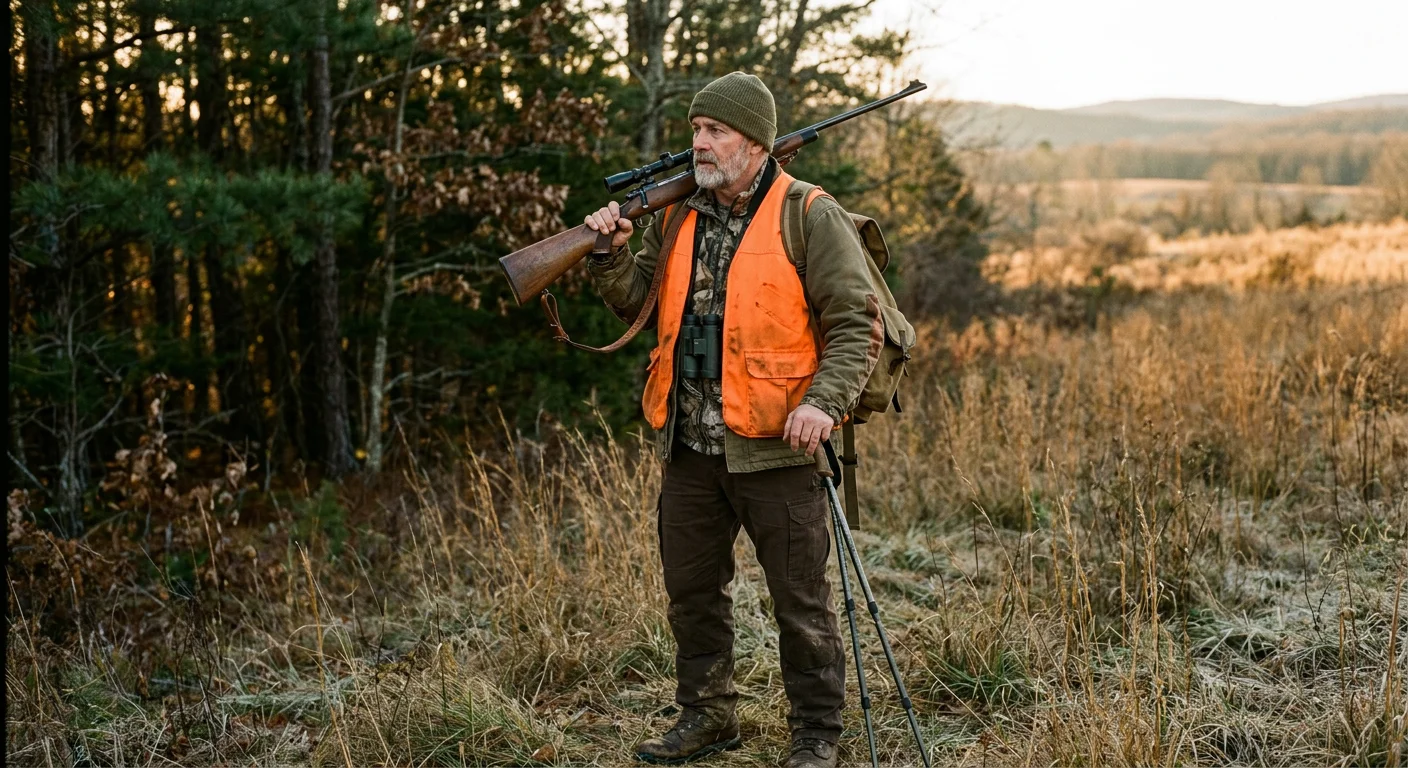
Different game. Different terrain. Different answer. That’s the framework serious hunters use — and it holds up in the field. Many brands now develop private label camo and neutral-tone hunting apparel to address these scenario-specific needs across diverse hunting environments.That's the framework serious hunters use — and it holds up in the field.
Whitetail Deer Season: Forest & Brush
Woodland camo earns its keep here. Dense timber, layered canopy, close quarters — this is the environment camo patterns were built for. Bowhunters working within 40 yards need every visual edge they can get. Photorealistic patterns — pine bark textures, needle clusters, shadow breaks — break up your outline against the canopy. No solid color can do that.
Tree stand hunters should go with SITKA Subalpine or similar greens-browns-grays blends. For ground stalking in heavy cover, darker Deep Cover patterns work best. They pull in light instead of bouncing it back.
One firm rule: avoid blue, black, and pure white in deer country. Deer vision picks up blue-spectrum tones fast. Those colors give you away quicker than movement does.
Rifle hunters at distance have more room to work with. Solid tan, gray, or olive holds up at longer ranges in sparse brush. Deer may spot your outline, but they won't come closer to check.
Turkey & Waterfowl: Close-Range, High-Consequence Game
Turkey hunting is the one situation where full camo is non-negotiable. Turkeys see in full color. They have near-360-degree vision and close the gap fast. Pull every visual trick you have. Skip the blaze orange — unless you're moving between setups. Check your local regulations either way.
Waterfowl hunting in marsh environments works the same way. Deep Cover or wetland-specific patterns — dark greens, browns, blacks — blend into cattails and reed beds at close range.
Western Elk & Mule Deer: Open Highland Country
Above the treeline, the rules flip. Open-country camo built on gray, tan, light brown, and muted sage blends into rocky slopes and high desert flats. Abstract neutrals break your silhouette against sky and stone.
Here's what rifle hunters need to know: at 200-plus yards, solid neutrals perform as well as any camo pattern. Mix tan and gray layering pieces to avoid a uniform silhouette. Stay away from head-to-toe monochrome — that's what turns you into a clear shape on a bare ridgeline.
Snow & Winter Conditions: White Wins
Snow terrain settles the camo debate. Woodland patterns become a liability. Dark browns and greens stand out against a white background like a neon sign. Purpose-built snow camo uses white base tones with subtle brown accents to mimic snow-covered deadfall and rock. In wide-open white terrain, solid white works just as well — at a fraction of the cost.
Quick-Reference Terrain Chart
Terrain / Game | Best Approach | Key Colors | Effective Range |
|---|---|---|---|
Forest / Whitetail | Woodland camo | Greens, browns, blacks | <40 yards (bow) |
Open Highlands / Elk, Mule Deer | Open-country camo or solid neutrals | Gray, tan, sage green | Long-range rifle |
Marsh / Waterfowl, Turkey | Wetland camo, full coverage | Dark greens, browns | <40 yards |
Snow / Winter | Snow camo or solid white | White + brown accents | All ranges |
Grasslands / Upland | Grassland pattern or tan solid | Golden tan, vertical tones | Open fields |
The pattern on your jacket matters far less than matching your color palette to the terrain you're hunting. Get that right first. Everything else is fine-tuning.
Blaze Orange & Hunting Safety Regulations: What Every Hunter Must Know
Blaze orange isn't a suggestion — it's the line between a successful season and a tragedy.To meet safety standards while maintaining durability, many durable and weather-resistant hunting gear manufacturers integrate high-visibility fabrics into performance-focused hunting systems.
Every year, hunters get shot by other hunters. Not because of bad luck. Because they weren't visible. Knowing your state's requirements isn't bureaucratic box-checking. It's the most practical safety decision you'll make before stepping into the woods.
What the Law Requires
State requirements differ — a lot. "I thought 200 square inches was enough" won't hold up after an incident. Here's a quick look at how wide the variation runs:
Alabama : 144 sq in of solid blaze orange — camo orange doesn't count here
Arkansas : 400 sq in plus a hat; ground blinds need 144 sq in per side
Florida : 500 sq in on public land; bowhunters on private land are exempt
Colorado : 500 sq in — and also allows fluorescent pink as an alternative
Maine : Two separate pieces required — one on the head, one covering the torso, visible from all sides
Texas : Public land hunters need 400 sq in including a hat, or 144 sq in each on chest and back
The 400 sq in vest plus hat combo — the standard kit at most hunting retailers — meets the requirement in Arkansas, Delaware, and Texas. It's a solid baseline. Maine and Florida demand more. Alabama requires solid orange, not patterned. Know which state you're hunting in before you pack.
The Deer Vision Factor
Here's what keeps many hunters up at night: will blaze orange blow my cover?
It won't. Deer are dichromats. Their eyes pick up blue and green wavelengths well. The red-orange spectrum — around 495–570 nm — they can't see. Blaze orange peaks near 590 nm. To a deer, your orange vest looks greenish-gray against the foliage. Not alarming. Not exposed. Just part of the landscape.
Blaze orange isn't meant to hide you from deer. It's meant to be visible to the other hunter 150 yards away who has no idea you're there.
Camo Orange: A Workable Middle Ground (With One Exception)
Camo blaze orange is orange fabric printed with a breakup pattern. It balances legal compliance with field concealment. Most states count it as blaze orange, as long as the required square inches of solid orange panel stay visible. Deer still can't tell it apart from foliage. Other hunters can still spot you.
A practical layering setup that works across most states:
Solid blaze orange cap (full coverage) + camo orange vest with 400+ sq in chest and back panels
Camo orange jacket with solid orange torso panels visible on all sides + camo pants
Inside a ground blind: 144–200 sq in camo orange per side (meets AR, NJ, and IA blind requirements)
One hard exception: Alabama bans camo orange outright. Solid only. Don't assume your multi-state kit covers you in every state — check first.
Tracking a wounded animal? Keep the full orange kit on. Wisconsin requires it by law. Other states don't. Either way, keeping it on is a smart habit worth building.
The Real Winner Depends on Your Hunt: A Practical Decision Framework
Four variables settle this debate. Not opinion. Not brand loyalty. Four variables.
Prey type and movement style come first. Bowhunters stalking to within 30 yards need terrain-matched camo — full stop. Stand hunters and blind hunters don't. The structure does the concealment work. A solid earth tone handles the rest.
Effective range comes second. Field testing confirms that beyond 50 meters, the human eye — and the deer's eye — can't tell a pattern from a solid tone. The color value matters. The pattern stops mattering. Pricey camo gives you nothing at distance that a well-chosen solid brown or gray doesn't already cover.
Terrain and season come third. Wrong camo is worse than no camo. A dark forest pattern in open prairie turns you into a silhouette. Solid muted tan or sage melts into that same landscape. Late season with bare trees? Solid gray-brown beats mismatched October timber camo. Every single time.
Budget comes last — but it's not trivial. Scent control, quality boots, and good glass will lift your success rate more than the pattern on your jacket ever will.
Here's the decision table that cuts through everything else:
Your Situation | What to Wear |
|---|---|
Bowhunting / stalking, sub-30m | Terrain-matched camo |
Stand or blind hunting, any range | Solid earth tone |
Open terrain, 50m+ shots | Solid muted neutral |
Dense hardwood, active stalk | Bark/leaf pattern camo |
Early season, green canopy | Solid olive or brown-green |
Late season, bare trees or snow | Solid gray-brown or white |
First season, tight budget | Solid color — start here |
Waterfowl / marsh | Wetland pattern camo |
One principle holds across all of it: camo is an aid, not a magic shield. Natural cover — brush, trees, rock — does the heavy lifting. Camo helps at the edges. So does solid color, as long as the terrain and range are right.
Building your first kit? Start simple. Grab a solid earth-tone jacket and pants in a mid-value tone. Add a face mask, scent control, and solid natural cover habits. Those four things will take you far. Switch to terrain-specific camo after you've hunted enough to know your ground — and what pattern that ground actually calls for.
FAQ: Hunters' Most Common Questions Answered
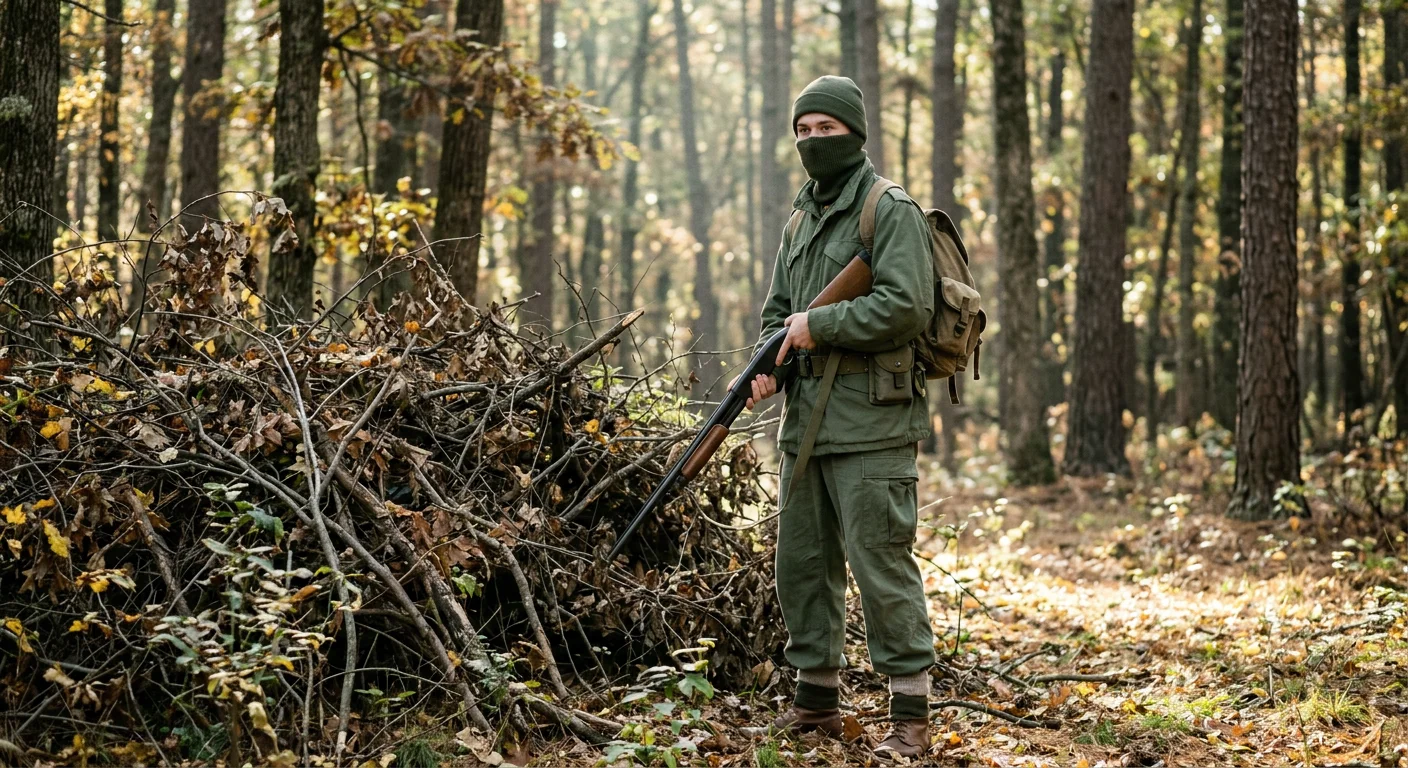
Six questions come up every season without fail. Here are straight answers — no filler, no gear-aisle sales pitch.
Can deer see blaze orange?
No. Deer are dichromats. Their eyes pick up blues and greens well, but the orange-red spectrum is invisible to them. Blaze orange — peaking near 590 nm — shows up as a washed-out grayish-yellow against foliage. To a deer, your orange vest isn't a warning sign. It's just another muted shape in the tree line. What deer do detect is movement. That's the real threat. Wear your orange without guilt.
Will military camo work for deer hunting?
It'll work. MultiCam and similar military patterns hold up in mixed hardwood terrain. Hunters have filled tags wearing nothing else. The gap shows up in specialized situations. Military patterns aren't built around whitetail or turkey habitat. They also struggle in open-field conditions where natural earth tones do better. Pair any military pattern with solid scent control. That covers the most important variable.
What color should I wear during deer season?
Blaze orange — at least 400 square inches — for any firearm season. That's not optional in most states. New York, Pennsylvania, and dozens of others require it. Colorado now accepts fluorescent pink as a legal alternative too. Camo underneath is fine. Full head-to-toe camo with no orange during gun season is how hunters get shot. The deer can't see the orange. The hunter 150 yards uphill can — clearly.
Is camo better than solid color?
Only in the right conditions. Terrain-matched camo beats solid color in close-range, dense-cover situations. Think bowhunting inside 40 yards, deep timber stalks, tight tree stand setups. Past 50 meters, the advantage disappears. A solid muted brown or olive looks the same to a deer's eye as a breakup pattern does. So stop overspending on pattern-specific gear. Put that money into scent control and field craft instead. Those two things are what move the needle.
Do you need decoys or a dog for duck hunting?
Decoys aren't required, but the numbers make a case for them. A standard spread of 12 to 24 decoys pulls in two to three times more birds than hunting without them. For a dog, a trained retriever recovers more than 70% of crippled birds that would otherwise be lost in water. Labs carry the mail. Neither tool is mandatory. Both earn their keep.
How do you get permission to hunt private land?
Start with the Onyx Hunt app to identify landowners. Then write — a short, respectful letter or email goes further than a cold knock on the door during hunting season. Offer something concrete: help with food plots, fence maintenance, or predator control. Show up offseason when the pressure is off. Bring references if you have them. The success gap between private and public land hunting sits at 80% versus 30%. Putting in the effort to earn access pays for itself fast.
Conclusion
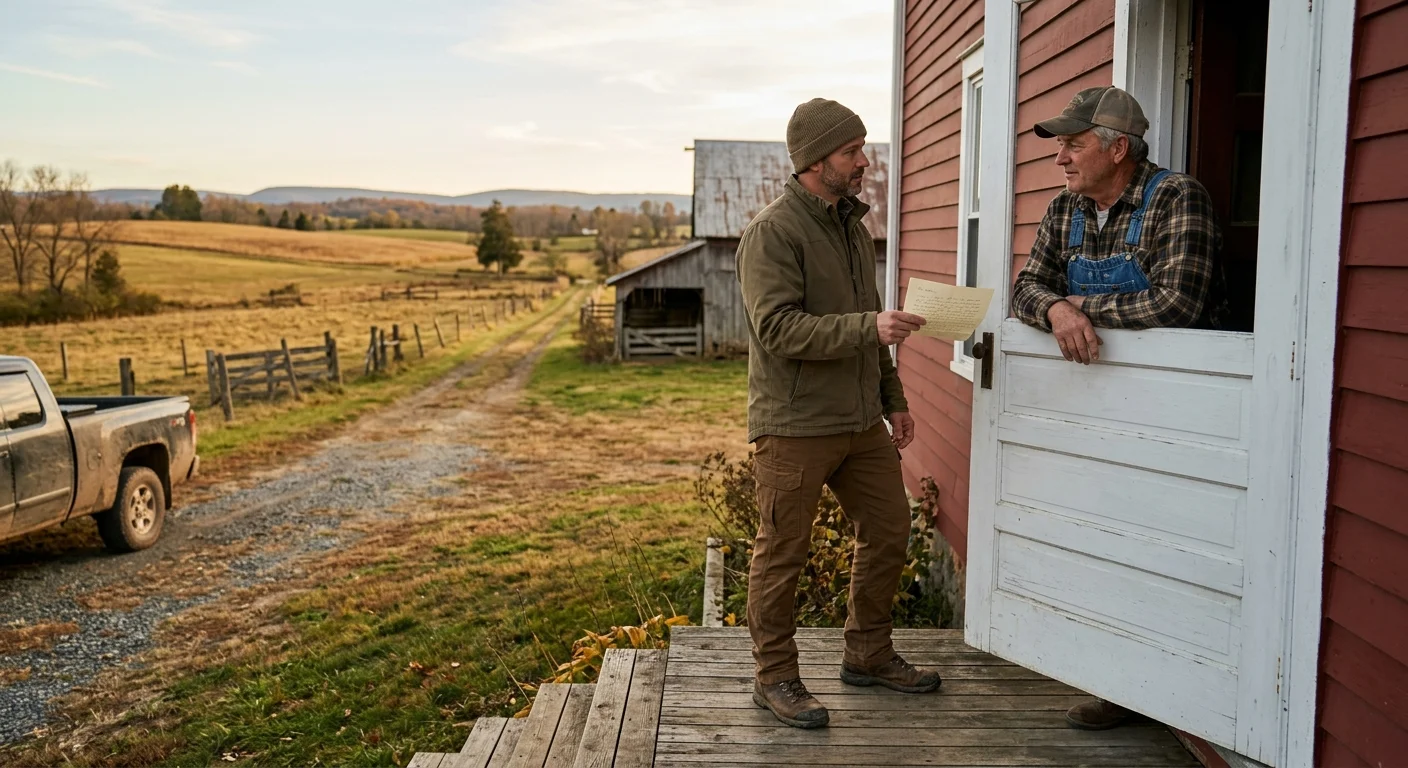
The camo-versus-solid debate has a simpler answer than the gear industry admits. The best hunting clothing fits your hunt, follows your local regulations, and doesn't drain your wallet before you reach the stand.
Deer aren't fooled by a $300 mossy oak jacket. They're fleeing your scent and your movement — not your pattern. Turkeys are different. They rely on sharp eyesight, so concealment matters a lot more. Know your quarry. Know your terrain. Check your state's blaze orange rules. Once you do, the right choice gets clear fast.
Here's the bottom line: solid color hunting clothes aren't a step down. For most hunters, most of the time, they're the smarter pick.
Ready to gear up for next season without the headache? Browse berunclothes.com — hunting apparel built for real use, at a price that leaves more in your pocket for tags, fuel, and the hunt itself.