Somewhere around age 13, millions of kids walk off a field, court, or pool deck — and never come back. Not because they got injured. Not because they weren' T good enough. But because somewhere along the way, the thing that was supposed to be fun stopped being fun.
But because somewhere along the way, the thing that was supposed to be fun stopped being fun. Many youth programs now partner with custom kids sportswear suppliers to provide apparel that enhances comfort, mobility, and enjoyment for young athletes.
The numbers are hard to ignore. Close to 70% of kids quit organized sports by the time they hit their early teens. That's not a small blip. It's a system-wide breakdown playing out one burned-out kid at a time.
The reasons aren' t simple. They're messy, human, and — here's the part that matters — mostly preventable. Most parents and coaches just don't see it coming.
What you'll find below is a close look at the real forces pushing kids out of sports. We're talking burnout, parental pressure, the trap of specializing too young, and toxic team culture. More than that, you'll find concrete things anyone who cares about a young athlete can do to change the outcome.
#1 Reason Kids Quit Sports: "It's Not Fun Anymore"
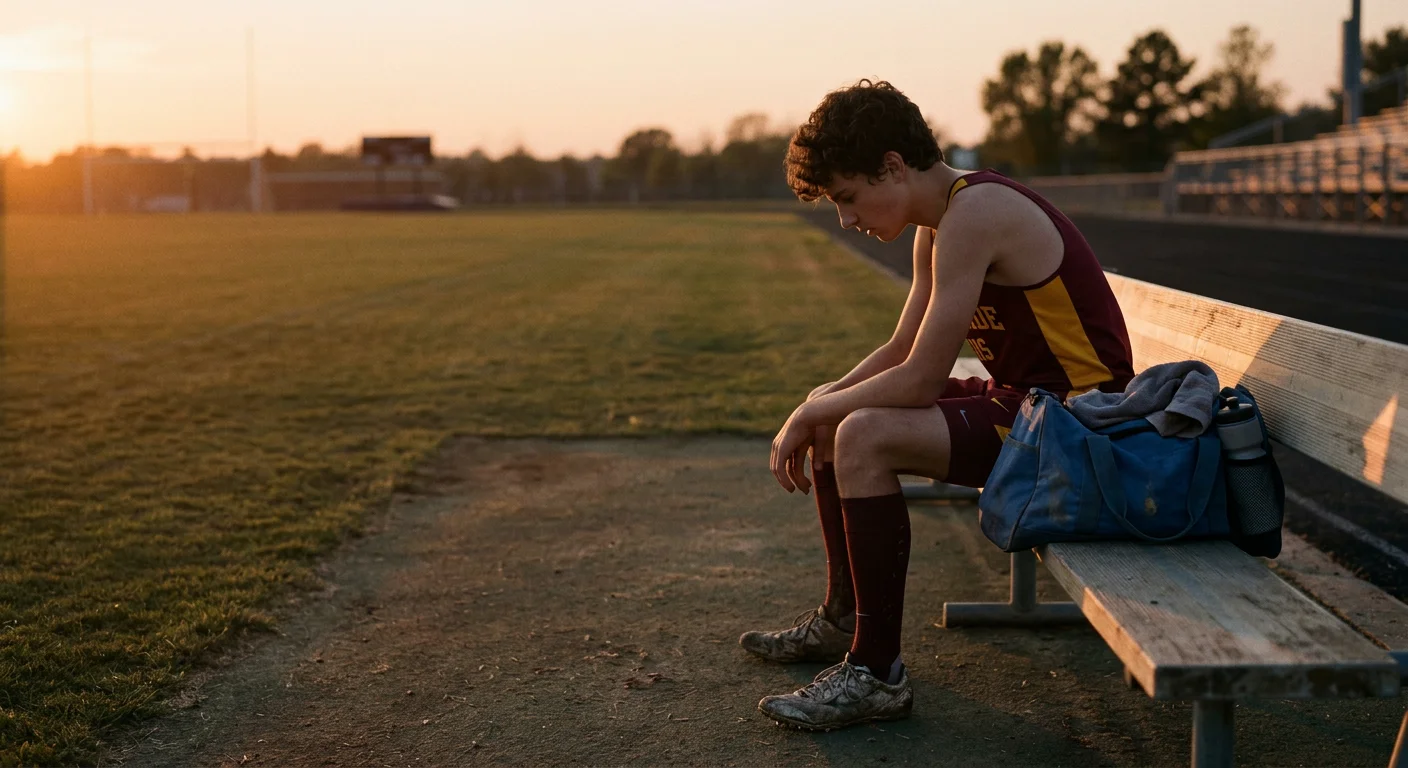
Ask a thousand kids why they quit. The same answer comes up, over and over — not injury, not scheduling conflicts, not talent. Just five words: "It's not fun anymore."Many clubs now work with kids sportswear manufacturers to design clothing that keeps training light and enjoyable, helping retain players longer.
Survey after survey confirms it. The National Alliance for Youth Sports found that close to 70% of kids who quit cite loss of fun as the primary reason. The Aspen Institute's research points to the same Conclusion . A landmark 2014 George Washington University study led by Amanda Visek found that 9 out of 10 young athletes ranked "having fun" as their number one reason for playing.
So the sport doesn't die because of a bad season. It dies because the fun ran out.
What "Fun" Means to a Kid (It's Not What Adults Think)
Here's where things get interesting — and a little uncomfortable.
Visek's team didn't just ask kids if sports were fun. They asked kids to define fun. Hundreds of athletes aged 7–13 came up with 81 distinct "fun factors." The results were clear:
What kids ranked highest:
- Trying their best
- Being treated with respect by coaches, parents, and teammates
- Getting real playing time
- Being around friends
- Learning and improving
What kids ranked near the bottom:
- Winning — ranked #48 out of 81
- Playing in championships — ranked #63
- One-on-one private coaching sessions — ranked #66
Read that again. Winning landed at #48.
Adults build entire seasons around travel schedules, tournament fees, and extra private training. None of that moves the needle on a child's fun-meter. Not even close.
That's the core mismatch. Adults are running one game. Kids are playing a different one.
The Science Behind the Burnout
Self-Determination Theory is one of psychology's most well-tested frameworks. It explains why fun falls apart under pressure. Kids need three things to stay motivated from the inside:
Autonomy — "I get to make some choices here." Every drill, every position, every decision handed down by the coach? That sense of ownership disappears fast.
Competence — "I'm getting better." Constant criticism with no acknowledgment of progress chips away at this — slowly, then all at once.
Relatedness — "These people care about me." Not as a stat line. As a person.
Lose one of these, and fun starts to drain out. Lose all three — which plenty of high-pressure youth programs do, without meaning to — and you've built a system that produces quitters.
The hard truth? Most kids don't quit because they stopped loving the sport. They quit because the structure around the sport made it impossible to love.
#2 The Adult-Driven Culture Problem: How Coaches and Parents Push Kids Out
A 12-year-old sits in the back seat of a car after a basketball game. She scored 4 points. Her team won. She's looking out the window, hoping the ride home is short.
It isn't.
For the next 20 minutes, her dad replays every possession — the missed free throws, the slow rotation on defense, the pass she should have thrown in the third quarter. By the time they pull into the driveway, she hasn't said a word in 15 minutes.
She's not thinking about basketball anymore. She's thinking about how to make the car rides stop.
This is how the love of a sport dies. Not in one big moment. Just one 20-minute drive at a time.
The Scoreboard Adults Are Really Tracking
Here's something uncomfortable: most adults who push kids too hard in sports aren't villains. They're excited. They care. They want their kid to succeed .
But there's a gap between what adults think is helping and what's going on inside a child's HEAD . That gap is wide enough to end an entire athletic career.
The data is clear. Researchers asked kids what made them want to quit . Some youth academies now rely on OEM/ODM kids sportswear to create flexible uniforms that reduce discomfort and support growth.
Three answers came up again and again:
Adults who kept talking about winning and losing
Fear of making mistakes and getting yelled at
Sports stopped feeling like play and started feeling like work
Those same kids were also asked what they wanted from the adults in their lives during sports. The answer was painfully simple. The top response, across studies by the Aspen Institute and similar organizations:
"Just let me play."
The second most common? "I love it when they just say, 'I love watching you play.'"
That's it. That's the whole wish list.
The 20-Minute Car Ride Problem
The post-game car ride deserves its own psychology paper. Kids across multiple interviews and research studies have described the same thing on their own — many say they dread the 20 minutes after the game more than the game itself.
Think about what that means. A child feels more anxious about the car ride home than about competing. The scoreboard has moved — from the gym to the back seat.
What drives this? The pattern usually goes like this:
The replay session — "Why didn't you pass it when you were double-teamed? You had an open man."
The stat reduction — "You went 1-for-5 from the line today. That needs to be 70% or you won't make the starting five."
The hypothetical grief — "If you'd made that shot in the fourth, we would've won."
Sports psychologists have a clinical name for what this produces: anticipatory anxiety . The child starts feeling stress before the game even begins. Not because of what might happen on the court. Because of what's coming in the car. The child's focus shifts away from competing. Instead, they monitor every move — ready to defend it later.
The sport becomes a performance review. Nobody stays long at a job where the review is always brutal.
How Playing Time Becomes a Weapon
In win-obsessed youth programs, playing time works like a corporate bonus — tied straight to recent output. Play well, you're in. Make a mistake, you're on the bench.
That logic makes sense to some adults. But what it does to a developing athlete is harsh.
Kids in this system learn fast. The goal isn't to try things . It's to not mess up . Risk disappears. Creativity disappears. The willingness to try something new, something hard, something that might fail? Gone.
Here's the hard reality: in a typical win-first youth program, only 30–40% of players get consistent, meaningful playing time. The rest train just as hard. They show up to every practice. Then they spend game days on the sideline. Many of these kids reach a quiet conclusion — they're just filling a roster spot. A training dummy for the players who count.
That conclusion, once made, tends to stick.
The Line Between Pressure That Builds and Pressure That Breaks
Not all pressure is the same. Some pressure works. Some causes real damage. The difference isn't in the intensity . It's in the direction .
Pressure that builds something:
- Sets process goals the kid can control ("Try three defensive plays today where you don't give up")
- Ties feedback to effort and strategy, not outcome ("You kept recovering after turnovers — that takes mental toughness")
- Includes the child in decisions about their own athletic life
- Builds in real recovery time — at least 1–2 days per week with zero organized practice
Pressure that breaks something:
- Uses playing time as punishment for behavior or attitude
- Makes public comparisons to "the good players" on the team
- Makes love and financial support feel tied to performance ("If you play like that again, I'm done paying for training")
- Treats every post-game period as an interrogation
- Packs the schedule so full of practices, travel games, and private coaching that sleep and friendships become luxuries
The self-check for adults is simple — and a little brutal:
"If my kid has a bad game today, will my face and tone shift by the time we reach the parking lot?"
"Do I talk about winning more than I talk about enjoyment, improvement, or friendships?"
A yes to either question means the car ride home is longer than it needs to be.
The kids in these studies aren't asking for lower standards. They're asking for something specific: to be seen as people, not performances. One quote from a youth athlete in a research interview puts it better than any data point:
"I don't feel like I'm playing for myself anymore. I feel like I'm playing for my parents' reputation."
A kid who reaches that thought — who believes it, fully — has already started the clock on walking away from the sport.
#3 Early Specialization Trap: Why Specializing Before 12 Backfires
Here's a fact that should make every sports parent uncomfortable: the strategy most likely to end a child's athletic career is the exact same strategy most parents think will launch it.
Elite programs often collaborate with private label kids sportswear lines to provide gear that encourages participation over pressure.
Picking one sport. Going all in. Starting young.
It feels logical. It feels responsible. The evidence says it's wrong.
The Body Keeps Score — And It's Not Pretty
A 9-year-old throws a baseball 200 times a week. Her elbow doesn't care about the college scholarship her dad is dreaming up. It cares about her growth plates — the soft cartilage zones where bones are still forming. Those plates get hammered by the same motion, over and over, before her skeleton has finished developing.
The numbers are not subtle.
A landmark study of 1,206 young American athletes found that kids with high sports specialization had 2 . 25 times the risk of overuse injury compared to those who played multiple sports. Same age group. Same activity levels. The one difference? How locked-in they were to one sport.
That's not a small gap. That's "more than twice as likely to get hurt."
And it gets worse. Each step up in specialization level raised overuse injury risk by another 30–40% . Young tennis players who trained more than 16 hours per week in tennis alone faced stress fracture and serious overuse injury rates 1.9 to 2.3 times higher than peers who mixed in other sports.
The American Academy of Sports Medicine reviewed multiple studies and found that athletes who start intensive single-sport training before age 12 face overuse injury rates 30–50% higher than those who specialize later. Stress fractures in high-impact sports like gymnastics, running, and dance make up 10–20% of all sports injuries in youth — and that number climbs to 30% in early specialization groups.
There's even a named injury that exists almost entirely in this population. "Little League Shoulder" and "Little League Elbow" — growth plate inflammation and separation at the shoulder and elbow — show up in kids who pitch year-round in a single baseball program. Among 10–14 year-old pitchers, 26% report persistent shoulder or elbow pain lasting more than a week. Twenty-six percent.
The Elite Athlete Paradox
This is where the logic of early specialization falls apart.
Start one sport at age 8, and your child is on the path to elite performance — right? Look at the world's best athletes. Most of them didn't do that.
A review of Olympic and professional athletes found that the majority played two or more sports during childhood and didn't specialize until mid-to-late adolescence. In a German Olympic athlete sample, 70–80% of gold medalists had played three or more different sports before age 12. About 10% had been focused on a single sport that young.
NHL players. Nordic professional soccer players. The pattern repeats across sports and countries. Elite performers were generalists as children.
That's not a coincidence. It makes biological sense. Different sports build different physical skills — balance, spatial awareness, reactive speed, coordination under fatigue. A kid who plays soccer, swims, and does gymnastics before age 12 builds a far richer physical base than one who trains a single movement pattern for years.
The NCAA data sharpens the picture. 6% of high school athletes make any NCAA roster at any level. 1–2% receive any athletic scholarship. A large share of those athletes come from multi-sport backgrounds who specialized after puberty — not kids who went all-in at age 9.
The American Academy of Pediatrics said it directly in their 2019 policy update: current evidence does not support early intensive single-sport training as a path to elite performance. What it does support? Higher injury rates and earlier dropout.
The Burnout Math Nobody Shows You
Early specialization doesn't just break bodies. It breaks motivation.
Kids who specialize before 12 show 1.5 to 2 times higher rates of emotional exhaustion by ages 12–15 compared to late specializers. Sleep makes everything worse. Athletes training more than 16 hours per week in a single sport have 40–50% rates of chronic sleep deprivation — under 8 hours a night. Sleeping less than 8 hours raises injury risk by 1.7 times on its own.
Put those together — poor sleep, repetitive physical stress, zero variety — and you get a slow collapse. One long-term study of youth swimmers found that in weeks where sleep quality dropped and training load rose by just 10%, depression scores climbed 15–20% and burnout scores jumped 30% .
Early-specialized athletes don't just quit more often. They quit sooner . Research comparing early versus late specializers found that kids who locked into one sport before 12 had 1.5 to 2 times higher rates of early retirement from sport overall. The reasons break down like this:
40–50% quit due to overuse injury
25–35% leave from emotional burnout
The rest cite academic conflict and social isolation — the result of spending every weekend at tournaments instead of just being a kid
What the Age-by-Age Picture Looks Like
So what should the path actually look like?
Ages 6–9: Cast wide. Two to four different sports per year, rotating with the seasons. Cap individual sessions at 60–75 minutes, no more than 2–3 times per week per sport. The goal here isn't skill development. It's building a movement library and finding out what makes a kid's eyes light up.
Ages 9–12: Stay flexible. Keep 2–3 sports in rotation. Let preferences surface on their own. Resist the pressure — and it will come — to "commit fully" before the growth plates close. Boys finish skeletal development around 16–17. Girls around 14–15. Heavy repetitive loading before those windows close is where the injuries happen.
The most useful shift in thinking for parents: a child who plays three sports until age 13 is not behind. They are building the physical and psychological base that makes real athletic development possible.
The child who specializes at 9 isn't getting a head start. In most cases, they're burning through a biological resource they haven't finished building yet.
#4 Burnout in Youth Athletes: Recognizing the Warning Signs Before It's Too Late
Burnout doesn't arrive with a dramatic announcement. It doesn't show up on a Tuesday and say, "Hello, I'm here to end your child's athletic career." It creeps in — practice by practice, car ride by car ride. Schools and leagues increasingly source from kids sportswear factories capable of producing durable, safe apparel for high-use programs.
One day, the kid who used to sprint to the field is dragging their feet to the car.
The tricky part? It looks almost identical to a kid who's tired. Or going through a phase. Or just being a teenager.
It isn't.
What Burnout Actually Looks Like
A burning-out athlete doesn't just have a rough week. They're running on empty. There's a clear set of behaviors that shows this.
The emotional signals:
- Irritability beyond normal teenage moodiness
- Shutting down at home — the kid who talked about their team nonstop now changes the subject
- A clear shift from "I want to go" to "I have to go"
The participation signals:
- More excuses before practice — stomachaches, homework, exhaustion
- Body at training, mind somewhere else — going through the motions, dead-eyed
- Performance drops, even though the training load hasn't changed
The motivation signals:
- Saying things like "it's just a task now" or "I'm only doing this so I don't disappoint anyone"
- Winning stops feeling good. Losing stops feeling bad. Everything feels flat.
That last one is the clearest warning sign of all. A kid who stops caring whether they win or lose — not out of maturity or calm, but because they've checked out mentally — that's a serious red flag. The clock is running.
The Structure That Makes Recovery Impossible
Here's what most parents miss: burnout isn't just about a bad coach or a tough season. It's often built into the schedule itself.
Many competitive youth programs run 250–300 training days per year . That leaves almost no real off-season. The American Academy of Pediatrics recommends at least 1–2 unstructured days per week and 2–3 months per year away from a single sport's competitive season. Elite junior programs ignore that recommendation on a regular basis.
Add in the multi-team reality — school team, club team, travel team, private coaching — and a serious middle-schooler might face 3–5 high-intensity competition days per week . Stack homework on top of that. Sleep gets crushed. Research on youth swimmers found that a 10% rise in training load combined with poor sleep caused burnout scores to jump 30% .
That's not a resilience problem. That's arithmetic.
Burnout vs. Choosing to Quit: How to Tell the Difference
This distinction matters a great deal — and most parents get it wrong.
Burnout Exit | Voluntary Exit | |
|---|---|---|
Language used | "I can't do this anymore" — guilt, defeat | "I want to try something else" — curiosity |
Emotional state | Anxiety, low self-worth, sometimes depression | Stable, often relieved |
Performance before leaving | Weeks or months of declining performance | Often still performing fine |
Life after quitting | Exhaustion and low mood continue | Energy and mood improve noticeably |
A child quits and seems lighter, happier, and more present within days? That was a healthy, self-aware decision. A child quits and still seems hollow two months later — that was burnout. Left unaddressed, burnout doesn't stay contained to sports.
#5 The Cost Barrier: Youth Sports Is Now a Luxury
Youth sports in America is a $17 billion industry. Let that number sit for a second.
Seventeen billion dollars. For kids playing games.
Here's what nobody puts on the registration brochure: 63% of families spend between $1,200 and $6,000 per year, per child. Close to 20% spend over $12,000. Every year. One kid. One sport.
That's not a hobby. That's a second mortgage.
Who Gets Left Behind
The math is brutal and simple. Kids from families earning over $100,000 per year? 43% play organized sports. Kids from families earning under $25,000? 22%. Same kids. Same developmental needs. Totally different access.
Low-income families don't drop out because they care less. They drop out because the system has priced itself out of their reach — without much fanfare. Aspen Project Play found that children from low-income households are 6 times more likely to quit sports due to cost than kids from wealthier families.
Six times.
The gap keeps growing. In 2011, 42% of kids from lower-income families played team sports on a regular basis. By 2017, that number fell to 34%. Wealthier families moved from 66% to 69% over the same stretch — going the opposite direction.
What the Money Buys (And What It Costs)
A typical travel baseball family doesn't write one check. They write dozens:
Club fees: $1,000–$2,000/season
Equipment (bat, glove, cleats, helmet, uniform): $700–$1,200
Travel tournaments (8–10 away weekends): $1,000–$3,000
Private coaching and camps: $300–$800
Families seeking affordability turn to kids sportswear wholesale price programs to outfit multiple children without breaking the budget.
That adds up to $3,000–$7,000 per year. One child. One sport. A single away tournament weekend — flights or gas, hotel, meals, entry fees — can hit close to $1,000 on its own.
A Harris Poll found that 58% of parents call sports equipment costs a financial burden. 23% took on extra work to cover sports expenses. 18% went into debt.
Sports used to be what kids did after school. Now it's a line item that competes with rent.
Practical Ways to Lower the Cost
The system is expensive. It doesn't have to be all-or-nothing.
Find community programs first. Parks & Rec leagues, YMCAs, and nonprofits often run full seasons for $25–$100. Ask about fee waivers, sliding scale pricing, or scholarship spots. Most programs have them. Almost nobody asks.
Buy used gear — but be smart about it. Platforms like SidelineSwap or Play It Again Sports sell quality gear at 30–60% off retail. Put your money toward safety items first — helmets, cleats, protective gear. Save on everything else.
Cut back on travel events. Dropping from 8 away tournaments to 2 can save thousands per year. A child's development won't take a hit from fewer hotel weekends. More local training time is often the better trade-off.
Apply for club scholarships as soon as possible. Most programs open applications 2–3 months before the season starts. Bring income documentation. Spots fill up fast — first-come, first-served is the norm.
Here's the uncomfortable truth: the families most at risk of quitting over cost are often the ones who never heard about these options. The brochure leads with tournament photos. The scholarship application doesn't make the front page.
#6 The Middle School Dropout Spike: Why Age 11–13 Is the Critical Window
There is a specific age where the sports participation graph falls off a cliff. Not step by step. Not spread across childhood. Right around 11, 12, 13 — the middle school years — something goes wrong at scale.
This isn't a coincidence. It's a collision.
At the exact moment kids are the most fragile, the sports system becomes the most ruthless.
The Perfect Storm Nobody Talks About
Look at what hits a typical 12-year-old all at once:
Their brain is restructuring itself. Self-confidence is dropping — measurably so. A landmark study tracking 100,000 California students found a clear "slump" starting around 6th grade — a significant dip in self-efficacy, self-management, and social awareness. Grades keep rising during this period. But on the inside? These kids are falling apart.
Peer approval becomes everything. Being seen as "bad" at something in front of classmates doesn't sting the way it did at age 8. At 12, it feels closer to catastrophic.
At this same moment — this exact developmental window — the sports world decides it's time to start cutting people.
Middle school is where tryouts replace open enrollment. A-teams and B-teams appear for the first time. Rosters shrink from "anyone who shows up" to 10–15 players selected from pools of 30–60+ . Cut rates in popular sports like basketball and soccer run 50–80% .
Half the kids who want to play don't make the team. The other half land on a B-team with less practice time, weaker coaching, and fewer games. They absorb one clear message: they are not quite good enough.
That message, delivered at age 12 to a brain already deep in a self-confidence slump, tends to stick for a long time.
The Late Bloomer Gets Destroyed by This System
Here's the cruelest part of the 11–13 window: biology and selection calendars are completely out of sync.
This is the exact point where physical maturation splits most sharply between kids. Height, muscle mass, coordination, speed — some 12-year-olds look like 15-year-olds. Others still look 9. The gap comes down to developmental timing. It has nothing to do with long-term potential.
But coaches picking travel rosters aren't thinking about long-term potential. They're watching who wins the drill today .
Studies in European football academies found that players born in the first quarter of the selection year are overrepresented by 2–3 times compared to players born in the last quarter. Same age group. The early-borns are a few months further along in physical development. They get selected. The late-borns — who may go on to become the better players — get cut.
Athlete development research confirms this clearly: among senior professional athletes , late maturers show up far more than they did at the youth-elite level. So youth elite programs are cutting many of the players who will later become their best.
The kid who gets cut at 12 for being too small doesn't know any of this. He just knows he didn't make the team. His brain, already deep in its self-confidence slump, files that away as permanent proof of who he is.
The Internal Disengagement Nobody Sees Coming
This is what makes the 11–13 window so dangerous: the warning signs are almost invisible from the outside.
The California study found something striking. During the 6th-grade slump, academic achievement keeps rising . Grades look fine. A teacher or parent checking the report card sees nothing wrong. But self-efficacy is dropping. Internal motivation is hollowing out. The student — or athlete — is still performing on paper. The belief that they can succeed is collapsing underneath the surface.
By the time grades drop or a kid says they're quitting, the internal withdrawal already happened months earlier.
The Rochester Youth Development Study tracked 911 students and found that a school disengagement index built from 8th and 9th grade records — absences, falling GPA, disciplinary actions, grade retention — could predict dropout, serious delinquency, and problem substance use years down the line. Not a weak signal. A strong, consistent one.
Kids who showed multiple risk factors in middle school and got no intervention went on to face cascading problems through ages 15, 17, and into their 20s.
Waiting until the dropout happens is too late. The decision was already made — long before anyone noticed.
What Parents Can Say That Actually Helps
A child gets cut, benched, or starts pulling away from the sport. The conversation that follows matters more than most parents realize.
Don't lead with reassurance. Lead with curiosity.
The instinct is to say "You were great out there" or "The coach made the wrong call." Those feel good in the moment. They don't help. Your kid knows what happened. Minimizing it builds distance, not trust.
Try separating identity from outcome — directly and clearly:
"This team was picked based on who can help them win right now. That's different from who you'll be in two years."
Then build a concrete plan. Not a vague "keep working hard." A real, specific, time-limited plan:
Ask for feedback : "What two things would most help you make the team next time?" — from the coach, a teacher, or a trusted adult.
Define a trackable routine : 15 minutes of skill work, 4 days a week, for 8 weeks. Small enough to follow through on.
Set a re-evaluation date : "Let's see where you are in 8 weeks and decide together."
The goal isn't to create false optimism. It's to move the brain away from "I'm not good enough" — a fixed identity conclusion — toward "Here's what the next 8 weeks look like" — an action frame.
Watch for these red flags in the months after a setback:
- Sharp increase in excuses to skip practice or games
- Talking about quitting out of nowhere, with no clear reason
- Emotional flatness about something they used to love
- Pulling away from teammates
These behaviors match the school disengagement research. They are the early signals. They show up before the formal exit. A child hitting multiple flags at once is already in the early stages of withdrawal. The window to turn that around is real — but it doesn't stay open forever.
The middle school years are not just a rough patch to wait out. This is the window where the decision gets made — whether sports stays in a child's life for years, maybe decades. Most of the time, that decision happens without anyone noticing until it's already done.
#7 Negative Team Environments: Bullying, Cliques, and Poor Coach Relationships
A child can love the sport, handle the pressure, and drag themselves out of bed for early morning practice — and still quit. Sometimes it takes just one teammate who turns practice into a minefield. Or one coach who treats humiliation as a teaching method.
Research on youth athletes aged 11–16 found bullying victimization rates in sports settings ranging from 6% to 45% , depending on the program. Kids who faced peer bullying on a team were 1.7 to 2.5 times more likely to drop out within the following year. That's not a small margin. The social environment is pushing kids out of sport.
The Clique Problem Nobody Wants to Name
Every team has a social hierarchy. That's normal. What's not normal — but happens far too often — is that hierarchy hardening into a closed inner circle that decides who belongs and who doesn't .
Excluded athletes rarely face open confrontations. What they get is quieter, and more damaging:
Fewer passes in practice drills
Left out of the post-game group chats
No training partner, ever
Sitting alone on the bench while everyone else talks three feet away
Athletes in this position stop calling the team "their team." They say things like "I just show up to play — it's not really my group." Research backs this up: athletes with low team belonging scores drop out at close to twice the rate of those who feel included.
The clique doesn't need to target anyone directly. It just has to make some kids feel invisible. That's enough.
What a Toxic Coach Does to a Kid
The coach-athlete relationship is one of the strongest predictors of whether a young athlete stays or leaves. Studies on high school athletes found that each one-unit increase in perceived coach care (on a 5-point scale) raised the athlete's intention to return next season by 12–20 percentage points .
Flip that, and you see the real cost of a toxic coach.
In samples of college athletes, "toxic leadership" scores predicted dropout intention with a standardized regression coefficient of β ≈ 0.3–0.4. That's a strong, consistent pattern across studies.
So what does toxic coaching look like in practice?
Conditional respect : An athlete feels safe only during good performances. One bad game, and the coach's whole attitude changes. Players describe it as "I never know which version of the coach is showing up today."
Weaponized vulnerability : An athlete shares a private fear — struggling in school, worrying about their future in the sport. Then, after a poor performance, the coach brings it up in front of everyone. "You told me you wanted to be a doctor. With performances like that, I doubt you'd make it through the application." That's not coaching. That's a betrayal.
The hazing philosophy : Some coaches frame cruelty as character-building. They let older players haze newer ones because "it toughens them up." This creates a team culture where bullying has institutional backing. It doesn't stay contained. It spreads.
One coach in a research interview admitted it plainly: management never stepped in to handle interpersonal conflict. He dealt with everything on his own. So nothing got addressed through proper channels. The problems didn't go away. They just went underground.
The Emotional Safety Checklist Kids Never Show You
Young athletes won't hand you a report card on their team environment. But researchers have identified three internal questions that predict whether a kid stays in sport:
"Can I make a mistake at practice without being humiliated in front of everyone?"
"Can I tell my coach or a teammate that something is wrong?"
"If I have a terrible game, will I still feel like part of this team?"
In toxic programs, the answer to all three is often no. Dropout rates in those teams rise by 1.5 to 2 times within one to two seasons.
These questions never get asked out loud. But kids are answering them every single practice.
What Parents Should Watch For
Most toxic team environments don't announce themselves. Here's what signals a real problem:
During practices and games:
- The coach's feedback targets personality, appearance, or intelligence — not performance
- The same one or two athletes get all the playing time, the praise, and the coach's attention — no matter how hard others train
- Bench players mock teammates on the field, and no adult stops it
In your conversations with your kid:
- "I'm more scared of what the coach will say after than the actual game."
- "There's a group chat I'm not in."
- "It doesn't matter what I do — the coach already has favorites."
- Frequent stomachaches or sleep problems before practice, with no physical cause
Questions worth asking the coach face-to-face:
- "What's the team's policy on bullying and exclusion — and who handles it if something happens?"
- "How do you decide playing time? How do players outside the starting lineup develop?"
A coach who answers those questions with clarity and no defensiveness? That's a good sign. A coach who responds with "these kids need to learn toughness" or "we handle it internally" ? That's your answer too.
How to Keep Kids in Sports Longer: Evidence-Based Strategies for Parents and Coaches
The research is pretty clear on what works. The problem is that almost nobody does it.
Look at every major reason kids quit — the pressure, the burnout, the cliques, the cost. A pattern shows up on the flip side too. The kids who stay aren't more talented. They're not on better-funded teams. They don't have more patient parents. They're in environments that got a few specific things right. Over and over again.
Here's what those environments look like.
Build the Schedule Around Development, Not Ambition
The most useful framework for youth sports is called Long-Term Athlete Development (LTAD). It organizes participation by age group — and it looks nothing like what most competitive programs do.
Ages 5–8: Let them try everything. Three to six different sports or activities per year. At least 60 minutes of moderate-to-vigorous movement each day, and keep most of it unstructured. The goal at this stage isn't skill development. It's building a movement vocabulary — running, jumping, throwing, catching, balancing — across as many settings as possible. No year-round single sport. Not yet.
Ages 9–12: Keep two to three sports in rotation, with real breaks between seasons. Cap total organized sport at around 8–10 hours per week. This is the window for building a broad technical base — basic tactics, core skills — not heavy conditioning or early rankings pressure.
Ages 13–15: Start narrowing, but don't cut everything else out. One to two primary sports, with offseason cross-training. A widely used rule: no more hours per week in one sport than the athlete's age. A 13-year-old shouldn't be doing 20 hours a week of single-sport training. Make sure they get at least one to two full days off per week, plus two to three months per year away from the main sport.
Ages 16+: This is where real specialization becomes age-appropriate — if the athlete is the one pushing for it.
That last part matters more than most people think.
The Three Things Every Kid Needs to Stay Motivated
Self-Determination Theory has been tested across many different settings. Its core finding is solid: kids stay driven from the inside when three basic needs get met.
Autonomy — they get some real say in what's happening. Not control over everything. Just some things.
Competence — they can see themselves getting better, and the people around them say so with honesty.
Relatedness — they feel like real people to the adults and teammates around them, not just performance numbers.
Take away one of these, and motivation starts to fade. Take away all three — which many high-pressure youth programs do, often by accident — and you've built a system that produces kids who quit.
The fix isn't complicated. End each practice with 10–15 minutes where kids vote on a small-sided game or pick their own skill station. Ask athletes to name one thing they learned after each session — not the score, one technical point. Swap "Did you win?" for "What part did you enjoy today?" These aren't soft, feel-good gestures. They're the specific actions that keep inner motivation alive across a full season.
What Parents Can Control
The post-game car ride. That's the highest-leverage moment most parents have direct control over — and most parents use it wrong.
Three questions. That's the whole system:
"What was the most fun part today?"
"What's one thing you feel like you got better at?"
"Is there anything you want to try differently next time?"
Not a performance review. Not a rundown of every mistake. Three questions that reinforce the only three things that predict long-term participation: enjoyment, growth, and forward-looking curiosity.
So what happens when a kid does want to quit? Use the season boundary as a commitment anchor. Set the rule before the season starts: discuss whether to continue after the season ends, not in the low point of a rough week. The Duckworth "Hard Thing Rule" — adjusted for families — runs on the same idea. The child picks the activity from parent-approved options. They commit through the end of the season. Then they earn the right to reassess with a clear head once it's done.
One More Thing Nobody Talks About: Gear That Fits
This one sounds minor. It isn't.
Heavy shoes raise lower-leg fatigue in fast-movement sports. Pediatric sports medicine guidelines place the right weight range for kids' athletic footwear at 180–250 grams per shoe. Clothing that pulls or binds during a deep squat or overhead reach creates a physical distraction at the exact moments that need focus. Kids' feet also grow fast enough that shoe size should be checked every three to four months. A shoe that's too tight leads straight to blisters, nail problems, and a kid who starts finding reasons to skip practice.
It's a small thing. But small physical discomforts stack up over weeks. They turn into a child who just doesn't want to go. The sport didn't lose them. The sock did.
Conclusion
Here's the uncomfortable truth behind that 70% statistic: kids aren't quitting sports. They're quitting the version of sports adults built for themselves.
Programs focused on keeping kids active are increasingly partnering with suppliers of kids sportswear to ensure young athletes have apparel that keeps them moving, comfortable, and confident.
The fun disappeared. The pressure moved in. Somewhere between a screaming parent on the sideline and a coach who counts only wins, a child made a quiet decision — this isn't worth it anymore.
But none of this is permanent.
Focus on what works. Put enjoyment before specialization. Build team environments where kids feel safe. Treat burnout as a warning sign, not a weakness. Do that, and kids don't just stay in sports. They thrive in them.
Your next move matters more than you think. Have the conversation with your child tonight. Not about performance. About whether they're still having fun.
Because the goal was never to raise an athlete.
It was always to raise a human who loves to move.