You grabbed a "waterproof" fishing jacket off the rack, took it out in a steady rain, and came home soaked anyway. Sound familiar?
Here’s what most waterproof fishing jacket manufacturers don’t tell you upfront: waterproof and water-resistant are not the same thing.Buying the wrong one for your fishing environment isn't just uncomfortable — it can ruin a full day on the water.
The gap between these two terms comes down to real engineering. Think hydrostatic head ratings, sealed seams, DWR coating lifespan, and breathability trade-offs. These details matter a lot six hours into a coastal downpour.
Below is a straight breakdown of both technologies. You'll see how each one performs across real fishing scenarios — and which one earns a place in your kit.
What Does "Waterproof" Actually Mean in a Fishing Jacket?
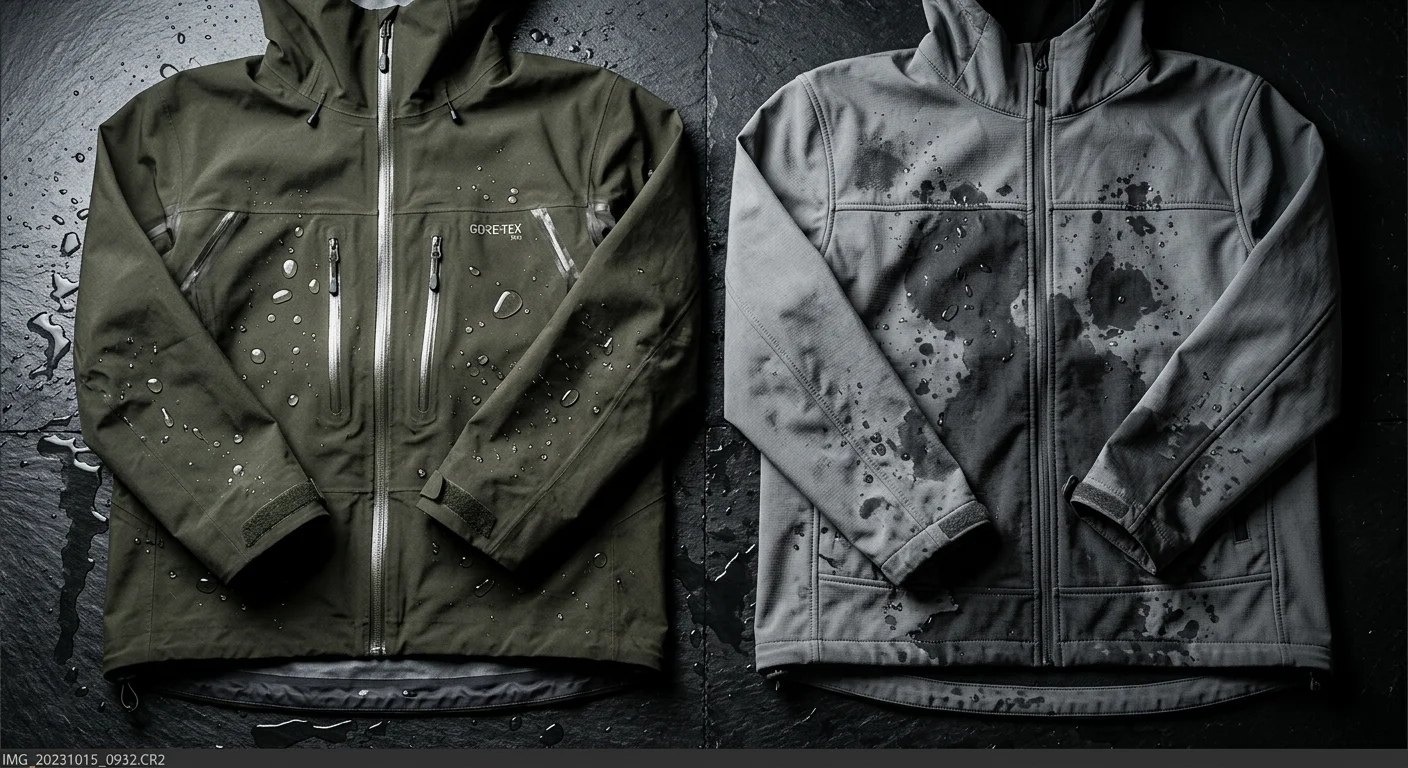
Waterproofing isn't a marketing claim. It's an engineering standard built on three core components that must work together.For technical fishing outerwear suppliers for wet conditions, waterproofing isn’t a marketing claim — it’s a system built on three non-negotiable components.
A real waterproof fishing jacket needs all of the following:
An impermeable membrane — like GORE-TEX® or MarineSpec™ SP — laminated into the fabric
Fully taped seams — every stitch point sealed, not just the shoulders and hood
Waterproof zippers — such as YKK® AQUASEAL® — because a waterproof shell with a standard zipper defeats the whole purpose
Take out any one of these three elements, and water gets in. It's that simple.
The Number That Matters Most: Hydrostatic Head Rating
The waterproof rating on a jacket's hang tag is shown in millimeters. That number tells you how much water pressure the fabric can handle before it leaks. Manufacturers test this using a standard static-column method.
Here's what those numbers mean for fishing:
Rating | Real-World Protection | Fishing Verdict |
|---|---|---|
5,000mm | Light to moderate rain | Inadequate — fails under sustained exposure |
10,000mm | Moderate to heavy rain | Minimum acceptable benchmark for fishing |
20,000mm | Sustained downpours, wave spray, contact pressure | Ideal — handles prolonged coastal or offshore conditions |
Lean against a gunwale for six hours in heavy rain. Fabric contact pressure alone can push water through a 5,000mm jacket. The 20,000mm rating is built for that kind of sustained physical stress.That’s why serious anglers rely on higher ratings — especially when sourcing custom waterproof fishing jackets for outdoor performance.
Seam Taping: The Detail Most Buyers Miss
Fully taped means every seam on the jacket is sealed. That's the standard serious fishing requires.
Critically taped means only the high-exposure zones are sealed — the hood and shoulder seams. It's a cost-cutting move that sounds reasonable. But rain will find the unsealed side seams and run straight down your back.
For fishing, critically taped falls short. Full taping is the baseline, not the upgrade.
A Word on "Waterproof-Adjacent" Labels
The gear industry has a vocabulary problem. Terms like water-resistant , shower resistant , and weatherproof show up on packaging with confident authority. None of them describe a true waterproof jacket:
Term | What It Means | The Real Limitation |
|---|---|---|
Water-resistant | Handles light drizzle and brief spray | Leaks through stitching and zippers in sustained rain |
Shower resistant | Basic DWR coating only; incidental moisture | Saturates fast; zero immersion protection |
Weatherproof | Vague by design; sits at water-resistant level | Misleads buyers about heavy-rain performance |
One more thing worth stating clearly: DWR (Durable Water Repellency) coating is not waterproofing. It's a surface treatment that makes water bead up and roll off the outer fabric. It wears down with use and washing. It needs periodic reapplication. It's also a separate layer from the membrane beneath it.
Even a 20,000mm jacket needs a working DWR layer. Without it, the outer fabric soaks through and pulls moisture toward the membrane. Both layers matter.That’s why many OEM/ODM fishing rainwear production services treat it as a supporting layer, not the core protection.
The Minimum Spec List for Fishing
A jacket that misses any of these four benchmarks has no place as your primary rain layer on the water:
10,000mm+ hydrostatic head rating
Fully taped seams (every seam, not just select seams)
Waterproof zippers
10,000g+ MVTR breathability — so trapped sweat doesn't soak you from the inside during active casting or paddling
That last number gets overlooked by most anglers. A jacket can block every drop of rain from outside and still leave you soaked. Without enough breathability, sweat vapor builds up inside and has nowhere to go. You end up wet either way.
What Does "Water-Resistant" Mean — And Where Does It Fall Short?
From the perspective of any breathable waterproof fishing apparel factory, water-resistant gear serves a narrow purpose.
Water-resistant sounds reassuring. It isn't.
The label means the fabric handles limited surface pressure — a light drizzle, a quick splash, the kind of rain you walk through for thirty seconds between your truck and the front door. That's the full promise. Nothing more is guaranteed. Nothing more should be expected.
Here's the core problem: water-resistance is a static measurement. The fabric gets tested in a controlled lab — stable temperature, no movement, no sustained contact. Step onto a boat, and that controlled environment is gone.
You're casting. You're leaning over the gunwale. Rain is driving sideways into your chest. The fabric flexes, bends, and compresses with every motion. Dynamic pressure is a different beast from static pressure. A jacket rated for light spray will soak through under those conditions — often within the first hour.
Where the Gaps Are
The failure points are predictable:
Stitching — Water-resistant fabrics have no seam sealing. Every needle hole is an entry point. In steady rain, moisture pushes straight through.
Zippers — Standard zippers on water-resistant jackets offer no real barrier. Water moves along the zipper teeth without resistance.
DWR degradation — Most water-resistant jackets depend on a DWR (Durable Water Repellency) surface coating. That coating wears down. After a season of use and a few wash cycles, it's worn thin — and there's no membrane underneath to back it up.
A water-resistant fishing jacket has a real place. Early morning fog. A slow drizzle on a calm lake. Conditions where you're back at the truck before the weather gets serious.
Push it past that window, and it quits on you.
Waterproof vs. Water-Resistant Fishing Jackets: Head-to-Head Technical Comparison
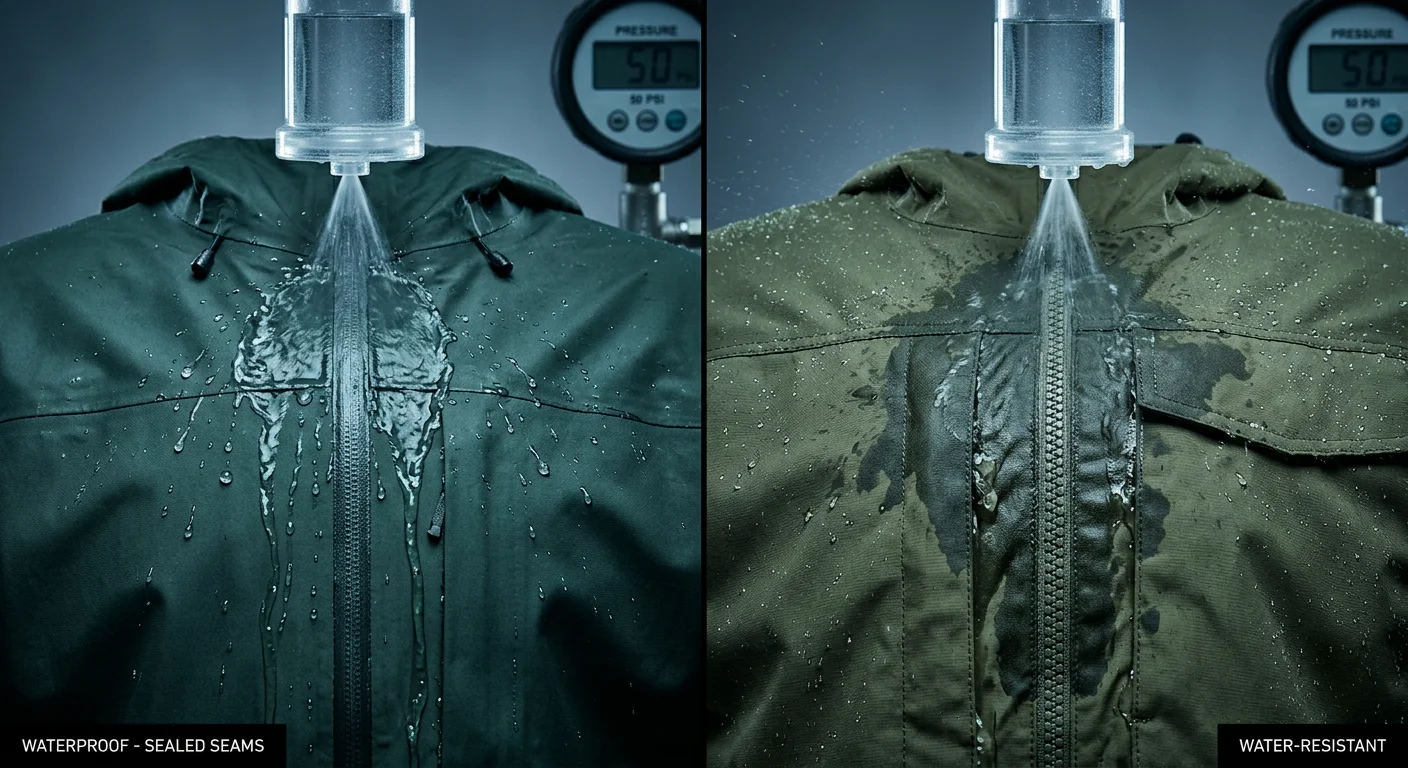
Put both jackets under a lab test and the difference shows up fast. It's measurable. It's clear. This isn't about brand loyalty or looks — it's an engineering gap big enough to wreck a day on the water.
Here's how the two technologies compare across every dimension that matters to an angler.
This is where private label fishing outerwear suppliers separate entry-level products from performance gear.
Fabric Construction: One Layer vs. Three
A true waterproof jacket uses three distinct layers. The outer shell — 70D nylon in most cases — handles abrasion and UV exposure. Under that sits an impermeable membrane. It's either microporous (like GORE-TEX® or MarineSpec™ SP) or monolithic, bonded tight to the fabric. A DWR treatment covers the exterior surface.
A water-resistant jacket has no membrane. It's porous fabric with a DWR coating on top. That's the whole build. The DWR will degrade over time. Once it does, nothing underneath stops water from pushing through.
The Breathability Paradox
Most buyers get this wrong: microporous membranes are more breathable under hard physical effort than DWR-only fabrics.
The physics are straightforward once you know the scale. Microporous pores measure under 20 microns. That's too small for liquid water droplets to pass through, but large enough for water vapor molecules to escape. Your sweat gets out. The rain stays out.
DWR-only jackets feel more breathable at the start of a trip. They're lighter, less structured, and air moves through the porous fabric with ease. But once rain soaks that outer layer, the fabric can no longer move vapor. Heat builds up inside. You end up wet from the outside and wet from sweat on the inside — at the same time.
A 3-layer MarineSpec™ membrane matches Mil Spec 6.5 GORE-TEX® for vapor transmission under physical load. That's the performance benchmark worth targeting on a long day offshore.
Seams and Zippers Under Pressure
Feature | Waterproof | Water-Resistant |
|---|---|---|
Seam treatment | Taped on every stitch point — no gaps | Untaped — every needle hole is an entry point |
Zipper standard | YKK® AQUASEAL® or equivalent | Standard zipper — no water barrier |
Failure point | Membrane breach (rare under normal use) | Seams and zippers within the first hour of heavy rain |
Zippers separate solid engineering from guesswork. A standard zipper on a water-resistant jacket puts up no real resistance to wind-driven rain. Water runs straight along the zipper teeth like a channel. In gale-force spray, it fails fast.
The Real Cost Over Five Years
Water-resistant jackets cost less upfront. That math shifts in a hurry.
Water-Resistant | Waterproof | |
|---|---|---|
Initial cost | Lower | Higher |
Maintenance | Frequent DWR re-treatment; saturates and fails in heavy use | Periodic DWR renewal + seam and zipper checks |
Repurchase cycle | 2–3x over five years for serious anglers | Single durable unit — 70D construction resists abrasion and saltwater degradation |
5-year total cost | Higher | Lower |
The waterproof jacket looks like the expensive choice. For occasional dock fishing or misty mornings on a calm lake, it may be more than you need. But for anyone fishing open water with any regularity, the water-resistant jacket ends up costing more — you just pay in smaller chunks over time.This is why many high-durability fishing rain gear manufacturers focus on long-term performance rather than upfront cost savings.
The Verdict in Plain Terms
One field test makes this clear: lean into gale-force spray for thirty minutes. A solid waterproof jacket — membrane, taped seams on every stitch point, sealed zippers — holds up without issue. A water-resistant jacket starts leaking at the stitching well before that window closes.
Both have a place.
- The water-resistant jacket works on calm mornings with low rain in the forecast.
- The waterproof jacket belongs everywhere else.
Real Fishing Scenarios: Which Protection Level Do You Need?
The right answer depends on where you fish, how long you stay out, and how serious the consequences are when weather turns bad.
That's not a hedge. It's the framework. Run through it with honesty, and the decision makes itself.
Inshore and Freshwater Bass Fishing: Early Mornings, Calm Lakes
This is the one scenario where a water-resistant jacket earns its keep without apology.
You're on the water before sunrise. The air is damp, maybe a light mist sitting on the surface. Weather radar shows nothing threatening until noon — and you plan to be back at the ramp by ten. The demands are modest: shed the morning fog, breathe well during active casting, and stay light enough that you want to wear it.
A well-built water-resistant jacket with a fresh DWR treatment handles that window without issue. You're not fighting a coastal storm. You're dealing with condensation and a light drizzle, not sustained rain pressure. For this specific use case, the extra weight and cost of a full waterproof shell buys you nothing you'll put to use.
Change that forecast, though, and a water-resistant jacket becomes a liability fast.
Offshore and Saltwater Fishing: Where Waterproof Becomes Non-Negotiable
Open water has no patience for gear that's "good enough."
You're six miles out. The wind shifts at hour three. Rain comes in sideways at 25 knots — not straight down. It drives into your chest, runs along your collar, and presses against every seam with force no lab test can copy. You have no shelter. You can't wait it out onshore.
That's the scenario that exposes every weakness in a water-resistant jacket at once. The unsealed seams go first. Then the standard zipper. Within an hour, you're dealing with soaked base layers, a dropping core temperature, and making decisions on the water with cold, clumsy hands.
A 20,000mm-rated shell with taped seams, sealed zippers, and a 10,000g+ MVTR breathability rating isn't overkill here. It's the bare minimum that keeps you functional and safe.
Fly Fishing and Wade Fishing: The Breathability Equation
Wade fishing has a specific challenge that most jacket guides miss.
You're working upstream for four hours. You're building real heat — pushing through thigh-deep current, picking over rocks, throwing long casts again and again. The rain is steady but moderate. You need protection from outside moisture, and you need an escape route for the sweat building up inside.
A waterproof jacket without enough breathability traps that vapor. You end up wet from sweat, not rain. That's why the 10,000g+ MVTR breathability spec matters for active fishing. It doesn't matter much for someone standing on a dock — but for wade fishing, it's a real factor.
The right call: a waterproof shell with a high-vapor-transfer membrane. Don't swap the membrane for a lighter, more breathable water-resistant jacket and expect to stay comfortable. Hard physical effort in rain works against you on that trade.
A Simple Decision Framework
Match your jacket to the worst conditions you fish in regularly — not the best ones.
Fishing Type | Typical Conditions | Recommended Protection |
|---|---|---|
Calm lake, morning session | Light mist, back by midday | Water-resistant with fresh DWR |
Inshore bay fishing | Variable; rain possible | 10,000mm+ waterproof minimum |
Offshore / saltwater | Heavy rain, wind-driven spray | 20,000mm waterproof, fully taped |
Wade / fly fishing | Active output, moderate rain | Waterproof + 10,000g+ breathability |
Ice fishing | Extreme cold, minimal rain | Waterproof shell + insulated layering system |
The pattern holds: the further from shore you go, the longer you stay out, and the harder you're working — the more the gap between waterproof and water-resistant costs you in real terms.
Buy for the hard day, not the easy one.
How to Choose the Right Fishing Jacket: A Decision Framework by Angler Type
The jacket that protects you isn't the one built for the average angler. It's the one built for you — your water, your method, your worst day out.
Different fishing styles need different specs. Here's how to match the jacket to the man and the mission.
Fit and Length Come First
Before waterproof ratings or pocket counts, get the fit right.
Size up by at least one size from your normal fit. You need room to layer underneath. No bunching across the shoulders. No locked-up casting arm. A jacket that fits great over a t-shirt will fight you in November over a fleece mid-layer.
For wade fishermen, length is critical. The jacket must cover your full torso. It can't drop past the top of your waders. Too long, and it acts as a funnel — directing rainwater straight down into your wader opening. Adjustable hem cinching isn't optional for wade fishing. It's the whole game.
Build Your Layer System Around the Shell
The waterproof shell is the final layer, not the sole layer. Underneath it:
1.Base layer : moisture-wicking fabric that pulls sweat away from skin
2.Mid-layer : fleece or lightweight insulation based on temperature
3.Shell : waterproof outer that locks everything in and keeps rain out
Cold-weather anglers add wool thermals at the base and a down or polyfill layer before the shell. Quality fishing jackets come with a removable inner lining. That lets you use the same shell across a full season.
The Features That Count
Don't get distracted by pocket count. Focus on construction quality:
Neoprene Velcro cuffs — seal the wrist gap; stop cold water from running up your sleeve
Double-stitched seams at every stress point — pockets, zippers, cuffs
Two large exterior pockets minimum , plus waterproof interior pockets for licenses and valuables
Raglan sleeves for full casting range
Glove-friendly zippers for cold-water fishing
A jacket loaded with twenty pockets sounds useful. But you're wet, cold, and digging through all of them just to find your line nippers.
Get the fit right. Build the layers solid. Then let the shell do its job.
How to Maintain Your Fishing Jacket's Water Protection (Waterproof & Water-Resistant)
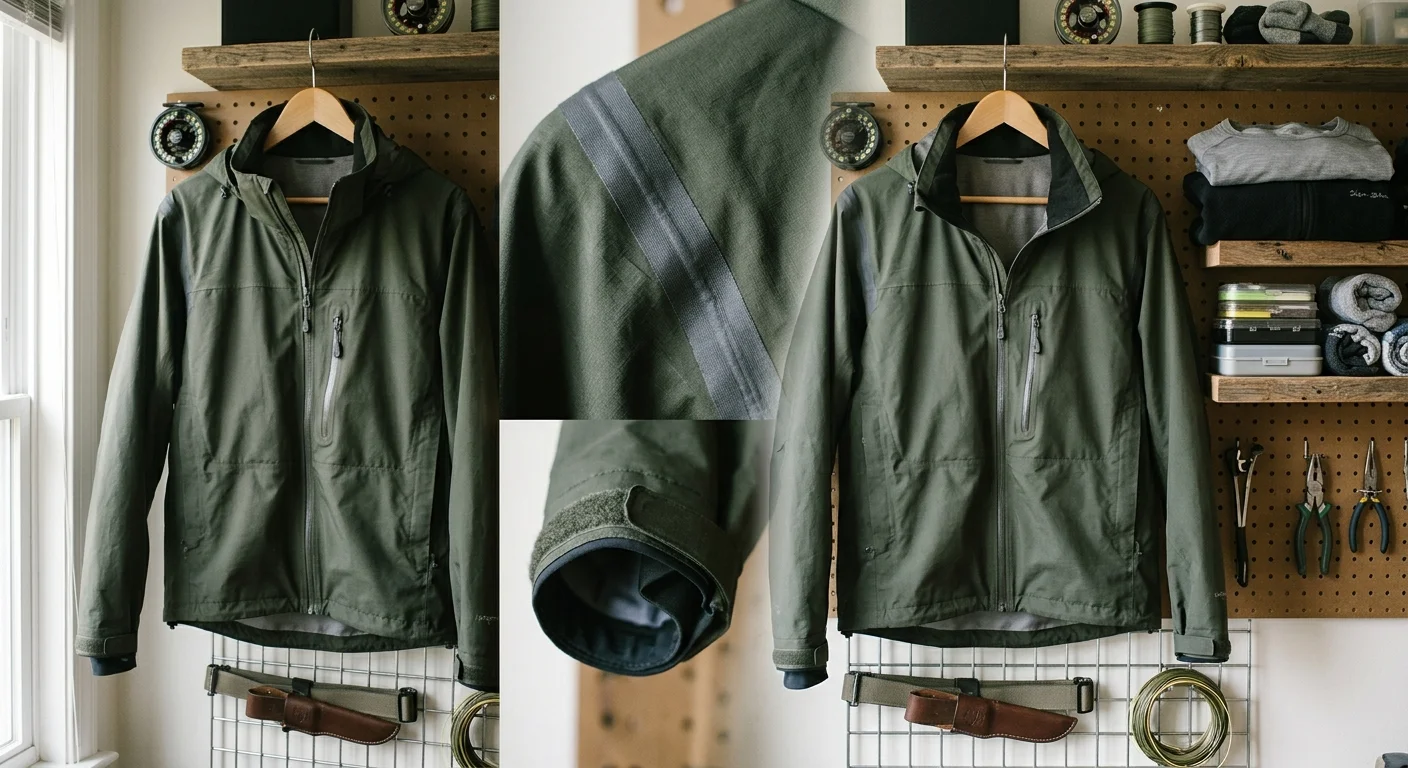
A well-built fishing jacket can last 5–10 years. Skip the maintenance, and it fails inside a single season.
The main cause of failure is DWR degradation. That surface coating is what makes water bead up and roll off. Saltwater exposure, abrasion against gunwales, and insect repellent all speed up the breakdown. Plan to reapply every 20–30 uses. Serious saltwater anglers may need to do it sooner.
The Fast DWR Check
Sprinkle water on the outer fabric. It beads and rolls off — you're good. It spreads and soaks in — the DWR is gone. Reapply before your next trip, not after.
How to Restore DWR
Three methods, matched to severity:
Heat activation — For mild degradation. Tumble dry on low with two tennis balls to stop bunching. Heat wakes up the existing DWR. No product needed.
Spray-on treatment — Mid-season refresh. Use Nikwax TX.Direct or Grangers Performance Repel Plus. Focus on shoulders and forearms. Let it sit 1–2 minutes, wipe off the excess, air dry, then add light heat.
Wash-in treatment — Annual full restoration. Use Nikwax or Grangers 2-in-1 Wash + Repel. One 50ml cap, full 30°C cycle.
Best practice: wash-in once a year, spray-on at mid-season.
Cleaning Rules That Protect the Membrane
Never use regular detergent, fabric softener, bleach, or dry-cleaning solvents. Alkaline residue from standard detergents eats through both the DWR layer and the waterproof membrane beneath it. The damage builds up silently and is hard to reverse.
Use a mild technical detergent — Nikwax Tech Wash or Grangers Performance Wash — in warm water at 30°C max. Clean every 3–5 uses, and always before storage. Salt is hygroscopic. Leave it in the fabric and it draws moisture in. That promotes mildew and speeds up coating breakdown.
Storage : hang it loose in a cool, dry spot out of direct sunlight. Never fold or compress it for storage. Heat and UV break down the membrane even while the jacket sits unused.
FAQ: Waterproof Fishing Jackets — Answers to the Questions Anglers Ask
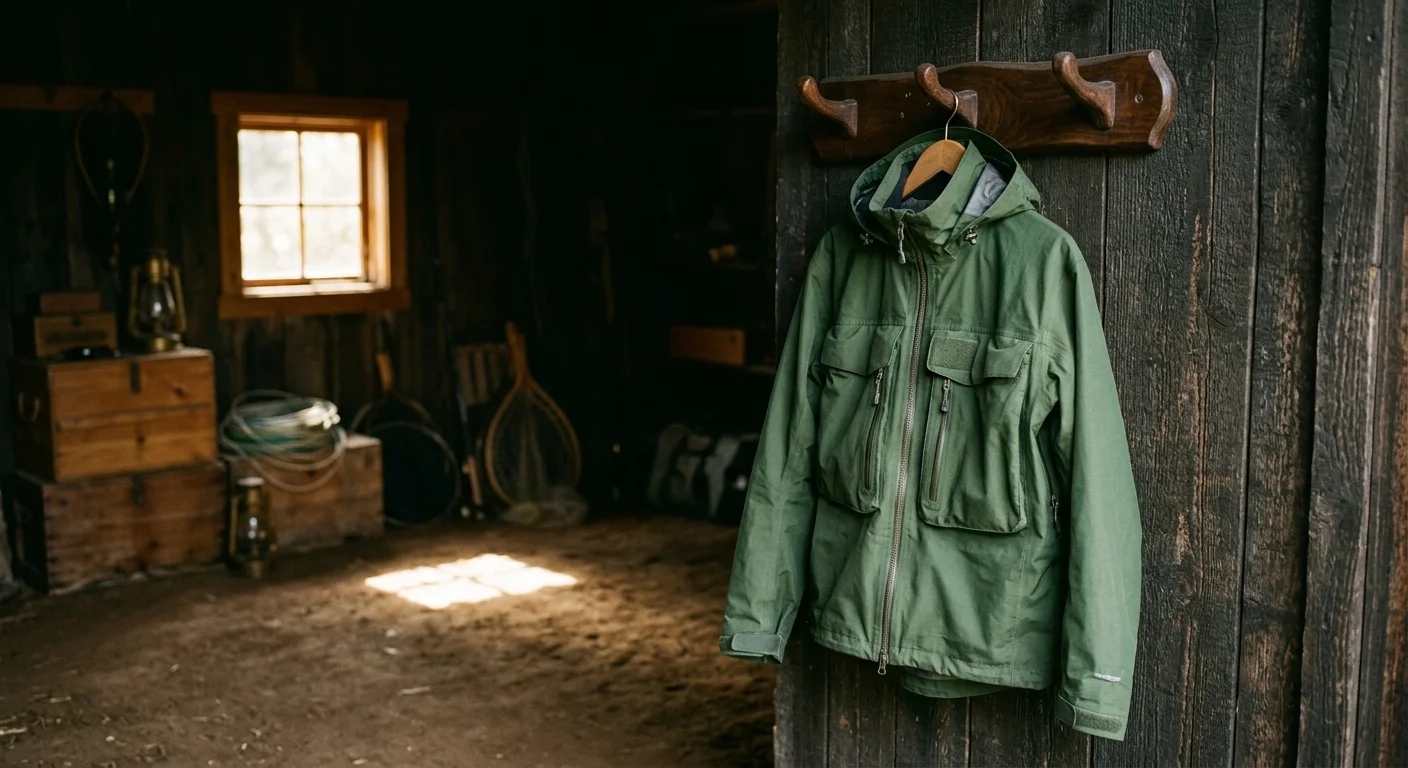
Six common questions. Straight answers. No filler.
Is a fishing jacket different from a regular rain jacket?
Yes — by a wide margin. A fishing jacket is built for hours on the water. It resists fish slime and scale cuts. It handles high wind on an open boat. The gear pockets stay functional even while wet. A standard rain jacket is made for a quick walk to the car. Its waterproof rating sits around 3,000mm. That's not enough for open water.
Is Gore-Tex worth the price premium?
For serious anglers, yes. Gore-Tex hits 20,000–30,000mm and holds breathability under heavy physical effort. Budget coatings top out near 3,000mm and do a poor job shedding vapor. Top brands like Simms and Grundens use Gore-Tex for good reason — it performs where cheaper materials fail.
Can a water-resistant jacket handle saltwater fishing?
No. Salt spray, wind-driven rain, and wave exposure will soak through a DWR-only jacket in under an hour. Saltwater fishing needs at minimum a 10,000mm waterproof rating. You also need extended cuffs and an adjustable hood built for rough, wet conditions.
How do I know if my jacket is waterproof?
Check the hydrostatic head number first.
- Under 5,000mm — not reliable
- 10,000–20,000mm — fishing-grade protection
Also check for taped seams and waterproof zippers. All three specs need to be listed. No specs listed? Assume the jacket won't hold under real pressure.
What should I expect from a jacket under $100?
You get basic DWR coating, around 3,000mm protection, and limited breathability. Fine as a backup or for light, occasional use. Expect leakage in heavy rain. The coating wears down fast. There's no real membrane underneath — nothing to back it up once the DWR fades.
What does berunclothes.com use for waterproofing?
Our jackets use a 3-layer Waders membrane. Here's what that includes:
- 20,000mm waterproof rating
- 5,000g/m²/24h breathability
- YKK waterproof zippers
- Oversized exterior pockets
That matches the performance standards covered throughout this guide — not a budget build dressed up with marketing language.
Conclusion
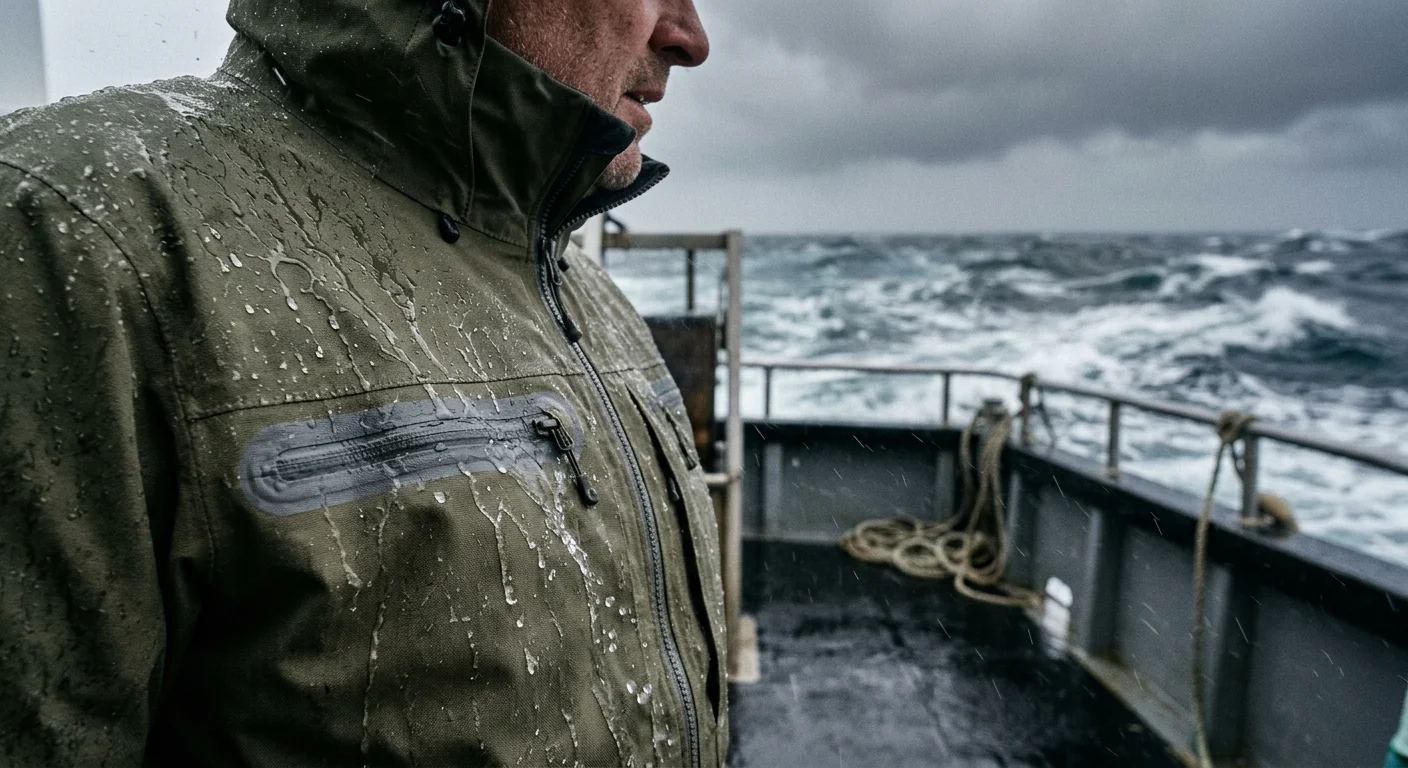
Here's what most fishing apparel brands won't tell you: a jacket labeled "water-resistant" works fine — until it doesn't. Out on the water, that moment usually hits at the worst possible time.
So ask yourself one honest question: how serious is the weather you're fishing in?
Light drizzle and morning mist? A quality DWR-coated fishing jacket handles that no problem. But sustained downpours, coastal swells, or a full day offshore? That's a different story. You need genuine waterproof breathable fishing gear. Sealed seams. Verified hydrostatic head ratings. Construction that can take a real beating.
Stop guessing. Know your conditions. Match your protection to them. Invest in gear that does its job every single time you launch the boat.
Browse Berun's fishing jackets at berunclothes.com — the fish don't wait for better weather, and neither should you.