The wrong fishing line can ruin your entire day on the water — and most anglers don't notice until the big one gets away. Even experts working with high-performance fishing apparel manufacturers often emphasize that performance gear starts with the right line choice. Fluorocarbon and monofilament both have loyal fans, but neither line is the clear winner for every situation. The real question is which one works best for you , your target species, and the conditions you're fishing.
New to rigging up? Or rethinking your setup after a tough outing? Either way, knowing the key differences in fishing line strength, sensitivity, stretch, and visibility underwater changes how you fish. By the end of this guide, you'll know which line belongs on your reel — and why.
What Is Monofilament Fishing Line? (And Why Anglers Still Love It)
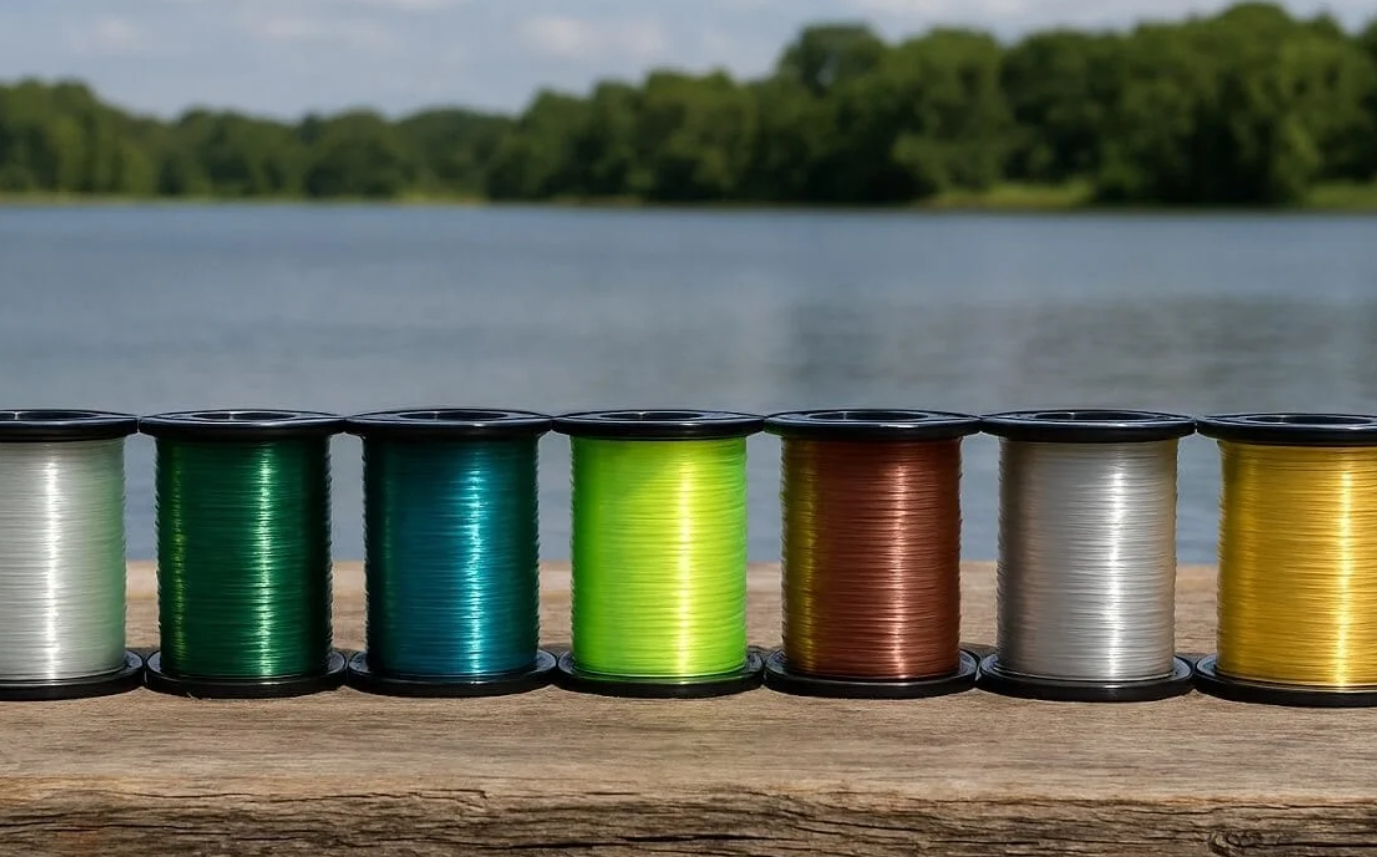
Monofilament has been on reels for decades — and for good reason. Many technical fishing clothing suppliers for all conditions highlight mono setups because of their versatility across beginner and advanced environments.
"Mono" is what the name tells you: a single, continuous strand of nylon polymer pushed through tiny holes during manufacturing to form one untwisted fiber. No weaving. No layering. Just one clean, flexible strand built for consistency.
Here's what makes it work:
Stretch : Mono stretches 25–30% under load. That built-in give absorbs the shock of a hard-running fish. Fewer snapped lines during those wild first runs. Fluorocarbon doesn't give you that same forgiveness.
Buoyancy : Mono floats. Its low density keeps the line on the surface. That makes it the go-to choice for topwater lures and surface presentations. The line stays up — it won't drag your bait down.
Knot strength : It ties clean and holds firm. For beginners still learning the Palomar or improved clinch, mono is the easiest line to handle. Knots seat well, and the material doesn't fight you.
Abrasion resistance : A quality mono spool takes repeated contact with rocks, dock pilings, and structure. It holds up better than most anglers expect.
Price : At $5–$10 per spool , mono is the most affordable option out there. You can respool often without thinking twice about the cost.
There's a tradeoff worth knowing: that same stretch that protects you during a fish run also reduces your fishing line sensitivity . You feel less. Hook sets need more deliberate force. In clear water, mono's higher light refraction makes it more visible to fish than fluorocarbon.
For spinning reels, topwater setups, and anyone putting together their first tackle kit — mono is still one of the most versatile, forgiving, and practical lines you can start with.
What Is Fluorocarbon Fishing Line? (The Science Behind Its Stealth)
Fluorocarbon isn't just a different material — it's a different philosophy of fishing.
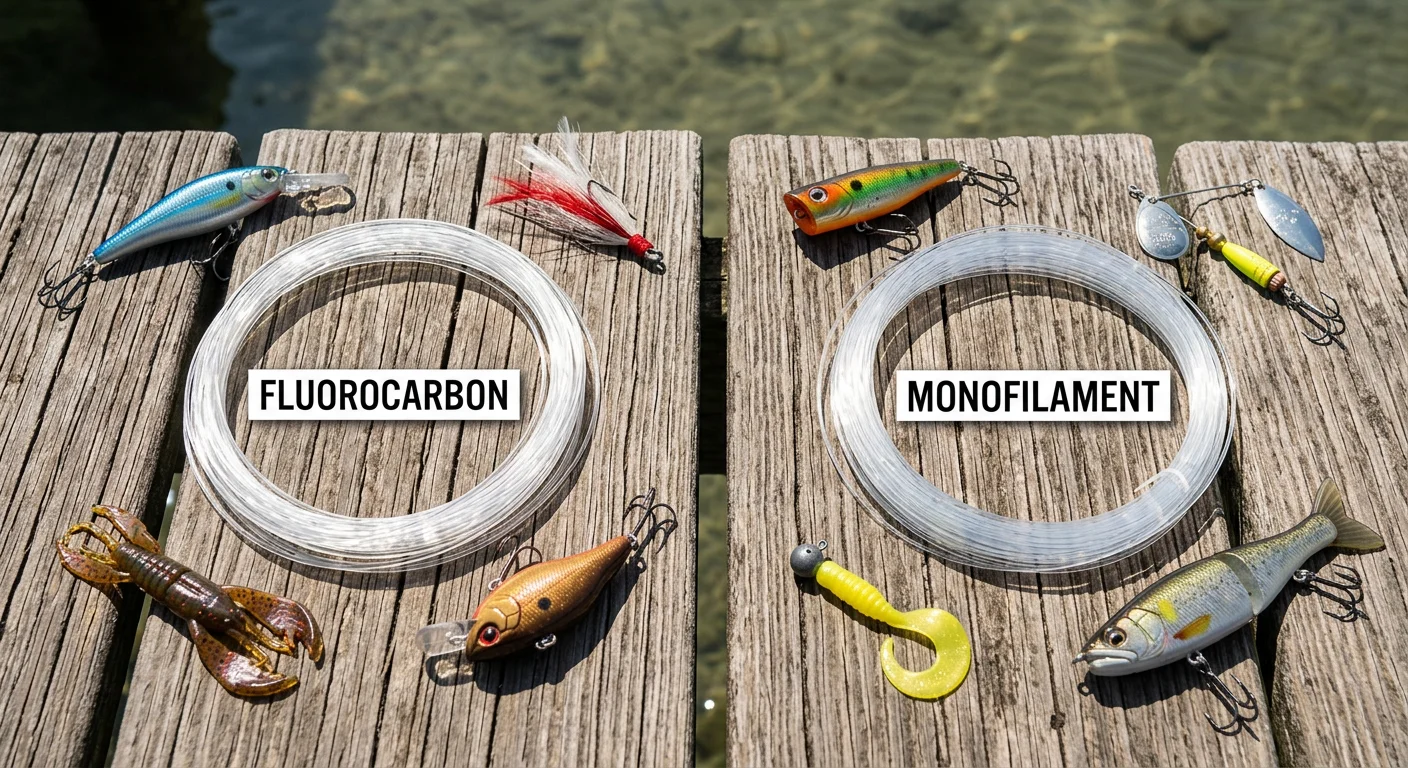
It's made from PVDF (Polyvinylidene Fluoride). Fluorocarbon line carries a refractive index of 1.42 — very close to water's 1.33–1.34 . That gap matters more than most anglers realize. 94% of light passes straight through the line underwater. Fish see less than 5% of its outline. Monofilament? That number jumps 20–30% higher. In clear water, the difference between a bite and getting ignored often comes down to that one optical fact.Fluorocarbon is built for precision. It's widely recommended in setups designed alongside custom fishing wear for different angling styles, where adapting to conditions is key.
But stealth is only part of the story.
Here's what sets fluorocarbon apart across every performance metric that matters:
Stretch : Fluoro stretches less than 10% under load — compared to mono's 25–30%. Less give means more direct contact with your bait, sharper sensitivity, and hooksets that land every time.
Sinking rate : Fluorocarbon has a density of 1.78–1.82 g/cm³ (water sits at 1.0). It sinks 1.5–2x faster than monofilament. Your lure gets down to where the fish are, sitting right in the water column.
Abrasion resistance : Fluoro holds up 2–3x better than nylon against rocks, structure, and toothy fish. Musky and pike leaders built from 100 lb fluorocarbon survive strikes that would shred mono on contact.
Line memory : Less than 5% coil retention after spooling. It straightens out fast, giving you more accurate casts with less frustration.
Diameter : Pound-for-pound, fluoro runs 30% thinner than equivalent nylon. A 20 lb fluorocarbon line measures 0.012" versus mono's 0.018" . Thinner profile, same strength, less water resistance.
Premium fluorocarbon — brands like Seaguar, built on superior PVDF purity — delivers 98% invisibility and 50% less stretch compared to generic options. Leader and tippet spools run $15–$30 for 200–300 yards at 8–20 lb test. That price reflects real material science, not just branding.
The results are measurable. Anglers fishing clear water with fluorocarbon leaders report 20–40% higher hookup rates on wary fish. That's not marketing copy — that's physics doing its job.
Fluorocarbon vs. Monofilament: Head-to-Head Performance Comparison
Seven performance categories. Two fishing lines. One honest answer for each.
Here's the full breakdown — no fluff, no brand bias. Just what the data shows when you put fluorocarbon and monofilament side by side under real fishing conditions.When comparing performance, anglers — including those working with OEM/ODM fishing apparel for professional anglers — often evaluate these key factors.
Strength & Knot Performance
Fluorocarbon wins on tensile strength . Pound-for-pound, fluoro is stronger and thinner. A 20 lb fluorocarbon line runs narrower than 20 lb mono at the same break strength. That thinner profile isn't just cosmetic. It cuts through water faster, moves through structure more cleanly, and reduces visible drag in the strike zone.
But knot strength? That goes to mono — and it's not close. Fluoro's stiffness makes it fight you at the tie. Mono is supple. It seats into complex knots and holds firm even when you're rigging by feel in low light. For beginners or anyone tying up in the dark, that difference is real.
One more factor worth knowing: monofilament absorbs water over time and slowly weakens. Fluorocarbon doesn't. Long-term, fluoro holds its rated strength session after session.
Sensitivity
Low stretch means direct feedback. That's fluorocarbon's core advantage here.
Fluoro has 2–3x lower stretch than mono. Energy travels straight from your bait to your rod tip with little loss. You feel the bait tick the bottom. You feel the hesitation before a strike. You catch the difference between a bite and a snag — before you've already reacted wrong.
Mono muffles that signal. The built-in stretch that protects you during a fish run is the same property that softens what you feel on the other end. In finesse fishing, drop shot rigs, or any setup where reading subtle bites matters, fluoro gives you a clear edge.
Stretch — The Tradeoff That Changes Everything
This is where things get interesting.
Monofilament absorbs shock loads that fluorocarbon can't. A 30–50 lb fish makes its first run and hits the line hard. Mono's 25–30% stretch buys you time. It absorbs the spike. Fluoro stretches less than 10%. That same force goes straight to your knots and terminal tackle. At big-fish scale, that gap can mean a broken line.
Flip the scenario: for hook penetration on finicky biters , fluoro wins. Testing shows hookset success rates 20–30% higher with fluorocarbon over monofilament. That same low-stretch energy transfer is what drives it.
The honest rule: fight trophy fish on mono, chase wary fish with fluoro.
Underwater Visibility
Fluorocarbon wins this category on physics alone — there's no debate.
Fluoro's refractive index sits close to water. In clear streams and flats, it's 20–50% less visible than monofilament at the same diameter. In murky or stained water, that gap shrinks fast. Visibility becomes a secondary concern.
Abrasion Resistance — The Surprising Truth
Marketing says fluorocarbon. Independent testing often says otherwise.
In standardized sandpaper abrasion tests at the same diameter (around .017–.018"), mono and fluoro perform close to the same — roughly 82–83 pull cycles before failure. But here's what's telling: after five repeated stress cycles, monofilament shows no measurable strength loss . Fluorocarbon can drop up to 20% . Same diameter. Same starting strength. Different durability curves under repeated abuse.
The takeaway: fluoro's abrasion advantage is real in some conditions. But mono holds up better under repeated structural stress . Worth knowing if you fish heavy cover often.
Memory & Castability
Mono casts cleaner. Its natural suppleness means less coil retention off the spool, fewer wind knots, and more accurate presentation. Fluorocarbon's stiffness creates coil memory. That can cause 15–25% more casting problems when the line hasn't been stretched or warmed before use. Cold-weather fishing makes this worse.
Castability a priority — especially on spinning gear? Mono has a real, practical edge here.
UV Resistance & Long-Term Durability
Monofilament breaks down under UV exposure and humidity. Over a full season, consistent sun exposure can strip 10–20% of mono's rated strength — with no visible sign of damage. You won't know the line is weak until it fails.
Fluorocarbon holds up against UV far better. Fish often, leave rigged rods in sunny spots, or store line for long stretches — fluoro keeps its rating longer.
Price — The Real Cost Equation
Monofilament costs $5–10 per spool . Fluorocarbon runs $20–30 for 200 yards . That's a 2–3x price gap. It adds up fast when you're spooling entire reels.
The middle ground most experienced anglers settle on: monofilament as main line, fluorocarbon as leader material. You get fluoro's stealth and abrasion resistance right where fish see your terminal tackle — without paying to fill an entire spool at premium rates.
Quick-Reference Comparison
Performance Category | Winner | Key Insight |
|---|---|---|
Tensile Strength | Fluorocarbon | Thinner diameter at same lb test |
Knot Strength | Monofilament | Supple, ties cleanly |
Sensitivity | Fluorocarbon | Low stretch = direct feedback |
Shock Absorption | Monofilament | Protects on big fish runs |
Hook Penetration | Fluorocarbon | 20–30% higher hookset success |
Underwater Visibility | Fluorocarbon | 20–50% less visible in clear water |
Abrasion Resistance | Tie / Mono edge | Mono survives repeated stress better |
Line Memory | Monofilament | Fewer casting issues |
UV Resistance | Fluorocarbon | Holds rated strength longer |
Price | Monofilament | 2–3x cheaper per spool |
No single line dominates every row. That's the point. Matching your line to your conditions beats picking a brand favorite every time.
CTA 1Monofilament vs. Fluorocarbon for Specific Fishing Scenarios
Line selection gets simple fast. Stop thinking about materials and start thinking about conditions.
The water you're fishing, the species you're targeting, the depth your bait needs to reach — these factors make the decision for you. Here's how mono and fluoro stack up across the scenarios where it matters most.
Topwater and Shallow Presentations → Go Mono
Mono floats. That's its core advantage. Surface lures — buzzbaits, walking baits, spinnerbaits — stay right where they need to be. Fluoro sinks. Put it behind a topwater lure and you're fighting your own line on every retrieve.
Soft plastics on the surface — flukes, stick baits — work the same way. Mono keeps the bait up where it belongs. The presentation stays clean and the action looks right. Berkley Trilene Sensation and XL are solid picks here. They're flexible, easy to cast, and forgiving for anglers still dialing in their technique.
Bottom Rigs, Jigs, and Deep Presentations → Go Fluoro
Your bait needs to get down — and stay down. Fluorocarbon does that job. Its density of 1.78–1.82 g/cm³ pulls jigs, Texas rigs, drop shots, and football jigs to depth 1–2 feet faster than mono. In a river or any moving water, that gap matters. Your bait either sits in the strike zone or drifts above it — fluoro keeps it where fish are.
Low stretch is a big deal here too. On a Texas rig or heavy jig, your hookset needs to transfer full force to the hook point. Fluoro's smaller diameter cuts through structure. You get solid sensitivity, a fast sink rate, and real abrasion resistance. For any bottom-contact technique, fluoro is the clear choice.
Matching Your Line to the Species
Serious anglers — including those sourcing from private label fishing clothing for outdoor brands — know that species and environment dictate gear choices.
Bass in clear, high-pressure water — fluoro, no debate. Bass in clear, heavily fished lakes get line-shy fast. Fluoro is near-invisible underwater, so your presentation looks natural. Go lighter in pound test for finesse rigs like the Damiki rig or drop shot. Less diameter, less memory, more bites.
Big, hard-running fish — pike, carp, musky — go mono. These fish make brutal first runs. Mono stretches 25–30%, and that flex absorbs the shock load. A 40 lb pike that turns and runs hard will snap fluoro. Mono gives you that built-in buffer between a landed fish and a lost one.
Freshwater vs. Saltwater
In freshwater , mono is the practical default — great for beginners or casual sessions. A smart setup: fill half the spool with mono as backing, then top it with a fluorocarbon leader. You get fluoro's invisibility and abrasion resistance at the business end, without paying to fill the whole reel at premium prices.
In saltwater , fluoro earns its cost. Salt, UV exposure, and rough structure break mono down faster than most anglers expect. Fluoro holds its rated strength session after session. It doesn't soak up sunlight or glow underwater the way nylon can. For braid and lead-core setups, a fluorocarbon leader is the standard move.
Water Clarity and Current
Clear water — fluoro. Less light refraction means a cleaner, more natural-looking presentation. Fish in pressured clear water have seen every trick. Invisible line gives you a real edge.
Stained or murky water — mono is fine. Visibility stops mattering once fish are hunting by vibration and lateral line. Save the fluoro premium for conditions where it pays off.
Moving water — current, tidal flow, wind drift — fluoro sinks straight and stays put. Mono parachutes in current. It creates slack and drag that pulls your bait off course. Fishing rivers, tidal flats, or any spot where water movement affects depth? Fluoro tracks cleaner and holds position better.
The Hybrid Setup Most Experienced Anglers Use
Mono backing + fluorocarbon leader is the standard combo for a reason. Fill the spool to about 50% with mono, then connect a fluorocarbon topshot or leader using a double uni knot. You get fluoro's stealth and abrasion resistance right where fish see your terminal tackle. No need to fill the entire spool at $20–$30 per 200 yards.
This balanced approach is also recommended by high-performance fishing apparel wholesalers when pairing gear systems for efficiency and cost control.
On spinning reels, fluoro's lower memory and smaller diameter cuts down on line twist and coiling off the spool. On baitcasters, both lines run well — the hybrid setup just makes financial sense.
The quick version:
Scenario | Recommended Line |
|---|---|
Topwater / shallow surface lures | Monofilament |
Jigs / Texas rigs / drop shots / bottom contact | Fluorocarbon |
Bass in clear, pressured water | Fluorocarbon |
Big fighters (pike, carp, musky) | Monofilament |
Freshwater general use / beginners | Monofilament (+ fluoro leader) |
Saltwater / UV exposure / abrasive structure | Fluorocarbon |
Clear water finesse fishing | Fluorocarbon |
Stained / murky water | Monofilament |
Current / river / tidal fishing | Fluorocarbon |
Budget-conscious full spool setup | Mono backing + fluoro leader |
Using Fluorocarbon as a Leader Line (The Hybrid Strategy)
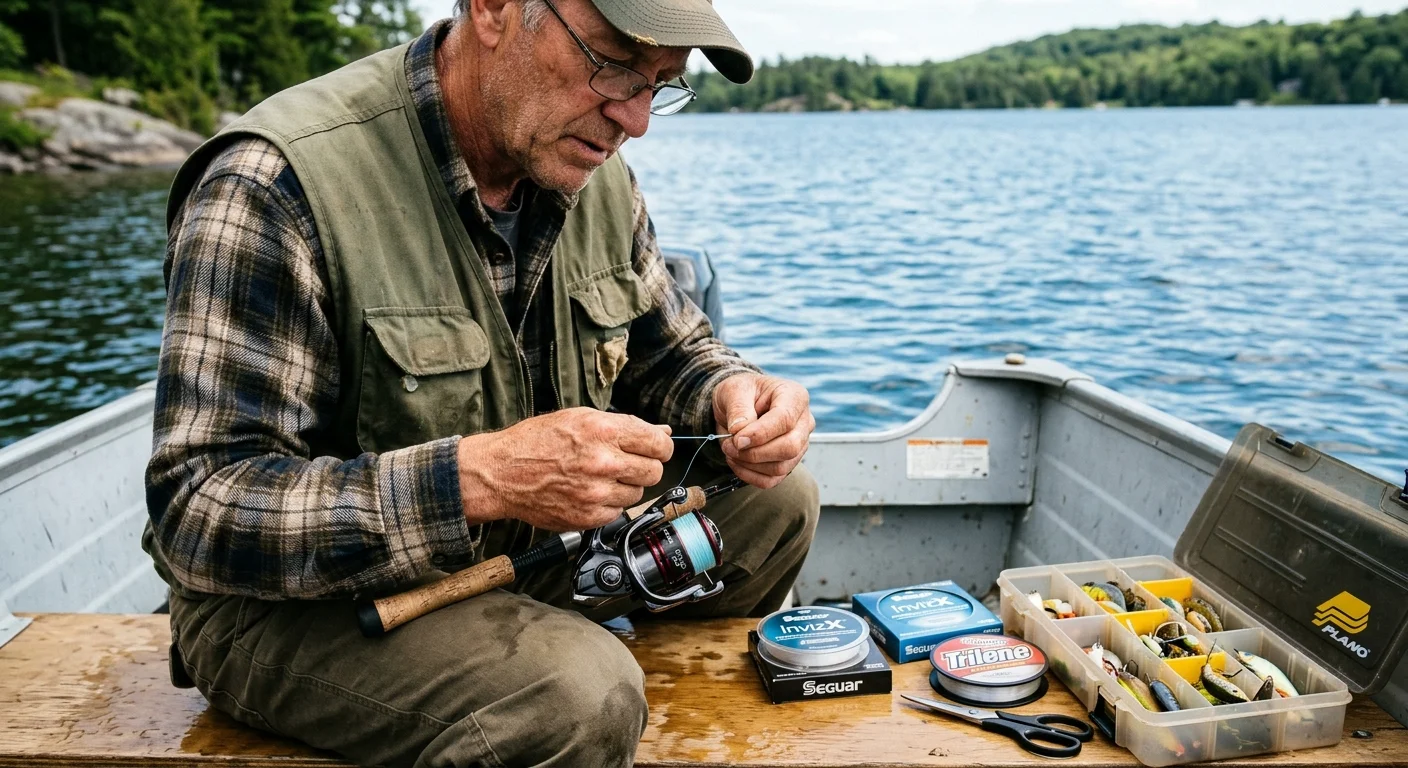
Most experienced anglers never spool a full reel of fluorocarbon — and they still get every advantage fluoro offers.
The hybrid setup explains it all. Pair braid mainline with a short fluorocarbon leader. You get braid's ultra-thin diameter and raw strength through most of your spool. Then fluoro handles the business end — near-invisible, abrasion-resistant, and low-stretch right where fish see your line.
The setup is simple. Tie a 12–24 inch fluorocarbon leader to your braid using a double uni knot. That short section does the job. Replace the leader once it shows wear. Leave the mainline alone.
Matching Leader Strength to Your Target
Pound test isn't one-size-fits-all here:
Mainline Braid | Fluoro Leader | Best For |
|---|---|---|
10–20 lb | 15–25 lb | Bass, walleye, trout, pike, heavy jigs |
60–100 lb | 60–100 lb | Offshore: yellowtail, amberjack, sailfish, tuna |
130–400 lb | 130–400 lb | Big game: marlin, giant bluefin, swordfish |
Where a Fluoro Leader Really Pays Off
Clear or shallow water — the low refraction index goes to work. Fish see far less of your terminal tackle
High-pressure, finicky species — tuna, tarpon, bonefish, and wary bass spook off visible line fast
Rocky or structure-heavy water — fluoro's hardness outlasts mono against kelp, pilings, and wrecks
Bottom fishing and sinking presentations — dense fluoro tracks straight down and keeps your bait in the strike zone
Skip the fluoro leader in murky water, at night, or against extreme toothy fish like sharks. Wire wins that matchup. Also, never run a fluoro leader behind a topwater lure. It sinks. That kills your presentation's action on the spot.
Monofilament vs. Fluorocarbon for Beginners: Which Should You Start With?
Start with mono. Full stop.
Not because fluorocarbon is bad — it isn't. But beginners don't need stealth and sensitivity right now. They need forgiveness. And monofilament is the most forgiving line you can put on a reel.
Here's what that means in practice:
Knot tying is easier. Mono is supple. It seats into an improved clinch or Palomar without fighting you. Fluoro is stiff. That stiffness makes knots slippery and hard to set — a real problem while you're still learning the basics.
Casting is cleaner. Mono's flexibility cuts down on backlashes and wind knots. You spend less time frustrated and more time with your bait in the water.
The stretch protects you. A fish makes a hard run. Your drag is set wrong. Mono's 25–30% stretch absorbs that mistake. Fluoro doesn't give you that same buffer with bad drag settings.
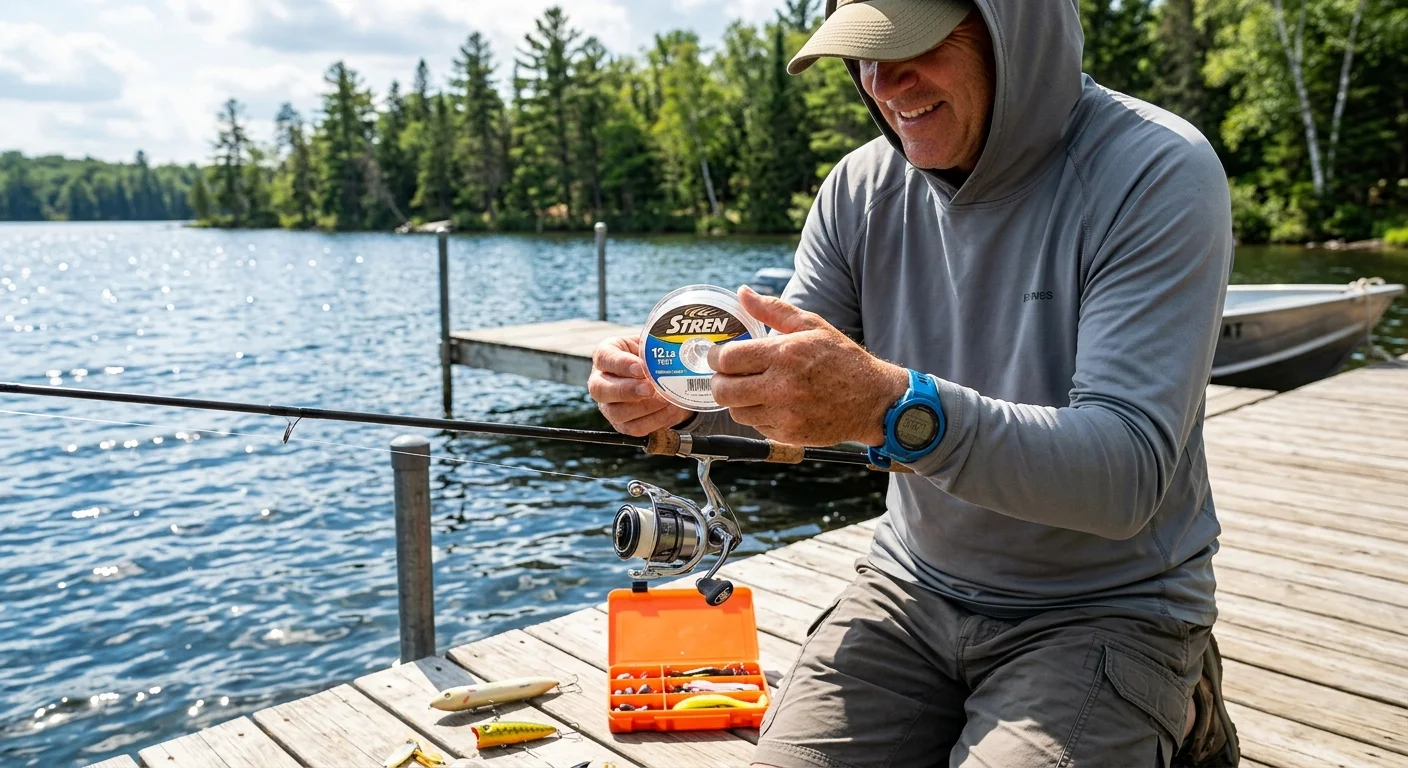
The price makes sense. At $5–$8 per 300-yard spool , you can respool without guilt. Berkley Trilene XL (~$6), Stren Original (~$5), Sunline Super Natural (~$8) — all solid picks in the 10–17 lb range that covers most beginner scenarios.
The beginner mistake worth avoiding: assuming more expensive means better. Fluorocarbon at $20–$30 per spool is overkill for topwater lures and general bass fishing. It sinks too fast for surface presentations. Plus, it punishes tying errors you haven't learned to avoid yet.
Ready to level up? First, dial in your casting, your knots, and your feel for the bite. Then add a fluorocarbon leader to your mono setup. Spool 50% mono as backing, finish with fluoro on top. You cut costs in half and get fluoro's sensitivity right where it counts.
But that's the next chapter. For now, grab a $6 spool of mono and go fish.
CTA 2Quick Decision Guide: Fluorocarbon or Monofilament — Choose in 60 Seconds
Four questions. That's all it takes.
1. How clear is the water?
Clear water → fluorocarbon. Its near-invisible refractive index gives fish nothing to spook at. Murky, stained, or low-light conditions → mono works fine. Light disappears, and visibility stops being a factor.
2. Where is your bait working?
Surface or shallow presentations → mono floats, fluoro sinks. Bottom contact, jigs, structure → fluoro gets there faster. It also holds up against rocks and reef.
3. Are you chasing big, hard-running fish?
Yes → mono's stretch absorbs those brutal first runs. Chasing finicky, bite-shy species → fluoro has low stretch. That means better sensitivity and cleaner hooksets on every bite.
4. What's your budget and skill level?
Starting out or watching costs → mono at $5–$8 per spool is forgiving, easy to knot, and easy on your wallet. Ready to level up → run a fluoro leader on mono backing. You cut your cost in half. You still get the stealth right where it counts most.
That's your decision. Make it in 60 seconds, not sixty minutes.
Conclusion
The right fishing line does more than sit on your reel. It decides whether that trophy catch lands in your net — or vanishes into the deep.
Here's the simple breakdown:
Monofilament is the forgiving, low-cost workhorse. Beginners and casual anglers can rely on it in almost any freshwater situation.
Fluorocarbon is the precision tool. It sits close to invisible underwater, sinks faster, and holds up in tough conditions — where fish get picky and line visibility loses you bites.
Still unsure? Start with monofilament as your main line. Then tie on a fluorocarbon leader line when stealth matters. That one hybrid setup puts most anglers ahead of 90% of the competition on the water.
Now stop researching — and go fish.
For your next session, check out Berunclothes . You'll find performance fishing apparel built to match the same seriousness you put into your tackle box.