You've clipped in. The city is waking up. And somewhere between your front door and the office lobby, you need to look polished — not like someone who just survived rush-hour traffic on two wheels. That tension? This guide was built to solve it.Modern urban cycling apparel manufacturers now design commuter kits specifically for this exact challenge — clothing that performs on the bike but still looks appropriate when you walk into a meeting.
Debating your first set of moisture-wicking cycling clothes ? Ready to ditch that sad rain jacket that soaks through by the third block? Either way, you'll find your answer here.
Here's what we cover:
Layering systems that work for real commutes
Commuter-proof bottoms that hold up all day
All-weather outerwear built for changing conditions
Reflective cycling gear that keeps you safe without killing your style
Everything breaks down by season, budget, and riding distance. Real choices. Real outfits. Zero guesswork.
The Urban Cycling Clothing System: Building Your Core Wardrobe
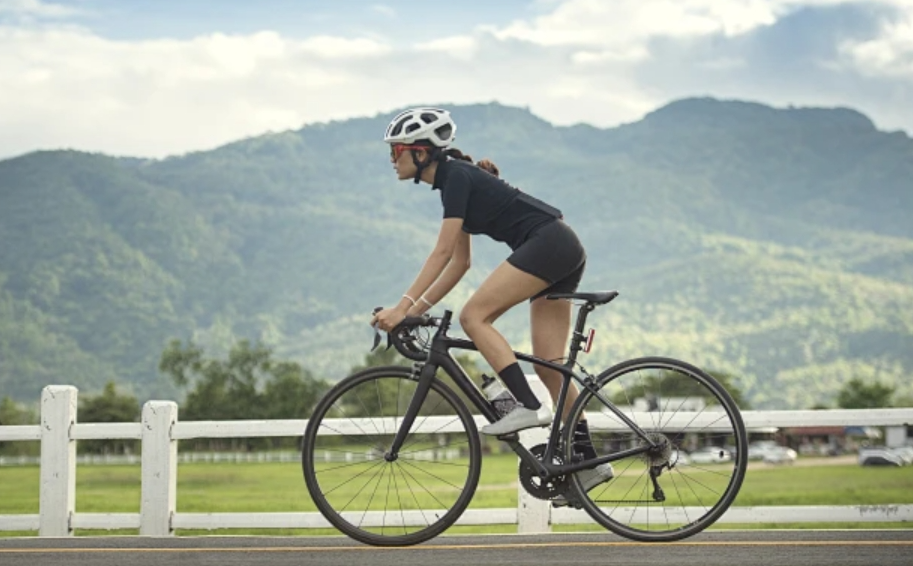
Most commuters make the same mistake: they treat cycling clothes and everyday clothes as two separate wardrobes. They don't have to be.
The urban cycling clothing market has changed fast. What used to mean spandex and racing logos now includes casual cycling clothing that looks right at home in a work meeting. Think cycling jeans with hidden stretch panels. Casual tees with reflective threading you'd never spot until headlights hit them.Many riders now lean toward modular layering systems similar to what custom best urban cycling apparel collections focus on — pieces that function on the bike but blend seamlessly into everyday city wear.
Your core wardrobe breaks down into three functional layers:
These pieces often rely on the same fabric strategies used in advanced custom moisture-wicking urban cycling clothing services, where ventilation panels and stretch zones are mapped to real riding posture rather than casual standing fit.
Each piece earns its place by doing double duty. Nothing is single-use.
The fabrics doing the real work include recycled polyester, graphene-infused textiles, and bio-based fibers. These materials are built for anatomical fit — meaning less fatigue and more comfort on longer rides. You get stretch where you need it, breathability where it counts, and looks that hold up off the bike too.
Build smart. Buy less. Ride better.
Padded Shorts, Liner Shorts & Commuter Pants: Solving the Saddle Comfort Problem
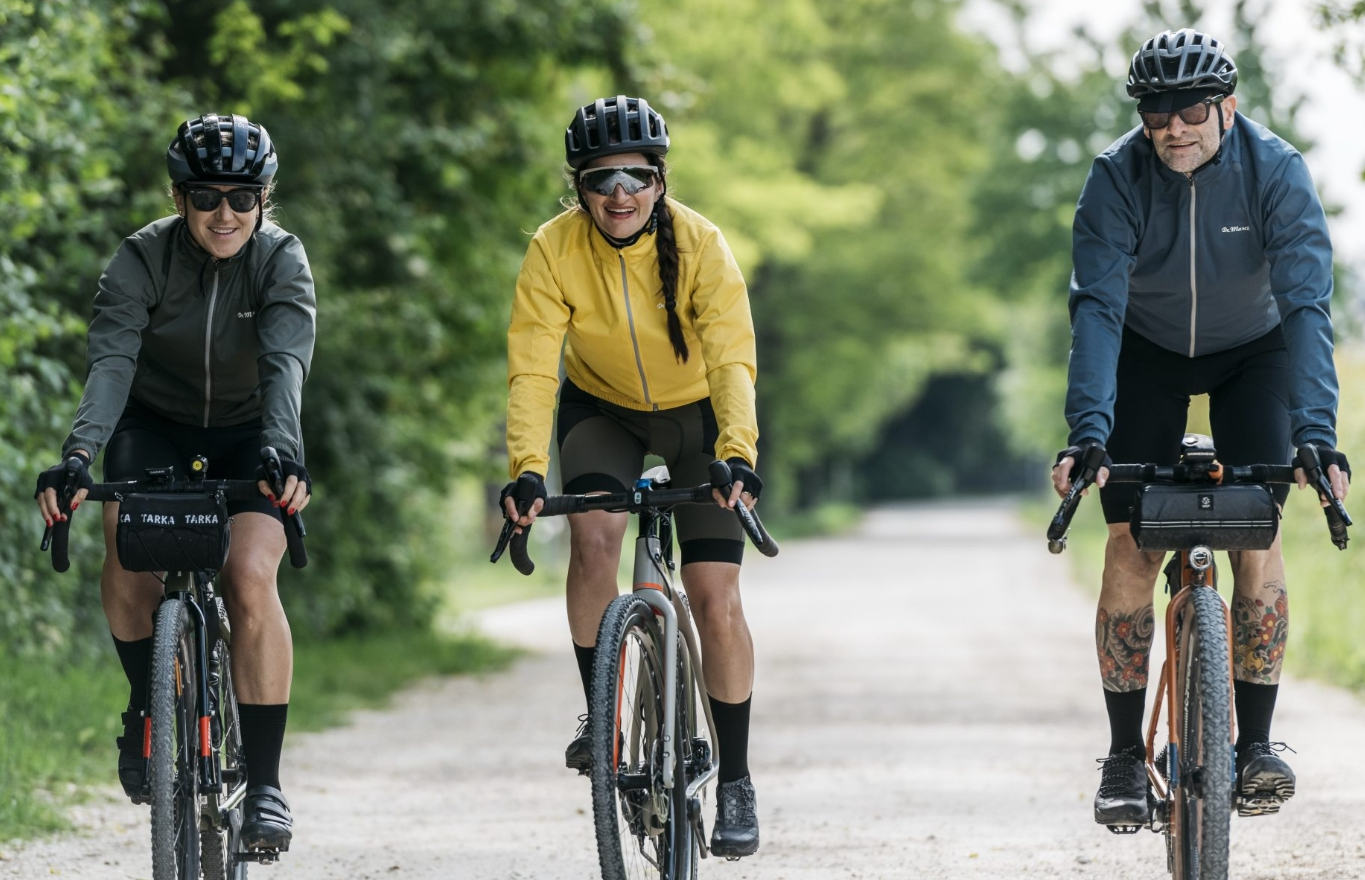
Saddle discomfort ends more cycling commutes than rain ever will.
It's the quiet dealbreaker nobody talks about. You start strong, feel fine for the first 20 minutes, then spend the rest of the ride squirming on the seat. The fix isn't toughing it out. It's wearing the right layer underneath— the same principle used by experienced professional urban cycling outfit suppliers who design commuter clothing systems around hidden comfort layers rather than visible race-style padding.
Here's how the three main options break down:
Padded Bib Shorts: Maximum Comfort, Minimum Versatility
Bib shorts give you the thickest chamois padding available. The fit locks in and stays put, even on longer rides. That suspension strap system does real work — it holds everything in place so nothing shifts mid-effort. Models like the POC MTB Air Bib-Short (€160) pack serious storage: 4 back pockets and 2 leg pockets. The Canyon Enduro Bib-Short (€200) goes further, adding a removable back protector and a dedicated hydration bladder pocket.
The trade-off is real. Once you're off the bike, bib shorts don't work for office visits or lunch stops. They're purpose-built for riding, not much else.
Liner Shorts: The Commuter Sweet Spot
Cycling liner shorts sit in the €45–€70 range. For most urban riders — especially those looking into bib shorts vs regular cycling shorts — they hit a better balance. Thinner padding, less bulk, no back fabric — you'll run cooler and feel more at ease during post-ride transitions.
For longer commutes, the Troy Lee Designs MTB Pro Liner Short (€70) stands out. Its TMF 6 Hour Pad delivers chamois thickness that matches many full bib shorts. That's serious cushioning at a fraction of the bulk.
On the lighter end, the 7mesh Foundation Bike Boxer Brief (€50) works well for shorter rides under two hours. Minimal padding, simple design — solid for quick commutes where you don't need much protection.
Liner Shorts + Commuter Pants: Cold Weather's Best Answer
Liner shorts paired with commuter bike pants — this is the go-to setup for cold commutes or office dress codes. The sewn-in pad removes the chafing problem you'd get from two elastic layers stacked together. Your outer pants take care of pockets, warmth, and a clean professional look.
Top performers by category:
- Best comfort + fit : Troy Lee Designs Skyline and Patagonia Dirt Craft — silky fabric, accurate sizing, supportive chamois
- Best lightweight feel : Patagonia Dirt Roamer — welded (not sewn) construction, closest to spandex pedaling freedom
- Best breathability : Models with laser-cut inner thigh vents and ultra-thin mesh panels
One honest caveat: some models show pilling at the hips after only a few uses. Waistband elasticity can fade faster than you'd expect too. Check the construction quality up close before you buy.
Ride under 2 hours → Basic compression or light liner shorts
Long-distance commute → Thick chamois liner or bib shorts
Office destination + cold weather → Liner shorts layered under commuter pants
Get the bottom layer right, and everything else on the bike gets easier.
CTA Section 1Looking for Custom Urban Cycling Apparel?
BeRun Sports manufactures high-quality cycling clothing with custom designs, moisture-wicking fabrics, and reflective details. MOQ starts from 100 pieces.
Get a Free QuoteWaterproof & Breathable Outerwear: The Urban Cyclist's Weather Shield
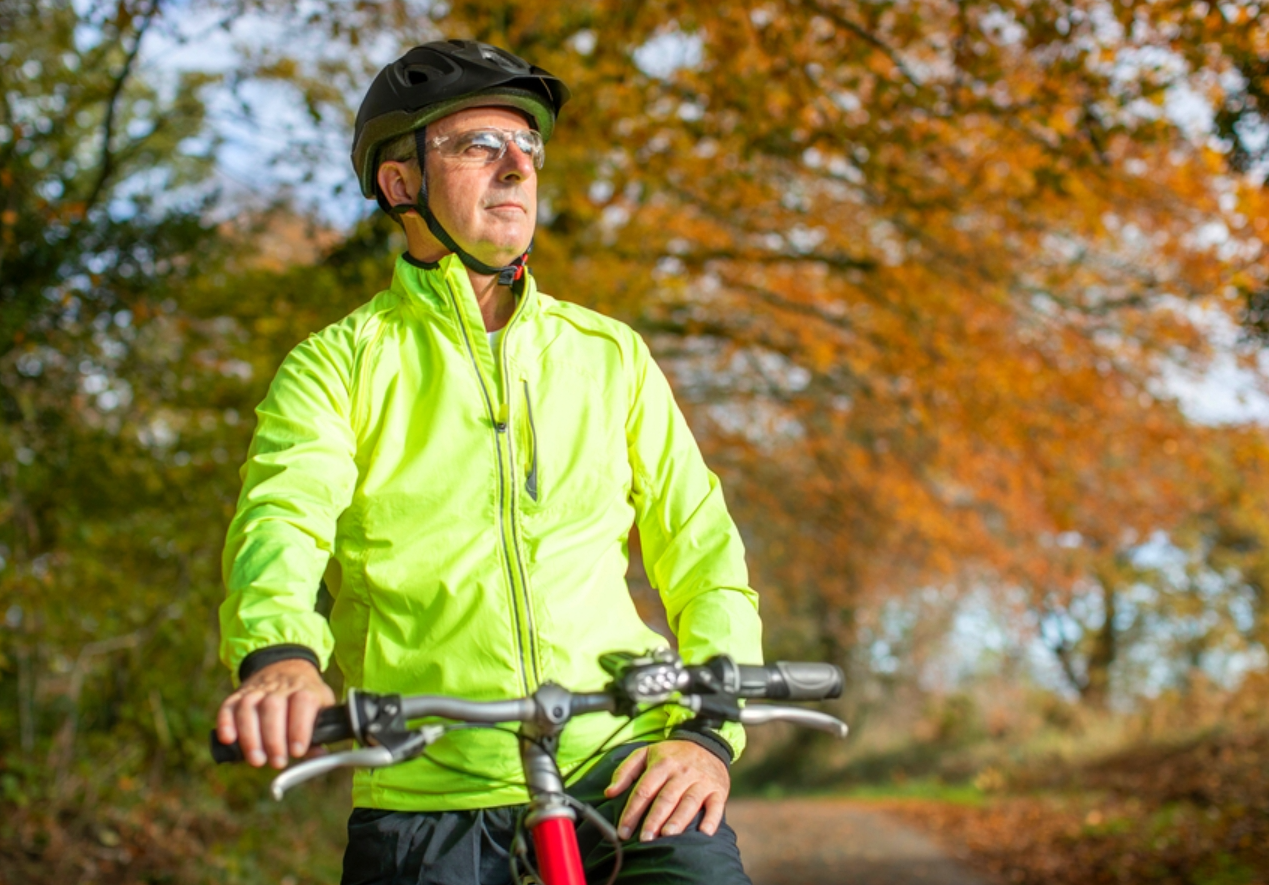
Rain doesn't care about your schedule. It shows up mid-commute, uninvited, and turns a 20-minute ride into a soggy regret. The right waterproof bike commuter jacket fixes that — and this category has grown fast as specialized waterproof bike commuter jacket wholesalers expand urban-focused rain gear built for cycling posture rather than hiking use.
Waterproof vs. Breathable: The Numbers That Matter
Every commuter jacket carries two ratings:
Waterproof (mm hydrostatic head) — how hard it resists rain
Breathability (g/m²/24hr MVTR) — how fast it moves sweat vapor out
For urban commutes of one to two hours, 10,000mm is your floor . It handles showers and street spray. Look for taped seams and a DWR coating — those two details make the difference. The Bontrager Avert hits this mark. It's ultralight, packable, and comes with a helmet-compatible hood and BOA adjustment. The Trek Circuit also rates 10K/10K. It weighs just 112g in a medium. Easy to stash. Fast to pull on.
Step up to 20,000mm+ for heavier rain or longer rides. The Outdoor Research Helium gives you 20K mm waterproofing and 20K g/m² breathability. The 7Mesh Copilot and Skypilot go further — 28,000mm waterproofing, with breathability ranging 15K–25K g/m² through Gore-Tex Paclite construction.
Here's the real trade-off: higher waterproofing cuts breathability — unless the jacket uses a premium membrane like Gore-Tex Active or Paclite. The Endura MT5000 II sits at 20K/40K g/m², thanks to its 3-layer ExoShell and arm vents. That's the sweet spot for hard-effort urban riding.
Packable vs. Full-Function: Which Jacket Fits Your Commute?
Packable | Full-Function | |
|---|---|---|
Ratings | 10K mm / 10K g/m² | 20K–28K mm / 15K–40K g/m² |
Weight | ~112g, pocket-sized | Heavier, structured |
Best for | Short rides, light showers | All-day reliability, heavy rain |
Examples | Bontrager Avert, Trek Circuit | 7Mesh Copilot, Endura MT5000 II |
Short commute under an hour? A packable jacket covers you. Longer routes or unpredictable skies? Go with 3-layer construction — face fabric, waterproof membrane, interior liner. Three layers breathe better, last longer, and hold up at high-wear contact points.
Completing the Rain System: Shoes & Legs
A great jacket solves half the problem. Legs and feet need coverage too.
Neoprene shoe covers (rated 5K–10K mm) seal ankle gaps and block road spray. Pair them with a jacket that has a dropped rear hem. That overlap stops water from creeping up your back.
Waterproof over-trousers (10K–20K mm, taped seams) protect your lower body. Use stirrups under the pedals to hold hems in place. Match their breathability to your jacket — around 15K g/m² keeps the whole system balanced.
One rule: skip 2-layer jackets for regular commutes. They wet out faster and breathe unevenly. 3-layer fabrics push vapor out through membrane pores while blocking rain from getting in. That's the construction that holds up across every season.
Seasonal Bike Commuter Clothing Guide: What To Wear All Year Round
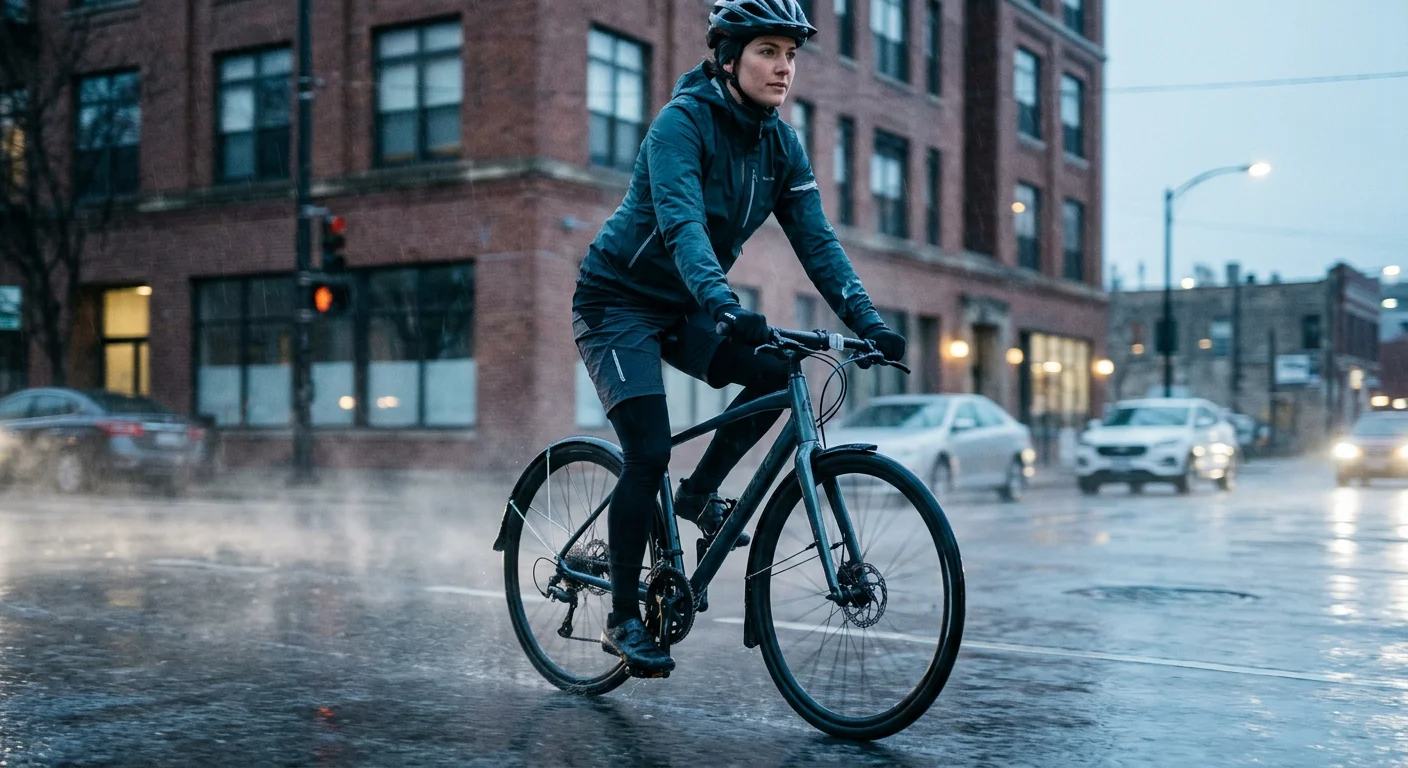
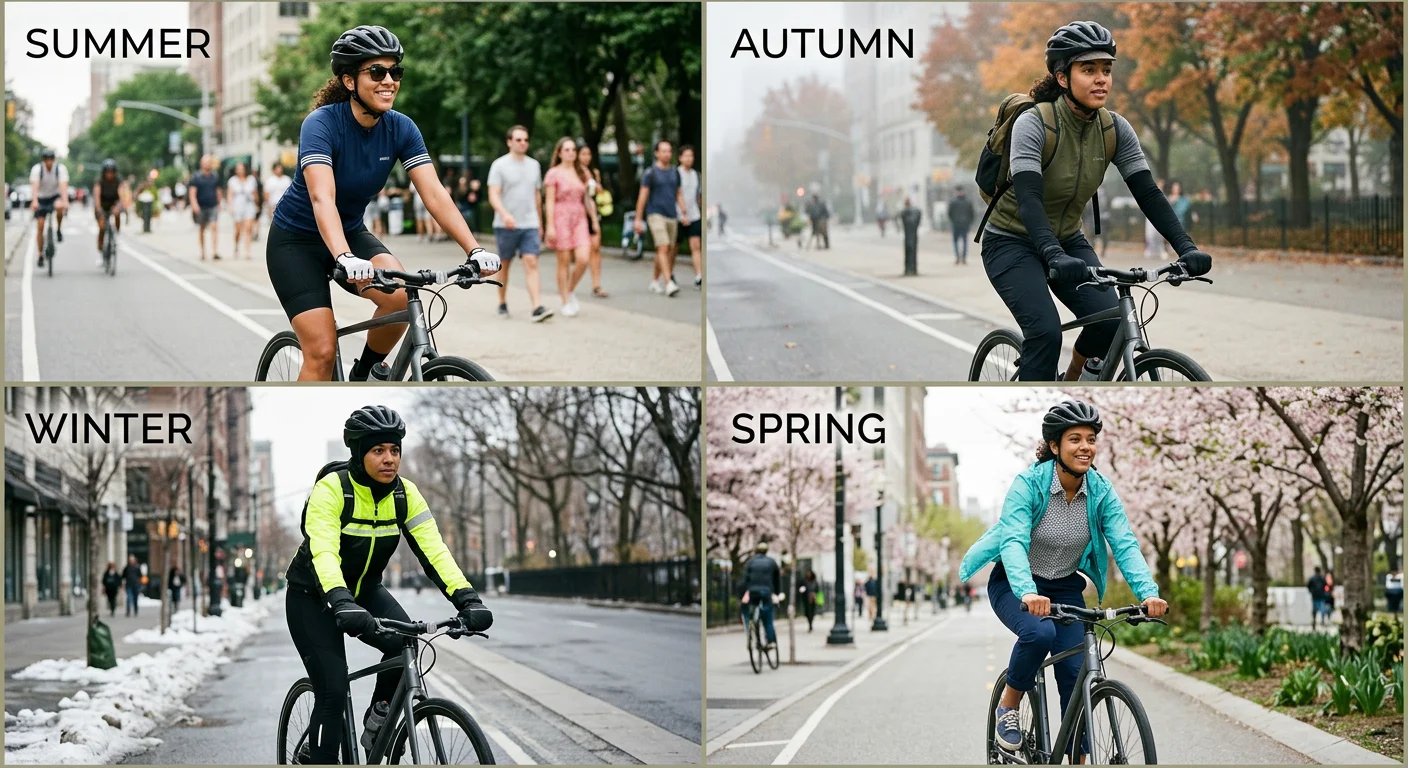
Weather doesn't wait for you to figure out your outfit. One morning it's 8°C and drizzling. Three weeks later, you're sweating through your shirt before you hit the first traffic light. Smart commuters don't run four separate wardrobes. They run one adaptive system that handles whatever the sky throws at them.Many cycling brands now build these seasonal systems through flexible OEM/ODM urban cycling apparel services that allow brands to combine commuter styling with technical cycling fabrics.
Here's how that system works across every season.
Summer: Stay Cool, Stay Office-Ready
Heat kills effort — and it kills your chances of showing up presentable. Our guide to the best cycling apparel for hot weather riding goes deeper on this topic.
The summer formula is simple. Start with a lightweight breathable cycling jersey over a moisture-wicking base layer . Pair it with lightweight shorts or padded bib shorts . Keep it minimal. Fabrics that trap heat have no place in your kit.
UV protection matters : Sunscreen, a cycling cap, and sunglasses are non-negotiable in full daylight
Hands and feet : Light socks plus open-finger gloves keep airflow moving where you need it most
The rain backup : Tuck a packable vest-style waterproof bike commuter jacket into your jersey pocket or bike bag. It's light enough to ignore — until you need it at 8:55am
Winter: Layer Up, Then Layer Smarter
Cold commutes are won or lost at the contact points. If you need help choosing what cycling clothes to wear during winter, start here. Your hands, feet, and ears suffer first.
Start with a thicker cycling base layer in synthetic or merino. Merino handles odor better across back-to-back rides. Add thermal bib tights with a windproof front panel and water-repellent finish. Top with a winter cycling jersey and a waterproof bike commuter jacket that includes reflective cycling gear details for low-light visibility.
Think of it like an onion. Build layers you can strip off mid-commute without stopping for long.
Cold-weather essentials by priority:
Contact Point | What to Wear |
|---|---|
Hands | Full-finger cycling gloves commuting ; lobster mitts for extreme cold |
Feet | Neoprene shoe covers + knee-length thermal socks |
Head | Warm cap under helmet |
Legs | Waterproof over-trousers over thermal tights on wet days |
Start layered. Peel back as your body heats up. Don't push through a sweaty final mile because you refused to stop and drop a layer. It's not worth it.
Spring & Autumn: The Trickiest Seasons to Dress For
A 22°C temperature swing in a single day is common in transitional months. You leave home in a jacket. You're stripping down by noon. You're cold again by the time you lock your bike.
The fix is a 3-piece core kit built for flexibility:
Long-sleeved summer jersey or a lightweight merino base layer — breathable, odor-resistant, and useful from September through May
Wind-resistant hybrid jacket or wind vest — cuts the morning chill without overheating you. Packs down small enough to bungee to your rack or stuff in a jersey pocket
Arm warmers and knee warmers in merino wool — the most underrated commuter move. They go on and off in seconds, fit in your pocket, and turn a summer jersey into a solid autumn kit
Morning routine: warmers on, jacket zipped. By midday: pull off the arm warmers, unzip the vest. That's it. No drama, no extra bags.
Year-Round Non-Negotiables
Some pieces stay in rotation no matter the season:
Padded bib shorts or liner shorts — once your commute clears a few miles, chamois padding goes from optional to essential
Cycling base layers — switch weights by season (lightweight mesh in summer, midweight merino in winter), but always wear one
Reflective cycling gear — this isn't just a winter concern. Low-light conditions show up year-round on early starts and late finishes. Visibility isn't worth cutting corners on
One system. Four seasons. Every commute covered.
CTA Section 2Need Custom Cycling Jerseys for Your Brand?
From breathable base layers to waterproof commuter jackets — we manufacture full cycling kits with your branding. OEM/ODM welcome.
Explore Cycling ApparelProfessional Cycling Kit vs. Everyday Commuter Clothes: Which Is Right for You?
There's no single answer here. It all comes down to how far you ride, where you're headed, and whether your office has a shower.
Here's the honest breakdown:
Professional cycling kit (Lycra, bib shorts, jersey) wins on pure performance. Chamois padding absorbs shock and kills chafing on rides over an hour. Moisture-wicking fabrics pull sweat away twice as fast as cotton. Aerodynamic fit cuts wind resistance and fatigue by 10–20%. The trade-off? You can't walk into a meeting in bib shorts. A full outfit change is non-negotiable.
Everyday commuter clothes work fine for short rides under 30 minutes or e-bike commutes where effort stays low. Cotton feels okay at low intensity — until it doesn't. Start sweating, and cotton holds that moisture tight. The wet-fabric feeling sticks with you all day.
The smarter move for most commuters? Go hybrid.
Under 30 min → Everyday clothes, no problem
30-60 min → Merino base + hybrid layers
Over 1 hour → Proper cycling kit with a change packed
Visibility & Safety Gear: Reflective Cycling Clothing for Urban Roads
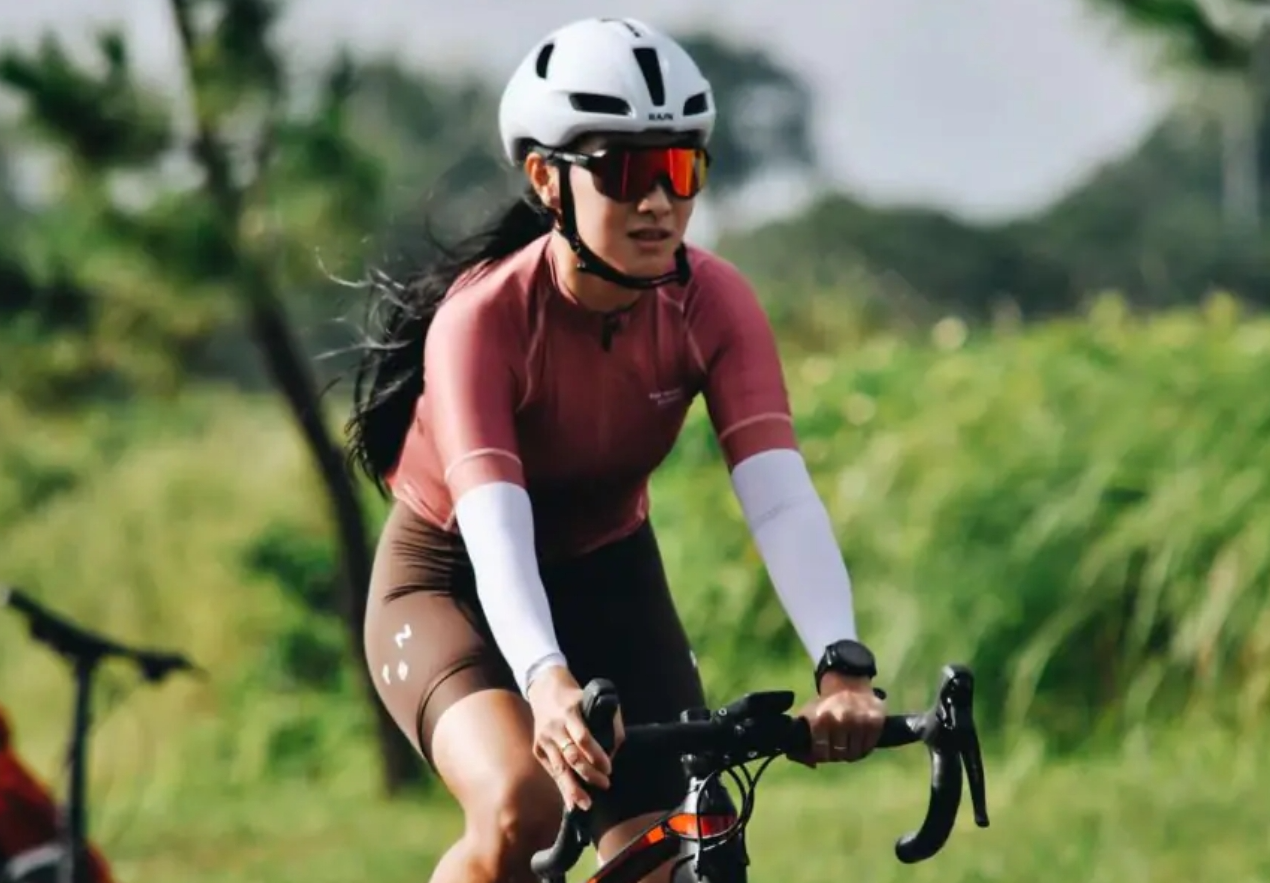
A car traveling at 40mph needs 164 feet to stop. Without reflectors, a driver can't see you until you're 50 feet away. Do the math — it doesn't work in your favor.
Being seen isn't optional. It's the whole game.
The research backs this up hard:
These aren't small margins. They're the difference between a close call and something much worse.
Where You Put Reflectors Matters More Than How Much You Wear
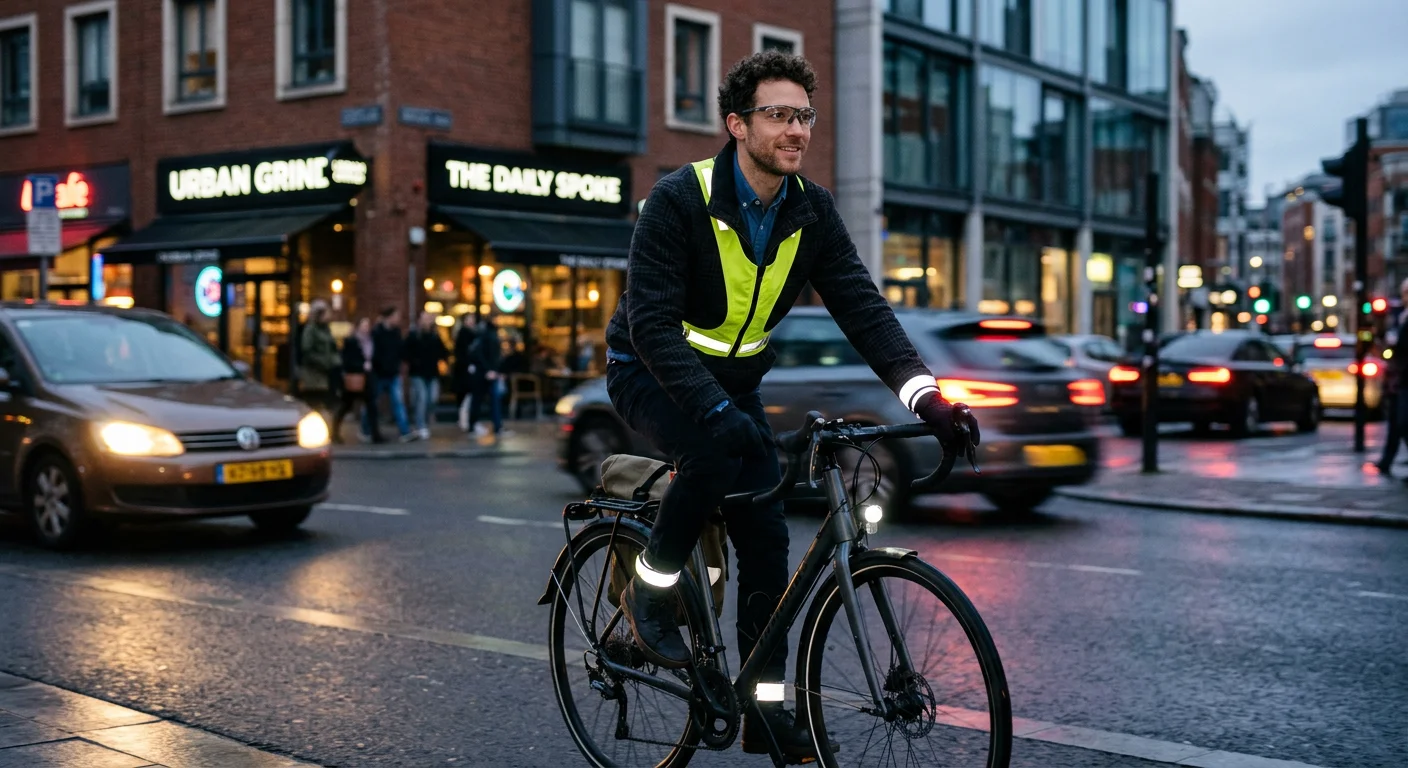
Here's what most riders get wrong: slapping a reflective strip on a jacket and calling it done. Static reflectors on your torso help — but they're not the best placement.
Multiple studies (Wood 2010/2012, Costa 2017, Edewaard 2017/2020) all point to the same conclusion: reflectors on your wrists and ankles make a big difference in how fast drivers spot you . The reason is biomotion. The natural swinging rhythm of your limbs signals "human" to a driver's brain faster than any static shape.
Add pedal reflectors and the effect gets even stronger. Rotating legs create movement that stands out against the still urban background.
Reflective Type | Best For | Limitation |
|---|---|---|
Built-in jacket strips | Full silhouette recognition | Limited biomotion effect |
Hi-vis cycling vest | Daytime visibility, easy layering | Less effective after dark |
Wrist & ankle bands | Biomotion detection — most evidence-backed | Partial body coverage only |
For urban night riding, flashing lights outperform steady beams . City backgrounds are full of competing light. A pulse cuts through that noise in a way a steady beam just doesn't.
Building Your Visibility Setup
Stack these four elements and you've got the bases covered:
Don't skip the details. Cycling gloves for commuting should have reflective panels on the back. Your hands are always moving and sit right at handlebar height — that's prime visibility real estate. Look for EN388 abrasion rating ≥ level 2 and touchscreen-compatible fingertips. A helmet with reflective threading adds 360° visibility with zero extra effort.
Visibility isn't a style sacrifice. The right reflective cycling gear sits cleanly over everything you already wear — and it might just be the most important piece of kit you own.
Urban Cycling Outfit Shopping Guide: Budget, Mid-Range & Premium Picks
Spend smart, ride better — that's the one rule that matters here.
Cycling commuter clothing covers a massive price range. The gap between a $30 jersey and a $150 one isn't clear until you're 45 minutes into a sweaty Thursday morning. At the sourcing level, materials, reflective details, and waterproof membranes all influence what brands eventually pay in custom urban cycling clothing wholesale prices — which is why higher-tier commuter gear tends to show stronger durability and better climate control.Here's what your money gets you at each tier — no fluff, no brand worship.
Budget Tier: Under $50
Think Amazon basics and entry-level house brands. You'll get breathable fabric that handles casual, short rides — a basic jersey runs around £21. Functional? Yes. But the moisture-wicking cycling clothes tech is basic. The fit lacks refinement. Chamois padding is thin at best. Your commute is under 20 minutes on flat ground? This tier covers you. Push past that, and the weaknesses show up fast.
Best for: Casual riders, short distances, riders testing commuting before committing.
Mid-Range: $50–$100
This is where the investment starts making real sense. Brands like DHB offer much better build quality — tighter seams, superior fabrics, and a fit built to cut wind drag. Their breathable cycling jersey range starts around £65. The Aeron line (around £110) steps into race-ready territory with strong chamois support for two-plus hours in the saddle. Reflective cycling gear details and smarter pocket placement show up here too — small things that make a real difference on daily commutes. The commuter bike pants at this level also lean toward relaxed, office-friendly cuts with 2–3 rear pockets and map or phone slots built in.
Best for: Riders commuting 30–60 minutes each day who want performance without paying a premium price.
Premium Tier: $100–$200+
Rapha sets the standard. Zip guards that remove skin rub. Cycling base layer fabrics that manage temperature well. Crash replacement programs that protect your gear over time. A Rapha jersey sits at £100+ — close to double the mid-range price. The comfort gap on long or hard commutes is real and clear. These pieces outlast budget options by years.
Best for: Long-distance commuters riding every day, riders who won't settle on fit or finish.
Commute Kit vs. Race Kit: Know the Difference Before You Buy
This trips up a lot of first-time buyers. Commuter-specific cycling clothing is cut in a different way from race kit — and that gap matters more than most people expect.
Feature | Commute Kit | Race Kit |
|---|---|---|
Fit | Relaxed torso and arms for layering | Tight aero cut |
Pockets | 2–3 rear + map/phone slots | 3 rear pockets only |
Fabric | Cotton-blend or poly (soft, urban aesthetic) | Full synthetic nylon/lycra |
Posture | Supports upright riding position | Built for aggressive forward lean |
Check the label before buying. Look for words like "endurance" or "commuter" — not "aero" or "race." Do a quick arm-raise test in store. The jersey rides up past your waistband? It's cut for a tucked race position, not a city saddle.
The right kit at the right budget doesn't just feel better — it makes every commute easier to start.
FAQ: Your Urban Cycling Clothing Questions Answered
Real questions from real commuters — answered straight.
Do I need specialist cycling clothes just to commute?
Not always. For rides under 30 minutes, everyday clothes work fine. Push past that, and moisture-wicking cycling clothes with a solid cycling base layer start making a real difference. Over 65% of urban adults who cycle on a regular basis still grab general activewear. Most of them regret it the first time they show up at work soaked through.
What's the single most important piece of kit to buy first?
A waterproof bike commuter jacket . Weather is the one variable you can't control. You can work around everything else.
Do I need reflective gear in the city?
Yes — on early starts and late finishes, it matters a lot. A hi-vis cycling vest costs next to nothing and takes five seconds to pull on. The visibility boost is not small.
Are cycling gloves worth it for commuting?
Worth every penny. Cycling gloves for commuting protect your palms in a fall. They also add reflective visibility at handlebar height — the spot drivers are most likely to see.
What fabrics should I prioritize?
Synthetic fabrics lead the market for good reason. They hold 51% market share thanks to their stretch, durability, and breathable cycling jersey performance. Merino wool is a strong pick for transitional seasons. Its natural odor resistance means fewer outfit changes and less hassle on back-to-back ride days.
CTA Section 3Ready to Launch Your Own Cycling Clothing Line?
Whether you need custom jerseys, commuter pants, or reflective safety gear — BeRun Sports has 10+ years of manufacturing experience. Get started today.
Contact Us NowConclusion
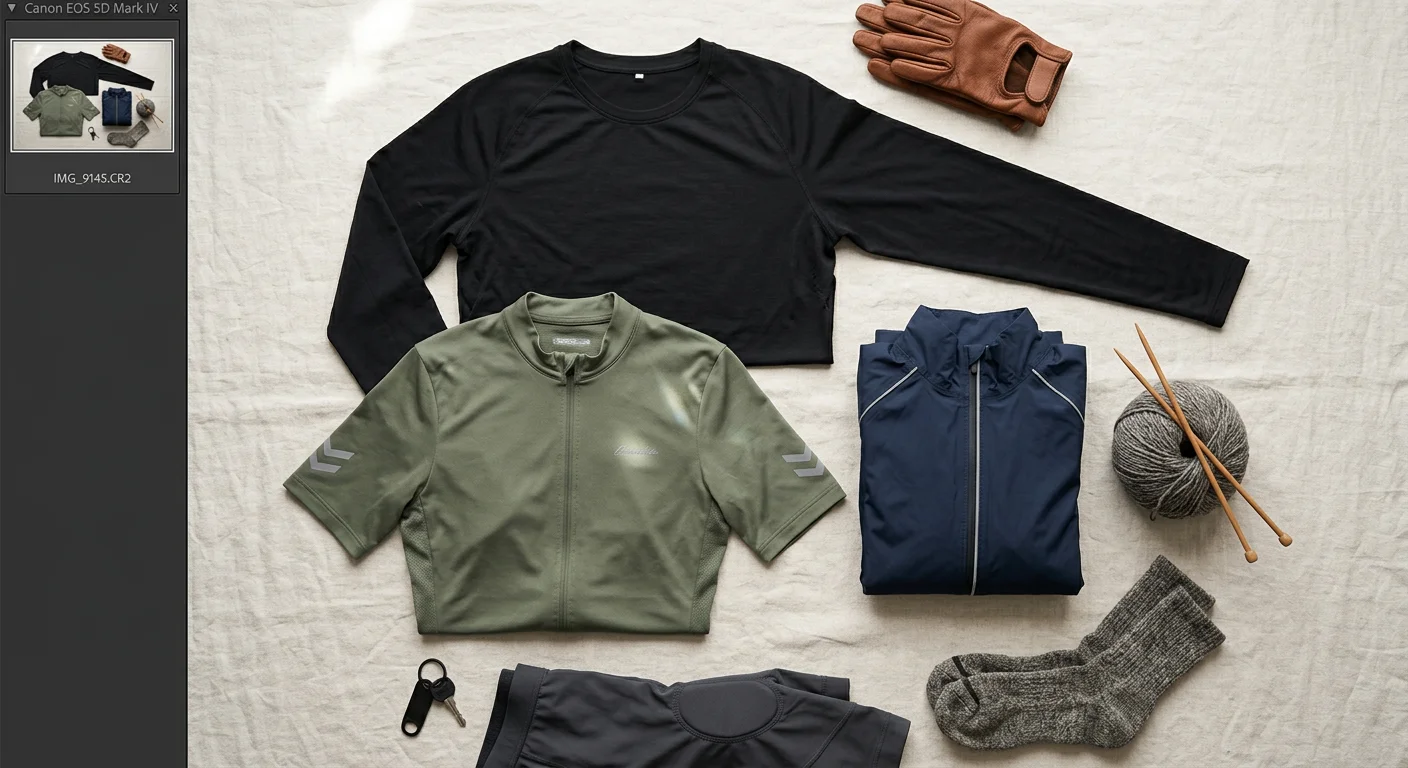
Your perfect commute outfit isn't hiding in a specialty cycling shop — it's a system you build , one smart layer at a time.
The real secret urban cyclists know? You don't have to pick between arriving sweaty in spandex or showing up polished but stiff. The right moisture-wicking cycling clothes handle the sweat. A packable waterproof bike commuter jacket handles the weather. Together, they get you into the office looking sharp — like you planned it that way. Because you did.
Start simple. Nail your base layer first. Then invest in one quality outer shell. Add a hi-vis cycling vest for those dark morning rides. From there, the wardrobe comes together on its own.
Now close this tab. Open your closet. Go. The best commuter outfit is the one that gets you on the bike — today, not someday.
The city looks better from a saddle.
Video Section