You've stood in front of two cycling jerseys — one at $30, one at $180 — and asked yourself: is that $150 gap buying me anything real, or just a fancier logo?
It's a fair question. The honest answer: it depends on who you are and how you ride.
Some riders waste money chasing premium cycling apparel they'll never push hard enough to appreciate. Others cheap out on budget cycling gear. Then they suffer through soggy fabrics, blown seams, and jerseys that turn into parachutes at 25mph. Both mistakes cost you — just in different ways.The same price gap is something cycling jerseys wholesalers track closely when comparing entry-level training kits with high-end race apparel moving through the market.
That's why this guide exists. We broke down every dimension that matters:
Fabric quality
Moisture management
Fit
Durability
Pockets
Construction
Stop guessing. Start spending smarter.
What Separates a $25 Jersey from a $200 One? (The Honest Truth)
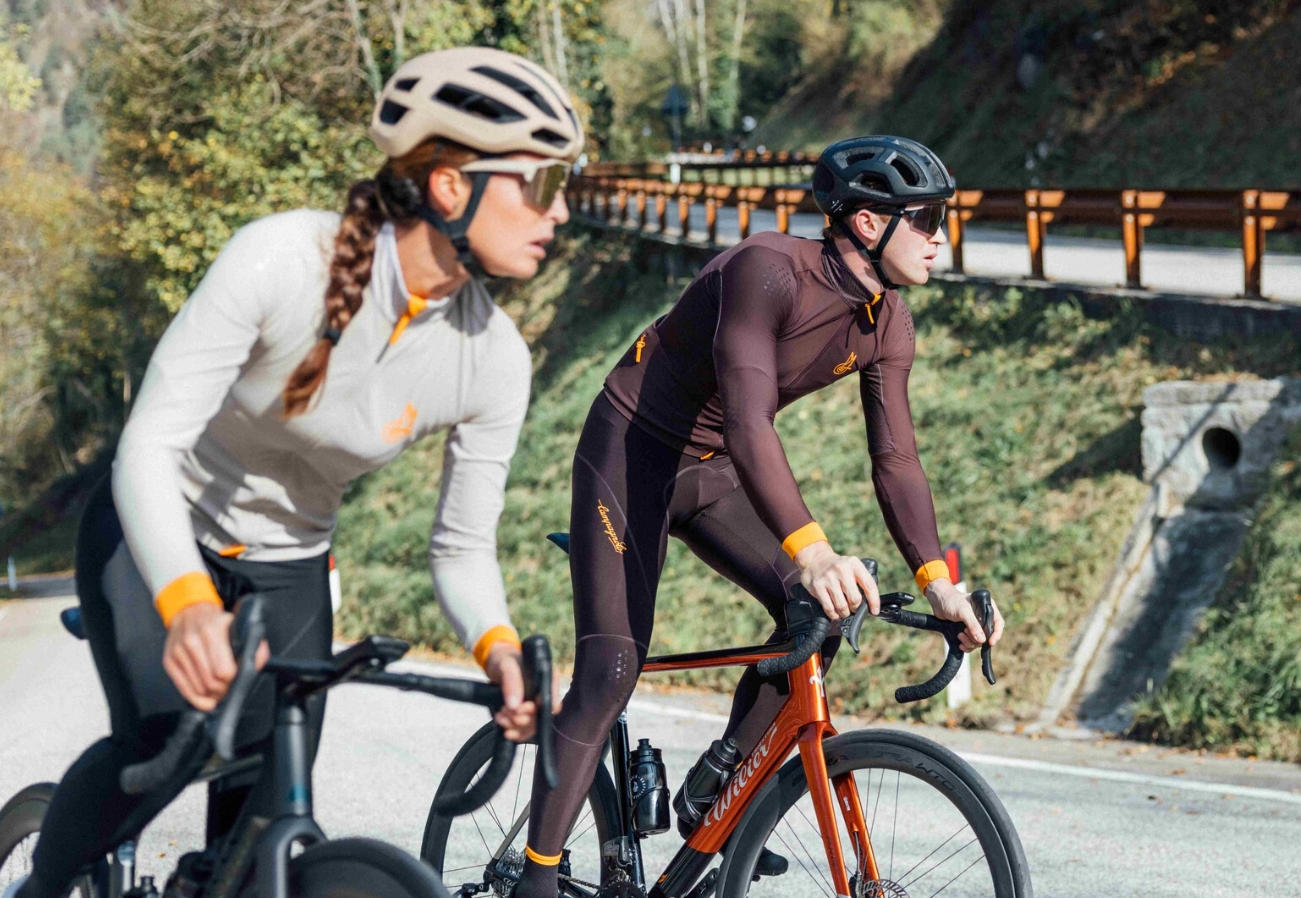
Here's something the cycling apparel industry doesn't want you to know: the raw materials in a $200 jersey cost about the same to produce as those in a $25 one.
The manufacturing cost gap between budget and premium cycling gear? Smaller than you'd think. Brand markup, marketing spend, and retail overhead inflate that price tag — not some magical fabric formula.At the top end of the market, expensive cycling jerseys suppliers focus less on raw fabric cost and more on aerodynamic pattern cutting and race-oriented compression panels.
But that doesn't mean both jerseys perform the same on the road.
Here's where the real gap lives:
Fabric construction — Budget jerseys use decent base fabrics. Premium jerseys take those fabrics further. They're built for cycling aerodynamics, targeted compression, and zone-by-zone breathability. You won't feel the difference at mile 4. You'll feel it at mile 40.
Cycling jersey stitching quality — Cheaper jerseys cut corners on seams. Premium jerseys use flatlock stitching, which removes pressure points and prevents chafing on long rides. Budget seams break down under repeated stress and washing.
Cycling jersey fit and comfort — Elite jerseys are cut for an aggressive riding position. A $25 jersey fits fine while you're standing. At race pace, it turns into a wind sail.
Moisture wicking cycling jersey performance — Both jerseys claim moisture management. One delivers consistent wicking under sustained heat and effort. The other just claims it.
Cycling jersey pockets design — Premium rear pockets hold their shape under load. Budget versions stretch out, sag, and drop your gels mid-ride.
The honest verdict: You're not paying $175 extra for better thread. You're paying for performance that holds up under real pressure. So whether that extra cost is worth it comes down to one thing — how hard you ride.
Fabric & Moisture Management: Where Cheap Jerseys Fail You Most
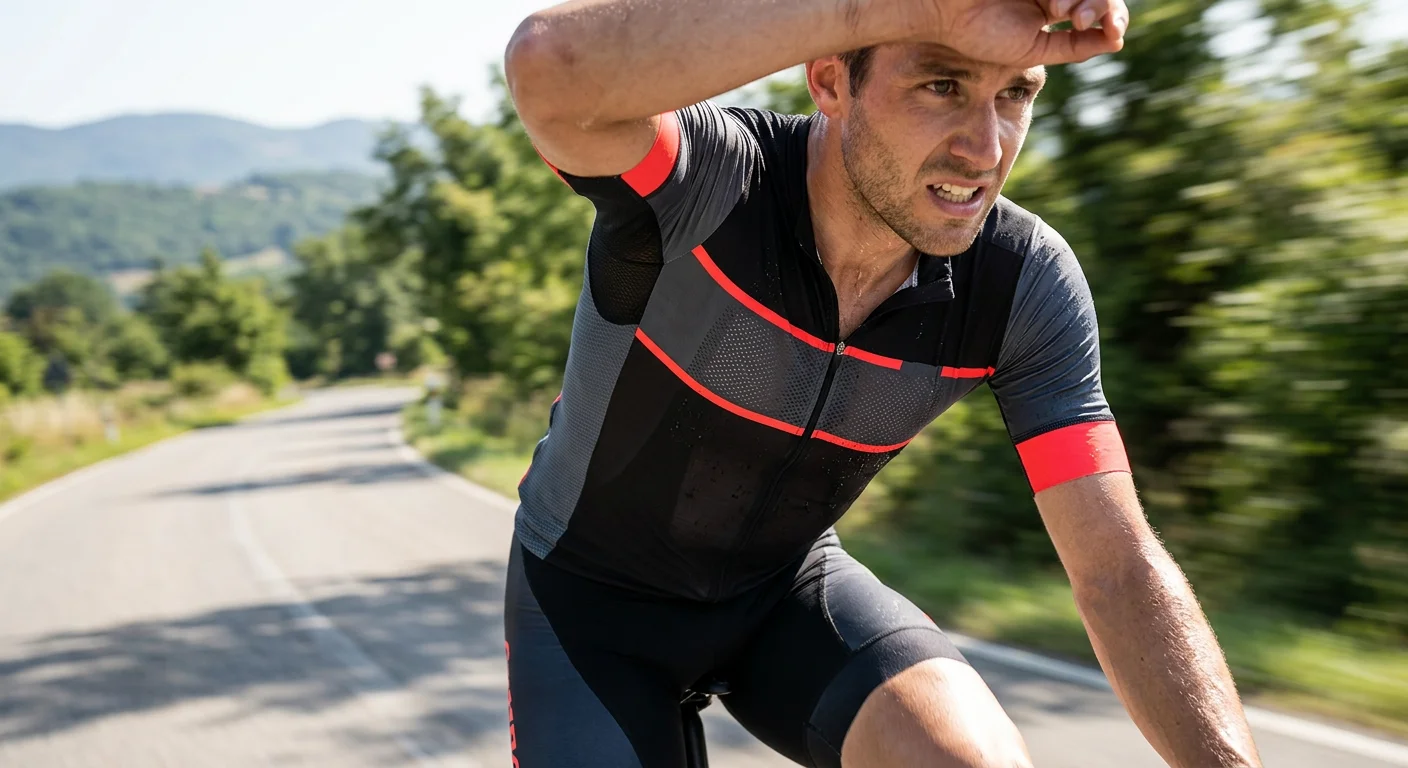
Sweat is the enemy of every cyclist. Your jersey is your first line of defense against it. How well that defense holds up comes down to fabric construction — full stop.Performance-focused designs often originate from custom cycling jerseys suppliers developing breathable fabric layouts for club teams and endurance racing kits.
Here's what most budget cycling gear won't tell you upfront: cheap jerseys don't fail you at mile one. They fail you at mile thirty. That's when your core temperature peaks and your fabric hits its saturation limit.
The Fabric Science Behind the Price Tag
Not all polyester is created equal. That $25 jersey is built from basic textured polyester — decent enough on its own. Premium cycling apparel is different. It uses micro polyester (low denier), 96% polyester/4% elastane blends , and zoned mesh constructions. These materials are built for how sweat moves during hard, sustained effort.
The performance gap in real numbers:
Micro polyester single jersey : fastest dry rate, strong air permeability, best overall moisture management
96% PE/4% elastane blend : ideal pore structure for vertical wicking and water vapor release
Mesh spacer fabrics (80% polyester/20% nylon) : low evaporative resistance, high moisture permeability
Basic cheap polyester : wicking breaks down after saturation — moisture stays trapped against your skin
That last point matters more than anything else on this list.
The "Stuffy Trap" Effect Nobody Talks About
A cheap jersey hits its saturation point fast. At that moment, capillary wicking stops. The fabric quits pulling sweat away from your body. It holds it instead.This saturation issue is exactly why many high-volume cheap cycling jerseyss factory lines still struggle to match the ventilation performance of race-level kits.
The result? Your core temperature rises. Cooling drops. Fatigue speeds up. You get that heavy, soaked feeling that makes you want to quit.
Cotton-heavy budget blends make it worse. Cotton absorbs 8–27% of its weight in moisture before evaporation even starts. On a hard summer ride, that's not a jersey — it's a wet compress pressed against your skin.
Technical cycling jersey breathability fixes this with ventilated mesh panels — around 155 GSM polyester grid constructions — that keep airflow high even under sustained heat. Budget jerseys skip this feature completely.
What's Missing in Cheap Jerseys
Feature | Premium Jersey | Cheap Jersey |
|---|---|---|
Fabric type | Micro polyester / PE-elastane blend | Basic textured polyester |
Air permeability | High (optimized knit structure) | Low — tighter mass, reduced flow |
Post-saturation wicking | Continues via microfiber capillary action | Fails — moisture retained |
Zoned mesh panels | Yes — sweat hotspot targeting | No — uniform construction |
Antibacterial treatment | Silver ion technology | Absent — odor builds fast |
GSM optimization | ~155 GSM breathable grid | Higher mass, lower permeability |
The missing zoned elastic mesh panels hurt the most. Premium jerseys put targeted breathability in the right spots — chest, underarms, lower back. Those are the zones your body heats up first and hardest. Cheap jerseys use the same construction across your entire torso. No fabric zone works harder than another, so the areas that need the most ventilation get none.
The bottom line on cycling jersey fabric quality: riding under an hour in mild weather? A budget jersey's moisture management probably won't wreck your ride. Push past that — hot days, two-hour rides, any real effort — and you'll feel every penny of the difference.
Fit, Cut & Aerodynamics: Why a Baggy Jersey Is Costing You Energy
At typical cycling speeds of 20–30 km/h, 55–75% of your total power output goes toward fighting air resistance. Not climbing. Not rolling resistance. Aerodynamic drag.
That number changes everything about how you think about jersey fit.
A baggy $25 jersey doesn't just look sloppy — it works against you. Loose fabric flaps and billows as you ride. That creates turbulence. You end up pushing harder just to hold the same speed. You're not riding in a jersey at that point. You're dragging a parachute.
What "Aero Fit" Really Means
Premium cycling apparel is cut for one specific position: bent forward, weight forward, hands on the drops. Getting the right cycling jersey size matters even more with aero-fit garments. That riding geometry is built into the pattern from the start. In the saddle, the fabric lies flat. Sleeves sit snug against your arms.
That detail matters more than most riders realize. Your arms are often the first surface cutting through air. Wind tunnel testing confirms that longer, close-fitting sleeves produce real aerodynamic gains — not small ones.
Budget jerseys are cut for a standing fit. They feel fine in the changing room. At pace, they gap, bunch, and flutter across the exact zones that generate the most drag.
The Numbers Behind the Fit
This isn't theoretical. A wind tunnel study on aero-optimized suits showed a 65-second improvement over a 40 km time trial — riders also clocked 1.2% faster speeds at identical power output . That's free speed, driven by how fabric interacts with airflow.
Premium jerseys deliver this through:
Laser-cut sleeves — minimal seams, smoother air transition
Textured shoulder panels — shoulder fabrics that manage airflow the way a golf ball's dimples reduce drag
Mapped panel geometry — seam placement refined through CFD modeling, not guesswork
Cheap jerseys skip every one of these details. Same basic shape, same uniform cut, zero engineering built around how you actually ride.
The bottom line: riding hard and riding long with a poor-fitting jersey isn't just uncomfortable — it's bleeding real watts every single mile.
Looking for Performance Cycling Jerseys at Wholesale Prices?
BeRun Sports manufactures custom cycling apparel with premium fabrics, flatlock stitching, and race-fit construction — all at factory-direct pricing.
Get a Free Quote TodayPockets, Zippers & Construction Details: The Small Things That Ruin Rides
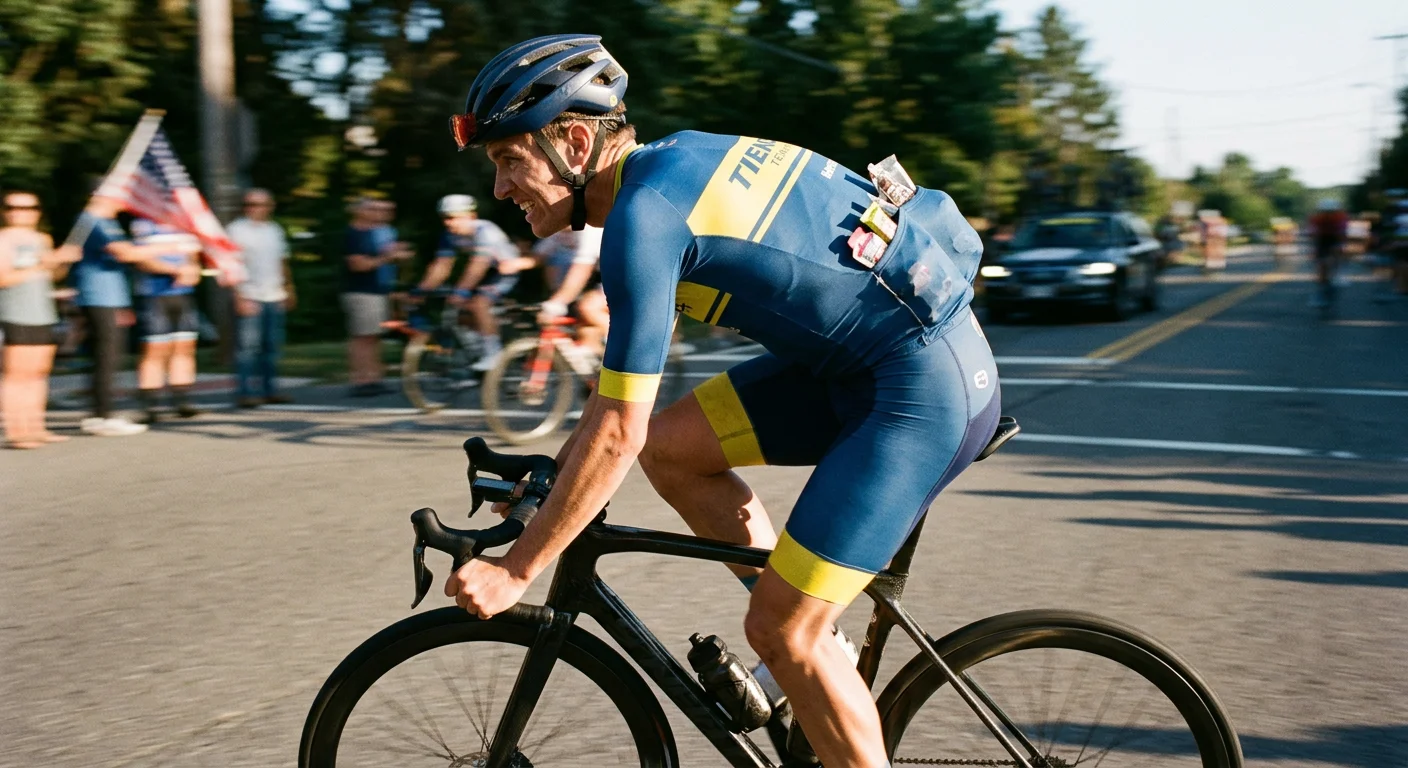
Nobody talks about pockets until they lose a gel at 28mph. Then it's all they can think about.
The gap between cheap and premium construction lives in the details. Those details tend to show up at the worst possible moment.
Pockets That Hold Their Load
Budget jerseys give you three rear pockets. So do premium jerseys. That's where the similarity ends.
Cheap pocket fabric stretches out fast. Load it with two gels, a phone, and a mini tool. By mile ten, it sags. The elastic binding loses tension. Items shift around. That slight weight imbalance? You feel it on a four-hour ride — more than you'd think.
Premium jerseys use structured pocket panels with reinforced elastic bands. The panels hold their shape even under a full load. Some add a dedicated zip pocket for valuables — something cheap jerseys almost never offer. Your phone stays put. Your gels stay where you placed them, not pushed down toward your lower back.
Zippers That Fail You at the Worst Time
Generic zippers jam. They rust after a handful of washes. They gap at the collar and push cold air straight into your chest on descents.
YKK zippers — standard on quality cycling apparel — run smooth and stay sealed. They hold up across hundreds of wash cycles without sticking, gapping, or corroding.
Stitching: The Hidden Durability Factor
Flatlock stitching lies flat against your skin. Chain stitching creates raised seams. Over 60 miles, those raised seams don't just chafe — they break down skin.
Budget jerseys use chain stitching to cut production costs. It's a cheaper build choice that you pay for in discomfort. The jersey also wears out faster — especially if you don't follow proper cycling clothes washing techniques.
Small details. Real consequences.
Durability & Cost-Per-Ride: Which Jersey Saves You Money Long-Term
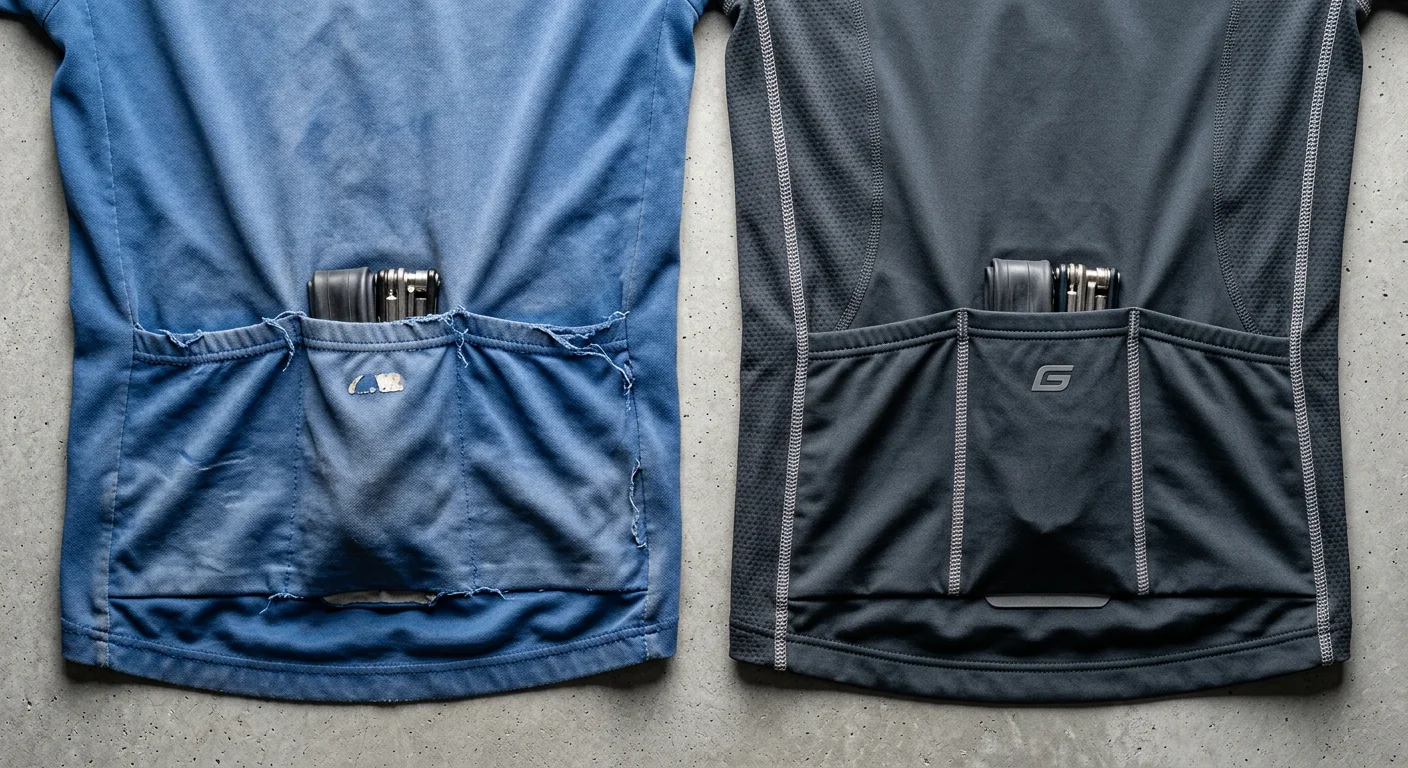
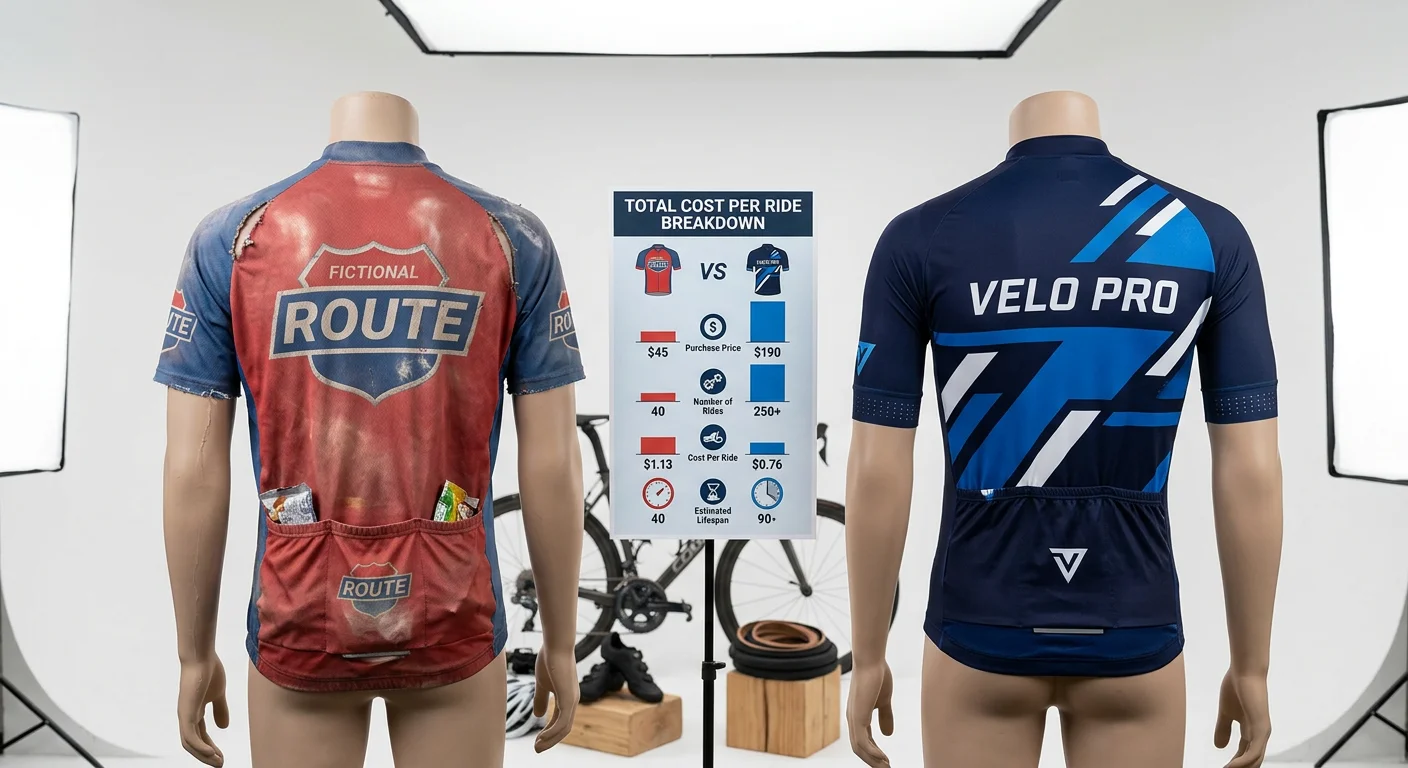
The cheapest jersey isn't always the cheapest choice. Do the math and that becomes clear fast.
A $70 budget jersey lasts about 100 rides before the seams start chafing and the elastic gives out. That works out to $0.70 per ride . A $200 premium jersey holds its structure across 300+ rides. You're down to $0.67 per ride — or less . Step up to the $300+ tier with 500+ rides of usable life, and that number drops to $0.60 per ride .
The expensive jersey wins on cost-per-ride. Not because of the logo. Because of how long it lasts.
The Budget Jersey Failure Timeline
Here's what happens to a cheap jersey over time — and this isn't speculation:
Budget jerseys use generic off-the-shelf fabrics and straight-sewn seams. They're faster to produce and cheaper to build — but they fail fast. The fit problems that build up over time aren't just uncomfortable. They create stress points inside the fabric. That speeds up breakdown from the inside out.
What Premium Construction Buys You
Premium jerseys are built differently at every layer:
-3D-sewn seams match your body's shape under load. They spread stress across the fabric instead of pushing it into weak points
-Locking zippers and reinforced hems hold their structure through hundreds of wash cycles
-Mesh panels placed at underarms and lower back resist wear in the spots where heat and friction hit hardest
-Structured pocket panels keep their shape under load. This stops the fabric stress that leads to early failure
Some premium brands take it further. Q36.5 designs each fabric placement in-house. Their team picks each material based on strength, flexibility, breathability, and wicking — not just what's available in a cycling apparel supplier's catalog. Fewer failure points. Longer usable life.
The Warranty Factor Nobody Mentions
This is where the value math shifts even more.
MAAP offers a 40% crash replacement warranty — a real financial buffer if you go down. Velocio backs their jerseys with a 30-day money-back guarantee . That cuts out the fit-related replacement cycle that eats through the lifespan of budget gear. Poor fit is one of the top causes of early jersey wear. A guarantee removes that risk completely.
Budget jerseys offer none of this. You buy it, it fails, you buy another one.
The long-term reality: riders who go through two or three cheap jerseys per season aren't saving money. They spend more — and ride worse — than the rider who bought one quality jersey and used it for three years.
Cheap vs Expensive Cycling Jerseys: Head-to-Head Comparison Table
Numbers don't lie. Here's what your money buys across three price tiers.
Feature | Budget (<$70) | Mid-Range ($70–$140) | Premium (>$140) |
|---|---|---|---|
Weight (Size M) | ~129g | 105–121g | 94–101g |
Fabric Technology | Standard synthetic | Perforated Italian fabrics, selective UPF 50+ | Ultra-premium Italian fabrics, aero ribbed construction |
Ventilation | Basic moisture-wicking | Mesh panels, perforated zones | Precision mesh placement, UPF 50+ full coverage |
Aerodynamic Features | Minimal | Ribbed sleeves, close fit | Laser-cut sleeves, aero collar, CFD-informed panels |
Pocket Design | 6 pockets, no zipper | 3–4 pockets, some zipped compartments | 3–4 pockets, structured panels |
Fit Type | Unisex, slim | Close-fit, aero-oriented | Snug, performance-specific |
Durability | Questionable past 100 rides | Solid, quality materials | Premium construction, 300+ ride lifespan |
Price Example | Van Rysel Racer 2 — $69.99 | Castelli Espresso — $129.99 | Scott Unlimited Aero — $174.99 |
What These Numbers Mean for Your Ride
That 20–35g weight gap between budget and premium looks small on a scale. Over four hours in the saddle, you'll feel it.
The Van Rysel Racer 2 at $69.99 delivers solid value — six pockets, sweat-wicking fabric, and a workable fit. For casual riders or commuters, it covers the basics well.
Move into mid-range and the gap widens fast. The Castelli Espresso ($129.99) comes in at 105g. You get perforated materials, a silicone waist gripper, and a zipped pocket. Those details add up after two hours of hard riding. The Giro Chrono Elite ($140) adds UPF 50+ protection across the main body. On long summer days, that's a real bonus.
At the premium level, the Scott Unlimited Aero ($174.99) hits 94g — the lightest on this list. It pairs laser-cut sleeves with aero-specific construction for a noticeable edge. The Rapha Pro Team goes a different route. Large mesh zones and Italian fabrics push airflow in ways basic polyester can't match.
The pattern is clear: each price jump gets you lighter weight, better ventilation, and sharper aerodynamic design. Whether those gains matter comes down to how — and how hard — you ride.
Need Custom Cycling Jerseys for Your Brand?
From fabric selection to final stitching — we handle every detail. MOQ starts at just 50 pieces with full customization options.
Explore Our Cycling ApparelWhich Cycling Jersey Is Right for You? A Rider-Type Decision Guide
The single biggest spending mistake cyclists make isn't buying cheap — it's buying the wrong jersey for the wrong type of riding.
Fit type, pocket count, and fabric spec matter in context. A $180 aero race jersey on a city commuter is dead money. A $25 budget jersey on a serious endurance rider is a four-hour misery session. Match the jersey to how you ride. Every dollar you spend starts working harder.
Here's the breakdown by rider type — with real minimum spend thresholds and the exact mistakes to avoid at each level.
🚴 Urban Commuter — Minimum Reasonable Spend: $79
Ventilation, durability, and a relaxed cut are your top priorities. You need a jersey that handles stop-start riding without binding or bunching. A full-zip is worth it. It gives you airflow control on hot days and lets you cool down fast at stops.
What to avoid:
- Below $25: Breathability is poor. In summer heat or light rain, you'll feel trapped inside the fabric within 20 minutes.
- Above $200: Aero-optimized cuts give zero benefit at commuting speeds. You're paying for drag reduction your ride will never demand.
Best fit type: Relaxed — longer rear hem, roomier through the torso. Look for perforated panels and a full-zip construction.
Color note worth knowing: Tests on the Mavic Essential jersey showed white peaking at 21.1°C versus black hitting 37.2°C — close to 3x hotter. On summer commutes, jersey color is a real performance factor, not just a style choice.
🚴 Weekend Casual Rider — Minimum Reasonable Spend: $79
Weekend rides are about enjoyment, not watts. Fabric quality still matters, though. Two hours in direct sun on a jersey with no UPF protection adds up fast.
What to avoid:
- Cheap jerseys under $25: Often semi-transparent when wet, with zero sun protection. You won't notice until you're two hours into a ride with sunburn building through the fabric.
- Race-fit compression jerseys above $200: Built for high-output effort. At a casual pace, that tight cut feels restrictive and uncomfortable all day.
Best fit type: Club or relaxed fit — quick-drying polyester blends, a looser cut than race fit, and enough pocket space for a phone and snacks. A perforated construction keeps airflow steady through all-day riding without overheating.
🚴 Amateur Endurance Rider (3–5x per week) — Minimum Reasonable Spend: $120
At this volume, jersey problems stop being minor. Shallow pockets make nutrition management harder. Poor fit creates chafe points that get worse across three-hour rides. Cheap construction breaks down in months, not years.
What to avoid:
- Under $25: No structured rear pockets, no zipper pocket. Dropping a gel mid-ride because your pocket lost its elastic tension is a small frustration. Multiply that across dozens of rides and it gets old fast.
- $200+ winter thermal jerseys: Heavyweight thermal construction is overkill outside of cold conditions. Overheating is a real risk.
Best fit type: Race/club — close and comfortable, with muscle support built into the cut. Look for three rear pockets plus one zippered compartment. Gridded breathable mesh handles the sustained heat output of 3–5 rides per week.
🚴 Competitive / Serious Rider (10+ hours/week) — Minimum Reasonable Spend: $180
At this level, jersey performance has a direct impact on training output. Aerodynamic drag, muscle support, UV protection on race days, and sustained wicking under high effort are functional requirements — not extras.
What to avoid:
- Under $25: No compressive lycra, no stretch mapping, no aero construction. The drag penalty is measurable. Muscle fatigue builds faster without graduated compression in the cut.
- $80 basic jerseys: Often missing UPF 30+ protection. On a race day with four-plus hours of sun exposure, that's a meaningful gap.
Best fit type: Aero/race — compressive Italian fabric, short front hem for riding position, drag-reducing panel geometry. Look for UPF 30+ on the main body and a close sleeve fit that works with your aerodynamic position, not against it.
Quick-Reference: Rider Type vs. Jersey Spec
Rider Type | Fit Style | Key Features | Spend Threshold |
|---|---|---|---|
Urban Commuter | Relaxed | Full-zip, breathable, longer back | $79 |
Weekend Casual | Club/Relaxed | Quick-dry polyester, UPF protection | $79 |
Amateur Endurance | Race/Club | 3+ pockets, zippered, muscle support | $120 |
Competitive/Serious | Aero/Race | Compressive, UPF 30+, aero panels | $180 |
The right jersey isn't the most expensive one you can afford. It's the one built for the riding you do — at the minimum spend threshold where performance stops holding you back.
Best Cycling Jerseys Worth the Money: Our Top Picks by Budget
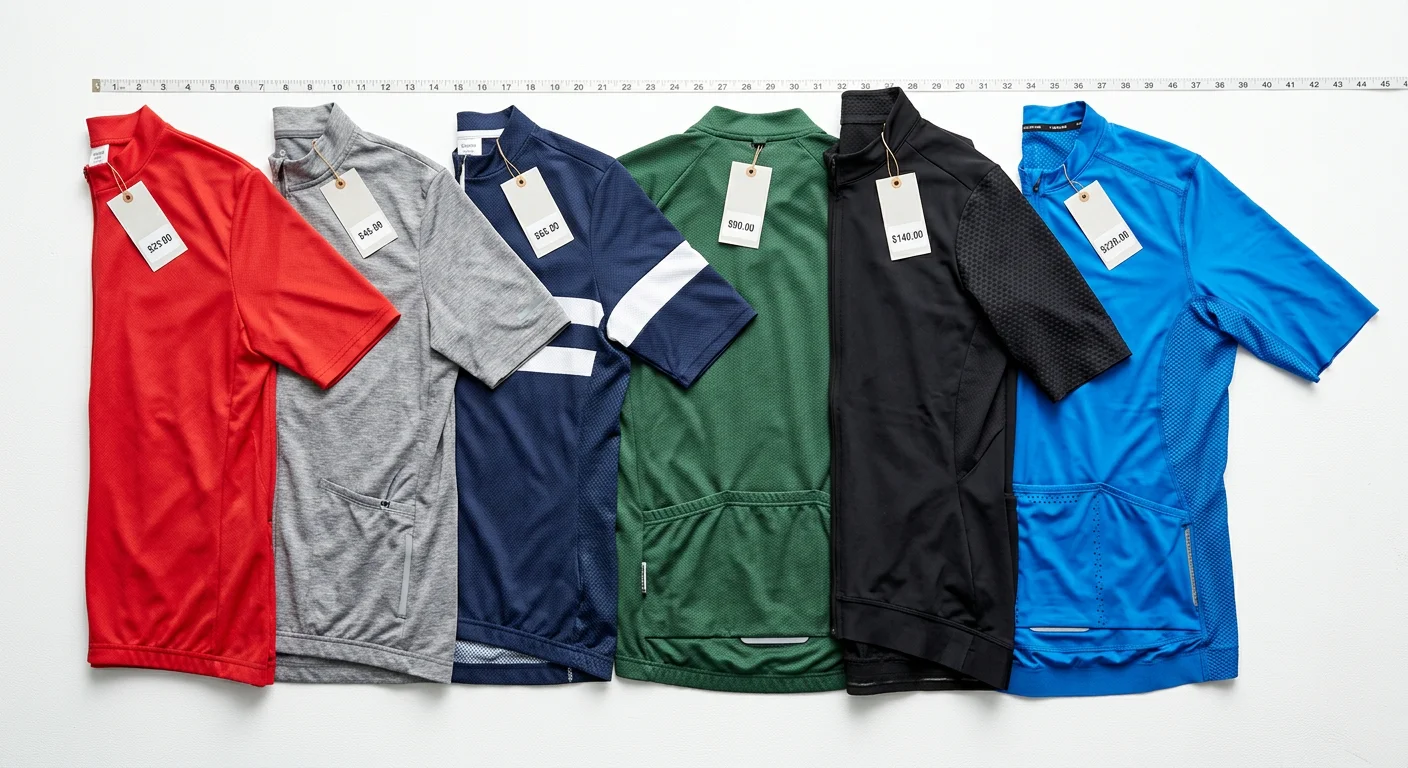
Talk is cheap. Here are actual jerseys that earn their price tags — sorted by budget so you can skip straight to what applies to you.
Under $50: Decent Starting Points
Handup ActiviTEE — $36
Polyester/spandex blend, UPF 50+, relaxed fit. You're a casual weekend rider who wants fun prints and solid sun protection. Odor resistance isn't your top concern. This jersey gets the job done. Don't expect performance-grade wicking. Do expect a jersey that holds its own.
Adidas Essentials Cycling Jersey — ~$40–50
A smarter entry point than ultra-cheap generics. The performance blend holds up better on your first few rides. New to cycling and not ready to spend $100+? Start here — not at $15.
$50–$100: Where Value Gets Serious
This price band is where smart riders live. You stop paying for brand margin and start getting real performance.
Van Rysel Road Racer 2 — under $70
One-third the price of pro-tier jerseys. Decathlon's supply chain keeps quality control tight. The price looks wrong until you actually ride in it. Pro aesthetics, breathable construction, and a fit that holds up at the group ride start line.
Endura Pro SL Race Jersey — under $100
Aero fit, mesh side panels, and a body feel that rivals Castelli at close to half the price. Built to handle hydration pack friction on gravel and endurance routes. At sub-$140, nothing else in this category gives you this much aero performance per dollar.
berunclothes.com Pro Series — $65–85
This one fills a gap most brands ignore. You get 85% polyester/15% spandex at 260gsm with 4-way stretch, laser-cut sleeves, a full YKK zipper, and three structured rear pockets. UPF 50+ fabric — the same spec benchmark as Pearl Izumi — priced about 20% lower. The slim-relaxed hybrid cut works for commuters and weekend endurance riders alike. You don't have to pick between comfort and performance. At this price, nothing else on this list matches that combination.
$100+: Premium Picks That Justify the Investment
Patagonia Merino Blend ¾ Sleeve — $99–120
UPF 30–50, polyester/merino blend, odor-resistant by nature. Not built for speed. Built for all-day comfort on trail rides where soft feel and stretch matter more than aerodynamics. On warm days, synthetic fabrics start to feel rough and scratchy. The merino component fixes that.
Santini Redux — $150+
Second-skin cut, pro-grade breathability, and structured pockets that hold a full nutrition load without sagging. This is the jersey for long-ride riders who've stopped settling on materials. The fit precision alone justifies the price jump from mid-range.
Castelli Aero Race 8S — $200+
Race day. That's it. Textured aero fabrics, perforated panels, and a cut built around one goal: going fast. Minimal pockets by design. Chasing podiums? This is your tool. Riding centuries or commuting? It's overkill.
Budget Comparison at a Glance
Budget | Model | Price | UPF | Fabric | Pockets | Fit |
|---|---|---|---|---|---|---|
Under $50 | Handup ActiviTEE | $36 | 50+ | Poly/spandex | Basic | Relaxed |
$50–100 | berunclothes Pro Series | ~$75 | 50+ | 85% poly/15% spandex (260gsm) | 3 rear, structured | Slim-relaxed |
$50–100 | Van Rysel Racer 2 | <$70 | High | Breathable synthetic | Standard | Pro |
$100+ | Santini Redux | $150+ | High | Premium | Pro pockets | Second-skin |
$100+ | Castelli Aero Race 8S | $200+ | High | Textured aero | Minimal | Race |
One last note: Personalization matters to some riders. Brands like MAAP and Adidas offer custom cycling jerseys starting around $100. Outfitting a club or want a jersey that shows how much you care about the sport? That's a solid option worth checking out.
Ready to Source Premium Cycling Jerseys?
Whether you need 50 or 5,000 units, BeRun delivers custom cycling apparel with premium Italian-grade fabrics and race-ready construction at competitive wholesale prices.
Request a Sample KitConclusion
The price tag on a cycling jersey doesn't tell the whole story — but it does tell most of it.
Here's what the data shows: budget jerseys get you on the road. But premium cycling apparel keeps you comfortable, competitive, and coming back for more rides. The real sweet spot? You don't have to spend $200 to feel the difference. A mid-range jersey with solid moisture-wicking technology, a race-cut fit, and reinforced stitching delivers 85% of the performance at 40% of the price.
That's not a compromise. That's smart riding.
Before your next ride, ask yourself one question: How many miserable miles is a $25 saving worth?
Check out Berunclothes.com's cycling jersey collection — built for riders who refuse to choose between performance and value. Your legs are already working hard enough. Your jersey shouldn't be what holds you back.
Video Section