You spent good money on that tag. You scouted all summer. You know the deer are there. Then opening morning hits. A shooter buck winds you from 80 yards. He disappears into the timber before you ever raise your binos — because you showed up in the wrong clothes.
What you wear deer hunting isn't just about comfort or looking the part. It's a tactical decision. The wrong gear costs you the tag. The right gear fills it.
Pick the right camo pattern for deer hunting. Build a layering system that keeps you warm and mobile through a six-hour sit. Many serious hunters also invest in custom hunting clothing systems designed for their local terrain, climate, and hunting style.Every piece of gear you pull on either works for you or against you.
These 10 deer hunting clothing tips will make sure it's working for you.
Tip 1: Master the 3-Layer Deer Hunting Clothing System
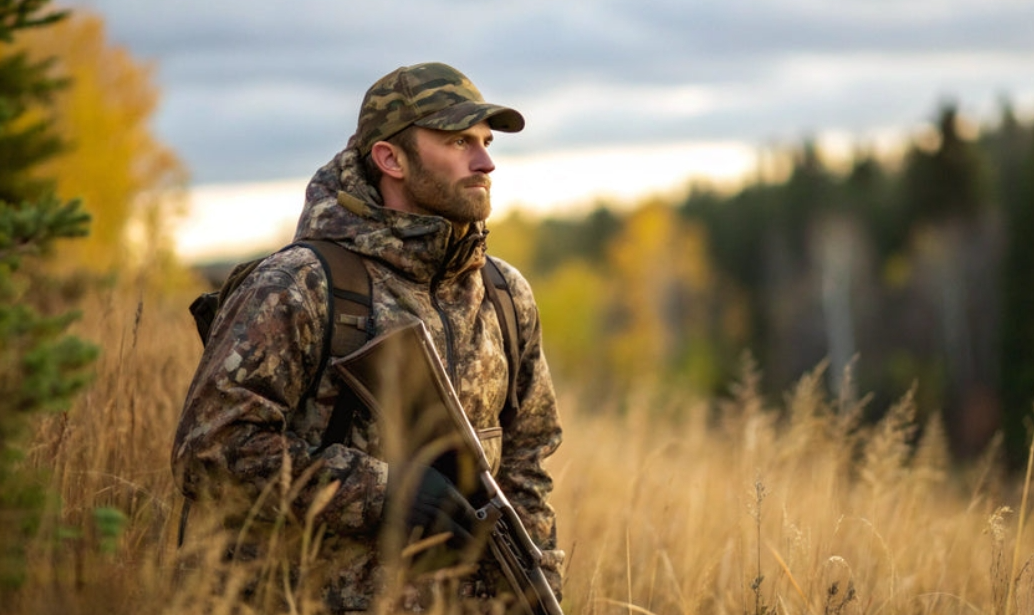
The three-layer system isn't a trend. It's engineering. Leading hunting apparel manufacturer brands build their layering systems around moisture management, thermal retention, and weather protection rather than fashion trends.Understand how each layer works, and you'll never reach for a cotton hoodie again.
Here's the core logic: each layer has a specific job . Those jobs work together to keep you warm, dry, and in the field.
Layer 1: Base Layer — Move the Sweat Out
Your base layer has one mission: moisture transfer . It pulls sweat off your skin before that moisture cools you down.
That 20-minute hike to your stand? You're sweating harder than you think. A merino wool base layer (120–150 g/m²) pulls that moisture away fast. A lightweight synthetic does the same job. Either one gives your insulation layers a dry surface to work with.
Never wear cotton as a base layer. Cotton absorbs up to 27 times its weight in water — then holds onto every drop. At 35°F with any wind, a wet cotton shirt turns from warm to cold in under 20 minutes. That's a real risk, not just discomfort.
Layer 2: Mid Layer — Hold the Heat
The mid layer is your primary insulation . Fleece, lightweight synthetic insulation, or a heavier merino (200–260 g/m²) — each one locks in the warmth your base layer protected.
Smart tactic: hike in wearing just your base and a light fleece . Add your heavier insulation piece once you settle into your stand. Less sweat on the walk in means more warmth during the sit. It's a simple swap that makes a real difference.
Layer 3: Outer Shell — Block the Elements
Wind kills your warmth faster than cold air alone. A windproof soft shell at 35°F can make the temperature feel 10°F warmer. Without it, wind cuts straight through and wipes out everything your inner layers built up.
Your shell needs to be cut larger than your mid layer . A compressed insulation layer loses 20–40% of its thermal efficiency. A tight jacket squeezes out the warmth you worked to trap. Size up and protect that insulation.
Quick rule:
- Cold and wet? Run a waterproof hard shell.
- Cold and dry? A windproof soft shell gives you better breathability for those early-morning walks in.
Tip 2: Choose the Right Fabric — Why Cotton Kills Your Hunt
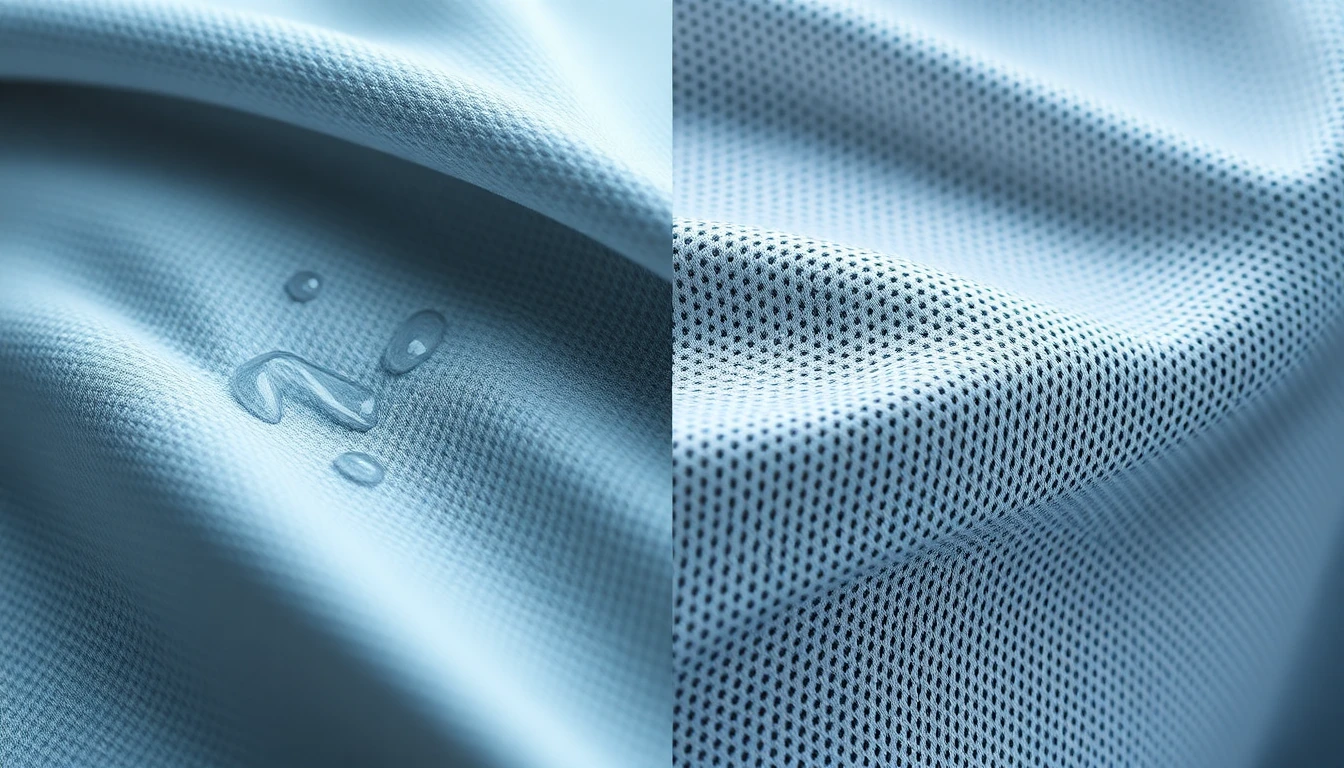
Here's a fact that should change how you pack for the field. Wet cotton loses up to 90% of its insulating ability . It pulls heat away from your body 25 times faster than dry cotton does.
That's not discomfort. That's a physiological emergency wearing a flannel shirt.
The physics are simple and brutal. Dry fabric traps air. Trapped air keeps you warm. Water's thermal conductivity is about 25 times higher than air's . Cotton soaks up to 27% of its own weight before it even feels wet. At that point, water fills every air pocket in the weave. Your insulation layer turns into a heat conductor pressed against your skin.
Picture the typical hunting scenario. Hard walk in. You're sweating. You settle into your stand. Wind picks up. Temperature drops at sunset. That damp cotton base layer starts pulling warmth straight out of your body. Shivering kicks in within 20–30 minutes. Your hunt cuts short — or worse, you're pushing into real hypothermia risk at temperatures well above freezing.
The smarter alternatives:
Merino wool base layer (150–200 g/m²): Retains warmth even when wet. It fights odor buildup across multiple days in the field — a real edge when deer are using their nose against you.
Synthetic (polyester/polypropylene): Dries twice as fast as cotton , absorbs far less moisture, and costs less than merino.
Many premium hunting brands source merino and technical synthetic garments through specialized OEM/ODM hunting apparel production partners that focus on outdoor performance fabrics.The trade-off is real. Synthetics dry faster. Merino smells less after hard days. For most deer hunters, merino wins — because the buck that winds you on day three of a backcountry hunt doesn't care how fast your shirt dried.
Leave the cotton at home. It doesn't belong in the deer woods.
Tip 3: Match Your Deer Hunting Outfit to Season and Weather Conditions
Deer season doesn't run on a single temperature. It spans from August swelter to January freeze — and your clothing system has to cover that full range.
Early Season (August–October): Beat the Heat, Beat the Bugs
Bow season opens in summer. Daytime temps push 68–90°F. Humidity is high. Mosquitoes and ticks are out in force. Your clothing priorities shift hard: lightweight, fast-drying, bug-resistant, and silent .
Base layer: 120–170 g/m² polyester or light merino blend. You need an evaporation rate above 800 g/m²/24h. Drop below that, and you're sitting in your own sweat all morning.
Bug protection: A permethrin-treated outer layer at 0.5% active concentration stops mosquitoes and ticks without adding bulk. Add a lightweight face net for dawn sits — that's when bugs hit hardest.
Camo: Early-season foliage is still green. Match it. Low-contrast green and brown patterns blend far better than late-season bark tones.
Drop the heavy layers. One moisture-wicking long sleeve plus a permethrin-treated shirt is your full setup — nothing more needed.
Late Season (November–January): Cold Is the Enemy
Picture first light in December across northern hunting country: 14–41°F, wind running 10–25 mph, snow or freezing rain likely . You're sitting still for six hours. Cold wins fast in those conditions.
Run the full three-layer system — no cutting corners on weight:
Base: 230–260 g/m² merino wool or 200–250 g/m² synthetic fleece. This is not the place to go light.
Mid layer: 250–350 g/m² fleece jacket or a 700-fill down piece with 150–200 g of fill. Size it loose. Compressed insulation loses up to 40% of its heat-trapping ability.
Shell: Waterproof rating of at least 10,000 mm hydrostatic head. Hunting all day in heavy snow? Push to 15,000–20,000 mm.
Feet and hands fail before your core does. Use 600–1,200 g Thinsulate boots for static sits. Stack a thin wool liner glove under a heavy mitten. Layer your HEAD : balaclava first, wool hat second, hood over everything.
The Night-Before Check
During peak hunting season, many retailers work with a hunting apparel wholesaler to keep cold-weather layers and insulated outerwear in stock.
Don't guess. Pull the forecast the night before. Build your system around what's coming — not what you wore last weekend.
Below freezing with wind above 10 mph: Full three layers, heavy bibs, hand warmers packed.
Warmer than expected: Drop the heaviest mid layer before you walk in. Sweat on the hike turns into cold in the stand.
Rain or snow over 50% probability: Check that your shell hits the waterproof standard. A soft shell in a sleet storm is a miserable mistake.
Check again at 4 a . m. Real temperature dropped 5°F from the forecast? Add a layer. It warmed up? Pull one. Small adjustments at the truck beat suffering adjustments in the stand.
Tip 4: Pick the Right Camo Pattern and Colors for Deer Hunting
Deer don't see the world the way you do. That one fact should shape every camo choice you make.
White-tailed deer have two types of cone cells in their retinas — not three like humans. Their vision peaks in the short-wave blue range and the mid-wave green range. Long-wave colors — red, orange, brown — don't register much. That buck you're hiding from sees your blaze orange vest as a dull gray-brown patch, not a neon billboard. Here's what actually blows your cover: blue denim, bright white, and any fabric washed with optical brighteners that glow in UV light. Deer pick up UV the same way a blacklight picks up a stain.
Skip these colors: saturated blue, bright white, and any fabric washed with standard detergent. If you're outfitting a hunting club or guiding operation, comparing hunting apparel wholesale price options on camouflage systems can significantly reduce seasonal gear costs.Switch to a UV-blocking detergent before season starts.
Match Your Pattern to the Terrain
The right camo pattern comes down to your specific environment — not brand loyalty.
Hardwood timber (fall): Go with large, open-block patterns in bark gray (#5a5a5a), deep brown (#3b2a1a), and muted olive (#4b5534). Small-print patterns fail to break your outline at distance. Gray tones should cover 40–60% of the pattern in mature maple or beech stands.
Brushy edges and mixed cover: Use medium-block patterns with olive, tan, and mud brown in equal thirds. Keep your shadow color — near-black — under 15%. Too much dark and you look like a solid mass in direct sunlight.
Open grasslands and CRP fields: Go with horizontal grass-texture patterns in light khaki and pale olive. Keep it light overall. In open terrain, a dark pattern stands out more than a pale one.
Snow and post-rut timber: Use a 60–80% white base with deep gray and brown trunk shapes to break it up. Pure white alone looks off against exposed bark and soil.
Blaze Orange Doesn't Cost You the Buck
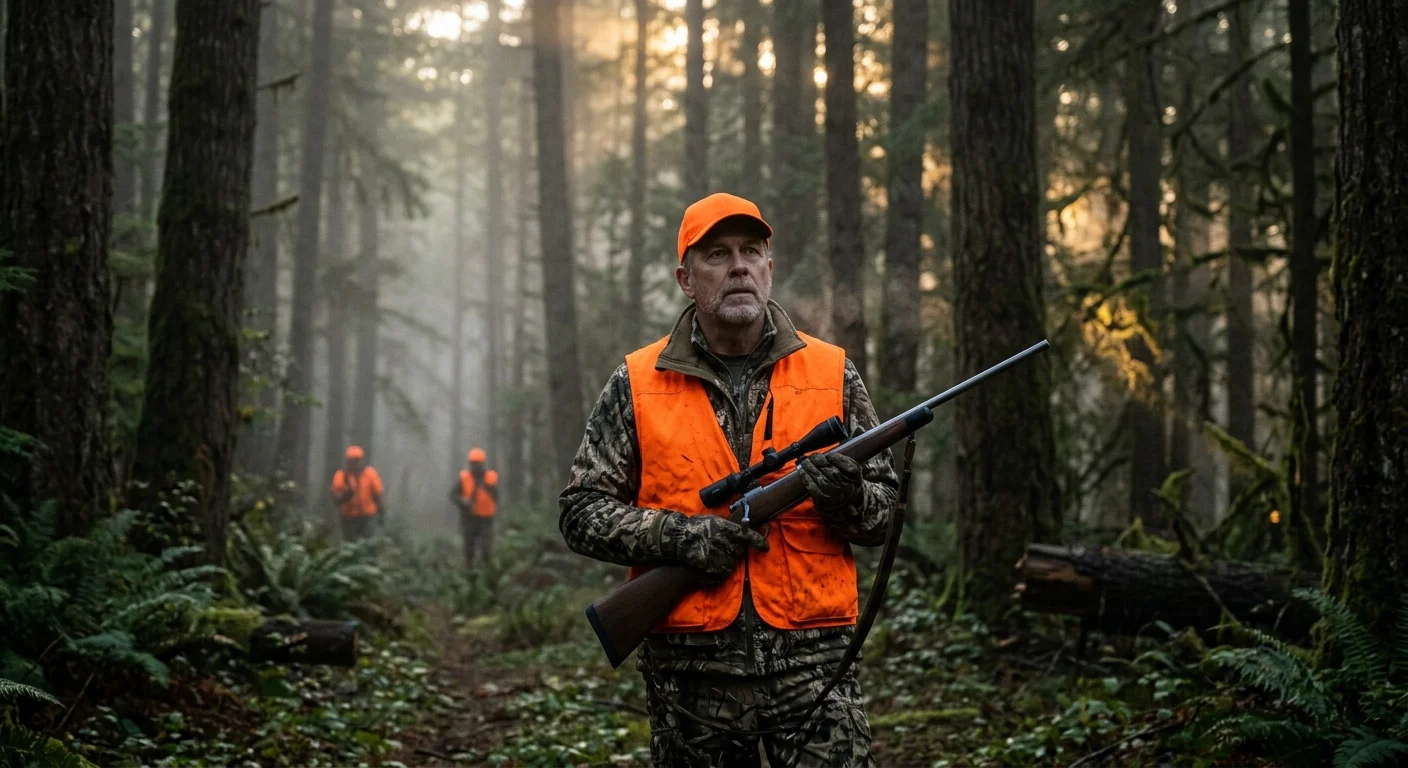
Most states require 400 square inches of blaze orange visible front and back. Wear it. Just wear it smart.
Deer read orange as pale gray-brown. So your vest isn't the problem — your silhouette is. Pick orange gear with internal contrast: dark stripes, logos, or camo-paneled vests that break up the outline. Keep your pants in camo or earth tones. On a treestand, face your orange toward the road, not the timber. Let branches and bark break up what the deer sees.
At 30–40 yards, a still hunter in blaze orange over camo flushes no more deer than one in pure camo. Motion and a solid human outline are what give you away.
Tip 5: Prioritize Silent, Mobile Hunting Clothing for Stealth
Deer don't hear your footsteps first. They hear your jacket.
That whisper of nylon against a branch. The snap of a chest buckle at full draw. The crinkle of a stiff shell as you rotate your shoulders to track a buck moving left. Any one of those sounds ends your hunt before it starts.
Fabric construction matters as much as camouflage pattern. A loud jacket in perfect camo is still a loud jacket.
What Silent Clothing Requires
Two things kill stealth: noise and restricted movement. They're connected. Stiff fabric forces you to fight your clothing. Fighting your clothing makes noise.
Focus on these features first:
Quiet fabric: Soft-shell and fleece constructions don't rustle under arm swing, shoulder rotation, or knee lift. Hard-shell membranes do. Save the hard shell for sitting still in heavy rain. Go with soft construction any time you're on the move.
Magnetic closures: Traditional snaps and Velcro are loud. Magnet buckles close without a sound. On a draw stroke at 20 yards, that difference matters.
Harness-compatible back panel: Treestand hunters need a jacket built for under-harness wear — not just a bigger size. The right design holds your safety harness in place without squashing your insulation or limiting your shoulder mobility.
The Fit Test Nobody Skips
Before you buy, run this check with all your layers on:
Raise both arms straight overhead — no binding at the shoulders
Rotate your torso left and right through a full draw motion
Kneel on one knee and step back up
Simulate a low stoop or crawl position
Anything pulls, bunches, or whispers against itself? Wrong jacket. Close fit stops fabric slap. Full range of motion stops noise from forced movement. You need both.
One more detail: apply silencing tape to every hard contact point on your gear — climbing sticks, stand cables, bow riser. Quiet clothing on a clanking stand only gets you halfway there.
Tip 6: Build the Right Deer Hunting Boot and Sock System
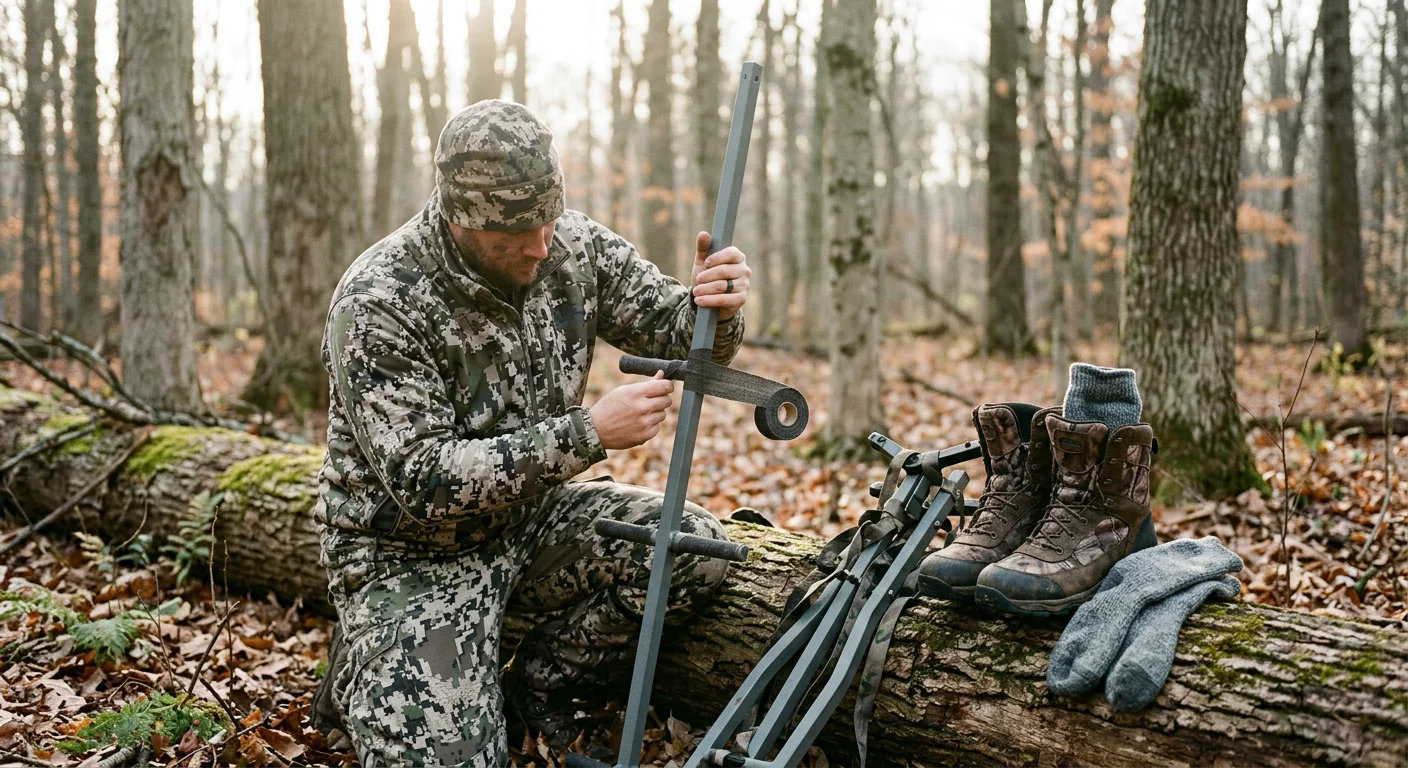
Cold feet don't just make you miserable — they send you back to the truck two hours early. Get your boot and sock system wrong, and every other piece of gear you've dialed in stops mattering.
The selection logic is simple: terrain + activity level + season . That combination tells you everything.
Match Your Boot to the Mission
Early season, high activity (0–200 g insulation): Go light, go breathable. You're sweating on every approach. A lightweight waterproof boot with zero insulation keeps your feet drier. A boot loaded with insulation traps heat and makes things worse.
Mid-to-late season, mixed movement (400 g): This is the practical middle ground for most whitetail hunters. You get enough warmth for cold mornings, plus enough mobility to cover ground.
Late season, treestand or blind hunting (800–1,200 g+): Sitting still for five hours in 20°F demands maximum insulation. Activity level is low. Let the boot do the work.
For wet terrain, rubber boots are the call — they're built for damp environments where leather falls short. For mid-to-late season on drier ground, a full leather, Gore-Tex lined boot is the stronger option.
The Sock Truth Nobody Tells You
Thicker isn't better by default. Socks that compress your foot cut off circulation — and circulation is what keeps your feet warm. Merino wool socks manage moisture and hold warmth even when damp. Cotton does neither.
One practical rule: size your boots while wearing the exact socks you'll hunt in . In doubt, go a half size up. Your foot should feel snug — not squeezed, not sliding forward.
Dry boots beat warm boots every time. Sweat out your insulation and you've lost the game. Air them out every night, start each morning in dry footwear, and your feet will outlast the cold.
Tip 7: Protect Head, Hands, and Face — Accessories That Keep You in the Stand
Most hunters lose their hunt from the extremities out. Not the core — the fingers, the ears, the nose tip. Exposed skin at -5°C with a 15 km/h wind hits an equivalent temperature of -12°C. Thirty minutes of exposure puts frostbite on the table. That's not a worst-case scenario. That's a Tuesday morning in November.
The numbers are blunt. Your core is well-insulated, but your head is bare. Head heat loss climbs to 20–40% of total body heat. Finger skin temperature drops from 32°C to 15–20°C in moderate cold. That's a drop from functional to useless. Your grip strength falls 20–50% with it. At that point, punching a trigger or feeling the tension break on a release isn't just harder. It's gone.
The Glove System That Works for Bowhunters
One glove doesn't solve this. A system does.
Thin liner glove (100–200 g/m², 0.5–1.0 mm): Keeps trigger and release sensitivity at the string. Works on its own down to about 0–5°C with no wind.
Heavy flip-back mitten: Worn during the wait, flipped open at the shot. Mittens run 20–30% warmer than equivalent five-finger gloves — that margin matters on a long sit.
Hand muff at the waist: Pair it with one or two disposable heat packs rated for 8–10 hours. Your hands stay warm between shots — not just barely cold enough to function.
The logic is simple: 90% of your time on stand is waiting. Keep your hands in the muff. The other 10% — the shot — is where the thin liner earns its place.
Head and Face: Layer It or Lose It
A single beanie isn't enough for a six-hour sit in wind. Build two layers minimum:
Inner layer: Tight merino or synthetic moisture-wicking skull cap (~1 mm). Pulls sweat away on the walk in.
Outer layer: Windproof hat or jacket hood. Adds 5–10°C of felt warmth. Cover the ears and the back of the neck — ears go numb in under 10 minutes at -5°C with light wind.
For face coverage, match the option to your conditions:
Option | Best For | Key Trade-off |
|---|---|---|
Balaclava | ≤ -5°C, high wind | Exhaled moisture fogs optics; choose a drop-down mouth panel |
Neck gaiter | 0–5°C, moderate cold | Flexible and fast to adjust; leaves cheeks exposed |
Half face mask | Mixed conditions | Good scent control on exhaled breath; combine with a hat for full coverage |
Scent-control face fabric degrades over time. Most activated-carbon or adsorptive builds lose most of their effectiveness after 20–30 wash cycles . Track your wash count and replace on schedule. A face mask that no longer blocks odor is just a warm cloth between you and a winded deer.
Tip 8: Scent Control in Deer Hunting Clothing — What Works
A mature whitetail's nose is 1,000 times more sensitive than yours. That's not a metaphor — it's anatomy. A buck standing downwind at 30 yards scans everything you touched, wore, and breathed near in the last 48 hours. Your clothing either helps that scan or stops it.
Here's the honest framework: scent control in clothing is a system with a clear priority order. Most hunters get that order backwards.
Wind First. Always.
No activated carbon jacket, no silver-ion base layer, no ozone treatment saves you from a downwind deer. Wrong wind means the hunt ends before it starts. Check wind direction before you leave the truck. Carry a wind checker — milkweed fluff, powder, a lighter — and check again from the stand. Shift your position 5–10 meters if the thermals move. Everything else on this list comes second to that one rule.
What Scent-Control Clothing Does
Activated carbon garments trap odor molecules through physical adsorption. The carbon layer catches sulfur compounds and nitrogen-based organics before they drift off your body. The catch: that carbon has a limited capacity. Every hour in your kitchen, garage, or truck loads it with cooking oil, exhaust, and fabric softener. That's capacity gone before you reach the woods. To restore function, run carbon garments through a dryer at 60–70°C for 30–40 minutes. Wear them in the field only. Seal them right after you get home.
Silver-ion base layers take a different approach. They kill the bacteria that turn sweat into odor. So instead of trapping smell, they stop new smell from forming. That makes them your first line of defense — not your last. Plan on noticeable performance drop after 30–50 wash cycles.
Activated Carbon | Silver-Ion | |
|---|---|---|
What it does | Traps existing odor molecules | Kills bacteria → cuts sweat odor |
Best position | Mid or outer layer | Base layer |
Degrades from | Household odor exposure | Wash cycles (30–50) |
Maintenance | High-heat regeneration | Fragrance-free washing only |
The Odor-Free Protocol That Holds
Wash hunting clothes in unscented, UV-blocking detergent. No fabric softener. No dryer sheets. Run an empty cycle first to clear leftover scent from the drum. Air dry, or use a clean dryer with zero added fragrance. Once dry, seal clothes in a hard-sided plastic container with a locking lid. Store it away from kitchens, fuel, and living areas.
Change into your hunting clothes at the trailhead — not at home. Spray down after you dress: hat, gloves, pack straps, boot soles. Boot soles matter more than most hunters realize. A rubber boot leaves far less scent on trail vegetation than leather does. Spray boot soles with an odor-eliminating product and the deer's detection range on your entry path shrinks from 50–100 meters down to 10–20 meters of active trail.
The bottom line: scent-control clothing gives you margin. Wind direction gives you the hunt. Use both — but never mix up which one is doing the real work.
Tip 9: Dress for Your Hunting Style — Tree Stand vs. Spot-and-Stalk
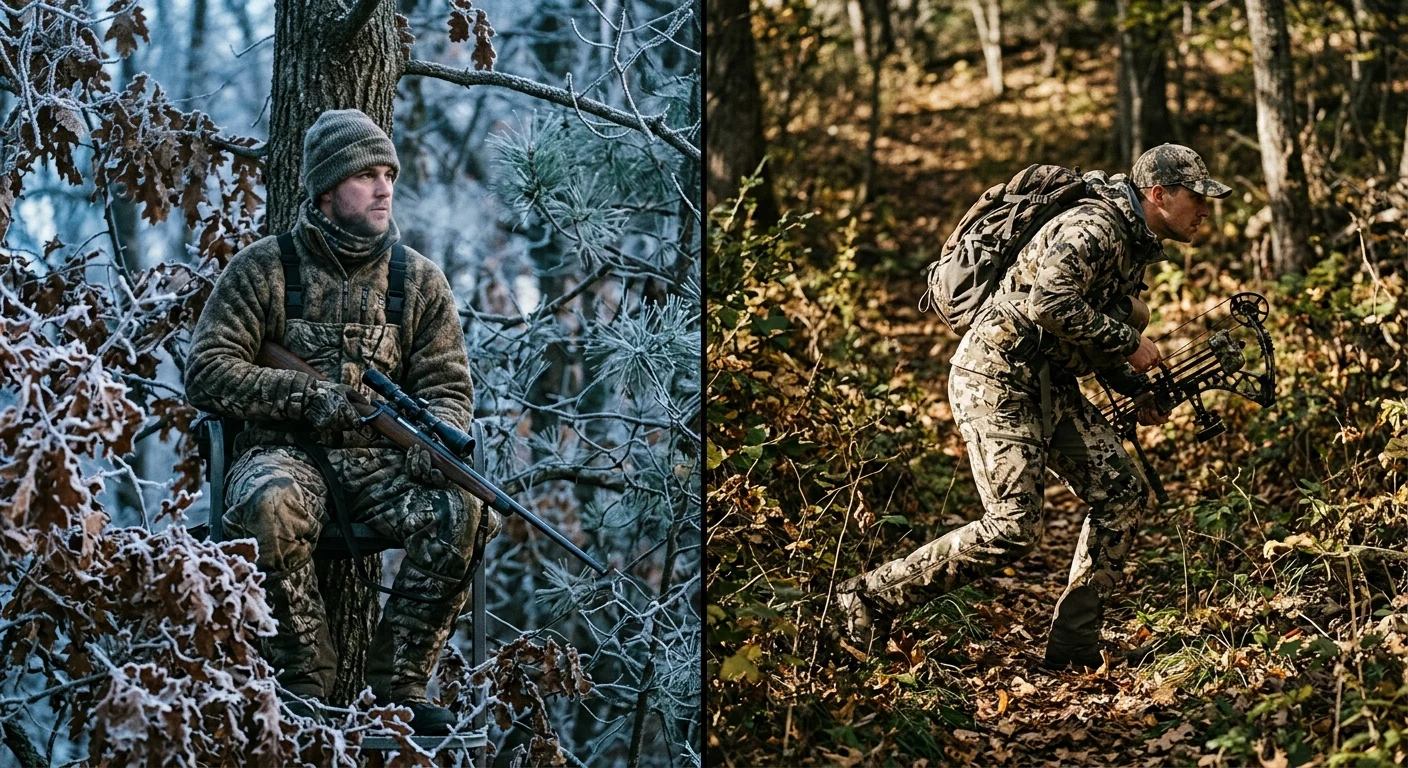
Tree stand hunting and spot-and-stalk hunting are two different physical challenges. One demands maximum insulation for a body sitting still for six hours. The other demands breathability for a body covering 5+ miles of rough terrain. The same clothing system cannot solve both.
Tree Stand: Push Your Insulation Hard
Stationary hunters lose heat fast. Wind at 10–15 mph increases heat loss by up to 50% compared to calm conditions. Your insulation needs to make up for a heart rate that stays low all morning.
Two pieces matter more than everything else:
Heavy bibs over standard pants. Bibs close the 3–8 cm gap at your lower back. That gap opens every time you draw or shift position. It acts like a cold-air funnel. Bibs seal it shut.
800–1,200 g insulated boots. You are not generating walking heat. Let the boot carry that load instead.
Spot-and-Stalk: Breathe or Pay
Mobile hunters face the opposite problem. Wear too much insulation and you will sweat through your base layer before you close the distance. Start cool — a touch colder than comfortable. Strip down to your base layer and a light softshell for the approach. Pack your insulation in a stuff sack. Pull it on 150–300 meters out , once your breathing settles.
Total system weight: keep it under 2.5 kg. Anything heavier starts working against you on mile three.
Tip 10: Blaze Orange Requirements and Deer Hunting Safety Regulations
Blaze orange isn't optional in most states. Get it wrong, and a conservation officer will stop you before you reach your stand.
Each state sets its own rules. Here's what a few require:
Massachusetts: 500 square inches across the chest, back, and head — required during shotgun and primitive firearms deer seasons.
Texas: 400 square inches on public hunting lands. At least 144 square inches must show on the front and back.
Alabama: Either 144 square inches above the waist or a full solid-color orange hat. Camo orange is banned outright.
Minnesota: Blaze pink is allowed alongside orange. But 50% of each square foot must read as the required color.
Check your state's current regulations before the season opens. Numbers shift year to year.
Orange Doesn't Spook Deer — Here's Why
Deer are dichromatic. Their vision peaks in blue and green wavelengths. To a whitetail, that blazing orange vest looks more like dull gray-brown — not a threat.
So what blows your cover? Three things: movement, human silhouette, and wind direction . Wear your orange without worry. Stay sharp about the other three.
Conclusion
Gear doesn't make the hunter — but the wrong gear will break the hunt.
Tree stand at 5 a.m. in October. Still-hunting through frozen hardwoods in late December. What you wear decides how long you stay out, how quiet you move, and whether that buck catches your scent. Lock in your layering system for hunting . Stick to your scent control discipline. Match your camo pattern for deer hunting to the terrain. These aren't just tips — they're the foundation of consistent success in the field.
Now close the browser and go check your gear pile. Identify the weak spots. Replace the cotton. Invest in one quality piece you've been putting off.
The deer don't care how much you know. They respond to how well you've prepared. That's it.
Head over to berunclothes.com and find hunting clothing built for hunters who take the craft seriously.