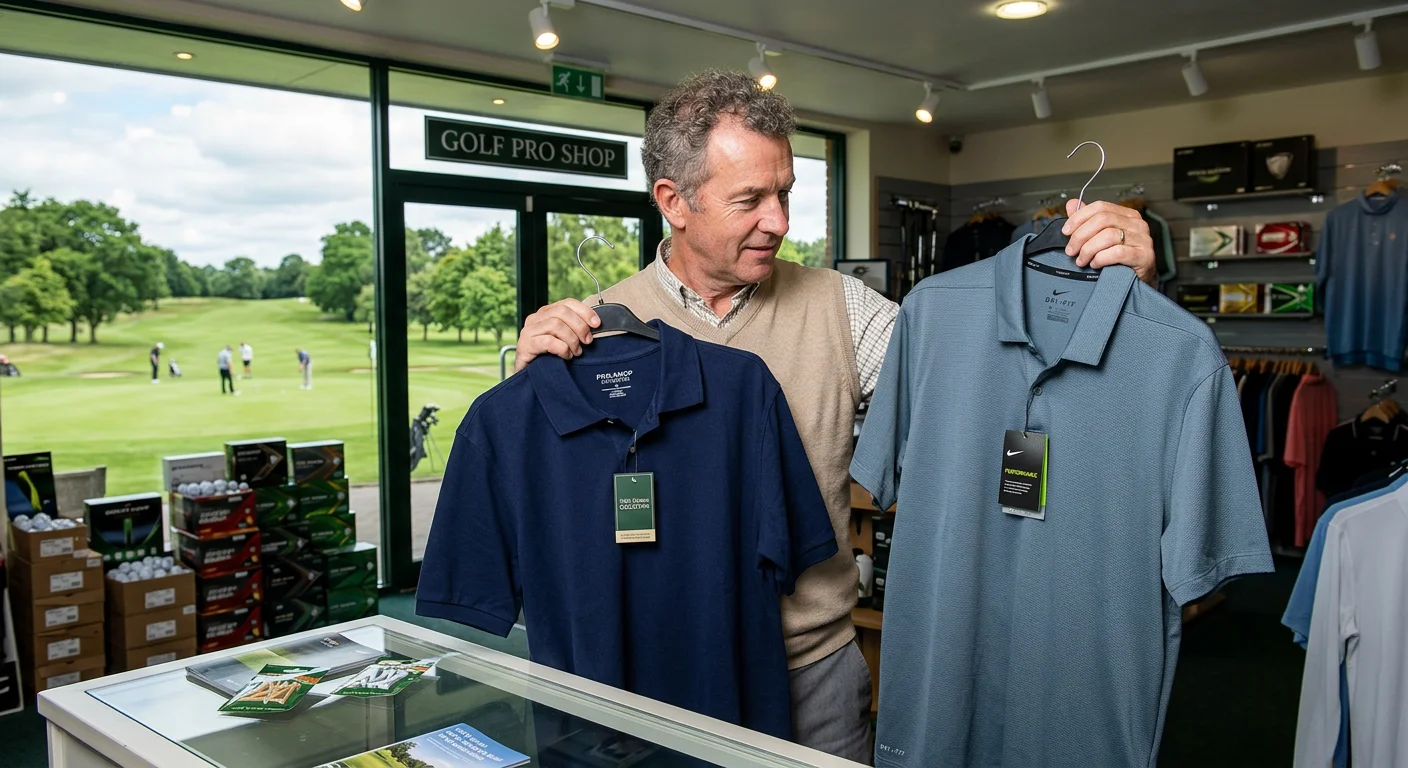
You're standing in the pro shop, polo in each hand — one silky-smooth Dri-Fit, one classic cotton — and you can't decide. Both look the part. Both feel fine off the rack. But hole four in August heat? That's a different story.
The fabric you choose today matters more than you think. It's the difference between staying focused on your backswing and pulling at a sweat-soaked collar all round.
This guide cuts through the marketing noise. It breaks down how golf polo shirt materials hold up where it counts — on the course, in real conditions, across seven head-to-head dimensions. No more guessing. Just clear answers so you buy with confidence.
For golf brands and pro shops developing their own apparel lines, working with a reliable premium fabric golf shirt manufacturer is often the first step in deciding whether Dri-Fit or cotton performs better in a real product collection.
What Is Dri-Fit Fabric? (And Why It Was Built for Golf)
Dri-Fit isn't a fabric. It's a system — built to solve the sweat problem that hits every golfer past the third hole.
Here's how it works: Dri-Fit uses polyester microfibers packed into a porous knit structure. That structure creates capillary action. Sweat moves away from your skin, travels to the outer surface, and evaporates in the air. Your skin stays dry. Your focus stays on the shot.
That's not marketing language. That's physics.
Because of this moisture-transfer system, many golf brands now launch seasonal performance collections built specifically around custom Dri-Fit golf shirts engineered for hot-weather rounds.
What Makes It Different From Regular Synthetic Fabric
Standard polyester wicks moisture. Dri-Fit cycles it. The moisture keeps moving — no buildup, no clammy skin contact, no distraction mid-swing. It dries 2x faster than cotton . That gap adds up fast over 18 holes in August humidity.
Here's what the construction details mean for golf:
Weight : Dri-Fit polos run 30–40% lighter than cotton equivalents. Four hours on the course is a long time. Less fabric weight means less fatigue by the back nine.
Stretch : Most performance golf polos blend 87–95% polyester with 5–13% elastane . That elastane ratio isn't just for comfort — it handles a full power swing without pulling at the shoulder.
UV protection : Tight polyester knits hit UPF 30+ , blocking 97% of UV radiation. You don't need to reapply sunscreen as often. Cotton at the same GSM doesn't get close to that level.
Odor control : Silver-ion or zinc-oxide finishes stop odor-causing bacteria after long wear. That matters a lot on back-to-back round days.
GSM is worth paying attention to. 160–180 GSM works well for high-intensity summer play. 180–210 GSM gives more structure for general rounds and cooler weather. Most golfers land somewhere in the 160–210 GSM range depending on the season.
Today, 63% of retail golf shirts include some form of moisture-wicking technology. Dri-Fit is still the benchmark everything else gets compared to.
What Is Cotton Golf Fabric? (Classic Comfort vs. Modern Performance)
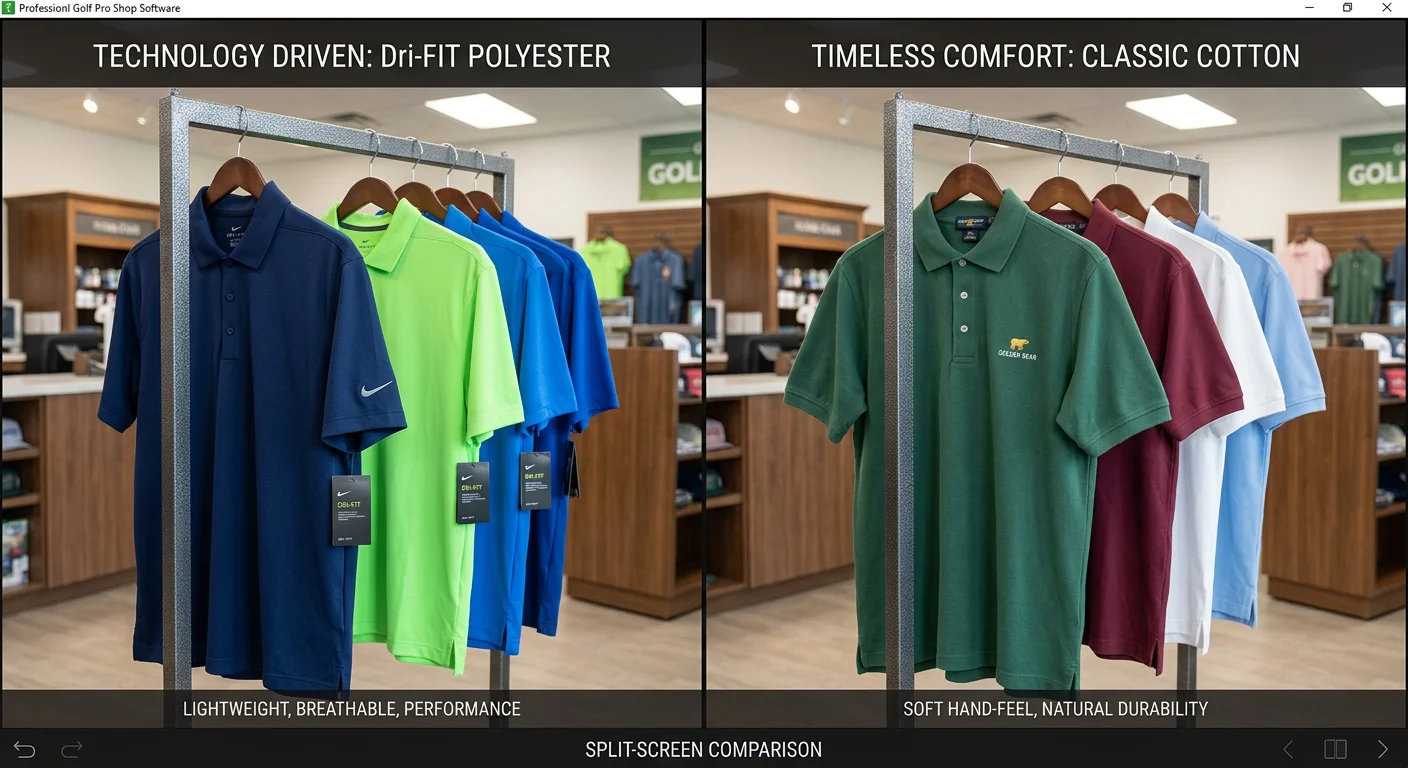
Cotton has been the default golf shirt fabric for decades. It didn't disappear when synthetic technology arrived — and that's not an accident.
The feel is the first thing. Pure cotton sits soft against skin in a way polyester can't replicate. No slickness. No synthetic sheen. Just natural breathability that lets air move through the weave.
Traditional golf clubs and heritage brands still prefer sourcing custom Cotton golf shirts when they want a classic course aesthetic that aligns with long-standing dress codes and member expectations.
Golfers who prioritize comfort over performance stats know this difference well — it's the whole argument.
But cotton has a complicated relationship with moisture. It can absorb 25 times its own weight in water — impressive on paper. The problem is that absorbency works against you once sweat builds up mid-round. The fabric grows heavier. It clings. The collar that felt crisp on the first tee feels damp and dragging by the ninth.
Not All Cotton Golf Shirts Are the Same
Most buyers stop reading before they get to this part — and that's a mistake.
100% Pure Cotton : You get maximum softness and breathability. The trade-off is real heaviness once wet — this hits hard in summer rounds
Pima/Egyptian Cotton : Finer fibers and a lower micronaire rating give you a softer feel against the skin. It's also hypoallergenic, making it a solid pick for sensitive skin
Mercerized Cotton : The durability upgrade. Double mercerization improves color retention, fights pilling, and increases tensile strength — all without cutting breathability
Cotton Blends (e.g., 60/40 cotton-poly) : The practical middle ground. More poly content speeds up drying, adds stretch, and cuts the shrinkage problem that hits 100% cotton hard after repeated washing
Modern cotton-poly blends push things further. Take Adidas's brrr° cotton-poly construction as an example. Some blends claim up to a 3°C cooling effect by pairing cotton's natural softness with synthetic wicking. The result dries faster than pure cotton, moves better through a full swing, and holds its shape wash after wash.
The trade-off is real but manageable. Pure cotton works well for golf shirt comfort and a traditional look. You run warm or play in high humidity? A quality blend or mercerized option keeps the soft feel — without the wet-weight drag.
Head-to-Head: Dri-Fit vs. Cotton Golf Shirts Across 7 Key Performance Dimensions
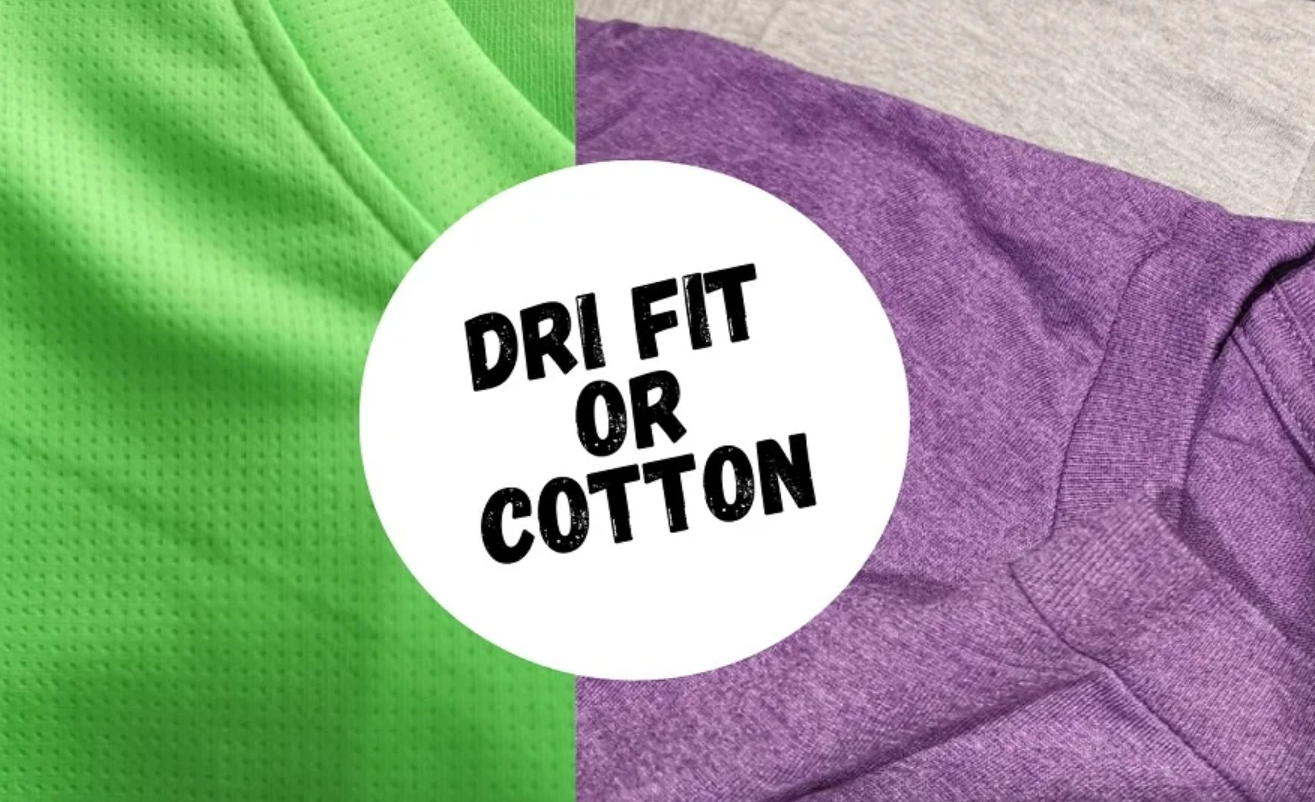
Seven dimensions. Two fabrics. One clear winner in each — and the results aren't always what you'd expect.
Here's the full breakdown, no filler, no brand bias. Just the performance data and real-world behavior that matters across 18 holes.
Behind most modern performance polos used in these comparisons is an OEM golf polo shirts manufacturer responsible for engineering the fabric blends that balance stretch, moisture control, and durability.
1. Moisture-Wicking & Drying Speed
Walking 18 holes means covering 5–7 miles over 4–5 hours. Your body loses 1–2 liters of sweat in that window. Where that sweat goes — into the fabric or away from your skin — changes everything about your round.
Dri-Fit moves it out. Cotton soaks it in.
Cotton absorbs up to 25 times its own weight in water. But absorbing is the exact opposite of what you want. The shirt grows heavier hole by hole. By the back nine, you're dragging wet fabric across every swing. Dri-Fit dries 2x faster and keeps pushing moisture away from your skin — no buildup, no saturation point.
2. Breathability Under Pressure
Cotton breathes well — when dry. That's a real, legitimate quality. On a cool morning round, it outperforms many synthetic options in raw air circulation.
Once humidity climbs and your body temperature rises, that advantage collapses fast. Dri-Fit's porous knit structure keeps regulating heat even as sweat volume increases. Bamboo-blend synthetics push breathability even further for golfers who run hot.
3. Stretch & Swing Freedom
A golf swing demands full shoulder rotation, unrestricted arm extension, and recovery — all in under two seconds. Fabric restriction during that motion costs you distance and control.
Nike's standard Dri-Fit polo runs 87% polyester / 13% spandex . Greg Norman's performance line sits at 88% polyester / 12% spandex . That spandex range — 5–20% — delivers true 4-way stretch across every plane of movement.
Pure cotton has almost no natural stretch. Wet cotton stiffens further and fights the shoulder turn. Cotton blends help, but they don't match what engineered performance fabric delivers at peak swing velocity.
4. Shrinkage & Shape Retention
Cotton shrinks. That's not a flaw — it's just fiber behavior under heat and repeated washing. Pure cotton shirts can lose noticeable shape after 20–30 wash cycles. Polyester resists shrinkage at the fiber level and holds its cut wash after wash.
Cotton-poly blends reduce this problem, but 100% cotton is the higher-risk choice. Care about your shirt fitting the same in year two as it did on day one? Dri-Fit is the safer bet.
5. Durability & Long-Term Wear
Dri-Fit shirts hold up through 50+ wash cycles — about 2–3 years of regular play. Polyester resists fading, pilling, snags, and wrinkle formation in a way cotton can't match over time.
Run the cost per wear and the math is clear:
Dri-Fit | Cotton | |
|---|---|---|
Price range | $40–$80 | $30–$60 |
Wash cycles | 50+ | 20–30 |
Cost per wear (est. 150 wears) | ~$0.20 | ~$0.35 |
The upfront price gap is real. The long-term cost gap is larger — and runs the other direction.
6. On-Course Appearance & Dress Code Compliance
This is where cotton fights back — and fights hard.
A pressed cotton polo carries a structured, traditional look that reads as formal on any course. Country clubs and upscale venues often expect that aesthetic. The problem: cotton starts losing its crisp appearance the moment sweat hits. By hole six, it sags. By hole ten, it wrinkles. The collared formality you started with is gone.
Slim-fit, tapered Dri-Fit polos have closed the dress code gap. Most country clubs now accept modern performance polos without question. Dri-Fit also maintains its structure through all 18 holes. The shirt you step onto the first tee in looks the same when you walk off the eighteenth.
7. Comfort Against Skin
Plain truth: natural cotton fiber feels softer against bare skin than polyester. This matters most for golfers with skin sensitivity or those who dislike the faint synthetic texture of performance fabric.
That said, modern Dri-Fit constructions have come a long way. High-GSM performance polos in the 180–210 GSM range feel very different from budget synthetic options. The slick, plasticky feel that gave polyester its bad reputation belongs to lower-grade fabric. Quality performance golf apparel at the $50–$80 price point sits much closer to cotton on the comfort spectrum than most buyers expect before trying it.
How Each Fabric Performs in Real Golf Conditions (Weather-Specific Breakdown)
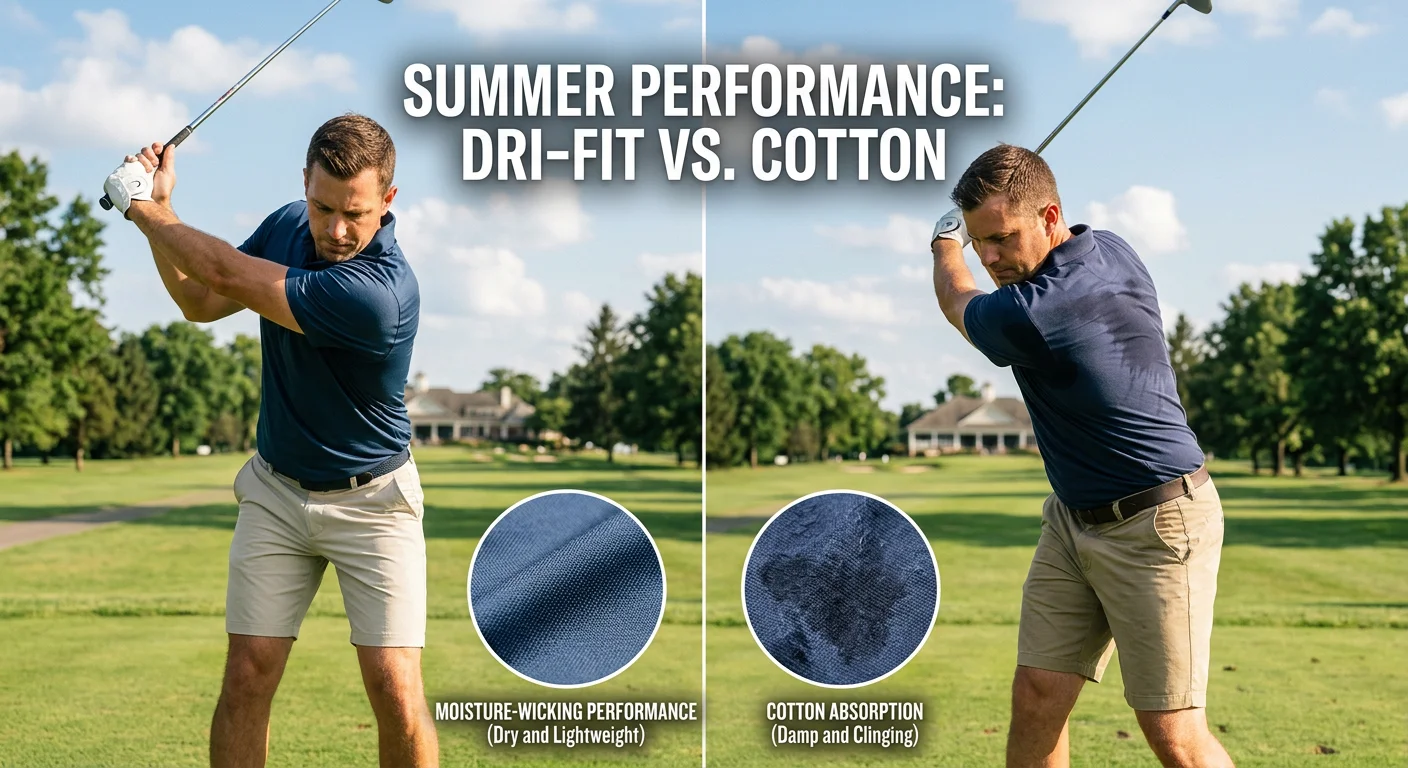
Weather doesn't care what fabric you're wearing. It just makes you pay for the wrong choice.
Research confirms what experienced golfers already know:
To meet these climate challenges, many brands partner with a specialized performance golf apparel factory that focuses on high-breathability fabrics designed specifically for long summer rounds.
Your shirt can't fix the weather. But it can control how much the weather breaks you down.
Here's how each fabric holds up out there.
Hot & Humid Summer Rounds (80°F+, High Sweat Output)
This is the worst-case scenario for cotton. Heat and humidity push your body's sweat output to its limit. Cotton saturates fast. Once wet, it stays wet. It drags against your skin, locks up your rotation, and adds dead weight to every swing.
Dri-Fit works differently. Its capillary action pulls moisture outward as sweat volume rises. The shirt that feels light on hole one still feels light on hole fourteen. In high-humidity conditions, that gap is real — it's the difference between staying sharp and fighting your own clothing.
Cool & Dry Morning Rounds (55–70°F, Low Humidity)
This is where cotton shines. Light air, low sweat output, mild temperatures — cotton breathes well in these conditions. That soft, structured feel outperforms synthetic alternatives here.
Dri-Fit in cool, dry air can feel over-built for the job. The moisture-wicking system that earns its keep in August has little to do on a crisp October morning.
Unpredictable or Mixed-Weather Rounds
Morning fog, afternoon sun, surprise wind — some rounds don't stick to one condition. That's where cotton-poly blends earn their place . They bring enough natural softness for cool-weather comfort. Plus, they pack enough synthetic fiber to handle sweat as temperatures rise.
Look for a 60/40 or 55/45 cotton-poly blend in the 180–200 GSM range. It won't beat either pure fabric at its best. But it won't let you down in either condition either.
The 5 Deciding Factors: How to Choose the Right Golf Shirt Fabric for You

Five questions. Answer them straight, and the right fabric picks itself.
1. Where Do You Play — and How Hot Does It Get?
Climate is the single most predictive variable in this decision.
Teeing off in 80°F+ humidity on a regular basis? Polyester-based performance fabric is the functional choice — full stop. It wicks, it dries, it keeps moving moisture away from your skin all round long.
Playing in mild, dry conditions most of the time? Cotton earns its reputation here. Lower sweat output, natural breathability, no synthetic feel against your skin. It's the right tool for the right environment.
Seasons that shift? Courses that span both extremes? Nylon blends handle mixed-weather conditions better than either pure option. They stay lightweight and moisture-resistant without locking you into one performance profile.
2. How Hard Are You Working Out There?
Competitive rounds and practice sessions are not the same situation.
High-intensity play means walking 18 holes, full power swings, tournament pace. That demands spandex-blended performance fabric . Nike's standard Dri-Fit construction runs 87% polyester / 13% spandex for a reason. That spandex range (5–20%) gives you unrestricted shoulder rotation and swing recovery. Cotton can't match that at full velocity.
Casual weekend rounds with a cart and a beer? A cotton-poly blend keeps you comfortable and relaxed. You still get basic moisture management through the back nine — without overthinking it.
3. Does the Event Require a Traditional Look?
Some courses have different expectations.
Country clubs and formal events lean toward cotton's structured, pressed look . It signals a level of seriousness that performance fabrics haven't replaced in those spaces. The dress code may not spell it out, but cotton stays on the right side of that line.
For everything else — including most modern clubs — a slim-fit polyester polo holds its shape through all 18 holes. Wrinkle-resistant, crease-free. Cotton starts sagging around hole six.
4. Does Your Skin Have an Opinion?
Prone to itching, irritation, or reactions to chemical fabric treatments? Bamboo viscose is worth knowing about. It's hypoallergenic by nature, breathes without synthetic additives, and fights odor without silver-ion sprays.
Pure synthetics with antimicrobial chemical finishes are the most common irritation trigger. A bamboo blend sidesteps that problem without pushing you back to heavy cotton.
5. How Much Time Are You Spending on Laundry?
Be straight with yourself here.
Polyester is the low-maintenance pick — wrinkle-resistant, quick-drying, no ironing needed. Most performance golf polos come out of the dryer ready to wear. Cotton takes more effort to look right: proper drying, some pressing, and careful temperature control to limit shrinkage over time.
The shirt lives in your golf bag most of the week? Go with polyester or a high-poly blend . That's the practical call. A piece you wear less often and store with care? Cotton's upkeep is manageable at that pace.
Putting It Together: Which Player Are You?
Player Type | Best Fabric | Why It Works |
|---|---|---|
Competitive / Tournament | Polyester + Spandex (87%/13%) | Maximum moisture control, full swing stretch, durability through heavy use |
Weekend Casual | Cotton-Poly Blend | Soft feel, adequate wicking, easy maintenance |
Business Golf / Formal Events | Cotton or Bamboo | Traditional look, wrinkle-resistant, skin-friendly |
One rule of thumb worth keeping: two or more factors pointing toward the same need — say, hot climate and high intensity — that's your answer right there. Pure performance polyester for extreme heat. Pure cotton works when conditions are dry, mild, and the pace is relaxed. Blends cover everything in between.
Care & Maintenance: Keeping Your Golf Shirts in Top Shape
The wrong wash cycle can undo everything a quality polo was built to do.
For Dri-Fit and performance polyester shirts , the rules are simple — but breaking them costs you:
Skip the fabric softener. Silicone buildup coats the hydrophobic fibers and cuts wicking performance by 30–50%. That moisture-management system you paid for? A few softener cycles and it's gone.
Cold water only. Wash at 30°C max. Hot water (40°C+) breaks down the wicking coating by 20–25% after just 10 cycles.
Air dry or low heat. High heat shrinks the fabric 5–8% and cracks the technical coating. Turn shirts inside out. Use gentle detergent. Pull them out as soon as the cycle ends.
For cotton golf shirts , shrinkage and color are the main concerns:
Cold water prevents 15–20% shrinkage. Hot water causes 5–10% contraction per wash.
Wash inside out — this cuts dye loss by 25%. Never bleach. Bleach fades color 40% faster.
Line dry or lay flat. This keeps the collar shape intact and avoids the 10% dryer shrinkage.
On storage , the gap between fabrics is real:
Fabric | Wrinkle Resistance | Packing Efficiency |
|---|---|---|
Dri-Fit (poly) | High — 90% recovery post-fold | 4–5 shirts per 10L |
Cotton | Low — 50% wrinkle rate | 2–3 shirts per 10L |
Good care stretches garment life 2–3x. Performance shirts can last past 50 wash cycles. Cotton typically tops out at 20–30.
FAQ: Your Top Questions About Golf Shirt Fabric, Answered
Real questions from real golfers. Short answers. No fluff.
Which fabric keeps you coolest on the course?
Polyester and nylon blends. Full stop. They move sweat off your skin, dry fast, and keep working as temperatures climb. Nylon-heavy builds — like lululemon's 95% nylon shorts — rank among the lightest and fastest-drying options out there. For shirts, performance polyester in the 130–170 GSM range is your coolest pick in summer heat.
Can I wear a cotton polo for a full 18 holes?
You can. You'll feel it by hole nine. Cotton absorbs sweat and holds it — clinging, stiffening, weighing down. Polyester blends dry 40% faster and push liquid away instead of trapping it. For a full round in warm conditions, cotton makes a hard day harder.
Is Dri-Fit worth the extra cost?
Yes — more so in heat or humidity. Performance synthetics now hold 46.71% of the golf apparel market . That's not trend-chasing. That's golfers voting with their wallets after wearing both and choosing the better option.
What if I have sensitive skin?
Go cotton — knitted piqué or mercerized cotton work best. Both are low-allergen and soft against bare skin. Some polyester finishes carry antibacterial chemical treatments. Those treatments can irritate sensitive skin. Want performance and comfort? Bamboo-viscose blends are worth a try. They're hypoallergenic, breathable, and free of synthetic additives.
Which fabric works better for custom logo shirts?
It's important to custom logo golf shirts. It depends on your decoration method.
Polyester and Dri-Fit suit sublimation printing best. Colors stay vibrant and hold up through repeated washing.
Cotton handles embroidery and stitching better. The weave grips thread cleanly and stays tidy over time.
Ordering branded team polos? Match your fabric to your decoration method — not just your budget.
Conclusion

The right golf shirt does more than cover your back. It works with you — through every swing, every humid back nine, every post-round handshake.
Here's the simple truth: chasing performance in the heat? Dri-fit technology fabric gives you a real edge on the course. Want timeless comfort and a relaxed fit for casual rounds? A quality cotton golf polo delivers that.
Most serious golfers don't pick a side. They build a rotation.
You now have the framework to make that call with confidence. No guesswork. No buyer's remorse. Just gear that fits your game and your conditions.
Ready to use this? Browse berunclothes.com's performance golf apparel collection — built for players who know what you wear matters , all the way to the final putt.
The best round of your life shouldn't be held back by the wrong shirt.