A gobbler sounds off at first light. Every advantage matters right then. The hunter shivering in a cotton hoodie, rustling leaves with every shift, or wearing the wrong camo pattern for spring hardwood — he's already losing before he calls a single note.
Your turkey hunting clothing isn'T just gear. It's your first line of strategy. Get it right, and you disappear into the landscape. Get it wrong, and that longbeard picks you off from 80 yards before you ever raise your gun.
This guide covers what to wear for spring gobbler season .For buyers evaluating products from a hunting apparel manufacturer, spring turkey season provides one of the clearest tests of concealment, comfort, and field functionality. You'll find layering solutions for those brutal 28-degree mornings that climb into 65-degree afternoons. You'll see which camo patterns match April's half-budded timber. Plus, you get a breakdown of the fabrics and features that keep you silent, scent-controlled, and in the game all the way to the shot.
What to Wear Turkey Hunting in Spring: Quick Reference
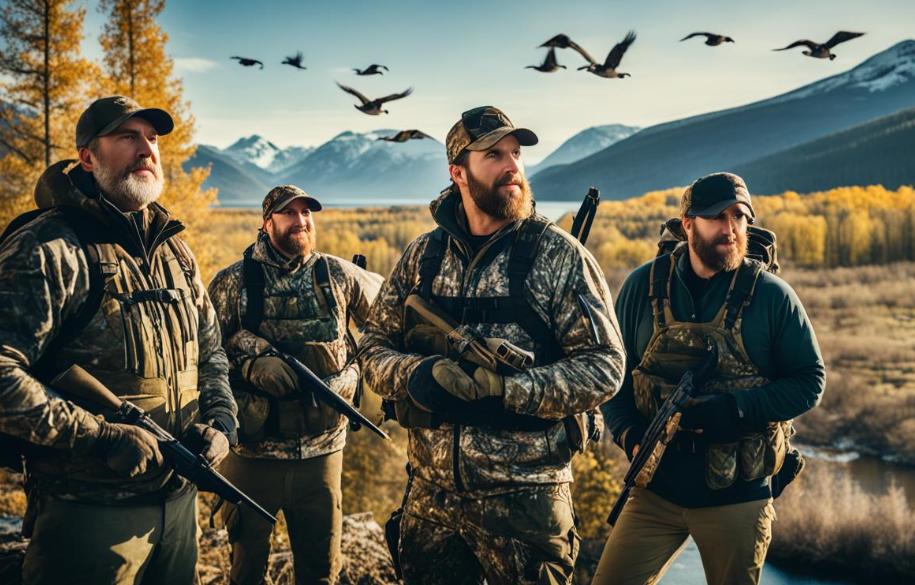
Here's the hard truth about turkey hunting: a whitetail deer sees limited color. It relies on movement. A turkey is different. That bird has near-360-degree vision, full color sight, and a nervous system built for survival. You don't get second chances.
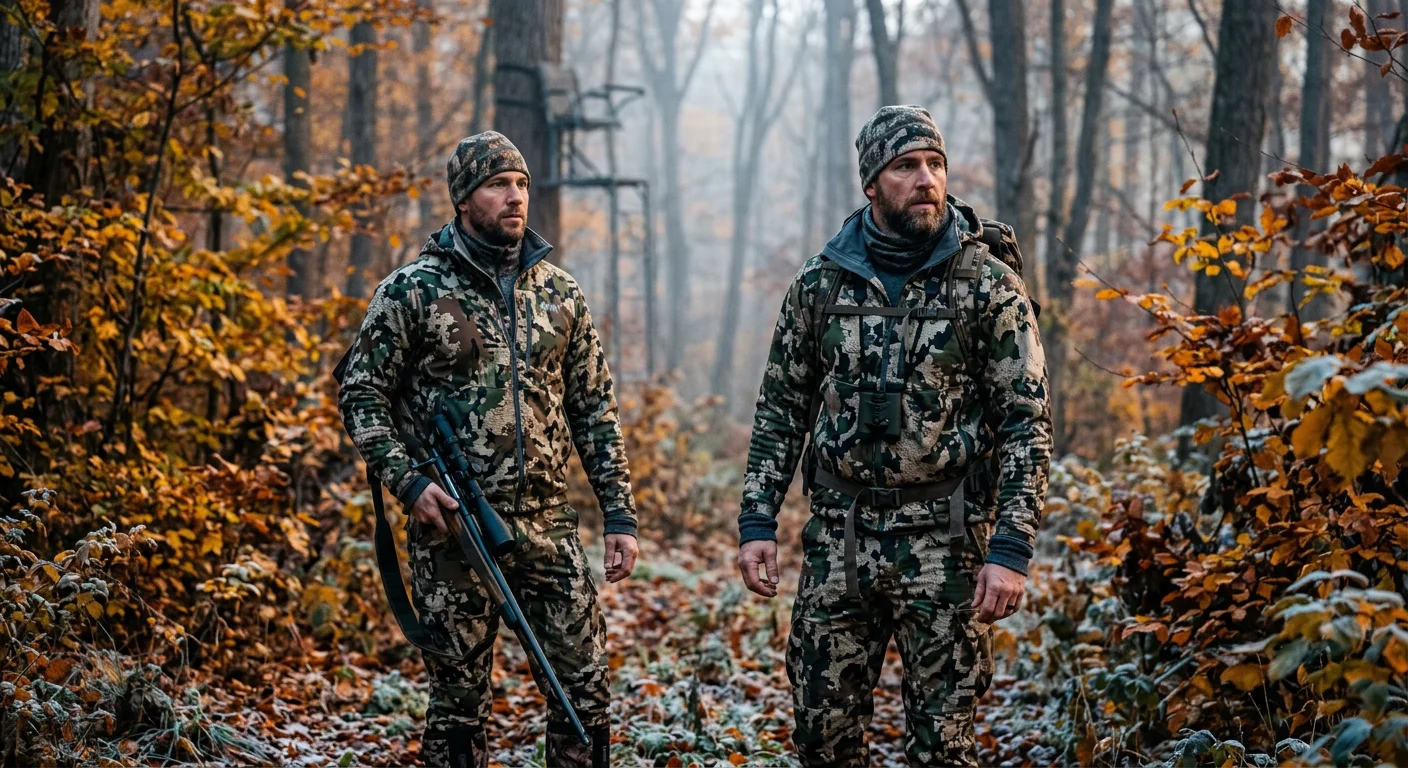
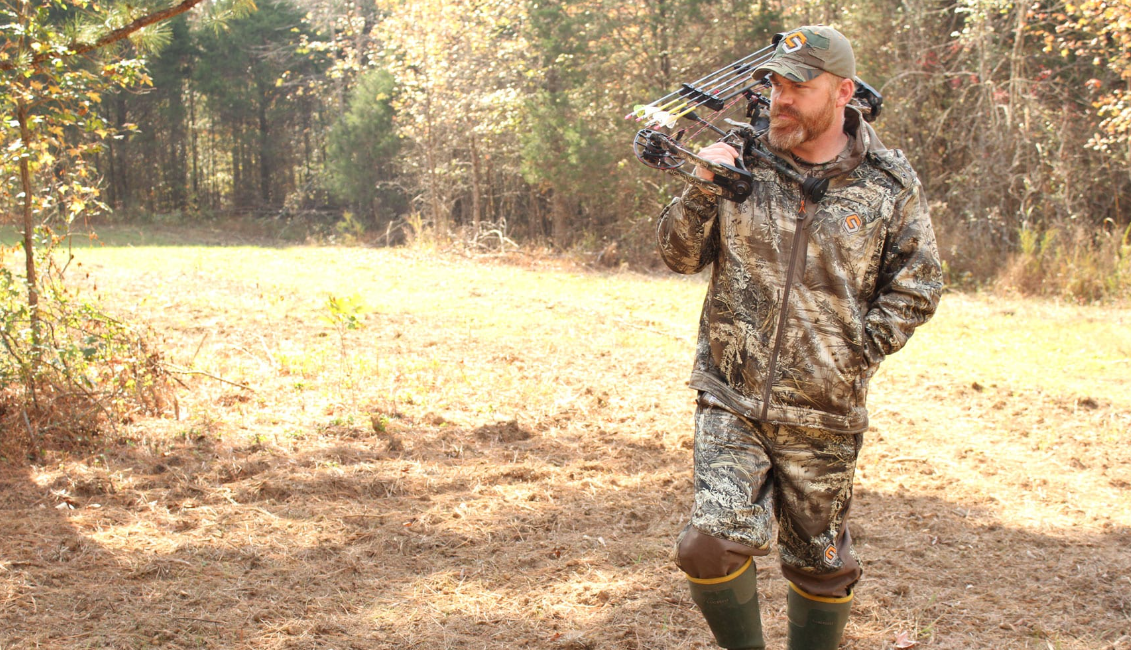
That's why your spring turkey outfit follows one non-negotiable rule — full camouflage, HEAD to toe, no exceptions.Experienced hunting gear supplier teams often prioritize complete concealment systems because exposed skin and mismatched accessories can compromise an otherwise effective setup.
Run through this checklist before you step into the timber:
Camo hat — covers your silhouette from above
Face mask or neck gaiter — exposed skin on your face is the #1 giveaway
Light camo shirt — breathable and moisture-wicking for warming afternoons
Light camo pants — pair them with warm base layers for those 28-degree mornings
Camo gloves — your hands move non-stop; don't skip these
Lightweight waterproof boots — look for slip-resistant soles and ankle support
Mid-layer or heavyweight hoodie — wear it for those cold pre-dawn sits; shed it as temperatures climb
Rain gear — spring weather lies; pack it no matter what
Permethrin-treated clothing or bug repellent — ticks and gnats don't care about your patience
One more rule: never wear white, red, or blue in the turkey woods. Those colors mirror a gobbler's head. Other hunters read them the same way. That's a dangerous mistake.
This is your baseline. Everything else in this guide builds on it.
Understanding Spring Turkey Hunting Conditions
Spring turkey season runs on a tight biological clock. Gobblers shift into full breeding mode between late March and June across most of the country. Peak gobbling hits hard in April. That window is short. The birds are predictable for so long — and no longer. What separates hunters who fill tags from those who burn vacation days is knowing what drives bird behavior during those weeks.
The engine behind everything is courtship. Hunters investing in a custom turkey hunting clothing system often adjust camouflage patterns, layering weights, and ventilation features based on these seasonal behavioral changes.Toms are looking for hens. Hens are moving toward nest initiation. That biological urgency makes turkeys easier to pattern — once you know what conditions push them where.
How Weather Shapes Turkey Movement
Weather is your daily scouting report. Learn to read it.
Light rain and warm drizzle are underrated hunting conditions. Visibility drops in dense timber. Turkeys abandon it. They move to open areas where they can spot threats coming. Hunt the field edges. Hunt the open corners. Wait for heavy rain to pass, then get into position fast — birds will be moving.
Hot, dry days push birds to water sources and shaded cover by midmorning. Still set up on a dry ridge at 10 a . m. wondering where everyone went? That's your answer.
Wind matters more than most hunters admit. Before you set up, find the wind side of any ridge or travel corridor. Your approach routes and calling setups need to account for it. A bird that smells you before he sees your decoy is gone.
Reading the Clock
Turkey movement follows a loose daily rhythm:
Morning — birds fly down from roost and start grazing. This is your highest-probability window. Locate the roost the evening before. Set up along the feeding route or field edge before first light. Get in early. Stay quiet. Let the birds come to you.
Midday — temperatures climb and birds drift toward shade. Movement slows. Patience stops being a virtue and starts being a skill.
Afternoon into evening — birds work back toward grazing areas near nesting cover. A second productive window opens up for hunters willing to stay in the field.
Find the Sign Before You Find the Bird
Turkeys leave a readable trail. Fresh scratchings in leaf litter can run 10 feet long and 3 feet wide — hard to miss once you know what you're looking for. Tracks and dust baths confirm travel corridors. Scat tells you more than most hunters pick up on: female droppings are curly; male droppings are J-shaped. Find the J-shaped scat, and you're in the right neighborhood.
Focus your scouting on forest edges, field margins, oak flats, and ridgelines where turkeys feed and travel. The birds aren't random. They follow food, cover, and each other — and they leave proof of it on the ground.
Your clothing strategy needs to match these conditions. Cold pre-dawn setups near the roost call for insulated base layers. Warming afternoons on open field edges call for breathable, moisture-wicking fabrics . Every setup — morning, midday, or evening — needs full turkey hunting camouflage that blends into April's half-leafed hardwoods.
Turkey Hunting Clothing Principles: Concealment, Silence & Safety
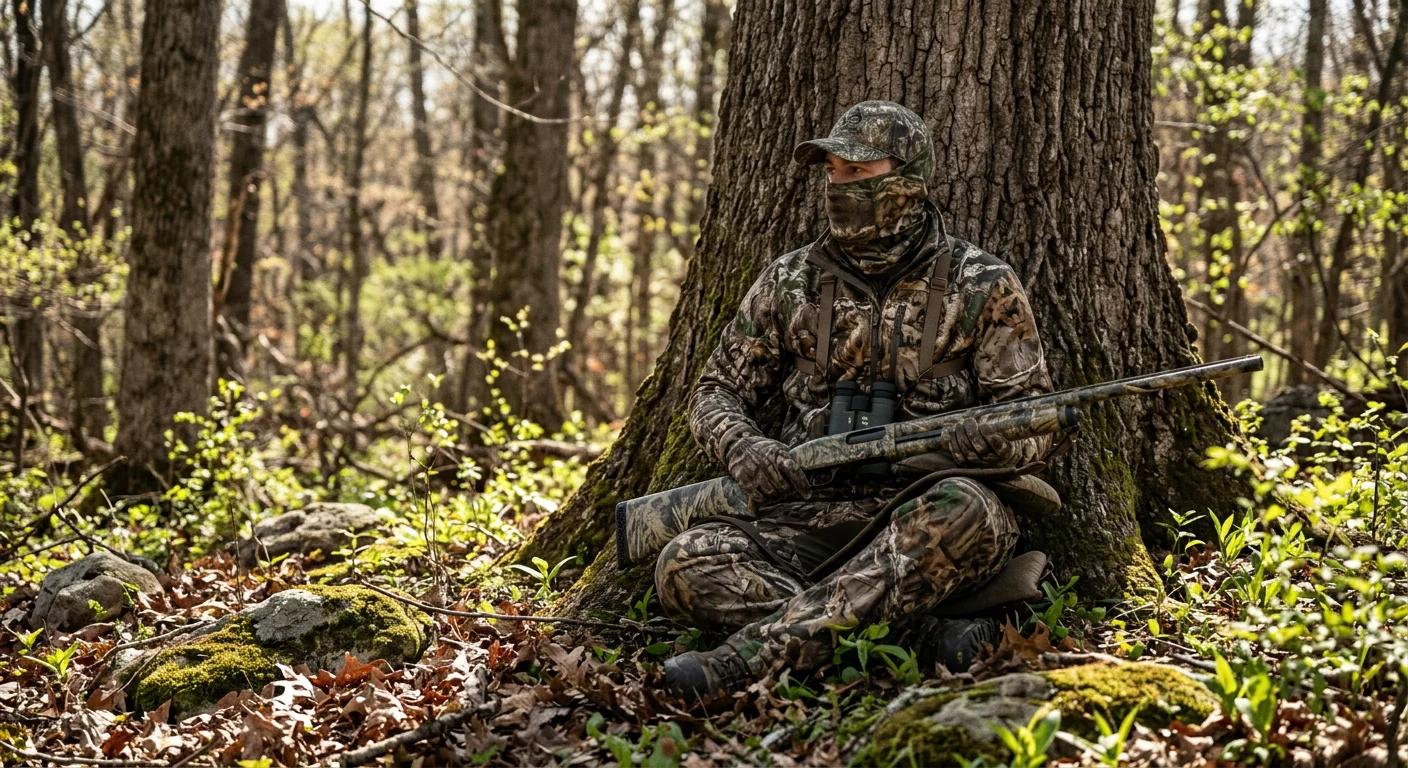
Three things get hunters busted before the shot. Movement. Noise. The wrong color on the wrong body part at the wrong moment. Master all three, and your clothing stops being something you wear and starts being something you wield.These performance requirements are also shaping many modern OEM/ODM hunting apparel programs focused on advanced concealment and low-noise fabric development.
Concealment: Disappear or Don't Bother
Turkey vision is nothing like deer vision. A gobbler sees full color. He picks up UV reflection. He reads contrast, outline, and the faint glint off a synthetic sleeve at 40 yards. Experienced turkey instructors mean it when they say there is no such thing as an insignificant detail — an exposed wristwatch band, a bright sock above the boot line, a non-camo gun sling can all end your morning.
The standard is clear: head to toe, every inch, no exceptions. Boots, gloves, face mask, hat, and yes — your shotgun. Wrap the barrel and stock with camo tape if it's not already matte-finished. Long, straight, shiny shapes draw a turkey's eye just as fast as they draw yours.
Two more things most hunters miss:
UV and glare. Synthetic fabrics and laundry detergents with optical brighteners make your clothing glow. You can't see it. A turkey can. Use UV-neutral detergent. Pick garments labeled UV-free or low-glare — this matters most at the typical 20–40 yard range.
Your backdrop. Sit with your back against a tree trunk at least as wide as your shoulders. Stay inside shadow zones — under cedars, in the lee of a ridge. Avoid skylines and open edges where your silhouette stands out against the sky. A bird at 80 yards reads your outline before he reads your pattern.
Silence: The Fabric Standard Nobody Talks About Enough
Full camo won't save you if your jacket sounds like a plastic bag in a ceiling fan. Every small move — a slow gun raise, a foot shift, a deep breath — passes through your clothing before it hits the air. That sound travels.
What kills you:
- Stiff nylon shells
- Crisp poly-cotton that swishes when your thighs brush together
- Loud Velcro on chest pockets you'll open with a bird 30 yards out
What keeps you quiet:
- Soft-brushed polyester or microfleece outer faces that press quietly against vegetation
- Wool or natural-fiber blends that kill friction noise
- Athletic or tailored fit — loose fabric flaps and whooshes on any move over 2 inches
Before season, do a noise audit at home. Put on the full kit. Walk. Squat. Raise your arm like you're mounting a gun. Hear swishing, clicking, or crinkling anywhere in that sequence? Fix it now. Don't find out in the woods with a bird at 50 yards.
One more thing safety trainers get right: eliminating movement is your real concealment strategy — not the pattern on your jacket. Even in perfect camo, a slight motion shows up to a turkey at 50–100 yards. You need to stay dead still for 20 to 30 minutes once a bird is working toward you. Your clothing supports that discipline. It doesn't replace it.
Safety: The Colors That Can Get You Shot
This one isn't about turkeys. It's about the other hunter you didn't see setting up 60 yards behind you.
The rule is absolute: never wear red, white, blue, or black anywhere on your body in turkey country. Those are the colors of a gobbler's head and body. Hunters are trained to spot that exact combination in the brush. A red bandana around your neck, a black pack on your back, a white hat brim — any of those can push another hunter's brain to complete the wrong picture.
This rule covers everything visible: outerwear, hats, masks, packs, hydration tube caps, logo patches on gloves, zipper pulls.
Here's how to handle the concealment-versus-safety balance:
Situation | What to Wear |
|---|---|
Walking to/from your setup | Blaze orange or pink on upper body, over your camo |
Sitting and calling | Full camo only — remove the orange before you settle in |
Packing out a harvested bird | Cover the turkey with a blaze orange garment |
Before you leave the truck, run a full color check — front and back. Look at straps, logos, and accessories. Then run your noise check. Two minutes in the parking lot saves you the whole hunt.
Spring Turkey Hunting Layering Strategy
Spring turkey season gives you one of hunting's strangest temperature problems. At 5:30 a.m., you're hiking into a 28-degree ridgeline in the dark. By 11 a.m., you're sitting in 68-degree sunshine wondering why you packed half your closet. That 40-degree swing happens in the same morning, on the same hunt. Your clothing system needs to handle both ends — no noise, no trapped sweat, no burnout before the birds start talking.
The answer is a three-layer system. Many specialized hunting clothing factory teams build spring systems around this exact principle, balancing thermal regulation, mobility, and silent movement throughout rapidly changing conditions.Not complicated. Just disciplined.
The Three-Layer Framework
Layer 1 — Base (Moisture Management)
This layer sits against your skin. Its one job is to move sweat away from your body before it chills you. Merino wool at 150–200 g/m² or a lightweight synthetic polyester both get it done. Merino beats synthetic on odor control for multi-day hunts. Synthetic dries faster.
Below 40°F, wear a base top and base bottoms. Above 40°F, drop the bottoms. Simple cutoff, big comfort gain.
Here's a rule experienced turkey hunters learn fast: start cool at the truck, not warm. Feeling comfortable at the tailgate means you're about to sweat through your base layer on the hike in. Sweat-soaked base against your skin will chill you the moment you stop moving. That's a problem at first light, sitting still for 30 minutes. Start cold. Hike in cold. Arrive dry.
Layer 2 — Mid-Layer (Insulation)
A light grid fleece or a thin synthetic puffy vest fills this slot. Stow the mid-layer in your vest or pack during the walk in. Put it on at the setup. Your body drops from hiking exertion to motionless sitting fast. That shift from moving to sitting still is where most hunters get cold and start fidgeting — and that ends hunts.
A solid spring mid-layer: a 100–200 weight grid fleece hoodie paired with a light synthetic puffy for the coldest mornings. That combo locks you in during long roost sits. It won't overheat you the moment you stand up and start moving.
Layer 3 — Outer Shell (Wind, Weather, Silence)
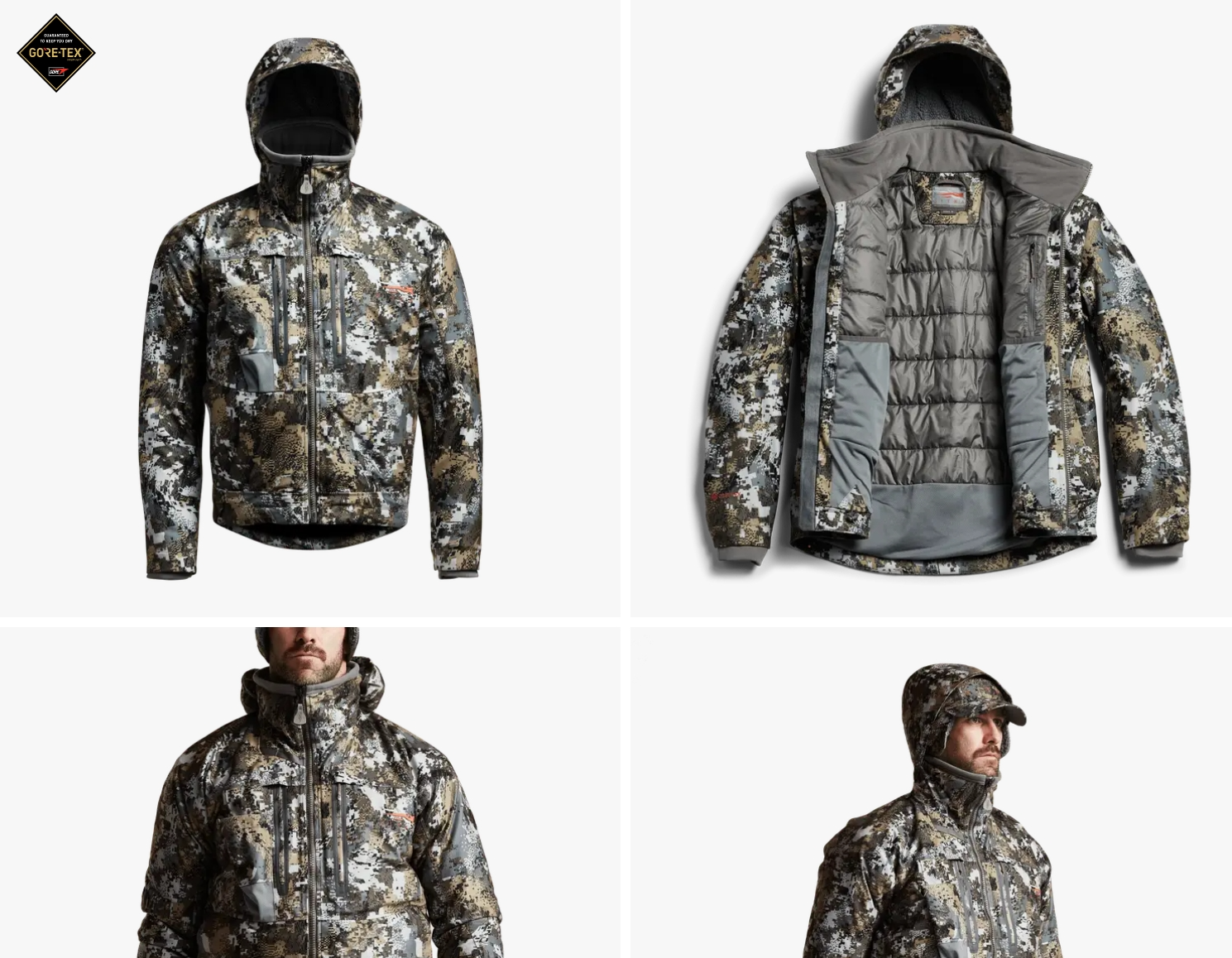
This is where turkey hunting splits from every other hunting system. The outer layer has one requirement above everything else: it must be silent. Stiff nylon shells and crisp hardface membranes work against you here, not for you. A quiet softshell — 200–300 g/m² fabric with a DWR finish — handles light wind and dry brush contact. It won't broadcast every move you make.
Pack a separate ultralight rain shell (total garment weight under 300 g) for actual rain. Don't put it on unless the rain forces it. Above 55°F, wear it over your base and skip the mid-layer. The goal is weather protection without cooking yourself.
The Day's Layering Timeline
The system works — but you have to use it. Here's how it plays out on a typical April morning:
Time of Day | Temp Range | What You're Wearing |
|---|---|---|
Pre-dawn hike in | 25–40°F | Base top + base bottoms; mid-layer stowed |
First-light setup | 25–40°F | Add mid-layer + quiet shell; tuck base top at waist |
Mid-morning movement | 40–55°F | Strip to base + light fleece; shell in vest |
Late morning–midday | 55–75°F | Base layer or ultra-light hoody; rain shell stowed |
Most hunters skip one high-value move: change into dry socks during the mid-morning lull. Damp socks from the hike in will wreck your afternoon. A dry pair weighs almost nothing in a vest pocket. It adds real time to your day in the field.
Accessories That Complete the System
Layering doesn't stop at your torso.
Hands — Thin camo gloves with a snug fit. Loose gloves shift around on your call or your gun. Dexterity matters more than warmth here. Temperatures drop? Layer thin gloves under a heavier outer glove. Pull the outer off once a bird is working.
Head — A lightweight, breathable face mask stops heat from building up by late morning. Skip thick fleece masks after 9 a.m. — they trap heat and make you move. A moisture-wicking hunting shirt with a built-in hood cuts down on the pieces you need to track.
Feet — Uninsulated or low-insulation waterproof boots cover most spring conditions. Fit beats insulation rating every time. Heel slip on a long ridge walk builds blisters that end your hunt on day two.
Your turkey hunting vest ties the whole system together. It carries the shed layers, the rain shell, the spare socks. Hands free, back unloaded — you move quieter and sit longer. That's the system doing its job.
Camouflage Pattern Selection for Spring Gobbler Season
Pattern selection isn't about brand loyalty. It's about matching the exact background your bird sees when he looks your way.
Spring turkey woods don't hold still. Over four weeks, your hunting ground shifts from a gray-brown tangle of bare limbs and last year's leaf litter into a wall of dense green. The pattern that hides you on April 5th can expose you on April 25th. That's not a small detail. A longbeard at 30 yards will hang up, lock eyes on you for ten seconds, and fade back into the timber. Your pattern choice decides which outcome you get.
The framework is simple. Scout your ground 7–14 days before opener . Drop to turkey height — or close to it — and take an honest look at what surrounds you:
More than 70% gray/brown? Bare limbs, leaf litter, dark trunks. You're in bark phase. You need a bark pattern.
30–60% green? Patchy new leaves, fresh grass, mixed understory. You're in transition phase. You need a hybrid.
More than 60–70% green? Closed canopy, full understory. You're in green phase. You need a foliage-forward pattern.
That visual percentage drives every decision after it.
The Pattern Buckets, Matched to Each Phase
Early Season — Bark Phase
Trees are still mostly bare. Dead leaves, dark trunks, and gray shadows cover the ground. Mossy Oak Bottomland and Realtree Original are built for this. Both run dark, vertical, and close to green-free. They match the big timber most eastern turkey hunters sit in during the first two weeks of April.
Avoid bright green patterns here. Mossy Oak Full Foliage is the classic mistake. Gray woods make a green pattern stand out like a foreign object. Veteran hunters put it well — wearing full foliage in early spring is like showing up to a bark convention in a Hawaiian shirt.
Transition Phase — Early to Mid-Season Green-Up
Small leaves start to appear. Grass pushes through the leaf litter. Your visual field is a mix of brown trunks and fresh green growth. Mossy Oak Greenleaf fits this window well. Think of it as Bottomland with small green leaf details added in. It works in both bark-heavy and green-heavy spots without leaning too far either way.
Mossy Oak Full Foliage also holds up here. It carries more green than Greenleaf, but keeps enough brown to stay believable against bark-heavy backgrounds.
Late Season — Green Phase
By late April, the canopy has closed across most regions. The understory is full and thick. This is Mossy Oak Obsession territory. That pattern was made for spring turkey hunting in dense, leafed-out hardwoods. Realtree EDGE does the same job — realistic leaves, branches, and layered shadows break up your outline in green, mixed-timber woods.
Terrain Adjustments That Most Hunters Skip
You won't always be in the woods. Shift your pattern to match the ground you're on:
Terrain Type | Recommended Patterns |
|---|---|
Open fields / ag edges / green pasture | Sitka Optifade Subalpine |
Hill country / riparian oaks / mixed timber | Mossy Oak Obsession, Realtree EDGE |
Brush / mesquite / semi-arid draws | King's Desert Shadow, Realtree Max-1 |
One Test Worth Doing Before Opening Day
Get fully dressed in your kit. Sit against your actual setup tree. Have someone photograph you from 20–40 yards at ground level . Pull up that photo. Check two things: your silhouette, and your contrast against the background. Either one that reads clearly means you need a darker pattern, a better tree, or both.
Fabric pattern only goes so far. The tree you back against , the ground texture you sit in , and the posture you hold all feed into the same concealment equation. Knees up, back against a trunk wider than your shoulders, pattern matched to the phase — that combination is what pulls you out of a gobbler's field of view.
Fabric Technology: Noise, Moisture & Scent Control
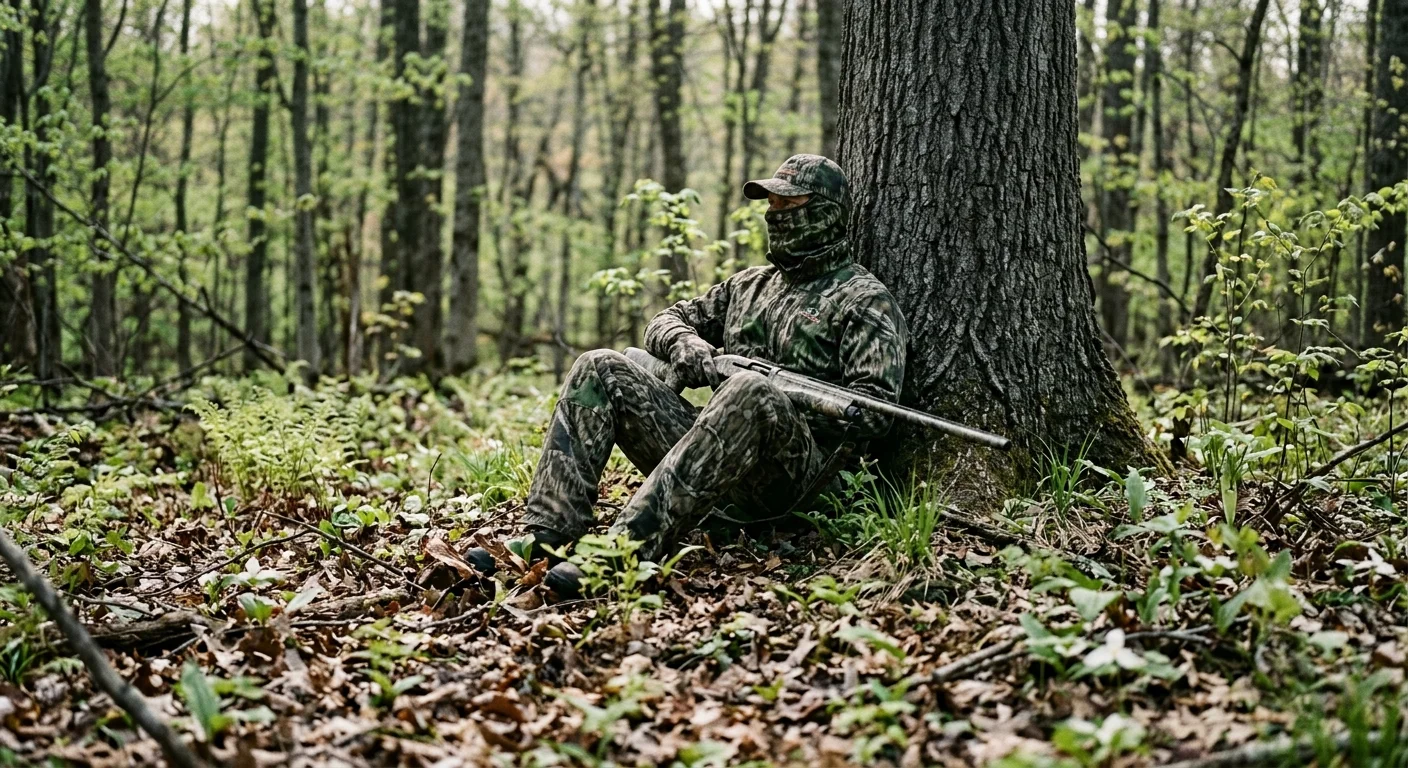
Your clothing is doing three jobs at once — and failing any one of them ends your hunt.
Silent. Dry. Odorless. That's the standard. Here's the science behind it.
Noise: Decibels Matter at 30 Yards
Fabric makes noise through friction. Every small movement — a slow gun mount, a knee shift, a deep breath — sends vibrations through your clothing before they reach the air. That sound travels.
Surface texture is the fix. Brushed and peached face knits — microfleece, peached polyester — raise fibers on the fabric surface. That cuts fabric-to-fabric friction noise by 3–6 dB compared to unbrushed versions of the same weave. Turkey ears are most sensitive in that exact frequency range. So that gap is real and it matters.
For shells, look for a soft knit backer . A 2- or 3-layer laminate with a brushed inner face runs 1–3 dB quieter than a stiff, unlined shell of similar denier. Stiff single-layer shells crease and crinkle. That sound carries.
Two more things that add up:
- 3–7% spandex content reduces fabric buckling at knees, elbows, and shoulders — the high-motion zones where crackle noise is worst
- Flatlock seam construction removes the bulk and chafe-squeak that overlock seams create against skin or adjacent layers
Moisture: The Problem Isn't Sweat — It's Wet Time
Sweat-soaked fabric chills you the moment you stop moving. Worse, wet fabric is where bacteria grow fastest — and bacteria are what gobblers smell.
The number to chase for base layers is vertical wicking rate . Target ≥150–200 mm per 10 minutes and a dry time of under 40 minutes at 150–200 g/m².
Two fabric types hit that mark:
Merino wool — takes in up to ~30% of its own weight in moisture vapor before it feels wet. Synthetic fibers cap out at 3–5% by comparison. Merino handles humidity spikes without going clammy.
High-wicking synthetics with fast-dry technology — options like Trizar™ use mineral additives to pull liquid sweat off your skin. They cut drying time by 20–40% versus untreated polyester at a similar weight. Less wet time means less bacterial growth. Less bacterial growth means less odor.
Scent Control: It's a System, Not a Spray
No single product handles scent on its own. The fabrics that work combine two separate approaches: odor prevention (stopping bacteria before they produce smell) and odor capture (trapping the molecules that get through).
Prevention — antimicrobial systems:
- Silver ion technology (SmartSilver, Polygiene StayFresh™, SCENTINEL) — moisture activates silver ions that break down bacterial respiration, replication, and cell wall function. Performance benchmark: >99% reduction in odor-causing bacteria after 24 hours, held through 50+ wash cycles in standardized tests
- Merino wool — antimicrobial on its own, no added treatment needed. The 18.5-micron fine-grade fibers also sit close to skin, which boosts moisture transfer across your whole layering setup
Capture — adsorption systems:
- Activated carbon — the porous structure grabs odor molecules before they release into the air. It pulls in 10–20% of its own weight in organic vapors. It needs periodic reactivation through heat or washing.
- Zeolite — a microporous mineral that locks in 5–15% of its own weight in VOCs. A standard wash-and-dry cycle resets it.
- Silica-based treatments (Polygiene OdorCrunch™) — pull in ambient environmental odors and neutralize them. The treatment is permanent and stays in the fiber.
- Microban Freshology™ — goes after four specific body odorants: ammonia, acetic acid, isovaleric acid, and nonenal. It delivers ≥90–99% reduction in targeted odor intensity across multiple wash cycles.
The best setup pairs a merino or silver-treated base layer (prevention at the source) with carbon or zeolite mid and outer layers (capturing what gets past). Fit matters too. Loose layers pump air outward with every move. That bypasses the adsorption layer before it can do its job.
Quick Spec Reference:
Performance Goal | What to Look For |
|---|---|
Noise reduction | Brushed/peached inner face; 3–7% spandex; flatlock seams; soft knit shell backer |
Moisture management | Wicking rate ≥150 mm/10 min; dry time <40 min; merino or Trizar-type synthetics |
Scent prevention | Silver ion antimicrobial; 18.5-micron merino; bio-based treatments |
Scent capture | Activated carbon, zeolite, or silica-based adsorption layer |
Run at least one prevention system plus one capture system in every outfit. That's not redundancy — that's the baseline.
Spring Turkey Hunting Clothing Checklist
Pack wrong, and you'll know it by 7 a.m. You're standing in a soaked cotton layer. You're digging through a bag that has everything except what you need right now.
This is the full kit. It's built for spring's wild temperature swings and a turkey's sharp eyes.
The Non-Negotiables
Camo hat — baseball cap for warmth, beanie for cold mornings
Face mask or neck gaiter — bare skin reflects light; cover every inch
Camo shirt — lightweight, moisture-wicking; pack 3–5 per week on multi-day hunts
Camo pants — 1–2 pairs per week ; pair with base layers on cold mornings
Camo gloves — wear them even on warm days; your hands never stop moving
Base layer top and bottom — 2–3 sets per week ; merino or synthetic both work
Mid-layer — a fleece or light puffy; stow it on the hike, put it on at setup
Waterproof outer shell — windproof and waterproof, but test it for noise before you buy
Rain suit — spring storms don't give you a warning
Lightweight waterproof boots — lighter works better for spring; break them in before opener
Wool socks — carry multiple pairs; swap them at midday
High-Priority Add-Ons
Permethrin-treated clothing or bug spray — ticks show up the same time turkeys do
Hand warmer packets — pre-dawn sits in 28°F air are brutal on still hands
Turkey vest — carries everything above that isn't already on your body
One underwear set per day. No exceptions. That's not about comfort — it's odor control.
Conclusion
Spring gobbler season punishes careless preparation. Your clothing is your first line of defense — before you touch a call or set a decoy.
Get the layering right. You'll stay comfortable through raw pre-dawn walks and sweat-soaked midmorning sits. Pick a camouflage pattern that matches your spring woods — not last October's timber. Do that, and you blend into the landscape instead of standing out in it. Control your noise and your scent. That's what stops the tom from hanging up at 80 yards.
That's the whole game: remove yourself from the equation so the bird makes the mistake.
Before your season opens, run through the Spring Turkey Hunting Clothing Checklist one more time. Identify the gaps. Fill them with purpose. Then head over to BerunClothes.com to explore spring hunting apparel built for hunters who care about the details.
The gobbler is already out there. Show up ready.