Your jacket used to shed rain like a duck's back. Now it's soaking through, clinging to your base layer, and doing nothing it's supposed to do. That's called wetting out — and it doesn't mean your jacket is ruined. It means the DWR coating needs a little attention.Today, many waterproof jacket manufacturers for outdoor performance engineer garments with advanced DWR and membrane systems — but even the best gear needs proper care to stay effective.
The good news? You can fix it at home, in an afternoon, with products that cost less than a coffee run. This guide covers how to wash and reproof a waterproof jacket at home. You'll learn the right machine settings and how to choose between a wash-in or spray-on reproofing treatment. Follow the steps, and your jacket will perform like new again.
What You Need Before You Start (Products & Tools Checklist)
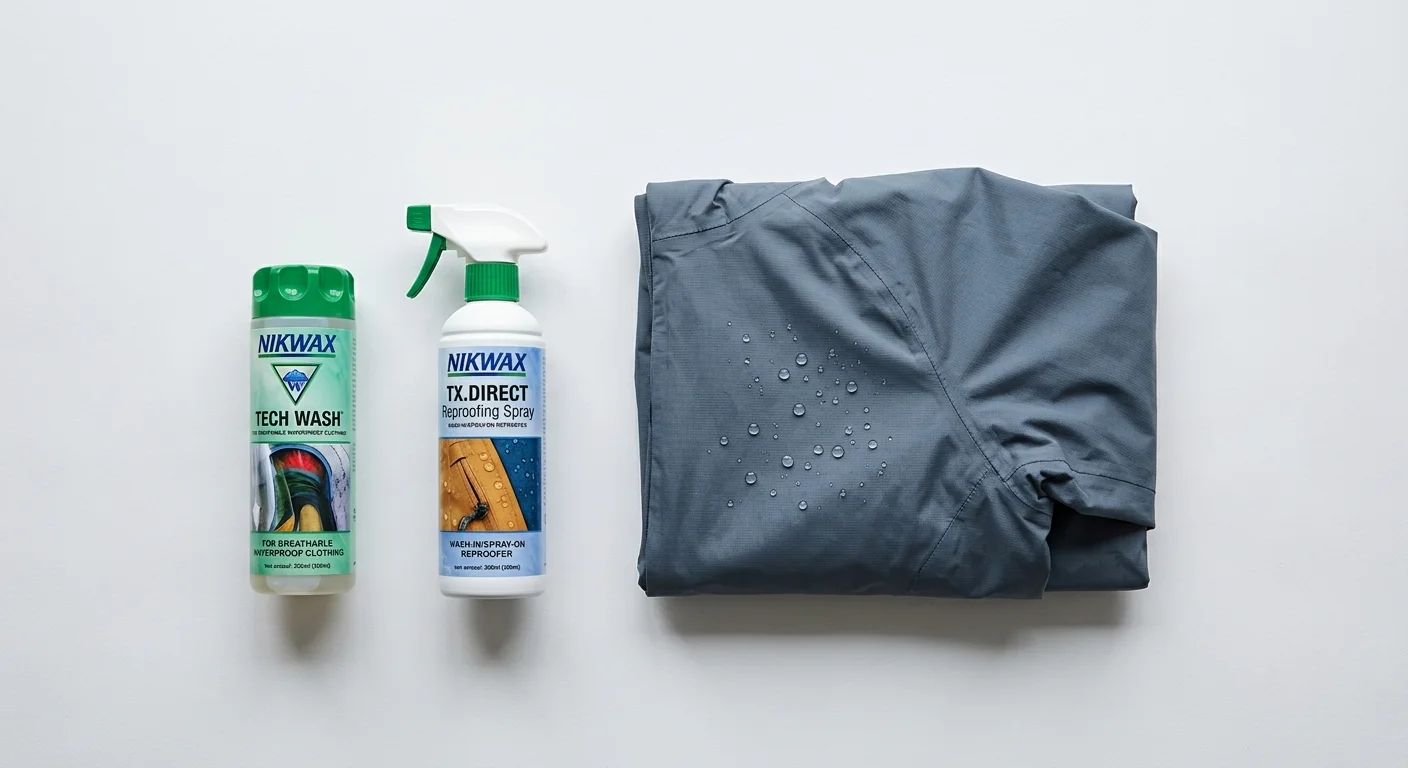
Have the right products ready before you begin. It saves time and cuts out a lot of frustration. Two categories cover everything: a technical detergent and a reproofing treatment . Don't swap either one for regular household products — the chemistry behind them matters more than most people realize.
The Cleaning Products
Drop regular detergent from your routine. It carries surfactants that break down the DWR coating, pulling its water contact angle from ~110° down below 90°. That's the threshold where water stops beading and starts soaking straight in. Fabric softener does similar damage — it blocks the membrane's microscopic pores and can cut breathability by 30–50%. Bleach is even worse.
Pick one of these instead:
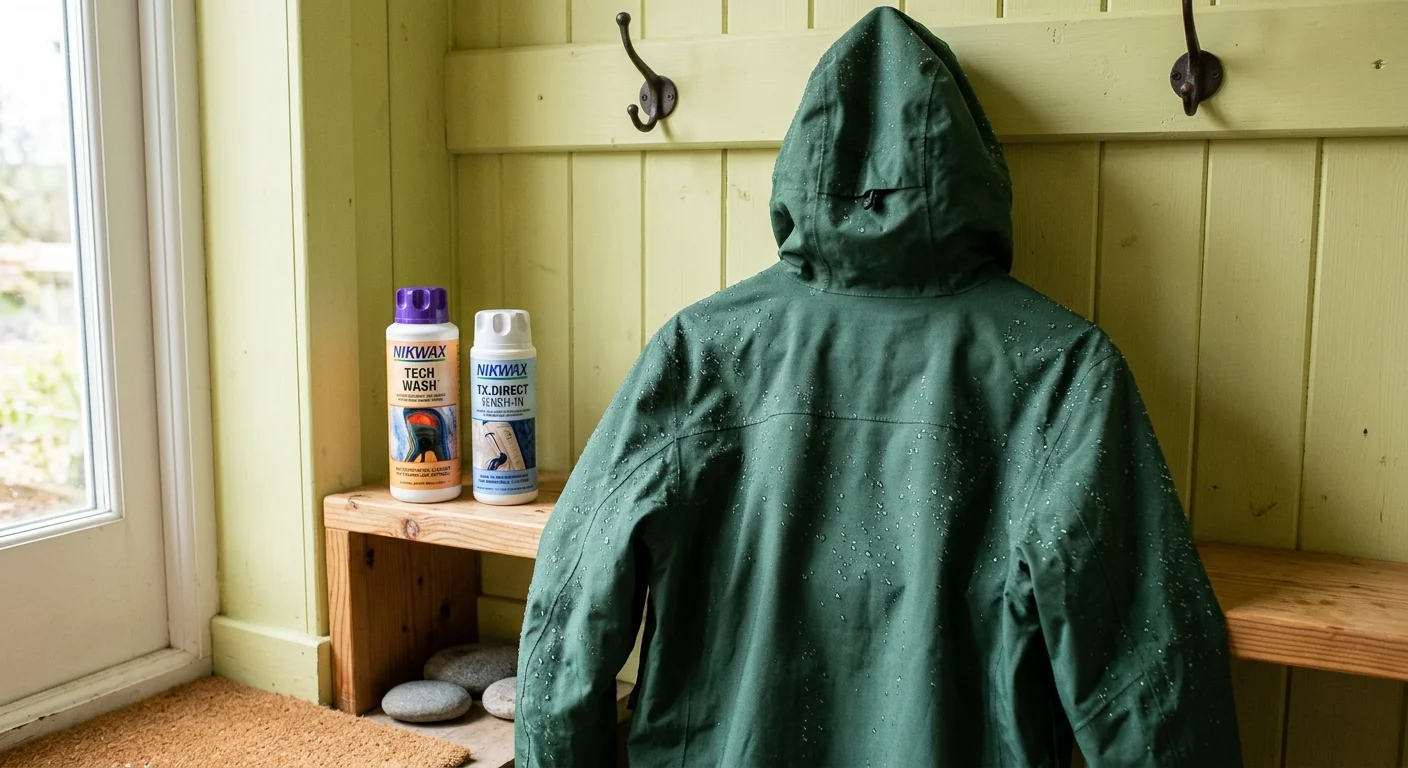
Nikwax Tech Wash — 100ml per machine load (5–10kg); 50ml for hand wash
Grangers Performance Wash — 100ml per full 10L load; 30ml for hand wash
The Reproofing Treatment
Two formats are available. Your choice depends on how worn your jacket's protection is:
Wash-in reproofer (e.g., Nikwax TX.Direct Wash-In, Grangers Storm Proofer Wash-In):
- Best for jackets where more than 50% of the surface is wetting out
- Gives the most consistent coverage — close to 95% surface uniformity
- Lasts 12–18 wash cycles
- Needs a washing machine
Spray-on reproofer (e.g., Nikwax TX.Direct Spray):
- Best for small worn patches or specific areas like seams and hoods
- Takes about 15 minutes to cover a full jacket
- Hold the can 20–30cm from the surface and do 5–10 passes per section
- Restores breathability at a slightly lower rate — about 10% less than wash-in
Quick Reference Dosage Chart
Product | Machine Wash | Hand Wash | Covers |
|---|---|---|---|
Nikwax Tech Wash | 100ml | 50ml / 5L | 4–6 items |
Grangers Perf. Wash | 100ml | 30ml / 3L | 3–5 items |
TX.Direct Wash-In | 100ml / 5L | — | 1 jacket |
Step 1 — Prep Your Jacket the Right Way Before It Hits the Machine
Proper prep reflects the same attention to detail used by technical outerwear suppliers for rain protection, where small mistakes can compromise fabric performance.Five minutes of prep work here prevents hours of frustration later. Skip this step and you risk snagged zippers, uneven cleaning, and damaged membranes — none of which you want.
Work through this checklist before you load the machine:
Empty every pocket — including hidden ones. Forgotten items snag fabric or damage the drum.
Zip the main zipper all the way closed. Leave pit zips and pocket zippers open. This keeps the fabric from catching during the cycle.
Fasten all Velcro, snaps, and cuff adjusters. Loose Velcro acts like sandpaper on technical fabrics. It will tear them up fast.
Loosen all drawstrings. Cinched drawcords bunch up and block water from moving through the fabric. That means uneven cleaning.
Turn the jacket inside out. This shields the DWR-coated outer surface from extra abrasion during the wash.
Pre-treat any stains now. Check the collar, cuffs, and sleeves first. These areas collect body oil that gets locked deep into the fibers. Dab a small amount of liquid detergent or dish soap onto the stain. Rub it in lightly, then let it sit for 10 minutes before washing.
Run an empty rinse cycle first. Standard detergent residue left in your machine drum is enough to damage a technical membrane. Wipe down the dispenser drawer too — buildup there transfers fast.
Check the care label last. Gore-Tex and eVent membranes often call for 30°C on a synthetic cycle. Not sure? Go cooler and gentler. That's the safer choice.
Step 2 — How to Wash a Waterproof Jacket in the Washing Machine
Modern washing techniques are aligned with standards used by custom waterproof apparel manufacturers for outdoor gear, where membrane integrity is critical.The settings matter more than most people think. Get them wrong — even a little — and you can cause lasting damage to the membrane or strip the DWR in a single cycle. Get them right, and the whole process takes under an hour with almost no effort.
Machine Settings
Lock these in before you press start:
Temperature: 30°C. No warmer. Heat above 30°C breaks down the waterproof membrane and can cause permanent DWR loss of up to 70%. Your target range is anything your machine labels as "cool" or "cold."
Spin speed: 600 RPM or lower. Use delicate, synthetic, or sports mode. High spin puts stress on the seams. It can also create small tears in the Gore-Tex layer — tears you won't spot until your jacket starts leaking on the trail.
Load size: half full at most. Your jacket needs room to move. A packed drum stops water and detergent from spreading out evenly.
Add an extra rinse. One rinse cycle often isn't enough to flush technical detergent out of the fabric. A second pass makes a real difference.
Detergent Dosage by Machine Type
Add your Tech Wash or Grangers Performance Wash to the detergent drawer — not straight into the drum. Pouring it on the jacket concentrates the formula in one spot and leads to uneven cleaning.
Machine Type | Jackets per Load | Tech Wash Amount |
|---|---|---|
Front-loader | Max 2 | 100ml (50ml for HE machines) |
Top-loader (small load) | 1–3 | 150ml |
Top-loader (full load) | 4–6 | 250ml |
Overdosing is a real risk. Too much detergent creates excess suds. Those suds block the membrane's tiny pores and cut breathability by 20–50%. More detergent does not mean a cleaner jacket.
Step-by-Step Wash Sequence
Load the jacket — zippers closed, pockets open, turned inside out from Step 1.
Measure your detergent and add it to the drawer.
Set 30°C, low spin, extra rinse.
Run the cycle.
Applying a wash-in reproofer like TX.Direct Wash-In? Skip the dryer for now. Pull the jacket out, squeeze out the extra water, then run a second cycle with 100ml of reproofer in the drawer at the same settings.
No Washing Machine? Hand Wash Works Too
Fill a basin with 30°C water. Add 100–150ml of Tech Wash. Put the jacket in and work the water through the fabric for 5–10 minutes. Rinse twice — make sure you get all the detergent out. Don't soak it beyond 30 minutes. Don't wring it out either. Press the water out with your hands instead. It takes longer, but the result is identical.
Step 3 — How to Reproof a Waterproof Jacket at Home (Two Methods Compared)
Reproofing mirrors processes used in OEM/ODM waterproof clothing production services, where DWR treatments are applied for long-term water resistance.Your jacket is clean. Now comes the part that restores its performance.
Reproofing reactivates — or replaces — the DWR coating that makes water bead and roll off the surface. Two methods exist: wash-in and spray-on. Each works in a different way, lasts a different length of time, and suits different situations. Pick the right one, and you'll get genuine waterproof performance back. Pick the wrong one, and you'll be back here in three months doing it again.
Method 1: Wash-In Reproofer
Wash-in is the deeper treatment. The formula soaks into the fabric from the inside out during a machine cycle. It bonds to individual fibers instead of just coating the surface. That's why it lasts longer — 10–20 wash cycles before the repellency starts to fade again.
What you need: Nikwax TX.Direct Wash-In or Grangers Storm Proofer Wash-In. A washing machine. The clean, damp jacket from Step 2.
How to do it:
Scrub your detergent drawer clean. Old product residue left in the drawer will interfere with the reproofer.
Add 100ml per jacket to the drawer — not straight onto the fabric.
Run a 30°C synthetic cycle with a slow spin. One to two jackets maximum per load.
Once the cycle finishes, shake the jacket out and hang it to air dry. No tumble dryer, no radiator, no iron.
On Nikwax TX.Direct: No heat activation needed. Air drying is enough. That's a real advantage for jackets with heat-sensitive membranes — Gore-Tex included.
Best for: Jackets where wetting out covers more than half the surface. Any situation where you have machine access and want maximum longevity.
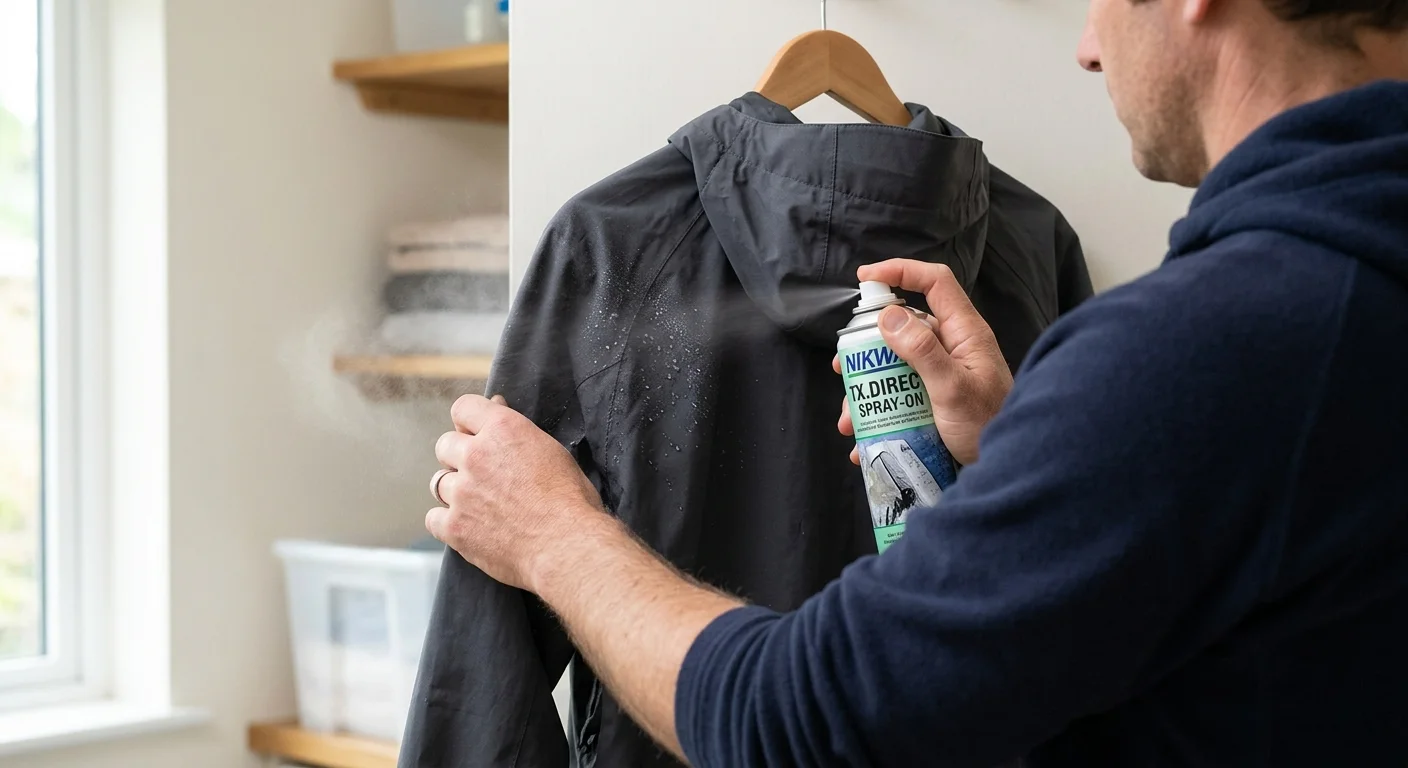
Method 2: Spray-On Reproofer
Spray-on works at the surface level. It's faster, needs no machine, and handles targeted areas well — hood, shoulders, cuffs, the places that take the most abuse. The tradeoff is durability: expect 5–10 wash cycles before coverage starts to thin.
What you need: Nikwax TX.Direct Spray-On (or equivalent). A hanger. A damp cloth.
How to do it:
Start with your jacket damp — straight from the wash, before any drying.
Empty all pockets, fasten zips, and hang it at eye level.
Hold the can 6–8 inches from the surface . Spray in steady, overlapping passes. Work in sections: hood first, then shoulders, chest, sleeves, back.
Keep the jacket rotating so you get full 360° coverage.
Wipe any pooled excess with a damp cloth — drips and runs cause uneven coating.
Air dry for 1–2 hours. Check your care label — 15–20 minutes on low tumble heat can improve how well the DWR bonds.
Best for: Spot repairs, travel, quick turnarounds, or any time you don't have machine access.
Wash-In vs. Spray-On: Side-by-Side
Wash-In | Spray-On | |
|---|---|---|
Penetration | Full fabric saturation | Surface-level coating |
Lasts | 10–20 wash cycles | 5–10 wash cycles |
Time | 45–60 min (two machine cycles) | 10–20 min application |
Best for | Full jacket reproof at home | Quick fixes, travel, spot areas |
Heat needed? | No (Nikwax); optional (Grangers) | No (air dry sufficient) |
Nikwax vs. Grangers: Which Reproofer Should You Buy?
Both are proven products. The difference is small but worth knowing before you buy.
Nikwax TX.Direct — Wash-in dose is 100ml per item. No heat activation needed at any stage. Works on Gore-Tex, eVent, and most technical membranes. That no-heat rule makes it the safer pick for anyone worried about temperature damage.
Grangers Performance Repel — 50ml per jacket at 30°C. A short tumble dry step is recommended to boost bond strength. The heat step adds durability — use it if your jacket's care label allows. Grangers also offers combined wash-and-reproof products, so you can get it done in one cycle.
Both products beat generic supermarket waterproofing sprays by a wide margin. Those sprays aren't built for technical membranes and won't restore DWR the right way.
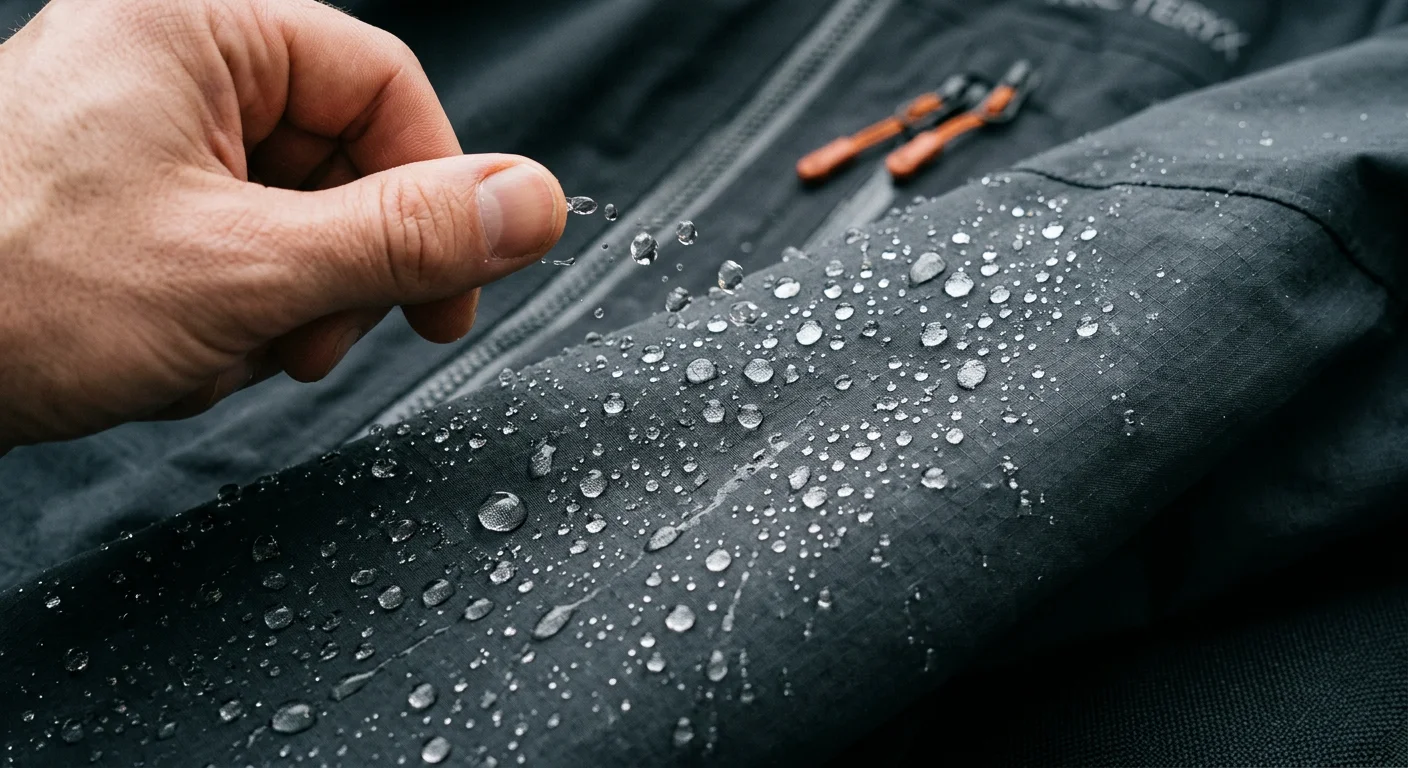
Quick test: Flick a few drops of water onto the treated surface. They should bead up and roll off. If they spread and soak in, give the jacket another 15 minutes on low tumble heat. The extra warmth helps the coating bond to the fabric properly.
Step 4 — Drying Your Jacket and Activating the DWR Coating (Heat Is the Key)
Drying is just as important as washing — a principle followed by any breathable rainwear factory for all-weather conditions, where heat activation is essential.Heat turns a damp jacket into a waterproofed one. Without it, even the best reproofer just sits on the surface — applied but never activated. This step is short, but skipping it undoes everything you did in Steps 2 and 3.
Hang the jacket first. Let it drip dry for 10–15 minutes before it goes near any heat source. The goal here isn't to dry it out completely. You're just pulling off the excess water so the dryer isn't fighting a soaking-wet garment from the start.
Tumble Dryer: The Preferred Method
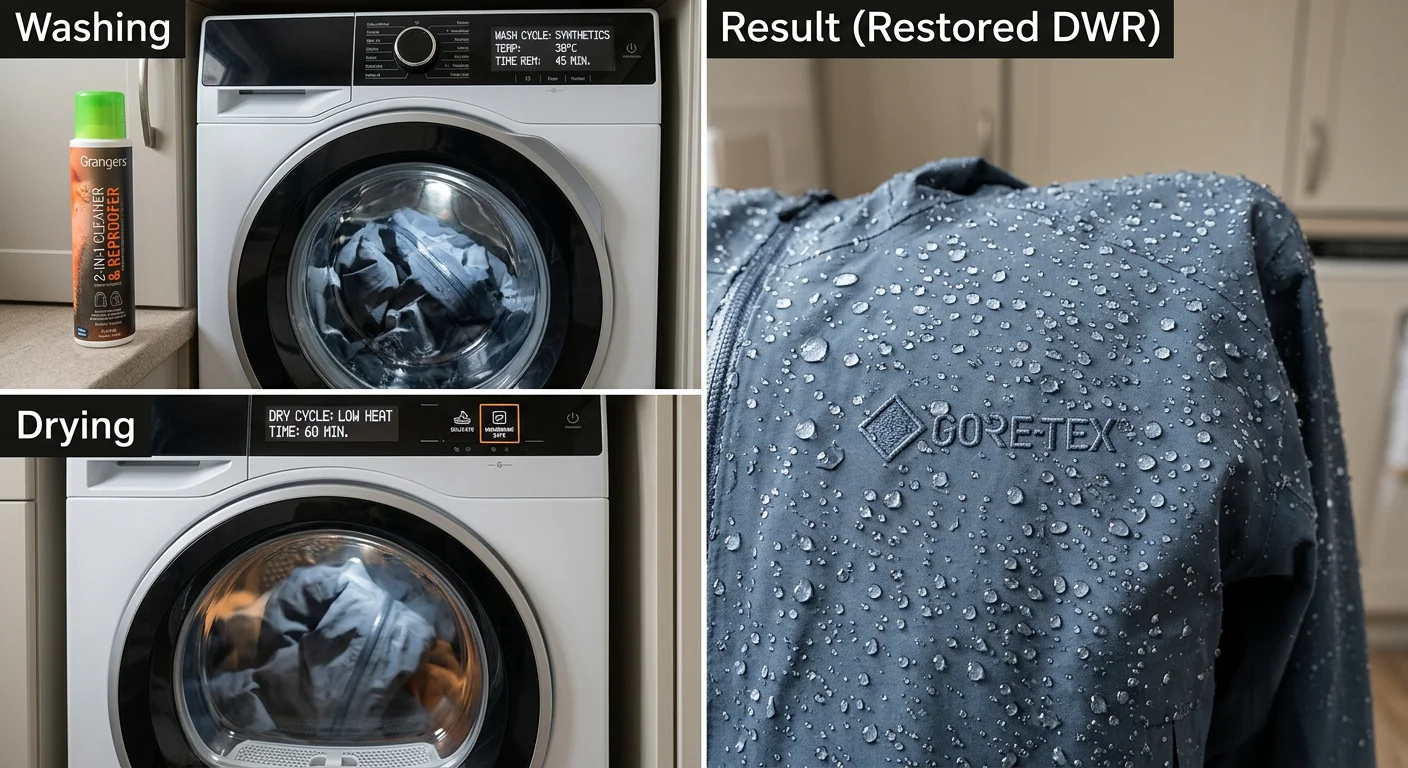
Set your dryer to low heat, gentle cycle, 20 minutes . That's it. Don't crank it up to speed things along. High heat warps synthetic fibers and can destroy the waterproof membrane. That kind of damage can't be fixed at home.
Timing depends on what you're working with:
Lightweight rain shell: Around 20 minutes is enough
Insulated or down jacket: Budget up to 2 hours on low — rushing this one will cost you
No Dryer? Two Alternatives That Work
Iron method: Set your iron to low, no steam. Lay a clean towel or cloth over the jacket first — never put the iron straight onto the shell. Press each section with light, even pressure. The heat does the same job as the dryer. It just takes more attention.
Hair dryer method: Mid-heat setting, high fan speed. Keep the nozzle moving and test a hidden area first. Holding it too long in one spot risks melting the outer face fabric.
The Water Bead Test
Once the jacket is dry, flick a few drops of water onto the surface. Watch what happens:
1.Water beads and rolls off — DWR is active. You're done.
2.Water spreads and soaks in — Run another 10 minutes on low heat. The coating sometimes needs a bit more time to bond.
That bead-and-roll response is the whole point. See it, and the jacket is ready to go.
How Often Should You Wash and Reproof Your Waterproof Jacket?
Maintenance cycles often align with recommendations from private label waterproof outerwear suppliers, who design products for different usage intensities.
Most people wash their waterproof jacket too rarely — and reproof it even less. Here's a practical baseline that works.
Washing frequency depends on how hard you use the jacket:
Regular outdoor use (weekend hikes, mountain days): every 4–6 weeks
Daily urban commute : every 6 months is fine for most people
High-intensity climbing or coastal conditions : closer to every 3–4 weeks — salt air and sweat break down your DWR coating faster than you'd think
Gore-Tex's own guidance sits at once a month for regular use. That schedule stops dirt, body oils, and sweat from slowly killing your DWR coating between wears.
Reproofing frequency is simpler: watch the jacket, not the calendar. Rain stops beading and starts soaking in? That's your signal. For most people, that happens around once a year at first. After the jacket has some miles on it, bump that to every 6 months .
Skip over-washing. Too many wash cycles wear down the fabric over time. Let visible dirt and the wetting-out test drive your schedule — not habit.
Use Pattern | Wash Every | Reproof Every |
|---|---|---|
Weekend mountains | 4–6 weeks | 4–6 weeks |
High-altitude climbing | 4 weeks | 4 weeks |
Coastal/ocean exposure | 3–4 weeks | 3–4 weeks |
Urban commuting | 6 months | 6–12 months |
DWR failure is easy to fix. Run a tech wash, dry on low heat for 20 minutes, then apply a fresh reproof treatment with heat activation. That three-step process covers most cases. No guesswork needed.
Common Mistakes That Damage Waterproof Jackets (And How to Avoid Them)
70% of waterproof jacket failures trace back to one thing: neglected DWR, not actual membrane damage. That's worth pausing on. Most jackets returned as "broken" aren't broken at all. They've been washed wrong, dried wrong, or treated with the wrong products for too long.
Here's where things go wrong — and how to stop it.
Using fabric softener is the most common silent killer. It doesn't feel like a mistake. It feels like care. But softener molecules block the DWR's microscopic pores. Water stops beading off the surface. One wash with softener can trigger wetting out. You may need multiple reproofing treatments to fix it.
Regular detergent and powder residue make things worse fast. The oily film left behind attracts dirt and body oils. This breaks down DWR within one or two wash cycles. That same residue holds moisture against the fabric — perfect conditions for mildew to grow.
Dry cleaning is a hard no. Patagonia bans it for a reason: the solvents dissolve the PU coating that keeps seams waterproof. The damage isn't always immediate, but seam leaks tend to show up within six months.
Excessive heat causes problems fast. Hot dryers and radiators can cut a jacket's waterproof rating by up to 50% after just one or two cycles. Arc'teryx and The North Face ban tumble drying on Gore-Tex pieces. Heat-driven delamination has voided more warranties than any other single cause.
What Neglect Does Over Time
Skip maintenance for a year or two and the failure chain looks like this:
Wetting out — DWR wears down from abrasion and dirt. The outer fabric absorbs water instead of shedding it, adding 2–3x its dry weight.
Breathability collapses — A saturated outer layer traps sweat vapor inside. Internal humidity can hit 80–90% during cold rain. You get that clammy "wet from the inside" feeling — even when the jacket has no actual leaks.
Structural damage — Long-term moisture exposure breaks down the membrane chemistry. Mildew forms in jackets stored while damp. Full failure hits somewhere between 12 and 24 months of consistent neglect.
The fix is simple: technical detergent, 30°C wash, low-heat drying, and a reproof treatment on schedule. Small habits, kept up over time, prevent all of this.
FAQs: Waterproof Jacket Washing & Reproofing
Real questions, straight answers. No padding.
Can I wash my waterproof jacket in a regular washing machine?
Yes. Pick a specialist cleaner — Nikwax Tech Wash, Grangers Performance Wash (25ml per load), or Alpkit Apparel Wash. Set the machine to 30°C, gentle cycle, slow spin. Before loading the jacket, run a hot empty cycle first. This clears old detergent residue from the drum. That leftover residue alone can cause wetting out.
How often should I reproof?
Every 6–12 months is a solid baseline. But the real trigger is visual. Pour water on the shoulders and cuffs after washing. It beads and rolls off? You're good. It soaks in? Reproof now.
Can I wash and reproof in one cycle?
Yes. Grangers Wash + Repel does both in a single machine cycle. Use 100ml for one jacket, plus 50ml for each extra item. Check your care label for the right temperature. Air dry or tumble on low heat after.
What if I don't have a tumble dryer?
Two options.
1.Wash-in reproofers: Run the cycle at 30°C. Hang the jacket to drip dry for 20+ minutes. Then press with an iron over a damp cloth on low heat.
2.Spray-on reproofers: Apply to a damp jacket. Hold the can 15–20cm away. Wipe off any excess and air dry. Put extra passes on elbows and shoulders — those areas take the most wear.
Why is my jacket still wetting out after washing?
Three causes come up most often:
1.Dirt or body oil blocking the membrane
2.Detergent residue sitting in the fabric
3.A DWR coating that needs heat to wake back up
Try 15–20 minutes on low tumble heat first. Do that before going straight to a full reproof treatment.
Does this work on Gore-Tex jackets?
Yes, with one condition: use a GORE-TEX approved cleaner. Grangers 2-in-1 is a solid pick. Wash at 30°C, then finish with a low tumble dry to reactivate the DWR. The process is the same as any other technical membrane jacket.
Conclusion
Your jacket isn't broken — it just needs a little attention.
Use the right tech-specific cleaner. Reproof with a quality DWR treatment. Finish with low heat. That's all it takes to bring a waterproof jacket back from the "soaking through" stage. No specialist equipment, no expensive repairs, no regrets about buying it in the first place.
The real win isn't just restored water beading. You get extra seasons out of gear you already love. A jacket that cost you real money deserves 30 minutes of proper care — not a premature trip to the donation pile.
So go check your jacket right now. Water not beading the way it used to? You have everything you need to fix it today.
Shopping for a new waterproof layer built to last? Explore our full jacket collection at berunclothes.com — gear worth taking care of.