That first round of spring golf hits different. You're excited to be back — until it's 48°F at tee time, the wind cuts right through you, and your summer polo is doing nothing. Early season golf needs a smarter wardrobe. You need real warmth, full range of motion, and yes, an outfit that still looks sharp out there.
A corporate scramble calls for a different setup than a casual Saturday round. Either way, getting your women's golf layering tips right is the difference between playing your best golf and counting down holes to get back inside.
Behind many private-label spring collections, custom Early Season Golf apparel manufacturers engineer brushed-back knits, lightweight insulated vests, and stretch-woven wind shells specifically for sub-55°F tee times where mobility matters as much as insulation.
This guide covers it all:
Thermal base layers that keep you warm without bulk
Mid-layers that move with your swing
Windbreakers built for the course
Complete outfits for every early spring scenario
Step onto the course in 2026 ready for whatever the weather throws at you.
The 3-Layer System Every Woman Needs for Cold Morning Tee Times

Cold morning tee times have a way of humbling even the most prepared golfer. If you are still deciding what to wear, our beginner's golf outfit guide is a great starting point. The fix isn't packing more — it's packing smarter. Three layers, worn in the right order and removed at the right moment, get you through a 48°F first hole and a 62°F back nine without skipping a beat.
Layer 1: The Base — Your Second Skin
Start with a moisture-wicking thermal base layer that sits close to the body. Go with technical polyester blends or merino wool. These fabrics pull sweat away and hold just enough heat. The fit matters: snug, not tight. Galvin Green's SKINTIGHT™ hits that mark — breathable, stretchy, and quick-drying. FootJoy's women's "second skin" design builds a warm microclimate against your skin. Wind can't break through it.
Performance-driven pro shops increasingly source custom thermal golf apparel built with brushed interiors and four-way stretch construction, ensuring early-season base layers retain warmth without adding swing-restricting bulk.
Layer 2: The Mid-Layer — Insulation That Moves With You
This is where most women go wrong — picking warmth over mobility. A fleece vest handles both. You get core warmth, and your arms stay free for a full swing. In the 50s–60s°F range, a quarter-zip pullover gives broader coverage. You keep most of your range of motion too. Look for PrimaLoft or INSULA™ fabrics. Both hold heat even when damp. Neither one adds bulk that crowds your backswing.
Layer 3: The Outer Shell — Wind Stops Here
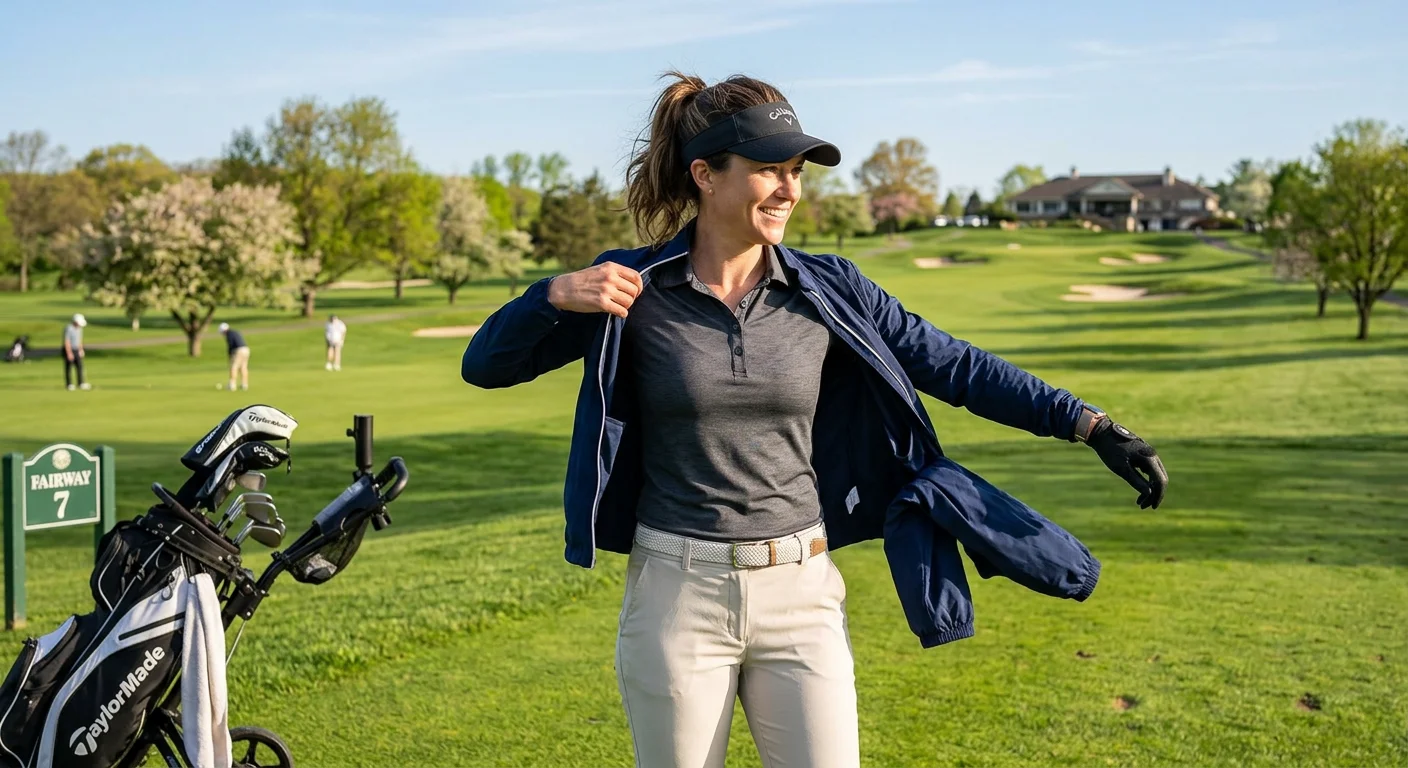
Your golf windbreaker does its hardest work on holes 1 through 3. Pick packable, stretch-woven shells with articulated sleeves, zippered vents, and a water-repellent finish. Galvin Green's outer jackets take on drizzle and surprise flurries. Your shoulders stay loose and easy to move.
The smart move: shed the outer layer by holes 4–6 as the temperature rises. Drop the mid-layer at the turn if needed. Your base layer stays on all 18 — it handles moisture the whole round.
Women's Golf Polo Shirts for Early Season: Collared, Functional & Course-Compliant
The polo shirt is non-negotiable — and in 2026, it's doing a lot more than just keeping you dress-code compliant.
Most clubs require a structured collar and a fitted cut. That's the baseline. Early season golf in the 50–65°F range asks more of your polo than a summer round ever would. You need fabric that handles moisture, moves through a full swing, and holds its shape when wind and sweat hit hard.
Many pro shops now work directly with women's golf outfit suppliers offering custom women's golf polo shirts for early season, using brushed-back performance fabrics and slightly heavier GSM weights that stay warm during 50°F tee times without sacrificing swing mobility.
Long-Sleeve or Sleeveless? It Depends on Your Tee Time
For early morning rounds , a long-sleeve polo is the smarter pick. Lightweight stretch fabrics keep you warm without overheating. Rolled sleeves give you flexibility as temperatures climb. Layer one under a fleece vest and you're set.
Milder afternoons are a different story. Sleeveless styles give you maximum breathability and full arm mobility. Throw on a pair of arm sleeves if the chill comes back.
What to Look for in the Fabric
Modern moisture-wicking golf tops use polyester/spandex blends — 88% polyester, 12% spandex is a common mix. They dry in under 30 minutes and move sweat away 2–3x faster than cotton. Look for UPF 50+ protection, which blocks 98%+ of UV rays. Mesh panels and perforations cut heat buildup by 20–30%.
4-way stretch is a big deal. That 2–5% elastane content lets you raise your arms, rotate your torso, and finish your swing — no pulling at the shoulders.
Fit Details That Count
A fitted cut — narrow waist, slight hip flare, back hem between 22–26 inches — stays tucked and polished through all 18 holes. Test it in your swing stance before you buy.
Here's what to check:
- Shoulders and chest — snug, but not tight
- Waist — enough room to rotate through your swing
One dress code issue worth watching: collars that curl from sweat . Reinforced stitching and moisture-wicking inner collar bands fix this problem at the source. You won't have to think about it mid-round.
Best Bottoms for Early Season Golf: Skorts, Pants & Capris Compared

Your top half can be well layered, but the wrong bottoms will throw off the whole outfit — and your round.
Early spring golf covers a wide temperature range. Your bottoms need to handle the shifts. Here's how the three main styles compare.
As demand for transitional-season golfwear grows, many brands now collaborate with specialized Best Bottoms for Early Season Golf apparel suppliers to engineer skorts and pants with brushed inner fabrics and stretch waist systems designed specifically for fluctuating spring course conditions.
Skorts: The Versatile Middle Ground
Skorts belong in the early season lineup. The built-in shorts block wind and still give you a clean, feminine silhouette. Look for elastic panels that let you take a full stride through impact. For 50–65°F mornings, a 15"–18" length is the sweet spot. You get enough coverage to stay warm, and enough airflow to stay comfortable as temps rise through the back nine.
Pants: Match the Forecast, Not Just the Season
Not all golf pants perform the same. That difference really shows in April.
| Type | Best Temp | What It Does |
|---|---|---|
| Thermal-lined pants | Below 50°F | Insulation layer + moisture-wicking inner — maximum warmth for cold early tee times |
| Regular stretch pants | 50–70°F | Spandex/elastane blends with 4-way stretch, no lining — flexible, breathable, great for transitional days |
Both styles need a mid or high-rise waistband, tapered legs, and real pockets. Your tees and scorecard need somewhere to go.
Capris: The Underrated Early Season Player
Women's golf pants for cold weather don't have to mean full-length coverage. Capris — cut below the knee to mid-calf at a 20–24" inseam — work great for 45–60°F rounds. Add long socks and you've got a solid layering system built from the ankle up.
For a cleaner, more polished look, try cropped pants that hit just above the ankle. They take you from the course straight into the clubhouse with no outfit change needed.
2026 color direction: pastels are trending — soft pinks and powder blues look fresh and springlike. Neutrals like navy, khaki, and white stay easy to mix and match with anything. Want some personality? A subtle plaid or color-blocked waistband adds character without taking over the whole look.
Thermal pants → below 50°F, full warmth
Capris + leggings layered → below 45°F, for days the forecast refuses to cooperate
Need Custom Early Season Golf Apparel?
BeRun Sports manufactures performance golf polos, skorts, and layering pieces with custom logos. MOQ from 50 units.
Get Free QuoteWomen's Golf Dresses & Skirt Sets: One-Piece Style That Works on the Course
Some mornings on the course, simplicity wins. No layering puzzle, no tucking issues — just a dress that moves the way you do.
A well-designed golf performance dress earns its place in early spring. The zip-up front gives you ventilation control as temperatures shift from a 48°F tee time to a warm back nine. That zip lets you open up or close down fast — no guesswork. Built-in shorts handle wind exposure better than separates. They sit longer than typical hot pants and stay put through your full swing. The fabric is silky and non-creasing. Two concealed zip pockets keep your essentials secure. A flounced pleated hem adds movement without getting in your way. This one-piece earns every inch of closet space.
One-piece vs. skirt sets — here's the honest tradeoff:
| Aspect | Golf Dress | Skirt Set |
|---|---|---|
| Swing Freedom | Superior — no independent ride-up | Good, but top may shift |
| Layering Ease | Limited — zip front aids ventilation | Easy — add vests or jackets |
| Coverage | Built-in shorts, wind-resistant | Relies on separate shorts |
| Versatility | Street-to-course ready | Maximum mix-and-match |
A cool front rolling in mid-round? Pull a golf windbreaker or fleece vest over your performance dress. It layers without bulk. For variable spring days, a quarter-zip polo paired with a high-waisted pleated skort gives you more flexibility to adjust on the fly.
What to look for:
- Fast-drying fabric that holds its shape
- A torso panel with light shapewear support
- Inseam options from 15" through 29" for a fit that suits your build
3 Complete Early Season Golf Outfits for Women (By Scenario)

Theory gets you started. These three outfits take you the rest of the way — each one built for a specific early season situation most women actually face.
Scenario 1: The Cold Morning Tee Time (Around 40°F)
This one catches people off guard. The parking lot feels fine. Hole one does not.
Build your outfit in three pieces:
Long-sleeve polo (pique cotton blend) — meets collar rules, breathes well, gives you 100% swing freedom
Quarter-zip mid-layer — tricot-backed panels stay off your backswing. The thermal lining adds warmth without bulk
Wind jacket — PFC-free water-repellent shell, shaped panels, open through the shoulders so nothing pulls
For bottoms, go with golf trousers or Bermuda-length pants . Traditional slacks are your safest call. No jeans, no leggings — most clubs don't allow them.
The layering order matters: polo → quarter-zip → jacket. As the temperature rises, shed pieces from the outside in.
Scenario 2: The Corporate Golf Tournament (Polished & Professional)
A company scramble calls for a different look. Keep the palette clean — beige, grey, black, soft olive — and add structure with classic prints like tartan or houndstooth. The result reads polished without trying too hard.
A solid formula: polo or sleeved top + tailored golf trousers + lightweight sweater or structured jacket . Skip the neons, tropical prints, and pastels. Color-blocked neutrals give you a sharp, modern edge and stay well inside dress code.
First-timers: slacks and a sports jacket never fail. Check the course dress code before you show up.
Scenario 3: The Casual Weekend Round (55°F and Climbing)
At 55°F, you have real breathing room. This is where the outfit gets to be fun.
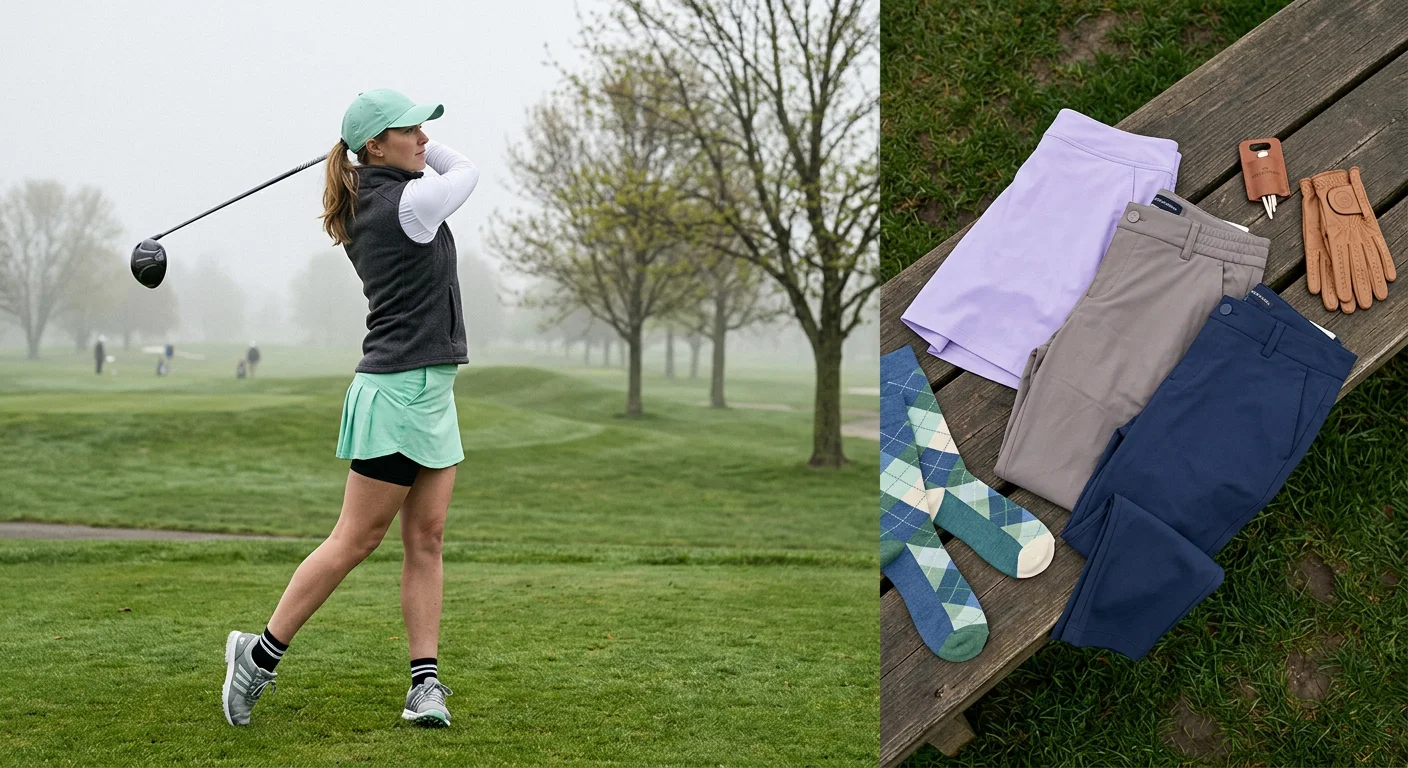
Start with a polo + performance skort or lightweight stretch pants . Look for skorts with at least two zip pockets, 4-way stretch fabric, and around 17" in length — enough for a full stride through impact. Pastels are having a real moment in 2026. Mint, lavender, and soft yellow all work well here.
Post-round pivot: pull off the polo and let the skort carry the look into the clubhouse. Add a statement belt, or swap your cap for something more off-course. The whole transition takes about 90 seconds and zero effort.
Golf Shoes, Hats & Gloves: The Cold-Weather Accessories That Complete the Look

Accessories aren't afterthoughts. In early spring golf, they do real protective work. For more on staying dry, see our waterproof golf clothing guide.
Shoes: Grip Comes First on Wet Grass
Cold morning fairways are slick. Hybrid spikeless designs with responsive cushioning handle wet grass well. They also protect the turf. For heavy, waterlogged conditions, traditional spikes deliver up to 40% better grip . That's a significant edge when you need to stay planted through impact.
Fit matters too. Try shoes in-store. Test them on wet surfaces before you buy. Premium cabretta leather uppers hold up well over a long season.
Spikes: 7mm minimum for serious grip days
Hats: Match Your Head to the Temperature
| Temp Range | Best Pick | Why |
|---|---|---|
| Below 0°C | Beanie | Insulates 20–30% better than visors in wind |
| 0–10°C | Bucket hat | Broad coverage, UPF 50+ UV block |
| 10–15°C | Visor | Partial UPF, maximum ventilation |
On variable days, add a neck gaiter with moisture-wicking fabric . Spring UV index runs 3–5 even through clouds. UPF 50+ fabric blocks 98% of those rays. It's a small add-on that makes a real difference.
Gloves: Don't Reach for Regular Sports Gloves
Golf-specific gloves are built for the sport. Regular sports gloves are not. Premium cabretta leather (0.8–1.2mm thickness) cuts grip slip by 30–40% in cold conditions. Regular sports gloves lack breathable membranes and moisture-wicking construction. Performance drops around 20% in cold, damp weather with the wrong glove. Test your swing feel in-store before committing.
CTA Section 2Launch Your Own Golf Apparel Line
From thermal base layers to windbreakers — we handle design, sampling, and production. 30 years of OEM/ODM expertise.
Request a SampleWhat NOT to Wear on the Golf Course in Early Spring (Avoid These Mistakes)

Spring brings more dress code violations than any other season. If you are heading out in truly cold weather, thermal-rated gear is worth the investment. The reasons are almost always the same — and easy to avoid.
Here's what to leave at home:
Tops to skip:
- T-shirts, tank tops, or anything without a collar
- Spaghetti-strap tops or cropped styles that expose your midriff
- Sleeveless tops that aren't course-approved sleeveless polos
Bottoms that won't make it past the pro shop:
- Denim or jeans — no exceptions, even dark-wash
- Sweatpants or gym shorts
- Cut-off shorts or anything with fraying or holes
- Shorts that don't cover the majority of the thigh
Footwear that doesn't belong on the fairway:
- Heels, sandals, open-toed shoes, or boots of any kind
The Fabric Mistake That's Harder to Spot
Dress code aside, there's a performance mistake that's easy to miss: heavy cotton base layers . Cotton soaks up sweat instead of pulling it away from your skin. A spring morning can start at 48°F and hit 65°F by the back nine. That trapped moisture gets cold and uncomfortable fast. Switch to moisture-wicking technical fabrics. They handle the temperature shift without slowing you down.
Non-stretchy bottoms are the other common misstep. Rigid dress pants limit your hip rotation and follow-through. Spring golf needs 4-way stretch fabrics. They move with your swing, not against it.
One more thing: over-layering with non-breathable pieces causes just as many problems as under-dressing. Pick removable layers you can shed as the round warms up. One heavy jacket that traps heat by the fifth hole is not the answer.
How to Build a Women's Early Season Golf Wardrobe on Any Budget

Budget shapes strategy. In early season golf, a smart $200 starter kit beats a messy $800 closet every time.
You only need three pieces to get started: a collared polo, a pleated skort with built-in shorts, and one lightweight zip-up layer. That's your foundation. Everything else builds from there.
The Priority Build Order
Don't buy at random. Work through this list in sequence:
2–3 moisture-wicking polos — mix one neutral, one pastel. Spend $40–70 each (Lululemon, Callaway). Go $120–180 for premium 4-way stretch that holds up after 50+ washes without fading.
2 skorts — white and navy cover 80% of outfit combinations. Budget options ($35–60, Adidas/Nike) get the job done, but they drop about 30% in moisture-wicking performance over time.
1–2 zip-up layers — this is where the budget vs. investment gap is most visible. A $50–90 Amazon vest works fine in the early season. A $150–250 Gore-Tex shell stays 98% windproof even after 50 washes.
Accessories — visor, grip sneakers, glove. Plan to spend $20–100 total.
Seven pieces, mixed and matched with some thought, give you 10+ distinct outfits. That's enough to cover every early spring round without repeating the same look.
Buying for a Team or Club?
Place a bulk order through berunclothes.com and you get 20–50% off at 10+ units. Custom logo golf polos and skorts start at $25–45 per piece (MOQ 50 units). It's a solid choice for corporate tournaments or club events.
FAQ: Women's Early Season Golf Outfit Questions Answered

Real questions from real women — answered straight.
Q: I'm playing my first round ever. What's the absolute minimum I need to wear?
Start simple. You need three things:
A collared polo shirt (long or short sleeve both work)
A skort or skirt
Closed-toe shoes — golf shoes if you have them, clean sneakers if you don't
Light-colored, fitted bottoms look course-appropriate at most places. That's your baseline. No need to overthink it.
Q: Can women wear sleeveless tops on the course?
Yes — sleeveless polos are accepted for women at most courses, even where men need a collar. Check with your specific club first. Most have no issue with it. On a warm spring afternoon, a sleeveless style is often the smarter move.
Q: How many layers do I need for early season rounds?
Two layers is enough. Start with a thermal base layer close to your skin. Add one midlayer — a breathable pullover, a gilet, or a windbreaker. Got drizzle in the forecast? Throw an unlined rain jacket over that. Heavy jackets restrict your swing and trap heat by hole five. Keep it light and easy to remove.
Q: How do I wash my golf clothes without ruining them?
Cold water wash, every time. Air dry — skip the dryer. Fabric softeners break down moisture-wicking finishes faster than anything else, so cut those out too. Quality polyester blends and spandex fabrics hold their performance through 50+ washes. Follow these steps and everything in your bag lasts much longer.
Q: What do I wear for a casual golf date or social round?
A performance dress with built-in shorts is a solid pick. One piece, no tucking issues, and it meets course dress codes. For a mix-and-match look, pair a UPF 50+ polo with a pleated skort. Look for one with interior bamboo charcoal or elastane shorts built in — you get coverage and comfort in one. Add a quarter-zip for the back nine if the temperature drops.
CTA Section 3Bulk Orders for Teams & Clubs
Get 20-50% off custom golf polos and skorts at 10+ units. Perfect for corporate tournaments and club events.
Get Bulk PricingConclusion
Early spring golf doesn't mean picking between staying warm and looking put-together. You can have both.
The real secret? Start with a moisture-wicking base. Add a fleece mid-layer for smart insulation. Then let a sleek women's golf windbreaker handle the wind on the back nine. Pick pieces that work across different conditions. And don't underestimate what the right collar does for your confidence — and your course compliance.
Shopping for your first spring round? Or just refreshing a wardrobe that sat through the off-season? Either way, you now have a full roadmap. It runs from thermal base layers all the way to the perfect finishing accessory.
👉 Browse berunclothes.com for women's golf collections built around these layering principles — and step into 2026's first tee time dressed like you belong there.
Video Section