You've signed up for your first round of golf — exciting! Then comes the panic: Wait, what am I supposed to wear? Golf has a reputation for strict dress codes and raised eyebrows. The last thing any beginner wants is to show up at the first tee and get turned away at the clubhouse door.
Here's the good news: dressing for golf is far simpler than most people think. You probably own pieces that already work. This complete guide covers what to wear for your first golf game — from the right collared shirt and golf trousers to what footwear the course requires. So you can walk onto that course feeling confident, comfortable, and course-approved.
For retailers and pro shops partnering with a Golf game apparel supplier, aligning beginner-friendly outfit bundles with actual course dress codes reduces returns and eliminates first-round guesswork for new players.
Quick Reference: Golf Dress Code Checklist for Beginners

Use this as your five-minute check before you arrive at the club. Quick, simple, and covers everything.
The Basics (Men & Women)
What | What Works |
|---|---|
Top | Collared polo or button-down shirt — tuck it in |
Bottom | Tailored pants, Bermuda shorts (knee-length), skorts, or skirts (mid-thigh or longer) — belt required |
Shoes | Golf shoes with soft spikes only (metal spikes are banned at most clubs now) |
Colors | Khaki, gray, beige, navy — all safe picks, hard to get wrong |
Your 5-Minute Pre-Tee Check
✅ Collar? Polo or button-down counts
✅ Tucked and belted?
✅ Shorts or skirt hitting the knee?
✅ Soft-spike golf shoes on?
✅ No denim, no baggy anything?
All five checked? You're good to go. Missing one? Call the pro shop ahead of time — they've heard every question before yours.
Understanding Golf Dress Code Rules: Why Courses Enforce Them
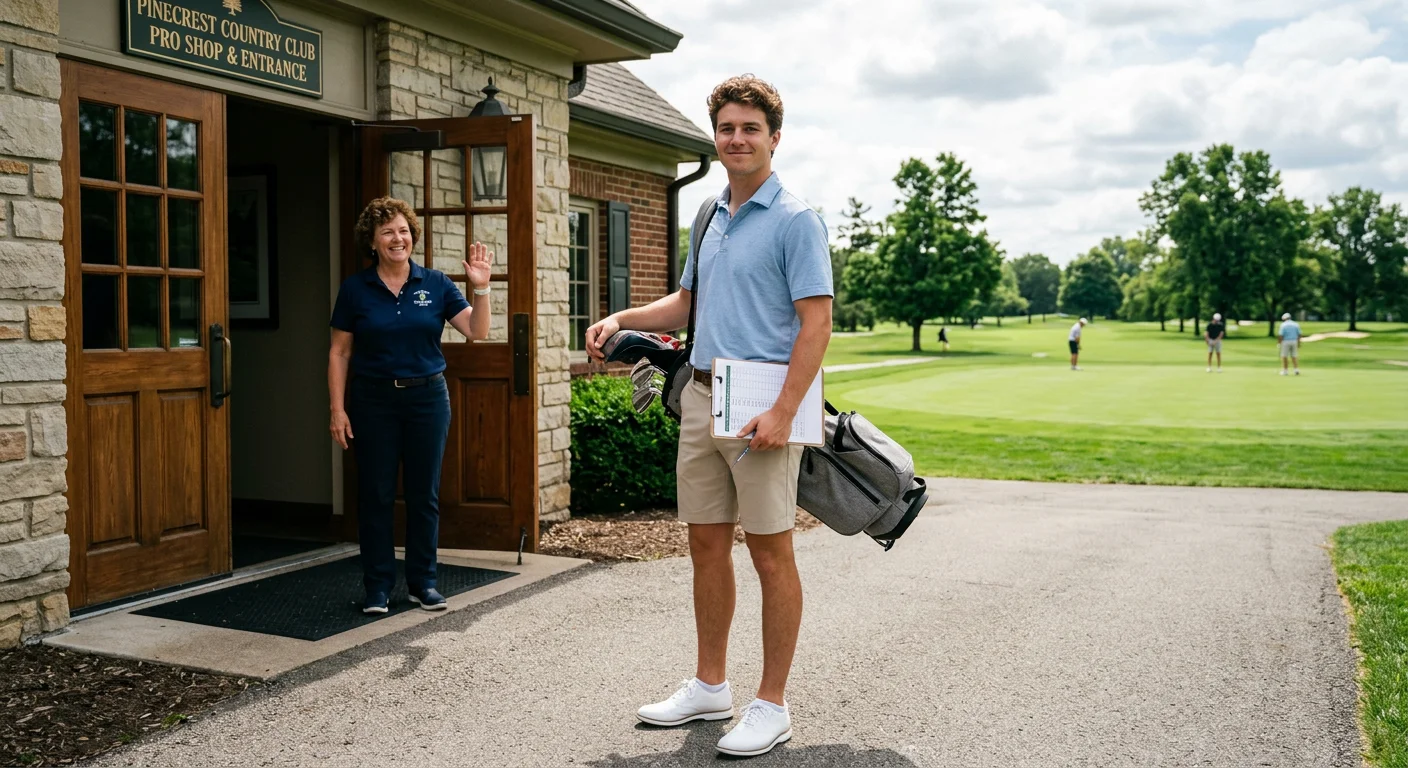
Golf dress codes aren't just old tradition. Courses enforce them, and the results can be more awkward than most beginners expect.
Country clubs and hospitality groups working with custom golf apparel manufacturers often standardize dress policies around fabric durability and presentation standards — not just tradition — to maintain a consistent on-course image.
Here are some real examples. At Leopard Creek in South Africa, a group of golfers had to buy new socks before they could tee off. A woman in Palm Springs arrived at Rancho Las Palmas with no idea she needed a collared shirt — nothing on the website, nothing on the kiosk mentioned it. She ended up buying one at the pro shop. Over in the UK, a golfer paid £3.99 for white ankle socks at Handsworth Golf Club because hers were black. These aren't rare slip-ups. They happen every weekend.
The numbers tell the same story. 95% of traditional clubs require collared shirts and proper golf shoes. They have zero tolerance for jeans, T-shirts, or sneakers. 72% of club golfers say dress codes matter to them. At the same time, 71% of surveyed golfers say these same rules push beginners away from the course entirely.
So there are two types of rules worth knowing: hard rules and soft conventions .
Category | Must Follow | Suggested Only |
|---|---|---|
Shirts | Collared, tucked in | Specific colors or patterns |
Bottoms | Tailored cut, no denim | Exact shorts length |
Shoes | Golf footwear only — no sneakers | Sock color |
Accessories | Belt at most private clubs | Jacket for clubhouse dining |
Private clubs leave no room for exceptions. Show up in athletic wear or denim, and staff will turn you away before you reach the first tee. Public courses are far more relaxed. Many allow clean tennis shoes and untucked shirts. The difference between these two settings is significant. Knowing which type of course you're visiting tells you exactly what to pack.
The goal isn't to dress perfectly. It's to show up prepared enough that nobody has to say anything.
Public Golf Course vs Private Country Club: Two Different Dress Codes

The single most useful thing to know before your first round: not all golf courses want the same thing from you.
Uniform planners sourcing from private label golf clothing suppliers typically design separate capsule collections for public-access facilities and private member clubs because enforcement levels — and customer expectations — differ significantly.
A public course and a private country club run by different rules. At a public course, the focus is access — get people on the grass, keep the game moving. At a private club, tradition is the whole point. The two worlds have different standards, and mixing them up is where most beginners go wrong.
Here's how they break down side by side:
Public Course | Private Country Club | |
|---|---|---|
Shirt | T-shirts, untucked collars, even tank tops at some | Collared polo, always tucked in — no exceptions |
Bottoms | Shorts, jeans, athletic wear often fine | Tailored pants or Bermuda shorts; no denim, no cargo, no gym shorts |
Shoes | Clean sneakers or tennis shoes acceptable | Soft-spike golf shoes required |
Belt | Not required | Expected for men |
Hat | Wear it however | Bill faces forward; hats off indoors |
Some public courses in Colorado have zero dress code. Flatirons asks you to keep your clothes on — that's it. Kahuku in Hawaii prohibits bare feet and nothing else. Castle Pines Golf Club in Denver goes further. They measure flesh: no more than three inches above the knee, for anyone.
The safest universal baseline — collared polo tucked in, Bermuda-length shorts or tailored pants, clean golf shoes, forward-facing hat — works everywhere. It clears the bar at the strictest private club. You'll also feel right at home at the most laid-back public course.
Not sure what to wear? Call the pro shop. One two-minute conversation saves a lot of parking-lot outfit scrambling.
CTA 1Men's First Golf Outfit Guide: What to Wear From Head to Toe
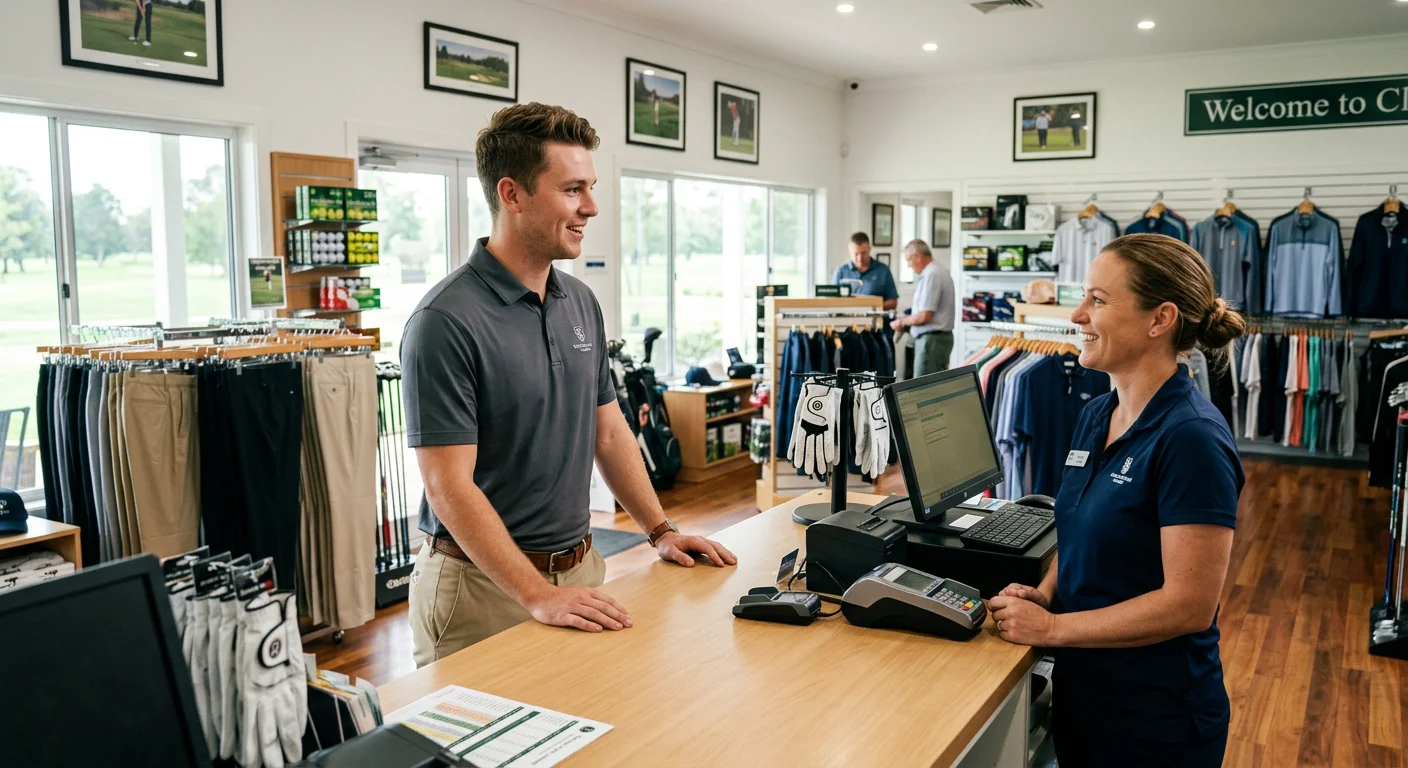
Most men show up to their first round wearing whatever feels sporty. That instinct — grab the athletic gear — is what gets you turned away at the clubhouse door.
Brands developing entry-level collections with a golf apparel wholesale manufacturer often prioritize moisture-wicking polos and tailored stretch shorts that automatically comply with 95% of traditional club dress codes.
The good news? A proper golf outfit for men is simple once you know the logic behind it. Four pieces. Real rules. No guesswork.
The Polo Shirt: Your Most Important Decision
The collared polo is non-negotiable — you already knew that from the checklist above. What most beginners miss is which kind performs best on the course.
Skip cotton. After two hours of walking and swinging in 80-degree heat, a cotton shirt turns heavy and damp. That feeling doesn't go away. Modern golf polos use moisture-wicking polyester blends — 95% polyester/5% spandex, or 91% polyester/9% spandex are the most common. They dry 2–3 times faster than cotton. That gap adds up across 18 holes.
Fit matters just as much as fabric. Look for a slim or athletic cut . You need enough room through the shoulders and arms to swing without restriction. A collar that pulls tight at the neck will bother you by hole four. Colors and patterns are your call — solids, stripes, and bold prints all work. Just keep the shirt tucked in.
Golf Pants and Shorts: The Length and Fit Rules
For pants, the waist should sit clean — not tight, not baggy. You need enough stretch to move through your swing with no pulling or binding. Performance polyester blends with a touch of spandex give you that range of motion over a four-to-five hour round. Know your waist measurement and inseam before you buy. Our guide to the best men's golf pants brands covers the top options.
For shorts, the standard is 4–6 inches above the knee at the inseam . No cargo pockets. No denim. No drawstrings. Bermuda-length shorts in a stretch performance fabric clear the dress code at nearly every course — public or private.
Golf Shoes: Spikeless vs. Spiked
For a first round, spikeless golf shoes are the smarter pick. You can wear them on the course and walk through the clubhouse without changing. Spiked shoes give more grip on wet turf or soft ground. They're worth looking at once you play more often — but for a beginner's first Saturday morning, they're more than you need.
Three Outfits That Work
Conditions | Polo | Bottoms | Shoes | Extra Layer |
|---|---|---|---|---|
Warm & sunny (25–30°C) | White/blue stripe moisture-wicking poly | Khaki stretch pants, 32" inseam | Spikeless + golf hat | — |
Cool & variable (15–20°C) | Solid navy, UPF 50+ | Performance shorts, 5" inseam | Spikeless + stylish cap | ¼-zip pullover |
Hot & humid (30°C+) | Floral print, 80% poly/15% cotton/5% elastane | Breathable moisture-wicking shorts | Spikeless + visor | — |
The warm-weather kit — striped polo, stretch khaki pants, spikeless shoes — clears the dress code at public courses and most private clubs. Add a ¼-zip pullover for cooler days, and you'll fit in at resort and private club settings where shorts alone can look underdressed. The hot-weather combo keeps you comfortable once the humidity climbs.
A full starter setup from berunclothes.com — athletic-cut polo in navy or white stripe, stretch khaki pants sized 32–36" waist, and a UV-protective adjustable cap — comes in under $150 total. That covers a full four-to-five hour round, dressed right, with nothing to stress over.
Women's First Golf Outfit Guide: Stylish Yet Course-Approved Looks
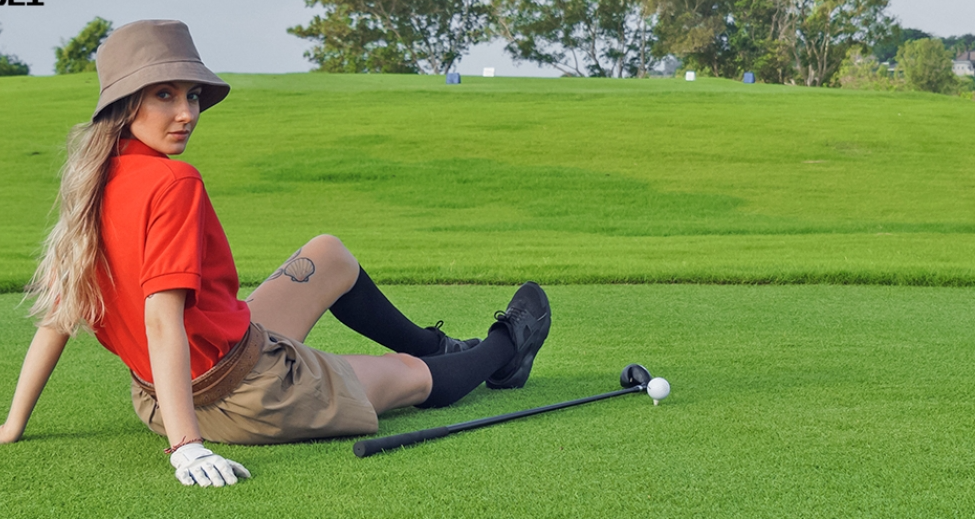
Women are showing up to golf courses in record numbers — and it makes sense. Since 2019, women and girls have driven close to 60% of the sport's participation growth. Still, that first tee-time brings a very specific kind of anxiety: Will what I'm wearing get me turned away?
Resorts and tournament organizers collaborating with custom women’s golf apparel suppliers increasingly specify collar construction, skirt length grading, and performance fabric blends to ensure outfits meet both style expectations and strict clubhouse policies.
The answer, most of the time, is no — as long as you know a few things going in.
The Top: Start Here, Get This Right
A collared polo is your safest and most versatile option. It's required at about 80% of private clubs, and it looks polished without feeling stiff. Look for polyester blends — they breathe, they wick moisture, and they don't cling after nine holes in the sun.
On cooler mornings (think 50–65°F), a collared sweater works well as a layer. A ¼-zip style that hits at the hip is the right silhouette — not too oversized, not too cropped. It keeps you warm and stays course-appropriate at the same time.
One thing beginners often ask: What about sleeveless tops? Public courses are fine with them — about 90% allow it. Private clubs, though, require a collar and sleeves at almost every location. Not sure? Call ahead. Two minutes on the phone saves a parking-lot panic.
The Bottom: Length Is the Main Rule
For skorts, the benchmark is 16–18 inches at private clubs and 14–16 inches at public courses. High-rise waists are worth seeking out — they stay put through your swing with no adjusting needed. Above 75°F, shorts work well too. Aim for a 10–12 inch inseam. For cooler or windier rounds, tapered pants with a 28–32 inch inseam are both practical and sharp.
Yoga pants are a common misstep — 70% of courses flag them as too casual. Golf-specific performance pants look similar but pass the dress code every time.
Three Outfits That Work
Setting | Top | Bottom | Shoes | Extra |
|---|---|---|---|---|
Public & Private | Printed polo, UPF 50+, stretch fabric | Solid skort, 16" length | Golf sneakers + white ankle socks | — |
Public focus | Solid collared shirt | Shorts, 12" inseam | Spikeless shoes | Visor |
Private focus | Collared sweater, merino blend | Tailored pants, 30" inseam | Leather golf shoes | Low socks |
All three outfits are available at berunclothes.com . The printed UPF 50+ polo runs $45. The high-rise moisture-wicking shorts are $38. The merino-blend sweater is $52. Together, they cover close to every course situation you'll face as a beginner.
One Last Detail: The Hat Question
No course requires a hat. But a visor or cap gives you serious UV protection — up to 95%. On a sunny four-hour round, you'll be glad you brought one. At private clubs, stick to structured styles that match the formality of a collared shirt. Leave the backward baseball cap at home.
Golf Shoes 101: What Footwear Is Required on the Course
Shoes trip up beginners more than anything else — not because the rules are complicated, but because most people assume their usual athletic footwear will work fine. Sometimes it does. Often it doesn't.
Here's what matters: 20% of courses require golf shoes , and 85% of clubs have banned metal spikes . The landscape has shifted. You have more options than your parents did — but fewer than you might expect.
What the Course Wants on Your Feet
Spikeless golf shoes are the top beginner-friendly choice, full stop. They look like clean, low-key sneakers. They pass through the clubhouse without a second glance. They work on every type of turf. For a first round, they're the clear pick.
Soft-spike shoes give you more grip — on wet grass or sloped lies in particular — and they're worth a look once you're playing on a regular basis. Most courses that allow golf shoes accept them without question.
Sneakers and tennis shoes are allowed at many public courses. But they give you none of the stability you need on a golf course. A full round covers over five miles of uneven ground. That difference shows up in your swing.
What no course allows: boots, sandals, street shoes, or anything with metal spikes . No exceptions, no workarounds.
The Performance Case for Getting the Shoes Right
This goes beyond dress code. Golf shoes fitted to your feet can improve your performance by 6–21% — better grip leads to a more stable swing, and a more stable swing means better shots. Aim for ½ inch of toe space and about a thumb's width of opening at the top of the shoe. Look for a snug heel, a roomy toe box, and no pinching at the sides.
Clean tennis shoes will get you onto a public course. A private club or any course with a formal dress code is a different story — dedicated golf footwear isn't a preference there. It's the minimum.
CTA 25 Common Golf Outfit Mistakes First-Timers Make (And How to Avoid Them)
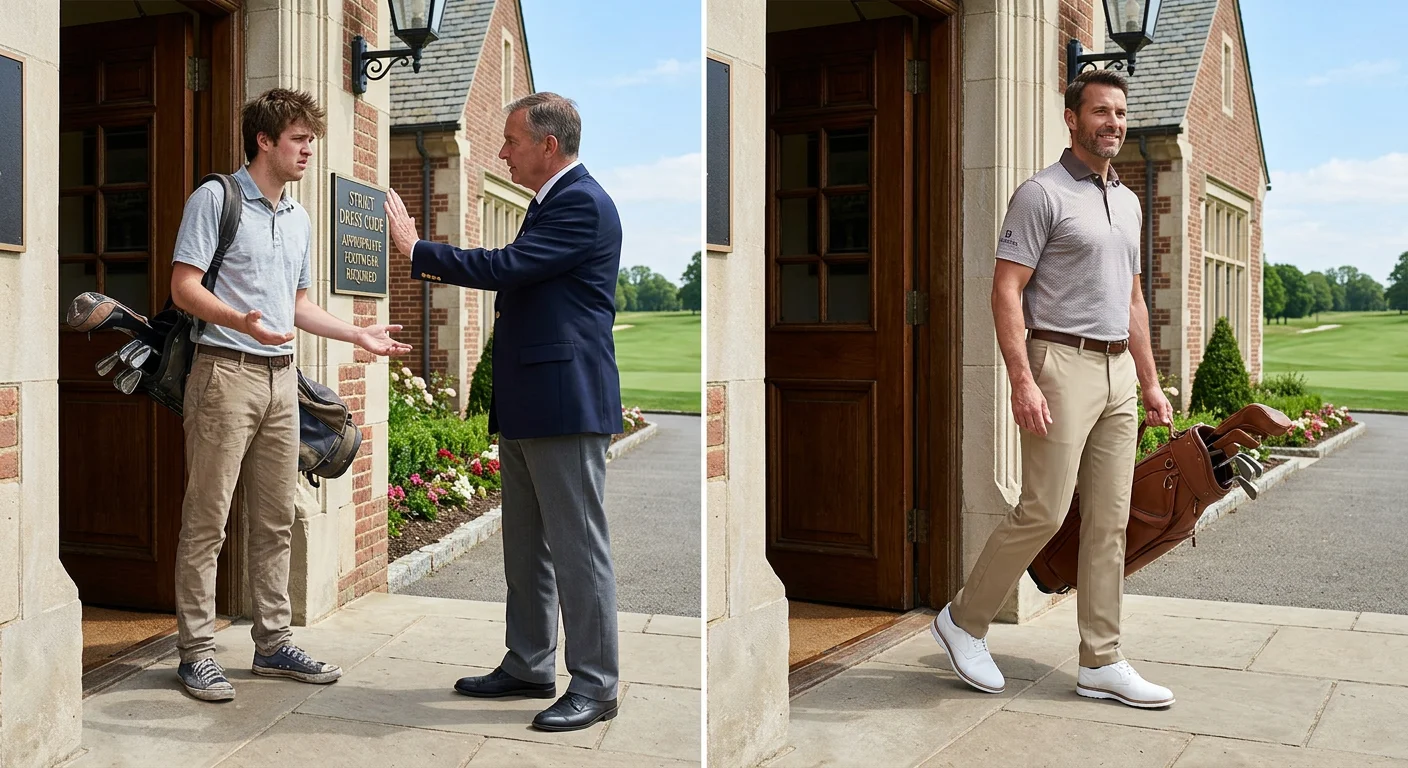
Most beginner golfers get turned away — or judged without a word — not because they broke the rules, but because no one told them which rules actually matter. Here are the five mistakes you'll see on first tees everywhere, and how to avoid each one.
1. Wearing Jeans or Cargo Shorts
Jeans and cargo shorts are banned at most traditional courses. They don't stretch with your swing. They trap heat during a four-hour round. And they tell staff right away that you skipped the dress code. Switch to performance fabric shorts with belt loops — no drawstrings, no soccer-style elastics. Cream, khaki, or gray work at any course without issue.
2. Showing Up in the Wrong Shoes
Old sneakers feel fine for a walk in the park. On uneven turf across five miles of course, they throw off your balance and hurt your swing. Spikeless golf shoes are the best starting point for beginners. They look like clean casual shoes, pass clubhouse dress codes, and grip the ground well. Start with a classic neutral: white, black, or gray.
3. Clothing That Fights Your Swing
Too tight, and your backswing is cut short before you even address the ball. Too loose, and fabric rides up mid-motion and looks off. Do a quick test before you leave home. Raise both arms, twist at the waist, squat down a little. Anything that pulls or bunches? Wear something else. The goal is a relaxed but clean fit — controlled and tidy, never billowy.
4. Skipping the Collar
A T-shirt — even a clean, nice one — breaks the dress code at most clubs. So does a soccer jersey, no matter the team. A collared polo without oversized logos is the standard. Cold out? Layer a zip-up sweater on top and keep it zipped up. That combo works at most courses, public and private.
5. Ignoring the Weather
Spring and fall rounds can shift 20 degrees between the first and eighteenth hole. A thick cotton shirt in summer heat turns uncomfortable fast by hole seven. Pack a light vest or windbreaker for days with changing conditions. In heat above 90°F, go for moisture-wicking performance fabric — not cotton.
One final note: skip the oversized polos, shorts that drop to the knee (modern cuts sit higher and look sharper), and worn-out hats. A clean cap does more for your overall look than most people expect. Small details, real difference.
Budget-Friendly Golf Outfits for Beginners: Build Your First Golf Wardrobe Under $100
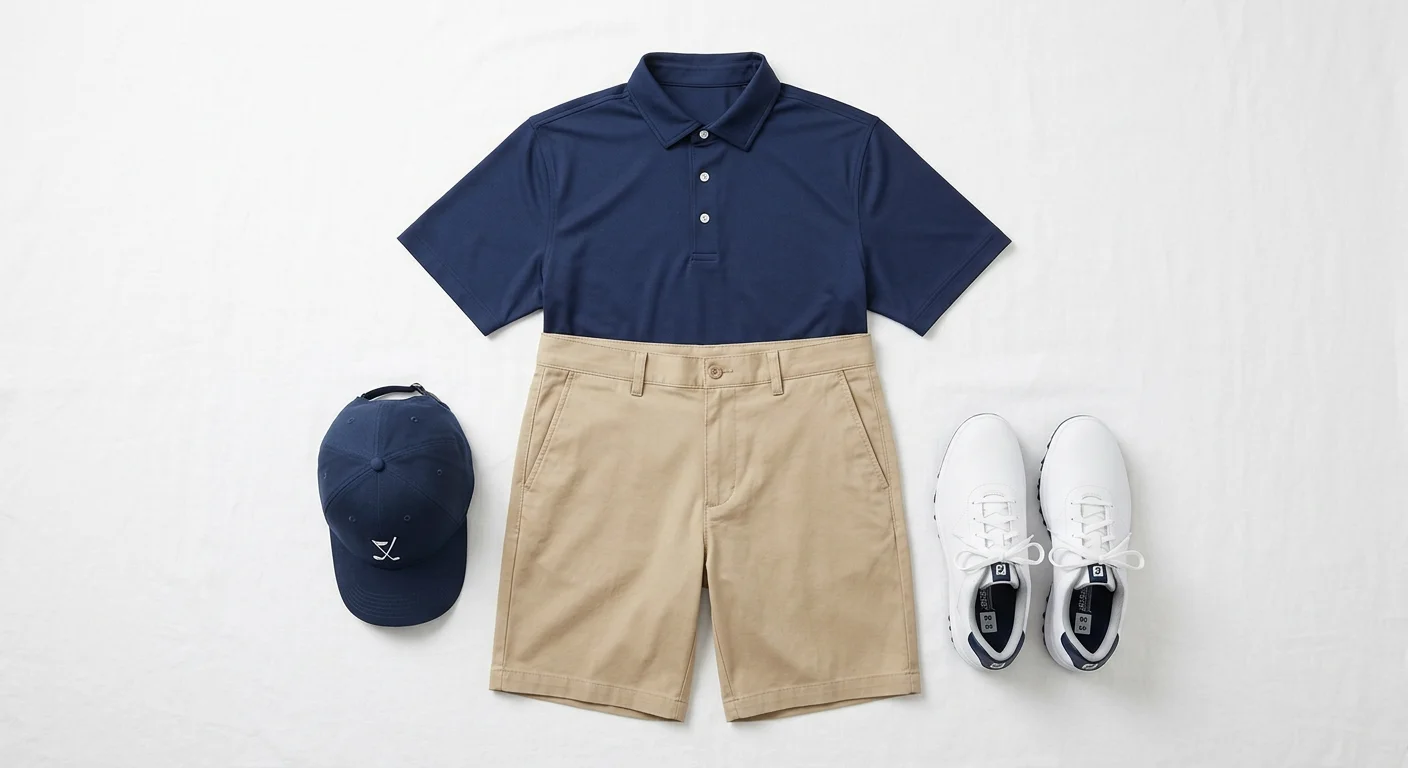
Ninety percent of beginners already own most of what they need. That's not a guess — it's the reality once you understand what golf courses require.
Before you spend a dollar, check your closet. A plain collared polo? That works. Khaki chinos or Dockers-style pants? Those clear the dress code at almost every public course and most private clubs. Got both? You're already 80% of the way there.
The Minimal-Spend Approach (Under $50)
Work with what you have. Then fill the two gaps that matter most:
Golf shoes — $35–75 for a FootJoy entry-level pair. This is the one item worth buying new. Clean sneakers may get you onto a public course. But proper footwear protects your ankles across five miles of uneven ground. That's real wear your joints will feel by hole 18.
A golf cap — $25 for a Titleist basic. Not required, but useful for four hours under open sky. Sun adds up fast on a full round.
Total: $60–100 , assuming you own a polo and pants. Most beginners do.
The Full Starter Kit (Everything New, Still Under $100)
Want to start fresh with nothing pulled from the back of a drawer? Here's a complete setup at $75 total through berunclothes.com :
Item | Details | Price |
|---|---|---|
Moisture-wicking polo | Cotton-poly blend, UV protection, >80% moisture absorption | $25 |
Stretch khaki pants | Quick-dry fabric, elastic waistband, 32–34" inseam | $35 |
Adjustable mesh cap | Breathable, UPF rated | $15 |
Total | $75 |
That's 30–50% less than retail pricing for comparable pieces. It covers a full round at any public course — and most private clubs too.
What to Add Later (Only If You Keep Playing)
Don't overbuy upfront. Golf sticks? Add pieces in this order:
Better golf shoes ($100–150) — Spikeless Ecco or Adidas, once you're playing every week. You'll feel the difference in your footing and balance on uneven lies.
More polos and shorts (4 for ~$100) — rotating options matter once you're playing twice a week. You need variety to stay fresh without doing laundry between rounds.
A wind/rain jacket (~$85) — the one weather layer that earns its place in the bag every season.
Two small additions under $25 are worth picking up: a golf glove (~$20) and a small course towel (~$15). Neither is required. Both make a round more comfortable — especially on hot or humid days.
Conclusion
Here's the thing about golf dress codes — they sound intimidating until they're not. A collared shirt, well-fitted golf trousers or shorts that hit the knee, and proper golf shoes. That's most of what any course will ask of you.
You don't need a closet full of expensive gear before your first round. A few solid pieces will do. Pick things that make you feel confident and comfortable. That way, you can focus on the game — not on whether you'll be turned away at the door.
So here's your next step: pick one outfit from this guide, check it against the quick checklist at the top, and just go play . The fairway doesn't care if you're a beginner. It just asks that you show up dressed like you mean it.
Browse our easy-to-wear golf polo shirts and golf shorts at berunclothes.com — your first game deserves a great first impression.
Video Section