There's a particular kind of misery every golfer knows. You're standing on the 7th fairway. The sky opens up. Your scorecard is dissolving, your swing is tightening — and your "waterproof" jacket soaked through forty minutes ago.
Good waterproof golf clothing does more than keep you dry. It keeps you in the game . Sharp focus. Full range of motion. No fighting the weather in your head or in your body.
The problem? Gore-Tex membranes, DWR coatings, taped seams, and a hundred brand claims all compete for your attention. It's hard to tell what works from what's just a label.
This guide cuts through all of it. You'll get:
Golf rain suit essentials broken down clearly
Fabric technology explained without the jargon
Real product recommendations worth your money
Custom and wholesale waterproof golf clothing options for buyers and teams
One smart decision. No more lost rounds to the rain.
Key Fabric Technologies Compared: Gore-Tex vs DWR vs Polyurethane Membrane
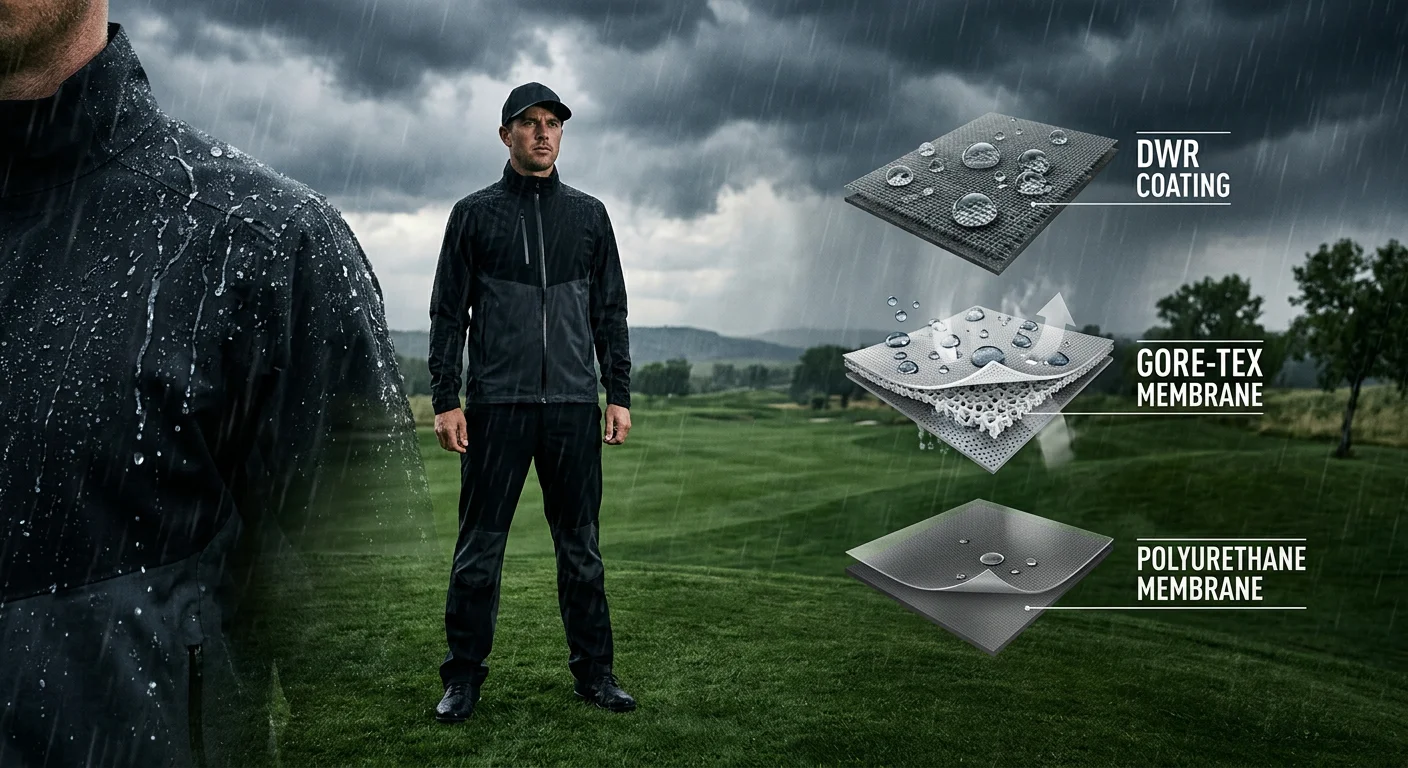
Three technologies dominate waterproof golf clothing — and they work in very different ways. Knowing the difference matters. It separates a smart buy from a costly mistake.
Gore-Tex: The Benchmark
Gore-Tex earns its reputation through a microporous membrane. This membrane has billions of tiny openings. They block liquid water but let sweat vapor pass through. Standard Gore-Tex hits a 15,000–28,000mm waterproof rating with breathability around 10,000–20,000 g/m²/24h . The Pro version pushes both numbers above 28,000.
For a breathable golf jacket worn across 18 holes of steady movement, that breathability number is critical. Sweat vapor needs somewhere to go. No exit route means you stay dry from rain — but soak through from the inside.
One thing to watch: sunscreen, body oils, and salt can clog Gore-Tex pores over time. Refresh the DWR coating regularly. This reactivates the face fabric's water-repellency and keeps the whole system doing its job.
DWR: The Supporting Layer You Can't Ignore
DWR is not a membrane. It's a surface treatment on the outer fabric of golf wet weather gear . Its job is straightforward — make water bead up and roll off before it soaks into the face fabric.
A failed DWR coating kills breathability, even in a Gore-Tex jacket. The wet outer layer blocks vapor from escaping. Modern short-chain fluorinated DWR (used by Gore) beats non-fluorinated options by a wide margin — 72% lower environmental impact and far more durable in real conditions. Re-treat after every wash. Most golfers skip this step entirely.
Polyurethane Membrane: The Practical Alternative
DWR coating golf apparel and Gore-Tex grab most of the marketing attention. But proprietary polyurethane (PU) membranes are worth paying attention to. They work differently from pore-based systems. PU membranes are hydrophilic — moisture travels through via a chemical process, not through physical holes.
The real advantage? No pores to clog. Sunscreen, salt, and body oils that wear down Gore-Tex performance don't affect PU membranes the same way. Premium proprietary PU versions match or beat Gore-Tex Standard ratings — 20,000–30,000mm waterproof and 15,000–25,000 g/m²/24h breathability .
Which Technology Should You Choose?
Feature | Gore-Tex Pro | Gore-Tex Standard | Proprietary PU | Budget Membranes |
|---|---|---|---|---|
Waterproof (mm HH) | >28,000 | 15,000–28,000 | 20,000–30,000 | 5,000–8,000 |
Breathability (g/m²/24h) | >28,000 | 10,000–20,000 | 15,000–25,000 | 3,000–8,000 |
Contamination Resistance | Lower | Lower | Higher | Variable |
Seam Sealing | Fully taped | Fully taped | Fully taped | Critically taped |
For most golfers, 10,000mm HH waterproofing and 10,000 g/m²/24h breathability are the bare minimums worth considering for heavy rain play. Drop below those numbers and you'll feel it by the back nine.
Waterproof golf pants and jackets built on quality PU membranes give you strong performance at a fair price. That makes them a solid pick for golf waterproof technology buyers who want durability without paying for a premium brand name. Gore-Tex is still the top-tier choice. But it's not the only smart one.
What to Look for in a Waterproof Golf Jacket: Complete Selection Criteria
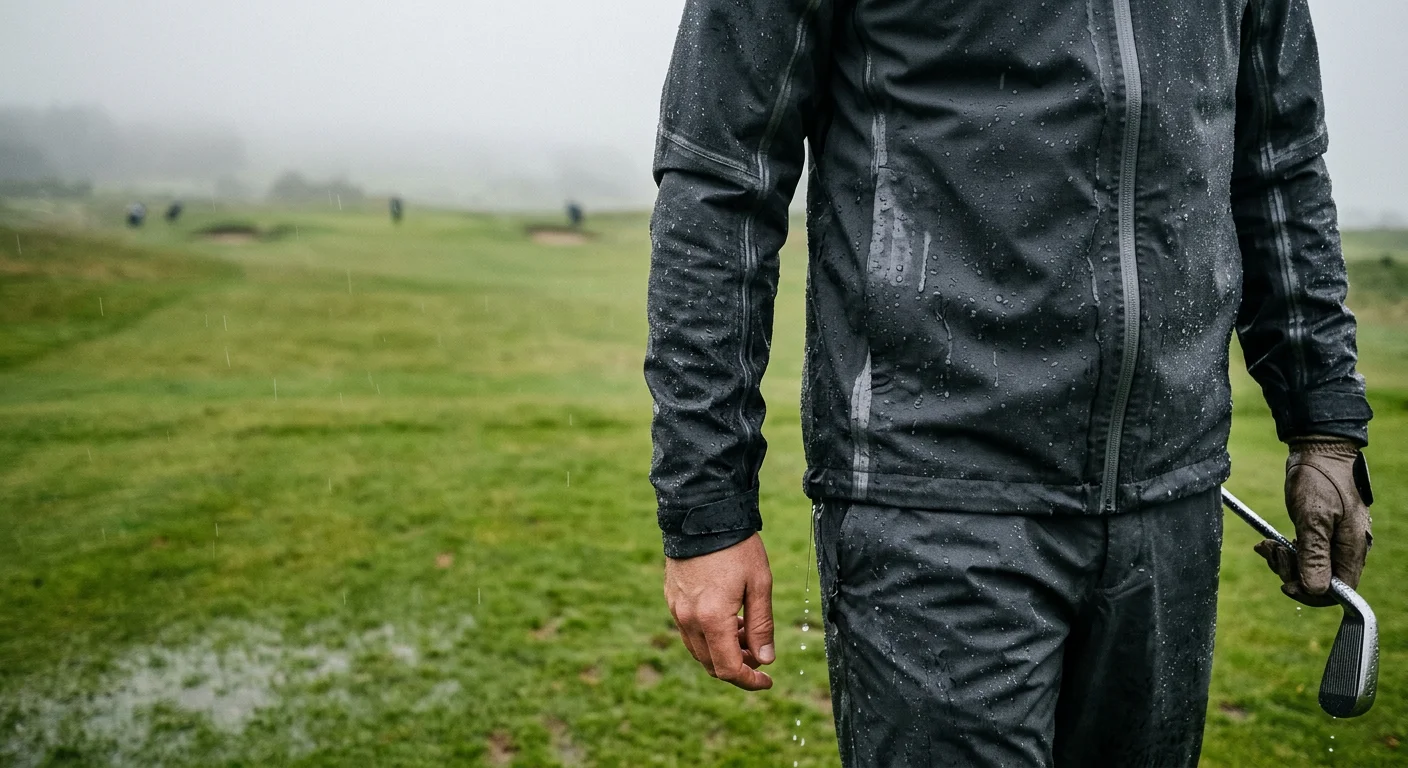
Most golfers buy a rain jacket the wrong way — they squeeze a sleeve in the pro shop, check the price tag, and call it done. Here's what separates a jacket that holds up through 18 soggy holes from one that lets you down by the 10th.
Waterproof Rating: Know Your Numbers
The Hydrostatic Head (HH) test is the standard that matters. A fabric column holds water pressure for 24 hours before leaking. The height of that column, measured in millimeters, is your rating.
For golf wet weather gear , these are the benchmarks worth keeping:
5,000–8,000mm : Handles moderate rain. Fine for shorter rounds
10,000mm+ : The starting point for sustained heavy rain over a full round
28,000mm (Gore-Tex standard): Top-tier protection for serious conditions
Keep any jacket under 8,000mm out of your golf bag. It won't hold up in real weather. If you're also looking for warm-weather options, check out our guide on the best lightweight golf jackets for summer.
Breathability: The Number Nobody Checks
Breathability is measured in g/m²/24h — how much moisture vapor escapes per square meter over 24 hours. You're wearing this jacket through four hours of walking and swinging. That number is not optional.
A minimum of 5,000 g/m²/24h stops sweat from building up inside. Better jackets — like those built on eVent DVlite — reach 18,000. The gap is huge. You feel every bit of it on the back nine.
Construction Details That Count
A high waterproof rating means nothing if the seams leak. Look for:
Taped or heat-sealed seams — stitching holes are direct entry points for water
Waterproof-treated zippers — water-resistant zippers are not the same thing
Adjustable cuffs — hook-and-loop closures seal your wrists tight
Storm flaps at the hem — blocks wind-driven rain from riding up mid-swing
Underarm vents or back vents — essential for managing heat during active play
Fit, Weight, and Swing Freedom
Target a lightweight golf rain jacket under 400g . Anything heavier becomes a burden across a full round. Packability matters too — it should compress small enough to sit in your bag without eating up space.
For fit, match your layering plan:
Fit Type | Best For |
|---|---|
Slim/athletic | Single layer, mild conditions |
Regular/standard | Fleece mid-layer underneath |
Relaxed/oversized | Full base + mid + jacket in cold, wet rounds |
Swing construction is worth its own mention. Raglan sleeves remove the shoulder-seam binding that kills your backswing. Back pleats or stretch panels add real range of motion — swing tests show 10–20% improvement in arm extension. Golf is a sport built on repeatable movement. That's not a small detail.
Waterproof Golf Pants: Why Most Golfers Overlook This and Regret It
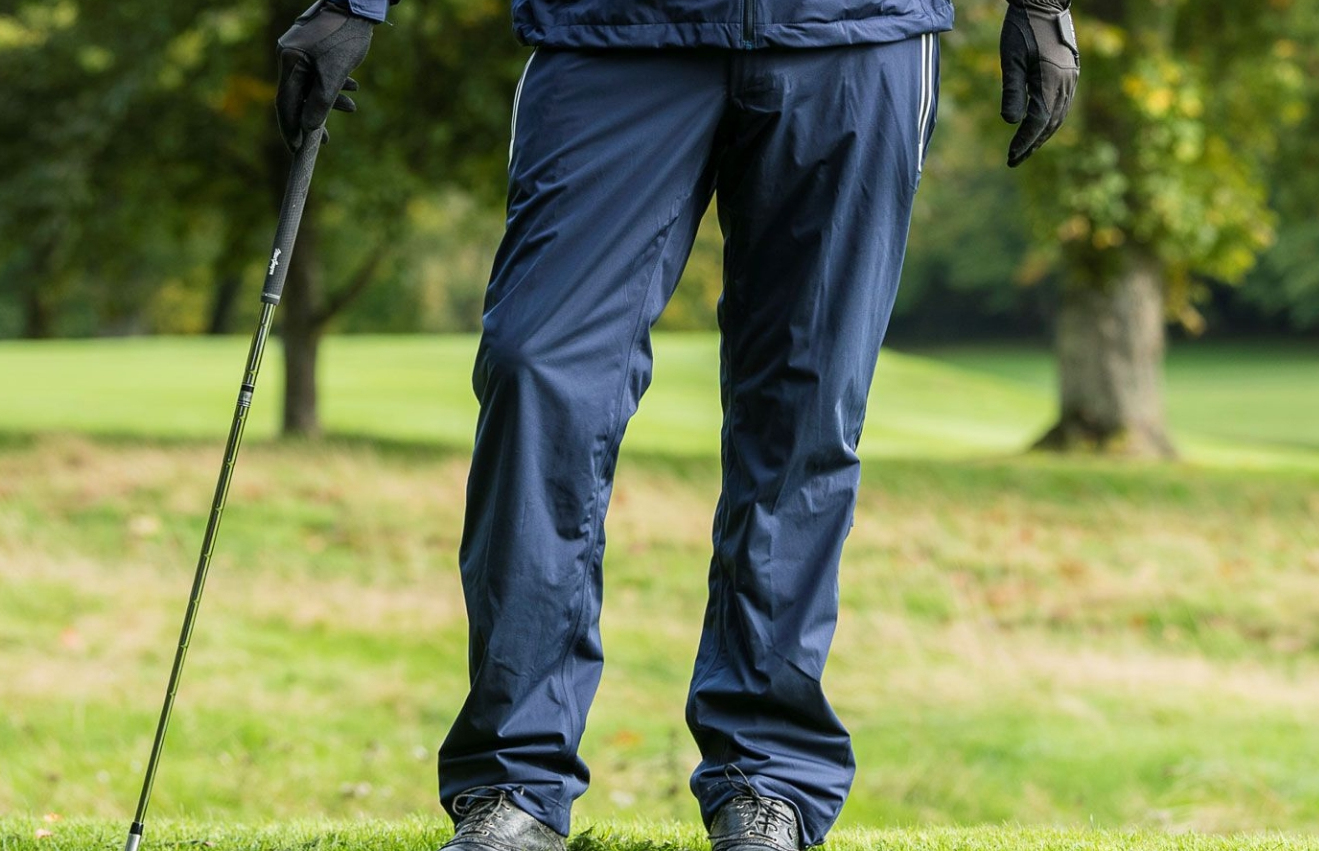
The jacket gets all the attention. Meanwhile, your legs are soaking through by hole five.
This is a common mistake. Golfers spend good money on a breathable golf jacket , then pull on regular trousers. By the turn, they're cold and miserable. Water finds the weakest point. Unprotected legs are that point.
Here's what you actually get from waterproof golf trousers :
A 20,000mm+ waterproof rating keeps you dry — not just "mostly okay for a while"
50,000 g/m²/24h breathability (Sun Mountain Cirque) kills the clammy, trapped feeling that kills your concentration
4-way stretch fabric means your swing stays free — knit panels and spandex blends move with you, not against you
Seam-sealed construction closes every stitch point where water would otherwise get in
Ankle zips let the pants slide over your shoes without a fight
The Galvin Green Arthur runs on Gore-Tex golf clothing technology. It weighs just 11 oz. You can wear it as a base layer or an overpant. That flexibility matters when the weather turns mid-round.
Must-have features for waterproof golf pants :
Feature | Minimum Standard |
|---|---|
Waterproof rating | 20,000mm HH |
Breathability | 50,000 g/m²/24h |
Stretch | 4-way |
Pockets | 3+, zipped |
Leg opening | Ankle zip included |
Miss any of these, and you'll know it by the back nine. For more on finding the right pants, see our review of the best men's golf pants brands in 2026.
Best Waterproof Golf Jackets Reviewed: From Budget to Premium
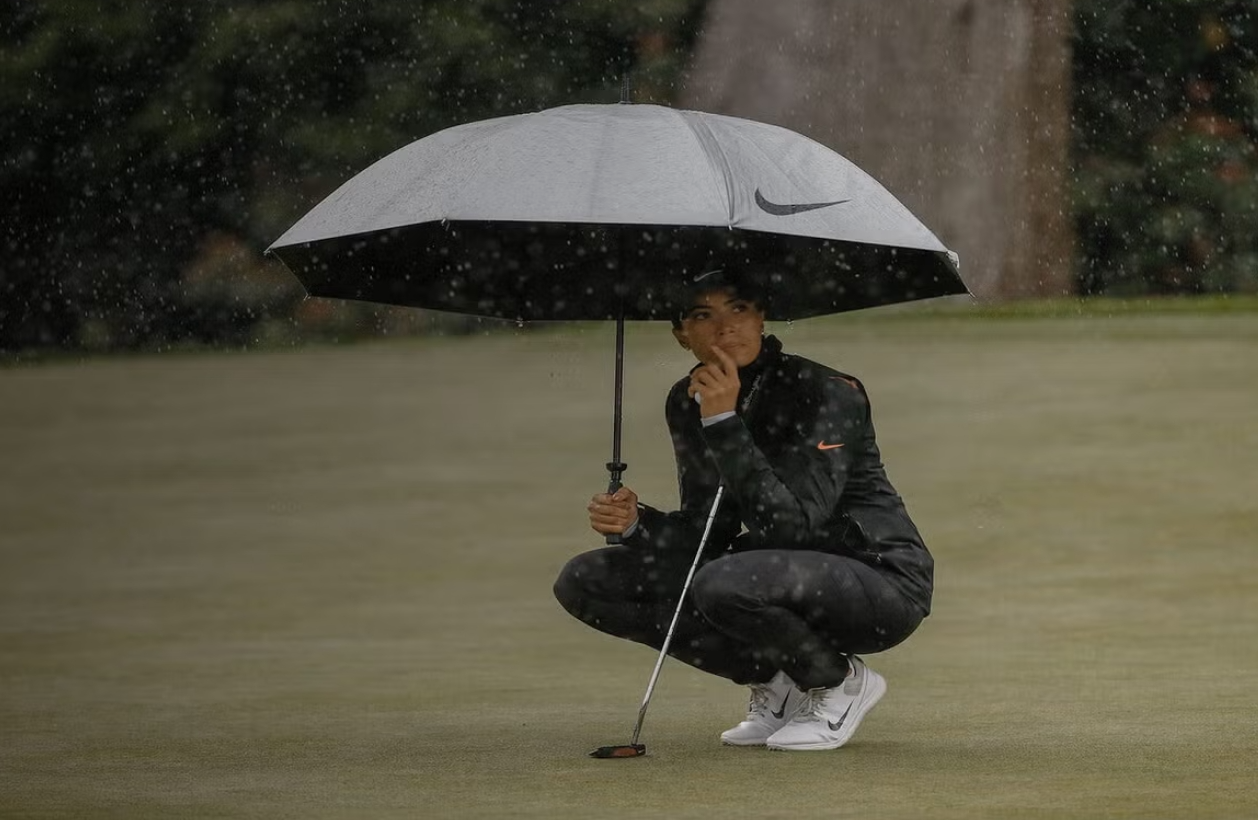
Research waterproof golf jackets long enough and a pattern emerges: the price gaps are huge, but the marketing language sounds the same. Every brand claims 20,000mm. Every brand promises breathability. What separates them is what you get on hole four when the rain won't quit.
Here's a clear breakdown — by price tier, by real performance, by what's worth your money.
FootJoy HydroTour (~$350) is the top performer in this range. Its 3-layer construction — 92% polyester, 8% spandex — moves with your swing instead of restricting it. The DrySeal collar and underarm zip vents fix two of the most common weak spots in budget jackets. It has been tested in heavy rain, with mid-layers staying dry throughout. FootJoy backs it with a 3-year waterproof warranty , which carries real weight at this price point. This one suits mid-handicappers who play through real weather, not just a light drizzle.
FootJoy HydroLite X (~$240) gives up some heavy-rain performance in exchange for less weight and better mobility. Its 2.5-layer bonded construction and knit swing panels make it the smarter pick for humid, unpredictable conditions. Breathability matters more here than storm-level protection.
PING AquaDrive (~$190) is the entry-level option worth serious attention. You get 100% recycled polyester, taped seams throughout, and adjustable hem and cuffs. It covers all the basics at a price that's easy to justify. Great for golfers who play in light-to-moderate rain and want an eco-friendly jacket that doesn't cut corners on waterproofing.
Mid-High Tier ($350–$500): Where Warranties and Refinement Start to Diverge
Sun Mountain's full-zip 3-layer jacket (~$398) stands out as one of the best values in this category. Graphene temperature regulation and a bonded jersey lining separate it from standard 3-layer builds. It carries a 5-year warranty — double what most rivals offer — and delivers twice the breathability of pricier options. Six pockets, including a zip chest pocket, make it genuinely useful on the course.
Galvin Green Argus (~$500) takes a different path with waterproofing. The DRYVR Pertex Shield stretch fabric is PFC- and PVAS-free, making it one of the cleaner choices from an environmental standpoint. The kangaroo pocket and adjustable hood give it a streetwear look that doesn't feel like rain gear. Style matters on the course too — and this jacket earns its price for those who want both.
Premium Tier ($500+): Investment Pieces With Tour-Level Credentials
Peter Millar Rain Walker (~$700) is built to last. Its 3-layer hydrophilic membrane — 65% nylon, 35% polyester — pairs wind protection with real stretch and solid seam construction. It won't compress into nothing, but it holds its performance for years without breaking down. Think of it less as buying a jacket and more as deciding to stop buying jackets.
Galvin Green Gore-Tex jackets (Angelo/Paclite, ~$400+) meet the full Gore-Tex golf clothing standard — 9 billion pores per square inch, breathability tested under continuous rain, real pockets with storm flaps. Florida humidity, British downpours, tournament pressure — the Gore-Tex system handles all of it. Sweat doesn't get trapped inside. That internal condensation issue that wears out cheaper jackets? It doesn't happen here.
The Trade-Off Table You Need
Tier | Waterproof Rating | Breathability | Warranty | Best For |
|---|---|---|---|---|
Budget ($190–$350) | 20,000mm, taped seams | Good, vented panels | 3-year | Regular play, value priority |
Mid ($350–$500) | 100% proof, 3-layer | Excellent, 2× rivals | 5-year | Frequent players, warranty matters |
Premium ($500+) | 20,000mm+, storm-proof | Top-tier, no sweat trap | 3–5 years | Long-term investment, tour conditions |
The math on premium golf waterproof technology is simple. A $200 jacket replaced every two years costs more over a decade than a $700 jacket that holds up for eight. The 5-year warranty on the Sun Mountain, or the track record of Gore-Tex construction, isn't a luxury argument. It's a practical one.
Best Waterproof Golf Pants, Shoes & Accessories: Completing Your Rain Gear Setup
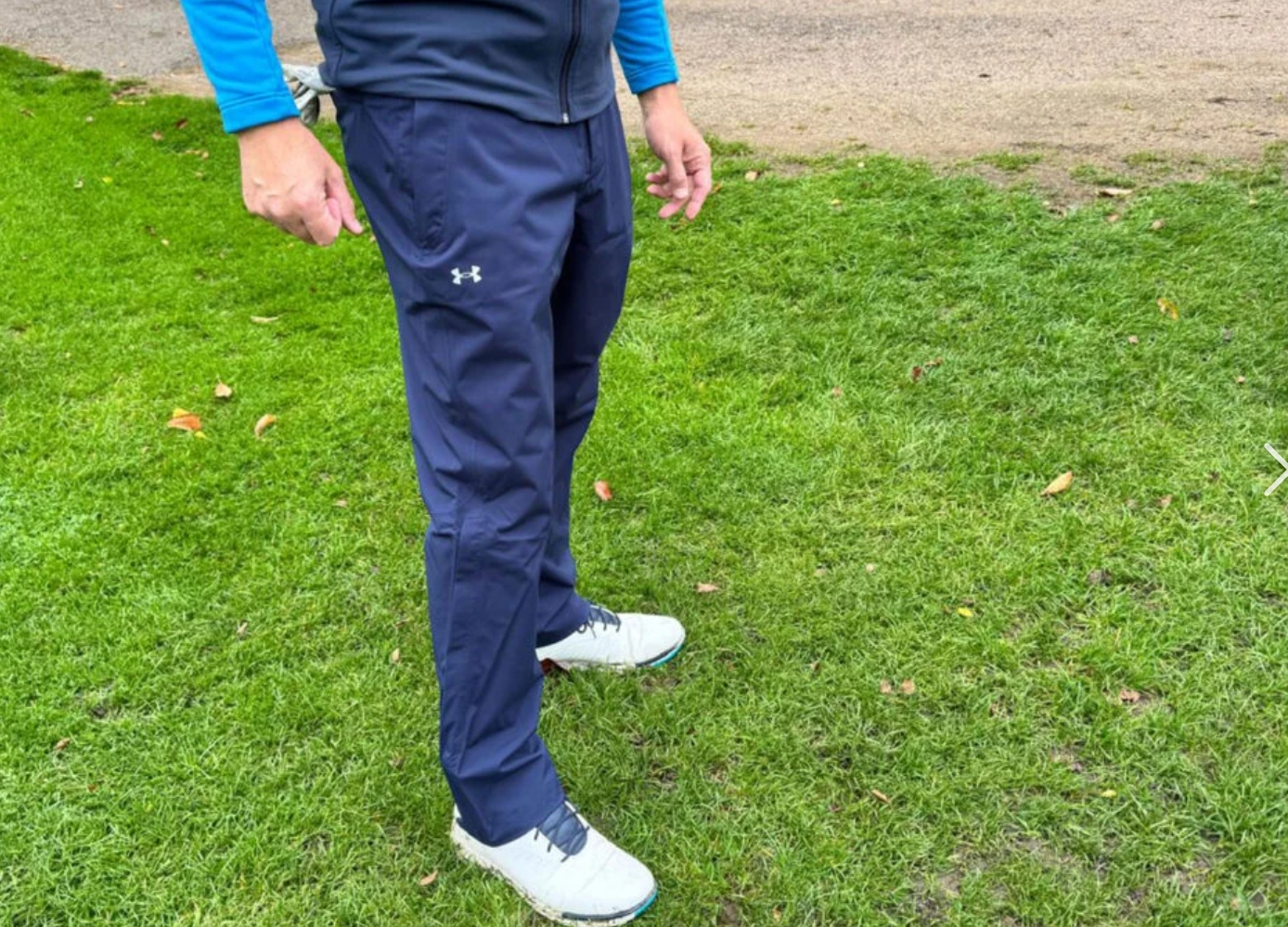
Legs get wet first. Not your shoulders, not your chest — your legs, because nobody ever thinks about their legs until it's too late.
A great jacket covers half the job. The rest of your rain setup — pants, shoes, gloves, the small things you skip past until they fail — decides whether you finish a wet round feeling strong or just glad it's over.
Waterproof Golf Pants: Three Options Worth Knowing
Zero Restriction Z2000 (~$610) is the benchmark for serious buyers. It features a 20,000mm 3-layer stretch shell with dot-lock reinforced cuffs and a lifetime waterproof warranty . That last detail matters. The brand stands behind this product for as long as you own it. No expiration date. No fine print about "normal wear." That kind of backing is rare at any price.
Sun Mountain Cirque (~$300) matches the Z2000's 20,000mm waterproof rating. It also delivers 20,000 g/m²/24h breathability — both numbers are hard to find at this price point. The graphene print 3-layer construction adds structure without bulk. The 5-year warranty seals it as the top value pick in this category.
Galvin Green Galway Bay Chino pushes up to 30,000mm waterproof with full Gore-Tex construction. The fit is normal and non-bulky — it doesn't look like rain gear. You wear these on days where staying dry and looking sharp both count.
Waterproof Shoes: Your Foundation in the Wet
The TRUE Linkswear OG 3 High is built around a detail most golf shoes skip: zero heel drop. This design promotes forefoot loading and reduces Achilles strain. Your weight stays forward through the swing without any extra effort. The TRUEdura upper and waterproof bootie hold up in standing water tests. You get a 2-year waterproof guarantee plus excellent wet grass traction. One note — these are built for grass, not mud.
Gloves and Small Gear That Make a Real Difference
Mizuno RainFit gloves do something unexpected — they grip harder as rain picks up. Raised synthetic channels push moisture away from the palm surface. More rain means more friction, not less. Carry a dry leather backup pair. Swap between them as conditions shift.
For everything else, the ClicGear RainTek bag cover does the work: sealed seams, wind-secure straps, and club access without pulling the whole cover off. Add a towel clip and a zippered valuables pocket. Your setup is solid at that point — nothing left uncovered.
Gear | Waterproof Rating | Warranty | Approx. Price |
|---|---|---|---|
Zero Restriction Z2000 (pants) | 20,000mm | Lifetime | $610 |
Sun Mountain Cirque (pants) | 20,000mm | 5 years | ~$300 |
Galvin Green Galway (pants) | 30,000mm | — | Premium |
TRUE Linkswear OG 3 High (shoes) | Bootie construction | 2 years | — |
The jacket keeps you dry. Everything else keeps you playing .
How to Choose Waterproof Golf Clothing Based on Your Playing Conditions
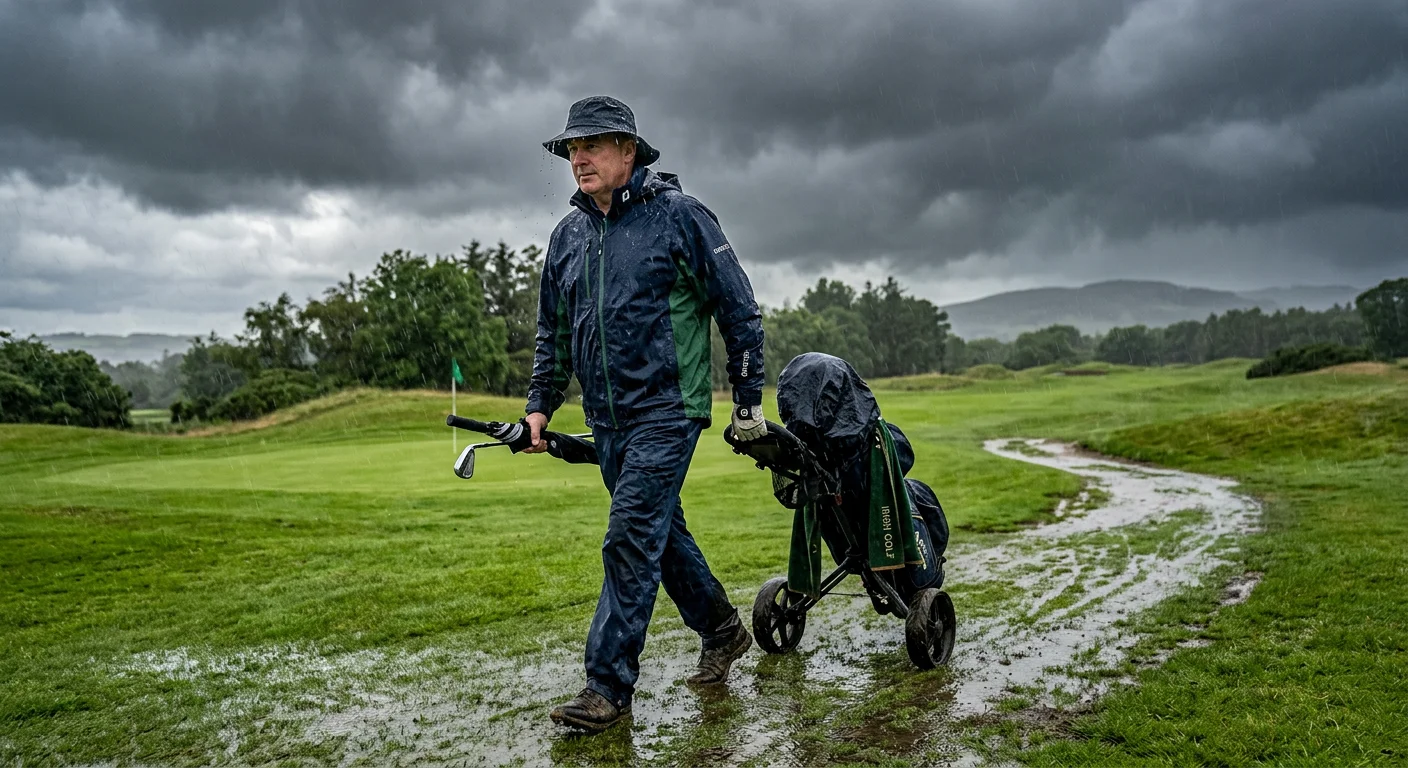
Not all rain is the same rain. A soft drizzle on a September morning in Surrey puts different demands on your gear than a hard downpour in a Florida summer storm. Most golfers match their waterproof golf clothing to "rain" as a broad category — and that's exactly where performance gets left behind.
Light Rain (Under 5mm/h): Let Your Body Breathe
In a gentle drizzle, breathability matters more than waterproofing. A 5,000–10,000mm rating is enough to handle the pressure. What you don't want is a heavy shell trapping sweat for four hours — not when the rain barely calls for it. Go for fabrics with breathability above 5,000 g/m²/24h . Taped seams are a nice bonus but not essential here. Keep the jacket light. Under-2-layer constructions do the job well without the extra bulk.
Heavy or Sustained Rain (Over 10mm/h): Go Full Protection
This is where minimum standards matter. For a full round in sustained rain, 10,000mm is the floor — not a selling point, the bare minimum. Aim for 15,000–20,000mm in prolonged exposure. Taped seams across the full jacket are non-negotiable. Your golf rain suit needs to work as a complete system:
Layer | Purpose | Spec Target |
|---|---|---|
Base | Moisture-wicking | Polyester or merino, 150gsm |
Mid | Insulation | Fleece, 300gsm |
Shell | Full protection | ≥10,000mm, fully taped |
Each layer has a job. All three together keep you dry, warm, and moving freely through a full round.
Wet-Hot Climates: Sweat Is the Real Enemy
In tropical or subtropical conditions, rain arrives fast and clears fast — but heat and humidity stick around. You need breathability above 15,000 g/m²/24h just as much as you need waterproofing. The Gore-Tex Pro 3L (28,000mm/25,000g) and eVent DVstorm (20,000mm/22,000g) both handle this balance well. Skip heavy 3-layer constructions unless the rain runs hard and long. A lighter membrane that breathes fast will serve you better in these climates.
Cold Rainy Days: Layer With Intention
Cold and wet ends rounds fast. For dedicated cold weather gear recommendations, see our cold weather golf apparel guide. Build your layering system with a clear plan:
150gsm merino base — sits next to skin and pulls moisture away
300gsm fleece mid-layer — holds core warmth without bulk
Shell rated ≥15,000mm with breathability of ≥18,000 g/m²/24h — keeps rain out while heat escapes
Also, look for adjustable hoods and cuffs. Wind-driven rain comes in sideways. Those adjustments let you seal up fast and keep everything out.
Waterproof Rating | Rain Intensity | Golf Suitability | Breathability Minimum |
|---|---|---|---|
<5,000mm | Very light drizzle | Short casual rounds | ≥5,000 g/m²/24h |
6,000–10,000mm | Light to moderate | Standard rainy golf | ≥10,000 g/m²/24h |
11,000–15,000mm | Moderate, sustained | Prolonged exposure | ≥15,000 g/m²/24h |
16,000–20,000mm+ | Heavy storms, 4+ hours | Wind-driven rain | ≥20,000 g/m²/24h |
One more thing worth keeping in mind: reapply DWR every 10–20 washes. The membrane is half the system. The face fabric does its job only while the DWR coating is active. Let it wear out and water stops beading off — even a high-rated shell starts to feel damp. A quick re-treatment keeps the whole system working the way it should.
Waterproof vs Water-Resistant Golf Clothing: Don't Make This Costly Mistake
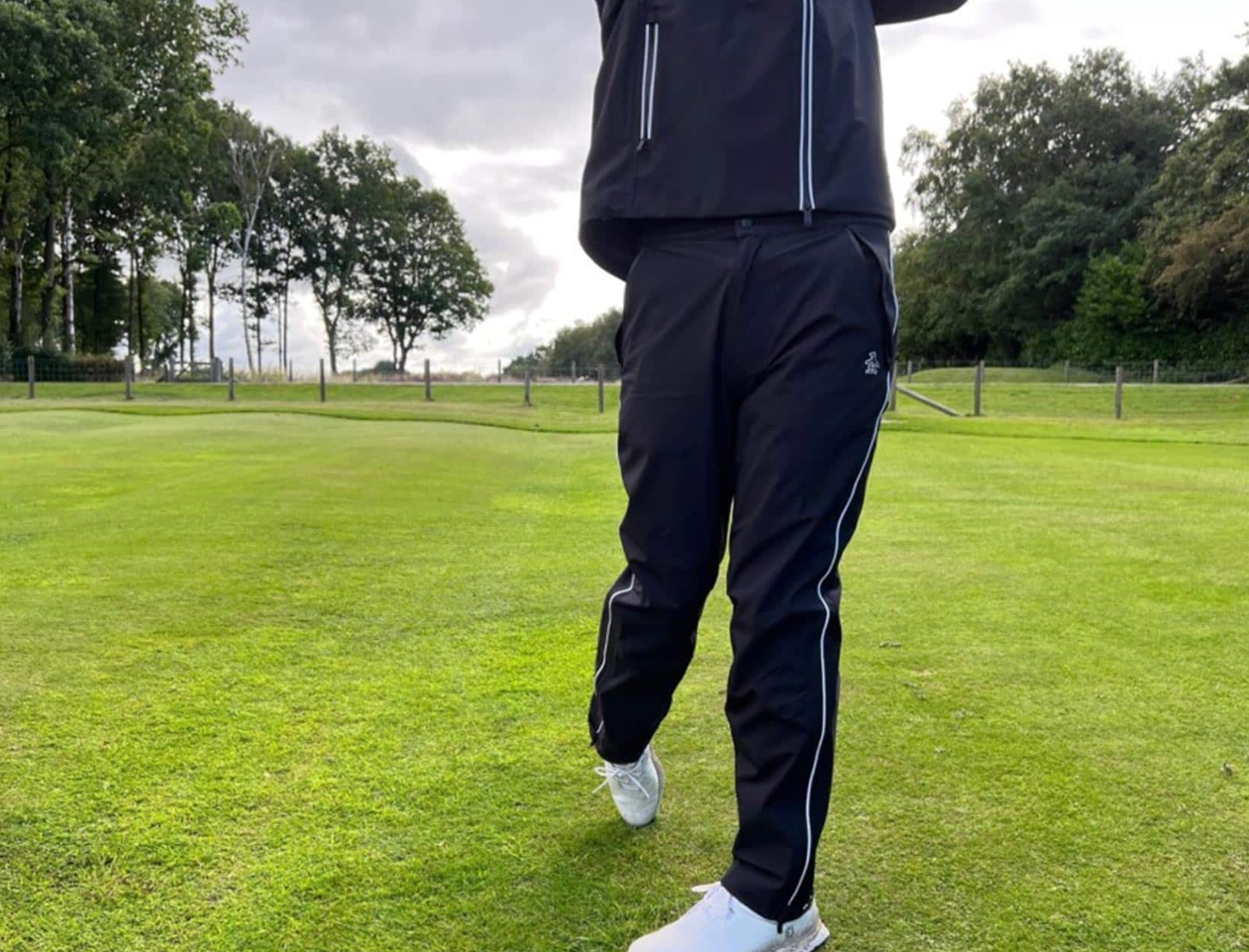
The label says "waterproof." The jacket tells a different story — right around hole eight.
This is the most common and most expensive mistake in golf wet weather gear : buying water-resistant and thinking it's waterproof. They are not the same thing. Not even close.
Water-resistant gear handles a light drizzle. It sheds surface moisture. You get maybe twenty minutes before the fabric soaks through. Waterproof gear is built differently — sealed membranes, taped seams, and active DWR coatings. It holds through hours of heavy downpour without letting a drop in.
Three numbers tell the real story:
Windproof jackets with a water-resistant finish? Fine for dry, breezy mornings. Real rain shows up, and they're done.
Most golfers overlook one thing: golf-specific construction matters . A standard waterproof shell locks up your shoulders. A proper waterproof golf jacket gives you extra room through the upper back and arms. Your swing needs that space. Your jacket shouldn't take it away.
Grab water-resistant gear thinking it's waterproof, and the back nine will make the difference very clear.
Custom & Wholesale Waterproof Golf Clothing: What B2B Buyers Need to Know
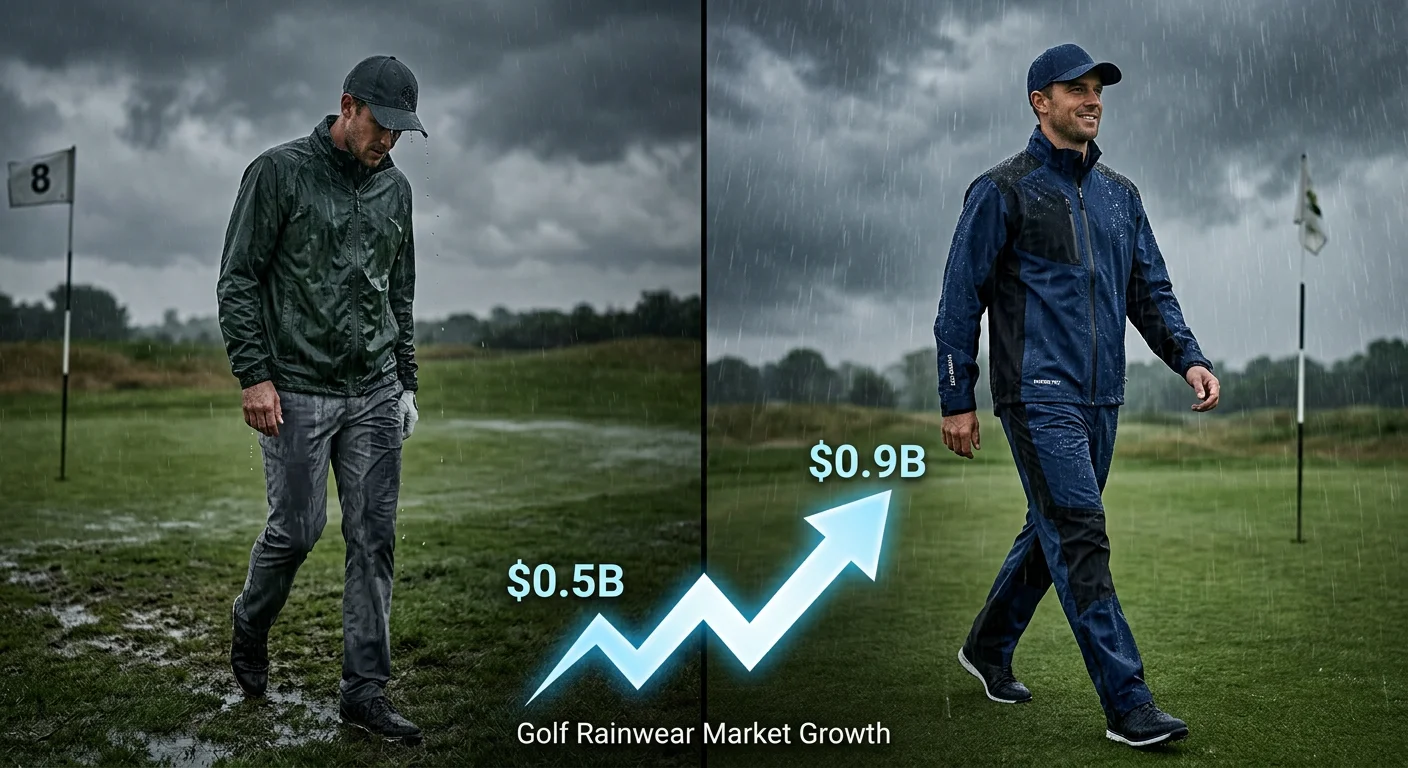
The global golf rainwear market is set to grow from $0.5B to $0.9B by 2033. That's close to double. Buyers who know the technical specs behind that growth are the ones who will capture it.
For procurement teams and OEM/ODM waterproof golf clothing clients, waterproof golf clothing is more than a product category. It's a specification checklist.
The Numbers That Matter at Scale
Check these benchmarks with your waterproof golf clothing supplier before you sample a single jacket:
ISO 811 hydrostatic head : ≥10,000mm minimum; ≥20,000mm for heavy-exposure outerwear
AATCC 22 spray rating : ≥90/100 — not 80, not "close to 90"
Seam strength : minimum 20 lbs/inch, heat-sealed with PU coating throughout
Hydrostatic head retention : less than 5% drop after 5 wash cycles
Ask for lab reports. Not promises — reports.
MOQ, Lead Times, and What to Negotiate
Custom waterproof golf jackets require 300–500 pieces per color/style as a starting point. Full production runs begin at 1,000+. Build your timeline around these stages:
The standard payment structure is 20% deposit, 80% post-inspection. Factor that into your cash flow before placing the order.
Logo and Branding on Waterproof Fabric
This is where many buyers get caught off guard. Standard embroidery punches holes in the fabric. Waterproof materials can't handle that.
Here are the branding methods that actually hold up:
3D puff embroidery on PU-coated nylon: tested to 50 wash cycles at 40°C, with color fastness ≥4/5 (AATCC 61)
HTV vinyl heat transfer : adhesion strength ≥10N/cm² after waterproof testing; UV resistance rated for ≥500 hours QUV exposure
DWR pre-treatment : C6 fluorocarbon applied before branding; logo retention above 95% after ISO 811 re-test at 10,000mm
Certifications Worth Requiring
Two certifications tell you a best waterproof golf apparel supplier is worth working with:
Synthetic waterproof blends now hold 56.52% of the mass market segment. Buyers sourcing recycled polyester builds aren't just hitting sustainability targets. They're moving in the same direction as the market.
Conclusion
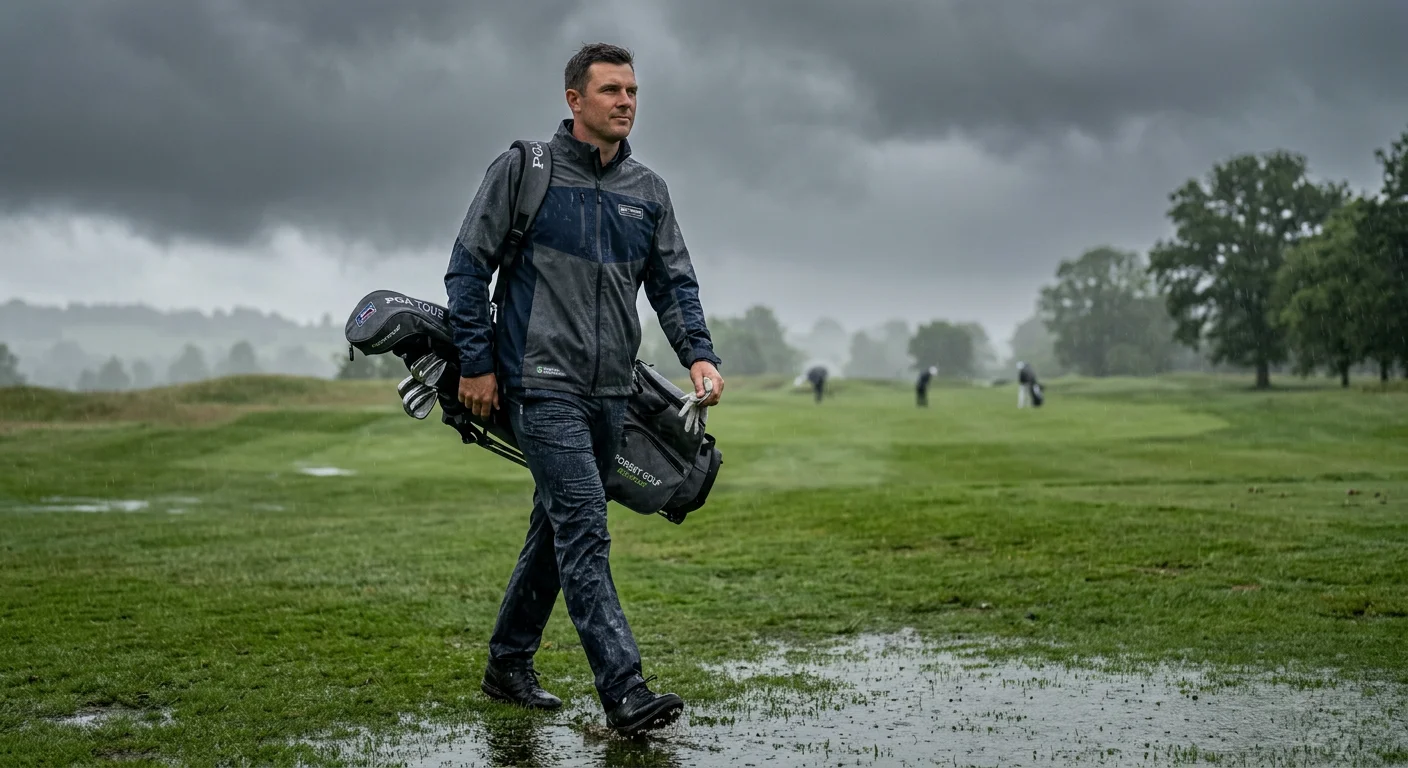
Rainy days don't cancel golf — bad gear does.
The takeaway is simple. A miserable, soggy round versus an enjoyable one comes down to three things: fabric technology, fit, and knowing what conditions you're dressing for. Gore-Tex breathes and performs at the premium end. A quality DWR-coated jacket handles most casual rainy rounds just fine. And those waterproof golf trousers you've been skipping? They matter more than almost anything else in your rain kit.
You don't need to spend a fortune. You need to spend smart .
Building a personal wet-weather wardrobe? Sourcing breathable golf jackets for wholesale? Berunclothes.com offers custom-ready waterproof golf apparel built for real performance — not just good-looking spec sheets.
Go find your rain gear. The course is waiting. Those gloomy, quiet mornings? Some of the best rounds you'll ever play.
Video Section