The court beneath your feet isn't just a playing surface — it shapes everything about your game. Even for tennis apparel manufacturers, surface-specific performance has become a key factor in designing gear that matches speed, movement, and durability needs.
The ball skips low and fast off a Wimbledon grass court. It hangs heavy and high off Roland Garros clay. It rockets back at you with brutal consistency off a US Open hard court. These aren't minor differences. They're three separate sports wearing the same name.
Yet most players just show up, grab a racket, and wonder why their game feels so different from one venue to the next. Here's the truth: understanding clay vs. grass vs. hard courts is one of the most overlooked factors in tennis. The physics, the footwork demands, the injury risks, what each surface rewards — all of it matters. Get a handle on these, and you'll improve faster. Your body will also hold up longer while you do it.
What Makes Each Tennis Court Surface Unique (Surface Composition & Physics)
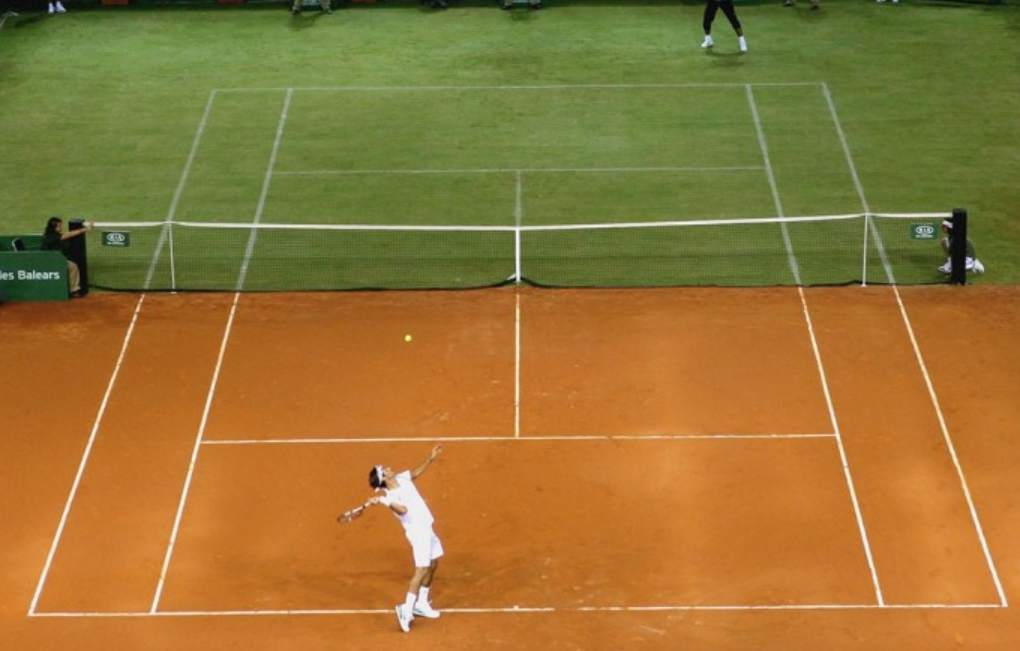
Three surfaces. Three different sets of physics. And the gap between them is much bigger than most people expect— something wholesale tennis clothing suppliers increasingly consider when recommending gear for different playing environments..
Two forces decide what happens the moment a tennis ball hits the ground: friction (how much the surface grabs the ball sideways) and restitution (how much energy the ball gets back upward). Change those two numbers, and you've built a different sport.
Grass: The Slippery Speed Machine
Wimbledon's courts use natural ryegrass grown over a soil base. That sounds simple. The physics consequences are not.
Grass has low friction . A 67 mph shot lands, and the ball loses almost no forward momentum — it skids through and keeps going. The coefficient of restitution is 0.75 , the lowest of the three surfaces. That means the court soaks up vertical energy hard and fast. The ball stays low , bouncing back at close to the same angle it came in (~16° in, ~16° out). It's fast, it's flat, and it's past you before your brain catches up.
Clay: The Physics of Patience
Roland Garros has used crushed brick and shale since 1928. Those loose particles tell the whole story.
Clay grips. Hard. A 67 mph spinless shot loses 43% of its speed on contact — dropping from 67 mph down to 38 mph . That's not a slowdown. That's a wall.
The coefficient of restitution sits at 0.85 . The surface returns more vertical energy, pushing the ball up rather than through. A ball entering at 16° bounces back at 20° or steeper .
Topspin doesn't just work on clay — it becomes far more dangerous here. The surface converts spin straight into vertical lift, making heavy topspin shots rise sharply and kick hard off the ground.
Hard Courts: Predictable by Design
Hard courts use asphalt or concrete bases coated with an acrylic layer — DecoTurf at the US Open, Plexicushion at the Australian Open. They sit in the middle on purpose.
Medium friction
Medium restitution (~0.78–0.82)
Medium bounce height
Medium speed loss
That word "medium" sounds dull. It's a deliberate engineering choice. The consistent, predictable bounce is the whole point.
One thing worth knowing: hard courts get faster as they age. Surface friction wears down over time. Most recreational players never notice this, but it changes how the ball moves in real, measurable ways.
Surface | Friction | Restitution | Speed Loss (67 mph) | Bounce Angle |
|---|---|---|---|---|
Grass | Low | 0.75 | ~25–30% | ~16° |
Clay | High | 0.85 | 43% (→38 mph) | 20°+ |
Hard | Medium | ~0.78–0.82 | Medium | Medium |
The surface isn't background scenery. It's an active part of every single point. Once you understand why the ball behaves the way it does, tennis strategy stops being guesswork — and starts making real sense.
Ball Speed, Bounce Height & Predictability: Side-by-Side Comparison
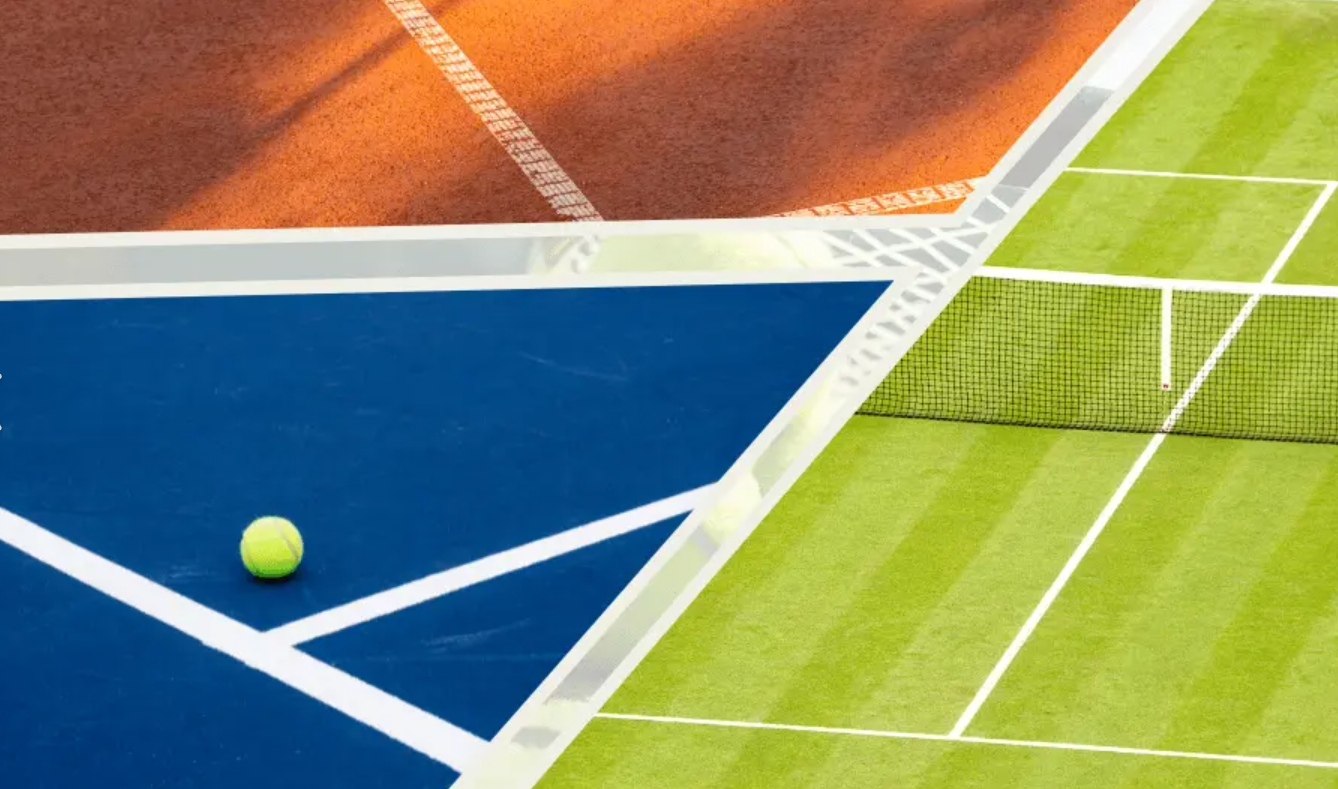
Numbers don't lie — and the numbers across these three surfaces are dramatic.This is also where private label tennis clothing suppliers often highlight surface-specific apparel benefits to brands targeting different player segments.
Hit the same ball at the same speed on all three courts. You get three very different outcomes. This isn't a small 5% difference. Grass vs. clay is like driving a sports car vs. riding a mule.
The Speed Gap Is Bigger Than You Think
Here's a simple way to picture it. A ball leaves a racket at 67 mph and lands on each surface:
Grass : The ball skids through with minimal speed loss — about 25–30%. It arrives at your feet fast, flat, and with almost no warning.
Hard court : Medium resistance, medium slowdown. You get a clean, no-surprises ball. What you see is what you get.
Clay : The ball loses 43% of its speed on contact. That same 67 mph shot arrives at 38 mph . The court itself absorbs the pace and slows everything down.
That clay number is worth a moment of thought. Close to half the ball's speed, soaked up by crushed brick. Physics isn't being subtle here.
Bounce Height: Where Clay Gets Strange
Speed and height are different things. On clay, they shift together in a way that changes rally patterns at a deep level.
The coefficient of restitution measures how much vertical energy a surface gives back to the ball. Clay sits at 0.85 — the highest of the three. It pushes the ball upward . A shot entering at 16° bounces back
Player Movement, Footwork & Physical Demands on Each Surface
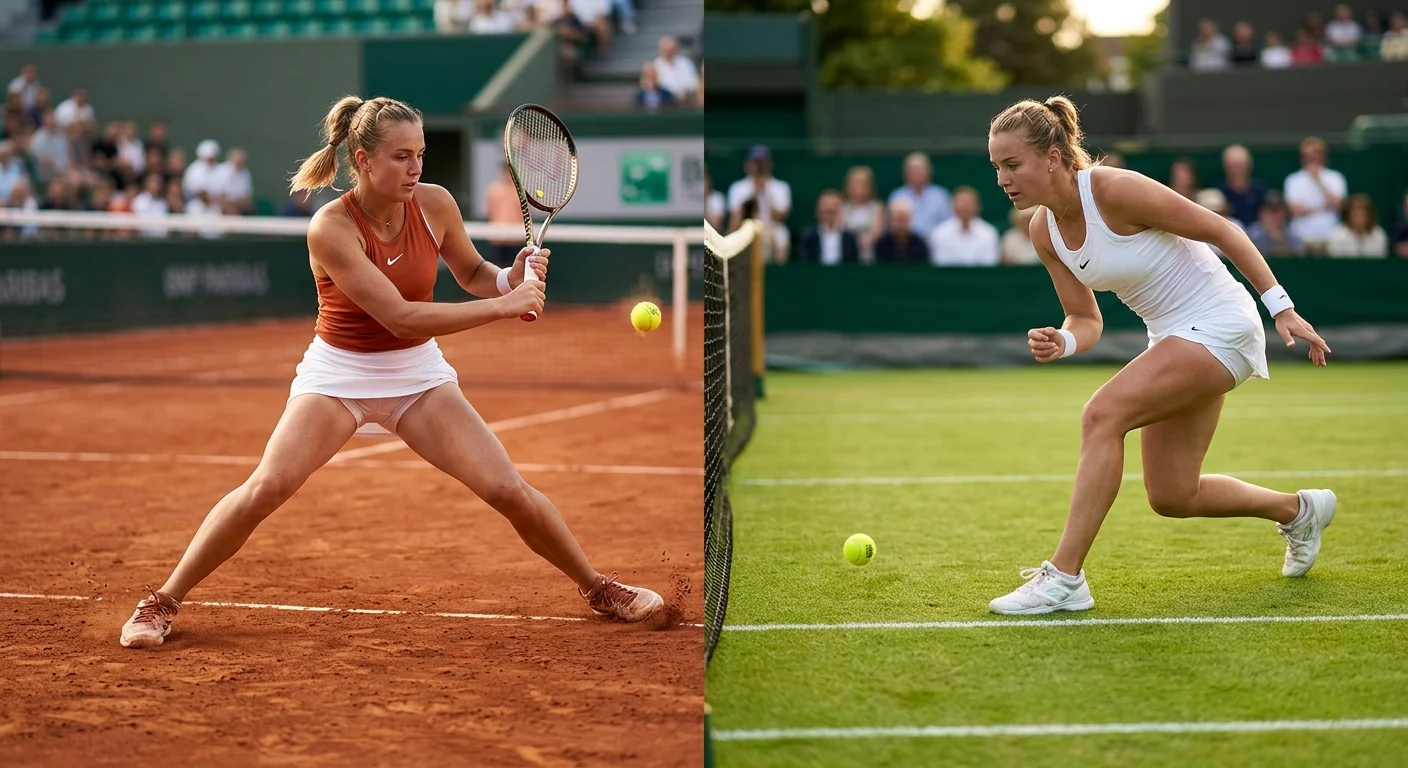
Your legs don't get a vote on which surface you play. The court decides — and each one makes very different demands on your body.Your movement changes with the court — and so should your gear, which is why tennis apparel factories continue developing surface-adapted designs.
Grass: Explosive Power, Controlled Chaos
Grass is the sprinter's surface. Points are short, sharp, and over fast. Low friction means your feet don't grip well. Footwork becomes a constant negotiation — short, quick adjustment steps, not big confident strides. You're not planting and driving. You're staying light, staying ready, and hoping your shoes don't betray you mid-point.
The main physical demand here is explosive power . Reaction speed, first-step quickness, and the ability to accelerate hard over two or three steps. Sprint and agility times are a bit slower on natural grass than on artificial surfaces — the ground doesn't give you as much back. Your muscles end up doing more work.
Clay: The Slow Burn That Burns You Out
Clay is a different athletic problem entirely. It doesn't punish explosive power — it just doesn't reward it either. What it rewards is endurance and tactical patience .
Rallies stretch long. Way longer. Your heart and lungs take the hit that your joints don't. The signature clay skill — the controlled slide — isn't just for show. It's smart body mechanics. You approach the ball with short, rapid steps, drop your center of gravity, slide into position, then push off. Do it wrong and you've got a twisted ankle. Do it right and it's an efficient way to cover ground without burning out.
Hard Courts: Your Joints Will File a Complaint
Hard courts are the easiest surface to move on. Traction is reliable. Bounces are predictable. Your footwork doesn't need to solve any puzzles.
But the price shows up later — in your knees and ankles. Hard surfaces send higher peak vertical impact forces through your body than clay does. Every sprint stop, every lateral cut, every landing after a jump — the court fires that energy straight back up through your legs. Clay absorbs a solid chunk of that shock. Concrete gives nothing back.
Surface | Primary Demand | Footwork Style |
|---|---|---|
Grass | Explosive power | Short, reactive, slip-aware |
Clay | Endurance + sliding efficiency | Controlled slide, low center of gravity |
Hard | Joint resilience | Predictable, high-impact |
Your body is dealing with three distinct sports across these surfaces. Knowing which demands matter for your game isn't just theory — it's the gap between training smart and grinding yourself into an injury.
Playing Style Advantages: Which Surface Suits Your Game?
Most club players miss a key fact: the surface doesn't just influence your playing style — it punishes the wrong one.
Each court has a preferred player type built into its physics. Show up with the wrong game, and the surface becomes your opponent.Each surface favors a different type of player — something custom tennis wear manufacturers increasingly align with performance-driven product lines.
Grass: Built for Aggressors Who Strike First
Grass rewards one thing above almost everything else: ending the point fast.
That 8mm of natural ryegrass keeps the ball low and skidding. Reaction windows shrink. Long baseline rallies become near-impossible — the ball doesn't sit up and wait. Big servers dominate here for a reason: the ace-to-double-fault ratio on grass runs 2.8x , the highest of any surface. Taller players hold a real edge too. They generate angles on serves and volleys that shorter opponents can't match.
Federer's 48 consecutive grass-court wins were no accident. His game was built for this exact environment — aggressive, fast, forward-moving, slice-heavy.
Grass rewards : Big servers, net-rushers, slice artists, first-strike tacticians.
Grass punishes : Defensive baseliners, topspin-heavy players, anyone who needs time to build a point.
Clay: The Long Game
Clay flips the whole equation. The surface gives time back to the defender. Pure aggression falls apart on it.
The ace-to-double-fault ratio drops to 1.7x . Serves matter less. Consistency matters more than anything. Topspin becomes a dominant weapon — the high friction grabs the ball and turns spin into steep, shoulder-height bounces that push opponents deeper and deeper behind the baseline. Shorter players also find real advantages here: lower center of gravity, quicker lateral movement, better stamina during the long sliding exchanges clay demands.
The most telling stat? Serve rating ties more to win rate on clay than on any other surface. Not because big serving takes over, but because even a small serve edge builds up across three-set, four-hour grind matches.
Nadal's 72-match clay winning streak and three-year unbeaten run didn't come from overpowering opponents. His game — relentless topspin, defensive retrieval, physical durability — was built for crushed brick.
Clay rewards : Topspin baseliners, endurance grinders, counter-punchers, patient tactical players.
Clay punishes : Flat hitters, serve-heavy players, anyone who depends on short, explosive points.
Hard Courts: The Surface That Doesn't Play Favorites
Hard courts stand out for one reason: they don't take sides.
Medium bounce. Medium speed. Medium everything. The link between winning percentage and any single skill — groundstrokes, serve, net play, return — is the weakest on hard courts compared to clay or grass. No single weapon gives you an outsized edge. Hard courts reward the player with fewer holes in their game, not the player with one big strength.
That's why hard courts host the majority of ATP and WTA matches worldwide. They're the most balanced surface. Fast variants favor first-strike offense. Slower variants lean toward defensive play. Across the middle range, all-court completeness wins.
Djokovic's hard-court record makes this point well. No single shot defines his game. The combination does.Balanced conditions make versatility king — which is why many brands working with an OEM/ODM tennis apparel factory focus on all-court performance collections.
Hard courts reward : Complete all-court players, consistent ball-strikers, tactical flexibility.
Hard courts punish : One-dimensional specialists who can't adapt once their main weapon gets neutralized.
Surface | Best Suited For | Biggest Disadvantage For |
|---|---|---|
Grass | Aggressive servers, net players | Defensive baseliners |
Clay | Topspin grinders, endurance players | Flat-ball hitters, serve-dominant players |
Hard | All-court balanced players | Pure specialists with obvious weaknesses |
There's no single "best" surface for every player. There's the surface that fits your game. Figuring out which one that is may be the most useful strategic decision you make as a tennis player.
Best Tennis Court Surface for Beginners vs. Advanced Players
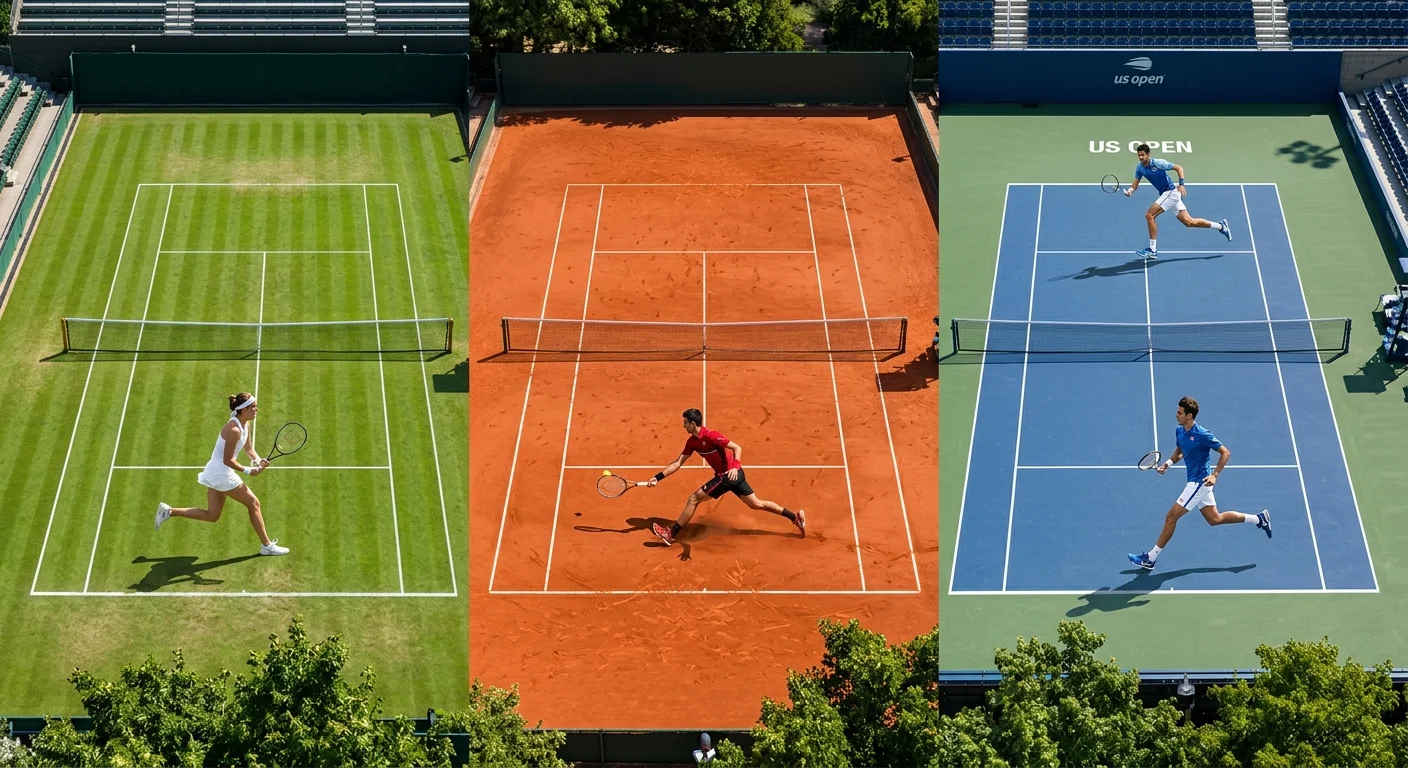
Skill level changes everything about which court helps you improve — and which one works against you.
Beginners: Start on Hard Courts
Hard courts are the honest surface. The bounce is consistent. The ball does what you expect. So you can focus on learning real tennis instead of solving surface puzzles. No sliding footwork to master. No unpredictable kick sends the ball flying past your shoulder.
The numbers back this up. Djokovic wins 84.05% of his hard-court matches. Alcaraz wins 77.27% . Hard courts reward consistent groundstrokes and punish unforced errors. Those are the core skills every beginner needs to build first. Also, the vast majority of ATP matches are played on hard courts. You're training on the surface most competitive tennis uses.
Advanced Players: Match the Court to Your Weapon
Build a real game first. Then surface selection becomes a strategic choice.
Topspin baseliners and grinders : Clay is your laboratory. Rallies run twice as long as on hard courts. The bounce sits 10–20% higher. The surface forces you to earn every point through consistency and stamina. Nadal's 72-match clay winning streak wasn't a mystery — it was a physics match.
Big servers and aggressive first-strikers : Grass or hard courts amplify your weapon. The ace-to-double-fault ratio hits 2.8x on grass — compared to just 1.7x on clay. Taller players gain a structural edge through serve angles alone.
Cross-training path : Many serious players follow the Grand Slam calendar on purpose — hard (Australian Open) → clay (Roland Garros) → grass (Wimbledon). Each surface exposes a different weakness. That exposure is the point.
Starting on clay as a beginner isn't wrong. But it makes the game harder than it needs to be. You won't be ready for that difficulty to teach you anything useful yet.
Clay vs. Grass vs. Hard Court: Injury Risk & Joint Health Considerations
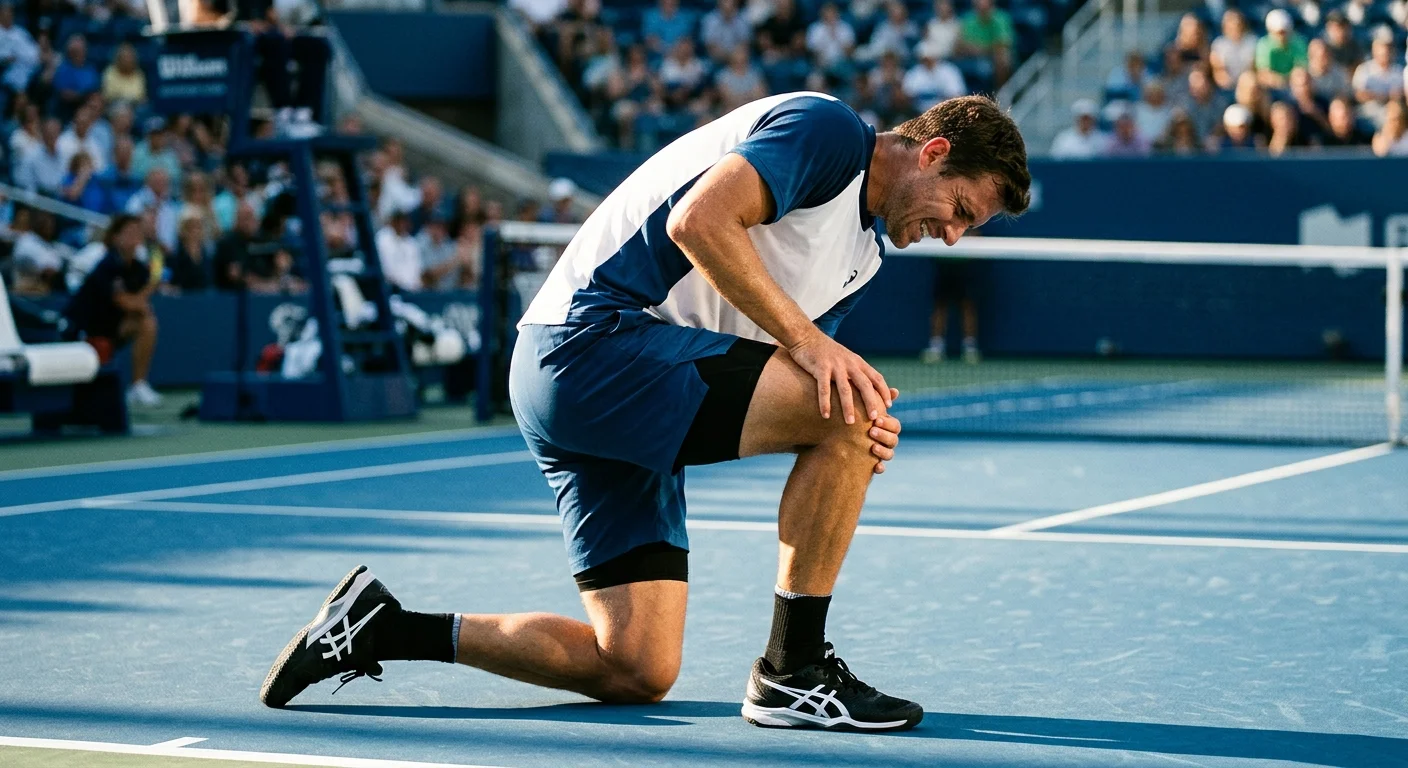
Here's something the tennis world doesn't talk about enough: 56% of injuries on hard courts hit the lower extremities . On clay, that number drops to 38%. That's not a rounding error. Your knees and ankles take a real beating every time you sprint and stop on concrete.
Hard Courts: The Slow Accumulation Problem
Hard courts don't injure you in one dramatic moment. The damage builds up over months. The surface is stiff. Every point, every session — impact energy shoots straight back up through your feet, ankles, knees, and lower back. The result is a familiar list: patellar tendinopathy, ankle overuse, chronic lower back tightness. 75% of ATP injuries occur during the hard-court season — which is also the longest season on tour. That's no coincidence.
Clay: Protective Until It Isn't
Clay is easier on your joints. Sliding spreads deceleration forces across time and distance. Your body doesn't absorb one sharp, sudden stop. Roland Garros records the lowest injury rate of any Grand Slam . Your knees and lower back both benefit from that.
The catch? Slide wrong — plant your foot instead of letting it glide — and you walk away with an acute ankle twist.
Gear That Matches the Surface
Your shoes matter more than most players realize:
Hard courts : Maximum cushioned midsoles, knee/ankle bracing for chronic load
Clay : Low-profile clay-pattern soles built for controlled sliding
Grass : High-traction small-lug patterns designed for quick lateral pivots
Across all three surfaces, 80% of tennis injuries are overuse injuries , not accidents. The surface shapes how that overuse builds up. The right gear slows that process down — and that difference adds up over a full season.
Tennis Shoes & Apparel for Different Court Surfaces (Gear Matching Guide)
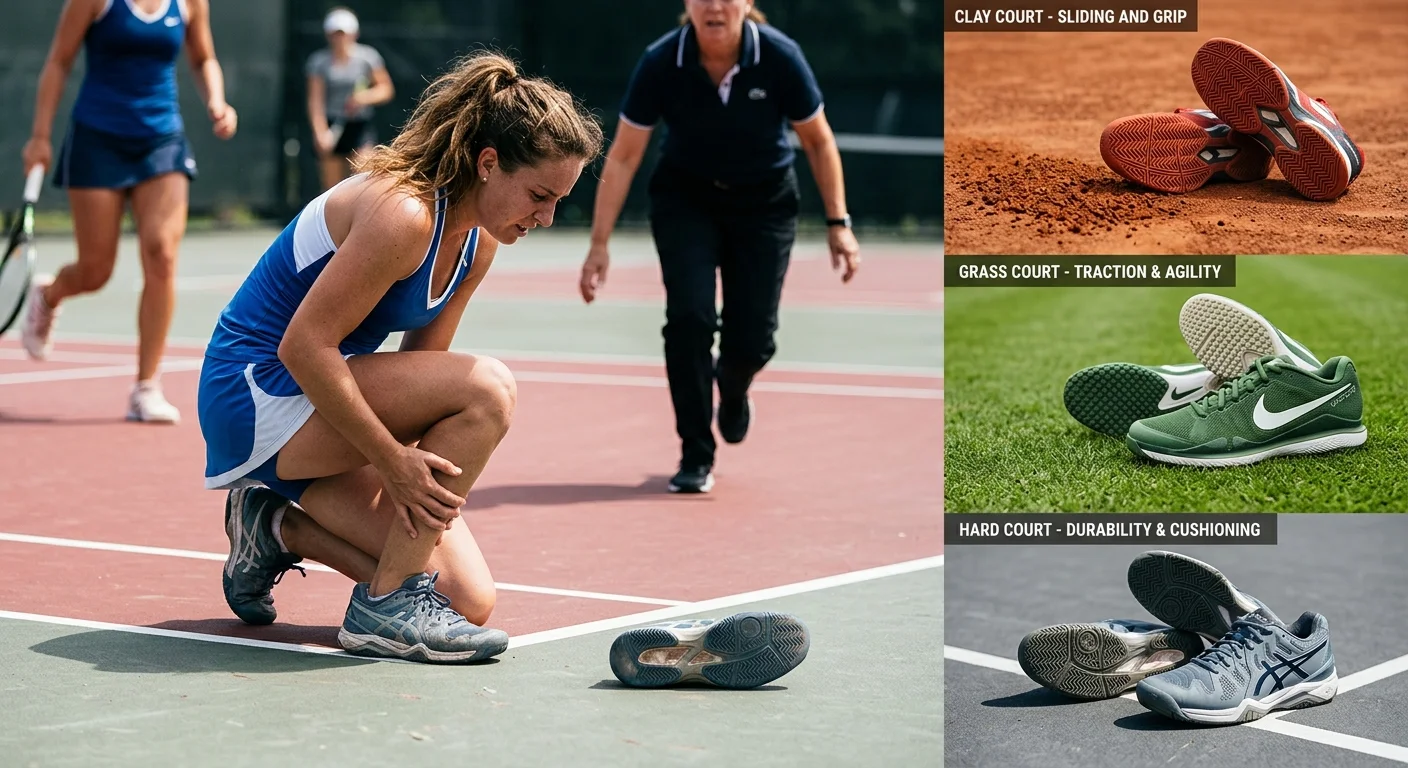
Somewhere out there, a club player is slipping on grass courts. They wore their hard-court shoes. Their ankles are fine — this time. But that mistake was one bad step away from something worse.
The right shoe isn't a preference. It's a surface-specific tool. Put the wrong one on, and the court wins.
The Outsole Is Everything
Each surface needs a different tread pattern. The differences are structural, not cosmetic.
Clay courts need a full herringbone pattern . Those deep, interlocking grooves grip loose clay particles during lateral movement. Then they push the clay back out so it doesn't pack in and kill your traction mid-slide. The upper mesh sits tighter than other court shoes. Nobody wants crushed brick working its way into their foot during a four-hour match.
Grass courts flip the entire logic. A herringbone pattern tears up the turf and gives you almost nothing back. Grass shoes use small rubber nubs or pimples — a flat, studded outsole that bites into slick natural grass without damaging it. The profile sits low. Lateral stability matters more than cushioning here. Points are short and explosive. Your feet need to pivot fast .
Hard courts are the brute-force problem. Asphalt and acrylic eat outsoles alive. Hard-court shoes use a modified herringbone pattern in durable, abrasion-resistant rubber . Some models come with a 6-month outsole guarantee because the wear rate is that aggressive. They also pack in more cushioning than any other tennis shoe. That extra foam isn't comfort padding. It's a joint protection system built to last an entire season.
What Happens When You Get It Wrong
This part matters more than most players realize:
Clay shoes on hard courts : The softer rubber wears down fast. Traction turns unpredictable. Your slip risk climbs.
Grass shoes on hard or clay : The nubbed outsole wasn't built for abrasion or lateral clay slides. Your joints absorb more shock than they should.
Hard-court shoes on clay : The modified herringbone grabs too much. Your controlled slide turns into a planted stop — and that's how ankles get twisted.
Shoe mismatch isn't just a gear problem. It's how overuse injuries get started.
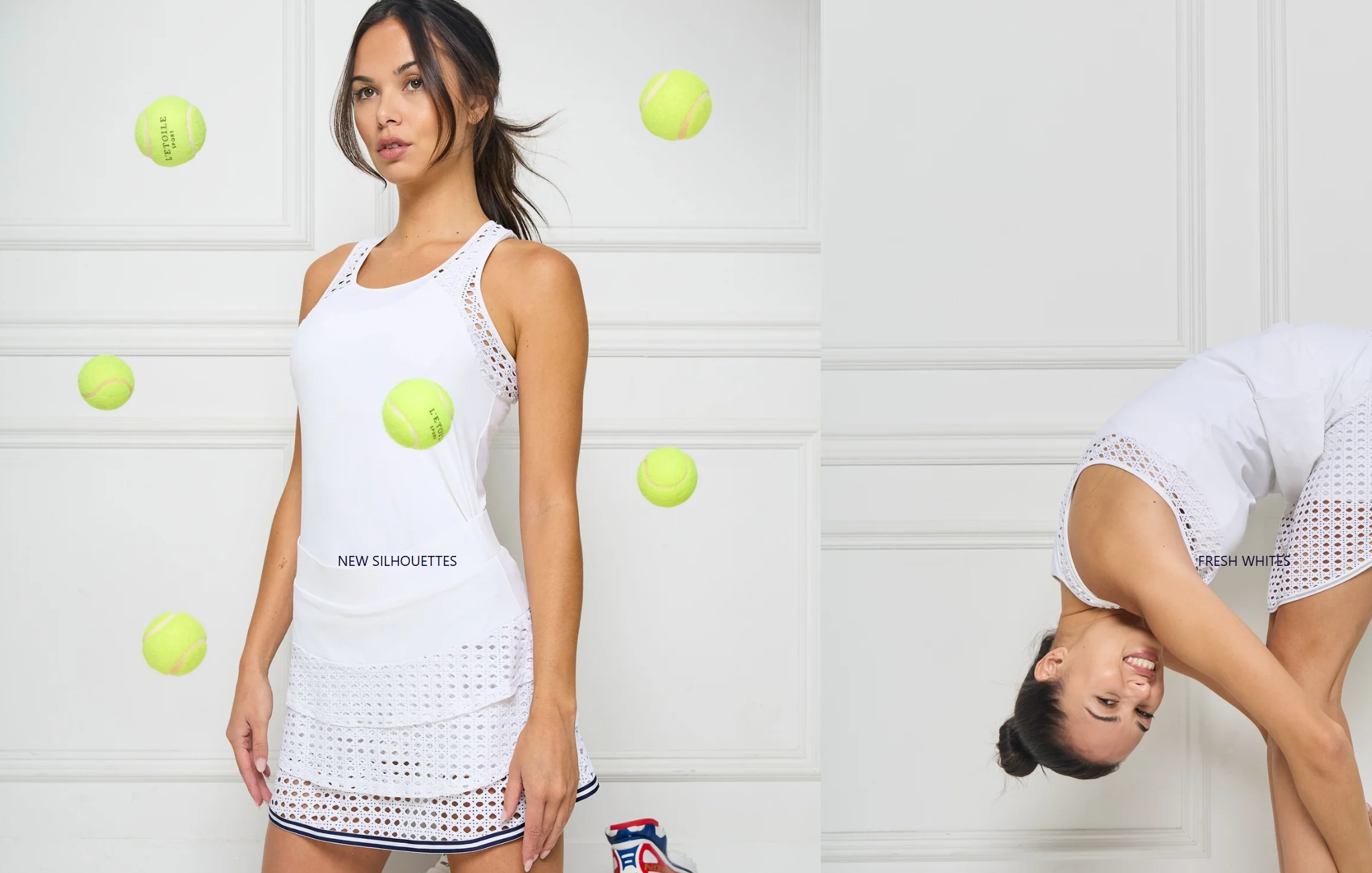
Apparel: Three Surfaces, Three Different Problems
Shoes get all the attention. Apparel gets ignored — until you're soaked through a clay marathon in the wrong fabric.
1.Clay : Long rallies mean prolonged sweating. You need moisture-wicking fabrics with real breathability. Go for a loose fit that doesn't restrict your sliding range of motion. Bad fabric loses the match before your legs do.
2.Grass : Points end fast. The focus shifts to lightweight, flexible materials that don't slow down quick direction changes. Keep bulk low. Nothing should catch air or restrict your shoulder rotation on a serve.
3.Hard : Impact adds up over time. Some cushioned layering helps. Durable fabrics that resist court abrasion make a real difference — hard courts grind down everything, and your clothing takes a hit too.
The Rotation Rule
Serious players keep two to three pairs in rotation . Hard courts burn through outsoles faster than any other surface. Rotating pairs stretches each shoe's useful life by a clear margin. It's not an extravagance. It's basic equipment maintenance for a sport that puts your joints on the line every session.
Need tennis apparel built for these demands? berunclothes.com carries a range made for each surface — breathable fabrics for clay grinding, lightweight cuts for grass-court movement, durable performance wear for hard-court seasons. The gear won't fix your backhand. But it will stop the surface from working against you before the match even starts.
Maintenance, Availability & Cost: Practical Considerations for Court Choice
Choosing a court isn't just about physics — it's about logistics. And the gap between surfaces is huge.
Hard courts win on every practical metric. Maintenance runs cheap: ~$5,000–$10,000 per court per year. You just need a sweep each week and a resurfacing every 5–7 years. That's it. They make up 70–80% of courts worldwide . Indoor hard courts have grown 40% since 2010. ATP pros train on them almost exclusively — there's a 90% chance your off-season block happens on one. Hard courts don't care about seasons. They're always open.
Clay sits in the middle — on price and on the map.
1.Annual upkeep: $20,000–$40,000 per court
2.Needs rolling several times a week
3.Requires seasonal resurfacing
4.Most courts sit in Europe and South America
Outside those two regions, quality clay is hard to find. Not rare in theory — rare in practice.
Grass is in a category of its own. You get maybe 3–4 usable months per year. Costs can reach $50,000–$100,000 per court each year. That covers daily watering and precision mowing three to five times a week. It's less a playing surface and more a full-time gardening operation that fits in some tennis. Around 80% of players who want grass training have to relocate to access it.
The bottom line: most players will spend most of their tennis lives on hard courts. Not because it's the perfect surface — but because it's the one that's actually there. Build your training plan around that reality.
Verdict: Which Tennis Court Surface Is Best for You?
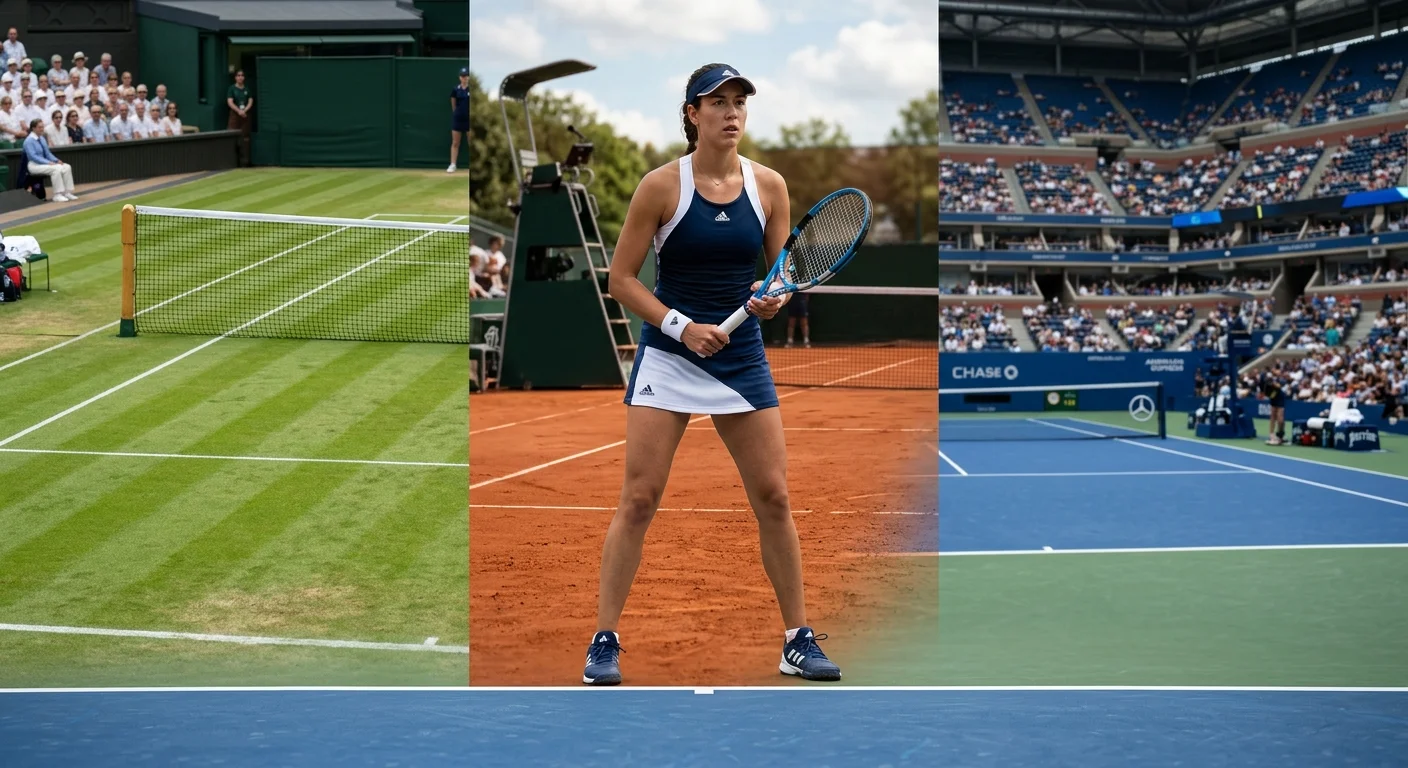
No surface is the best choice for everyone. There's only the surface that fits your playing style, physical condition, and training goals.
Here's a simple decision guide that works:
1.You hit big and attack early? Go with grass or hard courts. Your weapons get stronger there. Clay will cancel them out.
2.You grind from the baseline and love long rallies? Clay is your surface. The physics work with you, not against you.
3.Your knees are already giving you trouble? Start with clay, then hard courts. Concrete is tough on joints — it gives nothing back.
4.You're still building your game? Hard courts. Master the basics of tennis first. Surface management comes later.
5.You play wherever courts are available? Hard courts — they make up about 80% of what's out there.
The surface isn't just a preference. It's a real variable. The right one pushes your strengths forward. The wrong one chips away at them, point by point, match by match. Choose based on what you actually need, not what looks appealing.
Conclusion
Here's what most tennis guides won't say out loud: there is no single "best" court surface. There's only the one that fits you — your level, your body, your game right now.
Clay rewards patience and smart play. Grass punishes hesitation and favors aggression. Hard courts don't play favorites — they just show you exactly where you stand.
Beginner? Start on hard courts. Build real fundamentals. Knees aching after every session? Clay takes pressure off your joints and could keep you playing longer. Got a big serve that nobody can touch? Get on a grass court. Fast.
The surface you train on shapes who you become as a player. Your footwork. Your instincts. Your injury history. Even the shoes on your feet.
That's why the right gear matters too. Court-specific apparel isn't a nice-to-have — it's part of how you play. Check out berunclothes.com for tennis gear built for every surface you'll ever step on.
Now stop reading. Go play.