Every golfer has stood in the golf store aisle, holding two almost identical-looking balls, asking the same question: does the difference matter ?
It does — more than most people think.Even for performance golf apparel manufacturers, the answer is clear — every detail in golf performance, from equipment to apparel, affects results.
Losing distance off the tee? Struggling to hold greens? Never getting that satisfying click off the clubface? The fix might be as simple as switching between a soft or hard golf ball.
Golf ball compression rating, spin, feel, construction — these aren't just words on the packaging. They shape every shot you hit. This guide breaks down what separates the two, and helps you figure out which one belongs in your bag.
Soft Golf Balls: Performance Breakdown
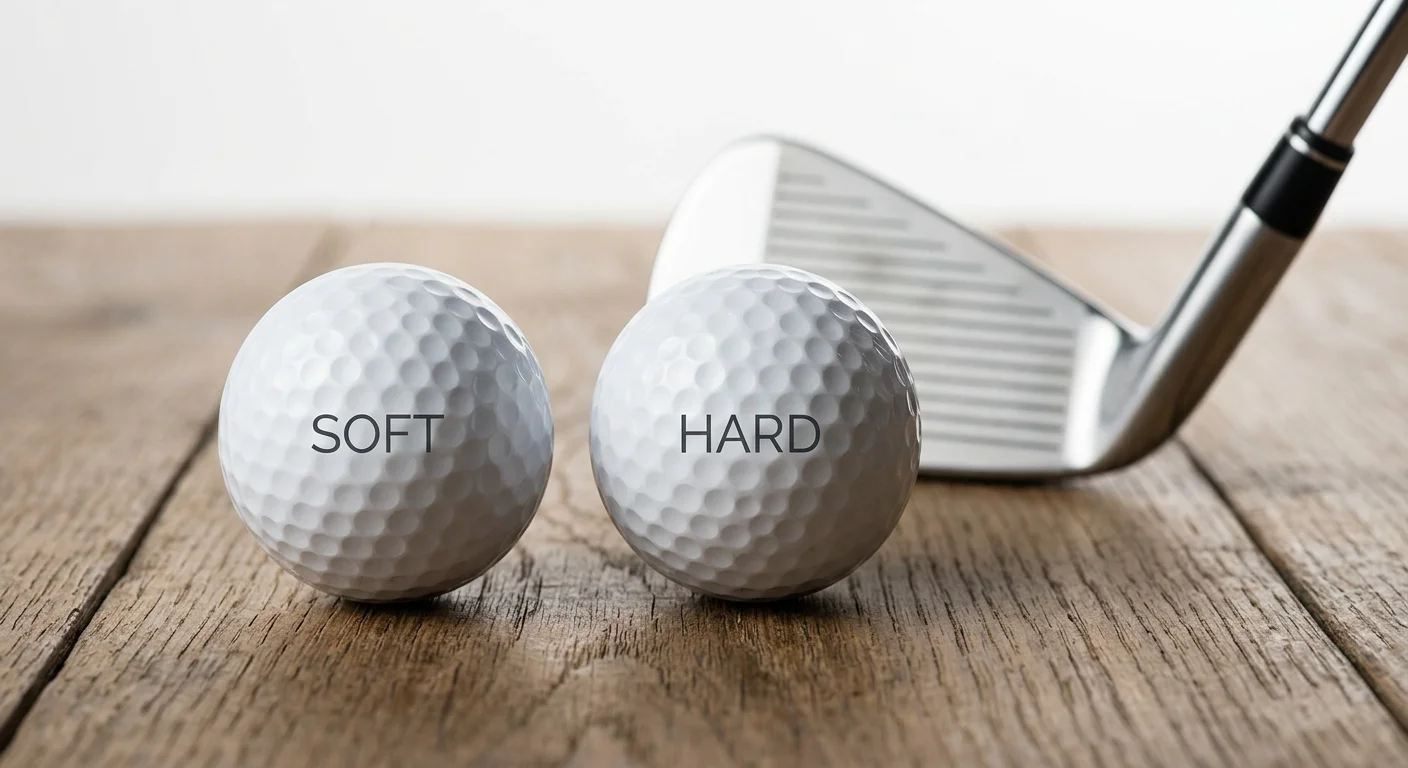
Soft golf balls are designed for efficiency — something high-quality golf clothing suppliers also focus on when optimizing comfort and performance for everyday players.Soft golf balls are built around one central idea: give the ball less resistance, and it does more of the work for you.
The science comes down to golf ball compression rating . Soft balls sit in the 50–70 compression range . That means they compress more on impact. Golfers with swing speeds under 100 MPH — and those under 90 MPH in particular — get real, measurable results from that extra compression: longer carry distance, a higher launch angle, and a more stable ball flight .
At slower swing speeds, a low compression golf ball doesn't just feel better — it performs better. Models like the Srixon Soft Feel , Callaway ERC Soft , and Titleist Tour Soft all sit around 60–65 compression. Each one is built for swing speeds under 80 MPH. You get more loft with less effort, less side spin off the driver, and wayward shots that stay in play instead of turning into big numbers.
Where Soft Balls Shine: The Short Game
Here's where it gets interesting. Soft balls produce higher wedge spin rates than harder balls. So you get more stopping power on approach shots. Chips and pitches are easier to control. The feel on the putting green is more responsive too. For high-handicap players and seniors, this package — distance help and short game control — is hard to beat.
The One Real Limitation
Swing speed changes everything. Push past 100–105 MPH on a regular basis, and soft balls start working against you. The same compression that helps slower swingers creates reduced energy transfer at higher speeds. You lose distance. The ball can feel almost spongy off the face. At that point, a high compression golf ball is the smarter pick.
Hard Golf Balls: Performance Breakdown

Hard golf balls are built for power — a concept closely aligned with breathable golf wear factory for all conditions designs that support high-intensity play.60% of tour professionals put a high-compression ball in their bag every single week. It isn't loyalty to a logo. It's physics.
Hard golf balls sit in the 90–120 compression range . That high compression means less deformation on impact. For golfers swinging a driver above 95–105 MPH , that's what you want. Less deformation keeps more energy in the ball. More energy means more speed off the face. At high swing speeds, you gain 5–8 extra yards of total distance compared to softer balls.
The trade-off is simple to understand. Hard balls produce a lower launch angle and shorter carry through the air. What you get instead is greater roll after landing . At fast swing speeds, that extra roll is what adds total distance. It's not a high arc through the sky. It's a flat, controlled ball flight that keeps running after it lands.
The Balls Pros Play
The top high-compression options on the market right now:
Ball | Construction | Compression | Recommended Swing Speed |
|---|---|---|---|
Srixon Z-Star XV | 4-piece | ~100 | 105+ MPH |
Callaway Chrome Soft X | 4-piece | ~90 | 95+ MPH |
TaylorMade TP5X | 5-piece | ~90 | 95+ MPH |
Titleist Pro V1x | Multi-layer | 90+ | 95+ MPH |
Lower driver spin. Flat trajectory. Maximum roll. That's the hard ball promise — and at the right swing speed, it delivers.
Hard Balls Can Work Against You
Give this ball to someone swinging under 85 MPH, and the whole equation flips. The responsive feel disappears. Golfers describe it as hitting a rock — stiff, dead, with almost no feedback. On top of that, hard balls build up side spin at slower speeds. Slices get worse. Hooks go wilder.
Cold weather makes it worse. Low temperatures make the ball harder. That cuts compression efficiency — even for players who swing fast in normal conditions.
Hard balls reward speed. No speed means you carry all the downsides and get none of the benefits.
Head-to-Head Comparison: Soft vs Hard Golf Balls (Key Metrics)
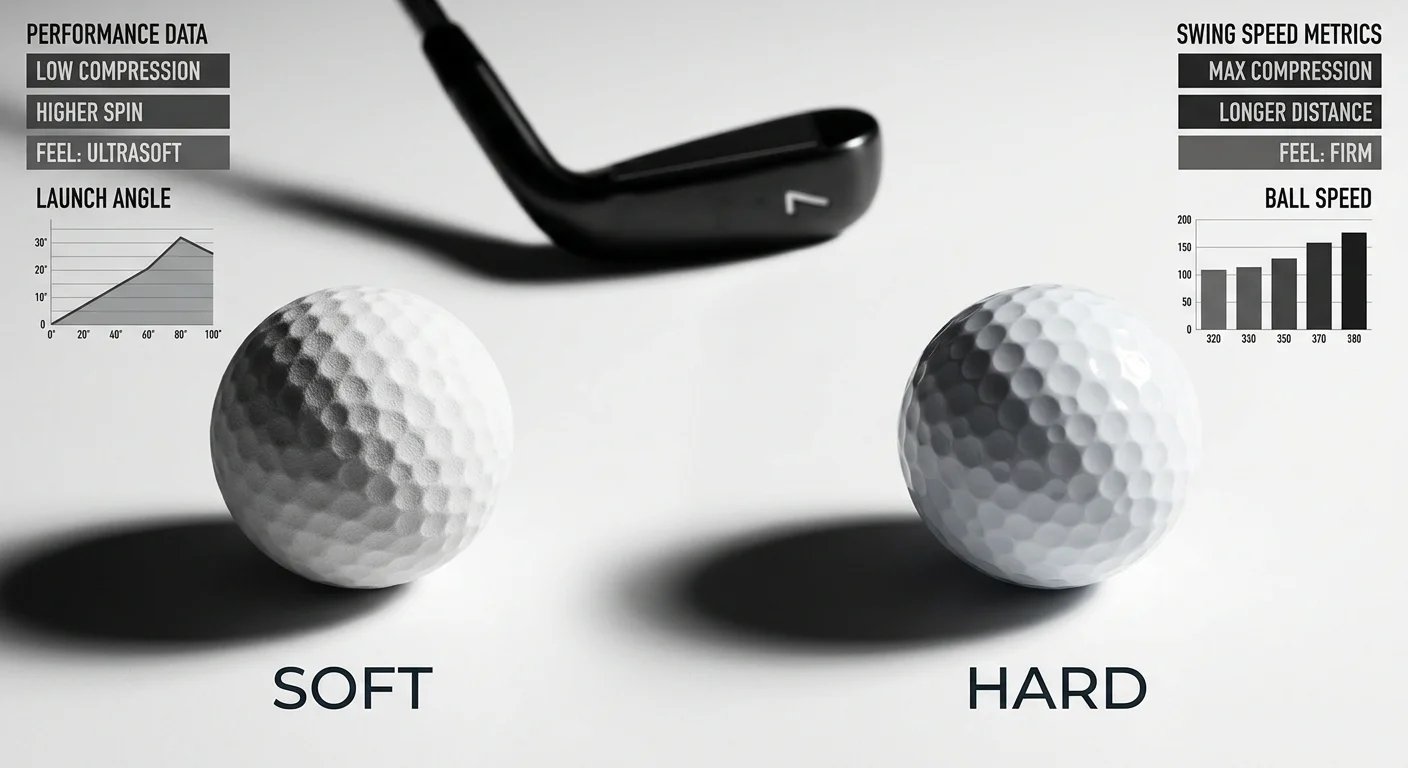
Side-by-side, the differences become clear — just as private label golf clothing suppliers differentiate product lines based on player performance needs.Put both balls side by side. The numbers tell the whole story.
Metric | Soft Golf Balls | Hard Golf Balls |
|---|---|---|
Compression Rating | Low (under 70–80) | High (90 and above) |
Feel Off the Clubface | Soft, responsive, smooth | Firm, solid, immediate |
Ideal Swing Speed | Under 95 MPH | 95+ MPH |
Driver Spin | Lower | A bit higher (tour-level) |
Wedge & Short Game Spin | Higher — more green-side control | Lower — less stopping power |
Ball Flight | Higher loft, longer carry | Flatter trajectory, shorter carry |
Landing Behavior | Stops fast on the green | Greater roll after landing |
Best For | Beginners, seniors, finesse players | Power hitters, low handicaps |
Durability | Moderate | High |
What the Numbers Mean
Two things drive every difference in that table: compression and spin .
Soft balls compress more on impact. That compression creates a responsive, cushioned feel off the clubface — the kind average golfers prefer. It also pushes wedge spin higher, giving you more short game control. Hard balls don't compress the same way. They keep energy moving forward instead of soaking into the ball. That's the source of the distance advantage at higher swing speeds.
Spin breaks down by shot type. Soft balls give you higher spin on wedges . You can stop the ball on the green, create backspin, and attack the pin. Hard balls give you lower spin around the greens . You trade that short game control for a more piercing ball flight off the driver.
Landing behavior is the part most players overlook. Soft balls carry further through the air. Once they land, they stop fast. Hard balls carry a shorter distance. After touchdown, they roll out much further. That extra roll is how fast swingers pick up those added yards of total distance.
Here's the short version: soft balls are built around feel and precision . Hard balls are built around energy transfer and distance . One isn't better than the other. They suit different swings.
CTA 1Need Custom Golf Apparel for Your Brand?
BeRun Sports offers OEM/ODM golf clothing manufacturing with low MOQ, premium fabrics, and fast turnaround. Get a free quote today.
Request Free QuoteWhich Golf Ball Should You Choose? Matching Ball to Your Swing
It comes down to three numbers: your swing speed, your handicap, and an honest read on where your game stands right now.
Here's a simple framework. Find yourself in one of these four categories, and the choice falls into place.
Match Your Swing Speed First
Swing speed is the starting point. Everything else follows from it.
Under 85 MPH — Go soft, go low-compression.
This is the Callaway Supersoft's territory. Two-piece construction keeps spin low and launch high. Slower swingers get the carry distance a harder ball just won't deliver. Seniors and women golfers averaging 70–90 MPH tend to see their best results here. You get more launch, more carry, and a feel off the face that rewards the swing you have — not the one you wish you had.
85–95 MPH — Mid-compression is your sweet spot.
You've got enough speed to work the ball. No need for a tour-level rock. The Callaway Chrome Soft gives you a soft urethane cover with real spin on approach shots. The Titleist Pro V1 fits here too — lower spin, control-focused, and forgiving without dumbing things down. This range gives you distance off the tee and touch around the greens.
95–105 MPH — Multi-layer construction earns its price tag here.
The Titleist Pro V1 holds up at the lower end of this range. The Srixon Q-Star Tour deserves a serious look for mid-handicappers who want distance and greenside spin without paying full tour-ball prices.
Above 105 MPH — High compression, full stop.
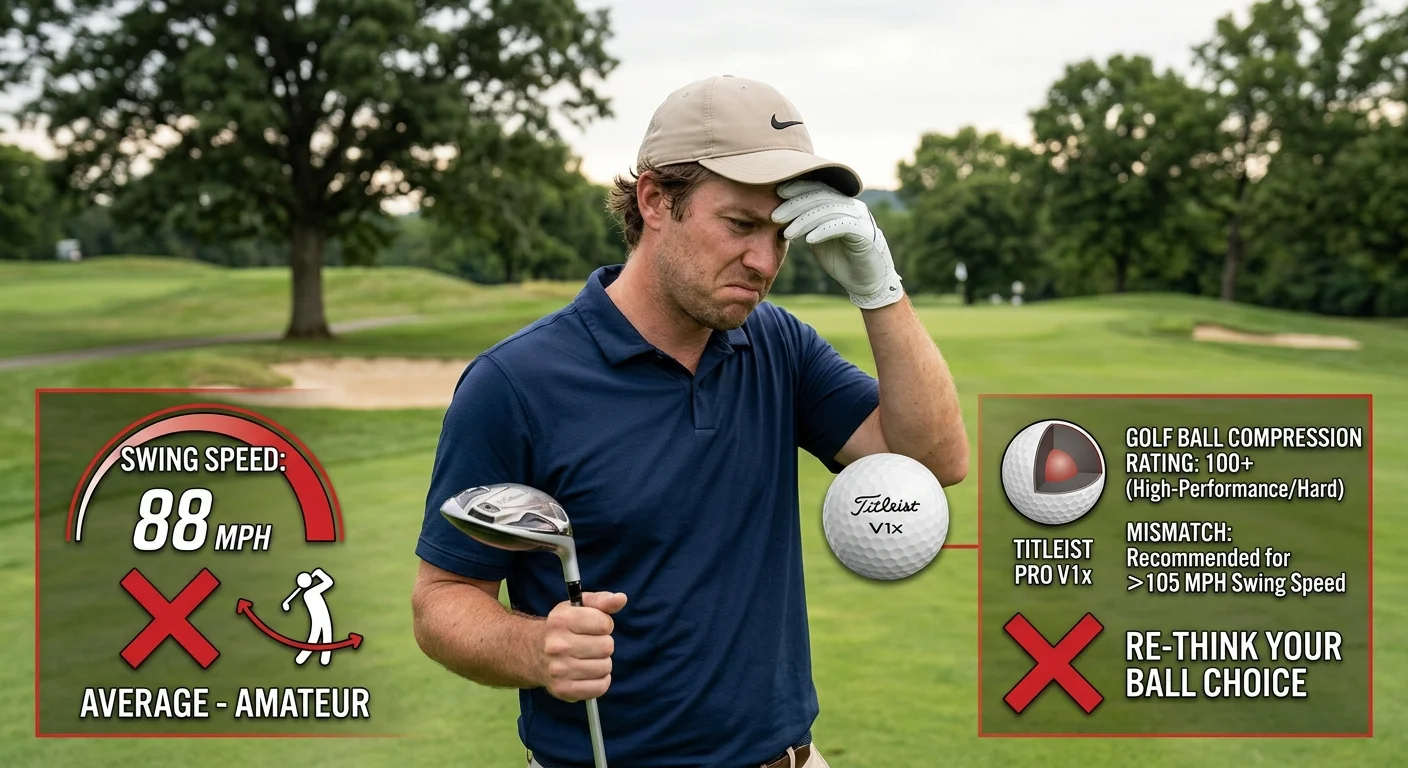
The Titleist Pro V1x and TaylorMade TP5 are built for this speed. You get a firmer feel, higher spin off wedges, and the structure to handle repeated high-velocity impact without losing energy. At this speed, a soft ball isn't just the wrong choice — it's working against you.
Then Layer In Handicap and Feel
High handicap (20+): Put forgiveness first. Low-spin, two-piece balls — the Supersoft, the Bridgestone e12 Speed — keep mishits in play and scores under control.
Mid handicap (10–20): You need both distance and short-game control. A three-piece mid-compression ball like the Chrome Soft or Srixon Z-Star gives you distance off the driver and enough greenside spin to attack pins with real confidence.
Low handicap (under 10): Short-game spin is the deciding factor. Four and five-piece urethane-cover balls — Pro V1x, TP5 — give you the shot-shaping control and stopping power that scoring at this level demands.
The 30-Second Self-Test
Not sure where you land? Answer these three questions in order:
What's your driver swing speed? Under 85 → Supersoft or similar two-piece. 85–105 → Chrome Soft or Pro V1. Over 105 → Pro V1x or TP5.
What's your handicap? High → favor low-spin forgiveness. Low → favor greenside spin control.
What feel do you prefer off the clubface? Soft and responsive → stay low-compression. Firm and immediate → move up.
Where all three answers point — that's your ball.
Best Soft Golf Balls Worth Trying
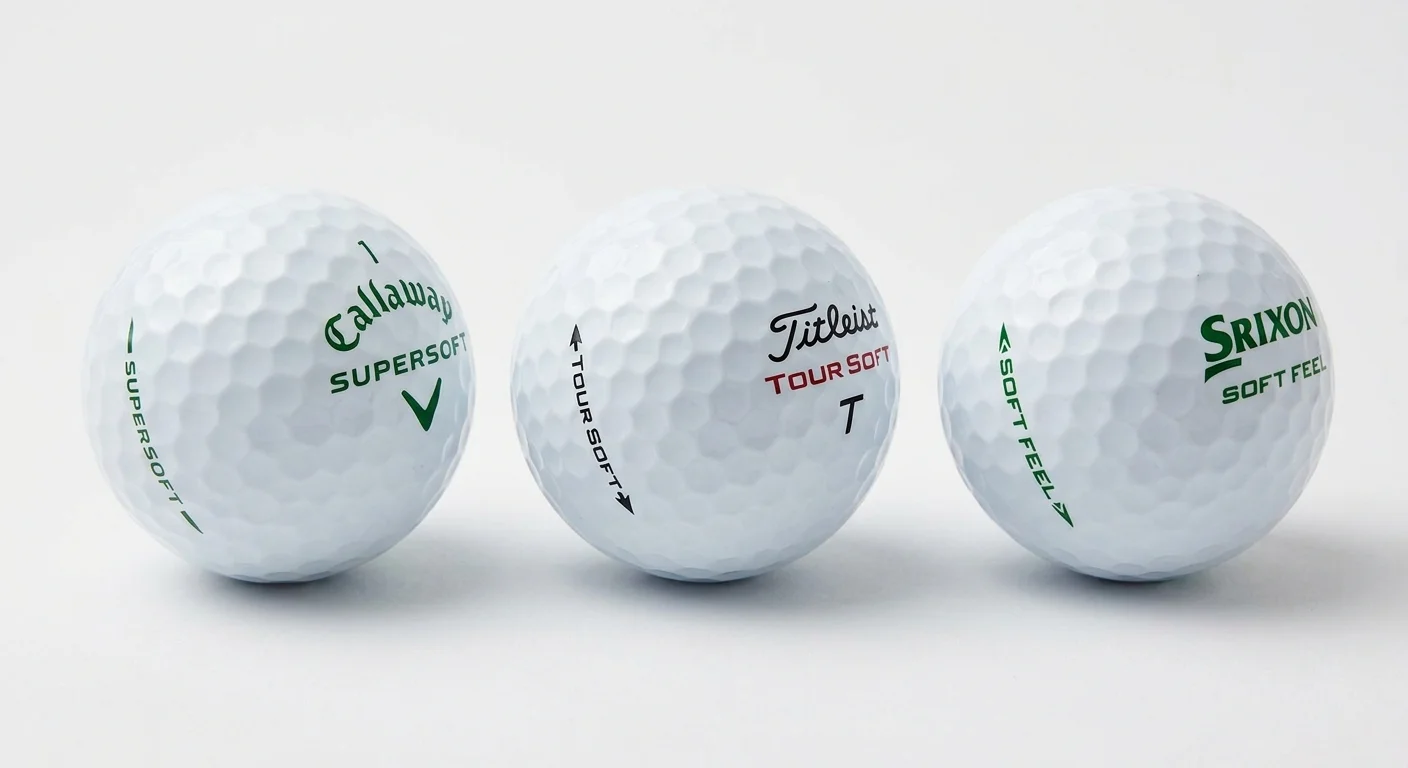
For most players, three models consistently deliver — much like how custom golf apparel for different playing styles caters to different performance needs.The soft golf ball market is crowded — but three options keep rising to the top, no matter who you ask.
The Core Three
Callaway Supersoft (2025) is the go-to starting point for slower swingers. Ultra-low compression means it responds well at swing speeds under 90 MPH. That's the range where most beginners and seniors play. It doesn't sacrifice short-game feedback to get there — and that's what sets it apart from cheaper options. Chips feel real. Putts roll true. Plus, the price won't hurt when you watch one splash into a water hazard.
Titleist Tour Soft steps up in feel and precision. It's built for swing speeds between 85–100 MPH. You get that gold-standard Titleist feel without paying Pro V1 prices. Want solid, premium performance from a soft ball but can't justify tour-ball spending? This sits right in the middle — better feel than budget balls, lower cost than tour options.
Srixon Soft Feel is the high-handicapper's go-to companion. At around 80 compression, it handles moderate swing speeds (80–95 MPH) with no fuss. Short-game feedback stays predictable rather than flashy. Chips behave. Approach shots roll smooth. The cover also holds up against scuffing longer than most balls in this price range.
Budget Soft Balls: A Simple Price Guide
Price Per Ball | Best Pick | Right For |
|---|---|---|
Under $1.50 | Amazon Basics Core Soft | Casual rounds, zero performance pressure |
$1.50–$2.50 | Srixon Soft Feel, Noodle Long & Soft | High handicappers needing durability on a budget |
$2.50–$3.50 | Callaway Supersoft, Wilson Duo Soft | Swing speeds under 90 MPH wanting solid short-game feel |
Soft Feel Without Losing Distance
Some golfers worry that going soft means giving up distance. That's a fair concern. The TaylorMade Tour Response and Vice Pro Air tackle that problem head-on — both for moderate-to-faster swing speeds. You get a genuine soft feel, and ball speed through impact stays strong. The TaylorMade TP5 earns top marks on Trackman for both distance and feel. It's the premium pick for golfers who refuse to trade one for the other.
Best Hard Golf Balls Worth Trying
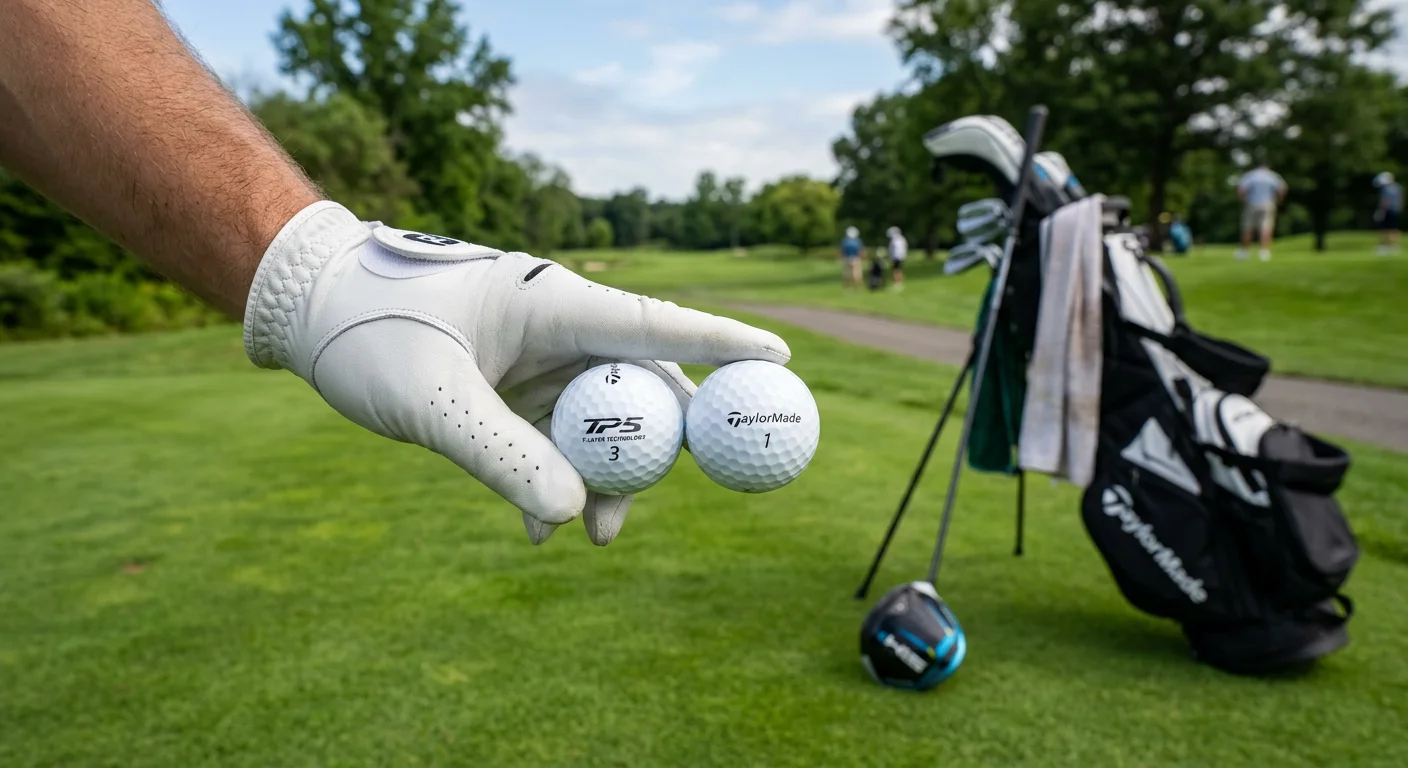
Hard balls require the right swing speed — just as OEM/ODM golf apparel production services tailor products to advanced players.Three things separate a good hard ball recommendation from a useless one: the right compression, the right construction, and an honest answer about whether you should be playing one at all.
The Five Worth Your Attention
Titleist Pro V1x is the starting point for any serious conversation about hard balls. It's not hype — it's the benchmark everything else gets measured against. High swing speed, urethane cover, multi-layer construction. Low handicappers reach for it because it responds the way a skilled player expects: precise, consistent, and demanding in the best possible sense.
Callaway Chrome Soft X is the one that surprises people. In MyGolfSpy's independent testing across 47 ball models, it ranked among the longest on the market. It also held higher spin rates — a combination most balls can't pull off. One real caveat: driver spin runs high. Moderate-swing players won't get what faster swingers do. Speed matters here.
Srixon Z-Star XV is built for swing speeds above 105 MPH. Maximum distance, maximum spin in all conditions. It's straightforward about what it does.
TaylorMade TP5x gives power hitters the high-launch, low-spin flight they want off the tee. Five-piece construction. Carry numbers on Trackman are strong.
Bridgestone Tour B X earns its spot through consistency under pressure. That's why you'll find it in plenty of professional bags.
One Thing to Settle Before You Buy
Hard balls are not always better. They need swing speed to work. Below 90 MPH, a compression mismatch kills your distance advantage. You end up with a ball that feels stiff and reacts in ways you don't expect. Sitting in that moderate swing speed range but still want solid performance? Titleist Tour Speed or the Wilson Triad give you far better value — no penalties from a mismatched compression rating.
CTA 2Looking for a Reliable Golf Clothing Manufacturer?
From performance polos to breathable shorts, BeRun Sports manufactures custom golf apparel that matches your brand vision. 30+ years of expertise.
Explore Golf ApparelFAQ: Common Questions About Soft vs Hard Golf Balls
The same questions come up again and again — in pro shops, on first tees, in online forums at midnight before a Saturday round. Here are honest answers to the ones that matter most.
Do soft golf balls go further?
For most recreational golfers, yes. Swing speeds under 95 MPH get real, measurable carry distance from a low compression golf ball. That's up to 5–8 yards more than a harder ball. The Callaway Supersoft outperformed the Chrome Soft X in both fairways hit and total distance for 90 MPH swings. Less side spin means fewer slices drifting into the trees.
Are soft golf balls better for beginners?
Yes — and for a clear reason. Soft balls are more forgiving on off-center hits. They lose less ball speed on mis-hits. That extra margin of error makes a real difference while you're still building consistency.
Do pros use soft or hard golf balls?
Most tour players swing above 105 MPH. They reach for high compression balls — Pro V1x, Chrome Soft X. The firmer core handles that speed without going spongy. Ultra-soft balls simply can't keep up at elite swing speeds.
Does weather affect golf ball hardness?
More than most people realize. Below 50°F, hard balls get even harder to compress. Distance drops. Feel gets stiff. Soft, low compression balls hold up far better in cold conditions. Warm days favor harder balls for fast swingers. Cold rounds favor soft balls for just about everyone.
Can I use a hard ball with a slow swing speed?
You can. You shouldn't. Below 90 MPH, a high compression ball works against you — more side spin, less distance, and feedback that feels dead instead of responsive. The compression mismatch costs you yards and forgiveness at the same time.
Upgrade Your On-Course Game
Your equipment matters, and so does what you wear. BeRun Sports delivers custom performance golf apparel built to move with your swing.
Get in TouchConclusion
Here's the truth about golf balls: there's no single "better" choice — just the right choice for your game.
Still building your swing speed? A soft, low compression golf ball works with you. It gives you more distance, a forgiving feel off the clubface, and an easier learning curve. Swinging fast and chasing sharp short-game control? A firm, high compression ball matches where you're at.
The most important thing? Stop grabbing whatever ball is sitting in the clearance bin. This decision matters — treat it that way.
Look through the recommendations above. Take an honest look at your swing. Then pick the ball that fits. Also, as you level up your game, make sure what you're wearing on the course matches that same focus and intention.As your performance improves, aligning your on-course gear with the same level of precision matters just as much—partnering with a functional golf apparel for performance and comfort factory ensures your apparel delivers consistency, durability, and comfort in real playing conditions.
Your best round is still ahead of you. Dress for it.
Video Section