Should a camogie player be penalised for choosing comfort and performance over tradition? In 2025, that question sparked a walkout, split a sport, and put an entire governing body under pressure. Even among sports' shorts and skorts wholesalers, the debate has highlighted a growing shift toward performance-first design in women’s sportswear.The camogie shorts vs. skorts debate isn't about fabric or hemlines. It's about who gets to decide what female athletes wear on the pitch — the players, or the rulebook.
You might be a club manager trying to understand the camogie association uniform policy . You might be a parent kitting out a teenager. Or you just care about fairness in women's sport. Either way, this guide gives you straight answers — what the rules say, why players are pushing back, and what your club needs to know right now.
Official Camogie Uniform Rules: What the Association Mandates
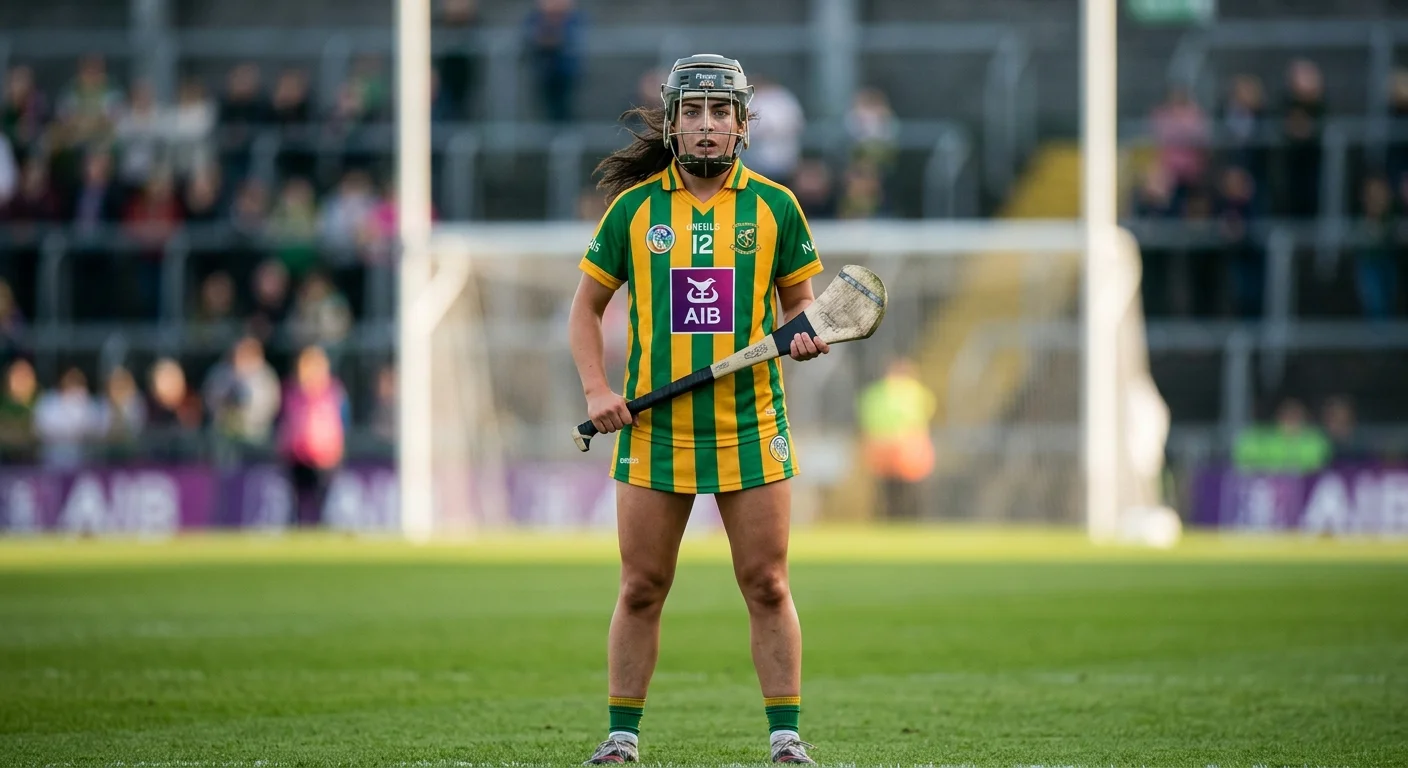
The rulebook is specific. Uncomfortably specific, some would say.
Official Guide Part 2, Rule 6 spells out what players must wear. The language is tight — not much room to interpret it differently. The bottom half of a camogie kit must be a skirt, skort, or divided skirt . Not shorts. Players also need a sports jersey, uniform socks, and boots. Gear should be of Irish manufacture where possible. Every team member must wear a matching uniform.
One more requirement caught clubs off guard in 2025. The official crest of An Cumann Camógaíochta must appear on both the jersey and the skirt or skort — same position, front-facing. That's not optional. Items sold without the crest got pulled from sale. That includes popular options like the Portumna Mourne Shorts . Show up to an official game in non-compliant kit, and you don't get to play.
What Happens When a Player Shows Up in Shorts?
Referees have clear enforcement powers — and they've used them.
Match delayed until the player or team complies (this happened at the Dublin/Kilkenny Leinster senior semi-final, and again at a Laois U20 fixture)
First caution issued as a yellow card for dissent
Second refusal escalates to sin-bin or red card under Rule 41.9(b)/(c)
Shorts are fine in training. In official competition, they're not allowed.
Where the Rules Stand After 2024 Congress
Two motions went to the 2024 Congress . Both aimed to make shorts a valid option — either alongside the skort or replacing it. Both were defeated . Under the Association's amendment process, the debate can't be reopened until 2027 . At that point, a two-thirds majority would be needed to change anything.
Meanwhile, 70% of inter-county players report discomfort in skorts . And 83% say they want the option to wear shorts , according to GPA survey data. The rules point one way. The players are pointing another.
Can Camogie Players Choose to Wear Shorts? The Direct Answer
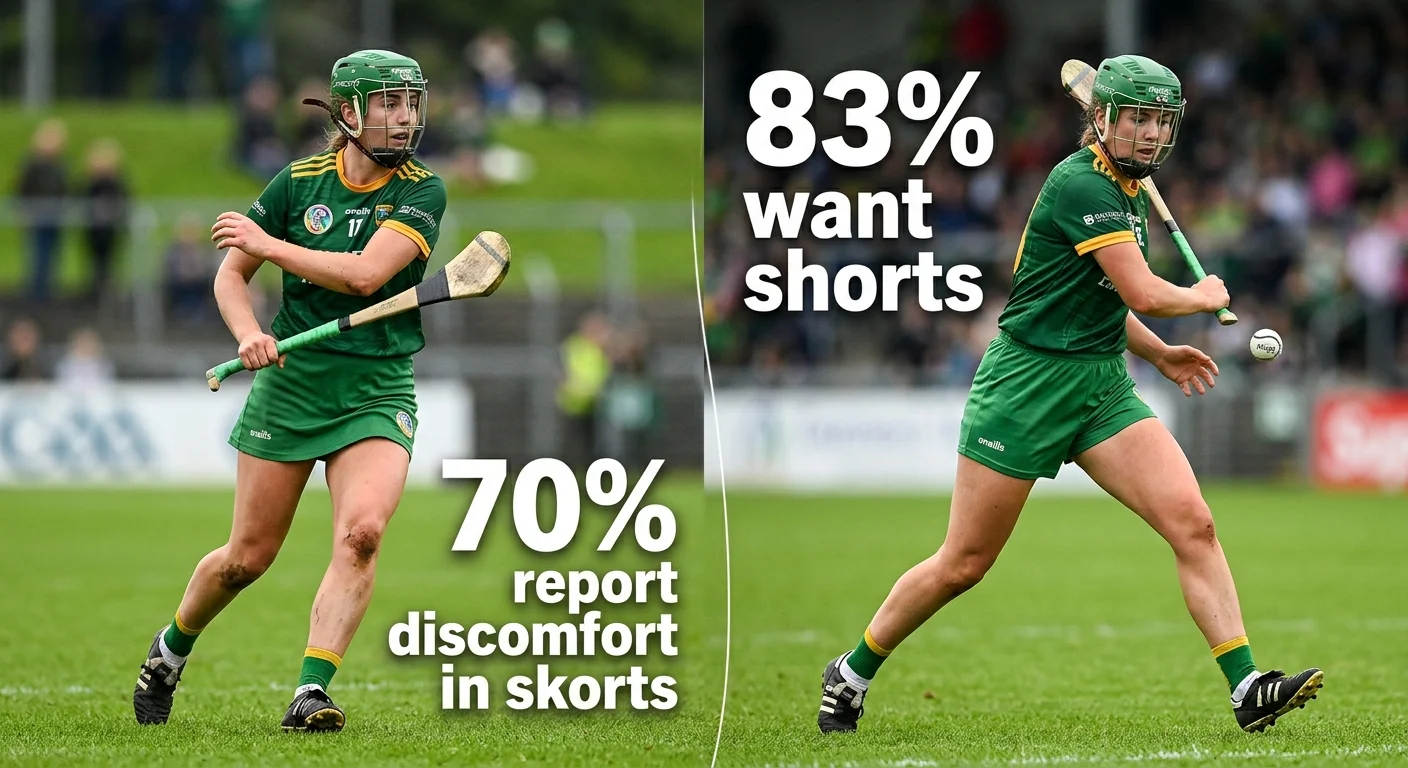
Yes. As of May 23, 2025, camogie players can choose to wear shorts in competitive matches.
That answer took years of frustration, two failed Congress motions, and a very public walkout to get here.
At a Special Congress held at Croke Park, delegates voted 98% in favour of the change. Fewer than three people voted against it. From midnight on May 23, 2025, every player at every age grade and level has the right to choose between shorts or a skort .
Camogie Association President Brian Molloy said it straight: "Each individual player will have the option to wear a skort or shorts."
What "Player Choice" Means in Practice
Choice doesn't mean chaos. Rules still apply.
Shorts and skorts must be uniform in colour and design across the team — but not every player needs to wear the same item
The Camogie Association crest must appear in the same front position and scale on both shorts and skorts
Stripes, patterns, and logos must match across the kit
One key point for clubs: items without the mandatory crest are banned from official competition. Check your camogie hockey shorts and skorts supplier before you order.
Ladies Gaelic Football has allowed shorts for years. Camogie has now reached that same standard. 83% of players wanted this option. 70% said skorts hurt their performance. Those players now have a rulebook that matches their reality.
The 2025 Walkout Crisis: How the Controversy Reached Boiling Point
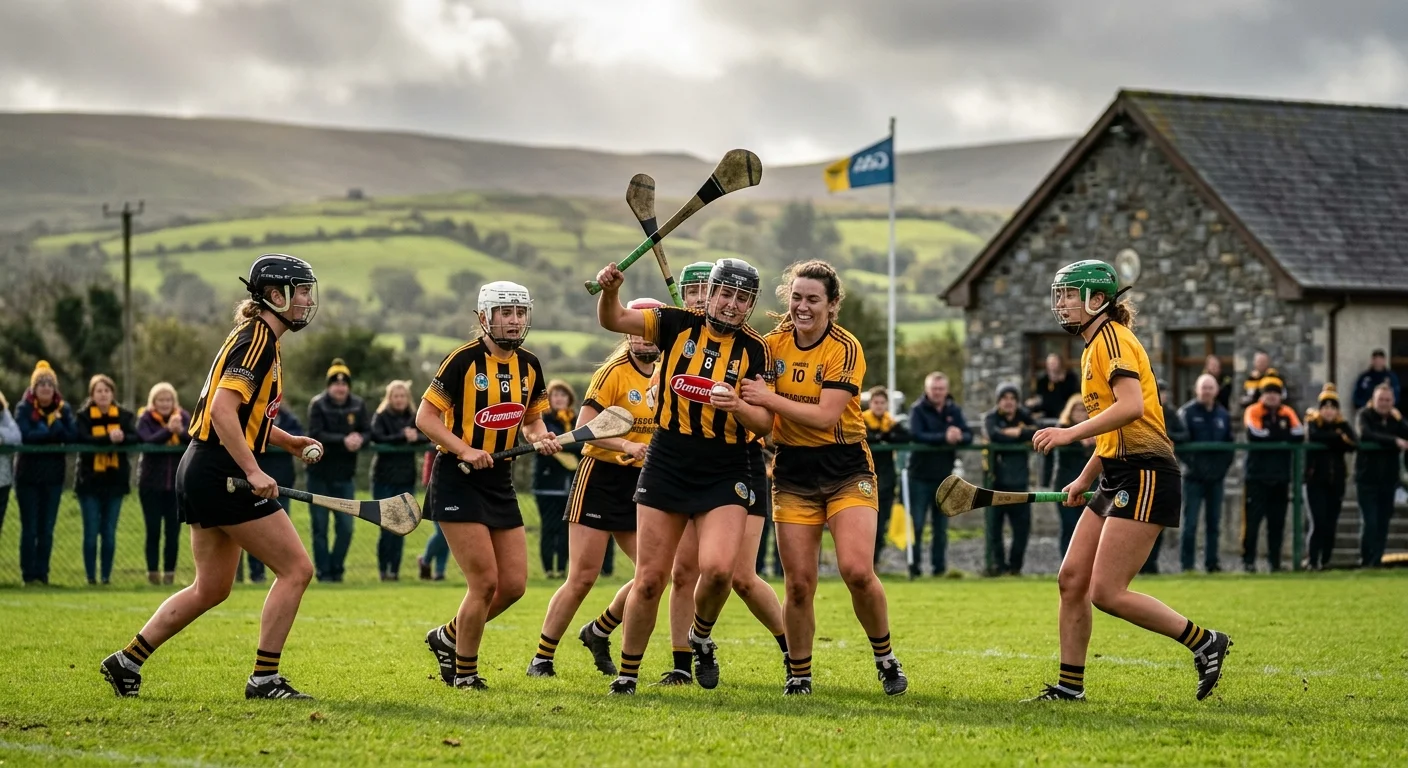
Sometimes a sport's most defining moment happens not during a match — but when players refuse to start one.
That's what unfolded in 2025. For years, the debate over kit rules stayed locked inside meeting rooms. Then it spilled onto the pitch. Players, coaches, and supporters had grown tired of a rulebook that dictated what shape of fabric elite female athletes could wear on their lower half. The frustration wasn't abstract. It was personal, physical, and very public.
The Moment the Line Was Crossed
The breaking point came at the Leinster senior semi-final between Dublin and Kilkenny. Players showed up ready to compete. Officials showed up ready to enforce the camogie association uniform policy . Players in shorts were told they couldn't take the field. The situation didn't resolve. It became a delay. Then a confrontation. Then a headline.
A similar scene played out at a Laois U20 fixture — a junior-grade match, far from the national spotlight, but no less significant. Young players, some still teenagers, were stopped from competing over a clothing rule. The message that sent to the next generation of camogie players was hard to miss.
These weren't isolated incidents of rule-bending. They were organised acts of resistance. The camogie uniform controversy in Ireland exploded into mainstream media coverage fast.
Why 2025 Was Different
The 2024 Congress had already failed to fix this. Two motions proposing shorts as a valid camogie kit option were voted down. Players left that process feeling unheard. By 2025, the mood had moved from disappointment to defiance.
The GPA survey data gave the walkout its moral authority:
70% of inter-county players reported physical discomfort in skorts
83% wanted the freedom to choose shorts
These weren't fringe opinions. They reflected the clear majority of the women out there playing the sport every week.
A governing body's rules were clashing with the real experience of 83% of its own athletes. That couldn't hold. In 2025, it broke — and it broke in full public view.
The public pressure, the media coverage, and the strong player solidarity pushed the Camogie Association to call a Special Congress. The 98% vote for change at Croke Park didn't appear out of thin air. It came straight from a walkout crisis that made staying silent impossible.
Shorts vs. Skorts: The Real Arguments on Both Sides
Both sides of this debate believe they're right. And honestly? Both sides have a point.
The camogie shorts vs. skorts argument isn't just tradition versus progress. Two very different ideas clash here — what female athletic kit should do, and who it should serve. You might be a club manager, a coach, or a player trying to make sense of where the sport now stands. Either way, both positions deserve a clear look.
The Case for Shorts: Performance, Comfort, and Equality
The numbers are hard to argue with. 70% of inter-county camogie players report physical discomfort wearing skorts during matches — chafing, restriction, interference during explosive movements. 83% want the freedom to choose shorts. These aren't abstract preferences. They're the lived physical reality of elite female athletes doing their jobs.
From a pure performance standpoint, shorts offer:
1.Full range of motion — no skirt layer pulling, shifting, or riding up during high-intensity play
2.Squat-proof, single-layer coverage — secure during every lunge, tackle, and overhead strike
3.Reduced distraction — athletes focus on the game, not their kit
The equality argument carries weight too. Tennis made this shift. Wimbledon in 2025 lets players choose between skorts and shorts — no restrictions. The ITF followed. FIFA moved in the same direction. Camogie held the line while other elite women's sports had already moved on. That gap got harder to justify over time. The comparison didn't reflect well on the Camogie Association .
The Case for Skorts: Tradition, Practicality, and Democratic Process
Skorts didn't arrive in camogie by accident. The 2003 reforms brought them in on purpose — as a progressive compromise that balanced athletic function with coverage and modesty. For a section of the camogie community, the skort isn't a restriction. It's a symbol of the sport's growth.
Supporters of the skort point to real practical advantages:
Built-in shorts layer — removes any risk of mishap during athletic movement
Versatility across seasons — the added layer provides warmth in cooler conditions
Customisable design options of hockey skorts — printed, patterned, and branded skorts can stand out and look sharp as team kit
Unified team appearance — a consistent dress code simplifies kit management for clubs
There's also a process-based argument that traditionalists raise: the camogie uniform controversy went through the Association's democratic process. Motions went to Congress. Members voted. Overturning that outcome — through public pressure and walkouts — sets a precedent. Some members find that uncomfortable, no matter what the specific issue is.
Where the Real Disagreement Lives
Strip away the noise, and the core tension is this: who owns the decision?
Pro-shorts advocates say the athlete's body is the athlete's business. Pro-skorts advocates say a governing body's democratic process deserves respect, even when the outcome is unpopular. Neither position is irrational. Both reflect genuine values.
What changed in 2025 wasn't the logic of either argument. What changed was the scale of player solidarity and the very public cost of holding the status quo. A 98% vote at Special Congress didn't overturn tradition — it reflected a community that was ready to let its players lead.
How This Controversy Compares to Women's Sports Uniform Debates Around the World
Camogie is not alone. Not even close.
The same argument keeps coming up across women's sport. Different stadiums. Different languages. Different decades. The pattern stays the same. A governing body mandates a specific garment. Female athletes push back. The media notices. Something shifts.
The camogie shorts vs. skorts debate fits right inside this longer story.
A Pattern Repeating Across Sports
In 2021, the Norwegian women's beach handball team wore shorts at the European Championship in Bulgaria. Officials fined them €1,500. The men on the same team? Already wearing shorts. No fine required. The backlash was swift and loud. Rule review discussions followed shortly after.
At the Tokyo 2020 Olympics, Germany's gymnastics team wore full-body unitards. Not for religious reasons — but to protest the sexualisation of female athletes in competition. Sarah Voss put it simply: the standard bikini-style uniform was uncomfortable. The International Gymnastics Federation allowed the choice. The world paid attention.
England's hockey players wore mandatory skirts until 2022. That year, a study by Tess Howard showed that 70% of UK women reported girls dropping out of school sports due to uniform-related body image issues. Skirts became optional. The dropout conversation didn't go away.
In 2023, women's soccer teams — including Orlando Pride and England's national team — switched to darker shorts to cut anxiety about period visibility during matches. Nike redesigned kit technology to match.
The data is clear and consistent across sports: 75% of dropout cases tie back to uniform discomfort or body image pressure . That's not a camogie number. That's a women's sport number.
What This Context Means for Camogie
The GAA women's sport dress code debate didn't come from an Irish-specific problem. It came from the same core assumption found in beach volleyball, gymnastics, tennis, golf, and football — that a female athlete's appearance is part of the sport's product, not just a side detail.
The 98% Special Congress vote didn't just close a kit argument. It placed camogie alongside a wave of change already moving through women's sport at every level.
What Clubs Should Do Right Now: Compliant Kit Procurement Guide
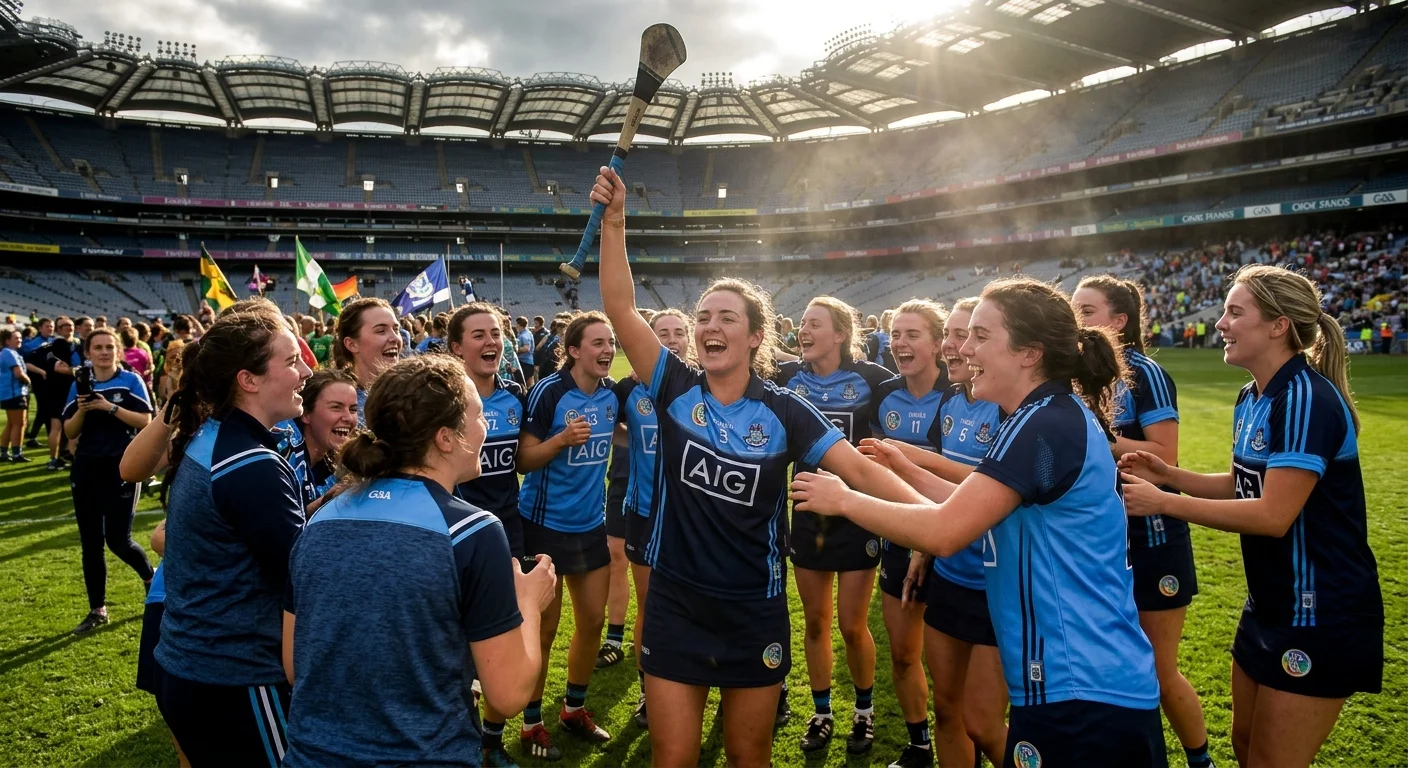
The vote has passed. The rulebook has changed. And your club's kit order can't afford to be the thing that costs a player her place on the pitch.
Here's the reality: as of May 23, 2025, players can choose between shorts and skorts in official competition — but both options must meet strict Camogie Association standards. Procurement isn't simpler now. It's more specific. Buy the wrong thing, and your players still don't play.
Get Your Crest Compliance Right First
This is non-negotiable — and easy to get wrong. The official crest of An Cumann Camógaíochta must appear on both jerseys and on every shorts or skort your club orders. Same position. Same scale. Front-facing. Items without it are banned from official competition. Full stop.
Before placing any bulk order, confirm your hockey uniform supplier can deliver that crest in the correct format. Ask for a sample. Hold it in your hands and check it. Don't assume it's right.
What to Look for in Compliant Shorts and Skorts
Not all athletic kit is built the same. Run every item against these specifications before ordering:
Fabric performance : Moisture-wicking polyester blends with high air permeability — players work hard, kit should move heat out fast
Stretch capacity : 4-way stretch material (200–300% elongation range) for full freedom during tackles, strikes, and overhead plays
Coverage length : A minimum 15–20cm inseam on both shorts and skorts keeps kit compliant without restricting movement
Team uniformity : Shorts and skorts don't need to be the same item — but colour, design, and branding must match across every player on the field
Build a Two-Option Stock Strategy
Smart clubs aren't ordering one uniform type anymore. Order both compliant shorts and compliant skorts. Let players choose at the individual level — the new rules allow it. This cuts friction before match day and honours the player choice framework the Special Congress passed by 98%.
Run through this checklist before any hockey shorts and skorts manufacturers conversation:
Kit Item | What to Verify |
|---|---|
Shorts / Skort | Crest placement, inseam length, stretch rating |
Jersey | Crest size and position; sponsor logo compliance |
Socks | Club ID only; colour contrast meets match rules |
Full set | Uniform colour and design across all players |
The Supplier Conversation You Need to Have
Not every sportswear supplier knows camogie-specific requirements. Ask them straight out: Can you produce shorts and skorts with the official Camogie Association crest applied to spec? An uncertain answer — or talk of workarounds — is your cue to keep looking.
The right hockey shorts and skorts supplier knows the crest requirement, the uniformity rules, and the fabric standards. That knowledge protects your club from a match-day disaster no paperwork can fix after the whistle blows.
What Happens Next: Possible Outcomes and What They Mean for Players

The outcome is settled. On May 22, 2025, delegates at a Special Congress in Croke Park voted 98% in favour of player choice. That margin leaves no room for debate. The motion needed two-thirds. Fewer than three people voted against it. Thirty minutes later, it was done.
From midnight that same night, every camogie player — at every age grade, every level — could choose between shorts, skorts, or skirts . The All-Ireland Championship kicked off the very next weekend, May 24–25. The first competitive matches under the new rules ran that same weekend.
What Changes in Practice
Choice is personal, not a team decision. Players pick what works for them. Teams can field players in shorts and skorts at the same time — as long as colour and design stay uniform across the squad. That's new ground for club kit management.
A few practical questions are still open:
1.No central kit procurement support has been announced for clubs sourcing compliant shorts
2.County boards have not confirmed whether they'll cover individual player purchases
3.Clubs still have no detailed guidance on how to enforce uniform standards
The long-term signal matters too. The GPA framed this result as proof of the "necessity of putting players at the heart of decision making." That sets a precedent reaching well beyond a single kit rule — and well beyond camogie.
Conclusion
The skort isn't just a piece of fabric. It's become a symbol of a much bigger conversation — who gets to decide what women wear when they compete.
Here's what matters: the Camogie Association mandates the skort as standard uniform. The pressure for player choice is real, organised, and growing louder. Clubs buying kit right now should stay compliant with the camogie association uniform policy . Stay agile too — the rules may look different by next season.
And players? You deserve a straight answer. The answer today is: not yet. But "not yet" has a way of becoming "finally" when enough people refuse to stay quiet.
Your club needs compliant, high-quality camogie kit built for how the game is played today — not how someone imagined it decades ago. Explore berunclothes.com's full camogie uniform range and outfit your team with confidence, whatever comes next.