Pilates helped build the core strength of LeBron James, Kobe Bryant, and Tiger Woods. None of them lost sleep over whether it was a "women's workout." Top male athletes have used Pilates for decades — moving better, recovering faster, and lasting longer than the competition. Yet most guys still walk past the Pilates studio on their way to the weight rack without a second thought.
That's a mistake. The benefits of Pilates for men go far deeper than flexibility and breathing exercises— and the right gear plays a bigger role than most expect, especially with the growing demand for custom Men's Pilates workout clothes designed for performance, comfort, and unrestricted movement..
Want a stronger core? Dealing with chronic back pain? Looking for a real edge in your sport? Keep reading. What's ahead will shift how you see your training — for good.
Why Men Are Turning to Pilates (And It's Not What You Think)
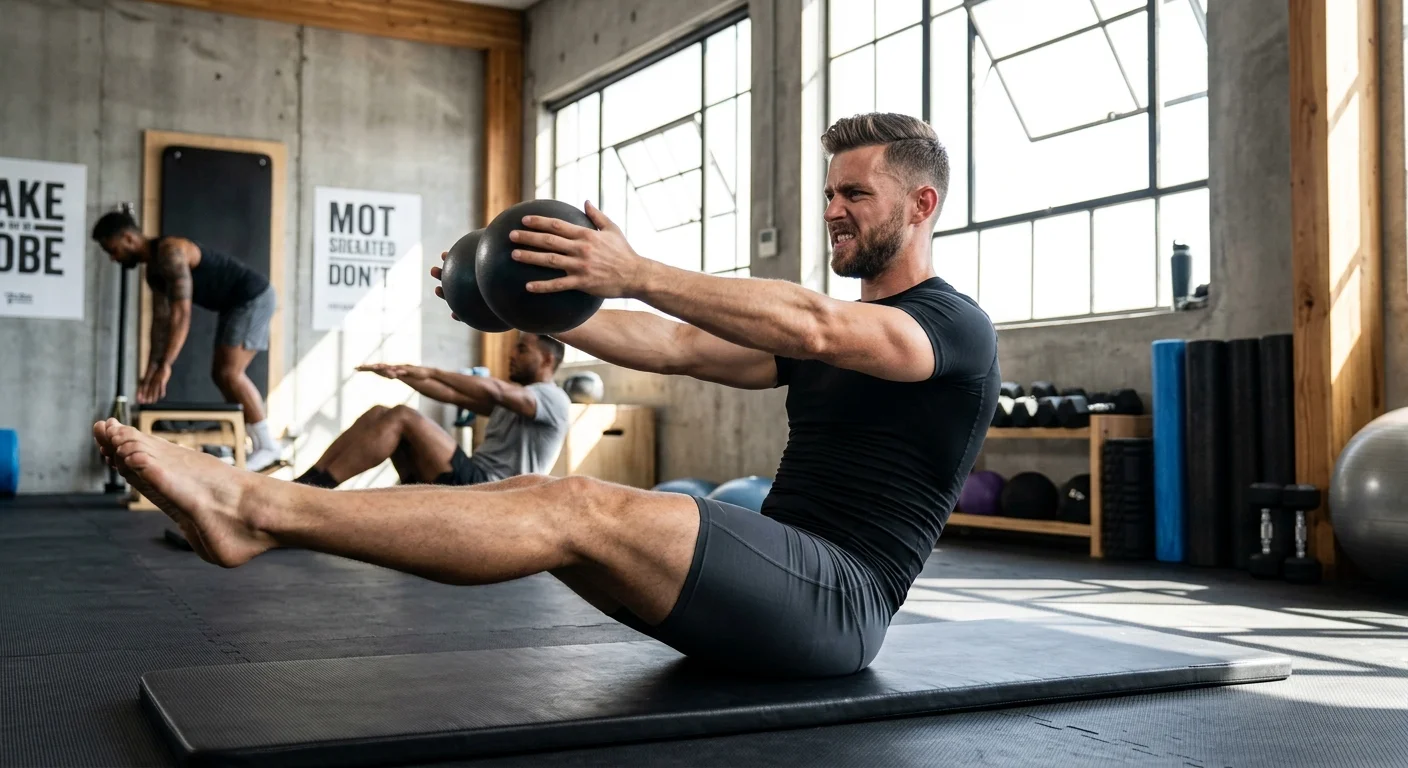
Male Pilates participation has jumped 71% since 2022 . That's not a coincidence — that's a trend worth paying attention to.
Here's something most people don't know: Pilates was designed by a man, for men . Joseph Pilates was a boxer and gymnast. He built this system around strength, control, and physical resilience. The "women's workout" label? A cultural accident — not a fact.The "women's workout" label? A cultural accident — not a fact. As more brands respond to this shift, Men's Pilates Yoga Wear manufacturers are increasingly focusing on performance-driven designs tailored specifically for male training needs.
The numbers back this up:
Today, 15% of professional athletes use Pilates as part of their training. Studios call it the fastest-growing fitness format for functional strength and injury prevention heading into 2026. Men average 10° less hamstring flexibility than women. That gap raises injury risk. Pilates closes it — consistently, session by session.
The shift is real. Men are no longer asking if Pilates works. They're asking why they waited so long .
Benefit #1: Build a Stronger, More Stable Core Than the Gym Alone Can Deliver
Your gym routine builds muscle. Pilates builds control — and that difference matters more than most men think.
Here's what the research shows: eight weeks of core stability training improved smashing velocity by 28% . It also produced major gains in vertical jump, horizontal jump, and throwing distance. These aren't yoga-class metrics. These are sport-performance numbers that coaches track and care about.
So how does it work? Pilates doesn't just tire out your abs. It changes how your nervous system coordinates muscle activation . You get cleaner movement patterns, stronger force transfer, and less wasted energy on every rep, sprint, or swing— which is exactly why many performance brands now rely on a specialized Pilates Yoga clothing factory to develop gear that supports precision movement and durability..
Compare that to standard gym training. Control groups using regular routines showed zero significant improvement in functional performance tests after eight weeks. The core work was the deciding variable — every single time.
For pilates core strength men, the data points to a clear formula:
- Train more than 2 days per week (effect size: 1.55)
- Sessions longer than 30 minutes (effect size: 2.68)
- Commit beyond 16 weeks for compounding results
The gym builds size. Pilates builds the solid base that makes every other training goal easier to reach. For a deeper look at the research, check out the science-backed benefits of yoga and mind-body practices.
Benefit #2: Get Flexible and Mobile Without Touching a Yoga Mat
Tight hamstrings don't care how much you bench press. They'll pull your lower back out of alignment. They'll cap your squat depth. And they'll raise your injury risk — session after session, without you noticing.
Pilates fixes that — without a single downward dog. If you’re exploring yoga vs Pilates for weight loss and toning, the flexibility gains alone may tip the scale. As demand grows in men’s training segments, many brands are now working directly with Men's Pilates Yoga Wear suppliers to develop gear that supports full-range movement without restriction.
The data is clear. Consistent structured flexibility training produces 25–40% range of motion improvement within 8–12 weeks . Trunk flexion alone gains 30.8% under controlled training protocols. Knee flexion goes up by 6.6% . These aren't soft, feel-good numbers — reliability scores sit at ICC 0.96–0.98 . That's the same measurement standard used in clinical research.
Here's the injury prevention part:
That's close to half the injury risk — cut just by training with structure.
You don't need hours of stretching either. 3 days per week, four 30-second holds produces a 12.7% flexibility gain with an effect size of 1.0. That's a strong result from a small time commitment.
For pilates flexibility benefits , the formula is simple:
Consistency beats volume — frequency matters more than session length
Structured movement wins — athletes with set routines outperformed non-structured exercisers by 11 cm on standard flexibility tests
Minimal effective dose works — single-set protocols deliver effect sizes on par with multi-set programs
More mobile. Less injured. Same guy who skips yoga every time.
Benefit #3: Fix Your Posture and Eliminate Back Pain (Especially If You Sit All Day)
Eight hours in a chair is destroying your spine — and the numbers prove it.
90.1% of non-manual workers report lower back discomfort within any six-month window. Not once in a while. Not rarely. It happens again and again. More than half of office workers trace their symptoms directly to desk work. Sit more than 8.3 hours a day, and your risk of real lower back pain jumps 16% above the baseline — even after accounting for age, BMI, and work environment.
A scoping review of 22 studies and 7,814 participants found a clear pattern. Longer sitting time, poor posture, and fewer movement breaks each predict lower back pain on their own. That's three separate causes — all pointing at the same problem. Your chair.
This is where pilates posture improvement and pilates back pain relief for men go beyond fitness buzzwords.Behind many performance-focused product lines, Pilates Yoga clothing wholesalers are supplying scalable solutions for studios, teams, and brands targeting posture-focused training.
Pilates retrains the deep stabilizing muscles — the ones long hours of sitting shut down. It rebuilds lumbar support from the inside out. It corrects anterior pelvic tilt. It restores the muscle coordination your spine needs to stay aligned under pressure.
The result isn't just less pain. Your body learns to hold itself upright on its own — no reminders needed. At a desk, under a barbell, or on the drive home — your posture holds.
Benefit #4: Improve Balance and Coordination That Transfers to Every Sport You Play
Balance isn't a "nice to have." It's the hidden variable separating good athletes from great ones.
A 6-week Pilates program produced a moderate effect size of 0.46 in dynamic balance scores. That's not a rounding error — that's real, measurable athletic output. Your posture adjusts better. Your movements get cleaner. Your body reacts faster when it gets pushed off center.
The sport-transfer data backs this up:
Soccer players (8 weeks, 3x/week): Static balance improved 37.82% . Dynamic balance went up 24.98% . Dominant-leg shooting accuracy jumped 83.84% — close to doubling
Basketball players (collegiate, 8 weeks): Dynamic balance gains led to better jump shot accuracy compared to controls
General athletes (13 studies, N=373): Power, agility, and neuromuscular coordination all improved after just 4 weeks of structured balance training
Here's how it works. Pilates doesn't just train static balance — it demands ongoing neuromuscular adjustment . Each movement resets your balance system. It retrains how your muscles fire. It connects your core to your lower body in real time. That’s also why brands investing in performance apparel increasingly turn to OEM/ODM Men's Pilates Yoga Wear solutions — creating sport-specific designs that match the precision and control Pilates training demands.
The result? It carries over to every sport you play. Every cut. Every landing. Every explosive first step.
CTA 1Benefit #5: Gain Functional Lower Body Strength Without Pounding Your Joints
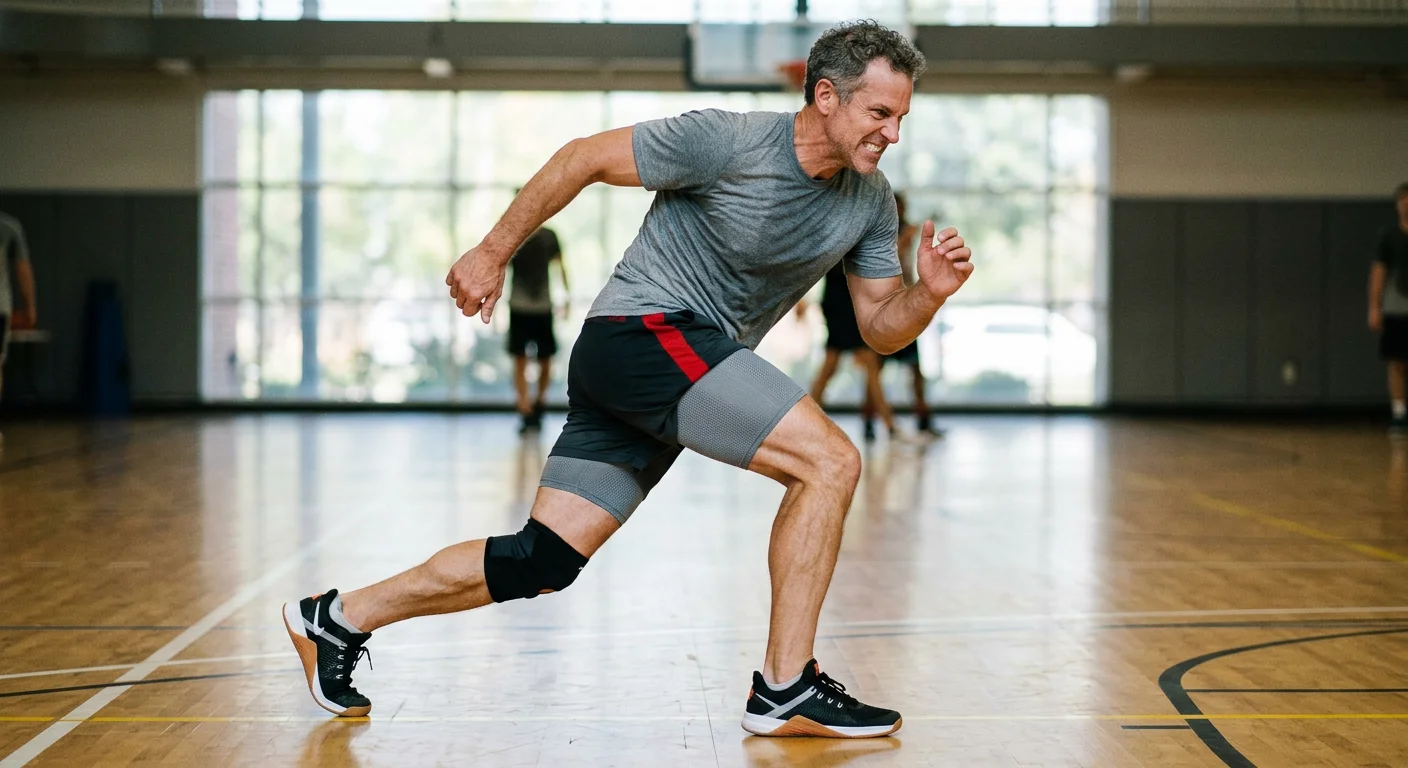
After 40, your legs lose 5% of their strength every year . That's not a theory — it's a measurable decline. And quadriceps weakness in older adults links to a 51–65% increase in mortality risk . Your lower body isn't just an athletic asset. It's a long-term health marker.
The problem with traditional leg training? The joints pay the price.
Machine leg presses and barbell squats deliver real strength gains — up to 17.4% increases in 1RM . But that load adds up. High axial forces. Joint shear. Stress builds across hundreds of sessions until something gives.
Pilates Reformer training works differently. Spring-based resistance creates controlled eccentric loading — that's the lengthening phase of the movement. It's where real strength gets built. This cuts joint shear forces by 30–50% compared to free weights . Same training stimulus. A fraction of the wear.
The functional strength effect size lands at 0.67 — a moderate, meaningful gain. Not max-strength territory. But the power and movement quality you build transfers to sport and daily life in ways that matter.
Two key Reformer exercises drive this:
Footwork on Reformer — 3 sets of 10–15 reps. Targets quads, glutes, and hamstrings through 20–40 lbs of spring resistance. Zero spinal compression.
Leg Press on Reformer — 12–20 reps with an eccentric focus. Builds functional power equal to an 8.7% 1RM increase . Protects the knee joint throughout.
Train legs twice per week and you hit the ideal frequency for lower body adaptation. That's the same training volume where leg press studies (n=13) recorded their strongest gains.
For men over 40, this isn't a compromise. It's the smarter path.
Benefit #6: Prevent Injuries by Fixing the Muscle Imbalances You Don't Know You Have
Most injuries don't happen because you trained too hard. They happen because something was off — and you never noticed.
The data is clear. A 20% strength imbalance between sides raises your injury risk by 30% . Every 0.1-unit increase in leg asymmetry pushes injury odds up by 15% (aOR=1.15, p=0.016). Athletes who cross both imbalance thresholds carry a relative risk of 4.10 — that's four times more likely to get hurt than balanced athletes.
Chances are, you're in this group. Most men are.
Physical therapists see this pattern all the time. Dominant-side overuse weakens your hip abductors and creates rotator cuff asymmetry. Your non-dominant side loses stability. Your gait shifts. Knee joint loading climbs. Every 10% increase in joint mobility restriction — shoulder or knee — adds another 15% to your injury odds .
The root cause is gait asymmetry. It drives 13.5% of total injury risk on its own, pushing up knee loading (β=0.41, p<0.001). Fix your symmetry by just 5%, and injury odds drop 22% .
This is where Pilates steps in.
Pilates targets the muscle groups that standard training skips:
Glute and hip stabilizers — these keep your knee tracking in line under load
Eccentric hamstring strength — this corrects quadriceps dominance, the top driver of hamstring strain coming back
Rotator cuff and scapular stabilizers — lower/middle trapezius, infraspinatus, serratus anterior — all underworked in men who press and pull but never stabilize
The fix is straightforward. You build up the weak side until both sides reach equal strength. You close flexibility gaps with a targeted approach. That's the protocol physical therapists now recommend — and it's built into every well-structured male Pilates exercise session.
The result: fewer injuries, cleaner movement, and a body that holds up all season long.
Benefit #7: Elevate Your Athletic Performance Like the Pros Do
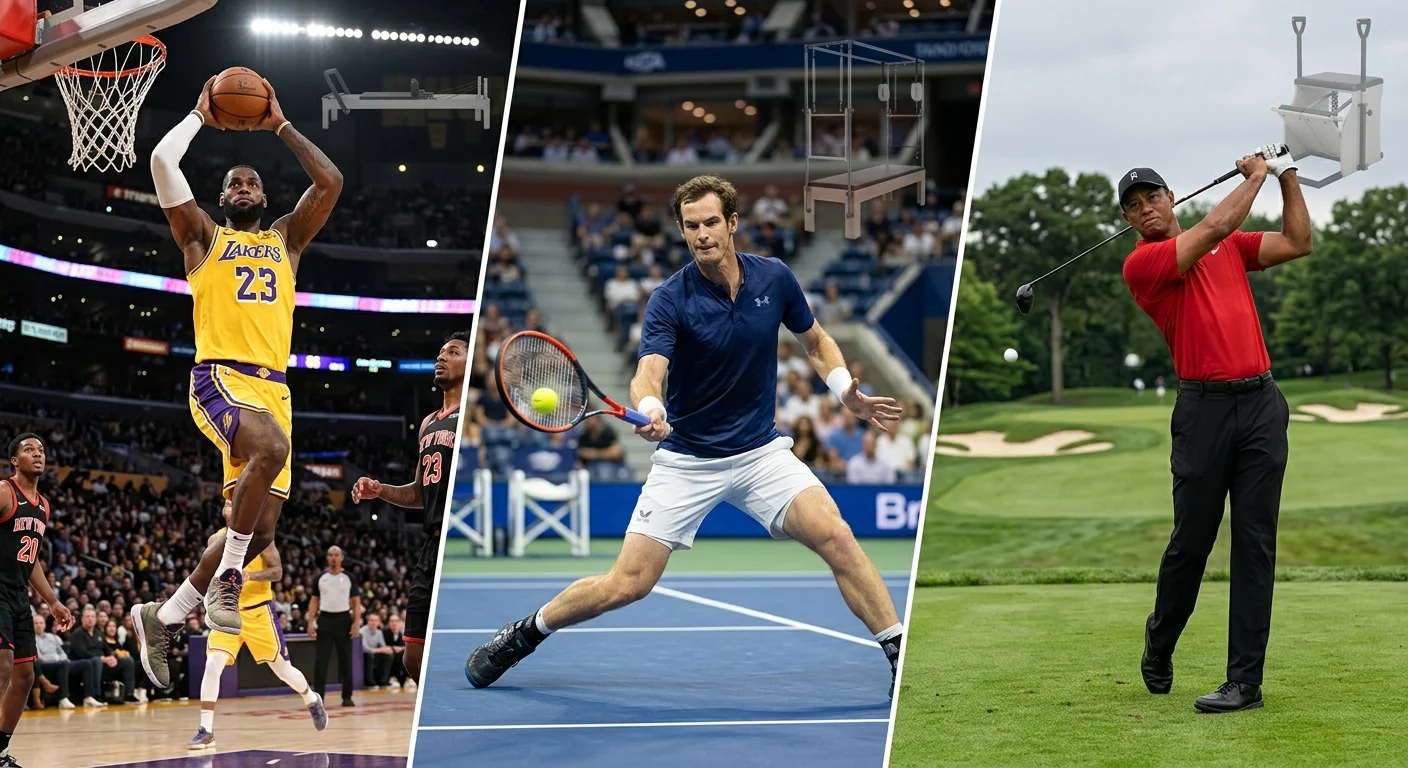
LeBron James doesn't do things that don't work. Neither does Andy Murray. Or Tiger Woods.
All three built Pilates into their training. Not as a recovery day filler. As a core part of what keeps them at the top, year after year.
Here's what the performance data shows:
That last one matters more than most athletes think. You're not just getting stronger. You're getting more efficient . Every sprint, every cut, every explosive movement costs less energy for the same result.
The key is breathing control. Diaphragmatic patterns push oxygen efficiency up by 18–25% . That cuts the energy cost of endurance work by up to 10%.
Murray dropped injury recurrence by 30% with Cadillac machine protocols built around shoulder stability. Woods built rotational core control that fed straight into swing speed gains.
This isn't flexibility training. It's performance engineering.
Benefit #8: Sharpen Your Mental Focus and Manage Stress Like an Athlete
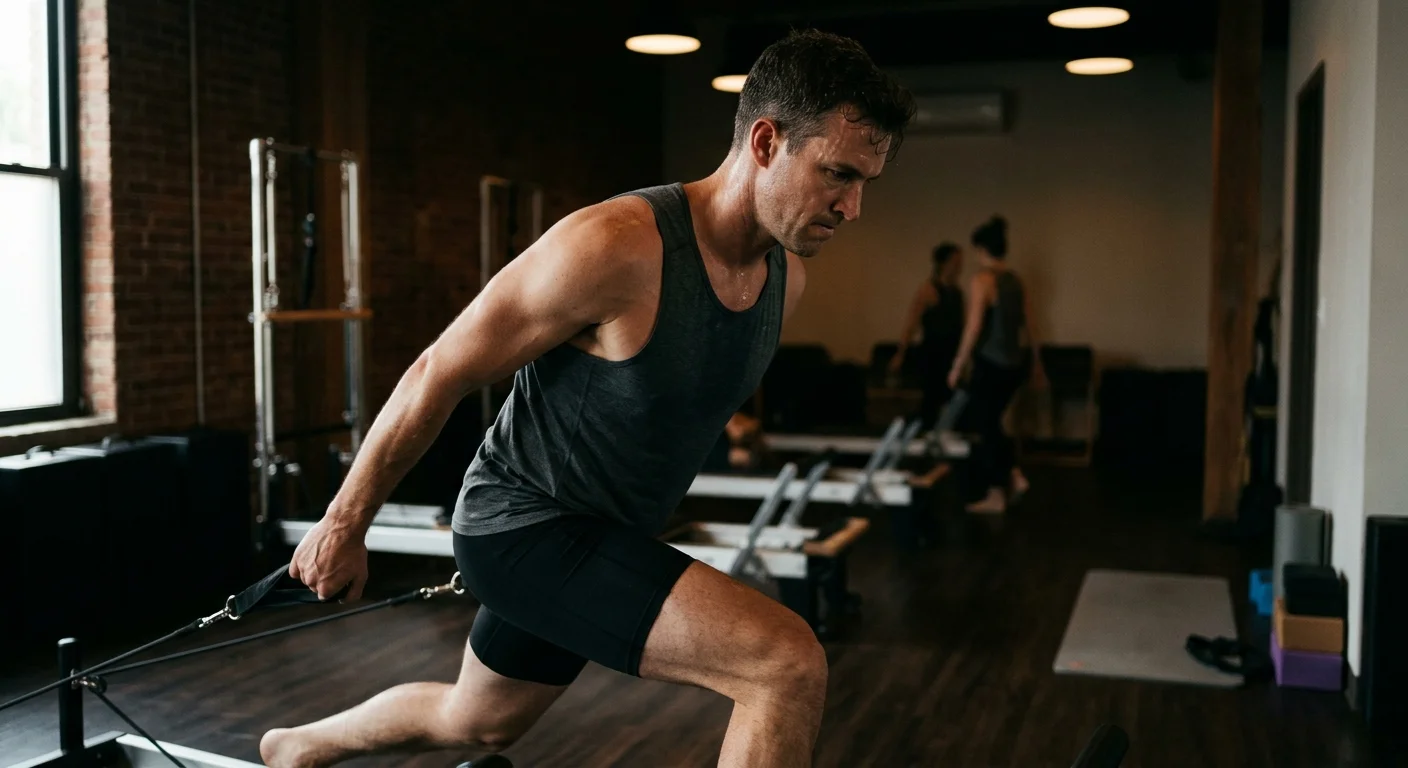
The mental load of competing — or just keeping up with life — hits harder than most men admit.
91% of high school athletes report sport-related stress. 25–50% say it tanks their performance at high levels. Among elite Canadian national team athletes, 41.4% meet clinical criteria for depression, anxiety, or an eating disorder — four times the rate of the general population. And just 25% of college men with known anxiety ever seek help.
Stress isn't a soft problem. It's a performance killer.
So what makes Pilates different from lifting or running? Breath-movement synchronization switches on your parasympathetic nervous system. Think of it as your body's built-in calm switch. It drops cortisol, shuts down the stress response, and sharpens your focus. And it happens in every single session — no extra effort needed.
Psychological stress management methods produce an effect size of 0.40 for mental health gains in athletes. Pilates hits that mark through movement itself. No separate meditation app. No extra recovery routine.
Weightlifting raises your arousal levels. Pilates brings them back down. That's the gap between training harder and training smarter.
CTA 2Benefit #9: Boost Energy and Endurance Through Better Breathing Mechanics
Most men never think about how they breathe during training. That's leaving real performance on the table.
Pilates is built around breath control — and the physiology behind it is serious. A 6-week combined breathing resistance program increased maximal voluntary ventilation (MVV) by 17% . Ventilatory threshold and peak cycle load both improved. Numbers the control group never came close to.
Here's why that matters. Strong respiratory muscles redirect blood flow back to your working limbs. Your legs and arms get more oxygen at the moments that count most — the final minutes of a game, the last miles of a run.
Pilates breathing also cuts down how often you breathe. Fewer breaths mean more time for gas exchange in the lungs. Your body pulls more oxygen from each breath. That translates to 18–25% better oxygen efficiency under hard, sustained effort.
Less wasted air. More usable fuel. Longer output before fatigue hits.
For pilates for athletes men , breath isn't a warm-up cue. It's the engine underneath every rep.
Benefit #10: Protect Your Long-Term Health and Physical Independence (Every Age, Every Stage)
Here's a number that should stop you cold: 70% of men will need long-term support services after age 65 . Average survival post-65 runs 20.5 years. That's two decades where your physical independence — or the loss of it — shapes everything.
The chronic disease data for men is brutal. Hypertension, diabetes, ischemic heart disease — men outpace women in prevalence across most categories before age 65. Men make up two-thirds of ischemic heart disease patients. One in four older adults falls every year. These aren't statistics about someone else.
Pilates builds functional strength, balance, and joint resilience. These qualities push back against physical decline. The core stability that powers your sprint today keeps you upright at 72. The flexibility that protects your hamstrings now protects your independence later.
Pilates vs. The Gym: Do You Have to Choose?
The short answer: no. The smarter answer: combine both. That's what serious athletes do.
Think of it this way — the gym builds your engine. Pilates keeps that engine running clean. Strength training rules the gym floor for good reason. 58.5% of US gym-goers list it as their primary activity. Yet Pilates participation has grown 40% since 2019 . It's now the most rebooked class on ClassPass. These two formats aren't in competition. They work better together.
Here's a simple weekly structure that works:
The pairing pays off in consistency too. Men who add structured Pilates to their gym routine see a 14% improvement in long-term training consistency . Less burnout. Fewer skipped sessions. More time actually showing up.
So you're not replacing the weight rack. You're giving it a foundation worth building on. Curious about the numbers? Our guide on yoga vs gym for fat loss and fitness breaks down the data.
How Men Can Start Pilates: A No-Nonsense Beginner's Guide
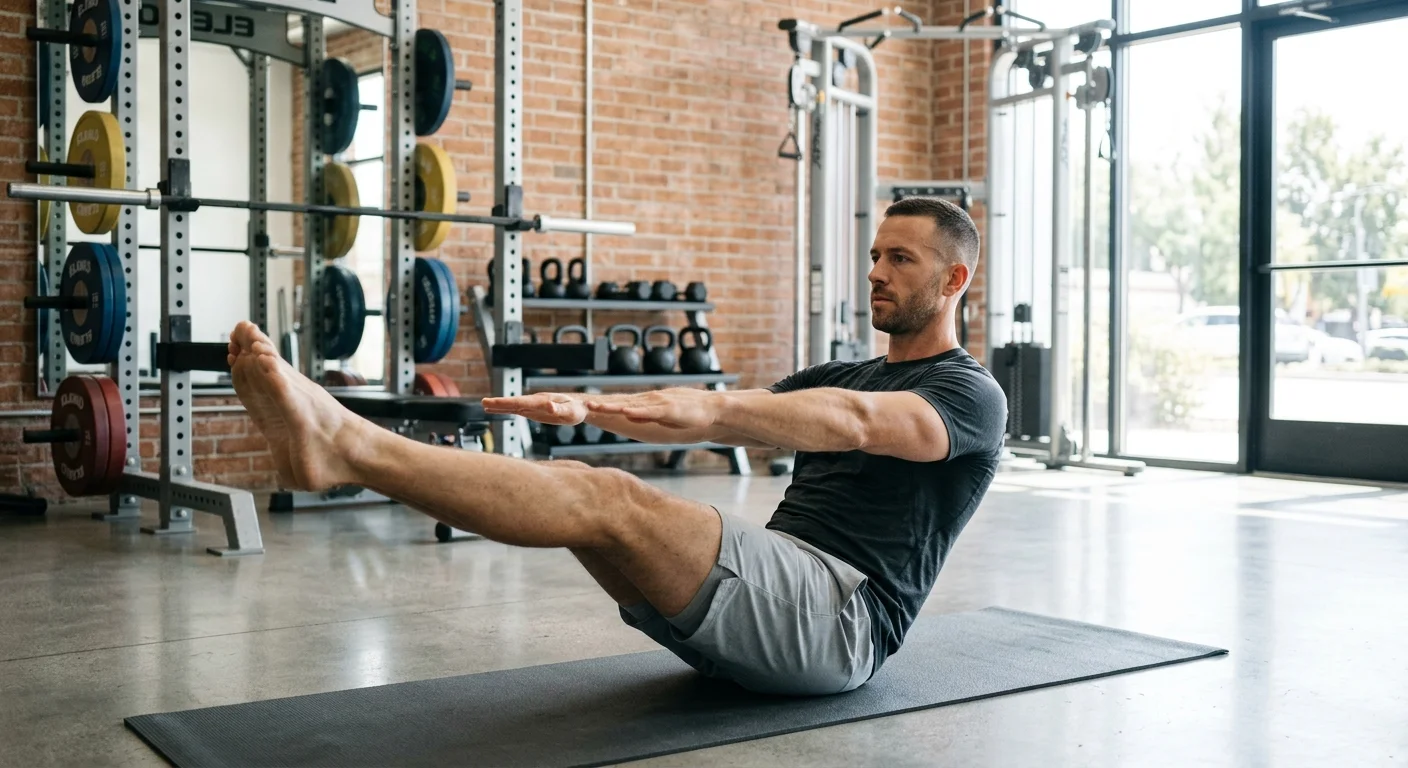
Starting is simpler than most men think. No experience needed. No flexibility required. Just a floor, 20 minutes, and the decision to show up.
The First Month: Build the Foundation Right
Skip the intermediate class. Do it. Jumping straight into a regular Pilates session without the basics leads to frustration — and quitting.
The smarter path:
5 Beginner Exercises That Build Real Strength
No equipment needed. Just your bodyweight and a mat.
1.The Hundred — Lie on your back, knees to chest, legs extended at a diagonal. Pump your arms 100 times using 5-count inhales and 5-count exhales. Builds core endurance fast.
2.Single Leg Stretch — Pull one knee to chest while extending the other leg. Switch sides. Five reps each. Stabilizes the pelvis under load.
3.Roll-Up — Lie flat, roll up to seated at a controlled pace, then reach forward. Five to eight reps. Full spinal articulation, every time.
4.Side Kick — Side-lying, top leg lifts and lowers through 6–8 controlled reps per side. Hits hip strength and body alignment at the same time.
5.Spine Twist — Seated upright, rotate your torso 6 reps each direction. The mobility gains here carry over to every rotational movement in sport.
Gear That Works As Hard As You Do
Bad gear shows up fast in Pilates. Shirts bunch during a Roll-Up. Shorts ride up in Side Kicks. Socks slip on the mat. These things break your focus mid-exercise.
Here's what works:
1.Tops : Moisture-wicking, 4-way stretch fabric with full shoulder mobility. berunclothes.com seamless tees are built for this range of motion — no bunching, no restriction.
2.Bottoms : Grip-waistbands and anti-slip silicone hems keep you locked on the mat during leg work.
3.Socks : Full-toe grip with five rubber nodes and split soles give you real feedback on the reformer pedal.
Look for gear rated at 4.5+ flexibility (confirmed via 180° bend test) and built to last through 200+ washes without pilling. Good gear removes the distraction. You focus on the work, not what you're wearing.
CTA 3Conclusion
The strongest athletes in the world don't skip Pilates — they built their careers on it.
Skeptical? Injured? Just curious? The evidence is clear: pilates core strength for men isn't a trend. It's a training system that fixes what the gym ignores — deep stabilizers, muscle imbalances, breathing mechanics, and the posture that's wrecking your back one desk hour at a time.
You don't have to choose between lifting heavy and moving well. The smartest move is doing both.
Start with two sessions a week. Track how your back feels. Note how you perform and how fast you recover. The results will speak for themselves.
Ready to train with real intention? Grab gear built for men who take movement seriously. The right kit matters just as much as the right method.
Your body is a long-term investment. Start training like it.
Video Section