Yoga is many things — a stress outlet, a strength ritual, a daily act of self-care. Then your period arrives. Suddenly, that familiar mat routine raises questions nobody seems to answer straight: Can I still do inversions? Will that twist make my cramps worse?As awareness grows around cycle-friendly practice, many women's yoga wear suppliers are also adapting designs to support comfort and flexibility during every phase of the menstrual cycle.
Here's the truth: most yoga classes weren't built with your menstrual cycle in mind. Some poses you practice without a second thought may work against your body during those few days each month.
Before you roll out your mat mid-cycle, know which movements to skip — and why. This guide covers inverted yoga poses and menstruation risks, the surprising impact of deep core work on menstrual flow, and the body-smart advice you need to move with your cycle, not against it. If you're new to yoga, you may also want to explore the 7 branches of yoga to find the style that suits you best.
Pose #1 To Avoid: Inversions (Headstand, Shoulder Stand, Handstand)
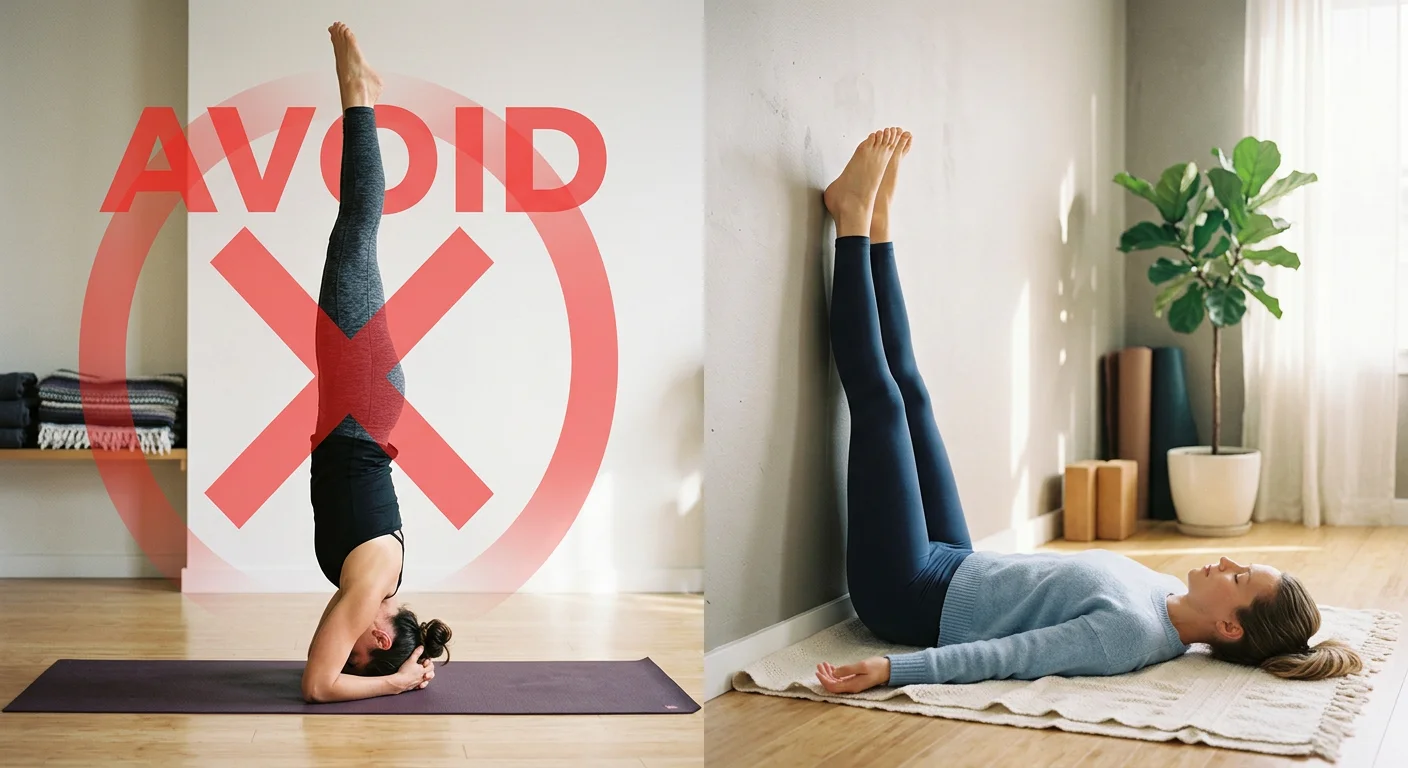
Inversions are the poses that make people stop scrolling. Headstand. Shoulder stand. Handstand. They look powerful, and they feel it too — until your period arrives and your body starts working against you.
Here's something worth knowing: a large-scale study of over 1,700 yoga practitioners found that headstands, shoulder stands, and handstands made up nearly 30% of all acute yoga-related injuries . Even on a normal day, these poses carry real risk. On your period, that risk gets worse.
Why inversions are more problematic during your period:
Disrupted menstrual flow — Flipping upside down reverses the natural downward direction of menstrual blood. Yoga traditions and women's health practitioners warn this can interfere with healthy flow and cause pelvic congestion.
Increased pressure on the uterus — Holding an inversion shifts your abdominal organs toward the diaphragm. This builds internal pressure at the worst possible time.
Heightened injury risk — Your period affects ligament laxity and energy levels. Add that to an already high inversion injury rate (0.60 per 1,000 practice hours), and your body is not in its most stable state.
For studios and retail channels responding to this demand, women's yoga clothing wholesalers are increasingly offering softer, more adaptive fabrics designed specifically for low-impact, cycle-aware practice.
Period-friendly alternatives:
Try Legs-Up-The-Wall (Viparita Karani) instead. It's a gentle, supported position that boosts circulation without going fully upside down. It soothes tired legs, calms your nervous system, and supports your body during menstruation rather than pushing against it.
Quick rule of thumb: Any pose that makes gravity work backwards through your body? Skip it this week. Your practice will still be there when your cycle ends.
Pose #2 To Avoid: Deep Forward Bends (Paschimottanasana)
Paschimottanasana looks gentle. That's the trap. You fold forward, reach toward your feet, breathe — and it feels like the relief your cramping body wants. It isn't.As more women look for cycle-aware movement, many women's yoga apparel manufacturers are now designing collections that prioritize comfort during sensitive phases like menstruation.
Deep forward bends compress your entire abdominal cavity. During your period, that compression is the last thing your body needs. Your organs are already under pressure from uterine contractions. Squeezing them further makes cramps worse, not better.
Why deep forward bends cause problems on your period:
Abdominal compression — A full forward fold collapses the space between your ribcage and pelvis. This adds direct pressure to your uterus and the organs around it. Your body is already sensitive. That extra pressure does real damage.
Lower back strain — Menstrual fatigue throws off your alignment without you noticing. A rounded lumbar spine under load is the top cause of yoga-related back injuries. Your period makes it easier to fall into poor form — and harder to recover from it.
Hamstring overstretching — Hormonal shifts during your cycle loosen your ligaments. That makes it easy to push too far. The result? Strained hamstrings or disc irritation that lingers long after your period ends.
The difference between deep and mild:
Not all forward bends are equal. A deep bend — straight knees, chest forced toward your thighs — is what to skip. A mild version is a different story. Soft knees, a long spine, hands resting on your shins. That version is far easier on your abdomen and still gives you a stretch.
Period-friendly alternatives:
Swap Paschimottanasana for Cobra (Bhujangasana) or a gentle Camel Pose (Ustrasana). These backbends open the front of your body and ease lower back tension. For more beginner-friendly options, see our guide on the best yoga poses for beginners. They work with your menstrual flow instead of fighting it.
Simple check: Lower back rounding? Belly fully compressed? You've gone too deep. Back off.
Pose #3 To Avoid: Strong Twists (Ardha Matsyendrasana, Marichyasana)
Strong twists feel productive. That deep rotation — elbow hooked outside the knee, torso wringing out like a damp cloth — gives you the satisfying feeling of doing something . On your period, that feeling is lying to you.
Poses like Ardha Matsyendrasana and Marichyasana create intense pressure on your abdomen. This hits at the exact moment your pelvic organs are most sensitive. The torso rotates hard, the abdomen squeezes inward, and direct pressure lands on your uterus. Your lower belly is already cramping. Adding that kind of force isn't helpful — it makes things worse.For studios and retailers adapting to this demand, women's yoga apparel wholesalers are increasingly offering softer, stretch-adaptive pieces suited for low-pressure movement.
Why strong twists cause problems on your period:
Pelvic compression — Full spinal rotation with arm binds pushes hard on your reproductive organs. Your uterus is already contracting. Your yoga pose doesn't need to join in.
Aggravated cramping — Deep compression doesn't ease muscle tension. It builds new tension in an area that's already inflamed.
Heavier flow days carry higher risk — The stronger your flow, the more your body needs room to breathe, not pressure.
Not all twists are the same:
This difference matters. A deep closed twist — full rotation, arm bind, maximum compression — is what you want to skip. A gentle open twist works in a different way. Think Supine Spinal Twist with soft rotation and no binding. It creates release without compression. That version is still a good option.
Period-friendly alternatives:
Swap the seated twist for Supta Matsyendrasana (Supine Twist) . Keep both shoulders on the ground. Keep the rotation soft. Breathe into the length of your spine instead of pushing for depth. Your back gets the release it's looking for. Your uterus gets the space it actually needs.
The rule here is simple: The pose requires wringing, binding, or cranking — set it aside until next week.
Pose #4 To Avoid: Intense Backbends (Wheel/Urdhva Dhanurasana, Bow/Dhanurasana)
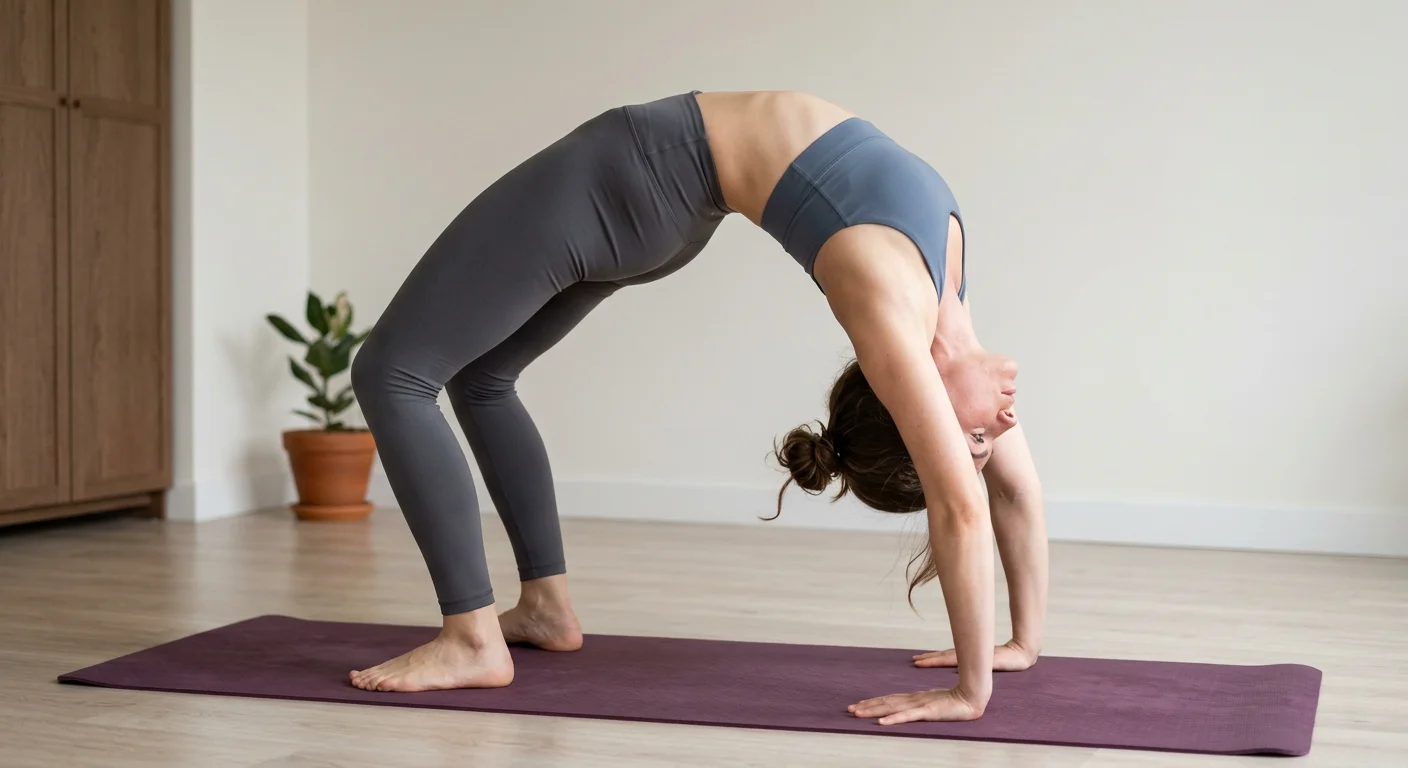
Wheel pose demands everything from your body — arms stretched out, spine arching hard toward the floor, chest wide open to the ceiling. It's tough on a normal day. On your period, your lower back simply can't handle it.
Both Wheel (Urdhva Dhanurasana) and Bow (Dhanurasana) press heavy load onto the lumbar-sacral region. Your spine curves hard, your pelvis tilts forward, and the muscles around your lower back — already strained from uterine contractions — get pushed to their limit. That combination doesn't just raise discomfort. It spikes pelvic tension at the worst possible time.
Why intense backbends cause problems on your period:
Lumbar overload — Wheel pushes your shoulders and wrists past 90°. That shifts extra load straight into the lower spine. Knees splaying wider than hip-width make the lumbar compress even more. Your pelvis doesn't need that added pressure during menstruation.
Pelvic tension spike — A safe version of this pose needs your inner groins to drop down and your tailbone to lengthen toward your knees. Most people don't do this. The result is a collapsed lower back — plus sharper pelvic sensitivity.
Wrist and lower back contraindications — Lower back pain is common mid-cycle. These poses make it worse.
Behind many functional designs built for these lower-impact movements, a specialized women's yoga clothing factory often supports production with softer fabrics and ergonomic cuts.
Period-friendly alternatives:
Swap Wheel for Supported Bridge Pose . Place a block under your sacrum, feet hip-width apart. Let your hips rest instead of strain. You get a gentle chest opening — no lumbar compression, no pelvic tension overload.
The marker is simple: Your lower back aching? That's your body setting a clear boundary. Honor it.
Pose #5 To Avoid: Deep Core Work & Arm Balances (Boat Pose/Navasana, Chaturanga)
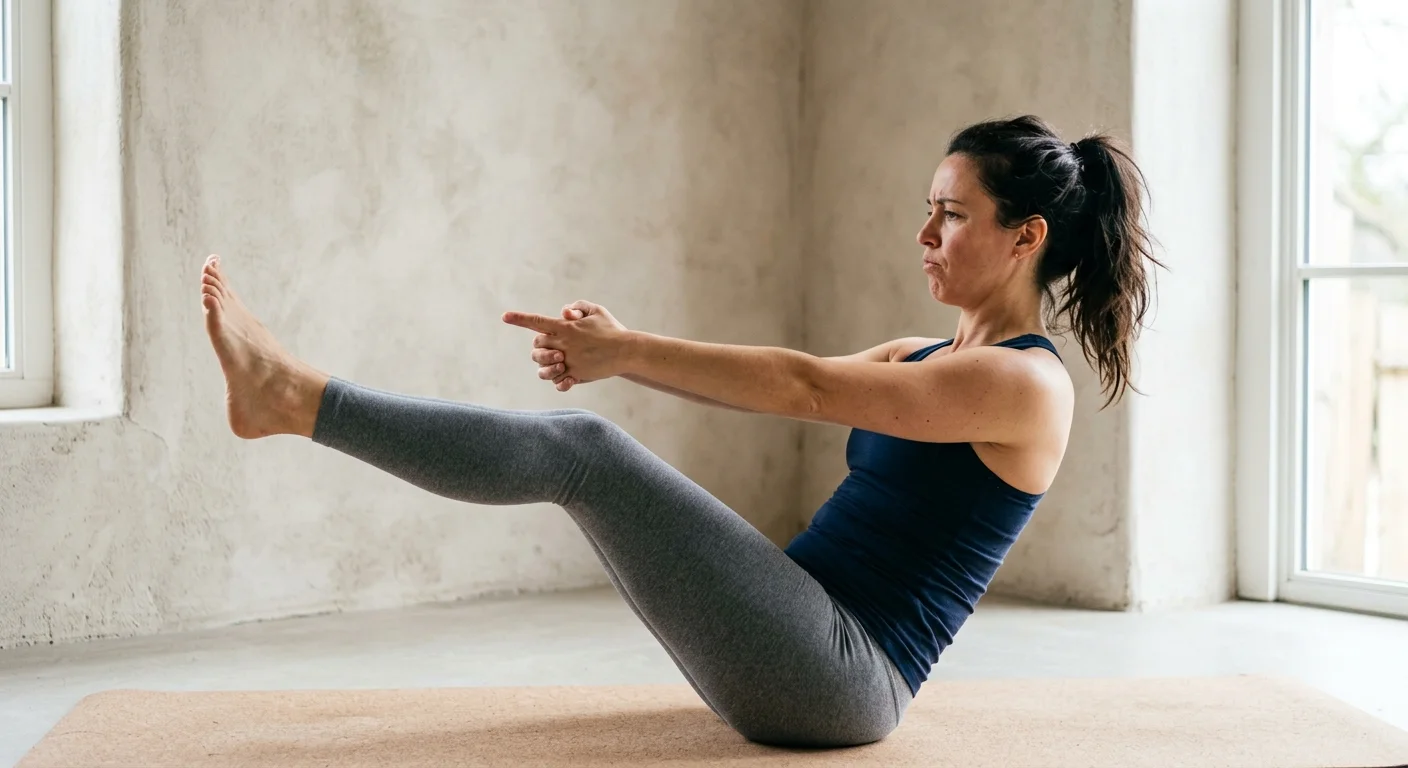
Boat Pose looks simple — sit back, lift your legs, hold. But what's happening underneath is anything but.
Navasana pushes your transverse abdominis and multifidus hard. These are your deepest core muscles. They wrap around your pelvis like a corset. During your period, your uterus is already contracting to shed its lining. Piling intense TrA activation on top of that doesn't build strength. It makes the spasm worse. Your body ends up caught in a chain reaction of abdominal tension it doesn't need right now.
For brands developing performance-focused collections through OEM/ODM women's yoga apparel, understanding how the body responds during different phases of the cycle is key to designing pieces that support—not restrict—natural movement.
Chaturanga brings its own problem. The pose demands full-body energy output. About 60% of that load falls on your front body — chest, shoulders, and deep abs. Your energy is already lower mid-cycle. Your tendons are more prone to strain. That front-heavy imbalance becomes a real injury risk. Repeating it without control makes things worse, not better.
Why deep core work causes problems on your period:
Core muscle overload — Intense TrA activation during your period makes abdominal spasms worse. It also pulls the pelvis and lower back out of balance.
Energy mismatch — Chaturanga's high output runs straight into menstrual fatigue. Your body starts compensating with poor movement patterns, which puts tendons at risk.
Injury data backs this up — In documented yoga injury cases, 67% of those affected were women. Musculoskeletal injuries — fractures, ligament tears, disc damage — made up over a third of all cases.
Period-friendly alternatives:
Skip the Boat. Try these instead:
1.Pelvic Tilts — Lie on your back, exhale, and tilt your pelvis to flatten your lower back. Do eight to ten slow reps. This works your deep abdominals at a much lower load. Your core stays active, but without the strain.
2.Cat-Cow — Move through five to eight breath-synced cycles on all fours. The rhythm alone helps stabilise your lower back and pelvis. Low load, easy to control, and actually useful on hard days.
For those building niche collections like custom women's yoga apparel, prioritizing comfort, stretch, and pressure distribution can make a measurable difference in how wearers experience these lower-impact alternatives.
Worth noting: Keeping your core active during your period is fine. Pushing it to its limit is not. These alternatives keep your practice going without forcing your body to work against itself.
Period-Friendly Yoga Poses You Can Practice Safely
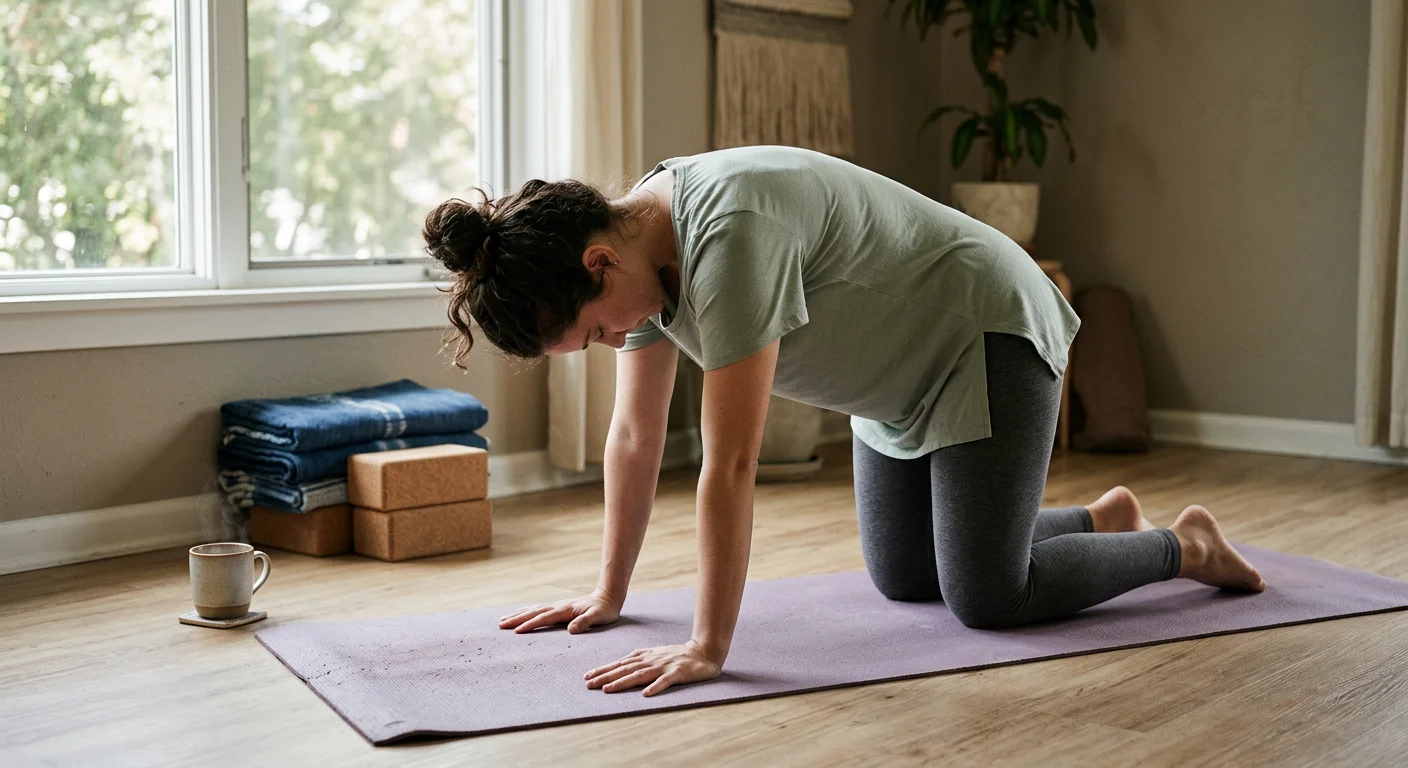
Quitting yoga during your period isn't the answer. Changing how you practice is.
Research backs this up. A meta-analysis of 230 participants found yoga produces a strong reduction in menstrual pain intensity. A separate 12-week study ran two sessions per week. Participants cut their painkiller use close to half — dropping from 35.9% to 21.9%. They also reported less bloating, breast tenderness, cramping, and cold sweats.
Your mat is still your friend during your cycle. You just need to use it a little differently.
Here's what your practice can look like on those tender, slow days:
Child's Pose (Balasana)
Kneel, sit back on your heels, fold forward with arms extended or resting by your sides. Hold for one to three minutes. This pose stretches your lower back, hips, and thighs. Those are the exact areas that tighten during cramping. It also boosts pelvic circulation and helps release bloating. It asks nothing from your core. That's the point.
Reclining Bound Angle (Supta Baddha Konasana)
Lie back, press the soles of your feet together, and let your knees fall open. Tuck cushions under each knee for support. Hold for three to five minutes. This one is most useful on days one and two. That's when flow is heaviest and your pelvis feels the most pressure. It opens the inner thighs, eases pelvic heaviness, and works on PMS tension without putting any demand on your body.
Supported Bridge Pose
Place a block under your sacrum and let it do the holding for you. Knees bent, hips lifted, lower belly softening with each exhale. This pose boosts circulation in the pelvic area and soothes lower back pain. It also skips the lumbar compression that makes the full Bridge off-limits during your period.
Cat-Cow
Do five to eight slow, breath-led cycles on all fours. It's simple and it works. This movement keeps your spine mobile, eases bloating, and gives your nervous system a chance to reset. That reset is often what cramps actually need.
How to Structure Your Practice by Day
Your body shifts throughout your cycle. Your practice should follow.
One more thing worth knowing: your breath is doing more than you think. Deep belly breathing in every pose fires up your parasympathetic nervous system. That's the system that lowers inflammation and dials down pain sensitivity. Add Nadi Shodhana (alternate nostril breathing) between poses, and you're giving your body a real tool for relief — not just a softer workout.
The bottom line: A review of 15 studies confirmed that yoga cuts period pain severity, bloating, and breast tenderness while lifting mood and promoting relaxation. You don't have to step away from your practice this week. You just have to let it look a little softer.
Expert Safety Tips: How To Adapt Your Yoga Practice During Your Period
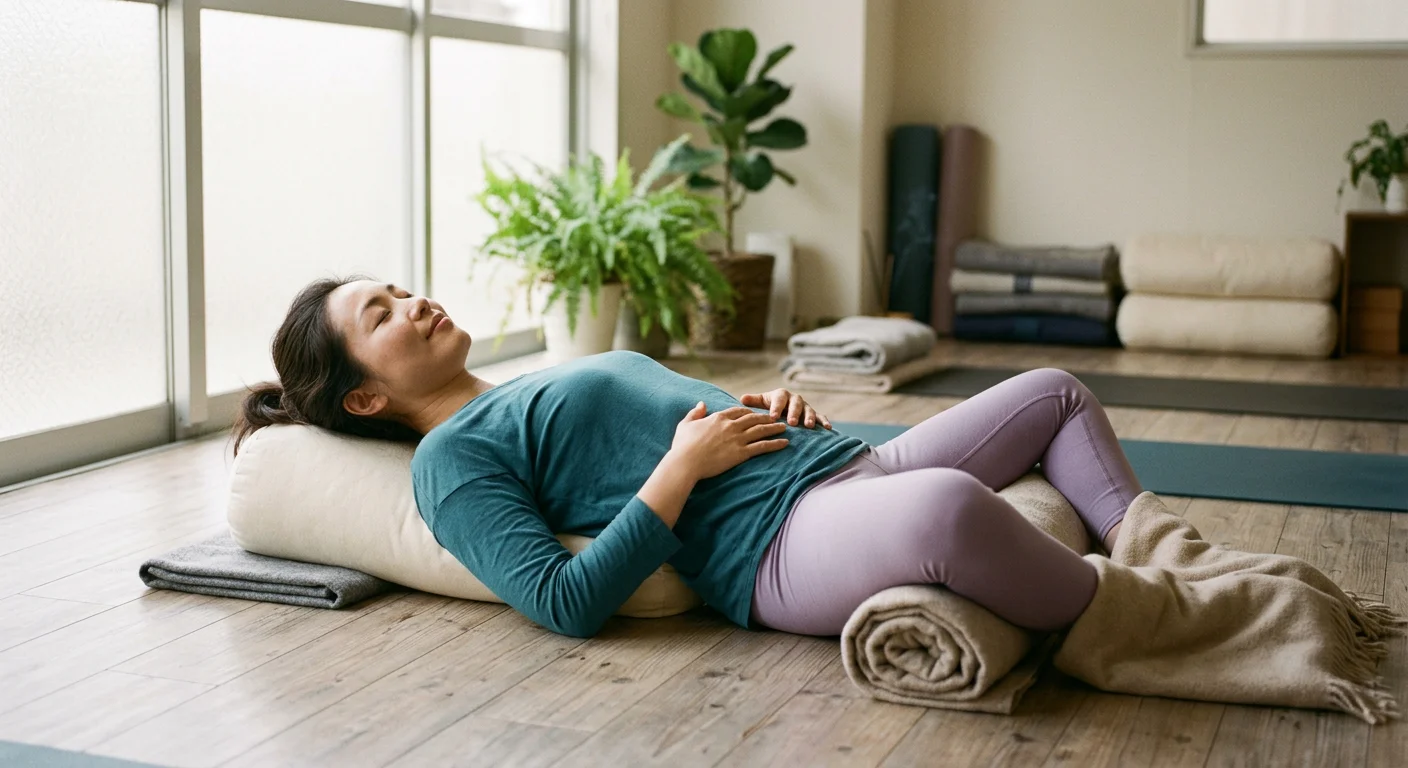
Your body knows things your yoga teacher's schedule doesn't. The real skill isn't pushing through — it's learning to listen.
Here's what the research shows: after 12 weeks of consistent yoga practice, participants reduced painkiller use during menstruation from 35.9% to 21.9% . Close to half — 48.6% — reported real improvements in quality of life during their cycle. The practice works. The key is working it with intention.
Slow everything down. Hold poses longer than usual. Move between transitions with care. Let your breath lead, not your ambition. This isn't a lesser practice — it's a smarter one.
Modify, don't eliminate. Gentle twists and soft forward folds still ease bloating and support relaxation. The key is no force. What makes a pose helpful or harmful usually comes down to depth and intention — not the pose itself.
Think in months, not days. Skipping practice on hard days and rushing back on good ones won't build the results your body needs. Women who practiced throughout their full cycle — not just during peak symptoms — saw the strongest emotional and physical gains. Drop the all-or-nothing approach. Show up steady.
Know your own body. Ninety percent of study participants experienced menstrual pain. No two women felt it the same way. What drains one person can restore another. For those living with significant dysmenorrhea, yoga works best alongside medical care — not as a substitute for it.
One final note: if the spiritual or energetic side of yoga matters to you, ask your instructor how their tradition handles menstruation. Not every style takes the same position — and that conversation is worth having.
Sustainable, cycle-aware practice is the whole point. Not perfection. Not pushing. Just showing up — with care.
What To Wear For Yoga During Your Period: Comfort & Confidence Tips
What you wear on your period matters more than most people realise — and your yoga clothes are no exception.
The wrong waistband can turn a gentle Child's Pose into twenty minutes of dull misery. The right ones vanish from your awareness. That's the difference worth chasing.
Start with the waistband. High-waist yoga pants sit an inch or two above your navel. That rise alone cuts abdominal pressure by 20-30% compared to standard cuts. Look for soft, wide waistbands — 2-4 inches is the sweet spot. Go seamless too. Seamless construction drops irritation by around 18%.
Your midsection is already tender mid-flow. Your clothes should stay out of the way.
Then think about fabric. Synthetic fabrics like polyester and nylon beat cotton during exercise. They pull sweat away from your skin about 25% faster and keep your body temperature 15% more stable. Bamboo blends are a solid option too — good for skin that feels reactive mid-cycle. You want soft, breathable, and fast-drying. Full stop. For a deeper comparison of yoga fabrics and sizing, check out our Beyond Yoga vs. Lululemon sizing guide.
A practical kit for period yoga days:
The goal is simple: nothing pulling, nothing pressing, nothing reminding you it's there.
FAQ: Common Questions About Yoga & Menstrual Health
These questions come up all the time — and they deserve straight, evidence-based answers.
Can I do yoga during my period?
Yes, and the data backs this up. A 12-week study found that regular yoga practice cut painkiller use during menstruation from 35.9% to 21.9% . It also lowered the number of women saying moderate or severe pain hurt their work — dropping from 53.1% to 29.7% . Yoga during your period isn't something to avoid. It's something to adjust.
Does yoga help with period cramps?
More than most people think. After just six weeks of 30-minute sessions once a week, 19% of participants reported zero menstrual pain — compared to where they started. Another 52.4% dropped from moderate or severe pain down to mild. No one in the study reported severe pain by the end. Four symptoms showed clear, measurable improvement:
1.Abdominal swelling
2.Breast tenderness
3.Abdominal cramps
4.Cold sweats
These weren't small or vague changes. The results were clinically significant.
Should I skip yoga on heavy flow days?
No clinical evidence says you need to sit those days out. Studies tracked participants over six and twelve weeks. Adherence stayed at 94.3% — women kept showing up through their full cycle, heavy days included, with no recorded complications. So keep practicing on those days. Dial back the intensity. Skip deep inversions. But keep moving.
Is retrograde menstruation a real risk from yoga?
The worry exists in theory, but research doesn't support the alarm. Retrograde menstruation — where some blood flows backward into the pelvis — occurs in most people who menstruate. It resolves on its own. Across studies with over 160 participants, no negative outcomes were reported. The practical takeaway: avoid deep inversions like full headstands on heavy flow days. Gentle inversions and supported poses are fine. Got endometriosis or specific anatomical concerns? Talk to your doctor — not the internet.
Conclusion
Your period isn't a pause button on your practice — it's an invitation to practice differently .
Skip the inversions, deep twists, intense backbends, and heavy core work for a few days. That's not giving up on your yoga journey. That's honoring it. You're listening to the one body you'll ever have. That kind of awareness is what yoga has been trying to teach you all along.
The good news? Gentle flows, restorative poses, and mindful breathwork carry you through your cycle feeling grounded and good — no headstands required.
Adapt your yoga practice during your period with confidence. Also, make sure what you're wearing supports you just as much as the poses do. Check out our range of period-friendly activewear built to move with you, every day of the month.
Now roll out your mat — take it slow — and give yourself permission to rest within the practice, not away from it.
Video Section