Most people find yoga through a single class — maybe a gentle stretch at the gym or a YouTube video called "yoga for beginners" — and leave thinking that's all yoga is. But that one class was just a small doorway into something much bigger.
Yoga isn't a single practice. It's a full philosophy of living.Even many yoga clothing suppliers have started to recognize this shift — designing gear not just for movement, but for the different ways people experience yoga as a lifestyle. It spreads across seven distinct branches. Each one has its own purpose, rhythm, and way of pulling you in. Some paths work through the body. Others work through the mind, the heart, or the breath.
There's a branch for quieting a restless mind. There's one for finding meaning in everyday moments. There's even one for figuring out which mat to roll out on a Monday morning. The right branch for where you are right now exists — you just haven't found it yet.
1. Hatha Yoga: The Physical Foundation Most Beginners Start With
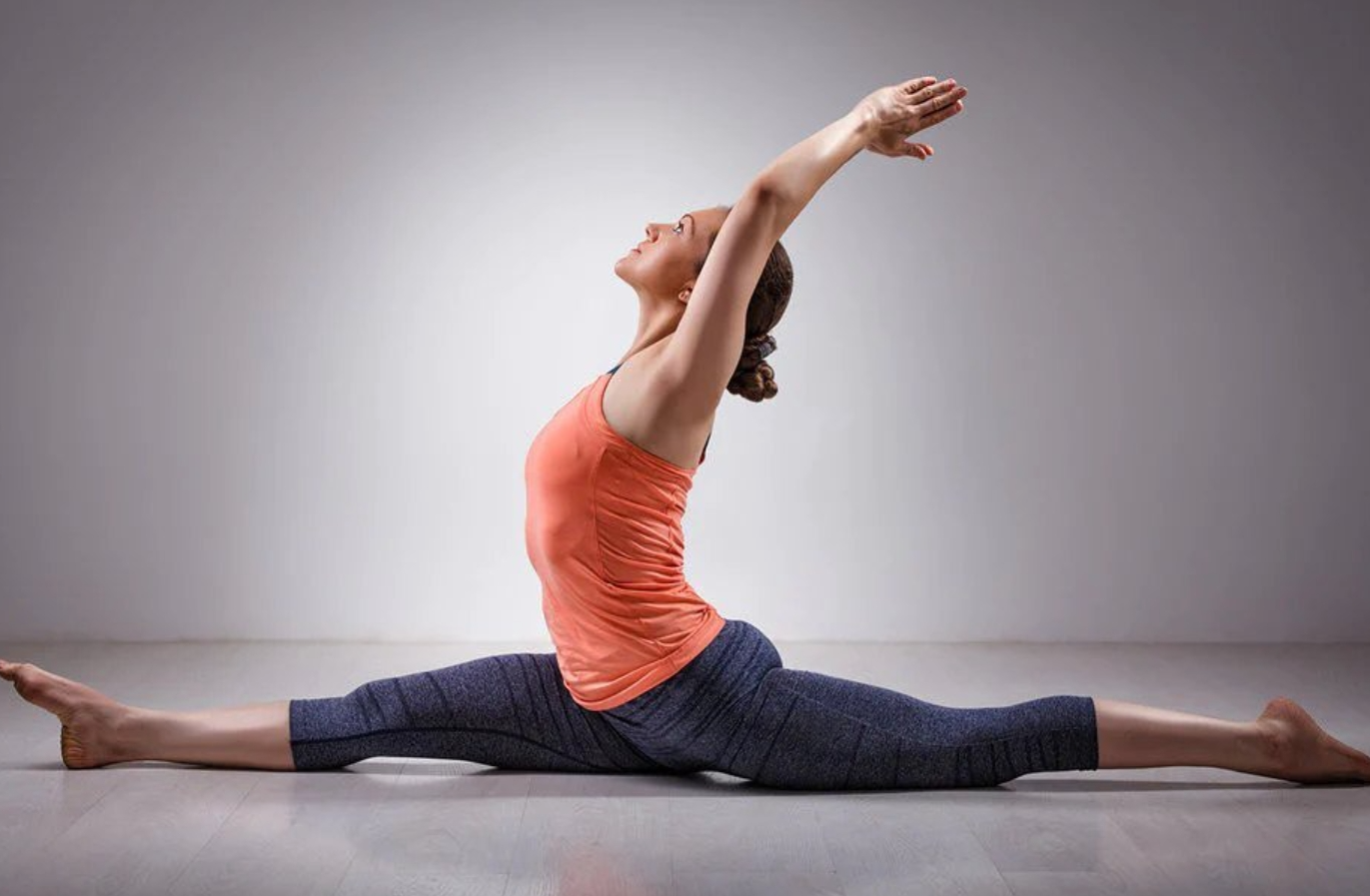
The word Hatha isn't just a label — it's a clue. In Sanskrit, "ha" means sun and "tha" means moon. These two opposites point to the whole purpose of this practice: balancing the competing energies inside you. Warmth and coolness. Effort and ease. Tension and release.
Hatha is the root. Most physical yoga styles you've heard of — Vinyasa, Ashtanga, Iyengar — grew from it. Think of those styles as specialized branches off the same tree. Hatha is the trunk.
What happens in a Hatha class?
A typical session runs 60 to 90 minutes. The pace is slow enough for you to feel what your body is doing. You'll move through:
Warm-ups — gentle joint movement to wake the body up
Sun Salutations — the backbone of most Hatha sequences
Standing poses — Warriors I through III, building strength and steadiness
Core work — Plank, Mountain pose, Standing Forward Fold
Backbends and hip openers — Bow pose, Reclined Pigeon
Breathwork (pranayama) — three-part Dirga breath, alternate nostril breathing
Savasana — a full-body relaxation to close
Each pose holds for 30 to 60 seconds. The breath leads — inhale to lengthen, exhale to deepen. There's no rush. No one is competing.
Who it's for
Hatha works for almost everyone starting out, regardless of age or fitness level. A study tracking 190 adolescents found that Hatha yoga cut stress at a level close to conventional sports. A semester-long practice showed clear shifts in movement habits too — sitting time dropped by over 6%, while walking increased by more than 8%.
You don't need to be flexible to begin. You just need to begin.
To support this kind of steady, alignment-focused movement, many brands now rely on flexible production models like OEM/ODM yoga apparel services to refine fit and fabric performance.
One note on what to wear: Hatha involves long holds in deep positions — Warriors, forward folds, twists. Close-fitting, high-stretch fabric stays in place without riding up or blocking movement. Berunclothes' form-supportive pieces are built for this kind of slow, alignment-focused practice — where every pose counts and your clothes need to keep up.
2. Raja Yoga: The Meditative Path for Those Who Live Inside Their Own Mind
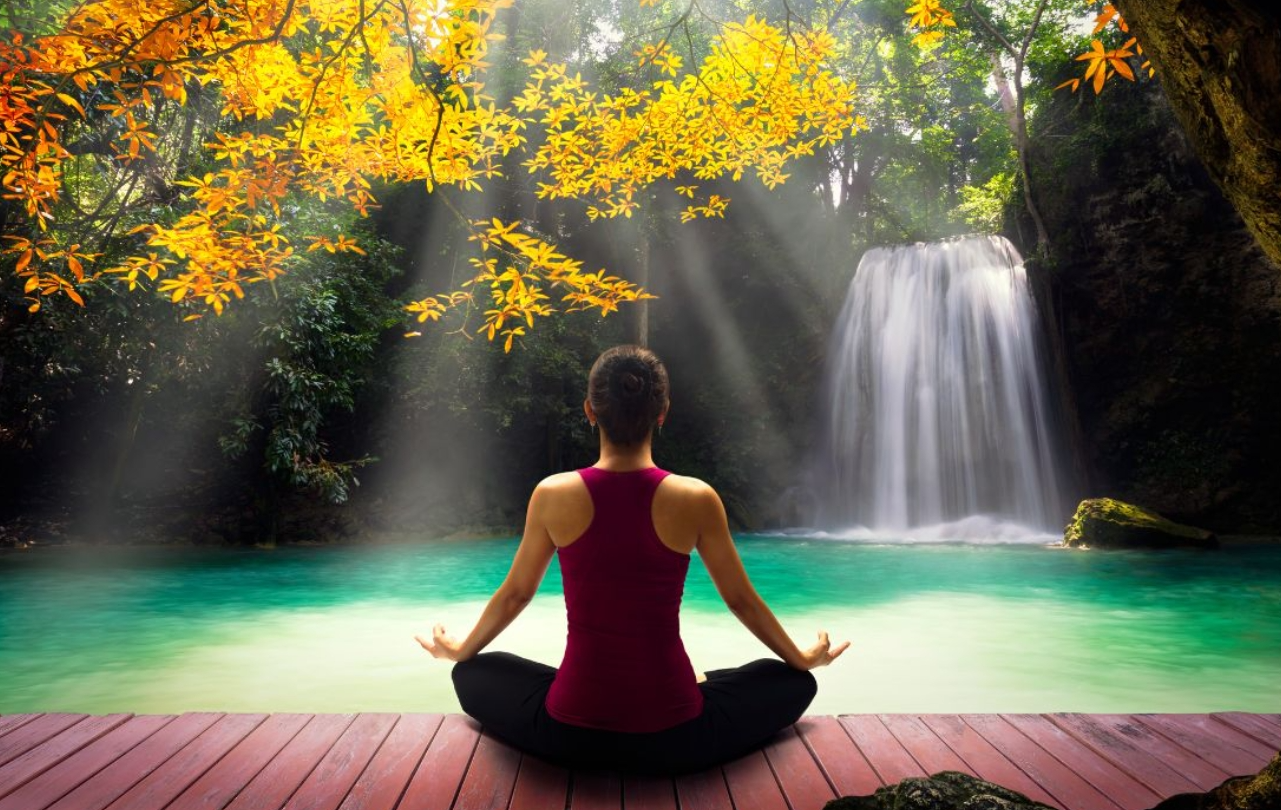
Some people don't need more movement in their lives. They need a way to work with what's already happening inside.
Raja Yoga is built for that. It follows Patanjali's eight-limb framework — called Ashtanga. The path starts with outer ethics, then moves inward, one layer at a time. The mind itself becomes the practice.
The eight limbs, simplified:
Yama & Niyama — ethical foundations and inner discipline; the ground everything else grows from
Asana — not a workout here, just a steady, comfortable seat for meditation
Pranayama — breath as a tool to quiet mental noise
Pratyahara — drawing the senses inward, away from external distraction
Dharana & Dhyana — focused concentration that deepens into steady, unbroken meditation
Samadhi — full absorption; the point where the observer and the observed dissolve
What the research shows
Raja practice produces stronger results than most modern meditation tools. One study followed 90 participants with remarkable outcomes:
At the 12-week mark, practitioners showed clear gains in both spatial and verbal memory. Long-term meditators — those with an average of 15 years of practice — scored 96% on psychological well-being scales. On top of that, 100% had quit tobacco, alcohol, and other harmful habits. No app has come close to that.
Is this branch for you?
Ask yourself three things:
1. Do you spend more than two hours a day in internal reflection — but feel overwhelmed by your own thoughts?
2. Have you tried meditation apps and found them shallow?
3. On a scale of 1–10, is your drive for genuine inner transformation a 7 or above?
Answered yes to most of those? Raja fits the way your mind works. It was built for people like you.
3. Karma Yoga: How to Turn Everyday Actions Into a Spiritual Practice
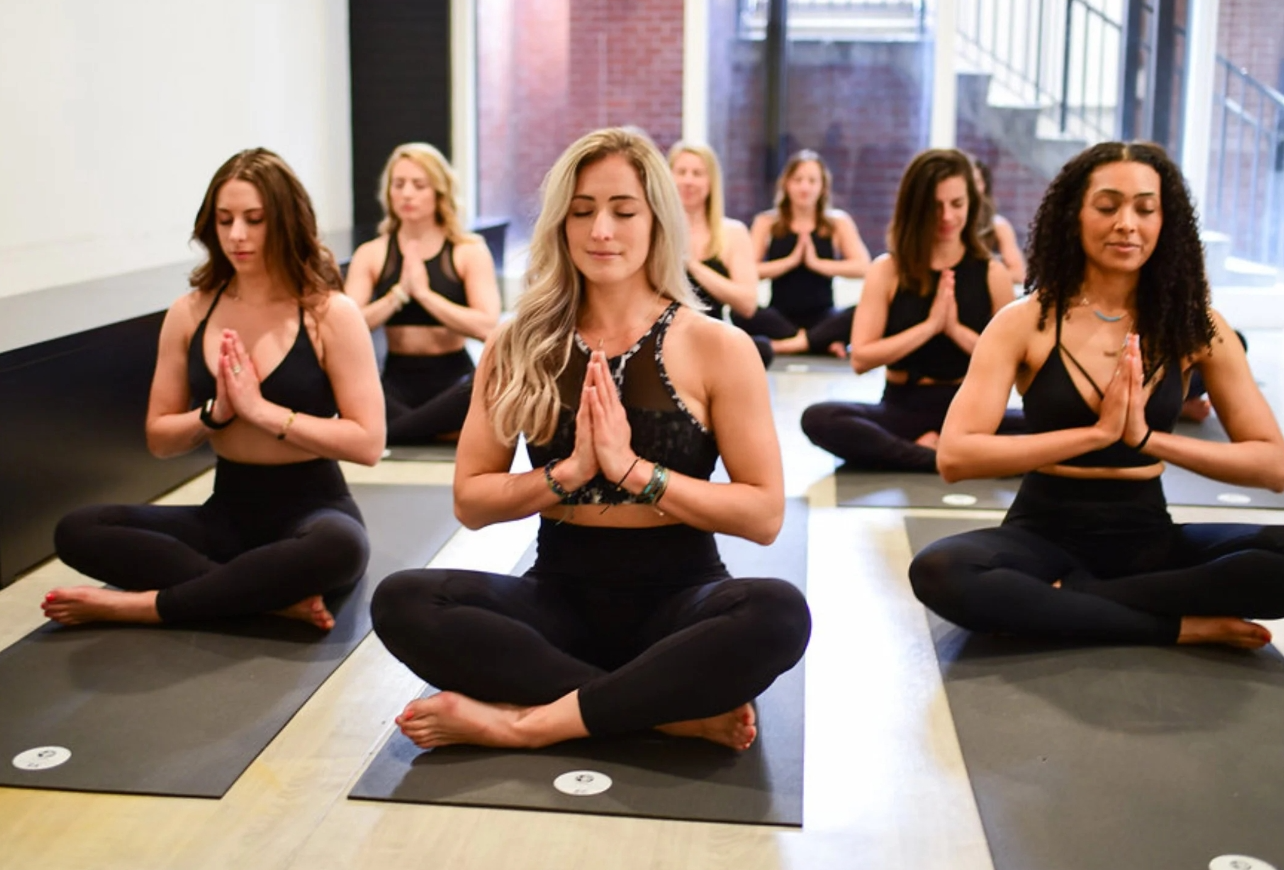
Here's what most people miss: you don't need a mat to practice this branch of yoga. No studio. No props. Not even a pair of leggings.
Karma Yoga lives in the ordinary. The commute. The meeting. The dishes after dinner. The idea at its core comes from the Bhagavad Gita — "You have the right to work, but never to its fruits." Do the action with full presence. Let go of the outcome. That gap between doing and clinging — that's where the practice lives.
What this looks like day to day
The practice moves through five layers:
Awareness — feel what your body is doing while it works; notice the pull of muscles, the weight of movement
Observing — watch your inner weather shift between praise and criticism, without judging it
Acceptance — tend your responsibilities the way a farmer tends crops; you plant, you care, but the rain is not yours to control
Non-attachment — finish the task because it matters, not because of what it might return
Integration — this path fits alongside Hatha and Raja practice; each one sharpens the others
Research backs up what ancient teachers already knew. A study of 260 participants found that Karma Yoga reduces job burnout. It also boosts psychological resilience and a sense of flourishing. A second study found a strong link between Karma Yoga and mindfulness — with a correlation of β=0.44. That's not two separate paths. It's one path with two names.
The real gift of this branch? It travels with you. Wherever your life already is, that's where it begins.
4. Bhakti Yoga: The Emotional Path of Devotion (Even If You're Not Religious)
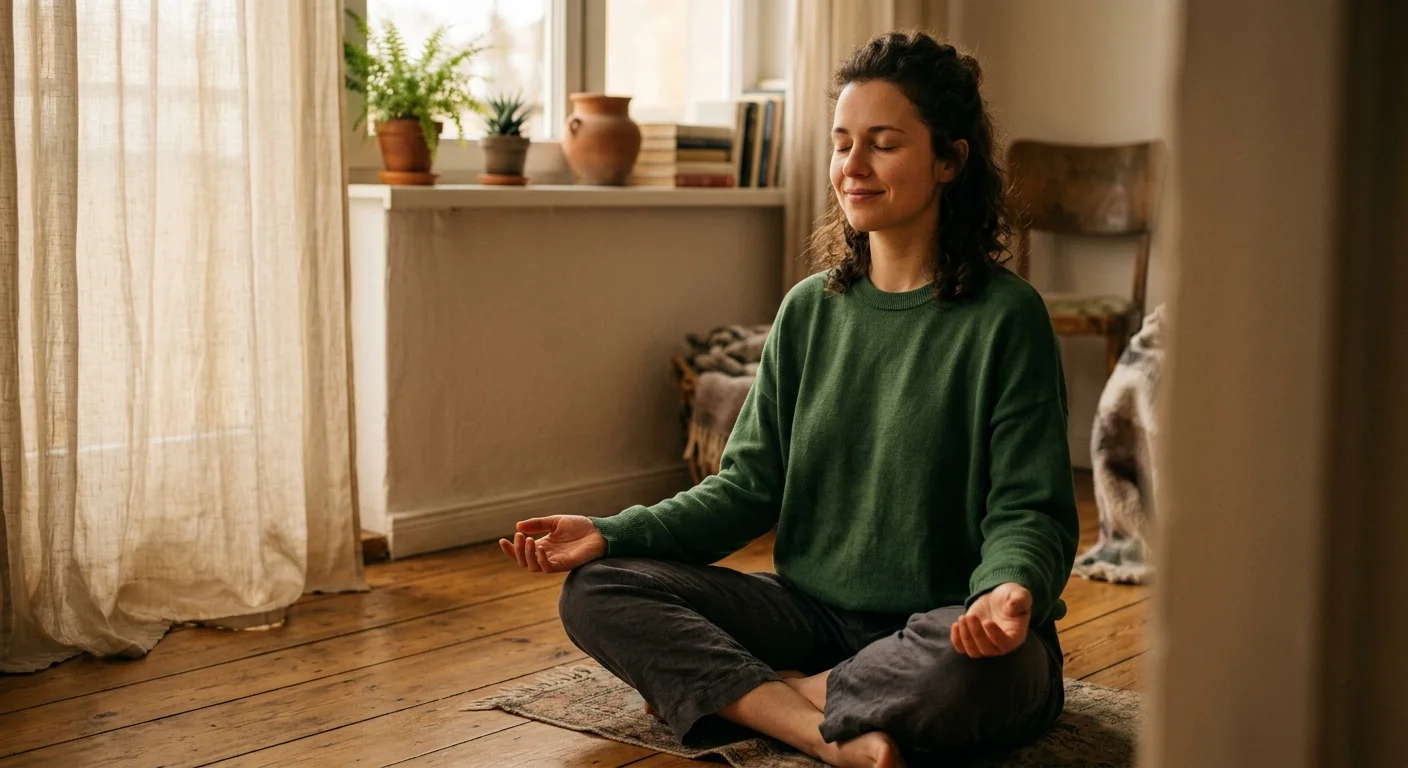
Bhakti doesn't ask you to believe in anything specific. It asks you to feel something — and mean it.
That feeling doesn't have to be religious. It can be the quiet awe you get standing in front of the ocean. The tenderness you feel watching someone you love sleep. The way a piece of music cracks you open without warning. Bhakti works with whatever already moves you. It teaches you to stay in that feeling instead of pulling away.
At its core, this is yoga for the emotional body. Raja quiets the mind. Karma redirects action. Bhakti works straight with the heart — building love, compassion, and gratitude. It also loosens the hold of anger, fear, and jealousy over time.
What the practice looks like
The main tools are simple — more simple than you'd expect:
1.Kirtan — devotional chanting or singing, often done in a group
2.AUM chanting — repeated sound meditation, around 10–15 minutes
3.Devotional songs and prayer — used alongside seated meditation
One study tracked 30 students through 30 minutes of Kirtan each day for one month. Emotional maturity scores went up — with strong reliability and validity across the group.
The anxiety and depression data is harder to ignore. A clinical study of 16 patients ran eight weeks of Bhakti practice. Anxiety dropped by close to 25%. Depression fell by over 30%. The control group? Less than 1% change on both measures.
A simple starting protocol
Here's what to try:
10–15 minutes of AUM chanting
20–25 minutes of Kirtan or devotional music
10 minutes of quiet meditation
Do it every day. Keep it up for three months. That's the rhythm the research used to hit p<0.001 results.
Bhakti suits anyone who feels emotions hard — and wants to work with that intensity rather than shut it down.
CTA Banner 15. Jnana Yoga: The Intellectual's Path to Self-Realization
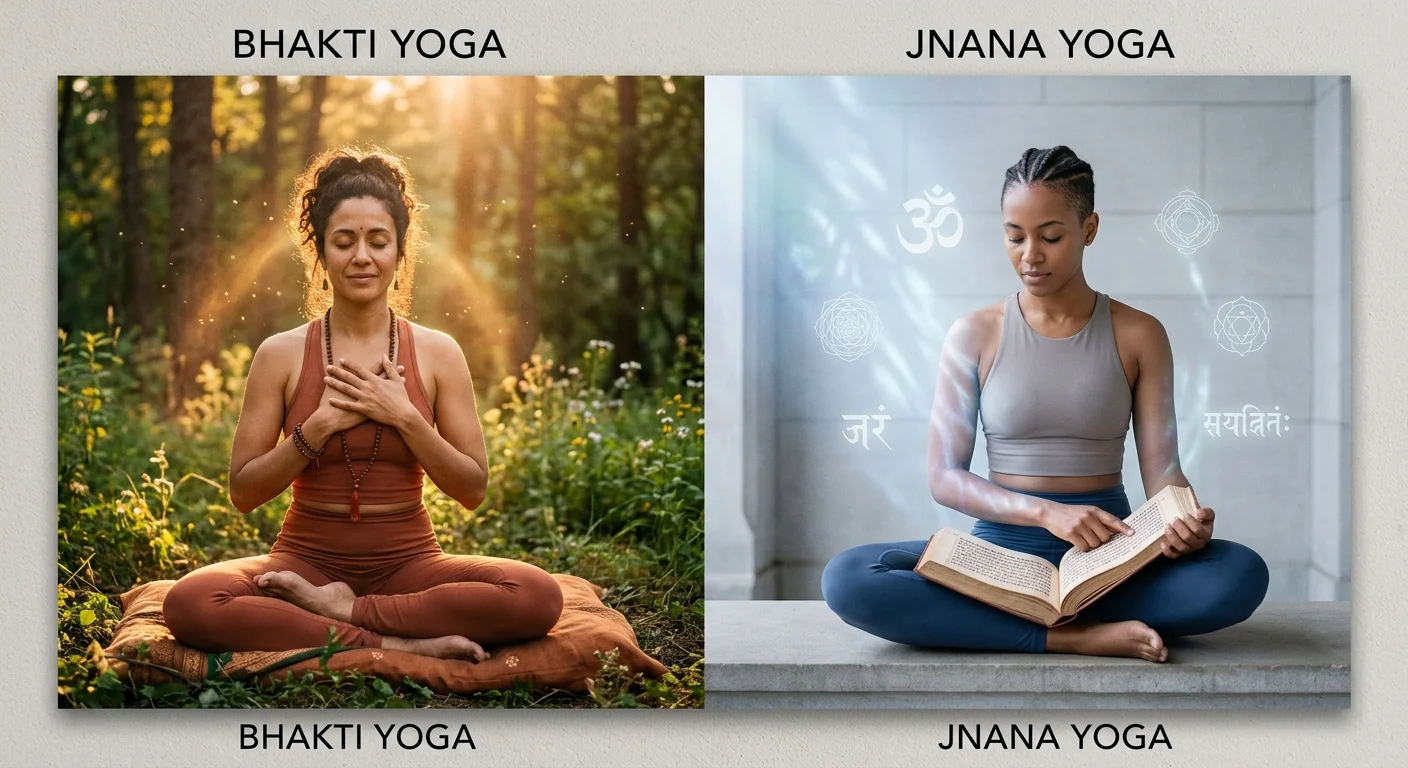
Of all seven branches, Jnana sets the highest bar to enter — and offers the most direct path to liberation.
The word means knowledge. Not the kind you collect from books, though books play a part. The kind that breaks apart everything you thought you were.
The two core tools
Jnana yoga stands on two foundations:
Viveka — the ability to tell what is real from what is temporary. The eternal from the illusion.
Vairagya — the readiness to let go of attachments the illusion created.
From there, the practice moves through three stages:
1.Śravaṇa — studying sacred texts. The Upanishads. The Bhagavad Gita. The Ashtavakra Samhita, which holds lines like "I am spotless, tranquil, pure consciousness."
2.Manana — sitting with what you've read. Turning it over. Asking where ego ends and awareness begins.
3.Nididhyāsana — absorbing it fully. The insight drops below the thinking mind. It reaches something quieter, deeper underneath.
Is this the path for you?
Three questions worth sitting with:
1.Do you reach for why and what am I before you reach for movement or feeling?
2.Can you keep your mind still long enough for real contemplation — not just scrolling without distractions?
3.Does reading the Upanishads feel like a burden, or like coming home?
Jnana isn't for everyone. It demands more from the intellect than any other branch. For those who live inside questions — who find the mind the most honest doorway inward — this is what the tradition calls the most sublime path of all.
6. Tantra Yoga: Separating the Misconceptions from the Real Practice

Say "Tantra" in most Western rooms and watch the eyebrows rise. Pop culture has hijacked the word so completely that the real practice — ancient, rigorous, and deeply demanding — rarely gets a fair hearing.
Here's the truth: sexual energy takes up a small corner of traditional Tantra. The texts use it as a symbol of union between Shiva (pure consciousness) and Shakti (creative energy). It was never about indulgence.
What authentic Tantra uses:
1.Mantra recitation — sound as a tool for purifying energy
2.Yantra meditation — focused visualization practices
3.Mudra and pranayama — precise techniques for balancing the body's energy channels ( nadis )
4.Asana with esoteric intent — not the flow you'd find in a Vinyasa class
The chakra system sits at the center of this work. Seven energy wheels run through the body. Each one holds layers of lived experience. Breathwork, movement, and sound work together to activate and raise them — and practitioners apply each tool with clear purpose.
This is not a shortcut path.
Tradition requires ngondro before formal Tantra practice begins. That's a preliminary phase of 100,000+ prostrations and recitations. It takes years. Full concentration, proper motivation, and solid spiritual grounding are non-negotiable.
| Common Myth | What's True |
|---|---|
| It's all about sex | It's a complete system: ethics, meditation, energy regulation |
| It's an easy, fast path | It demands more commitment than most branches |
| It's dangerous or occult | It's self-realization work — safe with the right preparation |
| You need a partner | Solo practice is the main entry point |
Tantra fits practitioners who are already grounded — a steady Hatha foundation helps — and feel a real pull toward mysticism, ritual, and energy work. No strong pull yet? The other six branches offer plenty of room to grow first.
7. Kundalini Yoga: The Most Spiritually Intense Branch (And How to Know If You're Ready)
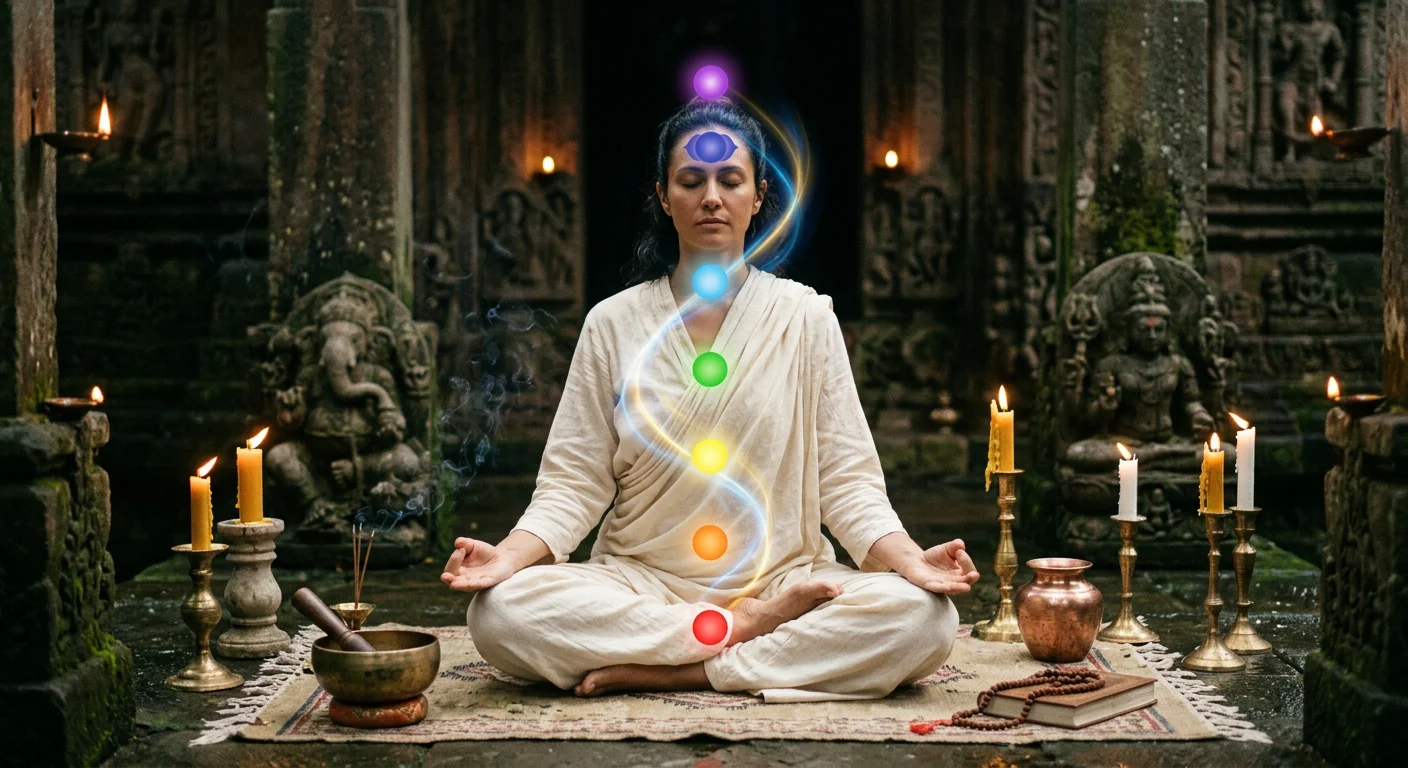
Kundalini earned the name "the yoga of awareness" for good reason — it throws you in at the deep end.
At its core sits Kundalini Shakti : a dormant energy coiled at the base of your spine, in the muladhara chakra. This practice wakes it up — moving that energy through all seven chakras until it reaches the crown. What unfolds along the way is unlike anything the other six branches offer.
What a class involves:
1.Pranayama — breath control taken to high intensity
2.Kriya sequences — spine-focused movements at low-to-moderate physical effort
3.Mantra chanting — structured and repetitive; some traditions call for 25,000+ chants over nine days
4.Deep meditation — the closing phase; serious practitioners clock an average of 8,431 lifetime hours
The effects show up in the data. A study tracking 80 participants found that 73% had notable mood shifts. 61% reported motor sensations — jerky, spasmodic movements. And 53% felt vibrations traveling up the spine.
Mental health outcomes are striking too:
Readiness matters here. Study participants averaged 17.5 years of experience and 86 minutes of practice per day. Unresolved trauma can surface fast. Intense heat, dizziness, or sharp anxiety are signals to stop and get guidance — not push through.
A qualified teacher isn't optional. It's the starting point.
Traditional Kundalini dress is all white — a symbol of purity and expanded awareness. In practice, loose and breathable is what counts. Tight or synthetic fabrics block the energy flow this practice relies on. Berun's wide-leg pants and moisture-wicking tops hold up well across 60–90 minute sessions without getting in the way.
The 7 Branches Compared: A Side-by-Side Decision Matrix
Seven paths. One decision. That diversity is also why both yoga outfit manufacturers and yoga apparel manufacturers increasingly design collections tailored to specific styles — not just one-size-fits-all activewear.The table below cuts through the noise.
| Branch | Practice Form | Intensity | Spiritual Depth | Beginner-Friendly | Primary Benefits |
|---|---|---|---|---|---|
| Hatha | Postures + breath | 2 | 2 | 5 | Flexibility, stress reduction |
| Raja | Meditation + ethics | 1 | 4 | 3 | Mental clarity, inner discipline |
| Karma | Mindful daily action | 1 | 3 | 5 | Resilience, burnout relief |
| Bhakti | Chanting, devotion | 1 | 4 | 4 | Emotional balance, anxiety relief |
| Jnana | Self-inquiry, study | 1 | 5 | 3 | Wisdom, lasting inner peace |
| Tantra | Ritual, energy work | 3 | 5 | 1 | Energy regulation, deep awakening |
| Kundalini | Breath, kriyas, mantra | 3 | 5 | 2 | Mood shifts, emotional release |
Watch Out for These Common Mismatches
Four patterns trip people up before they even get started:
1.Injury-prone practitioners choosing Ashtanga — its intensity score of 5 carries a 40% higher reinjury risk. Start with something gentler.
2.Beginners jumping straight to Jnana — the depth is real, but 70% of new practitioners report frustration. Results take time, and that catches people off guard.
3.Newbies drawn to Bikram's intensity — 25% drop out from overheating alone.
4.Spiritual seekers settling for Hatha — a depth score of 2 won't satisfy someone who is serious about yoga philosophy.
The right branch isn't the most popular one. It's the one that fits where you are right now — not where you think you should be.
In the same way, choosing the wrong gear can hold you back — which is why many practitioners are turning to custom yoga apparel that aligns with how they actually practice.
CTA Banner 2Which Branch of Yoga Is Right for You? (A 5-Question Self-Assessment)
Seven branches. One person. As more people personalize their practice, the demand for custom yoga outfit solutions continues to grow — especially for those balancing different styles throughout the week.The choice doesn't have to be this hard.
Answer these five questions — not how you think a yogi should answer, but how you live right now. Your answers will point you somewhere clear.
Q1. What does your body need most?
- (a) Strength and endurance — I want to feel capable and powerful
- (b) Flexibility and recovery — I need to unwind what's tight and tired
- (c) Gentle mobility — I'm working around pain or starting slow
Q2. What are you looking for, mentally?
- (a) Focus and a real energy lift
- (b) Mindfulness — something that quiets the noise
- (c) Deep, real stress relief
Q3. How much time can you commit each week?
- (a) 60+ minutes — I want full sessions, not shortcuts
- (b) 30–45 minutes — balanced, sustainable, consistent
- (c) Under 30 minutes — gentle and efficient
Q4. Which description fits how you move through the world?
- (a) Athletic, goal-driven, a little competitive
- (b) Reflective, inward, drawn to stillness
- (c) New to this, want something accessible and kind
Q5. How would you describe your stress right now?
- (a) High — I need relief and I need it to work fast
- (b) Moderate — I want to unwind without drama
- (c) Low but persistent — recovery is the real goal
What Your Answers Mean
| Your Pattern | Start Here | Also Consider |
|---|---|---|
| Mostly (a) | Kundalini or Raja | Vinyasa if body-led |
| Mostly (b) | Hatha or Bhakti | Yin for deeper rest |
| Mostly (c) | Karma or Restorative | Jnana when ready |
| Mixed answers | Hatha | It connects everything |
Hatha is where 70.6% of traditional teachers begin their students — and for good reason. It builds the foundation that everything else grows from. Scattered answers? That's your answer too. Start with Hatha.
One practical note: whatever branch you land on, what you wear matters more than most people admit. Dynamic practices need fabric that moves with your body. Restorative work needs nothing that pulls, pinches, or restricts. Berunclothes pieces are built around how yoga feels in motion — not just how it looks in a photo.
What to Wear for Each Branch of Yoga: A Practical Clothing Guide
Clothing is never just clothing in yoga — it's the thing standing between you and the pose.This is exactly where wholesale yoga clothing collections come into play, offering versatile options that adapt across multiple yoga styles without compromising comfort.
Every branch puts different demands on your body. So it puts different demands on what you're wearing. Here's what works:
Hatha — Go with high-waisted, high-elasticity leggings in a nylon-spandex blend, plus a fitted tank. Long holds in deep bends mean your fabric needs to stay in place. It shouldn't bunch, slide, or pull.
Kundalini — White loose pants with cinched ankles work best here. Add a lightweight tunic and a sweater for breathwork. Tight synthetic fabrics restrict energy flow, so skip them.
Yin & Restorative — Layer up with soft pieces. Loose full-length pants, a long-sleeve top, and something warm for savasana. Your body cools down fast during 3–5 minute holds — faster than most people expect.
Power & Vinyasa — You need 4-way stretch leggings, a seamless fitted tank, and a high-support sports bra. Skip the loose waistbands. No draping fabric near your face during inversions. It gets in the way.
The Universals That Apply to Every Branch
Fabric : Look for 15–20% spandex in a polyester-dominant blend. Cotton soaks up 27x its weight in sweat and adds drag to every movement.
Seams : Flatlock construction stops chafing through 90°+ bends. Regular seams dig in and cause irritation.
Fit check : Do a forward fold before you buy. Your shirt shouldn't gap. Leggings shouldn't shift more than two inches.
Berunclothes pieces are built around these standards — movement comes first, every time.
Conclusion
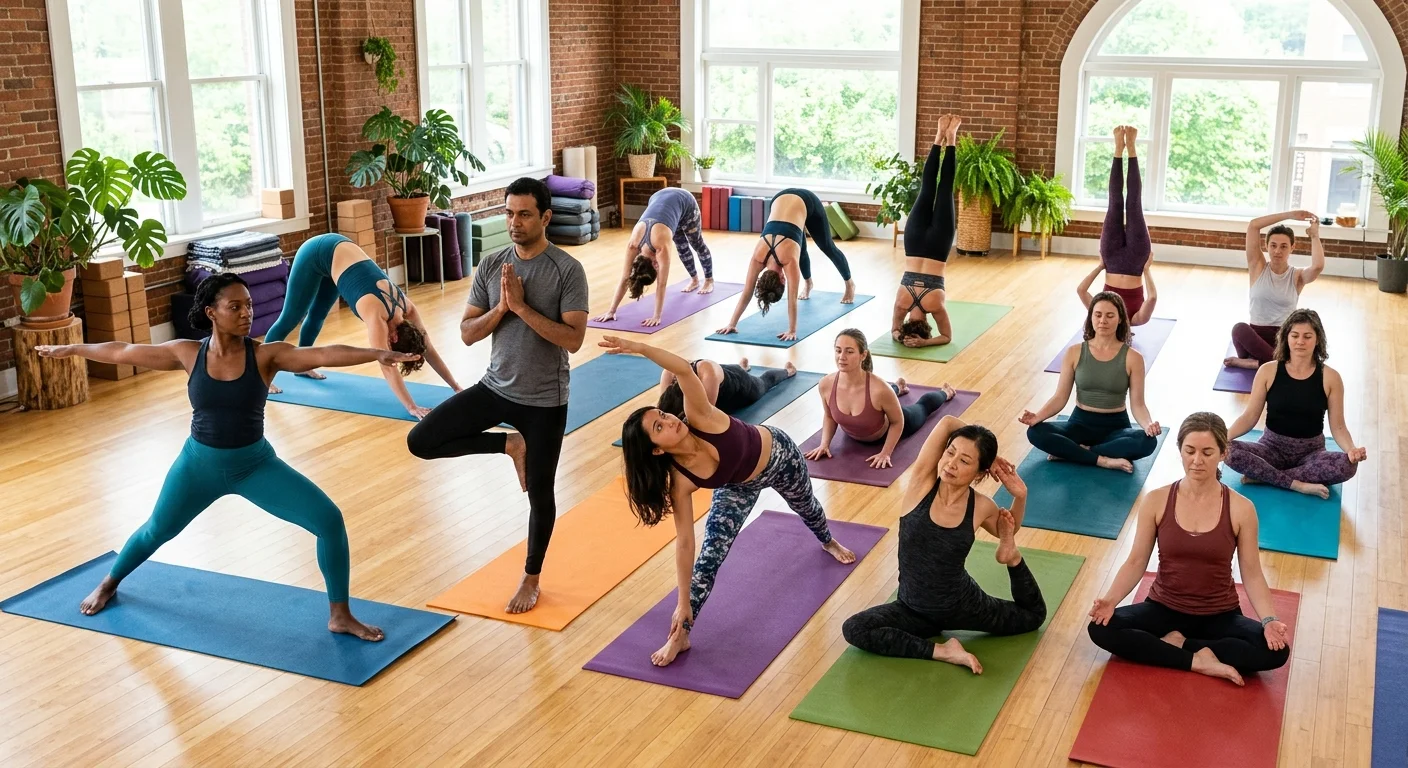
Yoga has never been a one-size-fits-all practice — and that's the most beautiful thing about it.
Are you drawn to the quiet discipline of Raja yoga ? The heart-opening warmth of Bhakti yoga ? Or the grounding familiarity of a Hatha flow? There's a branch built for the version of you that exists right now. Not the person you think you should be. The one you are.
Start there. Pick the path that feels like the least resistance — or the most exciting. Follow it with curiosity, not pressure. Your practice will evolve, shift, and surprise you over time.
Roll out your mat and wear something that moves the way you do. The right clothing isn't vanity. It's a small, practical act of showing up for yourself — fully present, ready to move.And as expectations rise, the shift toward high-end custom yoga clothing reflects a deeper understanding: what you wear should support not just how you move, but how you feel.
The mat is ready. So are you.
CTA Banner 3 Video Section