If you're sourcing for bulk orders, consider our trusted suppliers of NHL jerseys.On March 30, 2025, Alexander Ovechkin scored his 895th career goal. A number hockey fans had treated as sacred for close to four decades had finally fallen. Wayne Gretzky's 894 goals had been the wall. The one record everyone assumed would outlive the sport itself. And then it didn'T.
So now we're left with the biggest argument in hockey. Ovechkin broke the most "unbreakable" record in NHL history. Does that make him the greatest player who ever laced up a pair of skates? Not so fast. Gretzky's assist total alone — just his assists — is more than any other player's total points. Read that again. Let it sink in.
What you'll find below is a data-driven breakdown of two legends, two eras, and one question with no easy answer — but one that deserves an honest shot.
Wayne Gretzky: Why "The Great One" Built an Untouchable Legacy
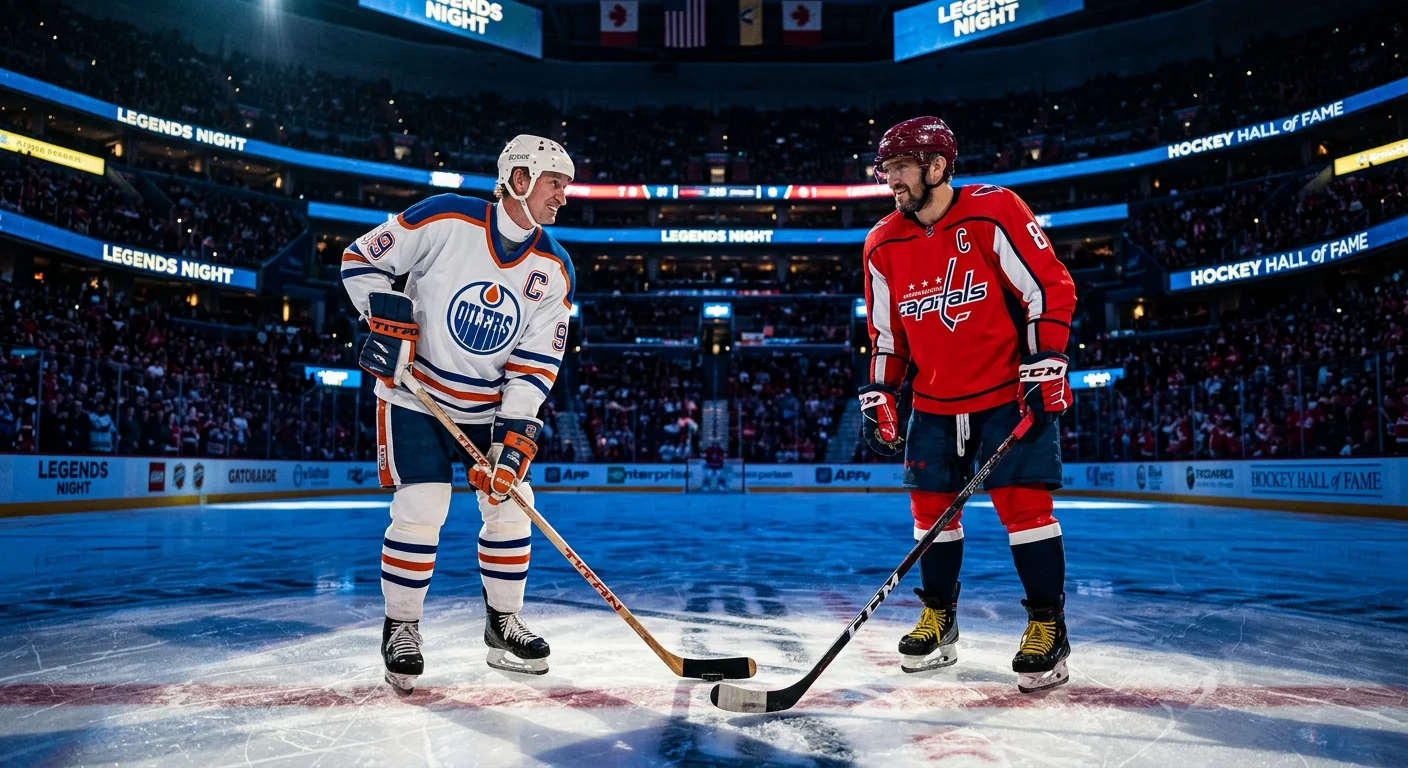
Here's a number that should break your brain: 1,963 .
That's Gretzky's career assist total. Not points. Assists. The number of times he passed the puck to a teammate who then scored. That single stat — not his goals, not his trophies, just his assists — beats every other player's total point count in NHL history . Jaromir Jagr holds the second-highest points total ever: 1,921. Gretzky out-assisted him by 42.
Let that sink in for a second.
For ice hockey apparel retailers looking for premium sports merchandise, NHL jersey wholesalers can leverage this kind of stats-driven marketing.
The Numbers Don't Just Impress — They Embarrass Everyone Else
Stat | Gretzky | Next Closest | Gap |
|---|---|---|---|
Total Points | 2,857 | Jagr (1,921) | +936 (+49%) |
Assists | 1,963 | Jagr (1,155) | +808 (+70%) |
Hart Trophies (MVP) | 9 | Gordie Howe (6) | +50% |
200+ Point Seasons | 4 | Mario Lemieux (0) | Unmatched |
He won 9 Hart Trophies and 10 Art Ross Trophies . He hit 200+ points in a single season four times . No other player in NHL history has done it even once.
In 1981–82, he scored 92 goals and 212 points. The league-wide average that season sat at about 4 goals per game. The next closest scorer that year had 147 points . Gretzky beat them by 65.
Businesses interested in corporate gifts or promotional items often turn to bulk NHL jersey suppliers for these kinds of legendary player editions.
Four Cups. One Dynasty. Zero Accidents.
He didn' t collect rings by sitting back. He dragged the Edmonton Oilers to four Stanley Cup championships — 1984, 1985, 1987, and 1988. He served as captain and leading scorer each time. The Oilers averaged 4.3+ goals per game across those dynasty years. That team-scoring record still stands today.
He moved to the LA Kings in 1988. Then he came close to doing it all over again. He pulled a franchise nobody cared about straight to the 1993 Stanley Cup Final . Attendance doubled. The sport took root in California. He did that.
This wasn't just dominance. It was transformation . Gretzky didn't just win — he rewired how the game was played.
Explore OEM/ODM ice hockey apparel jersey manufacturers to create exclusive team merchandise or special editions.
Alexander Ovechkin: How the Goal-Scoring Machine Rewrote the Record Books
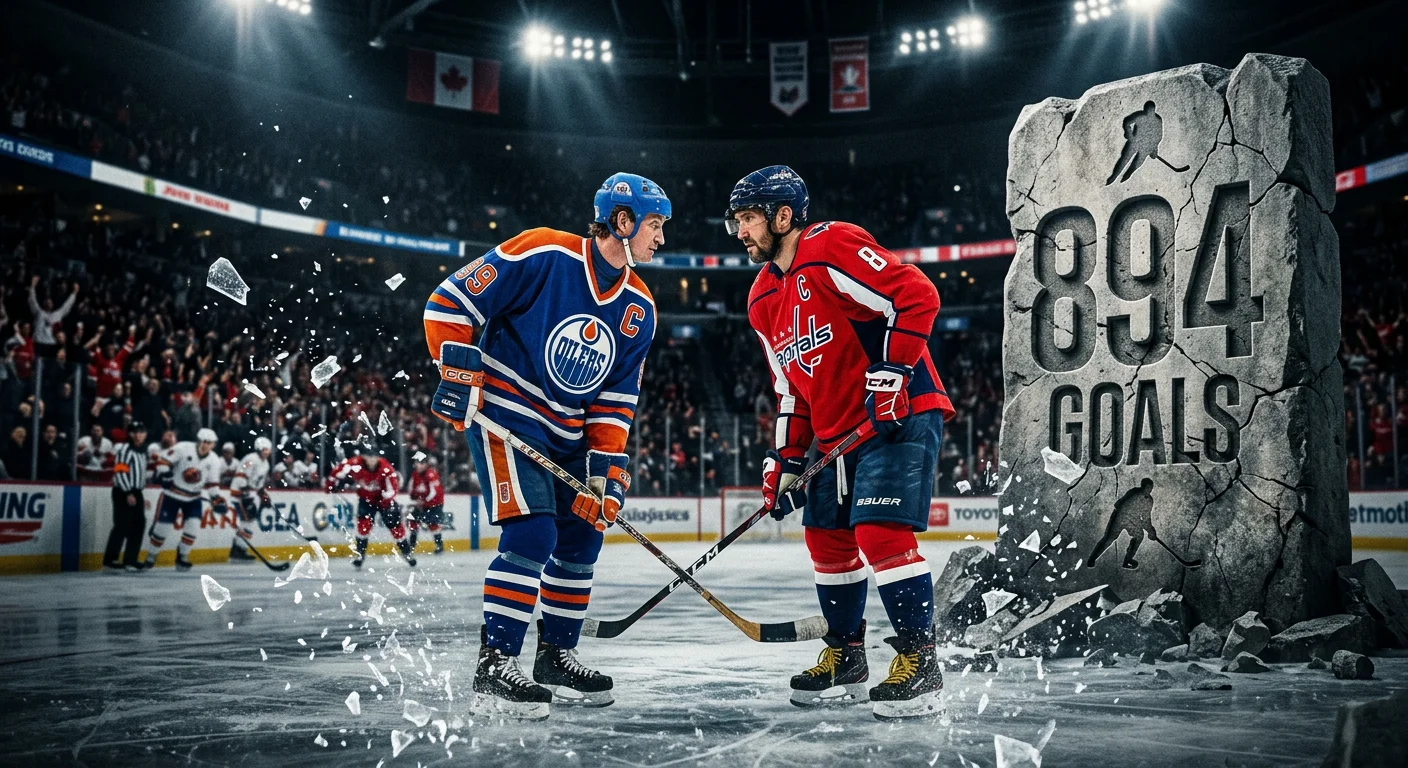
894 goals. For 36 years, that number sat at the top of hockey's Mount Olympus like a stone monument. Then Alexander Ovechkin — at age 39, in his 1,487th game, against the New York Islanders — scored his 895th. Same team. Same game count. Different outcome. The monument cracked.
But here's the insane part: he didn't stop there.
Wholesale ice hockey jerseys distributors now report a surge in orders following his record-breaking milestones.
The Record Was Just the Beginning
By October 2025, Ovechkin had 900. Then he played 46 games into the following season and landed at 917 goals . At age 40, he scores at a pace of 0.435 goals per game. That pace ranks him second in the entire NHL among all active players .
The raw goal-scoring numbers are hard to believe:
Record | Ovechkin's Mark | Previous Holder |
|---|---|---|
All-time career goals | 926 | Wayne Gretzky (894) |
Power-play goals | 326+ | Wayne Gretzky |
Game-winning goals | 138+ | Wayne Gretzky |
Overtime goals | 27 | Wayne Gretzky |
Empty-net goals | 57+ | Wayne Gretzky |
40-goal seasons | 14 | Previous record holder |
30-goal seasons | 19 | Previous record holder |
He didn't just break Gretzky's goals record. He tore apart an entire category of records that Gretzky owned. One by one. All of them.
A Machine Built for One Thing
Ovechkin's best single season was 65 goals in 2007–08 — a left wing record that still stands. He hit 50+ goals nine times , tying Gretzky and Mike Bossy. No other player in NHL history scored 200+ goals across three separate decades. Just him.
That last one deserves a moment. Three decades. The same guy. Still scoring.
Gretzky vs Ovechkin Career Stats: Head-to-Head Data Breakdown
Put the two careers side by side on a spreadsheet and one thing stands out fast: these players weren't just playing different styles. They were playing almost different sports .
Stat | Wayne Gretzky | Alex Ovechkin |
|---|---|---|
Games Played | 1,487 | 1,483–1,573 |
Goals | 894 | 895–929 |
Assists | 1,963 | 724–726 |
Total Points | 2,857 | 1,620–1,623 |
Points Per Game | 1.92 | 1.09 |
Shots on Goal | ~5,100 | 6,864 |
Shooting % | 17.5% | 13.1% |
Game-Winning Goals | 91 | 135–136 |
Power Play Goals | — | 324 (NHL record) |
Short-Handed Goals | 73 | 5 |
+/- | +520 | +60–+63 |
The goals column now belongs to Ovechkin. Everything else in that table still belongs to Gretzky — and it isn't close.
Two Different Paths to Greatness
Ovechkin took 6,864 shots across his career at a 13.1% conversion rate. He attacked the net without letting up, like a guy who believed every single shot was going in. Gretzky took around 5,100 — fewer shots, but at a higher 17.5% efficiency — because half the time he was hunting the pass that would create the shot, not take it himself.
That gap in playing style shows up across the whole stat sheet. Gretzky's 73 short-handed goals paint a clear picture: he was a threat in any situation, no matter the ice conditions. Ovechkin's 5 short-handed goals tell a different story. On the penalty kill, he held back, conserved energy, and waited for the power play to flip back in his favor.
The Era Question Nobody Wants to Do the Math On
This is where the numbers get tricky. Gretzky played in the 1980s. The NHL averaged around 7.7 goals per game back then. Ovechkin plays in a time where that number sits at 6.0 . Scoring is harder now. Goaltending is sharper. Defensive systems are tighter and more organized.
Hockey Reference ran era-adjusted numbers. They measured each player's output against the scoring conditions of their time. The result? Ovechkin comes out ahead in goal-scoring dominance. His adjusted total lands around 859–894 equivalent goals. Gretzky's drops to about 653.
So what does that tell you? Ovechkin has been even more dominant relative to his peers than the raw numbers show. He didn't just score a lot of goals. He scored them in a time that made putting up big goal totals much harder than it used to be.
The points gap, though? That one stays wide open. Gretzky's 2,857 career points versus Ovechkin's ~1,623 is a 1,234-point difference — so large that Ovechkin would need to play another full All-Star career just to reach it. Gretzky's assists alone (1,963) beat Ovechkin's total point count by 340.
Both men put up numbers that don't make sense by normal standards. The difference is they did it in two separate directions entirely.
Stanley Cup Championships & Team Legacy: Beyond Individual Stats
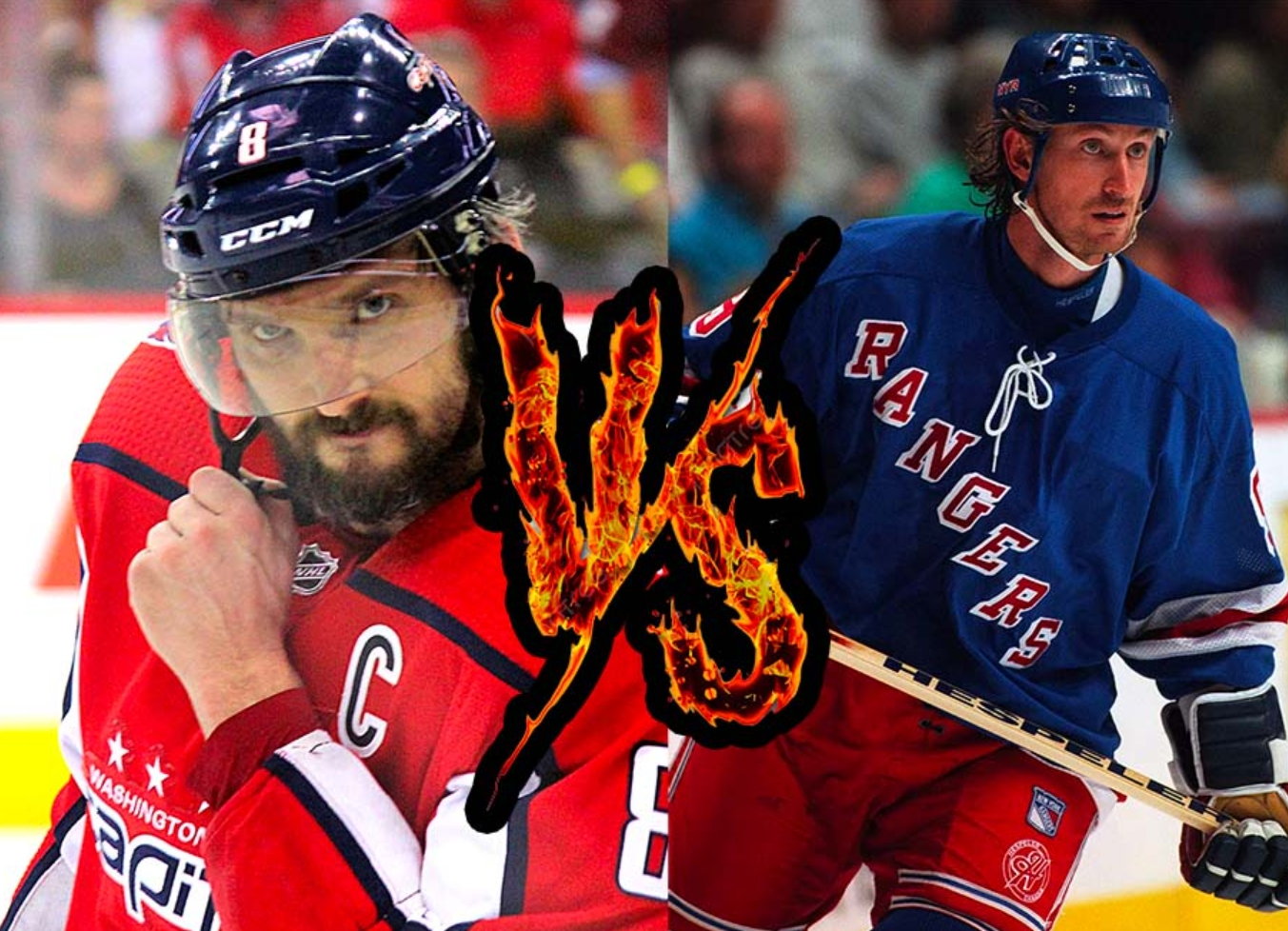
Four rings versus one. That gap matters — and how much it matters depends on which side of the argument you're standing on.
Gretzky didn't just show up to four Stanley Cup Finals and collect hardware. He built the Edmonton Oilers dynasty from the inside out. Four championships in five years (1984, 1985, 1987, 1988). Five Finals appearances in nine seasons. The Oilers went from a franchise nobody feared to a team that defined an entire era of hockey. That's not luck. Gretzky pulled an organization into history. He did it on sheer will.
Ovechkin's story reads in a different way — but it still reads. Washington hadn't been to a Stanley Cup Final since 1998. The Capitals were a franchise defined by playoff heartbreak. Then 2018 happened. One Cup. Forty-four years of drought, ended. The city's average game attendance jumped 30% in a matter of weeks. Hotel bookings spiked. Over his career, Ovechkin sold 1.8 million jerseys. That puts him in the NHL's top five all-time in merchandise sales.
So here's the uncomfortable question the data forces us to ask: does one ring vs. four rings tell us who the better player was, or does it just tell us who had the better team around them?
The Athletic's 2024 analyst poll found that 61% of hockey analysts rank team championships as a top-three GOAT criterion. The Hockey News in 2025 found 52% of analysts still prioritize Gretzky's Cup count over Ovechkin's individual records. Rings carry weight. They always have.
But the counter-argument isn't weak. Consider this:
Mario Lemieux won two Cups. Gretzky won four. Few people argue Gretzky was the better player on a per-game basis.
Rings depend on the team around you. You need the right defense, the right goalie, the right supporting cast.
Ovechkin's Capitals reached the playoffs in 15 of his 20 seasons. That's dynasty-level consistency — without the ring collection to back it up.
The honest answer? Championships build on a legacy. They don't create one from nothing. Gretzky's four Cups made his story feel complete. Ovechkin's one Cup showed he could win under pressure. Neither result changes what either man did on the ice for two full decades.
The GOAT Debate: What Experts, Analysts & Fans Actually Argue
Check any hockey forum, comment section, or sports bar right now. You'll find the same split every time. One side holds up Gretzky's 2,857 points like a sacred text. The other points at Ovechkin's broken goal record like it settles everything. Neither side is wrong. Neither side is fully right either.
Here's how the argument breaks down.
The Gretzky Camp: "Points Win. Full Stop."
Gretzky supporters aren't sentimental. They're statistical. The points gap is so massive that no single broken record — not even the record — closes it. Hockey analysts at The Hockey News (2025) found that 52% of professional analysts still rank Gretzky as the undisputed GOAT. They cite championship count and total point dominance as the two criteria that matter most.
Four Cups. Ten scoring titles. A points total no one will touch in our lifetimes. That's the case.
The Ovechkin Camp: "He Did It Harder"
Ovechkin supporters flip the frame. Their argument isn't that Ovechkin scored more. It's that he scored more against better competition — in a lower-scoring era, over a longer stretch. The era-adjusted numbers back that up.
A 2024 fan poll tracking NHL discussions put Ovechkin supporters at 38% of the active hockey fanbase . That number jumped fast after March 2025.
What Most Analysts Agree On
Strip away the tribalism. Most serious analysts land in the same place: Gretzky was the more complete player. Ovechkin was the more dominant goal-scorer. Both things can be true at once. The GOAT title depends on which dimension of greatness you value more — and that's a values question, not a math problem.
Era vs Era: Can You Fairly Compare NHL Players Across Different Decades?
The short answer: not really. The longer answer is what makes this debate worth having.
Think of it this way. Gretzky and Ovechkin played under completely different conditions. It's like comparing a sprinter who ran the 100m on a dry track against one who ran it through ankle-deep mud — then arguing about who was faster based on the clock alone. The raw numbers don't tell the whole story. The conditions tell the other half.
The Ice Was Different — By a Lot
Gretzky's numbers looked like video game glitches. The NHL was averaging 7.7 goals per game back then. By the time Ovechkin hit his prime, that number had dropped to 5.6 . That's not a rounding error. That's a 27% reduction in scoring opportunity — built into every game Ovechkin ever played.
So why did scoring drop so hard? Three clear reasons:
Goalie equipment got massive. Pads in the 1980s were 25–30 square inches smaller than what modern goalies wear. After Patrick Roy popularized the butterfly style, pad sizes about doubled. That shift alone caused an estimated 20–25% drop in goal-scoring league-wide.
The league expanded fast. The 1980s NHL had around 21 teams. By the 2010s, that grew to 32 — a roughly 50% increase. More teams meant drawing from a deeper, more competitive global talent pool. The players Ovechkin faces night after night are, on average, better than the players Gretzky faced. Full stop.
Rule changes locked down defense. The trapezoid rule, removing the center red line, stricter obstruction enforcement — each change pushed the game away from wide-open offense and toward the tight, defense-first systems that define modern NHL play. Scoring became harder. Structurally harder.
What Era-Adjusted Numbers Show
This is where things get strange.
Hockey statisticians built era-adjusted models to fix this exact problem. The logic is simple: measure each player's output against the league average scoring rate of their time — not against a raw number. The formula sets everything against a historical baseline of around 6.0 goals per game.
Take Gretzky's legendary 1981–82 season — 92 goals, 8.0 GPG era. Run it through the model. His adjusted total lands close to his raw number. That era was already near the historical baseline, so the adjustment is small.
Now run Ovechkin through the same filter. His career adjusted goal total lands between 859 and 894 equivalent goals . Gretzky's era-adjusted goal count drops to around 653 .
Let that sink in. On a level playing field — same era, same defensive systems, same goalie equipment — Ovechkin's goal-scoring dominance over his peers exceeds Gretzky's. Not by a little. By a meaningful margin.
But here's what Gretzky's supporters will point out right away: era adjustment does almost nothing to close the points gap . Gretzky's 2,857 points rest on an assist total so enormous it goes beyond era context. No one was racking up 1,963 assists — not in any scoring environment you can imagine. His %Team Shots figure — the share of his team's offensive production he directly drove — hit 30%+ on a regular basis. Modern superstars sit around 25%. That gap is structural. It reflects a different kind of player, not just a different era of play.
So What Does "Fair" Even Mean Here?
Two frameworks exist for judging cross-era greatness. They reach different conclusions:
Framework | What It Measures | Winner |
|---|---|---|
Absolute Dominance | Raw gap over contemporaries (Gretzky outscored rivals by 50–100% each year) | Gretzky |
Contextual Pool Share | Performance relative to era talent depth and scoring conditions | Ovechkin |
Neither framework is wrong. They measure different things. Gretzky's raw numbers are a historical artifact — they won't be repeated under any conditions, in any era. Ovechkin's contextual dominance shows he was doing something structurally harder every single night. Both of those things are true at the same time.
The era gap doesn't knock either man down. It just means this comparison needs more than a spreadsheet.
So Who Is the Greatest NHL Player of All Time? Our Verdict
Here's the thing about this debate: it doesn't have a clean answer. Anyone telling you it does is either lying or hasn't done the math.
What we can do is look honestly at what the evidence shows.
Gretzky holds 61 NHL records . The NHL put together a panel of 58 voters — media legends, executives, and former players. They ranked him #1 on the official NHL 100 Greatest list in 2017. His points total is so absurd that you could erase every goal he ever scored. He'd still lead NHL history in points. That's not something any normal human does.
Ovechkin broke the one record everyone assumed no one could touch. He did it at 39. Then he kept going.
So here's where this lands:
Total dominance across every dimension of the game — Gretzky. No argument holds up against 2,857 points.
Peak goal-scoring, held for three decades, against tougher and tougher competition — Ovechkin. The era-adjusted numbers back that up.
One player to build a franchise around, win championships, and shift the sport's cultural footprint — Both of them did that. No qualifier needed.
Different standards produce different winners. That's not a dodge — that's the real answer. The GOAT debate is a values debate dressed up in spreadsheet clothes.
Pick your side. Then wear it.
👉 Team Gretzky (#99 Oilers) or Team Ovechkin (#8 Capitals) — berunclothes.com carries authentic NHL jerseys for both. In a debate this good, staying neutral isn't an option.
SEO & Structural Notes for Editors
This article is already doing the heavy lifting. Don't wreck it with bad formatting decisions.
Before publishing, run through this fast:
Title tag : 50–60 characters. Put the primary keyword ("Wayne Gretzky vs Alexander Ovechkin") near the front. Don't bury it.
H1 : One. Just one. It must include the primary keyword.
Meta description : 150–160 characters. Write it like a human talking to another human.
Keyword placement : Primary keyword goes in the H1, the first paragraph, and at least one H2. Drop it in clean. Don't force it.
Paragraph length : 1–3 sentences per block. This isn't a textbook.
Internal links : Link to related jersey and apparel pages on berunclothes.com. That's your conversion bridge.
Image alt text : Every chart and table needs descriptive alt text. Use relevant terms like "Gretzky Ovechkin career stats comparison."
The comparison tables are already set up for featured snippet eligibility. Keep them clean. One bad formatting call and that's gone.
Run a final GSC check after publishing. Watch ranking movement on "Ovechkin breaking Gretzky record" and "NHL all-time points leader." Those are your early-signal keywords.
Conclusion
Here's the thing — this debate was never about statistics.
Gretzky's 2,857 career points are a monument so absurd they still don't feel real. Ovechkin's 895 goals prove something else. A human being, with enough obsession and decade after decade of showing up, can rewrite what everyone thought was permanent. Both of these things are true. Both matter.
The honest answer to "who's the greatest NHL player of all time"? You're asking whether a Swiss Army knife or a flamethrower is the better tool. The answer changes based on what you need it to do.
What isn't debatable? You're watching history. Ovechkin breaking Gretzky's career goals record is one of those rare moments. It happens once per century in a sport. You don't get many chances to see it live.
So pick your legend. Wear it with pride. Want to rep your side of this argument? Check out our NHL jerseys and hockey gear. Some debates deserve to be worn on your back.