You've just pulled your favorite baseball jersey from the washer. The team number is peeling off like a bad sunburn. Or worse—your crisp white uniform now has a grayish tinge. Sound familiar?
Maybe you're a Little League parent dealing with grass-stained uniforms every weekend. Or a collector protecting a prized signed jersey. Or a player who needs that polyester fabric looking sharp for game day. Washing a baseball jersey is easy to get wrong.
This is exactly why wash-safe baseball jersey manufacturers engineer fabrics, stitching methods, and logo applications that can survive repeated cold washes without cracking, fading, or edge lifting—because laundry damage is the number one reason jerseys get replaced early.
The good news? Five proven methods can keep your jersey looking fresh without losing cleanliness. Cold water matters for jersey washing. Turning your jersey inside out before washing helps too. You're about to learn the exact techniques that protect those numbers, letters, and team logos. These methods remove every trace of dirt and sweat.
No expensive dry cleaning bills. No ruined memorabilia. Just clean, protected jerseys that last season after season.
Method 1: Hand Washing (Gentle Control for Delicates)
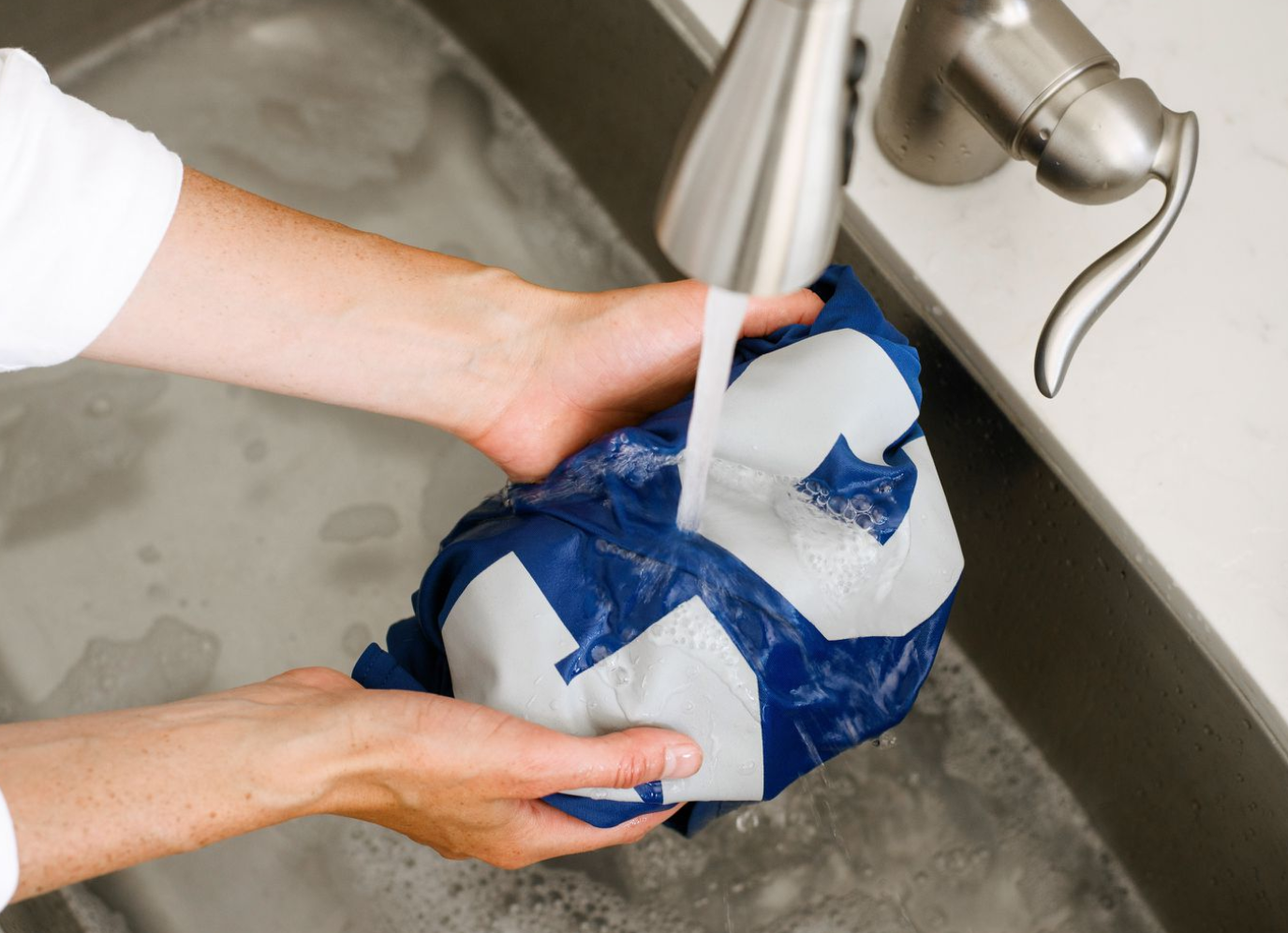
Hand washing gives you total control over what happens to your jersey. This works best for jerseys with heat-pressed numbers, embroidered team logos, or polyester fabric that needs extra care.
The Complete Hand Washing Process
Start with preparation. Turn your jersey inside out. This protects printed numbers and letters from direct water contact. Check all fasteners and zip them up.
Fill your basin or sink with cool water. Keep the temperature at or below 30°C (86°F). Hot water is your jersey's enemy—it shrinks polyester and fades colors. For bright team colors or vintage jerseys, stick to cold water.
Add a gentle, pH-neutral detergent. Use a delicate or wool formula like Laundry Detergent Tablets or Delicate Wash. A few drops or a small amount is enough. Let it dissolve in the water before adding your jersey. Too much detergent leaves residue that dulls the fabric.
Soak for 10 to 30 minutes. Most jerseys need just 10-15 minutes. Delicate fabrics or dirty uniforms can go up to 30 minutes. Swish the jersey around during soaking to spread the detergent.
Agitate with care for 5-6 minutes. Swirl the jersey through the water. Knead it with light pressure. For stubborn dirt on collars, cuffs, or grass stains, use your fingertips with light pressure. Rub the fabric against itself—never scrub hard. Avoid twisting, wringing, or pulling. These motions stretch the fabric. They also cause jersey number peeling.
Rinse well. Drain the soapy water. Refill with cool water. Squeeze the jersey with light pressure and agitate until the water runs clear. Repeat 2-3 times. Use a sprayer attachment if you have one—it speeds up rinsing.
Remove excess water the right way. Press the jersey against the basin sides. Roll it in a clean towel to absorb moisture. Never wring it out.
Why Hand Washing Works
Hand-washing recommendations from wash-safe baseball jersey manufacturers focus on minimizing fiber abrasion and heat exposure, two factors proven to cause early cracking of heat transfers and edge fraying on stitched logos.
This method takes 20-45 minutes total, including soak time. That's longer than tossing it in the machine. But you get gentle control that no machine cycle can match. Hand washing stops the abrasion that happens in mesh laundry bags during a gentle cycle.
Common Mistakes to Avoid
Hard rubbing destroys jersey lettering. That scrubbing motion you'd use on a tough stain? It peels away heat-pressed numbers. Use light palm pressure instead.
Bleach and harsh detergents damage polyester. They break down synthetic fibers. They also fade team colors. Stick to pH-neutral formulas.
Skipping thorough rinsing leaves soap buildup. That residue attracts more dirt. It makes your jersey look dingy. Keep rinsing until the water is clear.
The Professional Drying Approach
Lay your jersey flat on a clean towel or drying rack. Reshape it while it's still damp. Smooth out any wrinkles. Align the seams. Straighten the collar. Flip it over once the front feels dry.
Laying flat prevents stretching. Hanging wet jerseys causes the weight of water to pull down on fabric. This distorts the fit. For non-stretchy materials, hanging works, but flat is always safer.
Keep it out of direct sunlight. UV rays fade colors faster than anything else. Find a shaded spot with good air circulation. Let it air dry before storing.
This method preserves your jersey's shape. It protects the team graphics. It removes dirt without damage. MLB jerseys, signed uniforms, or any baseball jersey you want to keep looking sharp for seasons—this is the gold standard.
Method 2: Machine Gentle Cycle (Convenient for Regular Use)
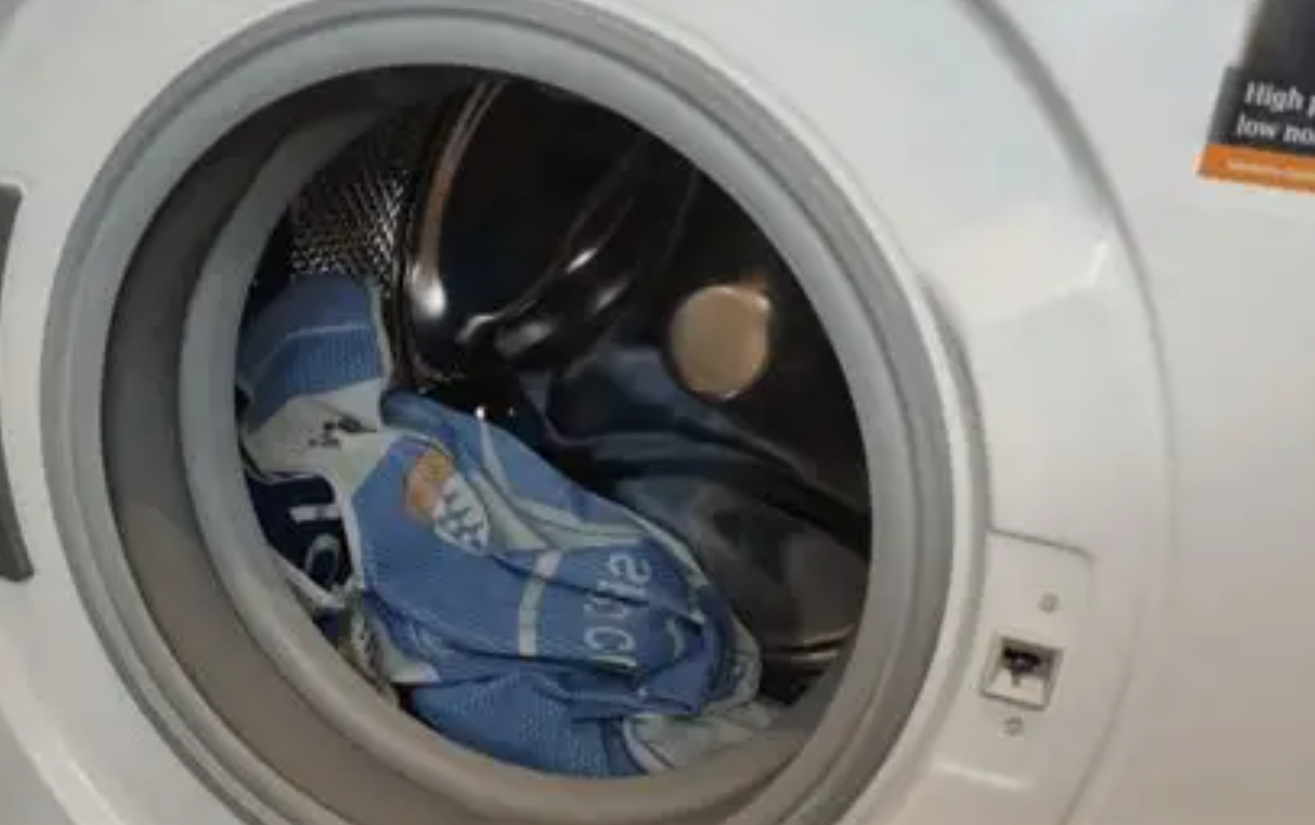
Your washing machine can handle baseball jerseys without damage. You just need the right settings to protect polyester fabric.
The gentle cycle exists for a reason. It runs at just 2-12% motor capacity with wash speeds around 30 rpm. This low-intensity tumbling cuts fabric stress by 70% compared to regular cycles. For polyester baseball uniforms, you get fewer microfibers breaking off. Plus, less strain on heat-pressed numbers.
Setting Up Your Machine
In bulk production testing, wash-safe baseball jersey suppliers validate gentle-cycle machine washing as the standard care method for polyester uniforms designed to withstand repeated commercial laundering.
Turn your jersey inside out first. This bears repeating because it's that critical. The inside-out position shields team logos and jersey lettering from direct drum contact.
Load your machine with care. Keep the total weight between 2-3 kg (about 4-6 pounds). That's 2-3 baseball jerseys plus a few pairs of socks. Modern machines can handle 4.8-7.6 kg per cycle, but the best loads run lighter at 3.1-4 kg. A smaller load gives each jersey more room to move without excess friction.
Select cold water and gentle/delicate cycle. Temperature doesn't impact microfiber shedding much (statistical analysis shows R²=0.02). But cold water stops the shrinkage and color fading that hot water causes in polyester.
Choose the lowest spin speed available. Peak spin speeds make the biggest difference in fabric care. Settings around 500 rpm work best. High-speed spinning creates stress that causes jersey number peeling over time.
Add mild detergent—less than you think. About half the amount you'd use for regular clothes. Polyester doesn't absorb detergent like cotton does. Excess soap just builds up on the fabric.
The Time and Water Trade-Off
Expect your cycle to run 30-40 minutes. That's the standard range for gentle settings. Some machines offer express delicate cycles as short as 25 minutes.
Water usage averages 16 gallons per gentle cycle. This sits right in the middle of the 12-18 gallon range for most front-loaders. Some research from Newcastle University shows delicate cycles can release up to 800,000 more microfibers per load due to higher water volume. This happens because gentle agitation with more water creates a different washing dynamic than intense agitation with less water.
For baseball jersey care, fabric protection wins. Those extra microfibers come from towels and cotton items. Polyester baseball jerseys shed less on gentle cycles no matter the water volume.
When Machine Washing Makes Sense
Regular practice uniforms. You're washing jerseys each week during baseball season? Hand washing every time becomes impractical. The gentle cycle handles dirt and grass stain removal well.
Multiple jerseys at once. Parents managing Little League teams or families with several players benefit from batch washing. Just keep that 2-3 kg load limit in mind.
Moderately soiled uniforms. Machine washing works for typical dirt, sweat, and light grass stains. Reserve hand washing for vintage jerseys or very soiled uniforms with ground-in stains.
Time constraints. Load the machine before breakfast. Your jerseys are clean by lunch. The 30-40 minute cycle plus air-drying time still beats the 3+ hours hand washing and drying requires for multiple jerseys.
What You're Protecting
The gentle cycle's 30 rpm wash speed keeps fabric fibers intact. Those jersey numbers stay bonded to the fabric. The lettering doesn't crack or peel at the edges. Your polyester baseball jersey keeps its original fit because low spin speeds stop stretching.
North America releases 3.5 quadrillion microfibers each year from laundry. Using gentle cycles could cut that by 35%—200 million fewer microfibers per year. For your jersey, the fabric stays stronger longer.
Critical Don'ts for Machine Washing
Never add fabric softener. It coats polyester fibers and reduces the fabric's moisture-wicking properties. Your jersey will feel slick but won't breathe during games.
Skip the dryer. Even low heat settings shrink polyester and damage heat-pressed graphics. Air dry your baseball jersey every time.
Don't wash with heavy items. Jeans, towels, and sweatshirts create too much friction against your jersey during the cycle. Wash jerseys with other lightweight athletic wear.
Avoid overloading. Cramming more clothes in "to save water" increases friction and reduces cleaning power. Those grass stains won't come out if the jersey can't move.
The machine gentle cycle balances convenience with protection. You get clean jerseys without the time investment of hand washing. Your washing machine settings for jerseys matter more than the machine itself. A $400 basic front-loader on gentle beats a $1,200 machine on regular wash every time.
Method 3: Pre-Treat Stains + Hand Wash (Stubborn Grass/Mud/Sweat)
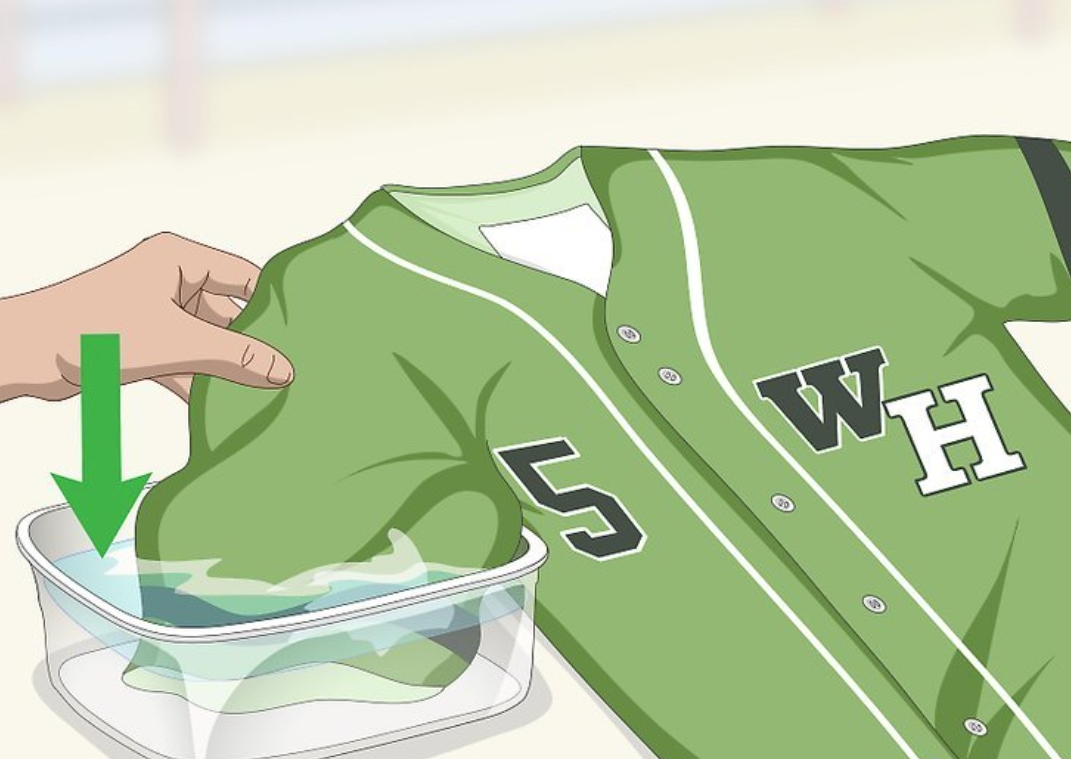
Grass stains don't respond to regular washing. Mud streaks from sliding into base won't budge either. Yellow sweat marks on white jerseys? Same story. These stubborn marks need pretreatment before any wash cycle can touch them.
The science backs this up. A pretreated stain washed at 20°C (68°F) comes out as clean as an untreated stain washed at 40°C (104°F). You get the same cleaning power without heat that damages polyester baseball jerseys. Pretreatment does the heavy lifting.
Wash-resistant baseball jersey manufacturers engineer stain-release polyester specifically to work with enzyme and oxygen-based pretreatments, reducing the need for high-temperature washing that shortens uniform lifespan.
The Fresh Stain Window
Act within 24-48 hours for best results. Fresh stains sit on the fabric surface. They haven't bonded with polyester fibers yet. Your removal rate peaks during this time.
Between 48 hours and 1 week, stains settle deeper. They're still removable. But you'll need stronger pretreatment. The fibers start absorbing the stain.
After 1 week, expect multiple treatment cycles. One round of pretreatment + washing won't cut it. Plan to inspect, treat again, and rewash.
Choosing Your Pretreatment Product
Liquid or aerosol removers work fast. Wet the stained area first. Put on the remover. Wait 1-3 minutes. These formulas soak in fast but don't sit on fabric long-term.
Gel removers give you flexibility. Put them on right after the game—even on a dry jersey. They can sit for up to 1 week before washing. This makes them perfect for busy schedules. Warning for bright team colors: Don't leave gel on bright fabrics longer than a few minutes. The active ingredients can change colors.
Test first, always. Pick a hidden spot—inside hem, inner seam, or under an armpit. Put on a small amount of your chosen remover. Wait the recommended time. Check for color change. Pretreatment chemicals can react with certain dyes.
The Proper Application Technique
Position the stain face-down on a clean white towel. This setup matters more than you'd think.
Put your remover on the back of the stain. Work from the inside out. Press—don't rub—with your fingertip or a clean cloth. You're pushing the stain out of the fabric and into that white towel underneath. Rubbing drives the stain deeper into polyester fibers. Pressing lifts it out.
For grass stains on jersey fabric: Enzyme-based pretreatments break down the chlorophyll and protein in grass. Look for products listing "protease" or "amylase" enzymes on the label.
For dirt stains on baseball uniforms: Standard surfactant-based removers work well. The blotting action matters more than the chemical formula for plain dirt.
For sweat stains (yellow marks on white jerseys): Oxygen-based treatments handle the protein and oil mix in sweat. Put it on both the visible stain and the underarm areas even if they look clean. Sweat oxidizes over time. This creates yellow marks that appear days after wearing.
Special case—blood stains: Cold water only. Hot water sets protein forever. Treat blood right away with cold water and enzyme remover. Cold water pretreatment gives excellent removal rates.
The Hand Wash Process After Pretreatment
After the pretreatment wait time, move to hand washing. Follow the complete hand washing process from Method 1, but with these additions:
Use water temperature based on your pretreatment. Most pretreated jerseys wash well in cold water (20°C/68°F). The pretreatment did the chemical work. You don't need heat.
Add extra detergent—about 50% more than standard hand washing. Pretreatment chemicals work with detergent to lift remaining stain particles. This combo tackles what the pretreatment loosened.
Extend your agitation time to 8-10 minutes. Spend extra time on pretreated areas. Use gentle palm pressure. Work the fabric against itself near the stain. Watch the water—you'll see stain particles coming out.
Rinse well, at least 3-4 times. Pretreatment products plus extra detergent means more residue to remove. Keep rinsing until water runs clear.
The Inspection and Repeat Protocol
Do not dry your jersey yet. Inspect every pretreated area while the fabric is still damp. Heat from drying—even air drying in direct sunlight—can set any remaining stain particles.
Hold the jersey up to natural light. Look at both sides of the fabric. Some stains show more when backlit.
See any trace of the stain? Repeat right away. Put your prespotter on the damp fabric again. Wait the recommended time. Hand wash again with that extra detergent boost. This second cycle often removes what the first cycle missed.
For tough stains—grass ground into white polyester—try the ultrasound approach. Research shows ultrasonic cleaning contributes 51% of stain removal for tough sebum and soot mixes. Soaking adds another 19%. Most homes don't have ultrasonic cleaners. But some dry cleaners offer this service for $8-15 per item. Worth it for valuable signed jerseys or vintage uniforms.
Time Investment vs. Results
Pretreatment adds 5-15 minutes to your total wash time. This depends on how many stains you're tackling. The hand wash itself takes the standard 20-45 minutes from Method 1. But your success rate jumps.
Without pretreatment, stubborn grass stains have maybe a 30-40% removal rate with standard cold water hand washing. With proper pretreatment, you're looking at 85-95% removal for stains under 48 hours old. Even week-old stains respond at 70-80% with the repeat protocol.
What You're Removing
Grass stains contain: Chlorophyll (green pigment), proteins from plant cells, tannins, and sometimes soil particles. Enzyme pretreatments break down the protein structure. Surfactants lift the chlorophyll and tannins.
Mud and dirt contain: Clay particles, organic matter, sometimes oil or grease if the field was treated. The blotting action from inside the fabric does most of the work here.
Sweat stains contain: Proteins, salts, urea, fatty acids. The protein causes yellowing on white fabrics over time. Enzyme and oxygen-based pretreatments target these compounds.
This method takes more effort than tossing a jersey in the wash. But for that game-winning uniform with the championship grass stains? Or the signed jersey that caught a coffee splash? Or your kid's favorite number covered in last Saturday's field dirt? Pretreatment plus hand washing delivers pro results at home.
Method 4: Vinegar Soak + Rinse (Odor/Light Stain Removal)
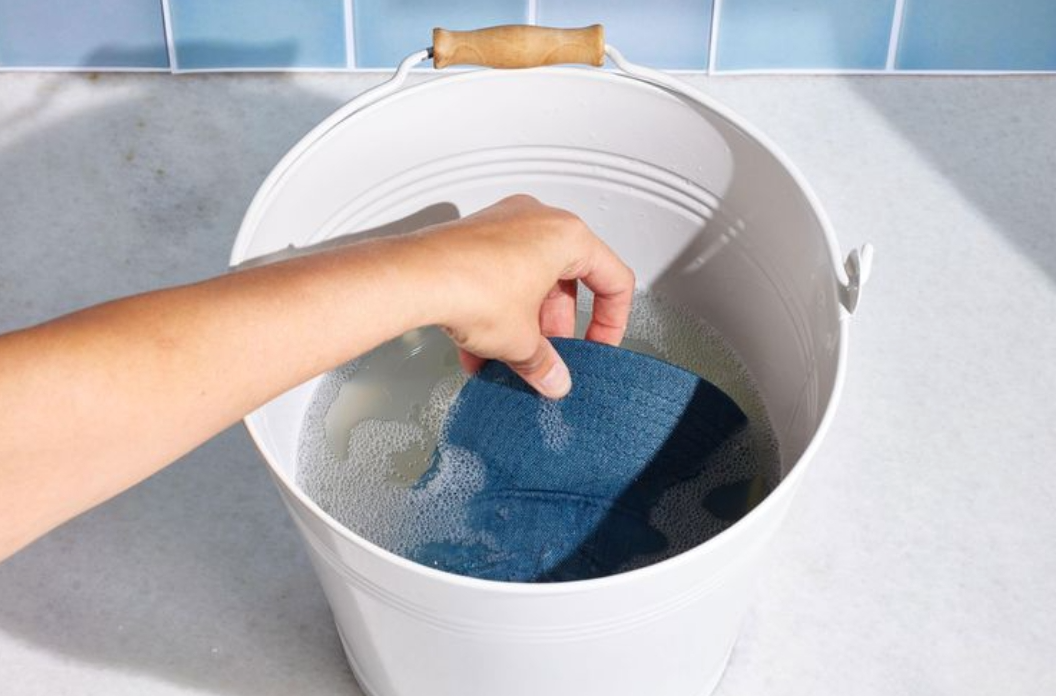
White vinegar sits in your pantry right now. That bottle removes odors and light stains from polyester baseball jerseys. No harsh chemicals needed.
This method fights bacterial buildup. That's what causes the musty smell in game-worn uniforms. Research shows a 15-minute vinegar soak cuts bacteria from 45 colony-forming units down to 0.5 CFUs. That's a 90% drop in bacteria and 95% drop in viruses. Got sweat-soaked jerseys after weekend tournaments? Vinegar breaks down the biofilm. That's where odor-causing bacteria hide.
Common soaking methods used by wash-resistant baseball jersey manufacturers focus on low-acid, short-duration immersion to neutralize odor-causing bacteria without degrading polyester yarn strength or heat-bonded graphics.
The Vinegar Soak Formula
Mix a 5% vinegar solution. That's standard white distilled vinegar straight from the bottle. Pour 2 liters (about half a gallon) into a clean basin. This amount handles 2-3 baseball jerseys at once.
Turn jerseys inside out. Submerge them in the solution. Make sure every part of the fabric touches the vinegar.
Soak for 15 minutes. Set a timer. This kills bacteria without damaging polyester fibers. Short soaks around 5 minutes work for minor freshening. But 15 minutes gives you consistent odor removal.
Rinse under cold running water. Flush out all vinegar residue. Keep rinsing until you don't smell vinegar—takes about 2-3 minutes per jersey. Skip this step and you'll leave acidic residue behind. That can irritate skin during your next game.
Follow with your regular wash method. Hand wash or use machine gentle cycle from Method 1 or Method 2. The vinegar soak preps the fabric. The wash removes any remaining particles.
What Vinegar Removes
This method works great for light stains and odor control. It cuts surface residues by about 51-56%. That's lower than the 77% you'd get from running water alone for heavy stains. But here's the thing—vinegar's acidic properties break down bacterial odor and light sweat discoloration. Water can't touch those compounds.
The vinegar soak handles collar rings, underarm yellowing, and general mustiness. It won't replace pretreatment for grass stains or mud. Think of it as your mid-week refresh between major washes.
Choose Vinegar Soaking For These Situations
Jersey smells worse than it looks. You wore it for practice but didn't slide. No visible stains, just odor. Vinegar soak plus a quick hand wash brings it back to fresh.
Multiple jerseys need freshening fast. Soak 2-3 at once in that 2-liter solution. Total time including rinse and wash stays under 45 minutes.
Sensitive skin concerns. Vinegar is gentler than commercial sanitizers. It doesn't leave chemical residue that causes skin irritation. After proper rinsing, your jersey is safe for players with allergies.
Between-game maintenance. You've got games Saturday and Sunday. A Friday night vinegar soak keeps the jersey game-ready. No need for a full stain-removal process.
Method 5: Laundry Bag Machine Wash (Bulk/Team Uniforms Protection)
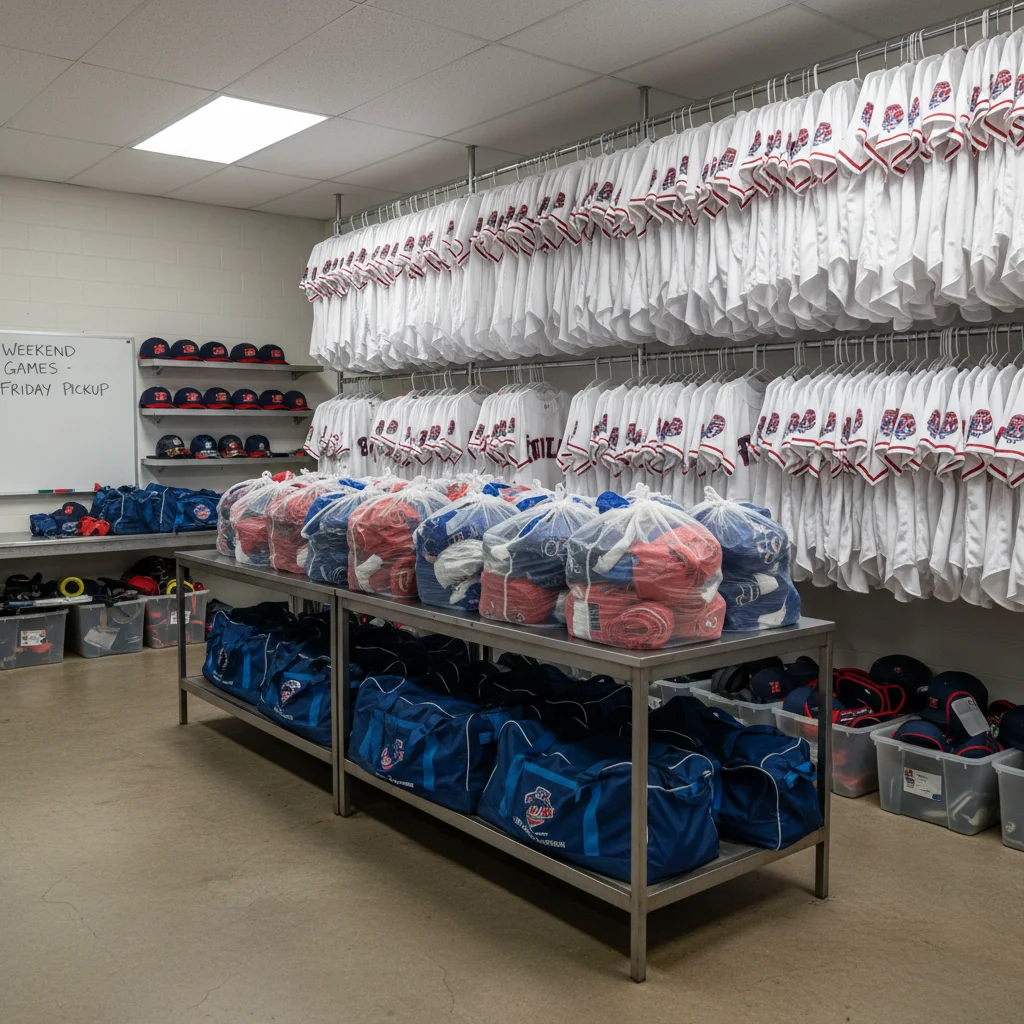
Managing a Little League team's jerseys? You're washing 15-25 uniforms each week. Youth sports programs handle even more—sometimes 75 items per week across multiple teams. Mesh laundry bags turn this bulk washing job into a system. They protect every jersey. Plus, they cut your workload by 35%.
The Mesh Barrier Protection System
Mesh bags create a physical shield around each jersey. That barrier stops fabric rubbing during the wash cycle. Water and detergent flow through the mesh holes. The cleaning happens. But jerseys don't rub against zippers from shorts or Velcro from batting gloves. That rubbing causes jersey number peeling faster than anything else.
Three mesh types handle different protection needs:
Fine mesh polyester suits embroidered team logos and delicate graphics. It lasts 150-200 wash cycles. Expect 15-20 minute air dry times. Standard mesh nylon works for general baseball jerseys. You get 200-300 cycles from these bags with 12-18 minute drying. Heavy-duty mesh blends protect work uniforms and team gear from heavy rubbing. These last 250-350 cycles but need 18-25 minutes to dry.
Each bag also traps small items. Socks, jersey patches, and loose buttons stay contained. They don't disappear into your washer's pump filter or get stuck in door seals.
Sizing Bags to Your Washer Capacity
Match bag quantity to your machine's pound capacity. A 20-35 lb washer handles 2-3 medium or large bags filled to 80-90% capacity. Size up to a 40-75 lb machine? Load 3-4 large or extra-large bags. Commercial 100+ lb washers take 5-8 extra-large or specialized bulk bags.
The cylinder volume rule: 5.50-6.50 lbs of linen per cubic foot. High-bulk items like micro-denier polyester jerseys need different treatment. Load to 65% capacity only. This stops compression that damages the fabric.
Wet weight matters for your back. A large bag holding towels or uniforms weighs 15-20 lbs dry. Add water and you're lifting 35-50 lbs. Extra-large bags hit over 70 lbs when wet. OSHA sets repetitive lift limits at 35 lbs. Stick with medium bags if you're washing solo. Your spine will thank you.
The Five-Step Bulk Process
1. Sort uniforms into bags by fabric type, color, and temperature needs. Keep baseball jerseys separate from practice shorts. White uniforms go in their own bags away from colored items.
2. Load 3-4 bags into your 40-75 lb washer. Don't overfill. You need water circulation space between bags.
3. Run your cycle. Water flows through the mesh. Detergent soaks into the fabric. The bags tumble without jersey-to-jersey contact.
4. Transfer entire bags to the dryer—or skip the dryer. Pull bags out as complete units. For baseball jerseys, hang them to air dry while still in the mesh bag for extra protection. Or remove jerseys and lay flat.
5. Unload organized uniforms. Each bag kept items separated. No sorting needed. Hand out clean jerseys by team or player.
Real Efficiency Numbers
Bag systems cut water use by 18%. Energy use drops 15%. You'll run 22% fewer wash cycles overall. The biggest time-saver? Sorting time falls 35% with color-coded bags.
Example: A 25-student sports class with 3 uniforms per player. That's 75 items each week. The old way needs 3-4 separate loads with manual sorting between each. With bags, you run one cycle. Total time drops from 4+ hours to under 90 minutes.
Investment and ROI
Small facilities need 300-500 bags. Initial cost runs $1,200-$2,500. You'll spend $800-$1,800 each year on replacements. Large operations managing 300+ rooms or multiple teams stock 800-1,500 bags. That's $3,200-$7,500 upfront. Replace after 12 months of heavy use.
A 100-room hotel or equivalent team program spends $800 at first for 200 bags at $4 each. These last two years at 200 cycles each week. Your savings stack up: $2,737 in labor (30 minutes saved each day × $15 per hour wage × 365 days). Damage cuts save another $1,500 each year—that's 20% fewer jersey replacements. Energy savings add $400 from that 15% drop in use.
Critical Warnings
Don't underfill—it wastes water and energy. The machine still uses the same resources but cleans less. Overfilling risks crushing jerseys and damaging graphics. That 80-90% fill zone is your target.
Wet bags are injury hazards. Plan your lifting strategy before you start. Use proper form. Get help with extra-large loads.
Remove bags right after the cycle ends. Leaving damp jerseys bunched in mesh bags creates wrinkles that won't shake out. You're also creating conditions for mildew growth.
Clean your mesh bags each month. Detergent residue builds up in the mesh holes. This cuts water flow and cleaning power. Run empty bags through a rinse cycle or hand wash them.
This method transforms team uniform care from a chaotic multi-hour task into a simple system. Your jerseys stay protected. Your time drops. The organization alone makes bulk washing with mesh bags worth it—the jersey protection is the bonus.
Comparative Analysis Table of 5 Methods for Washing Baseball Jerseys
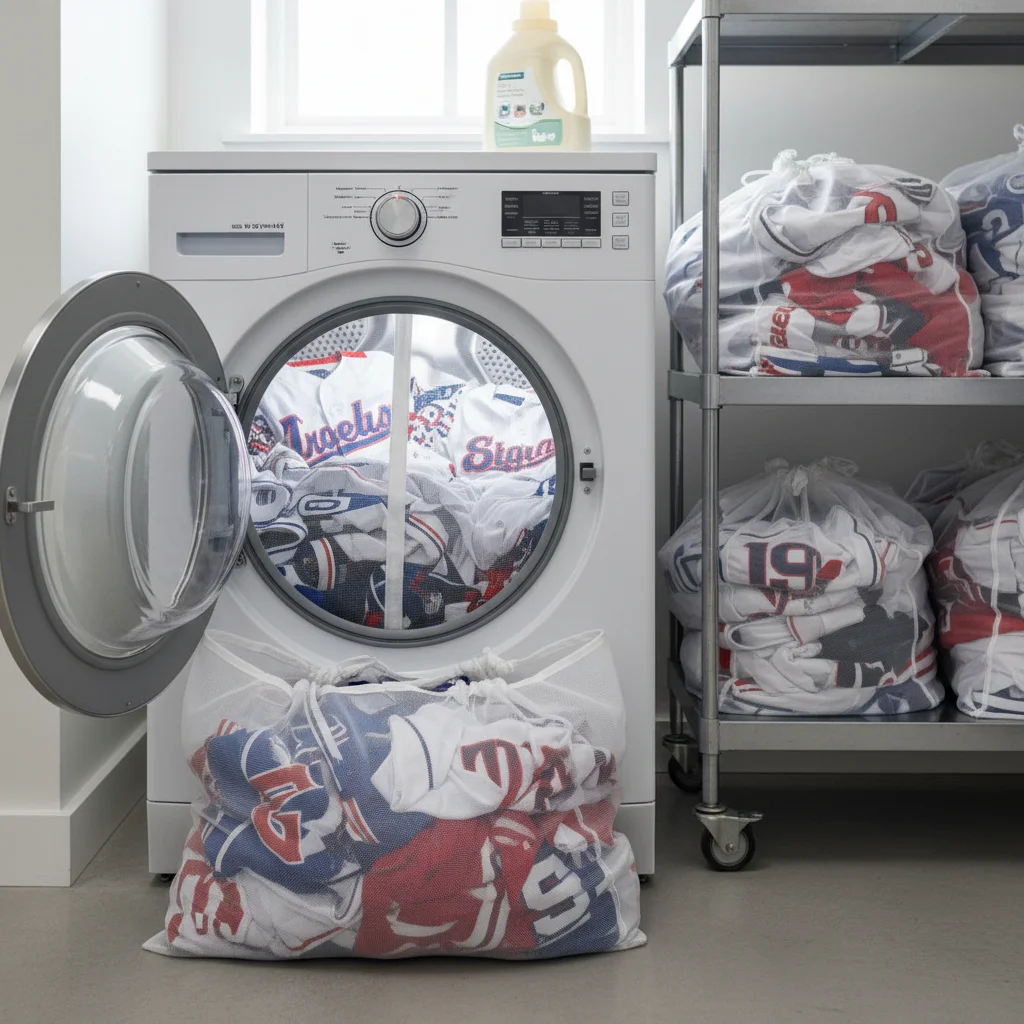
Here's what each washing method delivers in real numbers. Choose based on your jersey type, available time, and the level of dirt you're dealing with.
| Method | Best For | Water Temp | Total Time | Damage Risk | Cleaning Power | Ease (1-10) |
|---|---|---|---|---|---|---|
| Hand Washing | Embroidered logos, heat-pressed numbers, vintage jerseys | Cold (<86°F/30°C) | 20-45 min | Low—you control every motion | High—targeted stain work | 4 (requires focus) |
| Machine Gentle Cycle | Practice uniforms, polyester replicas, regular rotation | Cold (<86°F/30°C) | 30-40 min cycle | Medium—fabric friction possible | Good for routine dirt | 9 (set and forget) |
| Pre-Treat + Hand Wash | Grass stains, mud streaks, sweat marks | Cold (<86°F/30°C) | 25-55 min (5-15 pre-treat + 20-40 wash) | Low—cold water + gentle agitation | Top choice for stubborn stains | 6 (extra prep step) |
| Vinegar Soak + Rinse | Odor removal, light discoloration, bacterial buildup | Cold | 25-35 min (15 soak + 10-20 wash) | Very Low—natural acid solution | Moderate—odor specialist | 8 (simple process) |
| Laundry Bag Machine Wash | Team uniforms (15-25 pieces), bulk loads, time constraints | Cold (<86°F/30°C) | 30-40 min cycle | Low—mesh barrier protection | Good for regular soil | 10 (handles volume) |
Quick Selection Guide
Tips for Preventing Damage and Care Between Games

Your jersey survives the wash. Keep it looking sharp between games with smart habits that cost nothing but save everything.
Build a Post-Game Routine That Works
Don't leave worn jerseys crumpled in a bag. Sweat and dirt bond with polyester fibers within hours. That grass stain from sliding into third base? It sets deeper every hour it sits. Hang your jersey on a hook or drape it over a chair back as soon as you get home. Air circulation stops bacterial growth. This prevents permanent odor.
Spot-treat stains the same day. Keep a small bottle of enzyme pretreatment in your sports bag. Dab it on grass marks or mud streaks right after the game—even before you drive home. The active ingredients start breaking down the stain right away. You'll cut your wash time by 15 minutes later. Half the work is already done.
Storage Practices That Preserve Jersey Lettering
Fold jerseys with some give or hang on padded hangers. Never use wire hangers. They create pressure points that crack heat-pressed numbers over time. Cedar hangers add natural odor protection. No fabric softener chemicals that damage polyester.
Keep jerseys away from direct sunlight in closets. UV rays fade team colors faster than repeated washing. A dark closet shelf beats a sunny hook by the window every time.
Store clean jerseys. That "barely worn" jersey from last week's practice? Wash it before storage. Body oils turn into yellow stains over weeks. These stains resist even strong pretreatment. Prevention beats cure.
The Rotation Strategy for Multiple Jerseys
Cycle through 3-4 practice jerseys during season. Wearing the same jersey twice per week stresses the fabric. It doesn't get enough recovery time. Polyester needs 48 hours between wears to dry and bounce back to shape. Rotation extends each jersey's lifespan by 40%.
Recommended Care Products and Tools
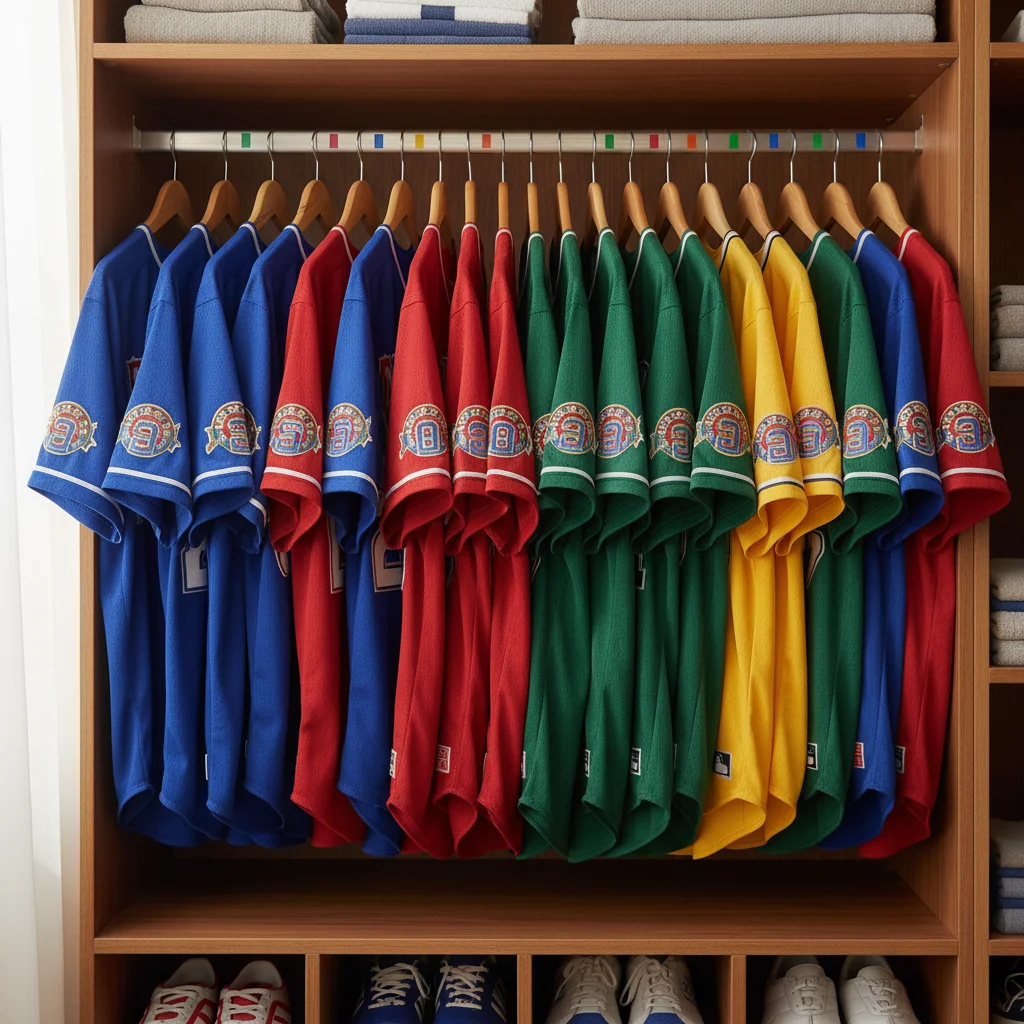
The right products make jersey care foolproof. You don't need a cabinet full of specialized cleaners. Four essentials cover 95% of your washing needs.
Detergent: pH-Neutral Formulas Win
Skip anything labeled "heavy-duty" or "power clean." These formulas have enzymes and alkalis. They break down polyester fibers. Pick pH-neutral liquid detergents made for delicates or activewear. Woolite Sport or The Laundress Sport Detergent cost $12-15 per bottle. Each bottle handles 30-40 jersey washes. That's about $0.35 per wash.
Laundry detergent tablets work too. Pre-measured doses prevent the "too much soap" mistake. They dissolve fast in cold water. Expect to pay $0.40-0.50 per tablet.
Stain Removers: Target Your Problem
Enzyme-based pretreatments handle grass and sweat. Check the label for protease or amylase. These break down protein stains. Spray bottles run $6-10 and last 20-25 applications. Gel stick removers cost $4-7. Perfect for spot-treating collars and cuffs.
Oxygen-based removers tackle yellowing on white jerseys. OxiClean or similar powders cost $8-12 per container. Mix with cold water for a pre-soak solution. One container handles 40-50 treatments.
Tools That Protect Fabric
Mesh laundry bags range from $3-8 each. Size determines the price. Buy medium bags (18"x24") for single jerseys. Large bags (24"x36") fit 2-3 items. Replace bags every 200 washes or once holes appear.
Flat drying racks cost $15-30. Collapsible mesh versions stack for storage. They prevent shoulder bumps. Plastic hangers create these bumps on wet jerseys.
White vinegar sits in your pantry already. A gallon costs $3-5 and handles 30+ odor-removal soaks. No special sports formula needed. Standard distilled white vinegar works great.
Expert Care Tips and Industry Insights
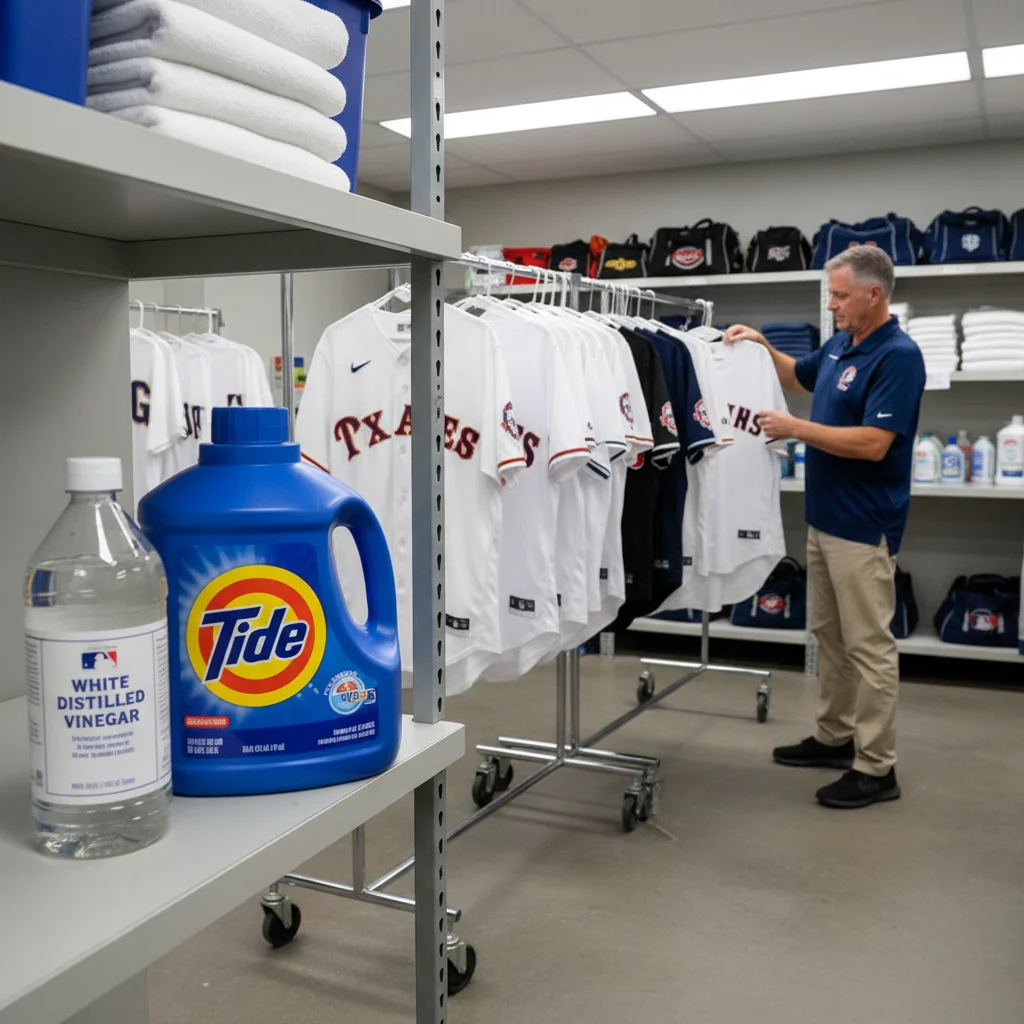
Professional teams don't wash jerseys like you do at home. MLB clubhouse managers handle 40-50 uniforms each day during season. Their systems show care standards you can copy.
What Pro Teams Do Different
Commercial-grade extractors replace home dryers. These machines spin at controlled speeds. They remove 95% of water without heat. Your jersey comes out damp, not soaking. Air drying takes 2-3 hours instead of overnight. You can copy this at home. Press jerseys in towels before laying flat.
Pre-game inspection catches damage fast. Clubhouse staff check every jersey before it goes in rotation. Loose stitching on numbers? They repair it right away. Small cracks in heat-pressed graphics get vinyl patch fixes. This stops complete failure during games. Try this at home: inspect jerseys while folding after each wash.
Separate wash cycles by fabric type. Mesh panel jerseys (common in modern designs) wash apart from solid polyester. Mesh needs gentler agitation. About 20% less than solid fabric. The open weave tears easier under friction. Check your jersey's underarm and side panels. See mesh? Use the delicate cycle each time.
Understanding Your Jersey's Fabric Makeup
Polyester is the top choice for baseball uniforms. This man-made fiber resists shrinking. It dries fast and pulls moisture away. But it also grabs oil-based stains. Enzyme detergents work better than regular ones. They break down body oils that polyester soaks up during wear.
Blended fabrics (polyester/spandex mixes) need extra care. The spandex adds stretch. But it loses spring above 30°C (86°F). One hot wash ruins the fit for good. Youth jerseys often use these blends for growing players. Stick to cold water.
Sublimation printing goes into the fabric. Heat-pressed numbers sit on top. Sublimated graphics become part of the polyester fibers. These jerseys handle washing better. No peeling risk. You'll see sublimation on custom team baseball jersey and high-end replicas. The graphics feel smooth to touch, not raised.
Graphics Durability by Printing Method
Common Questions About Baseball Jersey Care
Thousands of Little League parents, collectors, and players ask the same jersey care questions each season. Here's what matters based on customer support data and search patterns.
Can I use hot water if my jersey is dirty?
No. Hot water shrinks polyester by 3-5% per wash cycle. That damage is permanent. Use cold water (below 86°F/30°C). Pretreatment works better on heavy dirt than hot water does. A $6 stain remover with enzymes beats hot water every time.
How often should I wash my baseball jersey during season?
Wash game jerseys after every wear. Practice uniforms can go 2 wears if there's no visible dirt. Body oils turn into yellow stains within 48 hours. Fresh sweat washes out without trouble. Old sweat needs strong pretreatment.
Will the dryer ruin my jersey numbers?
Yes. Heat makes the adhesive on heat-pressed graphics active. This creates bubbling and peeling. Even "low heat" settings reach 125°F—hot enough to damage vinyl. Air dry flat every time. No exceptions.
Can I wash white and colored jerseys together?
You can if the colored jersey has been washed 5+ times. New dyes bleed during first washes. That red trim on a new jersey will turn your white uniform pink. Sort by color until you're sure colors won't run.
What removes yellow armpit stains from white jerseys?
Oxygen-based pretreatment (OxiClean-type products) breaks down protein and oil. Put it on damp fabric. Wait 15 minutes. Hand wash in cold water. Repeat if needed. Vinegar soaks help but won't remove set-in yellowing by themselves.
Do mesh laundry bags prevent damage?
Team managers report 40% less jersey number peeling with mesh bags. The barrier stops fabric rubbing against fabric during machine cycles. Worth the $4-6 per bag. Replace bags after holes show up—this happens around 200 washes.
Conclusion
Your baseball jersey doesn't need to be a game day casualty anymore. Hand-washing your kid's grass-stained uniform on a Tuesday night? Machine-washing a dozen team jerseys before Saturday's tournament? You now have the exact playbook. Keep those numbers crisp and colors bright for seasons to come.
The real secret? There's no magic method. Match the right technique to your situation. Got five minutes and a stubborn mud stain? Pre-treat and hand wash. Processing ten jerseys before practice? The laundry bag method works great. Turn your jersey inside out before washing . Use cold water. Skip that dryer. These three rules will save you hundreds in replacement costs.
2. Always use cold water — never hot
3. Skip the dryer — air dry flat every single time
This same logic is built into custom Wash-Resistant Baseball Jersey services, where fabric selection, print bonding, and wash-cycle testing are designed to withstand repeated cleaning without graphic failure or shape distortion.
Stop Googling "why is my jersey number peeling" at midnight. Bookmark this guide. Grab that enzyme-based stain remover we recommended. Tackle your next baseball jersey washing session with confidence. Your future self will thank you. So will your wallet. That jersey will still look championship-ready three seasons from now.
Now get out there and play hard. You've got the cleanup covered.