Serena Williams earned $94 million less than Roger Federer over her career.And just like global sourcing decisions shaped by Pro-level sportswear suppliers, the economics behind sports aren’t random — they’re built into systems that reward visibility, revenue, and legacy.
Women play on the same courts. They draw comparable crowds. They sell out the same stadiums. Yet the paycheck still tells a different story.
The gender pay gap in professional sports is not a rumor or a talking point. It's a documented, measurable reality. You see it across every major league, every prize purse, and every contract negotiation.
Some gaps are shocking. Some are shrinking. And at least one will make your jaw drop.
The WNBA has a 95-to-1 salary disparity compared to the NBA. Tennis has fought hard for equal prize money — and made real progress. The numbers show where professional sports stands today, and how far it still has to go.
Basketball: The 95x Gap — NBA vs. WNBA Salaries Compared
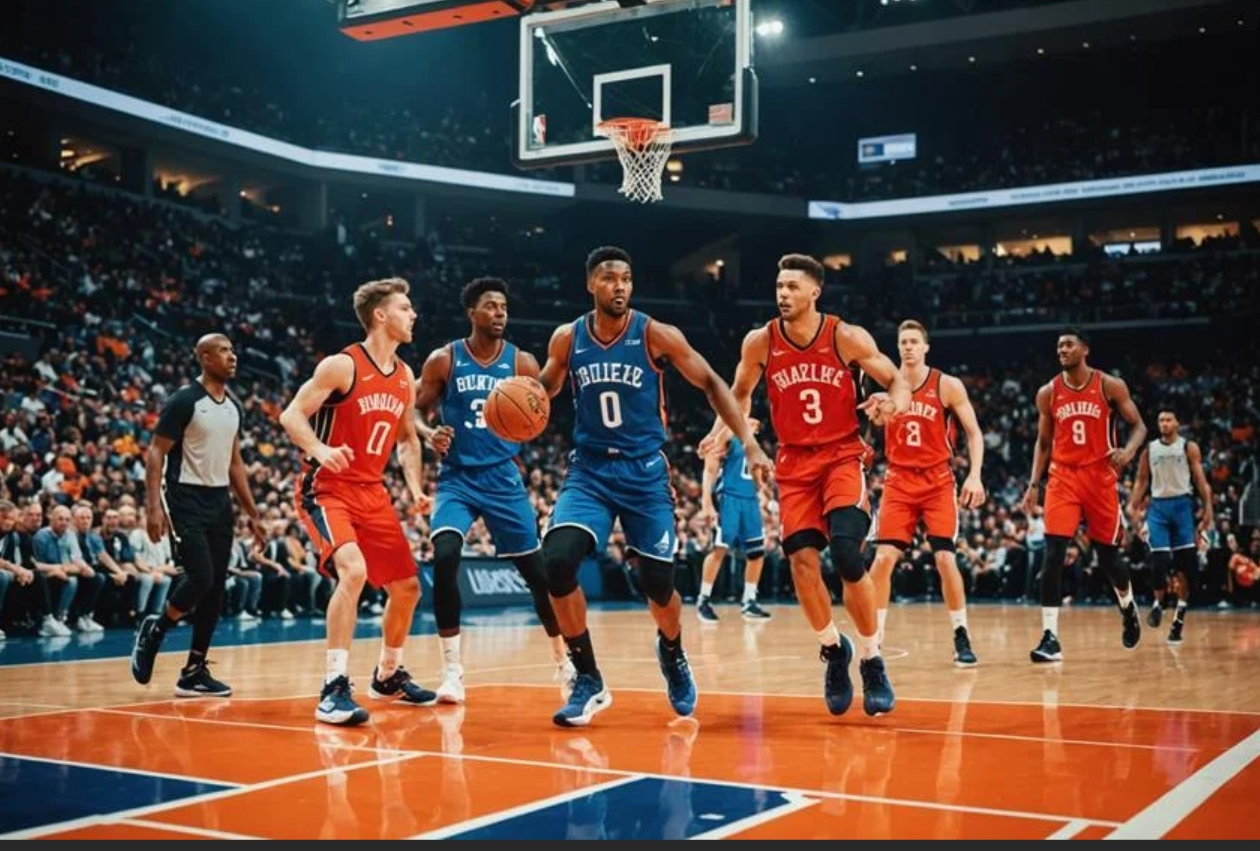
From a production and market scale perspective—similar to how a competition-grade basketball apparel factory operates at volume—the NBA and WNBA exist on completely different financial levels.In 2025, Caitlin Clark — the most-watched rookie in WNBA history — took home less than $100,000. An NBA rookie drafted in the same year earned over $10 million.
Same sport. Same professional level. The gap is so wide it doesn't seem real.
That's the NBA vs. WNBA salary difference in plain numbers:
WNBA average salary (2025) : $120,000
NBA average salary (2025) : $9 million+
Gap : 75 times
At the top, it gets worse. A'ja Wilson — eight-year veteran, two-time MVP, the best player in the league — earned around $200,000 in 2025. The NBA's highest-paid players cleared $50 million. That's a 200x gap between two athletes at the peak of their sport.
The WNBA's entire team salary cap sat at $1.5 million. NBA teams spend that on pregame snacks.
The New CBA Changes Things — But Doesn't Close the Gap
The 2026 collective bargaining agreement is a landmark deal. Players fought hard for it, and the numbers show it:
A'ja Wilson goes from $200K to a $1.4 million supermax
Caitlin Clark jumps from $78K to $530,000
Erica Wheeler , a ten-year veteran, moves from $78K to $300,000
The league minimum rises by over 300%
The team cap grows from $1.5M to $7 million . Average salaries climb from $120K to $583,000 — a 386% increase.
That's real progress. Hard-won, long-overdue progress.
Keep the bigger picture in mind, though. Even after this deal, the NBA-to-WNBA average salary ratio stays at 15 to 1 . WNBA players still take home around 20% of league revenue. The NBA gives players 50% of revenue. The players' union argued that gap would cost them $450 million or more over the life of the deal.
The gap is shrinking. It is nowhere near closed.
Soccer: The 9x Gap — MLS vs. NWSL and the Equal Pay Fight
From a supply chain lens—similar to how soccer apparel manufacturers manage star-driven demand—soccer shows both growth and structural limits.The U.S. women's national team won four World Cups. The men's team has won zero. The women still get paid less.
That's not an opinion. That's the structure of professional soccer in America.
The MLS vs. NWSL salary gap sits at 9 times — smaller than basketball's gap, but just as telling. In 2025, the average NWSL salary starts at $50,500. MLS rosters, by contrast, carry designated players earning millions. There is no individual salary ceiling on the men's side. The MLS Designated Player rule was created to bring David Beckham to the U.S. It puts no cap on what a single man can earn. The NWSL's version — the new High Impact Player (HIP) rule — does.
The HIP Rule: Progress With a Catch
Starting in 2026, the NWSL team salary cap rises to $3.5 million . It climbs to $5.1 million by 2030. Revenue sharing adds more upside. On paper, it looks like momentum.
But the HIP rule tells a messier story:
Teams can exceed the cap by $1 million total for elite players
Those players carry a minimum cap charge of $420,000
That charge eats up a big slice of an already tight budget
So the rule gives with one hand and takes with the other.
Trinity Rodman's case puts that tension in plain view. The Washington Spirit signed her to a multimillion-dollar deal. The NWSL rejected it for cap circumvention. The players' union filed a grievance over CBA violations. The NWSLPA pushed back with a counter-proposal — raise the team cap by $1 million flat. Their argument: the HIP structure punishes the exact stars it claims to support.
The league's finances tell a different story than its salary rules. NWSL franchise valuations jumped 179% since 2023 . The average franchise is now worth $184 million. The league is worth more. The players know it. They're negotiating for their cut.
The women's soccer pay gap is getting smaller. But the rules on both sides still don't match.
Golf: The 3x Gap — PGA Tour vs. LPGA Tour Prize Money Reality
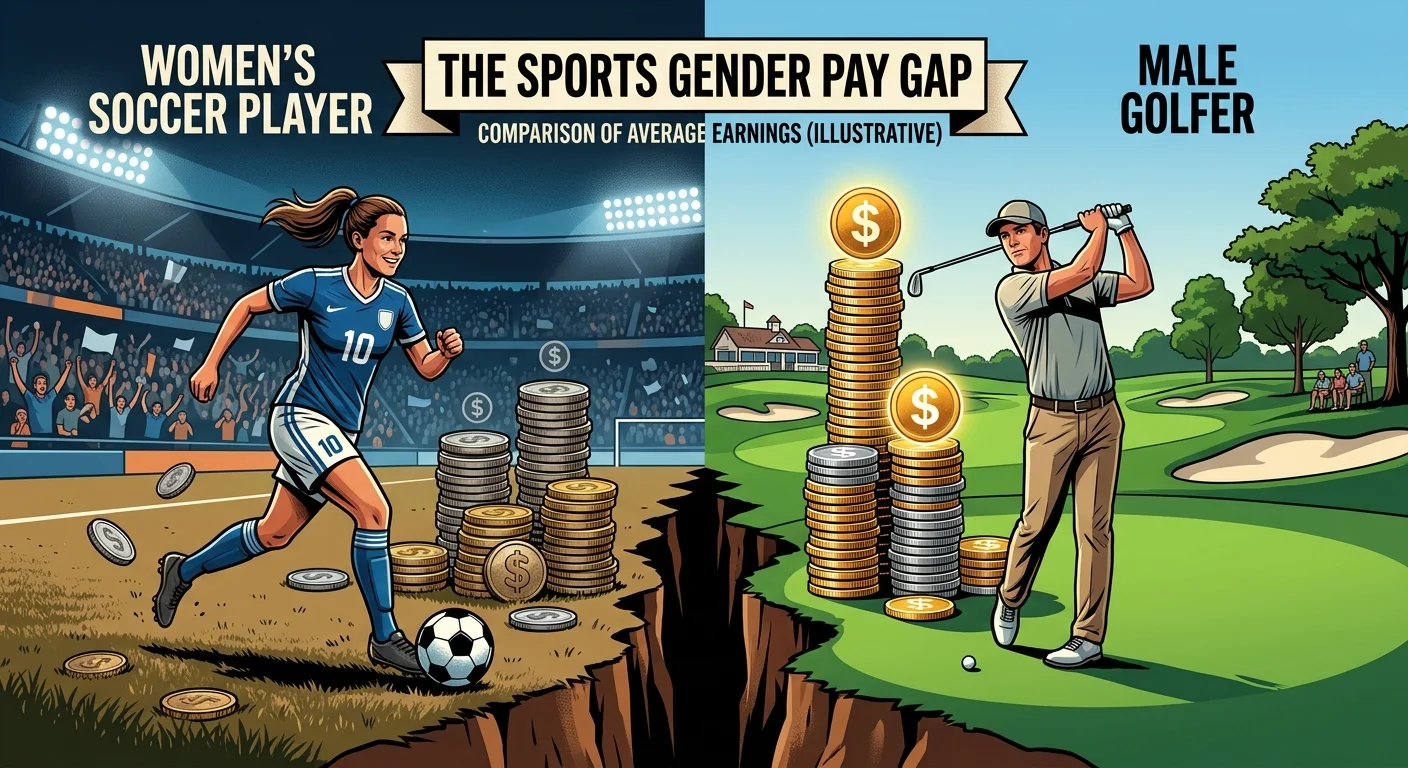
In sourcing terms—like working with reliable golf apparel suppliers—golf shows how prize distribution varies dramatically across tiers.Golf is where the numbers turn brutal fast.
In 2025, Jeeno Thitikul led the LPGA in total earnings with $7.5 million . That's a strong season by any standard. On the PGA Tour, that same amount would have ranked her 20th . Scottie Scheffler, the PGA's top earner, took home $27.7 million . That's close to four times what the best woman in golf made all year.
The gap doesn't stop at the top. PGA player Alex Smalley — ranked 67th on the money list — earned $607,000 . That number matches the LPGA's #1 earner through the start of 2026.
The LPGA's biggest prize is the CME Group Tour Championship. The winner takes home $4 million . Compare that to the PGA Tour Championship: the winner gets $10 million . On top of that, there's an extra $20 million FedEx Cup bonus. The gap between those two payouts is hard to ignore.
2026 data makes the split even clearer. By March, the PGA's top earner had already passed $6.5 million . The LPGA's leader sat at $602,000 . That's a 10x gap — and the season wasn't even halfway done.
The headline calls this a 3x gap. Look deeper into the leaderboard, and it runs closer to 10x .
Tennis: The Closest Gap at 1.5x — How Equal Prize Money Changed Everything
From a product development perspective—similar to how custom tennis apparel manufacturers refine premium positioning—tennis has made the most meaningful progress.Tennis did what every other major sport is still trying to do. It moved the needle — for real.
The women's sports pay gap in tennis is the smallest in professional athletics. At WTA 500 and WTA 1000 levels, women earn about 1.5 times less than men at equivalent ATP events. That's not a gift from the top. It came from decades of organized pressure, legal fights, and players who walked away from the table until the numbers made sense.
The results are showing up in real, specific ways now.
Charleston 2026: A Line in the Sand
The 2026 Charleston Open became the first standalone WTA 500 tournament to match its ATP 500 equivalent in prize money. Not close to equal. Not nearly there. Dollar for dollar.
Here's what that looked like in practice:
2025 purse : $1.06 million
2026 total package : $2.5 million — broken down as $2.3 million in prize money plus $200,000 in player benefits
ATP 500 standard : above $2 million
Gap closed : The new purse exceeds the WTA 500 minimum of $1.206 million by more than $1.2 million
That's not a small step forward. That's a full doubling in a single year.
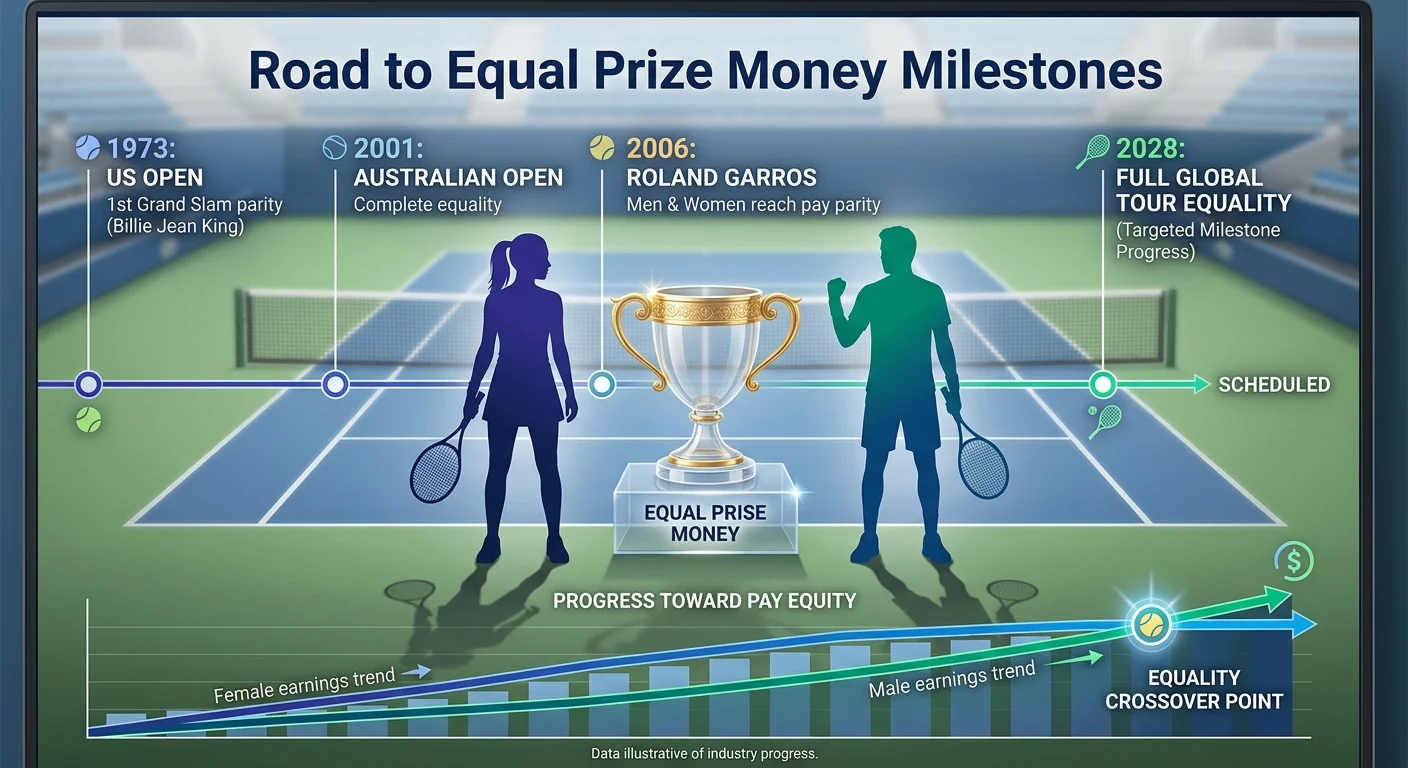
The US Open has held the equal pay standard since the 1970s. In 2026, the winner's check climbs to $5 million — a 38.89% increase over 2025. Men and women receive identical payouts. Full stop.
The Road to 2027 — and 2033
Tennis has a timeline. That matters. Most sports don't have one.
1.All combined WTA 500 and WTA 1000 events: equal prize money by 2027
2.All standalone weeklong WTA events: equal by 2033
Charleston didn't wait for 2033. It moved ahead of schedule — and that decision puts pressure on every other tournament on the calendar to explain why it hasn't done the same.
The female tennis players prize money story isn't finished yet. The gap between top WTA and ATP earnings at the highest levels hasn't closed all the way. But tennis has something basketball, soccer, and golf don't. There's a written-down, committed schedule that says exactly when it will.
That's not everything. It's not nothing, either.
Why Do Female Athletes Earn Less? The Root Causes Behind the Sports Gender Wage Gap
The numbers above don't exist in a vacuum. They're symptoms. The real question is what's driving them.
Start with this: in 2025, not a single woman appeared on the list of the world's 100 highest-paid athletes. Coco Gauff earned $31 million that year — more than most professional athletes of any gender ever will — and still didn't make the cut. That's not an oversight. That's the structure.
The Money Doesn't Come From Playing
Look at how the top-earning women in sports get paid. Of the 15 highest-paid female athletes in 2024, the pattern is nearly identical across the board:
Athlete | Prize/Salary | Endorsements |
|---|---|---|
Coco Gauff | $9.4M | $21M |
Eileen Gu | $62K | $22M |
Simone Biles | $135K | $11M |
Caitlin Clark | $100K | $11M |
Caitlin Clark earned $100,000 playing basketball. She earned $11 million selling things. Simone Biles — widely considered the greatest gymnast alive — took home $135,000 in prize money. The rest came from sponsors.
Women athletes underpaid in their leagues are forced to treat endorsements as their main income. That's not hustle. That's a broken compensation model.
Media Coverage Is the Lever That Controls Everything
Women's sports receive around 15% of total sports media coverage. That ceiling cuts off everything below it — sponsorship interest, broadcast deals, league revenue, and player salaries. Less coverage means fewer eyeballs. Fewer eyeballs mean smaller TV contracts. Smaller TV contracts mean less money to distribute.
The women's sports viewership gap is real — but it's also partly manufactured. You can't build an audience for content that never airs.
Most Female Athletes Are Nowhere Near the Top 15
The endorsement wealth of Gauff and Clark paints a misleading picture. The reality beneath it is stark:
78% of women athletes earn $50,000 or less from their sport
58% earn $25,000 or less
~50% end up with no net income after training and travel costs
41% spend more than $10,000 per year just to compete
74% hold outside jobs — a quarter of them full-time, while training over 22 hours a week
In Australia, 39% of elite women athletes earn zero dollars from sport. Another 36% earn between $5,000 and $20,000. Three out of four make less than $20,000 a year.
These aren't hobbyists. These are professional athletes living below the poverty line to compete at the highest level.
Professional sports salary disparity isn't just about the stars at the top. It's about the entire system that decides whose labor gets paid and whose gets written off as passion.
The data on basketball, soccer, golf, and tennis shows the gaps at the visible end of the spectrum. This is what's holding the floor down.
Sports With the Smallest Gender Pay Gap: What They Got Right
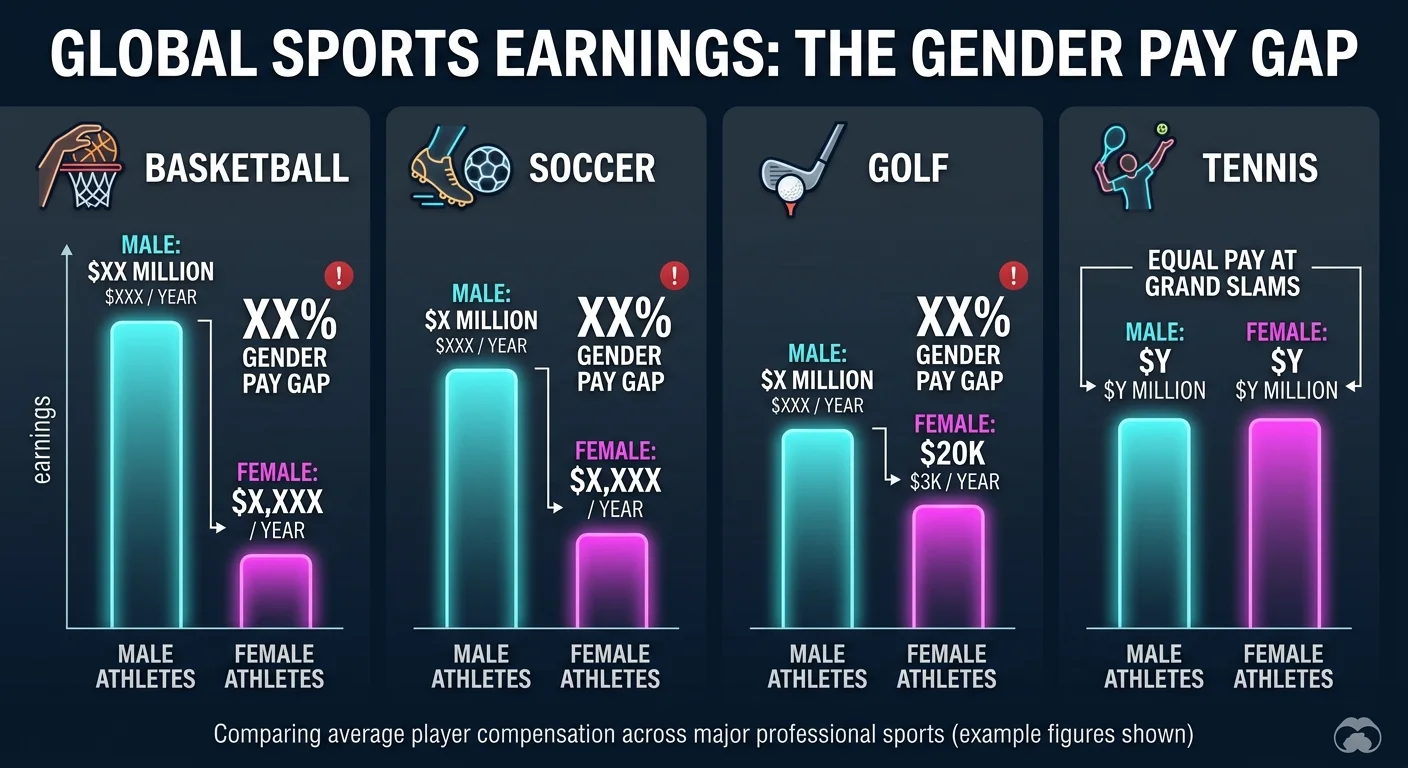
The data table above tells one uncomfortable story after another — except for one row.
Tennis sits at the bottom of that gap chart for a reason. The ATP-to-WTA earnings ratio lands at 1.53x . Top 100 ATP players average $1.59 million per year. Top 100 WTA players average $1.04 million. That's still a gap — no one's pretending otherwise. But stack it against basketball's 95x or soccer's 9x, and one question becomes hard to ignore: what did tennis do right?
The short answer is equal prize money at the majors. All four Grand Slams pay men and women the same. That one structural decision pushed top-end women's earnings closer to the men's side than any other major sport has done.
The results build over time. By 2023, the top 10 highest-paid women athletes were all tennis players . That's a complete shift from a decade earlier. Back then, the list was scattered across different sports.
Equal prize money didn't close the gap in full. It raised the ceiling. And a higher ceiling lifts everything below it too.
Other sports haven't absorbed that lesson yet. Structural change at the top creates real movement at the bottom. Tennis proved it.
The Endorsement Economy: Why Female Athletes Depend on Brand Deals to Survive
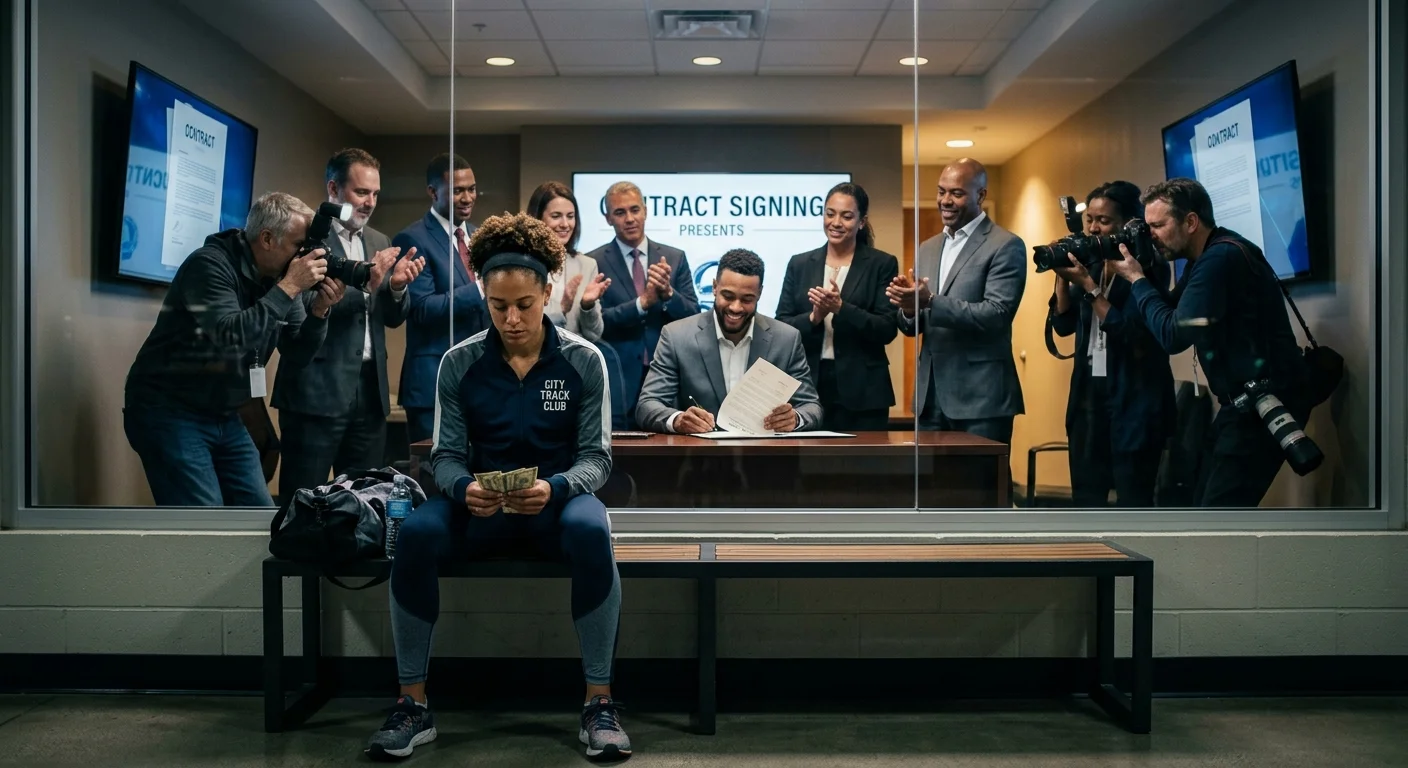
The math is simple and brutal: play the sport, scrape by; sell the brand, actually build a life.
That's not cynicism. That's the reality for most professional women athletes in 2025. The salary data already showed you what leagues pay. Endorsements fill the gap between a paycheck and a real income.
And the market is moving — fast.
Women's sports sponsorship grew 17.5% year-over-year in 2025 . That's 3.5 times the growth rate of men's leagues . Global women's sports revenues hit $1.88 billion in 2024 — close to double the prior year. Projections put that number at $2.35 billion in 2025 . Three years ago, it sat at $692 million.
The WNBA pulled in $105 million in sponsorship revenue in 2025. That's up 45% from $72.3 million the year before. The NWSL's jersey partnership hit a record $28 million . Across women's leagues, trackers logged more than 5,300 sponsorship deals in a single year.
Brands aren't doing this out of goodwill. The audience is there — and it converts.
1.Avid women's sports fans spend 2.5 times more than casual fans on tickets, merchandise, and sponsor products.
2.They're 27% more prone to buy from brands that support female athletes.
The endorsement economy is real. It's growing. It just shouldn't be the sole economy female athletes can tap into.
What Needs to Change: The Path Toward Pay Equity in Professional Sports
The roadmap already exists. The hard part is getting leagues, broadcasters, and sponsors to follow it.
Seven structural changes would move the needle — not slowly, but fast enough to matter within a decade.
1. Revenue sharing that reflects player value. WNBA players take home 20% of league revenue. NBA players get 50%. Closing that gap — even by half — would be worth hundreds of millions over a single CBA cycle.
2. Media coverage as a policy target, not an afterthought. Women's sports get 15% of total sports media. That number drives everything else: sponsorship interest, broadcast deals, ticket sales. No audience grows in the dark.
3. Redirect sponsorship dollars with purpose. Female athletes receive 1% of global sports sponsorship. Brands that shift just 10–20% of their budgets toward women's leagues would reshape the entire endorsement economy.
4. Salary floors that match across leagues. The NWSL minimum sits at $50,500. MLS starts at $89,716. That gap isn't market forces — it's a policy choice. Start by mandating parity at the floor.
5. Mandate equal performance pay. The 2022 U.S. Soccer settlement proved it's possible. A government-backed equal pay standard in professional sports would push that conversation into every other league.
6. Annual public audits. The RBC 21x gap metric exists. Use it. Publish the numbers every year, by sport, by league. Transparency builds accountability. Accountability builds pressure. Pressure shifts timelines.
Tennis didn't close its gap by accident. It built a schedule and stuck to it. Every other sport has that same option.
Conclusion
The numbers don't lie — and they don't flatter us either.
Take the 95x salary gap in basketball. Or look at tennis, where equal prize money became a reality. The data tells a clear story. The gender pay gap in professional sports isn't a myth or a misunderstanding. It's not unavoidable either. It's a choice. Broadcast deals, sponsorship dollars, and ticket pricing all push women's athletic excellence to the bottom — again and again.
Here's what you can do right now: watch women's sports, buy their merch, share their wins. Revenue follows attention. And attention follows people like you.
At berunclothes , we believe performance deserves equal recognition—whether it’s backed by Women's tennis apparel manufacturers or driven by athletes rewriting the limits of sport. The gap is closing, but it won’t disappear on its own.Equal pay starts with equal respect. And equal respect starts with where you put your energy, your eyeballs, and yes, your wallet.
The game isn't over. It's just getting started.