Your blood sugar doesn't have to be something you fight every day. For millions of people living with type 2 diabetes or stuck in the grey zone of prediabetes, the answer may not be another prescription. Sometimes it starts on a yoga mat, with nothing more than your breath and a willingness to move— especially when supported by high-quality activewear from a custom yoga apparel manufacturer.
Science backs what ancient practitioners have long known. Mindful movement can improve insulin sensitivity. It also calms the stress hormones that push glucose levels higher and helps your body find balance again.
These six yoga poses for diabetics are simple enough to do at home. They're grounded in real science. Practice them with care, and they can bring real change to how your body responds. Give them ten minutes — you might be surprised by what your body can do.
Pose 1: Tadasana (Mountain Pose) — Activate Circulation Before You Begin
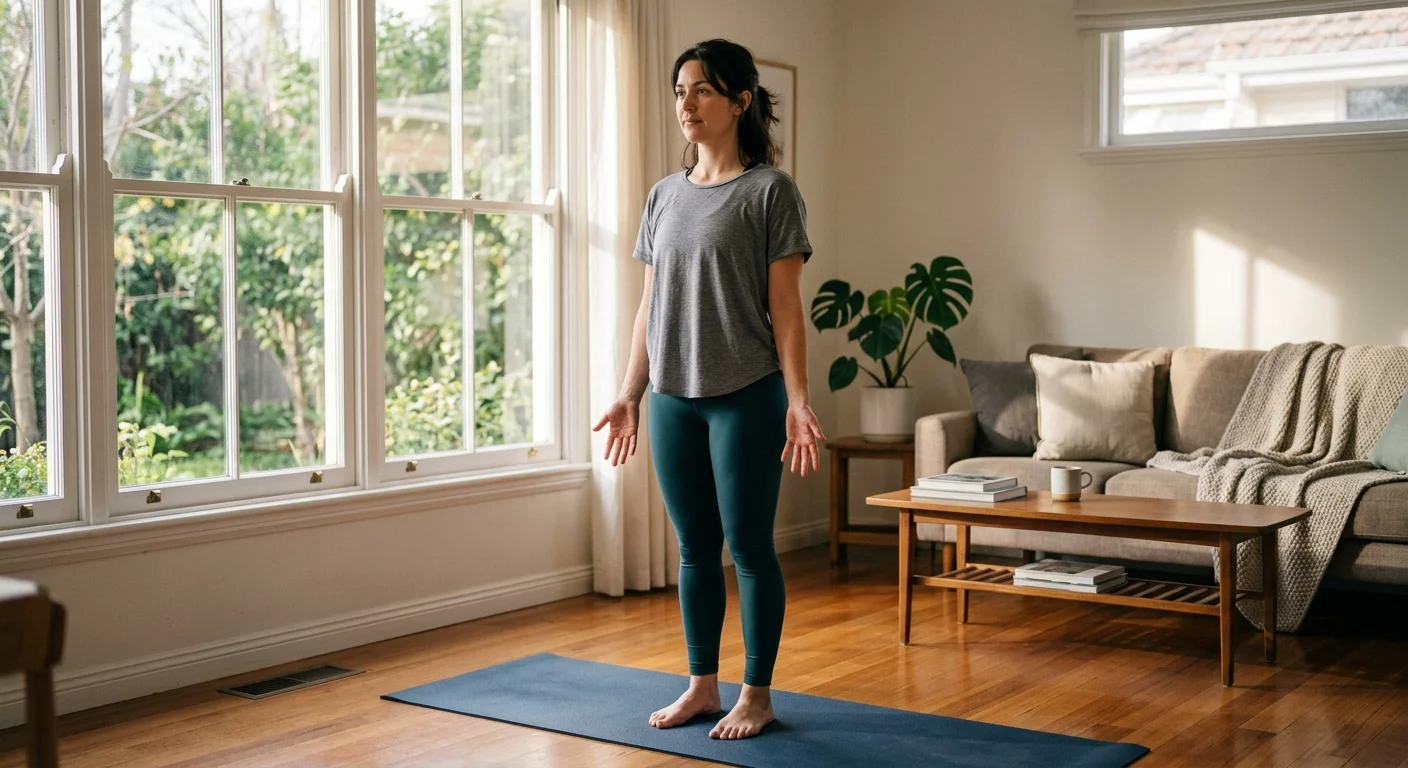
Still counts as yoga. That's the first thing to know about Tadasana.
Mountain Pose looks like standing. It is standing — but with full-body awareness most of us never bring to being upright. Every muscle fires. Blood begins to move. For people managing blood sugar, that quiet, whole-body activation is where real change starts.
How to find it:
Stand with feet hip-width apart, all ten toes pointing forward
Spread your weight across all four corners of each foot — both heels, your pinky toe, your big toe
Soften your knees — never lock them
Draw your shoulder blades down your back, palms facing forward, fingers spread wide
Lengthen from the base of your pelvis all the way through the crown of your head
Keep your chin parallel to the floor, gaze soft and steady ahead
Hold for 5–8 slow breaths.
Watch out for tension in the shoulders. They tend to rise, the chest closes, and circulation to the upper body narrows. Picture your shoulder blades drawing toward each other and melting down your back. Let your chest open like a window.
Wear a close-fitting top. It helps you notice whether your ribs are pulling together or splaying open— something often considered in private label yoga clothing production for performance-focused brands.. Small details like that make a real difference.
Pose 2: Paschimottanasana (Seated Forward Bend) — Enhance Insulin Sensitivity Through Deep Stretching
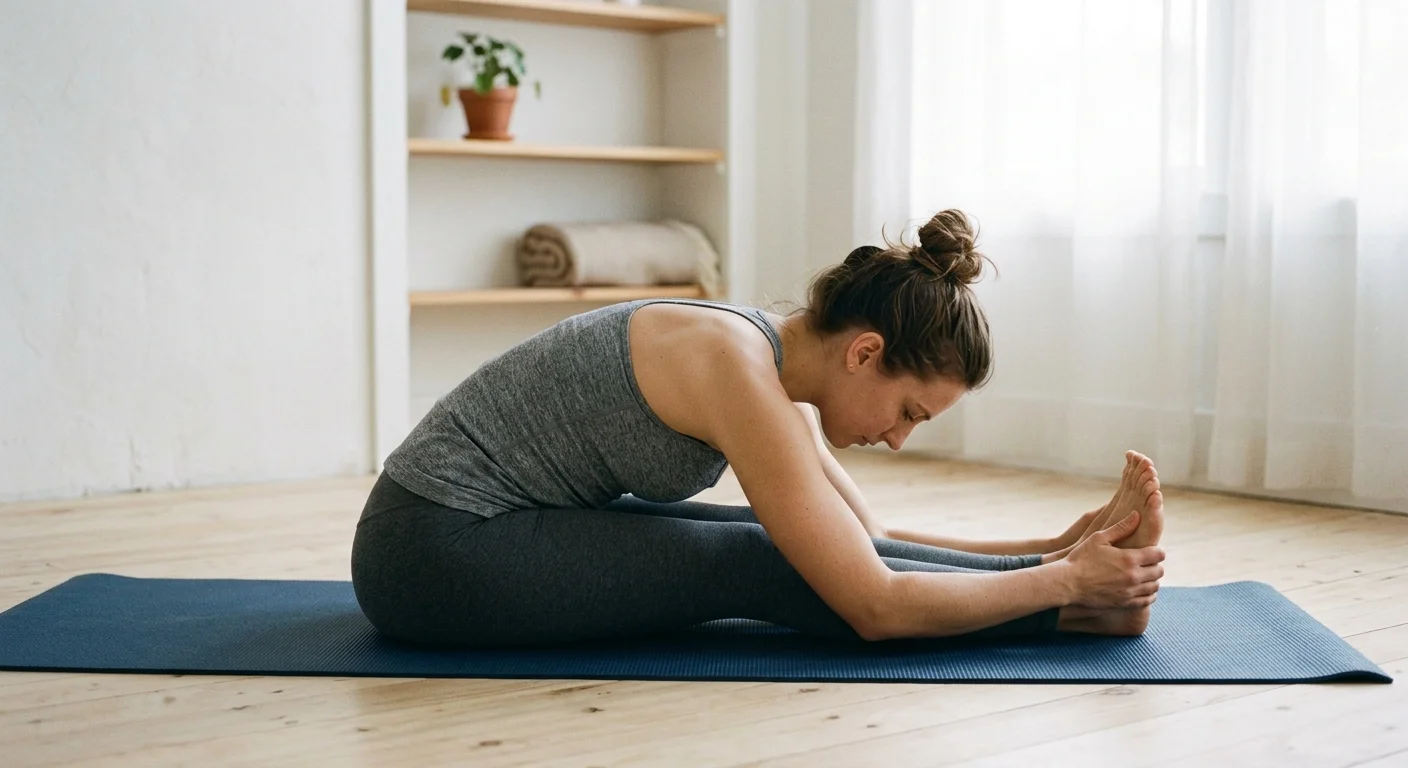
Folding forward is one of the most powerful things you can do for your blood sugar. Simple, but effective.
Paschimottanasana — the Seated Forward Bend — works from the inside out. Your torso folds toward your legs. That gentle compression across your abdomen stimulates your pancreas. Studies show this stretching action revives islet cells, pushing them back toward healthier insulin output. For anyone with a sluggish glucose response, that's a big deal.
How to practice it:
Sit on the floor with both legs extended straight out in front of you
Flex your feet, pressing through your heels
Inhale to lengthen your spine tall — don't round right away
On the exhale, hinge from your hips and reach forward toward your feet
Hold your shins, ankles, or feet — wherever your body lands today
Let your spine soften with each exhale, going a little deeper as you breathe
Hold for 6–8 slow, steady breaths.
The clinical results for this pose are striking. In a 120-day study, participants saw fasting blood glucose drop by 33 mg/dL . Postprandial glucose fell by 62.54 mg/dL . Insulin resistance markers dropped too — and those results held at both the three-month and six-month marks.
Wear leggings with real stretch here. A stiff waistband will fight you every time you fold— which is why many studios prefer flexible designs from a professional yoga wear supplier.
Pose 3: Ardha Chandrasana (Half Moon Pose) — Release Stress Hormones That Spike Blood Sugar
Cortisol is working against you. Stress spikes. Your liver floods your bloodstream with glucose. No amount of careful eating fixes that in the moment. Half Moon Pose targets that exact mechanism.
Ardha Chandrasana is a standing balance pose. One leg roots into the ground. Your torso opens sideways. One arm reaches toward the ceiling. Your body hangs between earth and air — like the crescent it's named after. It looks graceful. What it does on the inside is the interesting part.
Balancing on one leg forces your mind to focus completely. That focus shifts your nervous system out of fight-or-flight mode and into a calmer state. Stress hormones drop. Your body stops pumping out the extra glucose they trigger. Plus, the side-opening stretch through your torso works on your abdominal organs. It supports digestion and gives your metabolism a boost.
How to practice it:
Stand tall, then step your right foot back and hinge forward
Plant your right hand on the floor (or a block) beneath your shoulder
Lift your left leg until it's parallel to the floor
Stack your hips and open your chest toward the side wall
Extend your top arm straight upward, gaze following if your balance allows
Hold for 30–60 seconds each side. New to balancing poses? Start with 15–20 seconds and build from there.
Tight hips will push back on you here — that's completely normal. This pose works deep into the hip flexors and glutes. That's where most of us hold the physical tension from a stressful day. Wear something with real stretch through the hip and thigh. Restrictive fabric will make this pose harder than it has to be,especially compared to ergonomic pieces developed by experienced OEM yoga apparel manufacturers.
Pose 4: Marjaryasana-Bitilasana (Cat-Cow Pose) — Improve Digestion and Metabolic Function
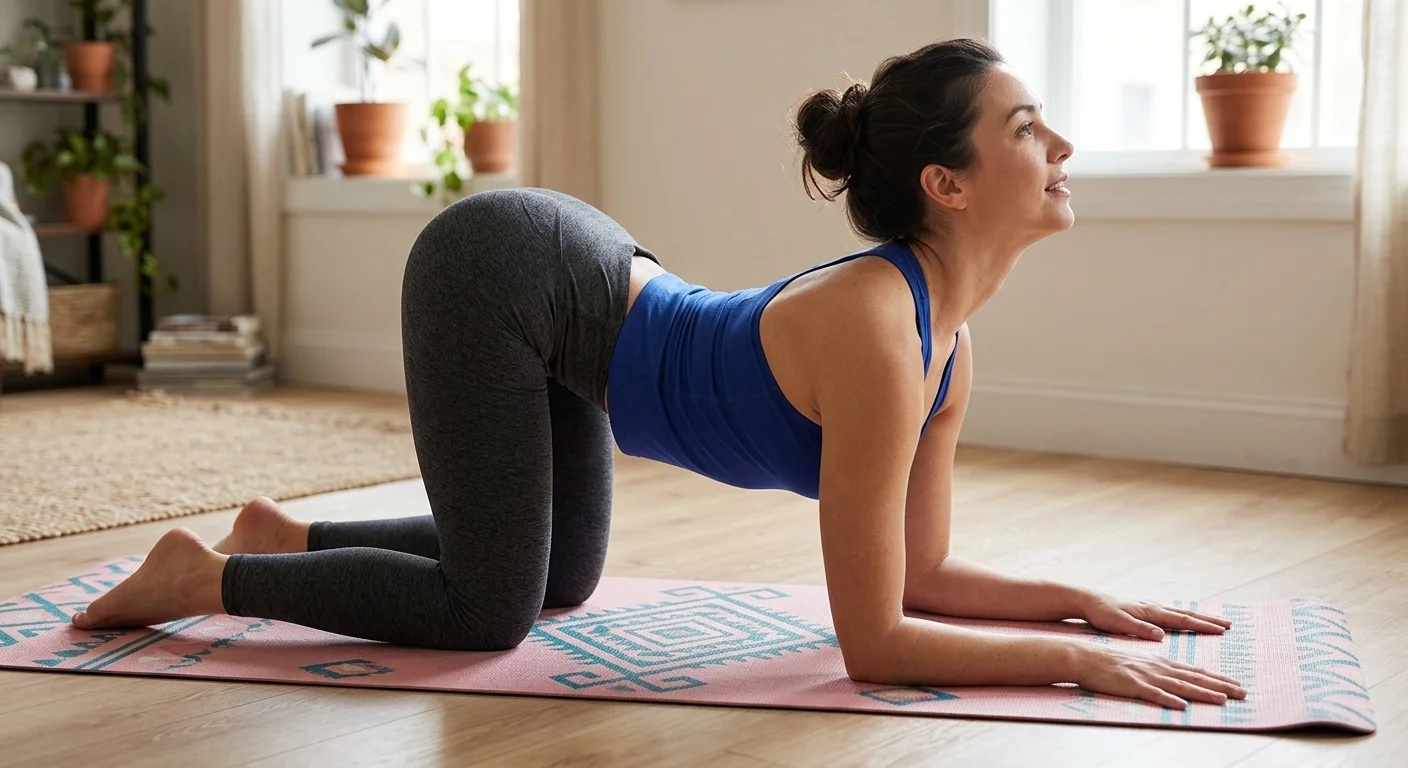
Your spine was built to move like this. Back and forth, breath by breath — Cat-Cow is the body doing what it was made to do. Your digestive system feels every bit of it.
This rhythmic flow between two shapes works in a quiet, powerful way. Each time you arch into Cow and round into Cat, your abdomen compresses and releases. That steady internal massage wakes up the organs just beneath the surface — your pancreas, your intestines, your gut. Blood flow increases to all of them. Nutrient absorption gets better. The metabolic drag that makes blood sugar harder to manage starts to break down.
How to move through it:
1.Come onto all fours — wrists beneath shoulders, knees beneath hips
2.Inhale into Cow : drop your belly, lift your chest, let your tailbone rise
3.Exhale into Cat : round your spine toward the ceiling, tuck your chin, curl your tailbone under
4.Move at a slow pace — let the breath lead, not the other way around
Hold each shape for 10 seconds. Repeat 5–6 times.
Practice on an empty stomach — before breakfast works well, or after a long stretch of sitting. One to two sets a day is enough.
Wear something fitted through the torso. Loose fabric bunches at the waist and hides what your spine is doing. You want to feel every vertebra move.
Pose 5: Bhujangasana (Cobra Pose) — Stimulate Abdominal Organs for Glucose Metabolism
Lying face down on the mat, you're closer to your own body than you might realize.
Bhujangasana — Cobra Pose — works from the front of your torso. It presses into the organs that matter most for glucose regulation. Your pancreas feels the compression first. That steady, soft pressure pushes it toward better insulin production and faster release. Your liver gets a boost in blood flow. Your adrenal glands tend to run in chronic overdrive. This pose gives them a moment of calm circulation. The whole metabolic system wakes up — not from force, but from attention.
How to practice it:
Lie face down, forehead resting on the floor, legs extended, tops of feet pressing down
Place palms flat beneath your shoulders, fingers spread, elbows tucked close to your sides
Take a deep breath in — lift your chest using your back muscles, not your arms
Keep your pubis and toes grounded, shoulders drawing away from your ears
Let your head tilt back with care, gaze soft
Hold for 20–30 seconds. Breathe. Exhale to lower.
Neck or lower back feeling sensitive? Try Baby Cobra instead. Lift just 2–4 inches, keep your elbows soft, and gaze forward rather than up. The benefits still reach the organs underneath.
Yoga-based research shows poses like Bhujangasana help lower HbA1c levels and boost insulin sensitivity over time. Small effort, consistent practice, real results.
A fitted top helps here — you want to feel how your ribcage expands with each breath,something often refined in high-performance yoga apparel manufacturing for activewear brands.
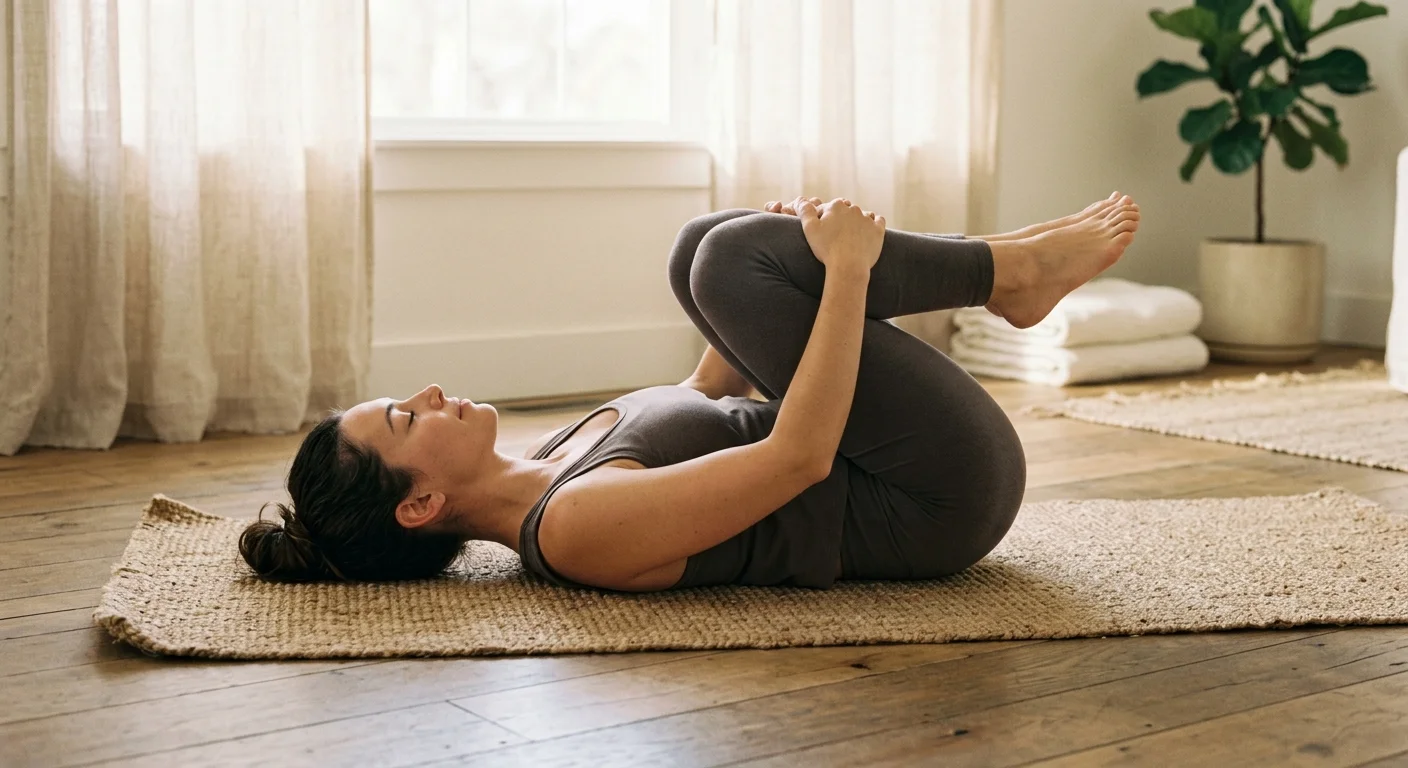
Pose 6: Pavanmuktasana (Wind-Relieving Pose) — Support Digestion and Stabilize Post-Meal Blood Sugar
What you eat matters. But what happens after the meal matters just as much. Your glucose rises. Your digestive system kicks into high gear. That post-meal window is where Pavanmuktasana does its best work.
The name translates to "wind-relieving pose." That sells it short. This pose goes much deeper than releasing gas. Draw your knees toward your chest. Your thigh presses into your abdomen. That steady compression massages your digestive organs. It triggers peristalsis — the wave-like motion that pushes food through your gut. Enzymes release faster. Blood flow to the intestines picks up. Carbohydrates break down cleaner, and your body absorbs them at a steadier pace. The result: fewer glucose spikes in the hour after eating.
There's also a nervous system effect worth noting. Pull your knees close and breathe at a slow, steady pace. This activates your parasympathetic state — your body's "rest and digest" mode. Cortisol drops. Insulin response sharpens. Your blood sugar settles instead of crashing or spiking.
How to practice it:
Lie on your back, arms by your sides, palms facing down
Inhale and draw your right knee toward your chest — interlace your fingers around your shin or just below your knee
Hold : press your thigh into your abdomen for 10–60 seconds; rock side to side if that feels good
Exhale and lower your leg with control
Repeat on the left side, then draw both knees in together for the full pose
Start with 10-second holds. Build toward 60 seconds as your body opens up.
| Variation | Best For | Intensity |
|---|---|---|
| Single leg (Ardha) | Beginners, elderly, post-surgery | Low |
| Double leg (Full) | Experienced practitioners | Higher |
Had abdominal surgery? Or your lower back feels sensitive? Stay with the single-leg version. Keep your head and shoulders flat on the floor. No lifting needed — the compression still reaches where it counts.
Do this one after meals, not before. That's when your digestive system needs the support. Wear something with a soft, flexible waistband — nothing tight or rigid across your middle, similar to designs from custom high quality yoga clothing manufacturers focused on comfort and mobility.. You want to feel that abdominal release without your clothes fighting you.
How to Build a Daily Yoga Routine for Blood Sugar Control
Consistency is the ingredient most people skip — and it's the one that makes everything else work.
The six poses you've just learned aren't meant to be practiced at random, pulled out on hard days and forgotten the rest of the week. Sequence them. Time them with intention. Track what happens. Your body starts to respond in ways that show up in real numbers.
Structure your practice around two windows:
1.Morning, on an empty stomach — targets fasting blood glucose. Research shows this approach can drive FBG down by over 33 mg/dL compared to controls.
2.One to two hours after a meal — this is where postprandial spikes get interrupted. Post-meal yoga can reduce PPBG by up to 62.54 mg/dL. That's a bigger drop than fasting practice alone produces.
Even 20–30 minutes is enough. Move through the six poses in two to three rounds, holding each for 30–60 seconds. That's a full session.
Want to deepen the practice? Wrap the poses inside a Sun Salutation flow. Do five rounds of Surya Namaskar. Fold in Cobra and the Forward Bend during your low-to-the-ground transitions. Close with Savasana. The whole thing runs about 25 minutes. It layers breathwork on top of movement — and that combination is what speeds up the metabolic shift.
Track it like it matters — because it does:
| What to Measure | Target | When |
|---|---|---|
| Fasting blood glucose | Under 100 mg/dL | Before morning practice |
| Postprandial blood glucose | Under 140 mg/dL | 1–2 hrs after meals |
| HbA1c | Under 7% | Every three months |
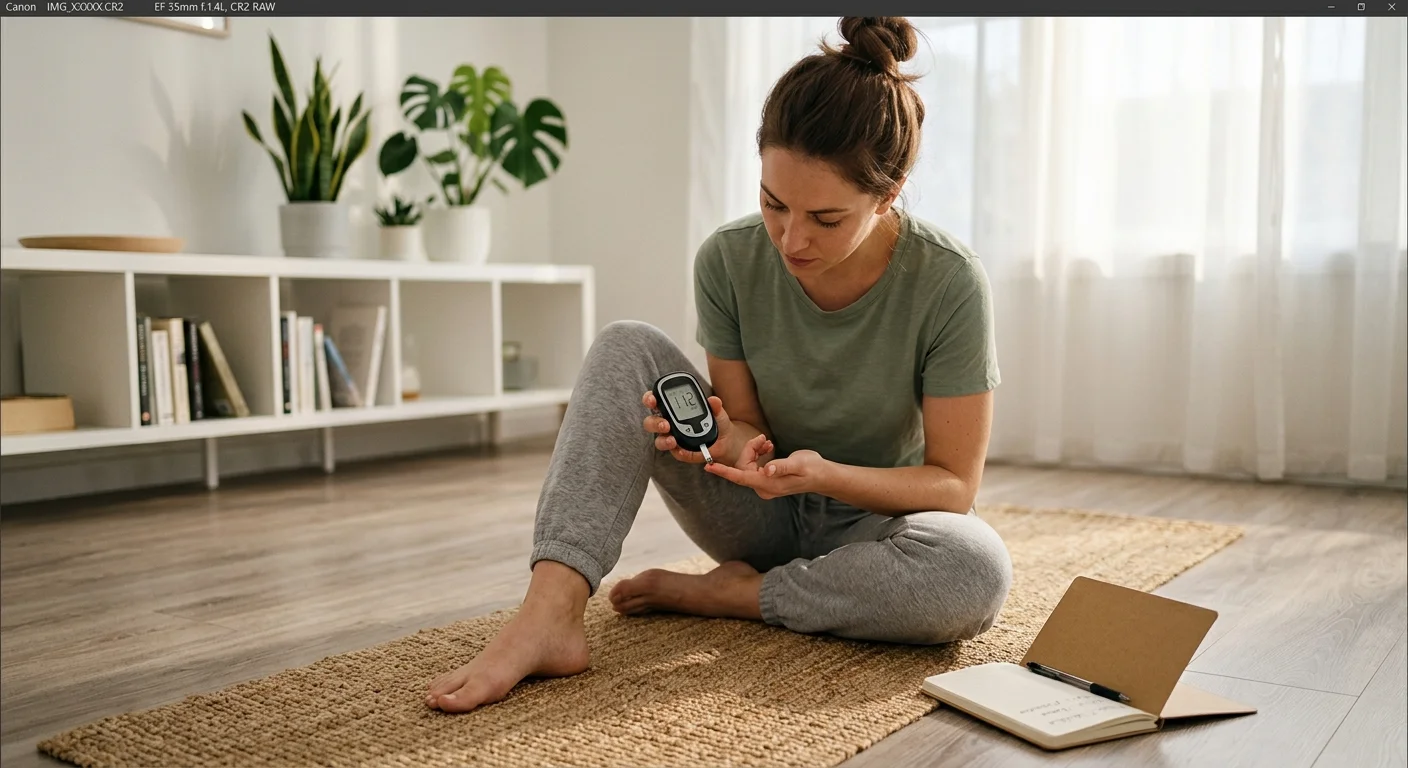
Log your glucose before and after each session. A 10–20 mg/dL drop is a solid early sign your body is responding. Note your pose holds, how you felt, any symptoms. The pattern lives in your weekly trends. Your numbers from any single day won't show it on their own.
Small, repeated effort. Real, measurable change.
What to Wear for Your Blood Sugar Yoga Practice: Comfort Meets Performance
The right clothing won't lower your blood sugar — but the wrong clothing will disrupt your practice completely.
Holding a forward bend for six slow breaths takes full focus. So does pressing your thigh into your abdomen after lunch. Your clothing either supports those movements or fights them. Fabric that binds at the waist during Pavanmuktasana pulls your attention away. Leggings that resist hip opening in Half Moon force you to compensate. These aren't minor issues. They chip away at your adherence rate — and a 50% drop in consistency makes the practice far less effective.
What works:
1.High-waist yoga pants in 4-way stretch nylon-spandex (78/22%) — you get enough give for deep forward folds without any pulling or restriction
2.Bamboo-blend tops from quality fitness clothing manufacturers — loose, breathable, and moisture-wicking so they hold up through longer poses
3.Non-slip grip socks — a solid choice for balancing poses like Ardha Chandrasana, where foot stability matters
Clothing that moves with you keeps your focus where it belongs: on your breath, your body, and your blood sugar.
Safety Precautions and Who Should Consult a Doctor First
Yoga is gentle. But that doesn't make it risk-free — your blood sugar can behave in ways you don't expect, and that changes things.
Know where you stand before you get on the mat. Some people need a doctor's clearance first. Not as paperwork, but as a real safety step.
Talk to your doctor before starting if you:
1.Have Type 1 diabetes
2.Are managing Type 2 diabetes with medication
3.Have high blood pressure or heart-related conditions
4.Have retinopathy, neuropathy, or other complications tied to diabetes
5.Are over 40, mostly inactive, or getting back to movement after a long gap
None of these conditions rule you out. They just mean your practice needs to fit your body. Start that conversation with your healthcare provider.
During practice, know your warning signs:
Three mistakes beginners make — and how to avoid them:
1.Overexerting too soon — start at half your perceived effort, then build up bit by bit
2.Holding your breath — exhale on exertion, inhale on release, every single time
3.Pushing through sharp pain — some discomfort is normal; pain above a 4 out of 10 is your body telling you to stop
Check your blood glucose before and after each session. That data gives you more useful information than any single pose ever will.
Frequently Asked Questions About Yoga and Blood Sugar Management
Real questions deserve real answers — not vague reassurances. Here's what the research says.
Can yoga lower blood sugar, or is this wishful thinking?
The evidence is solid. A meta-analysis covering 927 people with type 2 diabetes found that regular yoga reduced HbA1c by an average of 0.47%. Fasting blood glucose dropped across 1,130 subjects. Post-meal glucose followed. These aren't small, isolated studies. They're pooled results from multiple randomised controlled trials. The effect is real.
How long before I notice a difference?
Three months is the first real checkpoint for HbA1c changes. A 24-week program showed clear improvements in fasting glucose, post-meal glucose, HbA1c, BMI, and blood pressure. All results reached statistical significance. Staying consistent across that period is what drives the outcome.
Does it matter how often I practice?
Yes — more than most people realise. Research shows a direct link between daily practice frequency and adherence (r = 0.36). People who stayed consistent had lower fasting glucose and HbA1c. Those who dropped out trended in the opposite direction. Frequency isn't optional — it's the mechanism.
Can yoga replace my diabetes medication?
No. Yoga works alongside medication, not instead of it. It's a well-documented complementary tool. It helps manage glucose, reduce stress hormones, and improve insulin sensitivity. Long-term results still depend on medication, diet, and lifestyle all working together.
What about Type 1 diabetes — are these poses safe?
No clinical data supports yoga as a blood sugar management tool for Type 1 diabetes. All major research focuses on Type 2. You have Type 1? Talk to your physician before starting. The insulin dependency involved makes unsupervised practice a real risk.
I have prediabetes. Is yoga still useful?
Yes, though direct research on prediabetes is limited. The 24-week protocols used in Type 2 studies are solid starting points for prevention. Building consistent movement habits now — before blood sugar climbs higher — is what the evidence points toward.
Are there any unexpected benefits beyond blood sugar?
One worth knowing: yoga also improves triglyceride levels. A meta-analysis of 862 subjects showed a clear reduction in triglycerides (SMD = -0.32). BMI and blood pressure improvements showed up too — across multiple studies. Blood sugar is the headline, but your metabolic health as a whole moves in the right direction.
Conclusion
Your body already knows how to heal — it just needs the right invitation.
These six yoga poses aren't a magic cure. But they are a powerful, science-backed addition to your natural blood sugar management toolkit. Mountain Pose builds grounding stillness. Wind-Relieving Pose gives your digestion a gentle reset. Each movement works with your body's own intelligence — calming cortisol, waking up your pancreas, and improving insulin sensitivity one breath at a time.
Start small. Roll out your mat tomorrow morning. Pick two or three poses that feel right, and begin. Consistency matters far more than perfection.
Show up for yourself every day —whether in your favorite leggings or pieces developed by a reliable yoga apparel manufacturer for growing fitness brands. You're not just managing blood sugar. You're building a life that feels good to live in.
That's the real practice.