Table of Contents
You flip over your new Nike jersey to check the tag. There it is: "Made in Vietnam." Or maybe it says China. Thailand. Indonesia.
Why does your friend's identical jersey show a different country? Does it matter for quality, authenticity, or what you paid?
Here's the truth most brands won't tell you: where Nike jerseys are made isn't random. It's a strategic choice based on labor costs, manufacturing expertise, trade agreements, and quality standards that vary by country.
Maybe you're checking if that eBay purchase is real. Or you wonder why "Made in China" gets a bad rap. Perhaps you're just curious how a swoosh travels from factory floor to your closet. Understanding Nike's global manufacturing footprint gives you serious purchasing power.
We're pulling back the curtain on Nike's production countries. You'll see what those tags mean for quality and authenticity. We'll show you how to make smarter buying decisions. Plus, we're introducing a custom jersey alternative that might surprise you.
No corporate spin. No vague answers. Just the manufacturing intel you need.
Primary Manufacturing Countries for Nike Jerseys
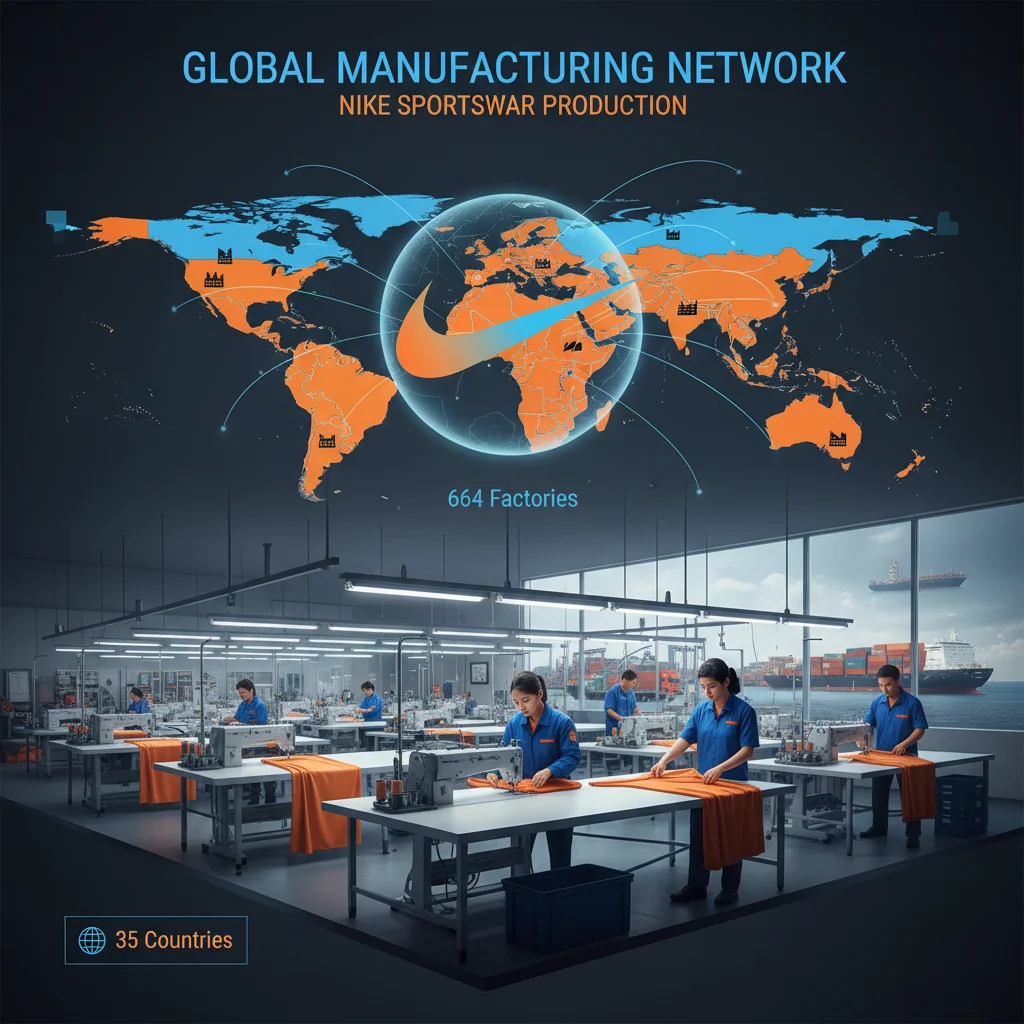
Nike doesn't make jerseys in one magical jersey factory. The swoosh you're wearing traveled through a global network of 35 countries and 664 factories.
Nike Global Manufacturing Network StatsLet's map where your jersey comes from.
Vietnam: The Manufacturing Powerhouse
Vietnam isn't just a Nike production hub—it's the hub.
Vietnam Manufacturing StatsWalk into any Nike store. There's a coin-flip chance your jersey came from one of Vietnam's 237 apparel facilities. That workforce produces one-third of all Nike apparel. Plus, they make half of the company's footwear. Nike needs to scale up production fast? Vietnam delivers.
Why Vietnam? Labor costs sit lower than China. The government welcomes foreign jersey manufacturers with tax incentives. Workers bring real textile expertise—this isn't amateur hour. Vietnam's coastal location means efficient shipping to North America and Europe.
Your "Made in Vietnam" tag signals modern manufacturing with competitive pricing.
China: The Declining Giant
China built Nike's empire. Now Nike's backing away.
China Manufacturing StatsThe facilities include 33 footwear factories and 28 equipment manufacturers of sportswear.
But here's what the press releases won't tell you: Nike's slashing China production. The company plans to drop Chinese footwear imports from 16% to single digits by fiscal year 2026's end.
Tariffs drove this shift. Rising labor costs accelerated it. Political uncertainty sealed the deal.
Does "Made in China" mean lower quality? No. Chinese factories built Nike's reputation for decades. The infrastructure remains world-class. You're just less likely to find that tag on newer jersey releases.
Indonesia: The Third Player
Indonesia holds 8.13% of Nike's factory network . Smaller than Vietnam or China, but vital.
Geography matters here. Indonesia sits between the Indian and Pacific Oceans. That positioning cuts shipping times and logistics costs. The country makes products for Nike, Adidas, and other major brands. This means established expertise and reliable infrastructure.
Indonesian factories specialize in apparel. This makes them natural jersey producers. Nike needs production backup beyond Vietnam? Indonesia answers the call.
The Supporting Cast
Beyond the big three, Nike spreads production across key locations:
Supporting Countries GridThis multi-country approach isn't accidental. It's risk management. Political problems in one country won't shut down Nike's entire operation. Tariff changes in another region? Production shifts elsewhere.
Your jersey's origin tag reflects Nike's decade-long plan. Since 2013, Nike cut factory count by 11%. At the same time, they boosted workforce by 27%. Fewer factories in fewer countries, but bigger facilities with more workers.
That "Made in" tag isn't just geography. It's proof of Nike's global manufacturing strategy.
Why Nike Uses Multiple Manufacturing Countries
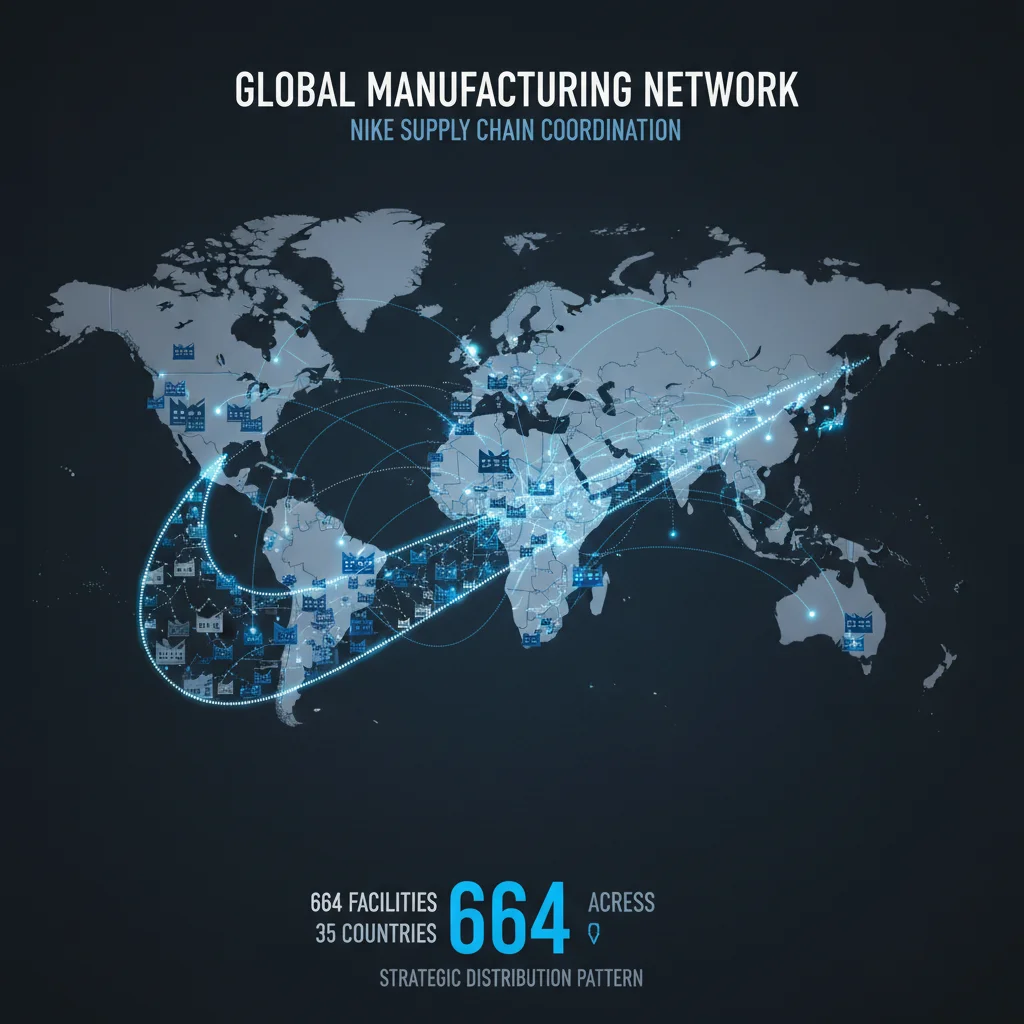
Nike's manufacturing map looks chaotic at first glance. 664 factories spread across 35 countries. Some observers call it scattered. Strategic thinkers call it brilliant.
This isn't about making shoes and jerseys wherever rent is cheap. Nike's multi-country approach solves four expensive problems. A single-country operation would collapse under these challenges.
Cost Optimization Without Quality Compromise
Labor costs vary by region. That's the obvious part.
The subtle part? Nike matches production type to country expertise. Vietnam handles volume. Factories there employ 5,000 to 15,000 workers each. Annual capacity hits 80 to 120 million pairs per region. China shifted from mass production to innovation hubs. Guangdong Province alone houses over 50 factories. These focus on complex designs and new technologies.
The economic impact proves the model works: Nike's Chinese factories support 320,000 workers. They earn $1.8 billion in wages each year. Indonesian facilities employ 180,000 people with $720 million in wages. These aren't sweatshops. They're economic engines. They just cost less than American manufacturing.
Countries compete for Nike's business. They offer tax breaks, infrastructure support, and flexible rules. Nike captures these benefits across 35 locations. No betting everything on one government's mood.
Insurance Against Chaos
COVID-19 shut down Chinese manufacturing. Nike didn't panic. Production shifted to Vietnam and Indonesia overnight.
That's the second problem solved: risk dispersion.
Political tensions spike between the US and China? Nike reduces Chinese imports from 16% to single digits. Tariffs threaten margins? Move production to Cambodia or Thailand. Natural disaster hits one region? The other 34 countries keep running.
Since 2013, Nike cut its China jersey factory count from 195 to 159. A clear retreat from over-reliance. During the same period, Vietnam facilities exploded from 65 to 166. This wasn't cost-cutting. This was survival strategy.
Production spreads across 11 countries for footwear and 33 for apparel. No single government holds Nike hostage.
Speed to Market by Region
Global customers don't want to wait six weeks for shipping from Asia.
Nike's 29 American factories serve North American markets faster. No Vietnamese plant could match that speed. Those 44 EMEA (Europe, Middle East, Africa) facilities get product to European customers. Asian-made goods are still crossing the ocean at that point.
Production proximity cuts lead times. Shipping costs drop. Response to regional trends speeds up. European customers want retro jerseys? Nearby factories can pivot production in weeks. Not months.
Expertise Concentration
Not all factories do everything well.
Vietnam dominates footwear. 50% of Nike's shoe production happens there. China maintains 30% of apparel manufacturing. Decades of textile expertise don't disappear overnight. Cambodia specializes in certain garment types. It controls 15% of apparel production.
Indonesia excels at both categories. It holds 18% of footwear and 12% of apparel. That versatility makes Indonesian factories valuable for product testing. Quick pivots too.
Nike places production where skills already exist. This beats training new workers from scratch in one massive facility.
The multi-country model isn't elegant. It's effective. Your jersey's "Made in Vietnam" tag represents a calculated decision. Labor economics, political risk, shipping logistics, and manufacturing expertise all factor in.
That tag tells you Nike learned expensive lessons. Too many swooshes in one basket? Never again.
Manufacturing Quality Comparison by Country

Does Nike keep quality standards the same across countries? Yes. But those standards play out different ways based on where the factory sits.
Nike doesn't publish quality charts by country. No brand does. But look at manufacturing realities, worker skills, and infrastructure. That's where the real story lives. Quality doesn't come from the "Made in" tag. It comes from the systems behind that tag.
Vietnam's Quality Edge: Scale Meets Specialization
Vietnam became Nike's largest production hub for a reason. 461,094 workers don't just show up and put jerseys together. They specialize.
Vietnamese factories handle high-volume apparel and footwear. Produce one-third of a global brand's output? You get good at it. Fast. Workers build muscle memory. Quality control systems get better through millions of repetitions. Defect rates drop. Experience builds.
The Vietnamese government watches labor standards. Foreign investment needs it. Nike audits these facilities constantly. They can't risk damage to their reputation from their biggest manufacturing partner. Your Vietnam-made jersey passed through the same quality checks as any other country. Just at massive scale.
High volume doesn't mean cutting corners. It means perfected efficiency through repetition.
China's Transition: From Volume to Innovation
Chinese factories aren't the same as 2005. They evolved.
108,406 workers now handle complex manufacturing and R&D. Nike moved its Chinese operations from basic production to advanced methods. Guangdong Province facilities test new materials. They build prototypes for cutting-edge designs. They make specialty products that need higher technical skills.
The "Made in China" stigma? Old news. Chinese factories built Nike's quality reputation over three decades. That skill didn't disappear. It upgraded. Modern Chinese facilities match or beat any global standard. They just cost more to run.
Your jersey shows Chinese manufacturing? You're holding a complex product. Or an older release from Nike's peak China production years. Either way, quality isn't the issue.
Indonesia's Balanced Approach
Indonesian factories work in the sweet spot. 8.13% of Nike's network gives focused skills without crushing volume pressure.
These facilities work with multiple major brands at once. Nike, Adidas, and others use the same production setup. This cross-brand work builds versatile manufacturing skills. Workers know different quality standards and production methods. They adapt fast.
Location matters for quality. Indonesia sits between major shipping routes. This cuts down product time in hot containers. Heat and humidity damage doesn't build up during long ocean trips. Your jersey arrives fresher.
What Quality Depends On
Manufacturing country matters less than you think. Three factors matter more:
Sportswear Factory certifications beat location. ISO 9001 certified facilities keep consistent quality in Hanoi or Jakarta. Nike requires partner factories to meet specific standards no matter the country. Those standards don't change at borders.
Product tier drives quality investment. Authentic jerseys get higher quality materials and tighter standards than replica versions. Both might come from the same country. Different production lines. Different quality goals. The tag says "Made in Vietnam" on both. The specs differ.
Supply chain visibility beats guesses. Berunclothes.com, a Chinese custom sportswear maker, shows this well. Their facilities offer full production transparency. Clients see how jerseys get made. Country stereotypes fall apart once you watch quality control happen in real-time. Custom makers often keep tighter quality control than mass production facilities. They can't hide behind volume.
Your jersey's quality got decided before the "Made in" tag went on. Nike selected the factory, chose the materials, and set the standards. The country just gave the location.
Geography doesn't decide quality. Systems do.
CTA BannerCountry-Specific Production Advantages
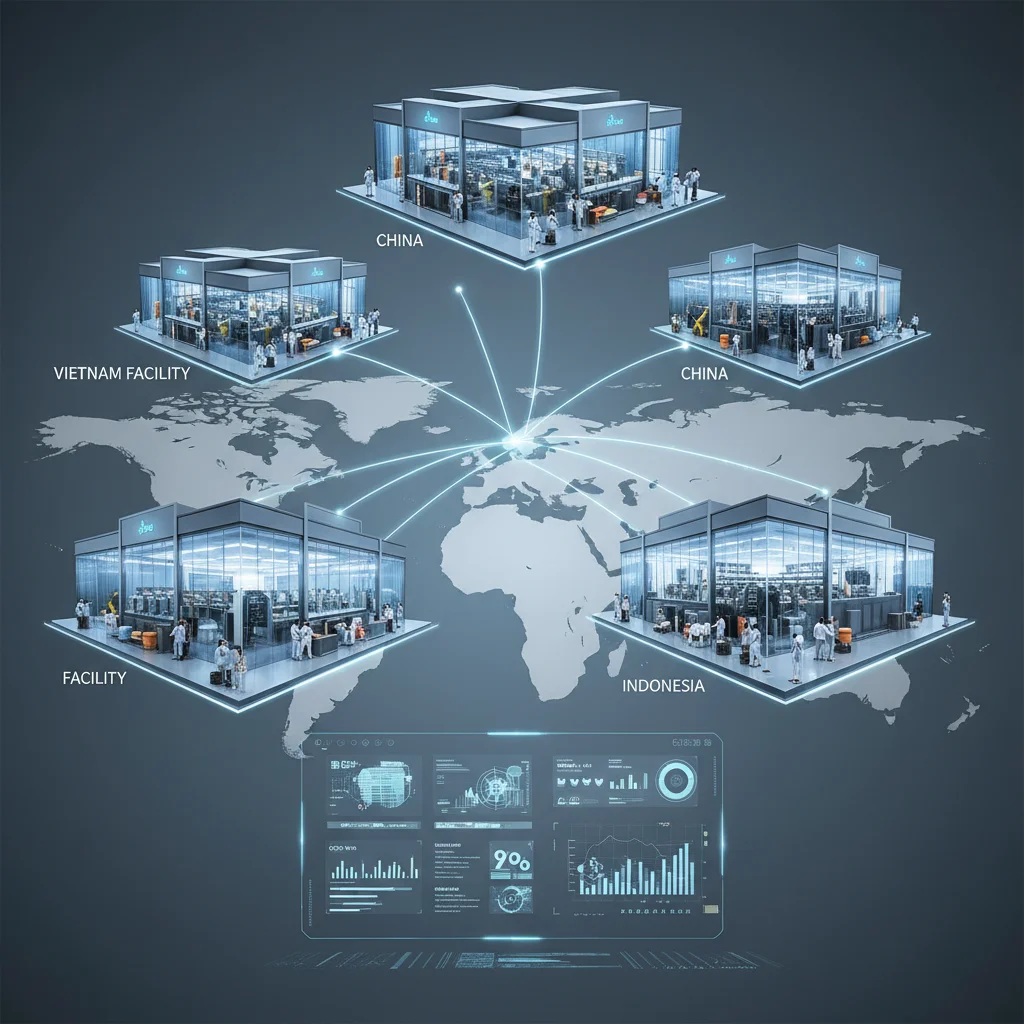
Each country in Nike's manufacturing network brings something specific. These aren't factories you can swap around. They're specialized partners picked for clear competitive edges.
Why did your jersey come from one country and not another? It's not random. Nike matches product needs to regional strengths.
Vietnam: Volume Excellence Through Infrastructure
Vietnam rose to Nike's top manufacturing spot because the infrastructure works.
Vietnam Infrastructure ScoresThis reliability counts big - you're making one-third of a global brand's apparel output here. Ports run well. Shipping containers move without endless red tape delays. Your jersey gets from cutting table to cargo ship fast.
Vietnam's domestic supply chain removed bottlenecks. Raw materials, parts suppliers, and finished goods facilities sit in the same area. This closeness cuts lead times and reduces coordination problems.
China: Innovation Infrastructure That Others Can't Match
China's manufacturing edge shifted from cheap labor to something harder to copy: full industrial capability across every UN system category .
China Innovation ScoresDesign-to-market timelines that took months elsewhere shrink to weeks in Chinese facilities. Skilled engineers and designers work on factory floors. Chinese factories source everything inside the country. No waiting on imports for specialized parts. No supply breaks from overseas suppliers of jersey. Full vertical integration.
Nike uses Chinese facilities for complex products that need rapid changes. The R&D score of 49 shows room to grow. But the current setup for testing new materials and production methods beats most countries.
Indonesia: Strategic Trade Position
Indonesia's edges come from location and trade deals.
Membership in RCEP—the largest trade bloc —gives Indonesian-made products easy access to massive markets. Tariffs drop. Trade barriers fall. Nike products made here move more freely across borders.
The country produces $839 billion in manufacturing output each year. That's 3.2% of global manufacturing. This built-up industrial base means Nike doesn't need to start from zero. Current know-how in electrical machinery and manufactured metals moves easily to apparel production.
Nike spread out here because Indonesia offers political stability, reasonable labor costs, and trade benefits. Not the cheapest pick. But a balanced one.
Thailand: Precision Manufacturing Heritage
Thailand's $354 billion manufacturing output puts quality over quantity.
Automotive and electronics manufacturing built Thailand's reputation for exact work. Those same standards reach apparel facilities. Workers trained on complex electronics bring attention to detail. Metal products and chemicals manufacturing created strong quality control cultures.
Nike places orders here for precision over rock-bottom costs. The domestic supply chain, while not as full as China's, handles sophisticated textile production without problems.
United States: Speed to Domestic Market
America's 29 Nike factories exist for one reason: cut out transoceanic shipping time .
U.S. manufacturing costs 3-5 times more than Asian options. But for quick-response production serving North American customers, the speed edge beats the cost hit. Products hit stores weeks faster. Regional trend responses happen in real-time.
These facilities handle specialty items, customization, and time-sensitive releases. Not mass production. Strategic production for specific market needs.
Your jersey's origin shows these calculated edges. Nike matched your product's needs to the country that does them best. Not cheapest. Best.
How to Choose Quality Nike Jerseys Based on Origin
Origin matters, but not the way most buyers think.
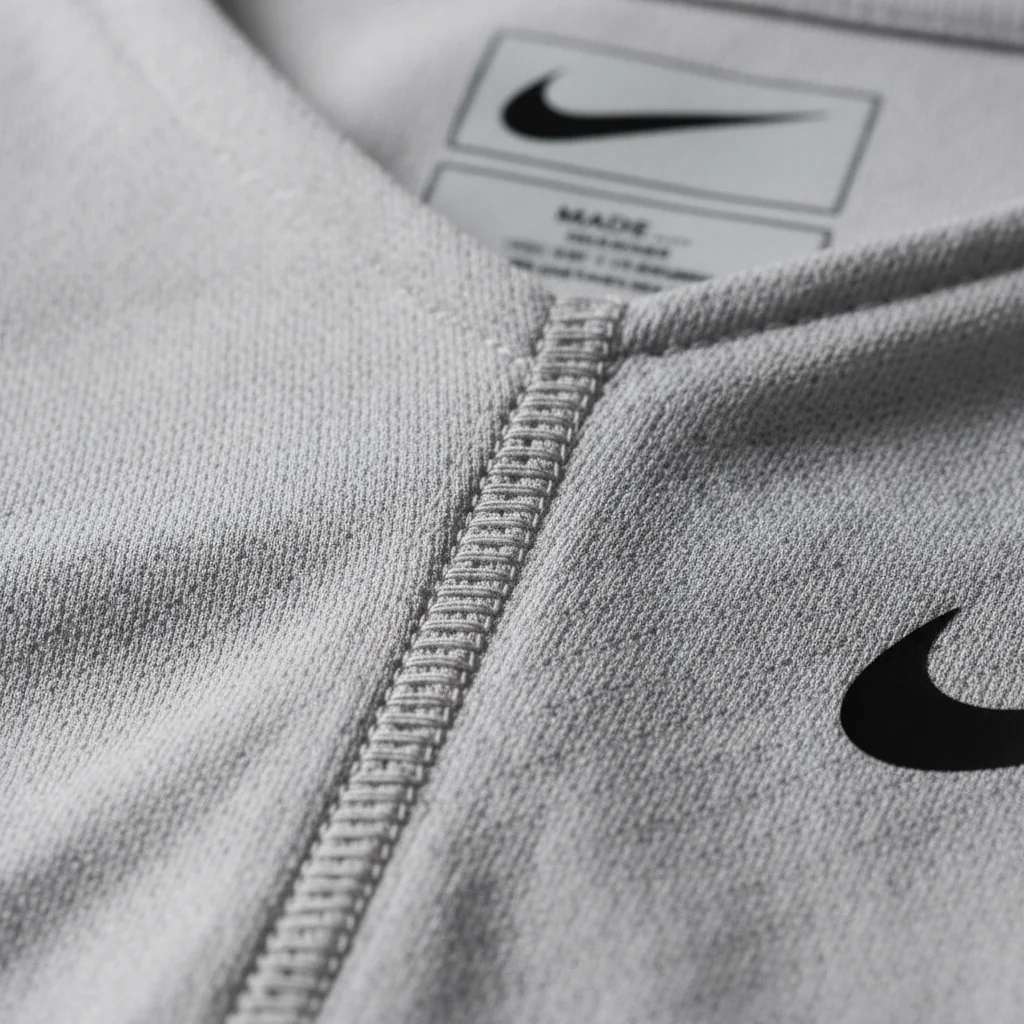
That "Made in Vietnam" tag doesn't mean better than "Made in China." The country name tells you where the jersey came from. The real quality signals hide in details most people ignore. Smart buyers check specific markers. These separate authentic performance gear from questionable replicas.
Start with the origin-to-jersey-type match. Authentic player-issued jerseys come from Vietnam, China, or Indonesia. These countries handle Nike's high-performance production. Vietnam dominates volume. Factories in Ho Chi Minh City, Dong Nai, and Binh Duong crank out mass quantities. Northern facilities in Hanoi, Hai Phong, and Hai Duong focus on technical specs.
China brings advanced manufacturing muscle. Authentic jerseys from Chinese factories meet brutal standards. Those aren't marketing numbers. They're engineering requirements.
Quality Standards CardsIndonesia scales production at competitive costs. It doesn't sacrifice authenticity standards. Egypt's emerging as a production hub too, picking up slack from Thailand shifts.
Here's the red flag most buyers miss: Honduras makes replica fan jerseys only. See "Made in Honduras" on a jersey labeled "authentic"? Walk away. It's fake. Honduras facilities produce replicas for the U.S. market because they sit close by.
Price Comparison CardsThree quick authenticity tests beat country guessing games:
Authenticity Tests TimelineVietnam and China authentic jerseys follow an 18-22 stage production workflow. Vietnam might handle sublimation printing. China adds precision stitching. This split manufacturing shows up in dual country references on some tags. That's normal for authentic gear.
Legitimate jersey suppliers matter too. Pou Chen (Yue Yuen), Esquel, Eclat Textile, and Hansae Vietnam all produce for Nike. They operate under strict audits. Four to six unannounced facility checks per year. These makers maintain Nike Manufacturing Index scores above 90%. This covers 57 quality parameters. Your jersey came from one of them? The origin country becomes less important than the factory standards of sportswear.
Buy from official channels. Nike.com and authorized retailers like Fanatics, Dick's Sporting Goods, and official league stores provide QR codes or labels you can verify. Scan them. Check the origin matches the jersey type. Cross-reference the manufacturing map.
Origin tells part of the story. The rest lives in the stitching, the tension, the breathability, and the price. Match those markers to the country tag. You'll spot quality—or fraud—fast.
CTA CardLooking for Reliable Jersey Manufacturing?
Our experts can help you source quality custom jerseys with verified factory origins.
Talk to ExpertBerunclothes: Custom Jersey Manufacturing Alternative
Nike's global manufacturing machine works for Nike. But what if you need jerseys that don't exist in their catalog?
Custom jersey manufacturing solves problems Nike can't touch. Team uniforms with specific colorways. Corporate jerseys with custom branding. Limited designs for events or fundraisers. Personalization that goes beyond adding a name to the back.
The custom apparel market hit $57.55 billion in 2025. This isn't a niche anymore. This shift lets anyone create professional-grade jerseys.
Custom Apparel Market StatsWhy Custom Manufacturing Changes the Game
Old-school manufacturing needs massive order quantities. Nike's Vietnamese factories run well because they produce thousands of identical units. Custom makers flip that model.
DTG Technology StatsOrder one jersey or one thousand. The process stays the same.
For jerseys, sublimation printing works better than DTG. It handles synthetic performance fabrics. Colors don't fade or crack. The design becomes part of the fabric itself.
Lead Time ComparisonThe Cost Reality of Going Custom
Custom jerseys cost more than mass-produced options. No surprise there.
Materials for basic cotton shirts run $10 per unit. Labor adds $0.19 to $2.10 depending on how complex the design is. Premium performance fabrics—the kind Nike uses—push material costs to $20 per unit. Custom production runs 35-60% higher than standard manufacturing.
But you're not paying for Nike's marketing budget, athlete endorsements, or retail markups. You're paying for what you designed. Nothing more.
Forty-five percent of custom jersey orders now request premium materials. Egyptian cotton, advanced moisture-wicking synthetics, recycled polyester blends. Sustainable materials matter to buyers. Forty percent of custom makers offer organic cotton or recycled polyester as standard options.
Southeast Asian Custom Manufacturing Hub
Sixty percent of custom jersey materials come from Southeast Asian jersey suppliers. The same regions that produce for Nike.
This overlap isn't random. Custom makers tap into the same chains, skilled workers, and textile know-how that major brands built over decades. They just operate at different scales with different flexibility.
Chain challenges hit custom makers too. Production delays average nine extra days during material shortages. Thirty-one percent of custom jersey producers report margin losses from these problems. But smaller operations pivot faster than Nike's giant facilities.
When Custom Beats Off-the-Rack
You don't need custom manufacturing for a standard Lakers jersey. Nike already made that.
Custom makes sense for teams, businesses, events, and creators who need something specific. Youth sports teams with exact color needs. Corporate sports leagues with company branding. Esports teams with unique designs. Charity tournaments with sponsor logos.
The custom apparel market grew from $54.9 billion to $57.55 billion in one year. Someone's buying these jerseys. Standard options don't solve their specific problems.
Nike dominates mass production. Custom makers of jersey or sportswear own the long tail of specialized needs. Different models. Different strengths. Both valid.
Conclusion
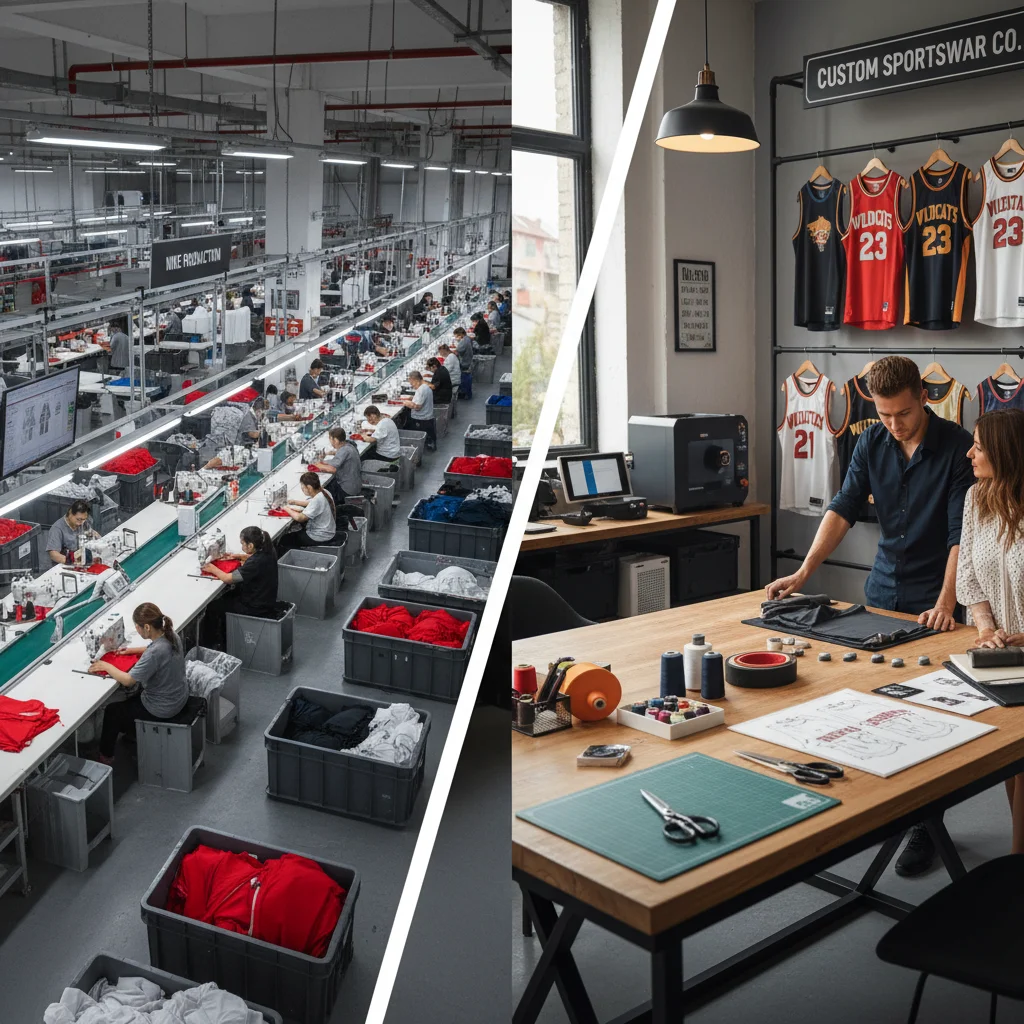
Know where Nike jerseys are made ? This changes everything. You spot fakes easier. You judge quality better. You buy with confidence. Vietnam's modern factories make jerseys. So do China's specialized plants and Thailand's premium lines. Here's what counts: Real Nike products keep the same quality standards. The manufacturing country doesn't change that.
The "Made in..." label shows geography. Nothing more. Buy from authorized retailers instead. Check the craftsmanship details. Verify the authenticity markers we outlined. Want custom jerseys with clear manufacturing and direct talks? Berunclothes gives you that partnership. We bring professional sportswear production know-how. No secrets. No confusion.
Check your Nike jersey label right now. Look at the country listed. You now know the full story. Skilled workers made it. Technology shaped it. A global network brought it to you. This knowledge sticks with you. Every future purchase gets smarter. You're not just shopping better. You're part of the global sportswear world now.
Final CTA Banner