You packed the cooler, booked the charter, and set your alarm for 4 AM. Then, standing in front of your closet the night before — you freeze. No idea what to wear .If you’re sourcing from lightweight fishing clothing suppliers for summer conditions, you already know the right fabrics and designs make all the difference.
Deep sea fishing is nothing like a casual afternoon by the lake. You're heading miles offshore. The sun bounces off the water like a magnifying glass. Rogue waves hit without warning. The wind can shift from a gentle breeze to a biting chill before you reel in your first catch.
The wrong outfit doesn't just ruin your day — it can be a real safety hazard.
This guide covers what to wear deep sea fishing for every weather condition, every body part, and every fabric choice. Show up prepared, protected, and yes — looking the part too.
Tops for Deep Sea Fishing: UPF Sun Protection Shirts & Layering Strategy
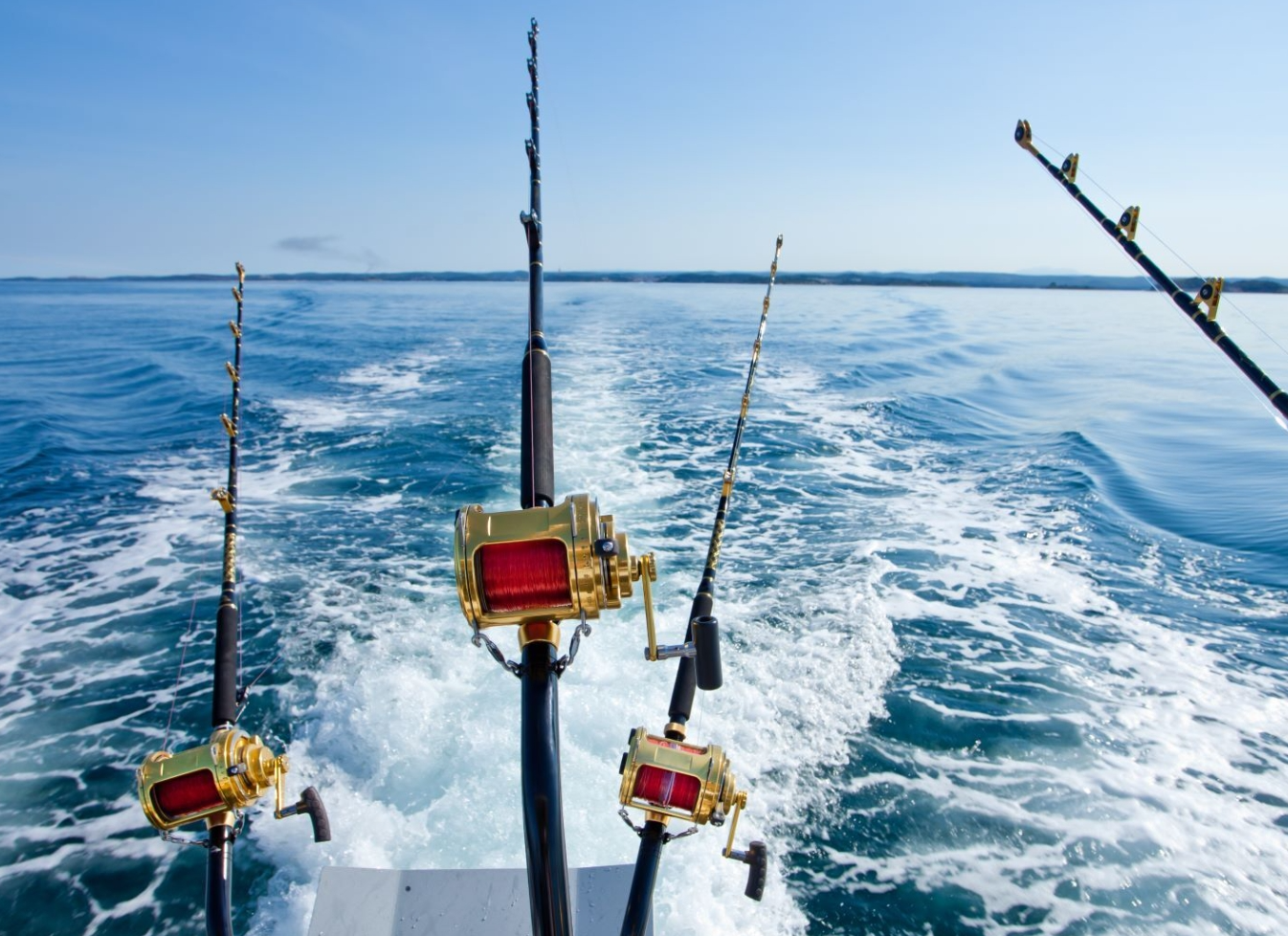
Here's what most first-timers miss: the sun on open water is a different beast entirely. That’s why many breathable fishing apparel manufacturers for hot weather focus on ventilation panels and moisture-wicking fabrics to keep you comfortable for hours.It hits you from above and bounces straight back up off the surface — that doubles your UV exposure before you've even baited your hook.
That's why your shirt matters more than almost anything else in your bag.
Skip the Cotton. Seriously.
A regular cotton tee feels fine on land. On a boat, soaked in sweat and salt spray by 9 AM, it turns heavy, clingy, and takes forever to dry. It offers zero sun protection and zero breathability once it's wet. Leave it at home.
What you need is a UPF 50+ fishing shirt — and that rating is worth understanding. UPF 50+ blocks at least 98% of both UVA and UVB rays. Think of it as SPF 50 sunscreen built into the fabric itself. It never sweats off. It never needs reapplying.
Look for these non-negotiables on the label:
UPF 50+ rated fabric (blocks 98%+ of UV radiation)
Moisture-wicking, quick-dry construction — you will sweat, a lot
4-way stretch for casting without restriction
Antimicrobial treatment — day-three offshore smell is real
Ventilation panels (underarm mesh is a game-changer in 90°F heat)
Brands like AFTCO, Pelagic, Simms, and Coolibar have built their reputations on this. Their lightweight, technical UPF fishing shirts are made for all-day offshore wear.
Layer Smart When Temperatures Drop
Morning departures run colder than midday. A light moisture-wicking base layer under a breathable long-sleeve sun shirt gives you flexibility. Peel it back as the heat builds. Add it back as the wind picks up offshore.
Fishing cooler waters or heading out in late fall? Look for sun hoodie options with a built-in hood . You get extra face and neck coverage without carrying a separate piece.
The goal is simple: one outfit that adapts to the day with you.
Best Bottoms for Offshore Fishing: From Quick-Dry Shorts to Waterproof Bibs
Warm Weather? Quick-dry shorts are non-negotiable. Custom fishing wear for high-temperature environments can be tailored with reinforced seams and anti-chafing cuts for long days on deck. Ripstop polyester keeps them lightweight and quick-drying while resisting saltwater and sun damage.
Your shirt game is sorted. Now let's talk about what's happening from the waist down — because this is where most people drop the ball.
Warm Weather? Go Quick-Dry Shorts
Hot and sunny offshore? Go with ripstop polyester shorts . They're lightweight, stain-resistant, and come with an elastic waistband that won't snag your line mid-cast. Fish oil and saltwater destroy fabric fast, so a stain-resistant coating isn't optional here. It's a must. Skip denim or cotton. Heavy, slow-drying fabric on a hot deck is just miserable.
Cold or Rainy Conditions? Bibs Are the Move
Waterproof fishing bibs beat rain pants every time offshore. Rain pants ride down during active casting. Bibs give you chest-to-ankle coverage with room to move. That's a big difference.For trips in tropical waters, explore OEM/ODM fishing apparel for tropical climates to match both climate and activity.
Material matters here — a lot:
1.PVC: 100% waterproof, zero breathability — best for brutal, heavy-duty conditions
2.PU: Waterproof with some breathability — the sweet spot for most offshore trips
3.Nylon: Water-resistant and breathable — ideal for warmer climates where overheating is the real problem
Look for a minimum 20,000mm waterproof rating . Top-tier options like AFTCO bibs hit 30,000mm . Taped or double-welded seams are non-negotiable. Any unfinished seam is a leak waiting to happen.
The right bottoms keep you dry, comfortable, and focused on the fish.
Non-Slip Fishing Shoes & Footwear: Why Sandals Could Land You Overboard
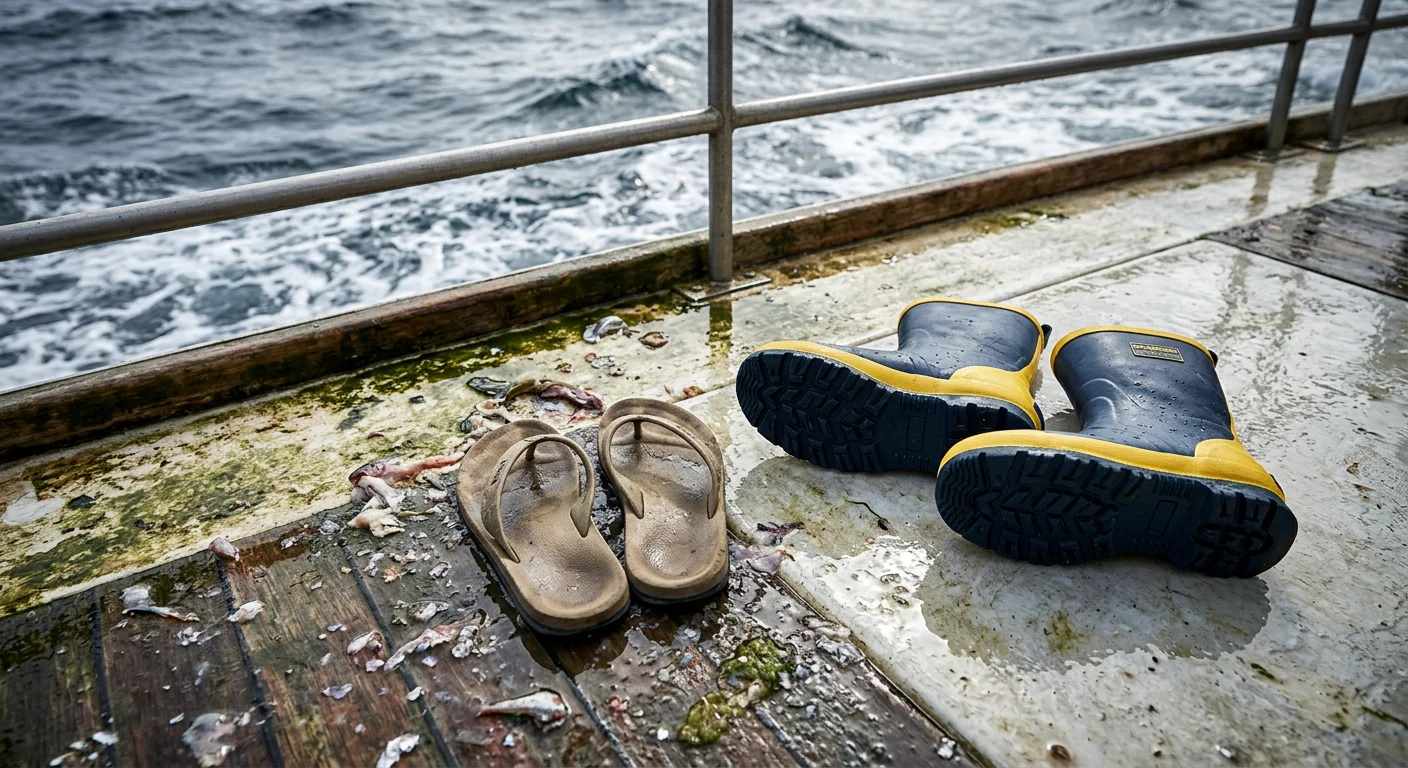
A wet boat deck covered in fish scales, seawater, and algae is like an ice rink. And those cute sandals you were planning to wear? They'll send you overboard faster than a rogue wave.Summer heat calls for quick-dry fishing wear factory for humid conditions to ensure shoes and socks stay dry and comfortable. Hot-weather choices like lightweight water shoes with drainage holes and firm grip soles are essential.
This part of your outfit is a safety decision — not just a comfort one.
Why Your Sole Choice Is Everything
Not all "non-slip" is created equal. Look for SRC-rated soles . These pass both SRA and SRB slip-resistance tests. That means they've been tested on ceramic, steel, soap, and glycerol surfaces. That's the benchmark worth trusting on a soaked, moving deck.
Your ideal offshore shoe checks every one of these boxes:
Closed toe — thick enough to take a hit from rocks, shells, or a snapping catch
Rubber non-slip outsoles — deep treads with drainage patterns that push water out from under your foot as you step
Quick-dry uppers — breathable nylon or mesh with built-in drainage holes. Wet socks mean blisters by noon
Side support and cushioning — padded heels and a snug neoprene or rubber upper keep you stable during active casting
Summer vs. Winter Footwear
Hot weather calls for lightweight water shoes . Look for nylon uppers, adjustable straps, fast-drain holes, and thick wet-grip treads. Cold weather calls for high-cut waterproof boots . You want vulcanized rubber or neoprene with insulated waterproof liners — built for wading and shore fishing.
Match the shoe to the season. Your footing depends on it.
Sun Protection Essentials: Fishing Hats, Polarized Sunglasses & Neck Gaiters
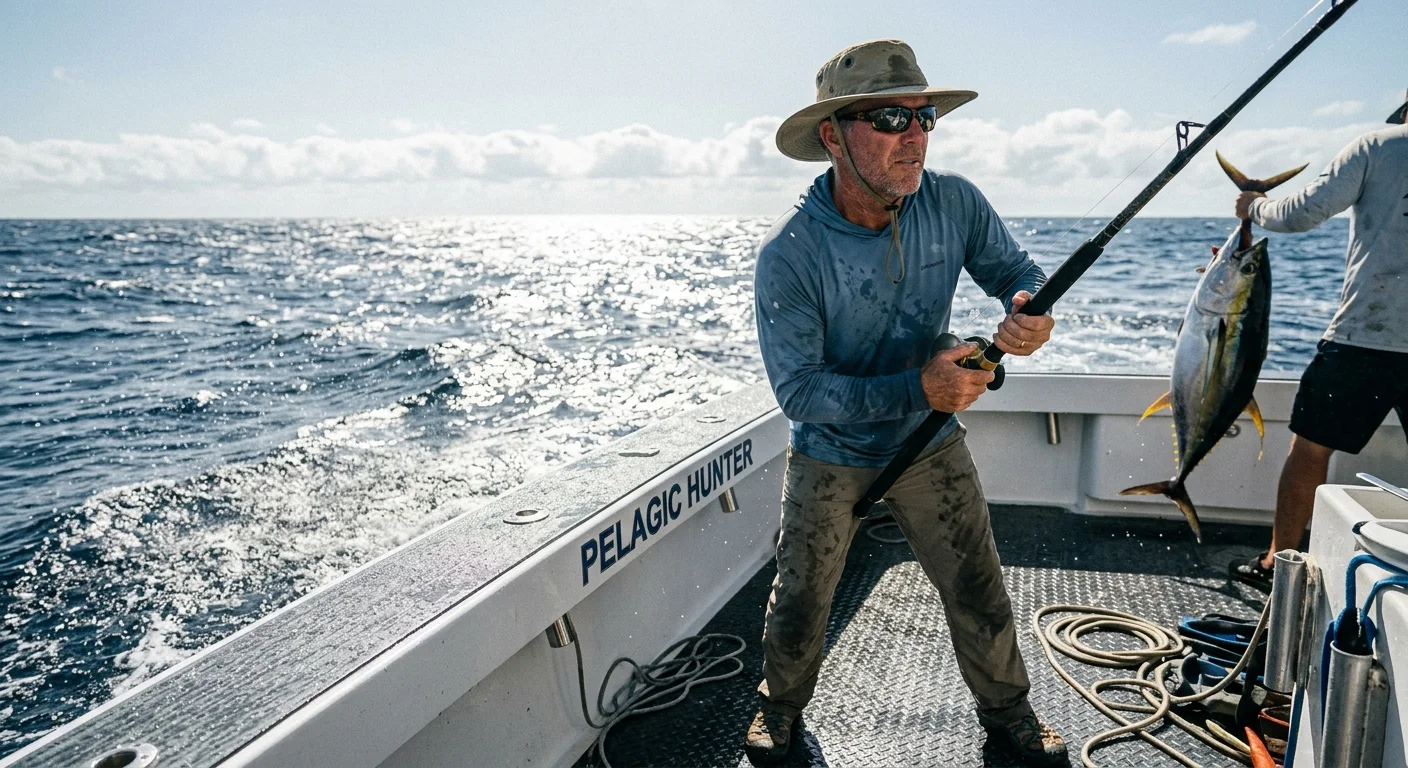
Sunscreen alone won't cut it out there. You're 20 miles offshore. Zero shade. UV bouncing off the water from every angle. Wind strong enough to rip a hat off your head before you can react.
A wide-brim hat plus UPF 50+ neck gaiter and polarized sunglasses is a must. Many anglers look to private label fishing clothing for summer outdoor brands for coordinated, high-performance sun protection gear.
Pick the Right Hat (Then Strap It Down)
Three hats worth knowing:
1.Wide-brim hat — the gold standard for offshore coverage. It shields your face, neck, and upper shoulders all at once. Lightweight, breathable, and built for all-day wear. One rule: get one with a chin strap. Gusts don't give warnings.
2.Baseball cap — solid eye shade, poor neck coverage. Go with this style? Pair it with a neck gaiter or you'll be sunburned by noon.
3.Legionnaire/flap-back fishing hat — face shade plus a built-in neck flap. This one does more work than it gets credit for. A reliable choice for offshore headwear.
Pro tip for windy days: loop a gaiter over your hat brim as a makeshift headband. It holds everything in place once the wind picks up.
Polarized Sunglasses: Non-Negotiable
Cheap sunglasses block light. That's it. Polarized sunglasses block glare and UV — plus they let you see fish beneath the surface. That's a different tool in a real, practical sense.
Look for UV400-rated, wraparound polarized lenses . The wraparound shape cuts side glare. It also stops that dull headache that builds up over a long day on the water.
Lens color matters more than most people think:
1.Gray — bright sun, true color perception
2.Amber — cloudy or low-light conditions, sharper contrast
3.Green — variable conditions, solid all-around balance
Neck Gaiters: Small Item, Big Protection
A UPF 50+ neck gaiter blocks 98% of harmful UV rays on every inch of skin it covers. No reapplication. No sweating off. Pull it up over your nose and it covers your face too. Layer it under your hat brim and you've got a tight seal against both sun and wind.
The best ones use lightweight polyester or nylon — breathable, quick-dry, and sweat-proof. Some come with built-in bug repellent, which is a real bonus in warmer coastal waters.
Hat + gaiter + wraparound polarized sunglasses = full facial coverage. That's the combo that gets the job done.
What to Wear Deep Sea Fishing in Hot & Humid Weather
Tropical heat on open water doesn't negotiate. Direct sun hits you hard. UV rays also bounce straight off the water's surface. Even overcast days can burn you after a few hours out there. Add humidity, and heat exhaustion becomes a real risk.
Here's the full hot-weather kit that works:
Swim trunks as your base — they drain fast, dry faster, and won't cling when you're soaked through by 8 AM
UPF 50+ long-sleeve fishing shirt — go with lightweight polyester or nylon. Look for moisture-wicking fabric, ventilated side panels, and thumb holes for wrist coverage. UPF 50+ is the target for full-day, high-exposure trips. UPF 30+ covers shorter outings
Quick-dry shorts — loose-fitting ripstop polyester works best. Pack a lightweight pair of pants too. The wind picks up fast out there, and you'll want the option
Non-slip rubber-soled shoes — bare feet and flip-flops are off the table
Wide-brim hat with a chin strap — wind doesn't care how good it looks
Polarized sunglasses — not optional
UPF 50+ neck gaiter — pull it up and you cover your neck, jaw, and nose in one move
One rule on color: go light. Pale tones reflect heat. Dark fabrics absorb it — the last thing you need at 90°F with full humidity.
What to Wear Deep Sea Fishing in Cold & Windy Conditions
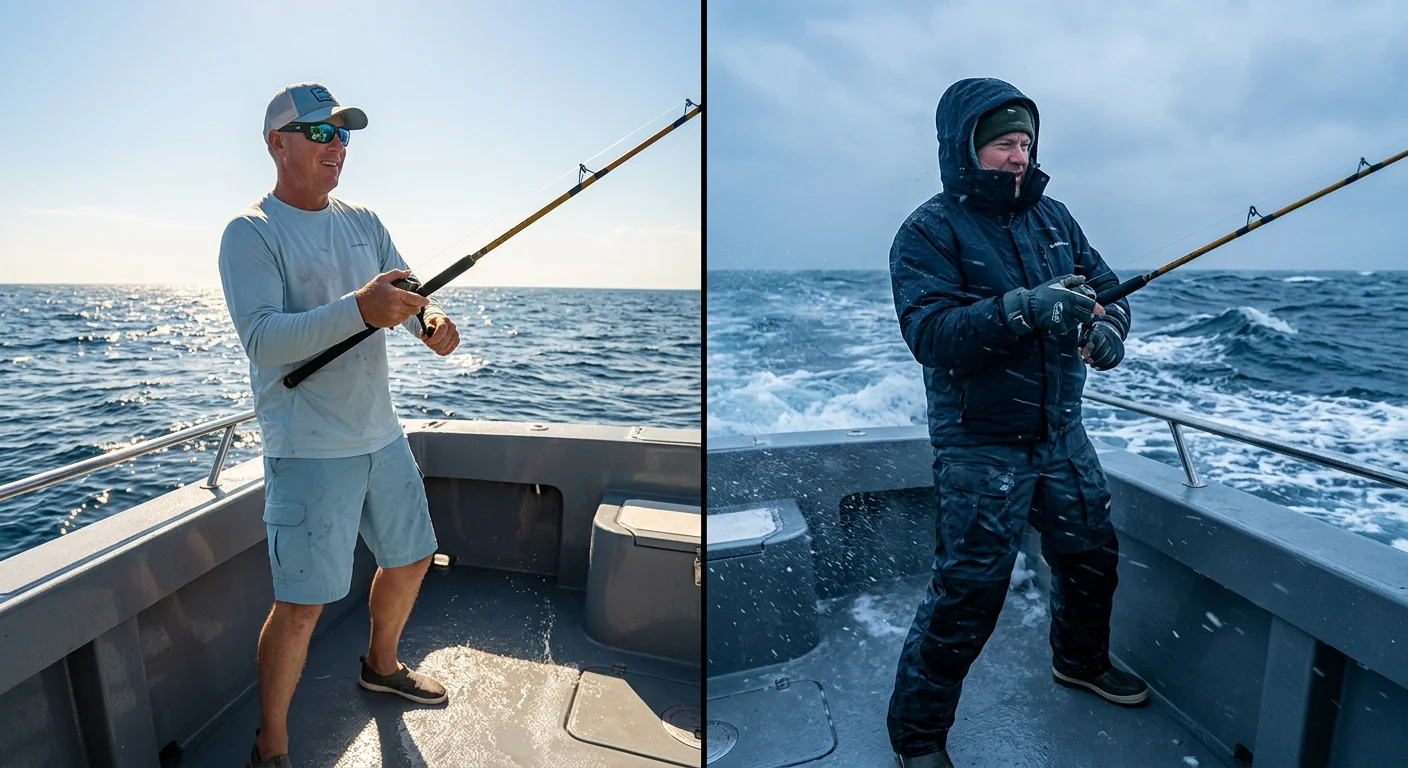
Cold offshore wind hits hard and fast. It gets colder the faster you move on the water. Below 60°F, your body loses heat faster than most people expect. The wrong outfit doesn't just make you uncomfortable — it puts you at risk.
The system that works is simple: three layers, built in order .
Start with a performance base layer. Go with a moisture-wicking long-sleeve top and thermal bottoms. No cotton — ever. Modern synthetic fabrics pull sweat away from your skin. They keep your core temperature steady even when spray hits.
Add a fleece mid-layer. A fleece-lined hoodie sits between your base and your shell. It's soft, light, and insulates well. You can still cast freely without any restriction.
Finish with a waterproof fishing jacket and foul weather bibs. Gore-Tex Pro builds like the Simms ProDry seal out wind, rain, and spray. Three-layer constructions like the AFTCO Stormbreaker do the same without weighing you down. Welded seams and AquaGuard zips are non-negotiable — don't settle for less.
Your extremities matter just as much. Cover them right:
Neoprene fishing gloves with a silicone-grip palm — warm hands that can still tie a knot
Rubber boots for full waterproof protection from the ankle down
Beanie plus a neck gaiter to block windburn on exposed skin
What to Wear Deep Sea Fishing in Rain & Rough Weather
Rain offshore isn't a drizzle — it's sideways, relentless, and it finds every gap in your gear within minutes.
The move that separates a miserable trip from a great one? A matched jacket and bib combination. They work together to give you solid head-to-ankle coverage. No separate rain jacket and pants setup can match that. Bibs with adjustable shoulder straps and swivel buckles also pull real weight off your back during long, active sessions.
Here's what's worth knowing about waterproof ratings before you buy:
1.30,000mm water column resistance means serious storm protection — not just "water-resistant"
2.Sealed or welded seams are non-negotiable. Stitched seams leak. Period.
3.YKK AquaGuard zippers block water at every closure point
4.C0 DWR finish sheds spray before saturation sets in
Material choice matters too. Breathable three-layer shells — like Gore-Tex Pro or stretch nylon — let sweat escape during active casting. PVC shells block everything but trap heat. Heavy spray and cold temps? Go PVC. Long active runs? Go breathable.
Don't overlook the hood. A 3-point storm hood with cinch adjustment stays locked in high winds. High-collar designs keep your neck covered. Rough-water runs kick up a lot of spray, and your neck is an easy target.
Deep Sea Fishing Packing Checklist: Everything You Need to Pack
Forget something offshore and you can't run back to the car. That's the reality of deep sea fishing. Once the dock disappears behind you, you're working with what you brought. Nothing more.
Use this checklist before every trip. Print it, screenshot it, tape it to your gear bag. Some items are non-negotiable. Others depend on the forecast. This list covers both.
The Must-Pack Core List
These items belong in your bag regardless of season, trip length, or weather:
Long-sleeve UPF fishing shirt — sun and wind protection in one piece
Quick-dry shorts or pants — ripstop polyester, not denim, not cotton
Lightweight windbreaker or rain jacket — stuff it in your dry bag. You'll want it fast when conditions shift
Wide-brim hat with chin strap + polarized sunglasses with a strap
Non-slip, closed-toe shoes — no exceptions, no sandals
Waterproof dry bag (roll-top, welded seams) — keeps your phone, wallet, and keys safe. Takes up almost no space
Sunscreen + SPF lip balm (SPF 15+) — put it on every two hours, no skipping
Fishing gloves — for handling bait, fish, and rough line
Hand towel — easy to overlook until it's 7 AM and you've got fish slime on your hands
Wet wipes and hand sanitizer
Snacks and water — dehydration sneaks up fast on open water
First aid kit — pack Dramamine too. Seasickness doesn't care how tough you are
Multi-tool or pliers — line cuts, hook removal, lure adjustments
Waterproof phone pouch
Fishing regulations card — check your size and bag limits before you drop a line
Pack by Trip Length
Half-day (4–6 hours): Keep it lean. One UPF shirt, shorts, rain jacket, non-slip shoes, sunscreen, dry bag for your phone. That's your baseline.
Full day (8–12 hours): Add a fleece mid-layer for the morning chill and a spare shirt. Bring gloves, wet wipes, and a tape measure for catch limits.
Multi-day (24+ hours): Pack two complete quick-dry outfits, long underwear, fleece pants, and a packable jacket. Use zip-lock bags to separate wet gear from dry. Bulk is your enemy. Every item should earn its spot.
Cold & Rainy Weather Add-Ons
1.Midweight fleece jacket and thermal base layer
2.Waterproof fishing bibs
3.Neoprene gloves
4.Rubber waterproof boots
5.Beanie and neck gaiter
Hot & Sunny Weather Add-Ons
1.Swim trunks as your base layer
2.Lightweight moisture-wicking tee for under your UPF shirt
3.Extra neck gaiter (one to wear, one backup)
4.Electrolyte packets — heat plus humidity drains you faster than you think
One dry bag handles what three separate pouches used to do. One rain jacket covers wind and rain without adding weight. Pack smart, pack light, and nothing gets left behind.
Materials Comparison: Choosing the Right Fabric for Offshore Fishing
Fabric choice is the detail most people overlook — and it's what separates a comfortable offshore day from a miserable one.
Here's the honest breakdown:
Fabric | Dry Time | UV Protection | Saltwater Resistance |
|---|---|---|---|
Nylon/Polyester | ~40 seconds | UPF 50+ capable | High (500+ abrasion cycles) |
Cotton | ~8 minutes | Minimal | Low (traps salt, turns brittle) |
Fleece | Moderate | Low | Moderate |
PVC-Coated Polyester | Instant shed | Wind-blocking | Very high |
Synthetics wick moisture 3x faster than cotton . They also hold their UPF rating through 50+ wash cycles. Cotton tells a different story. It traps salt crystals deep in the weave. Over time, the fabric turns stiff, brittle, and starts to tear.
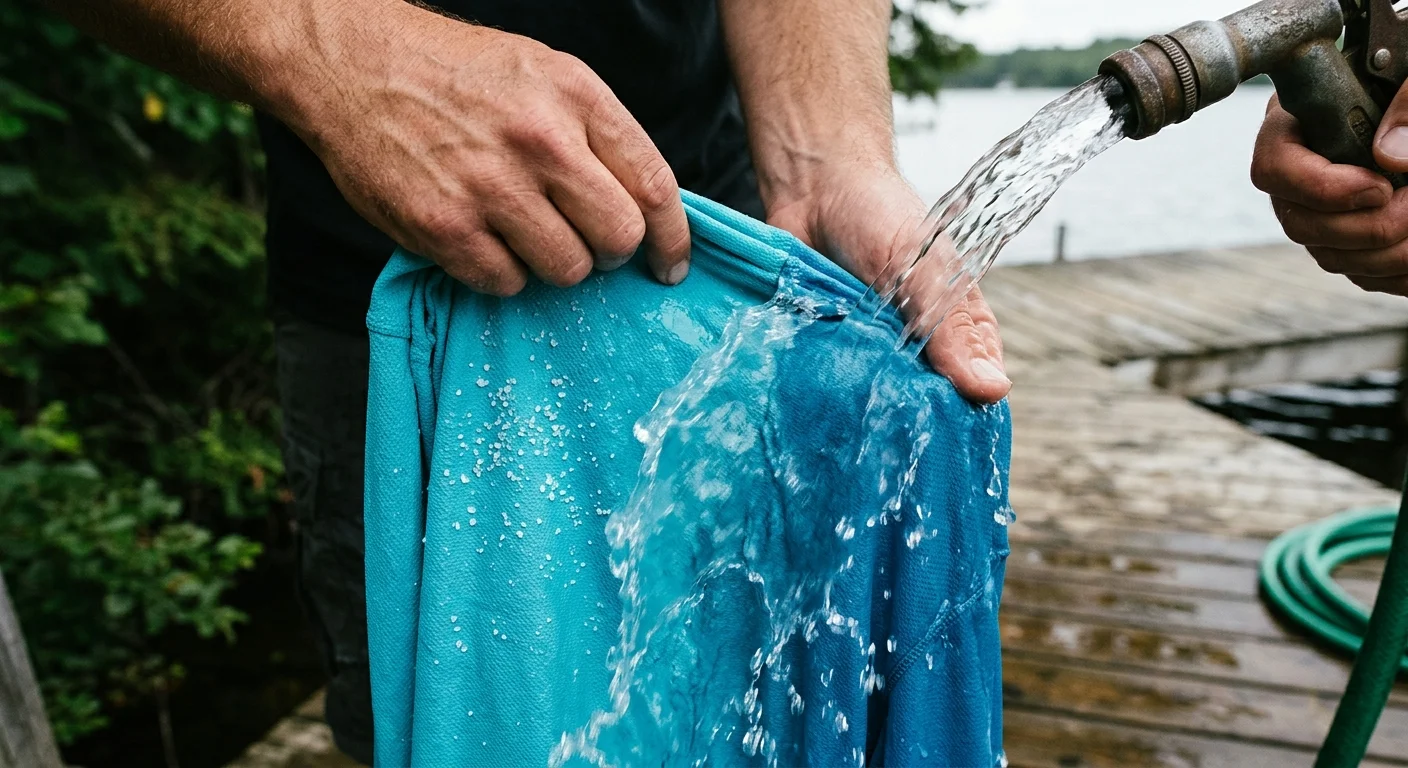
One maintenance rule worth keeping: rinse everything in fresh water right after fishing. That one step pulls out 90%+ of salt buildup. It also adds real life to any performance fabric.
FAQ: Your Deep Sea Fishing Clothing Questions Answered
Real questions, straight answers. No fluff.
Can I wear jeans deep sea fishing?
Hard no. Wet denim gets heavy, stiff, and takes forever to dry. It locks up your movement at the worst moments. Swap them for quick-dry ripstop shorts or water-resistant pants. You'll thank yourself by 8 AM.
Is a swimsuit okay to wear?
Yes, but layer it. A swimsuit works great as a base under quick-dry shorts and a UPF 50+ long-sleeve shirt. You stay cool, protected, and ready to jump in if the day calls for it.
What do I need for sun protection?
Start with these:
- Long-sleeve UPF shirt
- Wide-brim hat with a chin strap
- Polarized sunglasses
- Neck gaiter
Also hit your knees and calves with sunscreen. Those spots get missed every single time. And long sleeves? They keep you cooler out there, not hotter.
What should women wear?
Go with quick-dry leggings or shorts. Add a long-sleeve performance top and a supportive sports bra. Secure your wide-brim hat so it stays on. Comfort and function come first — everything else is secondary.
What about kids?
Keep it simple:
- Light jacket over a t-shirt
- Quick-dry shorts
- Ball cap
They'll outgrow it anyway. No need to overthink it.
How much clothing should I pack?
More than you think. Pack both shorts and pants — no matter what the forecast says. Offshore weather shifts fast and skips the warning. Dry bags protect everything when it does.
Conclusion
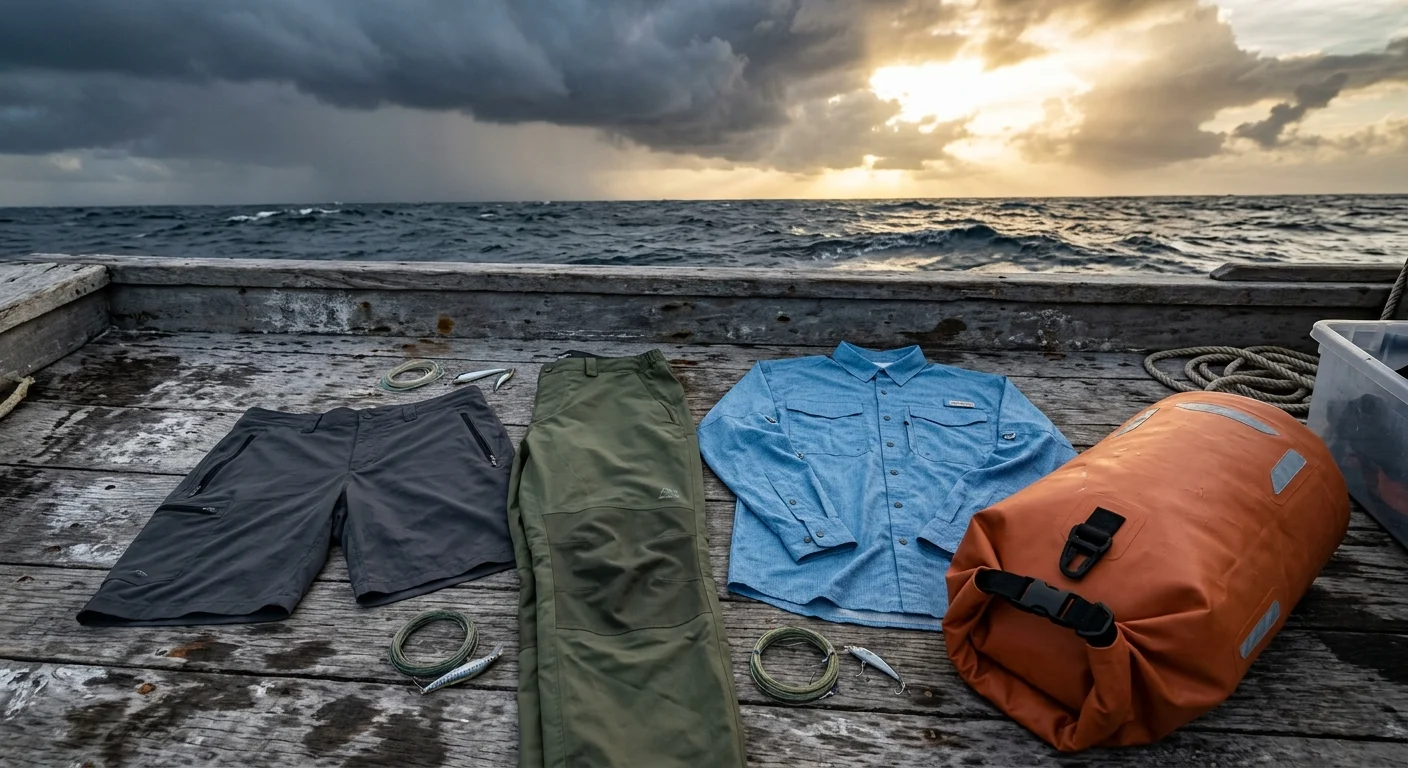
Your next deep sea fishing trip deserves better than a cotton t-shirt and flip flops.
Dressing right for offshore fishing isn't about looking the part. It's about feeling unstoppable out there. A quality UPF fishing shirt shields your skin through hours of open-water sun exposure. Non-slip boat shoes keep you on deck instead of in the water. A waterproof fishing jacket stops a sudden squall from cutting your day short. These aren't extras — they're your foundation.
Nail your layering strategy. Pack that checklist. You're not just prepared — you're confident . And confidence on the water? That's everything.
Ready to build your perfect offshore kit? Head to berunclothes.com for fishing apparel built to handle every condition the ocean throws at you. You showed up for this adventure — your gear should too.
 YouTubeYouTube video player