Every angler has a list. Maybe it's scrawled in a notebook, saved in a phone app, or just tucked away in the back of your mind — the places you have to fish before you die. The problem isn't dreaming. It's knowing which destinations deserve a spot on that list.
For global buyers sourcing gear for these bucket-list trips, working with reliable fishing apparel manufacturers ensures anglers are equipped for extreme environments — from Arctic rivers to tropical flats.
The world is full of "world-class" fishing spots. But only a handful will stop your heart. Think of a 200-pound marlin surging out of the Pacific. Or a wild rainbow trout sipping a dry fly from a crystal New Zealand river at dawn. Those moments are rare — and worth chasing.
These are the top 10 fishing spots in the world . Hand-picked across five continents. Saltwater flats and jungle rivers. Remote wilderness and tropical paradise. Each one ranked and detailed, so you can start planning your next trip.
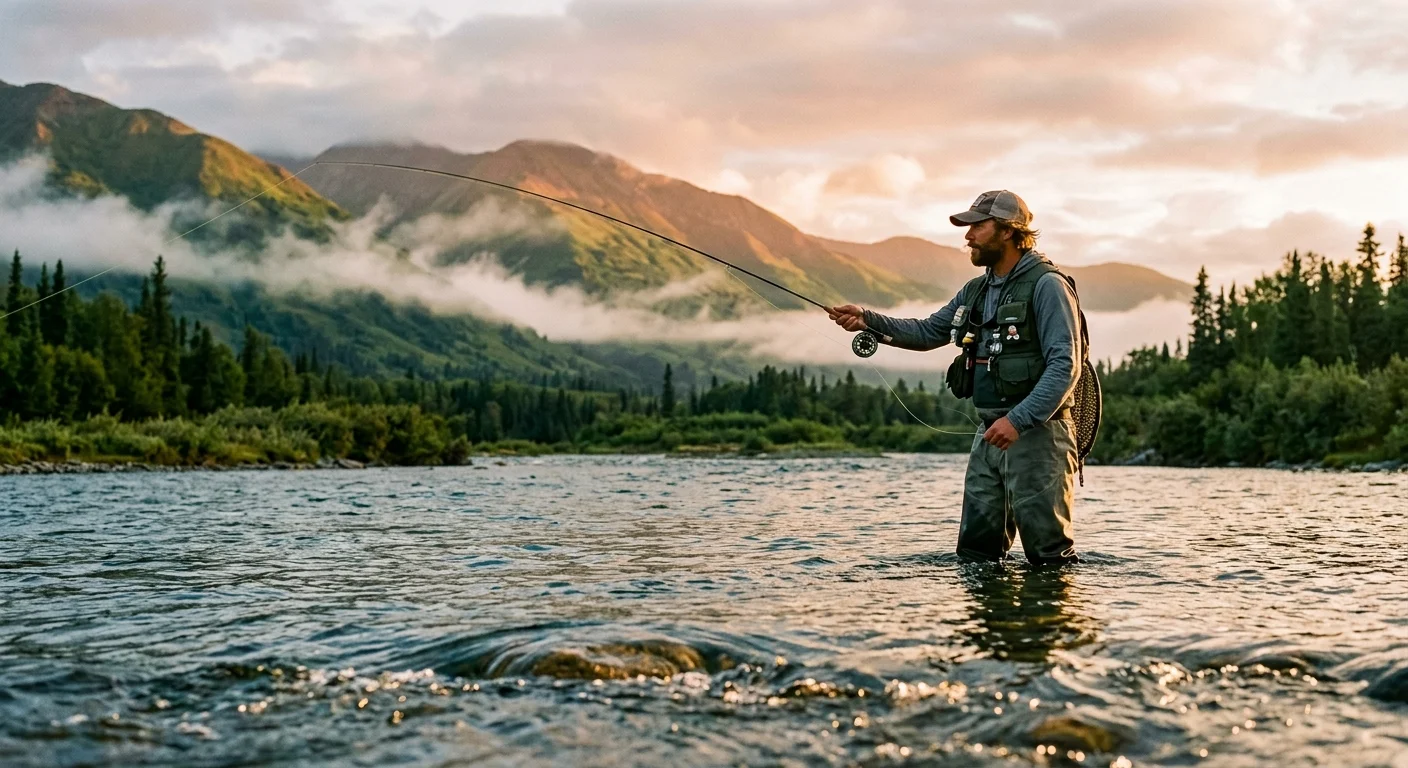
#1 Bristol Bay, Alaska — Where Five Salmon Species Run Wild
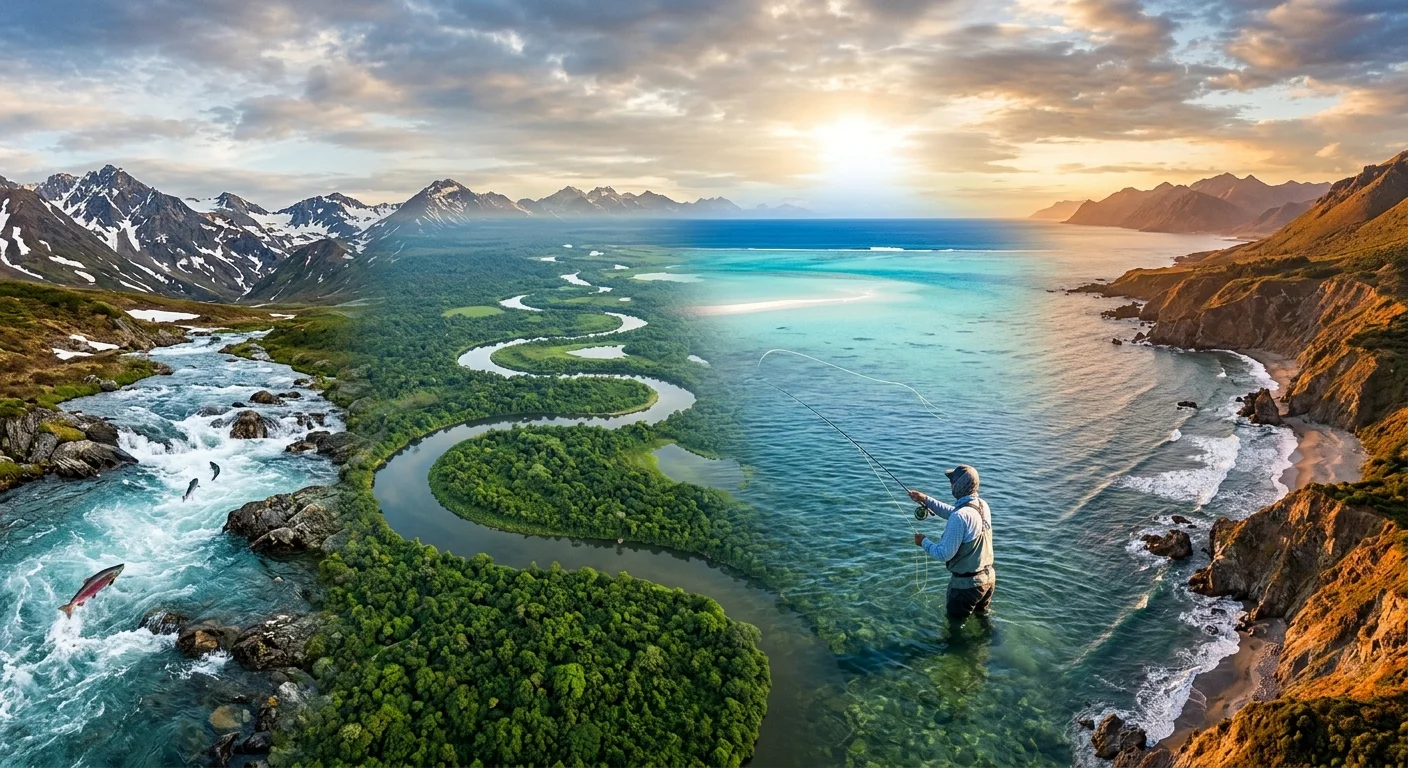
Up to 100 million salmon return to Bristol Bay every year. That's not a typo. It's the largest wild salmon run left on Earth — and it happens in one of the most remote, untouched corners of Alaska.
What makes Bristol Bay special isn't just scale. It's variety. Five Pacific salmon species run these waters: King (Chinook) , Sockeye , Chum , Pink , and Silver (Coho) . Most anglers spend a lifetime chasing one. Here, you can chase all five in a single trip.
The runs break down like this:
- King Salmon — enters in early summer, averaging 20–25 lbs with giants pushing near 100 lbs
- Sockeye — peaks in July around the Kvichak River and Brooks River; fish stack up in remarkable numbers
- Chum — target them in tidewater with pink flies on swing or strip patterns
- Pink — arrive in large groups from mid-July through August
- Coho (Silver) — the late-season reward, arriving after the crowds thin out
Lodges like Rapids Camp Lodge give you fly-out access to all five species in a single stay. That's the most direct way to fish the full run without jumping between locations.
Gear Note:Professional fishing wear suppliers often recommend layered, quick-dry systems for Alaska’s long daylight and rapidly changing weather conditions. Bristol Bay's open rivers mean long hours under Alaska's extended daylight. Quick-dry fishing shirts and solid sun protection aren't optional here. They're the difference between a great day on the water and a miserable one.
#2 Amazon Basin, Brazil — Hunting Peacock Bass in the World's Greatest River
No freshwater destination hits like the Amazon. Nothing else comes close.
The peacock bass ( Cichla temensis ) is the reason anglers fly thousands of miles to get here. These fish are aggressive, territorial, and fast. They slam topwater lures with a force that feels like a personal attack. Catches of 8–15 lbs per day are normal. Fish over 20 lbs show up with real consistency. The IGFA world record came from the Rio Marié — a 28 lb giant that still stands.
Two rivers stand out: Rio Negro and Rio Marié . The Marié stretches 500 miles of catch-and-release water and holds multiple IGFA records. The dry season runs July through February . That's the window you want. Water drops. Hidden lagoons open up. Flooded timber and back channels come into view — and that's exactly where the big fish hold.
Gear Note: Many expedition teams rely on custom fishing clothing services to develop abrasion-resistant, breathable apparel tailored for jungle heat and humidity.Jungle conditions are brutal. Quick-dry, abrasion-resistant fishing shirts are not optional here. They're basic gear for staying functional out there.
#3 Puntarenas, Costa Rica — The Sailfish Capital of the Pacific
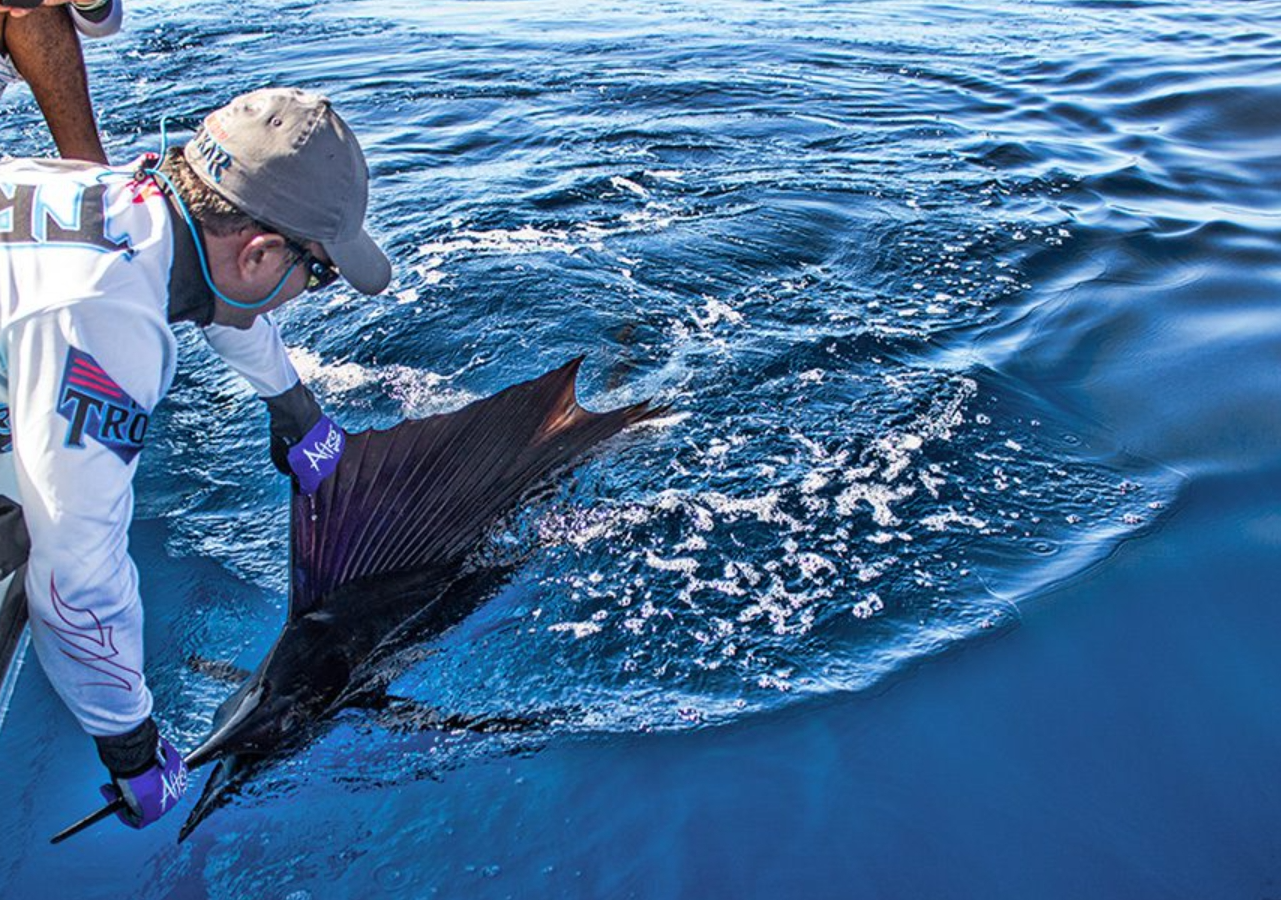
In 2016, 43 boats released 1,103 sailfish in a single day during the Los Sueños Triple Crown tournament. Read that number again. One day. One stretch of Pacific coastline.
That's not luck. Conservation did this. A decade of regulations cut commercial fishing pressure. Costa Rica's sailfish populations came all the way back — and kept going. The title "Sailfish Capital of the World" isn't marketing. It's math.
The numbers from peak season speak for themselves:
- January–April : top boats out of Los Sueños and Quepos raise 30–50 sails per day
- Realistic personal releases: 15–25 fish per day
- Quepos alone averages 7+ releases per day on the best boats during peak months
Where to launch: Los Sueños Marina in Herradura Bay and Marina Pez Vela in Quepos are your two main departure points. Blue water starts just 12–30 miles offshore . The January–April window brings calm seas and short runs. You're fighting fish, not weather.
Quepos hosts the Offshore World Championship for a reason. These aren't weekend captains. They're tournament-grade crews who know the fish stacking spots cold.
Gear Note: For charter fleets and tour operators, sourcing from reliable fishing clothing wholesalers helps ensure consistent quality sun-protection gear for clients.Tropical offshore in Costa Rica means direct equatorial sun from first light. A lightweight, UPF-rated fishing shirt isn't about comfort. It's protection you'll need before the first sail even bites.
#4 Florida Keys (Big Pine Key), USA — The Ultimate All-Levels Fishing Paradise
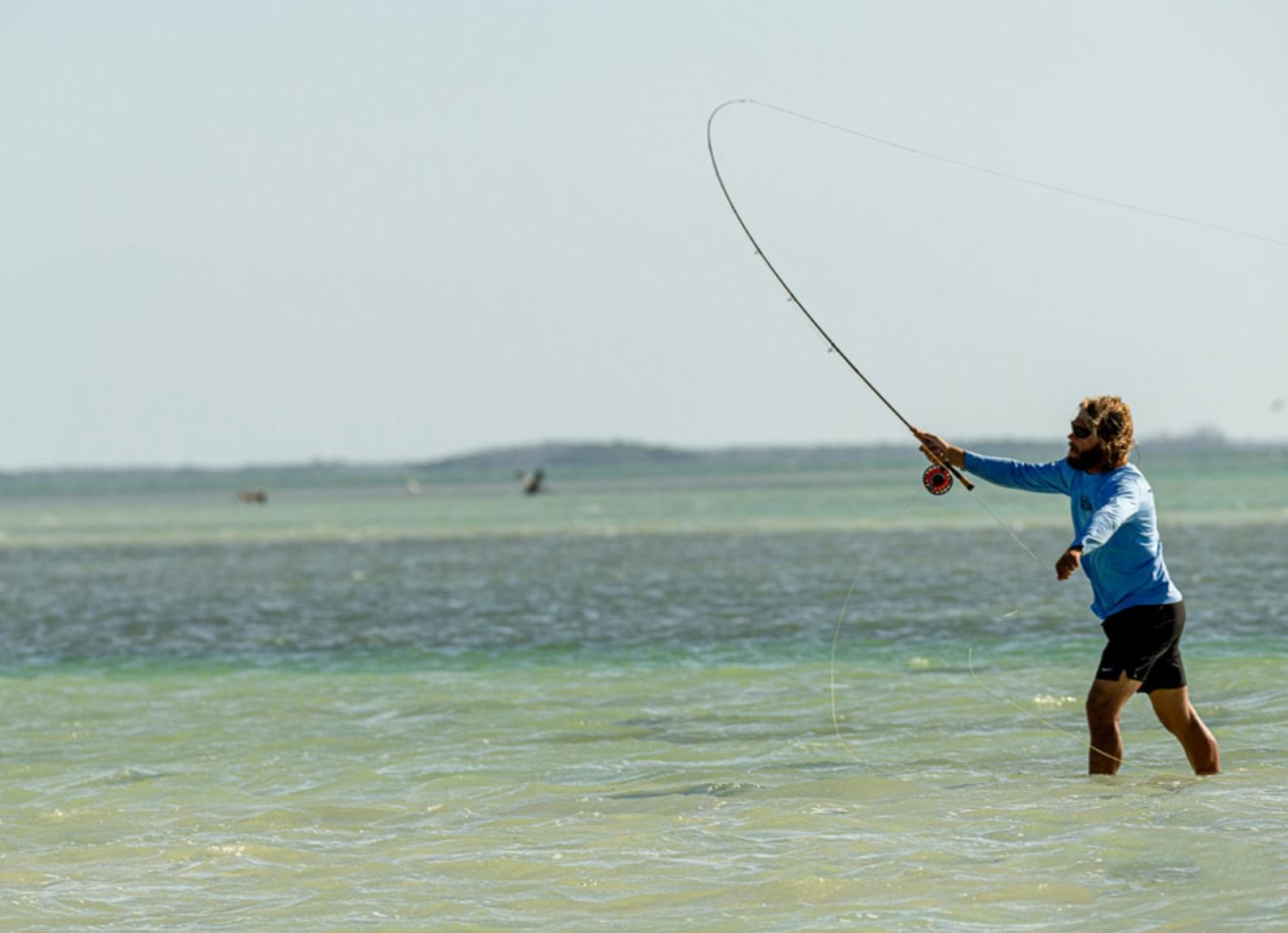
The Florida Keys don't care about your experience level. That's the whole point.
Big Pine Key sits at Mile Marker 33 — close to Key West, yet far enough to feel like a different world. From this one base, you get access to everything: shallow turtle-grass flats, nearshore reefs, and deep Atlantic water that drops to 2,000 feet at Wood's Wall, just 30 miles out.
The flats are where legends happen. Tarpon, Permit, and Bonefish share the same shallow water. Land all three in a single day, and you earn the coveted Inshore Grand Slam . Peak season runs mid-March through June . Bahia Honda Bridge sits just 15 minutes away. It stacks Tarpon alongside Mangrove Snapper, Hogfish, and Barracuda.
Gear Note:A professional fishing apparel factory typically designs lightweight, UV-protective clothing specifically for high-glare environments like the Florida flats.Polarized sunglasses are non-negotiable on these flats. Sun protection matters just as much — eight hours under Florida glare will wear you down fast.
#5 Seychelles Islands — Fly Fishing Heaven for the Hardcore Angler
Some places exist to humble you. The Seychelles is one of them.
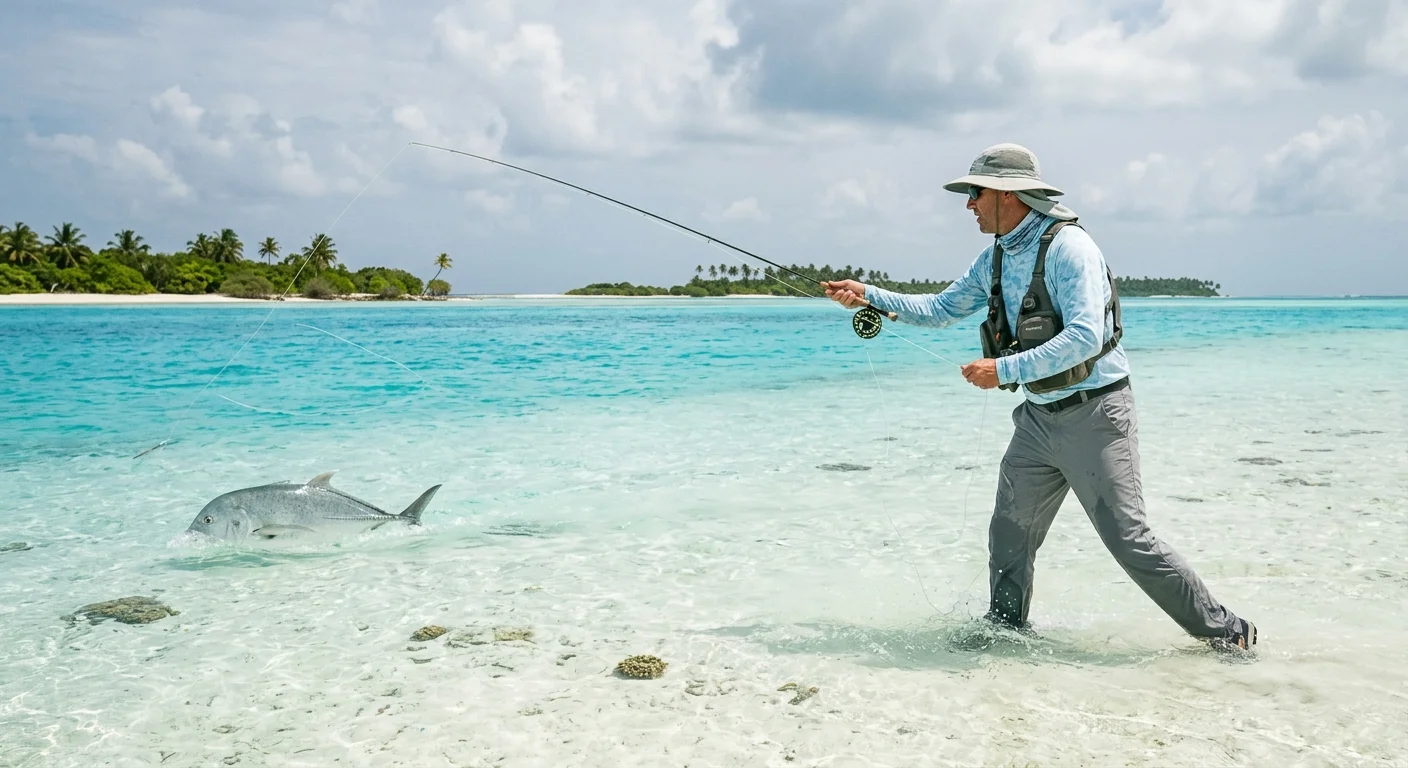
The atolls — Cosmoledo, Astove, Alphonse, Farquhar — sit deep in the Indian Ocean, cut off from nearly everything. No crowds. No fishing pressure. You get 10,000+ acres of wadable bonefish flats. The fishing here ranks among the most demanding on the planet.
Giant Trevally is the species that breaks anglers. GTs at Cosmoledo top 40 inches with consistency. A 20 lb fish tears through your gear and drains your body at the same time. Landing one over 100 lbs is not a fantasy. It is a real outcome — as long as your casting holds under pressure.
Target species by atoll:
- Cosmoledo — premier GT destination worldwide
- Astove — large GT, tailing triggerfish, permit
- Alphonse/St. François — bonefish, milkfish, trevally
- Farquhar — bumphead parrotfish, barracuda, permit, sharks
Gear Note:Elite lodges often collaborate with OEM/ODM fishing apparel manufacturers to produce technical gear capable of handling saltwater corrosion and extreme UV exposure. Alphonse Island Lodge (Blue Safari Seychelles) costs ~$15,280/week. Standard fly lines break down fast here. Bring saltwater-specific reels. Lightweight, high-UPF wading shirts are also a must — not optional.
#6 Punta Gorda, Belize — World-Class Permit Fly Fishing Meets Caribbean Beauty
Permit are liars. They'll drift across a flat, look right at your crab pattern, and refuse it without a second thought. That's why serious fly anglers keep coming back to Punta Gorda.
This quiet corner of southern Belize holds the highest densities of permit flats on the planet . Deep water channels border isolated keys, reef flats, and wide lagoon systems. That exact mix of habitat pulls permit together in numbers you won't find anywhere else. Guides like Garbutt's have spent years learning every productive flat. On a calm day, you'll sight 30–70 permit . You might get 5–10 quality shots . A great week means landing 3 fish. That's the game.
The fishing has gotten better, too. Belize passed a nationwide gillnet ban in 2019 . Mandatory catch-and-release rules followed. Together, those two changes pushed fish counts higher every year for the past decade.
Multi-species bonus: Same trip covers bonefish, tarpon, and snook — genuine Grand Slam territory.
Gear Note: For outfitters and retailers, understanding competitive fishing apparel wholesale prices is key to balancing performance gear with market demand in destination fishing hubs.
CTA #1Outfit Your Next Fishing Expedition
Custom UPF 50+ fishing shirts, quick-dry pants, and performance apparel — manufactured to your specs with MOQ 50 units.
Get a Free Quote#7 Aitutaki, Cook Islands — Bonefish Flats in the World's Most Beautiful Lagoon
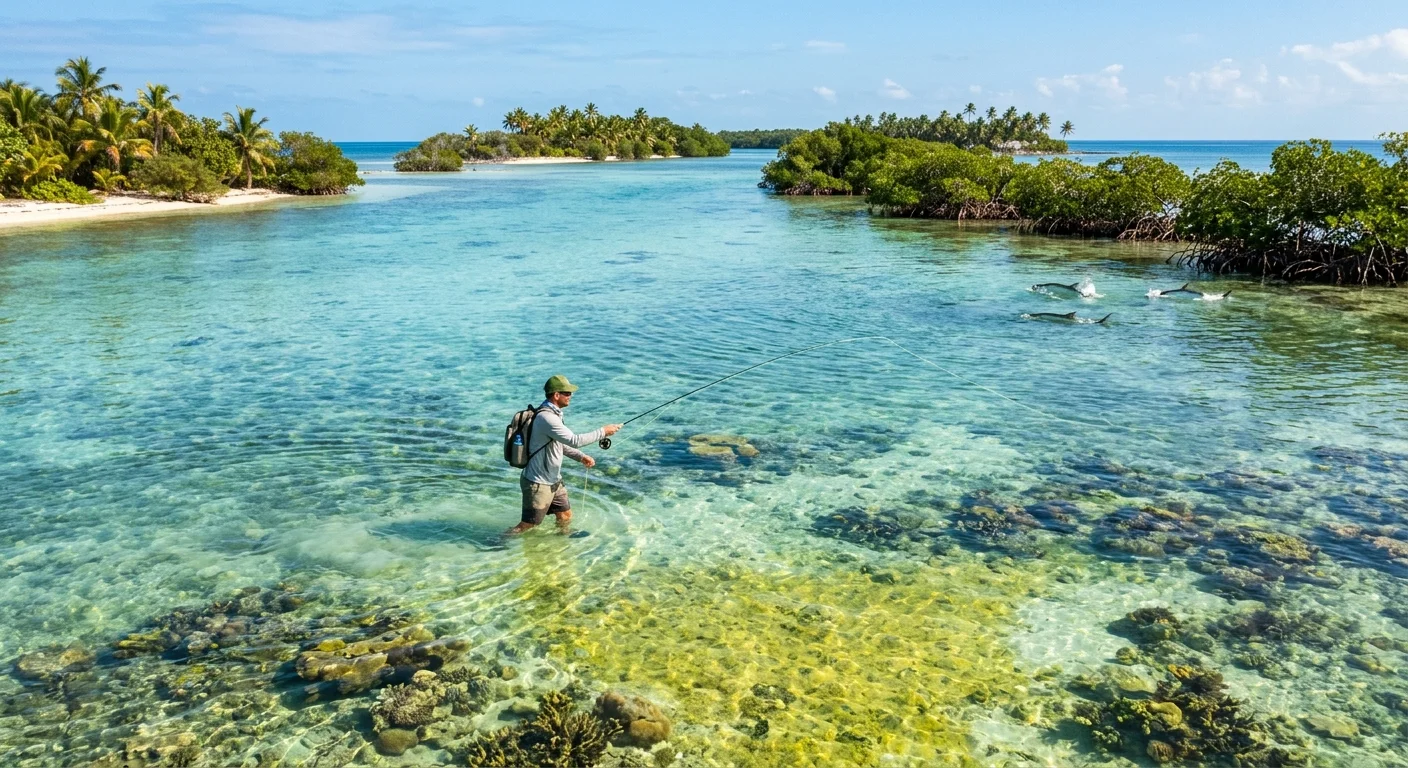
Seven square miles of lagoon. Fifteen islets. Turquoise water so clear it feels dishonest.
Beneath that postcard surface — bonefish that will change everything you thought you knew about the species.
The world record stands at 16.5 lbs (7.48 kg) . Locals hook fish over 20 lbs on a regular basis. Some report 30-lb giants pulled from the deeper zones. This lagoon is no larger than a small town. Those numbers have no business existing here. Yet they do.
Two ways to fish it:
- Sight fishing the flats — 9-weight rod, crystal visibility, fish moving like grey torpedoes
- "Fishing the milk" — target schools of hundreds in deeper, sediment-clouded zones where crustacean feeding stirs the water
Move slow. Use the "Aitutaki Shuffle" — a low, sliding foot-drag across the bottom. It keeps you safe from stonefish and coral cuts lurking just underfoot.
Guides like Itu Davey (E2's Way) focus on hunting the big ones. A Visitor's Lagoon Fishing Permit costs $50 NZD per week. Nursery and spawning areas are off-limits without a licensed guide — no exceptions.
Getting There: Take a 45-minute flight from Rarotonga. Rarotonga has direct connections from New Zealand.
#8 Watamu, Kenya — Big Game Billfish in the Indian Ocean
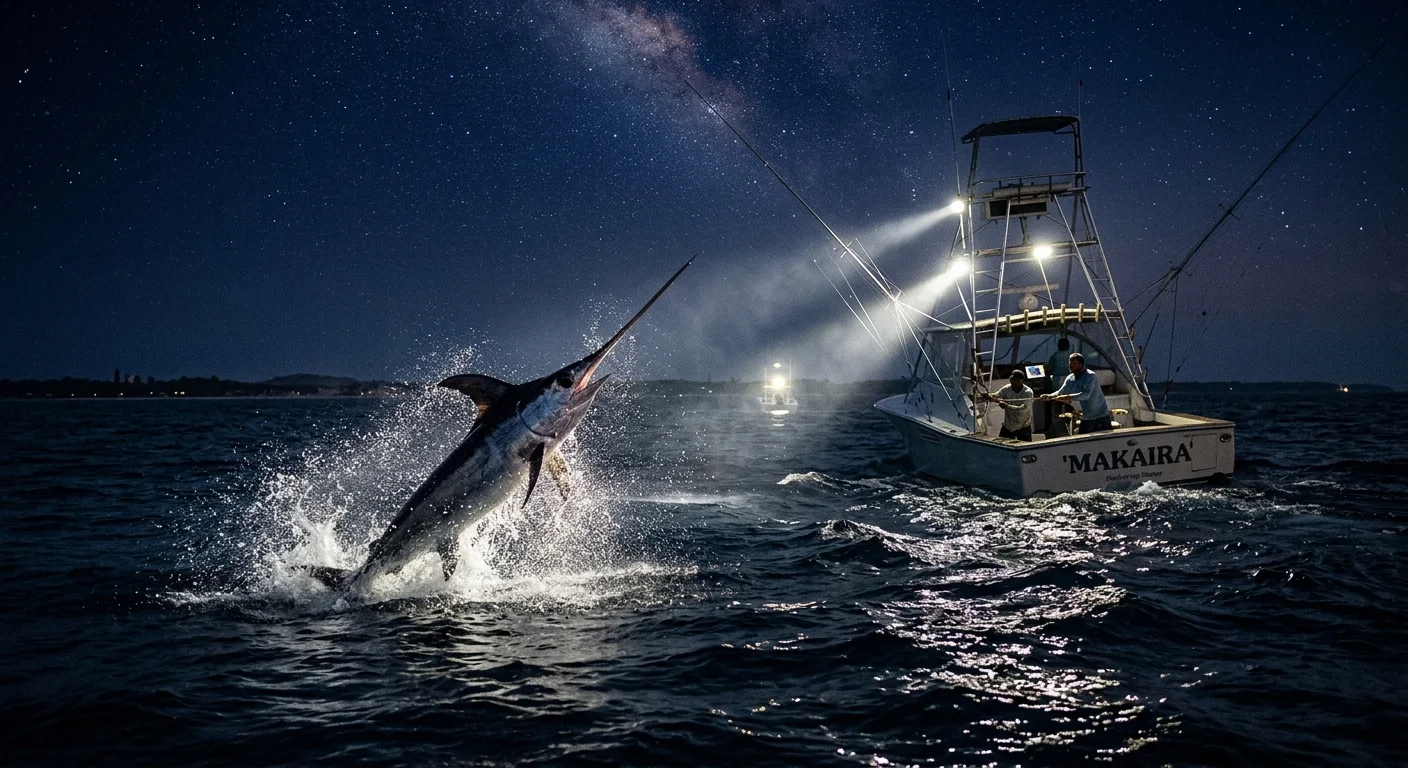
Eleven swordfish. One night. That's what Watamu delivers when conditions line up — and that number isn't a story passed around the dock. Boats fishing these grounds have the catch on record.
Kenya doesn't show up on most anglers' radar. That's their loss.
The Indian Ocean here holds something rare: a legitimate billfish grand slam . Black marlin, striped marlin, and swordfish all move through in solid numbers. Slams happen here — they're not flukes. The most recent recorded grand slam was logged February 11, 2009, aboard Un-Reel under Captain Hellier.
What's running and when:
- Sailfish — September through January; the volume species
- Black Marlin — January–March and July–September; 100–300 lbs is typical, Kenyan record at 1,248 lbs (March 1995)
- Striped Marlin — peaks January–March around the Rips and underwater seamounts
- Swordfish — night-drop or Venezuelan-style deep fishing; the world's first broadbill on fly was caught right here
Every charter boat runs a tag-and-release system. Billfish, shark, game fish — all recorded. Conservation is part of the culture here. It's not something added on later as an afterthought.
#9 Melville Island, Australia — Remote Wilderness Fishing at the Top End
Sixty kilometers north of Darwin, there's an island most anglers will never put on their list. That's what makes it worth the trip.
Melville Island sits in Australia's Northern Territory. You can only get there by a 30-minute private charter flight. Step off the plane, and the wilderness hits you hard. Mangrove-lined rivers. Paperbark forests. Deserted beaches. Crocodiles in the shallows. This is the Top End in its rawest form.
The main target is Barramundi — the iconic Australian predator that grows past one meter and can break 20 kg. Goose Creek (known to locals as Andranangoo) is the standout spot. It's a spring creek fly fishing paradise with a deep history of giant barra catches. A 75-year-old angler once pulled the largest barramundi ever recorded from a boat right here.
Two operators run the show:
Melville Island Lodge takes up to 18 guests. It covers Snake Bay, the Jessie River, and the surrounding coastal reefs.
Johnson River Camp runs smaller — 9 guests max, 4-day minimum stay, upper-river access only.
Past barramundi, 40+ species show up on a regular basis. You'll find longtail tuna to 20 kg, fingermark snapper over 70 cm, trevally, mackerel, and saratoga.
Gear Note: Extreme UV and high heat are facts of life out here. Pack breathable, quick-dry fishing shirts with solid UPF protection. On a full day on the water, that's not optional — it's the bare minimum.
#10 Nelson, New Zealand — Trophy Brown Trout in Alpine River Scenery
New Zealand doesn't offer average trout fishing. It offers 10-pound brown trout holding in water so clear you can count their spots from thirty feet away.
The Nelson region is your starting point. Head two hours southwest and Owen River Lodge puts you on 30+ road-access fisheries. Catching multiple 8–10 lb fish per trip is standard. The lodge walls tell the story — covered in 10 lb+ catches. These aren't flukes. They're the norm.
Kahurangi National Park and Nelson Lakes raise the bar even further. Helicopter access gets you into backcountry rivers. Trophy browns in these waters almost never see a fly.
Technique is everything here. The crystal-clear water means you need long leaders, a stealthy approach, and sharp sight casting. Spot a feeding fish. Drop a small caddis into its lane. Then wait — hold off your set long enough to count a beat or two before you strike.
How to Choose Your Perfect Fishing Destination (Match Your Skill & Style)
Not every world-class fishing spot belongs on your list. The right destination depends on who you are as an angler. Your experience, your target species, and how much discomfort you'll put up with for a good catch — all of it matters.
Here's a simple framework to cut through the noise.
Match skill level first:
- Costa Rica's sailfish
- Florida Keys flats
- Guides easy to find
- Infrastructure solid
- Amazon peacock bass
- Bristol Bay salmon
- Australian barramundi
- Real challenge, real reward
- Seychelles Giant Trevally
- New Zealand brown trout
- Belize permit
- Exposes every gap in technique
Then consider the water:
- Saltwater = bigger fish, more gear, more variables
- Freshwater = technical precision, quieter settings, often more affordable
- Flats fishing = demanding sight casting under pressure
Two factors most anglers underestimate:
Fishing pressure kills success rates fast. Go off-peak — weekdays, shoulder seasons. You'll beat the crowds and find fish that haven't been spooked. Plus, local knowledge beats any map. Talk to guides, check regional forums, and connect with fishing clubs before you book anything.
Pick the destination that challenges you. Not the one that just looks good in photos.
Essential Gear for World-Class Fishing Trips (What Expert Anglers Pack)
Gear fails at the worst moment. We're talking 30 miles offshore, deep in the Amazon, or wading a Seychelles flat with a 40-pound GT charging straight at you. What you pack decides whether that moment becomes a great story or a costly disaster.
Match your gear to your destination:
- Rod: 6.5–7ft medium-heavy spinning or conventional
- Reels: salt-resistant, pre-spooled 20–50lb braid
- Terminal: hooks #1/0–5/0, 30–80lb leaders, jigs & soft plastics
- Clothing: UPF 50+ moisture-wicking long-sleeve shirts, quick-dry pants, two pairs polarized sunglasses, wide-brim hat, neck gaiter
- 9ft 5–8wt rods in hard protective tubes
- Large-arbor reels loaded with 100yd backing
- Leaders 9–12ft; full fly selection: streamers, dries, nymphs
- AFTCO long-sleeve UPF shirts paired with amber-lens polarized glasses
- Collapsible 6–7ft spinning rod to save space
- Baitcasting reel, 15–30lb braid
- Permethrin-treated layers — non-negotiable
- High-DEET repellent (30–50%) + headlamp 200+ lumens
The 80/20 packing rule: Cap yourself at four rods. One compact tackle box with 20–30 versatile lures covers 90% of species you'll encounter. Keep your checked bag under 50 lbs. Every extra pound cuts into your flexibility on the road.
CTA #2Source Pro-Grade Fishing Apparel at Wholesale Prices
B2B buyers trust BeRun Sports for OEM/ODM fishing clothing — 30+ years experience, fast sampling, and competitive wholesale rates.
Request Wholesale PricingFAQ: Everything Anglers Ask Before Booking a Fishing Trip
Most fishing trips don't fail on the water. They fail in the planning stage — wrong season, wrong guide, wrong expectations.
Here are the questions that matter before you book anything.
What species will be running during my dates?
Don't assume. Confirm. Bluefin tuna off the Northeast coast, sailfish in Costa Rica, salmon in Bristol Bay — all of them run on tight windows. A good guide adjusts based on your flexibility. A great guide tells you when not to come.
How long is the trip, and what's included?
Full-day charters run about 8 hours. Half-days, 4. Offshore private boats cost far more than wading fly trips. Prices vary a lot depending on format. Before you pay a deposit, check what's covered. That means rods, bait, fuel, licenses, fish cleaning, meals, and pickup.
Do I need a guide?
For new waters or offshore destinations — hire the guide.
What about international fishing permits?
Mexico requires a gear import permit for equipment valued over $500. EU rivers need vignettes. Submit your applications 30–60 days before departure. Violations carry real fines — don't skip this step.
Do I need travel insurance?
Yes — for remote destinations, it's non-negotiable. Medical evacuation alone can hit $50K+ in places like the Amazon or Seychelles. Check World Nomads or Allianz. Also add a fishing-specific rider. Look for gear loss coverage ($1K–$5K) and trip cancellation protection.
Which destination is hardest for fly fishing?
Permit on the Belize flats. Hook-up rates sit between 1–5%. After that: golden dorado in Argentina and Atlantic tarpon in the Florida Keys. These fish punish every technical mistake.
What's the best fishing country in the world?
Depends on your target. Norway for Atlantic salmon. New Zealand for trophy trout. Costa Rica for marlin. Alaska for halibut and salmon. The honest answer: the best country is the one that matches what you're chasing.
Conclusion
The world doesn't run out of water. It doesn't run out of fish, or wonder, or that quiet stillness you feel standing waist-deep in a New Zealand river at dawn. What runs out is time — and the willingness to go.
From Bristol Bay's wild salmon chaos to the calm, flat bonefish waters of Aitutaki, these top fishing spots in the world aren't just destinations. They change how you think about patience and wildness. They show you what a truly good day looks like.
You don't need to fish all ten. You need to fish one — and let that first cast pull you toward the rest.
Start with the destination that stirred something in you. Build your gear list around it. Then book the trip before the tab closes.
The fish are already there. They're waiting in water you haven't touched yet.
Your bucket list doesn't fill itself.