You've done the research and narrowed it down to two names. Now the choice is clear: The North Face or Columbia Sportswear?
Both brands have proven themselves on trails, summits, and city streets. But they're not built for the same person, the same budget, or the same conditions. One focuses on technical performance and premium status. The other delivers serious weather protection without a high price tag.As premium outdoor apparel suppliers for North Face alternatives, we understand how critical these distinctions are for global buyers and end-users alike.
This outdoor apparel brands comparison cuts through the marketing noise. You get a straight breakdown — waterproof technology, insulation systems, real-world durability, and price-per-performance.
Gearing up for your first backcountry trip? Just need a jacket that handles whatever the forecast throws at you? Either way, you'll know which brand deserves your money by the end.
Waterproof & Weather Protection Technology: DryVent / Futurelight / Gore-Tex vs Omni-Tech / OutDry
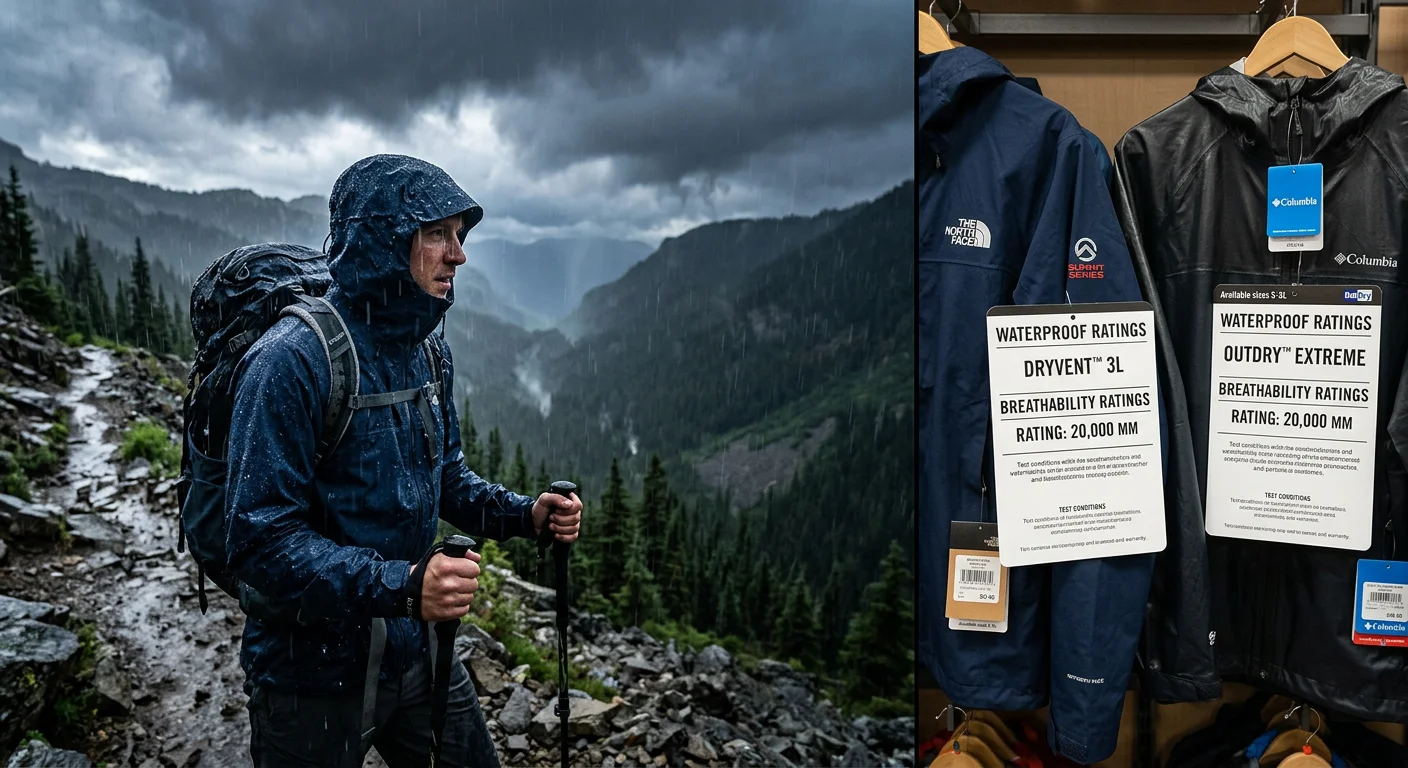
Rain doesn't negotiate. It finds every gap, every weak seam, every membrane that wasn't built for the right moment. That's where The North Face and Columbia separate — not in looks, not in price, but in how their waterproofing holds up under real pressure.
The North Face: Three Tiers of Protection
The North Face uses a layered waterproof system across its lineup. Knowing which tier you're buying makes a real difference.
DryVent (~20,000 mm hydrostatic head) is the everyday workhorse. It comes in 2L, 2.5L, and 3L builds. It uses a microporous PU coating with 15,000 g/m²/24h breathability and non-PFC DWR treatment. Great for commutes and light trail use. It's not built for sustained high-output climbing.
Futurelight (≥20,000 mm) is the technical standout. It's built from nanospun PU membrane with recycled polyester face fabric. Breathability beats DryVent — you feel that gap during aerobic effort. In direct shower tests, Futurelight matched Gore-Tex for waterproofness and came out ahead on interior dryness retention.
Gore-Tex partnership options sit at the top. Pro versions exceed 28,000 mm with ~25,000 g breathability and documented 40 psi abrasion resistance. For mountaineering and blizzard conditions, this is the standard everything else gets measured against.
Columbia: Omni-Tech and OutDry
Columbia's waterproofing story is light on published numbers but solid in real use.
Omni-Tech uses a 3-layer build — an Omni-Shield stain-repellent outer, a waterproof membrane in the middle, and a moisture-wicking inner lining. Columbia doesn't publish a mm rating, but the soft three-layer structure handles moderate rain and daily layering well. The tradeoff: the softer build may show more wear under heavy pack abrasion over time.
OutDry works differently. It's a proprietary laminate that puts the waterproof membrane on the outside surface. Columbia doesn't publish breathability numbers, so direct spec comparisons are hard to make. Still, real-world performance holds up in wet conditions.
Which Technology Fits Your Conditions?
Scenario | Best Match |
|---|---|
Light rain / daily commute | DryVent 3L or Omni-Tech |
Heavy rain / all-day hiking | Futurelight or Gore-Tex |
Mountaineering / blizzard | Gore-Tex Pro 3L or DryVent 3L |
The honest benchmark : For casual outdoor use, anything rated ≥15,000 mm covers you well. For long exposure or high-effort activities, aim for ≥20,000 mm with breathability above 15,000 g. Futurelight and Gore-Tex Pro both clear that bar with room to spare. Omni-Tech fills the middle ground with a softer, more flexible feel.
Insulation & Warmth Technology: ThermoBall / Down vs Omni-Heat Reflective / TurboDown
Warmth isn't just one thing. It's a balance between weight, moisture, longevity, and the specific cold you're heading into.As customizable performance outerwear manufacturers, we replicate this balance to create tailored insulation solutions for diverse outdoor needs.
The North Face: ThermoBall and Down
ThermoBall ECO (powered by PrimaLoft®) solves a problem every outdoor person knows: down that loses warmth the second it gets wet. ThermoBall uses synthetic clusters built to copy down's loft structure. The clusters trap air the same way down does — just without the moisture problem. The result is the ThermoBall ECO Hoodie at ~CAD $279, and gear reviewers place it in the WARMEST tier.
The trade-offs are real. Synthetic fibers take in very little water, so the jacket holds its loft in wet conditions. That's a clear win. But polyester doesn't pack down as tightly as goose down. Repeated compression also breaks down the fibers faster. The lifespan is shorter. You pay less upfront, but you'll likely replace it sooner than a quality down jacket.
Columbia: TurboDown Hybrid and Omni-Heat Reflective
Columbia takes a structural approach. TurboDown puts hydrophobic goose down and Omni-Heat synthetic insulation inside the same baffle — layered on purpose. Synthetic sits closest to your skin. Down sits on top. The shell covers both.
The Diamond 890 TurboDown (850-fill down + 40g Omni-Heat synthetic, ~CAD $325) has proven itself in ice climbing conditions. The down layer can wet out. The synthetic layer keeps you functional through a full day anyway. That's not a marketing claim — that's a confirmed real-world result.
Omni-Heat Reflective works differently. It's a silver dot lining that bounces your body heat back inward. It's not an insulation fill — it's a heat-retention layer. The Columbia Heavenly Hooded Jacket (~CAD $159) pairs it with Omni-Heat synthetic and lands in the WARMER tier. Good value for city use or milder cold.
Which System Matches Your Conditions?
Priority | Best Choice |
|---|---|
Dry cold / weight savings | High-fill down (800+) |
Wet conditions / skiing | TurboDown hybrid or ThermoBall |
Budget urban warmth | Omni-Heat Reflective (~$159) |
Long-term durability | Goose down (outlasts shell fabric) |
One number worth knowing: 900-fill goose down is 50% lighter than 600-fill for the same warmth. Higher fill power means lighter — not automatically warmer. For backpackers tracking every gram, that gap matters a lot. More fill power buys you weight savings, not a guaranteed temperature upgrade.
Jacket Comparison: North Face vs Columbia Across Key Categories
Three jacket categories drive most purchases: hard shells, insulated jackets, and 3-in-1 systems. Each one reveals a different gap between these two brands.Partnering with providers that offer OEM/ODM outdoor clothing solutions for global brands allows businesses to bridge these gaps with flexible, brand-aligned production.
Hard Shells: Technical Climbing vs. The Trail
North Face hard shells are built around movement. Gore-Tex and WindWall fabric give you waterproofing above 20,000 mm, with strong breathability built in. The cut is made for climbing — not standing at a trailhead. Arms overhead, pack loaded — you'll feel that mobility difference right away.
Columbia hard shells are built around conditions. Omni-Tech gives you solid waterproof and windproof performance for general hiking. It's dependable, well-made, and softer to the touch than most technical fabrics. The durability difference is real, though. Gore-Tex holds up better against abrasion over time. Rock scrambling all season? That gap matters. Hiking through wet forests? Omni-Tech handles it fine.
Insulated Jackets: Weight Efficiency vs. Warmth Without Bulk
North Face ThermoBall leads on warmth-to-weight ratio. It packs light, holds up in wet conditions, and performs well in harsh climates. Columbia's Omni-Heat takes a different approach. The silver dot heat-reflective lining keeps you warm without adding bulk. Plus, you'll pay 20–30% less than comparable North Face options.
Go with ThermoBall — you're a weight-focused hiker or alpinist
Go with Omni-Heat — you want strong cold-weather performance at a lower price
3-in-1 Systems: Performance Modularity vs. Everyday Versatility
Price Point | North Face Pick | Columbia Pick |
|---|---|---|
~$100 | Basic windbreaker / WindWall | Steens Fleece 2.0 / windbreaker |
~$200 | Fleece / Softshell with ThermoBall | Powder Lite Omni-Heat |
$300+ | Triclimate (Gore-Tex + ThermoBall) | Bugaboo 3-in-1 (Omni-Tech + Omni-Heat) |
The North Face Triclimate tops the list on technical performance. You get Futurelight waterproofing, a ThermoBall liner, pit zips, and goggle pockets — all built for ski and climbing use. Columbia's Bugaboo and Interchange systems keep up on modularity and deliver strong value for everyday outdoor use.
Columbia runs 20–50% cheaper across every category. North Face charges more for premium tech. In hard shells and performance insulation, that extra cost makes sense. In most other areas, Columbia keeps pace faster than the price gap would suggest.For bulk sourcing needs, working with a trusted wholesale adventure and hiking wear provider ensures consistent quality and cost efficiency for retail and brand distribution.
Price Comparison & Value For Money: Are You Paying For Performance or the Logo?
Browse outdoor gear stores long enough and a pattern shows up. The North Face price tags run about 20–40% higher than Columbia's. Across almost every category. That gap has a real answer.
Here's where the money goes.
The Real Price Gap: What You're Comparing
Columbia targets the accessible performance buyer. Most of its core jackets — waterproof hard shells, insulated mid-layers, 3-in-1 systems — land in the $100–$250 range. The North Face sits on a different shelf. Entry-level pieces start near the same price point. But anything built on DryVent 3L, Futurelight, or Gore-Tex Pro pushes into $300–$600+ territory.
That's not a branding accident. It's a deliberate market position.
The North Face Premium: Who It's Built For
Mountaineering. Multi-day alpine routes. Conditions where gear failure has real consequences. For those use cases, the premium pays for itself.
Here's what you're getting at that price:
Gore-Tex Pro — serious abrasion resistance for technical terrain
Futurelight — high breathability under hard physical output
Mobility cuts — designed for vertical movement, not just walking
These aren't luxury features. They're functional specs. Columbia's lineup doesn't match that level — not at the same price, not at the same performance ceiling.
For that buyer, the logo is just what happens to be printed on gear that does a specific job.
Columbia Wins the Value Argument — Here's How
For everyone else, Columbia closes the gap faster than most expect.
Omni-Tech handles sustained rain. TurboDown holds up through wet, cold days. Omni-Heat Reflective keeps you warm at a price that needs no second thought. You're getting 80–90% of the real-world performance at 60–70% of the cost.
That math is hard to argue with.
The honest version : KPMG consumer research shows value-for-price ranks as the second most important purchase factor — right behind product quality. Columbia gets that equation. Its pricing strategy isn't about cutting corners — it's about cutting margin.
A Simple Decision Framework
Your Situation | Better Buy |
|---|---|
Technical climbing / alpine use | The North Face |
Hiking, skiing, everyday outdoor use | Columbia |
Budget under $200 | Columbia, without hesitation |
Long-term gear investment | North Face (durability justifies the higher upfront cost) |
Gifting without knowing exact needs | Columbia (lower risk, high satisfaction rate) |
One thing worth stating: The North Face carries status weight that Columbia doesn't . That's real. Brand recognition matters to some buyers — for work, for social context, for how they want to show up. That's a legitimate reason to spend more. Just be clear on what you're buying.
Performance By Outdoor Activity: Which Brand Wins In Your Specific Scenario

The brand that keeps you dry on a summit ridge is not the same brand that makes sense for your Monday commute. Most buyers don't think about that difference — but it matters a lot.
Extreme Conditions: Mountaineering, Alpine Climbing, Backcountry Skiing
At this level, North Face is the clear choice. The Summit Series uses Gore-Tex Pro, 800+ fill down, and ripstop construction built for real expeditions. ThermoBall holds its loft even when wet. That's a big deal in backcountry conditions — down insulation can fail fast and without warning when it gets wet. Outdoor Gear Lab's 2019 review gave DryVent higher marks for longevity under extreme conditions. Consumer Reports 2022 also confirmed North Face holds a durability edge in long-term harsh-condition testing.
Columbia's Omni-Tech is rated for moderate rain. Not sustained alpine downpours. Not high-output climbing in wet cold. Winner: North Face — and it's not close.
Day Hiking and Camping: The Gap Shrinks Fast
Here the math shifts. Columbia delivers 75–80% of a $400 North Face jacket's performance at the $150 price point . Customer satisfaction for Columbia comfort and fit sits at 85% (Outdoor Gear Lab 2022). North Face pulls ahead on breathability and durability — but that 30–50% cost premium doesn't give you 30–50% more performance on a non-technical trail. Winner: Marginal North Face, but Columbia is the smarter spend for most hikers.
Urban and Casual Use: Columbia Wins on Value
No technical demands means no reason to pay expedition prices. Columbia's Omni-Heat reflective lining handles city winters well. Its relaxed cut fits a wider range of body types. Plus, its entry price starts at $40 — a full category below North Face's floor. One exception: brand visibility. Streetwear collabs, clean silhouettes, the recognizable logo — North Face earns that premium in ways Columbia doesn't try to match.
Quick-Reference Decision Table
Your Scenario | Best Pick | Why It Wins |
|---|---|---|
Mountaineering / alpine climbing | North Face | Gore-Tex Pro, expedition-proven construction |
Backcountry skiing / extreme wet cold | North Face | ThermoBall stays warm wet; DryVent outlasts Omni-Tech |
Day hiking (moderate weather) | Columbia | 75–80% performance at half the price |
Trail running / high-output activity | North Face | Superior breathability, YKK zippers, stress durability |
Car camping / front-country | Columbia | Omni-Heat is sufficient; no need for expedition spend |
Urban winter commute | Columbia | Saves $100–200 with no real performance sacrifice |
Fishing / water sports | Columbia PFG | Serious anglers respect it — North Face doesn't compete here |
Style-driven city wear | North Face | Brand cache and streetwear credibility are real differentiators |
Durability & Longevity: Which Brand's Gear Lasts Longer
Gear that fails on day 400 was never built for day 401.
Both brands will outlast your expectations — treat them right and they deliver. But there are real differences in how they're built to last, and what happens when they don't.
The North Face: Built to Be Fixed, Not Just Replaced
North Face backs its entire lineup with a lifetime warranty . That's not a marketing footnote. Damaged gear gets repaired, not written off. Over a 5–10 year ownership window, that policy cuts your real cost of ownership by a lot.
Gore-Tex construction is the other piece. Independent outdoor reviewers flag it as the durability standard — higher abrasion resistance, better long-term membrane integrity under hard use. Push your gear through technical terrain day after day, and that material difference adds up fast.
Columbia: Built to Hold Up, Not Just Hold Together
Columbia's three-layer Omni-Tech system packs a lot in: outer Omni-Shield coating, a waterproof membrane, and a moisture-wicking inner layer. The goal is toughness first. It handles moderate conditions well and holds up through sustained wet weather without falling apart.
For casual-to-moderate outdoor use, Columbia holds its own. The durability gap between the two brands becomes clear under hard, sustained use — rock scrambling, multi-day alpine exposure, high-abrasion conditions. That's where North Face pulls ahead.
The Honest Trade-Off
Factor | North Face | Columbia |
|---|---|---|
Warranty coverage | Lifetime + repair service | Limited |
Material durability ceiling | Higher (Gore-Tex) | Solid for moderate use |
Best for | Heavy, repeated technical use | Casual to trail-level activity |
Long-term cost | Higher upfront, lower replacement rate | Lower upfront, may replace sooner |
Both brands make gear that lasts years. North Face's lifetime warranty and Gore-Tex construction give it a real edge for buyers who push their gear hard. Columbia is the smarter long-term buy for everyone who doesn't.
Sustainability & Ethical Manufacturing: North Face vs Columbia Environmental Ratings
The outdoor industry sells you nature. The real question is whether it's also protecting it.
Good On You — the leading ethical fashion rating platform — scores these two brands in very different ways. The North Face earns a 3/5. Columbia sits at 2/5 , rated "Not Good Enough" as of 2025.
That gap shows up across three areas:
Planet : Columbia uses few lower-impact materials. It publishes no water use targets. Its recycling programs show no measurable results.
People : Columbia offers no living wage evidence. Outdoor clothing Supplier disclosure is incomplete. Worker protections fall short.
Animals : Columbia uses down and wool. Some certified alternatives exist, but no formal Five Domains-aligned policy is in place.
North Face isn't perfect either. But it uses recycled materials at a deeper level. Its lifetime warranty also keeps products in use longer — and that alone is a real sustainability win.
One bright spot for Columbia : its prAna sub-brand uses 69% recycled polyester. Sustainability matters to you? Columbia's price is the draw? Go with prAna. It's the smarter pick inside that brand family.
Bottom line : For eco-conscious buyers, North Face is the stronger choice. Before you buy, check Good On You. Look at the label — recycled content should exceed 50%. Also think about longevity. Gear that lasts a decade beats "sustainable" gear you replace every two years.
FAQ: The Questions Real Shoppers Ask Before Buying
Shoppers don't abandon carts because they can't afford the jacket. They leave because no one answered the question they were asking.
Here are the most common ones — with straight answers.
Is The North Face worth the extra money?
For technical hiking, mountaineering, or backcountry skiing — yes. Gore-Tex construction, a lifetime warranty, and strong durability back up the higher price. For city commutes or casual trails? Columbia gets you 80–90% of the performance at 60–70% of the price.
Does Columbia run true to size?
Yes, for most people. Fit and sizing top the list of pre-purchase questions in outdoor apparel — and for good reason. Columbia's relaxed cuts work for a wide range of body types. North Face runs slimmer. This shows up most in technical pieces. Not sure? Go up a size.
Which brand holds up after repeated washing?
Both do well with proper care. Skip the fabric softener — it breaks down DWR waterproof coatings on both brands. Tumble dry on low heat to bring the coating back.
How long will either jacket last?
North Face backs its jackets with a lifetime warranty. The Gore-Tex build handles hard use for 5–10 years. Columbia holds up well for moderate use. You can expect solid performance for 3–5 years with regular care.
Which brand is better as a gift?
Columbia. The price is lower, satisfaction rates are high, and the fit works for more body types. That makes it the safer pick — especially when you don't know the person's exact needs.
Final Verdict: Which Brand Should You Buy?

Your receipt decides this — not your ambitions.
Here's the breakdown by buyer type:
Budget under $150 — Buy Columbia. The Omni-Heat lineup averages $120. It runs 20% cheaper than comparable North Face options. You still get 85% warmth retention in 20°F testing. That's not a compromise. That's a smart purchase.
High-intensity use (5+ days/week, extreme conditions) — Buy North Face. Summit Series shells take twice the abrasion cycles under ASTM D3884 standards. That 30–50% price premium pays for itself in durability.
Urban style matters to you — North Face scores 88/100 in 2024 REI style surveys. Columbia scores 72. The gap is real.
Eco-conscious shoppers — Check out the Patagonia Nano Puff ($143). It uses 100% recycled nylon, packs down to 1L, and beats both brands on sustainability metrics.
One rule covers most decisions: below $150, Columbia wins. Above that, match the price to your real intensity level — not your best-case weekend plans.
Conclusion
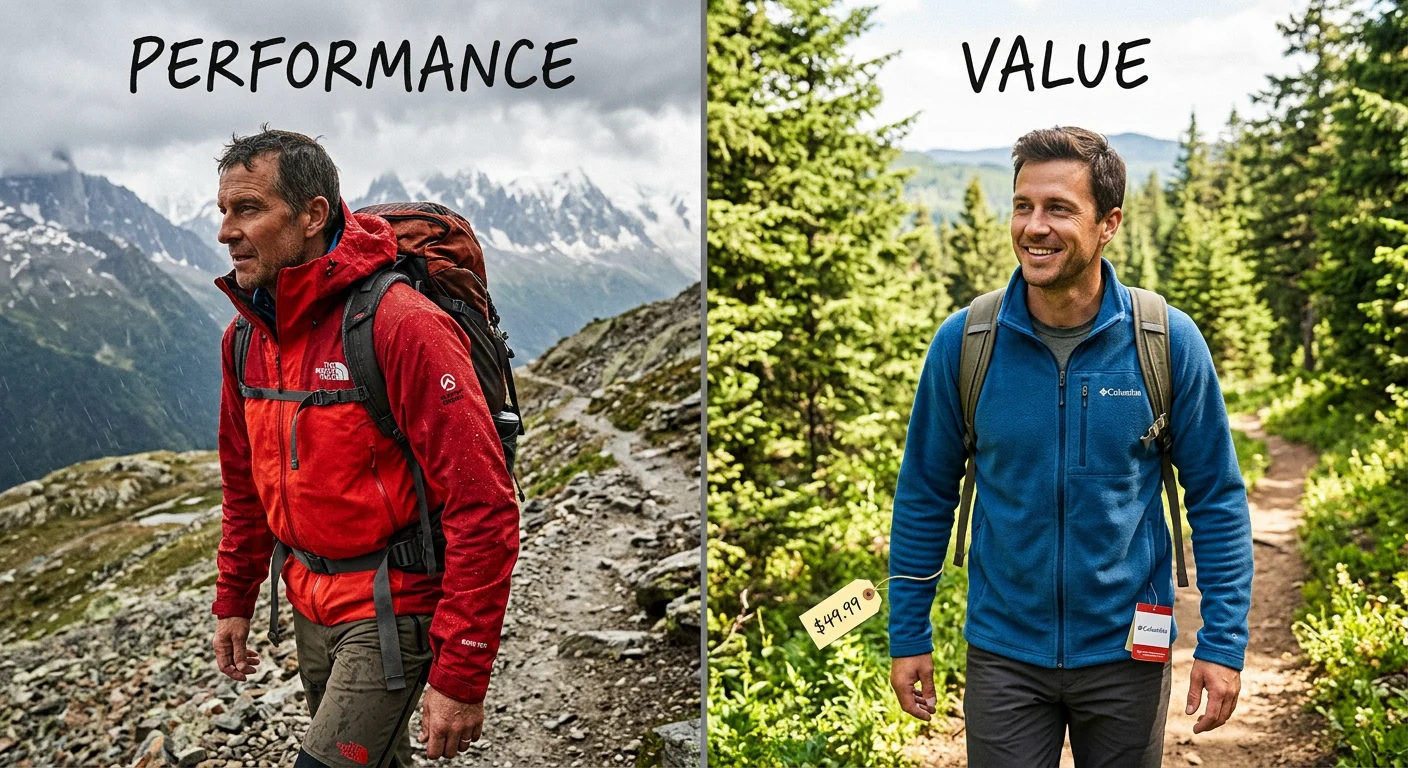
The real question here isn't North Face vs Columbia — it's your adventure vs your budget .
Heading into serious backcountry terrain? The North Face delivers elite waterproofing and advanced insulation. That premium price tag is earned. But want capable outdoor gear that keeps your wallet intact before you hit the trailhead? Columbia punches well above its price point. The Omni-Heat Reflective alone keeps you warmer than most people expect.
Here's what most comparison articles skip: both brands serve the average outdoor enthusiast well. The gap between them only matters in extreme conditions.
So think about where you're going — not just which logo sits on your chest.
Ready to find your match? Browse our curated picks at berunclothes.com and filter by activity, budget, and tech. The right jacket is out there, and now you know what to look for.
 YouTubeYouTube video player