Starting a private label golf apparel brand sounds exciting. Then you ask your first golf apparel brand manufacturer for a quote — and the number makes no sense. Is it reasonable? Too high? Are there hidden fees nobody told you about?
Here's the reality: golf brand startup investment can range from $2,000 to well over $20,000. That gap depends on decisions most first-timers don't even know they're facing yet.
This guide gives you a full, number-by-number breakdown of every real cost involved:
Sampling and patternmaking
Custom embroidery
Packaging
Cross-border logistics
You'll walk into supplier conversations knowing your numbers. Your budget will hold. And you'll launch without the costly surprises that stop most new brands before they ship their first polo.
Complete Private Label Golf Apparel Cost Breakdown (All 7 Cost Categories)

Seven cost categories. Master these, and your golf apparel brand stays profitable. Miss them, and you're bleeding cash before a single unit ships.
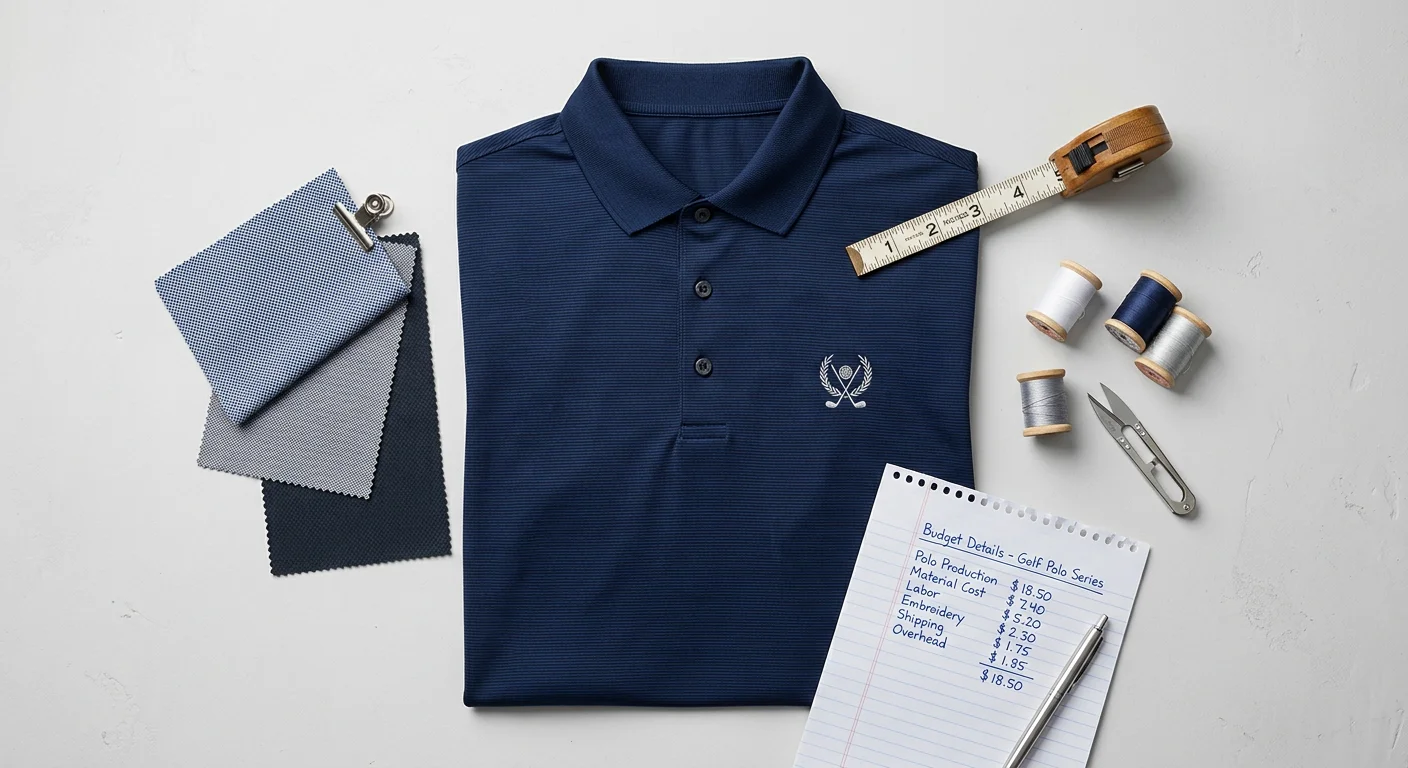
Every number below is built around a real-world benchmark: a 500-unit MOQ golf polo shirt . Each category gives you a low, mid, and high range — so you can match your actual situation.
1. Pattern Making — $50 to $400 per style
Golf-specific construction adds real complexity. Structured collars, chest pockets, and moisture-channel seams all require extra work. Plan for 2–5 revision rounds. New brand owners almost always go through more rounds than expected, so build that time into your schedule.
2. Sampling — $30 to $200 per unit
Five samples will cost you $150–$1,000 total . The final number depends on fabric testing and embroidery proofs. Don't cut this step to save money. A bad sample at this stage costs far more when it shows up across a full bulk run.
3. MOQ Bulk Production — $8 to $25 per unit
Basic poly blend (500 units): $8–$12/unit
Moisture-wicking performance fabric (1,000 units): $12–$18/unit
Premium recycled or merino performance fabric (2,000+ units): $18–$25/unit
Labor (CMT) alone runs $4–$6/unit . Bigger order volumes drive the largest price drops across all tiers.
4. Fabric — $3 to $12 per yard
5. Accessories & Packaging — $0.25 to $2 per unit
Eight buttons alone run $0.80. Add thread, ribbing, custom woven labels of golf apparel brand, and branded hang tags. Those small items stack up fast and push this category to $2/unit for a premium presentation finish.
6. Branding Customization (Embroidery / Print / Heat Transfer) — $1 to $8 per unit
Embroidery costs are based on stitch count — $0.50–$1 per 1,000 stitches . A standard chest logo at 4,000 stitches runs $1–$2/unit . Add a sleeve print, and you're looking at $2–$4. A full-back heat transfer at 10,000+ stitches? Budget $4–$8/unit . Each extra placement site adds around 20% to the total.
7. Quality Inspection & Logistics — $3 to $8 per garment total
This is the category that catches new brand owners off guard:
Basic QC + sea freight: $2.50–$4/unit
Third-party inspection + air freight: $5–$8/unit
Full audit + DDP delivery: $8–$14/unit
The Hidden Costs Nobody Quotes You
These four items won't appear on any supplier's price sheet. They will show up in your bank statement:
Hidden Cost | Typical Range |
|---|---|
Sample shipping (DHL from Asia) | $20–$100 per sample |
US import tariffs (HS 6100–6110) | 16–20% of declared value |
Payment processing (PayPal/wire) | 2–4% per transaction |
Rework/defect allowance | $1–$3/unit (2–5% rate) |
Performance stretch fabrics produce higher defect rates. Alignment sensitivity is the main cause. Add a 3–5% cost buffer to every order budget to cover this.
Your Total Per-Unit Cost Benchmark (500 MOQ Polo)
Budget Tier | Per-Unit Cost | Key Driver |
|---|---|---|
Low | $12–$18 | Basic poly, minimal branding |
Mid | $18–$28 | Moisture-wicking, chest logo |
High | $28–$45 | Premium fabric, full branding package |
Fabric and labor together make up 60–90% of your total unit cost . Everything else is manageable — as long as you plan for it before placing your order.
Startup Budget Scenarios: Which Investment Level Matches Your Business Stage
Your budget doesn't just determine what you can buy. It determines what business model you're running.
Private label golf apparel has four distinct investment levels. Each one opens a different set of channels, SKU counts, and revenue ceilings. Here's where you fit.
$2,000–$5,000 — Zero-Inventory POD Launch
SKUs supported: 1–5
MOQ: Zero (print-on-demand)
Revenue ceiling (Year 1): $10,000–$20,000
Best for: Testing a concept before committing real capital
Here's the hard truth about this tier: 80% of brands fail without an existing audience. POD removes inventory risk. But zero traffic will still kill your brand.
$5,000–$15,000 — Small Batch Validation (Highest ROI Tier)
SKUs supported: 5–15
MOQ: 50–100 units per SKU
Revenue ceiling (Year 1): $50,000–$100,000
Cash runway: 6–12 months
This is the sweet spot. 70% of successful golf apparel startups test their first product at this level. You're small enough to pivot fast. You're also large enough to collect real sales data. Plan for 20–30% inventory waste if your demand forecast misses — build that buffer into your numbers from day one.
$15,000–$25,000 — Professional D2C Launch
SKUs supported: 15–30
MOQ: 200–500 units per SKU
Revenue ceiling (Year 1): $150,000–$300,000
Cash runway: 12–18 months
At this level, your custom golf wear production cost per unit drops by a noticeable amount. Supply chain delays are your biggest threat — set aside a 15–25% cost overrun cushion. The upside is real: push retention above 80% and you can hit a +30% growth rate.
$25,000–$50,000+ — Brand Scaling Phase
SKUs supported: 30+
MOQ: 500+ units per SKU
Revenue ceiling (Year 1): $500,000+
Cash runway: 18–24 months (upside), under 12 months (downside)
Enter this tier after your base revenue clears $100,000 . Not before. Overstock risk climbs to 30–40% if demand falls short. The wholesale channel opens at this stage — and that's where strong golf apparel wholesale supplier relationships start compounding your growth.
Which Tier Should You Start In?
Budget | Cash Runway | Wholesale Access | Key Risk Trigger |
|---|---|---|---|
$2K–$5K | 3–6 months | No | Churn >10% |
$5K–$15K | 6–12 months | Low | Inventory waste |
$15K–$25K | 12–18 months | Medium | Supply chain delays |
$25K–$50K+ | 18–24 months | High | Overstock |
Simple decision rule: No revenue yet? Start at $5K–$15K. Got real sales already? Move into $15K–$25K. Running a proven brand? $25K+ is where you scale — not where you test ideas.
Golf Polo Shirt Manufacturing Cost: The Most Detailed Per-Unit Breakdown
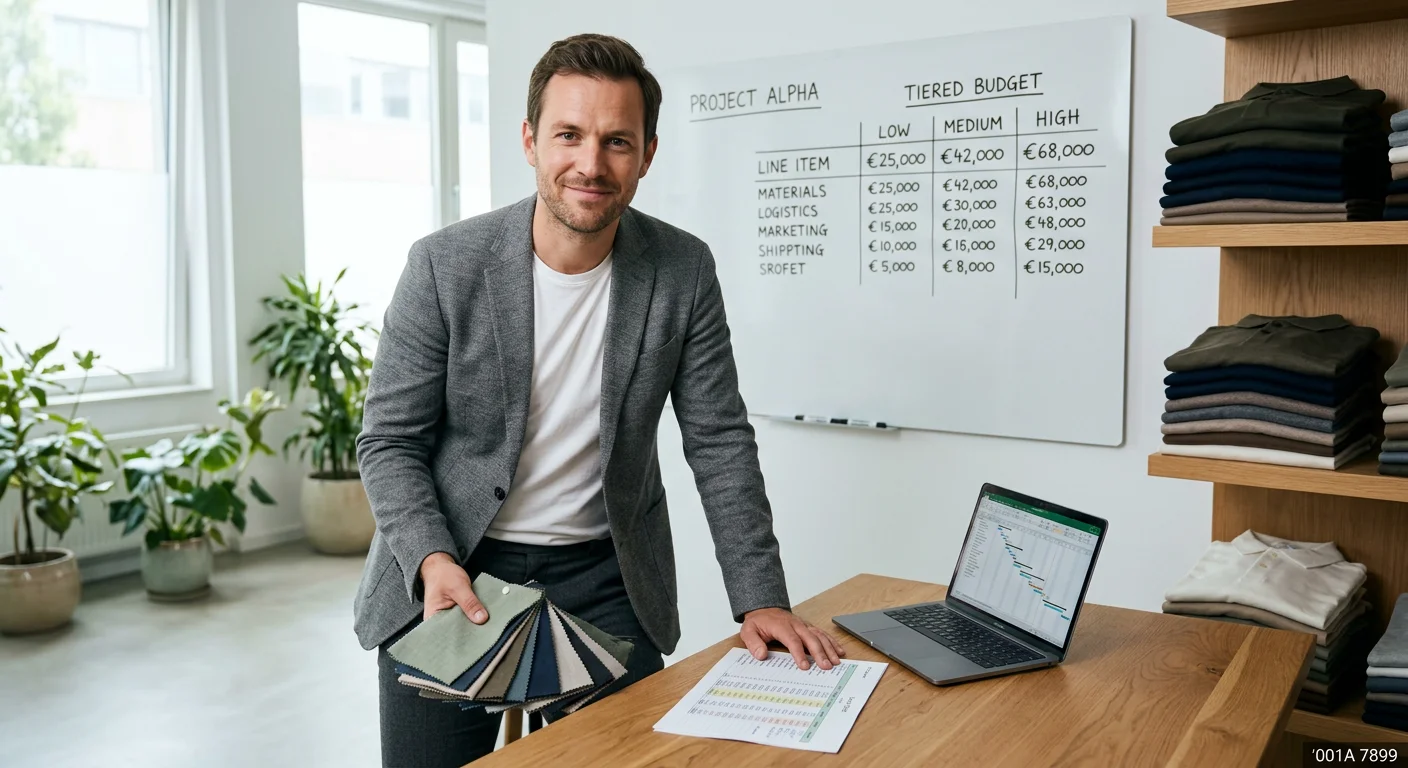
The difference between a $5 polo and a $20 polo isn't luck — it's decisions. Six decisions, to be exact. You'll make all of them before a single unit goes into production.
Here's the full per-unit cost breakdown for a golf polo shirt, built from real private label golf apparel brand manufacturer data:
Cost Component | Per-Unit Range | What Drives the Number |
|---|---|---|
Fabric Material | $2.00–$5.00 | Fiber type, performance grade |
Cutting & Sewing | $1.00–$4.00 | Region, complexity (15–20 min/unit) |
Printing / Embroidery | $1.00–$5.00 | Technique, color count, stitch count |
Labels & Packaging | $0.15–$0.80 | Basic hang tag vs. premium branded finish |
Pattern Making (amortized) | $0.30–$0.60 | Spread across total units ordered |
Logistics | $0.50–$3.00 | Shipping method, destination |
Total Manufacturing Cost | $4–$20 | Order volume is the single biggest lever |
Fabric: Where Your Budget Really Goes
Fabric alone drives 40–60% of your finished cost. Most golf polo brands pick from three main options:
Combed ring-spun or piqué cotton: $2.50–$4.00/yd — breathable, soft, classic polo feel
Polyester: $1.80–$2.80/yd — moisture-wicking, durable, the cost-efficient performance choice
Cotton-polyester blend: $2.50–$3.50/yd — where most performance golf brands land
Premium or organic cotton: $5.00–$15.00/yd — for luxury positioning
How Order Volume Drops Your Per-Unit Cost
Most first-time buyers don't grasp this number until they see it laid out in a table:
Order Quantity | Per-Unit Manufacturing Cost |
|---|---|
50 units | $8–$20 |
100 units | $10–$15 |
500+ units | $4–$10 |
5,000 units | $4–$6 |
Scaling from 100 to 500+ units cuts costs by 20–30% . That's not a rounding error. That's the gap between a 30% margin and a 55% margin at retail.
Two real examples put this in clear terms:
Project A — 100 pieces, basic cotton, screen printed: total cost ~$1,200 → $12.00/unit
Project B — 5,000 pieces, performance blend, embroidered: total cost ~$25,000 → $5.00/unit
Same product category. The brand that scaled pays less than half per unit.
Labor Costs by Manufacturing Region
Your OEM golf apparel manufacturer location has a direct impact on labor cost. Here's how the numbers break down by region:
Region | Sewing Cost Per Shirt | Key Advantage |
|---|---|---|
Bangladesh | $1.00–$1.80 | Lowest cost, high volume capacity |
Vietnam | $1.20–$2.00 | Strong export infrastructure |
China | $1.50–$2.50 | Balanced cost + technical capability |
Turkey | $2.50–$3.50 | Fast lead times, EU market proximity |
USA / Western Europe | $8.00–$20.00 | Premium positioning, domestic compliance |
Polo shirt sewing runs $1.50–$3.00 per unit . That's about 15–20 minutes of skilled labor per garment.
Branding Customization: Full Technique Comparison
Each decoration method has its own cost structure and minimum order threshold:
Screen printing: $0.50–$7.00/unit — color count drives the price
Embroidery: $1.00–$7.00/unit — stitch count determines cost, not design size
3D embroidery: $1.50–$6.00/unit — premium look, higher setup cost
Sublimation: $1.50–$3.50/unit — polyester fabrics only, ideal for all-over prints
Bottom line: golf polo shirt manufacturing cost is never one fixed number. It's a formula — and the variables are yours to control.
Custom Golf Apparel Branding Costs: Embroidery, Printing & Labeling
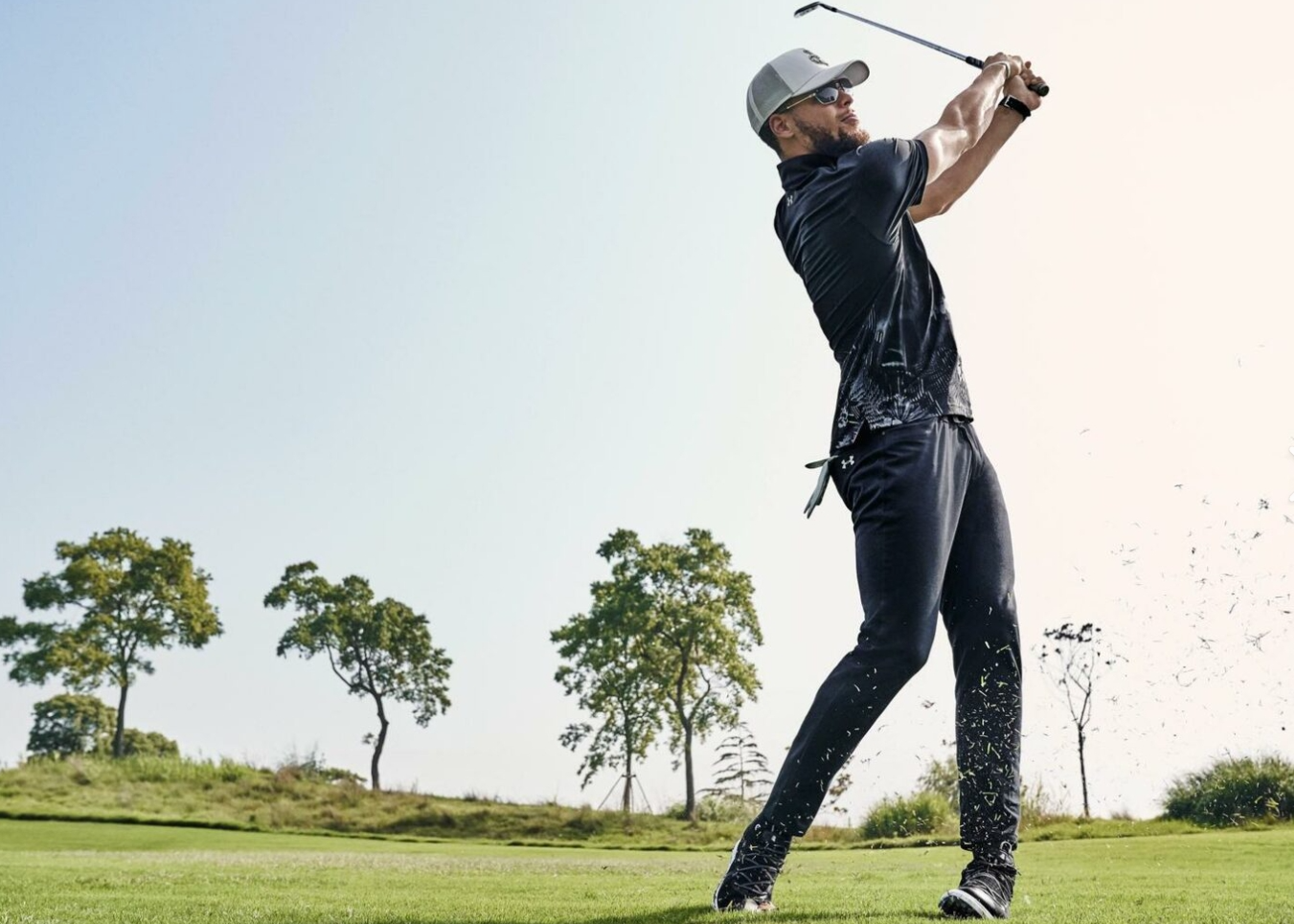
Your logo placement decision will make or break your unit economics. Most brand founders treat it as an afterthought. That's a costly mistake.
Branding customization runs $1 to $8 per unit . That range means nothing on its own. The real number comes down to three things: technique, placement count, and order volume.
Embroidery: The Premium Standard
Embroidery is the default for golf apparel — and for good reason. It signals quality. It holds up through washing. Every pro shop brand uses it to justify a £60+ per shirt price point.
Stitch count drives cost, not design size:
Chest logo (4,000 stitches): $1–$2/unit
Sleeve logo (secondary placement): add $0.80–$1.50/unit
3D puff embroidery: $1.50–$3.00 setup premium per location
Each extra placement site adds about 20% to your total branding cost . Two placements won't double the price — but they get close.
Screen Printing & Heat Transfer: The Volume Play
Printing works well at scale, or for visual complexity that embroidery can't handle:
Screen printing: $0.50–$7.00/unit — color count is the price driver
Heat transfer: $2–$4/unit for mid-chest graphics
Sublimation (polyester only): $1.50–$3.50/unit — best for all-over performance patterns
Custom Labels & Hang Tags
Most brands skip this line item until the invoice arrives. Don't let that be you.
Woven neck label: $0.10–$0.30/unit
Branded hang tag: $0.15–$0.50/unit
Full premium label package: pushes toward $0.80/unit total
At 500 units, that's an extra $400 you didn't plan for. It adds up fast.
Bottom line: Budget $2–$4/unit for a clean single-logo embroidered polo with basic labeling. Want full branding — chest logo, sleeve hit, custom golf apparel tags, and premium finish? Set aside $6–$8/unit and build that number into your price model from day one.
Hidden Costs That Kill New Golf Brand Budgets (And How to Avoid Them)
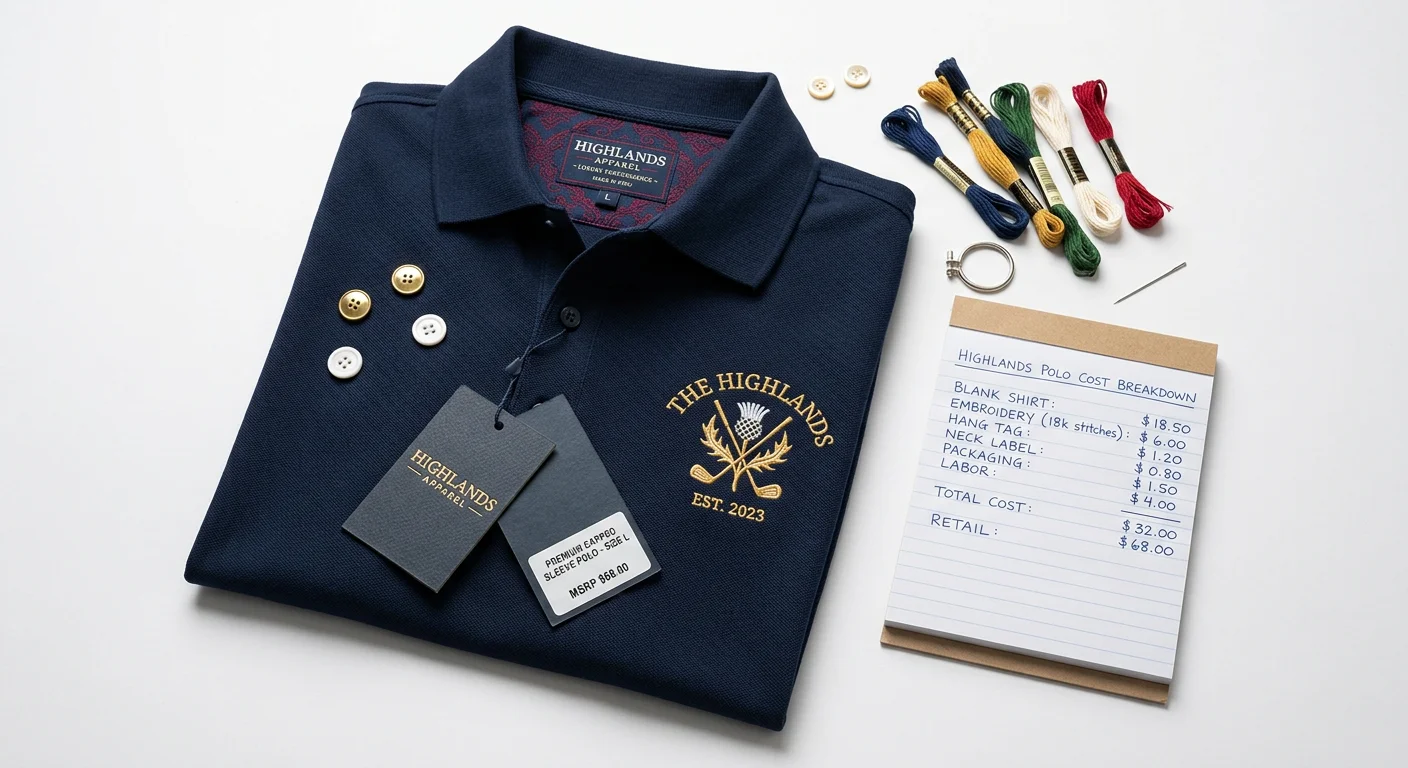
Most first-time golf brand founders run out of money not because their product is bad — but because their budget covered only the costs they knew about. The rest? Nobody puts them on a quote sheet.
Here are the ones that catch new brands off guard:
Sample shipping fees hit harder than expected. Every DHL shipment from Asia runs $50–$150 . Order three rounds of samples and you've spent $300–$450 before a single unit goes into production. Cap your sample rounds at 2–3 maximum . That keeps total sampling costs in the $300–$750 range. It also pushes you to make faster decisions.
Working capital is the budget item most brands forget. A six-month operating runway — covering reorders, paid ads, and overhead before steady sales come in — takes $20,000–$40,000 . That number surprises most first-timers. It shouldn't. Slow, uneven sales in the first few months are normal. Running out of cash because of them is not inevitable — it's a planning problem.
Marketing costs add up fast. A professional Shopify store setup runs $2,000–$7,000 . Add a $3,000–$5,000 launch push, plus $500–$1,000/month in Instagram ads targeting golf audiences. Keep your customer acquisition cost (CAC) under $40 . At an $80 average product price with a 1–2% e-commerce conversion rate, that's the threshold that protects your margin.
MOQ overstock is a silent budget killer. Committing to 50–200 units per style across an untested range leaves you stuck with inventory that won't move. The fix is straightforward: start with a focused capsule collection ($10,000–$25,000 in inventory), see what sells, then expand from there.
The One Number That Ties It All Together
Get that number locked in before you talk to any supplier. Everything else builds from it.
How to Finance Your Golf Apparel Brand Startup
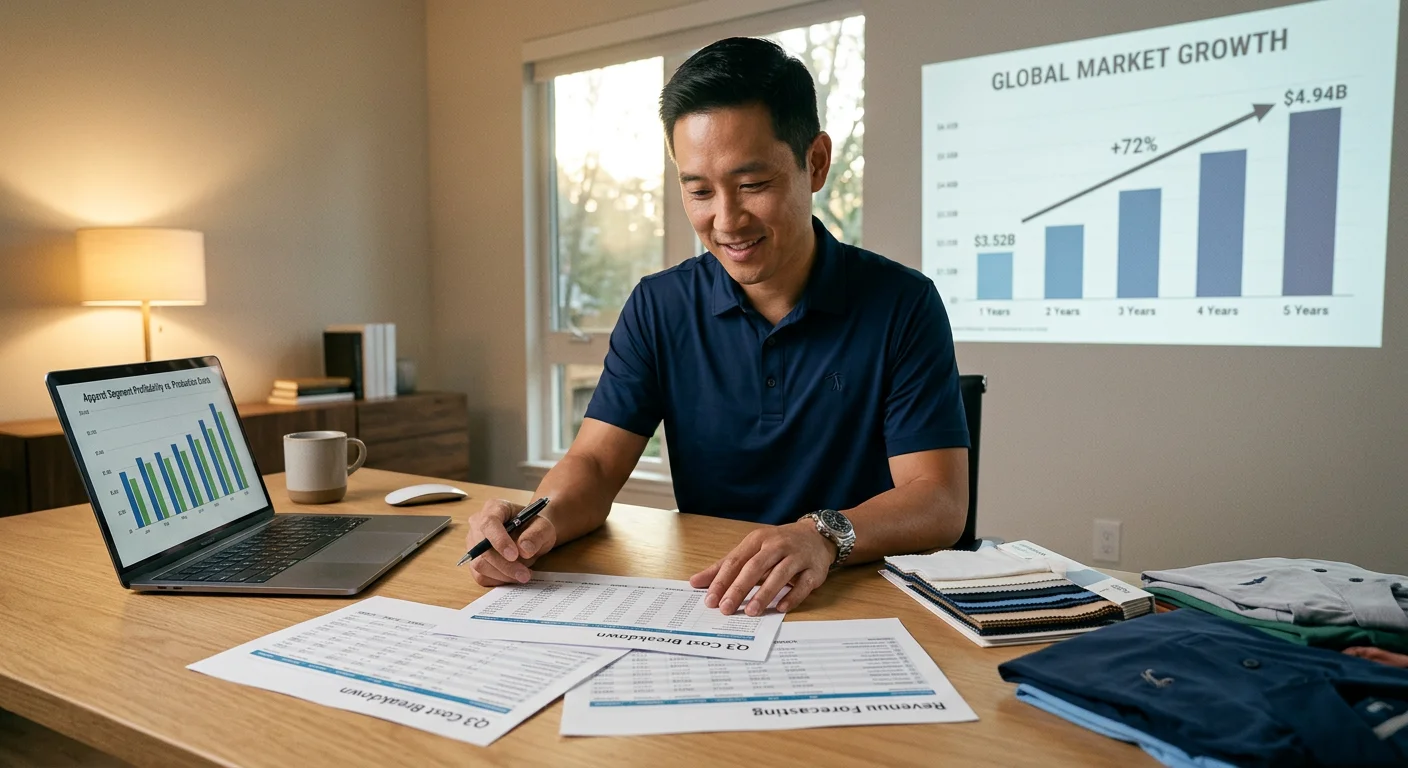
The golf apparel market hits $3.52B in 2025 and climbs to $4.94B by 2030. That's not a niche — that's a runway.
Knowing the opportunity exists is one problem. Having the cash to capture it is a completely different one. Here's how smart founders solve the second.
Four Financing Paths — Real Numbers
Self-Funding gives you zero debt and full control. The tradeoff? Growth caps at 20–30% year-over-year. It works best at the $5K–$15K validation tier, where you're starting lean.
SBA 7(a) Loans go up to $5M, with startup averages around $50K. Interest runs 7–10% over 10–25 year terms. Requirements: 680+ credit score, a solid 2-year business plan, and 10% down. Annual growth stays capped at 15–20% while repayments run.
Crowdfunding (Kickstarter/Indiegogo) raises $10K–$500K — apparel campaigns average $50K. You validate demand before spending a dollar on inventory. The catch: 35% success rate for fashion, 5–10% platform fees, and a 30-day all-or-nothing clock.
Government grants go underused by most apparel startups — and that's a missed opportunity. SBDC programs offer $5K–$50K with a 40% approval rate. Textile-specific USDA/Commerce subsidies go up to $100K. They give priority to minority- and women-owned businesses that use sustainable materials.
The Capital Stack That Works
Here's a proven $100K launch structure:
Result: zero initial debt, with a clear path to $250K in Year 1 revenue.
Negotiate Your Supply Chain Terms
Most founders pay 100% upfront and tie up 40% of their working capital in unsold inventory. Don't do that.
Standard factory terms are 30% deposit + 70% pre-shipment . That single shift improves cash flow by 25% and stretches your runway to 60–90 days. To get those terms, hit $10K+ MOQ. Show sales projections backed by the 7.1% CAGR data. Offer a 6-month repeat order commitment. Then use a letter of credit for the 70% balance. Brands that negotiate this way cut their startup capital requirement by up to 50% .
Step-by-Step Cost Planning Checklist Before You Place Your First Order
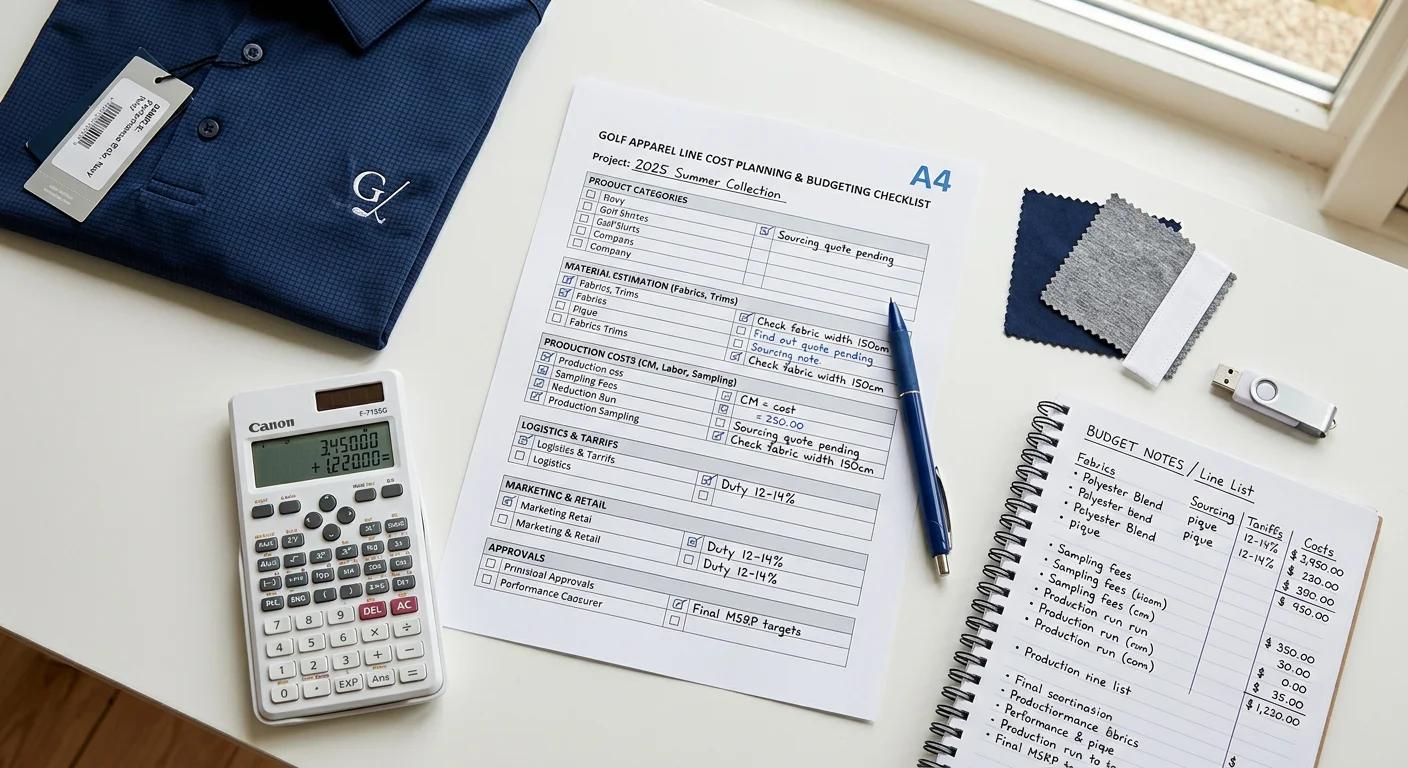
Most first orders go over budget. Not because the products were expensive. The real problem is incomplete planning.
Go through this checklist before you send a single inquiry to any golf clothing manufacturer. Every box you skip turns into a cost surprise later.
✅ Lock in your product scope first
- Fabric type, weight, and performance grade confirmed?
- Decoration method decided (embroidery vs. print vs. heat transfer or sublimation)?
- Placement count finalized (chest only, or chest + sleeve + back)?
- Sizes and colorways confirmed?
Scope creep after sampling starts gets expensive fast. Every change after a sample is approved adds $50–$200 in revision costs. Lock this down early.
✅ Set your real budget — including the invisible costs
- Manufacturing cost per unit calculated?
- Sample rounds budgeted ($150–$750 total)?
- Import duties factored in (16–20% on HS 6100–6110)?
- DHL sample shipping allowance set ($50–$150 per round)?
These costs add up. Missing any one of them blows your margin before production even starts.
✅ Confirm your MOQ commitment
- Can you fund 50–100 units minimum for the validation tier?
- Have you built a 20–30% overstock buffer into your inventory plan?
✅ Define your landed cost target before supplier conversations
Work backward from your retail price. Selling at $75? Your full landed cost — manufacturing + freight + duties — must stay under $30. Set that number first. Then check every supplier quote against it. Any quote that pushes past $30 is a no.
✅ Get your payment terms and cash flow runway confirmed
- Factory deposit secured (standard: 30% upfront)?
- 60–90 day runway funded beyond the production payment?
One checklist. No surprises.
FAQ: Private Label Golf Apparel Cost Questions Answered
Seven questions. Seven answers. Every number you need before you talk to a single supplier.
Can I start a golf clothing brand with $5,000?
No. A minimum viable private label golf apparel brand needs $25,000–$50,000 to launch. Here's where that money goes:
MOQ bulk production: $10,000–$20,000 for 300–500 units
Sampling: $1,500–$3,000
Custom design: $2,000–$5,000
Branding and packaging: $3,000
Marketing: $5,000
The global golf apparel market sits at $4.77B in 2025. Competing at any meaningful level takes scale. A $5,000 budget leads to quality problems and stockouts — not sales.
What's the MOQ for custom golf polo shirts?
Most Asia-based factories set MOQ at 300–500 units per colorway . Premium suppliers work with 100–200 units — but the per-unit cost runs higher. At MOQ, expect to pay $8–$15/unit for moisture-wicking, UV-protective fabric. Push past 1,000 units and that drops to $6–$12/unit . U.S. and EU golf apparel manufacturers start at 500–1,000 units minimum, with pricing from $20–$30/unit.
How long does production take?
Block out 8–12 weeks from design approval to delivery. Here's the breakdown:
Sampling: 2–4 weeks
Bulk production (300–1,000 units): 4–6 weeks
QC and shipping: 2–4 weeks
Air freight runs 7–10 days. Sea freight takes 4–6 weeks. Premium performance fabrics add about one extra week. Need it faster? Rush orders cut the timeline to 6–8 weeks — but add a 20–50% cost premium .
What does a private label golf polo cost per unit?
At 300–500 units MOQ, basic custom golf polos run $8–$15/unit . Premium versions — sustainable fabrics, embroidery, performance tech — come in at $18–$25/unit . Here's the per-shirt math:
Fabric: $3–$5
Labor: $2–$4
Printing or embroidery: $1–$3
Overhead: $2–$3
A 500-unit run totals $3,600–$7,500 depending on spec level. Standard retail markup is 2.5–4x. That puts your MSRP at $40–$100 .
What's the full investment to launch a golf apparel line?
For 1–2 SKUs, budget $25,000–$75,000 . Split it like this:
Production — 50% ($12,500–$37,500)
Design and sampling — 15% ($3,750–$11,250)
Branding — 15% ($3,750–$11,250)
Inventory and shipping — 10% ($2,500–$7,500)
Marketing — 10% ($2,500–$7,500)
The market grows from $3.52B (2025) to $4.94B (2030) at a 7.1% CAGR. You don't need to outspend Peter Millar. Hit 2,000 units/year and you reach profitability.
Is private label golf apparel cheaper than buying branded?
Yes — by a wide margin. Private label production costs $8–$20/unit . Branded equivalents run $25–$50/unit. At retail, private label golf polos price at $40–$80 . A comparable branded product at the Peter Millar tier runs $100–$200 . That's a 40–60% production cost advantage. It flows straight into your margins — or gives you room to price lower and still win.
What pushes private label costs up or down?
Five variables control your final number:
Factor | Cost Impact |
|---|---|
Order volume (MOQ) | Lower volume = +20–50% per unit |
Fabric performance grade | Tech fabric adds $3–$7/unit |
Customization complexity | Embroidery/logos add $1–$4/unit |
Manufacturing origin | Asia: $8–$15 / U.S.: $25–$40/unit |
Sustainability requirements | Eco materials add 15–30% |
Selling through e-commerce instead of wholesale boosts your effective margins by 20–30% . Factor that into your channel strategy from day one.
Still have questions about your specific budget or product spec? Get a custom cost breakdown from berunclothes.com — no generic quotes, just real numbers built around your order.
Conclusion
Every successful golf apparel brand started right where you are now — staring at a spreadsheet, asking if the numbers make sense.
Here's what this guide proves: they do.
Got a lean $2,000 pilot budget? Or scaling toward a $20,000+ full collection launch? The path forward is clear either way. You now have the real cost breakdowns, the hidden fee warnings, and the budget frameworks that split brands who survive their first order from those who don't.
The brands winning in private label golf apparel don't always have the deepest pockets. They planned smarter before spending a single dollar.
Now it's your turn. Move from research mode to execution mode.
Get your custom golf polo shirt manufacturing cost quote. Confirm your MOQ. Lock in your margins. Contact the team at berunclothes.com today and turn this cost blueprint into your brand's first real step.
Your competitors aren't waiting. Neither should you.