Starting a private label golf apparel brand sounds simple. Then week three hits — your inbox is full of manufacturer emails, fabric swatches are piling up, and you still can't figure out if you need OEM, ODM, or something else. Most founders get stuck right here. They know what they want to launch, but holding finished, branded product in their hands feels miles away. That's where many walk away.
It doesn't have to go that way.
This guide covers every decision point you'll face:
Picking the right manufacturer
Negotiating MOQ
Choosing performance fabrics
Shipping your first production run
It's built for golf club operators outfitting members, e-commerce founders building Shopify stores, and buyers ready to source custom golf polo shirts in bulk . No fluff. No vague advice. Just the exact process that works.
Private Label vs OEM vs ODM: Which Model Fits Your Golf Brand Stage
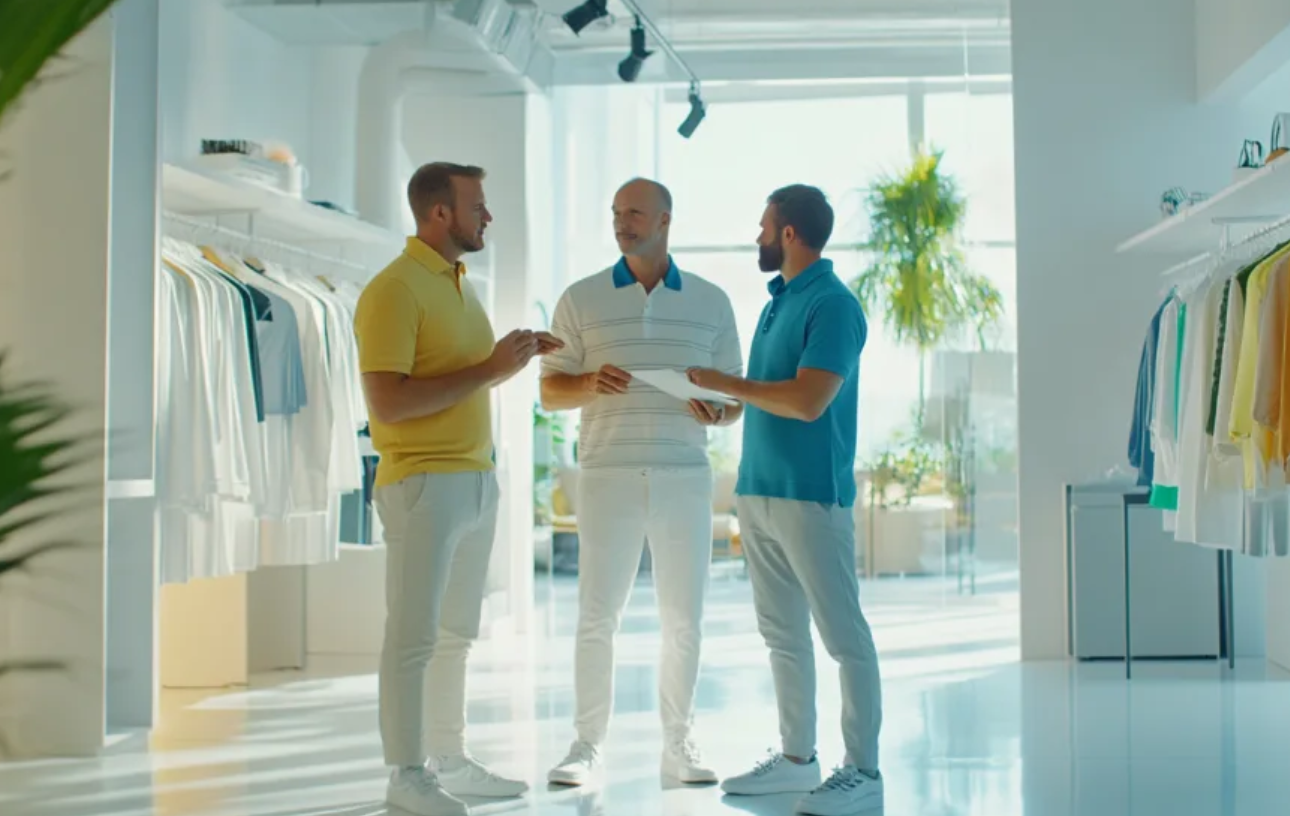
Three models. One wrong choice and you're sitting on $50,000 of unsellable inventory.
Here's how they differ:
Private Label | OEM | ODM | |
|---|---|---|---|
Design Rights | Supplier owns design; you own branding | You own full design & IP | Supplier owns design & IP |
Customization | Low — pick from catalog, minor tweaks | Medium-High — your specs, their production | High — built around your vision |
Speed to Market | Fastest: 6–12 weeks | Medium: 3–6 months | Slowest: 6–12 months |
Typical MOQ | 500–2,000 units/SKU | 1,000–5,000 units | 2,000+ units |
Which stage are you at?
Just launching a DTC golf brand? Private label is your move. Lower upfront cost, faster speed to shelf. Private-label sales hit $217B in the US in 2023 — that momentum is real.
Scaling a golf club or course operation? OEM gives you spec control at volume. Golf clubs already hold 45.7% market share, and custom demand of private label golf apparel brand keeps climbing.
Running a resort, private club, or tour event? ODM builds apparel around your identity from the ground up. The longer lead time is worth it.
One warning you shouldn't skip: private label carries hidden costs most people ignore. Sampling alone runs $500–$2,000 per prototype . Expect two to four revision rounds on top of that. Get sizing or fabric wrong, and your MOQ commitment becomes a warehouse problem fast.
Pick the model that matches where you are — not where you hope to be in two years.
Step 1: Define Your Golf Apparel Niche and Product Line Before Talking to Any Manufacturer
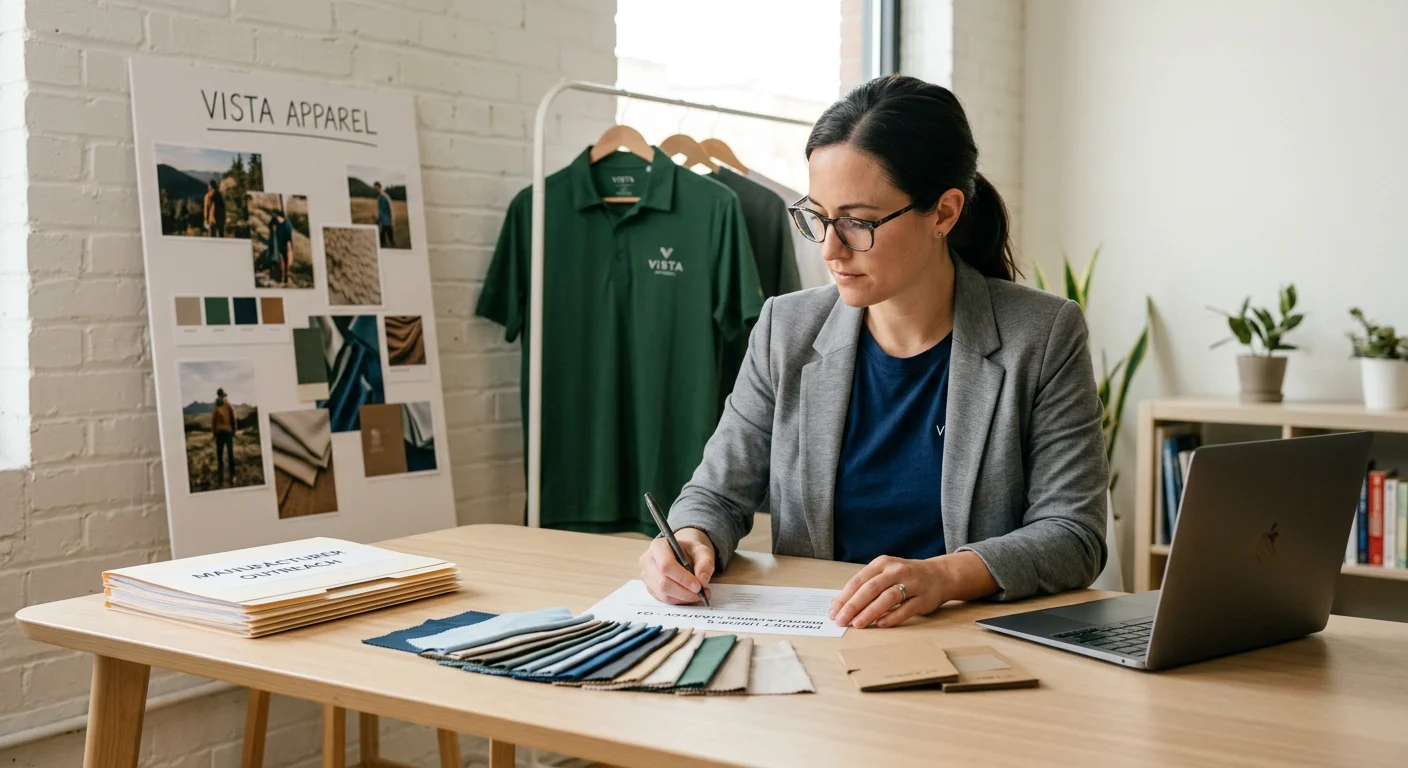
Most founders contact OEM/ODM golf apparel manufacturers before answering the most basic question: who am I making this for?
That single gap creates months of expensive back-and-forth.
The North American golf apparel market sits at $5.26B in 2025 , with 45 million active participants. But "golf apparel" isn't a niche — it's a category. Get specific before reaching out to a single supplier.
Know Your Buyer First
Three segments drive startup opportunity:
Men's competitive players need UPF 50+ UV protection, moisture-wicking performance fabrics, and 20–30% stretch for full swing mobility. These are non-negotiables for this buyer.
Women's leisure golfers are the fastest-growing segment. Female participation is up 15%+, and golf skorts alone have seen 25% market growth. Breathable polyester blends with elastic waistbands win here.
Youth training programs are growing fast. Junior participation is up 20% since 2020. Lightweight, quick-dry, high-stretch constructions are the priority.
Pick one primary segment. Build around them first.
Keep Your Opening SKU Count Tight
A practical starting lineup:
Category | SKUs | Why |
|---|---|---|
Polo Shirts | 4 | 45% of all top sales; mass segment owns 56.52% share |
Outerwear/Windbreakers | 2 | 20% growth driven by golf tourism |
Golf Skorts | 2 | Women's surge; high repeat purchase |
Pants/Shorts | 4 | 25% of total bottoms demand |
Build Your Tech Pack Before Any Conversation
Manufacturers don't work from mood boards. They work from specs.
Before your first email, prepare:
Tech pack PDF (20–30 pages): line drawings, BOM, full specifications
Size grading table : US standard S–3XL, with tolerances within ±1 inch
Fabric requirements : polyester/elastane blends, GSM 140–180, wicking rate above 80%, 4-way stretch
Color palette : 4–6 confirmed Pantone codes
Logo placement map : chest-left position at 2–3 inches is the industry standard
Show up to manufacturer negotiations with this package ready. It signals you're a serious buyer. That changes the MOQ terms and sample priority you get — in your favor.
Step 2: How to Find and Screen a Qualified Golf Apparel Manufacturer
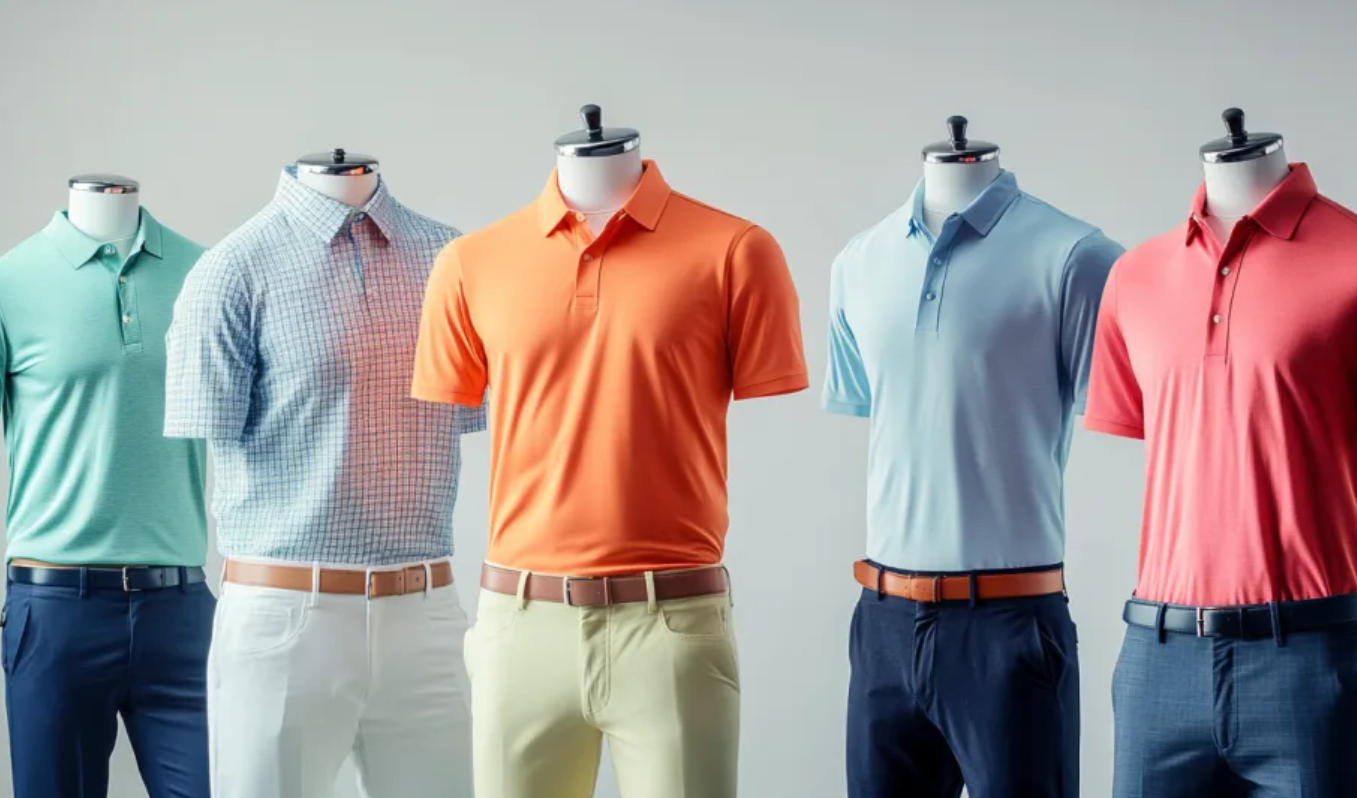
Your tech pack is ready. Now comes the part where most founders lose weeks — or thousands of dollars — to the wrong supplier.
Where to Find Manufacturers
Three channels work. Each carries a different level of risk:
Alibaba : Fast to search, slow to trust. Response rates hit 70–80%, but close to half of all leads are unverified listings. Scam factories exist. Use it to build your initial longlist — not to make your final decision.
Trade Shows (Canton Fair / MAGIC Show) : Canton Fair hosts 150,000+ exhibitors, with 30% focused on apparel. MAGIC runs 2,500+ exhibitors, including golf-specific booths. In-person vetting drops your risk to 15–20%. Conversion to qualified leads runs 20–30%.
Industry Referrals : The highest-trust channel. Brands that have already run production can tell you who delivered — and who didn't. Referral leads qualify 2–3x faster than Alibaba, with just a 5–10% risk rate.
Start with 10 candidates across these channels. You'll narrow to 3.
The Screening Criteria That Matter
There's a key difference between a golf apparel manufacturer and a generic sportswear factory that accepts golf orders. Most buyers miss this distinction — and it costs them.
Golf-specific experience : Require 3+ years in the golf category. Ask for a portfolio of 10+ verifiable golf clients. Request samples of polo collar construction, 4-way stretch seams, and golf skort pleating. A generic golf apparel factory won't have any of these on hand.
Certifications to verify :
- ISO 9001 — non-negotiable for quality management
- OEKO-TEX — chemical safety for skin-contact fabrics
- GRS — required if recycled content exceeds 20% of your construction
- BSCI — ethical labor audit, valid within two years
Performance fabric benchmarks — ask for lab test reports against these standards before you approve any samples:
Property | Test Standard | Golf Minimum |
|---|---|---|
UV Protection | AATCC 183 | UPF 50+ |
Stretch Recovery | ISO 13934 | 4-way, 150% recovery |
Moisture-Wicking | AATCC 195 | Under 5 seconds |
Colorfastness | AATCC 61 | Grade 4+ |
Pilling Resistance | ASTM D3512 | Grade 4+ |
Delivery and defect track record : Ask for 5+ client case studies. Look for on-time delivery above 95% and defect rates below 2%. These aren't high standards — they're baseline expectations at any factory supplying established golf lines.
Send a Structured RFQ, Not a Vague Inquiry
A weak RFQ gets a weak response. A strong one marks you as a serious buyer. It also filters out low-capability factories fast.
Your RFQ should include:
- Product specs : fabric weight, fiber content, construction details, size range, quantity per color
- Technical requirements : certifications needed, specific test reports, seam strength minimums
- MOQ and lead time question : ask for a FOB price breakdown — fabric runs around 40%, labor around 30%
- Sample request : 3 prototypes at $50–$100 each, with a 10-day turnaround
One step most people skip: request a video factory tour . It cuts ghost factory risk by about 30%. Also put packaging in writing — polybag plus carton, 50 pieces per carton is a solid standard. Include exact garment measurements too, like chest width at 52cm for a size M.
Don't send the same generic message to all 10 candidates. Customize each RFQ around the specific product you confirmed in Step 1. Factories notice. The serious ones respond differently.
Step 3: Selecting Performance Fabrics for Golf Apparel — What Matters on the Course

Fabric is where golf apparel earns its price tag — or falls apart on hole 12.
A round of golf runs 4–6 hours under direct sun. Your fabric has to handle UV exposure, sweat, and full rotational movement without slowing the player down. That's a tight performance window. Most generic sportswear fabrics don't survive it.
Three properties are non-negotiable:
UPF 50+ — blocks 98%+ of UVB rays. Extended sun exposure is a core reality of the sport, not a rare scenario.
4-way stretch — a 20–30% elastane blend cuts shoulder-turn restriction by 10–15% compared to rigid constructions. That's a real, measurable difference — not a marketing claim.
Moisture-wicking — synthetics pull sweat 2–3x faster than cotton. Quick-dry fabrics reach 50% dry in under 30 minutes. Cotton blends can't match that.
The Fabric Comparison That Saves You From Guessing
Fabric | Performance | Cost | Golf Fit |
|---|---|---|---|
Polyester | Best wicking, UPF-treatable, durable | Lowest | Polos, pants — market leader |
Nylon blend | High stretch, wind-resistant, quick-dry | +20% | Outerwear, shorts |
rPET/Recycled | Matches polyester on wicking and stretch | +15% | DTC brands — 15% sales lift on eco-shirts |
Cotton blend | Breathable, slower dry | Low-Medium | Warm-climate comfort only |
Synthetics hold 46.71% market share in 2026 for a reason. The industry baseline for performance golf fabric is 85% polyester / 10% nylon / 5% elastane. Start there. Build around that ratio before you test alternatives.
The Sustainable Angle Is Now a Sales Argument
rPET content above 30% is becoming a purchase trigger, not a bonus. 60% of millennial and Gen Z golfers prefer sustainable options. Bluesign or GOTS certification adds a 10–20% price premium. DTC buyers are paying that premium more and more.
Five decisions to make before approving any fabric swatch:
Confirm UPF 50+ rating with lab test documentation
Require AATCC 195 wicking results — target above 0.3 g/g
Lock in your blend ratio: 85/10/5 poly-nylon-elastane for most applications
Set a quick-dry benchmark: 50% dry in under 30 minutes
Settle your rPET content before production starts. Adding sustainability claims after the fact costs more and lands less convincingly with buyers.
Premium fabrics cost more upfront. They also cut swing drag by 10–15% versus budget alternatives. That's the kind of detail your end customer will feel by the back nine — and remember.
Step 4: The Sample Development Process — Done Without Wasting Time or Money
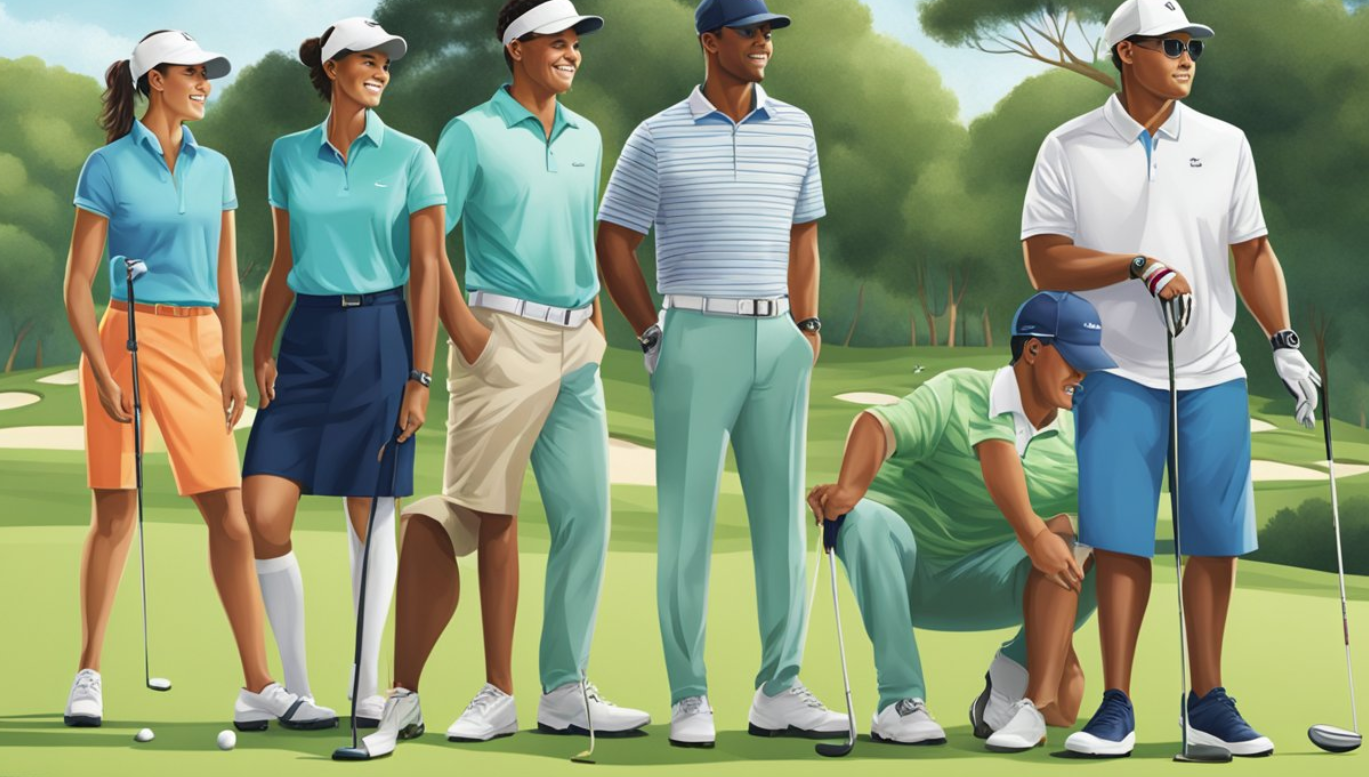
Sampling kills more golf apparel startups than bad designs ever will. Not because the process is complicated. Founders walk in without a system and bleed money on every avoidable revision round.
The full timeline runs 6–12 weeks across five stages :
Stage | Duration | What Gets Locked In |
|---|---|---|
Tech Pack Submission | 1–2 weeks | Measurements, artwork, spec sheets |
Pattern Making + Proto | 1–3 weeks | Grain lines, seam allowances, grading |
Sample Review + Corrections | 1–2 weeks | Annotated feedback, fit session notes |
Pre-Production Sample (PPS) | 1–2 weeks | Colorfastness, tolerances, QC sign-off |
Bulk Prep + Final Sample | 1–2 weeks | Size sets, reference storage |
Most delays trace back to one root cause: vague feedback .
Cut Your Revision Rounds to Two or Fewer
Return correction notes in writing — never describe problems out loud. Use numbered callouts on garment photos. Write exact measurements: "chest = 52cm, correct to 54cm" — not "feels a bit tight." Classify every issue as Critical (blocks approval) or Minor (acceptable at PPS). That one habit alone cuts revision rounds faster than anything else.
Pre-test fabric shrinkage before submitting your proto. Lock lab dip color approval at the same time. That extra step removes an entire correction round for most custom golf polo shirts bulk orders.
Custom embroidered golf shirts need extra attention. Check thread tension, backing stability, and placement coordinates in millimeters — not rough estimates. One misaligned logo at proto stage costs you a week. Catching it at bulk costs you a full production run.
Store your approved PPS as a physical reference. Factories drift over time. That sample is your contract.
Step 5: MOQ Negotiation and Bulk Production — Getting the Best Deal as a Startup
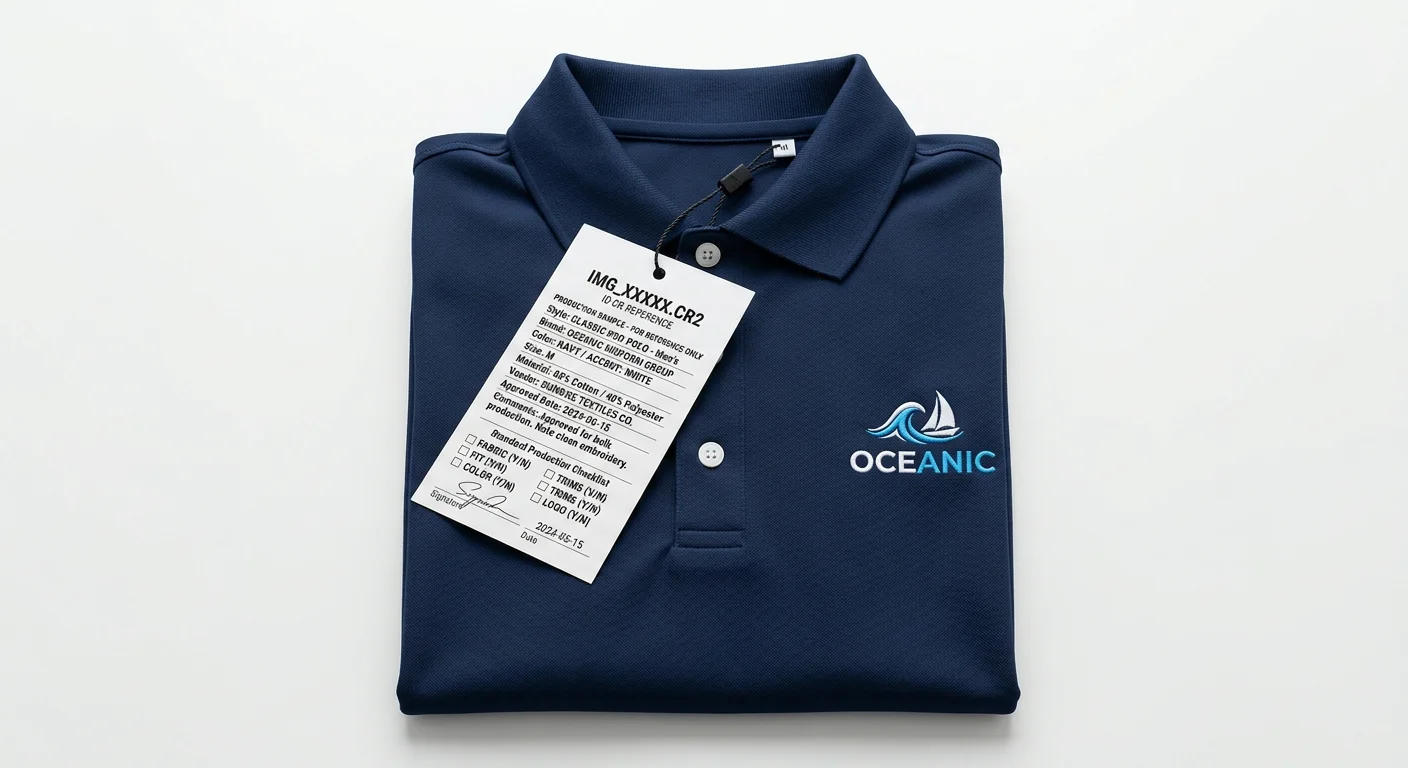
Here's what the industry looks like in practice: private label golf apparel runs 100–300 units per style at standard minimums. Add multi-panel construction and that climbs 20–50%. Custom embroidery or sublimation printing? Add another 30–100% on top.
But that's the OEM/ODM golf apparel manufacturer's opening position — not the floor.
How to Negotiate MOQ Down by 20–50%
Concentrate your styles. Launch 3–5 hero variants — one or two colorways, your best-selling sizes. That single decision cuts total MOQ by 60–80% versus running a full line.
Standardize fabrics across SKUs. Use shared materials across your polo and windbreaker. This reduces factory complexity and gives you a 30–50% MOQ reduction on its own.
Offer a small first order plus a repurchase commitment. Propose 50–150 units per style now. Pair that with a guaranteed reorder tied to hitting your sales targets. Factories accept this structure 70% of the time.
Target overstock fabric. Some manufacturers are sitting on excess inventory. They'll drop MOQ by 30–70% to clear it.
One trade-off to accept: small batches carry a 10–30% unit price premium. At 100 units you might pay $15/piece. At 300, that drops to $12. At 500+, closer to $10. Run your break-even math before you negotiate. Say your margin is $10 per unit and fixed costs are $2,000 — you need 200 units to break even. That number tells you where to set your anchor point.
The 35-Day Production Clock
Once MOQ is locked, bulk production runs 20–35 days . Miss a checkpoint and that window stretches fast.
Day Range | Stage | % of Timeline |
|---|---|---|
Days 1–5 | Fabric cutting | 10–15% |
Days 6–12 | Printing / embroidery | 20–25% |
Days 13–25 | Sewing and assembly | 40–50% |
Days 26–35 | QC inspection and packing | 15–20% |
Four checkpoints to protect your timeline:
Day 3 — Confirm fabric has arrived at the factory
Day 10 — Approve all printing proofs in writing
Day 20 — Review sewing samples before full assembly moves forward
Day 30 — Book pre-shipment inspection
For first-time buyers, add a 10–20% time buffer. Your real window is 24–42 days , not 35. Build that into any launch date you've already committed to.
Step 6: Branding and Customization — Making Your Golf Line Look Like a Real Brand
Production is locked. Now comes the work that separates a real brand from a factory order with your name on it.
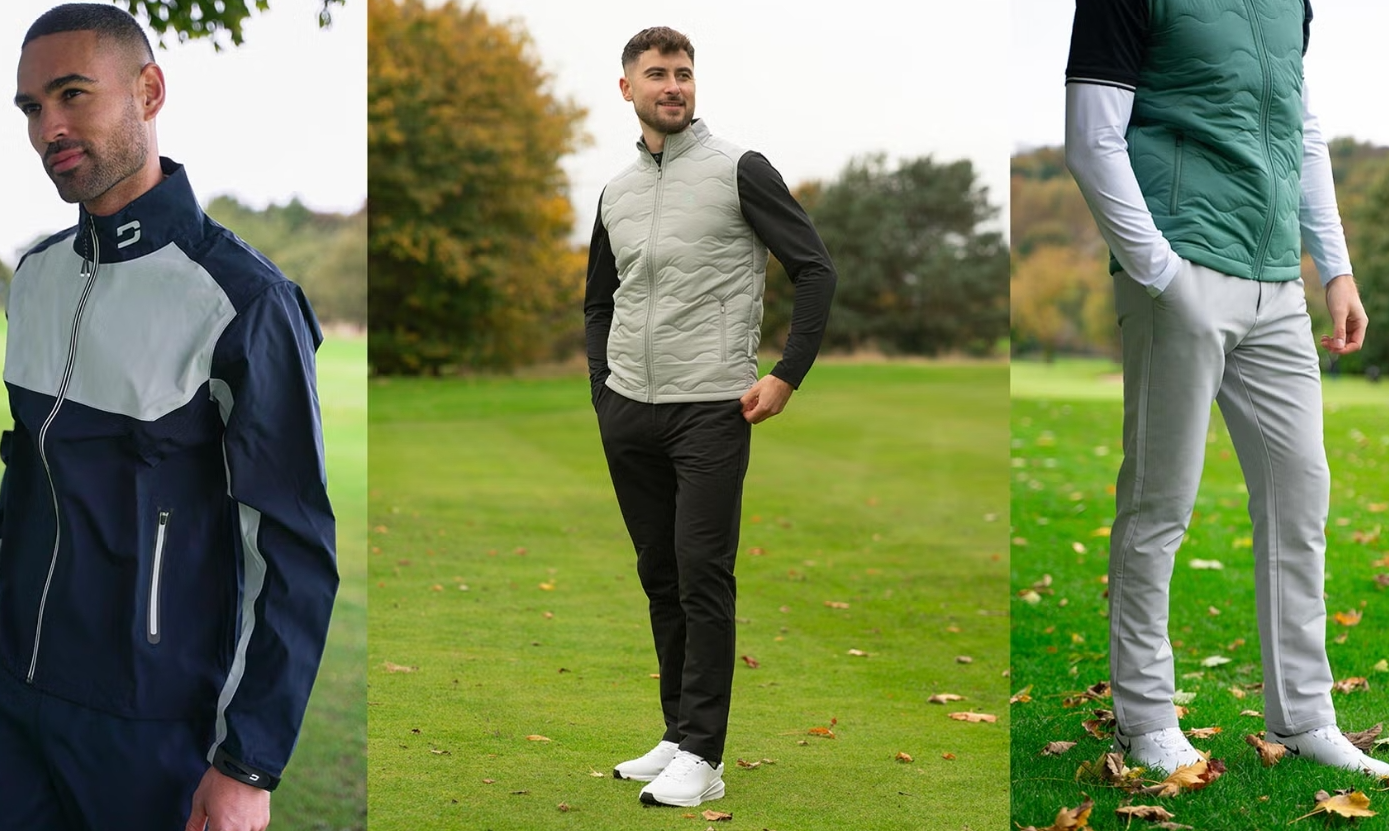
Here's what that looks like in practice:
Logo placement and embroidery — Left chest, 2–3 inches, embroidered (not heat-transferred). Custom embroidered golf shirts command a premium because they hold up over time. Check thread tension and backing stability at the sample stage. A misaligned logo found at bulk production costs you a full run — catch it early.
Woven labels and branded trim — Collar labels, hem tags, sleeve badges. These are the details pro shop buyers notice. Golfers spending £60+ per shirt are buying identity as much as performance. Every small detail adds up.
Custom golf apparel colorways and sublimation — Sublimation golf apparel lets you run full-coverage prints at lower setup cost. Lock your Pantone codes before bulk production starts. Color drift between sample and production is where most branding complaints come from. Don't skip this step.
Packaging — Branded polybags, tissue wrap, and hang tags signal premium quality before the customer touches the garment. DTC brands with strong visual packaging achieve 30% higher retention than those shipping plain boxes. First impressions start at the package, not the product.
Sizing and fit communication — Virtual fitting tools cut online returns by up to 15%. Selling direct? Use size charts with real garment measurements — not generic S/M/L. Customers need numbers they can trust, not guesswork.
Women's lines need separate attention. That segment is growing 1.5x faster than men's . Buyers expect distinct silhouettes — not shrunken versions of men's cuts. Build separate size grading for women's SKUs from day one. It's not an afterthought; it's a sales driver.
Your brand isn't just the logo. It's every touchpoint from unboxing to first swing.
Step 7: Quality Control Standards You Should Never Skip in Golf Apparel Production

A failed shipment doesn't just cost money — it costs your launch window.
Golf apparel QC isn't a single end-stage check. It's a three-stage system built into production itself. Run only one final inspection and you'll catch problems too late to fix at a reasonable cost.
Stage 1: Inline Checkpoints
Run checks at four points in production:
After cutting — check panel accuracy and shade grouping
After first sewing lines — check seam quality, chest and sleeve measurements within ±0.5cm–±1cm
After embroidery or print — check placement, puckering, and durability
Before packing — final visual review
Waistbands on golf pants and skirts need tighter control. Keep them within ±0.5cm maximum.
Stage 2: AQL 2.5 Final Inspection
For a batch of 4,000 units, inspect 200 pieces. Seven defects — batch passes. Eight — it fails.
Sort defects into three groups before production starts:
Critical — broken needle fragments
Major — open seams, color mismatch, wrong sizing
Minor — loose threads
Zero tolerance on critical defects. No exceptions.
Stage 3: Lab Testing
Four tests are must-haves for performance golf wear:
Colorfastness against wash and perspiration
Shrinkage check on polyester/spandex blends
UPF certification (50+ for any UV protection claim)
Needle and metal detection
Budget $150–$500 per test package.
Bring in SGS or Bureau Veritas For These Situations
First factory order
Order value above $10,000–$15,000
Any performance claim that needs certified validation
Third-party inspection runs $200–$400 per man-day. That's a small number compared to what a failed shipment, retailer chargeback, or rework cycle will cost you.
One rule covers everything: set your golden sample before bulk production starts. It locks in fabric standard, embroidery placement, key measurements, and packaging specs. Every inline check and final inspection refers back to that single approved sample. Without it, QC has no reference point — and factories drift.
Step 8: Shipping, Logistics, and Getting Your Golf Apparel to Market
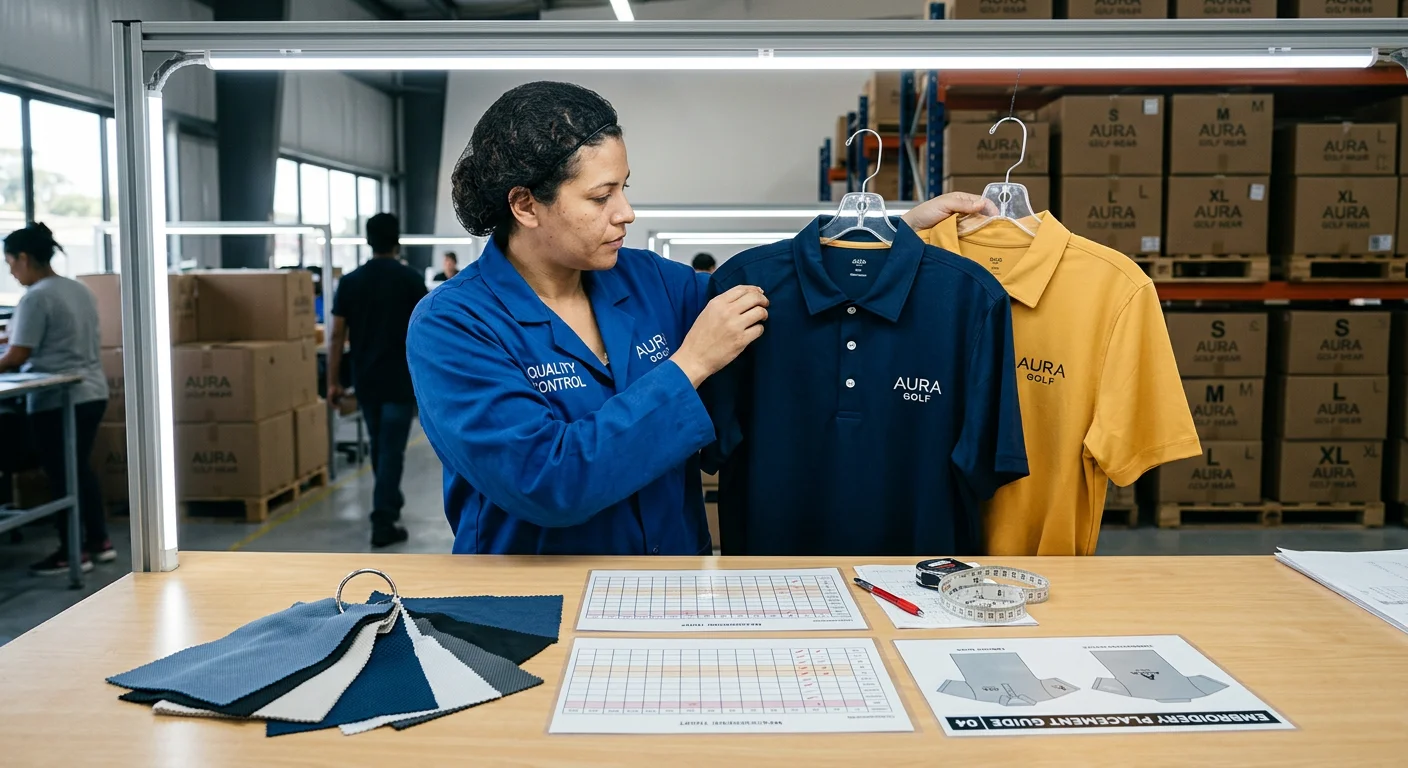
Production approved. Boxes packed. Now your product needs to reach customers — and this is where many first-time brands lose margin fast.
Offline still dominates. Physical retail captured 88% of golf apparel sales in 2025. Specialty golf stores and pro shops moved over 142 million units. Players want to touch the fabric and test the stretch before buying. That's not changing soon.
Online is where the growth is. E-commerce hit 54 million units in 2025 — and it's picking up speed. DTC brands selling through Shopify or Amazon now lean on third-party logistics (3PL) providers to handle fulfillment, returns, and omnichannel distribution. No need to build your own warehouse infrastructure.
One variable most first-time brands miss: seasonal demand swings .
Golf peaks in warmer months
Your inventory position in November looks nothing like April
Cash flow needs to reflect that cycle
Build that pattern into your cash flow model before your first bulk order ships — not after.
How to Evaluate a Golf Apparel Manufacturer: The Complete Checklist
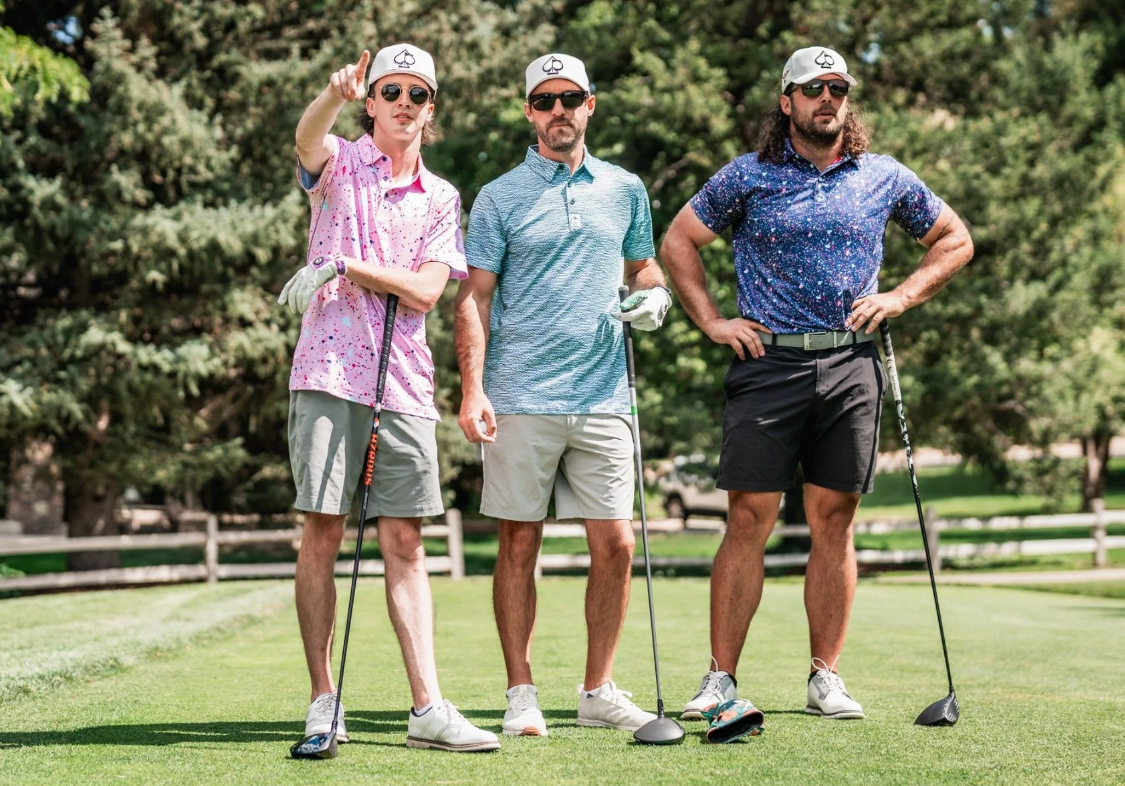
Not every factory that says "golf apparel" knows golf apparel. Here's how to tell the difference fast.
Score Every Candidate Against These Dimensions
Use a 1–5 scale. Weight quality and delivery at 40% each — everything else fills the remaining 20%.
Dimension | Poor (1) | Average (3) | Excellent (5) |
|---|---|---|---|
Quality | Major defects | Minor issues | Zero defects, AQL 2.5 |
Delivery | Always late | Occasional delays | 100% on-time |
Customization | Basic options only | 5–7 processes | 10+ incl. embroidery, sublimation |
Compliance | No certs | In progress | ISO 9001, GRS, OEKO-TEX |
Any OEM/ODM golf apparel manufacturer scoring below 80% overall gets cut. No exceptions.
The Soft Metrics Most Buyers Ignore
Response time under 24 hours isn't a courtesy — it predicts production outcomes. Factories that communicate well reduce delays by 30%. Those that go quiet show 20% higher defect return rates.
Tech pack support matters just as much. Full pattern-making capability cuts your sample rounds from four down to two. That saves weeks and real money.
Inspection cooperation is your last signal. Factories that welcome third-party audits hit 98% on-time quality rates. Ones that resist average just 75%.
Strong soft skills push repeat order rates up by 40% and keep long-term returns below 5%.
Red Flags That Should End the Conversation
Walk away if you see any of these:
Refuses factory video tour or real-scene photos
Won't sign an NDA
Samples don't match stated specs — poor stitching, colorfastness failures
Can't produce ISO 9001, OEKO-TEX, or GRS certificates
Pricing is vague, fees show up mid-negotiation, or MOQ exceeds 1,000 units with no clear reason
References show more than 10% late deliveries
Mass production drifts from approved samples — pilling, dimension shifts, color inconsistency
One red flag is a warning. Two is a pattern. Three means the factory knows it can't deliver. It's just hoping you won't find out until it's too late.
FAQ: Everything First-Time Golf Apparel Brand Founders Ask
These questions come up in almost every first conversation. Here are straight answers.
What's the minimum order quantity for private label golf polo shirts?
Standard MOQ runs 100–300 units per style for most private label suppliers. Custom embroidery or sublimation printing of private lable golf apparel brand pushes that number higher — sometimes 30–100% above the base. Want to bring that opening number down by 20–50%? Come in with a confirmed reorder commitment. Suppliers respond well to that.
How long does it take from first contact to finished product?
Budget 12–20 weeks for your first order. Sampling alone takes 6–12 weeks. Bulk production adds another 20–35 days. First-time buyers should build in a 10–20% time buffer on top of that. Things always take a little longer than expected.
Which fabrics perform on the course?
The industry baseline is 85% polyester / 10% nylon / 5% elastane. That blend holds up through 4-hour rounds in direct sun. Targeting the 60% of millennial and Gen Z golfers who care about sustainability? Push rPET content above 30%. It's a real purchase trigger for that audience — not just a branding bonus.
Do I need to worry about certifications?
Yes. ISO 9001, OEKO-TEX, and BSCI are the baseline. Any UV protection claim requires UPF 50+ lab certification under AATCC 183. No lab cert, no claim. It's that simple.
Can I start with a small budget?
Sampling costs $500–$2,000 per prototype. A focused launch of 3–5 SKUs at 100–150 units each is realistic. Keep your colorways tight. Keep your fabric consistent across styles. Those two moves are what shift the MOQ needle in your favor.
Conclusion
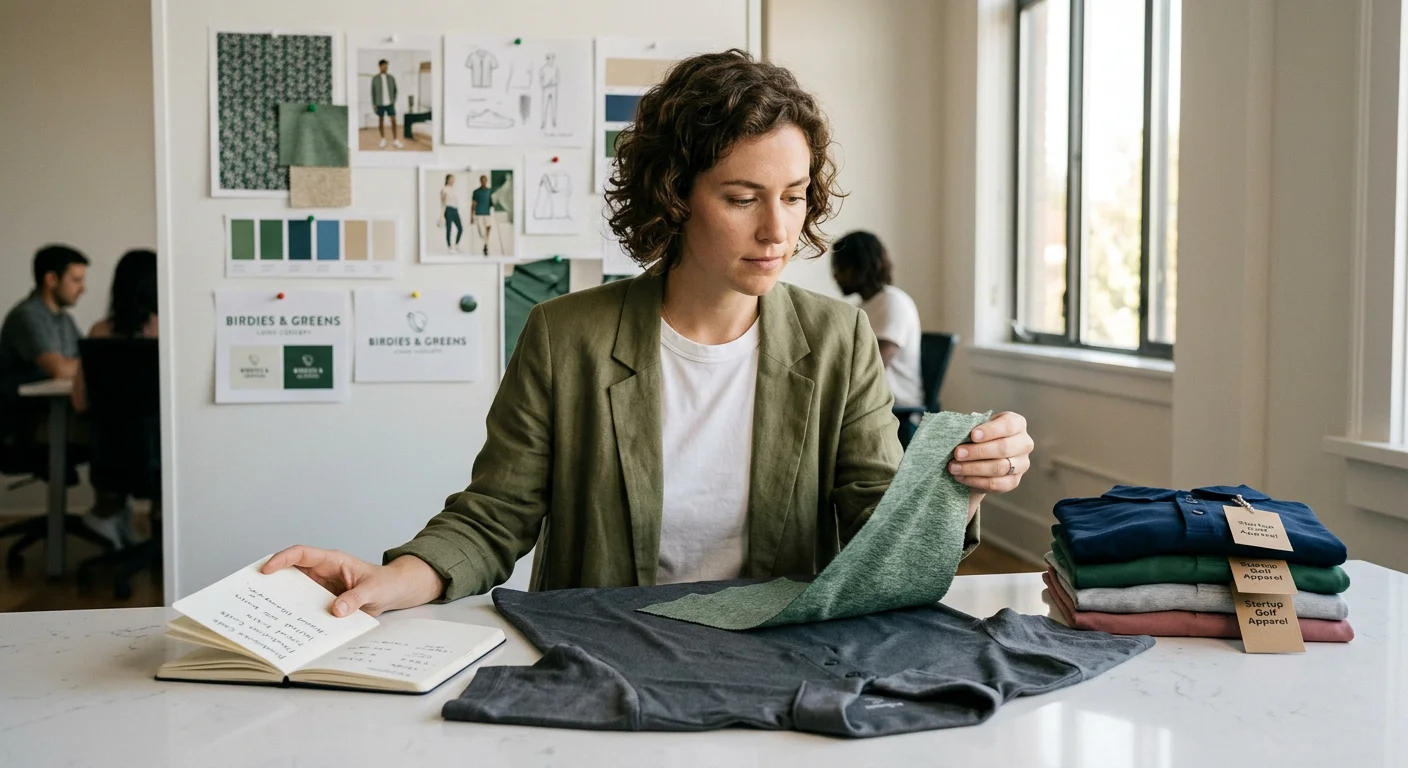
Your golf apparel brand doesn't start with a factory order — it starts with a decision.
This guide covered a lot of ground. OEM vs. ODM golf apparel brand models. MOQ negotiations. Performance fabric specs. All of it comes down to one thing: finding a manufacturing partner who treats your brand like their business.
The brands winning in golf apparel right now aren't the ones with the biggest budgets. They're the ones who did the homework, asked the right questions, and launched with purpose.
You've done the homework. Now it's time to move.
Ready to take your custom golf polo shirts bulk concept from idea to actual product? Berun Clothes specializes in private label golf wear. We offer flexible MOQs, full branding customization, and a sampling process built for first-time founders.
Request your free sample consultation today →
The best time to build your brand was yesterday. The second best time is right now.
Video Section