Choosing between fly fishing and spin fishing doesn't have to feel like picking a side in a long-running debate. It comes down to you — your goals, your budget, the water you're standing in, and the fish you're chasing.For retailers and distributors evaluating product lines, understanding how these two methods differ is just as important as sourcing from reliable professional fly fishing apparel manufacturers who can align gear performance with real angling conditions.
Both methods catch fish. Both have devoted followings. And both come with real trade-offs. The problem? No one lays them all out in the same place. That changes here.
Are you a complete beginner trying to avoid a costly mistake? An angler eyeing a specific river stretch for trout? Or just someone who wants to know which rod to grab before the season starts? This breakdown covers every angle that matters — gear costs, learning curves, and even the right clothing for a full day on the water.
Fly Fishing vs Spin Fishing: 6 Core Differences That Actually Matter
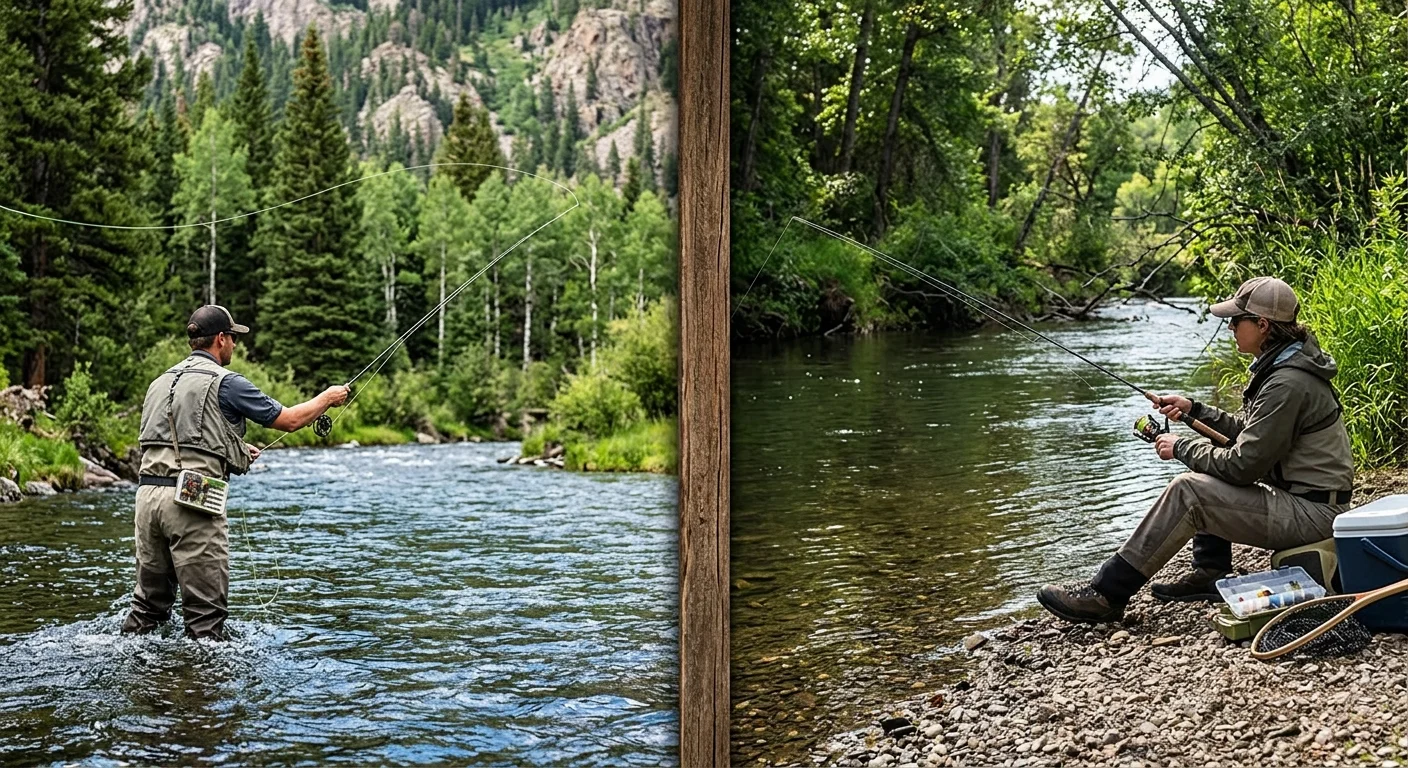
Drop the romanticism and the gear snobbery. What you're looking at are two different systems — each built around an opposite physics principle, which is why many performance spin fishing wear suppliers design gear specifically to support the distinct movement patterns and environments of each style.
That one distinction changes everything: the rod in your hand, the line on your reel, the way you cast, and how much money leaves your wallet before you reach the water.
Here's what separates them.
1. The Line Does the Work (or the Lure Does)
This is the core mechanic. Everything else flows from it— and it’s also why custom fly fishing clothing manufacturers often prioritize lightweight, unrestricted upper-body mobility to support repetitive casting motion..
In fly fishing , the line is weighted — thick, tapered, and heavy enough to carry a near-weightless fly through the air. The fly itself (0.01–0.1g) couldn't cross a puddle on its own. The line does all the hauling.
In spin fishing , that relationship flips. The line is thin and light (mono or braid). The lure carries the cast — weighted anywhere from 1g up to 20g or more. It pulls line off the reel as it flies.
Grasp this one principle and every other difference on this list makes sense.
2. Rod Design: Flex vs. Backbone
Fly rods are built to load . They flex deep under a moving line, storing energy like a spring. Then they release it forward. That flex is a feature, not a flaw.
Spin rods work the opposite way. They're stiffer. The design sends force straight from your wrist to a weighted lure. Less bend, more power delivery.
This also changes how a fish feels at the end of a fight. A fly rod's deep flex soaks up runs and headshakes, so battles last longer. A spinning rod pulls fish in faster — more mechanical, more direct.
3. Casting: Hours to Learn vs. Years to Master
Spin casting is easy to pick up. One wrist flick, one button press, and the lure is flying. Most beginners are fishing well within an hour or two. That's not a knock — it's good design.
Fly casting is a different discipline. You build line speed through aerial loops. You time the back cast. You stop the rod at the right angle. Each part needs muscle memory, and muscle memory takes time. You can nail the basics over a weekend. True skill takes a full season.
Neither style is better. They're both honest about what they ask of you.
4. Precision vs. Water Coverage
These two methods solve different fishing problems.
Fly fishing excels at exact imitation . You match a specific insect a trout is rising to. You drop a dry fly within inches of a feeding lane. With selective fish, that precision wins.
Spin fishing wins on coverage . One wrist flick sends a lure far across open water. You cover more depth zones, more structure, and more territory in less time. Fish could be anywhere — that range matters.
5. The Entry Cost Gap Is Real
A solid spinning combo costs less than a single decent fly reel. That gap is real — especially if you're still figuring out whether fishing is your thing.
6. Space: What the Water Around You Allows
Fly casting needs room. The line travels behind you on the back cast. Overhanging trees, tight canyon walls, and brushy streambanks all get in the way. They're not minor nuisances — they can shut down your cast.
Spin casting needs almost no space. Flick forward, lure launches, done. You can fish from dense cover, a kayak, or a narrow gap in the brush without changing a thing.
Fish a spot surrounded by vegetation? That one factor alone might decide which method you use.
Which Fishing Style Is Better for Beginners?
Spin fishing wins this one — — and it's not close. For entry-level markets and bulk product planning, this is exactly why many custom spin fishing clothing wholesalers prioritize beginner-friendly designs that balance affordability with functional performance.
The learning curve is gentler. The gear costs less. You can cast with confidence within an hour of picking up the rod. For someone just starting out, that matters more than almost anything else.
Here's the honest breakdown.
Start With a Spinning Combo
A 6'6" to 7-foot spinning rod paired with a mid-size spinning reel is the standard beginner setup — and for good reason.
Fiberglass or fiberglass-graphite composite rods absorb mistakes. They're flexible, durable, and forgiving when your technique isn't quite there yet. Options like the Ugly Stik Elite hold up in both freshwater and saltwater — no premium price required.
For line, go with monofilament . It stretches under pressure. That stretch prevents breakoffs when a fish runs hard. It's also cheap, easy to find, and simple to manage while you're still learning knots.
Master One Technique Before Jumping to Lures
Most beginners want to start throwing lures right away. The better move? Start with bait and a bobber — also called float fishing.
The setup is straightforward:
- Clip a float onto your line
- Pinch on a split-shot weight
- Tie a hook with an improved clinch knot
- Adjust the depth
The float goes under when a fish bites. You'll see it happen in real time — no guessing.
From there, move to bottom fishing. Then work toward lures. Start with a soft 5" stickbait or a 3/8oz spinnerbait . Both work year-round across different water types. They cover enough situations to build real, practical versatility.
Where Fly Fishing Stands for Beginners
It's not the right starting point — but it's not off the table forever.
Say your long-term goal is trout fishing on moving water. Learning spin fishing first speeds up your fly fishing progress down the road. You'll already know fish behavior, how to read water, and the basics of presentation. The cast is the one thing you'll rebuild from scratch — and that's a much smaller hurdle than starting with nothing.
Start simple. Build skill with purpose. The rest takes care of itself.
CTA 1Need Custom Fishing Apparel for Your Brand?
BeRun Sports manufactures high-performance UPF fishing shirts, waders, and outerwear for wholesalers and brands worldwide. Get a free sample quote in 24 hours.
Request Free QuoteFly Fishing vs Spin Fishing for Specific Target Species
The fish decides. That's the part most gear guides skip— and it's also why pro-level fishing apparel manufacturers often segment their product lines based on species-specific conditions like water temperature, depth, and angling intensity..
Your method should follow the species, the depth, and the conditions — not the other way around. Here's what works for the fish you're most out to chase.
Trout
Fly fishing dominates trout on clear, cold rivers. The reason is biological. Roughly 90% of a trout's diet is aquatic insects. A weightless dry fly dropped inches from a feeding lane matches that reality. A spinner can't.
Spin fishing still earns its place as conditions shift. High water, low visibility, fish holding deep? A spinner covers an acre-wide stretch. It reaches fish that precise presentations can't. Trout won't move for what they can't see.
The rule: Clear water + active insect hatch = fly. Turbid water + wind + deep-holding fish = spin.
Smallmouth Bass
Shallow and surface-active? Fly rod topwater poppers are hard to beat. But smallmouth don't always cooperate. Fish holding against 30-foot bluff walls or deep structure? Sinking fly lines lose that battle fast. Spin fishing handles heavy lures at controlled depths with more precision. That's what deep-structure bass need.
Largemouth Bass & Pike
Largemouth rewards the spin angler. Depth control, heavier lures, long casts to specific structure points — fly tackle handles none of that well.
Pike flip the script. Large-profile flies outperform standard lures here. They cover a bigger visual footprint than most spinning setups can match.
Salmon & Steelhead
Jigs and spinners are more effective on anadromous runs. Fly fishing works — but it requires expensive gear, serious patience, and a lower catch rate. For meat fishing efficiency, spin is the proven choice.
The honest summary: Fly fishing wins on precision imitation and conservation. Longer rods reduce gut hooking on trout, which is a real advantage. Spin fishing wins on coverage, depth, and versatility across species. Know your target. Match your method.
Choosing by Water Type: Rivers, Lakes, and Beyond
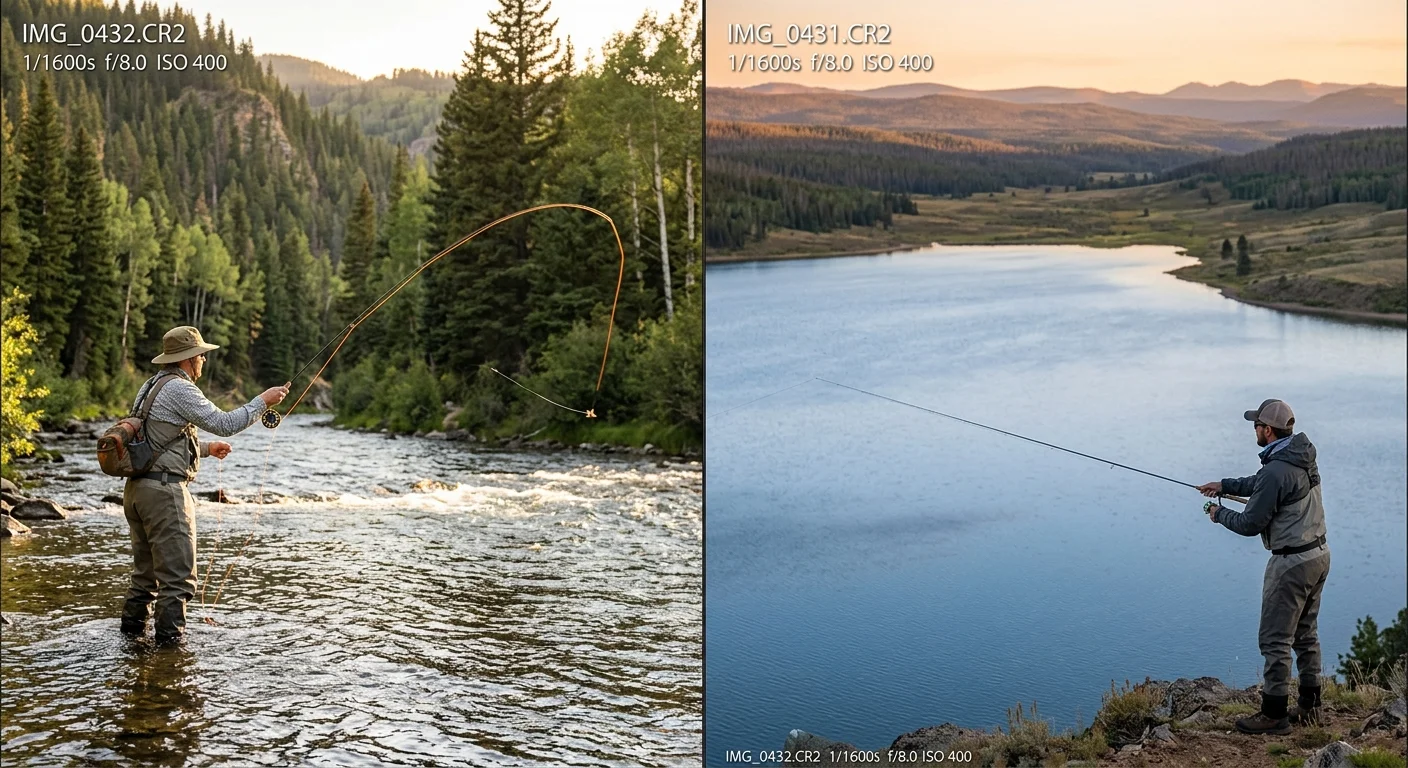
The water under your boots tells you more than any gear guide ever will.From a production standpoint, adapting to these environments is exactly what a high-performance fly and spin fishing apparel factory must account for when developing gear suited to both moving and still water conditions.
Different water types don't just change where you fish — they change how you fish. Moving water and standing water are two different games. Each one plays by its own rules.
Rivers and Streams: Fly Fishing's Home Court
Current is everything here. Rivers build defined feeding lanes. Insect hatches follow patterns you can predict. Trout stack up in precise holding spots. That's a fly fishing environment through and through.
Drop a dry fly into the seam where fast water meets slow water. It lands right where a feeding trout expects food to show up.
Tight stream corridors flip the script fast. Brushy banks, overhanging alders, canyon walls — these eat your back-cast space. No room to cast means no advantage for a fly rod. That's where a spinning rod steps in and earns its place.
Lakes, Ponds, and Reservoirs: Spin Fishing's Open Court
Still water cuts current out of the picture. Fish scatter across the whole basin. Depth shifts from one spot to the next. Structure becomes your best friend — submerged timber, drop-offs, weed edges. Those are the spots worth targeting.
Spin fishing rules here. Long casts let you cover more water in less time. Weighted lures sink down to bottom structure that fly gear can't reach with any real efficiency.
Smaller ponds? Both methods work well. But target a largemouth sitting 15 feet down along a submerged ledge, and you'll want the spinning rod in your hand.
The simple rule: Moving water favors the fly rod. Still water favors the spinning rod. Let the current — or the lack of it — make the call for you.
Source Wholesale Fishing Clothing from a Trusted Factory
From breathable waders to UPF 50+ sun shirts — BeRun Sports supplies OEM fishing apparel to brands and distributors across North America, Europe, and Australia.
Contact Our TeamEssential Gear Comparison: What You Need to Get Started
Gear is where most beginners either get it right or get burned.It’s also where sourcing decisions become critical, especially when comparing fishing apparel wholesale prices across different quality tiers and product categories.
The two methods don't just differ in technique — they use completely different physical systems. Different rods. Different line setups. Different footwear. Here's what each setup costs, and what you need before you touch water.
Fly Fishing Starter Kit
A fly rod and reel combo runs $200–$500 for a beginner setup. You get an 8–9 ft medium-action rod — the standard for trout and stream fishing.
The line system adds another layer of cost:
- Weight-forward floating line
- A 9 ft tapered leader
- 4X–6X tippet
Those three together run $30–$80 . Then there are the flies — $2–$5 each, and you'll want at least 12 to start. A Parachute Adams, Pheasant Tail Nymph, and Woolly Bugger cover the core situations you'll face.
Waders are non-negotiable. River and stream fishing puts you in 2–4 feet of water most of the time. Chest-high breathable or neoprene waders cost $100–$300 . Skip them and you're stuck on the bank — that cuts off about 70% of the fishable water in front of you.
Minimum fly fishing entry cost: $350–$800.
Spinning Starter Kit
A spinning rod and reel combo — 6–7 ft, medium-light action, with a 1000–2500 series reel — costs $50–$200 . Fiberglass construction absorbs beginner mistakes well. Your wallet stays intact.
Line is straightforward: 10–15 lb monofilament for freshwater runs $10–$30. A basic lure kit with spoons, jigs, and crankbaits adds another $20–$60. A 6–12 piece assortment covers trout, bass, and panfish across different conditions.
Waders? Mostly optional here. Bank and boat fishing covers 80%+ of beginner scenarios. Hip waders at $50–$100 are worth adding only if shallow streams become a regular spot for you.
Minimum spinning entry cost: $80–$300. That's about 60% less than fly fishing to get started.
What Both Methods Share
Two pieces of gear belong in every angler's kit, no matter which method you choose.
Polarized sunglasses ($20–$100) cut surface glare by over 90%. You'll spot fish holds, submerged structure, and depth changes that stay hidden without them. These aren't optional — they're working tools.
A fishing vest or chest pack ($30–$80) keeps flies, lures, and tools within reach. No bulky bag dragging you down. Pair that with a UPF 50+ sun shirt ($20–$50) — long-sleeve, quick-dry fabric that blocks 98% of UV exposure all day long.
Shared accessories total $70–$230. They work just as well on either setup.
The Practical Starting Order
Buy a spinning combo first (~$100 average). It covers 80% of fish species and conditions straight out of the box.
Add shared accessories next — polarized glasses, a vest, a UPF shirt. Get these before you go deep into either method.
Add waders later — only if streams make up more than half your outings.
Round out your tackle with 10 hooks (#6–10), three sizes of split shot, and a pair of nippers. That's a solid functional base.
The spin fishing gear list is shorter, cheaper, and comes together faster. Fly fishing costs more upfront. That extra investment pays off once you know the water you want to fish — and you're sure that's where you're headed.
What to Wear for Fly Fishing vs Spin Fishing: A Practical Clothing Guide
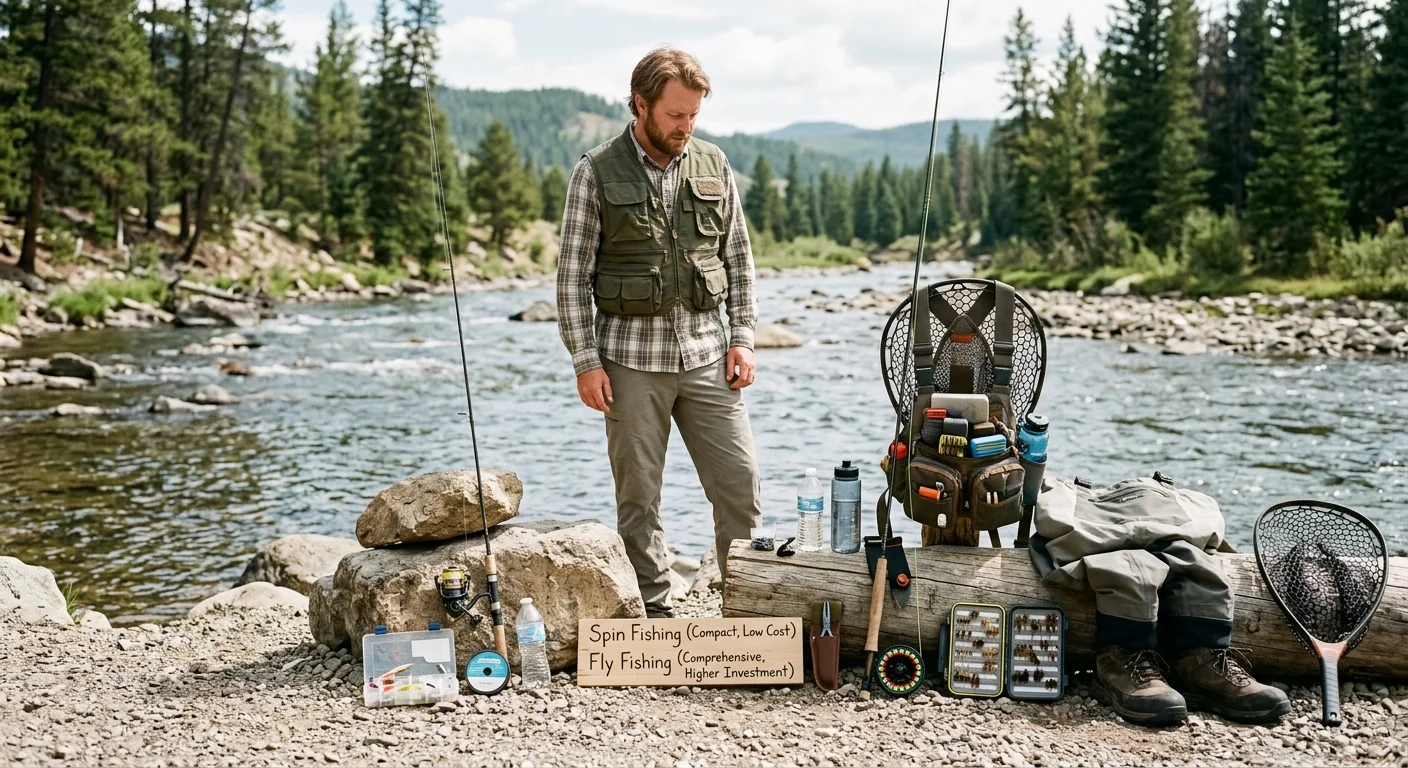
Clothing isn't an afterthought. It's the difference between a productive day on the water and a miserable one cut short at noon.
Fly Fishing: Dress for the River
Wading rivers for 4–6 hours puts real demands on your gear. You need breathable chest waders with a waterproof rating of ≥20,000mm and breathability of ≥15,000g/m²/24hrs. Cold water under 10°C? Go with 4–5mm neoprene bootfoot waders. Warmer rivers call for stockingfoot waders paired with felt-soled boots. Felt soles grip slick rock far better than rubber soles ever will.
Pair your waders with a 10–15 pocket fishing vest . Dedicated slots for fly boxes, tippet spools, and forceps cut your gear-fumbling time from 20 seconds down to 5 — per cast, all day long.
Spin Fishing: Dress for Exposure
Bank and boat fishing trades waders for sun protection. A UPF 50+ long-sleeve shirt with a vented back handles 25–35°C heat without cooking you. Add quick-dry nylon pants that dry in 30–60 minutes. Look for articulated knees too — they keep you comfortable through 12+ hours of deck movement.
Universal Pieces That Belong in Both Kits
Early mornings can start at 5°C and climb to 25°C by afternoon. That temperature swing demands a layering system: merino base, fleece mid, wind shell outer. Merino wicks 30% faster than synthetics. That gap adds up fast as you move between shade and sun all day.
Cost Comparison: Fly Fishing vs Spin Fishing Total Investment Breakdown
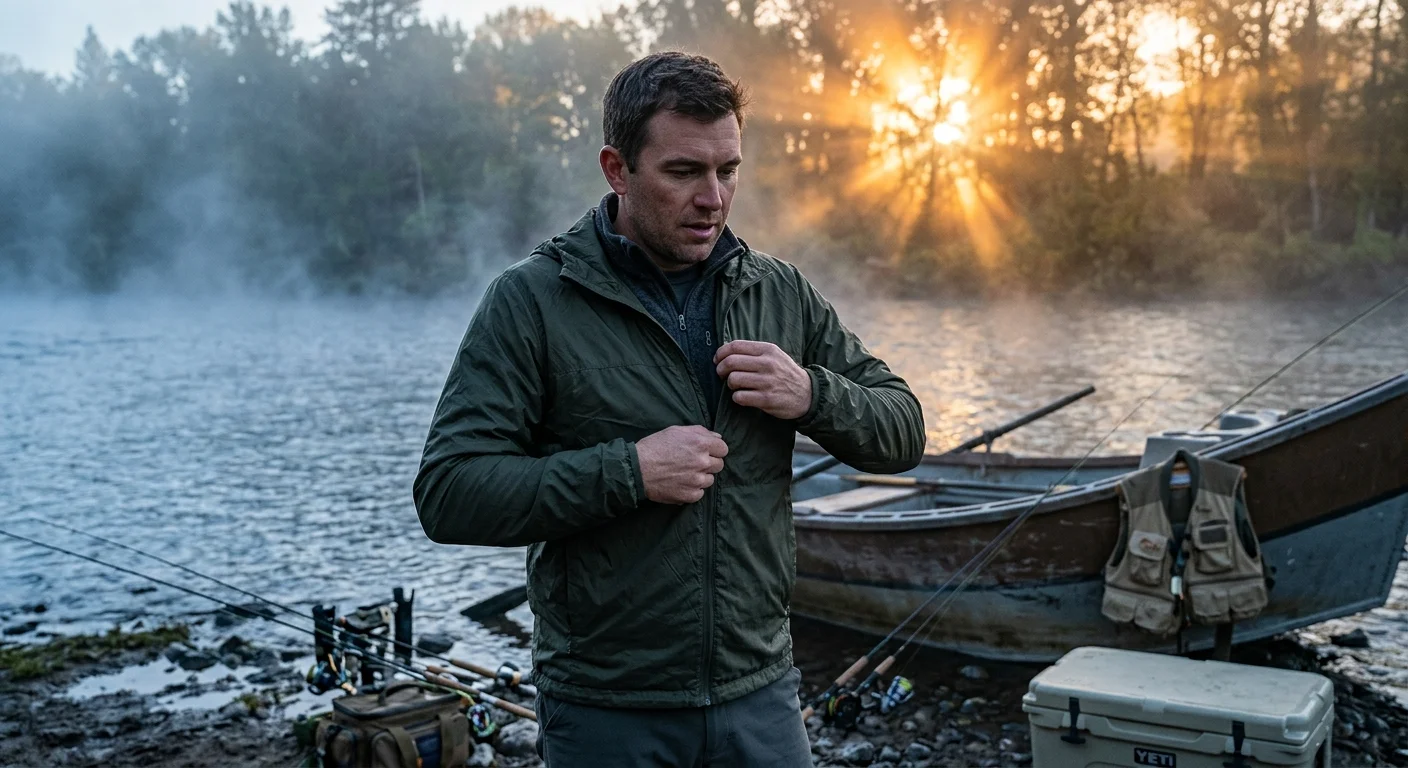
Most gear guides skip the real numbers. Spin fishing costs 2–3x less to start than fly fishing — and that gap grows over time.
Here's the full picture.
Starter Kit Costs Side by Side
A spinning combo gets you on the water for under $150. A fly fishing setup that actually works costs at least $300 — often more.
Annual Consumables: Where the Real Gap Lives
Spin fishing lures come back to you. Flies don't. That one fact drives a 40–60% difference in running costs each year.
Spin fishing : $30–$130/year (lures + line replacement)
Fly fishing : $100–$350/year (flies lost to snags, plus annual line and tippet replacement)
The Smart Phased Approach
Budget is tight? Sequence your investment:
Year 1 (under $250) : Start with spin. Rod, reel, line, and lures — all covered. You're fishing by the weekend.
Year 2 (add $200–$500) : Upgrade your spinning setup or move into entry-level fly gear. Go that route if rivers and trout are calling your name.
Fly fishing earns its higher price tag once you know that's the water you want. Not sure yet? Spin fishing keeps your wallet safe while you sort it out.
Fly Fishing or Spin Fishing: The Decision Framework (Make the Right Choice)
Four questions. Answer them straight, and the right method picks itself.
Running Both Methods
Some days, one method isn't enough. High, stained flows hit the Watauga in spring — spin handles those conditions well. Water drops and clears by afternoon. Trout start rising to midges. That's your cue to switch rods.
The pattern: high or murky water → spin. Low, clear, selective surface feeding → fly.
Carry both on unpredictable days, mixed-species water, or shifting seasons. It's not indecision. It's strategy.
CTA 3Build Your Fishing Apparel Line with BeRun Sports
Low MOQ, custom branding, and 15+ years of manufacturing experience. Whether you need fly fishing vests or spin fishing sun shirts — we build it to your spec.
Explore Fishing ApparelConclusion
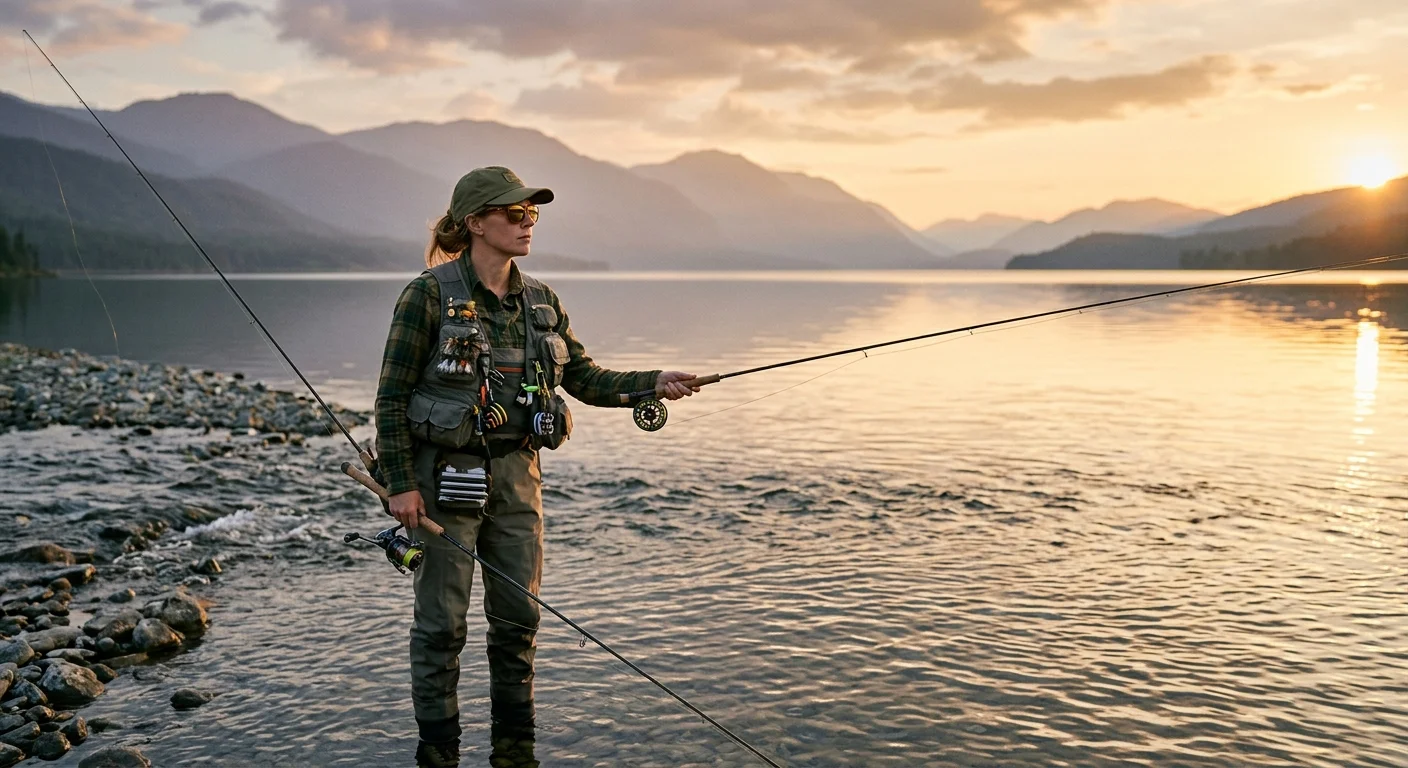
The best fishing style isn't the one with the longest tradition or the most Instagram-worthy look. It's the one that gets you out on the water.
Chasing trout in a winding mountain stream? Fly fishing gives you a technical, meditative challenge. Every hour you put in pays off. Want versatility, faster results, and an easier learning curve across more species and environments? Spin fishing delivers that.
Neither method is better than the other. But one of them fits where you are right now.
Start there. Pick the style that matches your target species, your local waters, and your budget. Then gear up right — including the right apparel for a full day outside. Good equipment works with you. It makes every trip on the water better.
The only bad choice? Standing on the shore, still deciding.
Video Section