Table of Contents
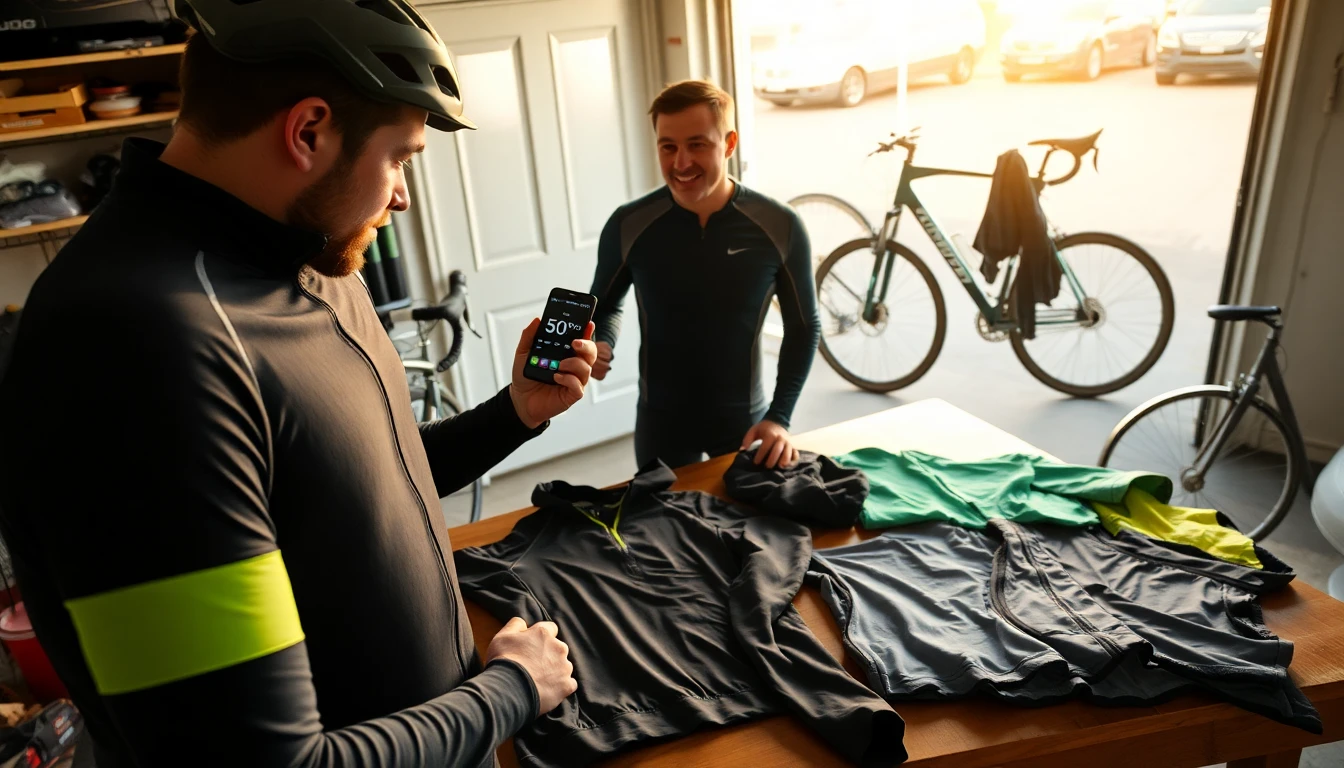
You're standing in your garage at dawn. Your phone shows 50°F outside. You stare at your cycling clothes, confused.
Full winter gear? Too warm. Summer kit? Too cold. This temperature catches many cyclists off guard. Some shiver through the first ten miles. Others strip layers halfway through, stuffing arm warmers into cycling jersey pockets.
Here's the reality: your cycling clothes at 50 degrees Fahrenheit can make or break your ride. Grabbing a medium-weight jacket won't cut it.
You need smart layering that adapts as your body heats up. Know which pieces matter at this transition point. Learn to adjust based on wind, ride intensity, and how your body runs.
Planning your first spring century? Tired of getting the temperature wrong on your commute? This guide shows you the exact gear combinations. You'll learn layering basics and smart adjustments. Stay comfortable from first pedal stroke to cooldown. No guesswork needed.
Core Principle: Why 50°F (10°C) Is A Transition Temperature For Cycling
 Key Temperature Statistics
Fifty degrees Fahrenheit marks where your body's heating system gets tricky on the bike.
At this temperature, you're stuck between two worlds. Summer cycling gear leaves you cold. Winter layers turn you into a sweat factory within twenty minutes. The science tells us why.
Your body generates 3-5 times more heat while cycling than at rest. Start pedaling at 50°F. Within ten minutes your core temperature climbs. Your chest and back sweat. But your fingers, toes, and knees stay cold from wind chill.
This creates the heat loss problem from moving air . Air rushing past your body at 15-20 mph pulls warmth away faster than standing still. What feels fine in your driveway gets uncomfortable five miles in.
The 50°F Threshold in Performance Science
Nature treats 50°F as a clear cutoff. Warm-season crops stop growing below this point. Their growth processes shut down. Your body doesn't stop, but it changes how it works.
Below 50°F, your muscles need more time to warm up. Blood vessels in your hands and feet get narrower. Your body keeps your core warm instead of keeping your fingers nimble. You need insulation that works harder as you pedal harder.
Above 50°F? Standard summer cycling kit with maybe arm warmers works fine. Below it? You're building layers that change as you ride.
The Three-Layer System: Building Your 50-Degree Cycling Outfit
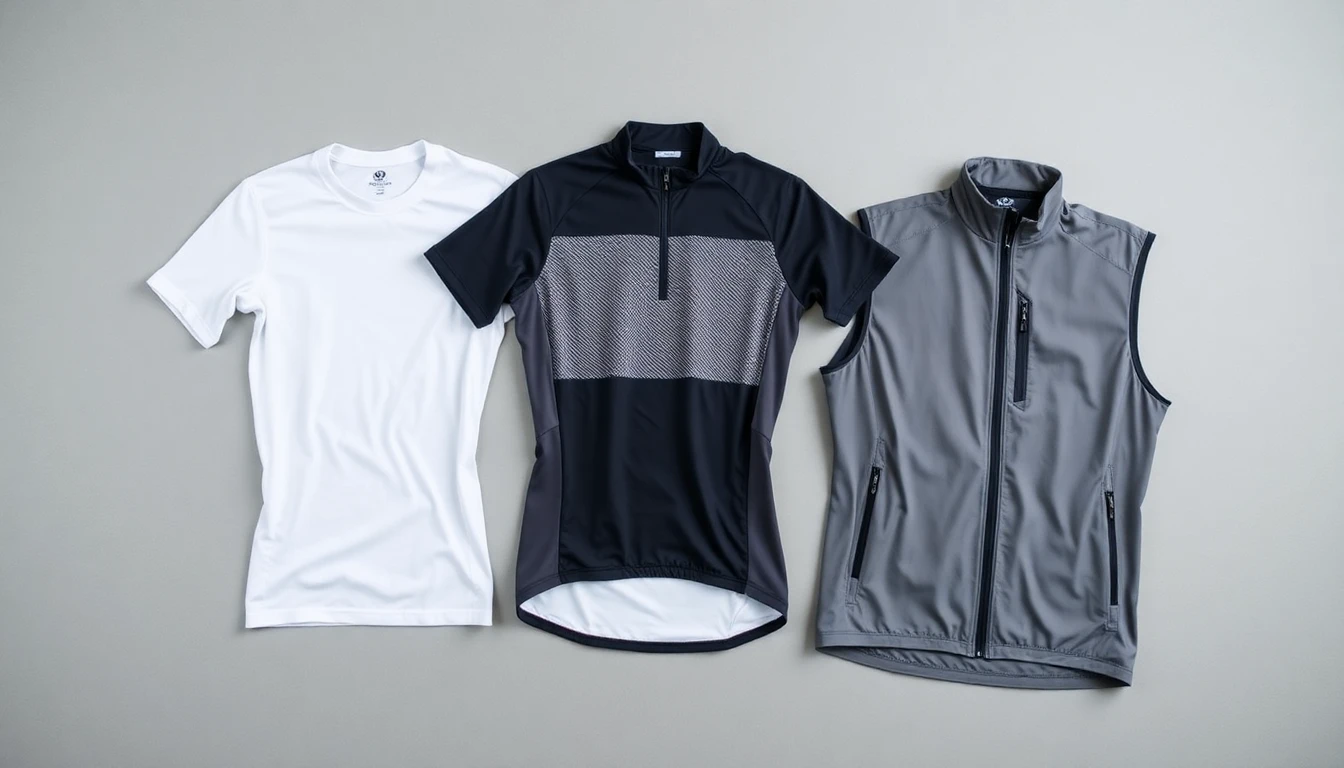
Three separate pieces of cycling clothing working together beat one thick jacket.
The three-layer system is proven thermal engineering for bodies in motion. Each layer does a specific job. Stack them right and you control your comfort from start to finish.
Three Layer System Visual OverviewLayer One: The Base Layer (Your Moisture Manager)
Your base layer sits against skin. It moves sweat away from your body .
Pick a lightweight synthetic base layer made from polyester or similar fabric. Thin and skin-tight wins here. Tighter fit means faster moisture transfer. Think second-skin, not loose undershirt.
At 50°F you don't need heavy winter base layers. Those thick fabrics trap heat you'll make within minutes of riding. Save them for rides below 40°F.
Short-sleeve or long-sleeve? Either works. Long-sleeve adds minimal warmth. It covers more skin from wind chill on descents.
Skip cotton. It absorbs moisture instead of moving it away. You'll feel clammy and cold twenty minutes into your ride.
Layer Two: The Insulating Mid Layer
Your mid layer gives you adjustable warmth . It keeps moving moisture outward.
A long-sleeve thermal cycling jersey does this well at 50°F. The fabric holds warm air close to your body. Vapor still escapes. You stay warm on flats. Unzip on climbs.
Some riders add a merino wool mid-layer instead. Wool pulls moisture away from synthetic base layers. Good choice if you run cold or sweat a lot.
Focus on "thermal" cycling jerseys. Standard summer cycling jerseys don't insulate enough. Full winter jerseys trap too much heat. Thermal jerseys work best for these temperatures.
Layer Three: Your Wind and Weather Shield
The outer layer blocks wind and rain . Body heat still escapes.
For dry 50°F days, a lightweight wind vest works well. Also called a gilet, this sleeveless shell stops wind from stealing your core warmth. Your arms stay cool and mobile.
Get vests with full-length zippers . Crack it open on climbs. Zip it shut on descents. Pull it off if you warm up. Stuff it in your jersey pocket.
Wet 50°F changes things. Light rain means a cycling jacket with protective membrane – wind and water barrier with good ventilation. Heavy rain needs your hardshell rain cycling jacket over that thermal jersey.
Two-way zippers on jackets give you bottom-up venting. Open from the waist to access jersey pockets. Cold air won't hit your chest.
Breathability beats waterproofing in most 50°F conditions. A waterproof cycling jacket that traps sweat leaves you cold and miserable. Pick shells that balance protection with vapor escape.
Upper Body: Torso, Arms, And Core Temperature Management
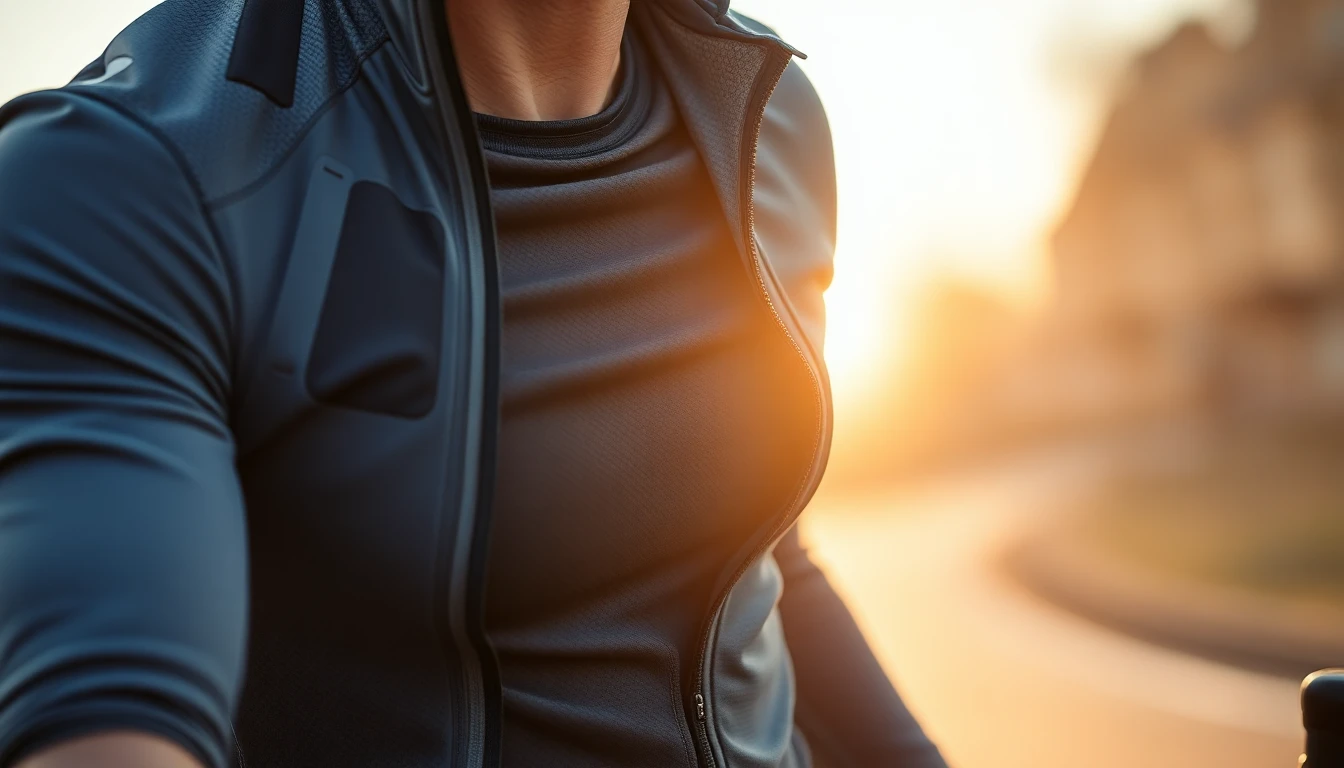
Your torso generates the most heat while cycling. Managing this core warmth at 50°F decides whether you finish strong or struggle halfway through.
Medical research shows your core body temperature sits around 98.1–98.2°F at rest . Start pedaling hard and it climbs fast. Your torso – chest, abdomen, and back – produces 70% of your cycling heat. This warmth needs to escape at the right rate. Too slow? You overheat. Too fast? You chill.
The three-layer system gives you the framework. Now match those layers to your actual ride conditions.
Adjust Your Torso Layers Based on Ride Intensity
Easy recovery rides or commutes under 12 mph? You need all three layers. Base layer plus thermal cycling jersey plus windproof vest. Your body generates minimal heat at low effort. Wind chill hits harder at low speeds.
Tempo rides and group pulls at 15–18 mph? Drop the vest after your warm-up. Base layer plus thermal jersey handles moderate effort well. Unzip the jersey chest on climbs. Zip it back up on descents and flats.
Hard training or racing above 20 mph? Start with just base layer plus lightweight long-sleeve cycling jersey. Add a vest in your pocket for long descents or the cool-down ride home. High-intensity efforts spike your core temperature fast. Too many layers trap sweat. This makes you cold once you slow down.
ICU temperature data shows something key: keeping your core in the optimal 97–100°F range improves performance and comfort. Every 10% more time your torso spends in this zone reduces fatigue markers. Temperature swings hurt you. A rider whose core jumps from 96°F to 101°F struggles more than one who holds steady at 98°F.
Managing Arms from Your Core
Arms need their own temperature control at 50°F. They're exposed to more wind than your covered torso. Blood flow drops to your limbs while your core works to stay warm.
Arm warmers give you the best flexibility. Pull them on at the start. Roll them down to your wrists once you heat up. Stuff them in your jersey pocket if you're cooking. Much easier than removing jersey sleeves.
Pick arm warmers with silicone grippers at the bicep . Cheap ones slide down while you ride. Good ones stay put through five hours of shifting positions and arm movements.
Thermal cycling jerseys with long sleeves work if you hate managing extra pieces. You lose the ability to adjust mid-ride. Fine for steady-pace rides. Big problem for workouts with changing intensity or routes with big climbs.
Wind changes everything. Riding into a 15 mph headwind at 50°F feels like 38°F on exposed arms. Turn around with that wind at your back and you're too warm. This is why removable arm warmers beat fixed long sleeves nine times out of ten.
CTA Section 1Lower Body: Legs And Optimal Coverage At 50°F
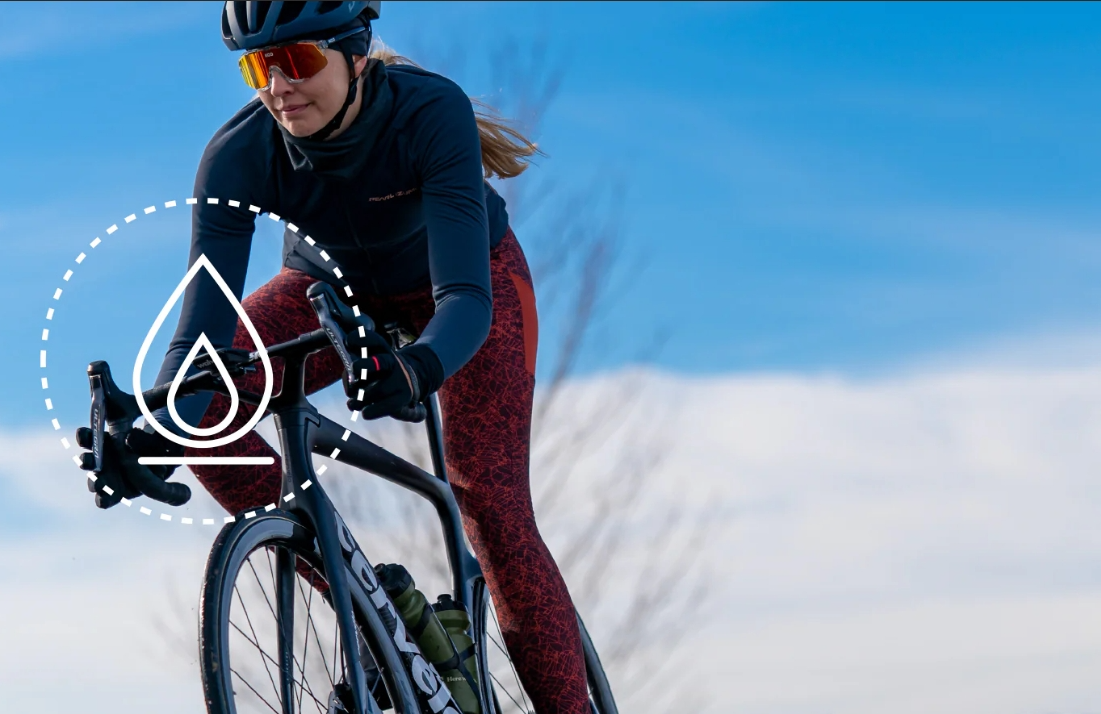
Your legs do more work than any other part of your body on the bike. They also lose heat faster than you think.
At 50°F, the question isn't whether to cover your legs. It's how much coverage you need. Get it wrong and you're fighting cold knees fifteen miles in. Or sweating through fabric that won't breathe.
Public health data shows something cyclists often ignore: poor leg insulation at cool temperatures leads to whole-body heat loss . Your legs stay cold too long. Your core temperature drops. This isn't about comfort. It's about performance and safety.
The Tights Versus Shorts Decision
Knee warmers plus bib shorts beat full tights for most 50°F rides.
Here's why. Your quads generate massive heat once you're spinning at tempo. Full tights trap that warmth. Your knees and lower legs – the parts exposed to constant wind – need the insulation. Your upper thighs don't.
Knee warmers give you control. Pull them up to mid-thigh at the start. Roll them down as you warm up. Remove them if you're cooking. Stuff them in your jersey pocket. Try doing that with tights.
Thermal bib tights of cycling work better for three scenarios: Long slow rides under 14 mph. Cold rain at 50°F. Rides where you won't generate much heat – recovery spins or easy coffee rides with lots of stops.
Pick tights with ankle zippers . Getting them on over cycling shoes matters. Zippers also give you venting options if you overheat but don't want to stop and strip.
Wind Chill Hits Your Legs Harder Than You Feel
Wind Chill Effect VisualizationMoving air pulls heat away from your legs fast.
A 15 mph headwind at 50°F ambient creates an effective temperature of 38°F on your legs . Add your riding speed and that number drops further. Your torso has three layers protecting it. Your legs? One.
This explains why your knees feel fine in the garage but ache twenty minutes into the ride. Wind chill doesn't just make you uncomfortable. It cuts blood flow to your leg muscles . Cold muscles don't contract well. You lose power. You increase injury risk.
Thermal cycling tights with windproof front panels solve this. The front of your thighs and shins take the direct wind hit. These panels block moving air without adding bulk. The backs of your legs get breathable fabric. This releases heat and moisture.
Leg warmers need the same feature. Cheap ones use the same fabric all around. Good ones put wind-resistant material on the front. Your legs stay warmer without overheating.
Extremities Protection: Hands, Feet, Head And Neck
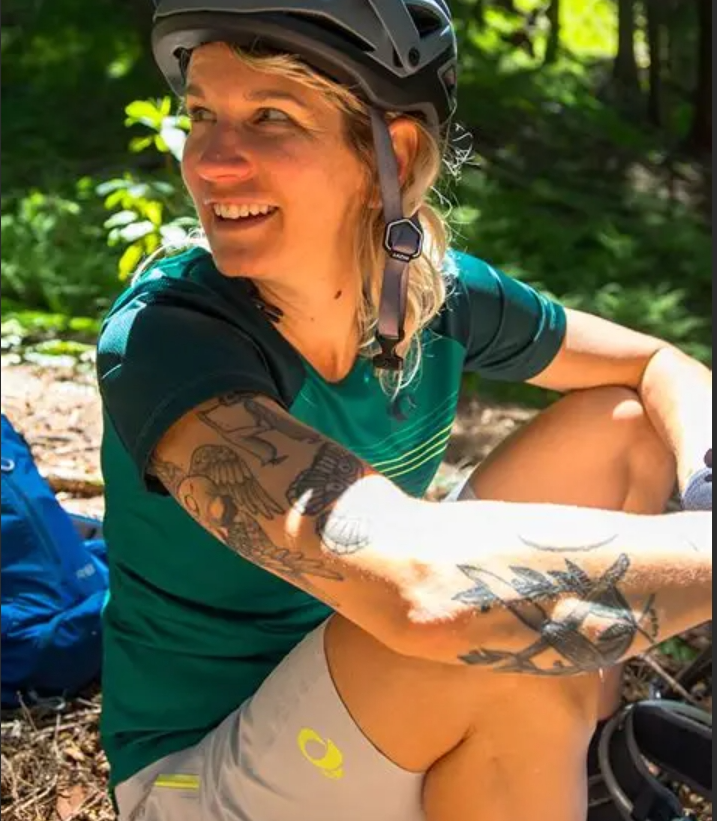
Your fingers go numb first. Then your toes. Your ears sting. Your neck feels like someone's pouring ice water down your collar.
At 50°F, good extremity protection keeps you comfortable. Your core stays warm from pedaling. But your hands, feet, head, and neck? Wind chill hits them hard. They generate little muscle heat.
Blood flow to your extremities drops as your body keeps your core warm. Your fingers can drop to 60°F while your torso stays at 98°F. This isn't just discomfort. It's reduced braking control, slower gear shifts, and genuine safety risk .
Hands: Your Primary Contact Points Need Smart Protection
Lightweight full-finger gloves work best at 50°F for most riders.
Skip summer gloves. Too thin. Your fingers freeze on descents. Skip heavy winter gloves. Too bulky. You can't feel your brake levers well. You fumble with nutrition or your phone at stops.
Look for gloves with windproof panels on the back of the hand . Moving air hits the tops of your hands hardest. Your palms generate some heat from grip pressure. The backs of your hands don't.
Gel padding in the palm matters more than you think. At 50°F your hands already deal with reduced blood flow. Road vibration for two hours adds to the problem. You're fighting numbness from both sides. Padding cuts down nerve pressure.
Try the layering trick : thin liner gloves under your regular cycling gloves. Start with both. Remove the outer glove if you warm up. Liners alone work fine at tempo effort once your body heat climbs.
Feet: Where Cold Creeps In From Below
Your feet sit in rigid shoes with limited insulation. Toe covers or neoprene shoe covers turn summer cycling shoes into 50°F-ready footwear.
Toe covers slip over the front of your shoe. They block wind from hitting your toes through those ventilation holes. Simple. Cheap. Effective for dry 50°F rides.
Full neoprene shoe covers give you wind and water protection . Pick these if rain threatens or you're riding in wet morning conditions. They trap more heat than toe covers. They also make your feet sweat more. Match your protection to your ride intensity and how much you breathe.
Merino wool cycling socks beat synthetic at this temperature. Wool handles temperature better. It stays warm even damp from sweat. Standard thickness works fine. Save thick winter socks for rides below 40°F.
One trick most riders miss: loosen your shoe straps a bit . Tight shoes restrict blood flow to your feet. Less blood means colder toes. You want snug, not strangling.
Head and Neck: Small Areas, Big Heat Loss
A thin thermal cycling cap under your helmet stops heat loss through your head. Your skull has minimal insulation. Wind pulls warmth away fast through helmet vents.
Caps with ear coverage matter at 50°F. Your ears have almost no fat layer. They're all cartilage and skin. Exposed ears hurt within twenty minutes of riding. Covered ears stay comfortable all day.
Neck gaiters or buffs give you incredible flexibility. Pull them up over your nose and mouth on cold starts. Lower them to your neck once you warm up. Tuck them into your jersey if you don't need them. They weigh almost nothing.
Skip full balaclavas at 50°F unless you get cold easily. They trap too much heat for most riders at this temperature. Save them for winter rides in the 30s.
Your neck is your thermal valve . Blood flowing to your brain passes through your neck. Cover it and you feel warmer everywhere. Expose it and you cool down fast. Use this. Adjust your neck gaiter up or down to control your body temperature. No need to stop and add or remove layers.
Adjusting For Personal Factors: Intensity, Body Type, And Weather Conditions
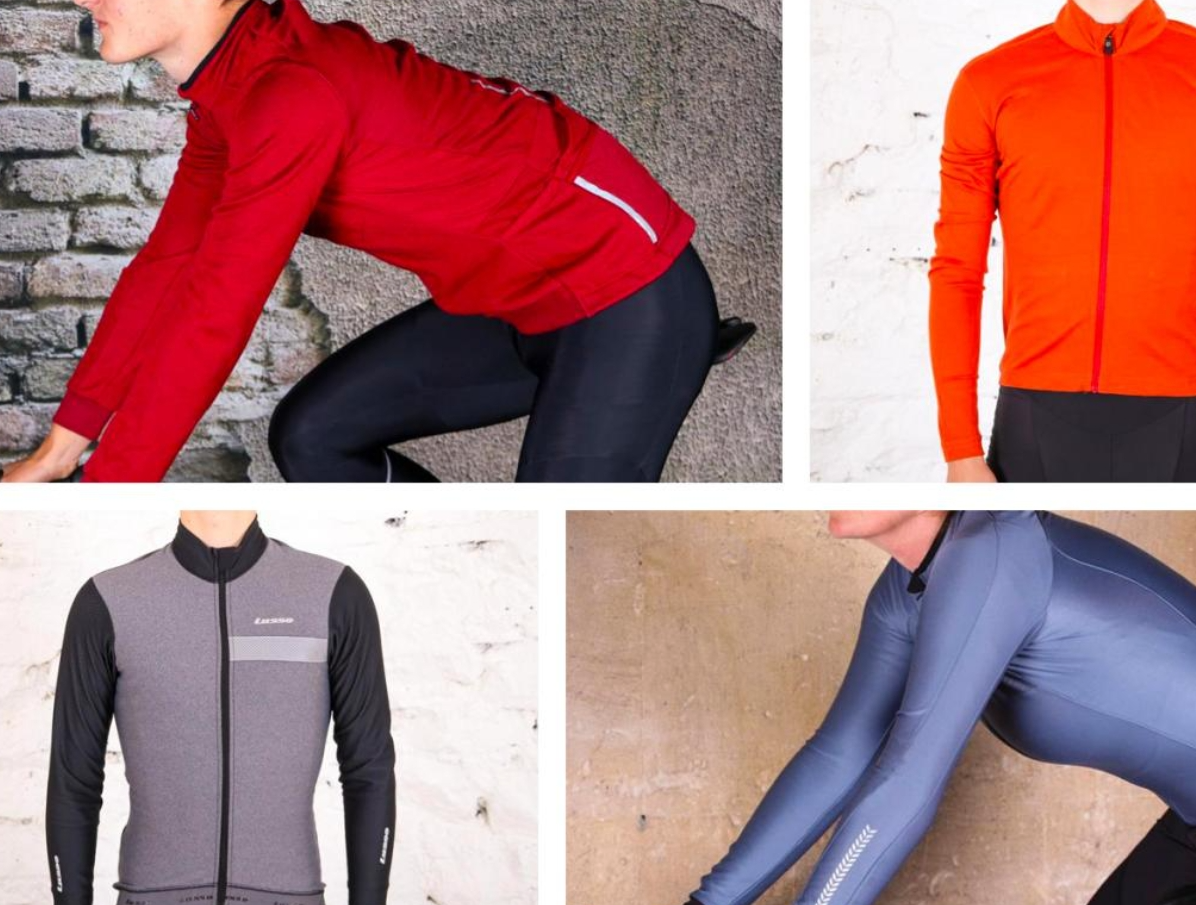
The same 50°F outfit that works for your training partner might leave you freezing or overheating.
Your body doesn't respond to temperature the same way someone else's does. Three factors change everything: how hard you're pushing, how your body regulates heat, and what the actual conditions throw at you beyond the thermometer reading.
Ride Intensity Changes Your Heat Output
Your heart rate zone tells you how many layers you need.
Heart Rate Zone CardsModerate-intensity rides sit at 50–70% of your maximum heart rate . Calculate your max using 220 minus your age . You're 40? That's 180 bpm max. Your moderate zone runs 90–126 bpm . At this effort, you need all three layers at 50°F. Base layer, thermal jersey, wind vest. Your body generates steady warmth but not enough to shed protection.
Push into vigorous territory at 70–90% HRmax – that's 126–162 bpm for our 40-year-old rider – and you're a furnace. Drop the vest after ten minutes. Unzip your jersey on climbs. You're producing 3–5 times more heat than standing still. Too many layers trap sweat against your skin. That moisture chills you the second you soft-pedal or stop.
Training volume matters too. Riders logging 150+ minutes per week at moderate to vigorous intensity adapt to temperature stress better. Your body becomes more efficient at regulating heat. You need less insulation than someone riding once a week. Track your volume. Adjust your layers as your fitness improves.
Body Type Dictates Your Starting Temperature Comfort
Heavier riders and those carrying more body fat generate more heat.
This isn't opinion. Combined aerobic and resistance training at 65–85% VO₂max shows something clear. Individuals with higher body fat percentages produce more thermal load during exercise. You're 200+ pounds or carry extra insulation? Start with fewer layers at 50°F.
Try this: base layer plus lightweight long-sleeve jersey. Skip the vest until you're twenty minutes in. You'll know within the first climb whether you need it. Pack it in your jersey pocket just in case.
Leaner, lighter riders run cold. Less body mass means less heat production at the same effort level. You need that full three-layer system from the start. Add the vest. Keep arm warmers on longer. Don't compare yourself to the bigger rider next to you who's already stripped down to short sleeves.
Sweating patterns change the game. Some riders sweat a lot at low intensity. Others sweat little until they're racing. Heavy sweaters need more breathable layers even at 50°F. Pick thermal jerseys with better ventilation. Choose wind vests with larger back vents. Your body dumps heat through moisture. Trap that sweat and you'll chill fast once intensity drops.
Weather Conditions Beyond The Number On Your Phone
50°F in direct sun feels nothing like 50°F under clouds.
Bright sunshine adds 10–15 degrees of perceived warmth to your torso and arms. You can drop one insulation layer. Switch from thermal jersey to standard long-sleeve. The radiant heat hitting your back does real work keeping you warm.
Overcast 50°F steals that advantage. Your layers need to work harder. Stick with the full thermal system.
Humidity makes cold feel colder. Damp air at 50°F pulls heat away from your body faster than dry air. Humidity tops 70%? Add an extra barrier. Swap your wind vest for a light softshell jacket. The membrane blocks moisture-laden air from reaching your mid-layer.
Wind speed matters more than most riders think. A calm 50°F morning lets you dress light. A 15 mph headwind drops the effective temperature on your exposed skin to 38°F . That's a 12-degree difference . Check wind forecasts, not just temperature. Plan your route. Headwind on the way out? Dress warmer. You'll warm up on the tailwind ride home.
Morning versus afternoon rides need different cycling gear. Starts at 50°F often climb to 60°F by midday. Layer smart with pieces you can remove and store. Afternoon rides that start warm can drop 10+ degrees as the sun sets. Carry that vest even if you don't think you'll need it.
CTA Section 2Common Mistakes Cyclists Make At 50°F And How To Avoid Them
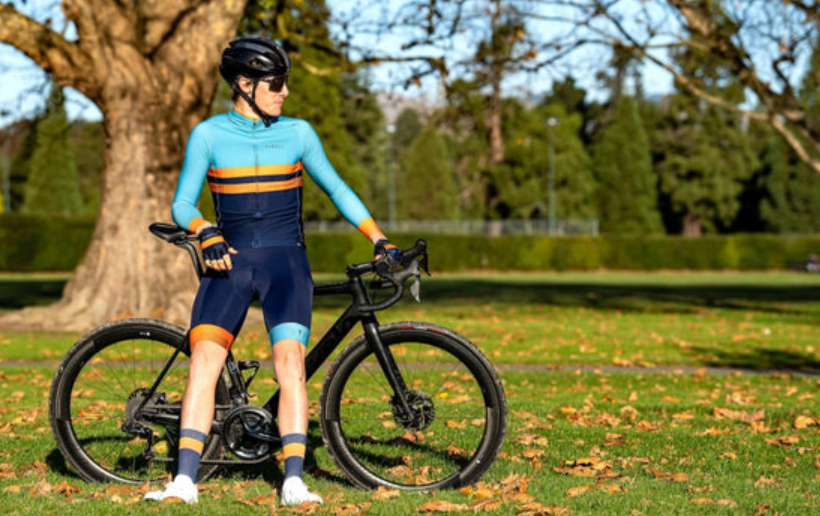 Common Mistakes Summary Cards
Most cyclists dress for how 50°F feels standing in their driveway. They forget about the heat their body creates ten minutes into the ride.
This single mistake ruins more spring rides than rain or wind combined. You zip up a heavy jacket. Pull on tights. Add winter gloves. You feel perfect rolling out of the garage. Mile three? You're dripping sweat. Mile five? You're at a stoplight stripping layers. You're stuffing arm warmers into pockets that are already full.
Mistake One: Starting Your Ride Feeling Comfortable
The fix: start cool.
Experienced riders follow a proven rule: dress so you're cool at the start . Not freezing. Not shivering. Just cool enough that you're thinking "maybe I should grab one more layer."
Your body generates massive heat within five to ten minutes of pedaling. That chill disappears fast. One rider tested different setups at 52–54°F and found the sweet spot: cycling shorts,cycling polyester T-shirt, light cycling jacket . He started cool. Warmed up by mile two. Stayed comfortable for the full thirteen-mile commute with minimal sweat.
Start warm and you guarantee problems. Heavy sweating in the first ten minutes soaks your base layer. That moisture turns cold on descents. You're too hot on climbs. Too cold on downhills. Miserable either way.
Pack a lightweight extra layer instead of wearing it. Stuff a vest in your jersey pocket. Bring it for emergencies – flats, mechanicals, longer stops. Don't wear it "just in case."
Mistake Two: Choosing One Heavy Layer Over Modular Pieces
Thick jackets don't vent well at 50°F. You can't adjust them mid-ride without a full stop.
Smart riders use removable pieces. Shorts plus arm warmers beat long tights. A wind vest over your jersey beats a full jacket. Short-sleeve base layer plus arm warmers beats a heavy long-sleeve thermal.
Why? You can shed an arm warmer at a traffic light in under sixty seconds. Rolling down a jacket sleeve while riding? Can't be done. Removing your jacket means you stop. Unclip. Wrestling it off. Find somewhere to stuff it.
One forum member shared his progression: started with long-sleeve base plus sleeved wind vest at 50–55°F. Too warm within fifteen minutes. Next ride? Same base, sleeveless vest. Spot on. Exposing his arms made the difference.
At low 50s, try shorts with a standard short-sleeve cycling jersey, arm warmers, and a wind vest . Too warm on a climb? Roll the arm warmers to your wrists. Still warm? Pull them off. Cooling down on a descent? Pull them back up. Your core temperature stays stable.
Mistake Three: Forgetting Your Hands and Ears
Your torso warms up fast from pedaling. Your hands and ears don't generate muscle heat. They just take the wind.
Riders switching from summer to cool-weather gear often upgrade their jersey. They add leg coverage. Then they ride with summer gloves and no head protection. Their hands go numb. Their ears sting from wind chill.
Full-finger cycling gloves become a must at low 50s. Not heavy winter gloves. Lightweight gloves that still let you feel your brake levers and shift. Your hands stay exposed to constant airflow. Summer gloves don't cut it once temps drop to 52°F or below.
Add a thin headband or cycling cap to cover your ears. It fits under your helmet. Adds no weight. Makes a massive difference in comfort. One commuter noted his headband often gets soaked with sweat from overdressing his torso. Even thin headwear makes you warmer.
Skip this protection and you'll remember it around mile eight. You can't feel your fingers well enough to shift.
Mistake Four: Ignoring Temperature Swings Between Morning and Afternoon
Your morning commute starts at 50°F. Your ride home? Try 60–65°F.
New riders make the same mistake: they dress right for the morning chill, then suffer in the afternoon heat. Some pack a complete change of clothes. Others just accept being too warm on the way home.
The solution: choose your base outfit for the warmer temperature. Add removable layers for the cold start.
Shorts work fine at 60°F. They also work at 50°F with arm warmers and a vest. Start your day in shorts. Add arm warmers and maybe a thin long-sleeve base. Remove them as the day warms up. Ride home in just the shorts and jersey.
This beats starting in tights and a heavy jacket. You won't carry all that gear in a backpack for eight hours at work.
Check your weather app. Morning showing 50°F with an afternoon high of 62°F? Build your outfit around 60-degree gear, then layer up for the start. You'll be cool for ten minutes. Then perfect for the rest of both rides.
Ready-To-Use 50°F Outfit Combinations With berunclothes Products
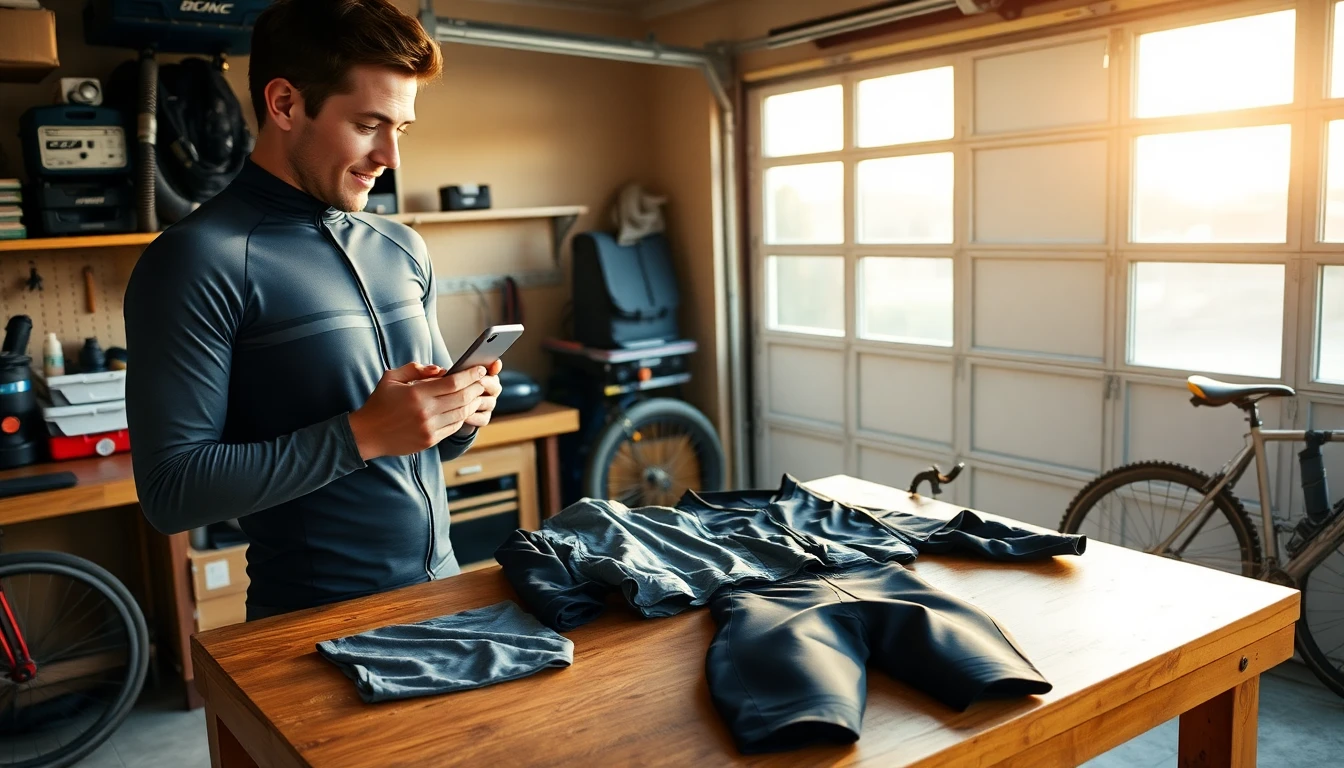
Stop piecing together your 50°F cycling kit from random gear in your closet.
These five tested combinations use berunclothes cycling apparel built for transition temperatures. Each outfit fits different ride types and intensity levels. Pick the formula that matches your planned ride. Adjust one or two pieces based on how hot you run.
Combination 1: Moderate Pace Road Ride (12–16 mph)
Why this works: Your steady pace makes consistent heat. It won't spike your core temperature. The vest protects your chest and back from wind. Full tights keep your knees warm the whole ride. Total weight stays low – no heavy winter gear to carry.
Mid-ride adjustment: Unzip the jersey chest on climbs over 5% grade. Running warm after thirty minutes? Remove the vest. Stuff it in your jersey's rear pocket.
Combination 2: High-Intensity Training or Group Ride (18+ mph)
Why this works: Hard efforts spike your temperature fast. You start with fewer layers. This stops your clothes from getting soaked with sweat. Knee warmers protect your joints. Your quads won't overheat. The vest stays in your pocket for long descents or cool-down miles.
Mid-ride adjustment: Roll knee warmers down to ankles after your warm-up. Remove outer cycling gloves, keep liners on. Pull the vest out for any descent longer than three minutes.
Combination 3: Wet 50°F Conditions
Why this works: Rain at 50°F creates the worst combo – wet plus wind chill. This setup keeps moisture off your skin. Sweat vapor can still escape. The jacket's pit zips let you vent. You don't need to remove layers in the rain.
Critical detail: Open pit zips on any climb. Crack the main zipper from bottom-up to grab nutrition. Waterproof doesn't mean sweatproof. You still need airflow.
Combination 4: Morning Commute (Low Light, Calm Start)
Why this works: Commutes mean stops, lights, and variable pace. The softshell jacket gives more insulation than a vest. You skip the bulk of winter gear. Merino base layer manages temperature swings better. You're switching between pedaling and waiting. Reflective elements matter in pre-dawn darkness.
Smart move: Start with the neck gaiter covering your mouth and nose. Lower it to your neck within ten minutes. Use it as your main temperature control. Skip adjusting jacket zippers at stoplights.
Combination 5: Long Endurance Ride (3+ Hours, Mixed Terrain)
Why this works: Long rides mean changing conditions. Sun breaks through clouds. Wind shifts direction. Your energy level drops in hour three. The convertible jacket goes from full protection to vest. You don't need to stop. Four jersey pockets hold the arm warmers, nutrition, and tools. Anti-chafe base layer stops problems in hours two and three. That's after sweat builds up.
Distance strategy: Start with all layers on. Remove jacket sleeves at the turnaround point or after ninety minutes. Keep them in your jersey pocket. Pull arm warmers on if temps drop. Or if fatigue sets in and your core temp falls.
Sizing and fit tips across all combinations:
berunclothes cuts their thermal jerseys for a race fit – snug but not restrictive. Size up if you prefer room or plan to layer a thicker base underneath. Their cycling bib tights run true to size with good compression. The windproof vests size generous – order your normal jersey size. They fit over two layers.
Test your combo on a short ride first. Each rider's temperature tolerance varies by 5–10 degrees. This depends on metabolism and body composition.
Conclusion
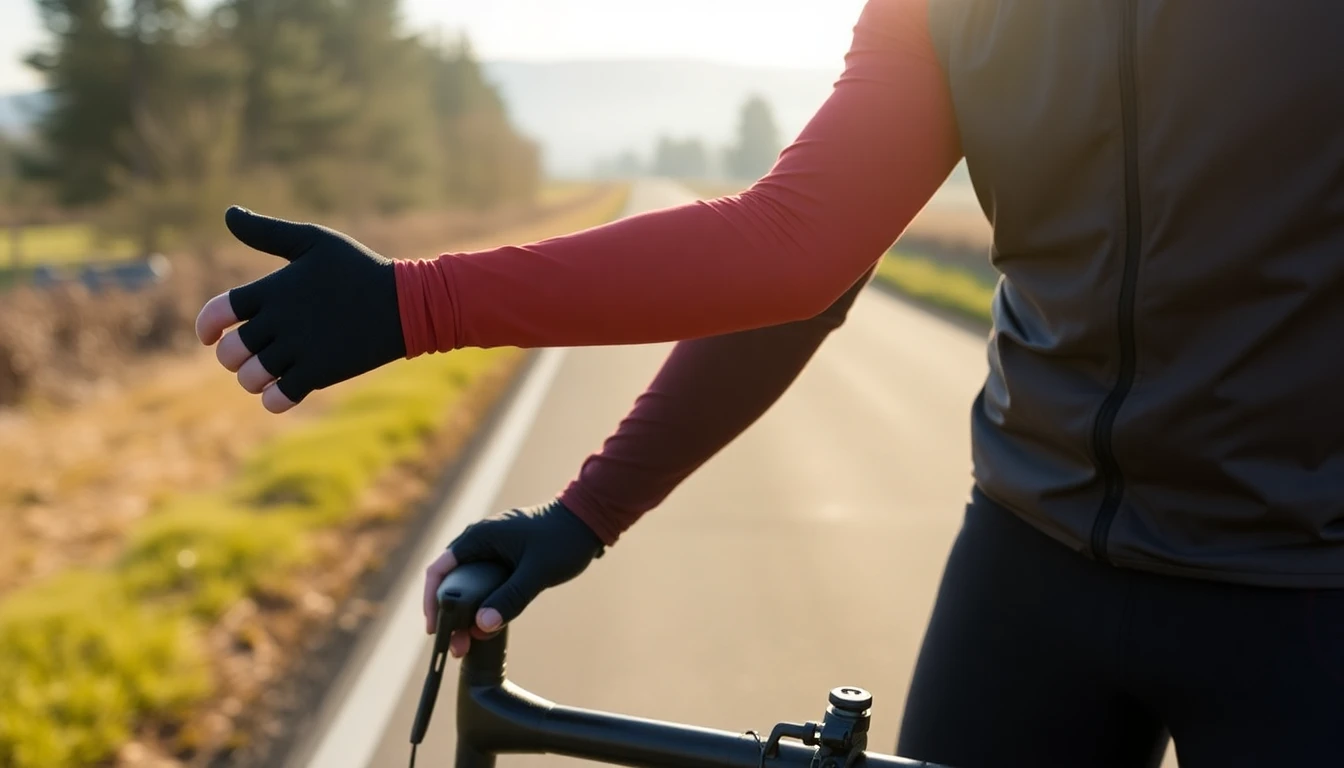
Learning to layer right at 50°F turns a cold ride into your best cycling day of the week. You need three things: a quality cycling base layer , a cycling thermal jersey, and smart accessories you can adjust as you go. Mile one feels different from mile twenty—often 10 degrees different.
Your cycling closet doesn't need every piece of gear. You just need the right pieces that work together. Start with the three-layer setup we covered. Then adjust based on how you run hot or cold and how hard you ride. Here's the truth: taking off a layer mid-ride beats shivering through the last five miles without arm warmers.
Ready to build your perfect 50-degree setup? Browse our collection of cool weather cycling gear at berunclothes. Every piece works together. You get the right preparation. Your next comfortable ride starts now.
Stay warm, ride strong, and enjoy that perfect spring cycling weather.
CTA Section 3 - End of Article