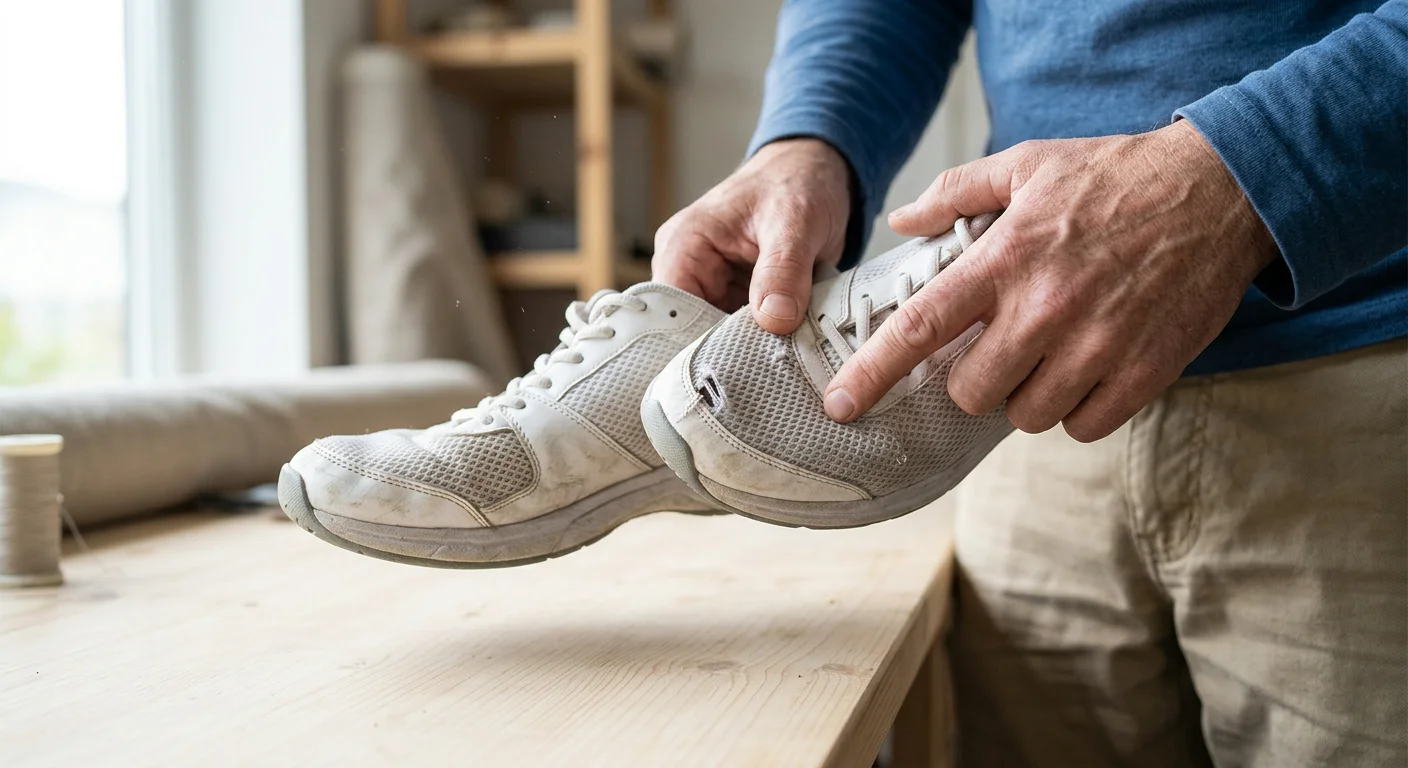
White mesh tennis shoes show every stain. One muddy afternoon or a single coffee splash, and your cleanest pair looks like you've been wearing them for years.For retailers and bulk buyers managing inventory and aftercare guidance, many turn to reliable tennis shoes wholesalers to ensure product quality and maintenance consistency across different markets.
The urge to scrub hard, toss them in the wash, or grab the bleach makes total sense. But those moves cause fading, warping, and that stubborn yellow tint that won't come out.
The best way to clean white mesh tennis shoes without ruining them isn't hard to follow. You just need to know which steps work — and which ones quietly eat away at the material.
This guide cuts out the guesswork. You'll get:
A gentle shoe cleaning method for everyday dirt
Targeted fixes for mud, grass, and yellowing
Simple steps that keep your shoes looking fresh, not wrecked
What You'll Need Before You Start: Tools & Cleaning Supplies
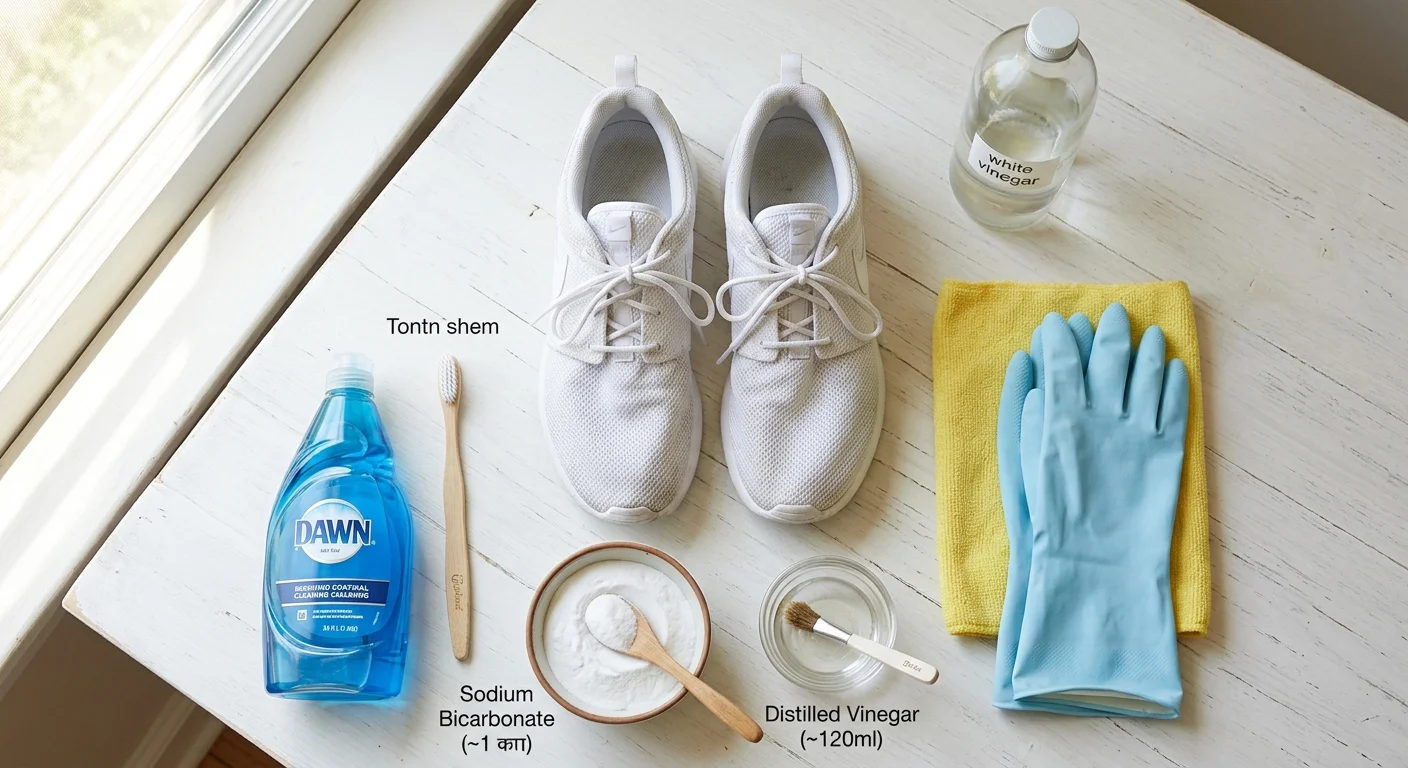
Good news: you already own most of what you need. No store run required — just check your cabinets.For brands building complete product ecosystems, these care kits are often standardized alongside footwear collections by tennis gear suppliers, ensuring customers get both the product and the right maintenance tools.
Here's what to pull together before you touch your shoes:
Cleaning Tools
- Soft-bristle brush — an old toothbrush is great for mesh. Stiff bristles tear the fabric, so avoid those.
- Microfiber cloth — picks up loosened dirt without pushing it deeper into the weave
- Small bowl — for mixing your cleaning solution
- Rubber gloves — optional, but worth it if you're dealing with set-in stains
Cleaning Solutions
- Mild dish soap — your go-to for everyday grime and surface stains
- Baking soda — a reliable choice for white shoe yellowing. Mix it with water and it lifts discoloration without bleaching the mesh.
- White vinegar — cuts through odor and light staining
- Hydrogen peroxide — save this for stubborn yellowing. A little goes a long way.
- Bleach — leaves an irreversible yellow tint on white mesh
- Harsh scrubbing pads — they fray the fibers fast
This is your complete mesh shoe cleaning toolkit. Keep it simple. Gentle tools, used the right way, do a better job than harsh ones.
Prep Work That Makes the Whole Process Easier (Don't Skip This)
Most cleaning jobs go wrong before a single drop of water hits the shoe.From a manufacturing perspective, proper pre-treatment and material handling are often defined during product development stages supported by OEM/ODM tennis apparel services, ensuring mesh durability and easy maintenance. The prep stage isn't glamorous, but skipping it is how mesh gets damaged — or how stains spread instead of lift.
Here's what to do before you start scrubbing:
Dry-brush the loose dirt first.
Got dried mud or surface debris on your shoes? Knock it off now. Use your soft-bristle brush and brush outward in short, light strokes. Pushing wet mud into mesh fibers is a fast way to drive the stain deeper. Let mud dry first, then brush it away.
Remove the laces.
Pull them out. Laces trap grime in the eyelets and block you from cleaning the tongue and collar. Soak them in a bowl of warm water and mild dish soap while you work on the shoes.
Stuff the shoes with paper towels or a dry cloth.
Pack them in enough to hold the shoe's shape while you clean. Mesh collapses under pressure. A shapeless shoe is harder to scrub in a consistent, uniform way. White paper towels work best — colored paper can transfer dye.
Work in a well-lit space.
Natural light shows stains that indoor lighting misses. You'll spot problem areas right away — and avoid scrubbing spots that are already clean.
Two minutes of prep here saves you from re-cleaning the same shoe twice.
Step-by-Step: The Best Way to Hand Wash White Mesh Tennis Shoes
Hand washing takes maybe fifteen minutes. It's the one method that gives you real control over what touches the mesh. That control is what protects your shoes from getting ruined.
Work through each step in order. Skipping ahead is how stains get locked in.For brands scaling globally, these standardized care instructions are often distributed through wholesale tennis gear suppliers to maintain consistent user experience across regions.
Step 1: Mix Your Cleaning Solution
Fill a small bowl with lukewarm water — between 65°F and 75°F . Too hot, and the mesh can shrink or start yellowing before you've even cleaned anything.
Add 1 tablespoon of mild dish soap (Dawn works well) per 10 tablespoons of water . That's your ratio. The solution needs to be gentle enough to sit on mesh fibers without breaking them down. Aim for pH-neutral, in the 6.5–7.5 range.
Give it a light stir. You don't need suds. You just need a working solution.
Step 2: Scrub the Mesh — Section by Section
Dip your soft-bristle brush into the solution. It should be damp, not dripping.
Here's the part most people get wrong: don't scrub back and forth . That motion catches on mesh fibers and frays them. Instead, work in small circular motions that follow the weave of the fabric.
Break the shoe into 3–4 inch sections and clean one zone at a time. Give each section about 2–3 minutes of soap contact . That's long enough to lift the grime, but short enough to protect the material.
For the rubber sole and midsole, press a little harder. The upper mesh needs a lighter touch throughout.
Step 3: Wipe and Rinse — Repeat Until Clean
After scrubbing each section, wipe it down with a damp microfiber cloth . Rinse the cloth, then wipe again. Do this 2–3 times per section until no foam transfers onto the cloth and no dirt comes up.
Soap residue left in mesh is a slow-motion problem. It pulls in new dirt faster and leaves dull, chalky patches as it dries.
Step 4: Treat Stubborn Stains with Baking Soda Paste
Still seeing discoloration after the first scrub? Mix 2 tablespoons of baking soda with 1 tablespoon of water into a thick paste.
Spread it onto the stained area. Let it sit for 30 minutes — don't rush this step. The paste draws discoloration out of the fibers bit by bit. After the 30 minutes are up, rinse the area with cool water. Repeat this method every two weeks as needed. It won't damage the mesh.
Step 5: Final Rinse and Air Dry
Wipe down the entire shoe one last time with a clean, cool damp cloth. No soap. Just water. You want a clear wipe — no foam, no color transfer.
Stuff the shoes with white paper towels or dry newspaper to hold their shape. Set them in a ventilated spot out of direct sunlight and let them dry for 12–24 hours .
No heat. No dryer. No shortcuts. The mesh needs time and air — nothing else.
Once dry, do a quick visual check. Look for bright white mesh, no visible staining, no residue. Still one area looking off? A second targeted scrub-and-rinse pass will take care of it.These long-term care practices are often developed and tested within a tennis clothing factory, where both footwear and apparel care standards are aligned for durability and customer satisfaction.
How to Treat Specific Stains on White Mesh Shoes (Mud, Grass, Yellow Stains & More)
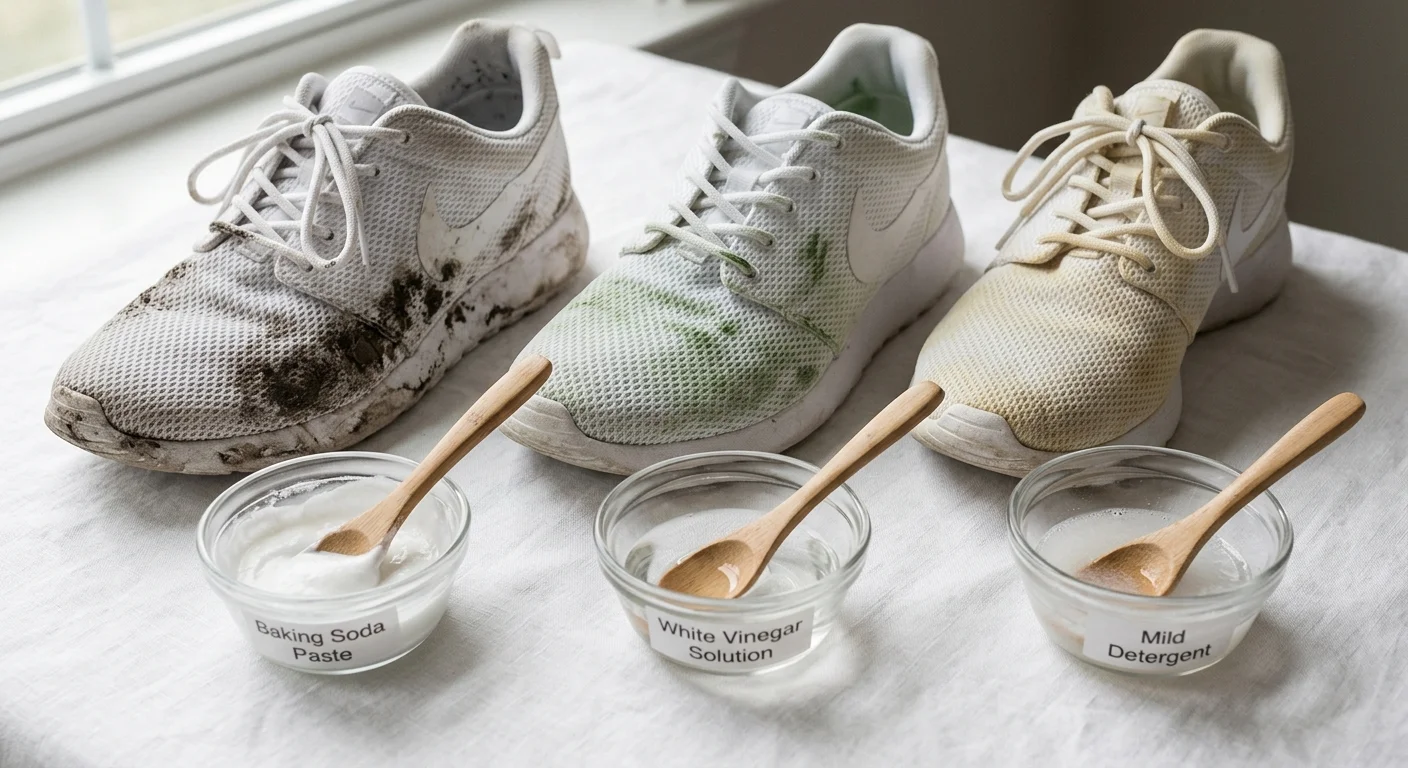
Not every stain plays by the same rules. What lifts dried mud does almost nothing for grass chlorophyll. The wrong move on yellowing can lock that discoloration in for good. Match the method to the stain, and you get results. Miss that match, and you're scrubbing in circles.
Here's what works, broken down by stain type.Many performance and lifestyle shoe brands refine these care solutions alongside production through a private lable tennis factory, ensuring materials respond well to real-world cleaning conditions.
Mud and Dirt Stains
Counterintuitive but true: wet mud is harder to remove than dry mud . Try to wipe fresh mud off mesh, and you push it deeper into the weave. Let it dry first.
Once dry, take the shoes outside and clap the soles together hard . That one move dislodges 80–90% of loose dirt before a brush ever touches the fabric. Then grab a soft-bristle brush. Sweep in the direction of the mesh — short strokes, light pressure, following the grain.
After dry brushing, mix 1 tablespoon of mild detergent per 2 cups of lukewarm water (65–75°F). Scrub the remaining residue in small sections. Rinse the area 3 times to pull all soap out of the fibers.
Grass and Yellow Stains
Grass stains are alkaline. Plain soap barely touches them. You need something that breaks down the pH.
Two methods work well here:
Baking soda paste (2 tablespoons baking soda + 1 tablespoon water): spread it on the stained area, let it sit for 30 minutes, scrub, and rinse. For extra lifting power, add 1 tablespoon of 3% hydrogen peroxide to the mix. Set the shoes in sunlight — UV exposure kicks off oxidation and gives the stain removal a real boost.
White vinegar solution (1:1 vinegar to water): spread it on, let sit for 20–30 minutes, then scrub. Most grass stains need 2–3 repeat applications for full removal — around 95% clearance with consistent repetition.
Keep the solution pH between 6.5 and 7.5. That range lifts the stain without breaking down mesh fibers.
Sole Scuffs and Black Marks
Black rubber scuffs on white soles are cosmetic damage. The good news — they respond well to mild abrasion. A few solid options:
Baking soda paste (3 tablespoons baking soda + 1 tablespoon water): spread it on the sole or midsole, scrub for 1–2 minutes. Keep this paste off the mesh — too much abrasive contact frays the fabric.
Magic eraser : use the orange side for scuff marks, the white side for polishing. One to two minutes per area gets the job done.
Non-gel toothpaste : a pea-sized amount on a soft brush, scrubbed for about 1 minute, takes care of light scuffs.
Use a medium-bristle brush on midsoles. Save the stiffer brush for outsole rubber. The upper mesh gets soft bristles — no exceptions.
Deep or Stubborn Stains
Some stains survive everything above. For those, move to a targeted soak.
OxiClean is the go-to option: mix 1 scoop per gallon of warm water (follow the label maximum), and soak for no longer than 6 hours . Before submerging the whole shoe, run a patch test. Put the solution on a 1×1 inch area, wait 5 minutes, and check for color shift. No shift? Go ahead.
For yellowing that's already set in, try the baking soda and hydrogen peroxide combination (1 tablespoon each) as a paste. Apply it, then let the shoes sit in sunlight for 30 minutes. This beats most commercial whiteners — and without the damage risk.
Bleach — causes yellowing on white mesh, the opposite of what you want.
Water above 80°F — shrinks the fibers and speeds up the same discoloration you're trying to fix.
Quick Reference: Stain Treatment by Type
| Stain Type | Method | Sit Time | Key Notes |
|---|---|---|---|
| Mud/Dirt | Dry brush + 1 tbsp detergent per 2 cups water | 2–3 min scrub | Let mud dry first; rinse 3x |
| Grass | Baking soda paste (2:1) or 1:1 vinegar:water | 20–30 min | 2–3 applications for full removal |
| Yellowing | Baking soda + peroxide (1:1); sun exposure | 30 min | No bleach; air dry 24h |
| Sole Scuffs | Baking soda paste (3:1) or magic eraser | 1–2 min scrub | Soles only; avoid mesh |
| Deep Stains | OxiClean soak (1 scoop/gallon) | Max 6 hours | Patch test first; lukewarm water only |
Drying White Mesh Shoes the Right Way to Prevent Yellowing and Deformation
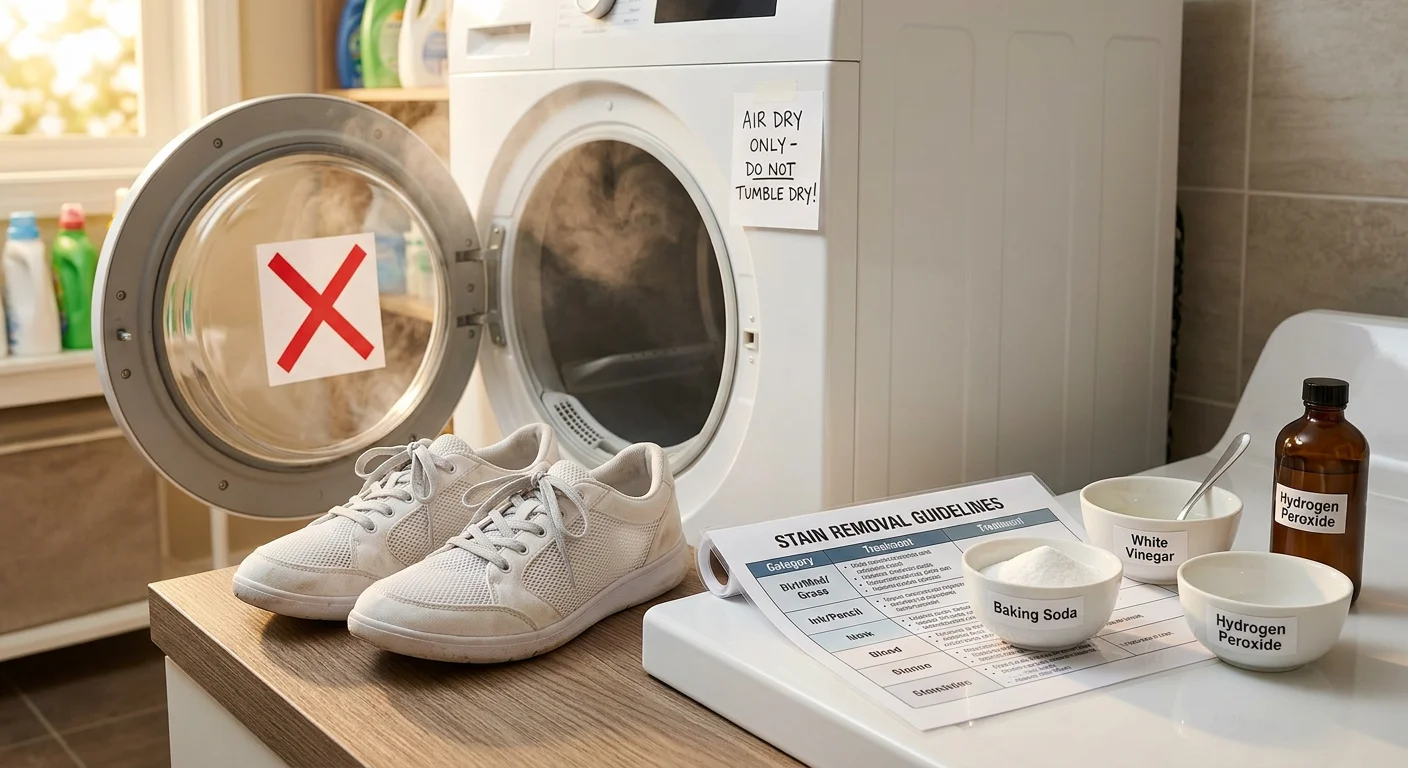
The dryer is where clean white shoes go to die. One cycle of hot air undoes everything you just did.
Heat above 80°F triggers an oxidation reaction inside wet mesh fibers. That reaction yellows white fabric, shrinks the weave, and bakes leftover soap residue deep into the material — for good. Glue-based shoes take even more damage. The adhesive softens, and the sole starts pulling away from the upper. Once that gap opens, it won't close back up.
Air drying is the one method that protects mesh. Here's the exact process:
Stuff the shoes right after the final rinse. Don't wait. Pack them with loosely crumpled newspaper or insert shoe trees while the mesh is still damp. This holds the shape while the fibers relax and dry out.
Place them somewhere with real airflow. Near an open window or in front of a fan works well. A fan cuts drying time by 20–30% compared to still air. It also dries the shoe at an even rate across the whole surface. Tight, low-airflow spots create weak points and uneven texture.
Keep them out of direct sunlight. UV exposure pushes the same oxidation that heat causes. Shade is the right call for drying post-cleaned white mesh. No exceptions.
Wait the full drying time. Normal conditions take 8–12 hours. Shoes that got soaked through, or drying in humid air, need 16–24 hours. Press the mesh with one finger — any hint of dampness means it needs more time.
Why the full wait matters: Putting insoles back in or wearing shoes that aren't bone dry traps moisture inside. That moisture leads to odor buildup. Left long enough, you'll get mold growing in the insole bed.
Used newspaper for stuffing? Swap it out every 4–6 hours. Wet paper sitting against mesh too long will over-compress the fabric and press in creases. Shoe trees are the cleaner option — wooden ones pull moisture out of the material and hold the shape across the full drying period.
One last check before you wear them: look at the mesh in natural light. You're checking for chalky residue or faint discoloration. A shoe that dried right and rinsed clean should look bright and consistent all over — no patches, no shadows.
5 Common Mistakes That Ruin White Mesh Shoes (And How to Avoid Them)
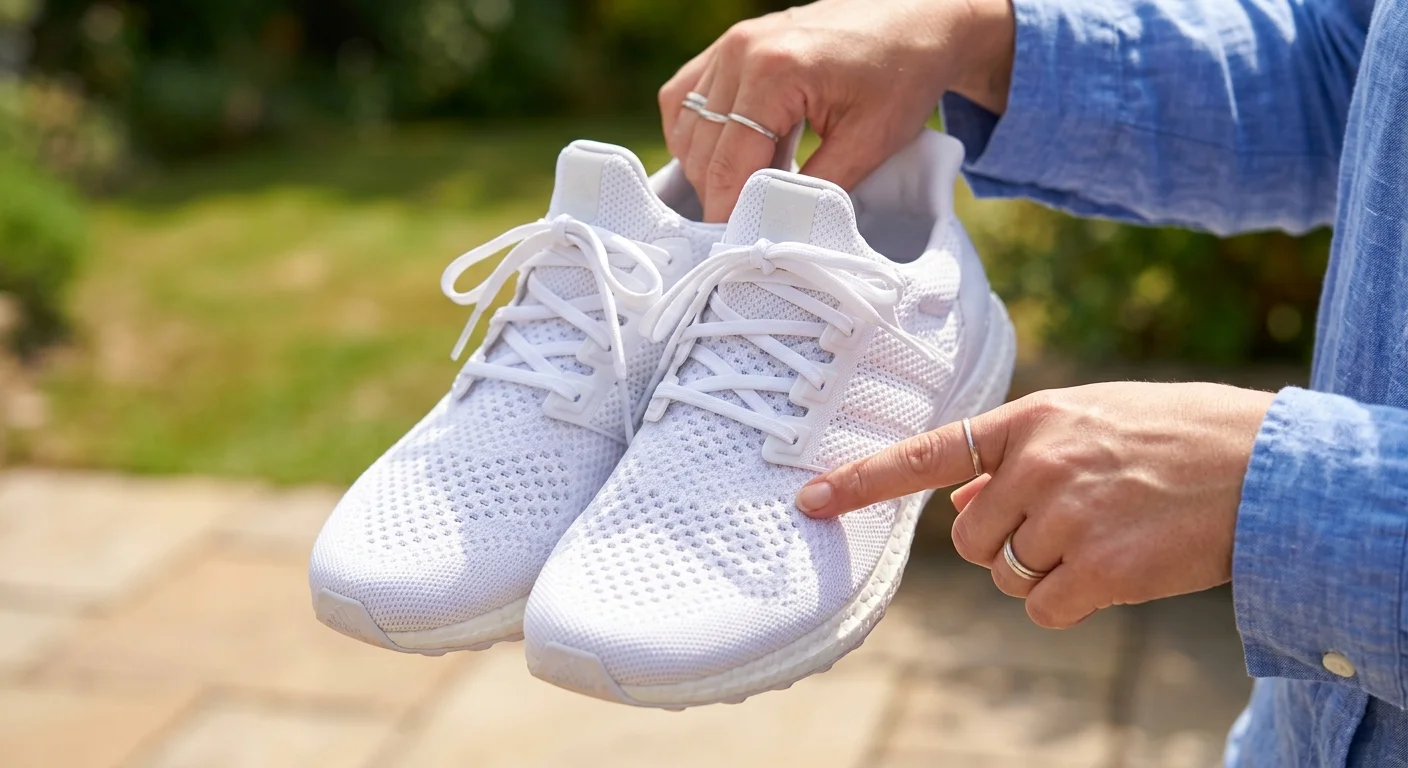
Most ruined white mesh shoes weren't destroyed by dirt. They were destroyed by the cleaning.
Here are the five mistakes that do the most damage — and what to do instead.
Mistake #1: Reaching for Bleach
Bleach feels like the obvious fix for white shoes. It's the wrong one. Sodium hypochlorite breaks down polyester and nylon mesh fibers. It oxidizes the material, weakens the structure, and leaves a yellow tint that won't wash out. You end up with shoes that look cleaner but are now yellow for good. Use mild dish soap instead.
Mistake #2: Tossing Them in the Machine
The spin cycle is brutal on mesh. The agitation distorts the shape. The heat breaks down the adhesive. Even shoes with a "machine washable" tag need strict conditions:
Cold water (under 80°F)
A mesh laundry bag
Zero spin
Air drying
Skip any of those, and the damage is real — and it won't reverse.
Mistake #3: Scrubbing Against the Grain
Hard back-and-forth scrubbing snags mesh fibers and pulls them apart. You can feel it happening — that slight resistance is the material fraying. Use a soft-bristle brush instead. Work in small circular motions that follow the weave. Light pressure lifts the stain. Force just leaves you with a fuzzy, damaged upper.
Mistake #4: Using Hot Water
Water above 80°F shrinks synthetic mesh. It also speeds up yellowing in white fabric. Lukewarm is the ceiling. Cool water is better. Heat adds zero cleaning benefit here — just risk.
Mistake #5: Wearing Them Before They're Dry
Damp mesh under pressure deforms. The glue weakens. Bacteria builds up fast in a wet insole. Give your shoes the full 24 hours to dry. They'll hold their shape better. They'll smell better. They'll last longer.
The pattern across all five mistakes is the same: the aggressive option costs more than it gains. Gentle tools, cool water, and patience are what protect white mesh sneakers over the long run.
How to Keep White Mesh Tennis Shoes White Longer: Post-Clean Care & Prevention
Cleaning your shoes is a one-time fix. Keeping them white is a habit.
Shoes that stay bright for two years aren't lucky. The owners just follow a simple maintenance routine — maybe five minutes a week. That's the only real difference.
Spray them before they get dirty.
Once your shoes are dry from cleaning, apply a fabric or mesh-specific protective spray. This builds a barrier that slows dirt and moisture from sinking into the weave. Spray again each month. Most people skip this step — and it's the single easiest thing you can do to protect white sneakers.
Clean on a schedule, not when it looks bad.
Athletic use needs a wipe-down every one to two weeks. Casual wear can stretch to every two to four weeks. Here's the logic: surface dirt that takes thirty seconds to remove today can become embedded staining that takes thirty minutes to fix later.
Your twice-a-month routine should look like this:
- Brush off loose surface dirt with a soft brush
- Spot-treat any staining with mild detergent and a little water
- Air dry for 12–24 hours — no heat, no shortcuts
This isn't a deep clean. No soaking, no full submersion. It's low-effort upkeep that stops problems before they start.
Store them right.
Keep your shoes in a cool, dry spot away from direct sunlight. UV exposure yellows white mesh — even on days you're not wearing them. Pack shoe trees or stuffers inside to hold the shape over time and prevent creasing at the toe box.
Build better wearing habits.
Avoid grass and mud when possible. Miss that? Clean the shoes within 24 hours. After rain, wipe them down right away and let them air dry before putting them away. Damp storage leads to mildew fast. Rotating between two pairs also helps — each pair picks up less wear and dirt over time.
Check your shoes every two weeks while you're at it. A loose stitch or small tear caught early is a five-second fix. Leave it for two months, and it becomes a much bigger problem.
Conclusion
Your white mesh tennis shoes didn't get dirty overnight — and they don't have to stay that way.
The real secret isn't some miracle product. It's patience, the right gentle cleaning method, and knowing what not to do (looking at you, bleach bottle). A soft brush, a little baking soda, and fifteen minutes of focused effort will get you better results than any aggressive scrub session.
Stick to those three things, and you'll spend far less time cleaning — and a lot more time wearing them.
Now close the tab and go rescue those shoes. They're waiting.
Ready to upgrade the rest of your athletic wardrobe? berunclothes.com has everything you need to look sharp from head to toe — not just the sneakers.
Video Section