Starting a clothing brand with genuine sustainability credentials is harder than most people think. You have a vision, maybe a few sketches, a clear sense of your values — and then you start reaching out to manufacturers. That's when reality hits.
Minimum order quantities sit at 3,000 units per colour. Factories claim they're "eco-friendly" but can't produce a single certification to back it up. You ask about fabric sourcing and get vague answers about "premium materials." And the ones who do tick all the boxes? They're booked out for six months or simply won't talk to you unless you're ordering tens of thousands of pieces.
I've spent the better part of a decade working in sustainable fashion supply chains, and I've watched dozens of small brands burn through their launch budgets on the wrong manufacturing partner. So I put together this list — not of the biggest names, but of manufacturers that genuinely work well with emerging brands trying to do things properly.
What to Look for in a Sustainable Manufacturer
Before we get into the list, here's what actually matters when you're vetting a manufacturing partner:
The 7 Manufacturers Worth Your Attention
1. Continental Clothing
Continental has been a staple in the European ethical fashion space for over 30 years, and there's a reason they keep showing up in conversations about responsible manufacturing. Based in the UK with production facilities across Asia and Europe, they hold GOTS, Fair Wear, and Peta-Approved Vegan certifications across most of their range.
What makes them particularly useful for small brands is their blank garment catalogue. If you're not ready for fully custom production, you can order their certified organic basics and have them printed or embroidered locally. MOQs on blanks are extremely low — sometimes as few as 10 pieces. For full custom work, expect higher minimums, but their team is genuinely helpful in guiding newer brands through the process.
Their EarthPositive line uses 100% renewable energy in production, which is a claim very few manufacturers can substantiate with actual data. Check them out at continentalclothing.com.
CTA 1Looking for a Sustainable Manufacturing Partner?
Get expert guidance on choosing the right eco-friendly manufacturer for your brand. We offer low MOQs starting from 100 pieces.
Request a Free Quote2. Berunclothes
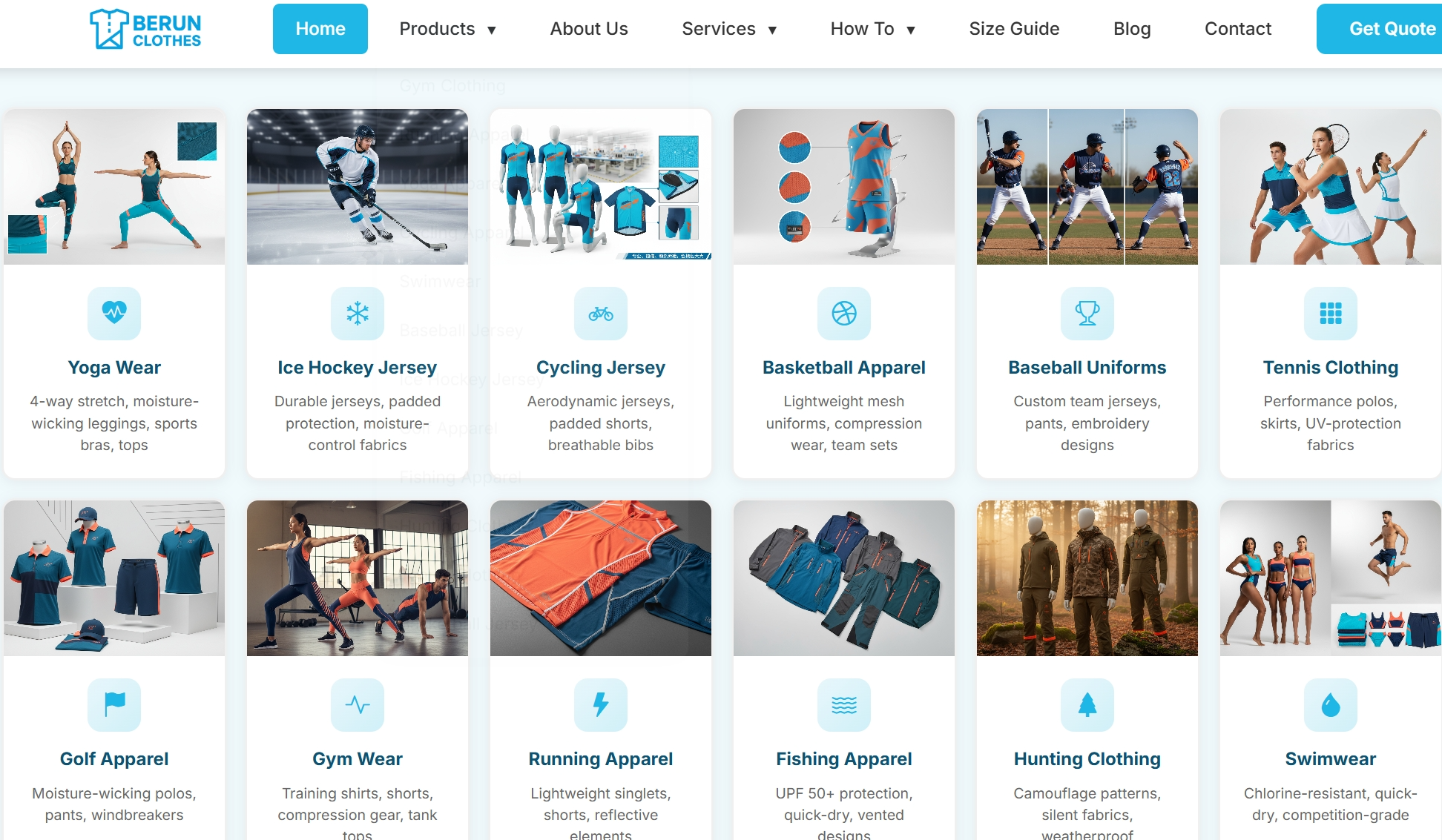
Berunclothes is a custom clothing manufacturer based in Asia that's carved out a niche working specifically with independent and emerging brands. What caught my attention initially was their willingness to take on smaller orders — their MOQs start at around 100 pieces per style, which is genuinely rare for a full-service OEM/ODM operation.
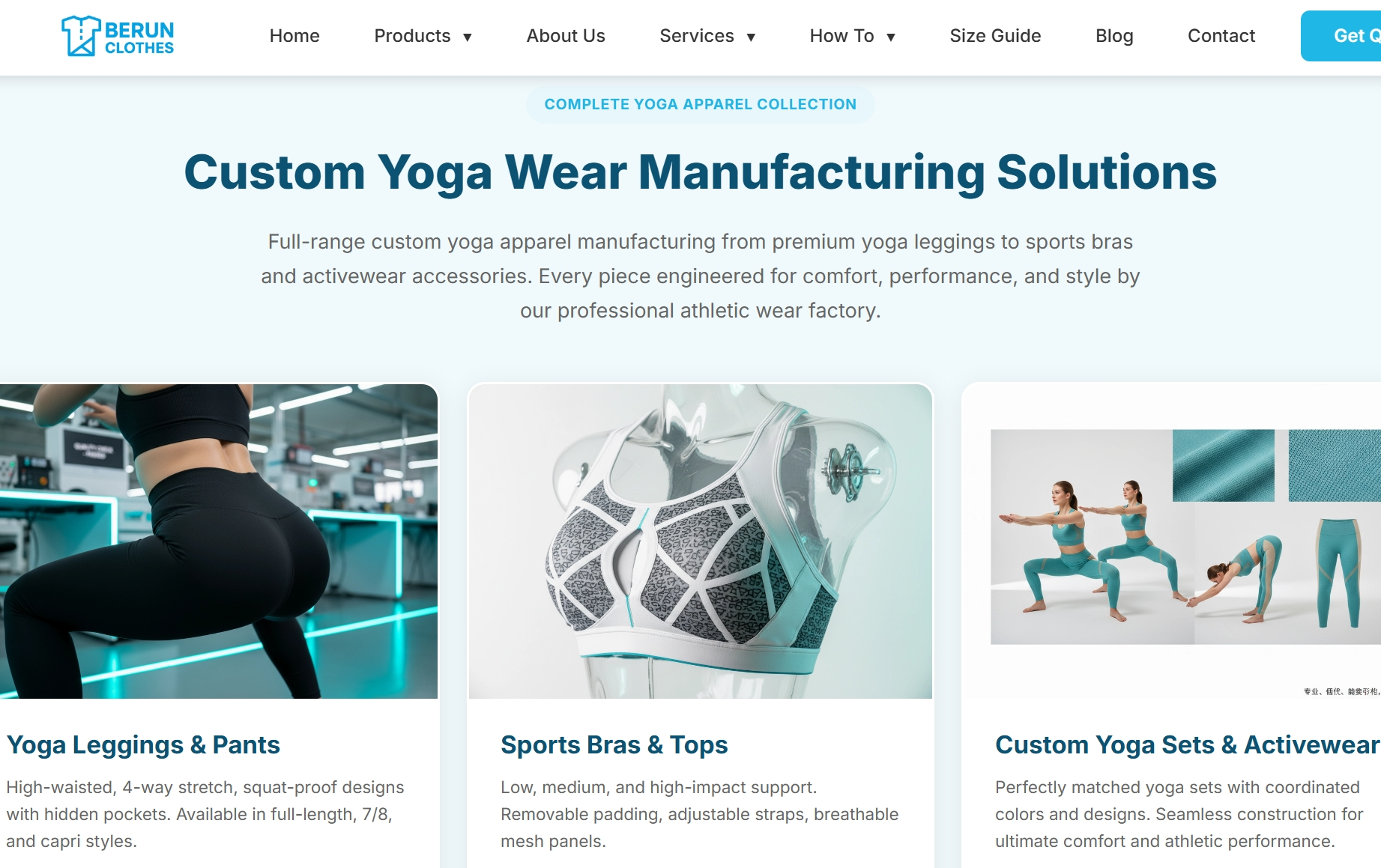
They hold BSCI and OEKO-TEX certifications and work with organic cotton, recycled polyester, and bamboo fabrics. Their strength is versatility: they handle everything from casual streetwear to performance categories. If you're launching an activewear line, they're one of the few factories I've seen that operates as both a general apparel producer and a specialist yoga apparel manufacturer, which means they understand technical fabrics and construction details that many conventional factories miss. Their expertise extends to gym clothing manufacturing as well.
Their design team can work from a rough sketch or a detailed tech pack, and turnaround on sampling is typically two to three weeks. Communication has been consistently responsive from what I've heard from brands who've used them — which, frankly, is half the battle when you're working with overseas production.
3. Stanley/Stella
If you've bought a printed organic cotton t-shirt from a European indie brand in the last five years, there's a decent chance it was a Stanley/Stella blank. This Belgian company has essentially become the default choice for sustainable print-on-demand and small-batch brands across Europe.
They're GOTS-certified, Fair Wear members, and they publish an annual sustainability report with actual numbers — carbon footprint per garment, water usage, the works. Their product range is focused but well-executed: tees, sweatshirts, hoodies, and a growing selection of woven pieces.
The downside? They're a blank supplier, not a custom manufacturer. You can choose from their existing styles and have them decorated, but if you want bespoke patterns or cuts, you'll need to look elsewhere. For many emerging brands, though, that's exactly what they need at the start. Visit stanleystella.com.
CTA 2Need Custom Cuts, Fabrics, and Labels?
Unlike blank suppliers, BeRun offers full OEM/ODM services with BSCI and OEKO-TEX certifications. Start with just 100 pieces per style.
Get Your Custom Sample4. Rapanui
Rapanui is a bit of an outlier on this list because they're primarily a consumer brand based on the Isle of Wight. But they also run a manufacturing arm and white-label service that's worth knowing about if you're a UK-based brand wanting to keep production close to home.
Their factory uses renewable energy, and they've built a traceability system that lets you track every garment back to the specific batch of organic cotton it came from. They're vocal about circularity too — their products are designed to be sent back and remade at end of life.
MOQs for their white-label service are reasonable, though pricing reflects the fact that you're manufacturing in the UK rather than overseas. If "Made in Britain" is part of your brand story, Rapanui is one of very few options that can deliver on that claim sustainably. More at rapanuiclothing.com.
5. Colorful Standard
This Danish brand has built a loyal following with a deceptively simple proposition: classic wardrobe staples in a broad palette of colours, all made from certified organic cotton in a GOTS-certified, Fair Wear-audited Portuguese factory.
For emerging brands, Colorful Standard is interesting as a wholesale and blank partner. Their garments are well-made enough to serve as a foundation for your own branding, and the colour range — over 50 shades across their core styles — means you can build a collection without commissioning custom dye runs.
They won't do bespoke manufacturing, but if your brand concept works with premium basics in specific colourways, they're hard to beat on quality and ethical credentials. Their pricing sits at the higher end of the blank market, but the Portuguese construction quality justifies it. See their range at colorfulstandard.com.
6. Allmade
Allmade takes a different angle on sustainability — their focus is as much on the social side as the environmental. Founded in partnership with an organisation working in Haiti, their supply chain is built around creating dignified employment in communities that need it most.
Their tri-blend fabric (organic cotton, recycled polyester, and Tencel modal) feels genuinely premium and has become popular with custom apparel decorators in the US market. Each Allmade garment comes with a traceable impact story — how many litres of water were saved, how many days of fair-wage employment were funded.
MOQs are low since they operate primarily as a blank apparel supplier. If your brand is US-based and your sustainability story leans toward social impact and fair wages, Allmade is a strong fit. Learn more at allmade.com.
7. Pact
Pact started as a direct-to-consumer organic basics brand but has expanded into wholesale and B2B partnerships that make them accessible to other brands. They manufacture in Fair Trade Certified factories in India, and their entire range uses GOTS-certified organic cotton.
What's useful for emerging brands is their established supply chain infrastructure. Rather than building relationships with individual factories yourself, working with Pact gives you access to a vetted, certified production pipeline. They're particularly strong in everyday essentials — underwear, tees, loungewear — so if your brand sits in that space, they're worth a conversation.
Their retail pricing is competitive, which tells you their production costs are well-managed. That efficiency can translate to reasonable wholesale pricing for brand partners. Details at wearpact.com.
So, Which One Should You Pick?
There isn't a single right answer — it depends entirely on where you are as a brand and what you need right now.
My honest advice: talk to at least three manufacturers before committing. Order samples from each. Pay attention to communication speed, sample quality, and how they handle your questions. The best sustainable manufacturer for your brand isn't necessarily the cheapest or the most certified — it's the one that treats your 200-unit order with the same care they'd give a 20,000-unit order.
Start those conversations now. Good manufacturers book up, and lead times in sustainable production tend to run longer than conventional. The brands that launch on time are the ones that started sourcing six months early.
About the Author: This article was contributed by the team at Berunclothes, a custom clothing manufacturer focused on sustainable production for emerging brands.
CTA 3Ready to Launch Your Sustainable Clothing Brand?
Talk to our team about organic cotton, recycled polyester, and bamboo fabric options. Sampling turnaround in 2-3 weeks.
Start Your Project Today