You don't need a gym membership, a rack of dumbbells, or even a spare room to get strong. Just grab the mat rolled up in the corner of your bedroom — and the right moves to make every minute count.What’s changed in recent years is how much better that simple setup has become. The mat, the fit, even the fabric you wear now often comes from specialized yoga clothing suppliers working closely with training-focused brands to improve comfort and movement at home.
A complete beginner building your first routine? This full body mat workout works for you. Fallen off the fitness wagon and need a low-pressure way back in? It works for you too. Real, lasting results — zero equipment required.
Ten exercises, chosen with purpose. They hit your core, strengthen your posterior chain, fix your posture, and yes — get your heart rate up too.
Keep reading. What comes next will change the way you think about home training.
How to Use This Workout Plan (Before You Start)
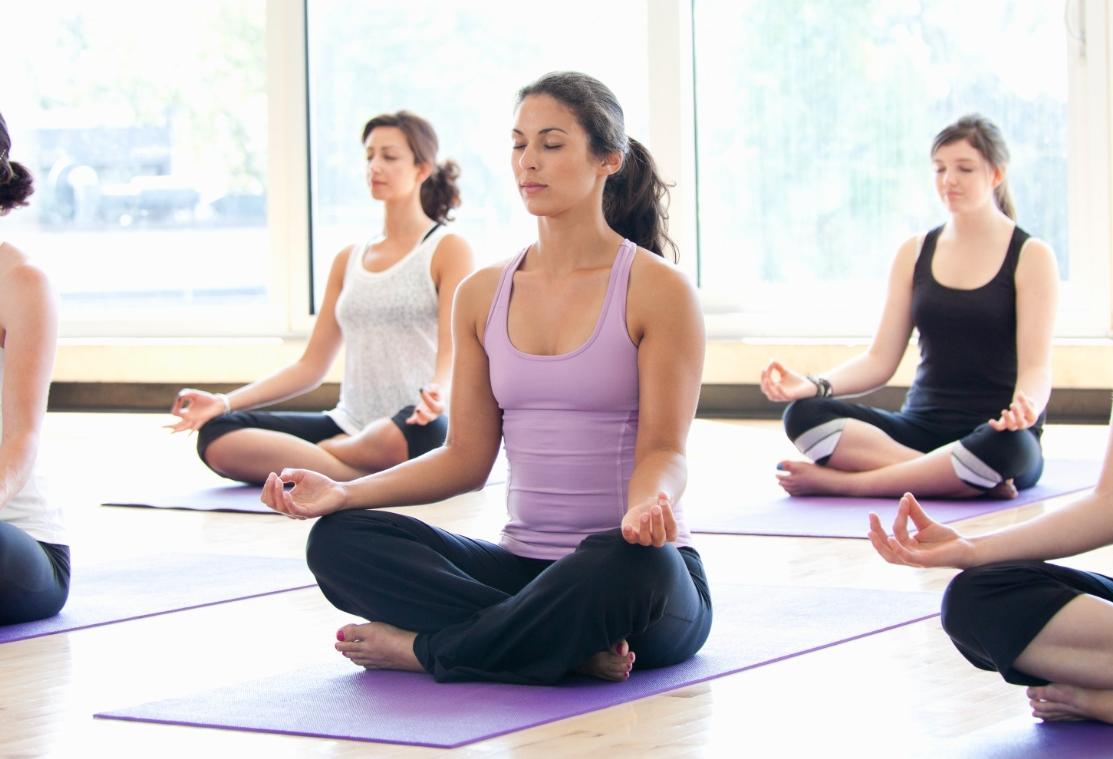
This isn't a rigid program. Think of it as a flexible framework that fits around your schedule — without losing your progress.
Here's the structure that works:
Frequency : Start with 2–3 sessions per week . Your muscles need 48–72 hours to recover and rebuild. That rest period is part of the training, not a break from it.
Sets & reps : Do 3 sets of 10–15 reps per exercise. Rest 30–60 seconds between sets. Each session runs about 30 minutes — a format many fitness brands now design around in collaboration with yoga outfit manufacturers adapting apparel for short, efficient home training.
Warm-up : Non-negotiable. Spend 5–10 minutes on arm circles, leg swings, and bodyweight squats before you begin.
Before your first session , do three things:
Set a SMART goal — something like "I want to build visible core strength in 10 weeks"
Record your baseline: max push-ups, resting pulse, how you feel
Block workout time in your calendar like a real appointment — treat it like one
Consistency wins over intensity. Full stop.
1. Forearm Plank — The Core Stability Foundation
Here's a quiet truth about strength: the stillness is the work.
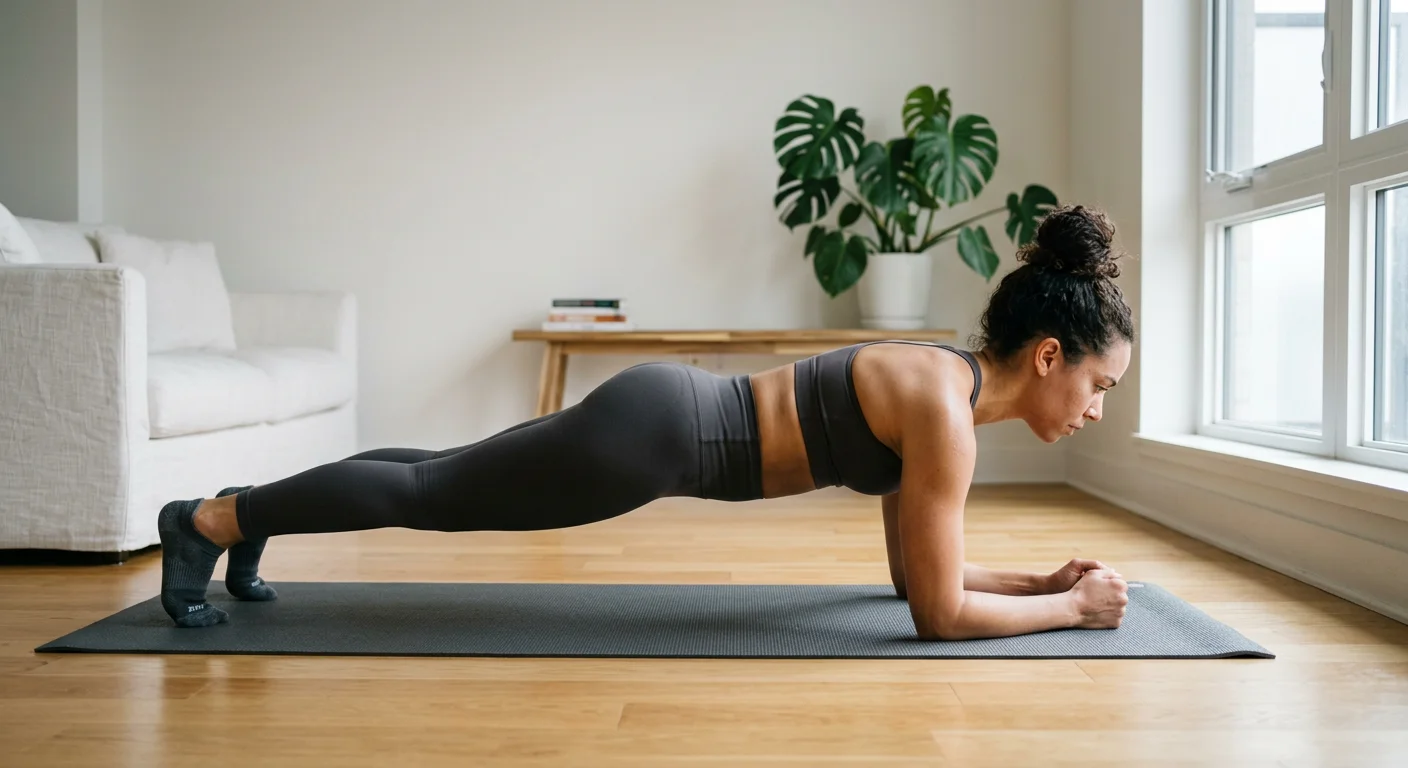
The forearm plank looks simple — no movement, no weight, no drama. But hold it for 30 seconds with proper form and your entire body will tell a different story.
How to do it:
- Plant your elbows under your shoulders, forearms flat on the mat
- Draw your body into one long, rigid line — head to heels
- Pull your navel toward your spine and breathe. Slow inhale through the nose. Steady exhale through the mouth
- Don't hold your breath. That's where people go wrong
Two mistakes to fix right away:
- Hips sagging — squeeze your glutes and lift. Think: rigid plank, not a hammock
- Shoulders creeping toward your ears — press your forearms down and let them drop
Hold times by level:
Level | Target |
|---|---|
Beginner | 30 seconds |
Intermediate | 60 seconds |
Advanced | 90+ seconds |
A 2013 study confirmed what coaches already knew. Integrated exercises like the forearm plank activate the deep transverse abdominis far better than crunches ever do. The deep transverse abdominis is the muscle layer most crunches never reach. On top of that, 12 weeks of consistent planking showed real gains in core endurance, VO2 max, and grip strength — even in adults over 60.
Ready to progress? Try the single-leg variation — lift one foot 6–8 inches and hold. Small shift. Much harder.
2. Double Leg Lifts — Low-Impact Core Burner
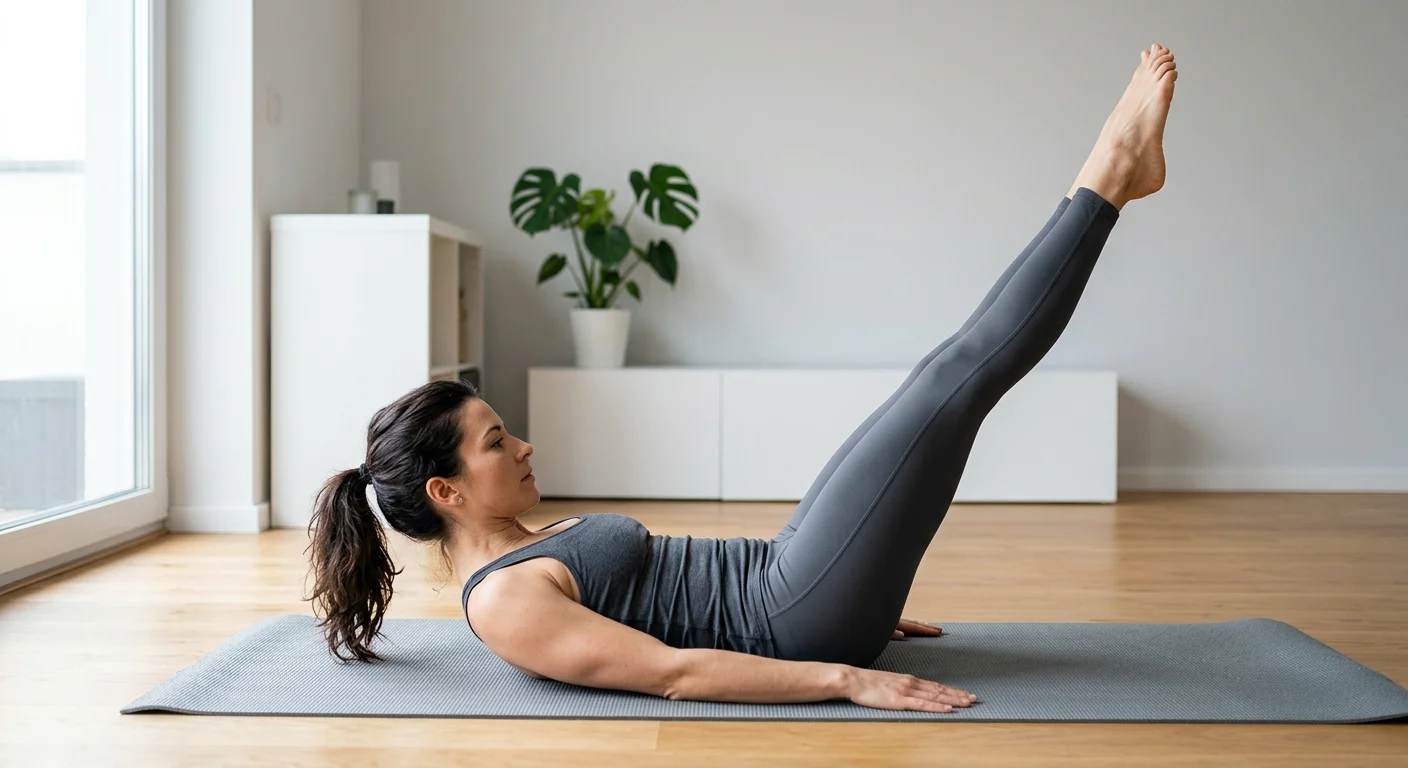
Most people skip lower ab work — not because they don't want it, but because nothing seems to reach down there. Double leg lifts do.
How to do it:
- Lie flat on your back, legs extended straight toward the ceiling, toes pointed, heels together
- Place hands behind your head or slide palms under your lower back for support
- Press your lower back hard into the mat — keep it there through the full movement
- Inhale as you lower both legs toward the floor — stop at 45° or a gentle 6-inch hover
- Exhale as you lift them back to vertical. That exhale does real work — it pulls your core tight on its own
Start here if you're new to this:
Modification | What It Does |
|---|---|
Single-leg alternate | Cuts lumbar pressure by over 50% |
Bent knees | Reduces lever arm — easier on the lower back |
Palms under lower back | Gives your spine a cue to stay flat |
Crunches hit your upper abs. That's about it. Double leg lifts work differently — they target your lower rectus abdominis, obliques, and deep transverse abdominis all at once. That's three muscle groups crunches rarely touch. This matters for pelvic stability and protecting your lower back over time.
Aim for 10–12 reps across 2–3 sets . The moment your back arches or your belly domes upward — stop. That's your body telling you the load has exceeded your current core strength. Honour that signal.
3. Glute Bridges — Build Your Posterior Chain at Home
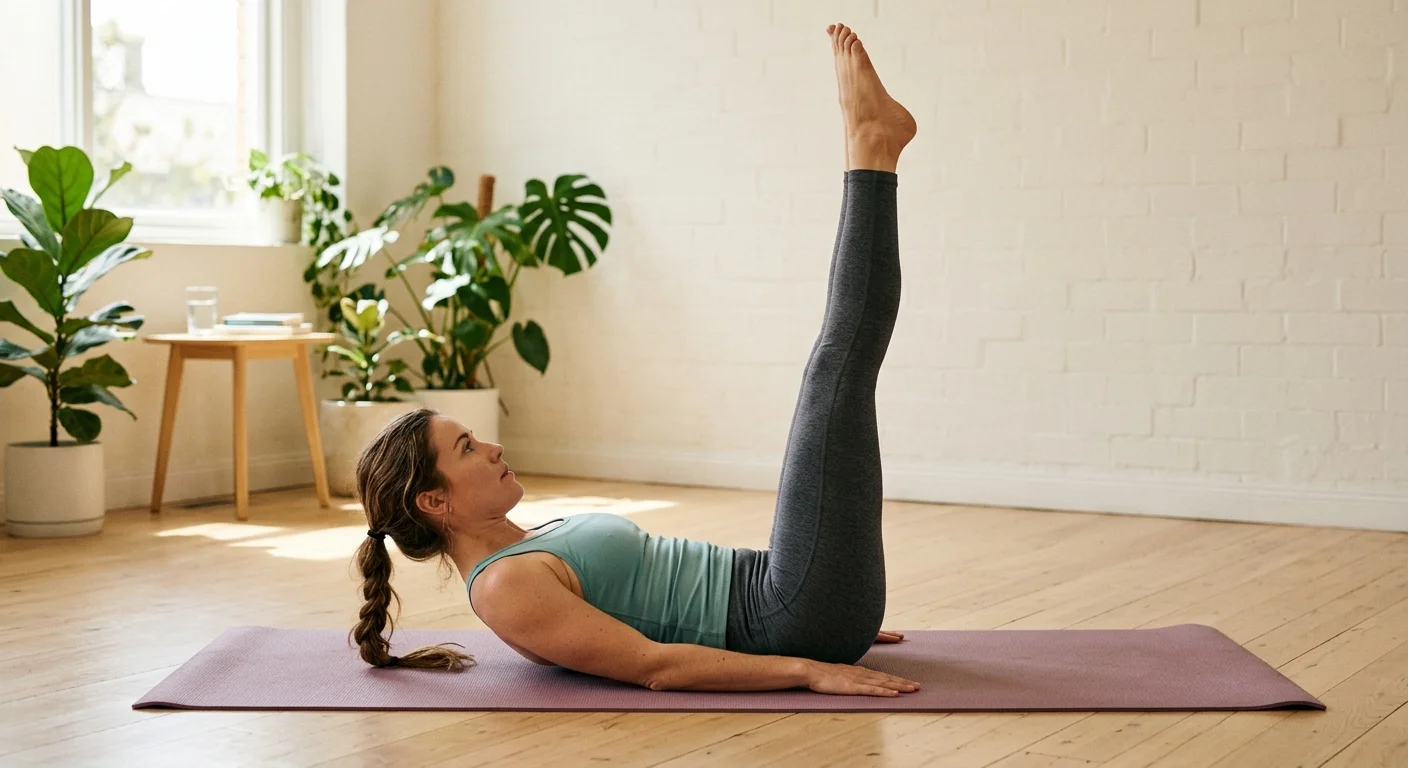
Sitting is wrecking your posterior chain — and most people have no idea it's happening.
Hours in a chair switch your glutes off . They stop firing. Your pelvis tilts forward. Your lower back takes on load it was never built to handle. The whole system starts to break down, and that breakdown hurts. Glute bridges reverse that damage, one rep at a time— a movement pattern often considered in product testing by yoga gear manufacturers aiming to improve stability and support..
How to do it:
- Lie on your back, knees bent to 90°, feet flat and hip-width apart
- Drive through your heels — not your toes. This detail is what separates glute work from hamstring work
- Lift your hips until shoulders, knees, and hips form one straight line
- Squeeze hard at the top. Hold for 2 full seconds
- Lower with control. That descent is half the exercise
Common mistakes worth fixing:
Mistake | Fix |
|---|---|
Pushing through toes | Shift your weight back into your heels on purpose |
Knees caving inward | Press them outward, tracking over toes |
Rushing the top | Count to two. Every single rep |
Progress when you're ready:
Single-leg variation — extend one leg, drive through the opposite heel. 3 sets of 8–12 reps per side
Weighted variation — rest a filled water bottle (2–5L) across your hips. Same form, meaningful added load
A study of 219 participants found that 12–16 weeks of posterior chain training beat general exercise for strength gains (SMD=0.45, p=0.001). Your glutes aren't a vanity muscle — they're your foundation.
4. Bicycle Crunches — Obliques & Core Rotation Trainer
San Diego State University tested 13 common ab exercises with EMG measurement. Bicycle crunches came in first. They produced more oblique and rectus abdominis activity than every other move on the list. That's not opinion. That's muscle science.
How to do it:
- Lie on your back, hands resting behind your head, elbows wide
- Lift your shoulders off the mat, knees bent at 90°
- Bring your right elbow toward your left knee while you extend the right leg
- Switch sides in a slow, controlled pedaling rhythm
The form detail that changes everything:
The rotation comes from your obliques — not your neck. Your hands support your head. They don't pull it. Feel your neck straining? Slow down right away.
Two tempos, two goals:
Tempo | Best For |
|---|---|
3 seconds per side | Strength, hypertrophy, form precision |
Explosive | Athletic power, fast-twitch engagement |
Studies show that deliberate form cues shift muscle activation in real, measurable ways. Focus on oblique engagement and the EMG ratios jump from 0.76 to 1.45 — close to double the oblique recruitment. Your attention is part of the exercise. It's not just effort that counts. It's where you direct that effort.
Mistakes that quietly kill the work:
- Pulling your neck forward instead of rotating your thoracic spine
- Rushing through reps on momentum alone
- Letting your lower back arch off the mat
Aim for 10–12 controlled reps per side , across 2–3 sets. Go slower than you think you need to. The results will be better than you expect.
5. Superman — Counteract Desk Posture & Strengthen Your Back
Every hour at a desk shortens the muscles in your chest and stretches the ones in your back. Over time, standing tall starts to feel like work.
The Superman fixes that. Lie face down and lift your arms, chest, and legs at the same time. For a few seconds, your body does the exact opposite of what a chair does to it.
How to do it:
- Lie face down, arms extended forward, legs straight behind you
- Exhale and lift — arms, chest, and legs rise together in one smooth movement
- Gaze downward. Let your neck stay long, not cranked up
- Hold the peak for 2–3 seconds , core braced
- Lower with control. Slow and steady on the way down. Repeat for 10–15 reps across 3 sets
What it's working:
Your erector spinae, multifidus, glutes, hamstrings, and upper back all fire here. Together, they pull your shoulders back and open up your chest. This pushes back against the rounded, forward-collapsed posture that builds up from long desk hours.
One pairing worth noting: combine this with your forearm plank. Superman trains the posterior chain. The plank trains the anterior. Run them together and you get a balanced core — front and back working as one system, protecting your spine from every angle.
6. Downward Dog — Mobility, Strength & Active Recovery in One
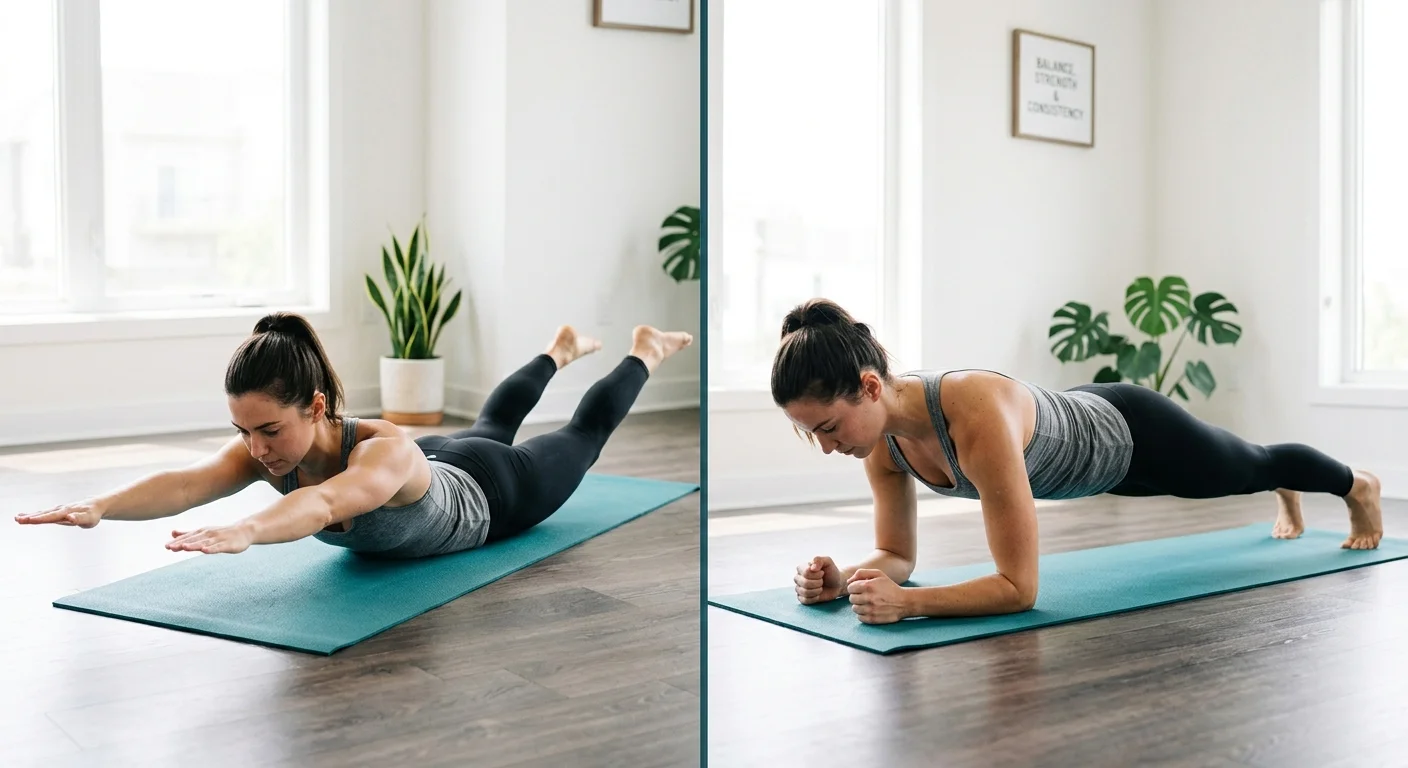
Downward Dog is the rare move that does two jobs at once — it strengthens while it restores, which is why many brands work with custom yoga gear suppliers to refine grip, stretch, and durability for repeated use.
How to do it:
- Spread your fingers wide, press your palms down and forward into the mat
- Lift your hips toward the ceiling — sit bones reaching up, body forming a triangle
- Press your heels toward the floor. They don't need to touch. The intention is enough
- Gaze toward your navel. Let your spine lengthen on its own
- Hold for 5 full breaths — inhale through the nose, exhale through the mouth, sinking a little deeper each time
What it's doing to your body:
Your shoulders, arms, and wrists carry real load here. That builds upper-body strength and bone density. At the same time, your hamstrings, calves, and Achilles stretch with every exhale.
A 12-week study found yoga practitioners averaged a 2.1-point drop in back pain — compared to just 1.3 in the control group. That's solid relief from a single shape.
Two ways to use it:
Context | Role |
|---|---|
Mid-workout | Active strength move — upper and lower body loaded |
Post-run or between sets | Recovery position — circulation boost, spinal decompression |
Sun salutations repeat it up to 8 times per session . There's a reason for that.
7. Flutter Kicks — Low-Back Friendly Cardio Core Move
Most people keep cardio and core training separate. Flutter kicks combine both in one simple move.
How to do it:
- Lie on your back, palms flat under your glutes for pelvic support
- Extend both legs at a 30–45° angle from the floor, legs straight
- Alternate legs up and down in a slow, swimming-like rhythm — controlled, never frantic
- Press your lower back hard into the mat throughout every rep
- Gaze toward your mid-thigh, chin just off your chest, neck neutral
Lower back lifting off the mat? Raise your feet a bit higher. That small fix protects your spine and puts the burn where it should be: your lower abs.
Primary muscles working: lower rectus abdominis, obliques, hip flexors. Secondary: quads, hamstrings, lower back.
Progress by level:
Level | Duration | Sets | Rest |
|---|---|---|---|
Beginner | 20–30 seconds | 2–3 | 15–30 sec |
Intermediate | 40 seconds | 3 | 30 sec |
Advanced | 45–90 seconds | 3 | 30 sec |
Stick with flutter kicks over time and you burn an estimated 250–400 calories per session . That's real cardio output — no jumping needed.
8. Boat Pose — Balance, Core & Mental Focus
Stillness and shaking live side by side in Boat Pose — that tension is the whole point.
How to do it:
- Sit tall, legs extended, hands resting behind your hips
- Lean back a little, balancing on your sitting bones and tailbone — spine long, never rounded
- Exhale, bend your knees, and lift your thighs to 45° above the floor
- Straighten your legs if you can, toes rising to eye level, arms extended forward, palms facing inward
- Hold for 10–20 seconds to start, then build toward 60 seconds over time
Not ready for straight legs? Start here:
Bend your knees, shins parallel to the floor. Hands on the backs of your thighs. Chest lifted. That's your foundation — build from it.
What it's building: transversus abdominis, obliques, hip flexors, quads, and upper back. All working at once.
The mental side matters here too. Your breath is what keeps you steady. Inhale to lengthen the spine. Exhale to firm the abs. Soft eyes, smooth breath — that's how you hold longer than you expected.
9. Push-Ups (Knee or Full) — Upper Body Strength Without Weights
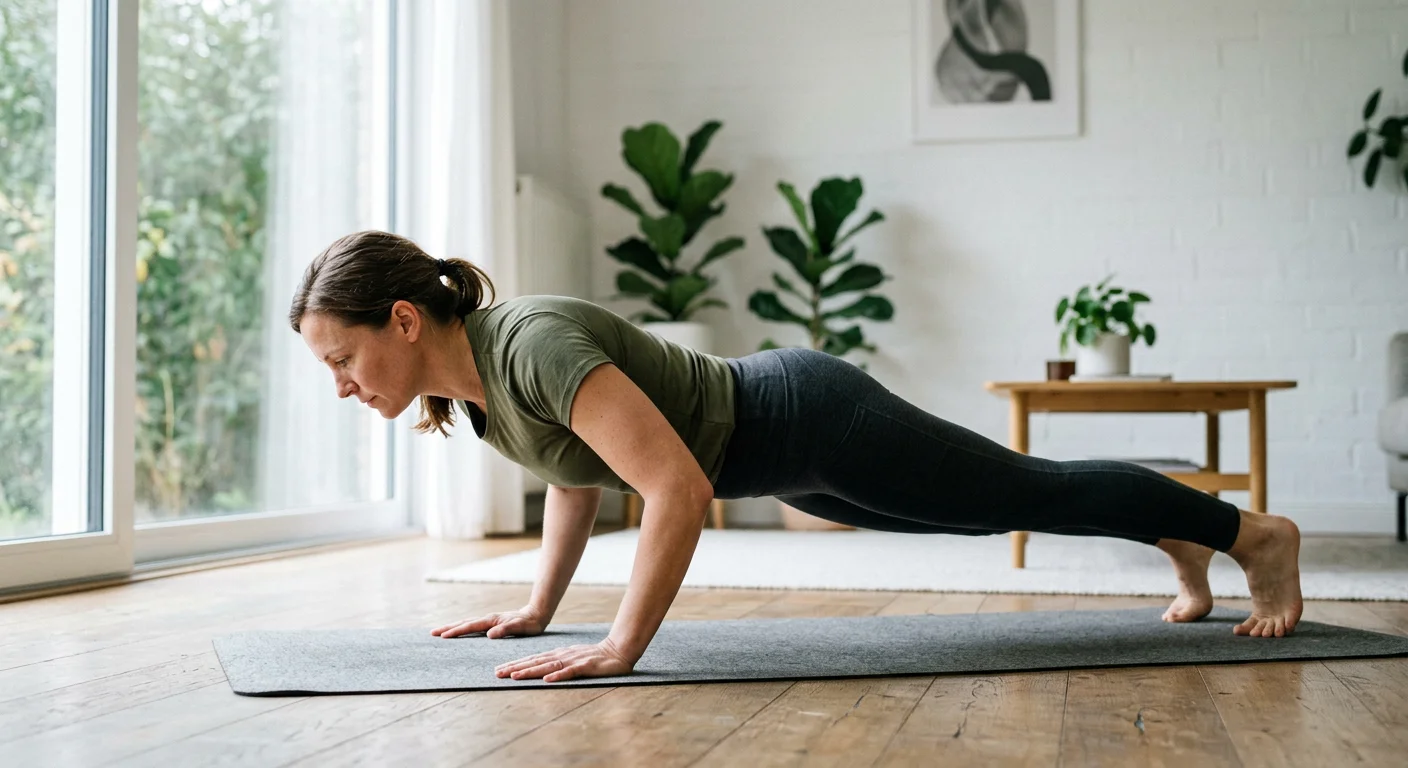
Few exercises have earned their reputation the way the push-up has.
No cables. No bench. Just you, your mat, and gravity doing its job.
How to do it:
- Start on all fours, hands shoulder-width apart, wrists stacked under shoulders
- Lower your chest toward the mat — slow, 2 seconds down
- Exhale and press back up — 1 second up
- Keep your elbows at 45° from your torso. Not flared wide. That angle protects your shoulders and keeps your chest and triceps doing the real work
Knee or full — here's what changes:
Version | Load (% body weight) | Best For |
|---|---|---|
Knee | 49% | Beginners, building baseline strength |
Full | 64% | Full-body integration, greater core demand |
Chest, shoulders, and triceps activation? Almost the same in both versions. Full push-ups add more abdominal and quad engagement. The rest stays the same.
Build up step by step:
Knee → Incline (hands elevated) → Full → Narrow-grip → Wide-grip
20 knee push-ups feeling easy? Move up. That's your signal.
Aim for 3–4 sets of 8–15 reps . Track your max each week. It's one of the clearest signs of real upper-body progress you'll find in any beginner home workout plan .
10. Seated Russian Twists — Rotational Core Power
Your obliques are the most underworked muscles in most home routines. Seated Russian Twists fix that fast.
How to do it:
- Sit on your mat, knees bent, feet flat on the floor
- Lean back to 45° — spine straight, never rounded
- Clasp your hands at chest level, or hold a water bottle for extra resistance
- Rotate your torso to one side, weight touching the floor if you can reach it
- Drive the movement from your ribs , not your arms. Short, controlled rotation beats wide, sloppy swings
- Aim for 10 reps per side , across 2–3 sets
Feet flat or lifted? Here's the difference:
Position | Difficulty | Best For |
|---|---|---|
Feet flat on floor | Easier | Beginners, building form |
Heels lifted | Harder | Lower ab engagement, advanced work |
No equipment? No problem:
Grab a water bottle or a heavy book. Anything compact held at chest level adds real resistance. You won't spend a penny.
Smart pairing tip: combine Russian Twists with bicycle crunches in the same session. Twists build solid rotational strength. Crunches bring dynamic movement into the mix. Run them back to back and you hit every angle of oblique strength your core actually needs.
Your Complete 4-Week Home Workout Plan (Yoga Mat Only)
Four weeks. That's all the time between where you are now and a stronger, more capable version of yourself — no gym required.
This plan gets harder each week. Your body keeps getting challenged, so results keep coming.
How the Weeks Break Down
Weeks 1–2 — Build Your Base
Keep sessions to 15–20 minutes. Use AMRAP (as many rounds as possible) format or 4–5 circuit rounds. Here's what a Week 1 Monday looks like: Start with a 10-minute warm-up jog. Then do 15 minutes AMRAP. That means burpees (10 reps), crunches (20), plank holds (30 seconds), and kneeling press-ups. Repeat as many rounds as you can.
Week 3 — Turn Up the Heat
AMRAP windows stretch to 20 minutes. Rep targets climb — 100 bum kicks, 80 sumo squats, 60 hollow rocks per session. Your lungs will notice.
Week 4 — Test Everything
30-minute AMRAP. Max-effort sets. Week 4 Friday alone stacks jump squats, bicycle crunches, leg raises, plank builders, and burpees — all back to back with no breaks.
Your Week-by-Week Rhythm
Day | Focus |
|---|---|
Mon / Tue / Thu / Fri | Strength circuits or AMRAP |
Wed / Sun | Cardio — HIIT or steady-state |
Saturday | Full rest |
Short on Time? Pick Your Version
Available Time | Format | What to Expect |
|---|---|---|
20 minutes | AMRAP | High knees (100), bicycle crunches (80), sumo squats (40), leg raises (20) |
40 minutes | 5-round circuit | Leg raises, lunges, sumo squats, bum kicks — 1 minute each, 1 minute rest |
The structure does the work for you. Stick to it and the progress follows.
What to Wear for Home Workouts (Comfort Matters More Than You Think)
Your clothing is doing more work than you realise during a home session, especially as more brands scale through wholesale Yoga clothing to meet growing demand for at-home fitness wear.
Research backs this up: 46% of women name comfort as the single most important feature in their activewear. Not fit. Not style. Comfort. Move through floor poses, glute bridges, and plank holds on a mat — that preference becomes practical fast.
Here's what fabric science tells us:
Moisture absorption matters more than you'd expect. Fabrics rated at 278 g/m² cut stickiness after just 30 minutes of moderate exercise. Lighter 172 g/m² options leave you feeling damp and restricted.
Open-knit structures (around 3–3.5mm weave) pull skin temperature down and reduce humidity around your body. That matters halfway through flutter kicks in a warm living room.
Loose-fit beats tight-fit for thermal comfort during floor work. Add 4-way stretch and every downward dog and Russian twist moves without restriction.
Seamless construction around the knees and inner thigh stops slow-burn chafing. No chafing means you won't dread getting back on the mat the next day.
For yoga mat workouts, a breathable sports tank in a loose polyester-cotton blend keeps airflow consistent through floor poses. Seamless yoga pants with high moisture-wicking recycled polyester protect your knees during Superman holds and bicycle crunches — no irritation, no distraction, a level of consistency typically achieved in a specialized yoga clothing factory. Lightweight movement shorts with mesh panels handle pace shifts between HIIT rounds and recovery stretches.
There's a psychological layer here too. Changing into proper workout clothes has a measurable effect on motivation — researchers call it enclothed cognition . Dressing for movement signals to your brain that movement is coming. 92% of people who wear athleisure outside workouts say comfort is the reason. That same comfort is what keeps the habit going long-term.
berunclothes.com carries mat-optimised pieces built around these principles — worth checking before your next session.
Common Mistakes That Kill Your Results (And How to Fix Them)
Most people don't fail because they lack willpower. They fail because small, fixable errors drain every session of its potential. Silently. Steadily.
Here are the most common ones — and how to stop them:
Skipping the warm-up. Five minutes of arm circles and leg swings isn't optional. Cold muscles move badly and tire fast. Warm up first, every time. No exceptions.
Rushing through reps. Speed is not the goal. A slow, deliberate bicycle crunch does more work than ten sloppy ones. Racing through reps kills the tension that creates real change.
Letting form collapse when tired. Your lower back lifts during flutter kicks. Your hips sag in a plank. Stop the moment that happens. That's your signal. Not a suggestion.
Skipping rest days. Muscles rebuild during recovery, not during the session. Three days on, one day off is a real strategy. It's not laziness.
Inconsistency between sessions. One great workout followed by ten days of nothing changes very little. Showing up with average effort, on a regular schedule, will always beat showing up at full effort, once in a while. Consistency wins every time.
Fix these five mistakes, and the ten exercises above will do the job they're built to do.
FAQ: Home Yoga Mat Workouts Answered
Real questions deserve real answers — not vague reassurances.
Do I need a yoga mat, or will a carpet work?
Carpet compresses at different rates under your hands and knees. A dedicated mat gives you consistent grip, alignment feedback, and a clean barrier between your body and the floor. Most people underestimate how much that matters.
What thickness should I look for?
A 12mm mat cushions the pressure points that take the most stress. Think knees during push-ups, wrists in plank, and your spine during glute bridges. Thinner mats get the job done on paper. Thicker mats are what keep you coming back.
What size fits a full-body session?
Go with 173cm × 61cm . That size covers every exercise in this guide — from flutter kicks to Russian twists. Your hands and feet stay on the mat through every rep.
Will this do anything for my body?
Yes, and the research backs it up. An 8-week study tracked sedentary people doing mat-based movement twice a week. They saw clear gains in strength, endurance, flexibility, and cardio fitness. A separate study found that people doing 30+ minutes a week for four or more years gained far less weight through middle adulthood.
What's the difference between a yoga mat and an exercise mat?
Yoga mats focus on grip and portability. Exercise mats focus on cushioning and shock absorption. This workout plan blends core work, bodyweight strength, and mobility. A thicker exercise mat fits that mix better.
Can I travel with it?
Yes. It's lightweight, foldable, and water-resistant. Hotel room or spare office corner — the workout goes wherever you do.
Conclusion
Your yoga mat has been sitting in the corner of your room. It's been waiting for this moment.
You don't need a gym membership, a rack of dumbbells, or a spare hour. These 10 bodyweight mat exercises cover everything your body needs. From the steady hold of a forearm plank to the burn of Russian twists — you get stronger, leaner, and more in tune with your body. Right there on your living room floor.
Start with the 4-week plan. Do it with rough edges. Do it in your pajamas. What matters is that you start — and that you keep showing up.
Here's the truth about building a home exercise routine with no weights : steady effort on a yoga mat beats the occasional gym session. Every single time.
Roll it out tonight. Even 15 minutes makes a real difference. Your future self will feel it.