Table of Contents
Every MLB fan knows this feeling: you're looking at an online jersey listing. Will it be authentic or a cheap fake?
Counterfeit baseball gear floods the market. Who makes official MLB jerseys matters more than you think. This knowledge protects your wallet from poor-quality replicas.
Authentic MLB jersey manufacturers changed a lot since Nike took over in 2020. Nike and Fanatics created a partnership that confuses many fans.
Maybe you're buying your first real jersey. Or you collect throwback classics. Or you just want to know why some "official" jerseys cost $150 and others hit $400. This guide clears up the confusion.
You'll find out the exact partners who make every jersey in stadium shops. You'll learn how the Majestic era differs from Nike's current standards. You'll get insider tips to spot real merchandise from far away. No more sinking feeling after a too-good deal shows up in a flimsy plastic bag.
Official MLB Jersey Manufacturers: Nike and Fanatics Partnership (2020-Present)
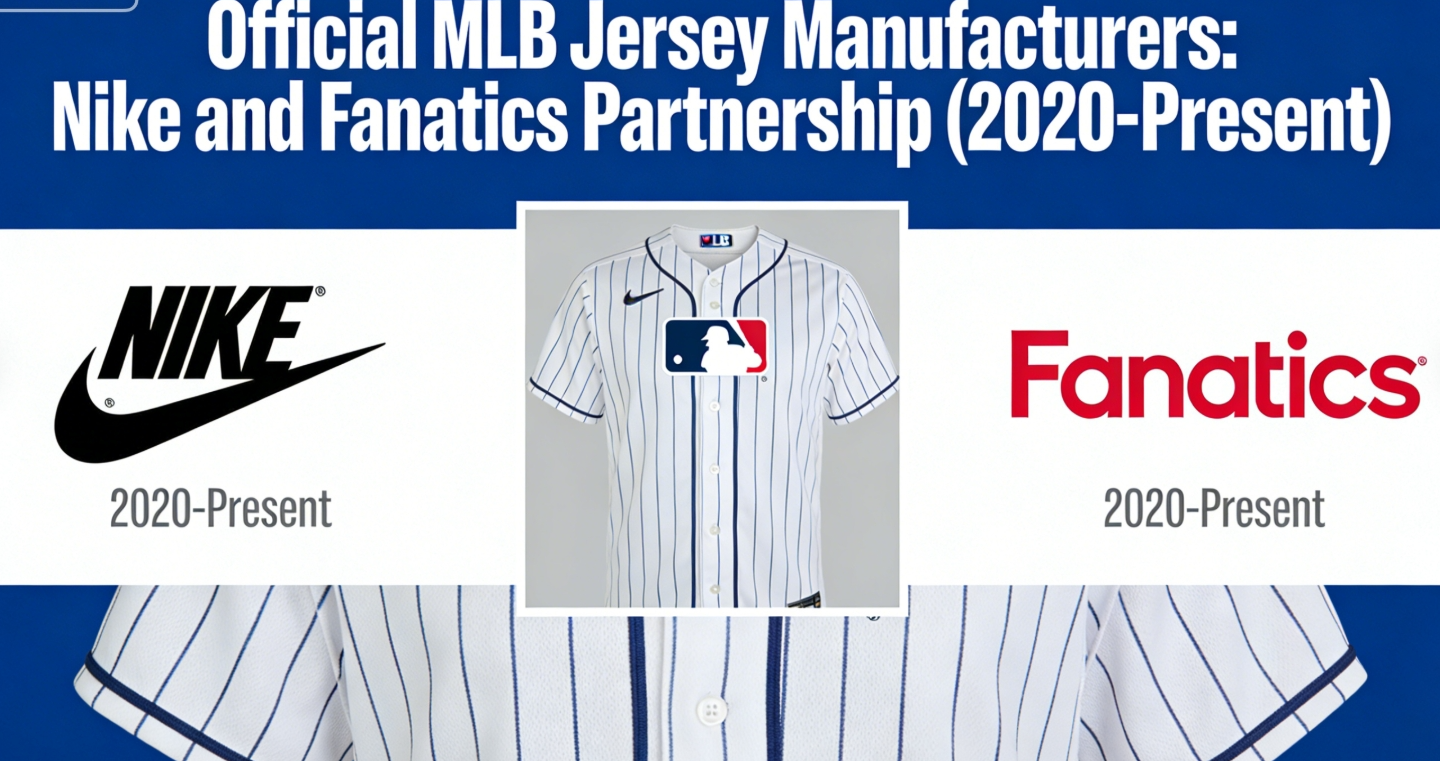
The billion-dollar handshake happened in 2020. Nike and Fanatics split the MLB jersey business in a new way.
Nike signed a 10-year global deal running through 2029. The deal's worth? $1 billion. That Swoosh logo on every MLB uniform shows Nike's exclusive control as the Official MLB Jersey and Footwear Supplier across all 30 clubs.
How Nike and Fanatics Divide the Work
Most fans think Nike makes the jerseys they wear. Wrong.
Nike handles design. Their teams create every template, color scheme, and technical feature. They work with over 500 MLB and Minor League players including Mike Trout and Giancarlo Stanton. Nike controls the creative vision. They promote products through MLB media and events.
Fanatics manufactures everything. They produce the entire Nike MLB Authentic Collection. Plus all fan gear with Nike and Fanatics branding. You buy a jersey from MLBShop.com or stadium stores? Fanatics stitched it together—even though Nike designed it.
This setup gives Fanatics big speed advantages. They bought Majestic's factories in Easton, Pennsylvania after 2017. Those facilities now pump out postseason apparel and "hot market" gear in real time. Teams make playoff runs or players go viral? Fanatics can respond fast.
The 2024 Vapor Premier Disaster
Nike debuted their Vapor Premier template at the 2023 All-Star Game. Full rollout hit 2024. Players hated it.
Complaints poured in about smaller letters on jerseys. Non-embroidered patches looked cheap. Limited pant options frustrated players. Fabrics changed color when wet. Some players called the material lightweight and poor quality compared to previous years.
MLB and the Players Association surveyed the entire league. The MLBPA blamed Nike for "unneeded innovation." They cleared Fanatics of responsibility.
Nike scrambled to fix the problems:
2024 Problem | 2025 Solution | 2026 Completion |
|---|---|---|
Smaller player names | Enlarged lettering | Full implementation |
Non-embroidered patches | Embroidered sleeve patches | Full implementation |
Limited pant options | Restore full customization | Full implementation |
Moisture color changes | Return to pre-2024 fabric for road grays | Expand to home whites |
Overall quality issues | Revert to 2023 template baseline | Complete production overhaul |
Before the Vapor Mess: 2020-2023 Continuity
From 2020 through 2023, Nike didn't reinvent the wheel. They used Majestic's existing template and fabric. Fanatics owned this after buying Majestic's assets. Nike added the Swoosh logo to proven designs.
No major changes. No complaints. Players wore the same jerseys they trusted for years.
Then Nike's designers got ambitious in 2024. That innovation backfired.
Why This Model Exists
The Nike-Fanatics partnership creates the widest fan gear variety MLB ever offered. Fanatics adjusts production to real-time demand spikes. Nike brings top athletic design skills and massive marketing reach.
Compare this to the simpler Majestic era (2005-2019). One company controlled design, production, and distribution. Fewer coordination problems. But less flexibility and slower response to market trends.
Player reactions to 2024's changes stay mixed. Veterans like Jason Heyward praised the mobility and feel. Others criticized durability and looks. The partnership works—as long as Nike doesn't overthink the job.
Historical Evolution: From Majestic to Nike (Pre-2020)
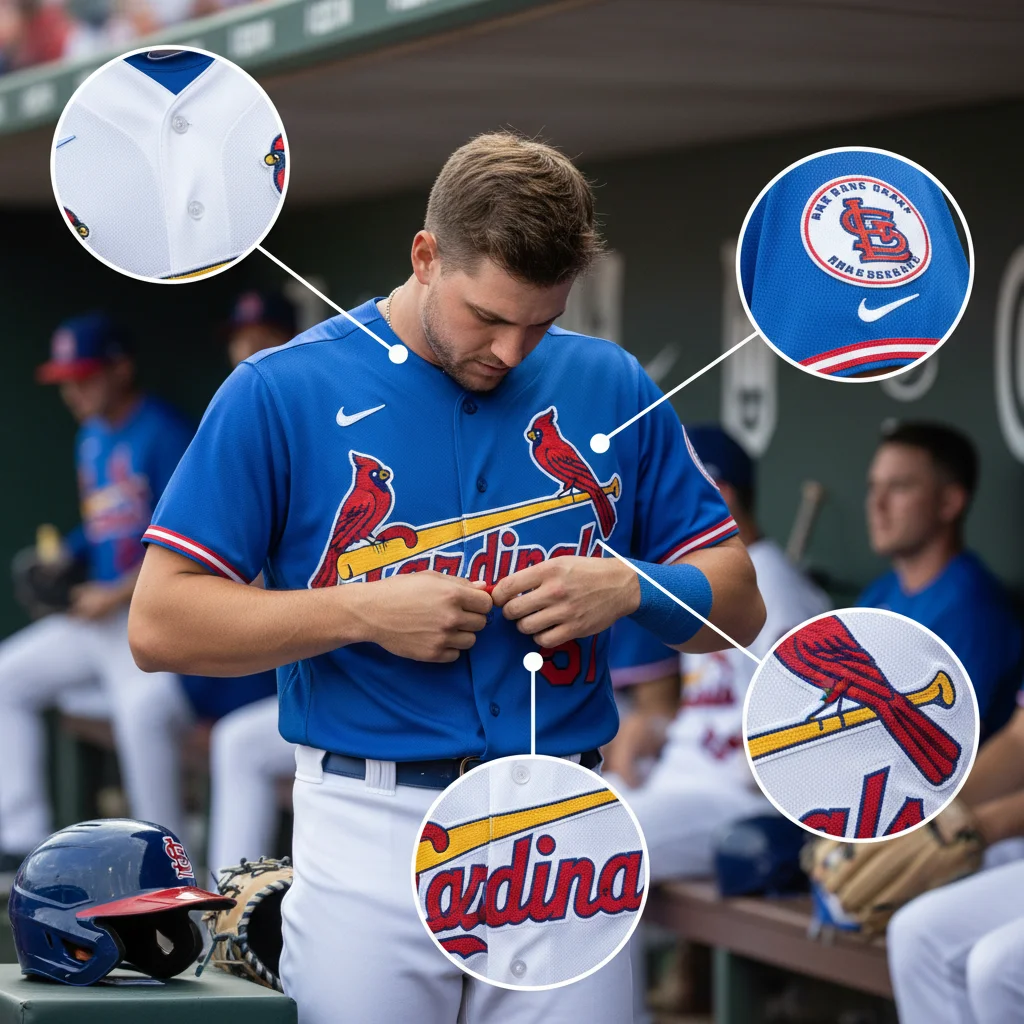
Majestic Athletic owned MLB uniforms for 37 years. That's longer than most players' entire careers.
The company first appeared in MLB dugouts in 1982 with batting practice jerseys. Two years later, they locked down their first national licensing deal. The real power move came in 2003. Majestic won a $500 million five-year exclusive contract starting in 2005.
The Majestic Control Years (2005-2019)
Three MLB Jersey manufacturers split MLB uniform production before 2005: Majestic, Russell Athletic, and Rawlings. Different teams wore different brands. No consistency across the league.
Majestic changed that in 2004. They became the sole on-field uniform provider for all 30 MLB teams. One template. One supplier. Total control.
Their product scope covered everything teams wore: uniforms, jackets, T-shirts, fleece, and turtlenecks. MLB renewed the contract in 2015. It ran through 2019.
Corporate Shuffling Behind the Scenes
VF Corporation bought Majestic in 2007. Two years later, VF created the "VF Licensed Sports Group" to manage their sports properties. Majestic operated under this umbrella for eight years.
Then Fanatics entered the picture. They bought Majestic's Licensed Sports Group from VF Corporation in 2017. This deal included those key Pennsylvania factories. Those same facilities still make authentic baseball uniform makers products today.
The Under Armour Fake-Out
MLB shocked everyone in May 2017. They said Under Armour would replace Majestic starting in 2019. The deal seemed done.
Eight months later, MLB changed their mind. On January 25, 2019, they picked Nike instead. Under Armour would not take over. Under Armour never explained what happened. Neither did MLB.
Nike signed a 10-year agreement running through 2029. Here's the twist: Fanatics would make and ship all licensed Nike uniforms to consumers. Nike brought the design power and Swoosh logo. Fanatics brought the factories and shipping network they'd just bought from Majestic.
Majestic finished their final season in 2019. Thirty-seven years ended without ceremony or nostalgia tours.
What Nike Brought to Baseball
Nike came to MLB prepared. They'd spent two decades building uniform know-how across multiple sports.
Their football background ran deep. Arsenal's kit deal started in 1993. By 2008, Nike owned Umbro—the maker of England's national team uniforms. They knew how to dress entire leagues in one brand.
Nike grew fast in the 2000s:
By 2020, Nike ran as a sports clothing giant managing huge uniform contracts worldwide. MLB became another business line in their portfolio.
The Real Difference Between Eras
Majestic focused on one thing. They handled MLB, NFL, and fan wear. Their whole business centered on licensed baseball jersey production . You bought a Majestic jersey, one company handled everything. Design, making it, and shipping it.
Nike brought something different: global marketing power and multi-sport know-how. But they also added layers. The new setup split tasks. Nike designed. Fanatics made the jerseys. Retailers sold them.
That split created problems. These issues exploded in 2024 with the Vapor Premier disaster. Majestic never had these troubles. They controlled the entire process.
The switch from Majestic to Nike changed more than logos on uniforms. It changed how official MLB Jersey merchandise suppliers work—for better and worse.
Custom MLB Jersey Manufacturers: Fanatics Customization Service
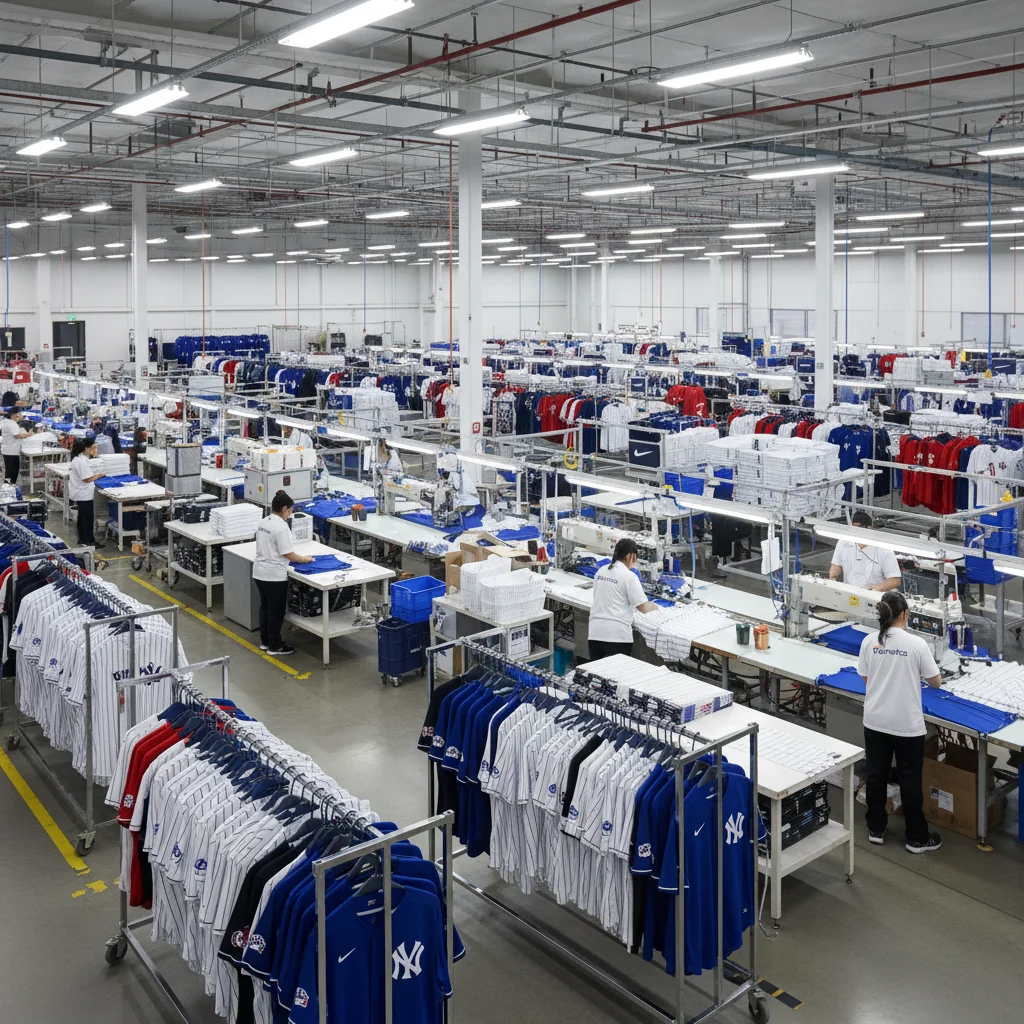
Fanatics runs the largest baseball jersey factory in North America. Their Easton, Pennsylvania facility makes over 1 million MLB jerseys each year.
About 500 workers keep this production line running 24/7. They started in 2009—years before Fanatics bought Majestic's assets in 2017. Same machines. Same skilled workers. Just a different logo on the building.
The Vertical Integration Advantage
Most professional baseball jersey suppliers split up their work. Design happens at one site. Production at another. Retail at a third location.
Fanatics does it all in one place. They design the templates. They stitch the jerseys. They run MLBShop.com. They ship straight to you.
This setup benefits custom orders. Want your name on a Dodgers jersey? The same facility that makes Mookie Betts' game uniform makes yours. Same materials. Same stitching machines. Same quality checks.
The Easton site reaches 60% of the North American market within 8 hours. This speed pays off during playoffs. A team clinches the World Series? Fanatics prints championship gear before the final out. Those "Just Clinched" shirts players wear on field? Made in Easton. Rushed to the stadium.
Scale Nobody Else Matches
Fanatics works with 900+ sports properties beyond MLB. They connect with over 100 million fans across all platforms. The company has 22,000 employees around the globe.
Their market value tops $20 billion. They grow at 25% each year.
This size gives them pricing power other MLB apparel manufacturing partners can't match. Fanatics buys fabric in huge volumes. They split fixed costs across millions of units. You get those savings on custom orders.
What Customization Looks Like
The details stay unclear. Fanatics doesn't share their full customization process. No public info exists on:
Player measurement systems they use
Custom options beyond standard name/number
Minimum order sizes for team bulk orders
Corporate pricing structures
Delivery times for custom work
Return rules on personalized items
This lack of info frustrates buyers. You're trusting the same maker that produces real on-field gear. But the custom ordering process lacks clarity.
The MLB jersey factory makes all 30 clubs' official uniforms on the same production line. This consistency means custom orders likely meet authentic MLB baseball jersey makers standards. Does Fanatics price this quality right? The data isn't there to tell.
Mitchell & Ness Throwback Jerseys: Vintage and Retro Collections
Mitchell & Ness started in 1904 as a golf and tennis equipment shop. Now they own the vintage sports uniform market. Fanatics bought the company in 2023 with a group led by Jay-Z. Mitchell & Ness got licenses for MLB, NBA, NFL, and MLS vintage gear. We're talking jerseys, shorts, tracksuits, jackets, hoodies, and hats.
Their revenue numbers tell the story. Sales hit $1.5 million in 1998. By 2002, they reached $23 million. That 15x jump? It came from authenticity nobody else matched.
Historical Accuracy Nobody Else Attempts
Mitchell & Ness reproduces vintage baseball uniforms dating back to 1869. That's the Cincinnati Red Stockings. They were the first professional baseball team in history.
They dig through warehouses hunting 50-year-old wool flannel rolls. These materials match what players wore before 1972. That's the year MLB switched to double-knit polyester. Mitchell & Ness recreates every detail. Exact lettering styles. Original patches. Period-correct stitching patterns.
Need proof? They repaired and reproduced a 1960 Pittsburgh Pirates vest. They rebuilt a 1949 St. Louis Browns shirt from fragments. These aren't mass-produced replicas. You get museum-quality reconstructions.
Their prices run $150 to $300. High? Sure. But you're buying what authentic baseball uniform makers wore decades ago. Maybe before you were born.
Why Collectors Choose Throwbacks Over Modern Jerseys
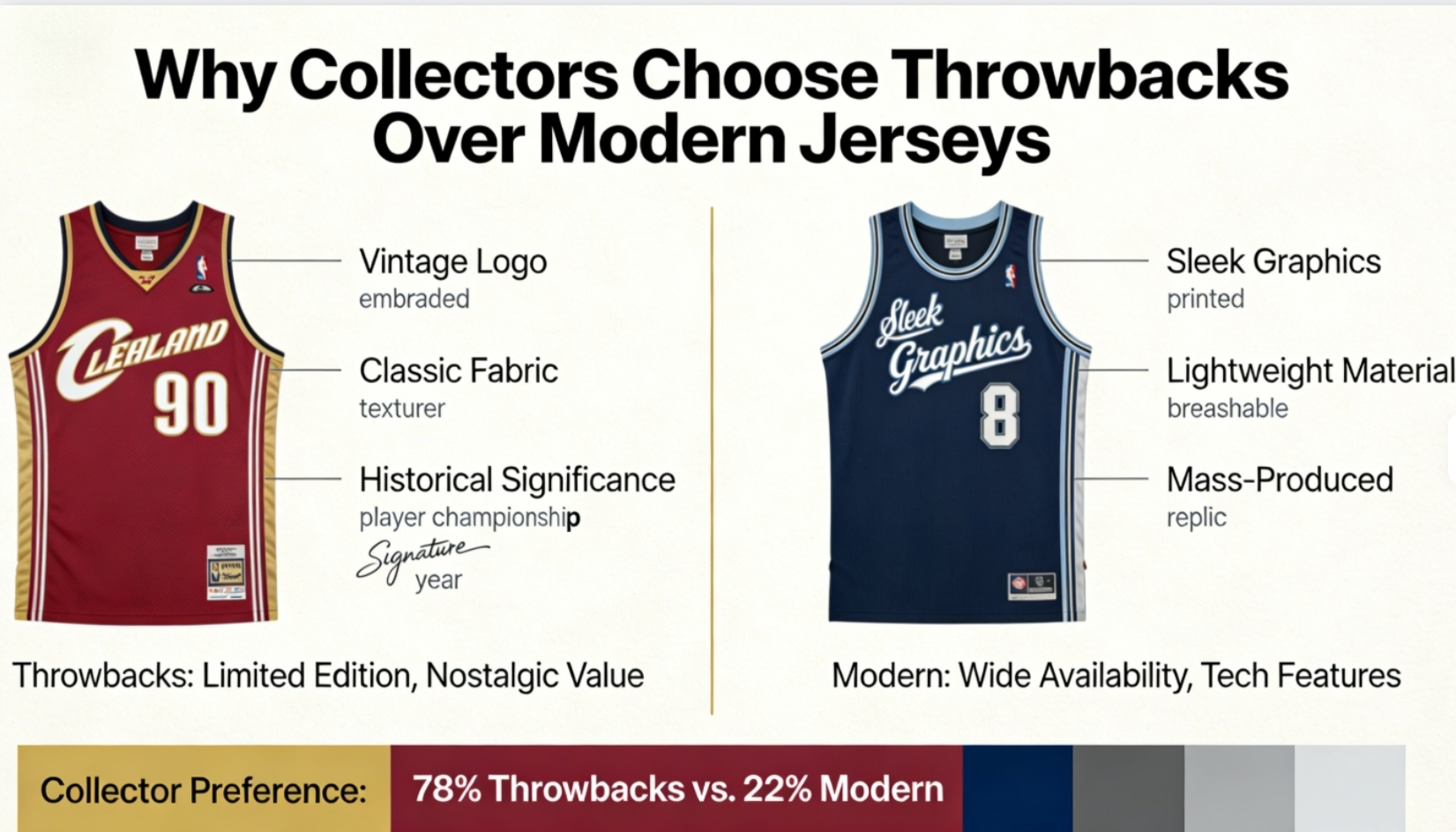
Modern jerseys carry risk. Buy a Carson Wentz Eagles jersey in 2017? He's traded by 2020. Your $150 investment becomes a closet fossil.
Throwbacks are immune to trades. A 1985 Larry Bird Celtics jersey stays relevant forever. Bird never leaves Boston in your memory. The design never changes. The cultural weight grows.
Mitchell & Ness sold Larry Bird jerseys in more states than any player in 2015. Five states total. Kobe Bryant moved the highest volume across four states. Allen Iverson dominated Virginia. He flipped Alabama from Ryne Sandberg buyers.
Regional loyalty runs deep in vintage sales:
Pennsylvania : Reggie White replaced Randall Cunningham
New Jersey : Reggie White knocked out Joe Namath
Utah : Brian Dawkins overtook Karl Malone
Michigan : Barry Sanders owned the state
Delaware : Reggie White beat Kobe
The Best Throwback Picks for MLB Fans
Mitchell & Ness built their reputation on basketball and football. Their NBA throwbacks still outsell baseball. In 2002, Michael Jordan and Julius Erving led all sales. Magic Johnson, Wilt Chamberlain, Jerry West, and Larry Bird followed.
But their MLB vintage work stands out for different reasons. They use original wool flannel instead of modern synthetics. Every team logo matches archival photos. Every number font. Every stripe placement.
Want a conversation starter? Grab these:
Milwaukee Bucks late-90s Ray Allen era : Peak three-point shooter nostalgia
Dallas Cowboys 90s star shoulders : Deion Sanders in his prime
Phoenix Suns NBA All-Star uniform : Iconic purple and orange
San Francisco 49ers Jerry Rice : Comes with the NFL 75th anniversary diamond patch
Denver Nuggets rainbow : The wildest color scheme in sports history
These aren't just jerseys. They're time machines stitched in fabric. Fabric that lasts longer than polyester ever will.
MLB Jersey Manufacturing Standards and Licensing Agreements
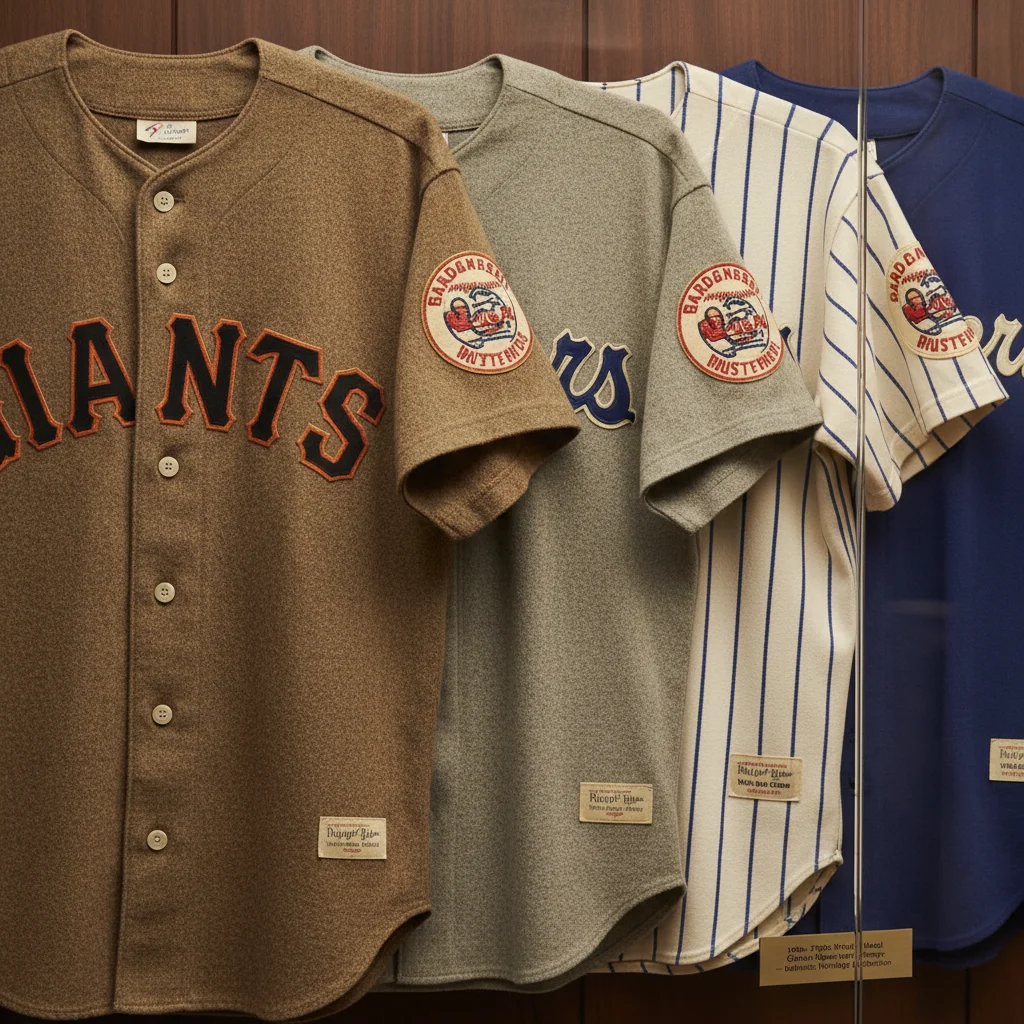
MLB doesn't let manufacturers wing it. Every jersey from a factory follows strict rules. These rules fill 200+ pages of official guidelines.
The standards protect the game's visual identity. They create a quality barrier too. This keeps knockoff operations from flooding the market. Official MLB merchandise suppliers must pass audits. They maintain specific production capabilities. They prove they can deliver consistency across millions of units.
The Uniform Code: What Every Jersey Must Include
MLB Rule 1.11(a) sets exact specifications for player uniforms. These aren't suggestions. Teams get fined for violations. Players sit out games for breaking the rules.
Here's what licensed baseball jersey production facilities must do:
Jersey Construction Standards:
- All players on one team wear identical color, trim, and style
- Back numbers measure minimum 6 inches (15.2 cm) in height
- Numbers use solid color contrasting the jersey base
- Font and style stay uniform across the entire team
- Outline width cannot exceed 0.25 inches
- Team name appears on the front chest
- No glass buttons or polished metal allowed (injury prevention rule enforced since the 2000s)
Manufacturer Branding Limits:
- Logo placement: top right chest
- Preferred size: 2.25 inches wide maximum
- Nike's Swoosh fits this spec
These rules separate authentic baseball uniform makers from amateurs. A counterfeit operation might nail the colors. But they'll mess up the number sizing. Or use the wrong button material. Or place the Nike logo 0.5 inches too low.
Authentic vs Replica: Two Different Manufacturing Processes
Fanatics runs two separate production lines at their Easton facility. The difference between authentic and replica jerseys starts at the design phase.
Specification | Authentic Jersey | Replica Jersey |
|---|---|---|
Sizing system | Numerical (40, 42, 44, 46, 48) | Standard (S, M, L, XL, XXL) |
Lettering method | Tackle twill stitched | Iron-on heat press |
Button design | Full button-down front | Full button-down front |
Fabric weight | Heavier, game-ready material | Lighter fan wear fabric |
Fit profile | Athletic cut, tighter shoulders | Relaxed fit, roomier body |
Price range | $300-$400 | $120-$150 |
Authentic jerseys use the exact patterns cut for players. Fanatics measures these on a numerical scale. This matches player body types. A size 44 fits like what Mike Trout wears on field.
Replica jerseys follow standard retail sizing. Same visual design. Different construction method. The iron-on lettering costs less to produce. It peels faster too.
Fabric Technology Requirements
MLB apparel manufacturing partners must source specific textile grades. The league approves these standards:
Nike's 2024 Vapor Premier disaster happened because they changed the Dry-Fit formula. They made it lighter. Too light. Players complained the fabric showed sweat stains in a new way. Road gray uniforms turned darker when wet. That's a fabric standard failure.
How to Become a Licensed MLB Manufacturer
Getting MLB licensing agreements takes more than quality samples. The league checks every potential partner through a formal application process.
You need these:
Business Commitment Proof:
- Minimum production capacity thresholds
- Financial stability documentation
- Quality control system certification
- Insurance coverage for product liability
- Anti-counterfeiting security measures
Retail Distribution Plan:
- Online retailer policy compliance
- Sales channel strategy breakdown
- Marketing budget allocation
- Territory restrictions acceptance
The application runs 15+ pages. MLB reviews take 90-120 days. Approved manufacturers face annual audits. Fanatics and Nike maintain staff focused on compliance documentation.
Non-Compliance Consequences
MLB enforces uniform standards with real penalties. Not suggestions. Not warnings. Actual punishment.
- Wrong shoe color? Banned from that game.
- Unapproved bat grip? Removed from field.
- Modified jersey fit? Fined and forced to change.
- Quality defects? Contract breach lawsuit.
- Unauthorized design changes? License suspension.
- Counterfeit tags discovered? Permanent ban.
These rules explain why only top custom baseball jersey manufacturers and two companies control official MLB team jersey manufacturers work right now. The barrier to entry sits too high. The risk of mistakes costs too much. Nike and Fanatics split a billion-dollar market. Nobody else wants to deal with this maze of regulations.
Where to Buy Official MLB Jerseys: Authorized Retailers and Pricing
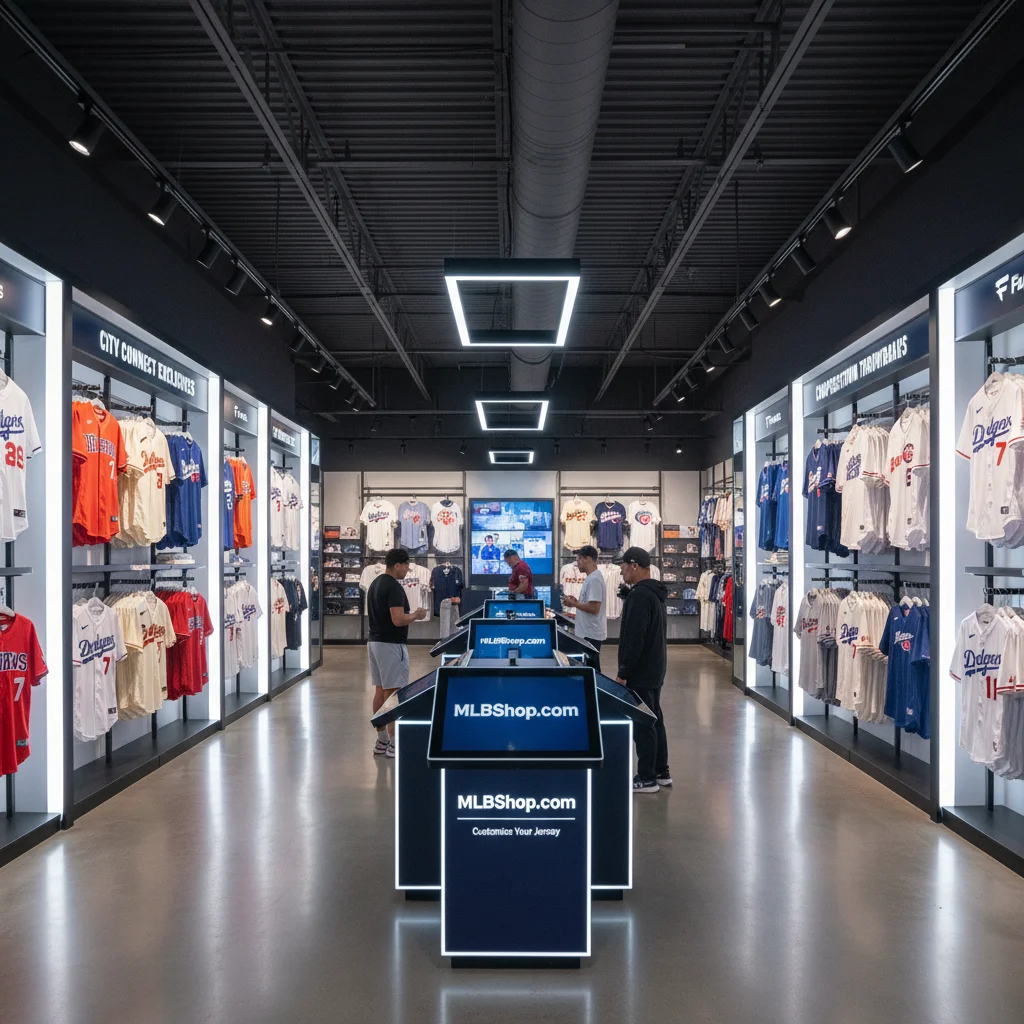
MLBShop.com has the biggest official baseball inventory. The platform runs MLB's entire digital store. All 30 teams. Every jersey style from Nike and Fanatics. City Connect exclusives. Throwback Cooperstown collections. Custom basball jersey name and number options.
Fanatics handles the backend setup. The same company making jerseys in Easton, Pennsylvania ships them to you. No middlemen. Order a custom Shohei Ohtani Angels jersey at 2 PM? The same facility making game uniforms handles your order.
Nike.com offers fewer choices. They sell Vapor Limited jerseys—the premium authentic line. Fewer teams. Higher prices. Good for collectors who want exact on-field specs.
Lids.com has authentic and replica options across all brands. Their edge? Speed. Custom orders ship faster than MLBShop.com in most areas. They run 300+ stores for same-day pickup.
Physical Retail: Where to Try Before You Buy
Rally House has hundreds of stores in 20 states. Strong regional focus. Walk into a Kansas City location? You'll see 47 different Royals jersey styles. Yankees and Dodgers fill coastal markets. Cubs stock peaks in Midwest stores.
They carry official Nike, Mitchell & Ness, and New Era products. Free in-store pickup means zero shipping costs. Returns happen face-to-face. No mail needed.
Kohl's runs a surprising MLB jersey operation. Their data shows big scale:
Team | Total Items | Notable Brands |
|---|---|---|
Yankees | 1,150 | Nike, Fanatics, New Era |
Dodgers | 804 | Nike, Mitchell & Ness |
Red Sox | 1,198 | Nike, Fanatics |
Cubs | 1,195 | Nike, New Era |
Giants | 1,252 | Nike, Fanatics, Mitchell & Ness |
Kohl's stocks 23,586 MLB items total. Nike has 3,813 pieces. New Era leads with 4,052. Fanatics adds 938. Mitchell & Ness brings 550 throwback options.
This volume means lower prices. Kohl's runs frequent sales cycles. Cash rewards stack on top. You pay 20-30% less than MLBShop.com during promos.
Dick's Sporting Goods claims "low price leader" status for official MLB gear. Their marketing doesn't always match up. Selection runs thinner than Kohl's. But clearance racks after All-Star break? Dick's cuts prior-season stock by 40-50%.
Macy's stocks Nike and Fanatics jerseys in big city stores. Limited floor space means only top 10 market teams. Yankees. Dodgers. Red Sox. Cubs. Astros. You won't find Rays or Athletics gear here.
Jersey Types and What They Cost
Authentic Nike jerseys cost $300-$400. These use tackle twill stitching. Same number sizing players wear. Heavier fabric made for sports. You get game-day quality.
Replica jerseys run $100-$200. Understanding the difference between authentic and replica MLB jerseys helps you choose wisely. Standard S/M/L/XL sizing. Iron-on letters instead of stitched. Lighter polyester blend. Good for casual wear. Won't last as many seasons.
Custom name and number adds $20-$50 extra. MLBShop.com has sizing guides for alternate, authentic, and replica fits. The system shows measurements by jersey type. Authentics fit tighter through shoulders. Replicas cut looser in the chest.
Mitchell & Ness throwbacks cost $150-$300. Price depends on how rare they are. A 1985 Dwight Gooden Mets jersey costs more than a 2010 Derek Jeter Yankees throwback. Original wool flannel copies from before 1972 hit the upper range.
City Connect jerseys drop once per team each year. Small production runs. Nike links releases to cultural events or city anniversaries. These sell out in 48-72 hours on MLBShop.com. Resale markets jump 200-300% two weeks after launch.
Timing Your Purchase Around MLB's Release Calendar
Spring Training gear shows up in February. All-Star collections drop in July. Postseason "Locker Room" championship shirts appear minutes after final outs. Field of Dreams throwbacks release each August before the Iowa game.
Armed Forces and Memorial Day camo jerseys launch May 15th. St. Patrick's Day green alternates arrive March 1st. These special runs cost more—$180-$250 for replicas.
Rally House runs local promos based on team results. Division clinch sales. Wild card qualifier discounts. World Series champion gear at 30% off three months after parades end.
MLBShop.com has ongoing "top-selling" and "batting practice" sales. These change every 2-3 weeks. Sign up for email alerts. You'll get 25% off codes four times per season at least.
No retailer shares wholesale minimum order amounts. Team bulk orders go through Fanatics. Contact their B2B division for pricing on 25+ identical jerseys. Youth leagues and corporate groups work out custom terms.
Conclusion
Who makes official MLB jerseys? This question matters more than you think. It's not just about brand names. It protects your investment. Plus, you get the quality you deserve.
You might buy Nike's current on-field authentics. Or maybe Fanatics' customizable replicas. Mitchell & Ness vintage throwbacks are popular too. Know the official MLB merchandise suppliers . This knowledge helps you avoid expensive fakes.
Nike took over in 2020. The jersey landscape changed a lot since then. They brought Vapor Premier technology. The designs got fresh updates. But one thing stays the same: real MLB jerseys come from a small group of licensed makers. These companies earned MLB's trust through strict quality standards.
Before your next purchase, check the seller. Make sure they carry products from authorized partners. Look for official MLB hologram tags. Examine the stitching quality. Compare prices against official retailers. Authentic jerseys have consistent pricing. There's a good reason for that. Your favorite player's jersey should honor the game. It should also respect your wallet.
Ready to gear up? Start with MLB Shop, Fanatics, or your team's official store. Your authentic jersey is out there. Just make sure it's the real deal.
Video Section